
The Gravel Ride. A cycling podcast
198 episodes — Page 3 of 4

Jason Turner - Unicorn Cycles
This week we sit down with Unicorn Cycles founder, Jason Turner to talk about Asian made custom titanium gravel bikes. This episode is sponsored by Hammerhead and the new Karoo 2 GPS computer. Hammerhead Website: use code THEGRAVELRIDE Unicorn Cycles Support the Podcast Join The Ridership Automated Transcription, please excuse the typos: Jason Turner - Unicorn [00:00:00] Craig Dalton: Hello and welcome to the gravel ride podcast. I'm your host Craig Dalton. This week on the podcast we have jason turner from unicorn cycles coming to us to talk about custom titanium gravel bikes . Before we get into today's show, I need to welcome a new sponsor to the gravel ride podcast. Hammerhead, you may be familiar with the Hammerhead Karoo computer. What you may not be aware of is that the Karoo two is now available. It was named bicycling magazines, editors choice in GPS computers for the past two years running and continues to collect accolades throughout the sport. Funny story a few years back when I did the Oregon timber trail with a couple of friends, we each had a different make of GPS cycling computer. And it actually took the three of them. To try to find our way through this trail system. Each one had its own attributes. And the one thing that stood out about the hammerhead kuru, the original one. Was the mapping capabilities. The screen and the design of the mapping functionality is much more akin to what you'd be familiar with on your iPhone or Android phone. It's beautiful mapping, and to be able to pinch and zoom and blow up that map. It was a key component of our navigation on the Oregon timber trail. On that original Karoo device, I found it to be a bit big and heavy, so it never became a daily driver for me. So when the crew two was announced, I was super stoked that they've been able to reduce the size well, actually improving the capability of the device. What I really love about the latest one I've been testing. Is that you can swipe through the screens very easily and customize them to the nth degree. For me, as you guys know in Marin county, everything's about vertical feet and climbing mileage is less consequential to how a ride feels or it's going to look after the fact than the amount of climbing I've been doing. So by setting up the crew to, to have a climbing feature to it, I can see exactly where I am from an elevation perspective, which gives me an idea as to where I am on. On the mountain. So I basically have one screen that's dedicated specifically to elevation and climbing. And that's one of the ways in which I can navigate around the mountain. And then I swipe over and I've got another detailed screen that has the mapping capability of it. I'll get into a much more about the Karoo 2's features in the coming weeks as Hammerhead is agreed to come on as a sponsor for a number of episodes. For a limited time, our listeners can get a free custom color kit and an exclusive premium water bottle with the purchase of a Hammerhead Karoo to computer. Visit hammerhead.io right now. And use the promo code, the gravel ride at checkout to get yours today. That's a free custom color kit and a premium water bottle with the purchase of a crew to simply go to www.Hammerhead.io at all three items to your cart and use the promo code, the gravel ride. This is an exclusive limited time offer only for the gravel ride podcast listeners. So be sure to head over and don't forget that promo code, the gravel ride. With that said let's jump right into this week show Hey Jason, welcome to the show. [00:03:12] Jason Turner: Thanks Craig. Thanks for having me on the Gravel ride podcast. This is [00:03:16] Craig Dalton: I'm excited to learn more about unit unicorn cycles. We always like to start off by setting the stage, get a little bit of understanding about. Your background as a cyclist. And obviously that goes hand in hand with the development of the brand and the company unicorn cycles. So why don't you tell us about that journey? How did you find riding bikes? What kind of bikes do you like to ride and then we'll get into unicorn. [00:03:40] Jason Turner: Okay. Yeah. I think for most people, the seed for cycling starts as a child. Growing up as a kid in the city, I lived on 19th street and I wasn't allowed to leave the block. You could just a little square inner city. And so, but that didn't stop me, me and a friend on many occasions. I remember we'd ride our BMX bikes up to a hundred 19th street. And we thought that was like really far that took us hours with stoplights and everything else. And so just that idea of like freedom as a kid on the bike and going far later on as an adult, I mapped out. That distance in, in the old neighborhood where we read ride and realized it was just six and a half miles each way. So it wasn't very far, but flash forward to it to an adult. I was living in Austin, Texas. I was running, swimming, really active. Everyone in Austin was doing a triathlon. And so I decided to just try it.

In the Dirt #28
After getting a bike fit, Craig is now considering the possibility of a custom frame. Randall helps Craig walk through the various considerations and shares some tools for comparing bikes. Bike Geo Calculator Support the Podcast Join The Ridership
Monica Garrison - Black Girls Do Bike
On this week's episode Randall speaks with Monica Garrison, Founder, Executive Director, and Chief Storyteller of Black Girls Do Bike. BGDB's mission is to introduce women and girls to the joys of cycling, with an emphasis on those of color who are often less-represented in the cycling community. With 30K+ members spread over 100+ chapters, BGDB is rolling proof of the bicycle's potential as a vehicle for connection and an example we hope to learn from and collaborate with as we evolve our own efforts toward building community. Black Girls Do Bike Support the Podcast Join The Ridership Automated Transcription, please excuse the typos: Monica Garrison - Final [00:00:00] Randall R. Jacobs: Welcome to the Gravel Ride podcast. I'm today's host Randall Jacobs. And with me is Monica Garrison monica is the founder executive director and chief storyteller of black girls do bike and organization she founded in 2013 and has grown to a hundred plus chapters worldwide black girls do bike.org is where you can find more about her organism. She's also a skilled professional photographer and videographer whose work you can find on her personal website, Monica godfrey.com, Godfrey being her maiden name. And with that, I'd like to bring my friend Monica Garrison to join us here. So Monica, welcome to the podcast. [00:00:35] Monica Garrison: Hello. Hello. Happy to be here. Thanks for having. [00:00:39] Randall R. Jacobs: Absolutely. It's been a while in the making. So let's dive right in. What were your motivations for starting black girls do bike. [00:00:46] Monica Garrison: Black grocery bike came from a place of longing for community. I was, um, discovering my joy of, or my love of cycling in the summer spring of 2013. And after a few months of writing and, you know, discovering my city in a new way and spending time with my kids, um, at the end of all that I realized that I didn't see many women who look like me on, on bikes in my town. And so. You know, these women are either out there and I, I can't find them or that they don't exist and they need to know about how great cycling is because I have found cycling to be very, um, healing in a lot of ways, you know, mentally healing, obviously physically healing. Um, and so when I went to the internet to find these women, I, I didn't really find, um, good representation of women, of color on bikes. And so. That was, that was the birth. The Genesis of black girls do bike. It was, it was like, well, let's create this space and invite women into it and see what happens. And, um, and the rest is history. [00:01:52] Randall R. Jacobs: And your base. [00:01:54] Monica Garrison: I'm in Pittsburgh, Pennsylvania. [00:01:56] Randall R. Jacobs: And it sounds like this was a very personal for you, but so before we dive into the organization, I want to talk, I want to hear more about your personal journey with the bike. [00:02:04] Monica Garrison: I mean, I, I think like most people I wrote as a child, I spent my summers on my bike with my brother around my Pittsburgh neighborhood Lincoln. Lymington where I grew up. And and so it was a big part of my childhood. And then I think like most, most women may. We just stopped riding and at some point, and and then when you get to a point where. The burdens of life kind of catch up with you and you're looking for ways to ease those, those burdens. You look hopefully to exercise or to some other outlet. And, um, for me having all those good memories of riding my bike and feeling stress-free, um, I turned to, I turned to cycling. But it was, it was cool because I started to connect with like Pittsburgh, which was our local bike that, that organization here. And I discovered, you know, this great community of, of bike advocates and people of all sizes and genders and, um, who just wanted to ride their bike carefree and, and do it safely. And so that opened up a lot of possibilities, um, as to what riding even meant for me here. And. [00:03:09] Randall R. Jacobs: What was your, what was your first bike? And how'd you come about it. [00:03:12] Monica Garrison: Um, the very first bike like [00:03:15] Randall R. Jacobs: Yeah, well going, going back to your, your most recent journey back onto two wheels. [00:03:20] Monica Garrison: Yeah. So I, I did, um, I think what everyone in my generation does, I just. Like crazy online to figure out what kind of bike I need it. And I decided that there was, it was Bita was the name of it, maybe by specialized and it just seemed perfect. And then in the styling was right up my alley. So I'm just like a hybrid commuter type bike. Um, but it was the perfect tool to get me back on my bike because it was so versatile. I could ride on any type of terrain and it was very comforting. Um, despite the small seat, I was apprehensive that it would actually be comfortable, but it, it really was. And, um, yeah, so that bite got me through that first year. And because I was so obsessed with cycling by the end of that first year,
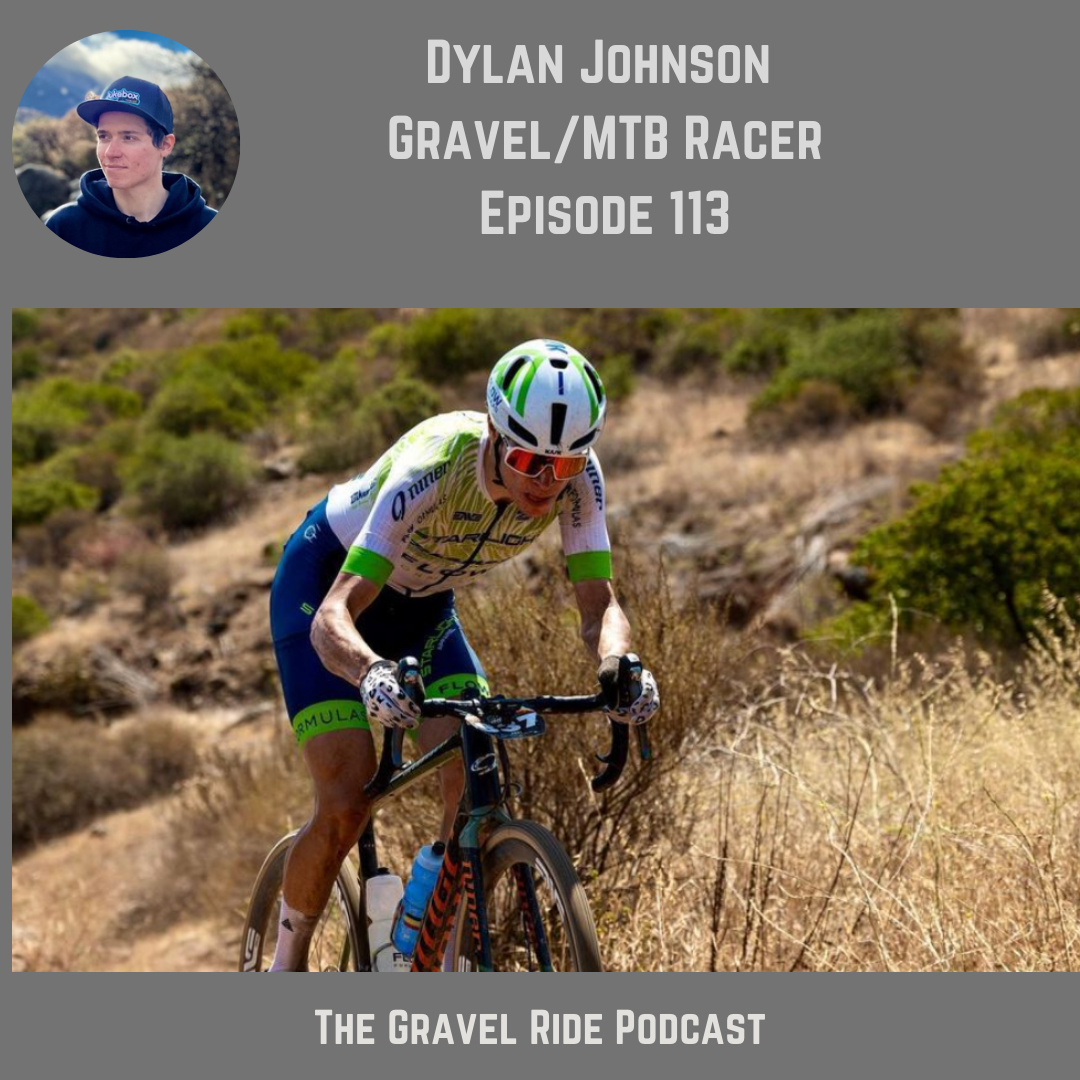
Dylan Johnson - professional gravel/mtb racer, coach and YouTube personality
This week we sit down with North Carolina based professional gravel / mtb racer, Dylan Johnson about his 2022 goals, coaching and his popular YouTube channel. Dylan Johnson Coaching Dylan Johnson YouTube Support the Podcast Join The Ridership Automated transcription, please excuse the typos: Dylan Johnson [00:00:00] Craig Dalton: Hello and welcome to the gravel ride podcast. I'm your host Craig Dalton. This week on the podcast, we've got professional, gravel and MTB racer. Dylan Johnson. Describing Dylan is simply a racer would be overly limiting. As Dylan is also a certified coach. And a YouTube personality. I've been watching a bunch of Dylan's videos on YouTube lately, where he covers. Coaching his personal journey as an athlete and give some detailed overviews of his participation in some of the biggest gravel and MTB races around. What I thought is interesting about his coverage of these events specifically is that I found there's a lot of takeaways from them, for me as a mid-pack rider. Not only does he describe what it's like to stay on the wheels of some of the top racers? In the united states he takes an honest look at his own capabilities as we all should as we're participating and talks about when he's burning more candles than he should to stay in a particular group and what the net effects of that tend to be at the end of these events i thought it was super interesting and i've really enjoyed his colorful personality on youtube so i encourage you to give it a view. Dylan has been accepted to race in the lifetime grand Prix series, which covers both gravel and MTB races. So I'm super curious how an athlete like the Olin is going to fare over the course of the year. And I do think that series is going to be interesting because it's going to test a lot of athletes capabilities across. A pretty diverse set of courses. With that intro out of the way let's jump right into my conversation with dylan Dylan, welcome to the show. [00:01:47] Dylan Johnson: Yeah, thanks for having me. [00:01:49] Craig Dalton: I'm super stuck to have this conversation. I've been enjoying your work on YouTube of late, and I'm interested very much to hear about your background. So why don't we use that as a starting point? Let's talk about how you got into cycling and what led you to gravel racing ultimately. [00:02:05] Dylan Johnson: Yeah. I think. Cycling seriously. I think my dad got me a mountain bike when I was probably 12 years old and started racing shortly after that. And I think by the time I was 15, I was, I was probably training pretty seriously. And I started in the mountain bike side for most of my. Career, if you want to call it that I've been an endurance mountain bike racer. And just recently, probably within the last two or three years made the transition not fully into gravel racing. I still, I still do mountain bike racing, but I would say I'm much more of a gravel racer now. [00:02:41] Craig Dalton: And what part of the country did you grow up in? [00:02:42] Dylan Johnson: I grew up in the Washington DC area and it's it's a pretty busy area, but I, I went to. School at Bravard college in? Western, North Carolina. And that's where I currently live. And I like it a lot better just because there's a lot less people. The writing is a lot better, both on the road side and on the gravel side and the mountain bike side, it's just, it's just all around. [00:03:05] Craig Dalton: Yeah, it's interesting. I went to school in Washington, DC as well, and started as a mountain biker there. And I will say it is remarkable within that DC, Maryland, and Virginia area. How much decent mountain biking is there? [00:03:18] Dylan Johnson: Yeah, it's, it's pretty good considering that it's such a densely populated area. I mean, there, there was a, there? was a kind of rich cycling scene, I guess, just because there's so many people that lived there, there, there just happened to be a lot of cyclists we're in, we're in DC. Did you live? [00:03:34] Craig Dalton: I w I went to American university, so I lived in Northwest [00:03:38] Dylan Johnson: Gotcha. [00:03:39] Craig Dalton: and then for a while I was working for a DC based company and stayed with a friend in Chevy, chase, Maryland. [00:03:46] Dylan Johnson: So when you ride, what? Like Patapsco regularly? [00:03:51] Craig Dalton: Yeah. exactly. And then, you know, big trips for mountain biking would be out to say front Royal or something like that. [00:03:58] Dylan Johnson: Patapsco was a little far from me. I was in, I was on the Virginia side. So I would regularly ride Wakefield down head go to front Royal on the weekend. Yeah. [00:04:07] Craig Dalton: So when you went down to university in North Carolina, had you already begun your mountain bike racing career at that point? [00:04:14] Dylan Johnson: Yeah, I was, I, I went primarily just because Bravard college has a really good cycling team. They'd won multiple non-bank national championships as a team at that point. So. An

Craig Calfee Part 2: Gravel Industry Pioneer
In this part two of our conversation with bike industry pioneer Craig Calfee, he and Randall do a deep dive into the merits of suspension on gravel and road bikes before jumping into e-bike conversions, variable head angles, regenerative braking, an E-motorcycle project Craig is involved with in Africa, ideas for the ultimate mass-produced frame, and the challenges and opportunities of localized assembly and production. Calfee Designs Website Join The Ridership Support the Podcast Automated transcription, please excuse the typos: Craig Calfee Part 2 [00:00:00] Randal R. Jacobs: Welcome to the gravel ride podcast. I'm your host Randall Jacobs. And today I, once again have my friend Craig Calfee, this is part two of our conversation. We'll be having a part three at some point where we get into wood and bamboo bikes, but today we're going to be focusing on mostly on carbon fiber. And so with that first topic where we left off in the last conversation, Craig was, we were getting into suspension, particularly suspension on road bikes, but that would also apply to gravel bikes too. [00:00:28] Craig Calfee: Yeah, that's a great topic. It's one really close to my heart because we kind of stumbled on it through the bamboo bikes actually. And it was about the vibration damping of. We had a triathlete who had a really nice carbon fiber race bike that he used for Ironman distance triathlon. He's also a data junkie. So he had all the, all the, you know, biofeedback stuff, the heart rate monitor, the lactose levels, all kinds of crazy stuff that he measures on his training rides. So he also ordered a bamboo training bike just for fun. Really. He's a wealthy guy who can afford multiple expensive bikes. And we built at exactly the same geometry as his race bike, and the only difference ended up really being the race wheels that he didn't use all the time. Anyway. So he was doing his training runs and found that he was actually faster on the bamboo bike, which was about two pounds heavier than his race bike. So. I asked him, well, let me guess you're feeling fresher towards the end of the, the bike segment and your time advantages in the latter half of that segment, he said, you're right. And why is that? And I said, well, the only clue I have is that the bamboo definitely absorbs vibration better. So you're subjecting your body to less fatiguing vibration. And he said, that's exactly how it feels and has run after the bike is, is generally faster as well. And that backs up what Dave Scott reported when he rode our bike in the Ironman, when it came out of retirement at the age of 40 and came in second to, um, to Greg Welch at the iron man everyone thought Dave was going to be top 20 maybe, but he ended up second place. And he credited that performance to feeling super comfortable on his Tetra custom tri bike that we built for him, which is notoriously smooth riding because of their skinny seat stays. Anyway. Um, so the vibration damping also has been studied by insurance companies for truck drivers and airline pilots. So they do these tests to figure out how fatigued people are based on how much vibration they're subject to, and they've shown you know, hands down that it's, that vibration causes fatigue. And there's some scientific details on that that I could get into, but it's, um, probably better to move on here. So we found that, um, aside from the, the fatigue we've found that it had better traction and that allowed for more efficient client. So for a racing cycling. Yes. Fatigue is important, but actually having better traction for getting a better time on climbing is really where the rubber meets the road, literally. Yeah, but for me that the biggest one was layers less know you're going to crash out of the tour de France less often. So being able to corner faster and do faster descents without crashing is as important, if not more important than having more efficiency climbing so that, you know, those three factors less fatigue, better traction, and more stable at high speed are to me the most important they're all three of them make for a faster bike. And we. [00:04:10] Randal R. Jacobs: Oh, go ahead. Um, well I was going to say like on the flats and on the dissents, it's pretty obvious. And I've actually been thinking a lot about this. You know, our listeners will know that I'm a big proponent of high volume tubeless tires on wide rims, right. Run at lower pressures for bigger contact patch. And I'm coming around to this idea that while that is good, that's that suspension that pneumatic suspension also results in varying tracks. [00:04:38] Craig Calfee: Yeah. [00:04:39] Randal R. Jacobs: yeah. [00:04:40] Craig Calfee: So we, we actually measured that, um, most people are like, well, you're going to lose something on the climb. You know, you're going to activate the suspension and lose a percentage of your input, activating suspension. And we thought, okay, you know, there is some of that, but it seems like that's
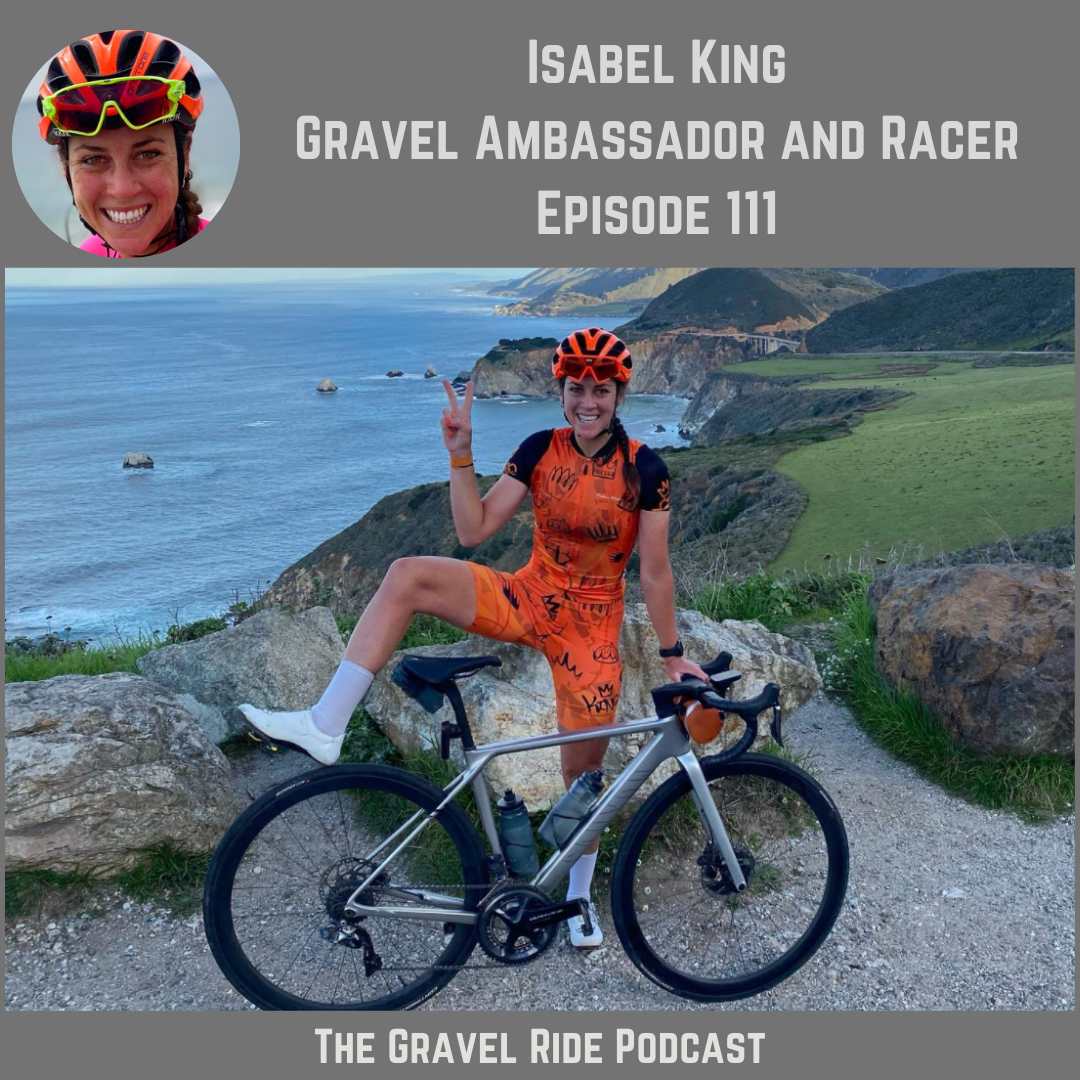
Isabel King - gravel ambassador, racer and queen of color
This week we sit down with the queen of color herself, Isabel King to learn about her road to gravel from smashing Los Angeles area QOM's. Isabel King Web | Instagram Join The Ridership Support the Podcast Automated transcription, please excuse the typos: Isabel King [00:00:00] Craig Dalton: Hello and welcome to the gravel ride podcast. I'm your host Craig Dalton. This week on the podcast, we've got one of gravel's most colorful athletes, literally and figuratively. In a few moments, I'm going to be joined by Isabel king. , Santa Monica, California professional gravel athlete, who got her start in a very interesting way. The conversation actually builds nicely on our conversation from last week with Chris Schroeder and the interesting way in which athletes are creating opportunities for themselves to race professionally in this new world of gravel. I personally became aware of Isabel through our shared relationship with Panner racer tires and I became a big fan of observing what she was doing via Instagram. As he's all has got a kind word to share and is always rocking some powerful kit out there on the trails, in and around Los Angeles. She had a breakout year in the dirt in 2021 and is really looking forward to smashing some things in 2022. With all that said let's jump right into my interview with Izzy. Isabel, welcome to the show. [00:01:09] Isabel King: Thank you. Thank you so much for having me., . [00:01:11] Craig Dalton: I'm excited to dig in with you a little bit, as we always start out on the gravel ride podcast, let's just find out a little bit about how you got into cycling in the first place. [00:01:20] Isabel King: Ooh, always a good question to start with. Cycling was definitely not not my plan since a child. I kind of joked that I fell into this haphazardly five years ago. I could not have predicted I would be where I am today. Uh, so I grew up as a. Uh, as a soccer player, uh, I played soccer through college. So I was a D one soccer player at Columbia and I graduated as a psychology major and jumped into the world of finance. So I worked on the trading floor at UBS for four years in New York city. Before deciding that I wanted to get a more formal, uh, finance education. So I applied to business schools ended up getting into UCLA Anderson. And moved to Los Angeles and kind of in that process and the summer before starting business school I quit my job in, in December and started school in August. And so I had a few months and I signed up for a triathlon clipped into a road bike for the first time. And that kind of spiraled me down into this endurance world which has been fun. So I am now chasing a dream that I didn't know I had, uh, about two years ago. [00:02:23] Craig Dalton: Amazing. It's so funny how that like break as a adults going back to business school, whether it's, you know, for your MBA or graduate school, it just create does create a pocket of exploration for a lot of people. I find. [00:02:35] Isabel King: Yeah, it was great. I don't think, I mean, I stayed active. I ran marathons after, because it's kind of hard. You finished soccer and it's hard. You play for a few, a few, uh, you know, maybe a few months in those co-ed leagues in New York city where you're just waiting for your ACL to get torn by someone that used to be fast. Uh, so I switched to running because it was easier. You just need to choose in yourself. And then when I had the time to kind of. To have a bike. And I moved back to San Francisco and kind of discovered all of those roads in the, in the, you know, the places I would hike and go as a child, I can now ride my bike. And that was kind of, that was kind of it for me. I knew I'd found something that I was going to do kind of forever, which is fun. [00:03:18] Craig Dalton: That's awesome. So you were back in the bay area before you went down to Los Angeles. [00:03:22] Isabel King: I grew up in San Francisco, so I grew up right outside of the Presidio. And then, uh, was now I'm ended up, I stayed in Los Angeles. Again, you grow up with the Southern California versus Northern California bias. But then you spend a little bit of time in LA and you're like, Ooh, this is pretty nice down here. [00:03:39] Craig Dalton: Yeah. Yeah. As the listener knows, I spend a lot of time down in Topanga because my wife's family grew up down there and I used to be really down on LA. I thought as the cliche goes, LA sucks for riding. And then you actually explore those canyons around Malibu and Topanga. And you're just like, this is world-class. [00:03:55] Isabel King: Like I'm incredibly thankful that UCLA is, is kind of west side. And I fell into that and I met some people riding and they were able to show me where to go. And, you know, from friends that knew me before riding or people that have grown up in LA they're like, where are you? I'm like, honestly, I'm not very far from your house. You just wouldn't really go there. If you don't ride a bike or a motorcycle or have a, y

Chris Schroeder - Gravel Racer and Gravel Team Manager
This week we sit down with Dimond Factory Racing's Chris Schroeder. We learn about Chris' transition from professional triathlon to that of a gravel racer. We also look at his decision to start a racing team versus continuing as a privateer. Dimond Factory Racing Instagram Join The Ridership Support the Podcast Automated transcription, please excuse the typos: Hello and welcome to the gravel ride podcast. I'm your host Craig Dalton. This week on the podcast, we've got Colorado based professional gravel racer, Chris Schroeder. Chris is not only a racer, but he's also the manager of the diamond factory racing team. His path to gravel racing was from that of, uh, as a professional triathlete. Interestingly, I learned that the private tier model, as it's known. It's something that's quite prevalent. In the triathlon world. But Chris didn't really want to take that model forward. He really wanted to build. Uh, professional gravel racing team. So i thought it'd be interesting to get his perspective to hear about his experience in the gravel world thus far and more importantly hear about what his plans are for 2022 with his teammate. Before we jump in, I need to thank this. Week's sponsor athletic greens. Athletic greens is literally a product I use every single day. I've been an athletic greens user for many years prior to actually starting the podcast. I really didn't have the time nor inclination to take a bunch of pills and vitamins. To get some of my nutritional basis covered. So when I found out about ag one, was stoked about how convenient it was going to be for me. So what's in this stuff with one delicious scoop of athletic greens, you're absorbing 75 high quality vitamins minerals, whole food sorts, superfoods, probiotics, and APTA Jens. To help start your day. Right? The special blend of ingredients supports gut health, your nervous system, your immune system, your energy recovery focus and aging. All the things. This is particularly poignant at this moment, as I just got back from two back-to-back 90 mile days. Uh, riding down to Santa Cruz, California, and backup to my home in Marin county. Athletic greens. I brought one of their travel packs with me to take on Sunday morning as I got up and started my second big day. And when I got home, I blasted another one simply because I needed a little bit more. I knew I'd run the battery down pretty darn low with this weekends, riding and athletic greens all is gives me the confidence that I'm at least covering my baselines nutritionally. Build on top of that a healthy diet and you've got yourself a winning combination Athletic greens will cost you less than $3 a day. You're investing in your health and it's cheaper than your cold brew habit. Athletic greens as over 7,505 star reviews. And is recommended by professional athletes. Right now it's time to reclaim your health and arm your immune system with convenient daily nutrition. Especially in the middle of cold and flu season. It's just one scoop in a cup of water every day. That's it. No need for millions of different pills and supplements to look out for your health. To make it easy. Athletic greens is going to give you a free one year supply of immune supporting vitamin D and five free travel packs with your first purchase. All you have to do is visit athletic greens.com/the gravel ride. Again, that's athletic greens.com/the gravel ride to take ownership of your health and pick up the ultimate daily nutritional insurance. Would that business out of the way. Let's jump right in to my interview with Chris. [00:03:15] Craig Dalton: Chris welcome to the show. [00:03:17] Chris Schroeder: Great to be here [00:03:18] Craig Dalton: Yeah, I'm excited when you reached out to me, I think this is going to be a really interesting discussion. The starting point for all my conversations is always to get a little bit of your background as a cyclist, how you came into the sport and how ultimately you started riding. [00:03:31] Chris Schroeder: So it's hard to say how I came into cycling. I came into cycling and triathlon at the same time. About 15 years old, my family relocated from Telluride, Colorado to New York city. And at the time New York city is has a giant cycling presence. Contrarians are a very big thing there. They do a lot of races in central park and the surrounding area. So as a way for me to find something to do when I was there, I started running of those, the local cycling club. It wasn't a race club. It was. A website or a form, or you just go on there and they say, right, we have a group ride every couple of mornings and you know, it was fun. I had a old road bike and then the same exact time I was getting into that, I also equally wanting to get into triathlon. So that was a great like way for me to start training and start preparing. And as that grew, I did a couple of bike races and at the same time training for triathlons eventually just kept going into triathlon and kept doing more of the. And at t

Craig Calfee - Bicycle Industry pioneer
This week Randall sits down with bicycle industry pioneer, Craig Calfee. Craig has been an industry leader for decades with his work on the Calfee brand and many other collaborations throughout the industry. You cannot find someone more knowledgable about carbon (or bamboo) as a material. Calfee Designs Website Join The Ridership Support the Podcast Automated Transcription, please excuse the typos: Craig Calfee <> Randall [00:00:00] [00:00:04] Randall: Welcome to the gravel ride podcast. I'm your host Randall Jacobs and our guest today is Craig Calfee. Craig is the founder of Calfee Design, the innovator behind the first full carbon frames to race in the tour de France, the originator of numerous technologies adopted throughout the cycling industry, and on a personal note has been a generous and consistent supporter of my own entrepreneurial journey. I am grateful to have him as a friend, and I've been looking forward to this conversation for some time. So with that, Craig, Calfee welcome to the podcast. [00:00:32] Craig Calfee: Oh, thank you. Nice to be here. [00:00:34] Randall: So, let's start with, what's your background, give your own story in your own words. [00:00:40] Craig Calfee: Well, I've always written bikes. I mean, as a kid, that's how I got around. And that's, as you become an older child, you, uh, find your independence with moving about the world. And a bicycle of course, is the most efficient way to do that. And later on, I was a bike messenger in New York when I went to college and that kind of got me into bike design as much for the, uh, desire to make a bike that can withstand a lot of abuse. And later on, I used a bike for commuting to work at a job, building carbon fiber racing boats. And during that time I crashed my bike and needed a new frame. So I thought I'd make a frame at a carbon fiber, uh, tubing that I had been making at my. [00:01:29] Randall: my job [00:01:30] Craig Calfee: So this is back in 1987, by the way. So there wasn't a, there were no YouTube videos on how to make your own carbon bike. So I pretty much had to invent a way to build the bike out of this tubing. And at the time there were aluminum lugged bikes, and I just, I knew already aluminum and carbon fiber don't get along very well. So you have to really do a lot of things to, to accommodate that. And the existing bikes at the time were, uh, I would say experimental in the fact that they were just trying to glue aluminum to carbon and it really wasn't working. [00:02:05] So I came up with my own way and built my first bike and it turned out really well. And a lot of friends and, and bike racers who checked out the bikes that I I really should keep going with it. So I felt like I discovered carbon fiber as a, as the perfect bicycle material before anyone else. Uh, and actually, uh, right at that time, Kestrel came out with their first bike, uh, the K 1000 or something. Um, anyway that was uh, that was in 87, 88. And, uh, I felt like I should really, you know give it a go. So I moved out to California and started a bike company. [00:02:48] Randall: So just to be clear, you were actually making the tubes, you weren't buying tubes. So you're making the tubes out of the raw carbon or some pre-printed carbon. then you came up with your own way of, uh, joining those tubes. [00:03:01] Craig Calfee: Yeah. I worked on a braiding machine, so it was actually a a hundred year old, uh, shoelace braider, uh, from back in Massachusetts. There's a lot of old textile machinery braiding is, uh, you know, your braided socks and, you know, nylon rope is braided. So this is a 72 carrier braider, which means 72 spools of carbon fiber. [00:03:25] Are winding in and out braiding this tube and you just run it back and forth through this braider a few times. And now you have a thick enough wall to, uh, I developed a and tape wrapping method at that job and came up with a pretty decent way to make a bicycle tube. So that was kind of the beginning of that. [00:03:47] Uh, and since then I've explored all kinds of methods for making tubing, mainly through subcontractors who specialize in things like filament winding and roll wrapping. And, uh, pultrusion, you know, all kinds of ways to make tubing. And that does relate to kind of an inspiration for me, where I realized that, uh, carbon fiber, you know, high performance composites are relatively young and new in the world of technology where metals are, you know, the metals have been around since the bronze age. [00:04:21] I mean, literally 5,000 years of development happened with metals, carbon fiber, uh, high-performance composites have only really been around since world war two. So that's a huge gap in development that hasn't happened with composites. So that to me felt like, oh, there's some job security for a guy who likes to invent things. So that was my, a kind of full force to get me to really focus on composite materials. [00:04:51] Randall: Were you that insightful in terms of the h
Craig Calfee - Bicycle Industry pioneer
This week Randall sits down with bicycle industry pioneer, Craig Calfee. Craig has been an industry leader for decades with his work on the Calfee brand and many other collaborations throughout the industry. You cannot find someone more knowledgable about carbon (or bamboo) as a material. Calfee Designs Website Join The Ridership Support the Podcast Automated Transcription, please excuse the typos: Craig Calfee <> Randall [00:00:00] [00:00:04] Randall: Welcome to the gravel ride podcast. I'm your host Randall Jacobs and our guest today is Craig Calfee. Craig is the founder of Calfee Design, the innovator behind the first full carbon frames to race in the tour de France, the originator of numerous technologies adopted throughout the cycling industry, and on a personal note has been a generous and consistent supporter of my own entrepreneurial journey. I am grateful to have him as a friend, and I've been looking forward to this conversation for some time. So with that, Craig, Calfee welcome to the podcast. [00:00:32] Craig Calfee: Oh, thank you. Nice to be here. [00:00:34] Randall: So, let's start with, what's your background, give your own story in your own words. [00:00:40] Craig Calfee: Well, I've always written bikes. I mean, as a kid, that's how I got around. And that's, as you become an older child, you, uh, find your independence with moving about the world. And a bicycle of course, is the most efficient way to do that. And later on, I was a bike messenger in New York when I went to college and that kind of got me into bike design as much for the, uh, desire to make a bike that can withstand a lot of abuse. And later on, I used a bike for commuting to work at a job, building carbon fiber racing boats. And during that time I crashed my bike and needed a new frame. So I thought I'd make a frame at a carbon fiber, uh, tubing that I had been making at my. [00:01:29] Randall: my job [00:01:30] Craig Calfee: So this is back in 1987, by the way. So there wasn't a, there were no YouTube videos on how to make your own carbon bike. So I pretty much had to invent a way to build the bike out of this tubing. And at the time there were aluminum lugged bikes, and I just, I knew already aluminum and carbon fiber don't get along very well. So you have to really do a lot of things to, to accommodate that. And the existing bikes at the time were, uh, I would say experimental in the fact that they were just trying to glue aluminum to carbon and it really wasn't working. [00:02:05] So I came up with my own way and built my first bike and it turned out really well. And a lot of friends and, and bike racers who checked out the bikes that I I really should keep going with it. So I felt like I discovered carbon fiber as a, as the perfect bicycle material before anyone else. Uh, and actually, uh, right at that time, Kestrel came out with their first bike, uh, the K 1000 or something. Um, anyway that was uh, that was in 87, 88. And, uh, I felt like I should really, you know give it a go. So I moved out to California and started a bike company. [00:02:48] Randall: So just to be clear, you were actually making the tubes, you weren't buying tubes. So you're making the tubes out of the raw carbon or some pre-printed carbon. then you came up with your own way of, uh, joining those tubes. [00:03:01] Craig Calfee: Yeah. I worked on a braiding machine, so it was actually a a hundred year old, uh, shoelace braider, uh, from back in Massachusetts. There's a lot of old textile machinery braiding is, uh, you know, your braided socks and, you know, nylon rope is braided. So this is a 72 carrier braider, which means 72 spools of carbon fiber. [00:03:25] Are winding in and out braiding this tube and you just run it back and forth through this braider a few times. And now you have a thick enough wall to, uh, I developed a and tape wrapping method at that job and came up with a pretty decent way to make a bicycle tube. So that was kind of the beginning of that. [00:03:47] Uh, and since then I've explored all kinds of methods for making tubing, mainly through subcontractors who specialize in things like filament winding and roll wrapping. And, uh, pultrusion, you know, all kinds of ways to make tubing. And that does relate to kind of an inspiration for me, where I realized that, uh, carbon fiber, you know, high performance composites are relatively young and new in the world of technology where metals are, you know, the metals have been around since the bronze age. [00:04:21] I mean, literally 5,000 years of development happened with metals, carbon fiber, uh, high-performance composites have only really been around since world war two. So that's a huge gap in development that hasn't happened with composites. So that to me felt like, oh, there's some job security for a guy who likes to invent things. So that was my, a kind of full force to get me to really focus on composite materials. [00:04:51] Randall: Were you that insightful in terms of the h
Craig Calfee - Bicycle Industry pioneer
This week Randall sits down with bicycle industry pioneer, Craig Calfee. Craig has been an industry leader for decades with his work on the Calfee brand and many other collaborations throughout the industry. You cannot find someone more knowledgable about carbon (or bamboo) as a material. Calfee Designs Website Join The Ridership Support the Podcast Automated Transcription, please excuse the typos: Craig Calfee <> Randall [00:00:00] [00:00:04] Randall: Welcome to the gravel ride podcast. I'm your host Randall Jacobs and our guest today is Craig Calfee. Craig is the founder of Calfee Design, the innovator behind the first full carbon frames to race in the tour de France, the originator of numerous technologies adopted throughout the cycling industry, and on a personal note has been a generous and consistent supporter of my own entrepreneurial journey. I am grateful to have him as a friend, and I've been looking forward to this conversation for some time. So with that, Craig, Calfee welcome to the podcast. [00:00:32] Craig Calfee: Oh, thank you. Nice to be here. [00:00:34] Randall: So, let's start with, what's your background, give your own story in your own words. [00:00:40] Craig Calfee: Well, I've always written bikes. I mean, as a kid, that's how I got around. And that's, as you become an older child, you, uh, find your independence with moving about the world. And a bicycle of course, is the most efficient way to do that. And later on, I was a bike messenger in New York when I went to college and that kind of got me into bike design as much for the, uh, desire to make a bike that can withstand a lot of abuse. And later on, I used a bike for commuting to work at a job, building carbon fiber racing boats. And during that time I crashed my bike and needed a new frame. So I thought I'd make a frame at a carbon fiber, uh, tubing that I had been making at my. [00:01:29] Randall: my job [00:01:30] Craig Calfee: So this is back in 1987, by the way. So there wasn't a, there were no YouTube videos on how to make your own carbon bike. So I pretty much had to invent a way to build the bike out of this tubing. And at the time there were aluminum lugged bikes, and I just, I knew already aluminum and carbon fiber don't get along very well. So you have to really do a lot of things to, to accommodate that. And the existing bikes at the time were, uh, I would say experimental in the fact that they were just trying to glue aluminum to carbon and it really wasn't working. [00:02:05] So I came up with my own way and built my first bike and it turned out really well. And a lot of friends and, and bike racers who checked out the bikes that I I really should keep going with it. So I felt like I discovered carbon fiber as a, as the perfect bicycle material before anyone else. Uh, and actually, uh, right at that time, Kestrel came out with their first bike, uh, the K 1000 or something. Um, anyway that was uh, that was in 87, 88. And, uh, I felt like I should really, you know give it a go. So I moved out to California and started a bike company. [00:02:48] Randall: So just to be clear, you were actually making the tubes, you weren't buying tubes. So you're making the tubes out of the raw carbon or some pre-printed carbon. then you came up with your own way of, uh, joining those tubes. [00:03:01] Craig Calfee: Yeah. I worked on a braiding machine, so it was actually a a hundred year old, uh, shoelace braider, uh, from back in Massachusetts. There's a lot of old textile machinery braiding is, uh, you know, your braided socks and, you know, nylon rope is braided. So this is a 72 carrier braider, which means 72 spools of carbon fiber. [00:03:25] Are winding in and out braiding this tube and you just run it back and forth through this braider a few times. And now you have a thick enough wall to, uh, I developed a and tape wrapping method at that job and came up with a pretty decent way to make a bicycle tube. So that was kind of the beginning of that. [00:03:47] Uh, and since then I've explored all kinds of methods for making tubing, mainly through subcontractors who specialize in things like filament winding and roll wrapping. And, uh, pultrusion, you know, all kinds of ways to make tubing. And that does relate to kind of an inspiration for me, where I realized that, uh, carbon fiber, you know, high performance composites are relatively young and new in the world of technology where metals are, you know, the metals have been around since the bronze age. [00:04:21] I mean, literally 5,000 years of development happened with metals, carbon fiber, uh, high-performance composites have only really been around since world war two. So that's a huge gap in development that hasn't happened with composites. So that to me felt like, oh, there's some job security for a guy who likes to invent things. So that was my, a kind of full force to get me to really focus on composite materials. [00:04:51] Randall: Were you that insightful in terms of the h
Craig Calfee - Bicycle Industry pioneer
This week Randall sits down with bicycle industry pioneer, Craig Calfee. Craig has been an industry leader for decades with his work on the Calfee brand and many other collaborations throughout the industry. You cannot find someone more knowledgable about carbon (or bamboo) as a material. Calfee Designs Website Join The Ridership Support the Podcast Automated Transcription, please excuse the typos: Craig Calfee <> Randall [00:00:00] [00:00:04] Randall: Welcome to the gravel ride podcast. I'm your host Randall Jacobs and our guest today is Craig Calfee. Craig is the founder of Calfee Design, the innovator behind the first full carbon frames to race in the tour de France, the originator of numerous technologies adopted throughout the cycling industry, and on a personal note has been a generous and consistent supporter of my own entrepreneurial journey. I am grateful to have him as a friend, and I've been looking forward to this conversation for some time. So with that, Craig, Calfee welcome to the podcast. [00:00:32] Craig Calfee: Oh, thank you. Nice to be here. [00:00:34] Randall: So, let's start with, what's your background, give your own story in your own words. [00:00:40] Craig Calfee: Well, I've always written bikes. I mean, as a kid, that's how I got around. And that's, as you become an older child, you, uh, find your independence with moving about the world. And a bicycle of course, is the most efficient way to do that. And later on, I was a bike messenger in New York when I went to college and that kind of got me into bike design as much for the, uh, desire to make a bike that can withstand a lot of abuse. And later on, I used a bike for commuting to work at a job, building carbon fiber racing boats. And during that time I crashed my bike and needed a new frame. So I thought I'd make a frame at a carbon fiber, uh, tubing that I had been making at my. [00:01:29] Randall: my job [00:01:30] Craig Calfee: So this is back in 1987, by the way. So there wasn't a, there were no YouTube videos on how to make your own carbon bike. So I pretty much had to invent a way to build the bike out of this tubing. And at the time there were aluminum lugged bikes, and I just, I knew already aluminum and carbon fiber don't get along very well. So you have to really do a lot of things to, to accommodate that. And the existing bikes at the time were, uh, I would say experimental in the fact that they were just trying to glue aluminum to carbon and it really wasn't working. [00:02:05] So I came up with my own way and built my first bike and it turned out really well. And a lot of friends and, and bike racers who checked out the bikes that I I really should keep going with it. So I felt like I discovered carbon fiber as a, as the perfect bicycle material before anyone else. Uh, and actually, uh, right at that time, Kestrel came out with their first bike, uh, the K 1000 or something. Um, anyway that was uh, that was in 87, 88. And, uh, I felt like I should really, you know give it a go. So I moved out to California and started a bike company. [00:02:48] Randall: So just to be clear, you were actually making the tubes, you weren't buying tubes. So you're making the tubes out of the raw carbon or some pre-printed carbon. then you came up with your own way of, uh, joining those tubes. [00:03:01] Craig Calfee: Yeah. I worked on a braiding machine, so it was actually a a hundred year old, uh, shoelace braider, uh, from back in Massachusetts. There's a lot of old textile machinery braiding is, uh, you know, your braided socks and, you know, nylon rope is braided. So this is a 72 carrier braider, which means 72 spools of carbon fiber. [00:03:25] Are winding in and out braiding this tube and you just run it back and forth through this braider a few times. And now you have a thick enough wall to, uh, I developed a and tape wrapping method at that job and came up with a pretty decent way to make a bicycle tube. So that was kind of the beginning of that. [00:03:47] Uh, and since then I've explored all kinds of methods for making tubing, mainly through subcontractors who specialize in things like filament winding and roll wrapping. And, uh, pultrusion, you know, all kinds of ways to make tubing. And that does relate to kind of an inspiration for me, where I realized that, uh, carbon fiber, you know, high performance composites are relatively young and new in the world of technology where metals are, you know, the metals have been around since the bronze age. [00:04:21] I mean, literally 5,000 years of development happened with metals, carbon fiber, uh, high-performance composites have only really been around since world war two. So that's a huge gap in development that hasn't happened with composites. So that to me felt like, oh, there's some job security for a guy who likes to invent things. So that was my, a kind of full force to get me to really focus on composite materials. [00:04:51] Randall: Were you that insightful in terms of the h

In the Dirt 27 - Goodbye 2021!
Co-hosts, Randall and Craig put a bow tie on 2021 with a look back at a few of their favorite bikes and gravel riding experiences. Episode Sponsor: Competitive Cyclist (Promo Code: TheGravelRide) Support the podcast Join The Ridership Episode transcription, please excuse the typos: In the Dirt 27 [00:00:00] Craig Dalton: Hello and welcome to in the dirt from the gravel ride podcast. I'm your host Craig Dalton. I'm going to be joined shortly by my cohost Randall Jacobs. This is going to be our final in the dirt episode for the year. And we take a look back. At 2021 and a look forward to 2022. Before we jump in, I needed to thank this week. Sponsor a competitive cyclist. [00:00:23] Competitive cyclist is the online retailer of road. Gravel and mountain bikes, components, apparel, and accessories. [00:00:30] Perhaps you've got a holiday gift card, burning a hole in your pocket at this point. Competitive cyclist features cycling standout brands like pock Castelli, Pearl Izumi and five 10, and an unrivaled in-house bike assembly operation. They bring personal attention of your local bike shop with the selection and convenience only possible by shopping online. [00:00:52] I can't talk about competitive cyclists without talking about the gearheads they're equal part customer service and cycling fanatic. Gear heads or former pro athletes. Olympians and seasoned cyclists with years of experience, all available by phone, email, or chat for product recommendations. And hard won advice. [00:01:12] I know, after my conversation with my personal gearhead, Maggie, I came away with a few ideas on how to fill my personal Christmas basket. Those hard to think of items that I knew I couldn't get family or friends to purchase for me, but I needed in the garage. As I mentioned before, I got a full setup of SRAM replacement, brake pads that I couldn't find elsewhere. [00:01:35] I found them at competitive cyclist. And now I'm ready for all those dissents here in mill valley. Competitive cyclist has a hundred percent. Return guarantee. So anything you can get, if it doesn't look like what you needed, feel free to send it back to them. And they'll take care of you. I know I appreciate that. As I've often ended up purchasing the wrong item for my bike, something that didn't fit or was too hard to figure out how to install. [00:02:01] And being able to send it back is a great benefit. [00:02:05] So go now to competitive cyclist.com/the gravel ride and enter promo code the gravel ride to get 15% off your first full priced order. Plus free shipping on orders of $50 or more some exclusions apply. [00:02:20] Go right now and grab that 15% off and free [email protected] slash the gravel ride. And remember once again, that promo code is the gravel ride. [00:02:31] The sponsors of this broadcast are very much appreciated. So be sure to go check them out. Would that business out of the way let's dive right in to my episode of in the dirt with randall jacobs Hey Randall, how you doing? [00:02:43] Randall Jacobs: I am well, Craig happy holidays [00:02:46] Craig Dalton: Yeah, same to you. It's good to see you. It's hard to believe. This is our last episode of the [00:02:51] Randall Jacobs: last episode of the year, indeed. So we have a lot of fun topics for today. How would you like to dive in? [00:02:57] Craig Dalton: Yeah, I think first off, I'd just like to put out a little public apology. I feel like we've had some audio issues on the podcast recently. Both on the editing side and more recently just voice levels. So I just want to shout out one, I acknowledge that those things have happened. and two, just to note of appreciation to the listeners who reached out with a lot of kindness to just say, Hey, Do you need any help? [00:03:24] Do you have any, can I offer any suggestions? Cause it's, it's well received and noted. And in fact, we're trying a different platform today, which comes super well-regarded. I know it's used by NPR and a bunch of other broadcast podcasts. Um, so hopefully the audio turns out great. And it's definitely a goal of mine in 2022 to just make sure that the audio levels don't distract from the conversation. [00:03:47] Obviously to the listener. I never do any fancy editing. I don't do a lot of stuff around that, given our, my personal capabilities, but we do want the conversation to be enjoyable, to listen to. And just for you to be able to get to know the guests or hear the conversation without anything getting in the way [00:04:06] Randall Jacobs: Yeah, and I certainly want to own my part in being a little bit overzealous with the editing capabilities of the last software platform we were using. We were using, there's a certain perfectionist tendency that I've been working through in public as a consequence of being a, you know, a part of this podcast. [00:04:24] Uh, so the other feedback that we received and the ridership was super helpful and. I will be, well, this platform doesn't allow so much,

Moriah Wilson - 2021 Breakout gravel racing season
This week we sit down face to face with Moriah Wilson to learn her backstory and what set the stage for her breakout racing year in 2021. Episode sponsor: Competitive Cyclist, use code 'TheGravelRide' for 15% off Join the Ridership Support the Podcast Episode Transcription, please excuse the typos: Moriah Wilson [00:00:00] Craig Dalton: Hello and welcome to the gravel ride podcast. I'm your host Craig Dalton this week on the podcast. We have Moriah Wilson. A local mill valley, California resident, at least as of the time of recording who had a breakout year in 2021 on the gravel scene. I first started seeing Moriah's results in the grasshopper series. And if anybody knows the grasshopper series, if you're doing well there, you're likely going to do well anywhere. [00:00:30] This proved to be true for Moriah with great success out at Unbound at VWR and many other places on the calendar. Culminating with a win at the end of the season at big sugar, gravel. [00:00:42] This conversation happened to be recorded in my backyard. So please enjoy the ambience that nature can provide. Before we jump in i need to thank this week sponsor competitive cyclist. [00:00:54] From derailleurs to bar tape nutrition, to racks trainers, to tires, helmets, to bibs the cycling kind and beyond. If you spent hours of online researching your dream bike. Some people love this stuff almost as much as the experts that competitive cyclists.com. I've mentioned the competitive cyclist gear heads before. [00:01:14] They're equal parts, customer service and cycling fanatics. They're former pro athletes, Olympians and seasoned athletes with years of experience. All available by phone, email, or chat for product recommendations and hard won advice. [00:01:28] If you're like me and constantly confused about brake pads, whether I should get steel, organic steel centered or aluminum, and want to figure out the differences once. And for all. The gear heads are there for you. If you have questions about gravel, bike frames, gravel tires, et cetera. I found the gearheads incredibly knowledgeable in this domain. [00:01:51] I mentioned early on that had a conversation with a gearhead named Maggie, and I kind of walked her through what type of bike I was wanting to buy if I was going to buy a new bike and she really nailed it. Competitive cyclist as a wide range of gravel frames and bikes available that can suit any type of writing need. [00:02:09] I very much appreciated the hustle of the competitive cyclist team and my last order as I was down to the metal on my brake pads. So it was great to get some replacements in there. [00:02:19] Fortunately, they've got a 100% return guarantee. So if I screwed up the order, like I have been known to do in the past with brake pads. I know they've got my back. [00:02:28] Go on over to competitive cyclists.com/the gravel ride and enter promo code thug, gravel ride to get 15% off your first order. Plus free shipping on orders, $50 or more. Some exclusions apply. Go right now and get that 15% off and free [email protected] slash the gravel ride. And remember that promo code is the gravel ride. [00:02:54] Would that business out of the way, let's jump right into my interview with Moriah Wilson. [00:02:59] Moriah. Welcome to the show. [00:03:01] Moriah Wilson: Thanks for having me and Craig, [00:03:02] Craig Dalton: welcome to the backyard. [00:03:04] Moriah Wilson: Yeah. Great to be here. Great to be in person with you. As I was [00:03:06] saying, this is rare instance for me. I think it's about a dozen people. I've got the opportunity to interview face-to-face so it's awesome to have you as a local guest. [00:03:15] Well, when you're in the bed, You make [00:03:17] Craig Dalton: sense? Yeah. Actually I was super stoked to start seeing your name and seeing mill valley after it. Yeah. Earlier in the year. So that was great. But I'd always like to start off the show by just learning a little bit about your background and how you found your way to gravel cycling, because I know it's a fairly recent affair [00:03:33] Moriah Wilson: for you. [00:03:34] Yeah, it is definitely the competitive side of. Of cycling is pretty new to me, but I have roots in it, going back to when I was pretty young. So I guess like a quick background, I grew up in Vermont to pretty active, like outdoorsy family, grow up doing a lot of skiing. My dad was an Alpine ski racer and album. [00:03:56] Ski racing coach when I was younger. So I got into racing competitively doing that for a while and ended up racing in college. And. Mountain biking with my parents. And then my friends in the summers in middle school, there's not a lot to do in the town. I grew up in Vermont. It was kinda like just a hobby. [00:04:17] And then I used it to train for skiing as well as I got older. And yeah, so it was pretty like casual, I think for a while. And then when I graduated from college, I moved out to the bay and. Bought a gravel bright bike and we

Carly Fratianne - Muscian and Gravel Racer
This week we sit down with Carly Fratianne, musician and gravel racer. Carly turned a period of professional unrest due to Covid into a passion for gravel cycling. We look at how her miles and miles of riding led to artistic inspiration and to completing UNBOUND 200. Episode Sponsor: Competitive Cyclist use code 'TheGravelRide' Carly's music: Lui and Wyd Join the Ridership Support the Podcast Automated episode transcription (please excuse the typos): Carly Fratianne [00:00:00] Craig Dalton: Hello and welcome to the gravel rod podcast. I'm your host Craig Dalton. For those long time, listeners, you may have noticed a little different intro music today. [00:00:19] That's because on today's show, we're interviewing Carly [00:00:23] That intro music was courtesy ever band. W Y D she also just recently released a music under the artists name, Louis. [00:00:32] So why is Carly on the podcast today? Pretty valid question. If you ask me, [00:00:39] As you can imagine the pandemic has not been kind to musicians and people who earn their living, playing out in live stadiums, et cetera. Carly is one of those musicians who turn that kind of available time into something different. She became a gravel racer and actually completed. Unbound in 2021. I thought it was an interesting conversation. As you know, I love the fact that gravel is such a inviting community. [00:01:08] And to hear Carly's story and her journey to gravel cycling, I just think is really interesting. And I thought it was a unique opportunity. At the end of the year to expose us all to a little new music. So i hope you enjoy this rather unique episode of the gravel ride podcast. [00:01:26] Before we jump into this week show, I need to thank this week. Sponsor competitive cyclist. Competitive cyclist is the online specialty retailer of gravel and mountain bikes components apparel and accessories Be trained, cycling standout brands like pock castelli pearl izumi in five 10 it's unrivaled in-house bike assembly operation they bring the personalized attention of a local bike shop along with the selection and convenience only possible while shopping online. [00:01:55] As I've mentioned before, the real difference that competitive cyclists are the gearheads they're equal parts, customer service, cycling fanatics gear heads are former pro athletes, Olympians and seasoned athletes. With years of experience, all available by phone, email, or chat for product recommendations and hard won advice. I had a great experience with my personal gear head maggie but as i mentioned on the last episode is on the competitive cyclist.com site and i think i spent 45 minutes just cruising around looking at all the great gravel goodies over there. [00:02:32] I ended up way, overfilling my cart and had to edit it back down for my budget. But I got a few important, nice to haves and some critical maintenance items that I haven't been able to find in stock. Anywhere else says stoked to actually have brake pads. It turns out they're a very important component of breaking. [00:02:52] Anyway, I encourage you to go check out competitive cyclists.com/the gravel ride. And two promo code, the gravel ride, and you'll get 15% off your first full price order. Plus free shipping on orders of $50 or more. Some exclusions apply. I mentioned the other day that I placed the order in the morning and saw it actually got a shipping notification that afternoon. So there's still time to get those holiday orders in. [00:03:18] Go right now and get 15% off. Plus free [email protected] slash the gravel ride. And remember that promo code is the gravel ride. Would that business out of the way, let's jump right into my interview with Carly. [00:03:34] Carly welcome to the show. Hey, thanks for having me. I'm excited to have this conversation because it's going to be twofold. I get to talk to you about being an artist and a gravel cyclist, which is a unique position on the pod. [00:03:48] Carly Fratianne: It's a pretty interesting D person dish world too. [00:03:53] Craig Dalton: Yeah, absolutely. Let's start by talking about, just a little bit about your background, both as an athlete and a musician, and then maybe we can talk about how the pandemic kind of brought them two together, for sure. [00:04:05] Carly Fratianne: As an athlete. [00:04:06] I'd say I was fair to Midland in as a cross country runner in middle school and high school, but that was about the extent of my organized activities. There were some like childhood soccer, but nothing to clinical. And then I was always skateboarding and riding my bike around after school, in the suburbs of Columbus, Ohio which was where I got my first taste of freedom. [00:04:34] And that's definitely. Carried with me for the remaining years of trying to just pursue that musically and I guess athletically, but I like to think of it more as adventuring. [00:04:49] Craig Dalton: That's so funny how, like that. Baseline of endurance athletics, like run

Russ Roca - Path Less Pedaled
This week Randall sits down with Russ Roca to explore the origins of Path Less Pedaled's thriving YouTube channel, the #partypace ethos, and the future of cycling community. Path Less Pedaled Episode Sponsor: Athletic Greens Support the Podcast Join The Ridership Episode Transcript (please excuse the typos): GRP: Randall with Russ Roca of Path Less Pedaled [00:00:00] Craig Dalton: Hello and welcome to the gravel ride podcast. I'm your host Craig Dalton. Well, at least for about the next 90 seconds before I hand it off to my co-host Randall Jacobs. This week, we've got a unique episode. Randall was able to catch up with ross Rocha from path less pedaled on his live stream we got an opportunity to interview russ and all the great stuff he's doing to build a community over at path, less pedaled. many of you may be familiar with his work but if not this will be a great introduction to another content source that i personally appreciate a lot and i know randall does too. [00:00:44] I hope you enjoy this conversation about cycling community and the future of community. [00:00:50] Before we jump into the interview. I need to thank this week's partner sponsor athletic greens and AIG one. This is a product that I literally use every day. I started using athletic greens post my cancer treatment because I was quite concerned about the overall nutrients that were getting into my body and felt like I was going down the slippery slope of having to take. [00:01:18] Many, many different pills to get what I needed. I discovered athletic greens, I believe through another podcast. With athletic greens, you're absorbing 75 high quality. Vitamins minerals, whole food source, superfoods, probiotics, and APTA gins to help start your day. Right. It's a special blend of ingredients to support gut health. [00:01:41] Your nervous system, your immune system, your energy recovery focus and aging. Simply all the things. So it became a pretty obvious choice in, gosh, I can't even remember how long ago I started at this point. It's probably at least five years and I'm a daily user. I basically start my day with. Getting my athletic greens, AIG one shaker out, putting some ice in, putting the required amount of powder, mixing it up and just drinking it down. [00:02:13] I just feel like it puts me ahead of the game every single day. [00:02:17] So suffice it to say I'm a big fan and super appreciative. Of the long-term sponsorship that age. One has provided to the podcast. [00:02:28] Right now it's a time to reclaim your health and arm your immune system with convenient daily nutrition, especially heading into the flu and cold season. [00:02:37] It's just one scoop and a cup of water every day. That's it? No need for a million pills and supplements to look out for your health. To make it easy. Athletic greens is going to give you a free one year supply of immune supporting vitamin D. [00:02:50] And five free travel packs with your first purchase. All you have to do is is it athletic greens.com/the gravel ride again? That's athletic greens.com/the gravel ride to take ownership over your health and pick up the ultimate daily nutritional insurance. [00:03:07] Would that business behind us, [00:03:08] Let's jump right into this live stream between Russ and Randall. [00:03:12] Russ: Welcome everybody to another live stream today. We've got a really interesting one. It's a. Livestream. I'm going to have our guest Randall Jacobs. He's been on the channel before, and he's actually going to be recording his podcast on this live stream. I thought I would double up the content and you can see how the sausage is made. [00:03:32] So welcome to the show. Randall Jacobs. [00:03:35] Randall: Hey, we're finally getting to do this together. It'll be a lot of fun. [00:03:40] Russ: Yeah. So Randall is the founder of a thesis spikes. He's the co-host of the gravel ride podcast, which will record recording today as well as the co-founder of the Ridership community. [00:03:52] I think people know what a podcast is. What thesis bikes is. Can you talk about the ridership first and then. Do the podcast part. Sure. [00:03:59] Randall: The ridership emerged as a slack community that we started for thesis writers. And then on the other side the Facebook group that Craig had started for the podcast. [00:04:09] So Craig Dalton is the founder of the gravel ride podcast. The primary host, he has graciously invited me to be his sidekick and occasional content creating partner. We're at about 1500 or so people really lively and Helpful sorts of communication. So it's a community of riders helping riders. And the dynamics that we see in there is something that, we're quite proud of. [00:04:31] Russ: Yeah. Community is like a huge thing, especially now when a lot of us feel so disconnected with the COVID. And you said it's a Facebook group in a slack channel, is that right? So it started [00:04:40] Randall: as those two things, and then we merged them into a single slack group

Bryce Wood - Alchemy Bicycles
This week we sit down with Bryce Wood from Colorado's Alchemy Bicycles to discuss the companies' titanium and carbon gravel bikes. Presenting Sponsor: Competitive Cyclist. Code THEGRAVELRIDE for 15% off Support the podcast Join The Ridership Automated Transcription (please excuse the typos): Alchemy Bicycles [00:00:00] Craig Dalton: [00:00:05] Hello and welcome to the gravel rod podcast. I'm your host Craig Dalton. This week on the podcast, we have Bryce wood from alchemy bikes in Colorado. You may recognize Bryce's voice from my Sea Otter Roundup episode, where I got to know the brand a little bit, but I was certainly curious to dig deeper. So I was happy to have him on for a full show. [00:00:27] Before we jump in, I need to thank this week. Sponsor competitive cyclist. [00:00:32] Competitive Cyclist and the online specialty retailer of road, gravel and mountain bikes, components, apparel, and accessories, featuring cycling standout brands like pock Castelli, Pearl Izumi, and five 10, an unrivaled in-house bike assembly operation. They bring the personalized attention of the local bike shop along with the selection and convenience only available while shopping online. [00:00:57] The real difference that competitive cyclists are the gearheads. Equal parts, customer service and cycling fanatics gear heads are former pro athletes, Olympians and seasoned cyclists. With years of experience. All available by phone, email, or chat for product recommendations and hard won advice. [00:01:15] You may recall from the last couple of episodes that I had a really great experience with my own personal gear head, Maggie, as she walked me through the various gravel bikes they have available for sale on competitive cyclist.com. Today. I have to say, I wasted a lot of time perusing items on competitive cyclist. I'd been given a gift certificate and I wanted to pick up something for myself. So I found myself going through the clothing, the gloves, the components, all kinds of stuff. I think I filled my cart with $500 worth of stuff before I backed it off and got down to my gift certificate amount. [00:01:52] I'm somewhat proud of myself. I ended up with a nice mix of practical things, as well as some things I've been lusting after for a while, I got some replacement disc brake pads, and also a digital tire gauge. I talked about that a little bit before on the pod, how I thought it would be curious to be able to really see precise. [00:02:11] Measurement as to what PSI I'm running between the different wheel sets, just to make sure that I'm getting out there and understanding what various tire pressures are going to do. I've got some tests coming up in the future that I'd really want to know what range I'm in. As I test some new tires and new some new products. [00:02:29] The team over a competitive cyclist has generously offered 15% off for all podcast listeners. So go to competitive cyclists.com/the gravel ride and enter promo code the gravel ride. Get that 15% off your first full price purchase. Plus free shipping on orders of $50 or more, [00:02:48] Some exclusions apply. Go right now and get 15% off. Plus free [email protected] slash the gravel ride entering promo code the gravel ride. [00:03:00] I mentioned that was on the site this morning, picking out some things for myself. I actually got a shipping notification today already. So they're doing same day shipping in some instances. So you can be [email protected]. They've got your back for holiday gift purchases, things you need to get in a timely fashion. Go over to competitive cyclists.com/the gravel ride [00:03:23] With that business behind us, let's jump right into my interview with Bryce, from alchemy bikes. Bryce. Welcome to the show. [00:03:29] Bryce Wood: Thanks for having me. I'm really excited to be here. [00:03:32] Craig Dalton: Yeah, definitely. Ever since our brief conversation at , I've been super excited to get you on board and just learn a little bit more about the alchemy brand. You're done some super interesting stuff in gravel. [00:03:44] So why don't we just start by a little bit of the backstory of alchemy. [00:03:49] Bryce Wood: Yeah. So alchemy was founded in 2008 in Austin, Texas by Ryan who still owns the company still comes into the office every day. And there he met our designer and engineer. Matt met shoes that they aligned on. [00:04:05] You know what they wanted to do in the bike industry. And Matt was a crit racing and as a six foot four, 230 pounds guy, he was having a hard time finding frames that were rigid enough for him and could support him during that kind of a race. So he was really interested in building his own frame. [00:04:27] And so that's how alchemy got its start. Moved to Denver, Colorado, where we currently are about two years after the fact. So we've been here in Denver for a little over a decade. And this is where we. Design and produce manufacturer and also bring customers in to have that

EverAthlete - Dr. Matt Smith
This week we are joined by Dr. Matt Smith, Founder EverAthlete. Matt walks us through the importance of strength training for gravel cyclists. Presented by: Competitive Cyclist Join The Ridership Episode Transcription (please excuse the typos): EverAthlete - Dr. Matt [00:00:00] Craig Dalton: Hello and welcome to the gravel rod podcast. I'm your host Craig Dalton. This week on the show, we've got Dr. Matt Smith from ever athlete coming to talk to us. About the importance. Once of strength training for cyclists. [00:00:14] Before we jump in, we need to thank this week. Sponsor competitor. cyclist. [00:00:18] Competitive cyclist is the specialty online retailer of road, gravel and mountain bikes, components, apparel, and accessories. [00:00:26] Featuring some of your favorite brands like pock, Castelli, Pearl Izumi on the gravel bike side. They feature frames from evil Niner. Ibis. Really creating a big selection of gravel bikes for your perusal [00:00:41] But the real difference that competitive cyclists are the gearheads equal parts customer service cycling fanatic gear heads are former pro athletes, Olympians and seasoned cyclists. With years of experience. All available by phone, email, or chat for personal. Product recommendations and hard won advice. [00:01:00] Last week you heard me talk about my personal experience. With Maggie. I brought her through an exercise to help me find the. Perfect gravel bike for 2022 and perfect for me not. Perfect for what they had in inventory, or really put her to the fire and asked her a lot of tough questions. About designing a bike that was going to fit the type of writing that I do as an individual. So it's not like I was building, a bike for someone. [00:01:25] In a different part of the country or a different part of the world. She really listened to me. And as I tried to point her to bikes that I thought were flat. Flashy or good-looking. She reminded me that those bikes were all good, but based on what she told me about the riding I was looking to do. She would recommend that I [00:01:42] key in on a couple specific bikes. And to be honest, she was spot on all the bikes that she recommended. I think it was the IBUs haka. To a lesser degree and the pivot we're spot on for the types of. Bikes that i would want to ride here in marin county. [00:01:58] One of the things that might be a concern for any product you're buying online would be returns. Competitive. Cyclists has a. A hundred percent guaranteed returns. So you can shop in confidence, whether it's a component or bike, anything you need competitive. Cyclists, this has your back. So go to competitive cyclists.com. [00:02:16] Slash the gravel ride. And enter promo code the gravel ride to get 15% off your first full price order. And free shipping on orders of over $50. Some. Some exclusions apply to go right now and get 15% off. Plus free shipping. [email protected] slash the gravel ride. And remember that. [00:02:37] Promo code is the gravel ride. We very much appreciate their sponsorship and appreciate that they're sending a discount your way. [00:02:45] Would that business out of the way, let's jump right into my interview with Matt from ever athlete. [00:02:51] Matt. Welcome to the show. [00:02:53] Dr. Matt Smith: Thanks so much for having me. [00:02:55] Craig Dalton: I'm super excited to learn a little bit about, more about your background and about other ever athlete. As I'm about seven weeks into my first program and I'm eager to talk about my experiences, but also look forward to some of the other ride strong programs. So why don't we start off by just setting the stage for the listener a little bit about yourself and then about the. [00:03:17] Dr. Matt Smith: Yeah. So ever athlete is now an online platform. That's dedicated to helping athletes to perform outdoors on trails in the water on bikes. W our goal is essentially to create longevity to that journey and help people improve their performance. I started out I'm a sports chiropractor and a strength coach and started ever athlete as a sports injury care clinic, actually back in 2015. [00:03:46] And since then, through the pandemic and a few other things we have transitioned into doing some in-person one-on-one work, we work with a lot of different athletes and. Different people, but, we've transitioned a lot of our efforts to the online atmosphere. [00:04:03] And I've taken a lot of the lessons that we've learned from working with high level athletes and also amateur athletes and have started creating training programs, recovery tools, and injury rehab programs online. To rewind a little bit, to give you a little bit more background about, how we started, again, we started as an injury care clinics, primarily focused on athletes and quickly. [00:04:27] Transitioned into strength training as well. We work with a variety of people, but our goal is really to meet any athlete, wherever they are on the healthcare spectrum or the health and p

Phil Cavell - The Midlife Cyclist
This week we sit down with Phil Cavell, co-founder of Cycle Fit Studio in London and author of The Midlife Cyclist. The Midlife Cyclist take a comprehensive look at our bodies and mind with an eye towards successful cycling in mid-age and beyond. Episode sponsor: Competitive Cyclist - Code 'TheGravelRide' Phil's CycleFit Studio and The Midlife Cyclist Episode Transcript (automated, please excuse the typos): Phil Cavell - The Midlife Cyclist [00:00:00] Craig Dalton: Hello and welcome to the gravel ride podcast. I'm your host Craig Dalton. This week on the podcast, we're joined by Phil Cavell. [00:00:10] Phil is the co-founder of pioneering European fit and cycling analysis studio cycle fit. And the author of a book called the midlife cyclist. [00:00:21] Before we jump into this week show, I need to welcome a new sponsor to the gravel ride podcast. Competitive cyclist. [00:00:28] Whether you're looking to buy a new bike, that's ready to go. Need expert advice, or want to customize your current build competitive cyclist.com is your one-stop online bike shop. [00:00:38] Now, obviously there are lots of places to shop online, but the real difference at competitive cyclists are the gearheads. They're equal parts, customer service, cycling fanatics. Gear heads, our former pro athletes, Olympians and seasoned cyclists with years of experience, all available via phone, email, and chat for product recommendations and hard won advice. [00:00:59] Last week. I wanted to experience it again for myself. So I called up competitive cyclist and I got a gear head named Maggie. [00:01:07] Out of curiosity, I gave Maggie a brief rundown of the type of bike I was looking to buy the type of riding I want to do. And she was able to quickly narrow down the products from a competitive cyclist and find a few bikes that absolutely fit the bill. A couple of the models that are available, that fit my style of riding. [00:01:27] We're the Haka. The pivot vault and one other bike. I also mentioned that I was super excited about the way the Ridley Canzo fast looked for example, but Maggie was quick to point out that based on what I had told her. That I wanted a bike that was going to be great for where I lived in Marin county. [00:01:47] A little bit of racing and a little bit of bike packing. She reminded me that that particular bike. It might not do well. If I wanted to do kind of adventurous bike packing, that it was probably better off for me to choose. A bike with a little less aggressive geometry than that particular Ridley. And she actually introduced a bike to me, a model from Ridley that I'd never heard of before. [00:02:09] So it was really great to just chat with her. And, you know, I know part of the journey of this entire podcast for me has been learning about different bike brands and so many questions that I had when I got into the sport. And it was just great to know that you can call a gear head and kind of riff on what you're looking for. [00:02:29] And they can break down the different models they're available and get you onto that right. Bike with confidence. [00:02:36] So, whether you're looking for gravel bikes, gravel parts, or any of your cycling needs. Go to competitive cyclists.com/the gravel ride. And enter promo code the gravel ride. To get 15% off your full price purchase. Plus free shipping on orders of $50 or more. Go right now and get 15% off. Plus free shipping. [00:02:58] At competitive cyclists.com/the gravel ride. Entering promo code the gravel ride. . With that said let's dive right into my interview with phil [00:03:08] Phil, welcome to the show. [00:03:10] Phil Cavell: Thank you, Craig. It's great to [00:03:11] Craig Dalton: be there. I'm excited to have this [00:03:13] Phil Cavell: yeah. I suspect that you are. [00:03:14] Craig Dalton: Let's talk just to set the stage for the listener. [00:03:16] Let's just talk a little bit about your background as a cyclist, and then also I think your day job, not being a writer, what you do as a day job at cycle fit studio. [00:03:27] Phil Cavell: Yeah. Sure. I used to race everything. Come from a time and a place where you didn't really just raise one format. [00:03:33] We used to race cyclocross, rode mountain bike, time trials, team time and trials and getting back over 30 years now, but it just the team and club I was with us, just, it was a group of people and we just wrote everything. And living in London, you could raise a criterium on Tuesday. At crystal palace, the famous crystal palace. [00:03:51] And then you could do a time trial on Wednesday and then you could do, or mounted bike race on a Wednesday or Thursday was a big criterium day at the glorious east way circuit. And then you do a mounted by race or a road race on the weekend. So that was in the seat. That's just the diet I grew up on. [00:04:08] You just raised everything all the time. And until by the end of the season, all of a sudden you couldn't move or speak any muscle in your body. And so

Brian McCulloch - How to prepare for your gravel game day
This week we sit down with Brian McCulloch to discuss how to mentally prepare for big days on the gravel bike. Brian is a coach at Big Wheel Coaching, former BWR Champion and current Masters Category Marathon MTB National Champion. Beyond that, Brian is stoked guy we know! Episode Sponsor: AG1 by Athletic Greens Brian McCulloch Web and Instagram Join The Ridership Support the Podcast Automated Transcription (please excuse the typos): Brian McCulloch [00:00:00] Craig Dalton: Hello and welcome to the Gravel Ride podcast. I'm your host Craig Dalton this week on the show. We've got Brian McCulloch. Brian's a coach, a father, a husband 2018 BWR champion and current marathon mountain bike nationals champion in the masters 35 to 39 category for the purposes of this conversation. I wanted to have Brian on the show because I've wanted to do a show about getting stoked for game day. [00:00:31] Your training's behind you, but how do you approach the actual day of a big gravel event? I couldn't think of anybody better to talk to than Brian. I got to interact with Brian out at the envy, grow DEO in Utah this year. And I've not met someone with so much enthusiasm and knowledge and passion for the sport of cycling than Brian. [00:00:52] Hopefully you'll walk away with this episode with some great tips on what kind of mentality you need to be successful in endurance, gravel race. Before we get started this week. I need to thank this week. Sponsor athletic greens, the health and wellness company that makes comprehensive daily nutrition. [00:01:11] Really, really simple. I don't know about you, but I find this time of year to be a bit challenging on my body. It's a stressor. It changes my routine and I find that kind of bringing together an effective nutritional strategy is a bit of a challenge. In fact, I've got Halloween candy laying around. We've got Thanksgiving coming up and the other holidays coming, I'm getting less sleep. [00:01:35] Uh, got more work stress for the end of the year. And I'm simply not eating the right foods. I find myself deficient in key nutritional areas. And the important thing is I've recognized this. So for the past four or five years, I've been taking athletic. Now known as AIG one by athletic greens. It's a category leading superfood product that brings comprehensive, convenient daily nutrition to everybody keeping up with the research and knowing what to do and taking a bunch of pills and capsules is hard on the stomach and hard to keep up with to help keep each of us at our best. [00:02:11] They simplify the path to better nutrition by giving you the one thing with all the best things. One tasty scoop of athletic greens contain 75 vitamins minerals, and whole food sourced ingredients, including a multivitamin multimineral probiotic, [00:02:27] green food, super blend and more in one convenient daily serving the special blend of high quality bioavailable ingredients in one scoop of ag one, work together to fill the nutritional gaps in your diet, support, energy and focus aid with gut health and digestion and support a healthy immune system effectively replacing multiple pills or product in one healthy delicious. [00:02:50] So that's a little bit about our sponsor athletic greens. As you know, as a long time listener, I've been a big fan of athletic greens for many years. I encourage you to check it out and see if it's for you. It's lifestyle friendly, whether you eat keto, paleo, vegan dairy-free gluten-free and contains less than one gram of sugar, no GMOs, nasty chemicals or anything. [00:03:12] All while tasting good. My S my personal process is simply putting athletic greens over copious amount of ice each morning, shaking it up and drinking it down. First thing I've heard other people blend it into smoothies. So there's lots of different ways to take athletic greens. If you're interested in checking it out. [00:03:30] Please visit athletic greens.com/the gravel ride. Athletic greens is going to give you a year supply of free vitamin D and five free travel packs for your first time purchase for gravel ride podcast listeners, simply visit athletic greens.com/the gravel ride to support both the podcast and your nutritional health. [00:03:54] With that important business behind us. Let's dive right in to this week's interview. Brian. Welcome to the show. [00:04:01] Brian McCulloch: Oh, thank you, Craig. I'm really excited to be here. So a man. [00:04:05] Craig Dalton: Yeah, let's do this. I was thinking for a while that I really wanted to do a show. That got people pumped for the moment they get to the start line. We've talked a lot on other episodes about nutrition and the idea of coaching, but there's something to be said for just getting the right mindset, getting everything into your rear view mirror, and being ready to do a big event, whether you're going for the win or just trying to finish and have fun. [00:04:31] It's important to have the right mental mindset. And I couldn't think of
Brian McCulloch - How to prepare for your gravel game day
This week we sit down with Brian McCulloch to discuss how to mentally prepare for big days on the gravel bike. Brian is a coach at Big Wheel Coaching, former BWR Champion and current Masters Category Marathon MTB National Champion. Beyond that, Brian is stoked guy we know! Episode Sponsor: AG1 by Athletic Greens Brian McCulloch Web and Instagram Join The Ridership Support the Podcast Automated Transcription (please excuse the typos): Brian McCulloch [00:00:00] Craig Dalton: Hello and welcome to the Gravel Ride podcast. I'm your host Craig Dalton this week on the show. We've got Brian McCulloch. Brian's a coach, a father, a husband 2018 BWR champion and current marathon mountain bike nationals champion in the masters 35 to 39 category for the purposes of this conversation. I wanted to have Brian on the show because I've wanted to do a show about getting stoked for game day. [00:00:31] Your training's behind you, but how do you approach the actual day of a big gravel event? I couldn't think of anybody better to talk to than Brian. I got to interact with Brian out at the envy, grow DEO in Utah this year. And I've not met someone with so much enthusiasm and knowledge and passion for the sport of cycling than Brian. [00:00:52] Hopefully you'll walk away with this episode with some great tips on what kind of mentality you need to be successful in endurance, gravel race. Before we get started this week. I need to thank this week. Sponsor athletic greens, the health and wellness company that makes comprehensive daily nutrition. [00:01:11] Really, really simple. I don't know about you, but I find this time of year to be a bit challenging on my body. It's a stressor. It changes my routine and I find that kind of bringing together an effective nutritional strategy is a bit of a challenge. In fact, I've got Halloween candy laying around. We've got Thanksgiving coming up and the other holidays coming, I'm getting less sleep. [00:01:35] Uh, got more work stress for the end of the year. And I'm simply not eating the right foods. I find myself deficient in key nutritional areas. And the important thing is I've recognized this. So for the past four or five years, I've been taking athletic. Now known as AIG one by athletic greens. It's a category leading superfood product that brings comprehensive, convenient daily nutrition to everybody keeping up with the research and knowing what to do and taking a bunch of pills and capsules is hard on the stomach and hard to keep up with to help keep each of us at our best. [00:02:11] They simplify the path to better nutrition by giving you the one thing with all the best things. One tasty scoop of athletic greens contain 75 vitamins minerals, and whole food sourced ingredients, including a multivitamin multimineral probiotic, [00:02:27] green food, super blend and more in one convenient daily serving the special blend of high quality bioavailable ingredients in one scoop of ag one, work together to fill the nutritional gaps in your diet, support, energy and focus aid with gut health and digestion and support a healthy immune system effectively replacing multiple pills or product in one healthy delicious. [00:02:50] So that's a little bit about our sponsor athletic greens. As you know, as a long time listener, I've been a big fan of athletic greens for many years. I encourage you to check it out and see if it's for you. It's lifestyle friendly, whether you eat keto, paleo, vegan dairy-free gluten-free and contains less than one gram of sugar, no GMOs, nasty chemicals or anything. [00:03:12] All while tasting good. My S my personal process is simply putting athletic greens over copious amount of ice each morning, shaking it up and drinking it down. First thing I've heard other people blend it into smoothies. So there's lots of different ways to take athletic greens. If you're interested in checking it out. [00:03:30] Please visit athletic greens.com/the gravel ride. Athletic greens is going to give you a year supply of free vitamin D and five free travel packs for your first time purchase for gravel ride podcast listeners, simply visit athletic greens.com/the gravel ride to support both the podcast and your nutritional health. [00:03:54] With that important business behind us. Let's dive right in to this week's interview. Brian. Welcome to the show. [00:04:01] Brian McCulloch: Oh, thank you, Craig. I'm really excited to be here. So a man. [00:04:05] Craig Dalton: Yeah, let's do this. I was thinking for a while that I really wanted to do a show. That got people pumped for the moment they get to the start line. We've talked a lot on other episodes about nutrition and the idea of coaching, but there's something to be said for just getting the right mindset, getting everything into your rear view mirror, and being ready to do a big event, whether you're going for the win or just trying to finish and have fun. [00:04:31] It's important to have the right mental mindset. And I couldn't think of

In the Dirt 26: Bars, Bags, Bikepacking and weights
In this week's In the Dirt, Randall and Craig take a look at gravel handlebar trends, new bags from Post Carry Co, Craig's new strength training with EverAthlete, a new Bay Area bikepacking route and tease an ongoing discussion of social media and cycling in The Ridership. Bay Area Triple Bypass Route Post Carry Bags Whisky Spano Bar Support the Podcast Join The Ridership Automated transcription, please excuse the typos and errors: Untitled [00:00:00] Craig Dalton: Hello and welcome to the gravel ride podcast. I'm your host Craig Dalton. I'll be joined shortly by my co-host randall jacobs for another episode of in the dirt . [00:00:12] This episode is brought to you by our friends at thesis bike. Yes. That indeed is Randall's company thesis. Randall donates his time to the gravel ride podcast in the dirt series, out of an abundance of passion for the sport. But he also runs a company called thesis, as you know, is the maker of the OB one bicycle. [00:00:33] That is actually the bicycle that I ride. If you follow me on social media, you may see my custom painted pink. Thesis, OB one. I affectionately refer to as Mr. Pinky. Anyway, I wanted to give you an update. Thesis has some bikes back in stock. [00:00:50] As I mentioned a few weeks ago, they've got some of those SRAM rival access grupos in stock. So they've got bikes ready to go, but more importantly, they've just, re-introduced their bring a friend referral program. That'll get you $500 off an OB one. When you purchase a bike with a friend. Or if you have a friend that has a thesis. [00:01:13] You can hit them up for a $500 discount. So coordinate with the team over a thesis. If you have any questions, you can email [email protected]. [00:01:23] Or check them out [email protected], they offer free one-on-one consultations, which is a great way to see if a thesis. It will be. One is the right bike for you. [00:01:33] With that said, let me grab Randall and let's jump into in the dirt. [00:01:37] Craig: Hey Randall, how you doing today? [00:01:39] Randall: I'm doing well, Craig, how are you? My friend. [00:01:42] Craig: I'm good. I literally just got done recording the pre-roll. [00:01:47] Talking about. [00:01:47] thesis, your company's new refer a friend program, which I thought was cool. [00:01:52] Let I let the listeners know about that, and I appreciate your efforts as a cohost of in the dirt, but separately, when you wear your thesis bike company, hat. I do appreciate the time to time financial support you provide the podcast. Because it really is the type of thing that keeps the balls rolling around here. [00:02:10] Randall: For sure. Yeah. In our bring your friend program is actually something we did before and had to pull when supply chains went sideways. And now that we have bikes in stock, we'd much rather reward the community rather than. You know, paying Bookface or some ad network to, to reach people. So it's nice to be able to reward those who help spread the word. And then obviously, you know, with what you do, it's been very aligned from the beginning. So thanks for the opportunity to work with you. [00:02:35] Craig: Yeah. [00:02:35] absolutely appreciate it. Yeah. It's so ridiculous that there was like 15 months or more in there where bike companies just didn't bother advertising or promoting themselves because it was so ridiculously hard product into consumer's hands. [00:02:50] Randall: Yeah, there's really no point in trying to sell something you don't have. And don't don't know when you'll have it again. That seems to be. That seems to be a phenomenon that's going to continue well into the future for awhile. From what [00:03:03] Craig: Yeah. I mean, not to bring sort of macroeconomic trends in here, but I was just, just listening to someone talk about how in Apple's earnings call. There is some suggestion that. Supply chains are improving. They have not improved entirely, but that they are. Improving and that in the grand scheme of things, this will be a temporary blip, but temporary could mean two years. [00:03:26] Randall: Yeah. Yeah. In their case, they're dealing with chips too, which I'm getting a new chip Foundry online is a multi-year $10 billion project. So fortunately we don't have that in the bike industry. We're pretty, pretty low on the technology front, even with our. Wireless shifting, which, how did that take so long to come come about? [00:03:46] Craig: How are you doing otherwise? Is the weather starting to change on the east coast for you? [00:03:49] Randall: We've had some beautiful days past several days. We had a nor'easter coming through. So I did steal away for a trail run between, between rains in the should have some good weather on the weekend and otherwise loving being with family here in Boston, it's a very different lifestyle than the one I was living in the bay area. [00:04:06] And it's a very much aligned with where I'm at. Yeah. [00:04:09] Craig: We get, we got absolutely hammered out here by th

Whitney Allison - BWR Cedar City 2021 Champion
This week we sit down with Whitney Allison, BWR Cedar City Champion and Co-Founder of the Foco Fondo in Fort Collins, CO. Foco Fondo Whitney Allison Web and Instagram Support the Podcast Join The Ridership Automated Transcription (please excuse the typos): Whitney Allison [00:00:00] Craig Dalton: Hello and welcome to the gravel ride podcast. I'm your host Craig Dalton. This week on the podcast, we have Whitney, Alison who recently won the BWR Cedar city event. I don't know about you guys, but at the beginning of 2020, we are all poised and thinking about gravel racing and looking forward to a whole new crop of athletes coming into the mix. [00:00:25] With the pandemic. Many of those athletes have to sit on the sidelines. Lines as events were few and far between. We're at the Alison was one of those athletes who was poised to make a great start. In 2020, but with sidelined into 2021. Early in the season, she had a win at Co2UT. And started to be on people's radar. [00:00:45] Although. Although she deserved to be on the radar far before that. [00:00:48] With a strong ride to fourth place at Unbound. Around in 2021. I suppose it was no. Surprise that another wind was right around the corner. I originally met Whitney at. The ENVE Grodeo event earlier this year as she's an ENVE sponsored rider and it was great to finally get her on the podcast And Cast We talk about her racing career What brought her to gravel riding and also the Foco Fondo that her and her husband produced in Fort Collins, colorado. [00:01:13] I hope you enjoy the conversation. And with that, let's dive. Right in [00:01:17] Whitney. Welcome to the show. [00:01:19] Whitney Allison: Thanks. Thanks for having me. [00:01:21] Craig Dalton: Yeah. I'm excited to talk to you about your season and gravel and what's next for you, but I always like to start off by learning a little bit about how you came to the sport of cycling and ultimately how you came to riding off-road with gravel. [00:01:33] Whitney Allison: Yeah. I find cycling after high school. [00:01:37] When I got to college, I went the pledget route. I thought I was going to go for. Soccer to being a normal college student got immediately bored. And, but I do lot. And and I ended up going on a group ride with a cycling team and women are worth a lot of points in collegiate racing. So they like really took me under their wing and kind of showed me the ropes and like collegiate cycling is such an incredible way to get into the sport. [00:02:06] You get to find this really unique balance of both seriousness and fun at the same time, I think, as unique to any other area of cycling [00:02:16] Craig Dalton: right now. Yeah. It's so interesting and mean, we talk about teams in cycling, but nothing really compares to the idea of a collegiate cycling team. [00:02:25] Whitney Allison: Yeah. And you have just such a range. [00:02:28] Athletes from maybe athletes who've never participated into a sport to people who've always been in a sport or maybe even always in cycling and you show up and you're S you're unified, whether you're in like the age category or when I was there, they only have A's and B's for women. So it didn't matter like how good you were. [00:02:49] You were just still a very essential and important and welcome part [00:02:53] Craig Dalton: of the. And we'll you riding both road and off-road at that point? [00:02:57] Whitney Allison: Mostly just road. I didn't really have a mountain bike. I think I borrowed somebody's bike a couple of times for some mountain bike races, but mostly just the road. [00:03:08] Craig Dalton: And what part of the country where you located in for college? I went to [00:03:12] Whitney Allison: UT. So it's, I think it was just exclusively Texas for the conference, which is plenty big state. [00:03:19] Craig Dalton: And was it a pretty popular sport? Was it a large program that you were involved in? [00:03:23] Whitney Allison: It was really large. My first couple of years, I want to say that there were almost like 30 women competing in the A's, which was like so rad. [00:03:32] Like I remember my first race and the A's on. I didn't know how to sprint. I didn't know how to get out of the saddle and just like sprinting and saddle and like still ending up on the podium. I had no idea what was going on, which is really funny if you know me too, because I'm not really, I'm a sprinter. [00:03:50] So that's extra funding. [00:03:53] Craig Dalton: Did you immediately start seeing post-collegiate opportunities in the professional cycling ranks? Was that an idea that you had early on in your collegiate? [00:04:01] Whitney Allison: I definitely cat it up pretty quickly. I was also doing a lot of races in Austin at the time. I ended up getting on a development team out of Dallas that I believe it's still loosely associated with DNA pro cycling. [00:04:14] But this is this would have been like 2008, 2008 or 2009. And so I was able to get on this team and it had a lot of the na
Whitney Allison - BWR Cedar City 2021 Champion
This week we sit down with Whitney Allison, BWR Cedar City Champion and Co-Founder of the Foco Fondo in Fort Collins, CO. Foco Fondo Whitney Allison Web and Instagram Support the Podcast Join The Ridership Automated Transcription (please excuse the typos): Whitney Allison [00:00:00] Craig Dalton: Hello and welcome to the gravel ride podcast. I'm your host Craig Dalton. This week on the podcast, we have Whitney, Alison who recently won the BWR Cedar city event. I don't know about you guys, but at the beginning of 2020, we are all poised and thinking about gravel racing and looking forward to a whole new crop of athletes coming into the mix. [00:00:25] With the pandemic. Many of those athletes have to sit on the sidelines. Lines as events were few and far between. We're at the Alison was one of those athletes who was poised to make a great start. In 2020, but with sidelined into 2021. Early in the season, she had a win at Co2UT. And started to be on people's radar. [00:00:45] Although. Although she deserved to be on the radar far before that. [00:00:48] With a strong ride to fourth place at Unbound. Around in 2021. I suppose it was no. Surprise that another wind was right around the corner. I originally met Whitney at. The ENVE Grodeo event earlier this year as she's an ENVE sponsored rider and it was great to finally get her on the podcast And Cast We talk about her racing career What brought her to gravel riding and also the Foco Fondo that her and her husband produced in Fort Collins, colorado. [00:01:13] I hope you enjoy the conversation. And with that, let's dive. Right in [00:01:17] Whitney. Welcome to the show. [00:01:19] Whitney Allison: Thanks. Thanks for having me. [00:01:21] Craig Dalton: Yeah. I'm excited to talk to you about your season and gravel and what's next for you, but I always like to start off by learning a little bit about how you came to the sport of cycling and ultimately how you came to riding off-road with gravel. [00:01:33] Whitney Allison: Yeah. I find cycling after high school. [00:01:37] When I got to college, I went the pledget route. I thought I was going to go for. Soccer to being a normal college student got immediately bored. And, but I do lot. And and I ended up going on a group ride with a cycling team and women are worth a lot of points in collegiate racing. So they like really took me under their wing and kind of showed me the ropes and like collegiate cycling is such an incredible way to get into the sport. [00:02:06] You get to find this really unique balance of both seriousness and fun at the same time, I think, as unique to any other area of cycling [00:02:16] Craig Dalton: right now. Yeah. It's so interesting and mean, we talk about teams in cycling, but nothing really compares to the idea of a collegiate cycling team. [00:02:25] Whitney Allison: Yeah. And you have just such a range. [00:02:28] Athletes from maybe athletes who've never participated into a sport to people who've always been in a sport or maybe even always in cycling and you show up and you're S you're unified, whether you're in like the age category or when I was there, they only have A's and B's for women. So it didn't matter like how good you were. [00:02:49] You were just still a very essential and important and welcome part [00:02:53] Craig Dalton: of the. And we'll you riding both road and off-road at that point? [00:02:57] Whitney Allison: Mostly just road. I didn't really have a mountain bike. I think I borrowed somebody's bike a couple of times for some mountain bike races, but mostly just the road. [00:03:08] Craig Dalton: And what part of the country where you located in for college? I went to [00:03:12] Whitney Allison: UT. So it's, I think it was just exclusively Texas for the conference, which is plenty big state. [00:03:19] Craig Dalton: And was it a pretty popular sport? Was it a large program that you were involved in? [00:03:23] Whitney Allison: It was really large. My first couple of years, I want to say that there were almost like 30 women competing in the A's, which was like so rad. [00:03:32] Like I remember my first race and the A's on. I didn't know how to sprint. I didn't know how to get out of the saddle and just like sprinting and saddle and like still ending up on the podium. I had no idea what was going on, which is really funny if you know me too, because I'm not really, I'm a sprinter. [00:03:50] So that's extra funding. [00:03:53] Craig Dalton: Did you immediately start seeing post-collegiate opportunities in the professional cycling ranks? Was that an idea that you had early on in your collegiate? [00:04:01] Whitney Allison: I definitely cat it up pretty quickly. I was also doing a lot of races in Austin at the time. I ended up getting on a development team out of Dallas that I believe it's still loosely associated with DNA pro cycling. [00:04:14] But this is this would have been like 2008, 2008 or 2009. And so I was able to get on this team and it had a lot of the na
Whitney Allison - BWR Cedar City 2021 Champion
This week we sit down with Whitney Allison, BWR Cedar City Champion and Co-Founder of the Foco Fondo in Fort Collins, CO. Foco Fondo Whitney Allison Web and Instagram Support the Podcast Join The Ridership Automated Transcription (please excuse the typos): Whitney Allison [00:00:00] Craig Dalton: Hello and welcome to the gravel ride podcast. I'm your host Craig Dalton. This week on the podcast, we have Whitney, Alison who recently won the BWR Cedar city event. I don't know about you guys, but at the beginning of 2020, we are all poised and thinking about gravel racing and looking forward to a whole new crop of athletes coming into the mix. [00:00:25] With the pandemic. Many of those athletes have to sit on the sidelines. Lines as events were few and far between. We're at the Alison was one of those athletes who was poised to make a great start. In 2020, but with sidelined into 2021. Early in the season, she had a win at Co2UT. And started to be on people's radar. [00:00:45] Although. Although she deserved to be on the radar far before that. [00:00:48] With a strong ride to fourth place at Unbound. Around in 2021. I suppose it was no. Surprise that another wind was right around the corner. I originally met Whitney at. The ENVE Grodeo event earlier this year as she's an ENVE sponsored rider and it was great to finally get her on the podcast And Cast We talk about her racing career What brought her to gravel riding and also the Foco Fondo that her and her husband produced in Fort Collins, colorado. [00:01:13] I hope you enjoy the conversation. And with that, let's dive. Right in [00:01:17] Whitney. Welcome to the show. [00:01:19] Whitney Allison: Thanks. Thanks for having me. [00:01:21] Craig Dalton: Yeah. I'm excited to talk to you about your season and gravel and what's next for you, but I always like to start off by learning a little bit about how you came to the sport of cycling and ultimately how you came to riding off-road with gravel. [00:01:33] Whitney Allison: Yeah. I find cycling after high school. [00:01:37] When I got to college, I went the pledget route. I thought I was going to go for. Soccer to being a normal college student got immediately bored. And, but I do lot. And and I ended up going on a group ride with a cycling team and women are worth a lot of points in collegiate racing. So they like really took me under their wing and kind of showed me the ropes and like collegiate cycling is such an incredible way to get into the sport. [00:02:06] You get to find this really unique balance of both seriousness and fun at the same time, I think, as unique to any other area of cycling [00:02:16] Craig Dalton: right now. Yeah. It's so interesting and mean, we talk about teams in cycling, but nothing really compares to the idea of a collegiate cycling team. [00:02:25] Whitney Allison: Yeah. And you have just such a range. [00:02:28] Athletes from maybe athletes who've never participated into a sport to people who've always been in a sport or maybe even always in cycling and you show up and you're S you're unified, whether you're in like the age category or when I was there, they only have A's and B's for women. So it didn't matter like how good you were. [00:02:49] You were just still a very essential and important and welcome part [00:02:53] Craig Dalton: of the. And we'll you riding both road and off-road at that point? [00:02:57] Whitney Allison: Mostly just road. I didn't really have a mountain bike. I think I borrowed somebody's bike a couple of times for some mountain bike races, but mostly just the road. [00:03:08] Craig Dalton: And what part of the country where you located in for college? I went to [00:03:12] Whitney Allison: UT. So it's, I think it was just exclusively Texas for the conference, which is plenty big state. [00:03:19] Craig Dalton: And was it a pretty popular sport? Was it a large program that you were involved in? [00:03:23] Whitney Allison: It was really large. My first couple of years, I want to say that there were almost like 30 women competing in the A's, which was like so rad. [00:03:32] Like I remember my first race and the A's on. I didn't know how to sprint. I didn't know how to get out of the saddle and just like sprinting and saddle and like still ending up on the podium. I had no idea what was going on, which is really funny if you know me too, because I'm not really, I'm a sprinter. [00:03:50] So that's extra funding. [00:03:53] Craig Dalton: Did you immediately start seeing post-collegiate opportunities in the professional cycling ranks? Was that an idea that you had early on in your collegiate? [00:04:01] Whitney Allison: I definitely cat it up pretty quickly. I was also doing a lot of races in Austin at the time. I ended up getting on a development team out of Dallas that I believe it's still loosely associated with DNA pro cycling. [00:04:14] But this is this would have been like 2008, 2008 or 2009. And so I was able to get on this team and it had a lot of the na
Whitney Allison - BWR Cedar City 2021 Champion
This week we sit down with Whitney Allison, BWR Cedar City Champion and Co-Founder of the Foco Fondo in Fort Collins, CO. Foco Fondo Whitney Allison Web and Instagram Support the Podcast Join The Ridership Automated Transcription (please excuse the typos): Whitney Allison [00:00:00] Craig Dalton: Hello and welcome to the gravel ride podcast. I'm your host Craig Dalton. This week on the podcast, we have Whitney, Alison who recently won the BWR Cedar city event. I don't know about you guys, but at the beginning of 2020, we are all poised and thinking about gravel racing and looking forward to a whole new crop of athletes coming into the mix. [00:00:25] With the pandemic. Many of those athletes have to sit on the sidelines. Lines as events were few and far between. We're at the Alison was one of those athletes who was poised to make a great start. In 2020, but with sidelined into 2021. Early in the season, she had a win at Co2UT. And started to be on people's radar. [00:00:45] Although. Although she deserved to be on the radar far before that. [00:00:48] With a strong ride to fourth place at Unbound. Around in 2021. I suppose it was no. Surprise that another wind was right around the corner. I originally met Whitney at. The ENVE Grodeo event earlier this year as she's an ENVE sponsored rider and it was great to finally get her on the podcast And Cast We talk about her racing career What brought her to gravel riding and also the Foco Fondo that her and her husband produced in Fort Collins, colorado. [00:01:13] I hope you enjoy the conversation. And with that, let's dive. Right in [00:01:17] Whitney. Welcome to the show. [00:01:19] Whitney Allison: Thanks. Thanks for having me. [00:01:21] Craig Dalton: Yeah. I'm excited to talk to you about your season and gravel and what's next for you, but I always like to start off by learning a little bit about how you came to the sport of cycling and ultimately how you came to riding off-road with gravel. [00:01:33] Whitney Allison: Yeah. I find cycling after high school. [00:01:37] When I got to college, I went the pledget route. I thought I was going to go for. Soccer to being a normal college student got immediately bored. And, but I do lot. And and I ended up going on a group ride with a cycling team and women are worth a lot of points in collegiate racing. So they like really took me under their wing and kind of showed me the ropes and like collegiate cycling is such an incredible way to get into the sport. [00:02:06] You get to find this really unique balance of both seriousness and fun at the same time, I think, as unique to any other area of cycling [00:02:16] Craig Dalton: right now. Yeah. It's so interesting and mean, we talk about teams in cycling, but nothing really compares to the idea of a collegiate cycling team. [00:02:25] Whitney Allison: Yeah. And you have just such a range. [00:02:28] Athletes from maybe athletes who've never participated into a sport to people who've always been in a sport or maybe even always in cycling and you show up and you're S you're unified, whether you're in like the age category or when I was there, they only have A's and B's for women. So it didn't matter like how good you were. [00:02:49] You were just still a very essential and important and welcome part [00:02:53] Craig Dalton: of the. And we'll you riding both road and off-road at that point? [00:02:57] Whitney Allison: Mostly just road. I didn't really have a mountain bike. I think I borrowed somebody's bike a couple of times for some mountain bike races, but mostly just the road. [00:03:08] Craig Dalton: And what part of the country where you located in for college? I went to [00:03:12] Whitney Allison: UT. So it's, I think it was just exclusively Texas for the conference, which is plenty big state. [00:03:19] Craig Dalton: And was it a pretty popular sport? Was it a large program that you were involved in? [00:03:23] Whitney Allison: It was really large. My first couple of years, I want to say that there were almost like 30 women competing in the A's, which was like so rad. [00:03:32] Like I remember my first race and the A's on. I didn't know how to sprint. I didn't know how to get out of the saddle and just like sprinting and saddle and like still ending up on the podium. I had no idea what was going on, which is really funny if you know me too, because I'm not really, I'm a sprinter. [00:03:50] So that's extra funding. [00:03:53] Craig Dalton: Did you immediately start seeing post-collegiate opportunities in the professional cycling ranks? Was that an idea that you had early on in your collegiate? [00:04:01] Whitney Allison: I definitely cat it up pretty quickly. I was also doing a lot of races in Austin at the time. I ended up getting on a development team out of Dallas that I believe it's still loosely associated with DNA pro cycling. [00:04:14] But this is this would have been like 2008, 2008 or 2009. And so I was able to get on this team and it had a lot of the na

In the Dirt: Question and Answer Part 2
Part two of our first Q and A episode. Randall and Craig tackle questions submitted via The Ridership community. Support the Podcast Join The Ridership Episode Sponsor: Athletic Greens Automated Transcription (please excuse the typos): 00:00:00] Craig Dalton: Hello and welcome to in the dirt from the gravel ride podcast. I'm your host. Craig dalton i'll be joined shortly by my co-host randall jacobs. [00:00:12] Today's episode is part two of our Q and a episode series. Go back in your feed, a couple episodes to find part one. You can certainly jump right into this episode as we're going question by question. And they don't necessarily. Have relation to one another but if you're interested in part one either after the fact or before you listened to this episode go ahead and jump back and listen to that episode. [00:00:36] Today's episode is brought to you by our friends at athletic greens. The health and wellness company that makes comprehensive daily nutrition really really simple. [00:00:44] A G one by athletic greens is a category leading superfood product, bringing comprehensive and convenient daily nutrition to everyone. Keeping up with the research and knowing what to do and taking a bunch of pills and capsules is hard on the stomach and hard to keep up with [00:00:59] To help each one of us be at our best. They simplify the path to better nutrition by giving you the one thing with all the best things. [00:01:06] One tasty scoop of ag. One contained 75 vitamins minerals and whole food sourced ingredients including a multivitamin multimineral probiotic green superfood blend [00:01:17] And more in one convenient daily serving. The special blend of high quality bioavailable ingredients and a scoop of ag. work together to fill the nutritional gaps near diet. Support energy and focus. Aiden got health and digestion and support a healthy immune system. Effectively replacing multiple products or pills in one healthy delicious drink. [00:01:38] I think by now, you've probably heard my personal jam. I like to take athletic greens. First thing in the morning is to get a jumpstart on my hydration. As well as my nutritional needs. And i'm big ride days if i'm feeling super depleted i'll come home and have a second glass so on a saturday or sunday i might double up my servings [00:01:58] If you're open to giving athletics greens, a try, simply visit athletic greens.com/the gravel ride. [00:02:05] Athletic greens has agreed to give a free one year supply of vitamin D and five free travel packs to any gravel ride podcast listener. So be sure to visit athletic greens.com/the gravel ride. To give it a try today. With that said let's jump into part two of the q and a episode with randall [00:02:26] Craig: Next question was on optimizing the adjustment and float intention on SPD pedals. I don't think there's much we can add there cause it's a little bit of trial and error. In my opinion. I don't know about the float. I don't even know if mine has like float adjustment. For me it seems like it's just the tension. So I, how hard or easy it is to get in and out. And that's been something maybe I've amped up over time as I become more confident, but certainly starting them out with them. Fairly easy to disengage is perfectly acceptable if you're not comfortable with Clifton riding. [00:02:57] Randall: Yeah. In terms of tension, I would definitely start with a looser engagement and then tighten it down as you get more confident, Especially when you're first starting out. And what else? Patrick and I actually talked about this in the bike fit episode. Hey recommending shifting the cleats back. So if you're running mountain style shoes, which the gravel bike probably should be if you can run them in the back, the bolts to the back then sliding the cleat. Pretty much all the way to the back. Now if that doesn't feel right, you can always move it forward a little bit, but whereas this new real problem with going too far back there can be issues with going too far forward in terms of biomechanics and so on. And in terms of the float, you want to be in the middle of the float and you never want to be in a position where the you're you're not able to peddle in a natural motion where you're using the cleat positioning to restrict your motion. That is a a good way to end up with an injury. So definitely don't do that. I generally will start with the cleats. In a position where it's restricting my inward motion so that my heel can't hit the crank arm. And then I'll peddle from there and see am I in the middle, middle of the float? Am I in my restricted any part of the pedal stroke? And if not, then that's a good starting point. But to really get this right again it is hard to do this on your own. It's hard to see knee tracking. In souls or thing you want to invest in, in order to help align the full stack from hip to knee through the ankle. And this is where listen to the bike, fit 1 0 1 episode and consider working with a bike fitter.

Sea Otter Round Up Episode
This week's episode is a quick round up from the 2021 Sea Otter Classic featuring quick conversations with BMC, Specialized, Alchemy Bikes, Kogel, Sage, USWE, Panaracer, CushCore, Scott and T9. Support the Podcast Join The Ridership Automated Transcription (please excuse the typos): Sea Otter Round Up [00:00:00] Craig Dalton: [00:00:09] Hello and welcome to the gravel ride podcast. I'm your host, Craig Dalton. If you're a regular listener, you may have been expecting part two of our fun Q and a episode. Building on last week's part one. I had the opportunity to head down to the sea Otter classic in Monterey, California on Friday. And I was able to pick up a few short interviews that I thought were worth sharing. There's some great imagery and stories coming out from that story to vent that I thought it would be good to share in a timely fashion. [00:00:40] For those of you who aren't familiar with the Seattle classic. It's an event that's been going on for, I believe 31 years in Northern California. It's got a rich history, starting with mountain bike racing and later added almost every discipline you can imagine to its four day weekend calendar. [00:00:59] It's also become quite a large consumer show for the bike industry. So there's booths from hundreds of manufacturers from around the world. [00:01:06] I took the opportunity to catch up with some old friends and do some quick interviews with some gravel companies that I think you might be interested in. This will also serve as the jumping off point for a few longer form interviews i'll do later in the year. [00:01:19] This year is October date was pandemic related. The event normally takes place in April. [00:01:24] So we'll be coming back around on our calendar shortly in 2022. [00:01:28] Of note, the Sea Otter classic was purchased by Lifetime back in August of 2021. So this is the first edition produced by the seawater team owned by Lifetime. [00:01:40] Regardless of what type of cyclist you are. If you don't mind a huge crowd, the Sea Otter classic is a great place to geek out over great parts. Watch some killer racing and enjoy the Monterey bay peninsula. With all that said let's jump right into my 10 interviews throughout the sea Otter classic [00:01:59] Andrew Sjogren (BMC): Yeah, this is Andrew here with BMC USA. And what are we looking at here today? We're looking at our brand new URS LT gravel bike. That's ready for any trail you can throw at it. Yeah. Tell [00:02:11] Craig Dalton: us about some of the features. [00:02:12] The frame's been in market for maybe a year last season, but it's got some significant upgrades that I can just tell by looking [00:02:20] Andrew Sjogren (BMC): at it today. Totally. Yeah. So the new addition at the end of the name there LT for long-term. Comes with our new MTT fork, which is micro travel technology. [00:02:28] Craig Dalton: The, tell us a little bit more about the [00:02:30] Andrew Sjogren (BMC): suspension. So with the MTT on the rear, you have a carbon flex chain stay that allows for 20 mils of rear wheel travel, damned with an elastomer that's at the top allows you to maintain traction while you're on. But the new edition with the pork here is a new partnership with Hi Ride , which is a high-end a there come from the motor sport side of things, and they've made a new damper, which has allowed for 20 mils of oil dam suspension that allows it to not overheat like a spring driven system would be, and still has the capabilities of locking out all in a lightweight package. [00:03:03] That doesn't affect the geometry whatsoever. Now for [00:03:06] Craig Dalton: the uninitiated, when you look at this bike, you may not notice where the suspension is happening. Can you tell us it's not the two telescoping fork legs? Can you tell us how it's happening? [00:03:15] Andrew Sjogren (BMC): Yeah. Happening all essentially in the steer tube. So the entire damper unit is at the base of this. [00:03:20] Makes it so that it's super clean, simple, doesn't disrupt the lines of the bike, but still has a super effective method of getting you a more traction on the trails. Nice. [00:03:29] Craig Dalton: And the bike is made out of what frame material [00:03:32] Andrew Sjogren (BMC): a to full carbon frame, and even the fork itself has carbon lowers. So carbon it's full suspension. [00:03:38] Craig Dalton: Nice. It's a great looking bike, great execution, and I appreciate the time. [00:03:41] Andrew Sjogren (BMC): Awesome. Thank you for having me. [00:03:43] Craig Dalton: Okay. Can I get your name and company name? [00:03:45] Ard Kessels (Kogel): Yeah, I'm art with Kogel bearings. [00:03:48] Craig Dalton: Thanks art. And what are you showing here at Sea Otter? [00:03:50] Ard Kessels (Kogel): We have a line of fully gravel approved oversized gorilla cages. So we build them super stiff so he can take him off. We just introduced a line of custom colored titanium bolts. [00:04:01] So you can get your entire bike matched up. [00:04:04]
In the Dirt 24: Part One - Questions and Answers
This week we tackle our first Q & A episode from The Ridership Community. Randall and Craig tackle your questions in part 1 of 2 fun filled episodes. The Ridership Support the Podcast Book your free Thesis Bike Consult Automated transcription (Please excuses the errors): Episode 24 [00:00:00] Craig Dalton: Hello and welcome to in the dirt from the gravel. The ride podcast. I'm your host, Craig Dalton. And i'll be joined shortly by my co-host rental jacobs In this week's episode, we're tackling our first Q and a episode. [00:00:14] We've mentioned the ridership community on a number of occasions on this podcast. It's a community that's full of vibrant questions all the time. So we thought we'd put out an ask to say, what are the things you want to learn about what should Randall an IB discussing? And we were overwhelmed by. By the number of questions we received. [00:00:34] So much. So in fact that we're going to break this episode down into two parts. So today we'll focus on part one. And in the coming weeks we're released part two. [00:00:44] Before we jump into this week's episode, I'd like to thank this week. Sponsor Thesis bikes. As you know, Randall Jacob's my co-host in these, in the dirt episodes is the founder of Thesis bikes. Which you might not know is it's the bicycle I've been riding for the last let's say year and a half. [00:01:01] Over the course of this podcast, I've had the opportunity to ride many bicycles and I keep coming back to my Thesis. As my number one bike in the garage, it really does deliver on the promise of a bike that can do anything. As many of, you know, I operate with two wheel sets in the garage. So I've got a 700 C wheel set with road tires on, and my go-to six 50 B wheel set for all my off-road adventures. [00:01:26] In the many, many hours of conversation I've had with Randall, I've really come to appreciate how thoughtful he was in designing this bike and everything that goes in the Thesis community. Randall and the team are available for personal consults, which I highly recommend you take advantage of. If you're interested in learning more about the brand and figuring out how to get the right fit for your Thesis bicycle. [00:01:49] In a shocking statement. I can actually express that Thesis has bikes in stock. It's something we haven't been able to say about a lot of bike brands these days during the pandemic. It's October as we're releasing this episode and they have bikes available for November delivery with the SRAM access builds. They also have frame sets available. [00:02:10] So I encourage you to head on over to Thesis.bike, to check out more about the brand, the story. Cory and the product and book one of those free consultations with a member of the Thesis team. With that said, let's dive right into this. Week's. Q and a episode [00:02:25] Craig: Randall, how are you today? [00:02:26] Randall: I am doing well, Craig, how are you my friend? [00:02:30] Craig: I am doing good. I'm particularly excited for this episode because it essentially came entirely from the Ridership community. We're doing our first ever Q&A episode. [00:02:42] Randall: Yeah, people have a lot of trust in us, maybe too much in terms of our knowledge here. So we'll try not to get over our heads in terms of uh what we claim to know, but a lot of good questions here and hopefully we can answer most of them. [00:02:54] Craig: Yeah, I think that's been one of the cool things about the ridership is I see these questions going on all the time and I quite regularly. See them answered by people Smarter than you and I in a specific area of the sport. They have particular knowledge about a specific region. So it's really cool to see those happening in real time, every day for the members of that community. [00:03:17] Randall: Yeah, everything from fit related questions where we have some experts in there. Professional fitters like Patrick Carey, who I just did the episode with just before this one, I was in there answering questions, but then also if you've got a question about tires, nobody's going to have ridden all of them, but somehow every one has been written by someone in the forum there. And it's one of our most popular topics. [00:03:38] Craig: Yeah. And I've seen some really detailed, help transpire between members as well, just like random disc bait break problems or compatibility problems. And I'm always shocked when someone raises their hand digitally and start to answering a question saying, no, I experienced that exact same weird problem in combination of things. [00:03:57] Randall: Yeah, it really fits into the spirit of The Ridership in which embodied in that word was this idea of fellowship, like writers, helping writers. So it's been super cool to see that community develop organically. And so thank you all members who are listening, and to those who aren't in there yet, we hope you'll join us. [00:04:15] Craig: Yeah. just head over to www.theridership.com and you can get right in
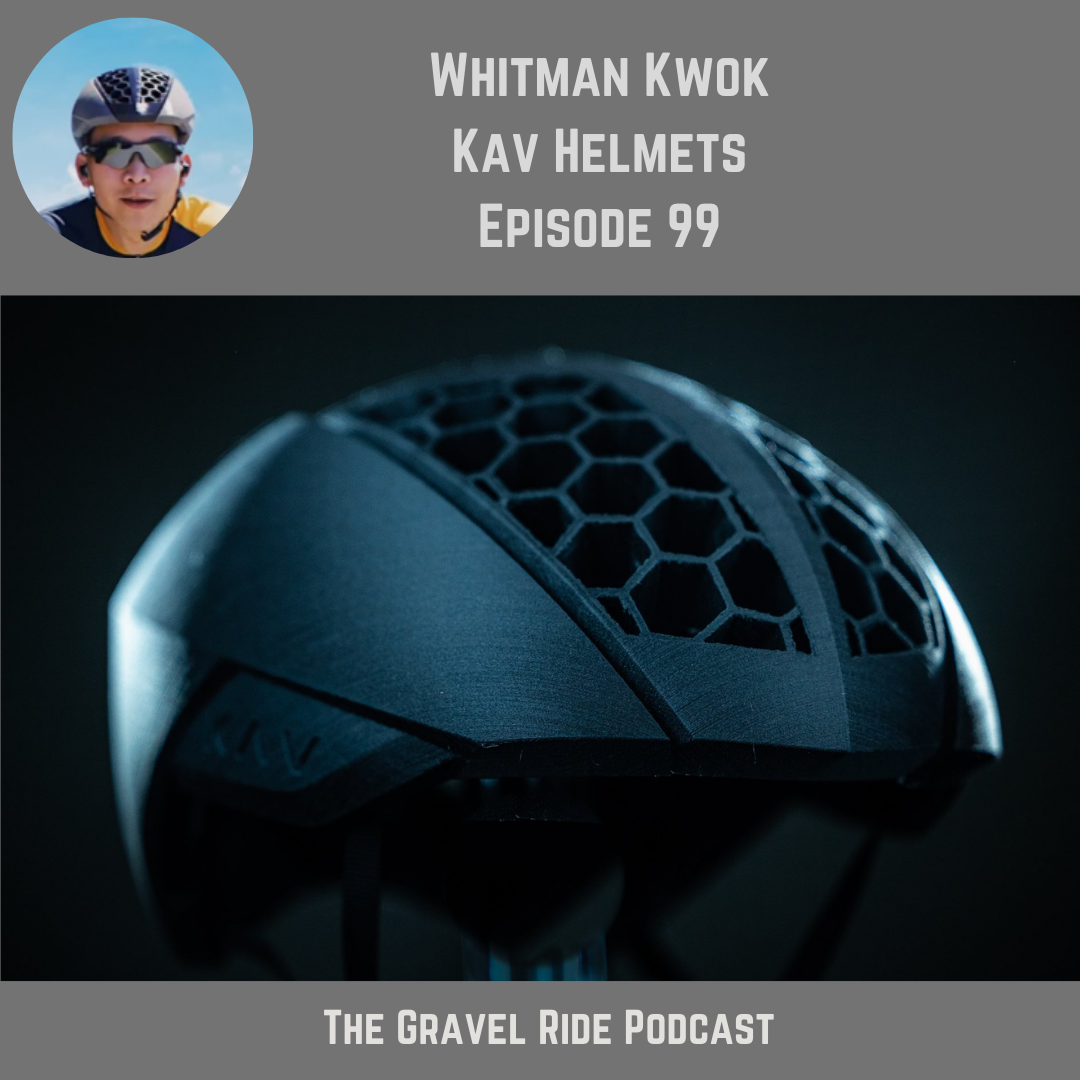
Kav Helmets - Custom 3D printed helmets with Whitman Kwok
This week we sit down with Kav Helmet CEO and Founder, Whitman Kwok to discuss the companies' innovative 3D printing technology that can produce a custom fitted helmet for every rider. Kav Helmets The Ridership Support the Podcast Automated Transcription (please excuse the typos) Kav Helmets [00:00:00] Craig Dalton: Hello and welcome to the gravel ride. Podcast. I'm your host, Craig Dalton. [00:00:08] This week on the show, we've got Whitman Kwok the founder and CEO of Kav Helmets. [00:00:14] Kav Helmets may yet to be a household name in the cycling industry. But you'll learn. The team has a rich history in the cycling helmet market. They're innovative approach to manufacturing. Using 3d printing technology is a novel approach. And creates a uniquely custom helmet for each rider. I'll let Whitman get into the ins and the outs of the technology but i'm a big fan of the approach as additive technology just opens up a lot of possibilities for where material is laid in the helmet. [00:00:45] If you're planning on attending this year, sea Otter classic in Monterrey, California, the Kav team will be showing off their 3d printing technology. There they'll even be 3d printing, some key chains, which I think will showcase how the process actually works. If you're not in the area or not attending seawater, be sure to visit the Kav website as they're opening up orders for all. [00:01:08] Before we jump into this week show, I need. To thank our sponsor. Today's program is brought to you by Athletic Greens, the health and wellness. Wellness company that makes comprehensive daily nutrition really, really. Simple. [00:01:19] With so many stressors in life, it's difficult to maintain effective nutritional habits and give our bodies the nutrients it needs to survive. Our busy schedules, poor sleep, massive gravel rides. The environment works dress or simply. Not eating enough of the right foods can leave us deficient and key nutritional. [00:01:38] Areas. by athletic greens is a category leading superfood product. That brings comprehensive and convenient daily nutrition to everybody. Keeping up with the research, knowing what to do and taking a bunch of pills and capsules is hard on the stomach and hard to keep up with. To help each of us be at our best. They simply provide a better path to nutrition by giving you the one thing. With all the best things. [00:02:03] One tasty scoop of AG1 contained 75 vitamins minerals, and whole food sourced ingredients, including a multivitamin multimineral probiotic, green superfood blend [00:02:13] And more in one convenient daily serving. [00:02:16] The special blend of high quality bioavailable ingredients in a scoop of AIG one work together to fill the nutritional gaps in your diet, support, energy, and focus aid with gut health and digestion and support a healthy immune system. Effectively replacing multiple products or pills with one healthy delicious Drink . [00:02:36] As many of you know, I've been an athletic greens subscriber for about the last five years. So I truly appreciate their support of the podcast. If you're interested in learning more, just visit athletic greens.com/the gravel ride. The team at athletic greens, we'll throw in a free one-year supply of vitamin D and five free travel packs with your purchase. [00:02:59] Again, simply visit athleticgreens.com/thegravelride to take control of your health and give AG1 a try today. [00:03:08] With that said let's dive right into my conversation with Whitman from Kav Helmets. It's. [00:03:13] Whitman. Welcome to the show. [00:03:16] Whitman Kwok: That is correct. Really looking forward to our discussion. Yeah, me too. [00:03:20] Craig Dalton: The manufacturing and additive tech geek in me is really looking forward to this conversation. [00:03:26] Definitely want to learn how calf helmets came about and what your journey is to creating this bike helmets. And more importantly, what the benefits are for riders in the gravel scene. So let's jump in and let's just in your own words, let us know about cab helmets, how it started and what the vision is. [00:03:46] Whitman Kwok: Yeah, absolutely. There's a lot of impact, even in that simple question. I think fundamentally the vision was. Oh, providing a concierge service to athletes. I had always, as a competitor cycles in college, tweak my gear, adjusted everything from crank buy-ins to handlebar lengths and all, everything to get the most performance and also just make the bike an extension of myself. [00:04:10] And I don't think anything has changed in the intervening years. And I think in all the sports that we talked to, whether it's a hockey players or something the gears are really important part of the athletic experience. And so for cab it was obvious to us that the helmet market is really large. [00:04:26] It is a largely at this point a undifferentiated product where there isn't a dominant player per se. There isn't a apple or a Tesla or a Peloton where people just all gra
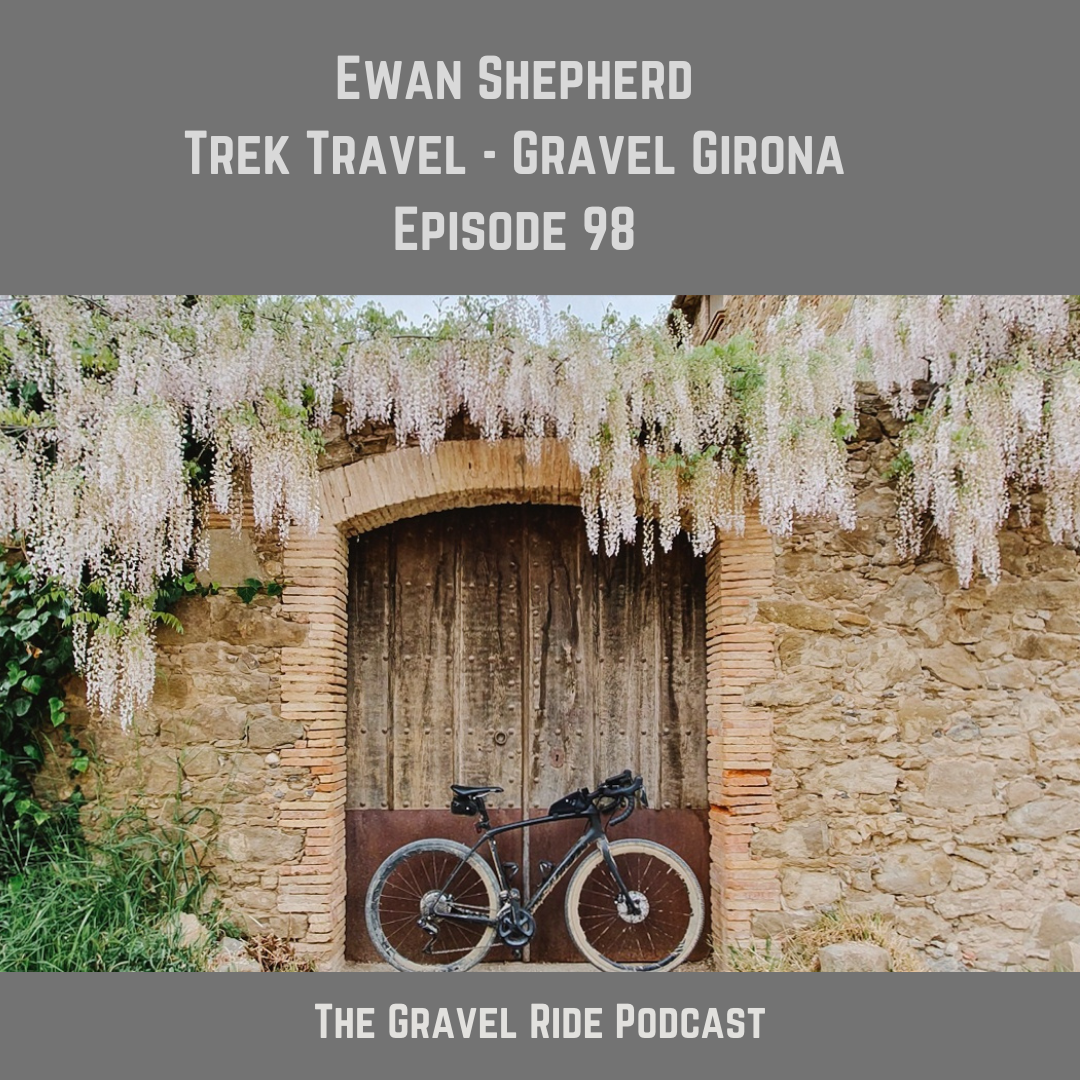
Trek Travel - Girona Gravel Tour with Ewan Shepherd
This week we sit down with Ewan Shepherd from Trek Travel to discuss their upcoming Girona Gravel Tour trips. We learn about the city, the cycling community and the abundance of gravel that surrounds the city. Trek Travel Gravel Tour Girona Join The Ridership Support the Podcast Automated Transcription (please excuse the typos): Trek Travel [00:00:00] Craig Dalton: Hello and welcome to the gravel ride podcast. I'm your host Craig Dalton. [00:00:06] This week on the podcast, we're joined by UN shepherd European logistics manager for track travel. Based out of Girona Spain. [00:00:14] As the longtime listener knows I've been super keen on the idea of gravel travel and super excited to see this industry grow up. [00:00:22] We had an earlier discussion with Juan De La Roca about Southern Colorado and building that up as a gravel destination. And now we're seeing events like LIfeTime's Rad Dirt Fest crop up over there. We've also talked to event organizers over in Europe, around the gravel epic series that was conceived. During the COVID time and didn't actually get to get its races off the ground. [00:00:46] But one of the locations we talked about in Europe was Girona. Now for road cyclist, Girona has long been part of the discussion about where professional athletes live. And there's a reason why they live there. Amazing road, riding all over the place. So I was really excited to learn originally from the gravel epic team about Girona as a travel destination for gravel cyclists. [00:01:11] But even more excited to learn about this trip that Trek travel is putting together their Girona, gravel bike tour. [00:01:18] They've got a couple more departures this year in November that you can still sign up for as well as a whole host of dates for 2022, starting in the spring. [00:01:28] After talking to you. And all I can say is sign me up. It sounds amazing. I'll let him explain it in his own words, but it sounds like Jerome has a very special place for cyclists of all kinds. [00:01:39] And the opportunities for gravel cycling are abundant outside the city center. [00:01:44] I'm excited for you to learn more about Girona and gravel. With that said let's dive right in to my conversation with you and shepherd [00:01:52] Ewan welcome to the show. [00:01:53] Ewan Shepherd: Hey Craig, thank you very much for having me and thank you everybody for listening. [00:01:58] Craig Dalton: I appreciate you joining us on a Friday evening over there in Spain, I'm super excited about the topic we're going to discuss today as the listener or the longterm listener has known. [00:02:08] I've talked about gravel travel as something I'm super excited about because as we all know, it's such a great way to explore the world and the idea of packing my bike and going somewhere exotic, like Girona Spain is super exciting to me. So when I got the opportunity to connect with Trek travel, Dig into this trip and dig into Jarana grab gravel jumped at it. [00:02:31] So you, and thank you for joining me. And let's just get started by a little bit about your background. [00:02:37] Ewan Shepherd: Yeah, no worries. Thank you again for having me. And I guess we share something in common that we both enjoy eating well by bike. So gravel travel is definitely evident between us all. Huh. So Bob, my background it's been varied. [00:02:50] I started off as a kid, not really enjoying the power of two wheels on my own preferring Moda, power of motocross, bikes, and motor sport, and pursue the a career in motor sport. I am, I'm only 29, so it's not, it wasn't a long career. And then I decided to jump into the cycle career really because my brother threw me on an old racing bike of hairs and said, we're going trick racing of what is this. [00:03:14] And yeah. That's how I got into cycling and kind of started to learn about it. Then love cycling, all things cycling really threw me on the amount of bikes for the first time. He threw me on a cyclocross bike for the first time, took me to attract for the first time. And just more and more, I ate it up and started falling in love with with cycling and And then I thought, why not help out in my local bike shop? [00:03:37] Because I was in between jobs and bugging the owner and the mechanic calling in on the bike and asking for them to help me with this, or could they get pots or for that? And then they were like, Hey, we need an extra hand here. And you're pretty mechanically minded. Can you want to come and help us out? [00:03:53] And that's how I, it. Wrenching in a bike shop. And from there, it took me to I was actually living in Australia at the time and working in a shop debt. And then I started working for the initial prompt and dealer in Australia, which was pretty fun and interesting. Little folding bikes, which were going all over kind of the Australasia and New Zealand even send a bite that prompted the Fiji. [00:04:17] And then I moved back to the UK and was starting working for old mountain bike brands tha
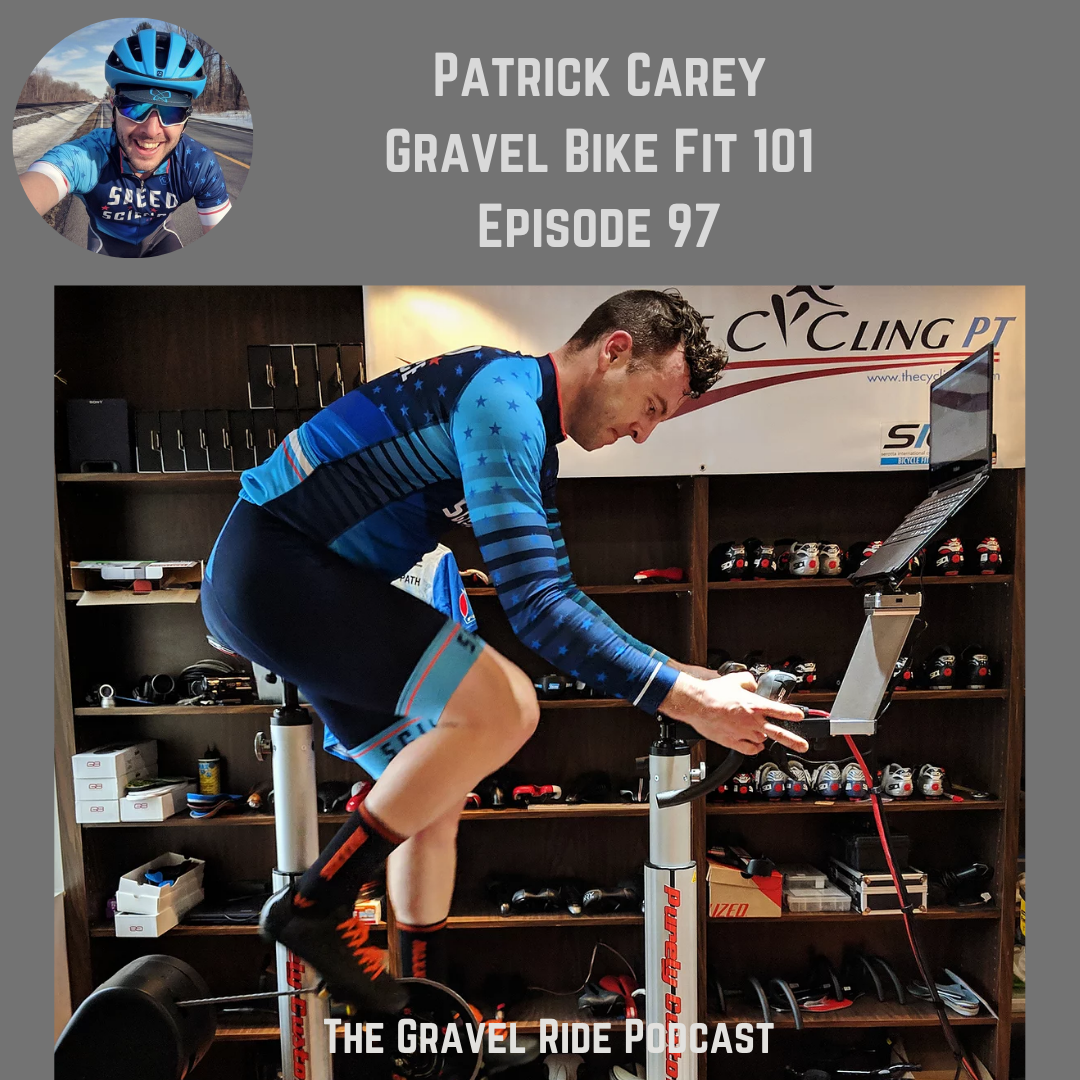
BikeFit 101 with Coach Patrick Carey
This week on the podcast we tackle Gravel Bike Fit 101. Randall interviews Coach and Fitter Patrick Carey about the fundamentals of fit with key takeaways for every rider. Patrick / Speed Science Coaching Website The Ridership Support the podcast Automated Transcription (please excuse the typos): BikeFit 101 with Coach Patrick Carey [00:00:00] Randall: Hello and welcome to the gravel ride podcast. I'm Randall Jacobs, and today I'm joined by Patrick Carey. Patrick was on the pod with us in February of 2021. Craig and him had a conversation about the five skills every gravel cyclist needs to master. [00:00:17] Patrick wears a few different hats. He is the founder of speed science coaching. He does full-time training for cyclists and endurance athletes. He's a skills coach with Lee Likes Bikes and Ride Logic, and he travels all over the country, teaching bike skills. He is an SICI. I train bike fitter and their approach is very much integrating some of the thinking from the medical and physical therapy fields into bike fitting. And in a previous lifetime, he was a mechanical engineer, so he really understands how mechanical systems work, including, biomechanics. [00:00:45] Before we get started. I'd like to remind you that if you'd like to support the podcast, there are a few different ways you can do so. Firstly, you can go to buymeacoffee.com/thegravelride and make a donation or become a recurring supporter. [00:00:58] All proceeds, go directly to Craig and offset his costs in producing the pod. Secondly, you can join The Ridership and contribute to the conversations that are happening there. [00:01:06] And lastly, if you'd like to support the work that I do, thesis currently has a limited number of build kits for complete bikes for delivery this fall. If you're a friend you're interested now, it'd be a great time to schedule a consult so we can work together to create the perfect spec for your unique fit, fitness and terrain. [00:01:21] And with that, Patrick, welcome back to the podcast. [00:01:24] Patrick: Hey, thank you. I'm so happy to be back. This is going to be a lot of fun. [00:01:27] Randall: Yeah, this is a conversation I've been wanting to have with you for quite some time. So let's just dive right in. How do we even define a good bike fit? [00:01:34] Patrick: I think that's a great place to start. My take is that every good bike fit starts with the bike fitting the rider, not the other way around. And unfortunately, oftentimes what happens is people are shoehorned onto their bikes and that's really the opposite of what we want to happen. [00:01:50] We want to set every bike up for each rider so that the rider just naturally falls into position on the bike. There's no pain points. You're not running into impingements and you're also not contorting yourself in any way you're not overreaching. You're not bending your wrist some awkward way, and in that same idea, if something hurts when you ride your bike, it's not right. Don't ever let someone tell you "oh, that's just how riding a bike is. It's supposed to be a little uncomfortable". No, it's supposed to be joyful and it's supposed to be wonderful. And when you get your bike set up correctly for you, it can be that. [00:02:25] Randall: This is very much aligned with what I often talk about. We're not creating a bicycle. We're creating a cyborg. And the interface between the animal and the machine is how you achieve that. Let's dive in even further. So different approaches to fit. [00:02:37] Patrick: Probably what most people have been used to it's the throw a leg over it approach. [00:02:41] You literally stand over the bike. If you can clear the top tube, that's probably a good place. And then, when you throw the word fit in there usually what ends up happening is, you eyeball the saddle height, the stem maybe, gets flipped. It probably does not get changed. And then also, a lot of that is relying on fit charts, right? So bike companies put out the fit charts that says if you're five, seven, you should be on this size bike. If you're five, 10, you should be on the size bike. And I personally believe that very often, unfortunately, results in people being on the wrong sized bike. Typically a bike that's too big. [00:03:17] Which means that they are overreaching on that bike and you ended up chasing the front end of the bike. So the front end become somewhat fixed in space and you can always shorten the stem so much. So then that rider ends up being shoved way, way forward on the bike. And yeah, bikes are meant to create enjoyment. This takes away from it. [00:03:35] Randall: And when you go with too short of a stem. It does take some of the mass off the front axle. So for say high-speed canyon carving that front end is not gonna feel as planted. Works fine. Say for gravel. But in a road application, it can really make the bike feel vague upfront. So it's this handling issue as well. [00:03:53] Patrick: It can work okay for gravel, I think one of

Spooky cycles - the return of aluminum gravel bikes with the ROVR
This week we sit down with Adam Eggeberecht from Spooky Cycles to talk about the resurrection of the brand and how modern day aluminum is crafted for gravel bikes. This episode is presented by ENVE. Spooky Cycles The Ridership Support the Podcast

The Gravel Lot - Repost of Craig Dalton interview
This week we are republishing an interview from The Gravel Lot podcast where your host, Craig Dalton gets to share a bit of his journey into podcasting and community building with Jon and Doug of The Gravel Lot fame. The Gravel Lot Web Support the Podcast Join The Ridership
The Gravel Lot - Repost of Craig Dalton interview
This week we are republishing an interview from The Gravel Lot podcast where your host, Craig Dalton gets to share a bit of his journey into podcasting and community building with Jon and Doug of The Gravel Lot fame. The Gravel Lot Web Support the Podcast Join The Ridership
The Gravel Lot - Repost of Craig Dalton interview
This week we are republishing an interview from The Gravel Lot podcast where your host, Craig Dalton gets to share a bit of his journey into podcasting and community building with Jon and Doug of The Gravel Lot fame. The Gravel Lot Web Support the Podcast Join The Ridership
The Gravel Lot - Repost of Craig Dalton interview
This week we are republishing an interview from The Gravel Lot podcast where your host, Craig Dalton gets to share a bit of his journey into podcasting and community building with Jon and Doug of The Gravel Lot fame. The Gravel Lot Web Support the Podcast Join The Ridership

In the Dirt 23: First time gravelers, Rooted Vermont, gravel suspension and more
This week Randall and Craig catch up on all things gravel. We discuss introducing friends to gravel riding and events, suspension on gravel bikes and comparative bike geometry. Geometry Geeks Support the Podcast Join The Ridership
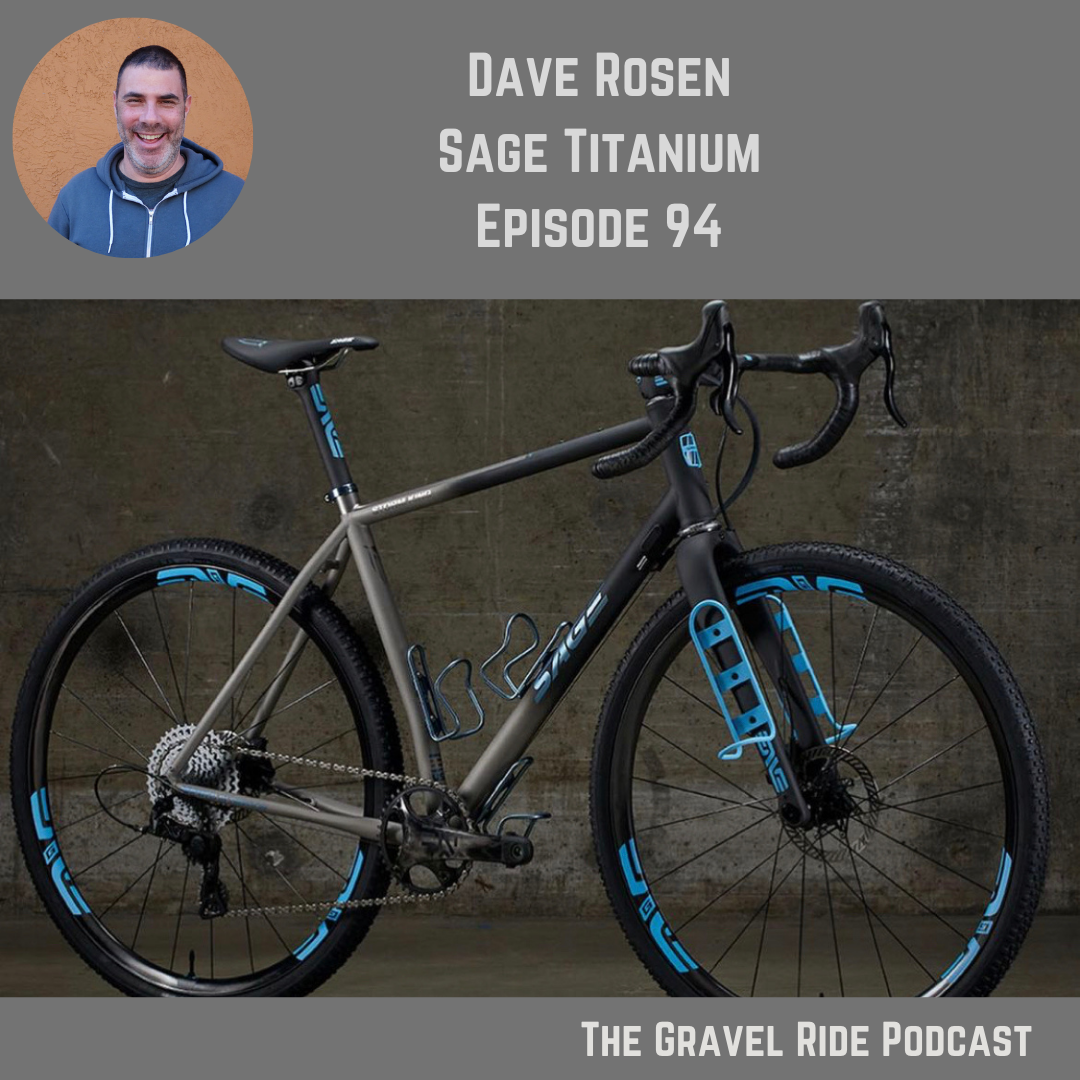
Sage Titanium - Dave Rosen Founder / CEO
This week we sit down with Dave Rosen, founder and CEO of Sage Titanium. After connecting at the ENVE Custom Builder Round Up, we sat down to talk about the Titanium Storm King, its performance goals and the multiple finishes that adorned this show bike. This show was presented by ENVE. Sage Titanium Website / Instagram Join The Ridership Support the Podcast Automated Transcription (please excuse the typos): ENVESage Titanium [00:00:00] Craig Dalton: Hello and welcome to the gravel ride podcast. I'm your host Craig Dalton. [00:00:07] This week on the podcast, we've got Dave Rosen, CEO, and founder of Sage Bicycles out of Oregon. Dave. And I happened to meet at the ENVE builder Roundup, and this is one of five episodes related to the NV Roundup that happened at the end of June in Ogden, Utah. I have to reiterate. If you're known for the company, you keep. [00:00:29] ENVE is known for exceptional relationships. That room was filled with outstanding builders from all over the world that chose to spec their custom creations with ENVE components and parts, including their adventure fork stems bars. And of course their wonderful gravel wheels. If you haven't already followed ENVE on social media channels. [00:00:54] Definitely do. And I highly highly recommend you seeking out imagery from the grow Dio event. So many beautiful bikes, so many beautiful paint jobs really worth looking at and keeping on your calendar for next year. If you happen to have the opportunity to race the grody. Event. It was an amazing ride out of Ogden, Utah. [00:01:18] That really checked a lot of boxes for me. It was both technical and challenging and scenically. Beautiful. Definitely one to have on your gravel calendar for 2022. With all that said let's dive right in to my interview with Dave Rosen, from Sage bicycles. Dave, welcome to the show. [00:01:39] David Rosen (Sage): Thanks Craig. [00:01:40] Craig Dalton: Great to see you. After seeing you in Utah at the ENVE builder, Roundup, what a, what an event. It was. [00:01:46] David Rosen (Sage): It really was fantastic. I had such a good time. It was so much fun. [00:01:49] Just being able to reconnect with friends. Doing industry stuff. Again, it just, it was way too long. And to be able to, meet new customers and that kind of thing, it just, it was just, it was great. And then just riding bikes, it was all about bikes. Just everything we did from to the little short track event, it was a really good time. [00:02:08] Yeah. I thought it was [00:02:09] Craig Dalton: funny that some of the builders were actually taking the bikes they built and racing them or riding them in the grody event. [00:02:15] David Rosen (Sage): The next. Yeah that's what I did with mine. It was just, that's why I brought it. It was it's meant to be written. It's meant to be raced. [00:02:22] Although I really wouldn't classify my writing as racing so much as it was surviving at my own pace. So I can make it back in time for beer. There was a bit [00:02:31] Craig Dalton: of that survival strategy in my day as well, but it was a great reminder and seeing all these great builders that I've wanted to have more of these conversations and particularly excited to talk about Sage Titanic. [00:02:43] So why don't we just start off with learning a little bit more about what led you to start the company and when it was started? [00:02:50] David Rosen (Sage): Yeah, so I started the company officially on paper in 2012. My first inventory was produced in 2013. At the time the original intent with the brand was to actually make the frames overseas. [00:03:06] For that in the beginning with the idea of offering a lower cost price point, competitor to what was out there. I knew I wanted to do titanium. It was always about titanium. I've been in love with titanium as a frame material for ever since the eighties, when I would see, titanium, Italian bikes rolling around and, central park, New York city, which is where I'm originally from not central park, mind you, but New York city. [00:03:28] And for me, it was always about Thai, but in this instance, I thought, it might be good to do a price point. And what I realized is over the course of that first year is the quality suffered. And, the reality is you get what you pay for. And yeah, the pricing could be cheap, blah. [00:03:44] There's a reason why it's cheap. And so the quality of the bikes suffered, the stuff we put out was fine, but we had more failures than we had successes. And, we've taken care of all of our customers that have had issues. And then there are others. Never heard from him. Everything's fine. [00:03:59] Wasn't it. Dave, was there a particular [00:04:01] Craig Dalton: style of bike that you targeted at that time? It was a bit early, obviously for gravel in those days in 2012. [00:04:07] David Rosen (Sage): Yeah, we did actually a while we did have a road bike it was more about the cyclocross bike and we actually had a commuter bike that would be the precursor

Chris Mandell - SRAM / Zipp / RockShox and the new XPLR gravel line up
Exclusive interview with SRAM's Chris Mandell discussing the new XPLR line of product for gravel. We dig into the SRAM XPLR components, the RockShox REVERB AXS wireless dropper post and finally RockShox's new gravel suspension fork, Rudy. Support the podcast Join The Ridership Full automated transcript (please excuse the typos): SRAM - Chris Mandell [00:00:00] Craig Dalton: Craig Dalton. Hello and welcome to the gravel ride podcast. I'm your host, Craig Dalton. [00:00:08] We've got a big show for you this week. So I'm going to keep the intro short. I'm welcoming Chris Mandel from SRAM [00:00:14] To the show to talk about the new explore series just launched today, August. [00:00:19] This is really three shows in one, as we talk about grupos dropper posts. And suspension forks. [00:00:25] I'm super excited to dive into this conversation. I've been testing the products a few weeks down here in Topanga, California. And really excited to bounce my ideas off of Chris. [00:00:36] And get his insights about the new XPLR line. [00:00:39] So with that, let's dive right in. [00:00:41] Chris, welcome to the show. [00:00:43] Chris Mandell: Thanks for having me. I'm real excited to be here. [00:00:45] Craig Dalton: This is a conversation that I feel is eight or nine months in the works. [00:00:49] Chris Mandell: Yeah, for sure. That's that's generally how these things go, your word developing and working on products for quite a long time before they actually make it out into the world. [00:00:59] Craig Dalton: So yeah, I'm really excited for this discussion and I'm super stoked that this is on the day of the big launch. So if you're listening on August 10th, which is when this podcast is first released, SRAM has got some things to talk about today. But before we get into that, I always like to get a little bit of information about you as a rider where you're living and how'd you get into the sport. [00:01:22] Chris Mandell: Yeah. Thanks for that. I've been a passionate cyclist for a really long time, my dad did a bit of road racing back in the day and we always had bikes around. Yeah. But I got distracted with American football in high school, and then ended up going to college to play American football and found really quickly in college that I did not want to keep playing at that level. [00:01:44] And so I stopped that and was really lucky in that the town that I lived in McMinnville, Oregon had a small but strong mountain bike scene. And the people there took me under their wing and I started mountain biking with them. And then eventually started working at the local bike shop Tony's and just fully embraced it and was obsessed with it. [00:02:02] And then after I graduated from college, I got a job working full speed ahead, which took me up to Seattle which was great. Cause there was ton of really good cross country riding outside of Seattle, but there was also. A lot of like free side and downhill riding. So at that point I branched and was, writing a commuter to, and from work riding and racing cross country, race bikes, and then also going up to the Whistler bike park and riding that as much as possible kind of fast-forward became a product manager at Kona bikes and developed full suspension bikes at cone bikes for a long time. [00:02:38] And then eventually made the jump to become the rear shock product manager at RockShox. Which had me moved from Bellingham where I was working for Kona, Bellingham, Washington to Colorado Springs, Colorado, and had a great four and a half years living in Colorado Springs, Colorado being really detailed, focused on full suspension, mountain bikes and what it takes to. [00:03:02] Tune shocks and developed shocks for OEM customers like specialized or Santa Cruz. And then at a certain point, unfortunately, due to some family reasons my wife and I needed to move back to Bellingham to be closer to her family. And so we, when we made that shift I switched over from working in product development, to working on the PR side of things, which is what has me on the phone with you. [00:03:25] But in this, in a similar timeframe, we also, I, had a child and I was getting a little bit older and I'd always like commuted and like dabbled in, in rode bikes a little bit, but I'd never really rode bikes. Never really grabbed a hold of me, but gravel bikes started to grab a hold of me. [00:03:42] And it was about that time about when I had, when we had our child that I got a gravel bike and really started riding one pretty consistently. Fell in love with a lot of what, the early days of cross country riding, where for me, which was exploring your local area and like finding the different nooks and crannies and gravel roads and going to the places that you hadn't been to before. [00:04:07] But also really being able to like physically push myself, on, on a mountain bike on one hour mountain bike ride, you go up and then you come down, but on a one-hour gravel ride, you're basically peddling your brain
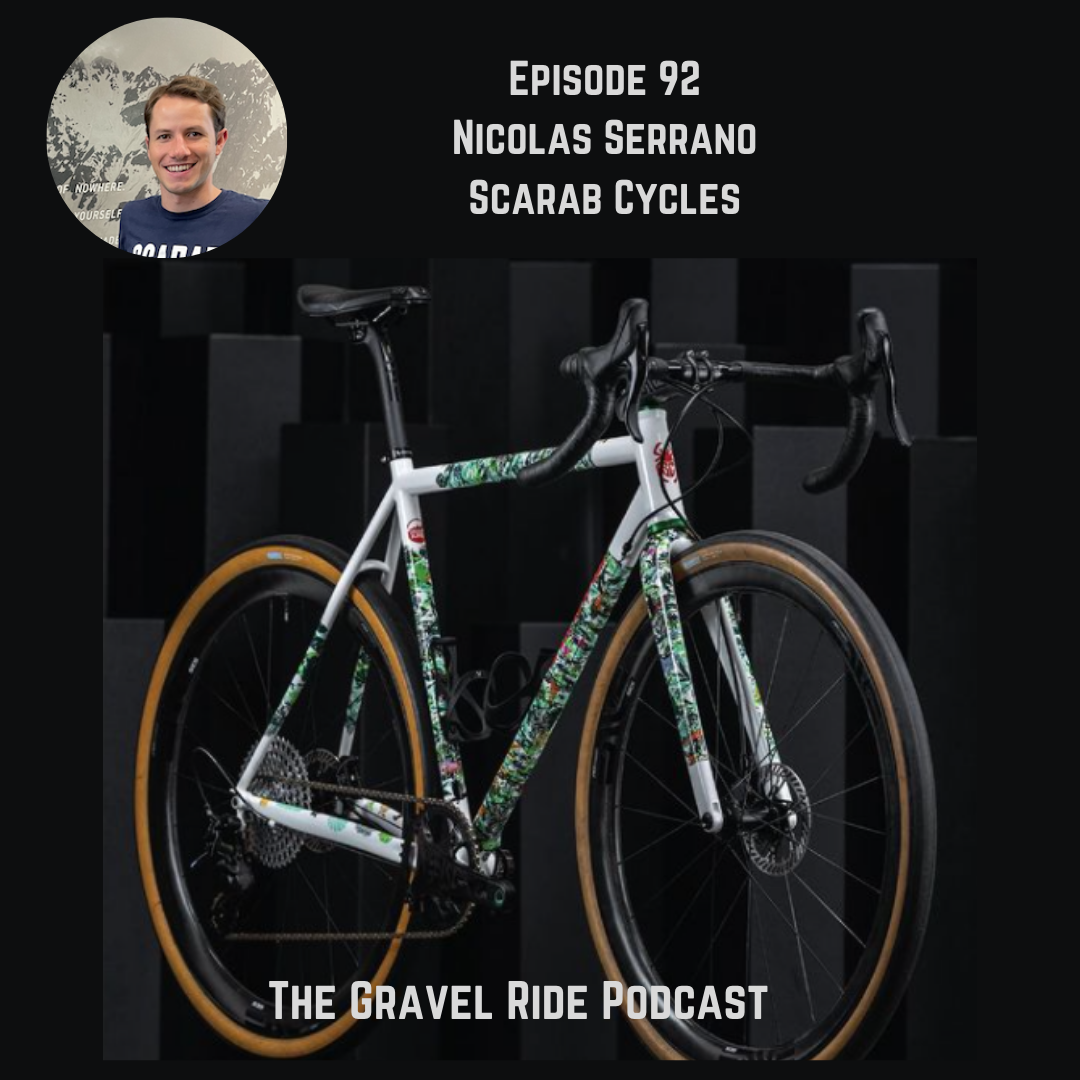
Scarab Cycles - Nicolas Serrano
This week we sit down with Nicolas Serrano from Colombia's Scarab Cycles. This episode was recorded at the 2021 Enve builder round up. We learn about the brands origins, ethos and manufacturing process. This episode is presented by ENVE. Scarab Cycles Instagram and Website Support the Podcast Join The Ridership: Automated transcription (please excuse the typos): SCARAB_Nicolas Craig Dalton: [00:00:00] Hello and welcome to the gravel ride podcast. I'm your host Craig Dalton. [00:00:06]This week on the podcast. We welcome Nicolas Serrano from Scarab cycles in Columbia. I met Nicolas at the envy builder Roundup earlier this year and [00:00:16]Was super impressed with the bike. They brought to the Roundup, the paint job, and even more impressed once I learned the story behind scarab cycles. [00:00:24]This episode is brought to you by our friends at ENVE composites. [00:00:27]ENVE has been a huge supporter of the gravel industry producing [00:00:30]Products since the inception of this type of riding. Up of exceptionally quality. their seat posts. And of course their lineup [00:00:39]Of gravel wheel sets. Envy across all social media channels. [00:00:44] And check out envy.com for a dealer locator. I know it's always great to go into your local bike retailer and get your hands on these products and even better yet, [00:00:53] Maybe getting out on a test stride on some of these components. [00:00:57]Out to all the new members from www.buymeacoffee.com/thegravelride. [00:01:05] [00:01:05]It means a ton to me that you've selected to support me with your dollars memberships, start at $5 a month. So big, thanks to John Rankin. [00:01:14]Two. Nicolas Marzano, high Plains, drifter mark S just a few of the most recent members to the buy me a coffee.com program. [00:01:24]And further, thank you to the one-time contributors. [00:01:28]With that said let's dive right in to my interview [00:01:31] Nicolas: [00:01:31] hey, it's Nicolas from Scarab cycles from Columbia, [00:01:34] Craig Dalton: [00:01:35] Welcome to the show. [00:01:36] Nicolas: [00:01:36] Hey, thanks. Thanks for inviting us. And we're pretty happy to be here. [00:01:40] Craig Dalton: [00:01:40] And I'm pretty excited to talk about that bike. I just saw downstairs here at the NV Roundup. [00:01:45] It's totally beautiful. But before we get into that, why don't you just tell us a little bit about your background and what led to the formation of the company and a little bit about the company? [00:01:55] Nicolas: [00:01:55] Of course. So, as carb cycles has started back in the day, six years ago our founder Santiago Toto, who started the company with a local frame builder, it used to have another name before. [00:02:05]And then in migrated toward nowadays is described cycles in as the name, it started in 2018 with the name script cycles, but we've been building bikes since 2000 16, more or less. And tell us [00:02:17] Craig Dalton: [00:02:17] about where the company [00:02:18] Nicolas: [00:02:18] is located. So our company slug is based in in the outskirts of managing it's Antioquia it's a more or less 30 minutes from aging, which is the second biggest city in Colombia . [00:02:29] Craig Dalton: [00:02:29] And does Columbia have a large bike building scene? [00:02:33]Nicolas: [00:02:33] Not a bike building scene, but it's home of the world known as kind of house, which is basically the we explored world-class cyclist. So we've been there's not a strong bike building scene. There's couple of our one or two or three frame builders in the country. [00:02:48] But mostly what we have in our country is Cyclists. There's a strong love for the sport. The bicycle itself, it's a very strong object or thing for the Colombian culture. So it's not only a way of transportation. It's a, it's not only a sport. It's just a way of life, a way of being, and it's an element, the bicycle that connects us all as Colombians, you can go to a road and meet you can be with us. [00:03:12] With farm guy, a company CNO, which he's just training in his Sunday ride and you can actually be writing with a pro. So these two guys are going to have the same own time, and they're just like shredding their ass off a very high speed. Or you just can have on weekdays, a kid going from his very small town moving to a, another small town to go to school. [00:03:32] So basically the bicycle is a very strong element in the Columbia. [00:03:37] Craig Dalton: [00:03:37] That's awesome to hear football and soccer, obviously big sports as well. How would you rank cycling? I mean, obviously like with NARIC and Tanya going back five, six years and all the emerging Colombian superstars today, was that sort of the generation where cycling really took hold in the culture or did it, does it date back further than that? [00:03:53] It [00:03:53] Nicolas: [00:03:53] comes very, it comes back way that with a load, like when we started having a world-class cyclist . Going to two, two big races in Europe winning the winte
Lily Williams - Olympian USA Cycling / Rally Cycling
This week we sit down with Olympian Lily Williams who will represent the United States on the Women's Pursuit team. While track cycling is not our typical fare, Lily has a cyclocross background (and a maybe a gravel future). In addition to representing our country, Lily is the Communications Director of Bike Index. Lily Williams Instagram USA Cycling Olympic Track Schedule Support the podcast Automated Full Episode Transcription (please excuse the typos): Craig Dalton: [00:00:00] Hello and welcome to the gravel ride podcast. I'm your host Craig Dalton. [00:00:10] This week on the podcast, we've got Olympian, Lily Williams, joining the show. Lily's got a bad-ass background as a cyclist particularly as a cyclocross racer after a career as a collegiate runner. [00:00:24]Team. Lily races professionally on the road with the Rally Cycling, [00:00:28]And caught the attention of USA cycling and was brought to Colorado Springs for some performance testing on the track. I'll let her explain what happened next but a pretty amazing journey from someone who just found cycling after college. [00:00:41]Like many professional cyclists, Lily also holds down a full-time job, full disclosure. We work together at the nonprofit bike index. And we'll talk a little bit about that. And the mission bike index is on. [00:00:54]Before we get started, I needed to thank this week sponsor Athletic Greens, who also happens to be a sponsor of USA cycling. [00:01:04]Athletic greens is N S F certified for sport. Meaning they take their product seriously. Consistently testing and auditing it to ensure what's on the label is actually in the pouch. As you can imagine, that's critically important for Olympians and professional athletes and gives us average athletes the confidence to know what's going in the body. [00:01:27]I'm actually drinking my post ride athletic grains right now, my personal way to prepare it. I like two big heaping scoops of ice, and then a heaping spoonful of Athletic Greens. [00:01:39]Athletic Greens is a complex blend of 75 vitamins minerals, and whole food sourced ingredients. Athletic greens is green powder engineered to help fill the nutritional gaps in your diet. Their daily drink improves everyday performance by addressing the four pillars of health energy recovery gut health and immune support [00:02:00]I've said it before. I'm a little bit embarrassed at times as to how poor my diet can slide when I get stressed out. But with athletic greens being packed with for recovery. Probiotics and [00:02:12] Digestive enzymes for gut health, vitamin C and zinc [00:02:17]For immune support, it's just an easy all-in-one solution to help your body meet its nutritional needs. And boy, I could use all the help I can get. My program, I'd take one scoop every morning, and then I'll typically do two glasses on days where I've depleted myself through a big gravel ride. It's keto, paleo vegan. Dairy-free and gluten-free. All in a drank with less than one gram of sugar that tastes great over ice . [00:02:45]So, whether you're looking to boost your energy levels, support your immune system or address gut health. Now's the perfect time to try athletic greens for yourself. Simply visit athletic greens.com/the growl ride to claim my special offer today and receive free. K-12 wellness bundle with your first purchase. [00:03:05] That's up to a one-year supply of vitamin D as an added value. When you try, they're delicious and comprehensive daily, all in one drink. You'd be hard pressed to find a more comprehensive nutritional bundle anywhere else. Again, that's athletic greens.com/the gravel ride. Would that business of supporting our sponsors behind us. Let's jump right in to my conversation with Olympian Lily Williams. lily. Welcome to the show. [00:03:31]Lily Williams: [00:03:31] Hey Craig. Thanks for having me [00:03:33]Craig Dalton: [00:03:33] Our weekly calls. Aren't enough , Lily and I work together at the nonprofit bike index. [00:03:38] So we are in frequent communication. [00:03:40]Lily Williams: [00:03:40] It's true, but nonetheless, I'm happy to be here. [00:03:42] Craig Dalton: [00:03:42] And in the context of this conversation, huge congratulations for being selected to the Olympic team for the United States. [00:03:49]Lily Williams: [00:03:49] Thank you. Yeah. So exciting. How many people have told me I'm fulfilling a dream and I'm just like, forget how [00:03:56] cool it is. [00:03:57] Craig Dalton: [00:03:57] I think it's absolutely amazing. And I'm one of those people who constantly feels the need to remind you what an amazing journey you've been on. [00:04:04]Yeah. Yeah. I appreciate it. Thank you. For the [00:04:08] listener. I want to be clear, unfortunately, this is not the Olympic gravel cycling team. [00:04:12]Lily Williams: [00:04:12] Not yet, but what might [00:04:15] Craig Dalton: [00:04:15] happen? [00:04:15] This is the Olympic pursuit team on the track. [00:04:19]Lily Williams: [00:04:19] Yes. Yeah. Which is a
Tony Pereira - Breadwinner Cycles from the ENVE Builder Round Up
This week we sit down with Tony Pereira of Breadwinner Cycles to learn more about this Portland, OR based custom builder. Tony was part of the 2021 ENVE Builder Round Up in Ogden, UT. This week's podcast is generously sponsored by ENVE. Breadwinner Cycles Support the podcast The Ridership Automated Transcription (Please excuse the typos): Breadwinner Craig Dalton: [00:00:00] Tony, welcome to the show. [00:00:01]Tony Pereira: [00:00:01] Thanks for having me, Craig. [00:00:02] Craig Dalton: [00:00:02] It's great to see you virtually from your office there. [00:00:05]Tony Pereira: [00:00:05] It's funny now that we're all accustomed to this it's it makes it really easy. [00:00:08] Craig Dalton: [00:00:08] Yeah. It really is. If you don't have your setup dialed at this point, I don't think you ever will. [00:00:13]Tony Pereira: [00:00:13] Yeah. Right. [00:00:15] Craig Dalton: [00:00:15] So let's start off a little bit by getting to know you and what led you to becoming a frame builder [00:00:21] Transcribing... [00:00:22] Tony Pereira: [00:00:22] It's been a while now. [00:00:23]I worked in, I started out in the outdoor, your industry, I started working in ski shops when I was 16, which was in 1985 and grew up working in ski shops. And then in college, I started working in a bike shop and after college, I moved to Utah and skied and rode and worked in bike shops there. [00:00:44] And I got really active. Like community when I lived in salt lake did that for quite a while. Eventually got bored of being a bike mechanic, just hit my limit on that and what I've always been a tinkerer. Playing around in the garage, working on cars and motorcycles and of course, bicycles. [00:01:01]I learned how to breeze a little and weld a little bit from a friend of mine. And then just brought all those things together. And I was a fan of the old mountain bikes, the, IBUs and salsa. And of course the Richie's, the Richie has always had those beautiful, huge fillets. [00:01:18] And and I'm like, I knew how to braise. So I'm like, I wonder if I could make a mountain bike and, it was, that was two, this was 2002 or so, so almost 20 years ago. The internet was there. We were using all like listserv type communication. But there's a pretty active frame, builder listserv. [00:01:37] It's still exists. But I got on there and started figuring it out, build a couple of mountain bikes and I, after building one, I was like, oh man, I gotta do this. Bringing my love of bikes together with making things and And I just, I was hooked for sure. Riding that first bike is such a joyous, [00:01:54]it's gotta be an amazing feeling to ride something that we've actually made super gratifying. [00:01:59] It sounds like you and I came up in the same era, which was that period of time where there was a lot of great mountain bike, frame builders and custom steel bikes. Every state seemed to have a builder of some notoriety. Yup. Yup. So how did you teach yourself? Was it really through, obviously you had a little bit of hands-on experience from your father's friend to teach you how to weld and, know what equipment was needed. [00:02:25]Craig Dalton: [00:02:25] Were you able to glean some of the basic fundamentals from that list? Serve and ask questions? [00:02:31] Tony Pereira: [00:02:31] Yeah. Yeah, it was great. I know I, Richard Sachs is one of the. More professional frame builders that was on there. And he's always been really generous with his time. And there were a number of others as well, but I remember him in particular, but yeah, there was a great group of people that, that I, you know, some of them I'm still friends with. [00:02:49] Remember Steve from Coconino was getting started exactly the same time. And the two of us were like bouncing things off of each other. And just getting our feet wet, but I, I'm fortunate to have, I have a natural aptitude for using tools and problem solving and, figuring things out. [00:03:08] So yeah, I was able to teach myself, with the help of that listserv, obviously how to make it all come together. And, I look back on those early frames and I still have a couple of them and they were pretty bad. The first there's 20 or so that I built for me and my friends. So they were pretty rough, I should say rough. [00:03:25]They weren't, the finish was rough. They worked fine. But I started building bikes for customers after about the first 20 or so bikes mostly worked, went to my friends and. And they were starting to get pretty good by that. [00:03:36] Craig Dalton: [00:03:36] And did that just happen via word of mouth with the 20 out there, people would see it and say, where did you get that thing? [00:03:42] I had some, I had a core group of friends in salt lake that worked in the bike shop with me, or were associated with the bike shop called wild rose. It was a, early mountain bike scene, mouth bike shop. And two of my friends, Alex and Jeff. They were all, they were 100% on board with me. [00:03:59] They were like,

In the Dirt 22: Flip chips, fit and in-house manufacturing
In the Dirt 22 with Craig Dalton and Randall R. Jacobs. This week we drill further into the discussion around bike geometry, flip chips and fit in our continued exploration of the sport of gravel cycling. Geometry Geeks Support the podcast Join The Ridership
In the Dirt 22: Flip chips, fit and in-house manufacturing
In the Dirt 22 with Craig Dalton and Randall R. Jacobs. This week we drill further into the discussion around bike geometry, flip chips and fit in our continued exploration of the sport of gravel cycling. Geometry Geeks Support the podcast Join The Ridership
Rapha - Jon Freeman and the Explore Powerweave gravel cycling shoe
This week we sit down with Jon Freeman, Rapha's Head of Hardgoods to discuss the Explore Powerweave gravel cycling shoe. We look at what it takes from a design perspective to build a shoe and what gravel cyclists should be looking for in a shoe. Rapha Explore Powerweave Shoe Presenting Sponsor: Athletic Greens Join The Ridership Automated Transcription (please excuse the typos): Rapha [00:00:03]Craig Dalton: [00:00:04] Hello and welcome to the gravel ride podcast. I'm your host Craig Dalton. This week on the show, we've got Jon Freeman from Rapha, joining us to talk about shoes. I've wanted to talk about shoes for a while now, and really dig into the ins and outs of what makes a great gravel shoe. [00:00:21]I'd been riding a comfortable, but not maybe high performance shoe. That was great for all day rides. Great for hiking. But I was curious to get into something a little bit more high performance without giving up that comfort. [00:00:33]So it was great to hear from an expert about how the shoe was designed. We talk about the Explore power weave shoe from Rafa. One of their most recent models focused on the gravel [00:00:45] Before we jumped in, I needed to thank this week sponsor. This week, the show is brought to you by Athletic Greens, the most comprehensive daily nutritional beverage I've ever tried. You've heard me before and I'll say it again. I've been an Athletic Greens customer for a number of years. It's my go-to kind of nutritional baseline that I take every day, just to make sure with all the corners I may cut in my diet that I'm getting what I need. [00:01:12]Athletic Greens is definitely part of my big ride day plans. I'll do a drink in the morning just to get on top of my hydration early, before the ride. And then when I come back, I know I'm always crushed and really depleted. I'll do yet another serving of Athletic Greens. One scoop of Athletic Greens contains 75 vitamins minerals and whole food sourced ingredients. [00:01:34] Including a multivitamin multi-mineral probiotic, green superfood blend, and more. They all work together to fill those nutritional gaps in your diet. Increase energy and focus aid with digestion and support a healthy immune system. [00:01:48] [00:01:48]All without the need to take multiple products or pills. That's what does it for me, it's just simple one scoop every day. And I feel like I've got my bases covered. [00:01:58]So that's my pitch for Athletic Greens. [00:02:00] You know, I love it. You know, I recommend it. Simply visit Athletic Greens.com/the gravel ride. And get your free year supply of vitamin D and five free travel packs today. Again that url is Athletic Greens.com/the gravel ride. [00:02:18]Big, thanks to Athletic Greens for their continued support. And thank you for going to check them out. With all that said let's dive right in to this week's interview with Jon from Rafa. [00:02:29] [00:02:29] Jon welcome to the show. [00:02:31]Thanks. [00:02:32] Jon Freeman: [00:02:32] Thanks, [00:02:32] Craig Dalton: [00:02:32] I haven't me. [00:02:32] Yeah. I'm excited to get into shoe technology with you. It's something that I think I've ignored a little bit in my gravel life. I used to think a lot about it from a road shoe perspective and a mountain bikes you perspective, but it took me a while to come around to really understanding what I wanted out of a gravel shoe. [00:02:48] So why don't we start by just getting a little bit about your background and what led you to Rafa? [00:02:53]Jon Freeman: [00:02:53] Yeah, sure. I think there's Two parts of that, really. So it's my background in design. And then a background in terms of bikes and it basically converged at Rapha, which is A great thing to be able to call a job. [00:03:03] Cause they're two big passions of mine, but yeah. And bikes have always been a part of my life. I grew up riding DMS never to any kind of great level, but just as a teenager, it was really immersed in that sort of culture of BMX building dirt jumps, hanging out in skate parks, that kind of thing. [00:03:18] I grew into mountain bike a bit as I got older. I always loved taking bikes apart and building bikes and learning the mechanics of how bikes work as well. And I think that sort of passion for taking things apart and problem solving led me down the degree of or the road of kind of a degree in industrial design. [00:03:37]So I, yeah I studied and industrial design and graduated and then went on to work for one of the. Large design agencies here in London working on a broad range of industries, different product categories. That's the nature of agency work is that it's super varied, but I spent quite a while back and working on a lot of things have been consumer electronics, wearable tech, and those kinds of other areas. [00:04:01]Just getting an understanding of what, where am I kind of passionate land design, but at the same time, I. I purchased the road bike and had my eyes open to just like how much further and how much faster

ENVE Builder Round Up - builder interview mash up
Interviews on-site at the 2021 ENVE Builder Round Up and Grodeo. We grab interviews with custom builders: Falconer, Holland, Inglis, Mosaic, No.22, Pine Cycles, Sage, Salt Air, Sycip and Wies. Episode presented by ENVE Composites Join The Ridership Support the Podcast Automated Transcription (please excuse the typos) ENVE Builder Mash Up Episode Craig Dalton: [00:00:00] Hello, and welcome to a special edition of the gravel ride podcast. I'm your host Craig Dalton. [00:00:07]I'm releasing this week's podcast, just on the heels of returning home from Ogden, Utah. I was visiting this week. Sponsor ENVE composites. [00:00:16]ENVE was hosting their annual builder Roundup showcase. As well as a new event called Grodeo [00:00:22]The builder Roundup is a who's who of ENVE partners from around the world. I saw a ton of gravel and adventure bikes. A few mountain bikes, fat bike. An electric bike and all sorts of amazing things. [00:00:37]The words you'll hear in this podcast will be challenged to really express. How truly unique and gorgeous and impressive. The craftsmanship on all these bikes were. I encourage you to seek out these pictures [00:00:50] On the web on Instagram of posts, some on my account. But really look at the details of these bikes because it's clear these craftsmen are exceptional. At their work. I wanted to get you an opportunity to hear from some of the craftsmen in their own words. So I did some mini interviews about a dozen of them that I've cobbled together in this episode. [00:01:14] You'll notice some variation in the audio, as some of the interviews were held in a room while others were on the show floor. But i really wanted you to hear from the builders themselves so i'm just going to let them fly and hopefully any ups and downs in the audios will be okay when you walk away from the totality of this episode [00:01:34]Before we begin just a couple more words about our sponsor and V composites. I got to do a full factory tour while I was out there to see. The rim manufacturing, handlebars. He posts. And also the full frame set from ENVE, that we talked about with Neil Shirley a few episodes ago. [00:01:53]A couple of things to share about that tour. That really impressed me. First of all, all the manufacturing is done in house. [00:02:02]We got to see the raw rolls of carbon fiber come in the templates in which those rolls and carbon fiber are cut. And laid into molds to create the various products that you know so well. [00:02:12]We also got to see the elaborate in-house testing labs. That they run and the various machines that they torture these products with to make sure they. Obtain the standards that ENVE is known for around the world. [00:02:26]From my vantage point, these machines absolutely abused the products. We saw a frame being torked to know, and we saw spokes being ripped out through rim holes. We saw the impact test machine for rims. It was really impressive. And clearly when NV gets some feedback from the road, someone saying, I was just riding along, they can safely say, there's no way you were just riding along with that impact. You must have been hit by a truck because we know our products are tested to such an extreme standard. So that was really cool. [00:03:03] I am a sucker for U S manufacturing. So I was super geeked out and stoked to see. Not only all the machinery but all the craftsmen and women that were operating in ogden utah and just the passion that they have as a company for creating exceptional products in the marketplace. [00:03:22]After the builder Roundup on Friday was Saturday mornings Grodeo event. It was a 200 Ryder event and my first mass participation event. Since the pandemic began. So it was very excited to toe the line. But quite nervous. The stated course had over 8,500 feet of climbing. And I believe was supposed to be clocked at around 85 miles. [00:03:46] I had a little ride in from the hotel. So at the end of the day, I rode a hundred miles. Did that 8,500 feet of climbing. [00:03:54]My total ride time was just over eight hours and 30 minutes. So it was a huge day out on the bike for me. Hats off to Neil Shirley and anybody else who had a hand in course design. It was really a showcase of the area. We had some beautiful canyon road rides. Single track. Tough Rocky fire road, climbs and descents. [00:04:16] Very beautiful surrounding just when you thought you were done Neil through a couple of loops on the way back into town. On some interesting single track that Ogden had to offer. It was really one of those courses that in my opinion, tested , every element of you as a gravel rider. [00:04:35]Sarah was hard, beautiful and challenging. A perfect gravel course. [00:04:40]With all that said, let's jump right into my dozen mini interviews. They're going to jump around a bit. So just follow along, you'll catch up. Each builder introduces themselves and their brand. And gives a little bit of an overview of the bikes they brought to the Roundup. I'
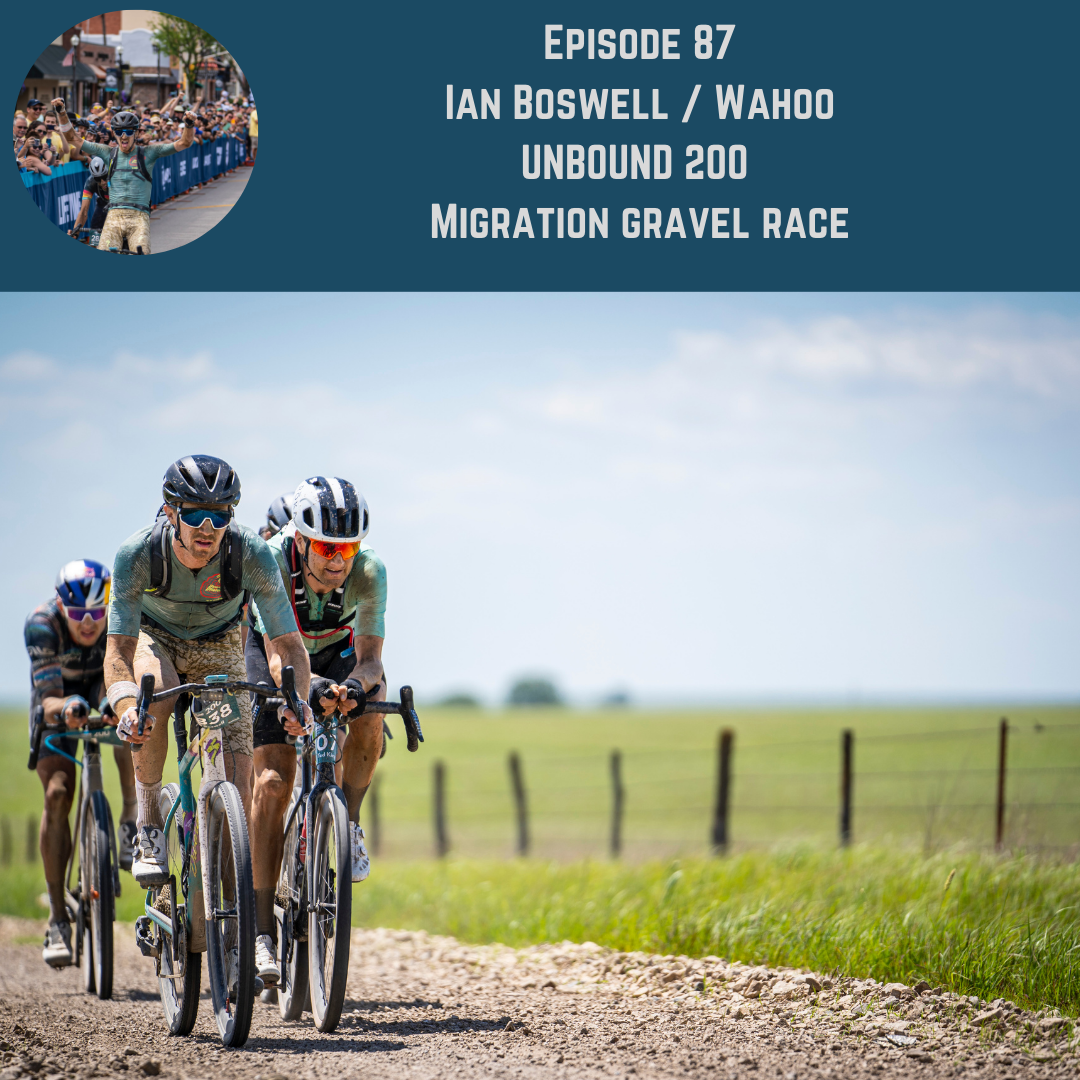
Ian Boswell - UNBOUND Gravel 200, Migration Gravel Race Kenya
This week we sit down with UNBOUND 200 winner Ian Boswell. We get to unpack his big win, but also dig into a new partnership between Wahoo and The Migration Gravel Race / Team Amani in Kenya. Wahoo Migration Gravel Race Team Amani Breakfast with Boz Podcast Support the Podcast Automated Transcription, please excuse any typos: Craig Dalton: [00:00:00] Hello and welcome to the gravel ride podcast. I'm your host Craig Dalton. This week on the podcast, I'm excited, very excited to welcome Ian Boswell to the show. [00:00:12]We scheduled this interview many months before Unbound, knowing that Ian was participating. But certainly not expecting that he was going to end up with the top spot on the podium. [00:00:22]This episode also kicks off a new relationship for the podcast and Wahoo. I've been a longterm Wahoo customer on the computer side. Having first started with the ELEMNT BOLT and now using the ELEMNT ROAM. I've also been a big fan of the Wahoo frontiers series on the web. I love the videos and getting access to these writers, having adventures and just the stories behind it so when i connected with the team at Wahoo and learned about some of the initiatives they have going this year i was super super stoked to bring them on board as a sponsor. [00:00:56]On the podcast, we'll get the opportunity to talk to some of these Wahoo athletes and get a little bit of the behind the scenes. Look. At some of the adventures they'll be having this year [00:01:05]I'm very much looking forward to these conversations and I hope you will be too. For those of you who don't know Ian Boswell, Ian had a career in the world tour riding for teams like Sky and Katyusha before retiring and moving on to a full-time role with Wahoo as an employee. [00:01:25]Additionally, he set his sights on participating in the gravel racing scene. I don't know about you but i recall that time the beginning of 2020, just questioning where ian would fit into the roster of these pro tour athletes who were moving into gravel and what the impact might be on the sport. [00:01:44]We all had to wait quite a bit longer than we expected to find out what that impact was going to be. So when the 2021 season finally kicked off, And Unbound was on the calendar. It was inevitably going to be thrilling to see where Ian was going to fit in. And to see him win. The biggest race on the calendar this year was quite exciting because it really couldn't have happened to a nicer guy. [00:02:08]We get to dig into a little bit of as experience at the Unbound 200 this year. But equally important, we get to dig into a new initiative from Wahoo [00:02:18] In conjunction with the Migration Gravel Race in Kenya, East Africa. I won't get into too many details in this introduction, because I want you to hear from Ian. And with that, let's dive right in to this week's episode. [00:02:31] [00:02:31]Ian. Welcome to the show [00:02:33] Ian Boswell: [00:02:33] thank you for having me. [00:02:35] Craig Dalton: [00:02:35] It's funny. I cannot believe that your win at Unbound is going to be the second, most exciting thing that we're going to talk about today. [00:02:41]Ian Boswell: [00:02:41] Yeah, it's yeah, it's been a very fortunate couple of weeks I've had and more fortunate for what's coming up. [00:02:48]Yeah, excited to chat about, Unbound, but more importantly, the next couple of weeks of of travel and racing and cultural experience. Yeah, absolutely. [00:02:56] Craig Dalton: [00:02:56] Yeah. So let's get into your victory at Unbound. What was your mindset going into Unbound? Obviously, when you retired from the pro tour and expected last year was going to be your first year as a quote unquote gravel athlete. [00:03:10] It didn't go as planned and you had to wait a long time to get to a start line. Let's talk about what your mindset was going into Unbound. I know you had one an event, the rule of three under your belt previously, but Unbound being the sort of world series or Superbowl of gravel is really a next level experience. [00:03:29] Ian Boswell: [00:03:29] Yeah. In hindsight, in all honesty, it probably benefited me that I didn't race last year, cause I had just come off of, seven years in the world tour and I don't know, 10 years prior to that, racing road bikes, and trying to climb this ladder to the top of the sport on the roadside. [00:03:45] And, I retired and was very much, still felt like a racer. I took a position at Wahoo, so I just had less time to ride and move back full-time to Vermont where the weather is not the south of France, where I was living for the previous seven years. So there was very much this constant underlying level of not stress or anxiety, but just oh, I'm not doing what I used to do. [00:04:06]And it was very much a transitional year where, I was still had this mindset and this, feeling, whether it was, internal or psychological of I'm not training the way I used to. And lo and behold no race has happened. So I spent the first ever, I guess pr

Kali Protectives - Brad Waldron, founder
This week we sit down with Brad Waldron, founder of Kali Protectives to take a deep dive into helmet tech and the new Grit gravel helmet. Kali Protectives Web / Instagram Support the Podcast The Ridership Automated Transcription, please excuse the typos: Kali Protectives Craig Dalton: [00:00:00] Hello and welcome to The Gravel Ride podcast. I'm your host Craig Dalton this week on the podcast. We've got Brad Waldron from Kali. Protectives talking to us about helmets. [00:00:15]Before we jump in just to reminder, The Gravel Ride podcast is sponsored by listeners like you and a select group of sponsors from the industry and outside the industry. We appreciate any contributions to the show's www.buymeacoffee.com/thegravelride. And when we do bring a sponsor on board, please make sure to check out their products because without their support, we couldn't continue doing what we're doing. [00:00:40] [00:00:40]With that said let's dive right into my interview with Kali. Protectives. Brad. Welcome to the show. [00:00:46] Brad Waldron: [00:00:46] Thanks for having me [00:00:47] Craig Dalton: [00:00:47] I'm super stoked to talk helmets. It's interesting. It's one of those categories that. I haven't covered on the podcast thus far. So I figured going to an expert and talking about it will give the listener a lot of value about helmet technology for gravel, riding [00:01:02]Brad Waldron: [00:01:02] looking forward to it. [00:01:04] Craig Dalton: [00:01:04] Why don't you start off by telling us a little bit about your background and how Kali was started? [00:01:09]Brad Waldron: [00:01:09] Sure. I was super lucky in a previous life career. I worked for an aerospace company working on military aircraft. So I was a carbon fiber R and D engineer. Mostly on the process side, not on the material side. [00:01:22]I was fortunate enough to work on the B2 bomber F eighteens joint strike fighter, and then a few airplanes that had never made it, but just stuff you've made it and broke it to see what we could do. And this will give you the idea of my age, but I was at Northrop Grumman in between the first Gulf war and the second Gulf war. [00:01:41] And they didn't want to put a lot of money in production at that time, but they want to put a lot of money into R and D. So I was just in the perfect place at the perfect time where you could almost do anything you wanted. If it made sense. I, one time my boss walked in and said, DARPA's going to be here next week. [00:01:57] Think of something. Go back to my desk and I, without five different projects and the next week sit down in front of these generals and you. Present these ideas in here I'm, in my late twenties, early thirties, somewhere in there. And they're like rubber stamping, all of them and oh shit. [00:02:12] Now I got, I do, so I got to build a $12 million milling machine and then just things like that. So that's where my real just try it. Mentality came from, when you hear are, you can't do that. And get into some of the things that people told me we couldn't do at Kali. It's let's just try, and that's been like theme sentence. [00:02:30] So I worked that and through some changes in life, I went to work or another aerospace company and didn't love it, so I was down in the Southern California area, working there. And then I moved back up to Northern California where I was born and raised. And I was in R and D at this satellite company and it just wasn't everything I wanted. [00:02:49] And lo and behold, there's this ad for the big red S in the paper. And so I put on my suit and went to my interview. Nobody's wearing a suit, got called back for a second interview and go, what do I wear when I knew I wore the suit? Yeah. So I guess it worked, they offered me a job as the Pumps and locks, designer, something like that. [00:03:09]And I was so happy to take my 25% pay cut to be in the bike industry. And there was, and then on my first day they said, Hey, you know that job, we offered you the helmet guy quit. And would you rather that job on the helmets over locks? Hell yeah. But the ironic thing was they, at that time, specialized was still assembling the helmets at, on a site and. [00:03:32] We tested our helmets and they said, there's the test lab. There's 10,000 helmets sitting over there that can't be shipped. So you say they're tested and Don, w oh, and by the way that the helmet technician quit at the same time. And so I walked into this test lab with this equipment I never seen in my life and go, okay, what did we do here? [00:03:50] And fortunately somebody who's become a good friend and who I trust in testing. Dr. Terry Smith came and trained me how to run the equipment. The best thing I did was I tested all the helmets at specialized for the next year. I didn't hire another technician. So getting that lab experience and seeing how these helmets broke personally, not just people come and say, Hey, look at this, here's your, reading reports and stuff it's was a great launc

Ribble Cycles - Jamie Burrow, Head of Product
This week we sit down with former Pro Tour rider and current Ribble Cycles Head of Product, Jamie Burrow. Jamie walks us through the range of Ribble Gravel Bikes across three frame materials and highlight the companies' unique custom bike builder. Ribble Gravel Range Ribble Instagram Support the podcast Join The Ridership Automated transcription (please excuse any errors) [00:00:00]Craig Dalton: [00:00:00] Hello and welcome to the gravel ride podcast. I'm your host Craig Dalton. [00:00:08]This week on the podcast, we have Jamie Burrow. He's a former pro tour rider on the road and current head of product for the UK brand Ribble cycles. [00:00:19]As you'll learn from Jamie, Ribble offers a full suite of gravel bikes across a range of materials. [00:00:25]And also offers a direct to consumer model via their website with a unique bike configurator tool that allows you to customize every element of your gravel bike. So if you're looking for those wide bars or 650 wheels, Or a little different saddle or set up, you can go through and individually customize every part and piece of the bike. [00:00:46]Making it uniquely yours. Including a custom paint job, which I just learned about during the podcast. Which i think is a fabulous opportunity for anybody looking to ride something unique. [00:00:56]Before we jump in, I just wanted to send a huge thank you to those of you who have elected to become members of the podcast. Via buy me a coffee.com/the gravel ride your monthly support to my efforts at the podcast are hugely appreciated [00:01:11]And I wouldn't keep doing what I'm doing without your support. With all that said let's dive right in to my interview with Jamie. Jamie. Welcome to the show. I appreciate you joining us all the way from the UK. You're welcome. I know we could easily do an hour on your backstory as a cyclist back in the pro tour, but [00:01:30] for the purpose of this conversation, why don't you just tell us what led you to your current role at Ribble? [00:01:35]Jamie Burrow: [00:01:35] I suppose it's just taking a different path to most people who, you know, X, Y, Z, as you go down the kind of sports director, team management role. I come from a cycling family and grew up around bikes, really. Dad told me to build bikes when I was probably about five years old, I think. [00:01:50] And the early days my dad was a designer himself by trade. And it just passionate the bikes as a kid. I started designing my own bikes as a teenager, honestly, back in the days when everything was made by steel I was designing my race bikes that sort of 15, 16, and had a local frame builder would build them for me. [00:02:08]And then you go into the whole race career thing. And even as it has it sides where obviously all your equipment is given to you, you don't have choice on things. Sometimes on the best equipment, sometimes it's not the best and, seeing the sides of things and then get out, it would be so much better if you could have this or who could have done this way. [00:02:26] So suddenly finding yourself, coming out the other side of a career where you're effectively right in the kit for seven, eight hours a day in all conditions, you know what you want, what's good. And, what's missing. So then suddenly be, behind the steering wheel of, being out of an input in those things. [00:02:42] That's a pretty cool. [00:02:44] Craig Dalton: [00:02:44] Yeah. It's gotta be pretty amazing to take your vision for what a bicycle should be and deliver it to the world. [00:02:50]Jamie Burrow: [00:02:50] That's right. Yeah. Honestly, my main background was obviously road riding and obviously there's so many different forms, disciplines of of cycling, but It does [00:03:00] help when, when you've ridden bikes in every situation at higher level to know what they need, for OEM performance wise, aerodynamics everything map, you just, if are those kinds of get to know things, is it that you get to know on the road? [00:03:15]Craig Dalton: [00:03:15] Can you, I was really tickled to learn about Ribble as such a storied UK brand that I hadn't really heard of. I suppose I'd seen it in some races. But it really didn't connect the dots until after I got introduced to it. Can you tell the listener a little bit about Ribble's history as a brand? [00:03:33]Jamie Burrow: [00:03:33] Yeah, so it's actually a very old brand. [00:03:36] It was originated in 1897. So it's a pretty old comes from the Northwest of England. The Ribble name comes from the river in the river valley. It was a family business for generations. Changed hands a few times. As we went into the 20th century I even from my own point of view, growing up, I would say coming from a cycling family where and obviously way before online sales in cycling weekly magazine in the UK where the back pages were always full of adverts rebel was always the big. [00:04:06] Out of the taken up the last two back pages of the magazine, and it was one of the premium brands of the UK. Foods, sev
Andrew Onermaa: Ozark Gravel Cyclist community
This week we sit down with Andrew Onermaa, founder of Ozark Gravel Cyclist. Andrew is a passionate gravel cyclist and bikepacker who has channeled energy and love into creating a hub for Arkansas gravel cyclists. Ozark Gravel Cyclists Web / Instagram Join The Ridership Support the Podcast Automated Transcription, excuse the typos. [00:00:00]Craig Dalton: [00:00:00] [00:00:00] Andrew, welcome to the show. [00:00:02] Andrew Onermaa: [00:00:02] Hey, thanks for having me, Craig, [00:00:03] Craig Dalton: [00:00:03] super excited to learn more about your project. It was our gravel cycling, but the more I've talked to you on offline, the more I want to hear about your personal journey to the bike and all the things you've been doing. [00:00:15] So why don't we start off by just a little bit of your background. As an athlete and what led you to gravel cycling? [00:00:21]Andrew Onermaa: [00:00:21] That's a great question. So the journey of the bicycle has definitely evolved a lot in the last decade. So I realized, or did riding bikes in college as a means of transportation. My vehicle died on me. [00:00:36] Okay. I can't buy another car. What are we going to do? So what's the cheapest bike you can possibly find. It's going to be a bike that has. One gear and has nothing extra on it. So got a six gear bike, cause I was starting to hear about it. I was cool. This is in 2011, 2012, and I started really getting addicted to just the motion of moving through the landscape and interacting with vehicles and people and pedestrians. [00:01:09] And I started delivering sandwiches for Jimmy John's in the middle of the night, I'd be doing a graveyard shift of 10:00 PM til three or four in the morning and just doing it all by bike. And I didn't have navigation on my phone, so I'd be printing up stuff in the shop, turn by turn navigation and using [00:01:30] that to deliver sandwiches. [00:01:32] And I ended up just spending a lot of years traveling. Out west always had a fixed gear bike. It'd be my fun way to explore, but I'd still be pursuing other things. Climbing backpacking, mountaineering skiing, really just fully embracing the outdoors. But the bike was always, there is more of just a really fun way to explore in a way to shake things up. [00:01:54] And it. Like within the last two, three years, I finally got my hands on a road bike with multiple gears brakes, and it opened up a whole new world of cycling to me that I'd never seen. I can suddenly do much, much bigger Hills. I was living in salt lake at the time I was doing these canyon passes, seeing the landscape from essentially mountaintops. [00:02:18] And I was just blown away by how much you could see in an afternoon, they didn't even have to be a full day. And so that just fully consumed me. I was doing a lot of where I would bag multiple peaks in a day via foot. And I was like, man, I can apply this to the bike instead. Let's like, how many high points can I hit? [00:02:40] And so that really opened my eyes to how much distance you can travel on the bike. And then. I started looking over and what about these dirt roads that I'm seeing? I'm getting tired of all these cars living by like ruining the vibe per se. Like I'm out in nature and [00:03:00] all of a sudden you have 20 cars blow by and one person has to roll down their window and yell something or whatever. [00:03:06] And so I started dabbling into some dirt, but I wasn't confident with the skinny tires. So I went west. On the other side of the salt lake or it's flat. And that was my introduction to gravel. It was just this big open space with these random gravel roads, no information, no signage. And I would just try and I go for awhile for as long as I felt comfortable. [00:03:31] Yeah. And then I would turn around and come back and just cross my fingers for whatever reason I was thinking now that I'm on gravel. My bike's gonna explode. Everything's gonna go wrong. And I kept having rise where it's whoa, that was actually really peaceful and enjoyable. And I was by myself the whole time. [00:03:49] And that's, I started honing in on that aspect of this is something different. This is combining a lot of years of playing outdoors and this love of the bicycle. And so that's the quick summary of bikes. Over the last, almost decade until I moved back to Arkansas and got a proper gravel bike, my first gravel bike, and it's been a little over a year having a bike that's designed for this style of riding and it's just been phenomenal. [00:04:22] And just the more I've done it, the more I've just, I don't know, absorbed as much as possible as far as learning. [00:04:30] And getting faster. [00:04:33] Craig Dalton: [00:04:33] That's a super cool journey to the bike. I, I remember in connecting with the originally, when you were talking about your passion for mountaineering and climbing and hiking it's, as you came to it from a road biking perspective, it's pretty natural that you started to see those same peaks you'd h