
The Gaggle: An Arizona politics podcast
557 episodes — Page 4 of 12

Will July primary go smoothly or preview presidential year pandemonium?
Arizona is just two months away from the July primary. Voters will decide who represents them on the November ballot for the Republican and Democratic parties. But the results of that election will require a little bit of patience. All 15 Arizona counties are looking for more poll workers to volunteer before the primary as millions of Arizonans are expected to vote. The state's largest counties say recruiting is going smoothly, but the sweltering heat, summer vacations and the popularity of a presidential election is expected to bring in more volunteers in November. In February, the Legislature passed a law that would guarantee the state's new recount margin wouldn't impact the deadlines. Because of this, the primary election was moved from its usual spot in August to July 30 for the first time this year. An early election does mean earlier results, but not necessarily fast results. The new election calendar comes with a provision that mandates poll workers in every county to hand count the number of ballots turned in on Election Day. This is not a hand count of results, but to double-check the number of early ballot envelopes dropped off by voters. This week on Election Dissection, an elections series of The Gaggle podcast by The Arizona Republic and azcentral.com, hosts Mary Jo Pitzl and Sasha Hupka go through the themes heading into the July primary and what you need to know before heading to the polls. Learn more about your ad choices. Visit megaphone.fm/adchoices
Super-sized ballots in 2024? Maybe.
It’s the home stretch of the legislative session. Maybe. Lawmakers are running out of bills to vote on, and budget talks are slogging along behind closed doors. The House is in the midst of a two-week break. But there is one exception to this very unhurried schedule: Ballot referrals. These are proposed laws that go directly to the voters, avoiding the governor and her veto stamp. Others are amendments to the state Constitution, which require a vote of the people. This month, two new referrals popped up like blooms on a saguaro cactus. Why are these measures showing up months into the legislative session? In this episode of The Gaggle, host Mary Jo Pitzl is joined by Paul Bentz, pollster for the political consulting firm HighGround. Together they discuss what might find its way onto the ballot this year and why Arizonans could expect a longer-than-normal ballot. Learn more about your ad choices. Visit megaphone.fm/adchoices
Every Arizona Legislature seat is up for reelection in 2024. Here are the most competitive
The 2024 presidential race, Arizona’s congressional races and potentially several abortion-related measures command a lot of attention this election year. But there’s another set of really important races that are also on the ballot: the Legislature. Republicans have two-seat majorities in both the Arizona House and Senate. That means if Democrats could make a net gain of even one seat in either chamber, Arizona would have a divided government that mirrors the house and senate in washington. And if they pick up control in both chambers, well, that would be the first time since the 1960s, so we can only wonder what that might be like in this long-red state. In this episode of The Gaggle, hosts Ron Hansen and Mary Jo Pitzl sit down with The Republic's Ray Stern to discuss where Democrats have to win if they really intend to flip control of the Legislature and who is trying to do it. But first, in several key districts, we have to get through some competitive primary races. Learn more about your ad choices. Visit megaphone.fm/adchoices
Republicans should be winning Arizona. But they're not.
Republicans have always had the numerical advantage in Arizona. A little more than a third of the state is registered with the GOP. But Republicans have slowly yet steadily lost ground to Democrats in this state. Why is that? It's more than just changing demographics. In this episode of The Gaggle, hosts Ron Hansen and Mary Jo Pitzl sit down with Samara Klar, a political science professor at the University of Arizona to tease apart Arizona voter's preferences. Learn more about your ad choices. Visit megaphone.fm/adchoices
Senate candidate Sheriff Mark Lamb says he has a proven conservative track record unlike Kari Lake
In a U.S. Senate race often dominated by Republican front runner Kari Lake, it’s easy to forget that Pinal County Sheriff Mark Lamb is running for the GOP nomination, too. He’s got a low-key demeanor and his personal style doesn’t seem to linger the way Lake’s combative politics does. When Lake entered the Senate race in November with former President Donald Trump’s prominent endorsement, many people thought the nominating race was over. But Lamb has stuck around. In this episode of The Gaggle, Sheriff Lamb shares his views in an exclusive interview on the 1864 abortion law, why he wouldn’t have voted for Senator Kyrsten Sinema’s bipartisan border security bill and ultimately why he wants your vote on the July 30 primary. Learn more about your ad choices. Visit megaphone.fm/adchoices
Arizona's fake electors have been indicted. What happens next?
On Wednesday, April 24th, Arizona Attorney General Kris Mayes shared a video on X, formerly Twitter, announcing that 11 Arizona Republicans and seven others have been charged for falsely certifying that Donald Trump won the state in 2020. This is despite of the fact that Arizonans narrowly favored Joe Biden. While the names of those charged have yet to be officially revealed, clues in the the 58 page indictment make it clear that the architects of Trump's national campaign to steal the election are also facing charges in Arizona. Some of those individuals appear to be Trump lawyers Rudy Giuliani and John Eastman, former chief of staff Mark Meadows, lawyers Jenna Ellis and Christina Bobb, and Trump advisers Boris Epshteyn and Michael Roman. Trump, who is asking voters to return him to the White House this year, is “unindicted coconspirator 1,” according to the indictment. In this special episode of The Gaggle, state politics reporters Mary Jo Pitzl and Stacey Barchenger sit down at The Republic's capitol bureau to hash out what we know from the indictment and what may happen next. Learn more about your ad choices. Visit megaphone.fm/adchoices
Will AI change how Arizona votes? Here's what you need to know
Artificial intelligence is a booming business. With a few dollars anyone can create a deep faked voice online. ChatGPT and other AI writing programs can take a student essay and polish it to a Ph.D. level. Manipulated videos can show an official saying or doing something outrageous -- and fake. With such powerful technology at everyone's fingertips the question arises: how can we keep our election systems safe from bad actors using AI? In this episode, our election dissectors, Mary Jo Pitzl and Sasha Hupka, speak with Don Palmer, the vice chair of the Election Assistance Commission. This is a bipartisan commission that was created by the Help America Vote Act of 2002, and it is tasked with certifying voting systems across the country. It also supports state and local election officials in their efforts to ensure accessible, accurate and secure elections. Palmer explains both the pros and cons of AI and why it's important to set parameters on how it can be used. You will also hear an example of deep faked voices of our hosts. Listen closely and see if you can tell the AI from the real voices. Learn more about your ad choices. Visit megaphone.fm/adchoices
Starter Homes Act got vetoed, so where does that leave Arizona's housing crisis?
In her second year, Gov. Katie Hobbs has used her veto stamp much less than her first year. By this time last year, the Democratic governor had denied a record-breaking 63 bills presented by the GOP-dominated Legislature. This year, Hobbs is at 42 vetoes. Her second red stamp came across House Bill 2570, or the Arizona Starter Homes Act. Introduced by Rep. Leo Biasiucci, R-Lake Havasu City, it was intended to make homebuilding more efficient and thus more affordable. But Hobbs said the bill couldn’t guarantee affordable home prices. She argued it went too far because it cut much of the local control cities have over development. This week on The Gaggle, a politics podcast by The Arizona Republic and azcentral.com, host Mary Jo Pitzl is joined by housing expert Mark Stapp, the Fred E Taylor professor of real estate at the W.P. Carey School of Business at Arizona State University. He says the solution is more complicated than it seems. Learn more about your ad choices. Visit megaphone.fm/adchoices
What is the political fallout of Arizona's abortion ban?
On Tuesday, April 9, the Arizona state Supreme Court ruled to uphold near total-ban on abortions dating back to 1864. After the U.S. Supreme Court overturned Roe v. Wade in 2022, the exact parameters for Arizona went into question. Just months before, then-Governor Republican Doug Ducey signed a law that limited abortions to the first 15 weeks of pregnancy. In 1973, when Roe v. Wade went into effect nationally, Arizona had an abortion law dating back to its territorial days. So the question became: which ruling would be the law of the land in Arizona? At the time, the state Court of Appeals overruled and instated the 15-week law. This week, the Arizona Supreme Court reversed this decision, allowing the 19th century law to take affect. Today on The Gaggle, hosts Ron Hansen and Mary Jo Pitzl dissect Arizona's new, but ancient, abortion law and how it will impact the state politically and legally. First, state politics reporter Stacey Barchenger joins the podcast to break down why the justices allowed at 160-year law to stand and who will benefit politically from the decision. Later, University of Richmond law professor Carl Tobias joins The Gaggle to investigate the legal fallout from the court's decision. Learn more about your ad choices. Visit megaphone.fm/adchoices
What is vote splitting and why you should know about it
Imagine there is a ballot with several candidates seeking the same seat. And you like most of them. But you can only pick one because that’s what the rules require. When that happens, the vote in a multi-candidate race is split – and the outcome often is the candidate you least like wins. This is called vote splitting, a phenomenon that happens when a race attracts at least three candidates who have similar positions or maybe similar demographics. This makes it attractive for a contrasting candidate to benefit from the divided vote and prevail. It’s happened time and again across the nation and here in Arizona. Think Paul Gosar. He emerged from an eight-candidate field in 2010 to win the GOP primary in a heavily Republican district. It cemented his standing as an incumbent and he hasn’t lost since. There’s a move afoot to stop vote splitting by introducing “approval voting,” a system where voters could vote for all of the candidates in a given race who appeal to them. And they could do that without ranking them. This is something the Center for Election Science, a national, nonpartisan nonprofit focused on voting reform, is pushing. In this episode of The Gaggle, Mary Jo Pitzl examines the effect of vote-splitting, the potential issues it can cause, and some of the unintended consequences of the practice. You'll also hear about the related practice of ticket splitting, which factored prominently played a big role in the 2022 general election. Joining Pitzl via Zoom are Nina Taylor, the organization’s CEO, and Chris Raleigh, director of advocacy and communication and a specialist in campaign management. Learn more about your ad choices. Visit megaphone.fm/adchoices
Election Dissection: How can the election system be improved?
Trust in the election system in Arizona is eroding. Some may even say it's broken all together. One side says the vulnerability of voting machines and delay in election results is what makes the system distrustful. This was most obvious during the Maricopa County recount of the 2020 ballots that lasted months. The other side says it's the new found distrust in the system that makes it broken. But either way a question remains among most American, and specifically Arizonan, voters: how can we make elections better? This question fuels the work of David Becker. He is a co-founder of the Center for Election Innovation and Research and he believes that technology and reliance on data can help us toward improving elections. He also helped launch the Election Official Legal Defense Network, which connections election officials with free legal advice. This week on Election Dissection, an elections series of The Gaggle podcast by The Arizona Republic and azcentral.com, hosts Mary Jo Pitzl and Sasha Hupka sit down with Becker to discuss why he's confident in the safety of our elections systems, how America ended up in this position and why he's keeping an eye on those who oppose Donald Trump come next January. Learn more about your ad choices. Visit megaphone.fm/adchoices
Why 9 Arizona landlords are being sued over rent hikes — and what to do if yours goes up
Rents in Arizona have jumped significantly since the pandemic. In 2021, metro Phoenix made national headlines when rents skyrocketed by 30%. An investigation by the Arizona Attorney General's office reveals that a group of nine landlord companies have been using a software that allows them to see what other properties are charging and thereby "fix" their rental prices to match. Attorney General Kris Mayes is not having it and is seeking restitution for those affected. But that could take years. What about renters who need help now? In this episode of The Gaggle, producer Amanda Luberto sits down with Stacey Barchenger, our state politics reporter, and Catherine Reagor who covers real estate issues. They hash out what could happen and what resources renters have access to right now. Learn more about your ad choices. Visit megaphone.fm/adchoices
Who is running to replace Debbie Lesko in Congressional District 8?
U.S. Rep. Debbie Lesko has had enough of Washington, D.C. Lesko has represented the northwest Valley for six years after winning a special election to fill the spot for Trent Franks, who stepped down after allegations of sexual harassment involving his female staffers. Lesko has been a strong supporter of former President Donald Trump, voting against his impeachment and voting in Congress to overturn the results of the 2020 presidential election. But when former House Speaker Kevin McCarthy was being pushed out of office in a Republican-led coup, Lesko decided that she was done with Capitol Hill. This week on The Gaggle, a politics podcast by the Arizona Republic and azcentral.com, host Ron Hansen is joined by Laura Gersony to dive into the crowded Congressional District 8 race to replace her. The Republic's two national politics reporters dissect the approach and positions of the candidates eyeing the open seat and discuss who has a chance of winning the primary in August. Learn more about your ad choices. Visit megaphone.fm/adchoices
Apache Stronghold loses appeal. Can Resolution Copper begin mining on federal land?
The battle over copper mining at Oak Flat, an area sacred to Native tribes, has been waged for two decades. On March 1, the dispute marked a significant milestone: The 9th U.S. Circuit Court of Appeals narrowly rejected the argument from the grassroots group Apache Stronghold that mining activity would destroy First Amendment religious rites observed by Native tribes. The court voted 6-5 to uphold a lower court’s denial of a preliminary injunction that sought to halt the transfer of federal land to Resolution Copper for the mining project. The suit, Apache Stronghold v. United States, was filed in January 2021 in federal district court. After losing that ruling, the Native rights group took the case to the appeals court, where a three-judge panel rejected Apache Stronghold's assertion that the mine would pose a substantial burden to their First Amendment religious practice rights. Oak Flat, located just shy of 70 miles east of Phoenix, is regarded as one of the most sacred sites to the Apache people. It has been at the center of debate on religious protections. Apache Stronghold, with the backing of the nation's largest religious freedom law firm, Becket Law, is resolute in its commitment to fight for the religious site's protection. However, with this narrow ruling – a victory for Resolution Copper – the question now is: what’s next for the Apache people? In this episode of The Gaggle, Mary Jo Pitzl and Kaely Monahan sit down with Indigenous Affairs Reporter, Debra Krol, to find out what's next for the sacred site. Learn more about your ad choices. Visit megaphone.fm/adchoices
Election Dissection: What roadblocks to voting are already emerging ahead of 2024?
Suspicions about Arizona's voting returns have been growing for several years. It hit its peak in 2020, in the immediate aftermath of Joe Biden's narrow win over Donald Trump in this swing state. In response, the Arizona state Senate launched what it called an audit of all Maricopa County ballots cast in November 2020. In reality, the organizer couldn't even vouch for the hand count of 1 million ballots. This recount stirred not only conspiracy theories, but also worries from citizens that their ballots were not being counted. Attention switched to the early voting system, which allows people to vote by mail, in the 2022 election. Kari Lake, who lost the governor's race, contends that she did not win because of ballot tampering and is still arguing that point in court, even as she runs for U.S. Senate. As Arizonans head into the newest presidential election, debate continues on the best way to vote: drop off boxes, vote centers, in-person or by mail. These options are the subject of legislation and litigation leading up to the big day in November. This week on Election Dissection, an elections series of The Gaggle podcast by The Arizona Republic and azcentral.com, hosts Mary Jo Pitzl and Sasha Hupka examine different voting practices, their origins and their critiques. County recorders for Maricopa and Yavapai, Stephen Richer and Michelle Burchill, discuss how they're keeping constituents reassured this election year. Rep. Rachel Jones, R-Tucson, explains why she’s sponsoring a ballot referral to end vote centers. You'll also hear opinions on polling places from Rep. Jake Hoffman, R-Queen Creek, Sen. Bennett, R-Prescott, and Rep. Michael Carbone, R-Buckeye. Learn more about your ad choices. Visit megaphone.fm/adchoices
Why these Arizona elections in March matter to voters
Everyone knows 2024 is an election year but amid the chatter of who will be president of the United States is a wide selection of smaller, important local Arizona elections. Residents in the small town of Litchfield Park will have the opportunity to cast their vote to be an official charter city. It's the first city in the Valley to do so in 40 years and will grant them independence from the state on things like when their elections are held and term limits on elected officials. Tempe voters have the chance to elect who will sit on their city council. They will also vote on a proposition that will impact Tempe's ability to grow. In this episode, producers Amanda Luberto and Kaely Monahan are joined by Republic reporters to discuss not only who is running and what is on the ballot, but why voters should turn out for these hyper-local elections. We’ll also hear about one state senator who is trying to make changes to how cities can run their elections. Learn more about your ad choices. Visit megaphone.fm/adchoices
Is Senator Kyrsten Sinema running for re-election in Arizona?
The clock is ticking for Sen. Kyrsten Sinema to make a decision on running again for her seat. The collapse of her bipartisan border security bill unceremoniously ended her hopes of adding a deal on perhaps the most difficult issue in congressional politics to her legislative scorecard. Since quitting the Democratic Party in December 2022, Sinema’s fundraising has plummeted and she is about 20 percentage points behind her challengers in most of the polling on the race. Democratic frontrunner, Ruben Gallego, and Republican front runner, Kari Lake, both have outraised Sinema, I-Ariz., of late. Sinema ended 2023 with her worst fundraising quarter in three years — and she spent more than she brought in. All of which begs the question, does Sinema have a path to reelection, and what does that mean for the race if she’s stepping out of politics? In this episode of The Gaggle, an Arizona politics podcast, hosts Ron Hansen and Mary Jo Pitzl are joined by Jessica Taylor of the Cook Political Report to look at how the Arizona senate race is stacking up and if there are any hints that Sinema might run for re-election. Learn more about your ad choices. Visit megaphone.fm/adchoices
Is the Senate's border plan "dead on arrival?"
The U.S. has newly-released an $118 billion national security bill. It includes approximately $20 billion for border provisions, including $650 million for the border wall and funding for asylum judges, expanded detention capacity and other programs. In a interview with CBS' Face the Nation, Arizona Sen. Kyrsten Sinema says that the deal will address a multitude of issues including the record surge of migrants. But Republicans in both the Senate and the House are stirring against the proposal, with House Speaker Mike Johnson saying it's "dead on arrival." In this episode of The Gaggle, hosts Ron Hansen and Mary Jo Pitzl sit down with The Republic's immigration and border reporter, Rafael Carranza to hash out what is in the bill and whether or not it's truly "dead on arrival." Learn more about your ad choices. Visit megaphone.fm/adchoices
What is a preference election and why does Arizona have one?
A busy election year is here. It starts with the March 19 presidential preference election, followed by the Aug. 6 primary, and then the Big One: the Nov. 7 presidential election. On that day, voters all over the country will be ponying up to the polls to fill in the bubble of the candidates they want most. This year, the presidency is on the line. But first comes the preference election. This election, also referred to as the primaries, isn't the same date in every state. Republican voters in New Hampshire and Iowa have already decided that former President Donald Trump is their pick to represent their party. Democrats in Iowa vote on March 5. In Arizona, only Democrats and Republicans can vote on Tuesday, March 19 for which candidate they want to put forward into the big fight come November. Independent voters are out of luck for the preference election. But how does all of this work? Who gets a say and why does it matter? This week on The Gaggle, a politics podcast by The Arizona Republic and azcentral.com, hosts Mary Jo Pitzl and Sasha Hupka kick off a new series called Elections Dissection. Each month this year, they'll be breaking down a new elections process so you understand how voting in Arizona works. In this episode, Mary Jo and Sasha talk with the man who brought preference elections to Arizona, a politician whose career was defined by a botched preference election, and an active county recorder who is working to avoid confusion at the polls. Learn more about your ad choices. Visit megaphone.fm/adchoices
Can political careers survive the 'Gilbert Goons' fiasco?
The "Gilbert Goons" have made headlines here in Arizona and nationwide. Young men from affluent families have been indiscriminately targeting others for violent beatings. One such attack ended in the death of 16-year-old Preston Lord. Amid the many questions swirling around this case is one of particular relevance to you, our Gaggle listeners. What is the political fallout? Producers Kaely Monahan and Amanda Luberto sat down with the team that broke the story: investigative reporter Robert Anglen and criminal justice reporter Elena Santa Cruz. Both are journalists in our newsroom. Learn more about your ad choices. Visit megaphone.fm/adchoices
Speaker Ben Toma is ready to roll up his sleeves and tackle issues in Arizona and D.C.
2024 is a pivotal year for Arizona. Not only is it a presidential election year, but the state is entering its second year with a divided government. Gov. Katie Hobbs has lined out her agenda for this year in her recent State of the State. Speaker of the House, Ben Toma R-Glendale, has his own thoughts on how Arizona's 2024 should go. He currently presides over a narrowly divided chamber at the Phoenix capitol, and will help juggle the state's policy agenda. The Republican from Glendale arrived at the Legislature in 2017 and is running for the West Valley congressional seat being vacated by Republican Debbie Lesko, who is retiring from Learn more about your ad choices. Visit megaphone.fm/adchoices
Can bipartisanship happen? Takeaways from Governor Hobbs' 2nd State of the State address
Gov. Katie Hobbs officially started the new legislative session this week with her second State of the State address. She focused on areas where she's hopeful for bipartisanship: housing, the border and the state's water supply. This year, Republican lawmakers mostly listened in silence. One senator, Anthony Kern, once again turned his back on Hobbs, literally, as he had in 2023. Despite the turbulence and at a time when the state is facing a budget shortfall, this year’s speech had moments suggesting potential bipartisan cooperation. Kern’s protest was the only one of its kind this year, which was also an improvement over last year. This week on The Gaggle, a politics podcast by the Arizona Republic and azcentral.com, hosts Ron Hansen and Mary Jo Pitzl are joined by Democratic political strategist Tony Cani and Kirk Adams, former chief of staff to previous Gov. Doug Ducey. Together they break down Hobbs' Jan. 8 State of the State address to explore whether her strategic roadmap to bipartisanship is achievable and her goals for 2024. Learn more about your ad choices. Visit megaphone.fm/adchoices
What we're keeping an eye on for 2024 in Arizona politics
It's the beginning of a big year in Arizona politics. Next week, Gov. Katie Hobbs will give her second "state of the state" address, reviewing her first year in office and her goals for the year ahead. This could set the tone for state politics in 2024. Nationally, Arizona is expected to hold the political spotlight as one of a handful of swing states on the electoral map. President Joe Biden’s narrowest victory in 2020 came in Arizona. Democrats are looking to ride the blue wave and Republicans are looking to win back a state they had carried for years. Arizona's U.S. Senate race could offer a rare three-way contest for the seat held by independent incumbent Kyrsten Sinema. That race already includes Democratic Rep. Ruben Gallego and Republican headliner Kari Lake. And the state could play a key role in the battle for control of the U.S. House of Representatives, with two seats currently held by the GOP on Democrats’ radar. Both chambers in the state Legislature are narrowly divided, and Arizona voters likely will weigh a ballot measure to determine whether to enshrine abortion rights in the state’s constitution. While you're writing down your New Year's resolutions, we're writing down a long to-do list. This week on The Gaggle, a politics podcast by The Arizona Republic and azcentral.com, hosts Ron Hansen and Mary Jo Pitzl are joined by other Republic reporters to give listeners a peek at our list. You'll hear from state politics reporter Stacey Barchenger, investigative reporter Robert Anglen and Maricopa County reporter Sasha Hupka, among others. Together, they discuss what they're keeping an eye on for 2024. Learn more about your ad choices. Visit megaphone.fm/adchoices
Reviewing 2023 in Arizona politics
Another year in Arizona politics has come and nearly gone. What might be remarkable elsewhere is almost par for the course in the Grand Canyon State. The year started with Arizona's first Democratic governor in more than a decade being sworn in on the ninth floor of the executive tower just before a legislative session with Republican majorities in both houses. Gov. Katie Hobbs went on to veto more bills than any other governor in state history. Election denialism remained a theme. Kari Lake made statements and legal challenges over the year insisting the 2022 election for governor had been corrupted. More than 1,400 text messages between Cyber Ninjas' CEO Doug Logan and others were revealed by Republic reporters using a simple software trick, uncovering more information about the "audit" of Maricopa County ballots in the 2020 presidential election. Free speech battles raged on over college campuses, and a community near Scottsdale lost, then found, access to water. This week on The Gaggle, a politics podcast by The Arizona Republic and azcentral.com, hosts Ron Hansen and Mary Jo Pitzl are joined by other Republic reporters, many of them Gaggle regulars, to break down the year 2023 in politics. You'll hear from state politics reporter Stacey Barchenger, investigative reporter Robert Anglen, Maricopa County reporter Sasha Hupka and national politics reporter Ryan Randazzo. Note: This episode was recorded before the death of former U.S. Supreme Court Justice Sandra Day O'Connor. While O'Connor is not discussed in this episode, The Gaggle has multiple exclusive interviews on her life. Listen wherever you get podcasts or by clicking here. Learn more about your ad choices. Visit megaphone.fm/adchoices
'If there's a problem, fix it.' O'Connor's brother shares childhood memories
The ranch girl from Duncan, Arizona who grew up to be the first woman to sit on the U.S. Supreme Court, passed away on December 1st, 2023. On December 18th, she entered the highest court in the land one last time. Thousands of Americans came to pay their respects. Today we hear from her younger brother, Alan Day, about what it was like growing up with the ranch girl who would be come a Supreme Court justice. National politics reporter and Gaggle host Ron Hansen connected with Alan Day remotely in the spring of 2022. Learn more about your ad choices. Visit megaphone.fm/adchoices
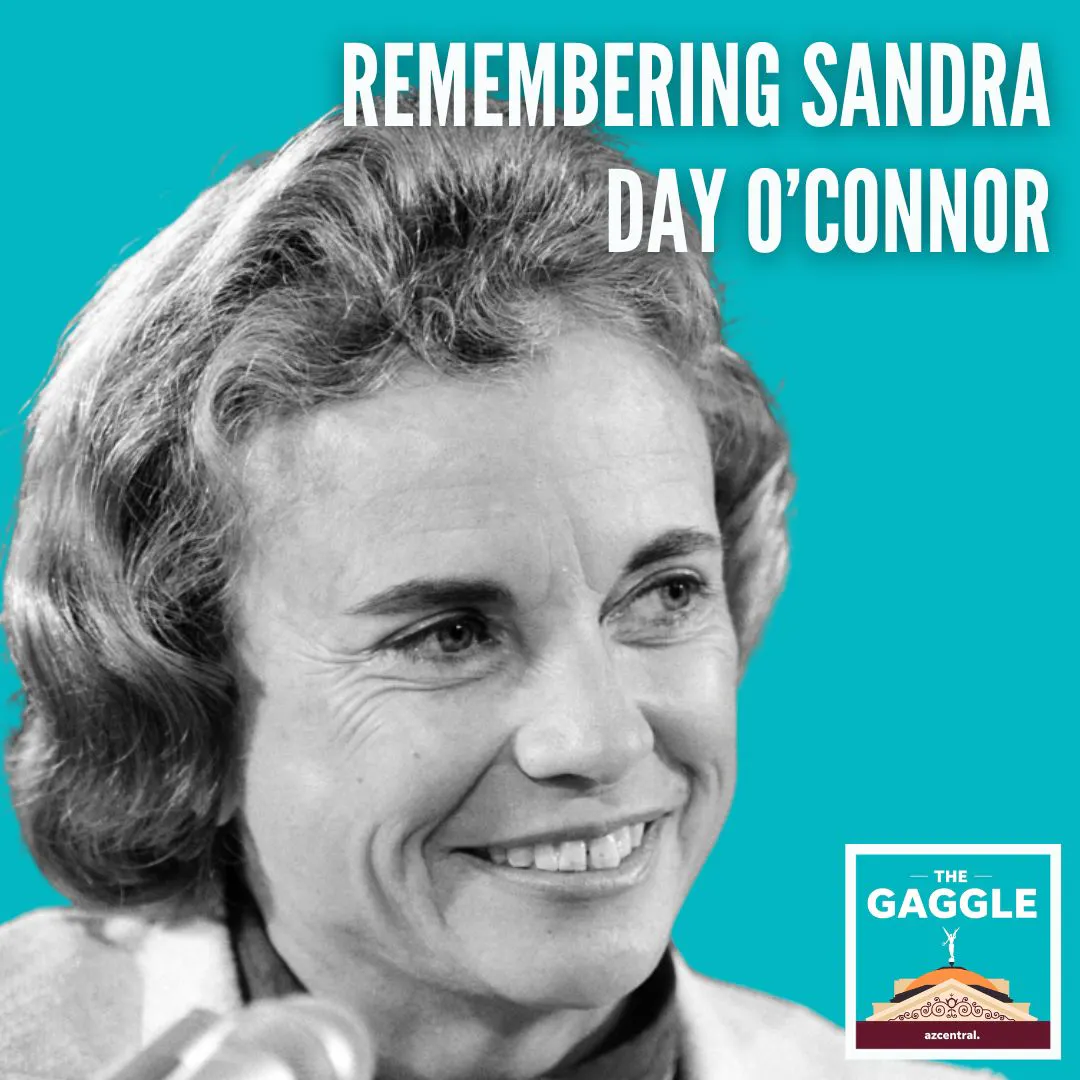
Ruth McGregor tells the Gaggle about Sandra Day O'Connor's human-side
Justice Sandra Day O’Connor, the first woman to sit on the U.S. Supreme Court was laid to rest this week. As the country said its final farewells to Arizona ranch girl, we here on The Gaggle have been honoring her life and legacy through a series of interviews with those who knew her. Welcome to the third episode of The Gaggle’s mini series on Sandra Day O’Connor. Thus far we have heard from O’Connor’s biographer and a historian. Today we turn to someone who was closer to the justice: Ruth McGregor. A former chief justice Arizona Supreme Court, McGregor shared that she’s known Sandra Day O’Connor since the mid 1970s. First they worked solely as associates in the same field, but a friendship grew that lasted a life time. McGregor sat down in the Gaggle studios in April 2022. Former Gaggle host, Yvonne Wingett Sanchez led the interview. Learn more about your ad choices. Visit megaphone.fm/adchoices
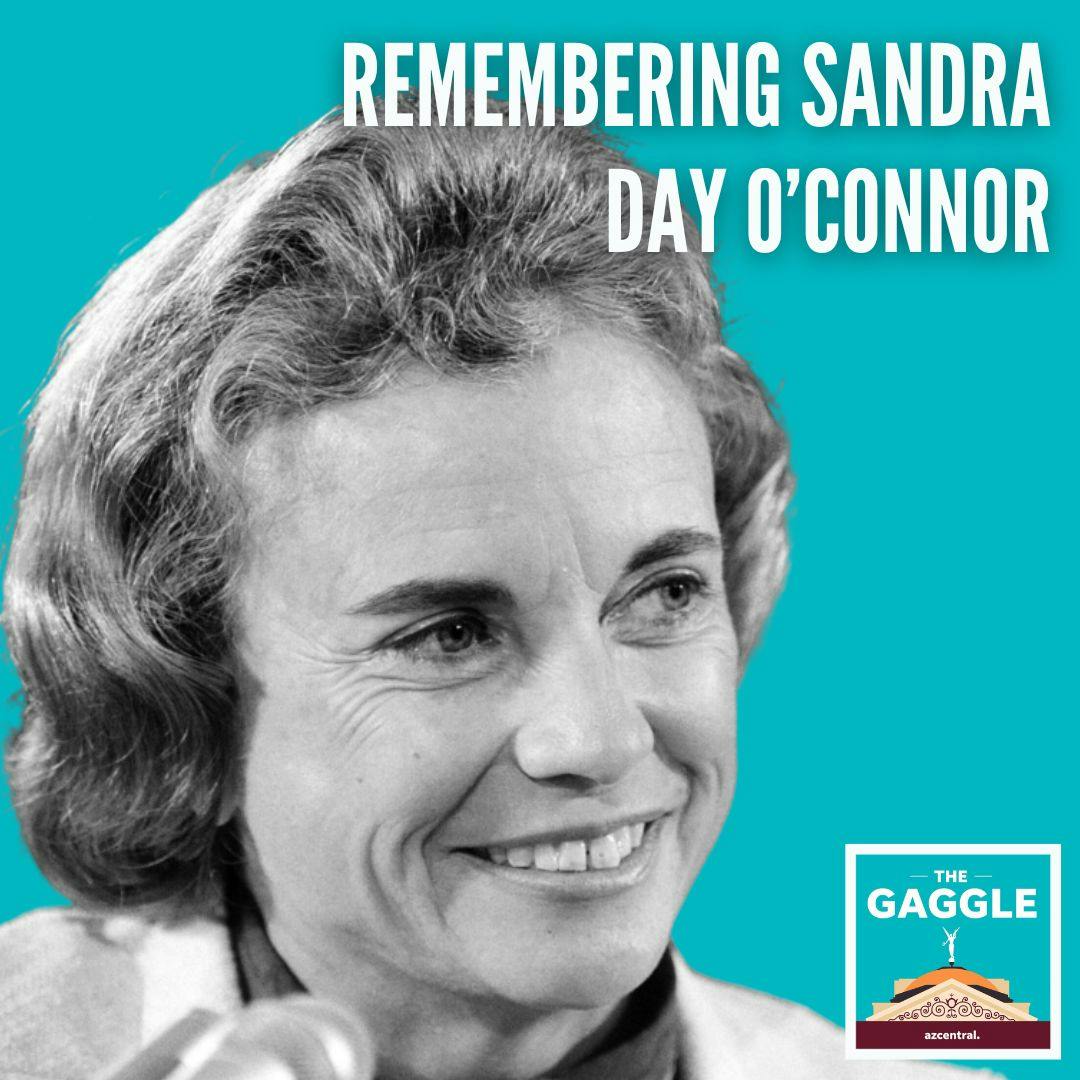
'A terrific first.' Remembering Sandra Day O'Connor with historian Linda Hirshman
This week, the country has said its final goodbyes to the first woman to ever sit on the U.S. Supreme Court. To mark Sandra Day O'Connor's historical life, The Gaggle is sharing in-depth interviews with those that knew her. Yesterday we heard from her biographer, Evan Thomas. Today, we’ll hear from Linda Hirshman, a lawyer, cultural historian, and author of many books – including the 2016 “Sisters in Law: How Sandra Day O’Connor and Ruth Bader Ginsburg Went to the Supreme Court and Changed the World.” Hirshman sat down in the Gaggle studios in spring 2022 with then Gaggle host Yvonne Wingett Sanchez. For Hirshman, O’Connor is something of a complicated figure. In her words, O’Connor opened the door for extreme conservatism to enter the highest court in the land. At the same time, O’Connor was a defender of moderation, and believed strongly in nonpartisanship when it came to interpreting the law. Learn more about your ad choices. Visit megaphone.fm/adchoices
What keeps State Senator Mitzi Epstein coming back to politics
Sen. Mitzi Epstein, D-Tempe, spent years as a computer systems analyst before turning to a career in politics. Finding a lack of support and finances for her children's education inspired her to change paths. She now holds a leadership position in the Arizona Senate. Epstein is no stranger to the Arizona Legislature: Although this is her first Senate term, she served three terms in the House of Representatives. She represents a district that increasingly has trended Democratic, covering Ahwatukee Foothills, much of southern Tempe and parts of Chandler. In the 30-member Senate, Epstein leads a caucus of 14 Democrats. This week on The Gaggle, a politics podcast by The Arizona Republic and azcentral.com, Epstein joins hosts Ron Hansen and Mary Jo Pitzl to discuss the state's budget and political balance. Learn more about your ad choices. Visit megaphone.fm/adchoices

Remembering Sandra Day O'Connor with her biographer
Justice Sandra Day O'Connor has been laid to rest on December 19, 2023. In this special mini series we to bring you the interviews of those who knew her conducted by our host Ron Hansen, as well as former host and Republic reporter Yvonne Wingett Sanchez. We begin with O’Connor’s biographer Evan Thomas. He is a historian and journalist, and penned "First: Sandra Day O'Connor." Speaking from his home in Washington D.C., Thomas shared his reflections on O’Connor with Ron Hansen and Yvonne Wingett Sanchez – both of whom you’ll hear in this interview. Learn more about your ad choices. Visit megaphone.fm/adchoices
Arizona Senate President Warren Petersen sits down with The Gaggle to discuss the conservative agenda, water and what he learned in law school
Republican Warren Petersen leads an Arizona state Senate that has been aggressive in pursuing its policy goals and, in many cases, defying Democratic Gov. Katie Hobbs. A third-generation resident of Gilbert, Arizona, Petersen was first elected to the Legislature in 2012 and has served in both the House, where he was the majority leader, and now in the Senate. As Senate president, Petersen along with his Republican counterparts in the House, brokered a state budget deal with Gov. Hobbs, as well as a compromise agreement on a regional transportation plan that gave everyone some claim to victory. In this episode of The Gaggle, a politics podcast by the Arizona Republic, Senator Petersen sits down with hosts Mary Jo Pitzl and Ron Hansen to discuss working in the rare state of divided government in Arizona and what lies ahead in 2024. Learn more about your ad choices. Visit megaphone.fm/adchoices
Exploring Sandra Day O'Connor's country girl roots at the Lazy B Ranch
Americans from President Joe Biden on down have paid tribute to the late Supreme Court Justice Sandra Day O’Connor since her passing on December 1, 2023. Most of the tributes and memories have understandably focused on her time on the court. She was historic, after all, as the first woman to sit on the Supreme Court. But she was fiercely proud of her roots as an Arizona ranch girl. In fact, she wrote a book about that period of her life with her brother, Alan Day. In this episode of The Gaggle we hear from Alan Day as he takes us to the family ranch, Lazy B. Learn more about your ad choices. Visit megaphone.fm/adchoices

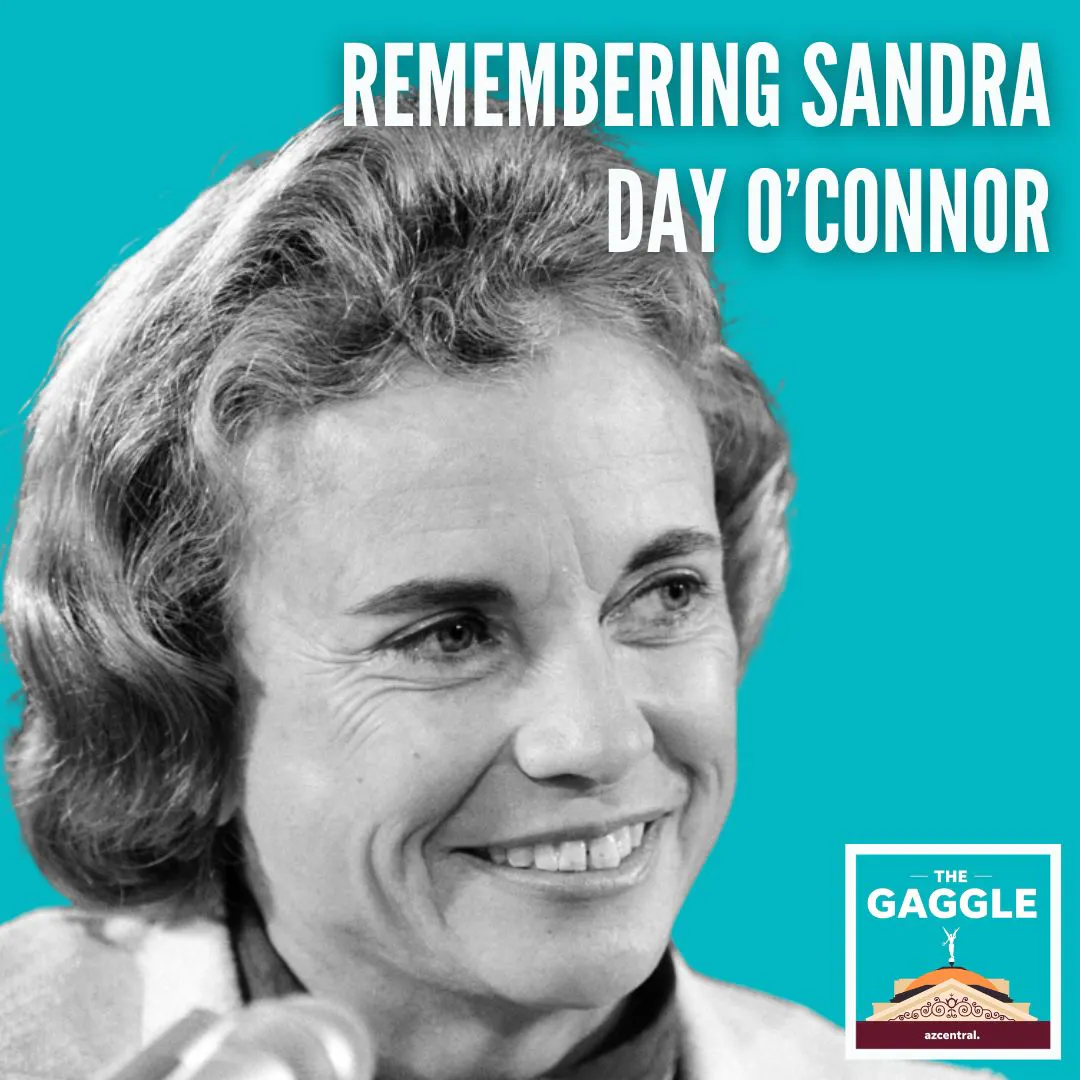
Remembering Sandra Day O'Connor
Sandra Day O’Connor, the Arizona ranch girl who was a fixture in Arizona’s statehouse and judiciary before becoming the first woman to sit on the U.S. Supreme Court, died Friday December 1, 2023 of complications related to advanced dementia and a respiratory illness. She was 93. In this bonus episode of The Gaggle, Ron Hansen shares her life story and her impact on Arizona and US politics. He is joined by former justice of the Arizona Supreme Court Ruth McGregor, her brother Alan Day, her biographer Evan Thomas, and more. The Gaggle looks back on the life and legacy of first woman Supreme Court justice. Learn more about your ad choices. Visit megaphone.fm/adchoices
'It's a very quirky family.' Mesa Mayor Giles on 10 years of growth
Mesa is one of the fastest growing cities in Arizona. The East Valley is now just shy of half a million residents and has been a magnet for growth. For the the last decade, this boom has been shepherded by Mayor John Giles. He chalks up Mesa's success to several factors including smart investments in the city's properties. This in turn has paved the way for many of the world's biggest companies – Amazon, Apple, Google – to laid down roots here. As Giles begins to wrap up his tenure as mayor of the Valley's largest suburb, he stopped by The Gaggle studio to reflect on how Mesa has evolved, the challenges its overcome and ones it still has, and where he sees himself going next. Learn more about your ad choices. Visit megaphone.fm/adchoices

A very Gaggle Thanksgiving
When it comes to the holidays, the last thing most people want to think about are politics. The plethora of stories, memes, jokes, and comedy skits about "don't bring up politics at family gatherings" are a testament to the unspoken taboo. But sometimes its easy to forget that our elected officials are people too. And being a politics podcast, we here on The Gaggle wanted to bring you a different side to the men and women who help run our state. In this Thanksgiving episode, we'll hear from legislatures, mayors, and more about their family traditions, new recipes, and cherished holiday memories. Learn more about your ad choices. Visit megaphone.fm/adchoices
The Gaggle revisits our investigative series "Rediscovering"
The podcast team at the Arizona Republic is busy working on season 4 of our investigative show "Rediscovering." In season 1, Richard Ruelas uncovers more to the mystery of murdered journalist Don Bolles. In season 2, Ron Hansen and Yvonne Wingett Sanchez broke down how legendary racist law SB1070 came to be and its impact on Arizona. Last season, Rafael Carranza told the tale of José Antonio, a Mexican teenager who lost his life at the hands of a US border agent who shot through the border fence into Mexico. Coming soon is season 4: Roots of Radicalism hosted by The Gaggle's Ron Hansen and Mary Jo Pitzl. We'll bring you back to Arizona's beginnings and explore how extremism has become intertwined with the state's politics. This week, in lieu of a new episode, is Ron's interview with the host and reporters of season 3 that aired last year. They discussed how Rafael spent a decade covering the shooting and what was learned in talking to attorneys, the boy's family, and other experts during season 3. If you're not already, please subscribe to Rediscovering, an Arizona Republic and azcentral.com investigative podcast, wherever you listen and stay tuned for season 4. Learn more about your ad choices. Visit megaphone.fm/adchoices
Add some extra cash to your budget with these money tips from The Gaggle podcast
Looking for ways to fatten up your bank account? Or eyeing some home improvements? This episode of The Gaggle shares tips on where and how to cash in. Learn more about your ad choices. Visit megaphone.fm/adchoices
Clearing "The Zone," Phoenix's largest homeless camp on deadline
Maricopa County has been one of the fastest-growing counties in America for almost a decade. It has about 4.6 million residents. While downtown Phoenix is rapidly building apartment buildings and Phoenix and its suburbs are adding new subdivisions, the unhoused population also has grown. At the beginning of the year, 9,642 people were experiencing homelessness in the county, according to a yearly attempt to quantify the county's homeless population. A tent city known as "The Zone" sits just southeast of the Capitol building in Phoenix. It garnered national attention as the United States' homeless population grew after pandemic aid dried up. In "The Zone," more than 1,000 people had set up tents. A judge has ordered it to be cleared out by the end of this week, giving those who live there limited time to plan. This week on The Gaggle, a podcast by The Arizona Republic and azcentral.com, hosts Ron Hansen and Mary Jo Pitzl are joined by Republic reporter Helen Rummel. Rummel covers housing insecurity and homelessness, and joins the show to discuss how the encampment became so large, how other cities may look to Phoenix for how to handle their crises, and if the city can achieve its goal on time. Learn more about your ad choices. Visit megaphone.fm/adchoices
What propositions could end up on your 2024 ballot
It's that time of year again. They're standing outside the state fair or tracking you down in parking lots. People with clipboards and quick pitches on why you should sign the petition they're circulating. As it ramps up to an election year, it is citizen initiative season, and interest groups are taking it into their hands to put some big decisions before voters in November 2024. The details of Arizona's reproductive rights laws and changes in how the state conducts elections are hoping to make it to the ballot for voters. Maricopa County voters will get a chance to weigh in on a roads and transit plan and lawmakers might refer even more to the ballot when they meet next year. This week on The Gaggle, a podcast by The Arizona Republic and azcentral.com, hosts Ron Hansen and Mary Jo Pitzl are joined by Arizona Republic state politics reporter Stacey Barchenger to dive into what propositions could make it onto the 2024 ballot. Learn more about your ad choices. Visit megaphone.fm/adchoices
Can the GOP unseat Democrats in this liberal stronghold?
Tucson is gearing up for a city-wide election on November 7. Incumbent Mayor Regina Romero and many city council members are running again. Do Republicans have a shot in this Democratic stronghold? In this episode, hosts Ron Hansen and Mary Jo Pitzl tease out the possibilities with longtime Tucson resident and reporter Curt Prendergast of the Tucson Agenda. Learn more about your ad choices. Visit megaphone.fm/adchoices
Kari Lake is in. How will that affect Arizona's Senate race? Listen to find out
Kari Lake is tossing her hat into the ring for Senate. Does she have enough appeal to Arizonans to win? The Gaggle hosts Mary Jo Pitzl and Ron Hansen discuss the possibilities. Learn more about your ad choices. Visit megaphone.fm/adchoices
Emails reveal political infighting among Arizona districts
Most basic acts of government are supposed to be pretty straightforward. But in Arizona, nothing can be that simple, of course. In this state, the act of counting ballots, electing a governor without pushback on the process, and even following City Council regulations have been shrouded in controversy and drama. The newest seemingly rudimentary task to join the ranks of contentious practices is appointing precinct committeemen when there are openings. These members play key roles in organizing grassroots political efforts. They are elected officials who help their communities register to vote, canvass for candidates and lead movements to get out the vote. And generally, they are appointed by a county’s Board of Supervisors based on a list of names given to them by the county party’s chairperson. Some legislative district chairs say the Maricopa County Republican Committee is pitching precinct committeemen to county supervisors without their signoff. And it turns out this isn’t the first time, and it's not the only issue. This week on The Gaggle, a podcast by The Arizona Republic and azcentral.com, host Ron Hansen is joined by Arizona Republic county reporter Sasha Hupka to discuss the drama behind these appointments and a new policy to help discern what supervisors legally can do. Learn more about your ad choices. Visit megaphone.fm/adchoices
Which 2024 Presidential candidate is most appealing to Arizonans right now?
Arizona is a key swing state for 2024. And the playing field for president, at present, is wide. With 13 GOP candidates and three Democrats, Arizonans and voters across the U.S. are spoiled for choice. But which presidential candidate is Arizona leaning towards? Learn more about your ad choices. Visit megaphone.fm/adchoices
A vice mayor and a sex offender: the drama in the Peoria City Council
August is usually when things cool down: the temperature drops just a little, members of Congress leave Washington D.C. and the Legislature is still soaking up their summer vacation. But this year, August is when things heated up, specifically for the Peoria City Council. August is when they tried and failed to keep the public out of an outlandish, secretive battle over a sex offender, their vice mayor and figuring out which rules they really needed to follow. This week on The Gaggle, a podcast by The Arizona Republic and azcentral.com, host Ron Hansen, is joined by Arizona Republic reporter Taylor Seely to break down what exactly happened with vice mayor Denette Dunn and why the City of Peoria tried to keep it under wraps. Learn more about your ad choices. Visit megaphone.fm/adchoices
Kris Mayes on AZ abortion access, elections integrity and drug epidemics
Kris Mayes has jumped into her role as state attorney general. Mayes has not been shy about taking on major issues, from abortion rights and critiquing the state's water policy to casting a skeptical eye on Arizona's new universal school voucher program. As the first Democrat to hold the seat in more than a decade, Mayes confirmed her office is investigating potential fraud related to efforts to overturn the 2020 presidential election. Arizona played a key role in tipping the election to President Joe Biden. This week on The Gaggle, a podcast by The Arizona Republic and azcentral.com, host Mary Jo Pitzl is joined by Republic state politics reporter Stacey Barchenger. She covers the governor and attorney general's offices. Their exclusive interview with Mayes covers election integrity, how she is prioritizing numerous pressing issues, and her office's fight against the fentanyl epidemic in Arizona. Learn more about your ad choices. Visit megaphone.fm/adchoices
3 years of election uproar: a sit-down with Maricopa County Board of Supervisors Chairman Clint Hickman
If you're thinking Arizona is stuck in a "Groundhog Day"-type situation with the 2020 presidential election and all its fallout, think of Maricopa County Board of Supervisors Chairman Clint Hickman. The Republican chairman has had a front-row seat to Arizona's election drama over the past three years and has been personally impacted by it. As a member of the Maricopa County Board of Supervisors, Hickman tried to reach an agreement with the Arizona House and Senate over a review of the county's 2020 election results. When the Senate moved ahead on its own, Hickman was part of the county's battles with that chamber over the resulting ballot recount. Recently, he watched a man who had personally threatened him with lynching because of this decision get sentenced to 2 ½ years in prison. Hickman was a key stakeholder in the county’s elections administration both in 2020, when the process went well, and in 2022, when it wasn't as smooth. This week on The Gaggle, a podcast by The Arizona Republic and azcentral.com, hosts Ron Hansen and Mary Jo Pitzl are joined by Hickman to talk about elections, the growing legal tab for former Sheriff Joe Arpaio and the Arizona Diamondbacks' stadium wishes. As the recently elected chairman of the five-member board, Hickman discussed issues past and present. Learn more about your ad choices. Visit megaphone.fm/adchoices
Regaining trust in our elections: a sit down interview with Secretary of State Adrian Fontes
Elections are repetitive things in Arizona: the major parties hold their primaries in the summer, general election voting ends in November and it takes days to count the ballots. And then in recent years, we have at least two years of deniers claiming the elections were stolen. Some might say that the 2022 election has been over for almost a year. But some candidates are still contesting the results in court, while the last legislative session saw a raft of bills that would reconfigure elections. Apart from never-ending election denialism, Arizona is seeing interest from organizations eyeing a third party presence on this battleground state’s ballots. While there are still months until Arizona’s presidential primary, Secretary of State Adrian Fontes, his staff and county election officials across the state are busy getting ready for what lies ahead. This week on The Gaggle, a podcast by The Arizona Republic and azcentral.com, hosts Ron Hansen and Mary Jo Pitzl are joined by Secretary of State Adrian Fontes to discuss how his office is preparing for a busy year in 2024, what he's doing to regain the trust in the elections process and how he'll handle President Trump's qualifications for the ballot. Learn more about your ad choices. Visit megaphone.fm/adchoices
Vouchers, trans rights, more: a conversation with Schools chief Tom Horne
Tom Horne returned to the state school superintendent’s office in January and wasted no time jumping back into his former job. Some viewed his return as jumping back in time, given his outspoken stance on returning to “traditional discipline” in the classroom, his dismissal of contemporary topics such as social-emotional learning and his insistence on a back-to-basics approach on curriculum. But some are pleased with the Republican superintendent's eagerness to decry "critical race theory" and defend a state law that bans transgender students from participating in female sports. Separate from the culture wars, he’s emerged as perhaps the most ardent supporter of Arizona’s universal school voucher program. This week on The Gaggle, a podcast by The Arizona Republic and azcentral.com, hosts Ron Hansen and Mary Jo Pitzl are joined by the Horne for this exclusive interview. Learn more about your ad choices. Visit megaphone.fm/adchoices
It's hot. Should I care? We breakdown the politics of heat
Arizona is hot. No surprise there. But what are the City of Phoenix and Arizona at large doing about it? Listen to find out what needs to happen to keep Arizonans cool. Learn more about your ad choices. Visit megaphone.fm/adchoices
Did anything even get done? Breaking down the 2023 Arizona legislative session
The Arizona Legislature this year set records. Not for bills passed or money spent, but for how long it was in session and how many vetoes Democratic Gov. Katie Hobbs issued: 204 days spent trying to decide what to do and 143 decisions overruled by Hobbs. Both are signs of the difficult adjustment to divided government at the Capitol, something Arizona has not seen for 14 years. But what actually got done this year, if anything? This week on The Gaggle, a podcast by The Arizona Republic and azcentral.com, hosts Ron Hansen and Mary Jo Pitzl are joined by Arizona Republic reporters Stacey Barchenger and Taylor Seely. Barchenger, who covers the Governor's Office, talked with The Gaggle about how the legislative session shook out and what can be expected next year, when nearly every seat is up for grabs. Seely, who reports on Phoenix city government, joined the show to analyze two major pieces of legislation affecting Arizona cities that were passed this session. Learn more about your ad choices. Visit megaphone.fm/adchoices
Can Arizona afford its rapidly growing school voucher program?
Arizona's empowerment scholarship account, or ESA, is the most extensive in the country. Now, students whose families want to send them to a private school or provide specialized instruction can do so thanks to a taxpayer-funded voucher. The program helps some families, but critics say the program's cost will strain the state budget, and there's no way to gauge the kind of education students are getting or who's making money off of the program because it lacks many guardrails. This year, more than 60,000 students are enrolled in the ESA program, a significant jump from last year's 12,000 students. Issues with administration are also plaguing the program. In this episode of The Gaggle, The Republic's K-12 reporter, Yana Kunichoff joins hosts Mary Jo Pitzl and Ron Hansen. Together they discuss how much this rapidly growing program will cost taxpayers, the data holes in the program, and how Arizona's ESA program can improve to better serve students. Learn more about your ad choices. Visit megaphone.fm/adchoices