The FRONTLINE Dispatch
155 episodes — Page 2 of 4
The ‘Dangerous Assignment’ That Sent a Venezuelan Journalist Into Exile
When Venezuelan journalist Roberto Deniz began investigating problems with a government food program with his colleagues at the investigative news site Armando.info, he didn’t know that the reaction to his reporting would one day drive him to flee his home country. For the past six years, he has been living and reporting in exile, helping to uncover a corruption scandal reaching from Venezuela to the U.S. and beyond. A Dangerous Assignment: Uncovering Corruption in Maduro’s Venezuela is a new documentary from FRONTLINE and Armando.info that follows Deniz as he investigates the controversial businessman Alex Saab and his connections to the government of Venezuelan President Nicolas Maduro. Together with Juan Ravell, the film’s director, Deniz joins Raney Aronson-Rath to talk about Saab’s indictment and subsequent release from U.S. custody, and the consequences of reporting on corruption in Maduro’s Venezuela. Stream A Dangerous Assignment on FRONTLINE’s website, FRONTLINE’s YouTube channel, or the PBS App.Want to be notified every time a new podcast episode drops? Sign up for The FRONTLINE Dispatch newsletter.
Inside the Investigation into Police Use of Force
A new investigation reveals that over nearly a decade, more than 1,000 people died following encounters where police employed tactics known as “less-lethal force,” which ranged from Tasers or physical restraint to forced sedation and other methods meant to stop people without killing them. Police say they are often responding to volatile and sometimes violent situations, and deaths are rare.Drawing on police records, autopsy reports, and footage from cellphones and body-worn cameras, The Associated Press, in collaboration with FRONTLINE and the Howard Centers for Investigative Journalism, compiled a database that serves as the most extensive accounting ever of deaths following such police encounters. Serginho Roosblad, director and producer of the joint documentary Documenting Police Use of Force, and Justin Pritchard, a reporter and editor with the AP, join host Raney Aronson-Rath on The FRONTLINE Dispatch to discuss their findings. The investigation also includes an interactive story and database. Stream Documenting Police Use of Force on FRONTLINE’s website, FRONTLINE’s YouTube channel, or the PBS App.Want to be notified every time a new podcast episode drops? Sign up for The FRONTLINE Dispatch newsletter.
The Search for Ukraine’s Missing Children
Since Russia’s 2022 invasion of Ukraine began, thousands of Ukrainian children have been taken and held in Russian-controlled territory. A new documentary from FRONTLINE, Children of Ukraine, examines the fate of some of these young Ukrainians, following families and investigators as they search for missing children and collect evidence of alleged abductions. Director Paul Kenyon joined The FRONTLINE Dispatch to talk about dueling Ukrainian and Russian narratives about what’s happened to the children, interviewing young survivors of war and trauma, and ongoing efforts to reunite Ukrainian families. You can watch Children of Ukraine on FRONTLINE’s website, FRONTLINE’s YouTube channel and the PBS App. Want to be notified every time a new podcast episode drops? Sign up for The FRONTLINE Dispatch newsletter.
Investigating a Massive Online Leak of Government Secrets
On March 4, 2024, Air National Guard member Jack Teixeira pleaded guilty to charges related to one of the country’s largest leaks of classified information. How did Teixeira manage to go without notice for months as he leaked hundreds of pages of government documents on Discord, the online chat platform popular with teenage gamers? Shane Harris and Sam Oakford were part of a team of Washington Post reporters who set out to investigate, and who partnered with FRONTLINE director Tom Jennings. The FRONTLINE/Washington Post documentary The Discord Leaks investigates Teixeira’s online world, his massive leak of national security secrets and the role of platforms like Discord. The documentary also raises tough questions about the military’s vetting of applicants’ online behavior. Jennings, Harris and Oakford joined host Raney Aronson-Rath to talk about recent developments related to national security leaks, Teixeira’s case and what the documentary reveals.“What Jack's case shows is this huge vulnerability at the heart of the intelligence apparatus, of an insufficient system for vetting people, and a system that's built so that people can get access to secrets and share them with practically whomever they want,” Harris told Aronson-Rath. “And I think that is going to be a major challenge for the military and the intelligence agencies going forward.”You can watch The Discord Leaks on FRONTLINE’s website, the FRONTLINE YouTube Channel, and the PBS App. Read The Washington Post’s related reporting at washingtonpost.com.Want to be notified every time a new podcast episode drops? Sign up for The FRONTLINE Dispatch newsletter.
Stuck in a ‘Fractured’ System
Working as a health care reporter in North Carolina, WFAE’s Dana Miller Ervin heard about jail inmates living with serious mental illnesses who cycled for years between jails and psychiatric hospitals. The courts deem them too sick to stand trial – incapable to proceed or ITP – but they often wait months to get the care they need just so their cases can move forward. Ervin detailed her investigation in an 11-part WFAE radio series, “Fractured,” made with support from FRONTLINE’s Local Journalism Initiative. Now, a documentary by the same name follows Ervin as she chronicles the plight of ITP inmates. Fractured is directed by Débora Souza Silva, a 2023 recipient of the FRONTLINE/Firelight Media Investigative Journalism Fellowship. Ervin and Silva joined Raney Aronson-Rath on The FRONTLINE Dispatch to discuss making the film; how long waits for care affect these defendants as well as others in the criminal justice system; and potential solutions to the problem. The “Fractured” documentary is streaming on FRONTLINE’s website, YouTube, and the PBS App. Read and listen to more from WFAE and FRONTLINE’s series Fractured.
Democracy on Trial, Part Four: Inside the White House on Jan. 6
FRONTLINE investigates the roots of the federal criminal case against former President Donald Trump stemming from his 2020 election loss in a special audio version of the new documentary Democracy on Trial. In this final installment, the Jan. 6 Select Committee examines what happened inside the White House on Jan. 6, 2021. What was former President Donald Trump doing for 187 minutes during the violent insurrection at the U.S. Capitol, when some in the crowd were chanting, “Hang Mike Pence”? What did Cassidy Hutchinson, a former top aide to then-President Donald Trump’s Chief of Staff Mark Meadows, testify that she witnessed that day? Plus: As a potential criminal trial looms, how will it differ from the Jan. 6 Select Committee’s hearings? And what are the trial’s implications for democracy? Watch Democracy on Trial in full on FRONTLINE’s website, YouTube or the PBS App.
Democracy on Trial, Part Three: An “Invitation” for Jan. 6
FRONTLINE investigates the roots of the federal criminal case against former President Donald Trump stemming from his 2020 election loss in a special audio version of the new documentary Democracy on Trial. In part three, the Jan. 6 Select Committee examines the pressures mounting on the Justice Department and then-Vice President Mike Pence to intervene on Trump’s behalf. Georgia Secretary of State Brad Raffensperger recalls a phone call in which the former president tells him, “I just want to find 11,780 votes” — the number of votes needed to win the 2020 presidential election in the state. And the former president sends a now-famous tweet inviting supporters to Washington D.C. on Jan. 6, 2021, to protest the results of the 2020 election, saying it “will be wild.” Tune in next week for the fourth and final installment of the audio-only version of the documentary here on The FRONTLINE Dispatch. Watch Democracy on Trial in full on FRONTLINE’s website, YouTube or the PBS App.
Democracy on Trial, Part Two: A Pressure Campaign and a Warning
FRONTLINE investigates the roots of the federal criminal case against former President Donald Trump stemming from his 2020 election loss in a special audio version of the new documentary Democracy on Trial. In part two, Georgia election official Gabriel Sterling issues a stark warning about the potential for violence. Rusty Bowers, former Arizona House speaker and a lifelong Republican, testifies in front of the Jan. 6 Select Committee about former President Donald Trump’s campaign of pressure on local officials. And two Georgia election workers, Shaye Moss and Ruby Freeman, face racist threats after being named in a conspiracy theory about stolen votes. Tune in next week for the third installment of the audio-only version of the documentary here on The FRONTLINE Dispatch. Watch Democracy on Trial in full on FRONTLINE’s website, YouTube or the PBS App.
Democracy on Trial, Part One: A Blueprint For the Case Against Trump
With the 2024 presidential race underway, FRONTLINE investigates the roots of the federal criminal case against former President Donald Trump stemming from his 2020 election loss. In this special audio version of Democracy on Trial, veteran political filmmaker Michael Kirk and his team examine the House Jan. 6 committee’s evidence, the historic charges against Trump and the threat to democracy. In this first installment, former President Donald Trump is charged with crimes in office — an unprecedented event in American history. The Jan. 6 Select Committee report starts to build a case against former President Donald Trump, which will go on to become a blueprint for special counsel Jack Smith. And a central question emerges for the committee: What did former President Trump know about the 2020 election results, and when did he know it? Tune in next week for the second installment of the audio-only version of the documentary here on The FRONTLINE Dispatch. Watch Democracy on Trial in full on FRONTLINE’s website, YouTube or the PBS App.
‘Democracy on Trial’ Director on the Roots of Federal Charges Against Trump
Democracy on Trial is a 2.5-hour documentary special from FRONTLINE that examines the roots and implications of the unprecedented charges against former president Donald Trump in connection with the efforts to overturn the 2020 election. Drawing on interviews with elected officials, former government lawyers, House Select Committee witnesses and former committee staffers, authors and journalists, the documentary — which is being released in audio form via The FRONTLINE Dispatch podcast in the coming weeks — shows how the work of the House Select Committee investigating the Jan. 6 Capitol attack forms a blueprint for the federal indictment brought by Special Counsel Jack Smith. Director Michael Kirk, a longtime FRONTLINE filmmaker, joins host Raney Aronson-Rath, editor-in-chief and executive producer of FRONTLINE, to talk about the case against Trump; the defense strategy of the former president, who has pleaded not guilty; and reporting this story in a deeply divided country. As this unusual election year unfolds, watch Democracy on Trial in full on FRONTLINE’s website, YouTube or the PBS App, and listen to the multi-part audio version of the documentary starting today on The FRONTLINE Dispatch. Want to be notified every time a new podcast episode drops? Sign up for The FRONTLINE Dispatch newsletter.
Reconstructing the Uvalde Shooting Response
The May 2022 gun massacre at Robb Elementary School in Uvalde, Texas left 19 children and two teachers dead. It was one of the deadliest school shootings in U.S. history. Inside the Uvalde Response, a recent documentary from FRONTLINE, ProPublica and The Texas Tribune, probes the chaotic police response to the shooting and sheds new light on law enforcement’s thoughts and actions as the tragedy unfolded. Among the revelations: Students and teachers at the school had practiced active shooter drills and knew what to do, but scores of law enforcement officers who responded that day did not. Lomi Kriel, a reporter with the ProPublica-Texas Tribune Investigative Unit, and director Juanita Ceballos join The FRONTLINE Dispatch to discuss how they used hundreds of hours of body cam footage and officer interviews to reconstruct one of the most criticized mass shooting responses in recent history, and examine what went wrong. “I think one thing that makes this very different is that for prior mass shootings — Parkland, Pulse, others — we just don't necessarily… have this kind of information, both body camera footage, 911 calls, interviews with officers — to actually know how those responses happened.” Kriel says that while the Uvalde community awaits fuller answers from the district attorney investigating the law enforcement response, FRONTLINE, ProPublica and The Texas Tribune’s reporting provides at least “one comprehensive accounting of what happened that day” You can watch Inside the Uvalde Response on FRONTLINE’s website, FRONTLINE’s YouTube Channel, and the PBS App. Want to be notified every time a new podcast episode drops? Sign up for The FRONTLINE Dispatch newsletter.
Underage Workers in New England’s Seafood Processing Industry
Journalists with The Public’s Radio, a station serving Rhode Island and Southeastern Massachusetts, spent two years investigating teen labor in the local seafood processing industry. Their investigation, supported by FRONTLINE’s Local Journalism initiative, reveals flaws in systems designed to protect migrant teens, who’ve arrived at the U.S. southern border in unprecedented numbers in recent years. The investigative team interviewed migrant teens and their families, and uncovered that the U.S. Department of Labor was investigating at least two New Bedford, MA, seafood processors, as well as a Rhode Island staffing agency, for possible child labor, overtime pay, and anti-retaliation violations. In this episode of The FRONTLINE Dispatch, reporters Nadine Sebai and Nina Sparling from The Public’s Radio join FRONTLINE editor-in-chief and executive producer Raney Aronson-Rath to discuss their findings. Sebai and Sparling say they sought to illustrate the complexities of what happens to underage migrants after they arrive on the nation's southern border — especially the challenges they face. Sebai says, "We've all seen... the waves of kids migrating to the border, unaccompanied minors coming to the border. But they actually end up somewhere in the U.S.” For more, read and listen to The Public Radio’s investigation “Underage and Unprotected,” supported by FRONTLINE’s Local Journalism Initiative. Want to be notified every time a new podcast episode drops? Sign up for The FRONTLINE Dispatch newsletter.
Documenting the Siege of Mariupol (re-release)
20 Days in Mariupol is an unflinching, first-hand account of the early days of Russia’s invasion of the port city of Mariupol, which remains under Russian occupation to this day. Ukrainian-born director and journalist Mstyslav Chernov and his colleagues from the Associated Press were the last international journalists to remain in Mariupol as Russian troops attacked. His new film, from FRONTLINE and the AP, draws on Chernov’s news dispatches and his reflections as he documented the devastation of his home country for the world to see. Chernov sat down with FRONTLINE editor-in-chief and executive producer Raney Aronson-Rath and editor and producer Michelle Mizner in February 2023, as we marked the grim anniversary of the war in Ukraine. In this episode of The FRONTLINE Dispatch, recorded at the Boston Public Library, Chernov recounts the decision to go to Mariupol, how he and Mizner created a documentary feature from his Pulitzer Prize-winning journalism, and what he hopes people will take away from the film — today, and in years to come. “I know that we form our understanding of the current events of the world around us by watching news and consuming news,” Chernov said. “ But [we] form our understanding of our past with documentary films… Film is a medium which carries meaning across time, for generations to come.” An earlier version of this episode was published in July. You can watch 20 Days in Mariupol on FRONTLINE’s website, FRONTLINE’s YouTube Channel, the PBS App, and the PBS Documentaries Prime Video Channel. Want to be notified every time a new podcast episode drops? Sign up for The FRONTLINE Dispatch newsletter.

Introducing The Big Dig Part 1: We Were Wrong from GBH News
The FRONTLINE Dispatch presents The Big Dig, Part 1: “We Were Wrong.”The Big Dig is a new 9-part podcast series from GBH News, hosted by Ian Coss.There is a cynicism that hangs over the topic of American infrastructure — whether it’s high-speed rail or off-shore wind — it feels like this country can’t build big things anymore. No one project embodies that cynicism quite like Boston’s Big Dig. Infamous for its ever-increasing price tag, this massive highway tunneling effort became a symbol of waste and corruption. Yet the project delivered on its promise to transform the city. So how did the narrative go so horribly wrong? And what lessons can the Big Dig offer for the ambitious projects of today?You can listen all nine episodes of The Big Dig at GBH News, or wherever you get your podcasts.
Shattered Dreams of Peace: The Road From Oslo (Full-length Film Audio Track)
FRONTLINE Film Audio Tracks are FRONTLINE documentaries, in audio form. Stream or download full-length recordings of film audio tracks on Apple Podcasts or our website. Listen to the Film Audio Track for FRONTLINE’s seminal 2002 documentary on how the Israeli-Palestinian peace process begun at Oslo was derailed and ultimately undone by the dynamics of politics and violence on both sides. Shattered Dreams of Peace: The Road From Oslo traced how cautious optimism in the aftermath of Palestine Liberation Organization Chairman Yasser Arafat and then-Israeli Prime Minister Yitzhak Rabin agreeing to the 1993 Oslo Accord was undermined in the following years by violence and major setbacks. It explored the growing threat to the peace process posed by radical nationalist factions among both Jews and Palestinians — groups, including Hamas, that opposed all compromise between the two peoples. The documentary also examined the U.S. role in the peace process, including the U.S.-brokered negotiations at in 1998, 2000 and 2001. Shattered Dreams of Peace: The Road From Oslo includes interviews with key figures from both sides of the negotiating table, including Benjamin Netanyahu, Yasser Arafat, Shimon Peres, Saeb Erekat, and Ehud Barak.
S6 Ep 3Looking Back at the Houston Astros Cheating Scandal
The Houston Astros didn’t make the World Series this year. But they’re still widely considered one of the best teams of the past decade. FRONTLINE’s documentary The Astros Edge: Triumph and Scandal in Major League Baseball examines how the team used cutting-edge techniques to rise from the bottom of the league to the top, and what happened in 2017 when they went too far in what would become one of the worst cheating scandals in MLB history. The Astros Edge correspondent Ben Reiter has covered the team extensively for Sports Illustrated and boldly predicted the Astros’ stratospheric rise at a time when they were coming off a three-year slump. His book called Astroball unpacked some of the team’s techniques, which were modeled on strategies from the business world. After The Athletic revealed that the team had used an illegal sign-stealing scheme, Reiter hosted a podcast series examining how the scandal unfolded. Reiter sat down with The FRONTLINE Dispatch to talk about the scandal and the limited accountability that followed. He told host and FRONTLINE editor-in-chief and executive producer Raney Aronson-Rath that he thinks the scandal has implications that go beyond baseball. “What does it mean when your business becomes so obsessed with efficiency and profit over everything else?” he said. “Like, yeah, there's a good chance you're going to have a lot of success, but there's a lot of problems that come with that.” You can watch The Astros Edge: Triumph and Scandal in Major League Baseball on FRONTLINE's website, FRONTLINE's YouTube channel, and the PBS App. Want to be notified every time a new podcast episode drops? Sign up for The FRONTLINE Dispatch newsletter.
S6 Ep 2From Russian Newspaper Editor to ‘Foreign Agent’
When filmmaker Patrick Forbes decided to make a documentary about Russian newspaper editor Dmitry Muratov, Muratov had just won a Nobel Prize. Over the course of the next year, Russia would invade Ukraine, and Russian President Vladimir Putin would intensify his government’s crackdown on the press – a crackdown in which Muratov and his newspaper, Novaya Gazeta, would be caught up. In this episode of The FRONTLINE Dispatch, Forbes joins host Raney Aronson-Rath, editor-in-chief and executive producer of FRONTLINE, to discuss Putin vs. the Press, the new documentary that follows Muratov as he as he faces personal attacks and fights to keep his reporters safe. Forbes recounts the difficulty of filming a documentary in Russia, where he says Muratov’s story “symbolizes the increasing restriction on freedom of press in Russia” and “the slow strangling of any independent voices.” Putin vs. the Press is streaming on FRONTLINE’s website, FRONTLINE’s YouTube channel, and the PBS App. Want to be notified every time a new podcast episode drops? Sign up for The FRONTLINE Dispatch newsletter.
S6 Ep 1Locked Up for Life After ‘Two Strikes’
Two Strikes, a documentary from FRONTLINE, The Marshall Project, and Firelight Media, tells the story of Mark Jones, a former West Point cadet serving a life sentence in Florida after an attempted carjacking. The film’s director and producer Ursula Liang, a 2021 FRONTLINE/Firelight Filmmaker Fellow, and reporter Cary Aspinwall of The Marshall Project, join The FRONTLINE Dispatch to unpack the story behind Jones’ sentence — and a law that increases prison time for certain repeat offenders. Florida’s so-called “two-strikes” law allows prosecutors to seek the maximum sentence for people found guilty of felonies within three years of a prison release. In some cases, like Jones’, that can mean life in prison for crimes in which no one was physically injured. Florida has virtually abolished parole. “Florida has almost a quarter of the nation's population of life-without-parole prisoners,” Aspinwall told The FRONTLINE Dispatch host Raney Aronson-Rath, a statistic she calls “staggering.” Two Strikes is streaming on FRONTLINE’s website, FRONTLINE’s YouTube channel, and the PBS App. Want to be notified every time a new podcast episode drops? Sign up for The FRONTLINE Dispatch newsletter.
S5 Ep 15Struggling for Breath in Coal Country (re-release)
A new rule proposed by the Labor Department could help limit coal miners' exposure to a toxic dust called silica. “The purpose of this proposed rule is simple: prevent more miners from suffering from debilitating and deadly occupational illnesses by reducing their exposure to silica dust,” Chris Williamson, assistant secretary for mine, safety and health, said in a statement. “Silica overexposures have a real-life impact on a miner’s health.” Williamson has said the proposal was inspired, in part, by FRONTLINE and NPR’s 2019 investigation, which exposed a link between silica dust and an epidemic of severe black lung disease. Our documentary Coal’s Deadly Dust highlighted the resurgence of black lung — and how federal regulators and the industry had failed to protect miners. “Struggling for Breath in Coal Country” was originally released alongside the film in 2019. In this archival episode of The FRONTLINE Dispatch, correspondent Howard Berkes spoke with coal miners whose lives were forever changed when they were diagnosed with the disease. Coal’s Deadly Dust is streaming at pbs.org/frontline, in the PBS App and on FRONTLINE’s YouTube channel. Want to be notified every time a new podcast episode drops? Sign up for The FRONTLINE Dispatch newsletter.
S5 Ep 14Documenting the Siege of Mariupol
Now playing in select theaters and coming to PBS this fall, 20 Days in Mariupol is an unflinching, first-hand account of the early days of Russia’s invasion of the port city of Mariupol, which remains under Russian occupation to this day. Ukrainian-born director and journalist Mstyslav Chernov and his colleagues from the Associated Press were the last international journalists to remain in Mariupol as Russian troops attacked. His new film, from FRONTLINE and the AP, draws on Chernov’s news dispatches and his reflections as he documented the devastation of his home country for the world to see. Chernov sat down with FRONTLINE editor-in-chief and executive producer Raney Aronson-Rath and editor and producer Michelle Mizner earlier this year, as we marked the grim anniversary of the war in Ukraine. In this episode of The FRONTLINE Dispatch, he recounts the decision to go to Mariupol, how he and Mizner created a documentary feature from his Pulitzer Prize-winning journalism, and what he hopes people will take away from the film — today, and in years to come. “I know that we form our understanding of the current events of the world around us by watching news and consuming news,” Chernov said. “ But [we] form our understanding of our past with documentary films… Film is a medium which carries meaning across time, for generations to come.” 20 Days in Mariupol is currently playing in select theaters. Want to be notified every time a new podcast episode drops? Sign up for The FRONTLINE Dispatch newsletter.
S5 Ep 13‘Dangerous Trucks’ on America’s Roads
Correspondent A.C. Thompson joins the FRONTLINE Dispatch to discuss America’s Dangerous Trucks, an investigation in partnership with ProPublica. The film examines a particularly devastating type of traffic accident involving trucks – underride crashes — and how for decades, federal regulators inside the National Highway Traffic Safety Administration (NHTSA) failed to enact new safety measures to prevent them. “In the 1960s, the federal safety regulators, they start looking at this issue and they're saying, this is a problem,” Thompson recounts. “They do studies, and it then takes them more than 30 years to do anything. And that was shocking to me.” You can watch America’s Dangerous Trucks on FRONTLINE’s website, FRONTLINE’s YouTube channel, and the PBS App. Want to be notified every time a new podcast episode drops? Sign up for The FRONTLINE Dispatch newsletter.
S5 Ep 12Texas After Uvalde
In the year following the shooting at Robb Elementary School that killed 19 children and two adults, how has the community in Uvalde, Texas grieved — and what do they want to see happen? In the recent documentary After Uvalde: Guns, Grief, and Texas Politics, Pulitzer Prize-winning journalist Maria Hinojosa examined the Uvalde community’s efforts to heal, its history of activism, and where the fight over assault rifles stands today. Hinojosa, host of Latino USA and founder of Futuro Media, joins Raney Aronson-Rath to talk about her reporting in Uvalde and at the Texas Capitol as the aftermath of the tragedy — including the efforts of some Robb Elementary families to advocate for new gun restrictions — rippled through Texas politics. “It's just like you are witnessing the greatest divisions in our country right here. This is what it looks like,” Hinojosa told Aronson-Rath. You can watch After Uvalde: Guns, Grief, and Texas Politics, a collaboration with Futuro Investigates and The Texas Tribune, on FRONTLINE’s website, FRONTLINE’s YouTube channel, and the PBS App. Want to be notified every time a new podcast episode drops?Sign up for The FRONTLINE Dispatch newsletter.
S5 Ep 11Age of Easy Money (Full-length Film Audio Track)
FRONTLINE Film Audio Tracks are FRONTLINE documentaries, in audio form. Stream or download full-length recordings of film audio tracks on Apple Podcasts or our website. Listen to the full-length audio from Age of Easy Money, FRONTLINE’s recent investigation into the Federal Reserve’s “easy money” policies. Around the country and across the world, economic uncertainty continues as businesses and individuals adjust to a new reality: the Federal Reserve has been raising interest rates and pulling back on its epic monetary experiment that started with the Great Financial Crisis. From the award-winning team behind The Facebook Dilemma and Amazon Empire, the two-hour documentary investigates how the Fed’s policies have changed the American economy and what comes after the age of easy money.
S5 Ep 10For Women, ‘A Very Different Afghanistan’
In the third and final installment of the documentary series America and the Taliban, FRONTLINE looks at the months leading up to the Taliban takeover and the consequences of the group’s return to power — including the return of harsh restrictions for women. In this episode of The FRONTLINE Dispatch podcast, released on World Press Freedom Day, filmmakers Marcela Gaviria and Martin Smith joined host Raney Aronson-Rath to share observations from their reporting on the ground about the reversal of women’s rights in Afghanistan. “It just feels like half the population is in hiding,” Gaviria told Aronson-Rath. “And that might be a bit of an exaggeration, but it does feel like you can sense the fear among so many women, and fear for their future and the future of their children.” This is part two of Raney Aronson-Rath’s conversation with Gaviria and Smith about America and the Taliban. You can hear more from Gaviria and Smith on the previous episode of The FRONTLINE Dispatch. Watch all three parts of America and the Taliban on FRONTLINE’s website, FRONTLINE’s YouTube channel, and the PBS App. Want to be notified every time a new podcast episode drops? Sign up for The FRONTLINE Dispatch newsletter.
S5 Ep 10Documenting America’s 20 Years in Afghanistan
Drawing on decades of on-the-ground reporting in Afghanistan, the new three-part series America and the Taliban traces pivotal moments in America’s longest war, and how it culminated in Taliban victory. Award-winning producers Marcela Gaviria and Martin Smith join FRONTLINE editor-in-chief and executive producer Raney Aronson-Rath for a discussion on their decades of reporting in Afghanistan, and what it was like to revisit people and places from past coverage for this new series. "There's one basic thing that they all knew, and that was that the Taliban were not going to go anywhere permanently," Smith told Aronson-Rath about many of the Afghan people he met, "but the Americans were eventually going to leave." Parts one and two of America and the Taliban are available to stream on FRONTLINE’s website, FRONTLINE’s YouTube channel and the PBS App. Part three premieres on PBS and online Tuesday, April 25, 2023. Want to be notified every time a new podcast episode drops? Sign up for The FRONTLINE Dispatch newsletter.
S5 Ep 9Behind the Bank Failures
In the aftermath of the second and third-largest bank failures in U.S. history, correspondent James Jacoby joins the FRONTLINE Dispatch to talk about Age of Easy Money, a documentary examining the power of the Federal Reserve and our current economic uncertainty. The film draws on over two years of reporting on the Fed’s so-called “easy money” policies, with Jaocby and team charting the start of the Fed’s economic experiment after the 2008 financial crisis and again during COVID; the Fed’s decision to start raising interest rates in 2022; and what’s happened since — including recession fears, bank market disruptions, and concerns that the fight against inflation will trigger unemployment. “In some ways there's been this kind of gravitational force at work, this invisible force, and people weren't able to necessarily recognize it,” Jacoby told host Raney Aronson-Rath. “At the root of it is what the Fed has been doing.” Age of Easy Money is now streaming on FRONTLINE’s website, the PBS Video App, and FRONTLINE’s YouTube channel. Want to be notified every time a new podcast episode drops? Sign up for The FRONTLINE Dispatch newsletter.
S5 Ep 8A Year of War in Kharkiv, Ukraine
During the early months of Russia’s assault on Ukraine, filmmakers Mani Benchelah and Patrick Tombola documented the lives of civilians and first responders trying to survive in Kharkiv, a Ukrainian city near the border of Russia. Their work became the FRONTLINE film Ukraine: Life Under Russia’s Attack, released in August of 2022. An updated version of the documentary, released in February 2023, revisits many of the Ukrainians Benchelah and Tombola first profiled and takes us to the present day — a year after Russia’s invasion began. Joining FRONTLINE editor-in-chief and executive producer Raney Aronson-Rath after their most recent reporting trip to Kharkiv, Benchelah and Tombola reflect on documenting how the region and its inhabitants have been changed by a year of war. “The new Ukraine is one where everyone is extremely conscious of how close they had come to death,” Tombola said. “Their mindset has dramatically changed, and there's a real sense of having all shared a very defining moment in their life.” The updated Ukraine: Life Under Russia’s Attack documentary is now streaming on FRONTLINE’s website, in the PBS App and on FRONTLINE’s YouTube channel.
S5 Ep 7A.C. Thompson on Antisemitism and Right-Wing Extremism
As FRONTLINE celebrates 40 years on the air, editor-in-chief and executive producer Raney Aronson-Rath is hosting conversations with the journalists and filmmakers behind some of FRONTLINE’s most groundbreaking work. A.C. Thompson is a reporter for ProPublica who has been a correspondent with FRONTLINE since 2010. He joins The FRONTLINE Dispatch to discuss his years of reporting on right-wing extremism for award-winning films like American Insurrection and the series Documenting Hate in light of recent high-profile incidents of antisemitism. “Over time, if you were following the key sort of white nationalist and right wing extremist talking points, you saw more and more antisemitism coming through,” Thompson told Aronson-Rath. “What I think you've seen since then is sort of a quiet but steady uptick in antisemitism and now it's bursting onto the scene.” Thompson also reflects on the unique investigative collaborations he and FRONTLINE developed over the years, and previews what he’s working on in 2023. Want to be notified every time a new podcast episode drops? Sign up for The FRONTLINE Dispatch newsletter.
S5 Ep 6Behind the Explosive Investigation into Pegasus Spyware
When a leaked list of more than 50,000 phone numbers came to the attention of Laurent Richard and Sandrine Rigaud of the journalism non-profit Forbidden Stories, along with Amnesty International, they suspected the list contained phone numbers potentially targeted for surveillance using the powerful spyware known as Pegasus, which gives its operators access to targets’ mobile devices. Richard and Rigaud teamed up with journalists from sixteen other outlets, including FRONTLINE, to investigate. What the reporting consortium found, with technical support from Amnesty International’s Security Lab, was explosive: Pegasus had been used on journalists, human rights activists, the wife and fiancée of the murdered Saudi columnist Jamal Khashoggi, and others around the world. Global Spyware Scandal: Exposing Pegasus is the new, two-part series from FRONTLINE and Forbidden Films that goes behind the scenes of the investigation, and chronicles the responses from governments and institutions seeking to govern the largely unregulated spyware industry. Richard and Rigaud, two of the series’ producers, joined FRONTLINE’s Raney Aronson-Rath to discuss the investigation, what’s happened since, and the threat spyware like Pegasus poses. Pegasus is “like a person over your shoulder who will read everything that you are reading, even your encrypted messages,” Richard says. “It's a military weapon used against civilians.” Global Spyware Scandal: Exposing Pegasus is now streaming at pbs.org/frontline, in the PBS App and on FRONTLINE's YouTube channel. Want to be notified every time a new podcast episode drops? Sign up for The FRONTLINE Dispatch newsletter.
S5 Ep 5Putin’s Crackdown on Dissent Inside Russia
In the new documentary Putin’s War at Home, FRONTLINE tells the stories of Russian activists and journalists defying Russian President Vladimir Putin’s crackdown on dissent – from a young woman documenting protests and propaganda on TikTok, to a duo of reporters investigating the Ukraine war’s death toll among Russian soldiers. Director Gesbeen Mohammad joins FRONTLINE’s executive producer and editor-in-chief, Raney Aronson-Rath, to discuss what it took to gather these stories — and what the documentary’s subjects risked by speaking out about the Ukraine war, including arrest and imprisonment. “People were very, very afraid to speak to us,” Mohammad told FRONTLINE. “But I guess that's what makes all of our interviewees and contributors so unique in their braveness.” Putin’s War at Home is now streaming on FRONTLINE’s website, the PBS Video App and FRONTLINE’s YouTube channel. Want to be notified every time a new podcast episode drops? Sign up for The FRONTLINE Dispatch newsletter.
S5 Ep 4Uncovering a Pattern of ‘Strategic Violence’ by Russia in Ukraine
Since the start of Russia’s invasion of Ukraine, FRONTLINE and the Associated Press have been investigating mounting evidence of war crimes. The two organizations’ recent documentary, Putin’s Attack on Ukraine: Documenting War Crimes, found that in many instances the violence was far from random. AP Global Investigative Reporter Erika Kinetz, the documentary’s correspondent, joins The FRONTLINE Dispatch to talk about this months-long collaborative investigation. From reporting on the ground in Ukraine, to piecing together hours of CCTV footage and audio intercepts of Russian soldiers’ conversations, Kinetz spoke with FRONTLINE’s editor-in-chief and executive producer Raney Aronson-Rath about working with FRONTLINE producers to trace the story of one woman’s loss to a larger pattern of strategic violence in Bucha and other Kyiv suburbs. “Victim after victim, survivor after survivor would ask the same question, which is: ‘Why? Why did this happen?’” Kinetz said. “It didn't actually dawn on me until near the end of our reporting that there were actually patterns at play in the violence that we were seeing, and there were actually strategies motivating a lot of the violence.” Putin’s Attack on Ukraine: Documenting War Crimes is now streaming on FRONTLINE’s website, the PBS Video App, and FRONTLINE’s YouTube channel. Want to be notified every time a new podcast episode drops? Sign up for The FRONTLINE Dispatch newsletter.
S5 Ep 3Evictions and the Pandemic
As COVID-19 swept the country in 2020, millions of people in the U.S. were out of work and at risk of being evicted. An unprecedented federal ban on evictions and billions of dollars in rental assistance helped keep people in their homes — but some people were still evicted. In FRONTLINE and Retro Report’s documentary “Facing Eviction,” director Bonnie Bertram and a team of filmmakers from across the country examined why — finding that the effectiveness of pandemic housing protections depended almost entirely on how local officials enforced them. Bertram joined FRONTLINE editor-in-chief and executive producer Raney Aronson-Rath for a conversation about where tenant protections stand now, the process of making “Facing Eviction” and filming with people on the brink of losing their housing. “We started to chronicle these people's lives and, as the months unfolded, saw the desperation and just the precariousness of their situation and this dreaded knock on the door that impacts all parts of their life,” Bertram told Aronson-Rath. Facing Eviction is now streaming on FRONTLINE’s website, the PBS Video App, and FRONTLINE’s Youtube channel.
S5 Ep 2How American Democracy Reached a Moment of ‘Existential Crisis’
As the midterms draw near amid continuing false claims that the 2020 presidential election was stolen, FRONTLINE examines how American democracy reached this point. Veteran filmmaker Michael Kirk joins host Raney Aronson-Rath, FRONTLINE’s editor-in-chief and executive producer, for a special live recording of The FRONTLINE Dispatch to discuss what FRONTLINE’s season premiere, Lies, Politics and Democracy, reveals. The two-hour documentary, structured as a countdown to the Jan. 6 attack on the U.S. Capitol, illuminates critical decisions that have profoundly undermined faith in the electoral process, leading to what journalist Tim Alberta says in the film is an “existential crisis for the United States of America." Kirk discusses a series of "inflection points" in which Republican leaders embraced the rhetoric of Donald Trump even as warning signs mounted. "This was the leadership agreeing to be silent,” Kirk says, “agreeing to think they were gonna manipulate him, and then being manipulated themselves." Lies, Politics and Democracy is now streaming on FRONTLINE’s website, the PBS Video App and FRONTLINE’s YouTube channel. Want to be notified every time a new podcast episode drops? Sign up for The FRONTLINE Dispatch newsletter.
The Disconnect: Season 2, Episode 1: The Toll
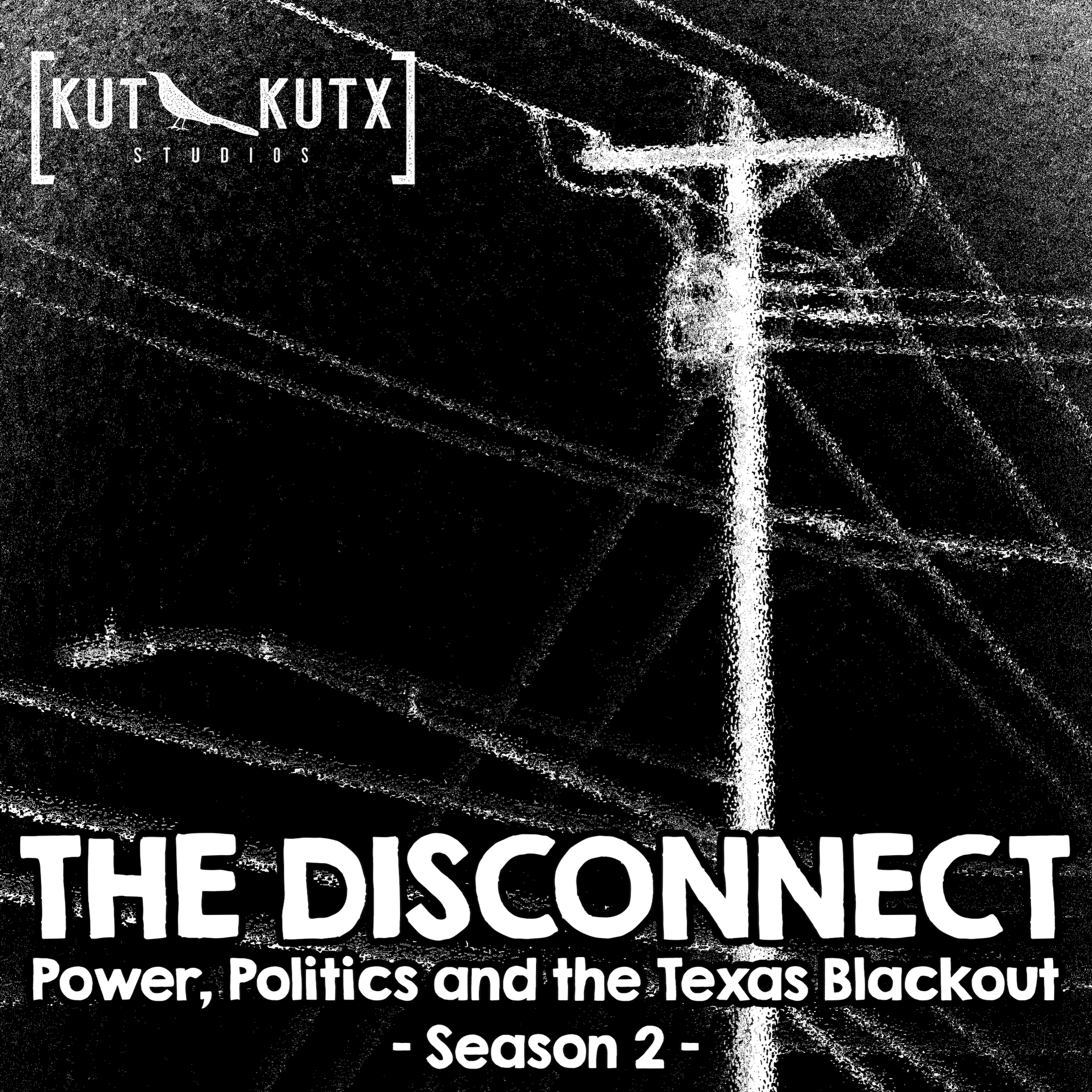
In the first episode of Season 2 of The Disconnect, a podcast all about the Texas blackout of February 2021 from FRONTLINE’s Local Journalism Initiative partner, the Texas Newsroom, and Austin public radio station KUT, host Mose Buchele and colleagues examine the blackout’s impact on one Texas family, and the accuracy of the state’s official death count. The Disconnect Season 2 is a project of The Texas Newsroom, the collaboration among NPR and the public radio stations in the state. It received support from FRONTLINE’s Local Journalism Initiative, which is funded by the John S. and James L. Knight Foundation and the Corporation for Public Broadcasting.
S5 Ep 1Investigating the Texas Blackout
In February 2021, a powerful winter storm led to power outages — and an official tally of more than 200 deaths — across Texas. The Disconnect, a podcast from FRONTLINE’s Local Journalism Initiative partner, the Texas Newsroom, and Austin public radio station KUT, investigatess the aftermath of the storm and the state’s response. KUT’s Mose Buchele, Senior Correspondent for Energy & Environment, joins The FRONTLINE Dispatch to talk about the state’s unique power grid, the deadly consequences when it failed and trying to hold officials accountable. “At the end of the day,” Buchele said, “this is a system that seems sometimes intentionally set up to diffuse responsibility.” Season 2 of The Disconnect, which is supported by FRONTLINE’s Local Journalism Initiative, is available at KUT and other streaming platforms. Want to be notified every time a new FRONTLINE Dispatch podcast episode drops? Sign up for The FRONTLINE Dispatch newsletter.
S4 Ep 14Searching for Afghanistan’s Missing Women
After U.S. troops withdrew from Afghanistan last year and the Taliban swept into power, FRONTLINE correspondent Ramita Navai and colleagues traveled the country, investigating the Taliban regime’s treatment of women. The resulting documentary, Afghanistan Undercover, revealed the harrowing realities women faced in Afghanistan. In this episode of The FRONTLINE Dispatch, Navai talked with FRONTLINE executive producer and editor-in-chief Raney Aronson-Rath about reporting a story the Taliban didn’t want told, including secretly filming on the grounds of a prison in Herat, Afghanistan, where women said they were being held without trial. “We needed that evidence,” Navai said. “We heard what was happening. We needed to see it for ourselves.” Afghanistan Undercover is now streaming on FRONTLINE’s website, the PBS Video App and FRONTLINE’s YouTube channel. Want to be notified every time a new podcast episode drops? Sign up for The FRONTLINE Dispatch newsletter.
S4 Ep 15J. Michael Luttig and Adam Kinzinger on Democracy and January 6
Congressional hearings into the January 6 attack on the U.S. Capitol have concluded for the summer after weeks of testimony. Among the key witnesses to appear before the committee was J. Michael Luttig, a former federal judge and renowned conservative legal scholar. On this special edition of The FRONTLINE Dispatch, listen to excerpts from an extensive interview with Luttig, as well as with U.S. Rep. Adam Kinzinger (R-Ill.), one of only two Republicans on the House select committee investigating January 6. The interviews with J. Michael Luttig and Rep. Adam Kinzinger are available online in full as part of FRONTLINE's Transparency Project. These interviews were conducted by producer Mike Wiser and the Kirk Documentary Group for FRONTLINE’s upcoming documentary Lies, Politics, and Democracy.
Coming soon: The Disconnect, Season 2
Coming August 4, 2022 from FRONTLINE's partners in the Local Journalism Initiative, KUT/KUTX Studios, season two of The Disconnect: Power, Politics and the Texas Blackout. In February 2021, days-long blackouts in Texas left millions of people shivering in the dark. Hundreds died. And it exposed the failures of the nation's only independent power grid. More than a year later, the lights have stayed on, but problems persist. So how has the Texas grid changed? And how has it changed how people think about this infrastructure that used to be invisible to them? Available August 4th on KUT.org and wherever you get your podcasts.
S4 Ep 13Maria Ressa on Journalism and Democracy in the Philippines (re-release)
On June 30, 2022, the Philippines inaugurates a new president: — Ferdinand Marcos Jr., son of the former President Ferdinand Marcos Sr. who ruled for a time under martial law and was overthrown in 1986. Marcos Jr., also known as Bongbong Marcos, was voted into office in a May 2022 landslide victory alongside vice presidential candidate Sara Duterte, daughter of the outgoing President Rodrigo Duterte. In 2021, as the race was heating up, FRONTLINE executive producer and host of The FRONTLINE Dispatch Raney Aronson-Rath sat down with Maria Ressa: a winner of the 2021 Nobel Peace Prize, founder of the independent Philippine news site Rappler and the subject of FRONTLINE's January 2021 documentary "A Thousand Cuts." Along with the documentary’s director, Ramona S. Diaz, Ressa talked about disinformation, the importance of press freedom, and what she and Diaz were seeing on the ground in the Philippines during the historic campaign season. "A Thousand Cuts" is streaming on FRONTLINE’s website, the PBS Video app and FRONTLINE’s YouTube channel. Explore more reporting related to the documentary on FRONTLINE’s website: https://www.pbs.org/wgbh/frontline/film/a-thousand-cuts/ Want to be notified every time a new podcast episode drops? Sign up for The FRONTLINE Dispatch newsletter: https://www.pbs.org/wgbh/frontline/dispatch-newsletter-subscription/
S4 Ep 12A 1967 Murder and a ‘Reckoning’ with the Truth
American Reckoning, a feature-length documentary from FRONTLINE and Retro Report, traces the life and death of Wharlest Jackson Sr., a 'foot soldier' of the civil rights movement in the 1960s. The film explores the history of Black resistance in his hometown, Natchez, Mississippi, as well as his family’s decades-long struggle for justice. Host Raney Aronson-Rath sits down with Dawn Porter, her fellow executive producer on both the American Reckoning documentary and FRONTLINE's Un(re)solved initiative, as well as American Reckoning directors Brad Lichtenstein and Yoruba Richen. Un(re)solved is a multiplatform investigation that tells the stories of lives cut short and examines a federal effort to grapple with America’s legacy of racist killings through the Emmett Till Unsolved Civil Rights Crime Act. Along with the documentary American Reckoning, Un(re)solved comprises a web-based interactive experience, a serialized podcast and an augmented-reality installation. You can watch American Reckoning and experience the rest of Un(re)solved here: https://www.pbs.org/wgbh/frontline/unresolved/ Want to be notified every time a new podcast episode drops? Sign up for The FRONTLINE Dispatch newsletter: https://www.pbs.org/wgbh/frontline/dispatch-newsletter-subscription/
S4 Ep 11Covering Minneapolis in the Wake of George Floyd
Since the murder of George Floyd two years ago, FRONTLINE's local journalism partner the Star Tribune has chronicled the aftermath of that pivotal event — from the protests that spread globally, to documenting the trial and murder conviction of former police officer Derek Chauvin, to ongoing struggles for police accountability and reform in Minneapolis. The new documentary “Police on Trial,” from FRONTLINE and the Star Tribune, draws on unique on-the-ground reporting and filming to examine the police department at the center of the story. In this new episode of "The FRONTLINE Dispatch," Star Tribune Editor Suki Dardarian in Minneapolis joins FRONTLINE Executive Producer Raney Aronson-Rath to discuss the newsroom’s Pulitzer-winning reporting and “Police on Trial.” "Police on Trial" is now streaming on FRONTLINE’s website, the PBS Video app and FRONTLINE’s YouTube channel. Want to be notified every time a new podcast episode drops? Sign up for The FRONTLINE Dispatch newsletter: https://www.pbs.org/wgbh/frontline/dispatch-newsletter-subscription/
S4 Ep 10Pulitzer Winner Corey G. Johnson on Tampa’s Lead Problem (re-release)
For years, hundreds of workers at the Gopher Resource lead smelting plant in Florida were exposed to dangerous levels of lead in the air. “Poisoned,” a series from the Tampa Bay Times, in collaboration with FRONTLINE’s Local Journalism Initiative, uncovers the consequences of what happened. Times reporters Corey G. Johnson, Rebecca Woolington and Eli Murray gained access to thousands of pages of regulatory reports, company documents and employee medical records. In March 2021, Johnson joined FRONTLINE’s executive producer, Raney Aronson-Rath, on The FRONTLINE Dispatch to discuss the project and what the reporters found after months of investigating. This year, Johnson and his collegues were awarded a Pultizer Prize in Investigative Reporting for the project. Want to be notified every time a new podcast episode drops? Sign up for The FRONTLINE Dispatch newsletter: https://www.pbs.org/wgbh/frontline/dispatch-newsletter-subscription/
S4 Ep 9Inside Big Oil’s Push Against Climate Change Action
The fossil fuel industry cast doubt on climate change for decades, even as the scientific evidence grew stronger and the warnings more dire. In this episode of The FRONTLINE Dispatch, investigative reporter Russell Gold joins executive producer Raney Aronson-Rath to discuss FRONTLINE’s new three-part documentary series, The Power of Big Oil, and the role of the fossil fuel industry in delaying action on climate change. Gold, a senior editor at Texas Monthly, served as an editorial consultant on the docuseries. The author of two books, he previously spent nearly 20 years reporting on energy for The Wall Street Journal, where he covered stories including the Deepwater Horizon oil spill and California’s 2018 Camp Fire. All three episodes of The Power of Big Oil are now streaming on FRONTLINE’s website, the PBS Video app and FRONTLINE’s YouTube channel. Want to be notified every time a new podcast episode drops? Sign up for The FRONTLINE Dispatch newsletter: https://www.pbs.org/wgbh/frontline/dispatch-newsletter-subscription/
S4 Ep 8The Making of an Election Myth
More than a year after President Joe Biden's inauguration, around two-thirds of Republican voters believe his election was illegitimate. How did a stolen election myth make its way to the center of American politics? Director and producer Samuel Black and correspondent A.C. Thompson, part of the team behind the 2022 FRONTLINE and ProPublica documentary "Plot to Overturn the Election," sit down with FRONTLINE’s executive producer, Raney Aronson-Rath, to discuss how a handful of people have had an outsized impact on the current U.S. crisis of democratic legitimacy. The legacy of misinformation extends beyond the 2020 U.S. presidential election and the Jan. 6 Capitol riot, Black and Thompson found. “How is the ongoing battle over the last election threatening the next one?” Thompson asks in the documentary. "Plot to Overturn the Election" is now streaming on FRONTLINE’s website, the PBS Video app and FRONTLINE’s YouTube channel. Want to be notified every time a new podcast episode drops? Sign up for The FRONTLINE Dispatch newsletter: https://www.pbs.org/wgbh/frontline/dispatch-newsletter-subscription/
S4 Ep 7Julia Ioffe on Putin's Road to War
Journalist Julia Ioffe recently sat down with producer Mike Wiser for the March 2022 FRONTLINE documentary “Putin’s Road to War.” In this episode of The FRONTLINE Dispatch, we hear an excerpt of that interview, in which Ioffe discusses Russian President Vladimir Putin's brutal invasion of Ukraine and how he, and the world, reached this tipping point. “What he has opened up with this invasion is unthinkable,” Ioffe tells FRONTLINE. “And because he is losing, and because the sanctions and the Ukrainians are humiliating him, because he is backed into a corner, he is the most dangerous he has ever been, because it is now existential for him.” Julia Ioffe is an American journalist who was born in Russia. She is a writer for and a founding partner of the media company Puck. She previously reported on politics and world affairs for the Atlantic and other publications. This interview, conducted on March 3, 2022, has been edited for clarity and length. “Putin's Road to War” premieres Tuesday, March 15 on PBS and will be available to stream on FRONTLINE’s website, the PBS Video app and FRONTLINE’s YouTube channel. Want to be notified every time a new FRONTLINE podcast episode drops? Sign up for The FRONTLINE Dispatch newsletter.
S4 Ep 6A Conversation with Nobel Peace Prize Winner Maria Ressa
Journalist Maria Ressa, a 2021 Nobel Peace Prize winner and the subject of the documentary A Thousand Cuts, joined director Ramona S. Diaz and FRONTLINE’s executive producer, Raney Aronson-Rath, for a special conversation prior to the Nobel ceremony. Ressa and her fellow Nobel Peace Prize laureate Dmitry Muratov are the first journalists to receive the prestigious award since 1935. Ressa and her staff at the independent news site Rappler in the Philippines have been at the forefront of reporting on both President Rodrigo Duterte’s bloody drug war and the rapid-fire spread of online disinformation in support of Duterte. A Thousand Cuts chronicled how Ressa and Rappler became top targets in Duterte’s crackdown on the news media — and how Ressa vowed to “hold the line” in the face of numerous court actions and online harassment. With Ressa now a Nobel Peace Prize winner for her efforts, she joins Diaz and Aronson-Rath to discuss disinformation, the importance of journalism and press freedom, the future of democracy in the Philippines, why she believes the world is in the midst of “a global rise in fascism” similar to the last time a journalist won a Nobel Peace Prize, and how “we need to make sure facts survive.” “When you live in a world without facts, you can't have truth. You can't have trust,” she says. “And when you don't have that, your shared reality is torn apart.” A Thousand Cuts is now streaming on FRONTLINE’s website, the PBS Video app and FRONTLINE’s YouTube channel. After Philippine distributors and TV broadcasters did not license the film, FRONTLINE secured full streaming rights in the country so that it would be available for the Philippine public to view via FRONTLINE’s platforms. Want to be notified every time a new FRONTLINE podcast episode drops? Sign up for The FRONTLINE Dispatch newsletter.
S4 Ep 5What the Pandora Papers Reveal
In October 2021, the International Consortium of Investigative Journalists — with 150 partner news organizations around the world, including FRONTLINE — began publishing the results of an investigation based on a massive leak of confidential documents. The leaked files, known as the Pandora Papers, exposed a secretive financial system that enables the world’s wealthy and powerful to hide their money and assets from creditors, taxing authorities and governments. The revelations have reverberated across the globe. In this episode of The FRONTLINE Dispatch podcast, FRONTLINE producer Evan Williams and ICIJ reporter Will Fitzgibbon, both featured in the November 2021 short documentary Pandora Papers, from ICIJ and FRONTLINE, join FRONTLINE executive producer Raney Aronson-Rath to discuss some of the investigation’s key findings, the ongoing impacts, and the importance of global reporting collaborations. “The basic principle of ICIJ really is one of journalistic equality, I think. Recognizing that the smartest reporter in New York City or Washington D.C., is never going to have the experience or the ability to find a story in the Democratic Republic of Congo, or in the Philippines, right?" Fitzgibbon says. "And that's why we provide access to the data and bring on reporters from more than 100 countries. Because we know that, hidden in these documents, are only stories the reporters from those countries can tell." The Pandora Papers documentary is now streaming on FRONTLINE’s website, the PBS Video app and FRONTLINE’s YouTube channel. Want to be notified every time a new FRONTLINE podcast episode drops? Sign up for The FRONTLINE Dispatch newsletter.
S4 Ep 4The Federal Reserve’s Big Experiment
As the U.S. Federal Reserve and its chair, Jerome Powell, confront concerns over inflation and the impact of the Fed’s pandemic-era policies, we take a deep dive into the country’s central bank, which financial journalist Dion Rabouin calls “the most powerful and least understood institution in the country.” James Jacoby, a producer of the FRONTLINE documentary “The Power of the Fed,” and Rabouin, who was featured in the film, join FRONTLINE Executive Producer Raney Aronson-Rath for a conversation about how the Fed’s actions to avert crisis when COVID struck were the latest chapter in an experiment the Fed began after the 2008 crash — one that has dramatically changed the American economy. Jacoby and Rabouin explore criticisms that, while well-intentioned, the Fed’s efforts have contributed to wealth inequality and helped today’s financial world grow far removed from the real-world economy. “The Federal Reserve has taken on a much more active role in trying to manage our economy, basically, since the financial crisis in 2008-2009,” Jacoby tells Aronson-Rath. “And then the experimental policies that they put into gear at that point really never left us. … it's led to all sorts of unforeseen, unintended consequences that we're all contending with now.” “The Power of the Fed” is now streaming on FRONTLINE’s website, the PBS Video app and FRONTLINE’s YouTube channel.
S4 Ep 3How Boeing's Flawed 737 Max Made It Into the Air
What did Boeing know about the potential for disaster with its 737 Max passenger jet, and when did the company know it? Tom Jennings, director of the FRONTLINE/New York Times documentary “Boeing’s Fatal Flaw,” and Times reporter David Gelles detail what their findings reveal about the lead-up to the two 737 Max plane crashes in 2018 and 2019 that killed 346 people. In conversation with FRONTLINE Executive Producer Raney Aronson-Rath, Jennings and Gelles discuss what they learned about the technical issues with Boeing’s fastest-selling commercial jet, as well as how market pressures, corporate culture and failed regulatory oversight ushered a plane with a fatal design flaw into commercial service. Jennings and Gelles also discuss what’s changed since the crashes — and how they’d each feel about walking onto a Boeing plane now. The documentary “Boeing’s Fatal Flaw” is now streaming on FRONTLINE’s website, the PBS Video app and FRONTLINE’s YouTube channel.
The Case of the Liberty City Seven
Dan Reed (“Leaving Neverland”) discusses his new FRONTLINE documentary, “In the Shadow of 9/11,” the story of how seven Black men from Miami were accused of planning an Al Qaeda plot to blow up American buildings. Their indictment marked the federal government’s first major post-9/11 counterterrorism sting within the U.S. Yet the men, who came to be known as the Liberty City Seven, had no weapons and had never communicated with anyone from Al Qaeda. Reed joins “The FRONTLINE Dispatch” to discuss why this was a story he wanted to tell; how he built trust with sources, including the accused men themselves and an FBI agent with a key role in the sting; and what the documentary reveals about the federal government's post-9/11 counterterrorism tactics — notably its use of informants and sting operations. “It's a story that really needs to be told, because Americans … have the right to know what techniques have been used to keep the country safe after 9/11,” Reed tells FRONTLINE’s executive producer, Raney Aronson-Rath. “But it's just a very challenging story to tell. … I really think that FRONTLINE is the only place on American television that I could have done this.” The feature-length documentary “In the Shadow of 9/11” is now streaming on FRONTLINE’s website, the PBS Video app and YouTube.