The Food Chain
556 episodes — Page 11 of 12
Food on the Move: What We Want, When We Want It
Fruit in the summer, grain in the autumn - our diets once consisted of eating what was around us and what was in season. But we now live in a global food village, where in many countries the idea of eating seasonally has been consigned to history. In the 21st Century we ship, fly and truck our food supply across huge distances. Britain, for example, imports 90% of its fresh fruit. The BBC’s Mike Johnson is dockside at one of Europe’s biggest ports to hear how - and why - the world is racking up the food miles. Ross McKissock at the Port of Tilbury outlines the importance of the food trade to the port business. We step inside a vast refrigerated warehouse and ask Dale Fiddy of NFT Distribution if the new facility is a sign that the industry is on the up? Technological advances have made their mark on the way our food has moved over the centuries - Susanne Freidberg, professor of Geography at Dartmouth College, takes us back through time with the history of food transportation. We hear from a vegetable packing plant in Kenya, which leads the world in terms of exports of fresh produce by air. Shipping food over vast distances is now an established part of global trade, but does it really make financial sense? Washington economist and expert on international shipping, Marc Levinson explains the economics of moving food in huge volumes. And, could it actually be good for the environment? A question for Kath Dalmeny from environmental group, Sustain.(Photo: Factory workers sort out creates of peppers. Credit: Sergio Camacho/Getty Images)
Inside the Kitchens of Power
Why is cheese essential when the German Chancellor comes for dinner? For millennia, international relations have been massaged by the chefs working inside palaces and state kitchens. The BBC’s Dan Saladino finds out about their unusual vocation and how their food might have influenced some of the biggest decisions in history. He meets Gilles Bragard, the founder of the world’s most exclusive culinary club, Le Club des Chefs Des Chefs, which brings together twenty people who cook for Heads of State. Gilles shares some food secrets, including how the Kremlin's kitchen keeps President Putin’s food safe. We visit the huge kitchens of Hampton Court Palace, where in 16th Century England, wine fountains and extravagant roasted meats were cooked to help Henry VIII impress - and intimidate - foreign dignitaries. We move from there to look at arguably the most powerful cooking place in the modern era - the White House kitchen. Sam Kass, a former chef and close friend to the Obamas, explains how new ideas and even food policies for the future can be cooked up in State kitchens. Plus, we go behind the scenes in the Belgian Embassy in Chile to see diplomacy in action – and talk to professor Stephen Chan of London’s School of Oriental and African Studies about Mugabe’s lavish feasts. We also meet David Geisser, a former Vatican chef and hear insights into the culinary preferences of Pope Francis. We find out if the Vatican leader practises what he preaches about food.Finally, we talk to a journalist in Brussels who has witnessed some recent and dramatic EU meals, including the former British Prime Minister David Cameron’s last supper with European leaders.(Photo: Barack Obama in 2008. Credit: Emmanuel Dunand/AFP/Getty Images)
Beauty from Within?
This week we're looking at what happens when the worlds of food and beauty collide. The BBC's Emily Thomas explores how the market for nutricosmetics - foods that have claimed beauty benefits - is growing by 10% every year. A beauty blogger in Tokyo explains why she thinks these products are already popular in Asia, particularly Japan. In China, the concept of beauty from within sits comfortably with traditional medicine. One 'beauty food' that's been consumed for thousands of years is gelatin from donkey hide. We talk to the owner of a Beijing restaurant and the customers tucking in to his donkey hotpot. Plus, we look at the rise of ingestible beauty in the West, and the products that have failed along the way. Could the food industry turn the beauty industry on its head? One company that thinks so invites us to take a look at their laboratory where they’ve created a small chocolate bar, which they say prevents ageing and promises all the goodness of 300g of Alaskan salmon. The promises made by these products are compelling - but is there enough science to back them up? We speak to an experts from Yale University in the US and a global collagen company in Europe. Finally, we ask whether we should expect food to be the elixir of eternal youth, or if nutricosmetics feed an unhealthy pressure to be beautiful from the inside.(Photo: A young woman eats strawberries in 1936: Credit: Fox Photos/Getty Images)
Can Cheese Help Save an Economy?
The BBC’s Dan Saladino takes a journey on a newly built road through the remote mountains of the country’s north in search of a slice of mishavin cheese. After decades of communist rule, Albania started its transition to democracy in 1991. It hasn’t been easy. The country, which borders Greece and Macedonia, remains one of the poorest in Europe; it experienced massive rural depopulation, emigration and has stubbornly high levels of unemployment. However, many are convinced one answer to many of Albania’s problems lies in its food and farming past. Tucked away in the mountainous communities of the north are some of the oldest food traditions in the Balkans, from dairy and meat products to foraged fruits and fermented vegetables. Could these foods be the basis for a new form of entrepreneurialism and kick start a tourism industry? The Albanian government and NGOs operating in the country think so.(Photo: Albanian mishavin cheese)
Plough Your Own Furrow?
The British people have voted to quit the European Union. That would leave the UK once again in charge of its own agricultural and fisheries policy – so what should that future look like? Could we see a return to the Cod Wars, where countries used gunboat diplomacy to assert their fishing rights? We hear from fishermen in Scotland, keen to win back control over their waters. Plus, dairy farmers in Cornwall tell us they fear a future where exports to the EU may become more expensive. And, we look to New Zealand, which became the only developed country in the world to withdraw financial support for its farmers in the 1980s - could that be the model for the UK to follow? We are joined by a panel of guests - Geoff Pickering, a Yorkshire sheep farmer, Guy Smith, vice-president of the National Farmers Union and Vincent Smith, an agricultural economist at Montana State University in the US.(Photo: A ploughing competition in Scotland. Credit: Christopher Furlong/Getty Images)
Mind your Manners
It's not what you eat, but the way that you eat it on this week's The Food Chain. As people are exposed to cuisines from all over the world, we ask if there has been a global shrugging off of table manners. From how we sit, to the tools we use, is there a best way to consume food? And what do your eating implements of choice - hands, cutlery, or chopsticks - say about your cultural identity?We start at Lalibela, an Ethiopian restaurant in North London where experts in dining etiquette and history join us to eat a feast with their hands.Food historian Bee Wilson tells us cutlery is about so much more than just manners, and explains how entire cultures of eating are founded on utensils.Lunchtime diners in Delhi reveal what we are missing when we pick up a knife and fork, and Indian food historian and critic Pushpesh Pant explains how people across the country are rediscovering their regional and cultural roots in the way they eat. Plus, a chef at a top-end Delhi restaurant tells us why he thinks the tide is turning in fine dining.In ancient Greece elite men reclined to eat. Dr Ayesha Akbar, a Consultant in Gastroenterology tells us why they may have had the right idea. We also discuss the benefits of communal eating - and find out why some people fly into a frenzy of rage at the sound of chewing and slurping.Finally, it has been said that while on the European continent people have good food, but in England people have good table manners. We ask James Field, from the very British institution, Debretts, for a lesson in how to eat in polite company.(Photo: Food at Lalibela restaurant in London)
Seeds, Syrup and Subversion
A rebel grandmother faces losing her livelihood after smuggling maple syrup in Canada, a Vermont gardener stocks fridges full of seeds, an artist plants vegetables on the streets of Los Angeles, and a widow in India blames ‘foreign seeds’ for a string of suicides. Meet the rebels and revolutionaries fighting back against what some see as a growing food dictatorship. Just six companies sell almost two-thirds of the world's seeds, and potential takeovers raise the possibility that number could shrink to three. Are we heading towards a world where all seeds, fertiliser, and pesticides are in the hands of just one company? We are joined by experts from both sides of the debate as we listen to stories of subversion.(Photo: An Indian farmer arranges a display of grains and seeds. Credit: Noah Seelam/AFP/Getty Images)
Faster Food
As the Olympic torch edges closer to Rio, we explore how food can make you a better athlete. We start in Brazil where we meet the man responsible for feeding the best athletes on the planet - from a kitchen the size of three football fields. Our producer has a kick about with Arsenal Football Club’s nutritionist in London, and we talk to Olympians past and present about what they eat. We delve into the science of nutrigenomics and ask whether you can give athletes an edge by designing their diets around their DNA. At what point does a specialist diet give an athlete an unfair advantage? And what do nutritionists and athletes really think about sports drinks? Plus, a man moves his family to the Kenyan highlands to train and eat with its highland runners. And, a New York punk singer and vegan Ironman tells us why he thinks strong athletes do not need meat.(Photo: Athletes running through a field. Credit: Simon Maina/AFP/Getty Images)
Extreme Farming
How has one of the world’s smallest countries become one of its biggest food producers? This week we visit a tiny nation responsible for the second largest exports of farmed food. Its vegetable, fruit, and livestock farmers are pushing the limits of productivity – how do they get so much food out of so little land? We visit a dairy farm run almost entirely by robots, one of the country’s many industrial-sized greenhouses, and a farm on the roof of a former factory. With the planet’s soaring population, could this country be a model for global farming? Plus, what impact is such intensive farming having on the environment, human health and animal welfare?Presenter: Anna Holligan. Editor: Simon Tulett
Is Junk Food the New Smoking?
We know that both smoking and obesity can contribute to an early death. In fact health professionals are now telling us that junk food is even worse than tobacco. But do the parallels between the two industries run deeper than that? They have both been accused of cynical marketing, powerful lobbying and trying to avoid regulation. Some people have even suggested big food is taking a leaf from the big tobacco playbook. Manuela Saragosa asks whether junk food is the new smoking.
Fish Fight
Fish are a vital source of protein around the world, but there are ever more fishermen chasing ever fewer fish. Most wild fisheries are at, or near, breaking point and it is estimated up to a third of all fish are caught illegally, feeding an underworld of crime.We find out how the growing pressure is leading to violent clashes on the high seas and joins an Indonesian coastguard patrol chasing and shooting vessels out of their waters. We ask Interpol how it is trying to police the oceans and find out how illegal fishing is tied up with a criminal underworld of drugs and human trafficking. Plus, experts tell us what consumers should look out for, and we discover fish farming may not be the answer to the problem. (Photo: The Indonesian Navy blows up the illegal fishing vessel the MV Viking in the waters of Tanjung, West Java, 2016. Credit: Antara Foto, Reuters)
A Dog's Dinner?
Pet food is a global multi-billion dollar industry, but does it cater more to us humans than our four-legged friends? We swap the dinner plate for the dog bowl to find out what we feed our furry companions, and why. We examine the pet food supply chain and find out how intertwined it is with our own, both in terms of raw materials and regulation.And with pet obesity and diabetes increasing in many parts of the world, we ask if we have passed on our own bad eating habits and talk to those trying to reverse the trend. We also hear from a vet on the scientific advisory board for Nestle, the world's second largest pet food manufacturer.Plus, what do a 19th Century electrician and a sailor's biscuit have to do with modern day pet food. And, from raw food to dog bakeries, we bring you the very latest in pet palette trends, including a taste-test of the most exclusive dog treats available on the market.(Photo: Dog with food bowl. Credit: Thinkstock)
Disaster Food: Feeding a Country in Crisis
How does a country feed itself following an earthquake, flood or drought? The Food Chain looks at the role of food in disaster relief - from the emergency response to the longer-term efforts to restore devastated farmland.We speak to Nepal's farmers to hear how they coped in the aftermath of the 2015 earthquake. An aid worker scrambled to Kathmandu tells us how the World Food Programme hired 25,000 mountaineers to deliver food to remote communities cut off by the disaster. We go behind the scenes at a leading supplier of emergency food, Nutriset, which makes peanut paste and milk products for malnourished children and adults around the world.Plus, how agriculture bears the brunt of the economic damage caused by natural disasters, but receives a tiny proportion of aid funding - the Food and Agriculture Organisation of the United Nations tells us the balance must be redressed.And when food aid can do more harm than good - we hear how farmers in Haiti are angry about US plans to send 500 tonnes of surplus peanuts to help the country recover from a three-year drought, and how prime agricultural land was lost in the aftermath of the 2010 earthquake.(Photo: A Nepalese earthquake survivor in front of a destroyed farm. Credit: Philippe Lopez, Getty Images)
Bottled Water: Do We Really Need It?
It has been described as the ultimate marketing trick, but the allure of bottled water is something more and more people are swallowing. With global sales set to overtake those of soda, The Food Chain asks why so many of us are paying for something we could easily get for free. With prices of some bottles hundreds of times more expensive than the tap we visit a water testing lab to see if there is any difference between them. The industry claims it offers a healthier alternative to soda drinks, but opponents say it causes unnecessary environmental damage. We find out how bottled water is coming under attack in drought-stricken California, and whether the criticisms are fair.In parts of the world where safe drinking water is difficult or impossible to come by, can bottled water be a lifesaver? We have a report from Tanzania's capital, Dar es Salaam.Plus, we speak to Marco Settembri, head of Nestle Waters, one of the world's biggest water bottling firms.(Photo: A man stores bottles at a warehouse in Afghanistan. Credit: Noorullah Shirzada, Getty Images)
Animals on Antibiotics: Could Pigs on Pills Make us Ill?
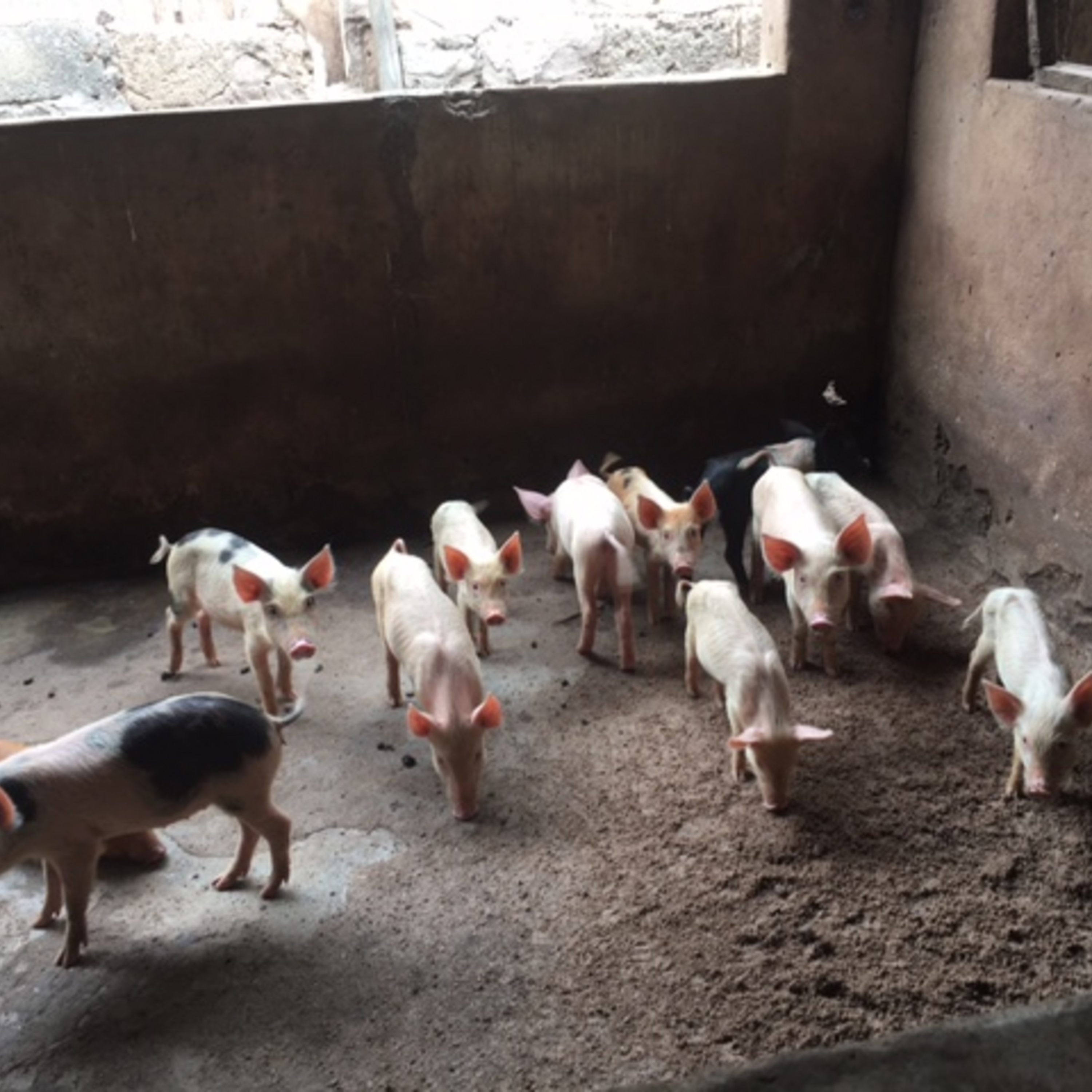
The animals we eat consume more than 60% of the world’s antibiotics - but not always because they are sick. This week, the Food Chain explores the controversy over the use of antibiotics in agriculture to promote growth and prevent illness. Amid dire warnings that we are heading into a dangerous new world of resistance to antibiotics, we ask whether there really is a link between their use on farms and human resistance. From large scale agricultural businesses in China, to small scale farmers in Africa, presenter Mike Johnson hears from both sides of the debate. Dr Brian Evans from the World Organisation for Animal Health explains how the amount of antibiotics given to animals varies from country to country, and is proving hard to regulate. Pig farmer Jonathan Aganga in Nigeria - with his bag of antibiotics at his side - tells us why he believes they're essential for his livelihood. We also hear from Professor Yanzhong Huang, an expert on public health in China and whose brother is a pig farmer in Jiangsu province. Plus we visit a busy London food market, to hear what consumers make of the controversy. Presented by Mike Johnson, produced by Emily Thomas. (Photo: Piglets at Jonathan Aganga's farm, Nigeria)
Food Chain Late Night
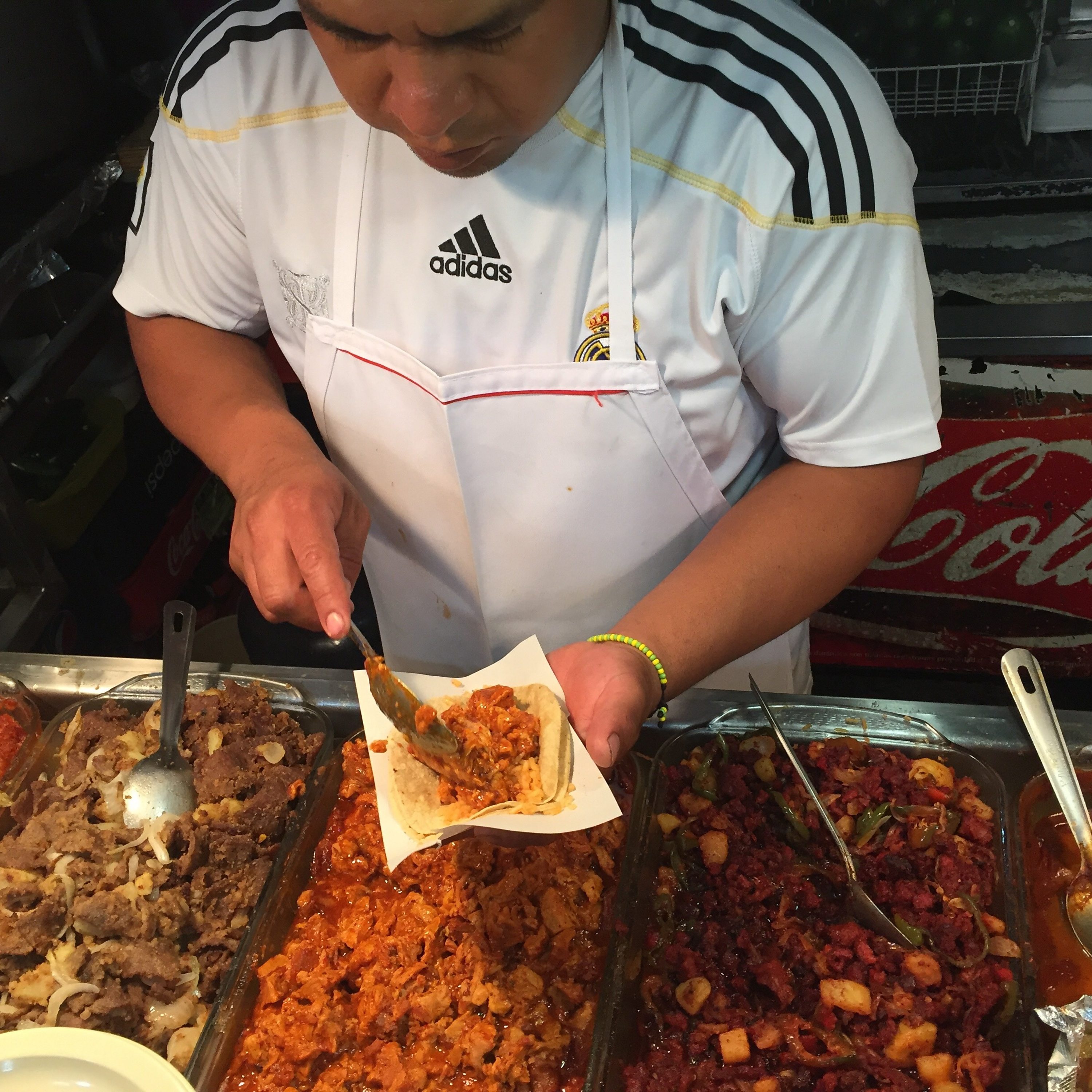
As part of the BBC’s Identity season we meet the people who feed us after hours, following the characters and cuisines that only come out after dark. Starting with the heady rush of a London kebab shop, Mike Johnson explores late night food culture around the globe. In an increasingly 24-hour world, how and when we eat is changing. What do our late night food habits say about our identities? We meet the late-night taco eaters of Mexico City, and find out why Hong Kong street vendors are under threat. Plus we hear what happens to your body when your meal times are out of sync with your circadian rhythms, and tell you where in the world you can buy an edible Rolex for forty-five cents. Night-owls only, on this episode of The Food Chain. Presented by Mike Johnson, produced by Emily Thomas, and edited by Kent DePinto. (Photo: Taco vendor Alfredo works late into the night in Mexico City. Credit: James Fredrick)
Front of House
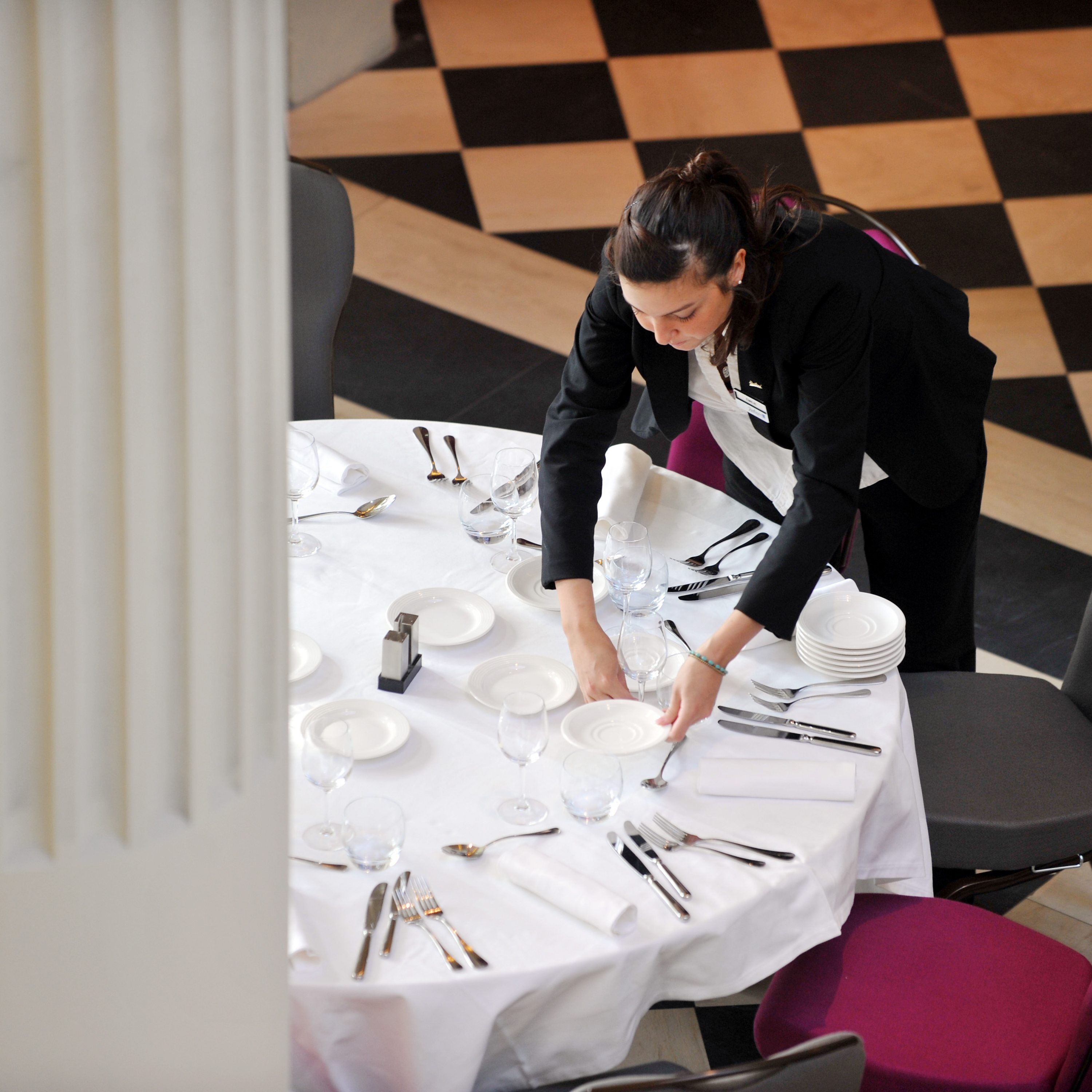
What’s life like for a career waiter at the top of their game? The Food Chain looks at the business of serving and pleasing the ever-fickle customer. The food service industry is facing a cycle of disruption, with business practices changing as rapidly as the customers at lunch hour. We'll look at the current topic du jour - the controversy of tipping and how a movement to democratize the service industry may leave some minimum wage earners struggling to keep up. Manuela Saragosa contemplates the financial realities of life as a waiter – and how tipping your server may actually make them poorer in the long run. Also, we talk to a chef who decided to eliminate tipping when she realised the people serving the food were making more than those cooking it. And would you pay for a reservation? This week, the tables are literally being turned.Presented by Manuela Saragosa. Produced by Kent DePinto and Emily Thomas.(Photo: A waitress in Nantes, France. Credit: Getty Images/ Frank Perry.)
Food and Nostalgia
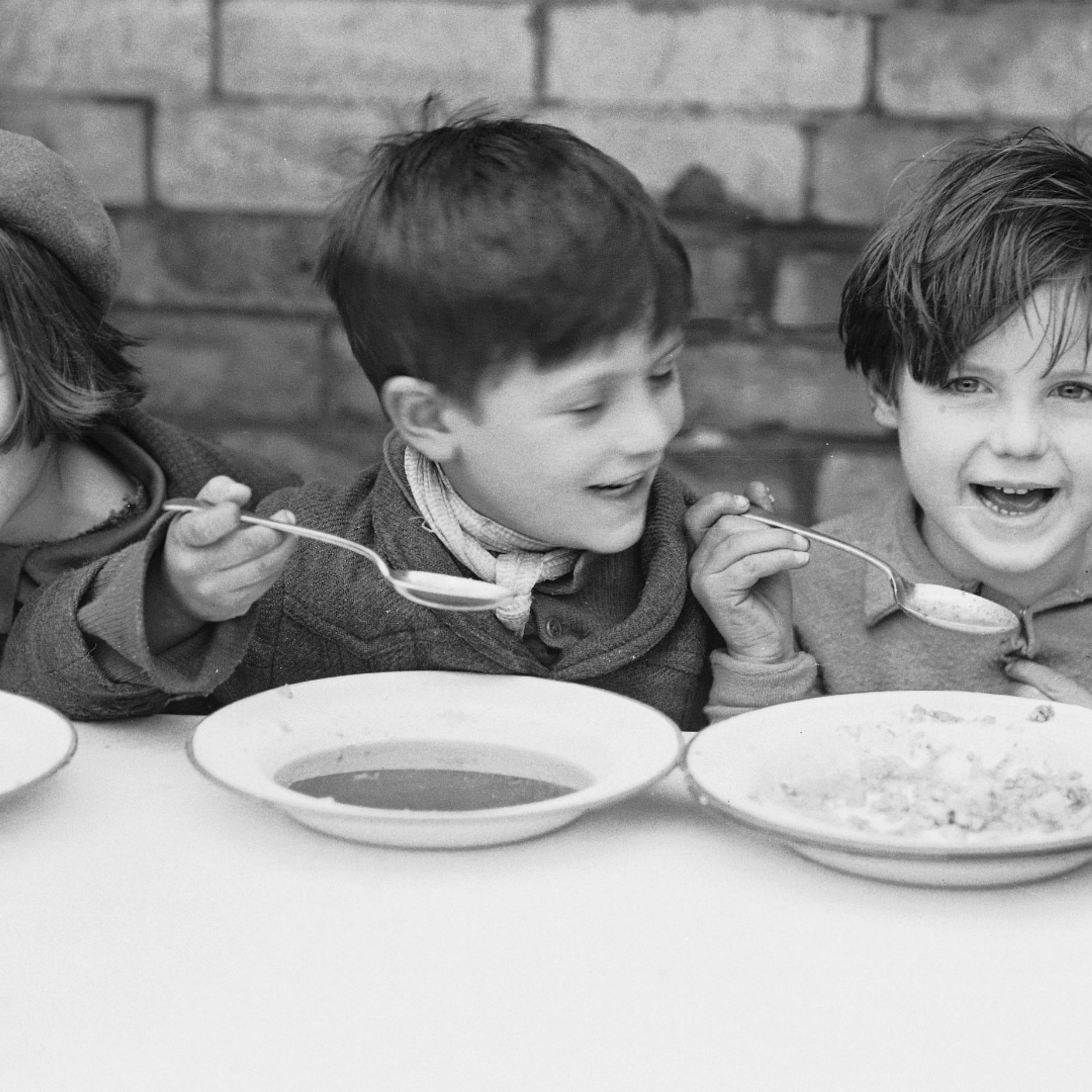
Manuela Saragosa explores the power food has to evoke memory and how memory impacts the food we eat. Jamie Oliver’s mentor – Italian chef Gennaro Contaldo – cooks up a batch of his most nostalgic dish, his mama’s pasta, and tell us why he prepares it when he is feeling down.A neurologist explains why food and smells have such a powerful impact on our brains. And, find out why ‘brand nostalgia’ is a marketing dream when it comes to getting people to part with their cash. From Tokyo to Moscow via Nairobi we hear stories about your favourite comfort foods and meet the company using nostalgia to help people with dementia regain their appetites. Finally, we travel down under to find out why a humble collection of children’s birthday cake recipes has been dubbed ‘the greatest Australian book ever published.’(Photo: Children receiving free meals. Credit: Getty Images)
Is Convenience Killing Us?
Food that has been processed, packaged, flavoured and often pre-cooked for us has increasingly become a normal part of everyday life around the globe. But what is the rise and rise of convenience food really doing to us? Many argue it is the root cause of spiralling obesity and diabetes rates, but could we survive without it and feed the world in the process?Manuela Saragosa chews over the issues with a global panel of experts: Award-winning investigative journalist Joanna Blythman, author of Swallow This: Serving Up the Food Industry's Darkest Secrets; Jean-Claude Moubarac, an anthropologist and researcher in nutrition specialising in the effect of processed foods; Food journalist Mark Schatzker, author of The Dorito Effect: The Surprising New Truth About Food and Flavor.Plus, we travel to China to look at the cultural impact of ‘western’ food. And, historian Rachel Laudan tells us why processed food is at the very heart of what makes us human.(Photo: Supermarket aisles. Credit: Thinkstock)
Food Waste: How Low Can it Go?
This week, the Food Chain delves deep into food waste: a global problem of epic proportions that is costing one in every three of the world's calories. In January 2016, France became the very first country to ban supermarkets from destroying or throwing away unsold food. It was all thanks to the vision of one man: Arash Derambarsh. He tells Manuela Saragosa how he did it and why the rest of the world should follow suit. But, when it comes to waste: who is the main culprit along the food chain? And what can be done to turn the tide? We speak to Kenyan vegetable producers on the challenge of coping with last minute order changes from Supermarkets and review a high-tech solution from South Korea that has seen food waste drop by up to 40%. We ask food giant Nestle what the role of big business should be and a start-up entrepreneur tells us why food waste is a “modern day gold rush”. And what about you and me? Is an attitude problem amongst consumers the biggest hurdle to overcome? We explore consumer psychology from ‘ugly vegetables'’ to convincing the French to use 'doggy bags'.Image: Leftover food, Credit: Thinkstock
No Such Thing as a Free Lunch?
From power lunches to 'desktop dining', we unpick the relationship between food and the workplace. We trace how industrialisation played its part in forging the origins of the modern lunch break and how employers began using food as a way to control their workforce. We take a trip back to 19th Century New York where a swelling labour force gave rise to the 'Quick Lunch' - the precursor to the fast-food we know and love today. Google's very first executive chef reveals the secrets of Silicon Valley’s canteen culture and how he fulfilled his brief to "keep people on campus all the time" with his food. Plus, we ask what the humble pre-packed sandwich can teach us about changing attitudes to women, work and convenience. Manuela Saragosa tracks down the BBC's most loyal lunch lovers and spends an afternoon with fire fighters in London who are living proof of the theory that colleagues that eat together perform better as a team. Plus, we put together a handy guide of 'desktop dining' dos and don'ts to safely navigate you through your lunch hour.(Photo: A man eating at his desk looking at his laptop scrren. Credit: Thinkstock)
Food, Power and Punishment
Nothing to eat but stale bread and water - an enduring image of incarceration, but what part should food play in punishment? In America, the 'Nutraloaf' - a compressed food-stuff with just enough calories to keep you alive - has been used for decades to punish prisoners in solitary confinement, but many say it contravenes even the most basic human rights. Manuela Saragosa speaks to the man who brought a class action against the state of New York to get it banned. Plus, a prison dietician tells us about the difficulty of planning a nutritious daily menu on a budget of just $2.30 per day.Food can also play a vital role in rehabilitation and help recreate a sense of normality. We hear from the Dutch prison using nutrition to appease violent behaviour, and find out about The Clink Restaurant - a dining experience with a twist. We get a lesson from a former convict on the challenging art of prison cooking. Finally, when all freedom has been taken from you, how the refusal of food can become a powerful political weapon. Featuring:Daniel Genis: Journalist, writer, ex-convict Heather Ann Thompson: Mass incarceration historian, Michigan University Taylor Pendergrass: New York Civil Liberties Union Barbara Wakeen: Prison nutritionist Ap Zaalberg: Dutch Ministry of Justice Dr Sarah Campbell: Professor of Irish and British history, Newcastle University Al Crisci: Creator of the Clink Restaurant (Photo: Hands behind bars. Credit: Thinkstock)
The Truth About Diabetes
Over 347 million people worldwide have diabetes, and that figure is set to rise to half a billion in the next 20 years. It is a disease that is spiralling out of control, but how did we get here and who is to blame? The BBC’s Anu Anand and a panel of experts unpick some of the major issues in the diabetes debate from ‘sin taxes’ for food companies to the role of culture and race. Plus they answers questions from listeners around the world about how to prevent and live with the illness.Contributors: Hank Cardello - Director Obesity Solutions Initiative, The Hudson Institute Dr. Aseem Malhotra - Cardiologist and co-founder Action on Sugar Dr. Gojka Roglic - WHO Diabetes Programme
Down with 'Foodies'?
Is being cool a sign of culinary class? In the autumn of 2015 the Cereal Killer café in East London was attacked by protestors. They viewed it as a symbol of rapid gentrification - arguing that the cafe- which serves cereal from around the world- exemplified the rising inequality in the UK's capital. It led to some basic questions about running a food business. And the tensions between what’s trendy, what’s traditional and what’s affordable when it comes to eating out. But a larger discussion, about conspicuous consumerism and the so- called ‘foodie movement’ looms. In this programme from London, Sarah Stolarz explores the intersections of city living, being upwardly mobile and the pursuit of the next best meal. We look at food trends and their irresistible appeal when it comes to social media- although it turns out, no one actually likes to be called a 'foodie'. Is access to new and varied food becoming more democratic, or are social media sites glossing over the surface of the culinary class wars? And what does that have to do with the price of pineapples? Featuring: Alan Keery: Co-Owner, Cereal Killer Café Josėe Johnston: Author, 'Food, Democracy and Distinction in the Gourmet Foodscape' Polly Russell: Curator at the British Library @ClerkenwellBoyEc1 David Sax: Author of 'The Tastemakers: Why we're crazy for cupcakes but Fed Up with Fondue'Photo: multi-coloured macaroons, Credit: Thinkstock
Breast Practice
As part of the BBC's 100 Women season, The Food Chain dedicates an episode to working mothers and how they feed their babies. More women are entering the global workforce, and many of them become mothers at a crucial point in their careers. But with the availability of parental leave as variable as there are countries in the world, many women must return to work while their child is still nursing. Meanwhile, the WHO says that a woman should exclusively breastfeed her child up to six months of age. So, how do you juggle the demands of feeding a baby with a working life? We'll hear about a project in Bangladesh that helps garment factory workers continue to breastfeed their babies, and we visit Indonesia where a taxi service exists to ferry breast milk from working mothers to waiting infants at home. And from Hong Kong to Ivory Coast, Manuela Saragosa reunites our panel of BBC correspondents - who are also working mothers - to discuss the challenges of reporting on their patch and pumping milk. Image: Baby breastfeeding, Credit: ThinkstockFeaturing: Dr. Larry Grummer-Strawn, World Health Organization Phyllis Rippey, Professor of Sociology at the University of Ottawa Micaela Collins, University of Toronto Janet Golden, Professor of History at Rutgers University, New Jersey Karishma Vaswani, BBC Asia Business Correspondent Juliana Liu, BBC Hong Kong Correspondent Tamasin Ford, BBC Ivory Coast Correspondent
Chinatown
Nearly every major city in the world has one- a district where Chinese immigrants have settled to live, work and eat. This week in a collaboration with BBC Radio 4’s ‘The Food Programme’, Dan Saladino takes you on a tour of Chinatowns around the world. From one of the oldest, in Manila, to one of the newest, in Johannesburg- Chinatowns create a global trail of economic and culinary influence. And the food that they serve reflects not only the tastes of home, but of the adopted countries. In this programme we ask how these urban communities reflect not only the history of Chinese immigration, but the changing role of China as a global power. Including visits to Havana, to look at the legacy of communism in a Chinatown that rarely serves Chinese food, and Shanghai, where the fortune cookie - a westernized version of Chinese cuisine is finding a new market at home. Featuring: Fuchsia Dunlop Jennifer 8. Lee Peter Kwong Chan Chow Wah Gerry Choo-ah James WongWith reporting from:Vivienne Nunis Celia Hatton and Maria Byrne Victoria Phenethi Will GrantPhoto: Gates of Chinatown, Credit: Thinkstock
Back of House
It can be a tough life in the pressure cooker of the professional kitchen. A restaurant is a crucible of creativity, heat, and long hours. Low entry level wages often twinned with culinary college debt can make it hard for would-be cooks to stand the financial heat. In London, Simon Jack sits down with four chefs - all at different stages in their career - to discuss the most pressing issues of the culinary age. We put everything on the table, from the current chef shortage to the changing dynamic between a restaurant's cooking staff and its serving staff, and the pressures of staying on top of the fine dining game.(Photo: Restaurant kitchen and two staff)
Food Far From Home
The biggest refugee crisis since World War Two continues to intensify and once the treacherous journey to physical safety is complete, refugees have to contend with the next imperative for survival: how to get their next meal. We hear tales from the front line - from the informal efforts of volunteers on the Greek island of Lesbos to the more formally run Zaatari camp in Jordan. In Greece, newly arrived refugees tell how they were too scared to eat on the boat journey from Turkey. We hear how the humble banana has become a symbol of salvation and the source of a mounting rubbish problem. Then to Zaatari – arguably Jordan’s fourth largest city- where world agencies are trying to feed each person on about $30 a month and the question of future funding looms. And from Damascus to Bogotá - how a mother and son share their recipes over the phone in order to stay connected.
Food of War
What are the challenges of finding the next meal in times of war? Feeding an army is a giant exercise in logistics, and it is also a testing ground for the food business. We hear how the food technology developed for soldiers in the field has made its way to our plates today. We speak to a soldier who has lived through three generations of military rations about how the type of food issued to troops can indicate the mission in store for them. Plus, we hear first-hand stories from people working in conflict zones, from aid workers struggling to get emergency rations into war-torn Syria, to our own BBC correspondents. (Photo: Members of Royal Air Force Three Mobile Catering Squadron)
India: How to Feed a Nation
Can the world’s largest democracy guarantee its citizens the right to their next meal? As part of the BBC India season, The Food Chain takes a deeper look at the challenges and changes within the Indian food system. The population is set to become the world’s largest by 2022, surpassing China. But many obstacles to food remain, falling along the entire spectrum of development. From severe malnourishment in children to the race to get food off the farm before it rots, Anu Anand explores several aspects of a nation trying to keep up with the appetites of a rapidly changing society. Photo Credit: Handing out food in India, Getty Images
India: Faith, Food, and Politics
How food, identity, religion, and politics are changing the way India eats. Anu Anand visits Mumbai’s biggest slaughterhouse to assess the economic impact of a total ban on beef and explores the right of an individual to choose what they eat in the world's largest democracy. Plus, we visit a holy town that is seeking to become fully vegetarian, leaving some of its residents feeling unwelcome.
Food of Love
From a baby’s first cry to the funeral feast: food as the language of love. This week, the Food Chain examines the link between our food and our feelings. Why, in times of high emotion do we tend to give and receive food? And why is the compulsion to care for others through preparing and sharing food a part of all cultures? We look at the science behind craving childhood comfort foods and hear your personal stories. Plus can all that generosity pose a physical risk to our well-being?Featured voices: Elisabeth Mahoney: Baker Jeni Barnett: Broadcaster Hewete Haileselassie: BBC Africa Lizzie Mabbot: author of China Town Kitchen Peymane Adab: Professor of Public Health at the University of Birmingham Carol Landau: Clinical Professor of Psychiatry, Brown University. John S. Allen: author of The Omnivorous Mind Colm O'Regan: Comedian(Photo: Heart-shaped strawberry. Credit: Thinkstock)
Chicken: Too Much of a Good Thing?
We explore one of the world’s most important foods - the chicken. It is set to become the world’s most popular protein in four years time, surpassing pork. But does our taste for our favourite bird put our lives at risk? We discuss how poultry farmers are becoming increasingly embattled as highly contagious strains of avian flu continue to spread across the world. And we explore the genetic journey the a jungle bird from south east Asia took to our universal plate- via an American supermarket contest. Featured voices:Andrew Lawler: author Why the Chicken Crossed the WorldJohn Oxford: Emeritus Professor of Virology at the University of LondonAbou Simbel Ouattara: Egg farmer, Burkina FasoLee Perry-Gal: University of Haifa Wesley Batista, CEO JBS S.A(Photo: Chickens being farmed. Credit: Thinkstock)
How to (Not) Grow Your Food Business
Do you have a family recipe that friends say you should bottle and sell? Simon Jack looks at how you can grow a food business from scratch, how to choose an investor wisely, and how to ready your kitchen-cooked product to sell to the masses. Is growth in the food business simple economics - supply and demand - or is it something more intangible? We ask if a food business can stay small and still survive. As a company begins to supply more food to a wider market, how can you keep their commitment to quality, without having to sacrifice quantity. Plus, we look at how micro-brews are a microcosm of buying and selling on the bigger market. (Photo: Conveyor belt of bottled beer. Credit: Justin Sullivan/Getty Images)
Sexual Politics in the Kitchen
How does our gender affect our relationship with food? Does it determine what we want to eat, how we cook or what we buy? And as gender roles change, how too are the traditional roles for men and women changing when it comes to food? We speak to renowned food campaigner and feminist Susie Orbach, retailer Andrew Opie and chef turned whole-food campaigner Michel Nischan about how food is marketed to women and about the gender stereotypes still prevalent. We talk to two Michelin starred female chefs about sexism in the professional kitchen. We visit Mauritania to hear about traditional gender roles in the fishing industry there and we get an insight into the 1970s idea of what constitutes 'masculine' food by taking a glance back at Playboy, with food historian Polly Russell.(Photo: Michelin-starred French chef Helene Darroze in the kitchen. Credit: Jean-Pierre Muller/AFP/Getty Images)
The End of Eating Wild Fish?
Most of the food we eat - beef chicken, wheat, apples, corn - is farmed on the land, produced under controlled conditions and transported to market rather than gathered from its natural habitat. But one source of the world’s protein is still taken straight from the wild. Fish and other sea food. That's now changing, but should it? This week The Food Chain has a special programme about the ocean, and the meals we take from it. Tanya Beckett reports from Lisbon where world leaders are meeting to discuss the oceans' economic fate, while Audrey Tinline is in Norway asking whether fish can ever be a truly sustainable source of food.
How Do We Know What’s Good For Us?
Why is food advice so confusing? Up for debate is the role of fat in our diet. Adrian Golberg takes a look at the methods behind determining what food is good for us and what food is bad for us, and asking why is it so hard to be certain. He speaks to Nina Teicholz, who tells the story of Ancel Keys, the researcher whose work laid the foundation for many dietary guidelines today, as well as Gary Taubes, a journalist who wants to improve the way nutritional studies are carried out. Ayela Spiro of the British Nutrition Foundation says that nutrition, like all science, is ever evolving, and not always exact.(Photo: Woman holds up a hamburger in one hand and an apple in the other. Credit: Thinstock)
Spice and Status
A deeper look at the global network of commerce that comes with the flavouring of our food. Marnie Chesterton visits the UK's Kew Gardens, and gets a better understanding of the horticulture behind many of the world’s most popular spice plants. Simon Jack tries to understand the appeal of competitive eating when it comes to heat, sampling some hot sauce made with the Naga Viper chilli. Plus, we hear about the business behind growing the world’s hottest chilli pepper. And, Polly Russell of The British Library reads through one of the oldest recipe scrolls in modern English to show us how spices were used in the courts of kings.
Coffee: Globalisation’s Drink of Choice
How the coffee industry is changing for growers, sellers, and consumers around the world. This week's programme follows in pursuit of a widely traded commodity- meeting connoisseurs from every part of the coffee chain, from the picking of the coffee cherry to the very last sip. Coffee is not an industry without its challenges. Small farmers are threatened by external factors like climate change and are subject to price volatility on the open markets. Maud Jullien reports from Burundi, a country trying to market itself towards niche coffee markets amidst political turmoil. Then in Colombia, Arturo Wallace meets a real life marketing mascot in the form of a farmer portraying Juan Valdez, the symbol of the Colombian coffee brand and speaks to the Colombian president, Juan Manuel Santos. And Shalu Yadav is in India exploring how an aspirational class is setting aside their tea in favour of something stronger. Plus, how many cups a week is too much?
Fighting Food Crime
We meet some of the people fighting food fraud around the world. Manuela Saragosa asks what risks the consumer faces when they buy food that has reached super-market shelves via a complicated global supply chain, and speaks to some of the people working to improve the traceability of our food. We meet the 'wine police' asked to investigate the origins of a $26,000 bottle of Petrus. Also, the leader of the 'flying squad' of the Danish Food Administration talks about what happens when the food company you are investigating only has a mailbox for an address. Plus, tracing food at an atomic level - how a new method for detecting food fraud has its origins in crime scene investigations.(Photo: From left, a bottle 1990 Bordeaux's Chateau Petrus, a 1996 Le Montrachet Grand Cru, a 1989 Musigny Grand Cru, a 1985 La Romanee and a bottle of 1986 Chateau d'Yquem of 1986. Credit: Feferberg/AFP/Getty Images)
Picky Eaters
Why won’t your kid eat broccoli? And should you bother to force them? We ask whether children need a different diet, do their palates differ, and whether they should be given more say in what they eat.This week, the BBC has been handing over microphones, recording equipment, studios and air time to children, as part of an annual event called School Report - where children take control. We hear from reporters at a school in Washington DC, about the tricky task of providing healthy meals, when the children do not like them.Manuela Saragosa speaks to Dr Jackie Blissett about neophobia - and the evolutionary reason why children become picky eaters. And Amy Bentley, author of Inventing Baby Food gives us a potted history of potted baby food. Plus, a panel of teenagers takeover the studio, to share their food likes and dislikes(Picture: Child eating vegetable soup Credit: Philippe Desmazes/AFP/Getty Images)
Eating For Two?
What do snails, tamarind and parsley all have in common? They are all foods that - according to World Service followers on twitter- pregnant women have been told to avoid around the world. We explore the prenatal diet, and ask whether the advice that pregnant women receive about what they should eat is based not only on medical understanding, but cultural understanding as well. The Dutch Hunger Winter of 1944 was a famine that killed thousands. But this tragedy provided a study group - babies who were starved in the womb - who are studied for life long health changes. From them, we learn that what our grandmothers eat may have consequences for us. We discuss what happens if you go through pregnancy when you are living in a culture different to the one in which you were raised. We look at how personalised nutrition will customise pregnant mothers' diets in the future, and we hear how an Indian initiative is combatting maternal malnutrition by feeding mothers fortified samosas, not vitamins.(Photo: Belarussian women attend an annual parade for pregnant women in central Minsk. Credit: Sergei Gapon/AFP/Getty Images)
Farm and Fortune?
The origins of our food can be scrutinised, analysed, inspected, and disrupted but the production of what we eat ultimately lies with the farmer. But is modern farming a viable career choice? And what happens when the youngest generation no longer wants to farm? Manuela Saragosa examines life on the farm, what it takes to be a farmer and the changing state of agriculture. Journalist Jesse Hirsch joins in to offer his step-by-step guide to the trials and tribulations of working the land. And we hear from the Ugandan farmer who wants to entice young people away from cities and back onto the farm to make a living. Plus, comedian Colm O’Regan explains why there is a big difference between growing up on a farm and actually being a farmer.
Should the Government Pay for our Food?
Does the government have a duty to feed us? Or should we each look after our own table? Angela Saini looks at the controversies behind handing out to the world's hungry citizens. In Egypt, where the price and availability of bread is a political issue, the government has introduced a new smart card system to avoid long queues and fights outside bakeries. We hear from the remote region of Canada where shops charge residents $28 for a cabbage or $200 for a turkey. Plus, we look at both sides of the American food stamp debate, with politicians arguing over whether food welfare means vitality or dependency.
Tech at the Table
Is technology at mealtimes too disruptive? The BBC's Technology Correspondent Rory Cellan-Jones joins The Food Chain for dinner and talks about what happened the week he took his culinary habits to Twitter. We get some insight into how our eating behaviour changes once a gadget is placed in front of us. Angela Saini hears about a fork that can monitor when you've had enough, and asks whether a computer can come up with a better recipe than a human. Plus, we hear from you on whether it's rude to bring your phone to the table.
Eat my words!
How much does the way food is described influence what we eat? Superstar apple breeder David Bedford tells us why he spends up to nine months finding the perfect name for his new creations. Can words be too enticing? We hear the story of the humble Patagonian toothfish, whose re-branding success story nearly led to its extinction.President of the Gourmand World Cookbook awards Edouard Cointreau takes us on a tour of the seemingly insatiable global market for cookbooks.But has our love for writing about food gone too far? Language specialist Steven Poole tells presenter Angela Saini why some restaurant menu jargon infuriates him.Plus food writer Fuschia Dunlop shares her reflections on Chinese menus that attract diners with such adjectives as 'slimy', 'gristly' and 'glutinous'.
Dinner for One
Is there a penalty for eating alone? Do you take a hit to your wallet, your social life and even your health by dining solo? Sociologist Eric Klinenberg reveals that eating alone is the greatest hurdle for otherwise happy single dwellers. Presenter Manuela Saragosa tests this by taking a table at the Dutch solo-diner only restaurant, Eenmaal. Eating alone means you eat differently. The figures show there’s a huge increase in food designed for one. It costs more but the growing band of solo eaters are prepared to pay a premium for the extra convenience. We visit Liverpool University’s eating behaviour laboratory, kitted out with hidden technologies which unpick how we eat. Plus we hear why, in South Korea, people are being paid to eat over the internet.
The Cold Chain
Where does the food in your fridge come from and how did it get there? More than likely it made its way along the cold chain - the refrigerated transport of food and drink around the world. As part of the BBC World Service's special series called Fridgenomics, The Food Chain looks into the wider networks at play when it comes to getting fresh food to your plate. Manuela Saragosa experiences minus 24 degrees Celsius at the London Gateway port to see how chilled food coming in from abroad is stored and inspected. We also hear about one man's efforts to implement his own cold chain in Tanzania. Plus, refrigeration has come a long way, from Icelandic traders using salt, to compressing liquids into gas. But what effect does our demand for chilled or frozen out-of-season food have on our environment and our diets?
Variety Pack
Simon Jack brings you tales of making more from what we have already got - be that using plant protein to make eggless mayonnaise or harvesting energy from crop by-product like straw. In Lesotho they are using their abundance of freshwater to farm trout for Japanese sushi. But there is a spot of indulgence on the programme too. Simon speaks to Dunkin’ Donuts CEO Nigel Travis, who says they offer healthy options, and we hear about the growing appetite for craft beer in South Korea.
Sugar: A Love-Hate Relationship
On average we consume some 27 kilos of sugar every year - and that figure is on the rise. But is that a good thing, or is sugar the root cause of many of the world's biggest, not-so-sweet, health concerns? Ed Butler speaks to professor Robert Lustig, who is leading the fight against sugar, and gets a response from Sugar Nutrition UK. We go to Berkeley, California where a tax on sugary drinks has just been implemented. And we hear from a couple who rowed from California to Hawaii on a sugar-free diet.