
The Flip
102 episodes — Page 2 of 3

S4 Ep 4Building Africa's Outsourcing Industry - A Case Study
What's particularly exciting about remote work is that it's not constrained by the demand from the local market. The jobs can come from anywhere in the world.But it leaves us with a big question: why are global employers looking to hire African talent? And how can African markets take advantage of the opportunity and capture more of these jobs for its citizens?This episode is another case study, on what it looks like to develop the global business services industry in a country like South Africa.3:50 - Understanding how the global business services sector works, with Genesis Analytics' Mark Schoeman. What compels global organizations to open a delivery center in a given market?8:27 - The most important consideration is the development of a scalable skills pipeline. 12:03 - The work largely becomes building the talent pipeline to service demand. We explore what that looks like with Harambee Youth Employment Accelerator's Sharmi Surianarain.Season 4 of The Flip is sponsored by MFS Africa.Follow The Flip on Twitter @theflipafrica and subscribe to our newsletter The Flip Notes at https://theflip.africa/newsletter.

S4 Ep 3The Future of Work is Remote
We know that local economies are not going to create enough jobs or income-generating opportunities for such a rapidly growing African population. But at the same time, for countries in the global north whose working-age population is shrinking, where's the labor going to come from?The solution to both of these problems might be the same: remote work. In this episode, we're going to explore three buckets of remote work: the sexy, high-skilled remote work for product-led technology companies, the services-based IT work and business process outsourcing, and lastly, the increase of non-technical work that's delivered or fulfilled through digital means.4:39 - Exploring high-skilled remote work for product-led technology companies, with Andela's Jeremy Johnson. 10:18 - Andela's model, and the type of talent they've worked with, has evolved since its founding in 2014.12:30 - Product companies are looking for a specific caliber of talent from an experience level. What does this mean for the future of work in Africa if experience level is such an important requirement? This is where Fred Swaniker and the African Leadership Group come in, which is focused on connecting talent to global services companies. 19:28 - Whereas there's an ever-increasing demand for software developers, it takes a long time to train developer talent. So what about roles that aren't technical, but that can still be fulfilled with technology? We discuss with Shortlist's Paul Breloff.23:11 - The talent networks are going to play an increasingly important role in bridging supply with demand, with a sector-specific focus. Consider the model "Andela for X". 25:03 - One vertical platform creating opportunities for non-technical talent is Caret, the Nigerian-based platform focused on customer success. We speak to its founder, Tolu Agunbiade. 28:22 - A retrospective conversation between The Flip's b-mic Sayo Folawiyo and Justin Norman.Season 4 of The Flip is sponsored by MFS Africa.Follow The Flip on Twitter @theflipafrica and subscribe to our newsletter The Flip Notes at https://theflip.africa/newsletter.

S4 Ep 2The Future of Work is Local Jobs - A Case Study
In the first episode of this season, we argued that the future of work is a traditional development playbook. Considering the nature of most African markets today - informal, fragmented, subscale - and considering the fact that most employment comes from the agriculture sector, the traditional development playbook says that development starts by increasing the productivity of the informal sector and the agriculture sector, in particular.These jobs are local jobs. In the context of Africa's rising population, millions of jobs need to be created and millions of local jobs will need to be created. But where are newfound local jobs going to come?This episode is a case study. We'll explore the decentralized renewable energy sector, or DRE, to see what job creation from a nascent industry could look like. Where there are sectors that are growing in importance in size, like the clean energy sector, how can African markets take advantage?2:59 - The seeds of this episode's exploration were planted during a conversation with Shortlist's Paul Breloff. There are significant opportunities for sectors that are actually creating local jobs, and one sector they are bullish on is decentralized renewable energy.4:28 - We dig into Power for All's Powering Jobs Census, to explore the scope of DRE's local job creation, with its research director, Carolina Pan.10:51 - Exploring the second-order benefits of DRE, including indirect and induced jobs.Season 4 of The Flip is sponsored by MFS Africa.Follow The Flip on Twitter @theflipafrica and subscribe to our newsletter The Flip Notes at https://theflip.africa/newsletter.

S4 Ep 1The Future of Work Starts with Farming
How are jobs created? While throughout the season we're going to be looking at that question primarily through a technology and innovation lens, in this episode we're going to start by exploring this jobs question through a more traditional development and economics lens. Because as we'll see, though the future of work might be remote work or the creator economy or any other nascent categories, the future of work in Africa is also a traditional development story. And it starts with farming.4:11 - Africa's population is 1.4 billion people. It will double by 2050. Where are the jobs going to come from?5:50 - Employment and informality, with development economist Louise Fox.7:13 - The traditional development story starts with agriculture.10:19 - Step two in the playbook is to invest in an export-oriented industry.13:13 - Agriculture is an important sector to invest in from a development and job creation perspective. We speak to PE investor Jerry Parkes.19:15 - The opportunity for an integrated approach across the value chain.21:43 - A retrospective conversation with The Flip's Justin Norman and Sayo Folawiyo.Season 4 of The Flip is sponsored by MFS Africa.Follow The Flip on Twitter @theflipafrica and subscribe to our newsletter The Flip Notes at https://theflip.africa/newsletter.
Introducing The Flip Season Four: The Future of Work
trailerIntroducing The Flip Season Four. African countries will be adding more people to the workforce in the next 10 years than the rest of the world combined. Where are the income-generating opportunities going to come from? All this season, we're exploring the future of work. Thanks to MFS Africa for their sponsorship of the entirety of Season 4 of The Flip.Follow The Flip on Twitter @theflipafrica and subscribe to our newsletter The Flip Notes at https://theflip.africa/newsletter.

Sabi: Platforming Trade in Africa
bonusRead Sabi: Platforming Trade in Africa on The Flip. We’re trying something new - an audio version of this week's partner edition of The Flip Notes, together with Sabi. Along with narration from The Flip's Justin Norman, you can hear Sabi’s co-founders, Anu Adedoyin Adasolum and Ademola Adesina, tell part of the story in their own words.The Flip Notes Partner Editions are our occasional sponsored deep dive of a market or sector or business model, in partnership and behind the scenes with a company whose story benefits the ecosystem. You can read more about the process and guidelines of the partner editions here. Subscribe to The Flip Notes: https://theflip.africa/subscribe.In today's edition of The Flip Notes, we’ll tell Sabi’s story across a few different dimensions:03:32 - Rensource and COVID’s Creative Destruction05:45 - Understanding Value Chains10:30 - The Product13:42 - Platforms and The Bill Gates Line15:52 - The Risks18:04 - The Opportunity

S3 Ep 9The Ownership Economy
In this episode, we're going to explore web3 in the African context.The premise of web3 technology, and tools like NFTs, in particular, is that they can and perhaps will create new paradigms and economic models and that these models will have positive implications for creators and fans alike. And we believe that the decentralized and permissionless nature of web3 blockchains and protocols can have especially positive implications across Africa and emerging markets, as well. We're going to look at NFTs as a tool, and web3 as a technology and infrastructure that can create new and perhaps more beneficial and inclusive economic models than the status quo. In commemoration of this episode, we're also minting a collection of AI artwork entitled Dawn of Bugs, with Senegalese digital artist Linda Dounia. For more information on the collection, the artist, where to mint, and our thoughts on value in the NFT and African art context, check out What is the Value of African Art? NFTs and Web3 Experimentation. The collection, Dawn of Bugs, is available at reserve auction on Foundation.06:18 - Whenever there is a change in technology, like crypto and web3, there are ultimately new paradigms, as Seyi Taylor explains.10:09 - For Africans, in particular, new paradigms means a permissionless opportunity to participate in the global digital economy.12:36 - New paradigms allow for new communities and institutions, and new tools, like NFTs, that have the potential to create new economic models altogether.14:11 - The opportunity for creators, in particular, is to move from an advertising-based to a commerce-based business model. We hear from Visa's Head of Crypto, Cuy Sheffield. And NFTs can be important for black and African creators in the context of their historical experience as under-monetized and under-credited producers of culture.20:43 - We explore new communities and institutions like DAOs.25:19 - Why are Africans particularly interested in building new institutions? A conversation with The Flip's b-mic, Sayo Folawiyo.Select resources for this episode:The Flip's Crypto GlossaryWhy you can't just screenshot an NFT by Cleo AbramWho Disrupts the Disruptors? by Packy McCormickWhat Co-ops and DAOs Can Learn from Each Other by Austin RobeyNFTs and a Thousand True Fans by Chris DixonNFTs make the internet ownable by Jesse WaldenThe Web3 Renaissance: A Golden Age for Content by Li JinWho will own the creator economy? A web2 vs. web3 showdown by Justine MooreThis season is sponsored by MFS Africa.All this season, we’re exploring value chains. And in the payments value chain, no fintech has a wider reach on the continent than MFS Africa. Through their network of over 180 partners – MNOs, banks, NGOs, fintechs, and global enterprises – MFS Africa’s API hub makes connects over 320 million mobile wallets across 30+ countries in Africa.
S3 Ep 8The Creator Economy
African culture and content is taking over the world - from Afrobeats and amapiano, to Nollywood and Netflix originals, to fashion. To what degree can Africans monetize their creativity not only on the continent but globally? To what extent can Africans, as owners of culture and intellectual property, participate in the upside? And if content has been largely an export product, to date, how do *we* develop the local creator ecosystem, as well?05:11 - A brief history of the creator economy. From aggregation theory to 1000 true fans.07:59 - We start with the platforms, and TikTok's Boniswa Sidwaba.11:11 - A challenge with creator monetization for African creators is the value of their audience to an advertiser. We hear from YouTuber Tayo Aina, with a cameo from another YouTuber, Hank Green.15:33 - Because of limited monetization opportunities from the platforms directly, creators ink brand partnerships and sell direct to their audience. 19:49 - The challenge with monetizing an audience directly in a market like Nigeria is the poor macroeconomic situation. So content remains largely an export product, says Iroko's Jason Njoku. 23:17 - But the local fanbase is still incredibly important, and the local infrastructure still needs to be built. It's what Mr Eazi is trying to do for the music industry. 29:22 - How do we make sure value accrues back to the markets from which the content comes?31:42 - Our retrospective conversation between The Flip's Justin Norman and Sayo Folawiyo.Resources referenced in this episode:What is Aggregation Theory? by Ben Thompson1000 True Fans by Kevin KellySo...TikTok Sucks by Hank GreenTayo Aina's YouTube Creator AcademyThis season is sponsored by MFS Africa.All this season, we're exploring value chains. And in the payments value chain, no fintech has a wider reach on the continent than MFS Africa. Through their network of over 180 partners - MNOs, banks, NGOs, fintechs, and global enterprises - MFS Africa's API hub makes connects over 320 million mobile wallets across 30+ countries in Africa.

S3 Ep 7From Farm to Table
Food prices are disproportionately expensive in African markets. In some countries, consumers spend 50% or more of their income on food. It's a logistics problem and a retail fragmentation problem, and it's also an agriculture and processing problem. So in this episode, we explore the agriculture and processing value chains on the continent. [04:44] - Lack of processing capabilities is a problem in African markets. But processing capabilities are hampered by inconsistent supply from smallholder farmers, as we discuss with ReelFruit's Affiong Williams.[08:33] - We speak with Releaf's Ikenna Nwezi about the company's interventions in the palm oil value chain in Nigeria.[16:05] - On the importation and exportation of raw and processed foods, and the markets served by processors on the continent. [22:03] - How do farms increase their efficiency? We talk precision agriculture with Revolute Systems' Jacobus Els.[28:43] - A retrospective conversation with The Flip's Sayo Folawiyo and Justin Norman.This season is sponsored by MFS Africa.All this season, we're exploring value chains. And in the payments value chain, no fintech has a wider reach on the continent than MFS Africa. Through their network of over 180 partners - MNOs, banks, NGOs, fintechs, and global enterprises - MFS Africa's API hub makes connects over 320 million mobile wallets across 30+ countries in Africa.

S3 Ep 6Building a Healthier Africa
How can Africans receive greater access to quality healthcare? That's the problem we'll attempt to explain in this episode, and it's a wicked problem.In this episode, we go deep into the healthcare value chain from diagnostics to labs to clinics and pharmacies, to better understand how it all works and how those we speak to in this episode are working to get improved care to Africans across the continent.[04:49] - Today, there is a greater trend towards reactive, not proactive medicine, due to high out-of-pocket spend for medical care, as 54gene's Dr. Jumi Popoola explains.[07:01] - The high degree of out-of-pocket spending coupled with low incomes ultimately creates the problem of low accessibility to high-quality healthcare, about which we speak to Ilara Health's Emilian Popa.[11:05] - Medical care starts with diagnostics. How do we get cheaper and more accessible diagnostics to the last mile? And why are diagnostics so important in the first place?[16:39] - Also, how do we get more payers into the healthcare ecosystem to pay for diagnostics? [21:39] - Fragmentation of pharmacies and healthcare facilities at the last mile is also a problem. We hear from Suleman Sule with Field Intelligence.[25:46] - We speak to Zipline's Israel Bimpe. When it comes to high-value essential medicines, perhaps on-demand delivery is required to increase availability and reduce waste. [32:47] - 54gene's ultimate mission is to ensure the treatments being used on the continent are the right treatments and, through their biobank, to participate in the research process to develop new drugs and treatments for Africa and beyond. [36:45] - A retrospective conversation between The Flip's Justin Norman and Sayo Folawiyo. This season is sponsored by MFS Africa.All this season, we're exploring value chains. And in the payments value chain, no fintech has a wider reach on the continent than MFS Africa. Through their network of over 180 partners - MNOs, banks, NGOs, fintechs, and global enterprises - MFS Africa's API hub makes connects over 320 million mobile wallets across 30+ countries in Africa.
Making Borders Matter Less - A Conversation with Dare Okoudjou
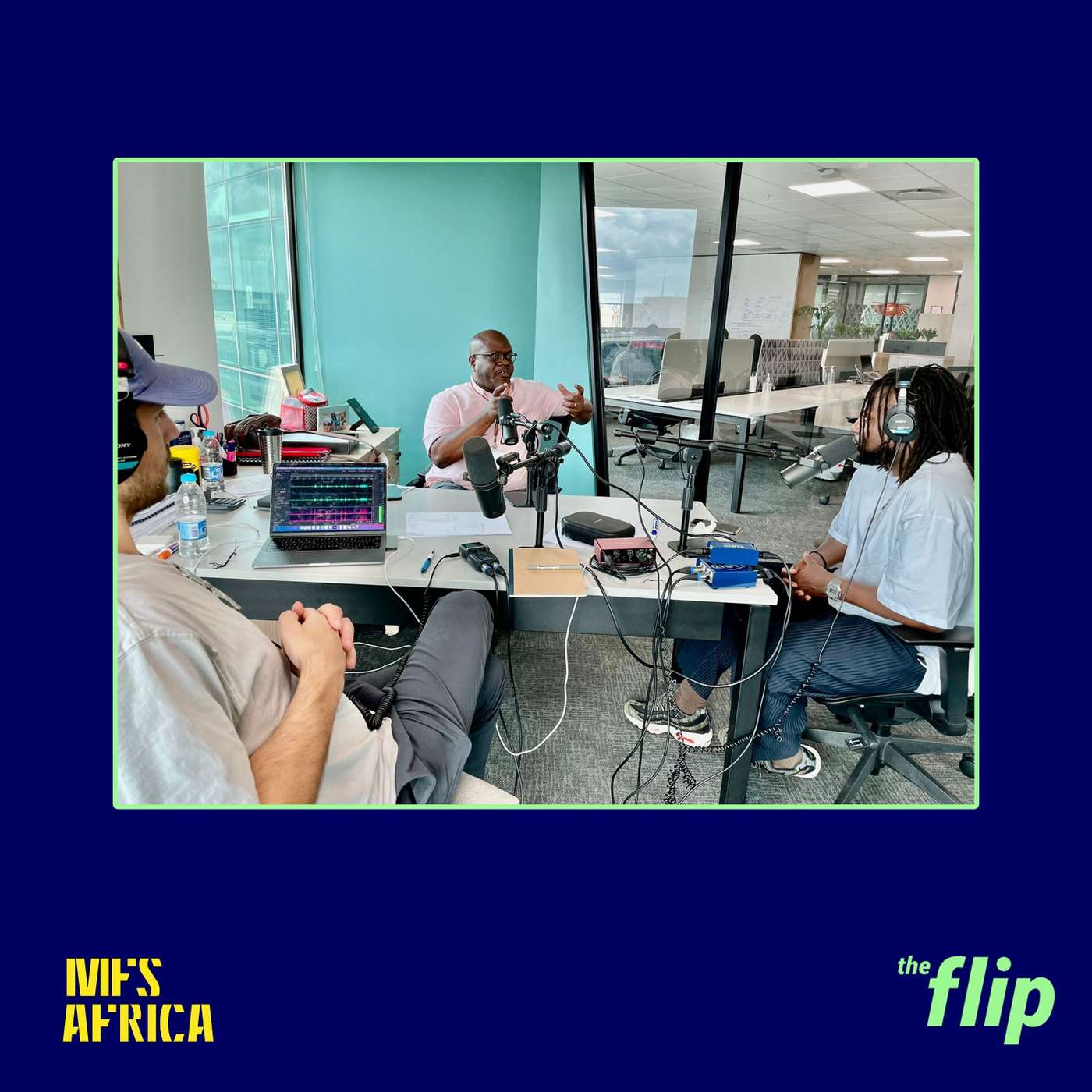
bonusAs MFS Africa announces its $100 million Series C, The Flip's Justin Norman and Sayo Folawiyo sit down for a conversation with MFS Africa's Founder and CEO, Dare Okoudjou.[02:34]- First question, on MFS Africa's recent acquisition of Baxi, and their expansion into Nigeria.[05:36] - Why Nigeria? And why now?[09:15] - On MFS Africa's expansion capabilities. [12:49] - Beyond remittances. - on trade clusters and markets.[18:05] - How does MFS Africa think about collaboration in the ecosystem while keeping the discipline to focus strictly on a B2B service? [22:26] - On sexiness and fundraising.[29:51] - On valuations and fintech consolidation. [35:39] - Having scaled across 30+ countries, what does Dare think about regulatory fragmentation? And what does he wish happens from a governmental point of view? This season is sponsored by MFS Africa.All this season, we're exploring value chains. And in the payments value chain, no fintech has a wider reach on the continent than MFS Africa. Through their network of over 180 partners - MNOs, banks, NGOs, fintechs, and global enterprises - MFS Africa's API hub makes connects over 320 million mobile wallets across 30+ countries in Africa.
S3 Ep 5Problem Solving for Fragmented Retail
As we began our exploration into retail and the so-called B2B commerce platforms, we kept asking about the nature of last-mile retail. Why is it so fragmented? And can we expect retail consolidation? In this episode, we explore why retail looks the way that it does in African markets, and how B2B commerce platforms are working to empower retailers in the context of the way in which last-mile retail works to meet the demands of their customers, the mass-market consumers across the continent. These platforms aggregate demand at the fragmented last mile, to ensure that products not only get to consumers but get to consumers more efficiently, with the aim to ultimately reduce the costs of goods, which, as we talked about last episode, are disproportionately expensive in African markets.[05:12] - Why is retail in Africa so fragmented? As Twiga Foods' Peter Njonjo explains, it's largely due to the rate of population growth in urban cities across the continent.[07:42] - How are B2B commerce platforms attempting to provide solutions for retailers in the context of massive fragmentation? We go on a journey of discovery with ZUMI's William McCarren.[14:29] - So what exactly do B2B commerce platforms do, and how does retailer aggregation work? Sokowatch's Daniel Yu explains.[16:52] - And as a result, these platforms can offer embedded finance offerings to SMEs and retailers who may not have previously had access to credit.[22:07] - On the back of demand aggregation, platforms like Twiga Foods and Sokowatch are both needing to invest further upstream at the supply level of the value chain, as well.[31:30] - A retrospective conversation with The Flip's host, Justin Norman, and b-mic, Sayo Folawiyo.This season is sponsored by MFS Africa.All this season, we're exploring value chains. And in the payments value chain, no fintech has a wider reach on the continent than MFS Africa. Through their network of over 180 partners - MNOs, banks, NGOs, fintechs, and global enterprises - MFS Africa's API hub makes connects over 320 million mobile wallets across 30+ countries in Africa.
S3 Ep 4Journey to the Last Mile
As we continue our season on value chains, in this episode, we explore logistics. The cost of goods and food is disproportionately higher in Africa than anywhere else in the world, with consumers in some markets, spending 50% or more of their total income on food alone. A major reason for these high prices is logistics. So how do we fix this? How do we improve the efficiency of logistics on the African continent, and ultimately drive down the cost of goods? [04:20] - On the role of containerization and efficient ports, with Jetstream Africa's Miishe Addy.[11:37] - After we get through the ports, our goods are loaded onto a truck. We hear from Omar Hagrass on how Trella is trying to improve long-haul efficiency in North Africa and the Middle East.[15:26] - From the port, we move on to the wholesale distributor. As we discuss with Daniel Yu, Sokowatch is aggregating small retailers at the fragmented last-mile and offering same-day delivery of fast-moving consumer goods. [22:37] - As the nature of retail evolves and more small merchants need logistics solutions, logistics-as-a-service providers like Sendbox are playing a role at the last-mile. We hear from its CEO, Emotu Balogun. [26:41] - But amidst all of this tech and innovation - what about infrastructure? To what extent is the problem just poor ports and roads? The Flip's b-mic, Sayo Folawiyo, and its host, Justin Norman, call up infrastructure investor Dami Agbaje for some insight. [32:42] - This episode's retrospective with Sayo and Justin. This season is sponsored by MFS Africa.All this season, we're exploring value chains. And in the payments value chain, no fintech has a wider reach on the continent than MFS Africa. Through their network of over 180 partners - MNOs, banks, NGOs, fintechs, and global enterprises - MFS Africa's API hub makes connects over 320 million mobile wallets across 30+ countries in Africa.

S3 Ep 3Africa Stack
This episode concludes our three-part fintech series this season. In the first two episodes, we tackled payments. In this episode, we explore the other layers of the financial services stack - namely, identity and data. Africa Stack is a play on India Stack - India's pioneering platform of open APIs and digital infrastructure that underpins the country's rapid move towards a paperless, cashless, and digital future. But whereas India Stack was built in one market, with one currency and one regulator, and with significant government investment, how does Africa Stack get built across a fragmented continent? [04:33] - What is India Stack, why is it important, and what does it mean for Africa Stack?[07:20] - We explore one layer of the stack - identity - with Smile Identity's Mark Straub.[08:51] - Identity is a distinct challenge in Africa due to the gaps left by governments. According to The Economist, in countries like Tanzania, Ethiopia or Malawi, for example, less than 20% of births are registered.[12:50] - Another important part of identity is address verification - something that OkHi's Timbo Drayson is attempting to improve upon.[19:25] - One reason why Africa Stack is important is because of the opportunities created by data layer and open banking startups, like Mono, as discussed with its CEO, Abdul Hassan.[23:14] - Whereas Mono is tackling bank customers in bank-led Nigeria, Pngme is focused on USSD transaction data, the telco rails that power mobile money. We hear from Pngme's Brendan Playford.[27:40] - Beyond data aggregation, there is a need for data empowerment, to create opportunities for real-time, customized credit, for example.[30:25] - So how will Africa Stack come together across such a fragmented ecosystem? This season is sponsored by MFS Africa.All this season, we're exploring value chains. And in the payments value chain, no fintech has a wider reach on the continent than MFS Africa. Through their network of over 180 partners - MNOs, banks, NGOs, fintechs, and global enterprises - MFS Africa's API hub makes connects over 320 million mobile wallets across 30+ countries in Africa.

S3 Ep 2Follow the Money, Part Two
In episode one of this season, we explored how money moves within borders in Africa. In this episode, we explore how money moves across them. [01:27] - Africa is the most expensive region in the world to send money to, according to the World Bank's Remittance Prices Worldwide report. [07:26] - Why are there such limited cross-border payment options within Africa?[08:30] - And why is sending money across borders in Africa so expensive? AZA Finance's Elizabeth Rossiello tells the story of investment in infrastructure and liquidity, or lack thereof.[13:39] - How do you create liquidity across markets and between curriencies?[18:12] - How are fintechs providing better rates and leveraging technology to reduce the cost of cross-border payments?[24:32] - On the chicken and egg game of infrastructure and payment volumes across borders. Ham Serunjogi, Chipper Cash's CEO, shares the companies outlook on making cross-border payments more accessible in Africa.This season is sponsored by MFS Africa.All this season, we're exploring value chains. And in the payments value chain, no fintech has a wider reach on the continent than MFS Africa. Through their network of over 180 partners - MNOs, banks, NGOs, fintechs, and global enterprises - MFS Africa's API hub makes connects over 320 million mobile wallets across 30+ countries in Africa.
S3 Ep 1Follow the Money
We hear a lot, in the African tech ecosystem, that the competition is with cash. Virtually every country in the world is on some form of a journey to move from cash to cashless. Many African markets, however, are quite far on that journey. And to understand how to accelerate this trend on the continent, we first need to understand how money moves.[04:55] - For most Africans, the mobile money experience starts with agent networks, like TeamApt's MoniePoint, in Nigeria.[09:47] - Though increasingly, people are getting paid by employers directly into their mobile wallets. Bulk disbursement startups like Julaya, in Cote d'Ivoire, play a role here. [13:24] - But how does money actually move, between accounts and banks? The movement of money is powered by national payments switches. In South Africa, its payments switch is BankservAfrica. [20:06] - So now that we know how money moves, how are fintechs building greater utility into their mobile wallets, to compel users to keep money in them? [25:56] - How should we think about the design and extensibility of mobile wallets, in the context of physical wallets? This season is sponsored by MFS Africa.All this season, we're exploring value chains. And in the payments value chain, no fintech has a wider reach on the continent than MFS Africa. Through their network of over 180 partners - MNOs, banks, NGOs, fintechs, and global enterprises - MFS Africa's API hub makes connects over 320 million mobile wallets across 30+ countries in Africa.
Introducing The Flip Season Three
trailerIntroducing The Flip Season Three. This season is about value chains - we pop the hood across sectors and take an in-depth look at what's going on underneath.

Middlemen as a Service - A Retrospective with Sayo Folawiyo and Justin Norman
Each episode during our narrative episodes, The Flip's b-mic, Sayo Folawiyo, and founder, Justin Norman, sit down for a retrospective conversation on the topic explored in that episode. However, our current series of conversational episodes explored one theme across the series - digitizing analog and fragmented industries - we opted to have one retrospective conversation that reflects on the entirety of our 10 episode series.In this episode, Sayo and Justin talk about people-centric tech startups, market segmentation, interoperability, specialization, and they may have even invested a new as-a-service category. 3:54 - After a full season of episodes exploring those digitizing analog and fragmented industries, what did we learn?5:17 - People heavy, high-touch businesses are a feature, especially in African markets.10:10 - On segmenting the informal sector.11:53 - A discussion on interoperability and the role of the middlemen.15:35 - Introducing Middlemen as a Service.16:04 - On specialization.This episode is part of our conversational series sponsored by MFS Africa. MFS Africa’s competition is with cash, and throughout this series, we’ll feature other startups and entrepreneurs who are digitizing, better organizing, and aggregating analog and fragmented industries.Follow The Flip on social media @theflipafrica.
Accessible and Affordable EdTech with Eneza Education's Wambura Kimunyu
In this episode, we talk edtech with Wambura Kimunyu, the Group CEO of Eneza Education.Throughout the series of episodes, we’re exploring the entrepreneurs in start-ups digitizing informal and fragmented industries on the continent. And for Eneza Education to remain affordable and accessible, it means distributing text-based content to basic mobile phones via SMS, and acquiring customers via radio advertising. We talk to Wambura about building a product for low-income students - 70% of whom live in rural areas, the content development and distribution process, balancing available technologies with the needs of their customers, how to price for low-income consumers, and more.4:59 - First question, who are the customers that Eneza Education is serving?6:08 - A deep dive into Eneza Education's products - the SMS-based Shipavu291 and Ask-A-Teacher.12:20 - On the content development process and launching in a new country.14:29 - On expansion - what role do development agencies and foundations play here? 16:22 - Eneza Education's pricing strategy.20:46 - How is the company measuring impact, and what of impact are they creating? 22:26 - How does Eneza Education build their product with restraint? Why don't they have a mobile app? This episode is part of our conversational series sponsored by MFS Africa. MFS Africa's competition is with cash, and throughout this series, we'll feature other startups and entrepreneurs who are digitizing, better organizing, and aggregating analog and fragmented industries.Follow The Flip on social media @theflipafrica.

Mass-Market Media with StarNews Mobile's Guy Kamgaing
In this episode, we explore entertainment for mass-market consumers in Africa with Guy Kamgaing, the Founder and CEO of StarNews Mobile.Throughout the series of episodes, we're exploring the entrepreneurs in start-ups digitizing informal and fragmented industries on the continent. And in the media space, that means building a product fit for the realities of mass-market consumers. In a world of abundant free content on YouTube, Instagram, Snapchat, and other "data guzzling" platforms, StarNews is building a business selling a la carte microcontent bundled with telco data, and they're selling it to millions of African consumers, while simultaneously helping creators make money off of their content, as well. 04:05 - First question, what is StarNews' background story?06:52 - A deeper dive into the product, from both the content development and distribution perspectives.10:30 - Why would a consumer pay for content when so much free content is readily available elsewhere?15:47 - A discussion on StarNews' growth, and expansion from Côte d'Ivoire, across Francophone African countries, to South Africa.18:05 - On partnering with telcos.20:29 - How are the streaming wars between Netflix and Disney influencing strategy, and why is StarNews investing in content development?This episode is part of our conversational series sponsored by MFS Africa. MFS Africa's competition is with cash, and throughout this series, we'll feature other startups and entrepreneurs who are digitizing, better organizing, and aggregating analog and fragmented industries.Follow The Flip on social media @theflipafrica.

The Case for Crypto with Bundle's Yele Bademosi
In this episode, we talk about cryptocurrency with the Co-Founder and CEO of Bundle, and the Founding Partner of Microtraction, Yele Bademosi. Beyond trading and price volatility, what is it about crypto that excites Yele and so many others on the continent?Throughout the series of episodes, we're exploring the entrepreneurs in start-ups digitizing informal and fragmented industries on the continent. And despite the technological underpinnings of cryptocurrency as a whole, many of the buying and selling processes and use cases of crypto today are still quite informal and fragmented. In this episode, we hear from Yele about the work Bundle is doing to build products and use cases that make crypto more accessible, affordable and help bring it into the mainstream.For those less familiar with crypto terminology, we have also published a crypto glossary to define many of the terms used in this episode. Check it out here: https://theflip.africa/crypto-glossary/4:21 - First question, on consumer education in largely cash-based economies. 10:36 - The macro dynamics - such as devaluation of the Nigerian Naira - that help make the case for crypto adoption.14:41 - Bundle's origin story and the goals for the business.20:22 - An exploration of use cases for crypto beyond trading and speculation. 26:47 - A conversation on DeFi, or decentralized finance. 32:42 - On a grand scale, what kind of impact can crypto - and Bundle - have in Africa? This episode is part of our conversational series sponsored by MFS Africa. MFS Africa's competition is with cash, and throughout this series, we'll feature other startups and entrepreneurs who are digitizing, better organizing, and aggregating analog and fragmented industries.Follow The Flip on social media @theflipafrica.

Digitizing Community Banking with Kwara's Cynthia Wandia
In this episode, we talk about savings and credit cooperative societies, or SACCOs, and the outsize role these member-owned community banks play in African and emerging markets. While millions of Africans belong to SACCOs, it's an industry that Kwara's Cynthia Wandia calls "as analog as it gets". Kwara is a Kenyan startup building software to digitize SACCOs, and in this episode, we talk to Cynthia about the role SACCOs play in these markets, the product and design principles employed to ensure proper utilization of the platform, Kwara's impact for members, the company's origin story, and more. 4:23 - First question, what are SACCOs, and why are these types of member-owned community institutions so prevalent in markets like Kenya?10:20 - An introduction to Kwara and its products.16:54 - What product and design considerations went into building Kwara to ensure high utilization of the platform?21:06 - On Kwara's SACCO onboarding processes. 27:42 - We explore Cynthia's background and Kwara's origin story. 36:34 - Looking ahead, how does Kwara look at product and geographic expansion, and the opportunity to be an embedded finance platform?This episode is part of our conversational series sponsored by MFS Africa. MFS Africa's competition is with cash, and throughout this series, we'll feature other startups and entrepreneurs who are digitizing, better organizing, and aggregating analog and fragmented industries.Follow The Flip on social media @theflipafrica.

Fintech for Cash-First Markets with Nomanini's Vahid Monadjem
In this episode, we continue our exploration of the entrepreneurs digitizing informal and analog markets, with Nomanini's Vahid Monadjem. Nomanini is a fintech platform for informal retail merchants in cash-heavy economies, and Vahid, the company's Founder and CEO, believes the best "way to move beyond cash is for us to be really interoperable with it." In this episode, we talk about specialization and interoperability, B2B partnerships, lessons from the last-mile, and much more.3:41 - First question, what is the market environment in which Nomanini is operating?7:42 - We dive deep into Nomanini's products.15:25 - A discussion on cash and interoperability.23:45 - On Nomanini's B2B partnerships and how to work with corporates.30:12 - What's Nomanini's origin story, and what lessons have they learned from their ten-year journey?36:05 - What does the future of fintech and informal retail in Africa look like?This episode is part of our conversational series sponsored by MFS Africa. MFS Africa's competition is with cash, and throughout this series, we'll feature other startups and entrepreneurs who are digitizing, better organizing, and aggregating analog and fragmented industries.Follow The Flip on social media @theflipafrica.
Technology for Informal Trade with MarketForce 360's Tesh Mbaabu
In this episode, we open the black box of last-mile retail distribution with MarketForce 360's Tesh Mbaabu. 90 percent of trade in Africa is informal, and MarketForce's software-as-a-service platform to better manage their field sales agents and distribution. We'll talk about product, the considerations in building products you use at the last mile and the needs of the multinational FMCG companies and financial service providers at the other end of the value chain. We talk about his recent experience participating in Y Combinator's accelerator program, what other companies he hopes to see built in the retail and logistics space, and more.4:00 - First question, what problems do multinational FMCG companies have with regards to distributing products in African markets?5:31 - We dive into MarketForce 360's product.13:06 - Product and design lessons from the last-mile.14:41 - On consumer insights from the last-mile.16:17- On competition, strategy, and MarketForce's asset-light approach to servicing distributors and manufacturers.21:12 - We discuss Tesh's recent experience participating in Y Combinator's accelerator.23:40 - YC has Request for Startups; what is MarketForce's Request for Startups?This episode is part of our conversational series sponsored by MFS Africa. MFS Africa's competition is with cash, and throughout this series, we'll feature other startups and entrepreneurs who are digitizing, better organizing, and aggregating analog and fragmented industries.Follow The Flip on social media @theflipafrica.

Building a Savings Culture with PiggyVest's Odunayo Eweniyi
In this episode, we explore digital savings with PiggyVest's Odunayo Eweniyi. PiggyVest's competition is the wooden box that Nigerians were using to save cash. We'll talk about how the company designed the product to compel mass-market consumers to save digitally; how their use of social media and word of mouth built trust and engendered a savings culture, how Odun think about new products, like crypto and insurance, as well as geographic expansion, and more.4:19 - First question, what is PiggyVest's core competency, and how has the founders' past experiences helped them build the product and the company?8:27 - We discuss key features of the savings platform, like a 90-day savings period.11:37 - How did PiggyVest build trust amongst its users?15:30 - On product and geographic expansion.24:08 - Odun shares her thoughts on competition and the un-bundling (and re-bundling) of financial services by the fintech ecosystem.This episode is part of our conversational series sponsored by MFS Africa. MFS Africa's competition is with cash, and throughout this series, we'll feature other startups and entrepreneurs who are digitizing, better organizing, and aggregating analog and fragmented industries.Follow The Flip on social media @theflipafrica.

Insurance-as-a-Service with Lami's Jihan Abass
In this episode, we speak to Jihan Abass, the Founder and CEO of Lami, an insurance-as-a-service startup based in Nairobi, Kenya. Lami's platform enables insurers, banks, and other partners to offer digital and flexible insurance to African consumers. 4:12 – First question: formal insurance penetration in Africa is 3%. What's the problem and how is Lami trying to solve it?6:45 – What does flexible, digital, B2B2C insurance actually look like in practice?9:32 - Lami's origin story.10:48 - A discussion about Griffin Motor Insurance, Lami's B2C motor insurance app used to test and showcase their product to prospective partners and customers. 15:10 - How can - and will - embedded, digital insurance increase insurance penetration on the continent?This episode is part of our conversational series sponsored by MFS Africa. MFS Africa’s competition is with cash, and throughout this series, we’ll feature other startups and entrepreneurs who are digitizing, better organizing, and aggregating analog and fragmented industries.Follow The Flip on social media @theflipafrica.

Digitizing Healthcare with Helium Health's Goke Olubusi
Our exploration of the entrepreneurs and startups digitizing analog and fragmented industries takes us to Nigeria, for a conversation with Helium Health's Co-founder and CEO Goke Olubusi. Helium's electronic medical records are providing the digital infrastructure for healthcare sectors across Africa, enabling a variety of stakeholders to make data-driven decisions.4:26 - First question: what does the state of healthcare look like, and how is Helium Health solving the industry's problems?9:16 - Helium's origin story. 11:48 - On the big picture solutions that are required to have the type of impact in healthcare the continent needs. 13:12 - A discussion on the benefits and opportunity of an open and operable approach.15:46 - Helium's geographic and product expansion strategies.19:42 - The impact of improving and opportunity to improve the efficiency of healthcare spending in Africa. This episode is part of our conversational series sponsored by MFS Africa. MFS Africa’s competition is with cash, and throughout this series, we’ll feature other startups and entrepreneurs who are digitizing, better organizing, and aggregating analog and fragmented industries.

Inside the Stripe Acquisition of Paystack with Shola Akinlade & Matt Henderson
On October 15, 2020, Paystack and Stripe announced the acquisition of the former by the latter, in a deal reported to be worth over $200 million. This marks Stripe's largest acquisition to date and is an incredibly meaningful exit for the African tech ecosystem. To unpack the deal, we spoke to Shola Akinlade, Paystack's Co-founder and CEO, and Matt Henderson, Stripe's Business Lead for Europe, the Middle East, and Africa. 3:43 - We start our story of the Stripe acquisition of Paystack in the Winter of 2016. Paystack becomes the first Nigerian startup to participate in Y Combinator, where Shola is introduced to Stripe Co-founder and CEO Patrick Collison. Stripe leads Paystack's Series A. 6:02 - As both companies - and their relationship with each other - grew, the idea of an acquisition arose naturally.8:10 - Why is Stripe interested in Paystack, and Africa as a region?10:38 - What does the future for Paystack look like now that it has joined Stripe?13:40 - We explore the growth opportunity for Paystack's merchants, as it expands its geographic coverage.15:55 - On Paystack's customer intimacy and product roadmap. 19:44 - As always, a reflective conversation between Justin Norman and Sayo Folawiyo on this episode’s topic.For more episodes, visit us at https://theflip.africa or follow us on twitter @theflipafrica.

S2 Ep 10Smart People Should Build Things - On Recruiting and the Global Competition for Top Talent
The very nature of a high-growth startup means that the company is always growing and hiring at a rapid rate. And for African startups, in particular, the talent question is even more acute, given the general challenges of sourcing for select roles, as well as the difficulty in competing for talent with other startups, multinationals, and companies elsewhere in the world. In this episode, we unpack the talent and recruiting situation for venture-backed startups and growth-stage companies - how do we source for newer types of roles, like product and growth? Do we hire for aptitude and train up? Do we go to where there is more talent? How does remote work - particularly during COVID-19 - play a role here?2:50 - We discuss the current recruiting landscape with Toun Tunde-Anjous, Founder of The People Practice. 4:38 - Charles Sekwalor, CEO of Movemeback, shares his views on the talent question, and the opportunities with startups and growth-stage companies on the continent. 8:17 - We explore startup recruitment strategy with Ijeoma Oyeyinka, Helium Health's Head of HR. 10:26 - Many startups, including Helium Health, use outside recruiters, as well. Toun's The People Practice is one such firm. 11:20 - We har from Ijeoma & Mansi Babyloni, Flutterwave's Global Head of People Strategy on the hiring competition, and the pitches they make to mission-driven talent.15:12 - Mansi & Toun on compensation and their experiences with African startups offering equity packages. 17:59 - On remote working dynamics and the opportunity to tap into a wider talent pool, particularly due to COVID-19.20:46 - A discussion on training & development of talent, and in particular less experienced talent, on the continent. 24:23 - We hear from Aaron Fu, on the Venture for Africa fellowship program, and their endeavor to de-risk an exploration into the African tech and startup ecosystem.28:13 - As always, a reflective conversation between Justin Norman and Sayo Folawiyo on this episode's topic.

S2 Ep 9Much Ado About the Media
In this episode, we explore and unpack the relationship between the tech ecosystem and the media. We'll seek answers to questions such as - what roles do media publications play in the ecosystem? How does this differ between international and local publications? What are the key considerations for the media in doing this work, particularly from a talent and business model perspective? What about companies creating their own content - what is their motivation and what can be learned? And, why is there seemingly a contentious relationship between African tech and the media?2:27 - We talk public relations utility and strategy, with Wimbart's Jessica Hope. 6:47 - What role does international tech media play in the ecosystem? We hear from TechCrunch contributing writer Jake Bright.12:05 - A discussion with Tomiwa Aladekomo, of Big Cabal Media, the parent company to TechCabal, on the publications' objectives and challenges. 17:03 - We explore how one publication, Stears Business, is tackling information scarcity, talent, and business model challenges in Nigeria, with Preston Ideh.23:05 - We speak with Paystack's Emmanuel Quartey on the company's editorial approach and hiring content to solve a problem. 28:23 - Is there a contentious relationship between African tech and the media? Are those in the ecosystem playing their part in sharing with requisite openness and transparency? 30:41 - A retrospective conversation between Sayo Folawiyo, Justin Norman, and this episode's co-producer Osarumen Osamuyi, on the environmental challenges of building sustainable media businesses and meeting the expectations of the tech ecosystem.

S2 Ep 8Connecting the Dots - Japanese Corporates and African Tech
This season we've talked about the relationship between African tech and other emerging markets across the Global South, as well as with China. In this episode, we talk about the ecosystem's relationship Japan - and in particular, the interest Japanese investors and corporates have in innovations from the continent. 1:33 - Satoshi Shinada and Rio Yamawaki on the macro situation in Japan, and why Japanese investors are interested in African tech. Satoshi and Rio are GPs at Kepple Africa Ventures, one of the most active VCs on the continent. 5:58 - The primary reason why Japanese corporates are interested in investing on the continent is to form strategic partnerships and bring African innovation back with them. 9:43 - We explore a case study - the investment in Kenyan startup PayGo Energy by Saisan, a Japanese multinational gas company. We hear from PayGo's Co-founder and CEO Nick Quintong.14:48 - A reflective conversation between Sayo Folawiyo and Justin Norman, on the value of Kepple, not only in connecting the dots, but in seeing and knowing which dots to connect between Japan and the continent, and on the opportunity for technology export.

S2 Ep 7Telcos, PalmPay, and the Future of Mobile Financial Services
In this episode, we explore the evolution of mobile financial services and the opportunity to deepen financial inclusion in African markets. This opportunity exists for mobile network operators, as well fintechs like PalmPay, backed by hardware manufacturer Transsion, whose smartphone brands - Tecno, Itel, and Infinix - account for over 50% of smartphone devices on the continent.1:55 - We explore the evolution from USSD-led Mobile Money 1.0 to smartphone-led Mobile Money 2.0, with Hover's Wiza Jalakasi.5:11 - Chris Williamson, the Head of M-Pesa at Vodacom Group, describes the future of M-Pesa and mobile financial services, and the role M-Pesa wishes to play to broaden the use cases and lay the rails for others in the ecosystem to build on top of.10:27 - We also hear from Ramatoulaye Adama Diallo, the CEO of Orange Money Senegal, on Orange's approach to increasing the utilization of mobile financial services, and their role in the development of the tech ecosystem.14:24 - While telcos have an outsize advantage from a distribution and customer perspective, so too does Transsion. We speak to PalmPay's Sofia Zab on how the fintech is leveraging their strategic investment from Transsion to integrate financial services into the hardware, and on the work they are doing to build out the digital use cases for its users. 20:16 - Where are there opportunities for startups to partner with MNOs or manufacturers, and how do they go about developing said partnerships? We hear from two emerging market fintech veterans - Adia Sowho and Hayden Simmons. 26:05 - As always, a reflective discussion between Sayo Folawiyo and Justin Norman - this week, on the differences between and opportunities for telco-led versus hardware-led mobile financial services.

S2 Ep 6Building for Purpose - China-Africa Tech
This week, we explore a hypothesis - that the lessons and models from Chinese tech companies have merit in African markets, given certain similarities between China’s development and the current conditions on the continent. 2:06 - DFS Lab's Stephen Deng on the experience of Chinese entrepreneurs and investors, and the lessons from leapfrogs in China that may have merit in Africa.5:37 - We hear from Laura Li, VP of Investments of Future Hub, an early-stage investor and accelerator backed by Transsion, the number one cell phone manufacturer on the continenet, and parent company to Tecno, Itel and Infinix.7:43 - A discussion with Vincent Li, the CEO of Future Hub, and Laura on the opportunities they see on the continent, in ecommerce, logistics, social media, and more. 14:50 - Another Transsion-backed company, PalmPay, is also leveraging Transsion's distribution and insights from China to grow in Nigeria and beyond. We hear from Sofia Zab, PalmPay's Global Head of Commercial & Marketing.20:27 - As always, a reflective conversation between Justin Norman and Sayo Folawiyo, on social commerce and superapps. 24:37 - Part two with Justin and Sayo, on mobile money-enabled business models.

S2 Ep 5A Fintech Exit - Inside the MFS Africa Acquisition of Beyonic
Last episode, we went on a hypothetical startup journey from idea to exit. In this episode, we go on a real one.In June of 2020, MFS Africa announced the acquisition of Beyonic. Together, the combined company of 95 employees now enables mobile money interoperability between markets and mobile network operators, and offers a suite of tools for SMEs, in 30-plus African markets. We go inside the acquisition - how it came together, why it makes sense, and what it means - both for the two companies and their stakeholders and for the ecosystem as a whole. 2:27 - Introducing some of the main players in the deal - Dare Okoudjou, the Founder & CEO of MFS Africa, Luke Kyohere, Founder of Beyonic, Carina Rumberger, CEO of Beyonic and Rachel Balsham, Deputy CEO of MFS Africa.3:43 - We go back to 2009, when Dare left MTN to start MFS Africa. What was it like running the business in those early days building the foundation and infrastructure for mobile money usage across the continent? 7:55 - Luke takes us back to the beginning of Beyonic, where he saw an opportunity to build out tools for SMEs using mobile money.11:22 - In 2018, after a sizeable fundraise, MFS Africa set out to scale. Two of their strategies included a) exploring tools for SMEs, and b) making minority investments in other complementary fintech startups across the continent. As these two strategies converged, Dare and Luke re-connected to talk fundraise. 16:11 - The discussions minority investment quickly became a majority investment and then a full acquisition. Dare, Rachel, Luke and Carina recount their respective thoughts on strategy, and how and why a full acquisition became the deal they pursued together. 19:39 - We get into the weeds a bit on tactics - what was the sell-in process like to each respective company's employees, shareholders and customers? 26:09 - On integration - of the teams and of the products. 30:07 - What does this deal - fintech consolidation, an African fintech acquiring another African fintech - mean not only for the newly combined company but for the African tech ecosystem as a whole?

S2 Ep 4From Idea to Exit - A Startup Fundraising Journey
This episode, we go on a hypothetical startup fundraising journey, from idea to exit. 2:04 - At the earliest stage, angel and venture investing is quite subjective, says Zachariah George, angel investor and Managing Director of LaunchAfrica. 3:46 - Because of the subjectivity, metrics and valuations don't matter as much at this stage. We hear from Chidinma Iwueke, Partner at pre-seed fund Microtraction, on their standard deal terms.4:56 - A discussion with Andreata Muforo on how TLcom Capital approaches seed and Series A stage valuations.8:56 - We hear from Cikü Mugambi of the IFC's Disruptive Technologies and Venture Capital team, how they leverage comparables of other emerging market startups in their portfolio to value prospective investments in Africa. 11:12 - Andreata and Cikü share their views on the exit paths for their portfolio companies. 13:17 - After venture capital comes private equity, and a discussion with Helios Investment Partners' Fope Adelowo.19:37 - We hear from Victor Basta on what mergers and acquisition opportunities for tech-enabled companies, and discuss how founders and CEOs need to prepare for an exit. 27:08 - As always, a reflective conversation between Justin Norman and Sayo Folawiyo.

S2 Ep 3Finding Fit - Opportunities in the Global South
We dedicate this episode to Fahim Saleh, the Founder and CEO of Gokada, who was killed in New York City on July 13th. Our heartfelt condolences go out to his family and the entire Gokada team.This year, Nigerian fintech companies Paga and Migo are expanding to Latin America, to Mexico and Brazil, respectively. Another Nigerian startup, Gokada, was launched by an entrepreneur who built a successful ride-hailing company in Bangladesh, where there was a similar set of market conditions. In this episode, we explore the similarities - and the opportunities - between emerging markets across the Global South. 3:57 - Why is Paga expanding to Mexico? And why is Migo expanding to Brazil? We hear from Paga's CEO Tayo Oviosu, and Migo's former VP of Growth, Adia Sowho. 7:42 - Fahim Saleh launched Gokada after successfully founding a ride-hailing company in Bangladesh. What was it about Nigeria, and his experience in Bangladesh, that compelled him to move to Nigeria to build Gokada?12:39 - Investors like Cikü Mugambi with IFC's venture capital team, in evaluating deals are increasingly looking to markets in Latin America and South Asia for comparables and insights. 14:32 - Sayo Folawiyo and Justin Norman sit down to reflect on this topic, and discuss the notion of market size and under penetration of financial services as the core driver of opportunity for startups in Africa, Latin America and South Asia alike.
S2 Ep 2Global Ambition - Lessons from Tech Expansion
We've had prior discussions on Africa's market size (S1E5) and on Africa-focused investors' pursuit of scale (S1E7). Both topics ultimately lead to the same place for startups: geographic expansion. What are the considerations and implications? 2:05 - Keith Davies, former CFO of Zoona, shares cautions startups to be careful because expansion introduces a lot of the complexity for the business.4:35 - Operational considerations of expansion, with Wiza Jalakasi, Head of Business Development at Hover Developer Services.5:31 - It's crucial to pitch to investors an expansion and growth strategy that you can actually execute on, says Paga Group CEO Tayo Oviosu.9:29 - A discussion with M&A advisory firm Magister Advisor's Victor Basta, on expansion, fundraising and exits. 13:52 - What does pan-African really mean? with The Subtext's Osarumen Osamuyi.15:29 - And if there are few truly pan-African startups, perhaps there are better markets to expand to outside of Africa.18:07 - A reflective conversation on this topic between Justin Norman and The Flip's b-mic and Executive Producer, Sayo Folawiyo.
S2 Ep 1Co-Building The Future - High-Touch Venture Investing
In this episode, we explore high-touch venture investing models - in particular, venture development and talent investing, as well as peer-selected investment. 2:16 - an introduction to accelerator programs and their objectives, with Catalyst Fund's Aaron Fu.3:47 - a discussion with Adedana Ashebir on Village Capital's peer-selected investment model.6:16 - Founders Factory Africa's Lwazi Wali and Sam Sturm on venture building and the merits of a human capital intensive investment model.10:20 - GreenTec Capital Partners takes their venture building model one step further. We hear from Erick Yong on GreenTec's Results for Equity model.16:07 - Then, Catalyst Fund takes their venture building model yet another step further. As Maelis Carraro explains, their program offers venture building as a grant and does not take any equity in the startups in their portfolio. 22:55 - While the aforementioned programs support existing startups, Antler's startup generator investment model brings individuals into a cohort to co-found startups with other participants in the program. We hear from Selam Kebede on the merits of this model for African markets.27:59 - The Flip's founder, Justin Norman and executive producer, Sayo Folawiyo, discuss their takeaways episode, and Sayo shares his experience, from a founder's perspective, as a participant in startup programs.
Introducing The Flip Season Two
trailerIntroducing The Flip Season Two - the podcast exploring contextually relevant insights from entrepreneurs changing the status quo in Africa. This season, we explore venture building, geographic expansion, valuations and exits, mobile money, emerging markets, China, and much more. Produced and hosted by Justin Norman. Sayo Folawiyo is the executive producer and b-mic.https://www.theflip.africa
S2 Ep 12Crisis-Induced Collaboration
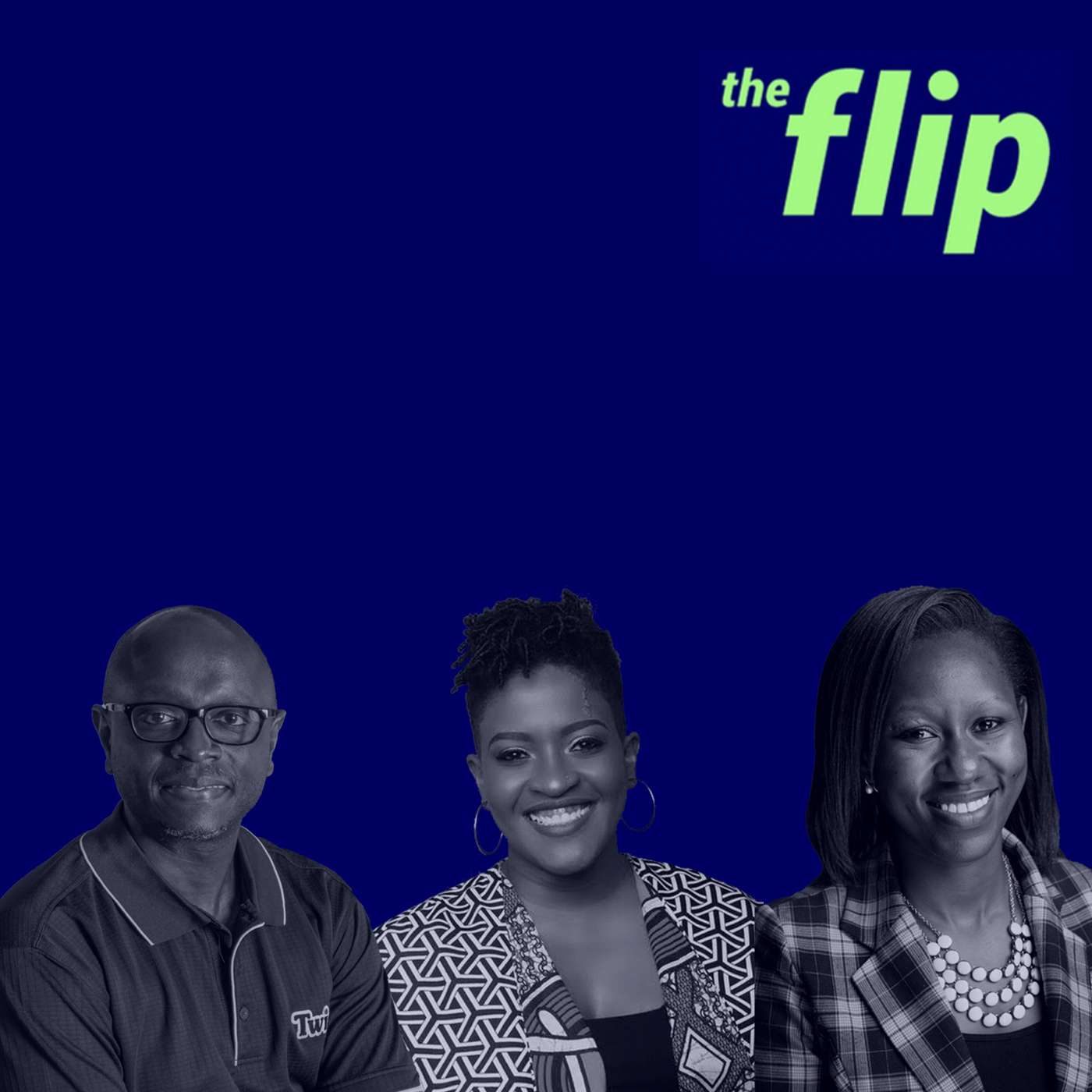
bonusThey say never waste a good crisis. And while COVID-19 has had a horrible, crippling effect on individuals and economies alike, if there's one positive to the pandemic, perhaps it's that it's compelling and facilitating partnerships to serve the greater good; to bring people together to solve problems that have already existed, but that now have been brought even further to the fore. In this episode, we talk to entrepreneurs who have solved and are solving problems through crisis-induced collaboration.1:52 - We take a look back at a prior crisis-induced collaboration with Ory Okolloh, a Co-founder of Ushahidi, a digital and data mapping platform built in response to post-election violence in Kenya in 2008. 6:23 - Today, the Kenyan tech ecosystem is collaborating on a COVID-19-induced initiative, Safe Hands Kenya. We hear from Peter Njonjo, Co-founder and CEO of Twiga Foods, which is repurposing its existing technology and logistics infrastructure to get essential good in the hands of at-risk Kenyans. 9:06 - Safe Hands Kenya is a community-wide collaboration of both partners and competitors. Sokowatch Kenya CEO Angela Nzioki shares her perspective on the partnership approach, and both Angela and Peter discuss the impact for their respective businesses. 13:01 - Is this period an opportunity to take things even one step further, asks Ory Okolloh. 14:42 - My b-mic, Sayo Folawiyo, and I share our thoughts on this episode and the insights from Ory, Peter and Angela.
S2 Ep 11Building Through Crises
bonusAs we continue to weather the unprecedented COVID-19 pandemic, and its second order effects on the economy, hat lessons can we learn from those who have lived, survived or even thrived through somewhat similar circumstances in the past? In this episode, we hear stories from three entrepreneurs whose past experiences may be useful for the entrepreneurs of today.2:07 - 'Tokunboh Ishmael, Co-founder and Managing Partner of Alitheia Capital, shares her experience attempting to fundraise during the 2008 Global Financial Crisis. Her firm wound up pivoting to a partnership-centric approach - a strategy which has endured for the past 13 years.8:38 - We hear Appfrica's origin story from its founder, Jon Gosier. Through Tech for Good and other client-based work around the continent, Jon was able to bootstrap Appfrica and ultimately make investments out of the company's balance sheet.14:25 - Much like Jon funded his business and investment activity through cashflow, Craig McLeod, the CEO of BoxCommerce, has bootstrapped his business through service-based revenue. Craig shares how he's built his business to service his clients, while leveraging that revenue to build their main business. The Business Insider article referenced is here: https://www.businessinsider.com/how-long-companies-can-survive-without-bringing-in-money-2020-3?IR=T17:34 - We hear again from 'Tokunboh Ishmael on the resiliency and diversification of one of her firm's portfolio companies, MAX.NG, and the advice she is presently giving her entrepreneurs.20:38 - My b-mic, Sayo Folawiyo, and I discuss this episode, and the way in which Sayo is approaching the situation caused by the COVID-19 pandemic.

S1 Ep 10Accessible Insurance for All - A Conversation with MicroEnsure's Richard Leftley
bonusMicroEnsure’s origins date back in 2002 when its founder, Richard Leftley, started asking a simple question of traditional insurance companies – why is it that insurers only create products and services for the wealthy? He never got a good answer. Richard had seen the data on the impact that natural disasters had on human lives in emerging markets – there was clearly a mismatch between risk and access to insurance.Years later, as mobile penetration in these markets increased, MicroEnsure stopped asking its clients three standard questions during the signup process (name, age, and next of kin) – and they signed up 20 million customers in 140 days! They now serve over 60 million customers, 80% of whom had never had insurance prior to MicroEnsure.2:47 – On MicroEnsure’s distribution model.5:48 – How can MicroEnsure not ask any questions of their customers? It comes down to the difference in traditional insurance products versus microinsurance.7:23 – How MicroEnsure leverages its distribution partners to achieve requisite scale.8:17 – Why MicroEnsure went straight to the partnership model as opposed to going direct to the consumer.10:34 – How MicroEnsure leverages their partners’ brands and data to sell their products.13:13 – Richard and Justin discuss misconceptions around customer education and the importance of very simple products.14:54 – The changes to MicroEnsure’s business model and how they fit into the insurance value chain.17:11 – Richard background and the origin story of MicroEnsure.19:52 – MicroEnsure’s business in Africa and key considerations for expansion.23:39 – Market size as a consideration and stories of their business in Malawi and Nigeria.25:00 – The story of MicroEnsure moving from a non-profit, funded by a large grant from the Bill & Melinda Gates foundation to a for-profit, venture-backed company.27:25 – After 20 years as an entrepreneur, Richard shares his general advice for entrepreneurs.
S1 Ep 9A Conversation with Rebecca Enonchong
bonusRebecca Enonchong (@africatechie) is widely known for her evangelism of the African tech ecosystem. But she's much more than merely an evangelist. Rebecca started the US-based enterprise software company in 1999, growing it into a global business, and along the way has co-founded the Africa Business Angels Network, AfriLabs, I/O Spaces, ActivSpaces and more. I was so fortunate to be paid a visit by Rebecca in Johannesburg, where we sat down for a conversation on how to best help entrepreneurs in the ecosystem, her views on doing business in Francophone Africa, her journey as an entrepreneur as the founder and CEO of AppsTech, and about how one particular telecom owes them a lot of money and caused her to miss out on a multi-million dollar exit opportunity.

S1 Ep 8Context Matters - What Alternative Financing Models are Appropriate for This Ecosystem?
To solve problems on the continent, entrepreneurs are building sustainable, impact-driven, infrastructure-building, tech-enabled, for-profit companies - how should these companies be funded?In this episode - our third and final episode of our three-part series on venture investing in Africa, and the final episode of Season One, as well, we take a first principles approach to fundraising in Africa, and dive deeper into the opportunities for entrepreneurs to leverage different types of capital and funders to achieve their business' objectives.1:45- We define Venture Capital in the Silicon Valley sense, from Stratechery's What Is a Tech Company?2:48 - A discussion with LifeBank's Temie Giwa-Tubosun, on building a solution in the healthcare space - as a proxy for our exploration into impact-driven, for-profit startups in Africa6:24 - A discussion with MDaaS Global's Genevieve Barnard Oni and Oluwasoga Oni on building tech-enabled, brick and mortar diagnostic centers in Nigeria, and being told by one investor that they weren't "tech enough"10:31 - If the businesses being build to solve problems across Africa are not "tech enough", and if venture capitalists fund tech companies, then what fundraising models should we use? We hear from LaunchLab's Josh Romisher on the variety of investment vehicles used to fund off-grid solar home system ventures. 14:01 - Exploring innovative finance models with the Bertha Centre for Social Innovation and Entrepreneurship's Tine Fisker Henriksen.18:41 - If we're re-thinking investment models, should we also be re-thinking the very nature of finance for emerging markets? With Founders Factory's Lwazi Wali.22:12 - How might we imagine new, yet-to-be -determined models for Africa? Perhaps with the help of a history lesson from Alex Lazarow, global venture capitalist and author of Out-Innovate: How Global Entrepreneurs - from Delhi to Detroit - Are Rewriting the Rules of Silicon Valley.25:17 - As always, Sayo and I share our thoughts.

S1 Ep 7In Pursuit of Scale - The Strategies of Africa-Focused Venture Investors
Venture Capitalists, generally speaking, are looking to fund high-growth ventures that have the potential to scale and achieve virtually infinite returns. But achieving that scale is hard, even more so in Africa, where there are market size questions, fragmented markets, and regulatory considerations. As a result, venture investors are looking for a specific type of founder and entrepreneur - one who has demonstrated the potential to pull it off and achieve the growth and scale investors are seeking.In the African early-stage ecosystem, with its funding scarcity, limited track record, talent shortage, and expansion challenges, how do venture investors reconcile their quest for funding high-growth ventures in this environment?2:24 - defining venture capital, courtesy of Stratechery's Ben Thompson and his blog post What is a Tech Company: https://stratechery.com/2019/what-is-a-tech-company/3:59 - VCs are looking for scale, and talent capable of achieving the desired scale, with Microtraction's Chidinma Iwueke & Dayo Koleowo + TLCom Capital's Ido Sum8:14 - a discussion on scarce deal flow and a lack of investable startups, with Dayo & Digest Africa's Peter Kisadha 10:46 - 4Di Capital's Justin Stanford + Ido talk about the need to balance their portfolios to account for the realities of the African market...11:46 - ...but a balanced portfolio doesn't mean lesser return expectations13:35 - how venture builders like Founders Factory Africa & Lwazi Wali are supporting entrepreneurs through their journey to scale16:14 - GreenTec Capital Partner & Maxime Bayen on their results for equity initiative17:58 - Lwazi + Startupbootcamp Africa's Zachariah George & global venture capitalist Alex Lazarow on achieving incentive alignment through initiatives like corporate VC and evergreen funds23:32 - a discussion with Justin & Sayo on venture investing in Africa

S1 Ep 6What Do Entrepreneurs Consider When Seeking Venture Capital?
We talk so often of venture capital that it's more or less assumed that raising VC funding is an inextricable part of the entrepreneur's journey. But should it be? What are the purposes for taking in VC money, and what are the considerations? 1:24 - Keith Davies, ex-CFO and Partner at Zoona on the implications of taking VC money3:19 - Integrateme Founder Luke Dominique Warner on their strategic decision to not do a traditional round of VC fundraising 5:24 - EAVCA's Eva Warigia and VC4A's Ben White on attracting local businesses leaders and high net worth individuals to participate in early-stage investment as strategic investors, and connecting foreign investors with different skillsets to local opportunities 8:27 - Startups experience raising money for a strategic and specific purpose, with Farmcrowdy Founder Onyeka Akumah, as well as Keith and Luke10:31 - Riby Founder & CEO Abolore Salami + Keith on strategically and selectively soliciting investors 12:47 - Keith, Onyeka and Yoco's Marcello Schermer on considerations around timelines of raising money, from both foreign and local investors15:11 - Justin and Sayo breakdown the conversation around seeking VC funding, including Sayo's experience fundraising locally for his startup Kandua, and their view on the question of if a startup should be raising money in the first place

S1 Ep 51.2 Billion And Counting - How Do Entrepreneurs Look At Africa's Market Size?
One of the most exciting aspects of opportunities in Africa is a function of market size - over 1.2 billion people on the youngest and fastest-growing continent. But the conversation around total addressable market, and true market size opportunity is a lot more nuanced than Africa's topline population number.2:25 - GreenTec Capital Partner's Maxime Bayen discusses GSMA research on mobile adoption and digital literacy4:39 - The Subtext's Osarumen Osamuyi on how he thinks about market size and the exercises he uses to better quantify market opportunity9:41 - NALA's Benjamin Fernandes on their product's impact on addressable market and digital literacy 12:10 - Yoco's Katlego Maphai on how Yoco is targeting non-consumption14:27 - A discussion with Jehiel Oliver on market-creating innovations17:48 - Justin and Sayo discuss digital literacy21:21 - Justin and Sayo look further into expansion as a corollary to the market size conversation

S1 Ep 4Reaching The Masses - A Conversation On Distribution
In nuanced and fragmented environments, how are startups in African markets getting their products and services in the hands of their customers at the last mile?1:55 Maxime Bayen, of GreenTec Capital partners and formerly of GSMA, on mobile technology4:00 Keith Davies, formerly of Zoona, on agent networks5:24 Katlego Maphai, CEO of Yoco, on building trust offline6:36 Abolore Salami, CEO of Riby, on B2B2C business models8:11 Antonio Bruni, CEO of Picup, on last mile delivery13:50 Justin and Sayo discuss market size

S1 Ep 3On Leapfrogging
Leapfrogging - what is it? What is it not? What is it good for and what are its limitations? We speak to Yoco's Head of Expansion, Marcello Schermer.

S1 Ep 2Exploring Sustainable Businesses Models
They say that the difference between the US and Africa is that the US has competition while Africa has complexity. And a big reason for its complexity is a lack of infrastructure.It compels many startups to build infrastructure, invest in other market-making activities and/or to diversify earlier in their journey to make their businesses work. How are startups across the continent building sustainable businesses in this environment?2:57 - Kasha's Joanna Bichsel10:56 - MAX.ng's Tayo Bamiduro & Chinedu Azodoh18:17 - BRCK's Erik Hersman23:06 - Hello Tractor's Jehiel Oliver32:07 - a conversation between Justin and The Flip's b-mic, Sayo Folawiyo.