The Eurasian Knot
381 episodes — Page 2 of 8
Russians in San Francisco
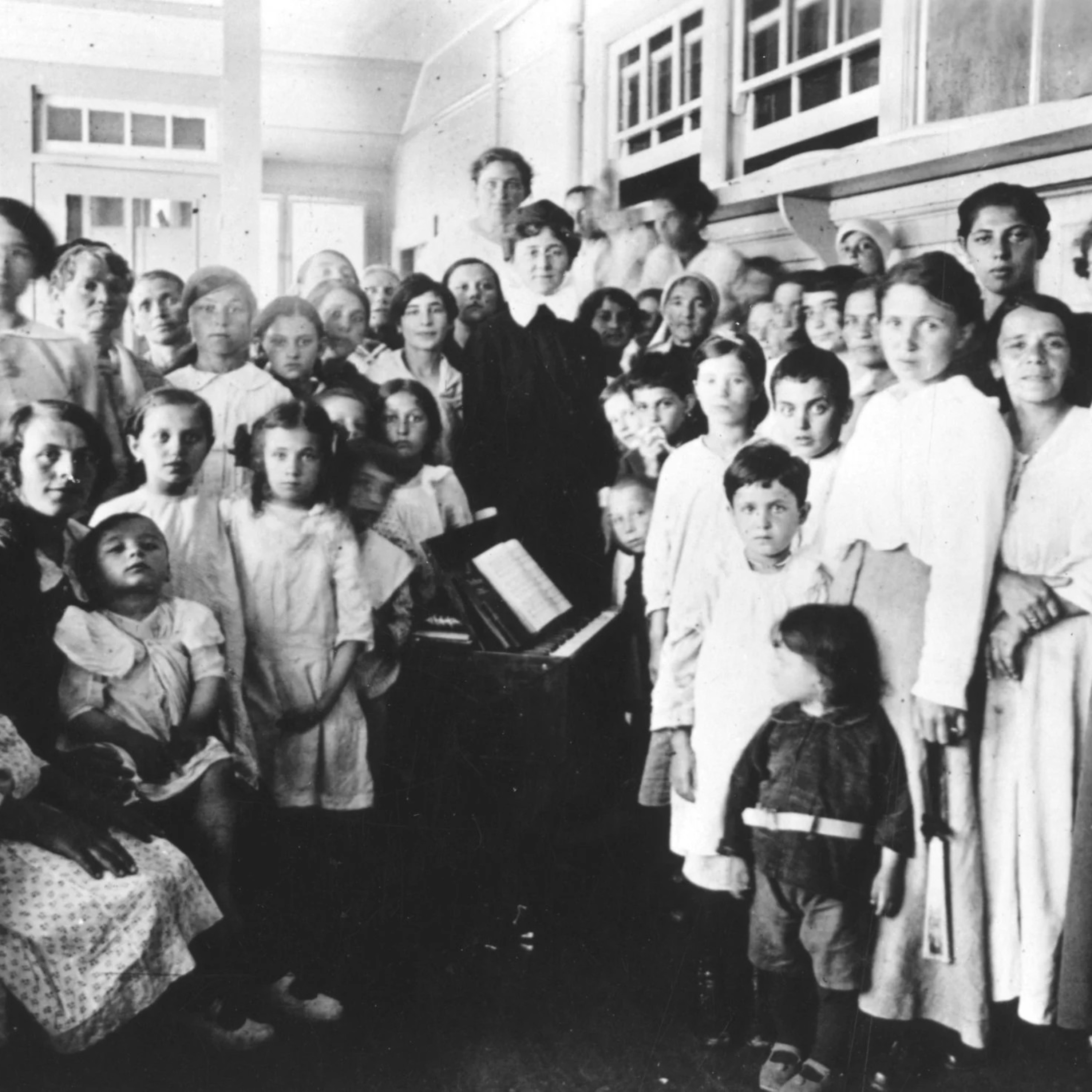
After 1917, San Francisco’s small Russian community exploded with new arrivals. Over the next decade, thousands quit Soviet Russia, often via the Far East or China, to escape revolution and civil war. Arrival in America, however, was only the beginning of new trials. In the 1920s and 1930s, American nativists saw Slavic people as low in the racial hierarchy–people who were visually white, but culturally not quite. The Russian community in San Francisco was faced with a contradictory choice: to preserve their culture, a culture that they saw was being destroyed in Soviet Russia or shed their Russianess and become more “American” i.e. more “white.” How did this first wave of Russian emigres meet the challenge of otherness and assimilation? And what about the second wave of Russians who came after WWII? How did they navigate the Red Scare where Russian was equated with communist and the notions of Americanness had become more polarized? The Eurasian Knot spoke to the historian Nina Bogdan about her new book, Before We Disappear into Oblivion: San Francisco’s Russian Diaspora from Revolution to Cold War, to get some insight.Guest:Nina Bogdan is a historian and cultural preservationist. She recently authored the “Russian American Historic Context Statement” for the San Francisco City Planning Department as part of the Citywide Cultural Resources Survey. She’s the author of Before We Disappear into Oblivion: San Francisco’s Russian Diaspora from Revolution to Cold War published by McGill-Queen’s University Press.The article Rusana mentions on the history of Berkeley's Institute of Slavic Studies is here. However, the piece is about the historian Robert J. Kerner, not Nicholas Raisanovsky. Send us your sounds! PatreonKnotty News Hosted on Acast. See acast.com/privacy for more information.
Soviet Jokes Under Stalin
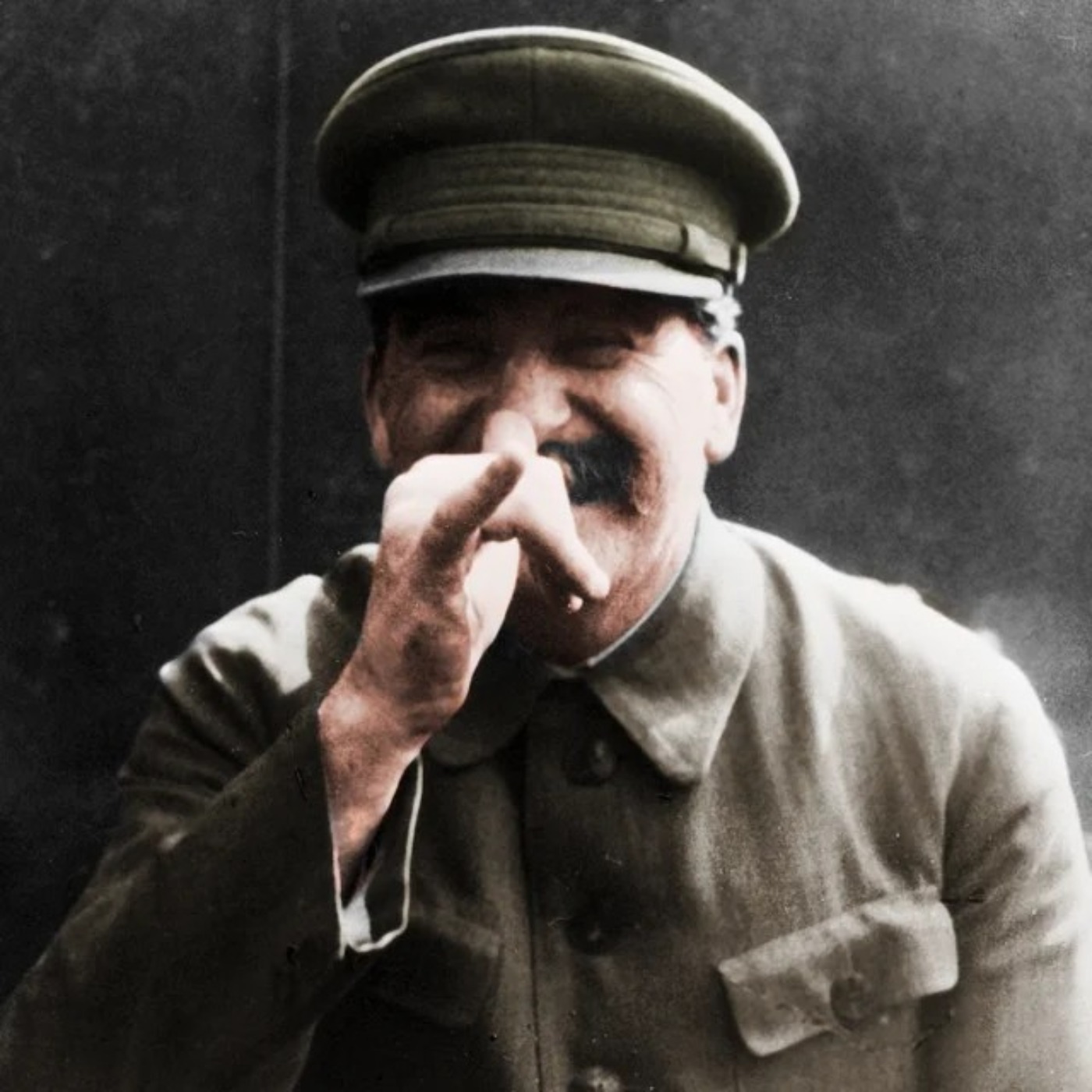
What power do jokes have in authoritarian societies? I’ve been thinking about this recently as Trump further consolidates power. Turn on any American late night show and it’s one joke about Trump after another. It’s easy for comedians. The Trump jokes write themselves. Soviet Russia didn’t have late night, and openly poking fun at the authorities was highly circumscribed. This continues to a large extent in today’s Russia. But people still tell biting, insulting jokes in daily life. Laughing at power can’t be totally contained. But do they matter? What power do they have? In what ways are they criticism of the powers that be, a way to cope with the absurdity of everyday life, and or merely self-delusional exercises in political agency? All three? In 2018, the Eurasian Knot took on these questions about jokes in a conversation with Jon Waterlow about his book, Only A Joke, Comrade! Humor, Trust, And Everyday Life Under Stalin, 1929-1941. We decided to rerun the interview for what it can tell us about our present conjecture.Guest:Jon Waterlow received his PhD in History at Oxford. He’s the author of It's Only A Joke, Comrade! Humor, Trust, And Everyday Life Under Stalin, 1929-1941. Jon is also host of the podcast Voices in the Dark. Look for it on your favorite podcast feed. Hosted on Acast. See acast.com/privacy for more information.
Video Games of Eastern Europe
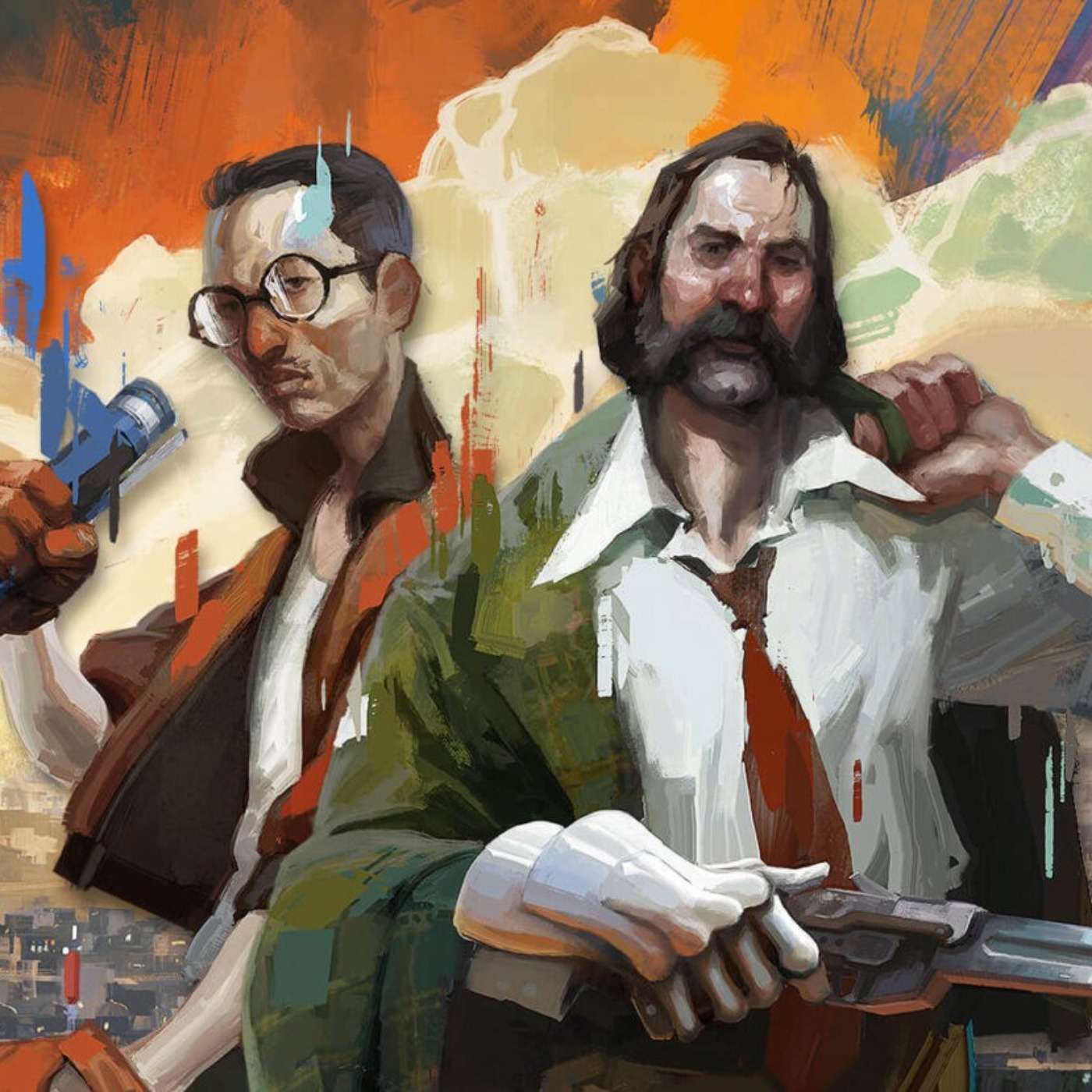
Games have a long history. Several are centuries old. But a new crop of games has emerged over the last century. Elaborate board games, role playing games, and of course, video games. Today, video games are one of the most consumed forms of media entertainment. They inspire communities, live-action role playing, movies and other media. All of these have fostered new identities and ethics. And Eastern Europe has played an outsized role in this culture. Enter Daniil Leiderman, the new Slavicist at the University of Pittsburgh. He says that games are a portal to a whole bunch of issues–identity, moral responsibility, agency, and cultural critique. The Eurasian Knot greeted Daniil with a conversation about gaming and Eastern Europe. How do games give players agency in crafting alternative histories? What role do Soviet and post-Soviet landscapes play? And what are the wider effects do games have on our lives outside the magic circle? Guest:Daniil Leiderman is an art historian. He taught art history and game studies at Texas A&M University before joining University of Pittsburgh’s Slavic Languages and Literatures Department as an Assistant Professor in Fall 2025. As a scholar, Daniil’s research focuses on underground and protest art and culture and video games.Send us your sounds! PatreonKnotty News Hosted on Acast. See acast.com/privacy for more information.
The Deforestation of Eastern Ukraine
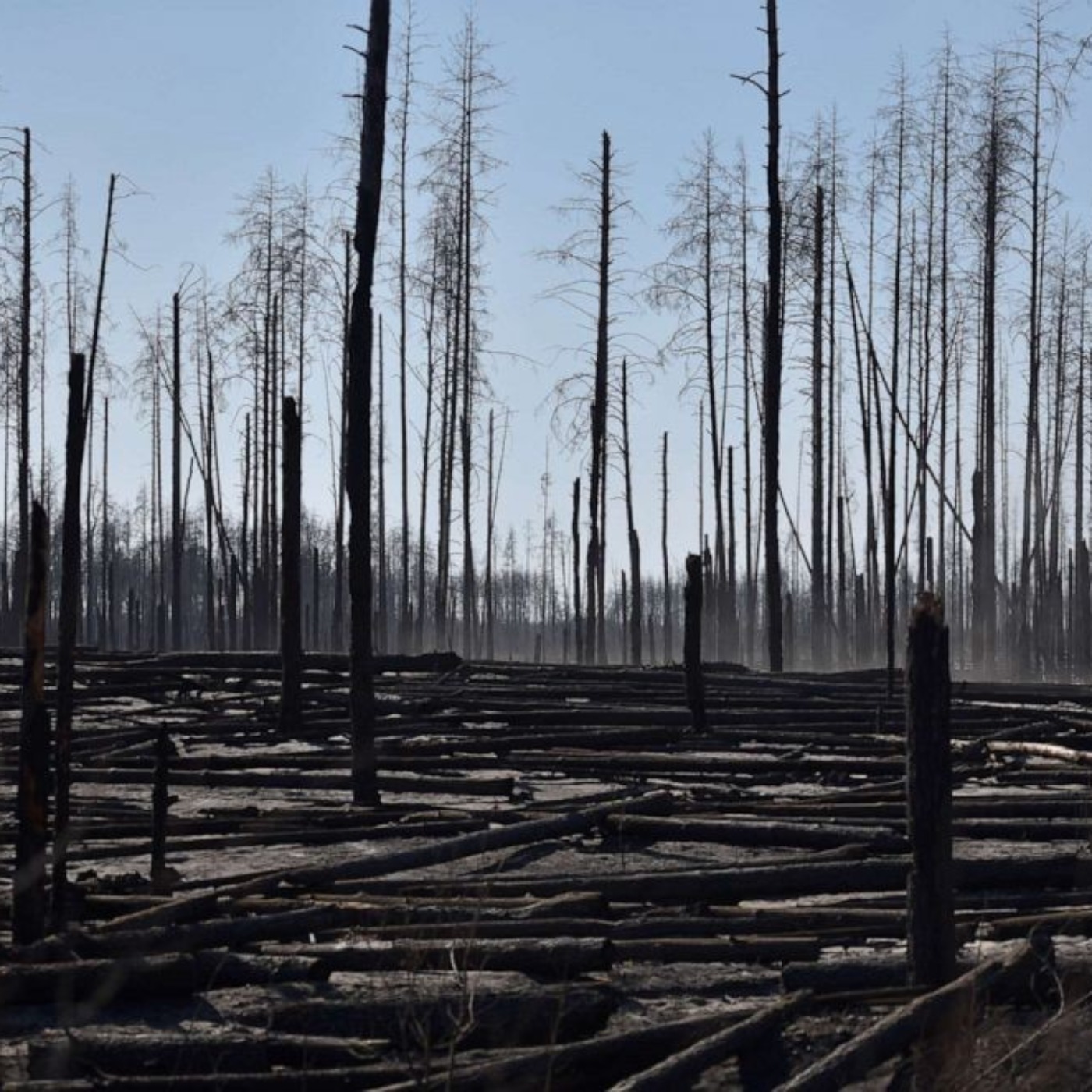
This week we check-in with frequent EK guest Brian Milakovsky to learn about the destruction of forests in Ukraine. Since Russia’s invasion of Ukraine in 2014, and its full-scale assault in 2022, war has destroyed much of the forests of the Seversky Donets Basin. These trees serve as a place of leisure, pride, identity, and economy for nearby residents. But Russian artillery, mines, and other ordnance have repeatedly ignited forest fires. The ecology of the region has been transformed, likely forever. How has the war accelerated the destruction of eastern Ukraine’s ecology? And what does this mean for the future? We also get an update on how Brian sees the war at the present moment, when at the time of recording, Putin and Trump were meeting in Alaska. It’s a dark time. And an even darker horizon approaches us.Guest:Brian Milakovsky is a forester who worked on conservation and development programs in Ukraine and Russia from 2009 to 2024. He presently resides in Bath, Maine and works for the New England Forestry Foundation. He is also an associate researcher with the Regional East European Fire Management Center in Kyiv, Ukraine. Hosted on Acast. See acast.com/privacy for more information.
From Great Fear to the Great Terror
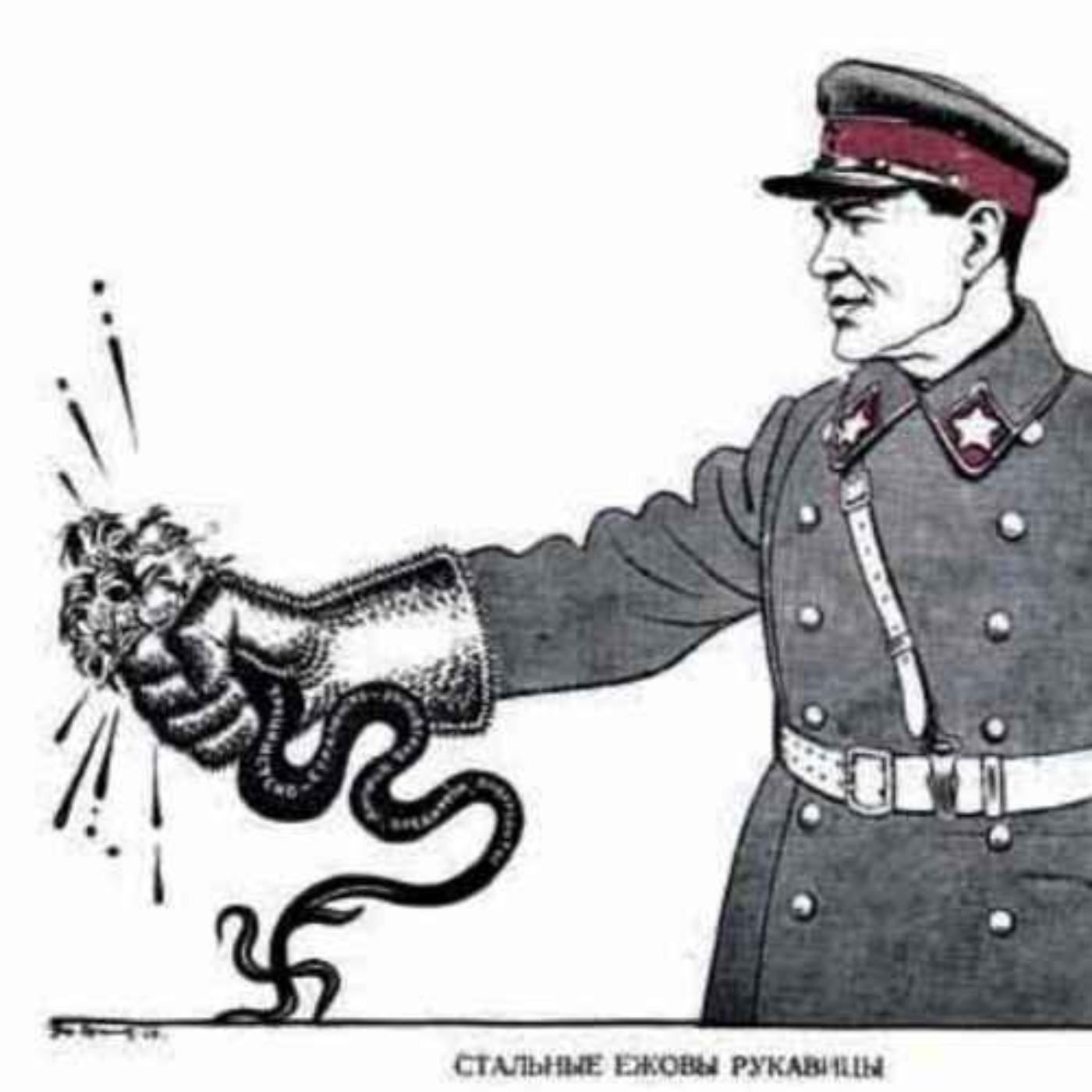
As frequent listeners know, my advisor and friend Arch Getty passed away from cancer a few months ago. I was recently in Los Angeles to attend his memorial. I got to catch up with fellow grad students and friends. One was James Harris, a close friend and collaborator with Arch. James is also one of the best Soviet historians around. After chatting with James, I was reminded that I interviewed him way back in 2016–about a year after I started the SRB Podcast. I decided to re-edit and release James’ interview about his book, The Great Fear. The book looks at how Soviet leaders were constantly afraid of invasion, uprisings, and dissent. James argues that this fear was an important driver of the regime’s use of violence and ultimately the Great Terror of 1937-38. So, in honor of seeing James and in memory of Arch, here’s another listen to the Great Fear.Guest:James Harris is a Senior Lecturer in Modern European History at Leeds University where he specializes in the history of Stalinism. James has published several books and articles on the Stalin period. He’s the author of The Great Fear: Stalin’s Terror in the 1930s published by Oxford University Press.Send us your sounds! PatreonKnotty News Hosted on Acast. See acast.com/privacy for more information.
Communists and NY's Hotel Workers Union
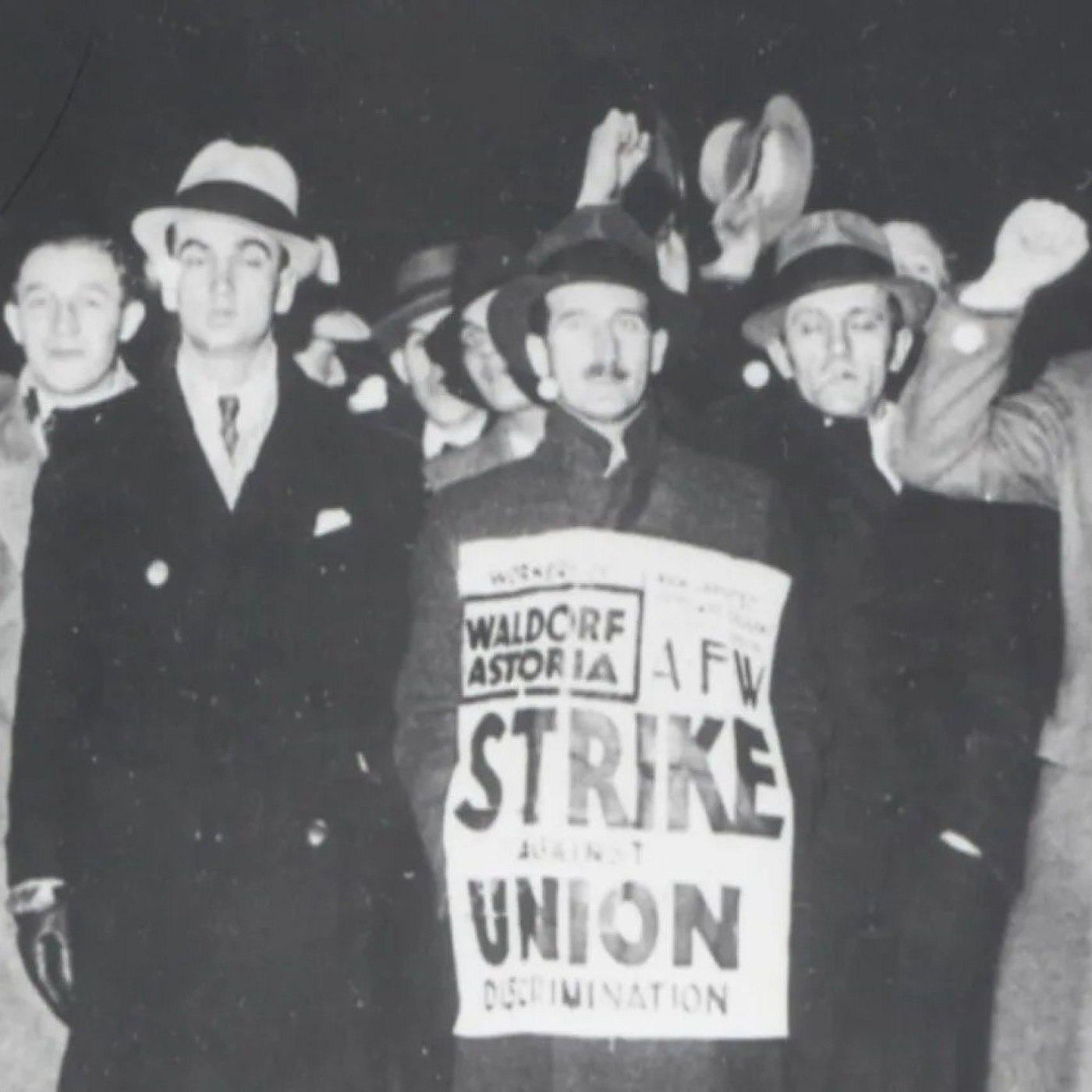
In 1912, a strike of 18,000 restaurant and hotel workers in New York City birthed the Hotel and Restaurant Employees International, a union representing tens of thousands of Manhattan’s service workers. The union still exists today as Local 6 of the Hotel and Gaming Trades Council, AFL-CIO and remains one of the NYC strongest unions. But why is the Eurasian Knot featuring a story about an American trade union? Because the history of the American labor movement in the early 20th century cannot be told without the Communist Party. That means the Soviet Union via the Communist International played an important role in shaping Local 6 in the 1920s and 1930s. How did the Russian Revolution reverberate through American labor? How did the Hotel and Restaurant Union navigate the various ideological and political shifts, to say nothing of the Red Scare? And what about the American communists like William Z. Foster? And what does Local 6 have to teach us today? The Eurasian Knot talked to one of Sean’s old Socialist Party comrades, Shaun Richman, about his book, We Always Had a Union: The New York Hotel Workers’ Union, 1912-1953, for some answers.Guest:Shaun Richman teaches labor history at SUNY Empire State University. He's an historian of U.S. labor and American Communism, with a particular focus on union organizing, the service sector and the American Federation of Labor. He teaches labor history at SUNY Empire State University"He’s the author of We Always Had a Union: The New York Hotel Workers’ Union, 1912-1953 published by University of Illinois Press.Send us your sounds! PatreonKnotty News Hosted on Acast. See acast.com/privacy for more information.
City Symphonies
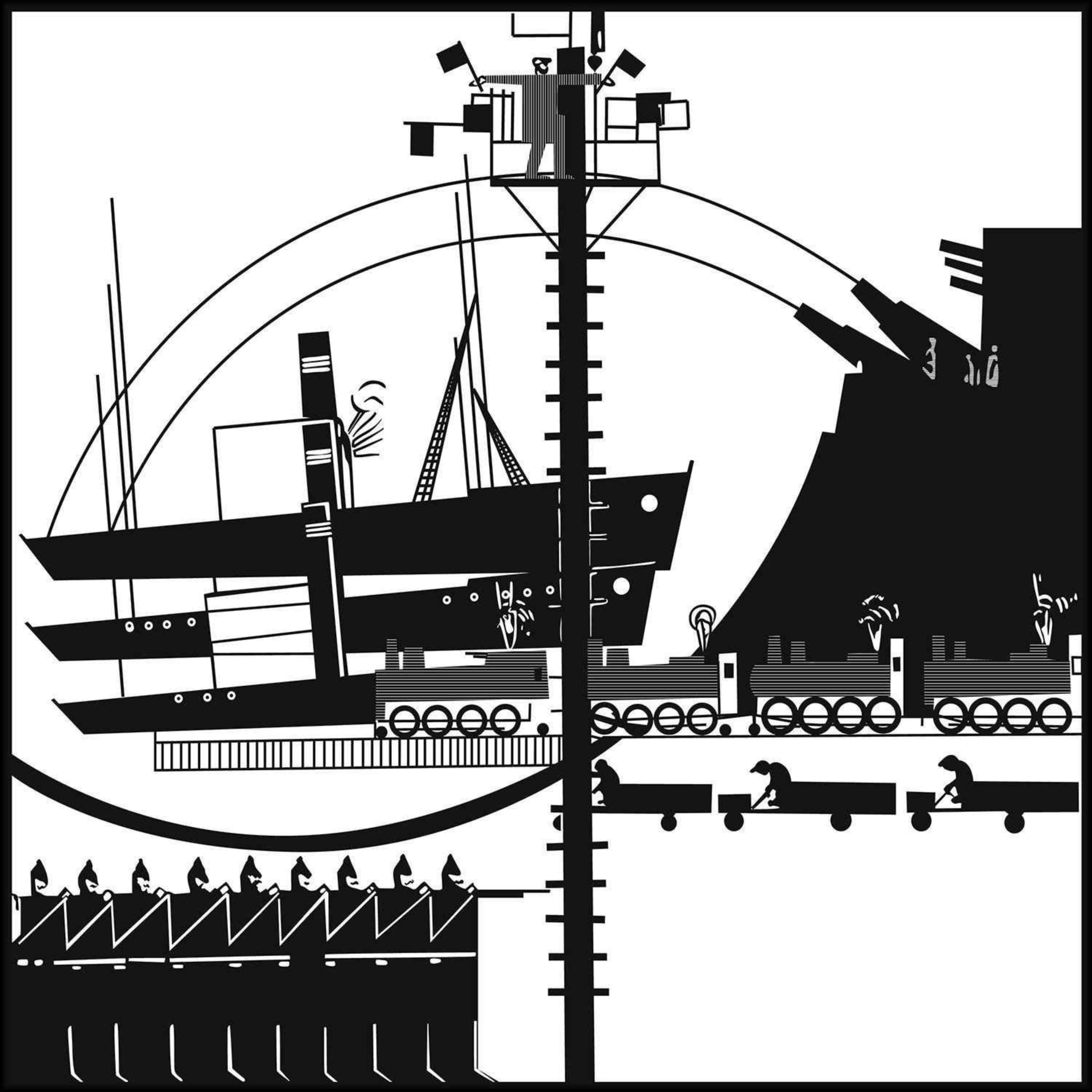
What does it mean for the city to be a symphony? True, city symphonies are a silent film genre best represented by Dziga Vertov and Walter Ruttmann. These early silent films tried to capture the “sound” of the city by editing images symphonically–to give the viewer a sense of the urban soundscape. But, as Daniel Schwartz explains, early 20th century avant-garde artists broadened the city symphony beyond the “silent” and into a full-fledged multimedia experiment. Some, like Luigi Russolo, pushed the boundaries between music and noise by incorporating new technology into music performance. Others, like Arseny Avraamov, reimagined the city as a giant living orchestra where its inhabitants were both producers and consumers of sound. While others, like Vertov, valorized the city into the natural habitat of a New Soviet Person and their labor. But what did a city symphony sound like? Especially when its composers left so few written instructions for conductors to recreate them? How does the city symphony speak to modernity itself? Intrigued, the Eurasian Knot talked to Daniel Schwartz about his book City Symphonies: Sound and the Composition of Urban Modernity, 1913–1931 published by McGill University Press.Guest:Daniel Schwartz is an associate professor in Russian and German Cinemas at McGill University. He’s the author of City Symphonies: Sound and the Composition of Urban Modernity, 1913-1931 published by McGill-Queen’s University Press. Featured clips in order of appearance:Luigi Russolo, “Reesveyo di una cheetà,” 1913.Arseny Avraamov, “Symphony of Sirens,”1922.Walter Ruttmann, “Weekend,” 1930.Vziga Vertov, “Enthusiasm: Symphony of the Donbas,” 1931. Hosted on Acast. See acast.com/privacy for more information.
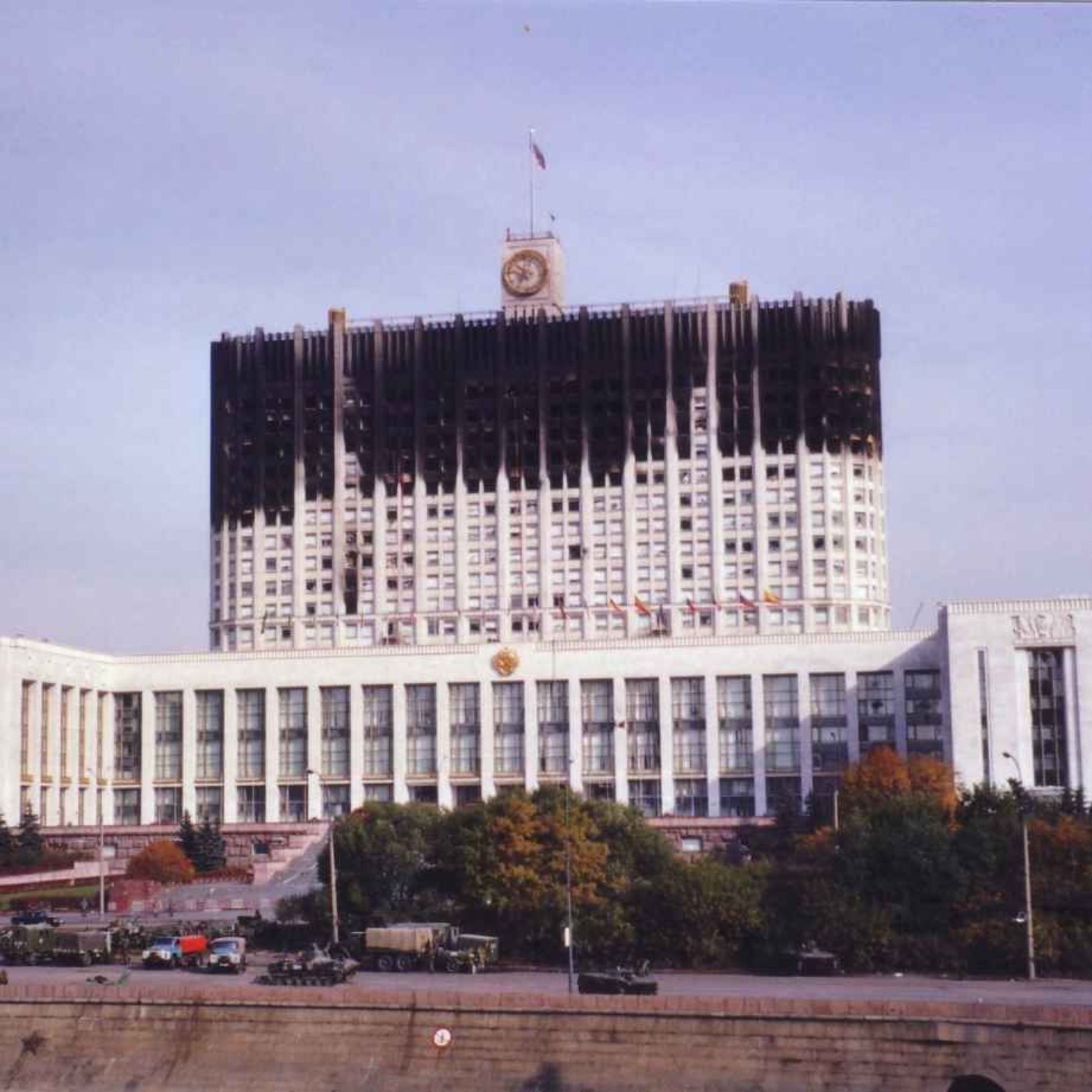
Russia's 1993 Constitutional Crisis
In early October 1993, tanks pummeled the Russian Duma in central Moscow. It was a dark mirror of just two years prior when Boris Yeltsin definitely climbed atop a tank and made history. Now, tanks were again Yeltsin’s historical instrument. Only this time, they were his. The 1993 Russian Constitutional Crisis was a turning point in the country’s post-Soviet transformation. The popular narrative was Russian Democrats repelling Russian nationalists and communists. The future vs. the past. And the future prevailed! It was a tight, clean story fit for the utopianism of the 1990s. In retrospect, however, it was the past that really won. Yeltsin’s constitutional power grab through the gun barrel set the first stones of Putinism. How should we understand this turning point? What was really going on? And how have these baby steps of Russian authoritarianism become a full-blown sprint? The Eurasian Knot turns to Jeff Hawn for some answers.Guest:Jeff Hawn is a graduate of American University School of International Service and is completing his PhD at London School of Economics. His dissertation addresses the history and consequences of the 1993 Constitutional Crisis and the emergence of modern Russia.Send us your sounds! PatreonKnotty News Hosted on Acast. See acast.com/privacy for more information.
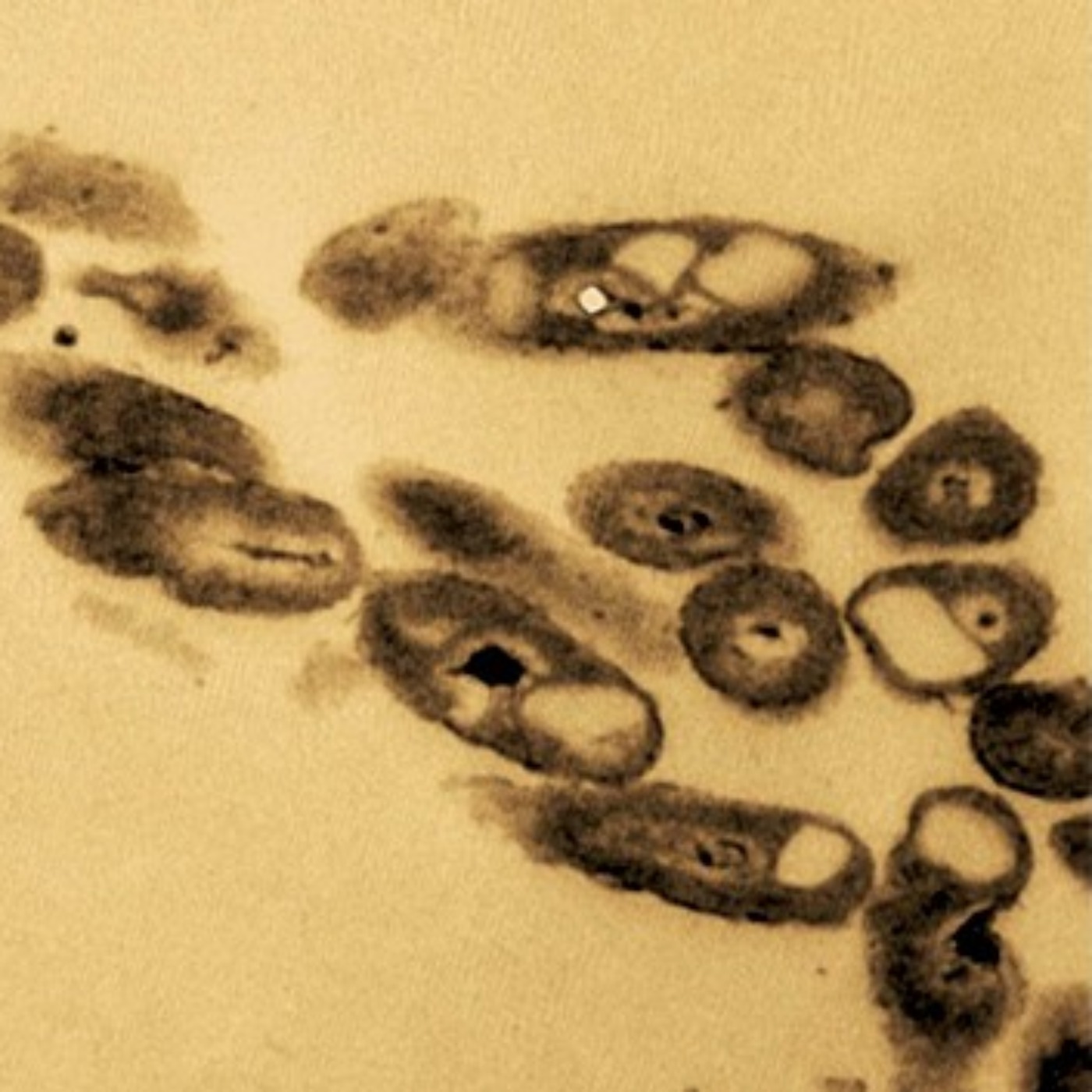
Anthropology of Oil
Yale anthropologist Doug Rogers visited Pitt back in April. The Eurasian Knot couldn’t resist pulling him into the studio. Doug was one of the earliest guests on the show. So it was about time to reconnect and have a wide ranging conversation about his work on oil and corporations in Russia. Now he’s looking into experiments with hydrocarbonoclastic bacteria–germs that eat oil. We survey Doug’s career. The pull of anthropology and the nexus of oil, corporations, and civil society in Russia. And how he went from there to the history of petroleum microbiology. Guests:Douglas Rogers is Professor of Anthropology at Yale University. He’s the author of two award-winning books: The Old Faith and the Russian Land: A Historical Ethnography of Ethics in the Urals and The Depths of Russia: Oil, Power, and Culture After Socialism both published by Cornell University Press.Send us your sounds! PatreonKnotty News Hosted on Acast. See acast.com/privacy for more information.

Green Cities in the USSR and Brazil
What makes a happy city? That is, what makes a city livable and responsive to humans’ physical, emotional and cultural needs? Over the last century, city planners have turned to the maintenance of green spaces within urban jungles to address these issues. In this final event for Pitt REEES’ Eurasian Environments series, the Eurasian Knot paired Maria Taylor and Roberta Mendonca De Carvalho to discuss green cities from two different contexts. Taylor researches mid-20th century efforts to green Soviet cities in response to rapid urbanization. De Carvalho studies the relationship between urbanization and environment in the Brazilian Amazon. How did city planners in the USSR and Brazil use green spaces to make cities more livable? What obstacles did they encounter? And how do these disparate contexts help us understand the global problem that pits people, city, and ecology against each other? Maria Taylor and Roberta Mendonca De Carvalho give us a trough of mental cud to crew on.Guests:Maria C. Taylor is an Assistant Professor in the Department of Landscape Architecture at Cornell University. Her research focuses on the history and theory of landscape, architecture, and urban planning, particularly in the Soviet Union. Roberta Mendonca De Carvalho is a Teaching Associate Professor in the Urban Studies Program at the University of Pittsburgh. Her current research interests embrace urbanization as a worldwide process and tries to understand how it unfolds at the local scale. Hosted on Acast. See acast.com/privacy for more information.
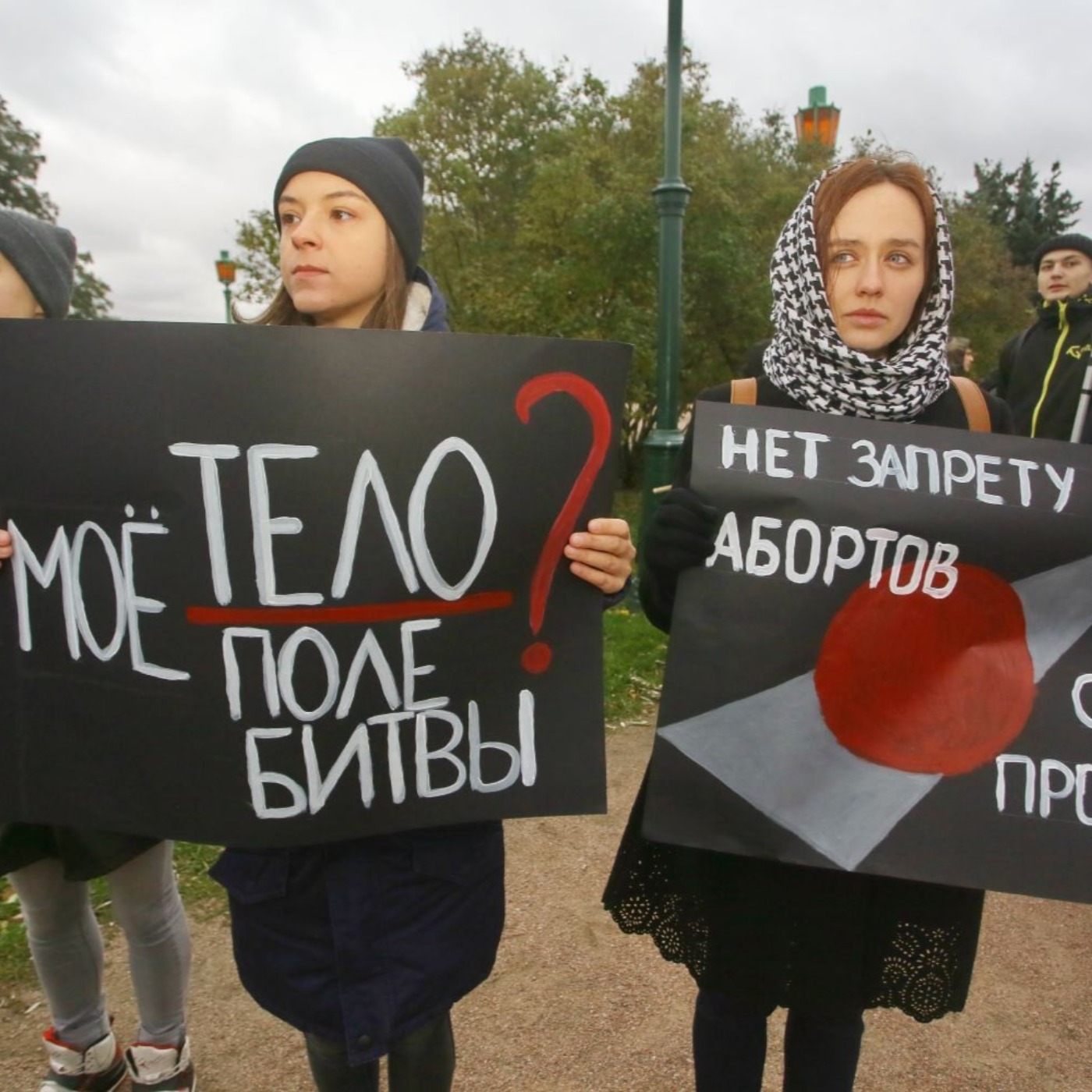
Abortion (Bio)politics in Russia
In the waning decades of the Soviet Union, abortion was the main form of birth control. For example, official statistics from the late 1970s report that there were 250-270 abortions per 100 live births. It’s an astounding number. It points to a key paradox of state socialism and reproductive health: Abortion in the USSR was widely available, but mainly because the state couldn’t provide basic contraceptives. But the collapse of the Soviet system didn’t produce many remedies–Women now had access to contraception, but the economic ravages of the 1990s led many families to postpone childbearing. Abortion numbers remained high to begin lowering in the last two decades. How has the Russian government and civil society addressed abortion, contraception, family planning and women’s reproductive rights and health? What role has Western feminism and the debate over abortion played in Russia? And where do the increasing restrictions of abortion in Russia fit within the worldwide struggle for women’s reproductive freedom? The Eurasian Knot posed these questions and more to Michele Rivkin-Fish in this timely and crucial issue in her new book, Unmaking Russia’s Abortion Culture: Family Planning and the Struggle for a Liberal Biopolitics published by Vanderbilt University Press.Guest:Michele Rivkin-Fish is Associate Professor of Anthropology at UNC-Chapel Hill. Her research examines reproductive politics in Soviet and post-Soviet Russia. She’s the author of Women’s Health in Post-Soviet Russia: The Politics of Intervention. Her most recent book is Unmaking Russia’s Abortion Culture: Family Planning and the Struggle for a Liberal Biopolitics is published by Vanderbilt University Press.Send us your sounds! PatreonKnotty News Hosted on Acast. See acast.com/privacy for more information.
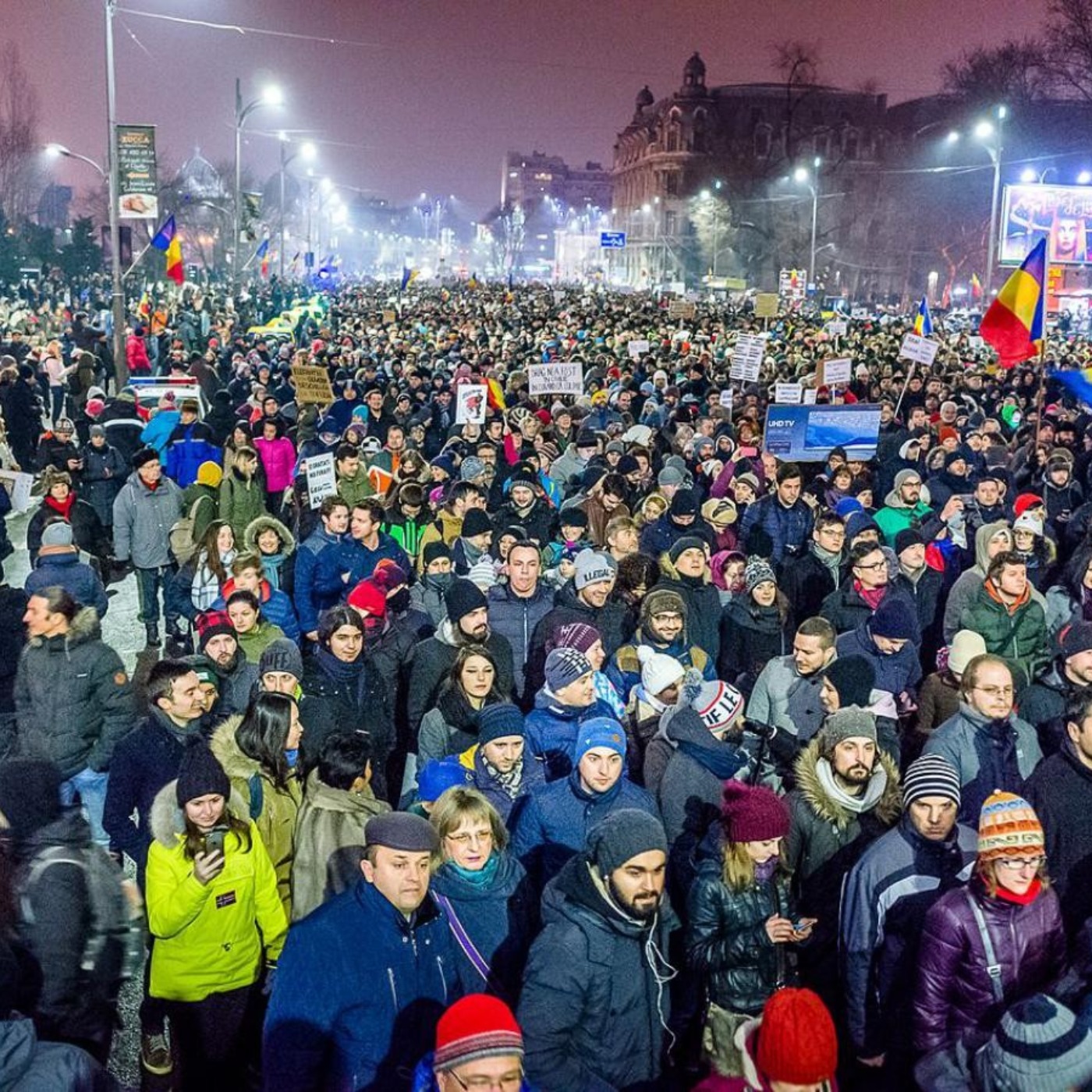
Romanian Presidential Elections
On May 17, the centrist, pro-EU Nicusor Dan narrowly defeated George Simion, a far-right populist, in Romania’s Presidential Election. The bout was the latest in a string of contests that stoked fears for European liberal democracy, the rise of right-wing populism, and Russian meddling. Media inside and outside Romania leaned into the danger a Simion victory posed, and with Dan’s victory, how Romania can serve as the latest European democracy refusing to slide backward. But does this narrative really capture Romania’s political atmosphere? What were Simion’s and Dan’s base of support? And does Simion’s defeat signal the death knell of the far right in Romania or merely a brief setback? And where does Viktor Orban and Donald Trump figure in all this? To get some clarity, the Eurasian Knot turned to Stefano Bottoni and Tamás Kiss for their insight and analysis of the Romanian political field before and after this consequential vote.Special Co-Host:Zsuzsánna Magdó is Associate Director at the University of Pittsburgh’s Center for Russian, East European, and Eurasian Studies where she manages regional studies programs to support interdisciplinary scholarship and public education on the world regions of Central and Eastern Europe, Russia, and Central Eurasia.Guests:Stefano Bottoni is Associate Professor in the Department of History, Archaeology, Geography, and Performing Arts at the University of Florence. He is the author of several books. His most recent book, Orbán: A European Despot, is forthcoming in English and German.Tamás Kiss is Senior Researcher at the Romanian Institute for Research on National Minorities. He is the author of several books on ethnic relations in Romania and Hungary. He’s the editor of Unequal Accommodation of Minority Rights: Hungarians in Transylvania published by Palgrave.Send us your sounds! PatreonKnotty News Hosted on Acast. See acast.com/privacy for more information.
Remembering J. Arch Getty
Last week, our friend, mentor, teacher, and comrade, J. Arch Getty, died from his battle with lung cancer. As a way to remember him, here’s an interview I did with Arch in 2017 about his career and scholarship.Guest:J. Arch Getty was a Professor Emeritus of History at the University of California, Los Angeles. Books discussed in this interview:Origins of the Great Purges: The Soviet Communist Party Reconsidered, 1933–1938, Cambridge University PressThe Road to Terror: Stalin and the Self-Destruction of the Bolsheviks, 1932-1939, Yale University Press.Yezhov: The Rise of Stalin's 'Iron Fist', Yale University Press.Practicing Stalinism: Boyars, Bolsheviks and the Persistence of Tradition, Yale University Press. Hosted on Acast. See acast.com/privacy for more information.
Muslim Refugees in the Ottoman Empire
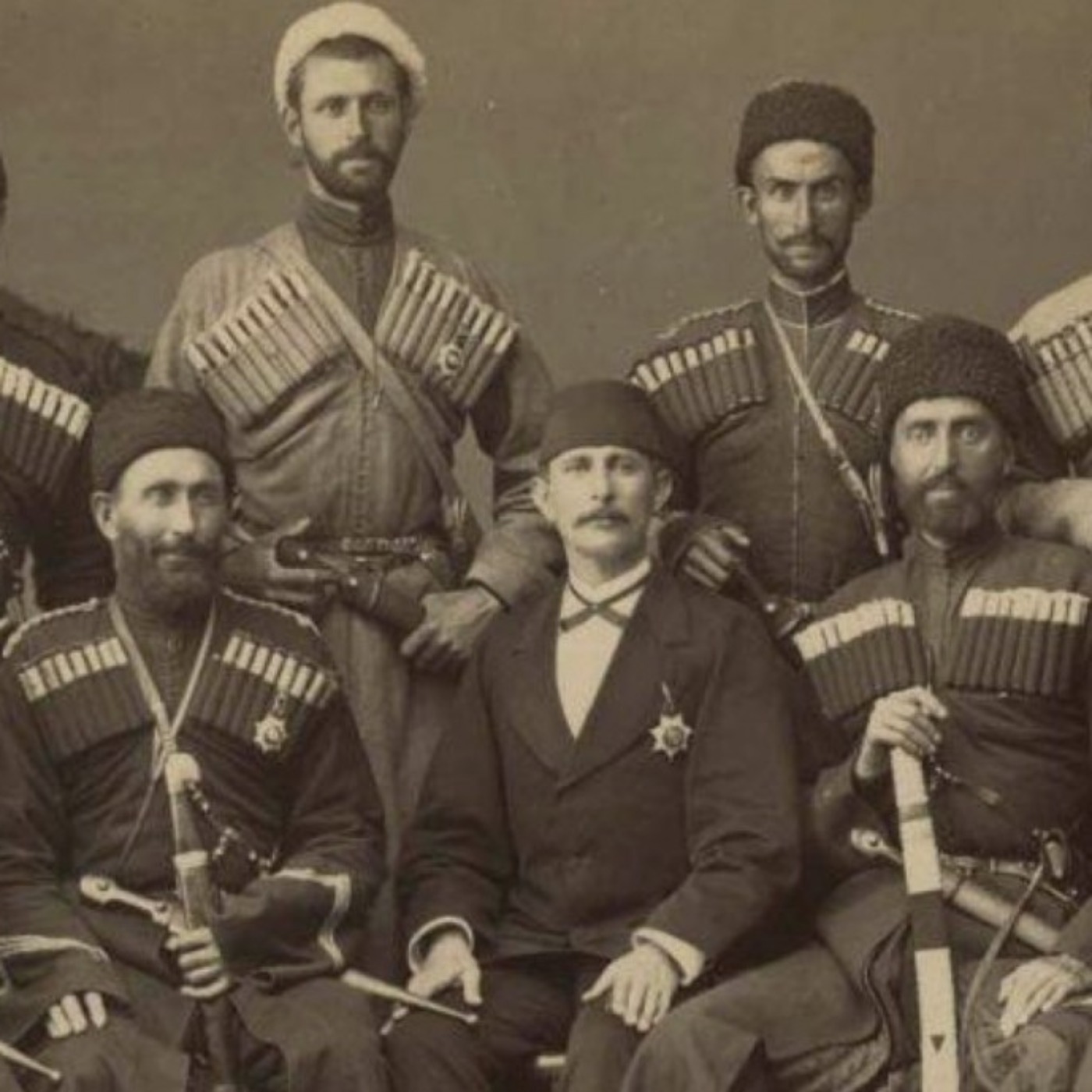
Between the 1850s and World War I, about one million North Caucasian Muslims fled to the Ottoman Empire. Some, like the Circassians, ran from a Russian perpetrated genocide. Others, like Chechens, Dagestanis, and others the violence of Russian colonization. Obligated by faith to take these refugees, the Ottoman Empire scattered them throughout the Ottoman Balkans, Anatolia, and the Levant, in many cases to balance against its Christian subjects. Most of these villages still exist today, including the capital of Jordan, Amman. What was this experience like for these refugees before the international legal regime of refugeedom? Why did they flee the Russian Empire and what was life like with the Ottomans? How did the Ottoman empire manage this influx of Muslim Others? And how did refugees contribute to the end of the Empire? Knowing nothing of this fascinating history, the Eurasian Knot spoke to Vladimir Hamed-Troyansky about his new book Empire of Refugees North Caucasian Muslims and the Late Ottoman State published by Stanford University Press.Guest:Vladimir Hamed-Troyansky is an Assistant Professor of Global Studies at the University of California, Santa Barbara. His research examines Muslim refugee migration and its role in shaping the modern world. He is the author of Empire of Refugees: North Caucasian Muslims and the Late Ottoman State published by Stanford University Press.Send us your sounds! PatreonKnotty News Hosted on Acast. See acast.com/privacy for more information.
Migration and Climate Change
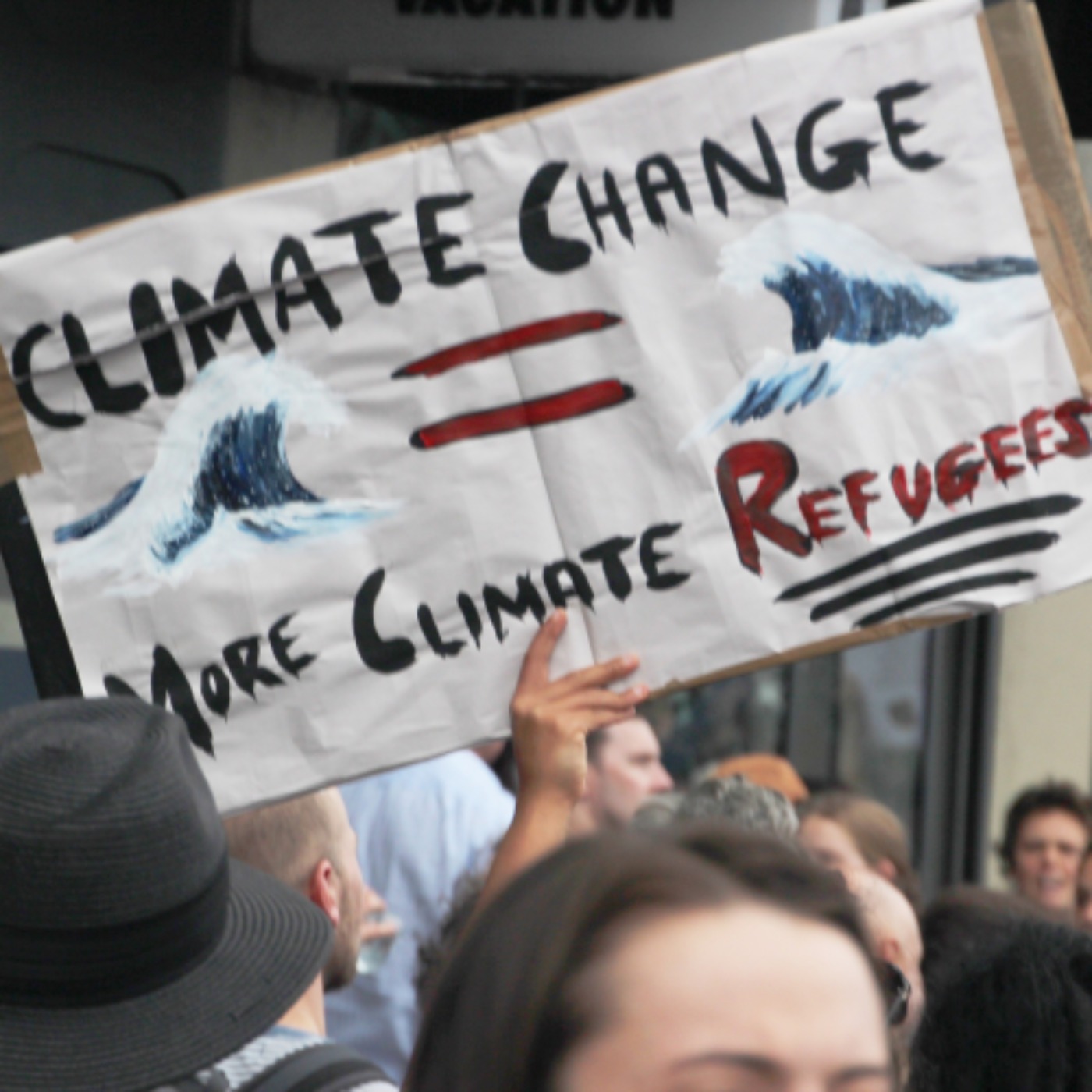
Few migrants report climate change as a specific push to leave their home. Climate change is more an extra add-on to existing precarity. According to the World Bank, extreme weather, rising sea levels, violence, and resource scarcity will drive 216 million people to seek refuge by 2050. There’s even a buzzword for it: “climigration.” How and why do people move? To what extent is “migration” a business? And how do we accept and integrate migrants into bodily politics rife with ideological polarization, xenophobia, and nationalism? In this fifth event in our series, Eurasian Environments, the Eurasian Knot joined up with Daniel Briggs and Michael Goodhardt to discuss migration and climate, and specifically the trials people go through to find a safer, more prosperous present and future. Guests:Daniel Briggs is a Professor of Criminology and Sociology at Northumbria University. He is the author of several books. His most recent are The New Futures of Exclusion: Life in the Covid-19 Aftermath and Sheltering Strangers: Critical Memoirs of Hosting Ukrainian Refugees published by Policy Press.Michael Goodhart is Professor of Political Science and of Gender, Sexuality, and Women's Studies at the University of Pittsburgh. He is the author of many articles and books. His most recent book is Injustice: Political Theory for the Real World.Send us your sounds! PatreonKnotty News Hosted on Acast. See acast.com/privacy for more information.
Birobidzhan
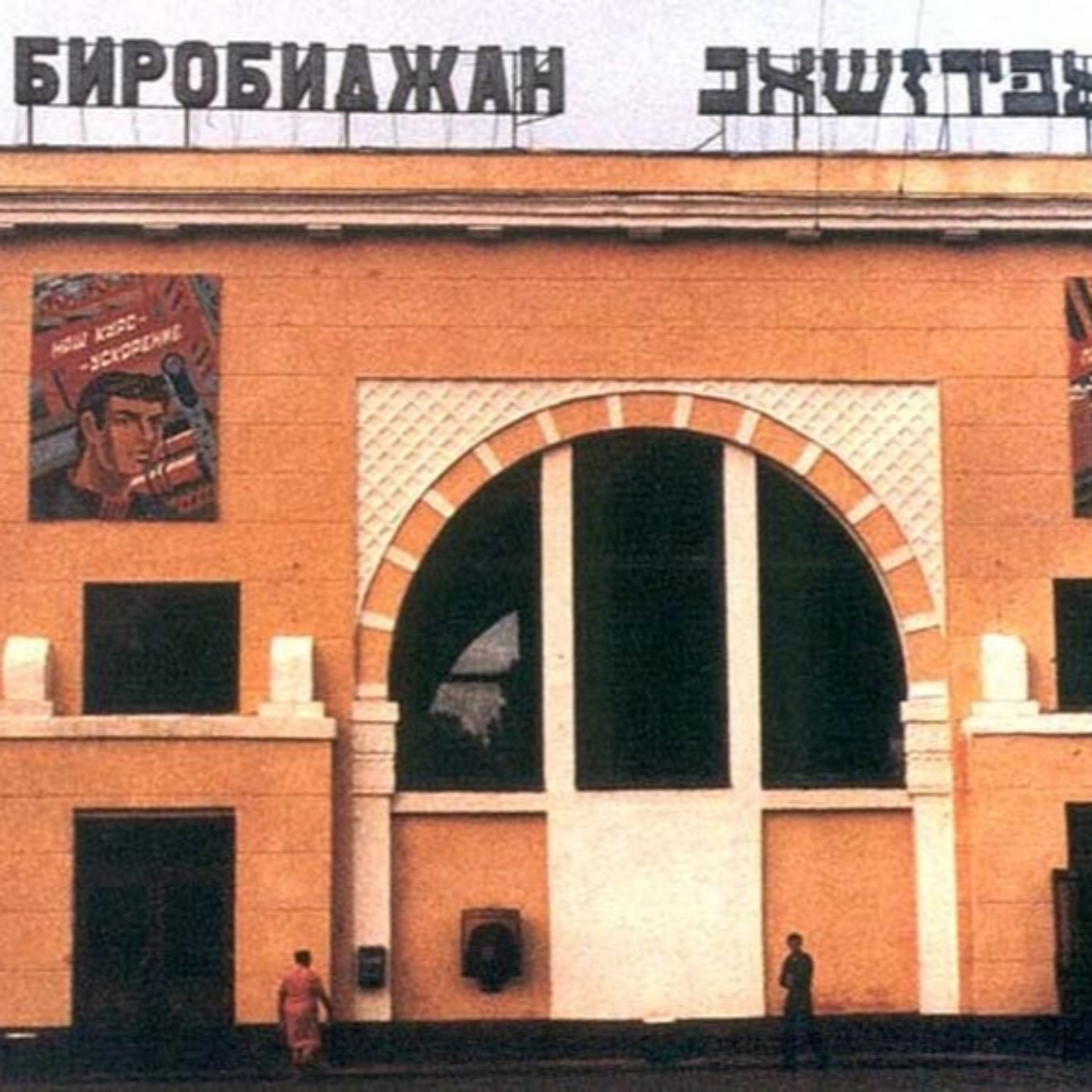
Jews presented a particular national problem in the Soviet Union. Though seen as one of the many oppressed minorities in the Russian Empire, there were also a people without a national territory. The lack of Jewish “homeland” in the Soviet Union posed a theoretical problem as well. As Stalin declared, “a common territory is one of the characteristic features of a nation.” How then can Jews be a nation without a territory? Well, you create one. Enter Birobidzhan–an bold experiment to create a Jewish nation out of whole cloth in Siberia. But why in Siberia? Why did Jews settle there? What did they find? Birobidzhan was a failure by many measures. So what is its place in Jewish history? To get answers, the Eurasian Knot turned to Gennady Estraikh to talk about his short history of this unique chapter in Jewish history. Guest:Gennady Estraikh is an Emeritus Professor of Hebrew and Judaic Studies at New York University. He has written and edited numerous books, including most recently Jews in the Soviet Union: After Stalin, The History of Birobidzhan: Building a Soviet Jewish Homeland in Siberia and Yiddish Literature under Surveillance: The Case of Soviet Ukraine published by Lexington Books.Send us your sounds! PatreonKnotty News Hosted on Acast. See acast.com/privacy for more information.
Cold War Pen Pals
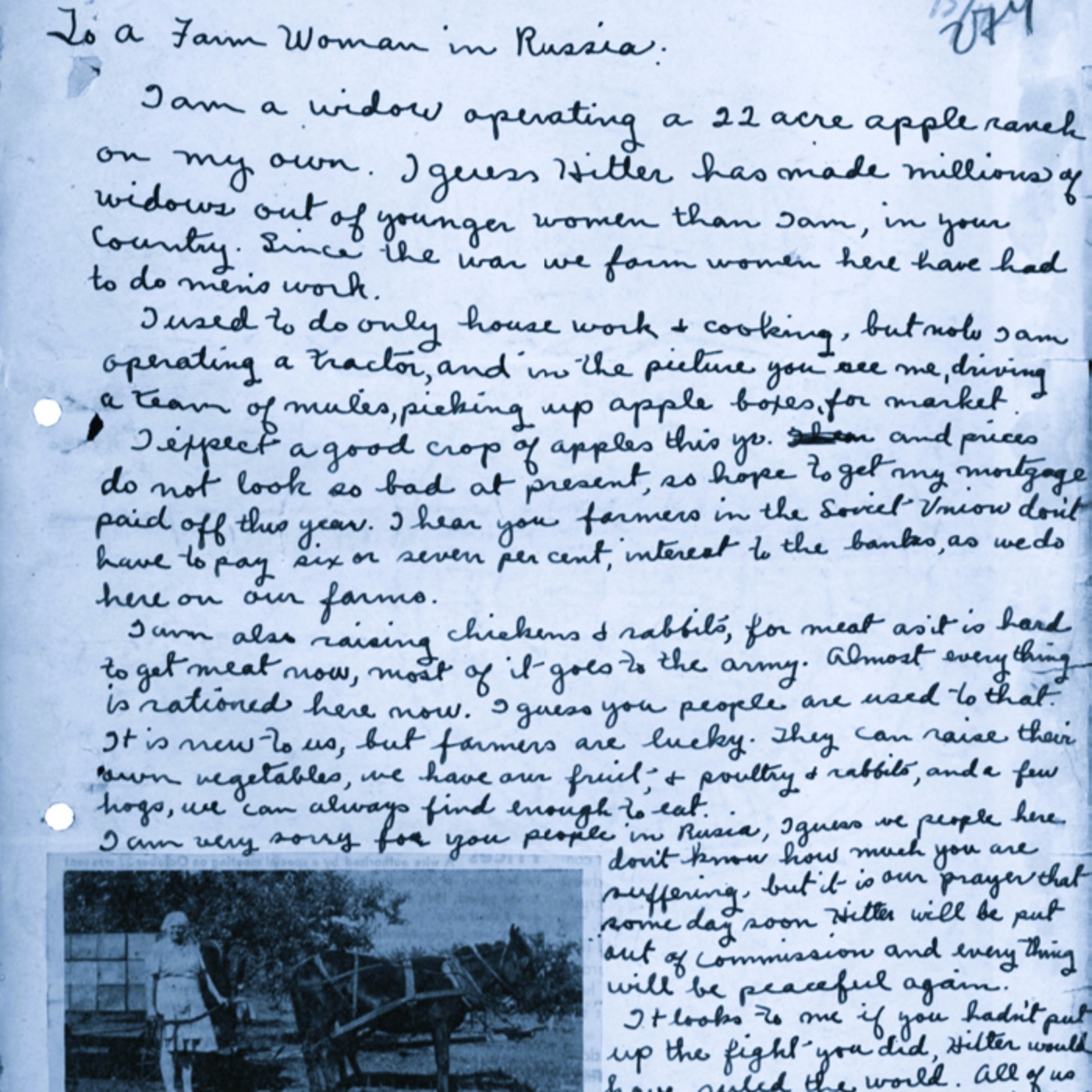
During WWII, the Soviet Women’s Antifascist Committee started an experiment–a pen pal campaign with American women to promote the friendship between the United States and the USSR. The program began with fits and starts but eventually gained traction. So much so it continued into the early Cold War even as relations between the two countries quickly soured. Authorities on both sides considered the contact between women fairly safe. American and Soviet women corresponded about the legacy of the war, marriage, family, career, as well as more Cold War topics. Some of these pen pals even lasted several years. What were these intimate exchanges like? What did Soviet and American women counsel each other on? And what did they learn about each other and themselves? The Eurasian Knot wanted to learn more about this fascinating moment in Soviet-American relations and its meaning within the larger Cold War. So, we turned to Alexis Peri to talk about her fascinating new book, Dear Unknown Friend: The Remarkable Correspondence between American and Soviet Women published by Harvard University Press.Guest:Alexis Peri is Associate Professor of History at Boston University. Her first book, The War Within: Diaries from the Siege of Leningrad, won the Pushkin House Book Prize and was named in the Wall Street Journal as one of the ten best books on the Soviet home front. Her new book is Dear Unknown Friend: The Remarkable Correspondence between American and Soviet Women published by Harvard University Press.Send us your sounds! PatreonKnotty News Hosted on Acast. See acast.com/privacy for more information.

Ukraine in the Global Food System
Did you know that Ukraine is the fourth largest corn exporter globally? This is not the beginning of a Soviet joke. . . Ukraine plays a crucial role on the world food market. About sixty percent of its exports are agricultural products with destinations in Europe, Asia, and Africa. Ukraine also accounts for around one-sixth of the world wheat and barley markets and a staggering half of the world’s supply of sunflower oil. But Ukrainian agribusiness is under stress. Soviet and post-Soviet legacies abound. Climate change and depleted soil pose long term obstacles. And Russia’s invasion has only increased the calamity thanks to destruction, theft, and environmental damage. How do things look at the moment? In the fourth event in our Eurasian Environments series, the Eurasian Knot spoke to Susanne Wengle and Natalia Mamonova about Ukraine’s past and present place in the global food system, the impact of the war, and the prospects of renewal and recovery. Guests:Susanne Wengle is professor of Russian and Eurasian studies at Uppsala University and associate professor of political science at the University of Notre Dame. Her most recent book is Black Earth, White Bread: A Technopolitical History of Russian Agriculture and Food published by the University of Wisconsin Press.Natalia Mamonova is a senior researcher at RURALIS - Institute for Rural and Regional Research, Norway. Her current research at RURALIS mainly focuses on the impact of the war in Ukraine on the Ukrainian and global food systems.Send us your sounds! PatreonKnotty News Hosted on Acast. See acast.com/privacy for more information.
Orthodoxy's Social Gospel
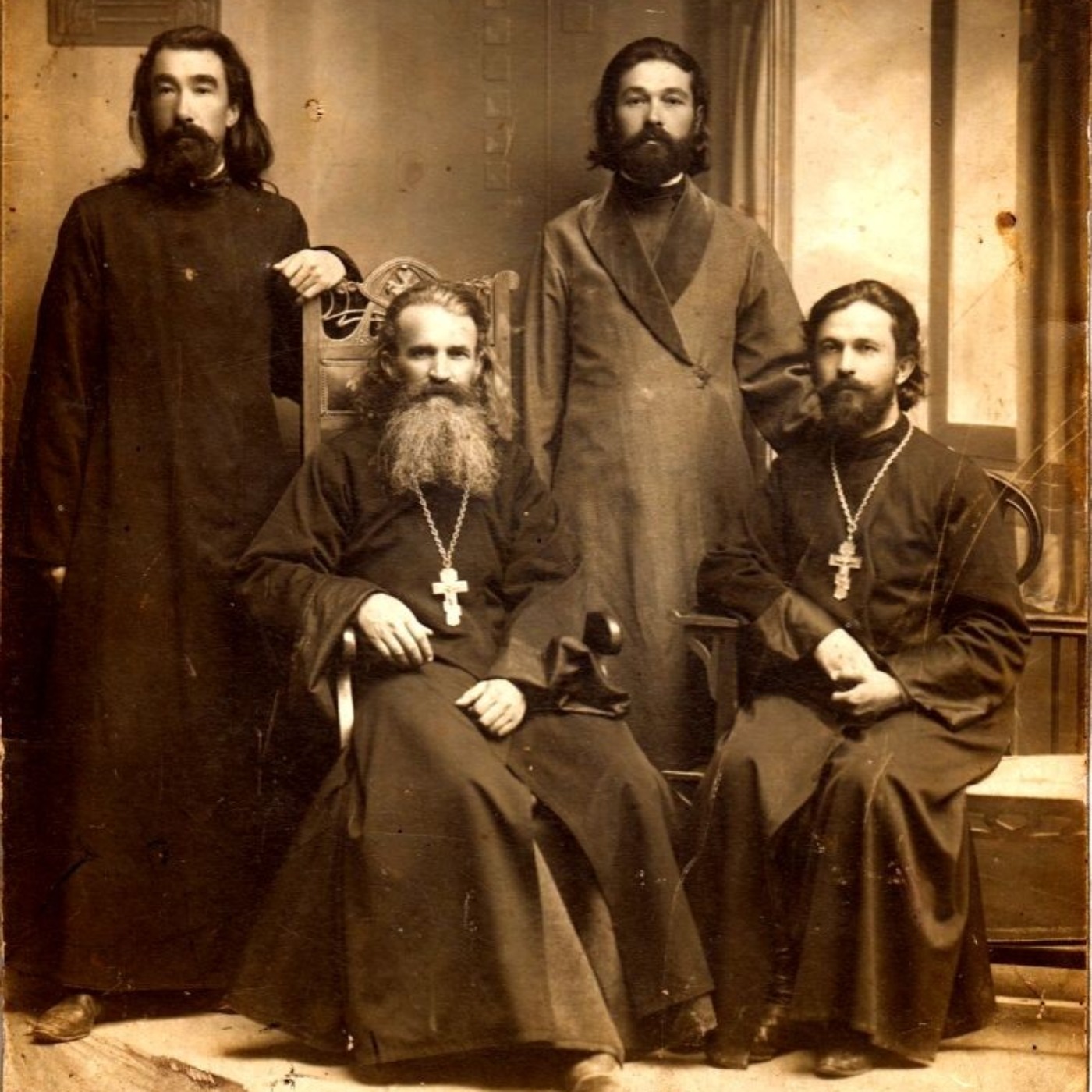
In his memoir of life as a parish Orthodox priest in the 19th century, I. S. Belliustin wrote that the clergy was “humiliated, oppressed, downtrodden, they themselves have already lost consciousness of their own significance.” This is just one of several damning portraits Belliustin paints of his fellow holymen and the flock they tended. It’s an image that stuck, even among historians. But Daniel Scarborough says there’s another, brighter side to the story. Many Russian Orthodox parish priests also preached the social gospel. They served as mediators and informants between the state and peasantry, carried out social relief, taught literacy, and addressed other social ills. The most famous being Father Gapon, the priest that sparked the 1905 Revolution. Who were these priests? What social work did they do? And how did their actions intersect with the growing revolutionary movement in Imperial Russia? The Eurasian Knot sat down with Daniel Scarborough during a recent trip to Pittsburgh to find out more.Guest:Daniel Scarborough is an Associate Professor of Russian history and religion at Nazarbayev University. His interests include the religious and intellectual history of late imperial Russia, the local history of Moscow and Tver, and Russia’s Silver Age. He’s the author of Russia’s Social Gospel: The Orthodox Pastoral Movement in Famine, War, and Revolution published by University of Wisconsin Press.Send us your sounds! PatreonKnotty News Hosted on Acast. See acast.com/privacy for more information.
Kicking the Hydrocarbon Habit
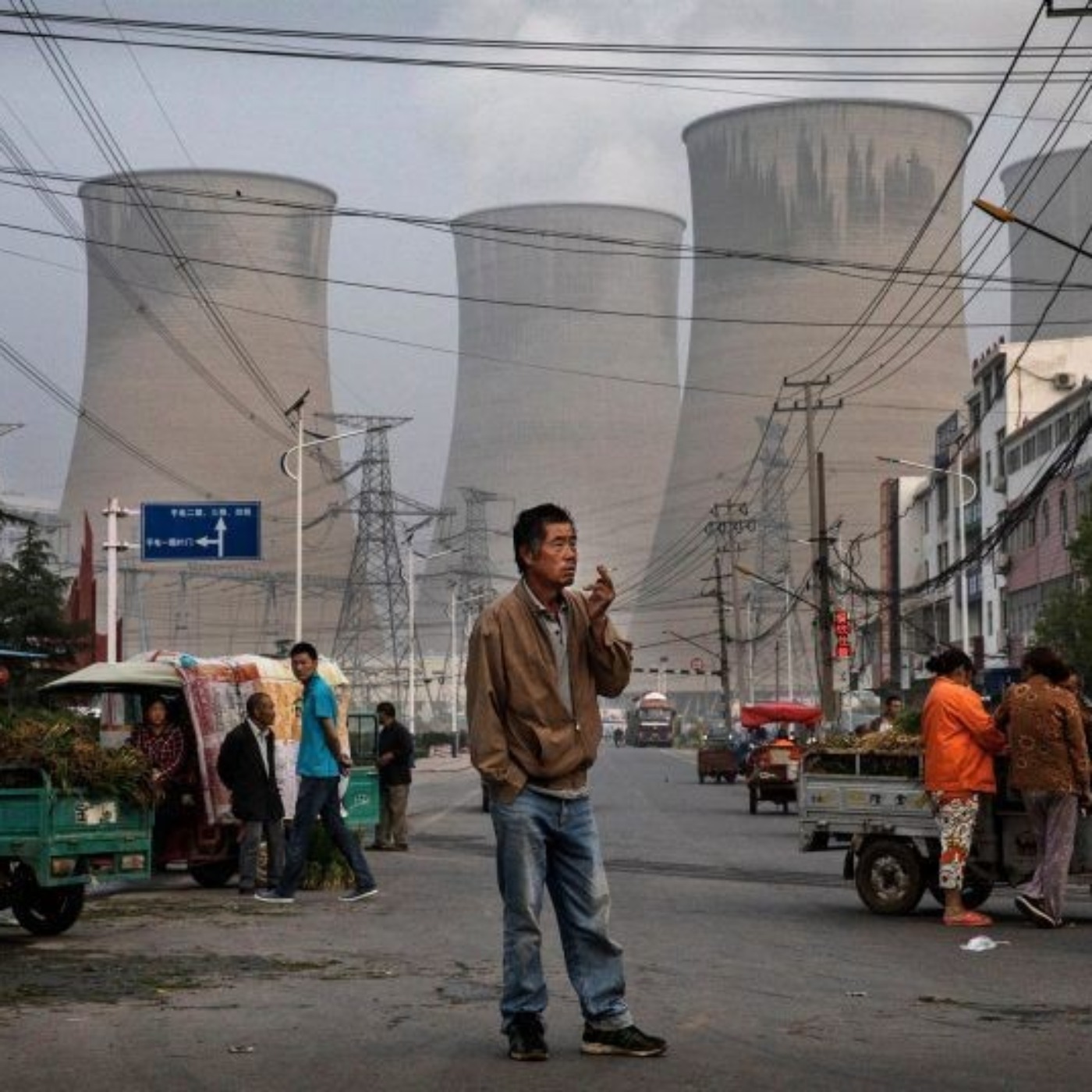
One daunting challenge to addressing climate change is to kick our addiction to hydrocarbons. But this is easier said than done. Hydrocarbons remain the fuel of modernity. And a transition to renewable energy requires massive state intervention. How do we get from our carbon-based present to a green future? Especially in regions like Eastern Europe and Chin, that still rely heavily on oil, gas and coal. In this third event in our series, Eurasian Environments, the Eurasian Knot has paired Pawel Cyzyak, an expert on energy in Eastern Europe, and Zhaojin Zeng, an economic historian of China, to discuss the legacies of state socialist economies, the challenges of transitioning to renewables, their past and present reliance on Russia, the role of geopolitics, and how a turn to EVs presents different challenges, especially as electricity is still generated by coal. Guests:Zhaojin Zeng is an Assistant Professor in the Department of History, Philosophy and Geography at Texas A&M University. His first book project is “Engineering Modern China: Industrial Factories and the Transformation of the Chinese Economy in the Long Twentieth Century.”Pawel Czyzak is an economist, engineer, expert on climate and energy policy, and author of several dozen publications on energy transformation in Europe. He is currently associated with the global energy think-tank Ember. As a consultant he has advised, among others, the largest European energy companies and the World Bank. He’s also an aspiring farmer.Send us your sounds! PatreonKnotty News Hosted on Acast. See acast.com/privacy for more information.
Seizing the Donbas
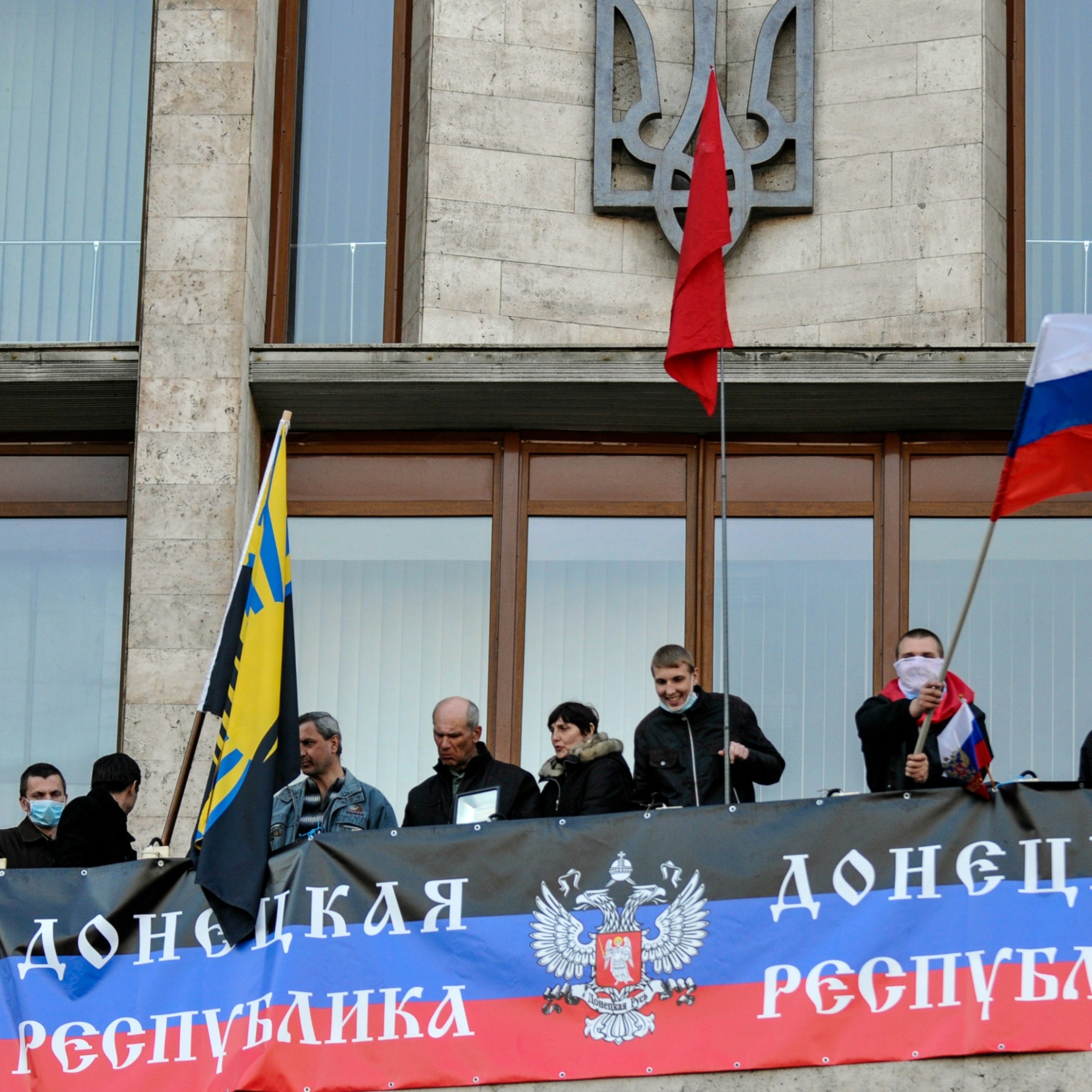
In 2014, in the wake of the Maidan in Kyiv and Russia’s annexation of Crimea, small groups of Russian-backed militias began seizing towns in the Donbas. The militias quickly declared the creation of two independent republics, the Donbas People’s Republic (DNR) and the Luhansk People’s Republic (LNR). How did this happen? And so quickly? Was it all the work of Russian agents? Or was there some local support? These are just a few of the questions Serhiy Kudelia has been asking for the last decade. Now he has answers. While there was grassroots support for separatism, it was quite thin and reliant on local officials nimbly choosing between opposition and collaboration. But first and foremost, the viability and survival of the DNR and LNR relied on Russia–for material and financial support. Russian agents worked to keep running or build new state structures, repel Ukrainian efforts to retake the region by force, and keep the population under control. The Eurasian Knot talked to Kudelia about his new book Seize the City, Undo the State: The Inception of Russia’s War on Ukraine to learn about the complexities behind Russia’s seizure of the Donbas and how it set the stage for its full-scale invasion of Ukraine in February 2022. Guest:Serhiy Kudelia is an associate professor of political science at Baylor University where he teaches and researches political violence, state-building and Eastern European politics. He also frequently comments on Ukrainian politics and US-Ukrainian relations in Ukrainian and Western media. His new book is Seize the City, Undo the State: The Inception of Russia’s War on Ukraine published by Oxford University Press. Hosted on Acast. See acast.com/privacy for more information.
Soviet Modernity
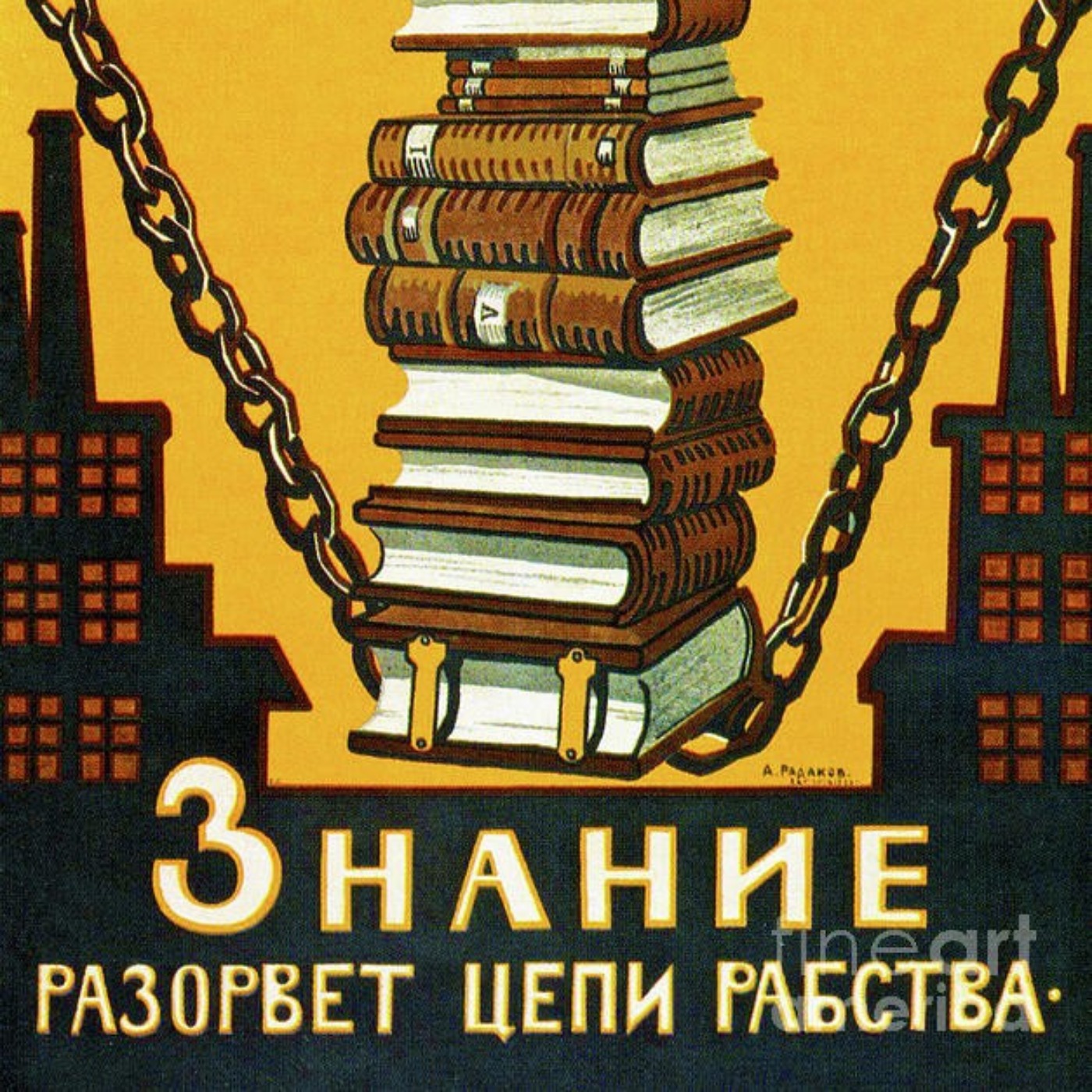
Crucibles of Power: Smolensk under Stalinist and Nazi Rule Showcasing the Great Experiment: Cultural Diplomacy and Western Visitors to the Soviet Union, 1921-1941Crossing Borders: Modernity, Ideology, and Culture in Russia and the Soviet UnionMichael David-Fox began writing Soviet history in a dynamic period. The Soviet Union had just collapsed, archives were flung wide open, and scholars began exploring new ways to conceptualize the Soviet century. And you can read this in David-Fox’s work–a bricolage of historiography, history of knowledge, cross-cultural exchange, politics, power, and the nature of the modern age. As one of founds of Kritika, he’s made his mark on the field. The Eurasian Knot talked to David-Fox about his career, his driving concepts and methods, and the particularities of Soviet modernity. Guest:Michael David-Fox is the Director of the Center for Eurasian, Russian, and East European Studies at Georgetown University and Professor in the School of Foreign Service and Department of History. He is founding and executive editor of Kritika: Explorations in Russian and Eurasian History and author of several books on Soviet history. His most recent book is Crucibles of Power: Smolensk under Stalinist and Nazi Rule published by Harvard University Press.Books discussed in this episode: Revolution of the Mind: Higher Learning among the Bolsheviks, 1918–1929.Crossing Borders: Modernity, Ideology, and Culture in Russia and the Soviet Union. Showcasing the Great Experiment: Cultural Diplomacy and Western Visitors to the Soviet Union, 1921-1941. Crucibles of Power: Smolensk under Stalinist and Nazi Rule. Hosted on Acast. See acast.com/privacy for more information.
Terror and Democracy in the Soviet Union
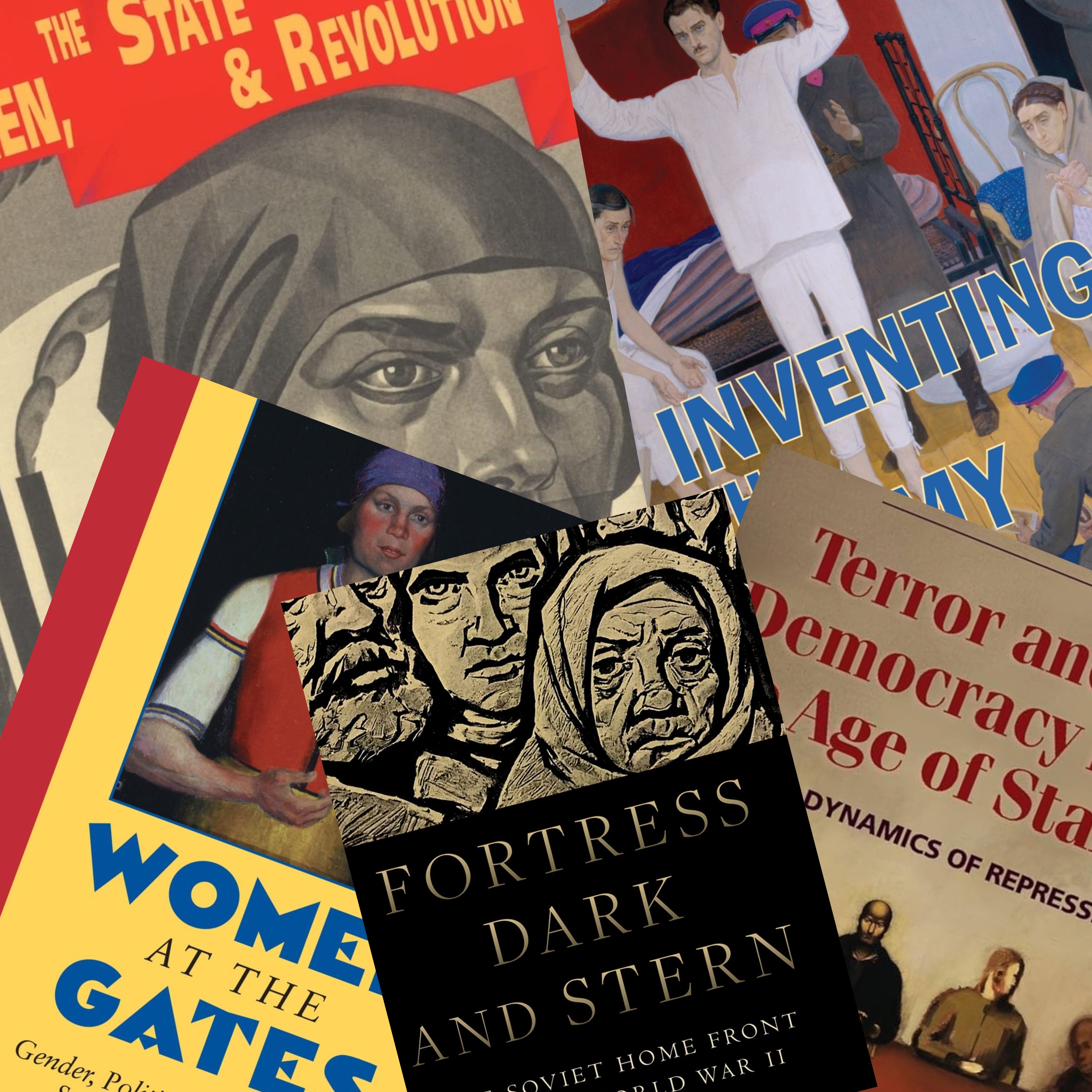
Wendy Goldman has researched and written about the Soviet Union for almost 40 years. And her topics have been wide ranging– women, feminism, revolution, labor, political violence, war and survival. But if there is one throughline in her work, it is social history. Goldman is primarily concerned with the experience of working people. Their life worlds. Their trials and tribulations. Their agency in the construction of the Soviet system. Warts and all. The Eurasian Knot spoke to Wendy Goldman in her office at Carnegie Mellon University to hear about her experience as a historian, a woman, and a social historian and how this has shaped her understanding of Soviet socialism, politics, and history.Guest:Wendy Goldman is Wendy Goldman, Paul Mellon Distinguished Professor of History, is a social and political historian of Russia. She’s the author of several books on Soviet history. Her most recent work (with Donald Filtzer) is Fortress Dark and Stern: The Soviet Home Front during World War II published by Oxford University Press.Books discussed in this episode:Women, State, and Revolution: Soviet Family Policy and Social Life, 1917-1936.Women at the Gates: Gender and Industry in Stalin's Russia. Terror and Democracy in the Age of Stalin: The Social Dynamics of Repression.Inventing the Enemy: Denunciation and Terror in Stalin’s Russia.Fortress Dark and Stern: The Soviet Home Front during World War II.Send us your sounds! PatreonKnotty News Hosted on Acast. See acast.com/privacy for more information.
Withering Water in Central Asia and East Africa
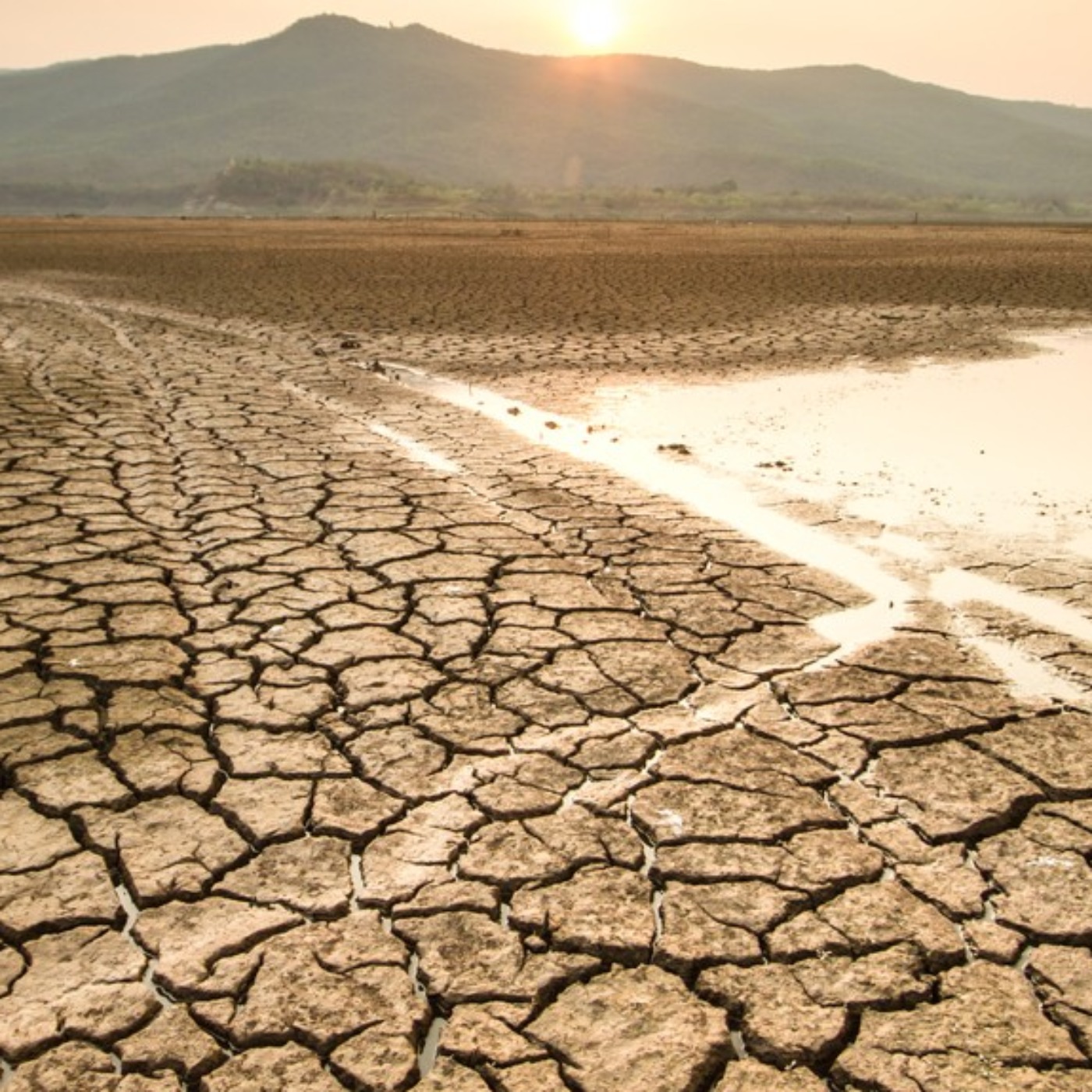
Water is life. A cliché and undeniable reality. So, what happens when climate change imperils water access? This episode, the second in our Eurasian Environments series, features a discussion with Sarah Cameron and Enda Wangui on water in two far flung regions—the Aral Sea and East Africa. How does the increasing scarcity of water impact these two arid climates? Cameron and Wangui address the environmental challenges in Central Asia and East Africa. They shed light on how colonial legacies disrupted traditional land access and ownership and climate change’s profound social and ecological impact on water politics, tradition, gender relations and migration patterns.Guests:Sarah Cameron is an associate professor of history at the University of Maryland, College Park. She is the author of The Hungry Steppe: Famine, Violence, and the Making of Soviet Kazakhstan published by Cornell University Press. At present, she is at work on a new book, Aral: Life and Death of a Sea, about the causes and consequences of the demise of Central Asia’s Aral Sea. Edna Wangui is currently the chair of the Geography Department at Ohio University. Her research examines the impacts of climate change, rural development, contemporary agriculture and rural land on gender roles and relations among pastoralists and other marginalized communities in East Africa. She has published several articles on these issues as book chapters and peer-reviewed journals.Listen to more tracks from Die Blutleuchte's RUS.Send us your sounds! PatreonKnotty News Hosted on Acast. See acast.com/privacy for more information.
Climate Change and Authoritarianism
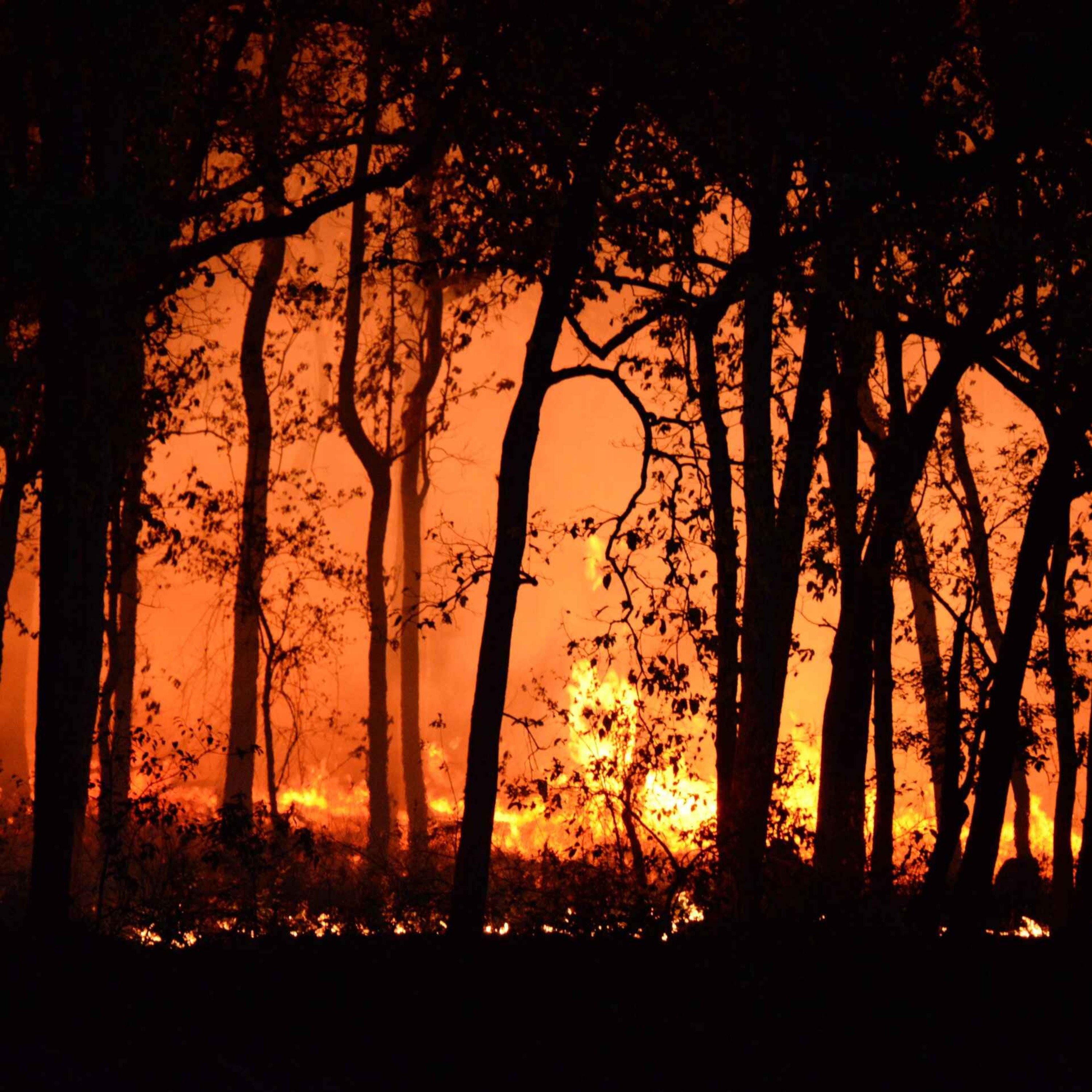
Debates about climate change and what to do about it occur a perilous political climate. It’s a problem that requires international cooperation. But elected politicians increasingly deny climate change, break global agreements, turn inward, and embrace authoritarianism. It’s a situation that both Eve Darian-Smith and Boris Schneider know well. Darian-Smith has written about the right-wing political responses to climate change, particularly to devastating fires, in the US, Brazil, and Australia. Schneider watches climate policy in Eurasia. What are some of the issues that intersect these regions? Are there shared ideological and policy actions? And what of resistance by climate groups hoping to stem the tide? These questions and more, are in this first episode of a six-part interview series “Eurasian Environments: Climate Justice and Sustainability in Global Context.” In each episode, experts on Eurasia are put in dialogue with those focusing on Europe, Africa, and Latin America. Guests:Eve Darian-Smith is a Distinguished Professor and Chair in the Department of Global Studies and International Studies at the University of California, Irvine. Her latest award-winning book is Global Burning: Rising Antidemocracy and the Climate Crisis published by Stanford University Press.Boris Schneider is a political economist. As co-host of The Eurasian Climate Brief podcast, he looks into underreported climate & energy stories in Eastern Europe, the Caucasus, and Central Asia. In addition to that, he tracks Europe’s move to climate neutrality as European Programme Manager at Clean Energy Wire (CLEW).Send us your sounds! PatreonKnotty News Hosted on Acast. See acast.com/privacy for more information.
Recording Georgians in WWI POW Camps
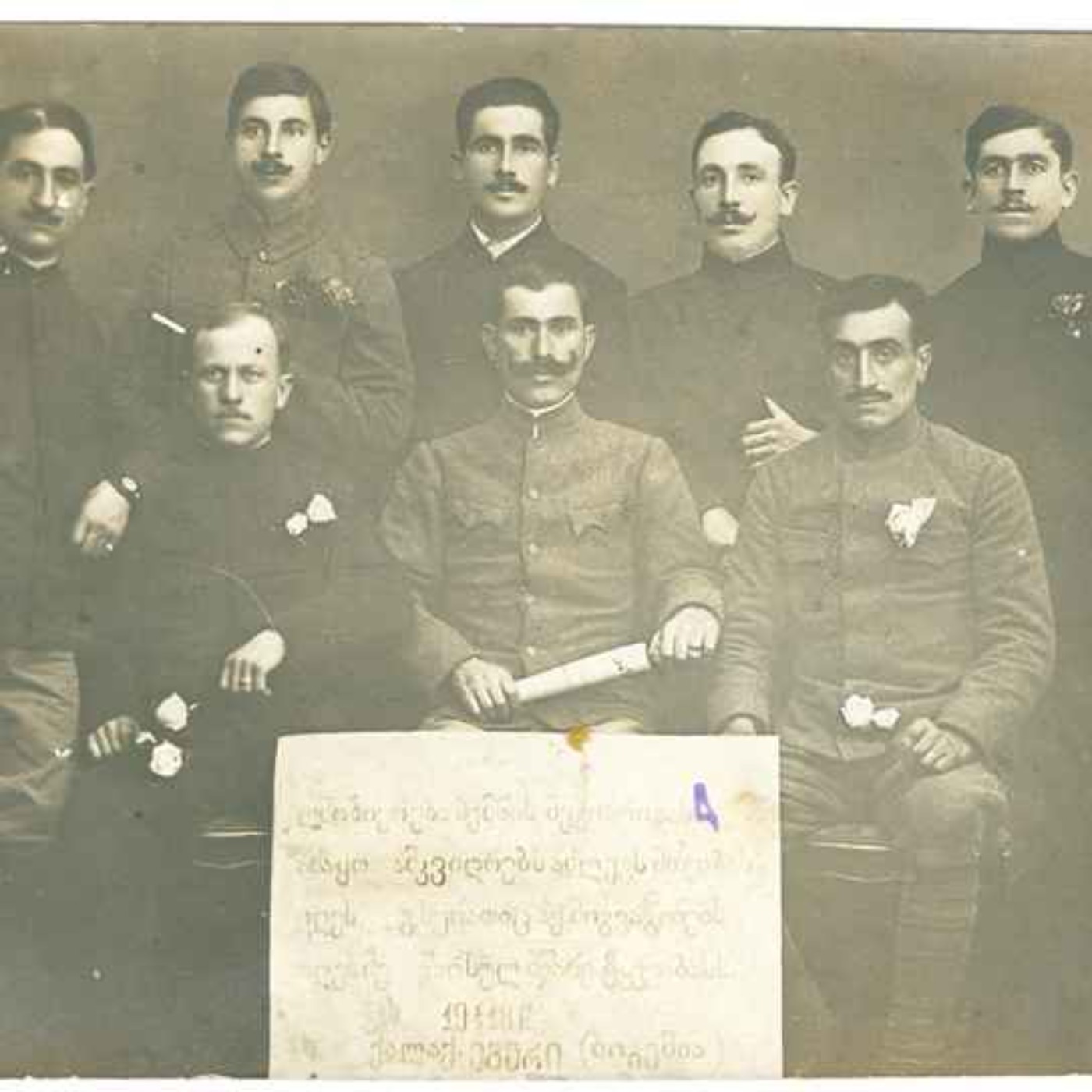
In 1916, the German anthropologist Rudolf Pöch and musicologist Robert Lach set out to the Eger prisoner of war camp with a unique research agenda: to record the language and folk songs of Georgian prisoners from the Russian Empire. The recording equipment was clunky and its recordings scratchy and faint. Nevertheless, Pöch and Lach were doing some innovative recordings, not just in terms of their ethnographic research, but using multi-channel recording to capture Georgian polyphonic singing. What were these recordings for? How did they fit into theories of race science of the time? And just who was Lavrosi Mamaldze, the Georgian singer these recordings documented? The Eurasian Knot wanted to learn more and sat down with Brian Fairley to talk about his deep dive into early twentieth century audio recording in WWI POW camps.Guest:Brian Fairley is the UCIS Postdoctoral Fellow at the University of Pittsburgh. He studies song, sound, and media across historical and ethnographic settings. His manuscript, “Separating Sounds: A Media History of Georgian Polyphony,” excavates a series of experimental recordings of Georgian music from 1916 to today, showing how prominent scholars and scientists repeatedly tried to capture this elusive musical tradition on record.Send us your sounds! PatreonKnotty News Hosted on Acast. See acast.com/privacy for more information.
Intellectual Roots of Neoliberalism
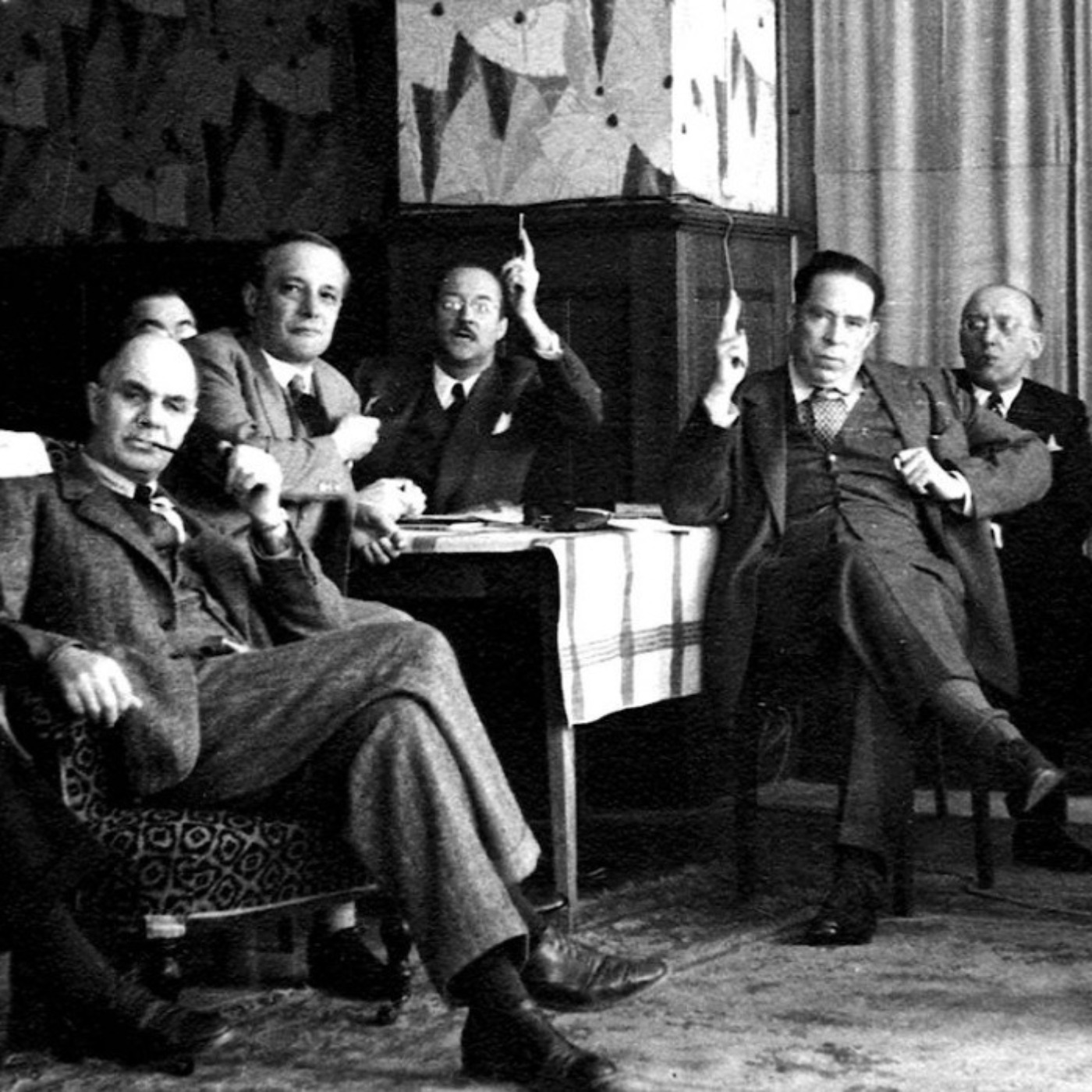
Neoliberalism has so many meanings that some say it has no meaning. Nailing down a consensus is also hampered by the fact that no one calls themselves a “neoliberal.” There’s even calls to abandon the term altogether since it’s become more a slur than doctrine needing analysis. Enter Max Trecker. He took the debate over neoliberalism as an opportunity to investigate its intellectual origins in the 1920s and 1930s. What did it mean then? What was neoliberal thought a reaction to? And what would those neoliberals think today? Also, in this interview, Max talks about an additional project: How Ukraine has been imagined as an economic space. It’s an issue not only of historical import, but enormous relevance today as Ukraine plans its postwar future.Guest:Max Trecker is a Visiting Assistant Professor in the History Department at the University of Pittsburgh and an economic historian and postdoctoral researcher at the Leibniz Institute for History and Culture of Eastern Europe in Leipzig, Germany. He’s the author of Red Money for the Global South: East-South Economic Relations in the Cold War published by Routledge.Send us your sounds! PatreonKnotty News Hosted on Acast. See acast.com/privacy for more information.
Saving Seeds During the Siege of Leningrad
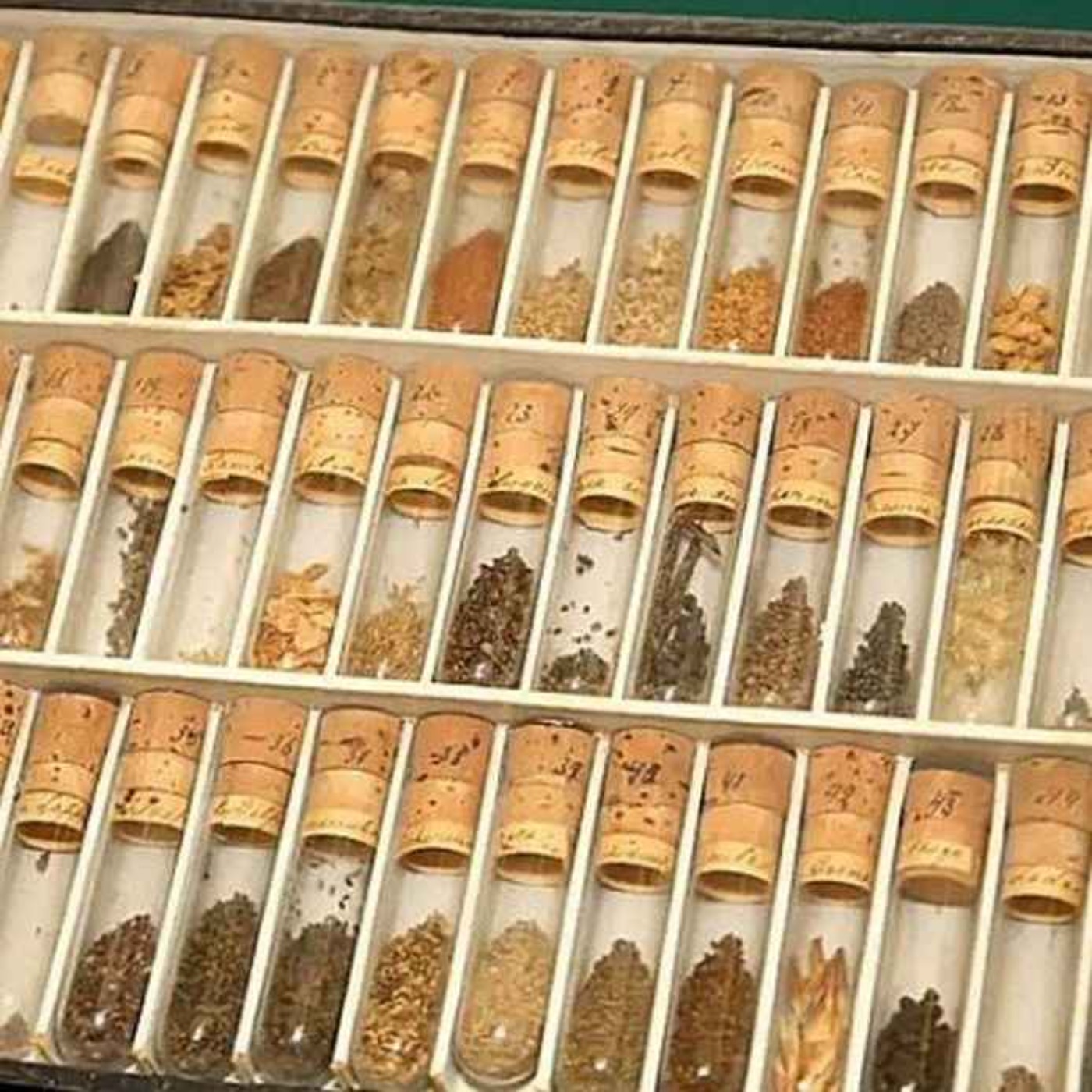
In 1941, as Nazi forces laid siege to Leningrad, a group of Soviet botanists faced an unthinkable choice: eat their life’s work, a rare seed bank, or starve to death. This is the dilemma at the heart of Simon Parkin’s story about the world's first seed bank and its dedicated botanists. At the heart of this tale is Nikolai Vavilov, a brilliant botanist who traveled five continents collecting specimens before falling victim to Stalin's purges. Through meticulous research and newly accessed archives, Parkin reveals a vivid tale of the sacrifice of 19 scientists during the siege’s 900 days. The Eurasian Knot spoke to Parkin to learn more about Vavilov’s seed bank, the moral dimensions of choosing science over death, and how their legacy lives on in modern agriculture.Guest:Simon Parkin is a British author and journalist. He is contributing writer for the New Yorker, a Fellow of the Royal Historical Society, and the author of three narrative non-fiction books, including The Island of Extraordinary Captives, winner of The Wingate Literary Prize. His new book is The Forbidden Garden: The Botanists of Besieged Leningrad and Their Impossible Choice published by Simon and Shuster.Send us your sounds! PatreonKnotty News Hosted on Acast. See acast.com/privacy for more information.

Russian Antifa vs Neo-Nazis
Vladimir Kozlov’s new book Shramy (Scars) explores street battles between anti-fascists and neo-Nazi skinheads in Moscow during the late 2000s. Kozlov is no stranger to these subcultures. He’s long been involved in Russian punk. And though he never participated in these street battles himself, his failed attempt to make a documentary about Antifa for Russian television gave him an inside look at the scene. Now, almost two decades later, Kozlov uses Shramy to reflect on the roots of Russian fascism in light of Russia's invasion of Ukraine. How did elements of neo-Nazi subculture seep into the Russian mainstream? And how does the Putin regime manipulate “Nazism” and “anti-fascism” for its own domestic and geopolitical ends? The Eurasian Knot spoke to Kozlov about his punk past, how they shaped the writing of Shramy, and how violence, ideology, and the complexities of Russian society have led to public support for the war in Ukraine.Guest:Vladimir Kozlov is a writer and filmmaker born in Mogilev in the Belarussian Soviet Socialist Republic. He spent his youth in the suburbs of that city, witnessing the collapse of the Soviet empire and a bizarre mix of unbridled freedom, wild capitalism and rampant crime in the early 1990s. He lived in Moscow until he went into exile in 2022 following his condemnation of the Russian invasion of Ukraine. Kozlov is the author of more than a dozen books that have been published in translation in the United States, France, Serbia and Slovakia. His most recent book is Shramy. You can read an English excerpt of Shramy here.Send us your sounds! PatreonKnotty News Hosted on Acast. See acast.com/privacy for more information.
Romani Music and NGOs
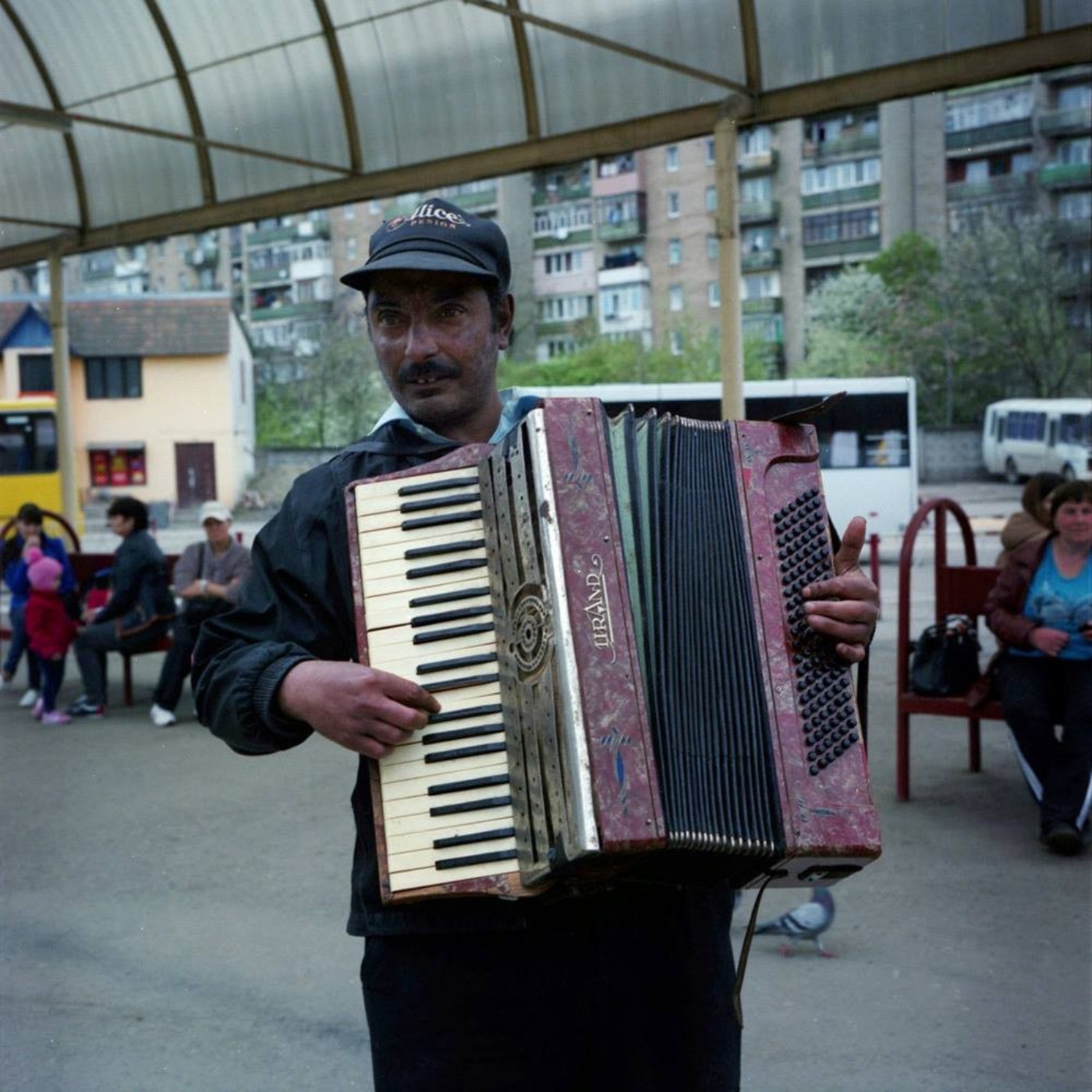
Who speaks for whom within the Romani rights movement today? This is the question that drives Adriana Helbig’s investigation into the relationship between development aid and Romani musicians in her book, Resounding Poverty. Her findings are crucial as are provocative: NGOs unintentionally perpetuate narratives of Romani life that continue to marginalize the poorest among them. And while aid is crucial, it also fails to address issues of poverty, community, and health particularly in rural areas. The Eurasian Knot spoke to Helbig about the fraught and complicated presence of NGOs in postsocialist space, the tensions between aid and agency, the pressure Romani musicians face to perform "gypsiness" for non-Romani audiences, and her personal insights about conducting research in Ukraine and how her own family history intersects with her academic work. We even listen to some music by the Carpathian Ensemble, a University of Pittsburgh student group that Helbig directed. highlighting the challenges and rewards of representing Romani music in an academic context.Guest:Adriana N. Helbig is Associate Professor of Music and former Assistant Dean of Undergraduates at the University of Pittsburgh. She is the author of Hip Hop Ukraine: Music, Race, and African Migration. Her most recent book is ReSounding Poverty: Romani Music and Development Aid published by Oxford University Press.Send us your sounds! PatreonKnotty News Hosted on Acast. See acast.com/privacy for more information.
Introducing: The Eurasian Climate Brief
The 2024 UN Climate Change Conference (COP29) ended in late November in Baku. Two weeks of intense climate negotiations unveiled deep divides—particularly between the Global North and South over climate finance and contentious debates on the right wording of transitioning away from fossil fuels.In this episode Angelina Davydova and Boris Schneider dissect the outcomes of the conference, offering insights into the broader implications for climate action, both globally and in Central Asia. Joining the conversation is Kyrgyz journalist Anastasia Bengard, who attended COP29 as a fellow of the Climate Change Media Partnership (CCMP) programme. She shares her firsthand observations from the conference, shedding light on the positions and statements of her home country and Central Asia at large, as detailed in her reporting for 24.kg.Tune in as we delve into the complex narratives and challenges that will define the future of climate action across Central Asia - and beyond.The Eurasian Climate Brief is a podcast dedicated to climate issues in the region stretching from Eastern Europe to Russia down to the Caucasus and Central Asia.This episode is supported by n-ost & eurasianet and made by:Angelina Davydova, environmental/climate journalist. Editor of the magazine "Environment and Rights", co-host of the podcast The Day After Tomorrow ("Posle Zavtra"). Environmental projects coordinator with the Dialogue for Understanding e. V (Berlin). Fellow with the Institute for Global Reconstitution (Berlin). Observer of the UN climate negotiations (UNFCCC) since 2008. Expert/editor of the Ukraine War Environmental Consequences Work Group.Boris Schneider, political economist. European Programme Manager at Clean Energy Wire CLEW (Berlin). Has worked as a specialist on Eastern European climate and energy topics, amongst others for n-ost and the German Economic Team.Reports cited in the episode:Open Letter on COP reformAfter a disappointing COP29, here’s how to design global climate talks that might actually workWe are not so naive anymore (Anastasia Bengard's interview with Edil Baisalov, Deputy Chairman of the Cabinet of Ministers of Kyrgyzstan)Jingle: Natallia Kunitskaya alias MustelideSound editing & mixing: Angelo Tripkovsky Hosted on Acast. See acast.com/privacy for more information.
The Russia and China Brain Trusts
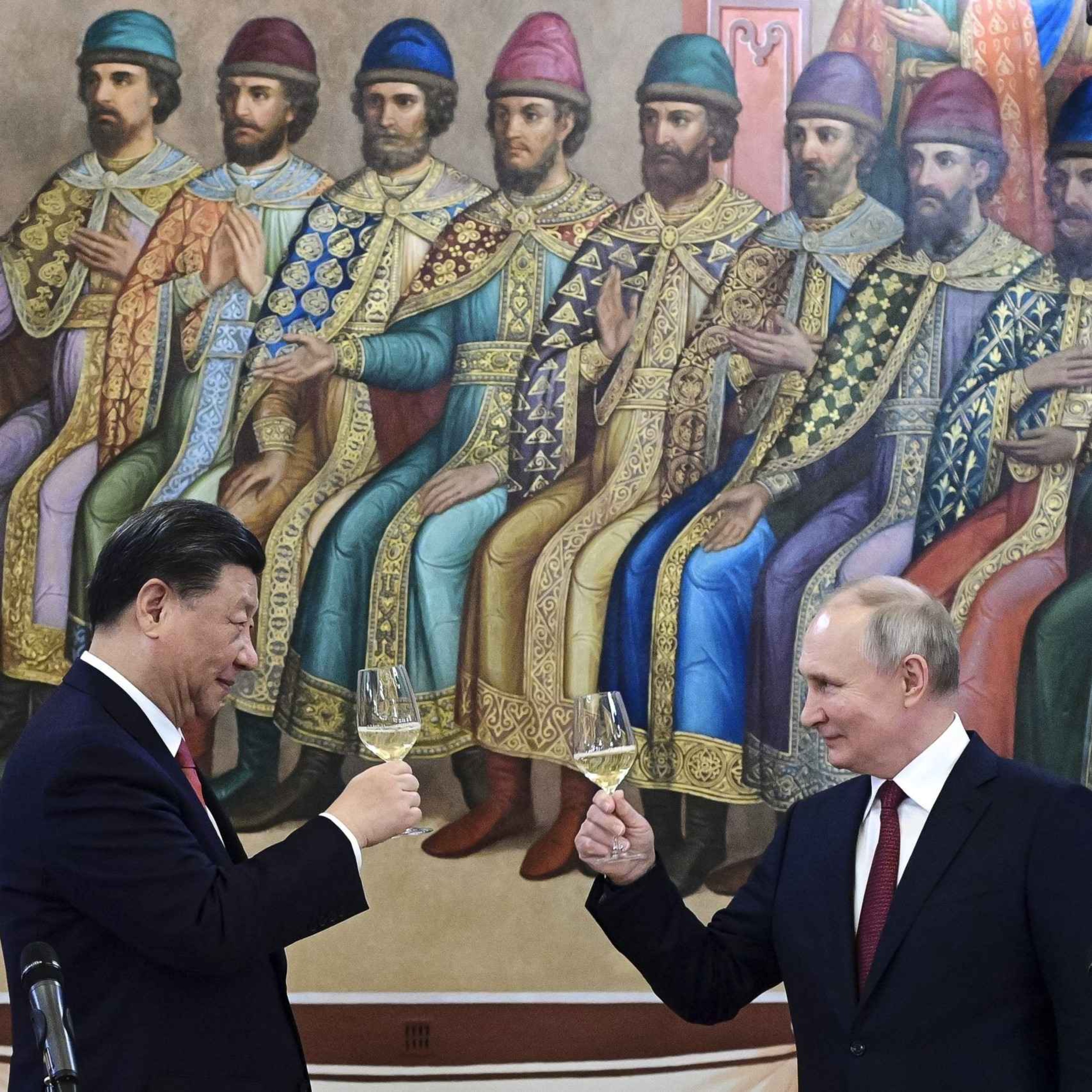
Who are those “experts” who sit in Washington DC and come up with policy toward China and Russia? You know, those academics, journalists, and think-tankers who generate the knowledge US officials rely on? David McCourt’s new book, The End of Engagement, takes a stab by examining American foreign policy expertise on China and Russia since 1989. His main focus is on the divide within the Russia and China watching community. For Russia, it’s between "Russia we havers" versus "Russia we wanters,” and for China, the "engagement" against the "strategic competition" partisans. Curious to hear more, The Eurasian Knot spoke to McCourt to get a social profile of these expert communities, including how personal cliques, academic cred, and resumes influence how we understand Russia and China.Guest:David McCourt is Professor in the Department of Sociology at the University of California, Davis. His new book is The End of Engagement: America's China and Russia Experts and U.S. Strategy Since 1989 published by Oxford University Press.Send us your sounds! PatreonKnotty News Hosted on Acast. See acast.com/privacy for more information.
A Tale of Two Nationalisms
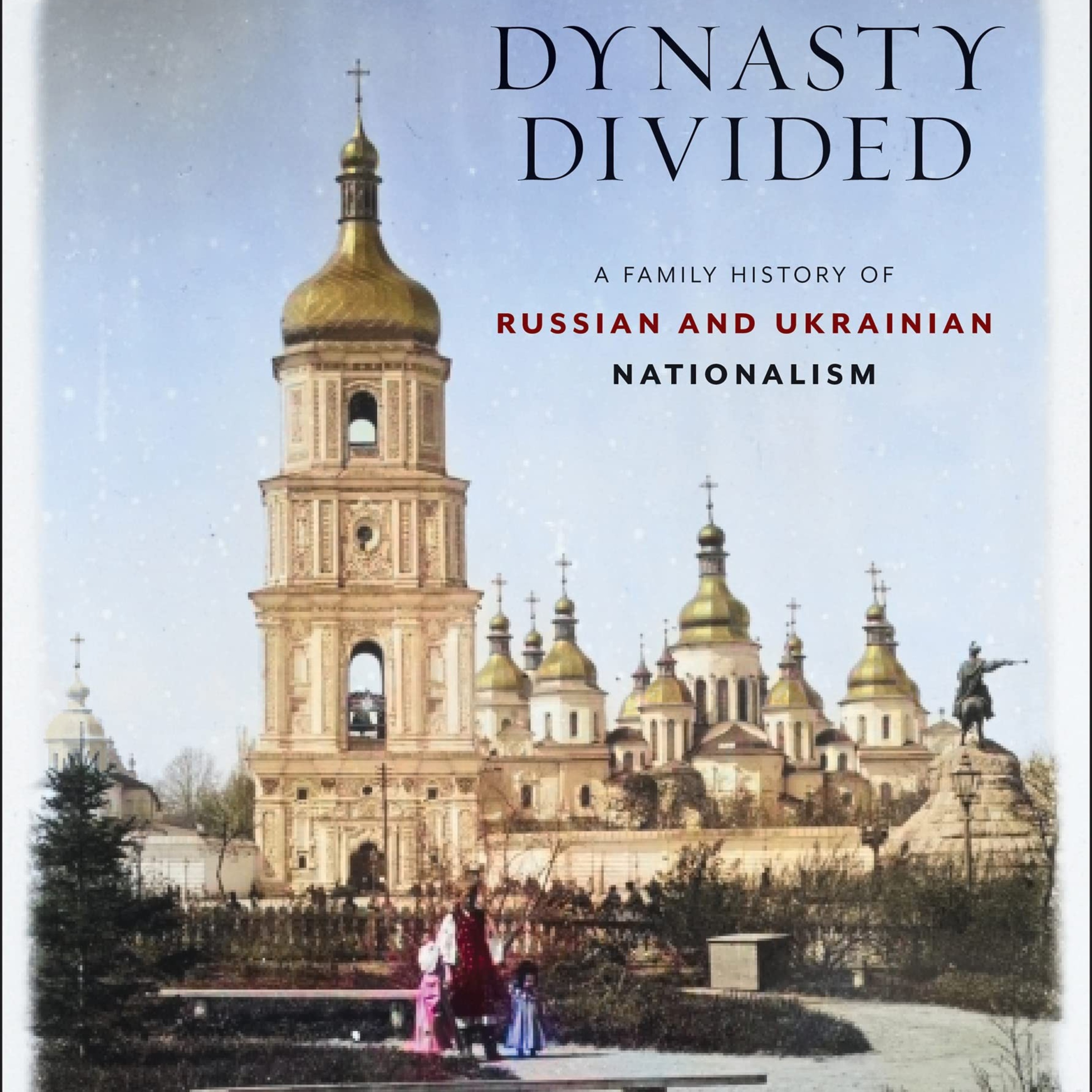
Nationalists are not born. They are made. But how? That journey is far trickier. Fabian Baumann’s award-winning book, Dynasty Divided: A Family History of Russian and Ukrainian Nationalism, traces how one family in 19th-century Ukraine split into opposing branches–one embracing Ukrainian nationalism and the other Russian imperial nationalism. Shulgin/Shulhin family story shows how national identities form through the microcosms of family, private spaces, intellectual circles, and intentional choices rather than predetermined ethnicity. The Eurasian Knot asked Baumann to take us through the Shulgin/Shulhin family, their efforts to craft opposing nationalist identities, and how exile after the Russian Revolution led both branches to craft nationalist narratives of their experiences. The Shulgin/Shulhin story may be a century old. But their journey into Ukrainian and Russian nationalism has inescapable implications for us today.Guest:Fabian Baumann is a research associate at Heidelberg University working on the history of nationalism and empire in Ukraine, Russia, and East Central Europe. His award winning book is Dynasty Divided: A Family History of Russian and Ukrainian Nationalism published by Northern Illinois University Press.Send us your sounds! PatreonKnotty News Hosted on Acast. See acast.com/privacy for more information.

Adapting Master and Margarita
In 2020, Russian-American filmmaker Michael Lockshin and his co-writer, Roman Kantor, were offered an impossible task: to adapt Mikhail Bulgakov’s Master and Margarita for the big screen. It was a daunting task to rewrite such a beloved novel, with its complicated and overlapping narratives. Lockshin and Kantor hoped to succeed where others failed. After a period of touch-and-go, the film was released in Russia in January 2024 to critical and viewer acclaim. It also received fierce scorn, particularly from Russian state propagandists. To date, the film remains unreleased internationally due to complex rights issues following Russia's invasion of Ukraine. How has Lockshin dealt with all this personally and professionally? What does he make of the controversy surrounding the movie essentially cosplaying its plot. Lockshin recently visited Pittsburgh to screen the film. The Eurasian Knot jumped at the opportunity to interview him about it and its fallout.Guest:Michael Lockshin grew up in Russia and the United States. He began working in film while studying for a Masters in psychology at Moscow State University. He moved to London after graduating and directed several award-winning commercials and his first Russian language feature film, Silver Skates in 2020. Most recently, he co-wrote and directed an adaptation of Mikhail Bulgakov’s Master and Margarita.Send us your sounds! https://euraknot.org/contact/ Patreon: https://www.patreon.com/euraknot Knotty News: https://eurasianknot.substack.com/ Hosted on Acast. See acast.com/privacy for more information.
Georgia in Crisis
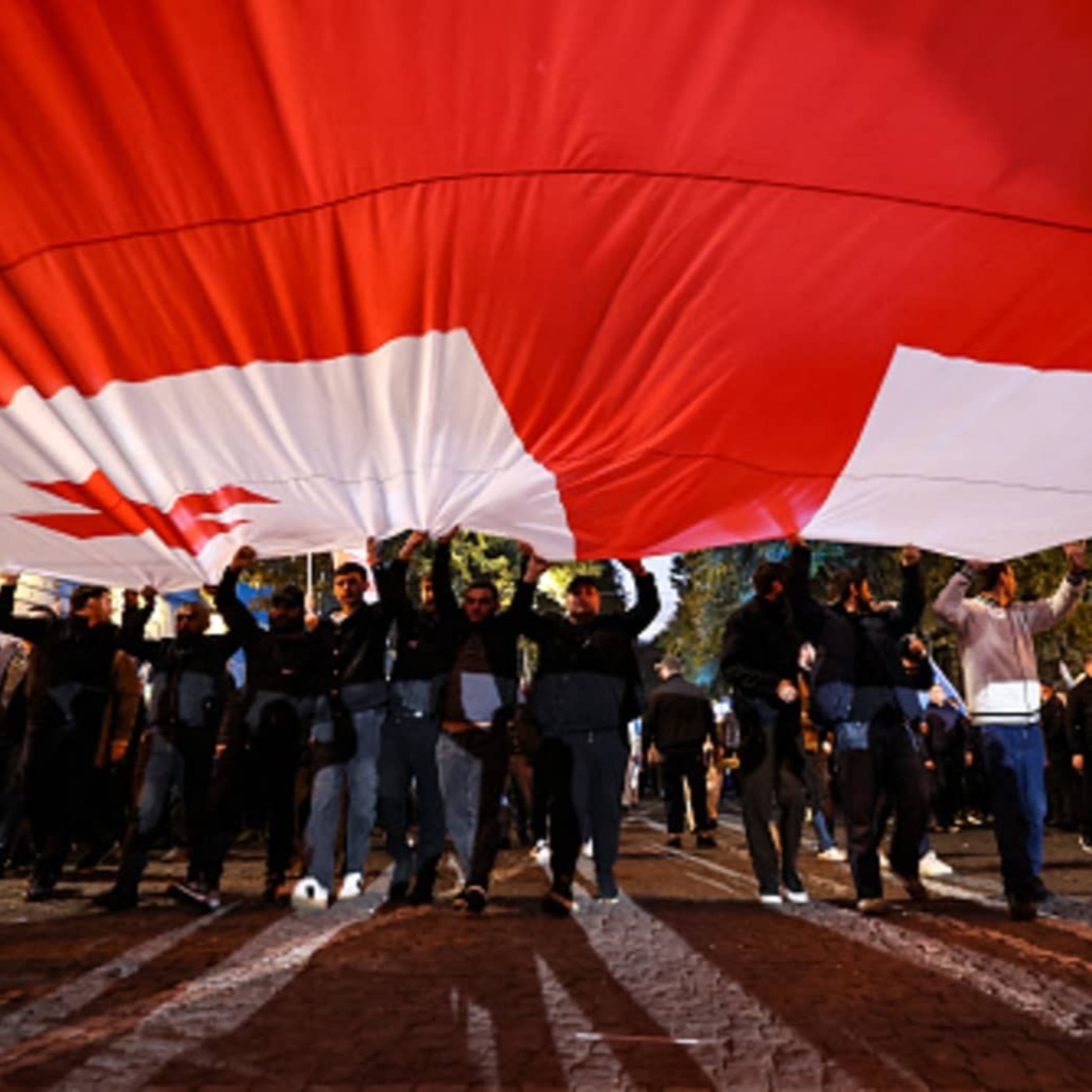
Guest: Bryan Gigantino, co-host of the podcast Reimagining Soviet Georgia, on the context and causes for the current political crisis in Georgia.The post Georgia in Crisis appeared first on The Eurasian Knot. Hosted on Acast. See acast.com/privacy for more information.
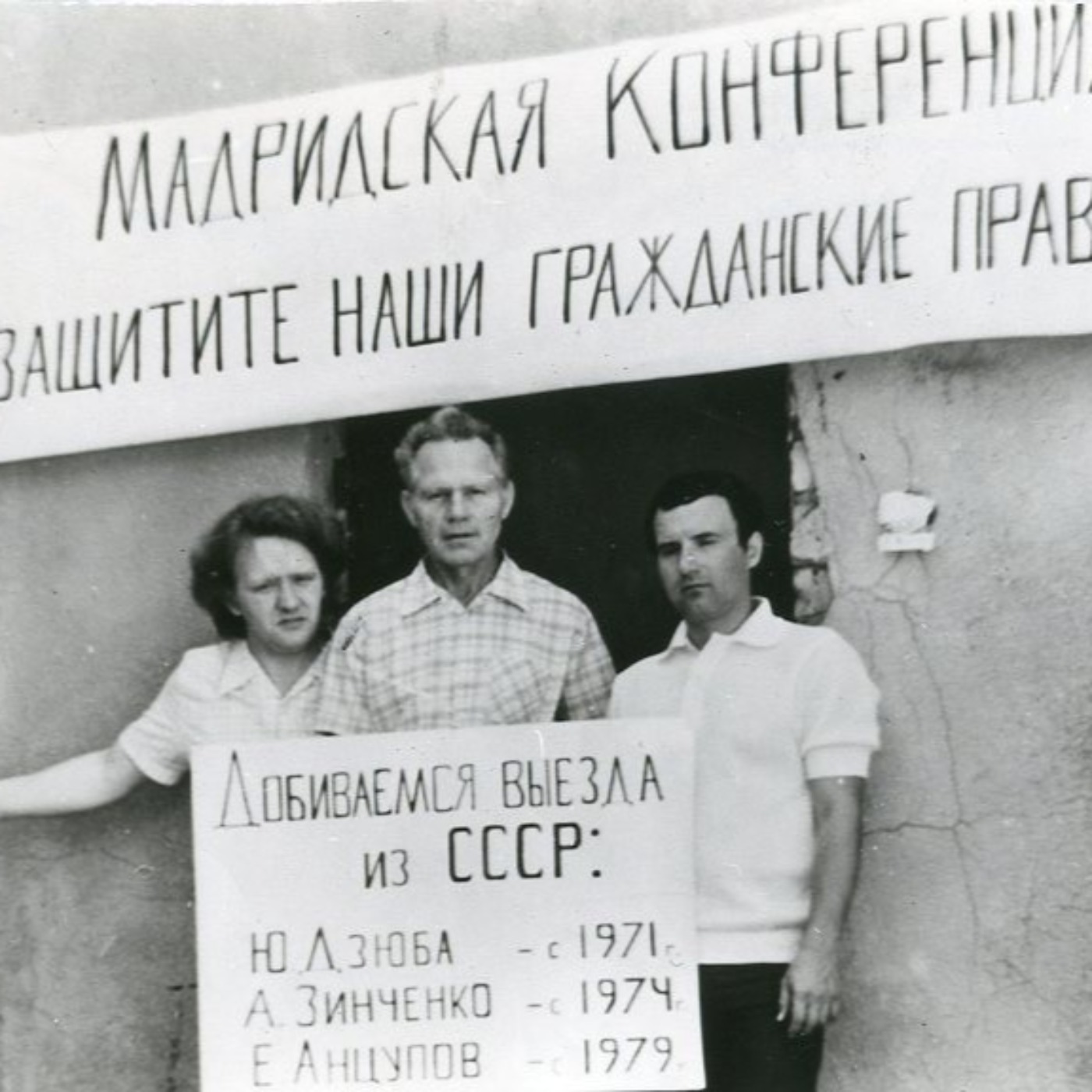
The World of Soviet Dissidents
Soviet dissidents have long been objects of fascination. Who were they? What made them dissent? What did they believe? And what did they endure at the hands of a repressive Soviet state? We now have a clearer picture thanks to Benjamin Nathans’ new book, To the Success of Our Hopeless Cause: The Many Lives of the Soviet Dissident Movement. Soviet dissidents, or as they preferred to be called “rights defenders,” navigated a complicated choreography between the movement, the police, and its supporters abroad. Their approach was a strategy of “civil obedience,” that is pressuring the Soviet government to follow its own laws. Though amounting to around a thousand active participants, their influence grew, especially as they were lionized in the Western media. In this conversation with the Eurasian Knot, Nathans recounts this history, highlighting the often-overlooked role of women, dissidents’ complex relationship with Soviet society, and what their experience can teach us today.Guest:Benjamin Nathans is the Alan Charles Kors Associate Professor of History at the University of Pennsylvania. He is the author of the multiple award-winning book, Beyond the Pale: The Jewish Encounter with Late Imperial Russia. His latest book is To the Success of Our Hopeless Cause: The Many Lives of the Soviet Dissident Movement published by Princeton University Press.Send us your sounds!Become a patron! Hosted on Acast. See acast.com/privacy for more information.
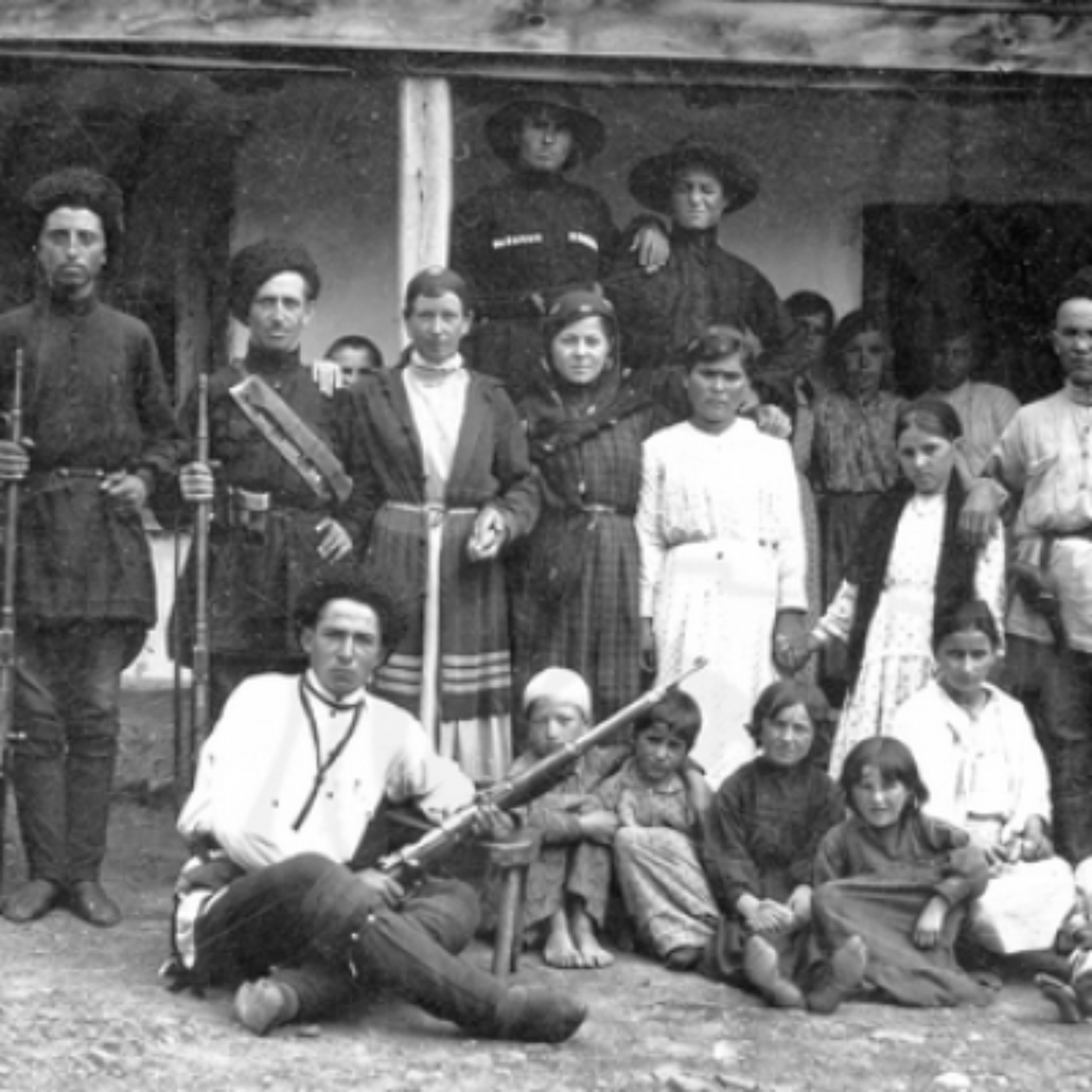
A Deep Dive into Kabardino-Balkaria
Guest: Ian Lanzillotti guides through the history of Kabardino-Balkaria in his book Land, Community, and the State in the Caucasus published by Bloomsbury.The post A Deep Dive into Kabardino-Balkaria appeared first on The Eurasian Knot. Hosted on Acast. See acast.com/privacy for more information.
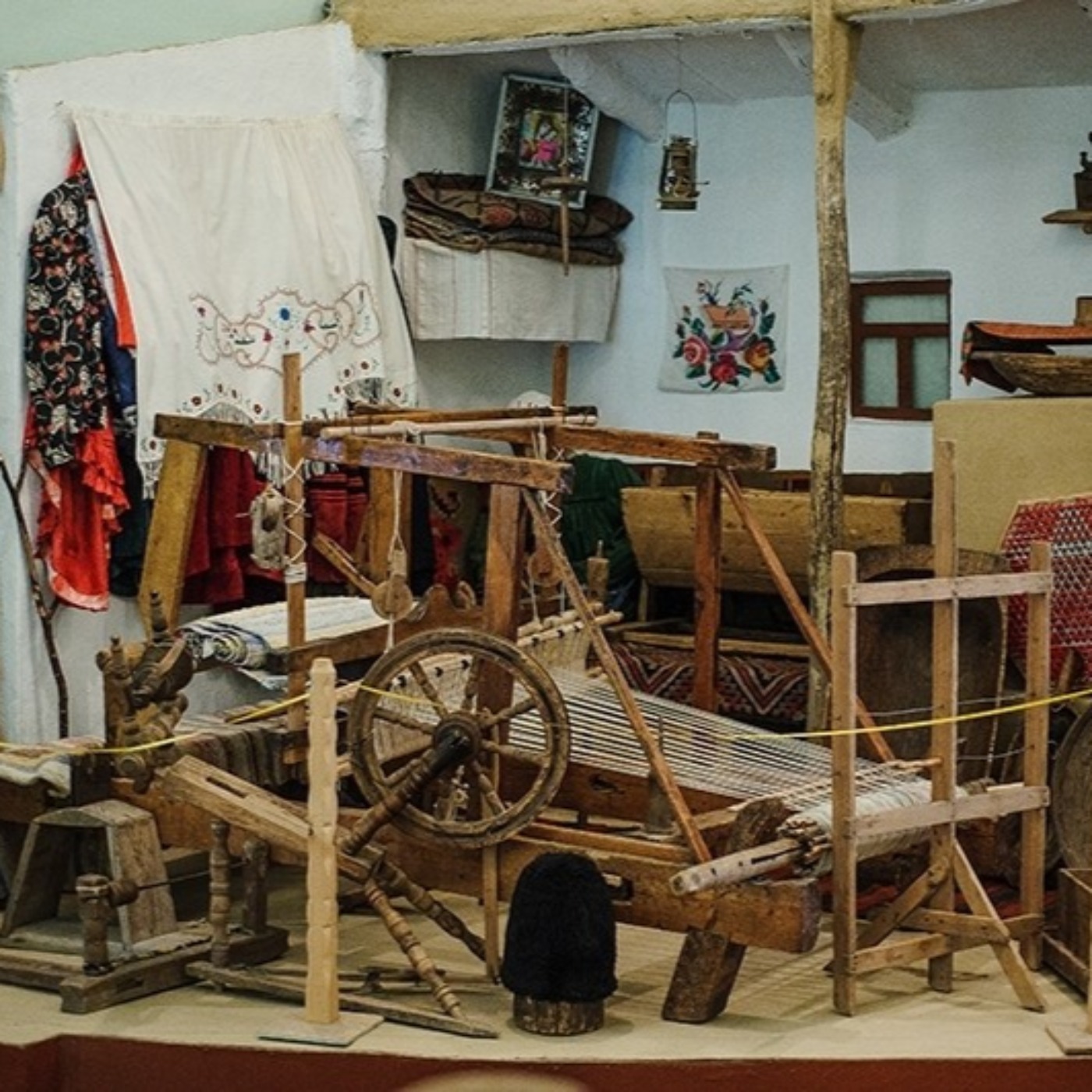
Soviet DIY Folk Museums
Guest: Erin Hutchinson on her award-winning article, “Gathering the Nation in the Village: Intellectuals and the Cultural Politics of Nationality in the Late Soviet Period” in the January 2023 issue of the Russian Review.The post Soviet DIY Folk Museums appeared first on The Eurasian Knot. Hosted on Acast. See acast.com/privacy for more information.
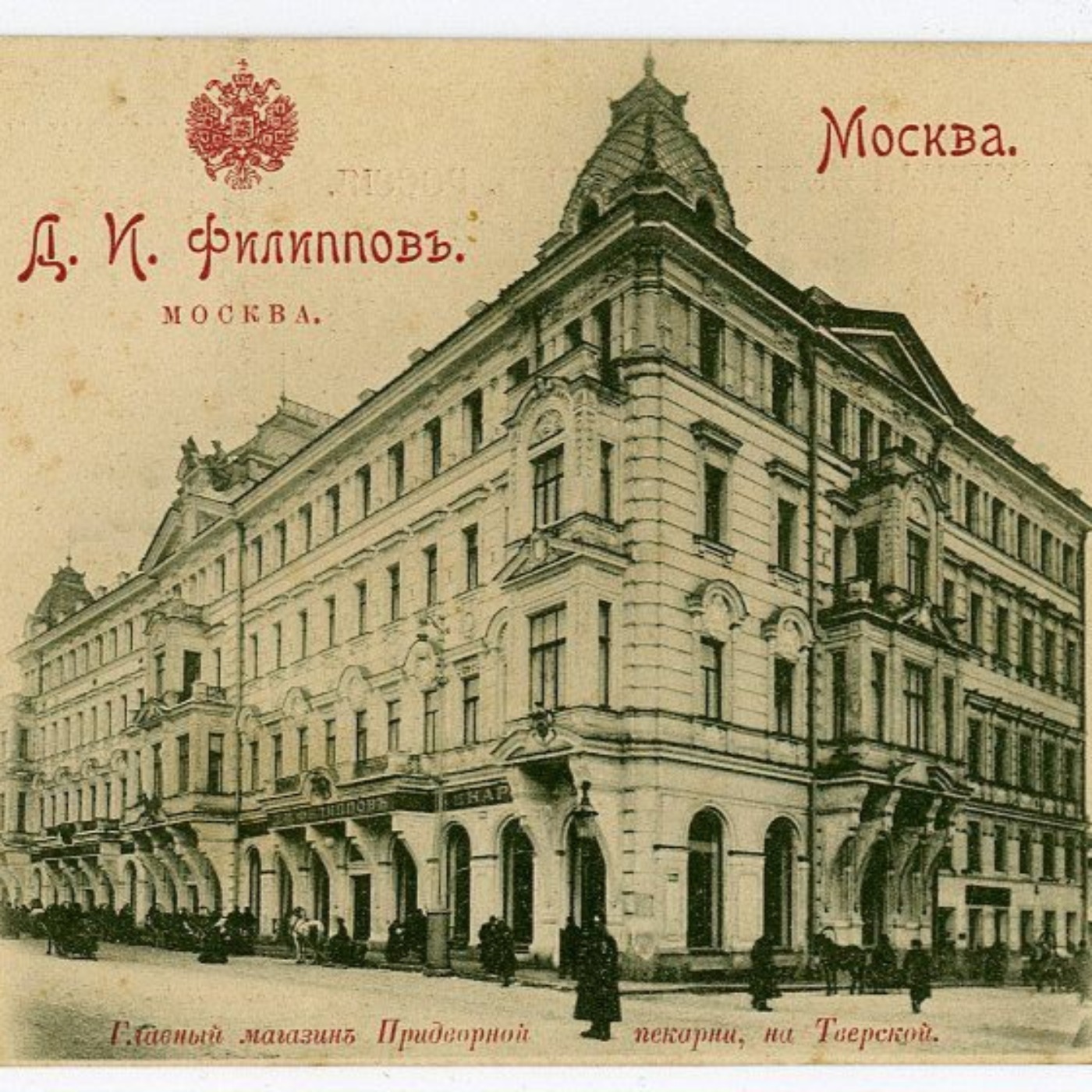
Intimate Lives of International Communism
Guest: Maurice Casey on the “lost world” of international communism in his book, Hotel Lux: An Intimate History of Communism’s Forgotten Radicals published by Footnote Press.The post Intimate Lives of International Communism appeared first on The Eurasian Knot. Hosted on Acast. See acast.com/privacy for more information.
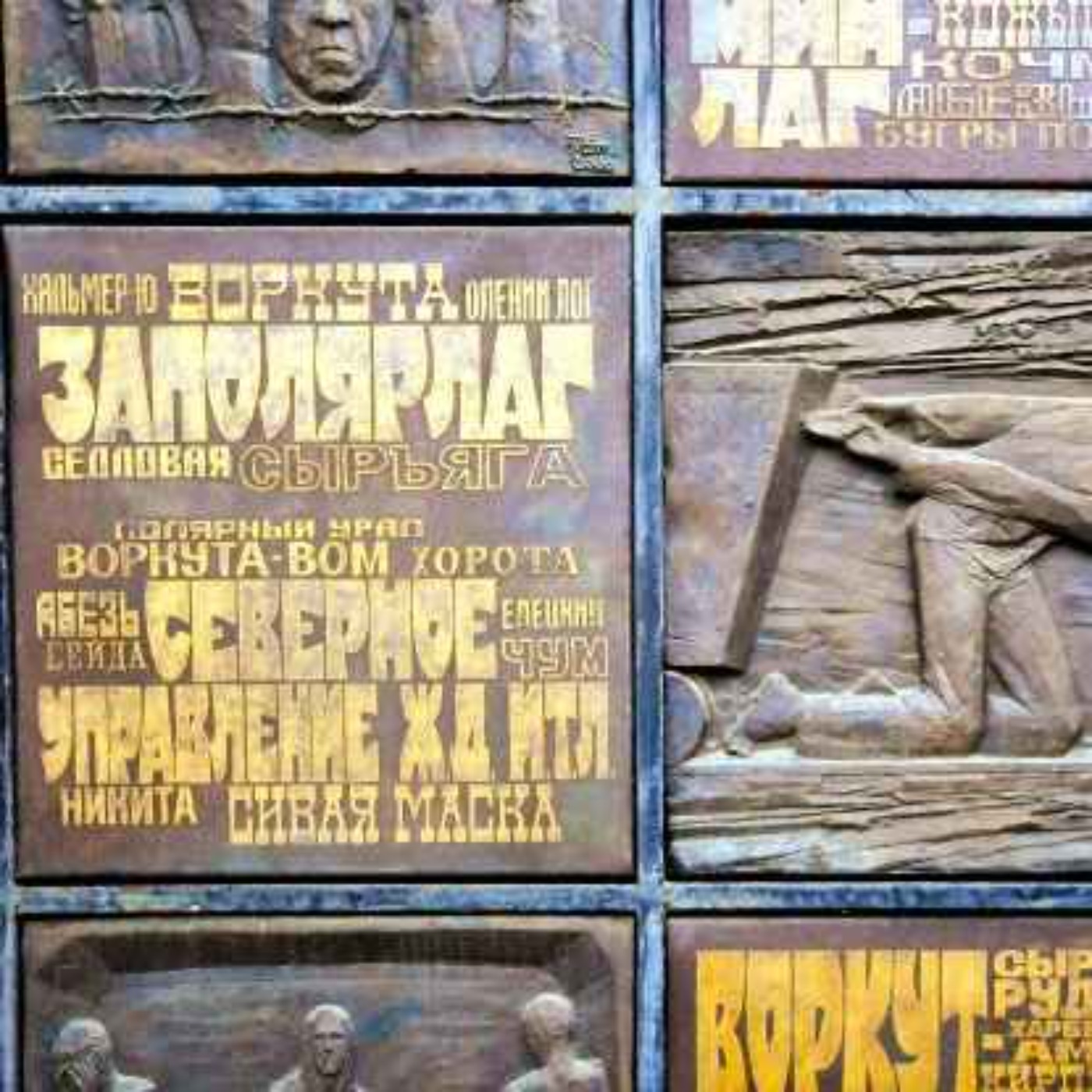
Gulag Memory in Russia’s Far North
Guest: Tyler Kirk on After the Gulag: A History of Memory in Russia's Far North published by Indiana University Press.The post Gulag Memory in Russia’s Far North appeared first on The Eurasian Knot. Hosted on Acast. See acast.com/privacy for more information.
The Russia That Was Lost
Guest: Pavel Khazanov on The Russia That We Have Lost: Pre-Soviet Past as Anti-Soviet Discourse published by the University of Wisconsin Press.The post The Russia That Was Lost appeared first on The Eurasian Knot. Hosted on Acast. See acast.com/privacy for more information.
Free Marc Fogel!
Guest: Ambassador Eric Rubin on the efforts to free Marc Fogel, an American serving 14 years in the Russian prison for possessing 17 g of medical marijuana.The post Free Marc Fogel! appeared first on The Eurasian Knot. Hosted on Acast. See acast.com/privacy for more information.
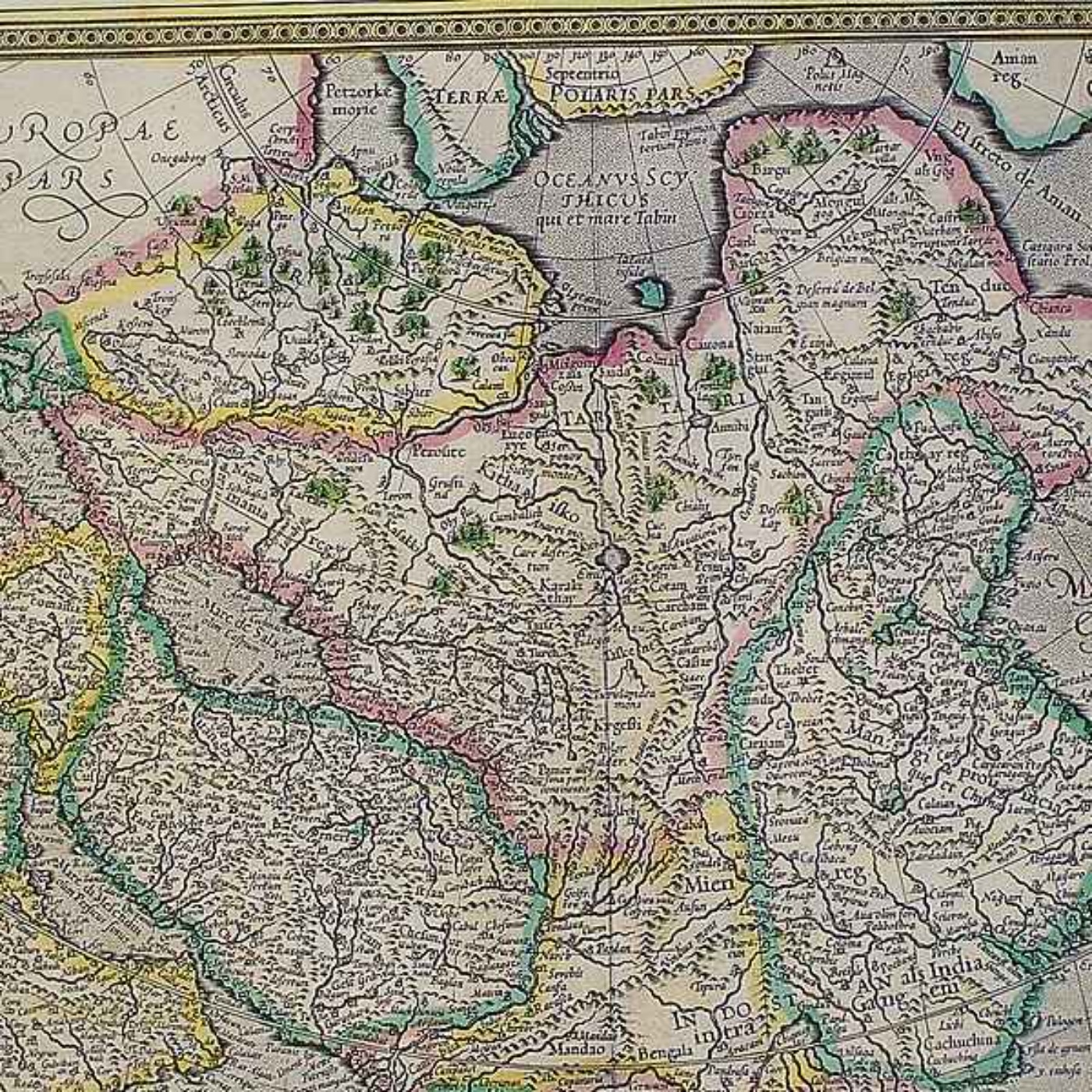
A New History of Northern Eurasia
Guests: Marina Mogilner and Ilya Gerasimov on their new textbook, A New Imperial History of Northern Eurasia, 600–1700: From Russian to Global History published by Bloomsbury.The post A New History of Northern Eurasia appeared first on The Eurasian Knot. Hosted on Acast. See acast.com/privacy for more information.
The Sound of Socialism, Part 3
Guest: Andrea Bohlman on the curious history of the sound postcard in People's Republic of Poland.The post The Sound of Socialism, Part 3 appeared first on The Eurasian Knot. Hosted on Acast. See acast.com/privacy for more information.
Women in Russian Politics
Guest: Valeria Umanets on women in municipal governance in the Soviet Union and under Putin.The post Women in Russian Politics appeared first on The Eurasian Knot. Hosted on Acast. See acast.com/privacy for more information.
Illiberalism and Civil Society in Hungary
Guest: Daniel Mikecz on Civil Movements in an Illiberal Regime: Political Activism in Hungary published by Central European University Press.The post Illiberalism and Civil Society in Hungary appeared first on The Eurasian Knot. Hosted on Acast. See acast.com/privacy for more information.
The Sound of Socialism, Part 2
Guest: Matthew Kendall on his article “Room for Noise in Soviet Sound Recording” in the Winter 2023 issue of the Slavic Review.The post The Sound of Socialism, Part 2 appeared first on The Eurasian Knot. Hosted on Acast. See acast.com/privacy for more information.
The Sound of Socialism, Part 1
Guest: Gabrielle Cornish on the sound of Lenin's voice and other sounds of socialism.The post The Sound of Socialism, Part 1 appeared first on The Eurasian Knot. Hosted on Acast. See acast.com/privacy for more information.
The Eastern International
Guest: Masha Kirasirova on The Eastern International: Arabs, Central Asians, and Jews in the Soviet Union's Anticolonial Empire published by Oxford University Press.The post The Eastern International appeared first on The Eurasian Knot. Hosted on Acast. See acast.com/privacy for more information.
The Soviet Bid to Run the World
Guest: Sergey Radchenko on To Run the World: The Kremlin’s Cold War Bid for Global Power published by Cambridge University Press.The post The Soviet Bid to Run the World appeared first on The Eurasian Knot. Hosted on Acast. See acast.com/privacy for more information.