The Essay
1,128 episodes — Page 4 of 23

Ben Cottam
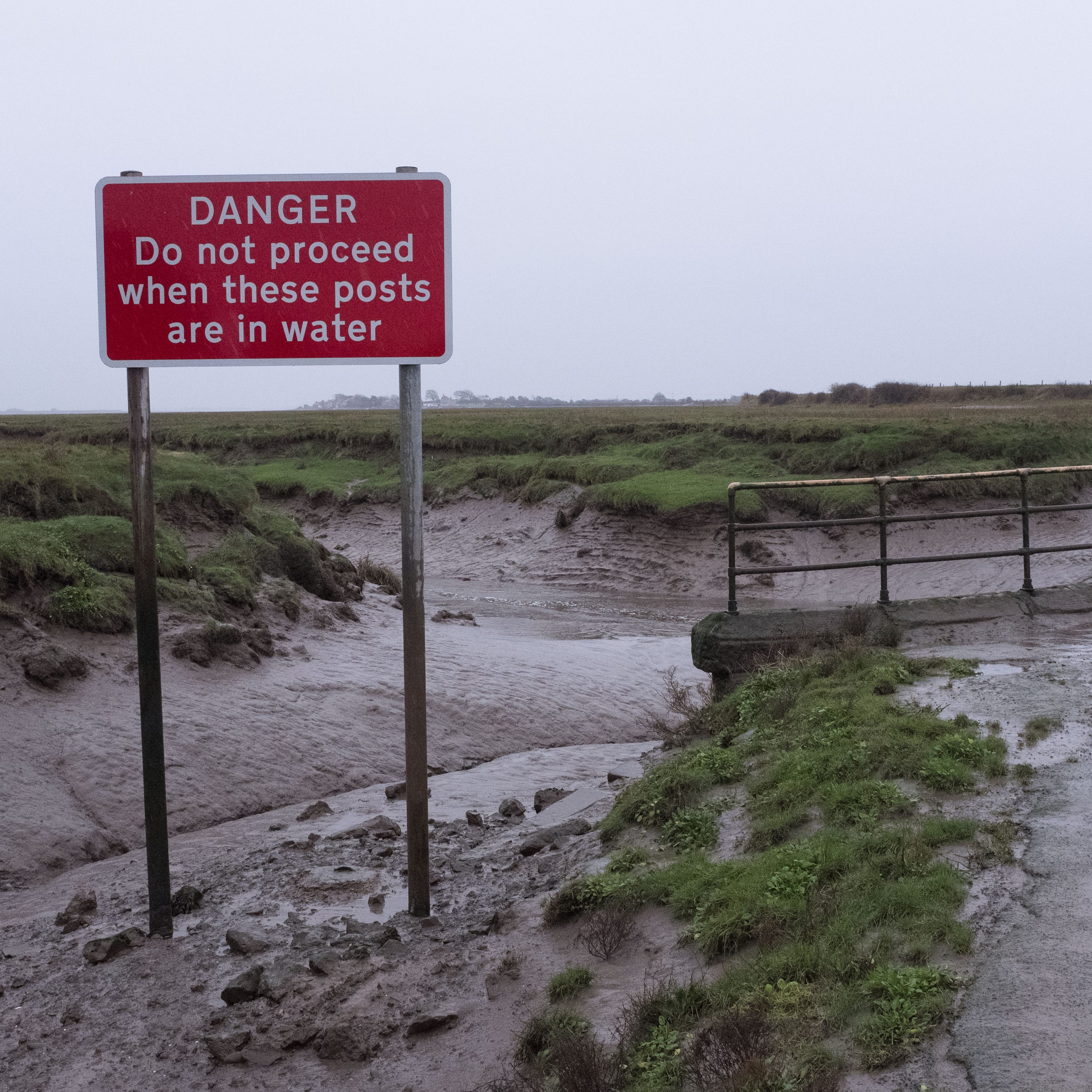
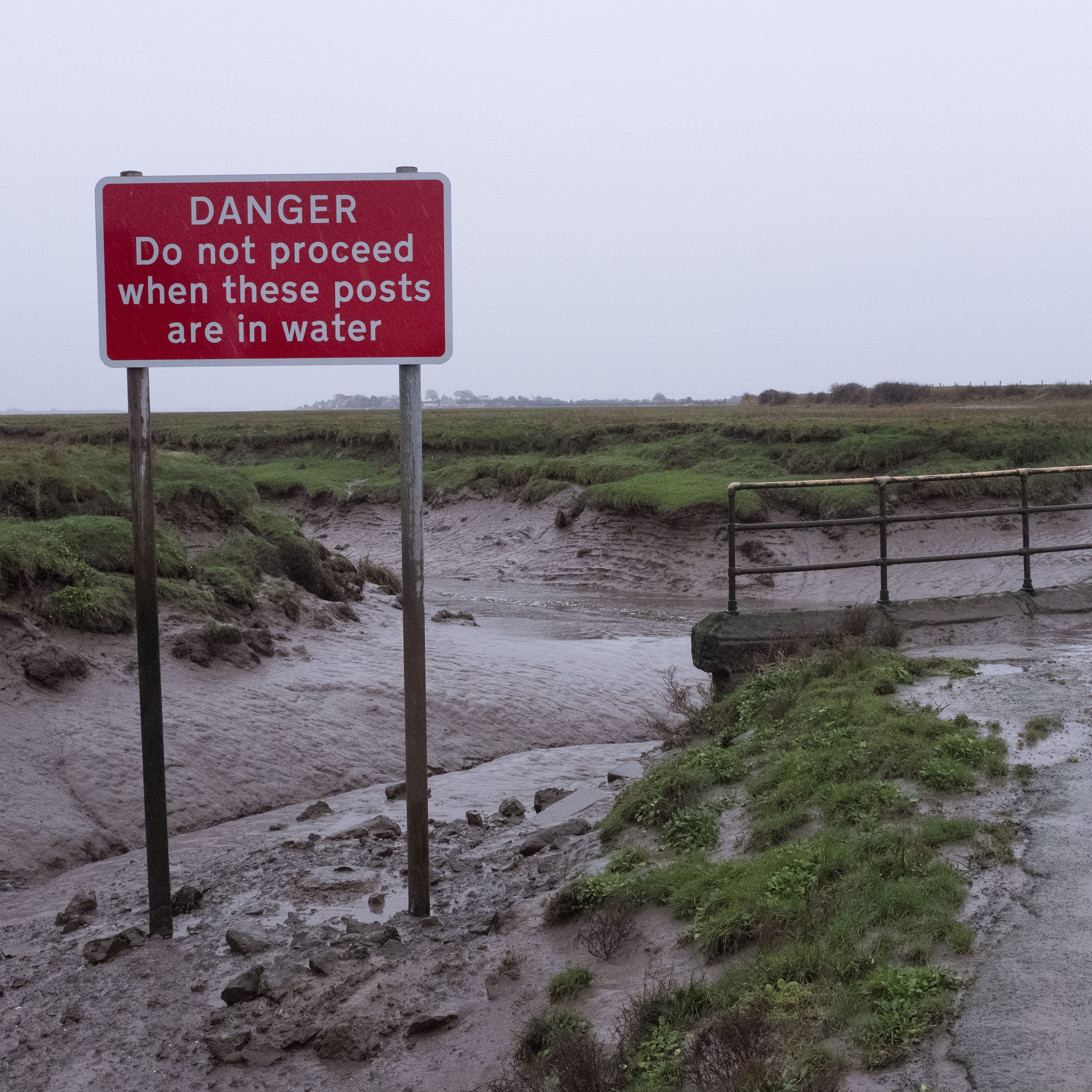
Ben Cottam puts on full waterproofs to cross the causeway to Sunderland Point, in search of the grave of a black slave. There are 43 tidal islands around the UK, accessible just briefly each day along beguiling paths. Across the series, five writers journey across a favourite causeway to islands of refuge, pilgrimage, magic and glamour. Wheels spin wildly and Ben peers anxiously through mud-sprayed windscreen as he tries to drive to Sunderland. There is no real boundary between land and sea, the coastline as fluid as the tide. The danger signs escalate and he remembers tales of insidious rising waters, drilled into him as a child by coastguards from Morecambe Bay. He treks to what is uncomfortably called Sambo’s grave, the resting place of young black slave. Abandoned there by a sea captain in the 18th century, Ben wonders how his own family might have treated him and is heartened to find fresh tributes marking a lost life. Producer: Sarah Bowen
Claire McGowan
Claire McGowan enters the freezing waters off Burgh Island, connected at low tide to the mainland by a short sandy causeway.There are 43 tidal islands around the UK, accessible just briefly each day along beguiling and perilous paths. Across the series, five writers walk their favourite causeway to islands of refuge, pilgrimage, magic and glamour.Claire grew up with the mythology of the giant Finn McCool flinging rocks at a rival in Scotland and building the Giant’s Causeway. Arriving at Burgh Island, she steps into tranquil 1920s glamour, to sip Agatha Christie inspired cocktails in the Art Deco hotel bar. In this time capsule, Claire explores our relationship with Golden Age Crime and her own past; as the tide retreats, past relationships disappear with the waves and time simultaneously changes and stays still.Producer: Sarah Bowen
Evie Wyld
There are 43 tidal islands around the UK, accessible just briefly each day, along beguiling and perilous paths.As the tide retreats, five writers walk their favourite causeway to islands of refuge, pilgrimage, magic and glamour.Today, Evie Wyld boards the ferry at Lymington pier and retraces a path well-travelled with her family during school holidays - across the Freshwater Causeway on the Isle of Wight. Her route takes her past ghost benches, a graveyard, World War Two pill boxes on a journey through grief, memory and what survives the tide. Across the series:Claire McGowan sees time change as she enters the freezing waters off Burgh Island and sips cocktails in the art deco hotel bar.Ben Cottam almost gets stuck in the mud as he searches for the grave of a black slave and questions his family’s past at Sunderland Point. WN Herbert follows in the footsteps of pilgrims to Lindisfarne and reflects on the causeway leading to a meditational space.And between kite surfers and dog walkers, Patrick Gale is suspended between two worlds as he follows the S shaped causeway, shaped by relentless tides and currents to St Michael’s Mount.As sea levels rise and the sands shift, causeways are in flux. The essayists draw us down onto the sands, revealing what these liminal routes mean to both them and the cultural history of the UK.Producer: Mohini Patel
Patrick Gale
There are 43 tidal islands around the UK, accessible just briefly each day, along beguiling and perilous paths. As the tide retreats, five writers walk their favourite causeway to islands of refuge, pilgrimage, magic and glamour.Patrick Gale joins those seemingly walking on water as they cross to St Michael’s Mount in this first episode. Between kite surfers and dog walkers, he is suspended between two worlds as he follows the S shaped causeway, shaped by relentless tides and currents. He is joined by Lord St Leven who tells him about the near impossible task of maintaining the route to the Mount, his family’s home since the 17th century. And from the tidal walk emerge the stories and myths that have built up around Karrek Loos yn Koos, first visited by Archangel Michael, and now by hundreds of thousands of tourists. Across the series: Evie Wyld retraces a childhood walk across the Freshwater Causeway on the Isle of Wight, finding graveyards and ghost benches. Claire McGowan sees time change as she enters the freezing waters off Burgh Island and sips cocktails in the art deco hotel bar. Ben Cottam almost gets stuck in the mud as he searches for the grave of a black slave and questions his family’s past at Sunderland Point. And WN Herbert follows in the footsteps of pilgrims to Lindisfarne. As sea levels rise and the sands shift, causeways are in flux. The Essayists draw us down onto the sands, revealing what these liminal routes mean to both them and the cultural history of the UK.Producer: Sarah Bowen
Prepared Minds
Margaret Heffernan explores how art can help us deal with uncertainty in our lives. Without uncertainty, there is no freedom. How do artists learn how to use this freedom to act, to make something, to have original ideas? Modern life feels increasingly uncertain, to the point of making us uncomfortable. Most people hate uncertainty. We feel calmer knowing something bad is definitely coming (say, an electric shock) than when there's a possibility we might escape it. New technology sometimes seems to have the goal of eliminating uncertainty, but is this really desirable? Margaret argues that an element of uncertainty is a necessary part of the creative process, a catalyst which can help us find ways of meeting the challenges of the future. Margaret Heffernan is a writer and entrepreneur, author of the award-winning 'Uncharted: How to Map the Future'. Here, she takes inspiration from artists who embrace uncertainty.Producer: Mary Ward-Lowery
Are we done?
Margaret Heffernan explores how art can help us deal with uncertainty in our lives. How does an artist know when a piece is finished? Or more precisely, when they should stop work and launch it into the world? Margaret Heffernan is a writer and entrepreneur, author of the award-winning 'Uncharted: How to Map the Future'. Here, she takes inspiration from artists who embrace uncertainty.Producer: Mary Ward-Lowery
In the Bottom of the Well
Margaret Heffernan explores how art can help us deal with uncertainty in our lives. How do artists tolerate the fear that uncertainty creates? Modern life feels increasingly uncertain, to the point of making us uncomfortable. Most people hate uncertainty. We feel calmer knowing something bad is definitely coming (say, an electric shock) than when there's a possibility we might escape it. New technology sometimes seems to have the goal of eliminating uncertainty, but is this really desirable? Margaret argues that an element of uncertainty is a necessary part of the creative process, a catalyst which can help us find ways of meeting the challenges of the future. Artists deal with uncertainty all the time: starting work nobody asked for, rarely sure where the work will go, when it’s finished or whether it will connect with a public. This can be deeply frightening: Tracey Emin sketches before having enough courage to paint; Sebastian Barry fears the next word won’t come. To the frequent dismay of fans, artists change direction before they have to. They have agency, independence, but they take a risk each time they begin. Margaret Heffernan is a writer and entrepreneur, author of the award-winning 'Uncharted: How to Map the Future'. Here, she takes inspiration from artists who embrace uncertainty.Producer: Mary Ward-Lowery
Where am I?
Margaret Heffernan explores how art can help us deal with uncertainty in our lives. How do artists begin a new project? The point is to be open to the world, and to have 'an eye that is always watching'. Modern life feels increasingly uncertain, to the point of making us uncomfortable. Most people hate uncertainty. We feel calmer knowing something bad is definitely coming (say, an electric shock) than when there's a possibility we might escape it. New technology sometimes seems to have the goal of eliminating uncertainty, but is this really desirable? Margaret argues that an element of uncertainty is a necessary part of the creative process, a catalyst which can help us find ways of meeting the challenges of the future. Artists deal with uncertainty all the time: starting work nobody asked for, rarely sure where the work will go, when it’s finished or whether it will connect with a public. This can be deeply frightening: Tracey Emin sketches before having enough courage to paint; Sebastian Barry fears the next word won’t come. To the frequent dismay of fans, artists change direction before they have to. They have agency, independence, but they take a risk each time they begin. Margaret Heffernan is a writer and entrepreneur, author of the award-winning 'Uncharted: How to Map the Future'. Here, she takes inspiration from artists who embrace uncertainty.Producer: Mary Ward-Lowery
The Benefit of Doubt
Margaret Heffernan explores how art can help us deal with uncertainty in our lives. Modern life feels increasingly uncertain, to the point of making us uncomfortable. Most people hate uncertainty. We feel calmer knowing something bad is definitely coming (say, an electric shock) than when there's a possibility we might escape it. New technology sometimes seems to have the goal of eliminating uncertainty, but is this really desirable? Margaret argues that an element of uncertainty is a necessary part of the creative process, a catalyst which can help us find ways of meeting the challenges of the future. Artists deal with uncertainty all the time: starting work nobody asked for, rarely sure where the work will go, when it’s finished or whether it will connect with a public. This can be deeply frightening: Tracey Emin sketches before having enough courage to paint; Sebastian Barry fears the next word won’t come. To the frequent dismay of fans, artists change direction before they have to. They have agency, independence, but they take a risk each time they begin. We love their work because it shows a truth we avoid. We want evidence for every decision, proof that our project will be successful before it starts, ratings, sales numbers and prizes to prove our worth. Data to promise certainty before we dare try anything. But maybe this craving for certainty constrains our imagination and leaves us passive, because there are no datasets from the future. Perhaps an addiction to certainty suppresses our capacity for exploration and discovery in ourselves and in the world. Margaret Heffernan is a writer and entrepreneur. Here, she takes inspiration from artists who embrace uncertainty.Producer: Mary Ward-Lowery
Shinichi Sawada
Perhaps above all, the artistic quality we prize most is imagination. Psychologist Professor Victoria Tischler explores the enigmatic work of ceramicist Shinichi Sawada. Shinichi's sculptures look like small demons or monsters. The organic forms are covered with clay studs that resemble spikes, some forming mask-like facial figures, like totem poles.As an artist with autism, Shinichi is largely non-verbal, so he can't explain the meaning of his work, allowing the viewers' imagination to run riot. The best way to experience any art.
Minnie Evans
In this essay on untrained and self-taught artists, psychologist Professor Victoria Tischler focuses on devotion and the important role of faith and belief and how it manifests artistically. Now considered one of the most important folk artists of the 20th century, Minnie Evans was born in 1892 in a cabin in North Carolina, the great-granddaughter of a slave from Trinidad. She attributed much of her inspiration to religious visions she began having as a child. “God has sent me an angel that stands by me. It stands with me and directs me what to do”. But from these humble beginnings, Evans work has gone on to grace the central pavilion at the Venice Biennale in the summer 2022.
Cape Malay South African Cuisine
Writer and broadcaster Lindsay Johns completes his exploration of South African food, as he discusses the national dish, and what it says about the Rainbow Nation.South African cuisine is as varied as South Africa itself, and in this set of Essays, Lindsay has delved into its different cuisines for five personal and lyrical ruminations on what these foods evoke for him. Each Essay - covering one of South Africa's racial groups - offers distinct memories of different aspects of his many experiences in South Africa. We'll sample the different cuisines, and experience these nuanced and complex communities through Lindsay's eyes, ears, and taste buds.In today's final Essay, Lindsay strolls through the picture postcard community of Bo-Kaap in Cape Town, on his way to eat a personal favourite - tomato bredie. His lunch companion, meanwhile, orders bobotie - a meal which originated in the country's Cape Malay community but has now become the national dish. And as he reflects on the series, Lindsay wonders what this development says about finding a balance between acknowledging South Africa's troubling past and making a future together. Producer: Giles Edwards
South African Indian Food
Writer and broadcaster Lindsay Johns explores the food of South Africa.South African cuisine is as varied as South Africa itself, and in this set of Essays, Lindsay will delve into the foods of the Rainbow Nation for five personal and lyrical ruminations on what these foods evoke for him. Each Essay - covering one of South Africa's racial groups - offers distinct memories of different aspects of his many experiences in South Africa. We'll sample the different cuisines, and experience these nuanced and complex communities through Lindsay's eyes, ears, and taste buds.In today's Essay, Lindsay introduces Bunny chow, a dish made from a hollowed-out loaf of bread filled with curry, which was created in Durban, and is today the most famous dish of Durban’s Indian community – one of the largest in the world outside India itself. Born at a time when Indian restaurateurs were prevented by law from serving food to black workers - the dish was served surreptitiously so that passing police forces would see only a loaf of bread - today it is a national staple.Producer: Giles Edwards.
Coloured South African Food
Writer and broadcaster Lindsay Johns explores the food of South Africa.South African cuisine is as varied as South Africa itself, and in this set of Essays, Lindsay will delve into the foods of the Rainbow Nation for five personal and lyrical ruminations on what these foods evoke for him. Each Essay - covering one of South Africa's racial groups - offers distinct memories of different aspects of his many experiences in South Africa. We'll sample the different cuisines, and experience these nuanced and complex communities through Lindsay's eyes, ears, and taste buds.For his third Essay, Lindsay will describe the cuisine he knows, and loves, the best: Cape Coloured cuisine. We'll learn about snoek (barracuda), pickled fish, mince and cabbage stew and the Gatsby steak sandwich. It is, he says, the quintessential poor man’s fusion cuisine - and the most under-rated and overlooked food in the whole country.Producer: Giles Edwards
Black South African Cuisine
Writer and broadcaster Lindsay Johns explores the food of South Africa. South African cuisine is as varied as South Africa itself, and in this set of Essays, Lindsay will delve into the foods of the Rainbow Nation for five personal and lyrical ruminations on what these foods evoke for him. Each Essay - covering one of South Africa's racial groups - offers distinct memories of different aspects of his many experiences in South Africa. We'll sample the different cuisines, and experience these nuanced and complex communities through Lindsay's eyes, ears, and taste buds. For his first Essay, Lindsay invites listeners to join him as he samples the cuisine of South Africa’s Xhosa and Zulu township communities – smiley (a boiled sheep’s head in a drum), amangina (chicken, cow, pig, lamb and sheep’s feet served with hot sauce), and pap – a cornmeal porridge so popular it appears on the menu at South African branches of KFC. Lindsay says it does what it ought to do - "placate the belly and nourish the soul."Producer: Giles Edwards
White South African Food
Writer and broadcaster Lindsay Johns explores the food of South Africa.South African cuisine is as varied as South Africa itself, and in this set of Essays, Lindsay will delve into the foods of the Rainbow Nation for five personal and lyrical ruminations on what these foods evoke for him. Each Essay - covering one of South Africa's racial groups - offers distinct memories of different aspects of his many experiences in South Africa. We'll sample the different cuisines, and experience these nuanced and complex communities through Lindsay's eyes, ears, and taste buds.For this second Essay, we find Lindsay walking up Table Mountain in Cape Town, and munching on biltong, what he calls "the most regal and masculine of all amuse-bouches". We'll hear, too, about the importance of the braai, and about the central place of meat in white South African cuisine. But as Lindsay chews this all over, he mulls an important question: for many years this cuisine was seen as the ‘Oppressors’ food’ – so should he still be reluctant to eat it?Producer: Giles Edwards
Mary Barnes
Few artists can rival Mary Barnes for the sheer honesty of experience conveyed in paintings she created while in the grips of psychosis. Her 'IT' series of paintings are a brutal depiction of severe mental illness, and some of the best visual examples of the pathos and terror of the experience. In later life when her mental health recovered she began to exhibit her work and to give lectures on mental health, psychotherapy, and the importance of creativity in her recovery.For psychologist Professor Victoria Tischler she's drawn to Mary’s work as it is more than an illustration of mental illness but also a story of the power of honesty to find truth, hope and salvation.
Madge Gill
Unconventionality is a quality celebrated in art, and no-one demonstrates it better than Madge Gill. Psychologist Prof Victoria Tischler explores this mesmerising artist's work.Her embroidered calicos, some 40 metres in length are full of elegant black lines filling every space of the fabric, in patterns that appear to form a winding staircase and chequerboard tiles, similar to those that would have been fashionable in the Victorian and Edwardian times in which she lived. The fact that Gill became an artist at all was unconventional enough. Born out of wedlock in the working class east end of London, she was sent to Canada aged nine as part of a child labour scheme. It was just one of the many tragedies and hardships to befall her in her life, yet her artistic output is testimony to her efforts not to be defined by them.
Adolf Wölfli
Psychologist Professor Victoria Tischler celebrates 'outsider art.' Art created by the marginalised, the untrained, those outside the establishment. She begins with an essay on 'the Picasso of psychotic art' Adolf Wölfli. He called himself The Holy St Adolf the Second, master of algebra, military commander in chief, and chief music director, giant theatre director, captain of the almighty giant steamship and doctor of arts and sciences. Confined to the Waldu asylum in Switzerland for more than half his life, the Surrealist artist André Breton referred to Wölfli’s art as one of the three or four most important bodies of works of the twentieth century.Wölfli's output was prodigious and it's this compulsion to create that Victoria wants to explore - was painting a release from his mental anguish or was the urge part of the torment?
1000 Coils of Fear
As she travels the world and prepares to become a mother, the narrator of Olivia Wenzel’s novel reflects on her upbringing as a queer, Black woman in a white family, with her mother, a rebellious East German punk who was mostly absent, and her grandmother who was loyal to the socialist regime. Her father, an Angolan student, left shortly after she was born and her twin brother died when they were 17. For Queer History Month, New Generation Thinker Tom Smith looks at the ideas of queer family life explored in 1000 Serpentinen Angst, now available in an English translation by Dr Priscilla Layne as 1000 Coils of Fear.Producer: Ruth Watts
The Heir of Redclyffe
Soldiers fighting in the Crimean War lapped up this story and it also influenced the young William Morris and Edward Burne-Jones who read it at Oxford. The Heir of Redclyffe, published in 1853, reflects the mid-Victorian trend for medievalism and resurgence of High Church Anglicanism, combining gothic melodrama with sharply observed social realism, sprightly dialogue and wry humour. Although Charlotte M Yonge came to be associated mainly with domestic realism, in her long career (1823–1901) she worked across a wide range of genres, writing biographies, histories, children's books, and novels from historical epics to long-running family sagas. In Yonge's bicentenary year, New Generation Thinker Clare Walker-Gore argues that now is the time to rediscover this brilliant and neglected woman writer.Producer: Torquil MacLeod
Tales from the Garbage Hills
Urbanisation, migration and ‘folk language’ are explored in the 1984 novel by Latife Tekin. The story is a carnivalesque fusion of contrasts like its title – where ‘Berji’ conjures images of an innocent shepherdess and ‘Kristin’ of a sex worker. There’s blind old Güllü Baba, rumoured to cure the ills caused by a nearby factory’s chemical wastewater. There’s Fidan of Many Skills, rumoured to know all the ‘arts of the bed’. There’s the rumour of roads, jobs, and clean water coming to Flower Hill: they never materialise. In his foreword to Berji Kristin: Tales from the Garbage Hills, John Berger crowns ‘rumour’ its ultimate storyteller. New Generation Thinker Sarah Jilani looks at the way the inhabitants of Flower Hill make sense of their disorienting transition from village life to shantytown in the story from one of Turkey's most influential female authors writing today.Producer: Torquil MacLeod
Iola Leroy
Poet, abolitionist, and activist for women’s rights, Frances EW Harper was one of the first African American women to be published in the United States, producing 80 poems, various articles, sketches, serialised books and short stories and a novel printed when she was aged 67. New Generation Thinker Xine Yao looks at her career, focusing on this 1892 novel Iola Leroy. It tells the story of a Black mixed race woman who survives the Civil War, experiences romances and has to navigate the post-emancipation world and it explores ideas about science, education, evolving forms of anti-Black racism, and women's social responsibilities. Producer: Luke Mulhall
The Paradise Crater
Arrested by military intelligence, Philip Wylie (1902-1971) went on to become an adviser to the chairman of the Joint Congressional Committee for Atomic Energy. At least nine films have been made out of stories he published which ranged across topics including ecology, science fiction and the threat of nuclear holocaust. New Generation Thinker Sarah Dillon reads his short story The Paradise Crater. Producer: Luke Mulhall
A Dying Breed
Great empty buildings, which only a few decades ago were bustling convents, tower over most towns and villages in Ireland, but they represent a world which is disappearing along with the once all-powerful Irish Roman Catholic Church. In this series of The Essay, Olivia O'Leary, convent-educated and a lapsed Catholic, asks where all the Irish nuns have gone.Olivia's final essay is about the end of the tradition of religious orders. Ireland has fallen out of love with the Catholic Church. Hardly a month goes by without more revelations of harsh treatment of girls in institutions run by nuns and of sexual abuse of boys in institutions run by brothers and priests. Nuns have to deal with being despised in a country that used to see them as saints. ‘Before, we were on a pedestal we didn’t deserve’ one nun said to Olivia. ‘Neither do we deserve the gutter. But we took the pedestal, so now we have to take the gutter.’Presenter Olivia O'Leary Producer Claire Cunningham A Rockfinch production for BBC Radio 3
The Rebels
Great empty buildings, which only a few decades ago were bustling convents, tower over most towns and villages in Ireland, but they represent a world which is disappearing along with the once all-powerful Irish Roman Catholic Church. In this series of The Essay, Olivia O'Leary, convent-educated and a lapsed Catholic, asks where all the Irish nuns have gone.In her fourth essay, about nuns and politics, Olivia describes the conservative Roman Catholic state Ireland was in the Sixties. Communism was seen as the greatest enemy and hospitals and schools were run by Catholic nuns as a way of imposing church rule and keeping the state out of people’s lives. However, it was nuns who swung to the left when the second Vatican Council pushed for a more modern, liberal church, and missionaries coming back from South America preached that the church should be siding with the poor. Many nuns left their comfortable convents to live with the poor. They sat down in front of trucks coming to evict Travellers. They protested against President Ronald Reagan’s 1984 visit because of his support for right-wing regimes in Central and South America. They criticised governments and demanded social justice. They abandoned respectability and many of the more conservative priests and bishops thought they were making a show of themselves. They continued to make a show of themselves.Presenter Olivia O'Leary Producer Claire Cunningham A Rockfinch production for BBC Radio 3
Class and the Convent
Great empty buildings, which only a few decades ago were bustling convents, tower over most towns and villages in Ireland, but they represent a world which is disappearing along with the once all-powerful Irish Roman Catholic Church. In this series of The Essay, Olivia O'Leary, convent-educated and a lapsed Catholic, asks where all the Irish nuns have gone.In her third essay, about class in the Irish Catholic Church, she describes how girls from poor backgrounds, particularly young pregnant girls, suffered harsh mistreatment in the institutions the nuns ran and felt the sharp end of their obsession with purity. How could the nuns who had been so good to Olivia belong to the same orders who punished girls whose only ‘sin’ was that they were poor or illegitimate, or that they got in trouble?Presenter Olivia O'Leary Producer Claire Cunningham A Rockfinch production for BBC Radio 3
Liberated Women
Great empty buildings, which only a few decades ago were bustling convents, tower over most towns and villages in Ireland, but they represent a world which is disappearing along with the once all-powerful Irish Roman Catholic Church. In this series of The Essay, Olivia O'Leary, convent-educated and a lapsed Catholic, asks where all the Irish nuns have gone.In her second essay, Olivia describes the education which the nuns gave her, which was first class. These were almost the only university-educated professional women she and her classmates knew, and they wielded power. They ran big organisations and took a real interest in Irish women’s education when the state did not. They were often more ambitious for girls than their parents were.Presenter Olivia O'Leary Producer Claire Cunningham A Rockfinch production for BBC Radio 3
Chastity and Lots of Praying
Great empty buildings, which only a few decades ago were bustling convents, tower over most towns and villages in Ireland, but they represent a world which is disappearing along with the once all-powerful Irish Roman Catholic Church. In this series of The Essay, Olivia O'Leary, convent-educated and a lapsed Catholic, asks where all the Irish nuns have gone. In her first essay, Olivia recalls her 12-year-old view of nuns: their long black clothes, their heads encased in stiff linen, their obsession with prayer and the Virgin Mary and purity - and making sure that girls would never see one another naked. Olivia is one of the last generation who went to a boarding school run by nuns and, like many other Irish families, she had an aunt who was a nun.Presenter Olivia O'Leary Producer Claire Cunningham A Rockfinch production for BBC Radio 3
In the Lives of Salmon
Environmental historian Bathsheba Demuth travels to the Arctic ice and tundra to look for the ways people and animals shape each other’s lives.In this episode, she journeys to the Yukon River, to see how the history of salmon connects to the present - and shows how even those of us living far away have a relationship with the fish of this great river.Bathsheba Demuth is an environmental historian and writer who spends much of her time in Arctic communities across Eurasia and North America. Her work draws on archives, ecology, and experience of the landscape to ask how places and people change each other.Her interest in northern environments and cultures began when, at 18, she moved to the village of Old Crow in the Yukon. For two years, she mushed huskies, hunted caribou, fished for salmon, tracked bears, and otherwise learned to survive in the taiga and tundra.In this essay series she brings us into the intertwined pasts of people and animals of the lands and waters around the Bering Strait - the ice-studded stretch of ocean between Alaska and the Russian far east.She shows how dogs, whales, walruses, caribou, and salmon have helped make history - and in turn, how people have changed how they value and relate to creatures finned and furred. From shifts in the culture of whales to how reindeer flummoxed Soviet plans and dogs’s emotions mattered to the British Empire, each essay is a journey into how paying attention to the environment and the animals within it helps us better understand history, the nature of change, and our place in the world.Writer and reader Bathsheba Demuth Producer Natalie Steed A Rhubarb Rhubarb Production for BBC Radio 3
In the Land of Reindeer
A story about how not even superpowers can escape ecological context.In this episode Bathsheba Demuth looks at how reindeer are deeply sensitive to the climate, and how that sensitivity thwarted plans to make them part of capitalist and socialist economies. Bathsheba Demuth is an environmental historian and writer who spends much of her time in Arctic communities across Eurasia and North America. Her work draws on archives, ecology, and experience of the landscape to ask how places and people change each other.Her interest in northern environments and cultures began when, at 18, she moved to the village of Old Crow in the Yukon. For two years, she mushed huskies, hunted caribou, fished for salmon, tracked bears, and otherwise learned to survive in the taiga and tundra.In this essay series she brings us into the intertwined pasts of people and animals of the lands and waters around the Bering Strait - the ice-studded stretch of ocean between Alaska and the Russian far east.She shows how dogs, whales, walruses, caribou, and salmon have helped make history—and in turn, how people have changed how they value and relate to creatures finned and furred.From shifts in the culture of whales to how reindeer flummoxed Soviet plans and dogs’s emotions mattered to the British Empire, each essay is a journey into how paying attention to the environment and the animals within it helps us better understand history, the nature of change, and our place in the world.Writer and reader Bathsheba Demuth Producer: Natalie Steed A Rhubarb Rhubarb Production for BBC Radio 3
In the Company of Walruses
Environmental historian Bathsheba Demuth travels to the Arctic ice and tundra to show how humans and animals together have shaped its landscape and history.In this episode she looks at how the human relationship to walruses has changed and changed again, from seeing them as ancestors to part of the socialist future, offering an example of how what we value can endanger—or save—a species. Bathsheba Demuth is an environmental historian and writer who spends much of her time in Arctic communities across Eurasia and North America. Her work draws on archives, ecology, and experience of the landscape to ask how places and people change each other.Her interest in northern environments and cultures began when, at 18, she moved to the village of Old Crow in the Yukon. For two years, she mushed huskies, hunted caribou, fished for salmon, tracked bears, and otherwise learned to survive in the taiga and tundra.In this essay series she brings us into the intertwined pasts of people and animals of the lands and waters around the Bering Strait - the ice-studded stretch of ocean between Alaska and the Russian far east.She shows how dogs, whales, walruses, caribou, and salmon have helped make history—and in turn, how people have changed how they value and relate to creatures finned and furred.From shifts in the culture of whales to how reindeer flummoxed Soviet plans and dogs’ emotions mattered to the British Empire, each essay is a journey into how paying attention to the environment and the animals within it helps us better understand history, the nature of change, and our place in the world.Writer and reader: Bathsheba Demuth Producer: Natalie Steed Whale recordings: Kate Stafford, Oregon State University A Rhubarb Rhubarb Production for BBC Radio 3
In the Country of Whales
A story of how animal cultures come to matter. In this episode Bathsheba Demuth heads to the country of bowhead whales to examine how different people in the Arctic have valued these creatures. She shows how these whales responded to commercial hunting by changing their culture and how their choices pushed into the domain of people. Bathsheba Demuth is an environmental historian and writer who spends much of her time in Arctic communities across Eurasia and North America. Her work draws on archives, ecology, and experience of the landscape to ask how places and people change each other.Her interest in northern environments and cultures began when, at 18, she moved to the village of Old Crow in the Yukon. For two years, she mushed huskies, hunted caribou, fished for salmon, tracked bears, and otherwise learned to survive in the taiga and tundra.In this essay series she brings us into the intertwined pasts of people and animals of the lands and waters around the Bering Strait - the ice-studded stretch of ocean between Alaska and the Russian far east. She shows how dogs, whales, walruses, caribou, and salmon have helped make history—and in turn, how people have changed how they value and relate to creatures finned and furred.From shifts in the culture of whales to how reindeer flummoxed Soviet plans and dogs’ emotions mattered to the British Empire, each essay is a journey into how paying attention to the environment and the animals within it helps us better understand history, the nature of change, and our place in the world.Writer and reader: Bathsheba Demuth Producer: Natalie Steed A Rhubarb Rhubarb Production for BBC Radio 3
In the Minds of Dogs
Bathsheba Demuth is an environmental historian and writer who spends much of her time in Arctic communities across Eurasia and North America. Her work draws on archives, ecology, and experience of the landscape to ask how places and people change each other.Her interest in northern environments and cultures began when, at 18, she moved to the village of Old Crow in the Yukon. For two years, she mushed huskies, hunted caribou, fished for salmon, tracked bears, and otherwise learned to survive in the taiga and tundra.In this essay series she brings us into the intertwined pasts of people and animals of the lands and waters around the Bering Strait - the ice-studded stretch of ocean between Alaska and the Russian far east. She shows how dogs, whales, walruses, caribou, and salmon have helped make history—and in turn, how people have changed how they value and relate to creatures finned and furred.From shifts in the culture of whales to how reindeer flummoxed Soviet plans and dogs’s emotions mattered to the British Empire, each essay is a journey into how paying attention to the environment and the animals within it helps us better understand history, the nature of change, and our place in the world.In this episode she looks at the shifting historical relationship between humans and dogs and the impact of that intimacy on commerce and imperial aspiration.Writer and reader: Bathsheba Demuth Producer: Natalie Steed A Rhubarb Rhubarb Production for BBC Radio 3
Unspoken Communication
A very personal essay series about communication, listening, performance and British Sign Language (BSL).Sophie Stone considers her own life, career as an actor and identity as a deaf person, through the role of communication, both spoken and in BSL. Hers is an unusual and vivid life – she was sometimes homeless as a child, became a young single mother, broke new ground as the first deaf acting student at RADA, enjoys a successful actor career, and maintains strong activist roots.Each essay describes a formative stage in Sophie’s life and career, incorporating historical figures, the challenges and achievements of deaf and hard of hearing people since the 19th century and her own personal experience. Essay 5: Unspoken Communication Sophie eloquently speaks about being the child of addicts and finding a safe place to express emotions in the theatre. She talks about her relationship to her absent father and her unspoken grief held in silence after his death. Listen Harder broadcast on BBC Radio 3 will be accompanied by an animated transcript and BSL translation on BBC Sounds website, increasing accessibility.Sophie Stone is a leading actor who grew up in east London and has been Deaf since birth. She was the first deaf student at RADA. Since graduating, theatre includes: Othello (The Watermill Theatre); The Curious Incident Of The Dog In The Night Time (NT/Frantic Assembly Tour); The Living Newspaper (The Royal Court); The New Tomorrow (The Young Vic); The Beauty Parade (Wales Millennium Centre); As You Like It (Shakespeare’s Globe); Emilia (Shakespeare’s Globe/ West End); Jubilee (Lyric, Hammersmith/ Manchester Royal Exchange); The Greatest Wealth (The Old Vic); Herons (Lyric, Hammersmith); Mother Courage and Her Children (National Theatre); and In Water I’m Weightless (National Theatre of Wales). Television includes: The Chelsea Detective (2), Moving On, Two Doors Down (2), Shakespeare & Hathaway, Shetland, The Crown, Doctor Who, Mapp and Lucia, Moonstone, Marchlands, Midsomer Murders (2), Small World, Holby City, Casualty (2) and FM. Film includes: Name Me Lawand, Retreat (Sophie was awarded Best Actress Award, Clin d’Oeil Festival), My Christmas Angel, Confessions and Coming Home. She is co-founder of the Deaf & Hearing Ensemble Theatre Company, associate Artist for The Watermill Theatre, Pentabus Theatre and works as a consultant for several TV, Film and Theatre companies. Sophie had a lead role in Beethoven Can Hear You for BBC Radio 3 in 2020. Her essay for Radio 3 in 2020 for the Five Kinds of Beethoven series, was a critical success. It was accompanied by an animated transcript to increase accessibility.Writer and reader Sophie Stone Recording engineer Mat Clarke at Sonica Studios Sound designer Eloise Whitmore Producers Polly Thomas and Mina AnwarA Naked Production for BBC Radio 3
Ownership of Communication
A very personal essay series about communication, listening, performance and British Sign Language (BSL).Sophie Stone considers her own life, career as an actor and identity as a deaf person, through the role of communication, both spoken and in BSL. Hers is an unusual and vivid life – she was sometimes homeless as a child, became a young single mother, broke new ground as the first deaf acting student at RADA, enjoys a successful actor career, and maintains strong activist roots.Each essay describes a formative stage in Sophie’s life and career, incorporating historical figures, the challenges and achievements of deaf and hard of hearing people since the 19th century and her own personal experience. Essay 4: Ownership of Communication Sophie talks about finding and owning her authentic voice. She discusses her years as an actor in a profession that sadly lacked space for disabled actors to own their own experiences without being seen as less than able. Sophie explores a brief history of Sign Language from around the world and its importance as a vital communication tool.Listen Harder broadcast on BBC Radio 3 will be accompanied by an animated transcript and BSL translation on BBC Sounds website, increasing accessibility.Sophie Stone is a leading actor who grew up in east London and has been deaf since birth. She was the first deaf student at RADA. Since graduating, theatre includes: Othello (The Watermill Theatre); The Curious Incident Of The Dog In The Night Time (NT/Frantic Assembly Tour); The Living Newspaper (The Royal Court); The New Tomorrow (The Young Vic); The Beauty Parade (Wales Millennium Centre); As You Like It (Shakespeare’s Globe); Emilia (Shakespeare’s Globe/ West End); Jubilee (Lyric, Hammersmith/ Manchester Royal Exchange); The Greatest Wealth (The Old Vic); Herons (Lyric, Hammersmith); Mother Courage and Her Children (National Theatre); and In Water I’m Weightless (National Theatre of Wales). Television includes: The Chelsea Detective (2), Moving On, Two Doors Down (2), Shakespeare & Hathaway, Shetland, The Crown, Doctor Who, Mapp and Lucia, Moonstone, Marchlands, Midsomer Murders (2), Small World, Holby City, Casualty (2) and FM. Film includes: Name Me Lawand, Retreat (Sophie was awarded Best Actress Award, Clin d’Oeil Festival), My Christmas Angel, Confessions and Coming Home. She is co-founder of the Deaf & Hearing Ensemble Theatre Company, associate Artist for The Watermill Theatre, Pentabus Theatre and works as a consultant for several TV, Film and Theatre companies. Sophie had a lead role in Beethoven Can Hear You for BBC Radio 3 in 2020. Her essay for Radio 3 in 2020 for the Five Kinds of Beethoven series, was a critical success. It was accompanied by an animated transcript to increase accessibility.Writer and reader Sophie Stone Recording engineer Mat Clarke at Sonica Studios Sound designer Eloise Whitmore Producers Polly Thomas and Mina AnwarA Naked Production for BBC Radio 3
Visibility as Communication
A very personal essay series about communication, listening, performance and British Sign Language (BSL).Sophie Stone considers her own life, career as an actor and identity as a Deaf person, through the role of communication, both spoken and in BSL. Hers is an unusual and vivid life – she was sometimes homeless as a child, became a young single mother, broke new ground as the first deaf acting student at RADA, enjoys a successful actor career, and maintains strong activist roots.Each essay describes a formative stage in Sophie’s life and career, incorporating historical figures, the challenges and achievements of deaf and hard of hearing people since the 19th century and her own personal experience. Essay 3: Visibility of Communication Sophie talks candidly about the fear and isolation she felt as a deaf child, how seeing other deaf people, finding a community experiencing the world in similar ways, encouraged her to realise she was not alone. In challenging limiting beliefs and fighting for Deaf rights, Sophie describes finding the courage to carve out new pathways and opportunities in her life and career, creating opportunities for deaf voices to be integral to the creative process, and carving space for deafness to be made visible.Listen Harder broadcast on BBC Radio 3 will be accompanied by an animated transcript and BSL translation on BBC Sounds website, increasing accessibility.Sophie Stone is a leading actor who grew up in east London and has been Deaf since birth. She was the first deaf student at RADA. Since graduating, theatre includes: Othello (The Watermill Theatre); The Curious Incident Of The Dog In The Night Time (NT/Frantic Assembly Tour); The Living Newspaper (The Royal Court); The New Tomorrow (The Young Vic); The Beauty Parade (Wales Millennium Centre); As You Like It (Shakespeare’s Globe); Emilia (Shakespeare’s Globe/ West End); Jubilee (Lyric, Hammersmith/ Manchester Royal Exchange); The Greatest Wealth (The Old Vic); Herons (Lyric, Hammersmith); Mother Courage and Her Children (National Theatre); and In Water I’m Weightless (National Theatre of Wales). Television includes: The Chelsea Detective (2), Moving On, Two Doors Down (2), Shakespeare & Hathaway, Shetland, The Crown, Doctor Who, Mapp and Lucia, Moonstone, Marchlands, Midsomer Murders (2), Small World, Holby City, Casualty (2) and FM. Film includes: Name Me Lawand, Retreat (Sophie was awarded Best Actress Award, Clin d’Oeil Festival), My Christmas Angel, Confessions and Coming Home. She is co-founder of the Deaf & Hearing Ensemble Theatre Company, associate Artist for The Watermill Theatre, Pentabus Theatre and works as a consultant for several TV, Film and Theatre companies. Sophie had a lead role in Beethoven Can Hear You for BBC Radio 3 in 2020. Her essay for Radio 3 in 2020 for the Five Kinds of Beethoven series, was a critical success. It was accompanied by an animated transcript to increase accessibility.Writer and reader Sophie Stone Recording engineer Mat Clarke at Sonica Studios Sound designer Eloise Whitmore Producers Polly Thomas and Mina AnwarA Naked Production for BBC Radio 3
Forms of Communication
A very personal essay series about communication, listening, performance and British Sign Language (BSL).Sophie Stone considers her own life, career as an actor and identity as a deaf person, through the role of communication, both spoken and in BSL. Hers is an unusual and vivid life – she was sometimes homeless as a child, became a young single mother, broke new ground as the first deaf acting student at RADA, enjoys a successful actor career, and maintains strong activist roots.Each essay describes a formative stage in Sophie’s life and career, incorporating historical figures, the challenges and achievements of deaf and hard of hearing people since the 19th century and her own personal experience. Essay 2: Forms of Communication Sophie looks at different forms of communication, and how her relationship to sounds and her other senses and has shaped her work as a deaf actor. She talks about the challenges and possibilities of shaping a more authentic representation of disability on stage and screen. The essay explores the ways deaf artists have perceived their own deafness and how this impacts their own creativity.Listen Harder broadcast on BBC Radio 3 will be accompanied by an animated transcript and BSL translation on BBC Sounds website, increasing accessibility.Sophie Stone is a leading actor who grew up in east London and has been deaf since birth. She was the first deaf student at RADA. Since graduating, theatre includes: Othello (The Watermill Theatre); The Curious Incident Of The Dog In The Night Time (NT/Frantic Assembly Tour); The Living Newspaper (The Royal Court); The New Tomorrow (The Young Vic); The Beauty Parade (Wales Millennium Centre); As You Like It (Shakespeare’s Globe); Emilia (Shakespeare’s Globe/ West End); Jubilee (Lyric, Hammersmith/ Manchester Royal Exchange); The Greatest Wealth (The Old Vic); Herons (Lyric, Hammersmith); Mother Courage and Her Children (National Theatre); and In Water I’m Weightless (National Theatre of Wales). Television includes: The Chelsea Detective (2), Moving On, Two Doors Down (2), Shakespeare & Hathaway, Shetland, The Crown, Doctor Who, Mapp and Lucia, Moonstone, Marchlands, Midsomer Murders (2), Small World, Holby City, Casualty (2) and FM. Film includes: Name Me Lawand, Retreat (Sophie was awarded Best Actress Award, Clin d’Oeil Festival), My Christmas Angel, Confessions and Coming Home. She is co-founder of the Deaf & Hearing Ensemble Theatre Company, associate Artist for The Watermill Theatre, Pentabus Theatre and works as a consultant for several TV, Film and Theatre companies. Sophie had a lead role in Beethoven Can Hear You for BBC Radio 3 in 2020. Her essay for Radio 3 in 2020 for the Five Kinds of Beethoven series, was a critical success. It was accompanied by an animated transcript to increase accessibility.Writer and reader Sophie Stone Recording engineer Mat Clarke at Sonica Studios Sound designer Eloise Whitmore Producers Polly Thomas and Mina AnwarA Naked Production for BBC Radio 3.
Communication Withheld
A very personal essay series about communication, listening, performance and British Sign Language (BSL).Sophie Stone considers her own life, career as an actor and identity as a deaf person, through the role of communication, both spoken and in BSL. Hers is an unusual and vivid life – she was sometimes homeless as a child, became a young single mother, broke new ground as the first deaf acting student at RADA, enjoys a successful actor career, and maintains strong activist roots.Each essay describes a formative stage in Sophie’s life and career, incorporating historical figures, the challenges and achievements of deaf and hard of hearing people since the 19th century and her own personal experience. Essay 1: Communication Withheld Sophie talks candidly about her early years as a deaf child, denied access to language and communication through an inadequate education system teaching oralism above any other form of communication. Sophie describes her rebellious teenage years and how through finding BSL and the language of theatre, she began to find deeper more authentic ways to communicate.Listen Harder broadcast on BBC Radio 3 will be accompanied by an animated transcript and BSL translation on BBC Sounds website, increasing accessibility.Sophie Stone is a leading actor who grew up in east London and has been deaf since birth. She was the first Deaf student at RADA. Since graduating, theatre includes: Othello (The Watermill Theatre); The Curious Incident Of The Dog In The Night Time (NT/Frantic Assembly Tour); The Living Newspaper (The Royal Court); The New Tomorrow (The Young Vic); The Beauty Parade (Wales Millennium Centre); As You Like It (Shakespeare’s Globe); Emilia (Shakespeare’s Globe/ West End); Jubilee (Lyric, Hammersmith/ Manchester Royal Exchange); The Greatest Wealth (The Old Vic); Herons (Lyric, Hammersmith); Mother Courage and Her Children (National Theatre); and In Water I’m Weightless (National Theatre of Wales). Television includes: The Chelsea Detective (2), Moving On, Two Doors Down (2), Shakespeare & Hathaway, Shetland, The Crown, Doctor Who, Mapp and Lucia, Moonstone, Marchlands, Midsomer Murders (2), Small World, Holby City, Casualty (2) and FM. Film includes: Name Me Lawand, Retreat (Sophie was awarded Best Actress Award, Clin d’Oeil Festival), My Christmas Angel, Confessions and Coming Home. She is co-founder of the Deaf & Hearing Ensemble Theatre Company, associate Artist for The Watermill Theatre, Pentabus Theatre and works as a consultant for several TV, Film and Theatre companies. Sophie had a lead role in Beethoven Can Hear You for BBC Radio 3 in 2020. Her essay for Radio 3 in 2020 for the Five Kinds of Beethoven series, was a critical success. It was accompanied by an animated transcript to increase accessibility.Writer and reader Sophie Stone Recording engineer Mat Clarke at Sonica Studios Sound designer Eloise Whitmore Producers Polly Thomas and Mina AnwarA Naked Production for BBC Radio 3
1970s, Into the Mainstream
The BBC has had a powerful influence on our musical taste, and in this BBC centenary year, Nicholas Kenyon, a former controller of Radio 3 and director of the Proms, delves into the archives to explore the BBC’s role in reviving the centuries of early music from before the 18th century. In his final essay, Kenyon looks at how in the early 1970s, the popularity of medieval and renaissance music increased hugely with the success of the Early Music Consort led by the dynamic David Munrow. He became a key figure in the BBC’s broadcasting on Radio 3 with his eclectic series of short programmes called Pied Piper, and his colleague Christopher Hogwood presented The Young Idea, similarly mixing new and old. Then the emphasis in the revival of early music shifted from simply rediscovering the music of the past and playing it on modern instruments, to reinventing the ways of playing that music in line with historical evidence. Hogwood’s Academy of Ancient Music led the way with many broadcasts, and recordings in period style were soon high in the charts with Pavarotti. Early music had entered the mainstream of our musical life.Presented by Nicholas Kenyon Produced by Melissa FitzGerald
1950s and 60s, Performance in Period Style
The BBC has had a powerful influence on our musical taste, and in this BBC centenary year, Nicholas Kenyon, a former controller of Radio 3 and director of the Proms, delves into the archives to explore the BBC’s role in reviving the centuries of early music from before the 18th century.Today Kenyon explores how in the creative years of the 1950s and 1960s, the revival of early music had a sense of adventure; new orchestras were established like the Academy of St Martin-in-the-Fields which explored the repertory in broadcasts and recordings. He highlights the work of three contrasted pioneers: Imogen Holst, who programmed concerts of medieval music at Aldeburgh, promoted by the BBC Transcription Service; Denis Stevens, the musicologist and conductor who broadcast and worked for the BBC Third Programme but became a hugely controversial figure because of his argumentative nature; and William Glock, who became the BBC’s Controller of Music in 1959 and transformed the repertory of the Proms, welcoming in a whole range of earlier music that had never been heard before at the Proms.Presented by Nicholas Kenyon Produced by Melissa FitzGerald
1940s, New Life for Old Music
The BBC has had a powerful influence on our musical taste, and in this BBC centenary year, Nicholas Kenyon, a former controller of Radio 3 and director of the Proms, delves into the archives to explore the BBC’s role in reviving the centuries of early music from before the 18th century. In his third essay, Kenyon explores how the launch of the BBC’s cultural Third Programme in 1946 rapidly advanced the revival of early music on the BBC. From Alfred Deller singing Purcell in the opening concert of the network, to huge and difficult undertakings like the History in Sound of European Music, the Third supported the scholarly exploration of earlier repertories. Leading figures on the staff were experts in early music, and worked with a new generation of emerging performers who were interested in performing the music of the past: Julian Bream on the lute and George Malcolm on harpsichord, Neville Marriner on the violin, and Arnold Goldsborough conducting chamber orchestras. In the title of one 1948 series featuring the violinist Norbert Brainin, leader of the Amadeus Quartet, they were creating ‘new life for old music’.Presented by Nicholas Kenyon Produced by Melissa FitzGerald
1930s, Creating a National Music
The BBC has had a powerful influence on our musical taste, and in this BBC centenary year, Nicholas Kenyon, a former controller of Radio 3 and director of the Proms, delves into the archives to explore the BBC’s role in reviving the centuries of early music from before the 18th century. In five programmes he looks at the rare repertory which the BBC broadcast, from its small beginnings in the 1920s to its acceptance in the mainstream during the 1970s. Drawing on entertaining and illuminating extracts from the BBC archives, with original music recordings, Kenyon shows the way in which early music and period-style performance gradually became part of our musical consciousness and an essential part of our listening. In his second essay, Kenyon explores how by the 1930s the BBC had become a powerful influence on national taste and there were strong voices urging it to do more for British music. In 1934 it broadcast a 13-week series of English music ‘From plainsong to Purcell’ curated by the scholar, conductor and editor Sir Richard Terry. He argued for ancient music on the grounds that ‘our forefathers were human beings like ourselves. Music which held human appeal for them cannot be devoid of interest for us.’ Terry edited music for broadcast which had never been broadcast before, and some of which, like the sixty secular madrigals of Peter Philips, had never been heard in modern times. Early music came to form a part of national ceremonial like the Coronation of George VI in 1937, with the BBC leading the way in its celebratory concerts. Presented by Nicholas Kenyon Produced by Melissa FitzGerald
1920s, Reviving Old Ayres
The BBC has had a powerful influence on our musical taste, and in this BBC centenary year, Nicholas Kenyon, a former controller of Radio 3 and director of the Proms, delves into the archives to explore the BBC’s role in reviving the centuries of early music from before the 18th century. In five programmes he looks at the rare repertory which the BBC broadcast, from its small beginnings in the 1920s to its acceptance in the mainstream during the 1970s. Drawing on entertaining and illuminating extracts from the BBC archives, with original music recordings, Kenyon shows the way in which early music and period-style performance gradually became part of our musical consciousness and an essential part of our listening. In his first essay, Kenyon explores how in the 1920s there was a new approach to performing the music of past, which tried to recreate the scale and sound of the music when it was written. Pioneers on the radio included Percy Warlock (pen-name of the composer Philip Heseltine) who broadcast ‘Old Ayres and Keyboard Music’, and claimed that ‘there is no such thing as progress in music. A good work of 300 years ago is just as perfect now as it was on the day it was written’. The quirky Violet Gordon Woodhouse, who famously lived with four men, was the first to record and broadcast on the harpsichord. The violinist André Mangeot, who was fictionalised in a book by Christopher Isherwood, worked with Warlock to revive viol music of Henry Purcell from 1680. But there were internal BBC controversies as to whether this early music was of real interest to listeners.Presented by Nicholas Kenyon Produced by Melissa FitzGerald
Diversity
Once upon a time, a Shakespeare play on BBC Radio would inevitably feature actors with perfect received pronunciation. Now that has all changed. Actor Samuel West, no stranger to Shakespearian roles, is joined by Dr Andrea Smith to hear how horizons have widened and productions enriched by new voices and new settings for the plays. We'll hear about plays set in India, plays recorded in Welsh, those with characters clearly from Africa or the Caribbean and voices that are far from the cut glass of RP.Presented by Samuel West and Dr Andrea Smith Produced by Susan Marling A Just Radio Production
Radiophonia
By the time the BBC had come of age in the 70s and 80s, radio production had become a creative art. The Radiophonic Workshop could famously transport listeners to imagined worlds and this was certainly the case with productions of Shakespeare. Actor Samuel West and Dr Andrea Smith celebrate the creativity that gave us everything from the magic of Puck and Oberon in A Midsummer Night's Dream to battle scenes and the horrors of the gouging of eyes in King Lear.Presented by Samuel West and Dr Andrea Smith Produced by Susan Marling A Just Radio Production
A century of Juliets
Actor Samuel West, who has played many Shakespearian roles - some of them on the radio - is joined by Dr Andrea Smith as they take a trip through 100 years (nearly) of Shakespeare on the 'wireless'. Today they focus on one returning character - Juliet from Romeo and Juliet. This is without doubt the most popular play and there are wonderful very early clips of actors such as Fay Compton taking the role in 1944. We hear how sometimes the part of 14-year-old Juliet was taken by an actor old enough to be her grandmother and about the snobbery attached to the idea of how exactly Shakespeare should be spoken.Presented by Samuel West and Dr Andrea Smith Produced by Susan Marling A Just Radio Production
Shakespeare in war and peace
Actor Samuel West is joined by Dr Andrea Smith in a journey through 100 years (nearly) of Shakespeare on the radio. You might think that the years of the Second World War would have given listeners a thirst for history plays and great stirring speeches such as those in Henry V. But in fact it was pastoral comedy that was most popular - a reminder perhaps of the idealised, imagined Britain that people were fighting to protect. We hear too how production techniques gained sophistication and that theatricality slowly gave way to realism.Presented by Samuel West and Dr Andrea Smith Produced by Susan Marling A Just Radio Production
Finding a way
Soon after the BBC was born came the ambition to broadcast Shakespeare plays on 'the wireless'. Theatres refused to allow recording of stage versions so the BBC had to go it alone. The BBC's first Director-General, Lord Reith, thought radio well suited to the task of producing Shakespeare: ‘The plays of Shakespeare fulfil to a great extent the requirements of wireless, for he had little in the way of setting and scenery, and relied chiefly on the vigour of his plot and the conviction of the speakers to convey his ideas. It is not at all unlikely that wireless will render a highly important service in popularising Shakespeare.’Our series looks at how well Reith's ambition was realised. We have brilliant clips from some of the country's best loved actors who have performed Shakespeare on the radio as productions grew more sophisticated, as acting styles changed and as radio's production values allowed the listener to experience Shakespeare's world in the most imaginative way.Presented by Samuel West and Dr Andrea Smith Produced by Susan Marling A Just Radio Production
Vaughan Williams - Amanda Dalton
Five writers and artists not normally associated with classical music, discuss a specific example of Vaughan Williams’s work to which they have a personal connection, and why it speaks to them.Following on from the successful Five Kinds of Beethoven Radio 3 essay series in 2020, where a wide range of Beethoven fans shared their personal relationship to the composer and his work, this new series gives similar treatment to Vaughan Williams. Our essayists share their unexpected perspective on Vaughan Williams’s work, taking it outside the standard ‘English pastoral’ box, in a series of accessible essays, part of the Vaughan Williams season on Radio 3. Essay 5: Amanda Dalton – poet/dramatistAs a teenager in a 1970s working-class Coventry family, Amanda Dalton had a flamboyant favourite Uncle Gordon. He introduced Amanda to Vaughan Williams through embarrassing trips to the record shop after school. Amanda remembers the utter mortification of walking through Coventry city centre in her school uniform, Uncle Gordon sweeping along in a dramatically, her schoolmates giggling behind them. Once at the shop, Uncle Gordon waxed lyrical about his favourite composers. He bought Amanda a record of the Sea Symphony. She took it home, played it and was transported. It has remained significant to her ever since, summoning up her childhood, culture and class and what it is to be an outsider. Amanda Dalton is a poet and playwright, tutor, theatre artist and consultant. She is currently a Fellow of the Royal Literary Fund, Associate Artist at Manchester’s Royal Exchange Theatre and a Visiting Teaching Fellow (Script and Poetry) at MMU’s Writing School. Amanda has two poetry collections with Bloodaxe, How To Disappear and Stray, and Notes on Water came out in 2022. Her poetry has won awards and prizes in major competitions including the National Poetry Competition and she has been selected as one of the UK’s top 20 “Next Generation Poets”. Amanda writes regularly for BBC Radio 3 and 4 – original writing includes a number of original dramas and adaptations. For most of her career, she also worked in the worlds of Education and Creative Engagement. After 13 years as an English and Drama teacher and Deputy Head in comprehensive schools in Leicestershire, she left the formal education sector to be a Centre Director for the Arvon Foundation before becoming a senior leader at Manchester’s Royal Exchange Theatre, working for 18 years in the field of creative learning. Writer and reader Amanda Dalton Sound designer Paul Cargill Producers Polly Thomas and Yusra Warsama Exec producer Eloise WhitmoreA Naked Production for BBC Radio 3