The Empathy Node Podcast
Discover human connection's unseen threads. The Empathy Node uniquely blends stories & psychology, exploring empathy through "parallel processing." Tune in for insightful episodes.
Compassion is Parallel Processing
Show overview
The Empathy Node Podcast launched in 2024 and has put out 17 episodes in the time since. That works out to roughly 2 hours of audio in total. Releases follow a fortnightly cadence.
Episodes typically run under ten minutes — most land between 5 min and 7 min — though episode length varies meaningfully from one episode to the next. None of the episodes are flagged explicit by the publisher. It is catalogued as a EN-language Society & Culture show.
The catalogue appears to be on hiatus or wound down — the most recent episode landed 1.3 years ago, with no new episodes in over a year. Published by Compassion is Parallel Processing.
From the publisher
Explore human connection's unseen threads. The Empathy Node blends stories & psychology, revealing empathy via "parallel processing." Tune in for insightful episodes. empathynode.substack.com
Latest Episodes
Love leaves a mark on us
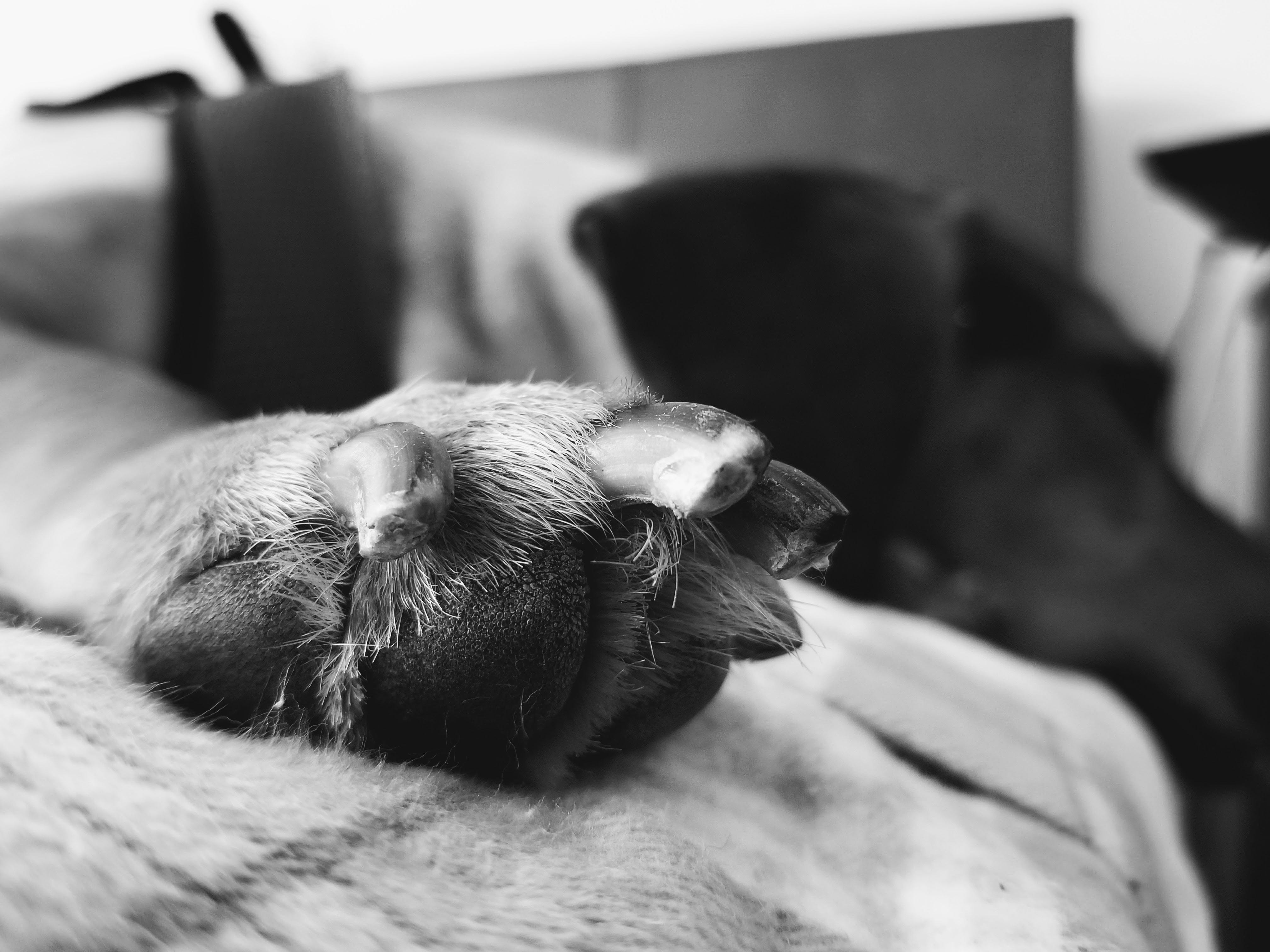
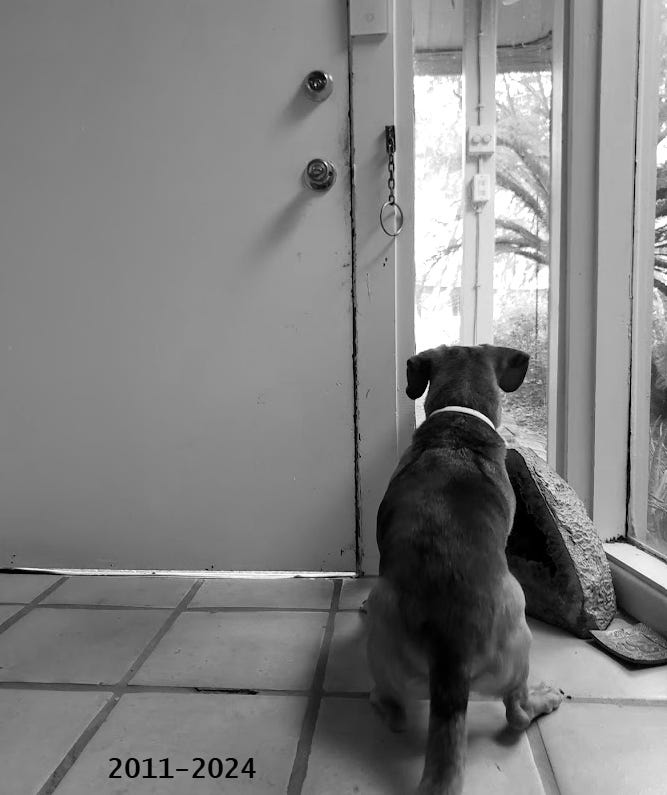
It began with a cold spot on the rug.For thirteen years, that space beside my bed was a place of warmth, of solid, breathing life. Now, it’s just… empty. And in the dead of night, when I swing my feet over the side of the bed, the cold that rises from that patch of floor seems to travel right up my legs and settle deep inside my chest. A permanent chill.People have told me, with the best intentions, that he’s in a better place. They say it like a prayer, a comforting verse meant to soothe. I nod, because it’s easier than explaining that I don’t need him to be in a better place. I just need him to be here. I need the ghost-weight of his head on my knee, the low, rumbling sigh that could quiet a storm in my own soul.Grief is a strange country. It has no map. Last year, when he left, something inside me was torn open. It wasn’t a slow tearing, like old fabric. It was a puncture. A clean, silent, piercing wound right through the center of who I was. No one could see it, of course. I went to work. I bought groceries. I smiled when it was expected. But I was walking around with a hole in my soul, and the wind whistled through it with every lonely step.I see how they look at me now. At my ear.I see the flicker in their eyes. A small judgment, quick and quiet. A piercing. On a person like me. It doesn't fit their story. They see it as an act of vanity, maybe rebellion. A fleeting choice made in a moment of… what? They don't know. So they file it away under a label. Strange. A phase. Not something we would do.I want to stop them. To take their hand and say, Please, just for a moment, look closer.I want to tell them about his paws. About the way he hated having his nails trimmed. He wasn't aggressive, just… offended. He’d let out a groan, a sound of profound theatrical betrayal, as if I were a tyrant engaging in unspeakable cruelty. He’d pull his foot back with the dignity of a wronged king. He was a grumbling philosopher, a furry old man full of complaints and endless, unconditional love.The last time, his protest was weak. Just a whisper of his old indignation. The fight had gone out of him. The click of the clippers felt deafening in the stillness of the room. One small, curved piece fell to the floor. I picked it up. It was nothing. A fragment of keratin. The stuff of dust and hair.But as I closed my hand around it, a truth flooded me, so powerful it buckled my knees. There is no diamond forged in the pressures of the earth, no gold purified by fire, that could hold a fraction of the value of this tiny piece of him. This was a relic of our life. It was a testament to thirteen years of muddy footprints, of shared silences, of a loyalty so pure it felt like something holy. It was a piece of the earth he walked on, a piece of the body that housed the most beautiful soul I have ever known.The hole was already there, you see. Inside me. Raw and aching. An empty space that echoed with the silence.And I realized I could not let it stay empty. A wound that profound cannot simply be left to scar over in darkness. It must be consecrated. It must be marked.The needle was a sharp, clean sting. A brief, physical echo of a much deeper pain. But in that moment, I wasn't desecrating my body. I was building a tiny altar. I was sealing a covenant. I was placing a witness in the silence.This isn't a stone. It’s not a gem. It is a piece of his nail, encased forever. It is the last physical part of him on this earth, and I have placed it here, right next to where I listen to the world. So that when the silence is too much, I can lift my hand to my ear and feel it. A tiny, solid point of contact with a love that big.And I can hear him. Oh, I can hear him so clearly. The low growl that was his way of saying hello. The impatient snort that meant his dinner was late. The soft thump of his tail against the floor.This is not a decoration. This is a duty. A devotion. It is a promise that he will not be forgotten. It is the only way I know how to carry him with me, not just in my heart, but as a visible part of me. The piercing in my soul happened the day he died. This, here in my ear, is just the scar. And I will wear it with more honor than any crown.Love leaves a mark on us. Sometimes, the mark is a memory. Sometimes, it’s a change in the way we breathe. And sometimes, if you are very, very lucky, you get to carry a piece of that love with you, for all to see.People build cathedrals to honor what they deem holy, placing relics of saints behind glass. They kneel and they pray and they hope to feel a connection to something divine. My saint had four paws and a soul so pure it taught me everything I know about unconditional love. I couldn't build him a cathedral of stone. So I built him one of skin and memory, right here where I can feel it.To most, this might look like a piercing. To me, this is a prayer I get to wear. This is a public episode. If you would like to discuss this with other subscribers or get access to bonus episodes, visit e
Our walk isn't over
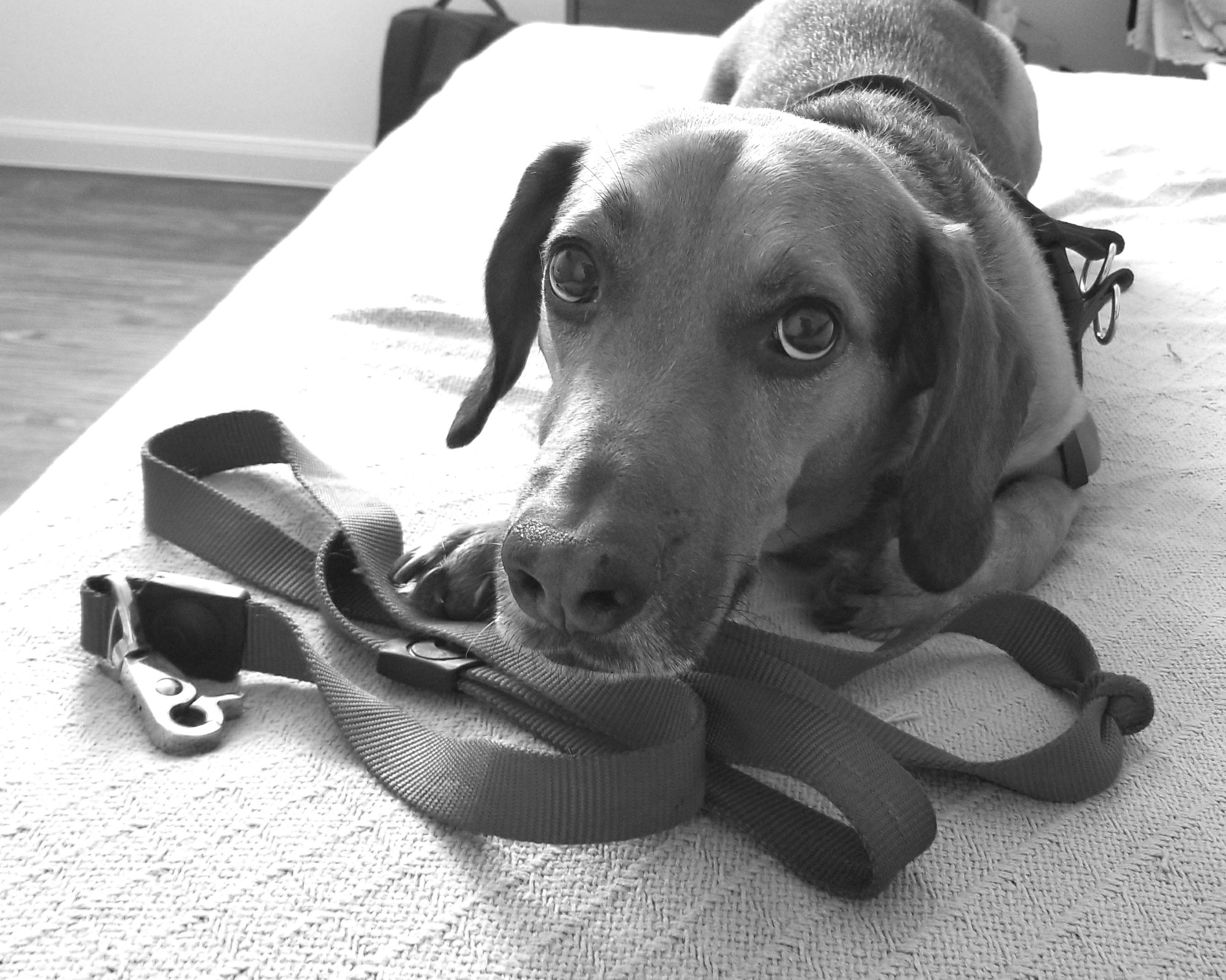
The air is heavy today.It’s a thick blanket I can’t push away with my nose. Each breath is work. A mountain I have to climb, just to get a little bit of air at the top. And then, I have to climb it all over again. The fog in my chest has a taste… like old metal, like rain left too long in a can. It’s been here for a while, this fog. It came with the long car rides, the quiet rooms with clean smells, the gentle hands of strangers who were trying to help.My dads. They tried so hard. I felt their hope like a warm patch of sun on my fur. I leaned into it, let it soak into my bones, even when my bones ached with a deep, weary cold. They never gave up, so I couldn’t either. That’s not my job.My job has always been to protect.I remember the rhythm of it. The morning walk, my head held high, my body a solid, steady shield between them and the yapping little dogs that strained at their leashes. A low growl in my chest was a fence, warning them all: These are my people. Stay back. My bark was a hammer against the door when the delivery driver lingered too long, his strange scent an invasion of our safe space. I guarded the windows, my ears twitching at the sound of footsteps on the pavement. I was the keeper of this kingdom, the guardian of their hearts. It was the best job in the world.But the fog grew thicker. The mountain grew steeper. My legs, once pillars of strength, became trembling twigs. My bark, once a thunderclap, became a hollow cough.There was only one thing left to do. One last patrol. One final duty.June 9th.I knew the date not by the calendar on the wall, but by the quiet hum inside my person. It was his day. A day that always smelled of cake and felt like extra-long belly rubs. I couldn’t miss it. I promised myself I wouldn’t. Through the long, dark nights when the mountain felt impossible to climb, I would whisper it to myself. Just until his day. Just hold on.This morning, something shifted. A thread of light appeared in the darkness, and I knew. It was time. My body was an anchor, heavy with the weight of 13 years, but my will… my will was still the guardian. I dragged myself from my bed, each movement a fire in my joints, and nudged his hand with my nose. Once. Twice.His eyes opened. He saw me. He saw me. Not just the tired old dog, but the sentry still at his post.The next few hours were… light. The fog seemed to part, just for a little while. We sat on the floor together, the two of them and me. And there was cheese. And eggs. And then… the king of all smells. The scent that is joy itself. Chicken. He fed it to me from his hand, piece by glorious piece. I didn’t have much room inside me, but I made space. This was more than food. It was a gift. A shared silence. I rested my head on his knee, and his hand stroked my ears, just like he always has. In his eyes, I saw everything. All the walks, all the games of fetch, all the quiet nights on the sofa. All the love.It was enough. It was everything.But the light began to fade. The mountain returned, bigger than ever. My next breath didn’t come. And the one after that was a painful, shallow gasp. The panic in the room wasn’t mine; it was theirs. I could taste it in the air, a sharp, bitter scent that broke my heart.The car ride was a blur of soft blankets and whispered words. The vet’s office smelled cold and clean, a place with no memories. A kind woman spoke in a low voice. I couldn’t understand the words, but I felt them. I felt their meaning land in my dad’s heart. I felt his quiet sob, a vibration that ran from his hand, through my fur, and into my very soul.He’s only been holding on for you, the feeling said. His love is the only thing keeping that brave heart beating.They held me close. My humans. My job. As their tears fell onto my fur, I looked deep into their eyes, and I understood my final duty. It was not just to wait for them. It was to merge with them.I let go of the rope. I stopped climbing the mountain. And my last breath… it was not an ending. It was a transfer.I breathed out all that I was—the ferocious loyalty, the unwavering pride, the boundless love that fueled my weary body—and they, in their grief, breathed it in. In that sacred, silent moment, the space between us dissolved. The line separating my love for them and their love for me vanished. It all became one.There is no "here" and "there" anymore.There is only… us.I am the sudden memory of chicken that makes him smile through his tears. I am the phantom weight of my head on his neck when he feels alone. I am the instinct that will tell him he is safe, a low, steady growl in his soul. The guardian did not die. The guardian simply went home.He will think he is mourning a memory, but he will be living a presence. My love is not something they have lost; it is the quiet, unbreakable strength they now find in their own hearts. And when they walk out into the world, they will not walk alone -I will never let them. They each will walk with the courage of two hearts, beating as one.
No More Missing Files
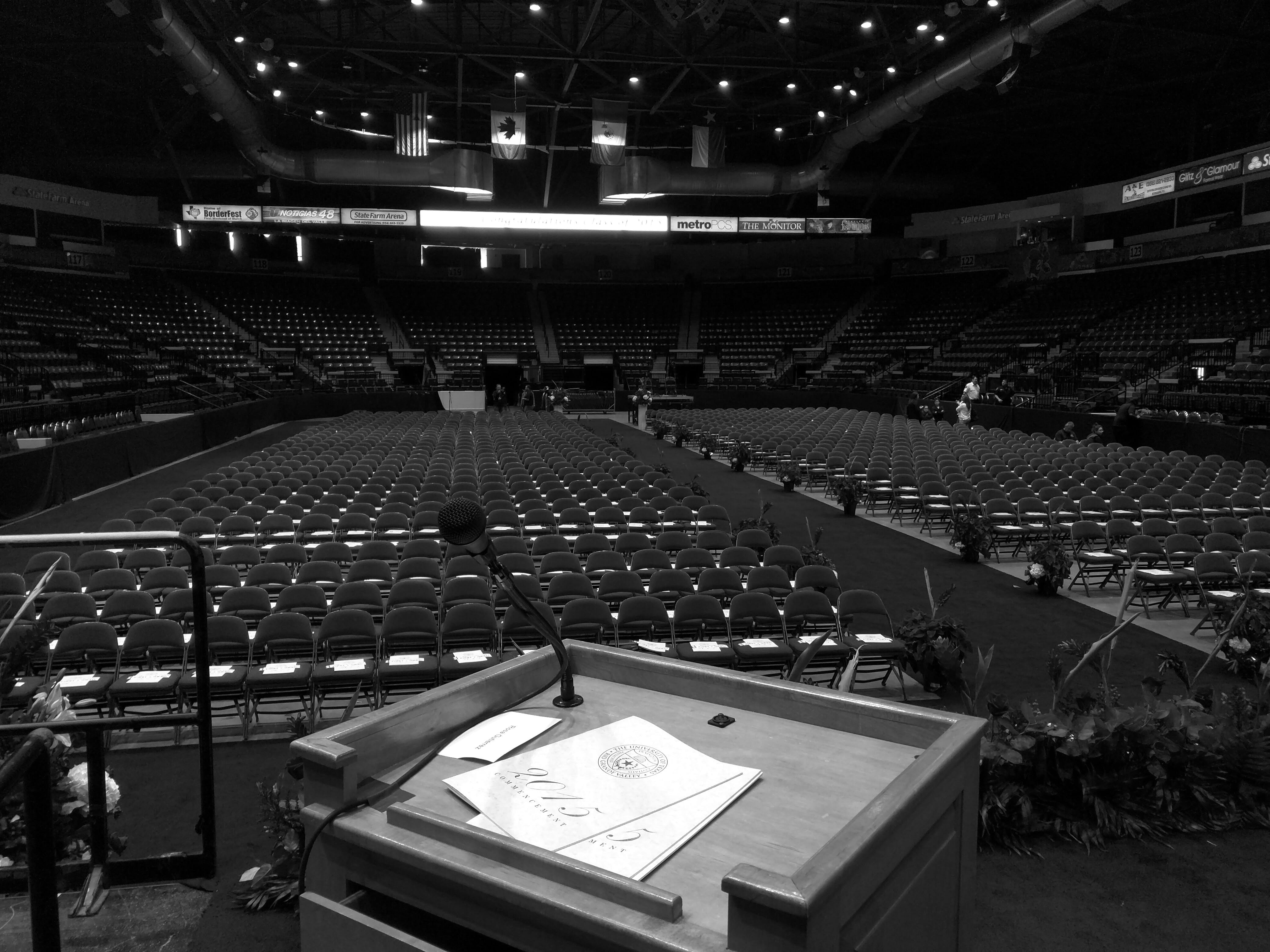
The low, steady hum of the air conditioning and murmur of the distant crowd is my prelude. A sound I’ve come to associate with a specific kind of peace, a quiet readiness. Forty. This is the fortieth time I’ve stood here, in the cool, engineered dark, watching the final checks on the jumbotron. The scent of ozone, thousands of flowers, and old dust is the same. The nervous energy seeping through the curtains from the arena, that’s the same, too. Only I am different.Fifteen years ago, I sat out there, under the glare of lights that felt accusatory. My gown was a dead weight. That morning, a single headline on my phone screen had shattered my world: Senate Fails to Pass DREAM Act. A future, erased. The piece of paper I was about to receive felt like a taunt, a key to a house that had just been padlocked from the inside. I remember thinking, with a clarity that terrified me, that I just wanted it all to stop.The sadness was so intense, I wanted everything to end.The universe wasn’t done. A few weeks later, desperate to find some proof that the day had meant something, I tried to find the recording of my ceremony. There were three that day. Mine was the only one that was gone. “A technical glitch,” they said, with an apologetic shrug. “The file was corrupted. Unrecoverable.”So not only was my future erased, but my past was, too. The one moment of public acknowledgment for years of struggle, vanished. An echo that left no sound.That erasure became my mission. When I started here, I was a frantic one-man band, phone in hand, trying to capture every smile, every tearful hug. I was trying to save their memories because mine was lost to the void. When Facebook rolled out live video, I fought for us to be in the beta. We had to build a system that wouldn't fail.My team grew. The frantic running became calm coordination. Now, I oversee the entire digital ecosystem—the streams, the comments, the archives. During my own master's graduation a few years back, standing like them in my own cap and gown, I felt my phone buzz.A desperate WhatsApp from the video production manager: “Main feed is stuttering!” I remember my heart seizing. I handed my program and mini-fan to a startled stagehand, my thumbs flying across the screen, troubleshooting the problem.I fixed it, then jogged to my seat just as my row was called. I had to secure the archive before I could let myself be in it.I look at the monitors now, at the river of comments scrolling by from families across the world. I see my team, a symphony of quiet diligence, guarding this experience. And the ghost of that old ache, the one that hollowed me out fifteen years ago… it’s still here. It never truly leaves. Actually, I think this is why I cry every single time we start playing Pomp and Circumstance.But my heart doesn’t beat with that old despair anymore. It beats with this strange, holy, protective fierceness for thousands of people I will never know.This isn’t a job. It is a calling. It is the sacred, silent vow of a ghost who was once lost in the machine, who now dedicates his life to ensuring that the machine never, ever fails another soul. It is the quiet, defiant act of forging an anchor for their memory, so that no matter how adrift the world makes them feel, they can always find their way back to this moment, to this proof that they were here.That they mattered. That they get to keep their beginning, radiant and indelible, safe from the void, forever.My mission is to ensure that for every single one of these students, this sacred moment is not just seen, but saved. Indelible. A light that can never be corrupted, never be erased. This has become my faith.That in the great, ever-expanding archive of human hope, there will be no more missing files.Not on my watch. This is a public episode. If you would like to discuss this with other subscribers or get access to bonus episodes, visit empathynode.substack.com
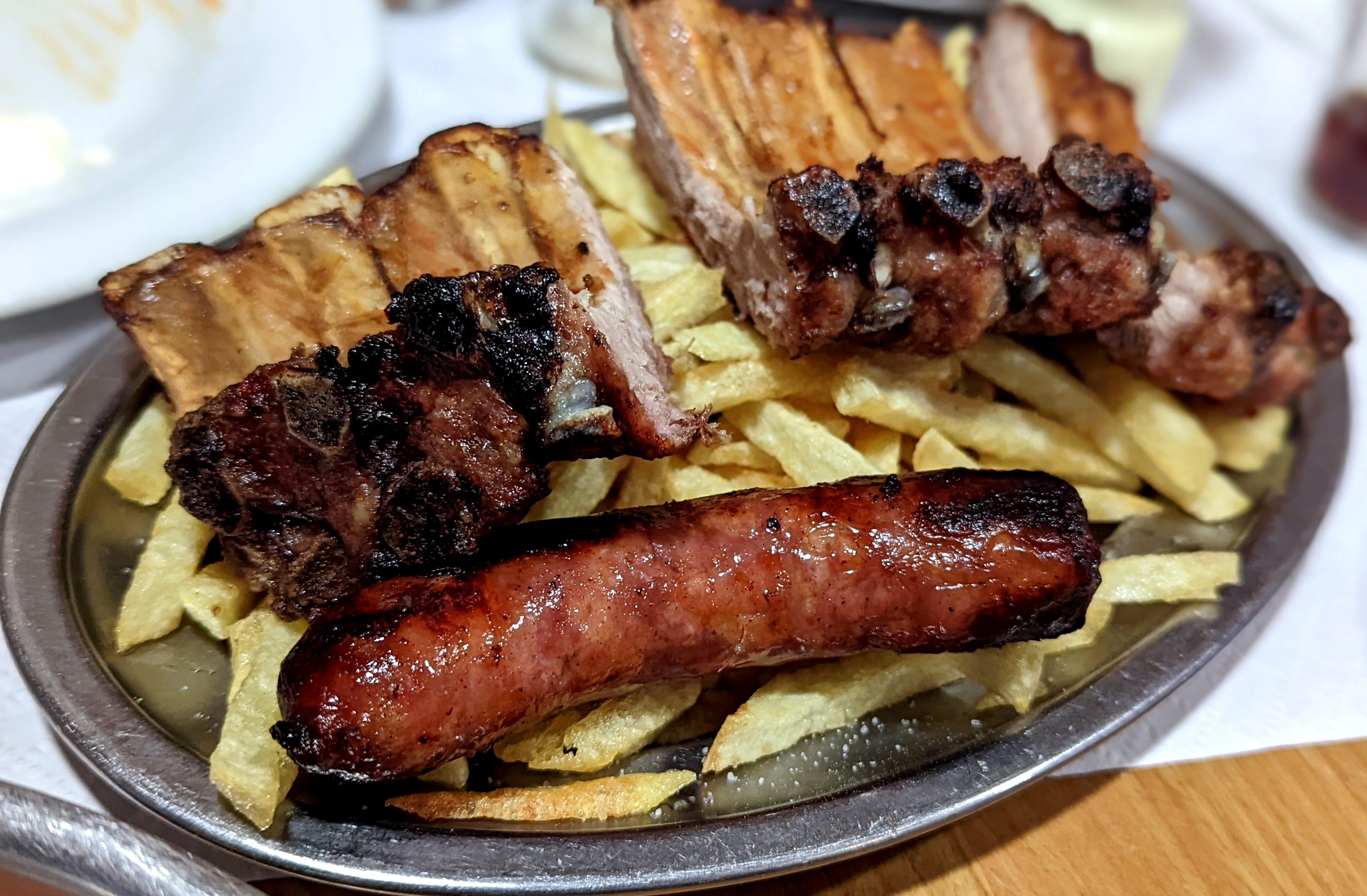
A Feast in the Time of Fear
I can still see her face, that soft glow in her eyes cutting through the chill of a world unraveling. It was March 13, 2020, and we’d been walking the Camino de Santiago—my family and I—chasing some whisper of meaning along those ancient trails. But meaning twisted into survival when we reached one of the loneliest stretches of Spain. The news hit like a gust: coronavirus spreading, businesses shuttering, panic tightening its grip. The Spanish government had just ordered everything closed—shops, restaurants, albergues—everything. Yet the orders were a mess, muddled and conflicting. One village shouted stay put, the next urged move on. We were stranded, miles from anywhere, our packs heavy, our stomachs hollow. We needed food, just enough to reach a town with a bus, a way out.The dust clung to my boots as we trudged through a tiny cluster of houses, the silence oppressive—not peace, but fear holding its breath. Signs glared from shop doors: Cerrado. Windows shut tight, streets deserted. The world was locking up, and we were slipping through the cracks. Then there she was, standing outside her home. Carmen. Her presence a flicker of light in the dusk. We must’ve looked desperate, because she called out, her voice warm, unguarded. I hesitated, my throat dry as I explained we were searching for something to eat, anything to keep going. I braced for rejection, for doors to stay closed like everywhere else. But she didn’t flinch. She swung open her albergue—her sanctuary—when the world was slamming shut.The smell hit me first: ribs roasting, Favada simmering, rich and earthy. She laid out a feast—plates piled high—and I sat there, fork trembling, feeling the weight lift with every bite. Relief washed over me, warm and sharp, but guilt gnawed too. Why us? Why now, when she was risking so much? I glanced at her, searching for the fear she must’ve felt, wondering what it cost her to let us in. She didn’t speak of the virus, but her hands moved with quiet resolve, like she’d decided kindness outweighed the consequences.Then I heard it—her voice, hushed, slipping through the kitchen door. She was on the phone, words tumbling fast, her tone taut. “Sí, lo sé… la orden del gobierno… multas, tal vez más…” I pieced it together: the government’s orders, the threat of fines, maybe worse—sanctions from local authorities breathing down her neck. My chest tightened. She wasn’t just risking her health; she was defying the law, her livelihood, her safety, all for strangers. “Están hambrientos, solos…” she said—they’re hungry, alone. Her heart was bigger than the fear, bigger than the rules. I wanted to stand, to tell her we’d manage, that she didn’t have to do this—but my legs stayed rooted, pinned by gratitude and shame.She returned, her face calm, but I saw it now: the worry flickering in her eyes, the smile that didn’t quite reach them. She was scared, like us, yet she chose to reach out. That meal wasn’t just sustenance—it was strength to keep walking, to find a bus, a plane, a way home. But it was more. It was a quiet, unshakable lesson in courage, in humanity, when the world seemed to forget both.Three years later, I went back. I’d rehearsed it—the words I’d say, how I’d tell her her bravery had sewn itself into me, held us up when everything crumbled. I pictured her smile, maybe softer with age, still radiant. But her daughter met me instead. A look, a gentle shake of her head, and I knew. She was gone. The air vanished from my lungs, and I stood there, clutching a thank-you I’d waited too long to deliver.Now, with this letter she’ll never read, I keep asking—did she know? Did she feel how her kindness rippled, how it carried us? I trace her memory—the laugh, the clink of plates, the warmth of that room—and I wonder what it cost her to open that door. I think of my own hesitations, the times I’ve held back, afraid of losing something. She didn’t. Her heart was bigger, and that’s lodged deep, a challenge I can’t ignore.But it’s not just a memory—it’s a call. I’ve started looking for ways to be brave like her, to reach out when it’s easier to retreat. Last week, I saw a man on the street, his sign begging for food. I nearly kept walking, but her face flashed in my mind. I stopped, bought him a meal, sat with him. It wasn’t grand, but it was something. And in that moment, I felt her—her spirit, her heart—still alive, guiding me.I imagine her somewhere bright, her spirit free, watching the paths she helped us walk. I can’t say thank you the way I planned, but I feel it—pouring into this letter, into the way I see strangers now, seeking that same spark of grace. She taught me what I didn’t know I needed: that even when fear grips tight, there’s power in sharing what little you have.We’re all connected. her hand stretched to us, and now mine stretches too, because of her.So, thank you, Carmen—wherever you are. You fed us, yes, but you gave more.You showed me how to be brave, how to be kind, how to be human when the world forgets
A Picture of Everything
It’s funny, isn’t it? How something you’ve never seen can still feel like a ghost limb. Like an ache in a place you can’t quite locate, but you know, you know something’s missing. For as long as I can remember, it’s been like that. A gap. A silence whenever the word ‘dad’ floated into the air – from TV shows, from friends talking about weekend trips, from those Father’s Day commercials that always felt like a subtle kind of…mockery.Mom just… wouldn’t. Wouldn’t talk. Wouldn't explain. Just a tight set to her jaw, a dismissive wave of her hand, and then silence. A silence thicker than any wall.She’d said he was gone. Died. A long time ago, even before I was really aware of things. And for years, that’s all there was. A closed door. A locked room in the house of my life. And you don’t push, not really, when you see that kind of pain flicker in someone’s eyes. You learn to tiptoe around it. To accept the shape of your world as it is, even if it feels…incomplete.I guess part of me always just filed it away. ‘No dad, story over.’ But underneath, a little seedling of ‘but…?’ always managed to sprout. Who was he? What did he look like? Was there a flicker of me in him? Or was I just… me? An island, unconnected.Then that ancestry thing. Just a whim, really. Curiosity, maybe. Spit in a tube, send it off, forget about it. Until the email popped up. ‘Close relative match.’ A cousin. Third cousin, twice removed, something like that. Didn’t really matter the degree, just…cousin. On that side. The side that was supposed to be a blank.Messages back and forth. Hesitant at first. Like we were both afraid to touch something fragile. Then, slowly, stories started to unfurl. Grandparents, great-grandparents… familiar names from Mom’s rare, whispered mentions of family. And then… it. Casual, almost throwaway. “Oh, yeah, I have some old family photos, somewhere. Let me see…”Days went by. Days that stretched out, filled with this quiet, trembling anticipation I couldn’t quite name. Hope? Nervousness? A weird kind of… reverence? It felt almost sacrilegious to want this, to dig into this closed-off part of Mom’s life. But the wanting was there, a deep, insistent thrumming.Then another message. “Found it! It’s not great quality, faded a bit, but… here he is.” A file attached. I stared at it. Just a thumbnail image. Grainy, indistinct. My heart… suddenly, it’s hammering. Louder than I expected. Louder than anything should be for just… a picture.I almost didn’t click. Almost closed the laptop. What if it was… nothing? What if it was just some blurry face that meant nothing, changed nothing? What if it just made the ache worse?But my finger moved. Mouse clicked. Image opened. Slowly, it loaded. Line by line, the pixels resolving, forming… a face.And… oh.It’s him. It has to be. Even faded, even in the distance of time and technology, there’s… a recognition. Not a memory, because there are no memories. But something deeper. Something in the shape of his eyes, the set of his jaw… a faint, almost ghostly echo of…me.He’s younger than I am now, in the picture. Smiling, a little crookedly. Looking off to the side, as if someone just said something funny. He’s… real. Solid. Not a ghost, not a story, not a silence. A person. My person.And it’s… mundane, isn’t it? Just a picture. Just a man, smiling. But it’s shattering. Shattering the years of… nothing. Of absence. Of that locked room in my heart.I trace the lines of his face on the screen with my finger. The curve of his eyebrow, the faint lines around his eyes that hint at laughter, at living. And it hits me, with this quiet force, that he was real. He existed. Not just in some abstract idea of ‘father,’ but as a person. A man who laughed, who smiled, who… was.And I am… connected. Suddenly, that feeling of being an island recedes. There’s a continent. A landmass. A root system that stretches back, back further than I ever knew. It’s not just Mom and me, adrift. There’s… him. There was him. And somehow, inexplicably, that ‘was’ transforms into an ‘is.’I’m looking at my own face, reflected back across time, across mystery. I see… me. But I also see… him. And in that seeing, something clicks into place. Something that was loose, untethered, suddenly… finds its anchor.It’s not about blame, or anger, or even understanding the ‘why’ of it all, not right now. It’s just… seeing. Recognizing. Being seen. Being recognized. Feeling… real. For the first time, truly real. Like I was always half a drawing, and now someone’s finally filled in the missing lines. Colored me in. Made me whole.It’s just a picture. But it’s everything. This is a public episode. If you would like to discuss this with other subscribers or get access to bonus episodes, visit empathynode.substack.com
When Playtime Seeds Purpose
The noise of the dial-up modem was the soundtrack to my adolescence. Back then, the internet felt like a secret world unfolding on the glowing screen of our family’s chunky computer. My domain wasn’t a treehouse or a sports field, but the chaotic, exhilarating landscape of early MySpace profiles. It sounds ridiculous now, the sheer intensity I poured into crafting those personalized pages. My own, a monument to teenage angst and questionable musical taste, was constantly evolving. But the real buzz came when my friends started asking. "Dude, can you fix my background?" "Make mine all dark and mysterious?" "Can you put this band's logo right here?"HTML felt like a forbidden language, a code whispered about in the hushed tones of nascent online forums. Information was scarce, fragmented. You had to dig, follow obscure links, piece together snippets of code from half-forgotten tutorials. Frustration was a constant companion, a tight knot in my stomach as some tag stubbornly refused to cooperate.But when that image finally aligned perfectly, when the custom font loaded just so, a thrill would shoot through me, a feeling of pure, unadulterated creation. It wasn't about the likes or the followers – those weren't really a thing yet. It was the satisfaction of bending this digital space to my will, of making something unique exist.MySpace profiles? It seemed trivial, a goofy teenage pastime. Little did I know, I was building more than just flashy pages. I was learning the raw logic of structure, the power of visual communication, the almost obsessive attention to detail required to bring an idea to life.It wasn't just about picking colors; it was about understanding how elements interacted, how to solve problems when things went haywire, and most importantly, how to listen to what someone wanted, even if they couldn’t articulate it perfectly. Those whispered requests from friends weren't just for favors; they were early validation. A silent acknowledgment of a skill, however nascent.Then came graduation, high school, and college a few years later. And then, the cold, hard reality of the Great Recession. The air crackled with anxiety. News reports spoke of job losses and economic turmoil. The future felt less like a vast, open road and more like a brick wall looming closer. My diploma felt flimsy, my limited work experience utterly insignificant.“Adapt or perish,” I remember hearing back then. The words echoed with a cruel irony. What did adapting even look like in this landscape?But that quiet hum, that persistent spark, wouldn't die. The glow of that old monitor, the sting of frustration, the sweet taste of digital victory – it all kept flickering in my mind. Building MySpace pages seemed like a lifetime ago, a childish indulgence. But those late nights wrestling with code, that problem-solving grit – what if there was something there? What if that seemingly silly passion held a key?Websites for businesses? Back then, it felt like suggesting they invest in a personal spaceship. Most considered it an outlandish expense, an unnecessary frill. But I saw something else. I saw potential. I saw a new frontier for connection, for communication.The whispers of possibility grew into a defiant shout in my head. I started small, embarrassingly so. Craigslist ads, plain and simple. A small box in the local newspaper, easily overlooked. “Website Design – Affordable Rates.” I was essentially selling a concept, an idea most weren't even considering.The silence was initially disheartening. Doubts gnawed. Had I completely lost my mind? Then, a flicker. A hesitant email from a local bakery wanting to sell their cakes online. A phone call followed from an electrician wanting to list his services in a way that felt “professional.” Before long, a plastic surgeon reached out, eager to present before-and-after galleries to prospective clients. Slowly, painstakingly, the tide began to turn. They started to see it too.A website wasn't just a fancy digital brochure; it was a storefront open 24/7, a place to answer questions before they were even asked, a way to connect with customers they might never reach otherwise. My “web design business,” a phrase that still felt strange to say, started to breathe.Now, the rhythmic tapping of keyboards fills the office. My team – talented designers, sharp-eyed developers, SEO gurus who speak in algorithms – are immersed in their work. My title is Director now, and it still feels surreal sometimes, a heavy mantle I never expected to wear. We build complex platforms, intricate e-commerce sites, data-driven applications. The simplicity of those early MySpace days feels almost prehistoric. Back then, if you did a website, you were simply a “webmaster.” One title to encompass everything. Now, there’s an entire constellation of specialized skills.The other day, I saw a group of teenagers huddled together, not building websites, but crafting elaborate TikTok videos, meticulously editing every frame, choosing
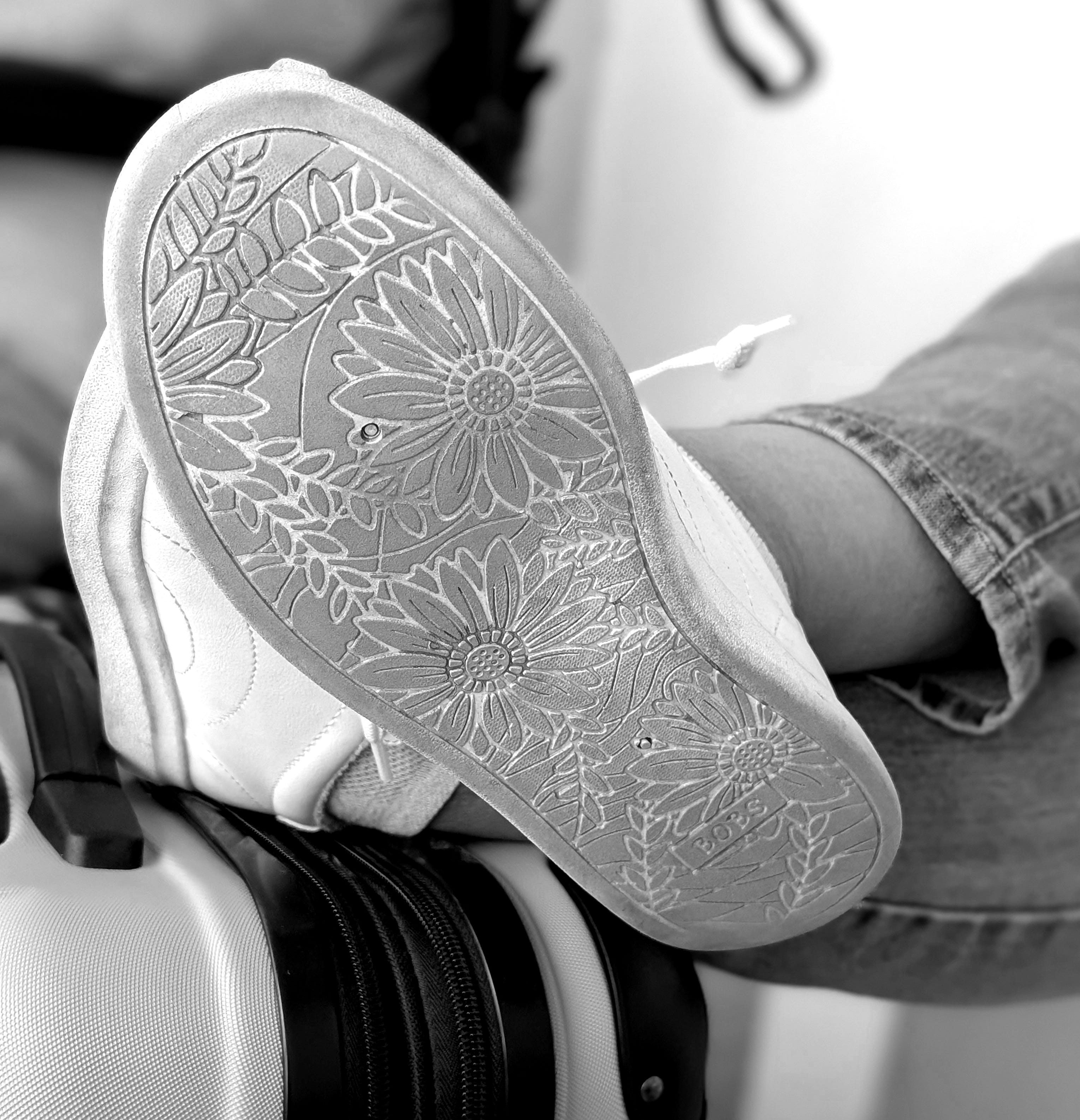
Unseen Blossoms
The corner of my eye caught it first, a fleeting impression on the tiled station floor. We were trailing behind her, the usual family gaggle, navigating the slightly gritty expanse as we waited for our train. Her laughter, a bright bell cutting through the muffled announcements and the rumble of distant tracks. It was a faint dusting, delicate and unexpectedly floral against the worn tiles. A double take confirmed it: with each step, the tread of her tennis shoe was leaving a perfect miniature blossom in its wake. A tiny petunia, I think, or maybe a forget-me-not. Something gentle and unassuming, tracked from the patch of dirt we’d just crossed.I blinked, and the image snagged a loose thread in my mind, a curious juxtaposition against the starkness of the station. Her, bustling ahead, a whirlwind of cheerful greetings and easy conversations. She leaves a trail of light wherever she goes, always has. The harried-looking woman behind the ticket counter morphing from weary efficiency to a genuine smile after a brief exchange about the unpredictable train schedule. The frazzled mother struggling with a stroller letting out a soft chuckle at some silly observation about the price of platform coffee. Even that gruff-looking security guard we saw once, the one with the perpetually bored expression, had his posture ease as she asked him, with that disarming sincerity of hers, if he'd managed to grab a lunch break yet. It's like she carries a portable patch of sunshine, deploying it wherever she lands, even in the echoing confines of a train station.But these silent, blooming footprints… they felt like a different language entirely. A language of gentle persistence, a subtle poetry woven into the hurried rhythm of travelers. She’s always been a force, a human dynamo of empathy, but this… this was something quiet, an unspoken grace.“Hey,” I called out, gesturing towards the subtle floral patterns fading under passing feet. We’d just stepped off that random patch of dirt next to the restrooms. “Your shoes are leaving little flowers on the floor.”She stopped, turning with that familiar wide smile, the one that crinkles the corners of her eyes. “These old things? Good support for standing, that’s for sure.” She glanced down at her feet, a slight tilt of her head, the bright white of the worn tennis shoes a stark contrast to the patterned residue on the tile. No dawning recognition, no awareness of the artistic echo trailing her.“No, look,” I pointed to a particularly clear imprint near the base of a metal pillar. The delicate petals, the slight curve of a stem, outlined in the fine layer of dust. “The soles… they’re patterned.”Her brow furrowed, a rare moment of confusion replacing the usual easygoing expression. She lifted her foot, turning it this way and that, as if inspecting a newly discovered species. A small “Oh!” escaped her lips, more of surprise than understanding. She genuinely hadn’t noticed the subtle artistry of her shoe’s tread.That’s the thing about the light you carry, isn't it? You’re so busy radiating, so focused on the reaching out, the connecting, that you rarely see the wake you leave behind. You’re immersed in the doing, the giving, the offering of comfort and connection, one heartfelt smile at a time. Here, amidst the transient energy of the train station, she embodies that role even when off-duty. She is a traveling nurse.Tending to the invisible anxieties of strangers with a kind word or a genuine smile. Those spaces, I imagine, like the adult day care centers, can be heavy with unspoken needs and the quiet loneliness of those seeking connection. And then she moves through, a burst of everyday warmth, her presence a comforting constant. She asks about their travels, truly listens to the hurried responses, offers a moment of levity, a genuine smile. She sees past the luggage and the destinations, sees the person still there, navigating their own small dramas, yearning for a flicker of human contact.And it extends beyond her work, doesn’t it? That effortless ability to connect, to ease the stiffness in others. She’s never truly ‘off duty.’ Even here, waiting for the train, she’s a force for quiet connection. It’s just… her. A natural extension of who she is. To give a moment of brightness, a flicker of warmth. It’s a generosity of spirit so ingrained it’s become unconscious.Standing there, watching her still slightly bewildered by the floral evidence of her passage across the station floor, it struck me with a quiet force. How often are we ourselves unknowingly leaving these marks? Not always blooms, of course, especially on a station platform. Sometimes the prints we leave are scuffed, hurried, leaving traces of our impatience or our indifference. A clipped word on the phone, a frustrated sigh directed at no one in particular, the way we push past someone without making eye contact. Those marks linger too, shaping the atmosphere of shared spaces, the micro-interactions that make up a day.But her
Saltillo Tile Always Remembers
Dust motes were illuminated as they danced in the afternoon sun of Merida. Each mote a tiny spotlight on the uneven surface beneath my sandals. There was a low thrum of humid heat and distant traffic, but I could focus with intense precision on what I was there to examine. There it was, amongst all of the new, carefully laid stones: A solitary square. Saltillo. Unvarnished. Eroded. It was as if someone were whispering to me from another time—a whisper made audible by the old, discolored surface right beneath the canopy where waiters now balanced trays of cochinita pibil. I could feel the press of dancing feet, the swirl of skirts, the muffled laughter rising up from that faded tile. I wondered how many stories its porous clay had absorbed, like ink spilled on blotting paper. Each scuff and softened edge, it seemed to me, was a silent testament to moments lived, moments that had vanished into the past but were forever imprinted on that unvarnished square.And then a sharp thought surfaced—the pristine harshness of the newly laid Saltillo in my house. “Damn that impulse buy!” I cursed, remembering that feeling of “rustic charm” that made the tiles in the showroom seem so much more appealing than they now did. I now knew its flaw: unsealed. Any drip, any accidental nudge—it was all recorded on the vulnerable terracotta. I remembered the first coffee spill and the immediate panic that washed over me as I frantically scrubbed to remove it. I was left, after much toiling and scrubbing, with the lingering shadow that was a mocking reminder of my carelessness. They were supposed to be perfect; they were supposed to be a blank canvas that reflected the well-ordered life that I was striving to live. Instead, I was now experiencing a chaotic history of small mishaps. A splatter of paint from one of my less-than-stellar attempts to become an artist. A faint greasy circle—a trace of a midnight snack hastily devoured. Each stain felt like a personal failure.That worn-out tile in Merida gave me new perspective. Its imperfections weren’t flaws; they were a history. It was a narrative made of clay. I glanced inward, my mind’s eye falling back on my house’s mottled expanse. Near the doorway, I spied those nearly imperceptible scratches. It was the frantic slide of my dog's tiny paws and nails as he tried to maintain purchase on the slick surface. Gone a year now, the absence still made my chest hurt from time to time. I saw, then, that those scratches weren't imperfections; they were the ghost of his joyful greetings and clumsy enthusiasm.My eyes moved to another mark. Near the back door, there was a dark patch from all that messy action. I thought about that stray dog, how skinny and scared she was, how she found her sanctuary with us. Then I remembered, one chilly morning, the quiet surprises huddled in a corner: a litter of tiny pups, tiny whimpers, blind paws searching. The stain was there to commemorate a mother’s instinct to feed her young, to keep them alive—and my instinct, as one of the humans, to clean up the chaotic mess that ensued. It wasn’t a blemish; it was a testament to a surge of unexpected life—a connection to something wild and vulnerable. I nearly forgot the immense and overwhelming responsibility, the exhaustion, and the tenderness.Near the counter, there was a faint reddish halo. It was from last year’s Christmas. Too much merriment and good cheer, too much cinnamon whiskey, and then…a tipped glass. My eyes softened at this thought. I remembered all the off-key singalongs, all of the imperfect friction we always have, all the moments of joy. The stain wasn't a sign of clumsiness; it was the trace of shared warmth, voices raised in song (however off-key), and a profound (yet fleeting) feeling of belonging.And the thought occurred to me, unbidden, like a sudden settling of previously choppy waters: These aren't imperfections. They are echoes. Whispers of the moments that would have been lost in the relentless tide of days. My initial desire for a perfectly sealed and clean tile felt, suddenly, hollow and shallow. The tile in Merida wasn’t perfect; it was beautiful because it wasn't. Its imperfections were its connection to the many feet that had stepped on it, the many lives that had revolved around it. My own floor, marked and stained, was telling its story: a richer, much more meaningful tale than any perfect surface could ever dream of. The coldness I used to feel as I looked at these marks was gone, replaced with a strange, unfamiliar tenderness. These stains, after all, were proof—proof that we had lived, loved, stumbled, and cared within these walls. The Saltillo wasn't just a floor; it was a witness to our small, daily miracles. It remembered fleeting pets, the noisy gatherings, and the everyday acts of care. In its porous, imperfect way, it was showing me the beauty of a life lived fully, beautifully imprinted onto the foundation of our house. The panic and frustration were gone, replaced by a pro
Feeling Our Way Through the Dawn of the Machines
The steam curls, a soft specter against the ceramic of my mug. This barista is an impressive human; I respect the care he takes in preparing my beverage. He remembers my order—a fleeting hesitation, that slight catch in the breath, before I ask for oat milk—small things, but altogether they are decidedly human. My AI assistant is competent—it schedules meetings and drafts emails that sometimes sound eerily like me—but it will never notice the slight wrinkle in the barista's brow when he tamps the espresso. This is something to consider: What becomes of small acts of human kindness and the quiet dignity of doing good work? And how will technology shape the future of that "ordinary human doing ordinary work," I ask myself, when the world figures out how to automate something as basic as tending to a customer with a simple drink?My mind, like a projector, shows a fast-paced reel of faces. I remember Mom, the hands she developed from a decade's worth of troweling plaster. She had this way of coaxing texture onto the walls, layer by layer, and she did this with the visceral satisfaction that she somehow helped create a transformation. If one of those AI-powered robots were to try to copy that feeling of satisfaction—to mimic the almost imperceptible changes that human artists bring to their work—then what? How would that be? Doubt arises. It suggests there might be more to worry about than merely the disruption of the traditional workforce. Yes, it's about efficiency and freeing up labor for parts of the work machines can't duplicate. But those concerns, the kind of concerns any decent person might have, feel, at this moment, a bit cold and shallow— like a cold draft coming from under the door.Grandma, yesterday, spoke her questions in a voice that sounded like soft waves. "So this 'thing,' as you called it… it takes over the secretary job that I used to do?" The chuckle at the end of the question is more melancholic than amused. Her days, now, are filled with crosswords—a peaceful retirement, I try to tell myself. And yet, a painful pang surfaces. That feeling of satisfaction that used to come with perfectly typed letters, with that quiet competence of running an efficient office—all of it replaced by the digital assistants I have championed? We made this change in the name of progress—so that she can have all that time back to herself—and it feels like the translation of that intention was somehow… off.A sigh is emitted from the cashier when my groceries are scanned. The Uber driver’s joke about the traffic, which always seems to be terrible. The anonymous faces, those fleeting interactions that are, really, all too easily replaceable in the constant pursuit of higher efficiency. These are the kinds of moments I have begun to consider in my growing interest in artificial intelligence. When I gush to people about its power, when I share my little tips and tricks, and when I talk about its power for good in the world, do I sound like I am also cheerleading the redundancy of human labor? Does that excitement sound shallow, especially coming from me, one of those who believes in the power of the technology to solve big problems? But what problems are we trying to solve? And, more importantly, whom, exactly, are we freeing from these tasks—tasks that, perhaps, are not necessarily things from which they desire freedom?My mind feels like it’s working at cross-purposes. On the one hand, I see so much potential, so many possibilities. I believe with all my heart that these tools can free us from those repetitive, soul-sucking tasks and free us to connect more fully with our creativity. On the other hand, there's that barista’s hands, so quick to prepare my beverage, and suddenly, the algorithmic future feels less like a bright utopia and more like some blunt, unwieldy, instrument. A scalpel is designed for accuracy, but it’s cold, mechanical, unfeeling. It lacks an understanding of the ecosystems it can, and quite frequently does, disrupt.Grandma's voice reverberates in my thoughts: "That was my job." Not just a series of tasks she did or a job title, though those were important to her. It was her way of giving back, participating in the broader community, feeling useful. The calm order of the documents that were perfectly filed and the ease of knowing how to manage an active schedule was something that helped to ground her. Her work gave her a sense of self—a way to make meaning.It's not the loss of jobs I'm worried about; that would be too simple. What I'm worried about, really, is the erosion of purpose, that yawning chasm of fear that separates those who can seamlessly embrace the digital revolution from those who are left behind, struggling. It all feels much bigger than I had first imagined. Suddenly, my well-intentioned advice feels trite—something akin to handing an overly complex algebra equation to someone who, more than anything, needs a helping hand, a warm smile, a little bit of recognition that they are h
Weight of a Digital Photo
Ever feel the weight of a photograph? This week on The Empathy Node, explore how a single image sparked a profound personal transformation. Subscribe for free and discover stories that reveal the hidden depths within ordinary moments.The flashbulb memory is a persistent little gremlin, even eight years on. Not the physical sting, not anymore, but the echo of it, a pinpoint of bright self-consciousness in the dark theater of my mind. Smile, she’d said, a casual request, and I’d done the thing, the automatic rictus you pull for cameras, a mask that rarely feels like me. But the picture. That damn picture. It’s a lodestone, pulling at the edges of my past, a digital ghost I can’t quite exorcise.The blue shirt. It's the first thing that jumps out, a vivid splash of color against the muted background of the celebration. A blue I distinctly remember thinking looked okay in the mirror that morning. Lies. The fabric strained, pulled taut across a belly that had become an unwelcome guest. I remember subtly trying to angle myself, tucking my elbows in, hoping to minimize the… expansion. Useless. The camera sees all, captures what the kindest eyes might choose to ignore.Seeing it then, instantly, on her phone screen, felt like a punch to the gut, a physical recoil. Not just a simple dislike of how I looked. It was a stark, undeniable truth reflected back at me – a truth I’d been actively avoiding for months, maybe years. That wasn’t just a bit of extra weight. That was me. And it was… unsettling. Like catching a stranger in the mirror, someone who’d moved into your life and started wearing your clothes.My jawline blurred, softer, less defined. The hint of a double chin, something I’d never really had to contend with before, staring back with brutal honesty. A wave of heat prickled my skin, a deep, visceral embarrassment. His arm around me felt… encompassing, yes, but also like a gentle attempt to contain something that was spilling over. The dog, bless him, a whirlwind of joyous energy and flapping ears, the only one truly untainted by the moment's awkwardness.Later, that picture became a recurring self-inflicted wound. Tucked away in the endless scroll of digital images, it would ambush me at the most unexpected times. Flicking through photos, searching for a memory of a trip, a funny moment with the dog, and there it would be, the blue shirt looming, a photographic testament to a version of myself I desperately wanted to disown. Each encounter sparked the same familiar litany of self-recrimination.How did I let it get this bad? It wasn’t just vanity, though that played its part, a nagging unease about the changing shape of my body. It was a deeper discomfort, a feeling of being out of sync, like my physical self no longer aligned with the man I felt I still was, or at least the man I remembered being.New Year’s Eve. The forced gaiety, the bubbly in hand, the hollow promises of change hanging thick in the air. Resolutions. Usually just fleeting thoughts, easily discarded by mid-January. But that year, after seeing that picture, the word felt different. Heavier. That blue shirt became a symbol, a visual representation of everything I’d let slide. It wasn’t just about losing weight; it was about reclaiming something I’d lost – a sense of control, a feeling of being comfortable in my own skin, a connection to a past version of myself that felt more authentic.The initial weeks were a chaotic scramble, a flailing attempt to regain control. Every diet imaginable – gleaned from online forums, whispered recommendations, desperate late-night searches – became a temporary obsession. Each failed attempt, each initial burst of enthusiasm followed by inevitable relapse, fueled a growing sense of despair. The picture mocked me from my phone, a silent judge holding up a damning piece of evidence. See? it seemed to say. You’re not strong enough. You’ll always be this way.The frustration was a constant companion, a gnawing feeling that I was trapped in a body I no longer recognized. And the thought of more photos, of capturing more moments in this physical state, became a source of genuine anxiety. That’s why some people hate photos, I think. It’s not the act itself, but the fear of the truth they might reveal, the unflattering reflection of a reality they’re struggling to accept. The curated Instagram feeds, the careful selection of angles – it’s often a shield, a way to control the narrative when the reality feels overwhelming.Then came Keto. Another buzzword, another promise of transformation. Honestly, I went into it with a heavy dose of cynicism. But something shifted. Not overnight, not without struggle. There were the initial carb cravings, the headaches, the mental battles against years of ingrained habits. But slowly, gradually, almost imperceptibly at first, things started to change.The sluggishness that had become my default setting began to lift. The constant, low-level fatigue started to dissipate. And the scale, initial
Cilantro Spaghetti Is Enough
What if a single story could change how you see the world? Subscribe to The Empathy Node for weekly doses of profound human connection. It is free. 😊The steam curls up, carrying the bright, grassy scent of cilantro. It's almost… defiant, this smell. It’s not the rich, smoky perfume that usually blankets my kitchen on Christmas Eve. Not the sweet tang of peach glaze, or the deeper, woodsy notes of a bird slowly yielding to smoke. My fingers still remember the heft of those turkeys, the methodical basting, the almost ritualistic dance around the oven. Six, sometimes eight courses, each a carefully considered note in a symphony of flavor. That was… then.Now, the stainless steel pot feels lighter, the wooden spoon stirring a familiar but different rhythm. Just spaghetti. Cilantro spaghetti. My stomach clenches a little, a familiar knot of anxiety tightening. This city feels vast, indifferent. Just me, the kids, and now his small, earnest face at my table. My sobrino. Another plate, another chair, another worry folded into the already too-tight corners of my mind.The clatter of forks is a small, sharp sound in the quiet apartment. I watch them eat, each strand of green-flecked pasta disappearing with surprising speed. Are they… happy? Their faces are turned down, focused on their plates. I search for a flicker of disappointment, a shadow of comparison to the Christmases past. The ones filled with crisp skin and gravy boats, with jewel-toned vegetables and the hushed reverence that accompanied the unveiling of each dish.Then, his voice, small and clear. “I’m done with my spaghetti. Can I have what is next?”A wave of something hot and sharp washes over me. Shame? Embarrassment? It claws at my throat, stealing my breath for a moment. The carefully constructed facade of normalcy feels like it’s about to crumble. My carefully rehearsed, cheerful mask feels thin, translucent. The words catch in my throat, tasting like ash.“We… we only have spaghetti tonight.” The confession hangs in the air, heavy and exposed. I brace myself for the inevitable letdown, the polite but thinly veiled disappointment I’ve anticipated since the first pang of financial worry tightened its grip.But then… nothing. A pause, a flicker of surprise in his young eyes, and then… a shrug. A tiny, almost imperceptible lift of his shoulders. He looks back down at his empty plate, then up at me again, a small smile playing on his lips. “It was really good spaghetti.”And then, a chorus. “Yeah, it’s yummy!” “Can I have some more?” “This is my favorite kind!”A strange warmth begins to bloom in my chest, pushing back against the cold knot of anxiety. It’s unexpected, this lightness. Like a sunbeam breaking through a cloudy sky. I watch their faces, really see them, not through the filter of my own perceived inadequacy, but as they are. Present. Content. Enjoying the simple, slightly tangy flavor of cilantro and garlic.My mind races, trying to reconcile this reality with the ingrained belief that Christmas, real Christmas, meant abundance. Elaborate feasts. Effortless extravagance. The ghosts of past celebrations whisper in my ears, the clinking of champagne flutes, the murmur of appreciative voices. Those memories feel suddenly distant, like looking at a photograph of someone else’s life.A warmth spreads through me, not just in my chest, but down to my fingertips, a gentle thawing. It’s the warmth of connection, of shared experience. They aren’t comparing, aren’t judging. They’re simply… here. With me. Eating spaghetti. And they are happy.A tear pricks at the corner of my eye, not from sadness, but from a startling sense of release. It’s like a tightly wound spring suddenly loosening. For so long, I’ve measured my worth, my success as a mother, by the scale of my Christmas productions. The more elaborate the meal, the more love I felt I was giving, proving. But in this simple, unexpected moment, the truth hits me with quiet force: love isn’t measured in courses, or in the price tag of ingredients. It’s in the shared laughter, the clean plates, the uncomplicated joy reflected in their eyes.The cilantro’s bright scent no longer feels defiant, but honest. Unpretentious. And the taste… the taste isn’t one of lack, but of enough. More than enough. It’s the taste of resilience, of navigating a new landscape, of finding joy in the unexpected simplicity. It's the taste of love served without artifice, received without judgment. The echo of their happy murmurs resonates within me, a quiet symphony of contentment that drowns out the ghosts of Christmases past. This isn't the Christmas I planned, but somehow, it feels like the Christmas my heart needed. A gentle reminder that sometimes, the most profound connections are forged not in extravagance, but in the shared warmth of a simple meal, seasoned with love and a surprising abundance of grace. The shift is subtle, yet profound. The yearning for what was softens into a quiet appreciation for what is. And in that spac
The Pizza Commercial
Craving heartfelt stories twice a week? Subscribe to The Empathy Node and explore the threads that bind us all. Dive in and discover a world of shared humanity—right in your inbox, free.The fluorescent lights hum, a quiet counterpoint to the nervous energy crackling through the room. I stand at the front, ostensibly shuffling papers, but my eyes flicker across the sea of faces before me. Beneath the veneer of academic focus, I see it – the subtle signs of a deeper hunger.It's pizza commercial day in Social Media and E-Marketing. On paper, it's about audience targeting and narrative construction. In reality, it's become something far more elemental.The first time I brought food, it was almost an afterthought. A box of stale donuts to celebrate a grant approval. I watched as one student, quiet and always hunched in the back row, pocketed three. My initial reaction – a flare of irritation – haunts me still. It wasn't until weeks later, overhearing a hushed conversation about missed meals and overdue rent, that understanding dawned with painful clarity.I remember those days. The hollow ache that no amount of caffeine could mask. Trying to focus on lectures while mentally calculating if I could stretch my last pack of ramen for one more day. The shame of it all, carefully hidden behind a facade of academic dedication.Now, I watch as they enter, eyes darting to the stack of pizza boxes by my desk. I've stopped announcing it, stopped making it a reward. It simply... is. A constant, like the hum of the lights or the scent of dry-erase markers."Let's see those storyboards," I say, my voice steady despite the lump in my throat. They gather in groups, the shuffle of papers mingling with nervous laughter. And then, as the first box opens, releasing a cloud of yeasty warmth, something shifts.Shoulders relax. Smiles come easier. The quiet one who never speaks now gestures animatedly, describing a camera angle. Another student, who I've seen lingering by the vending machines with empty pockets, takes a second slice without hesitation.It's not just about filling stomachs. It's about nourishing something deeper. In this moment, we're not professor and students, separated by grades and expectations. We're human beings, sharing in a fundamental act of community.As they work, trading ideas and building narratives, I see flashes of brilliance emerging. Unencumbered by immediate hunger, their creativity flourishes. They're not just learning about marketing; they're learning about connection, about seeing the humanity in each other and in themselves.When class ends, they file out, leaving behind empty boxes and the lingering scent of cheese and possibility. One student pauses at the door, meeting my eyes. No words are exchanged, but the look conveys volumes. Gratitude, yes, but something more – recognition. In that moment, we see each other, truly see each other, beyond our assigned roles.I gather the remnants, my heart full. This won't solve systemic inequality or erase the myriad challenges they face. But for a few hours each week, in this room warmed by more than just pizza, we create a space where everyone's basic needs are met. Where hunger – of body and of spirit – is acknowledged and, however briefly, satisfied.And in that satisfaction, something profound takes root. The understanding that beneath our differences, our struggles, our individual journeys, we share a common hunger. For knowledge, yes, but also for connection, for dignity, for the simple grace of being seen.As I turn off the lights, the fluorescent hum fading, I carry this truth with me: We are all, in our own ways, both hungry and capable of nourishing each other. Sometimes, the most important lesson isn't found in any textbook, but in the quiet act of breaking bread together. And that is a lesson worth savoring. This is a public episode. If you would like to discuss this with other subscribers or get access to bonus episodes, visit empathynode.substack.com
Beyond An Ordinary Name
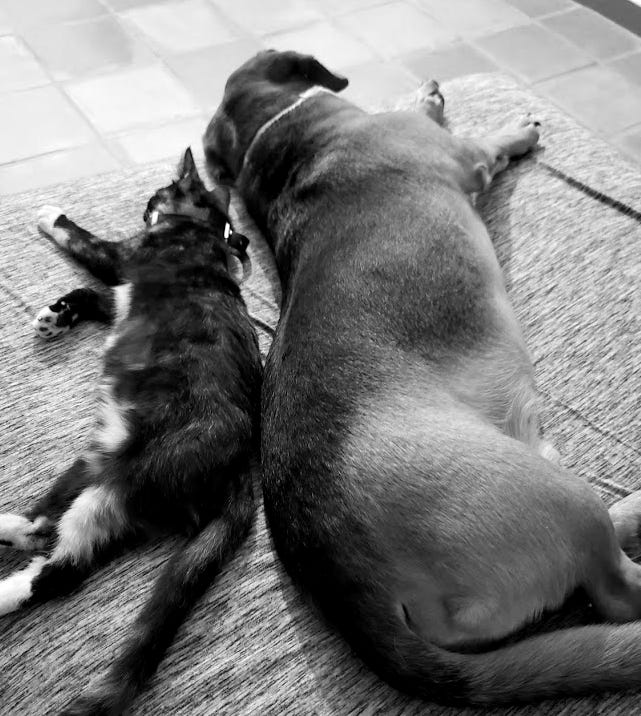
What if just one story each week could transform your worldview? Subscribe to The Empathy Node and discover the extraordinary in everyday lives.I never meant to love her. That was the first mistake.The late winter sun was setting over the parking lot when I saw her – a tiny ball of fur determinedly wobbling toward me. I remember thinking, “No, please don't. I already have a dog. My life is organized, planned. I don't need complications.”But there she was, flopping onto her back, tiny paws batting at the air like she'd rehearsed this moment. Her eyes held that peculiar wisdom kittens sometimes have, as if she knew exactly what she was doing to my carefully maintained emotional boundaries. The pavement was still warm from the day's heat, and all I could think was how it would feel under her delicate body when the cars came rushing in tomorrow morning."Just for tonight," I whispered to myself, scooping her up. "Tomorrow, straight to the shelter. Don't even think about naming her."That night, something extraordinary happened. Jueves, my dog, met her. I expected the usual chaos that comes with introducing a dog to a cat. Instead, this unnamed kitten took one look at him and decided he was her mother.The sight of this tiny creature attempting to nurse from my bewildered dog melted something in me. But I held firm. "She's just 'Cat,'" I'd tell anyone who asked. "She's temporary." Even as weeks turned into months, and months into years, she remained simply "Cat" – my final fortress against complete attachment.Jueves and Cat developed their own language. She appointed herself his guardian, patrolling windows, demanding with insistent meows that he come inside when he lingered in the yard. Their bond defied my attempts at emotional distance, weaving itself into the rhythm of our daily lives.Then Jueves left us. Cancer took him away from us.The first 3 AM after he passed, I woke to Cat's frantic meowing. There she was, running from window to window, calling for him just as she always had. My initial reaction was frustration – “Please, not now. I can barely handle my own grief.”But as I watched her continue her ritual night after night, something shifted in my understanding. She wasn't just acting out of habit; she was mourning him in the only way she knew how. While I processed my grief through tears and memories, she processed hers through this nightly vigil, maintaining her role as his guardian even across the veil of existence.Now, when the clock strikes three and her meows echo through the house, I no longer try to quiet her. Instead, I whisper, "Yes, I miss him too." Sometimes I imagine him is out there, just beyond the window, wagging his tail at our shared remembrance. In those moments, I realize that grief itself is a form of love that transcends species, names, and all our careful plans to keep our hearts protected.She never did make it to that shelter.I never did name her properly. She's still just "Cat." But perhaps that simplicity holds its own profound truth – some bonds don't need elaborate names to be real. They just need to be honored, even at 3 AM, when the world is quiet enough to hear the echo of a love that refuses to be temporary. This is a public episode. If you would like to discuss this with other subscribers or get access to bonus episodes, visit empathynode.substack.com
Finding Home
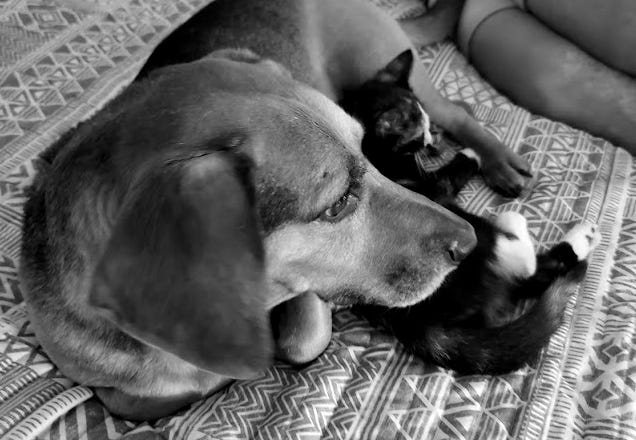
Dare to see the world through new eyes? Join The Empathy Node for a weekly glimpse into human experiences that illuminate how we’re all connected.I was so small when I first saw them – the big feet walking across the dark ground where the giant moving boxes sleep. I was scared, hungry, and alone, but something inside me knew – this one, this human, they needed me as much as I needed them.I gathered all my courage (and believe me, being tiny doesn't mean you can't be brave) and ran straight toward those feet. Humans usually love it when we little ones show our bellies – it's our secret weapon, you see. So I flopped over, right there on the warm ground, showing my spotty tummy and thinking *Please, please understand.*They tried to resist – humans often do at first. I could sense their hesitation, hear their words about "shelters" and "just one night." But I knew better. Sometimes we cats have to save humans from their own stubbornness.Then I met Him. Oh, He was magnificent! So big, so warm, so... motherly. The humans called him "HOO-eh-ves" I didn't care that he was what they call a "dog" – I knew instantly he was meant to be my mom. I tried to nurse from him (embarrassing now that I think about it, but I was very young and very determined).The human kept calling me "Cat." Just Cat. No fancy name like HOO-eh-ves. I didn't mind – I knew they were trying not to love me. Humans can be funny that way, thinking if they don't name something, they won't care about it. We cats know better – love doesn't need names."HOO-eh-ves" taught me so many things. He showed me the best sunspots in the house, though I had to teach him how to properly appreciate a windowsill. I made it my job to protect him. When he went outside, I would call and call until he came back in where it was safe. The human would shake their head, but "HOO-eh-ves" understood. We had our own language, he and I.Then one day, they left him outside, for a very long timeI search for him every night when the world is dark and quiet. At the special time – the humans call it "3 AM" – I make my rounds. I check all his favorite spots, call out to him through every window. Sometimes I think I can sense him, just on the other side of the glass, watching over us like he used to.The human used to get upset when I did this, but now they understand. Sometimes they wake up and whisper to me, "Yes, I miss him too." We share these moments in the dark, my human and I, both remembering him in our own ways.They still call me just "Cat," and that's fine. Names aren't important when you've found your true family. Every morning, I curl up next to them, purring to let them know they're not alone. After all, that's why I chose them that day in the parking lot – some humans need a cat to help them remember how to love, even when it wasn't part of their plan.I never made it to that "shelter" place they mentioned. But then again, I never intended to. Sometimes humans need saving from their own plans, and we cats are very good at that. This is a public episode. If you would like to discuss this with other subscribers or get access to bonus episodes, visit empathynode.substack.com
A Compass Gifted by Silence
Think a story can’t change your life? Let The Empathy Node prove you wrong—subscribe for free to receive weekly reflections that challenge how you see the world.I remember sitting in that cramped examination room, my wife’s hand perched lightly on my shoulder, as if it were the only bridge tethering me to this moment. I can still feel the fluorescent hum—like a subtle pressure against my skull—and the soft clink of the doctor’s bracelets whenever she gestured. I had always found certain sounds oddly amplified, certain textures strangely intense. Her voice was calm, measured; I could see every vowel forming on her lips as she said those words: "It’s very likely that you are on the autism spectrum."I tried to smile—to respond, to show I understood—but it was like my entire language system had locked up. My gaze fell to the floor, tracing the grout lines between tiles, thinking how they seemed too straight, too perfect, how I never before noticed their tiny imperfections. My wife’s hand tightened just slightly. She must have felt my pulse rising through my shoulder’s tense muscles.In that moment, I felt raw. Exposed. The doctor’s office, with its posters of body systems and brochures about coping strategies, suddenly felt too bright, too honest. A piece of me wanted to run out, to vanish into the familiar routines where I could just “be” without explanation. But I stayed. I stayed because my wife was there, and because this doctor—kind but unflinching—was handing me an answer I never knew I needed.The shame came unexpectedly, a hot wave in my chest. Why shame? Why not relief? I suppose it was because I had spent my life doubting myself, assuming I was just too rigid, too locked inside my own head. There had been countless moments: My wife would say she needed comfort, and I’d try to solve her problems analytically, offering solutions rather than the hug she’d craved. I’d notice how people’s eyes drifted from mine at parties, how I struggled to read laughter unless it was so loud I could hear it echo. I’d try to show love through precise acts of service—alphabetizing spice racks, fixing that squeaky hinge, arranging our house meticulously—while she perhaps wondered why I didn’t just say, “I love you” in simple, straightforward words. Our misunderstandings had seemed random, like sandpaper against my good intentions.And now, this new word—this new lens—was placed in my hand: autism. I know it’s just a diagnostic category, a guidepost rather than a prison cell. Yet it explains so much: why I felt so alien at family gatherings, why the hum of the refrigerator at night felt as loud as a distant train, why my romantic gestures were more likely to be spreadsheets of details than spontaneous poetry. I am not broken, just different. My brain hums at a different frequency. It weaves connections others might miss, but struggles with the subtleties most people take for granted.The memory of my wedding day surfaces now. I recall my bride’s face, glowing with quiet joy. At the time, I was overwhelmed by the exactness of the moment—her dress’s white fabric reflecting the late afternoon sun, the way the officiant’s shoes squeaked against the wooden floor, the spacing of the guests’ chairs. I loved her so deeply, but I’m not sure if I ever told her in a way that struck the chord she needed. I see now that while I was busy counting steps to ensure a perfect entry, she was scanning my eyes for an unspoken tenderness I failed to show.But here I am, at the crossroads of understanding and self-acceptance, and I feel a deep stirring within. I don’t have to explain all my past choices away as failures. I can reinterpret them now. Those nights I sat quietly, fiddling with my hands, seemingly distant—maybe I was loving her fiercely in a silent language only I could hear. Perhaps, looking back, she’ll recognize the devotion threaded through my acts of careful attention: the way I learned to brew her favorite tea exactly at her preferred temperature, or how I memorized the patterns of her moods so I could anticipate what small comforts might bring her solace, even if I never knew how to label them as “love.”I glance at my wife now, her eyes shining with something new. Maybe it’s relief—finally understanding why I function the way I do. Maybe it’s compassion—an awakened empathy that runs in parallel to my own realization. In that brief exchange, I sense a gentle loosening inside me, a knot untangling. She squeezes my shoulder again, and I almost feel words passing silently between us. No blame, no pity, just understanding.I look back at the doctor, who is explaining resources, support networks, therapies if I want them. Her voice is steady. I sense that I’m not alone, that many adults discover this about themselves later in life, and that it’s not a tragedy but a revelation. She’s giving me a compass, and for the first time, I trust this compass—it’s pointing me toward a landscape of self-compassion, toward recognizing that I’m allowed to
I Didn't Know He Was on the Spectrum
Think one story can’t change your life? Subscribe for free to The Empathy Node and get a weekly dose of mind-opening tales that just might reshape your world.I remember the exact moment it clicked—like a gentle sigh in my mind, a quiet unraveling of thoughts that had always seemed so tangled. I’m sitting across from him at our small kitchen table, that wobbly one with scuffed legs we’ve never bothered to fix, watching him as he fiddles with the corner of his napkin. The light coming in through the window is harsh and bright; it feels like it’s dissecting every object in the room, every particle of dust, every crease on his face. I’m picking at my fingernails, inhaling too sharply. There’s a tightness in my chest, a shape of tension I’ve come to accept as part of our everyday life together, like a permanent houseguest who refuses to leave.For so long, I wondered why he never seemed to catch the subtle shifts in my mood, why my carefully chosen hints slid right past him like water off a plate. I wondered if he just didn’t care enough, or if there was a hidden reluctance behind his silence. I asked myself, again and again, why the comforting phrases I yearned to hear never arrived, why he preferred rigid routines over spontaneous escapes into the unknown, why he seemed utterly perplexed by my delight in small talk or my need to linger on the emotional texture of a memory.I can feel a lump in my throat, recalling those nights I ended up crying alone in the shower, hot water streaming over my face, masked tears blending into the steam. I carried so much resentment, feeling bruised by what I assumed was his refusal to meet me halfway. Yet there were these moments—scattered like tiny shells in sand—where he touched my hand lightly or pressed his head into my shoulder after a long day, and in those moments I sensed a kind of devotion beneath his guarded exterior. But how to connect those fleeting instances of warmth to the rest of his strange patterns?Our old physician retired, and the new one asked a few unexpected questions—casual queries that made me see my husband in a fresh light. She spoke openly about the adult autism spectrum, and as her words floated between us—my husband’s hand resting quietly in mine—I felt something in my chest release. Not in a bad way, not at all. More like a tightly wound string finally given permission to relax. I remember the hesitant look my husband gave me then, a gaze almost apologetic, as if he feared I’d be disappointed. I only squeezed his hand in return.But suddenly the memory of him meticulously sorting our spice jars or painstakingly scripting out what he’d say to my parents before our holiday visits hovered in my mind. The way he would stare at me blankly when I expected him to react with lively agreement. The subtle, careful tilt of his head when I asked him to guess what I felt. The slight terror and confusion that played on his face when I changed plans at the last minute. I closed my eyes and let the idea settle into my chest. It fit. It fit in a gentle, quiet way, as if a puzzle piece I never realized was missing had just snapped into place.Now, as I watch him at the table, I see him differently. I notice how his eyes dart between objects, how he’s bracing for my next move as if trying to predict the unpredictable. All my old frustrations feel suddenly weightless, like balloons drifting toward the ceiling. I lean forward and imagine what the world looks like through his eyes. Maybe every sound is sharper. Maybe subtle facial cues feel like a secret language he never learned. Maybe my impulsive emotional outbursts seem baffling to him, a code he hasn’t cracked. I sense that my old demands for him to behave more like me—more spontaneous, more talkative, more instinctively attuned to my moods—were cruel without my ever meaning them to be. It’s as if I was expecting him to speak a language he never learned, and getting angry when he stumbled over the words.There’s a slow warmth spreading through my chest now, a kind of compassionate ache. I no longer see his quietness as a deliberate barrier. Instead, it’s a gentle request for clarity, a need for me to say exactly what I feel instead of implying it, to be patient with his routines and celebrate them as signposts of stability in a chaotic world. Perhaps he is loving me in ways I never understood—showing devotion by remembering the shape of my coffee cup handle, or carefully ensuring that the bath towels are folded the same way each time, as if to give me some hidden comfort. I realize I was never neglected or unloved. I just didn’t know how to see it.I feel tears welling, but they aren’t tears of hurt or frustration now. They’re tears of release, as if an old knot in my chest has come undone. I stand up, walk around the table, and place my hand over his. He looks up, curious and a bit startled. I speak more softly than I’ve ever spoken before. I explain that I’m starting to understand. I don’t say everything perfectly, bu
The Day After Graduation
Could a single story alter how you see the world? Join The Empathy Node for free, and every week, we’ll send you a powerful narrative that deepens your empathy and broadens your horizons.The ceiling fan spins lazily above my bed, creating shadows that dance across last night's graduation gown, now draped like a deflated dream over my desk chair. It's 10:47 AM, and I haven't moved since waking an hour ago. There's something surreal about this morning-after feeling, like waking up the day following the Christmas you realized Santa wasn't real, or returning home after a long journey to find everything exactly where you left it, yet somehow different.Yesterday, I was transformation itself. The weight of the mortarboard, the collective energy of thousands of stories culminating in that single moment, the way Mom's eyes glistened as she straightened my hood. "Look at you, my love" she had whispered in Spanish, her voice catching. "the first one in the family." The memory still sends warmth through my chest, but now it feels like watching footage of someone else's life.The group chat is exploding with photos, memories, plans. Everyone's processing this threshold moment differently. Maria's already changed her LinkedIn status. Chris is talking about his upcoming move to Seattle. But I'm still here, in my childhood bedroom, surrounded by the same posters, the same books, the same everything – except I'm supposedly different now. Transformed. Complete.The irony doesn't escape me: three years of studying psychology, of learning about human behavior and cognitive processes, and yet I can't quite process my own emotions about this transition. The theories and frameworks that once seemed so clear now feel inadequate to explain this peculiar emptiness. Not sadness, exactly. More like the quiet after a thunderstorm, when the air is still charged but the drama has passed.My finger traces the embossed details of my diploma tube (they snail-mail the actual diploma six months AFTER you graduate). This tube supposedly validates everything I've become, but does it? I remember Dr. Benham's words: "The mind doesn't process change in real-time – it needs space to catch up with reality." Maybe that's what this morning is: my consciousness creating space, my neurons rewiring themselves around this new identity.A text notification breaks my thoughts. It's from Dad: "Proud of you, mijo. Coffee?" Such a simple message, but it hits differently today. Yesterday was all dramatic gestures and formal photographs. Today is just... life. Real life. The life I've been preparing for all these years.I sit up slowly, finally ready to face the day. The gown catches the morning light, and for a moment, I see it differently – not as a symbol of what I've finished, but of what I'm beginning. The weird feeling starts to make sense: it's not emptiness at all, but possibility. The space between stories. The pause between breaths.As I reach for my phone to reply to Dad, I realize something that three years of textbooks never taught me: sometimes the most profound moments aren't the ones with pomp and circumstance. They're these quiet aftermaths, these gentle mornings when we find ourselves suspended between who we were and who we're becoming."On my way," I text back. And somehow, typing those three simple words feels more real, more significant than any grand ceremony could. Because today isn't about endings or beginnings – it's about the sacred space between, where transformation truly happens.Standing up, I carefully hang the gown in my closet. Yesterday, it was a uniform that made us all look the same. Today, it's a reminder that each of us will wear our accomplishments differently. And that's exactly as it should be.Maybe that's the greatest lesson of all: learning to sit with the strangeness, to let change ripple through us at its own pace. The diploma might say I'm educated, but this morning is teaching me something far more valuable – how to be patient with the process of becoming. { “@context”: “https://schema.org”, “@type”: “BlogPosting”, “@id”: “https://empathynode.substack.com/p/the-day-after-graduation#blogposting”, “mainEntityOfPage”: { “@type”: “WebPage”, “@id”: “https://empathynode.substack.com/p/the-day-after-graduation” }, “url”: “https://empathynode.substack.com/p/the-day-after-graduation”, “headline”: “The Day After Graduation”, “description”: “A reflective narrative about the quiet morning after graduation—processing change, identity, and the space between endings and beginnings.”, “inLanguage”: “en”, “author”: { “@type”: “Person”, “name”: “The Empathy Node” }, “publisher”: { “@type”: “Organization”, “name”: “The Empathy Node”, “url”: “https://empathynode.substack.com/” } } This is a public episode. If you would like to discuss this with other subscribers or get access to bonus episodes, visit empathynode.substack.com