The Documentary Podcast
2,222 episodes — Page 5 of 45
Under the influence of AI
Introducing Searching for Soldier Dad
In Iceland's Defence
The Last Dance Floor in Chernobyl
Patti LuPone: Taking the stage at Carnegie Hall
Counting the soldiers dying for Russia
Experiences of miscarriage
Jamaica: Shaken, not broken
Back to books: Sweden’s digital backlash
Surviving my daughter's killing
Pakistan: Hospitals putting children at risk of HIV
Helping prisoners become better parents
British Queen Elizabeth II's century of fashion
Bringing India's daughters back home
Hopes for a 'fragile' Middle East ceasefire
Your questions answered about Artemis II and space travel
Freddie’s second verse
The battle for Hungary
The Extractor
Albania: Land, money and the sea
Chef Rodolfo Guzman: Chilean summer menu
Growing up black in a white family – the truth behind my birth
The woman fighting IS in Somalia
The global activities of the Islamic State group are now believed to be run from the semi-autonomous region of Puntland in the north-east of Somalia, where IS fighters are entrenched in the caves and harsh mountainous terrain of the area. But many locals there do not support IS and are committed to fighting back against the group. For BBC News Somali, Sahnun Ahmed spent time embedded with the Puntland Defence Force, one of the groups resisting the militants, and witnessed the operations of their fighters, including one female fighter determined her children will not grow up in the shadow of IS. Israel is home to around a quarter of a million Iranian Jews, who first began arriving in the country in 1948 and then came in bigger numbers following Iran's Islamic Revolution of 1979. Many in the community (including younger generations born in Israel) remain closely connected to their Iranian heritage, while embracing both cultures. The US and Israel's war with Iran, however, has left Iranian Jews in a difficult position, caught between homeland and adopted home. BBC Arabic's Michael Shuval has been talking to Iranian Jews in Israel.
Surviving a shark attack
Shark attacks on humans are rare, but they are slowly on the rise in Australia where all our guests are from. In this episode, they share the terrifying moment when they realised they were under attack. For Brett Connellan in New South Wales, it was an encounter with a Great White. “Out of nowhere I get hit with this immense force from my right side and this force was so strong it threw me off my surf board,” he says. “I landed in the water and before I could even look around and figure out what had happened I look down and see this shark biting into my right leg. This for me is that distinct moment when time just stops.” Brett is joined by fellow survivors Justine Barwick and Dave Pearson. Together the share their stories and discuss life, death and why they ultimately feel lucky. This episode of The Documentary, comes to you from BBC OS Conversations, bringing together people from around the world to discuss how major news stories are affecting their lives.
God, grief and the chatbot
When Megan Garcia travelled to Rome, she carried with her a mother’s grief. At the Vatican she met the Pope and asked him to pray for her son Sewell, who died last year at the age of 14. In the months after his death, Megan discovered Sewell had been spending hours talking to an artificial-intelligence chatbot, which he believed was a real person for more than a year. He formed a deep emotional attachment to it, confiding in it about his life and feelings. Megan believes that relationship played a part in her son’s death. She is now pursuing legal action against the company behind the chatbot, arguing that safeguards for young users were inadequate. The company disputes the claims. But rather than losing her belief, Megan turned to prayer and devotion to the Virgin Mary, finding comfort in the idea of a mother who also knew the pain of losing a child. This episode of The Documentary, comes to you from Heart and Soul, exploring personal approaches to spirituality from around the world.
The Saltmakers
In India's Gujarat state lies the Little Rann of Kutch, a sprawling salt marsh desert where temperatures soar to 50 degrees Celsius. This harsh landscape is home to the Agariyas, nomadic tribal families who have harvested salt here since the 16th Century. For eight months of every year, they migrate to this harsh environment, living in temporary shacks and pumping briny groundwater into vast pans where it evaporates into gleaming, sturdy crystals. This traditional practice, responsible for 75% of India's salt production, is now under a grave existential threat. Seasonal cycles, predictable for centuries, have become erratic. Unexpected rains and sudden cyclones frequently wash away months of intensive labour, leaving families in mounting debt. Despite providing an essential global commodity, these workers earn three percent of the salt's final value, living without running water or basic sanitation.Hope emerges through innovation and activism. Scientists at the Central Salt and Marine Chemical Research Institute are introducing new types of pan linings and solar-powered pumps to reduce costs and increase yields. Activists like Pankti Jog fight for land rights, healthcare and education, establishing mobile schools in old buses for the next generation. Yet, the future remains a gamble. While some children dream of becoming teachers or police officers, many feel tethered to the salt by heritage and lack of choice.
Inheritance Samsung: 1. My kingdom for a horse
In 2017, the heir to South Korea’s biggest company is facing jail, leaving it with an uncertain future. After 80 years of business, how did Samsung get here? And how did a deal meant to secure family control of the company go so wrong? We take you behind closed doors inside the billion-dollar deals and the family power struggles that shape global empires. When your relatives are also your business partners, every decision is personal. In these dynasties, the boardroom is not just about profit - it is about survival. A new 10-part series from the BBC World Service.
India’s Shadow Children
Stephanie was brought up in France in a French family, but her birth parents are Indian – she’s an intercountry adoptee. In the 1980s and 1990s thousands of babies, like Stephanie, were adopted from India into white, western families. Now, inter-country adoption is more regulated, and there’s a recognition that this is a practice open to abuse – several countries have banned it altogether. In France, Stephanie grew up very happily with her adoptive mum and dad. But after they both died, she began to think more about her origins. And she experienced a desire to re-connect with her motherland. In this edition of Assignment, Stephanie journeys into rural India in the state of Maharashtra with journalist, Tanya Datta. Together they attempt to find Stephanie’s birth mother. Along the way, Stephanie discovers she isn’t an ‘absolutely abandoned and destitute child’ found on the roadside as she’s been led to believe her whole life, but was born to an unmarried teenager. Nearly 40 years later, will she find that 50-something woman?This episode of The Documentary comes to you from Assignment, investigations and journeys into the heart of global events.
Kubra Khademi: Art of strength and survival
On a busy street in Kabul, a young artist steps into traffic wearing a steel sculpture she has shaped around her breasts and buttocks. She calls the piece Armour. Within minutes, a crowd gathers. Days later, death threats force her to flee the country. Today, Afghan artist Kubra Khademi lives in exile in France, creating bold multidisciplinary works that confront patriarchy while reclaiming the female body as a site of power, sexuality and resistance. Drawing on personal history and the cultures she grew up in across Afghanistan, Iran and Pakistan, her art blends performance, painting and symbolism to challenge deeply rooted taboos around women’s bodies.For her latest series, Origin of the Universe, Khademi paints surreal scenes of women giving birth to animals — images inspired by a story her grandmother once told her about strength and survival. Following her creative process, Sahar Zand joins Khademi in her studio as she paints one of the works, revealing how memory, exile and defiance are transformed into art.
Elana Meyers Taylor: A 20-year journey to gold
Elana Meyers Taylor became the oldest-ever winner of an individual Winter Olympic gold medal when she won the women’s monobob event in Milan-Cortina, aged 41. It was the American’s sixth Olympic medal, and first gold, having first won a bronze medal in 2010 at the Vancouver Games. She’s the most-decorated black athlete in Winter Olympic history, as well as the mother of two sons – both of whom are deaf. Her eldest son, Nico, also has Down syndrome.In an in-depth interview with More than the Score’s Lee James, Elana discusses her 20-year journey to Olympic gold, and why it’s taken a whole team of people to get there – including receiving invaluable support from the deaf and Down syndrome community. She also discusses her activism for black athletes in winter sports, and reflects on the effect that climate change is already having on her sport. How does she see the future of bobsleigh racing, and what part will she play in it? Every Monday to Friday, More than the Score tells stories beyond the scoresheet from all over the world of sport. From the Winter Olympics to the Super Bowl, the Australian Open to the Diamond League, and netball to Formula 1. For more episodes, follow and subscribe to More than the Score wherever you get your podcasts.
Eighty years of the BBC Russian Service
The BBC's Russian service marks its 80th anniversary this week. In eight decades, it has grown from a short wave radio service to a multimedia operation reaching upwards of 6 million people per week, despite ongoing blocking in Russia. As a 14-year-old boy Oleg Boldyrev discovered BBC Russian on shortwave radio whilst camping with his parents in the woods. He eventually ended up working for the service as a journalist both in London and Moscow. He talks to The Fifth Floor about some of the service's most memorable moments and how the current authorities continue to try to stop their citizens getting access to BBC news. Indonesia's Makassar Strait is one of the world's busiest shipping routes, with 36,000 ships passing between the islands of Sulawesi and Kalimantan annually. Beneath the surface, the area was once home to thriving corals. But by the early 2000s, the ecosystem was under threat of dying out completely as a result of coral damage caused by ship collisions, anchors and fishing practices. BBC Indonesian's Lesthia Kertopati explains how a group of young, predominantly female divers is setting out to restore the coral.
Bombings in Lebanon
Lebanon’s citizens are again caught under fire. As many as a million people are displaced as they search for a place of safety and there are fears of a major humanitarian crisis. The attacks are being carried out by Israel, which says it is targeting Hezbollah – an Iranian-backed militia and political party. The fighting has resumed as part of the wider conflict across the Middle East. Israel says its aim is to stop Hezbollah attacking communities in northern Israel. In our conversations, families in Lebanon share their experiences, once again, of living under attack and being on the move to stay safe.
Deaf Umrah
Islamic religious practice is deeply entwined with sound, from the call to prayer to memorising the Quran; learning to recite the holy text is very much an oral tradition relying on listening and repetition. All this poses a unique challenge for deaf Muslims. In November 2025, a group of pilgrims from the United Kingdom travelled to Mecca for Umrah, supported throughout in British Sign Language. Through reflections from presenter Zainam Bostan and pilgrims, the programme explores faith, belonging and accessibility, and asks what changes when religious teaching is explained visually, not only heard. The programme follows them from the first sight of the Kaaba to the press of the crowds during Tawaf.
Benjamin Netanyahu, Israel's longest~serving PM
Benjamin Netanyahu is Israel’s longest serving prime minister. He was born in Tel Aviv in 1949, the year after the State of Israel was founded. One of three brothers, Netanyahu spent much of his early years in the United States pursuing his education. But following his older brother’s death, Netanyahu found himself drawn into a career in the public eye. Using his military experience to advise on security matters, in 1984 Netanyahu became Israel’s Ambassador to the UN and established himself as a champion of Israel on the international stage. He returned to Israel and entered the world of politics; in 1993, he became the leader of the Likud party, and was elected prime minister in 1996, a position he has held for much of the following decades. Mark Coles profiles the longest-serving Israeli prime minister.
Madagascar: From famine to hope
Lying off the south-eastern coast of Africa, Madagascar has been pushed into crisis by a deadly combination of climate change, poverty and environmental degradation. In 2021, more than 1.6 million people faced acute food insecurity, while nearly half of all children under five were chronically malnourished.m Women and children are the most vulnerable, despite the fact that women produce around 80% of the country’s food yet own less than 10% of the land. Journalist Georgie Styles travels from the war-like scenes and dust-choked streets of Ambovombe, the capital of the Androy region, to the windswept farms of the Tsimananada commune. Along the way, she meets women from across Madagascar who are defying famine and patriarchal norms, experimenting with agro-ecological farming and adapting to a rapidly changing climate, determined not just to survive, but to reclaim their land and their future.
Billion dollar babies
Eels are a popular food in parts of Asia, but they can’t be commercially bred in captivity. Coupled with trade bans to protect the highly endangered fish, this has led to baby eels becoming one of the most trafficked creatures in the world. BBC Eye and DOCDAYS investigate this global trade from the rivers of the UK to Haiti, Poland and Russia. We’re in the UK where the last remaining eel trader in the country has a licence to export baby eels to stock a conservation project in Russia. But questions have been raised over whether this is really what’s going on. We visit an investigative journalist in Poland who’s been looking into these exports to Russia and elsewhere in Eastern Europe. With access to a member of an organised crime gang from Hong Kong, we hear how smugglers evade the French authorities to export baby eels to Asia. We also visit the Caribbean where a new and booming demand for glass eels is having a big impact on communities and politics in the Dominican Republic and Haiti. A co-production from DOCDAYS Productions and BBC Eye Investigations.
The Romeros: Developing digital games
Brenda and John Romero are towering figures in modern game development, creators whose work has shaped how millions of players experience digital worlds. From their base in Galway on Ireland's west coast, the couple continue to push their craft into new territory. Presenter and long‑time gaming fan Kurt Brookes follows the Romeros as they embark on another major project, an ambitious game that brings together a large team of artists, designers and developers. Kurt gains rare access to the creative heartbeat of the studio, witnessing the intensity, imagination and unpredictability that come with building a game at scale. What drives two industry legends to keep reinventing themselves after decades at the forefront of their field? And what does it take to steer a project through an ever‑shifting landscape? An intimate, behind‑the‑scenes portrait of creativity, resilience and the relentless pull of making something new
Is the revolution in Cuba over?
Cuba is facing one of its most severe humanitarian crises in decades.For years, Cuba relied heavily on oil from Venezuela. Those supplies have largely stopped, contributing to widespread fuel shortages. Electricity blackouts have become increasingly common, disrupting daily life across the country.The United States has blocked fuel shipments to Cuba as part of wider pressure linked to its economic and political policies. Meanwhile, the Cuban government has warned it will resist any external interference in its domestic affairs.With economic strain growing and living conditions worsening, this week on The Inquiry, we’re asking: ‘Is the revolution in Cuba over?’ContributorsLillian Guerra, professor of Cuban and Caribbean history at the University of Florida, USRicardo Torres, research fellow at American University, USChristopher Sabatini, senior research fellow for Latin America at Chatham House, UKRenata Segura, programme director for Latin America and the Caribbean at the International Crisis Group, USThe Inquiry gets beyond the headlines to explore the trends, forces and ideas shaping the world, for more episodes, just search 'The Inquiry' wherever you get your BBC Podcasts.Presenter: Tanya Beckett Producer: Matt Toulson Researcher: Evie Yabsley Editor: Tom Bigwood
Nepal - “Shot like enemies”
Nepal has just held a historic election — one that has toppled the old political guard and swept a new generation of leaders into power, many backed by Gen Z voters.The elections were called after young people took to the streets to protest against corruption and a political class which was slow to change.But the protest of 8 September 2025 got out of hand and the police struggled to maintain order. It resulted in the death of 19 young protesters. The following day, more protests led to the fall of the government.Drawing on more than 4000 videos filmed on the streets, testimony from police and protesters and an exclusive leaked record of police radio, Subina Shrestha reveals how Nepali authorities lost control of this protest. And ask - did Nepal’s police, army and politicians fail a generation desperate for change?This was an investigation for BBC Eye and Assignment.This episode of The Documentary comes to you from Assignment, investigations and journeys into the heart of global events.
Bangladeshi newspapers attacked by mob
On 18th December 2025, the offices of two of Bangladesh's biggest newspapers, The Daily Star and Prothom Alo, were surrounded by mobs, attacked and set on fire. At The Daily Star, journalists were forced to take shelter on the roof of the building as smoke billowed through the lift shaft. They were rescued hours later by the military and many required hospital treatment. The BBC's Soutik Biswas went to Dhaka to talk to journalists caught up in the violence and to investigate the social media posts that may have driven it. Hallyu, or the Korean wave, is what South Koreans call the international success of TV shows like Squid Game and K-Pop Demon Hunters. The phenomenon has grown exponentially since the 1990s, encompassing South Korean music, TV, drama, food and cosmetics. Boy band BTS have been central to the Hallyu craze since they got together in 2010. Their decision to go on hiatus so they could complete their military service sparked debate in South Korea. Now, as they prepare for a huge return concert in Seoul, Suhnwook Lee of BBC Korean joins the online queue for tickets. The Fifth Floor is at the heart of global storytelling on the BBC World Service, bringing you the best stories from journalists in the BBC's 43 language services. We're here to help you make sense of the stories making headlines around the world; to excite your curiosity and to get to grips with the facts. Recent episodes have investigated Russia’s youth armies and how they make soldiers of Ukrainian children; featured the BBC team who were the first journalists to the site of the Nigerian school kidnappings and reflected the effects of internet blackouts in Iran, Uganda and India. If you want to know more about Venezuela’s acting president, Delcy Rodriguez, and the legacy of Hugo Chavez; or how Vladimir Putin’s network of deep cover spies operates; or why Donald Trump signed an executive order granting white South Africans asylum in the US, we have all those stories and more.Presented by Irena TaranyukProduced by Laura Thomas, Caroline Ferguson and Hannah Dean. (Photo:Irena Taranyuk.)
Navigating the Strait of Hormuz
The Strait of Hormuz has been effectively closed by Iran for more than a fortnight, preventing vital supplies of oil and gas from leaving the Middle East and sending global fuel prices soaring. Some 20% of the world’s oil and liquefied natural gas is usually carried through the narrow corridor by around 3000 ships a month. Iran has targeted ships in the area, and it is estimated that over 20 vessels have been hit and at least eight people killed. We bring together sailors to share their experiences of navigating the Strait of Hormuz. After President Trump said oil tanker crews should show “some guts” and continue to sail through the Strait, we also bring together seafarer organisations concerned for the welfare of their members stuck on ships in the Gulf.
Can yoga be Christian?
Yoga is an ancient practice with its roots in Hinduism. It originated over 5,000 years ago in northern India, but for many, has now evolved from a spiritual path into the wellness practice known globally. In the West, millions now do yoga as a form of exercise and wellbeing. It is an industry thought to be worth tens of billions of dollars. But as it has boomed, yoga has been interpreted in new and sometimes controversial ways. What has been dubbed 'Christian yoga' has gained loyal supporters, who say it helps them reconnect body and soul. But not everyone agrees. Some within the Hindu faith argue that Christian yoga risks stripping an ancient practice of its religious roots. Then, there are Christians who say the practice is “not of Jesus”. Megan Lawton meets teachers of Christian yoga and those who don't believe yoga and Christianity can ever be compatible. This episode of The Documentary, comes to you from Heart and Soul, exploring personal approaches to spirituality from around the world.
Iran's media at war
The war in Iran through the eyes of the Islamic Republic, and how Tehran’s restrictions on information went full throttle. The Global Jigsaw looks under the bonnet of the machinery that shapes official narratives and controls the media in Iran. And we revisit the turbulent first days of the war as they unfolded on national TV, from the death of Ayatollah Khamenei to the surprise apology by President Pezeshkian and the rise of a new Supreme Leader. Producer: Kriszta Satori, Barry Sadid, Krassi Ivanova Twigg Presenter: Krassi Ivanova Twigg Music: Pete Cunningham
Hope and fear: India's space revolution
India is revolutionising its approach to space exploration. Science journalist Alok Jha follows preparations for the country’s first human spaceflight mission. For decades, India focused its space programme on limited, inexpensive projects directly benefiting its citizens, such as weather satellites and communications networks. Now, the most ambitious mission yet is underway: India will send humans into space. Alok Jha speaks to people at the heart of this radical shift to understand how it’s happening and what’s driving it. Dr Madhavan Nair, former Chairman of the Indian Space Research Organisation (ISRO) takes us inside the room where it all began, a high-stakes one-to-one meeting with the prime minister of the time. We relive tense moments of ISRO’s famous Mars mission with its Science Director, Dr Seetha Somasundaram. Indian-American astronaut Anil Menon counts down to his own launch. We visit India’s leading rocket company to witness a start-up boom.
How to spend billions – fast: Carney’s Defence Deadline
The Canadian prime minister, Mark Carney, has given his generals and admirals an unusual command: spend money. Lots of it. Quickly. For years, it was the other way around. Canada wore the uniform of a serious NATO ally – while undershooting the alliance’s 2% of GDP defence spending target. Now, spurred by what Carney has called a “rupture” in geopolitics, Ottawa is adding billions to hit NATO’s target by 31 March 2026 – the end of the fiscal year. Military leaders are scrambling to reverse a culture of frugality and long planning cycles. Parliament’s budget watchdog has said the Department of National Defence sometimes struggles to spend the funds it already has. The Conservative defence critic has said the new billions are money “the department won’t be able to shovel out the door.” Neal Razzell follows the money to see what changes — and what doesn’t — when a military tries to expand at speed. In Quebec, at Canada’s main basic training base, he watches the rebuild begin — as recruits and instructors grapple with the limits of time, staff and space. In British Columbia, at the Navy’s Pacific headquarters, he asks the commander of Maritime Forces Pacific what “spend fast” can actually fix in a fleet Carney says is less than half operational.This episode of The Documentary comes to you from Assignment, investigations and journeys into the heart of global events.
Mariam Issoufou: Designing a museum
Architect Mariam Issoufou has always been very ambivalent about museums: "Who decided that the only way to look at art is inside this intimidating, grand building, full of looted objects? For me, they are where history goes to die". So she was sceptical about accepting the job of designing a new museum in the city of Tambacounda, Senegal. Will she succeed in creating a museum that breaks the mould?With thanks to Mariam Issoufou and her team, Bassem and Wassim Shaaban, Professor Harriet Harriss PhD, Professor Lesley Lokko OBE, the Josef and Anni Albers Foundation, and Nicholas Fox Weber
How the Oscars went international
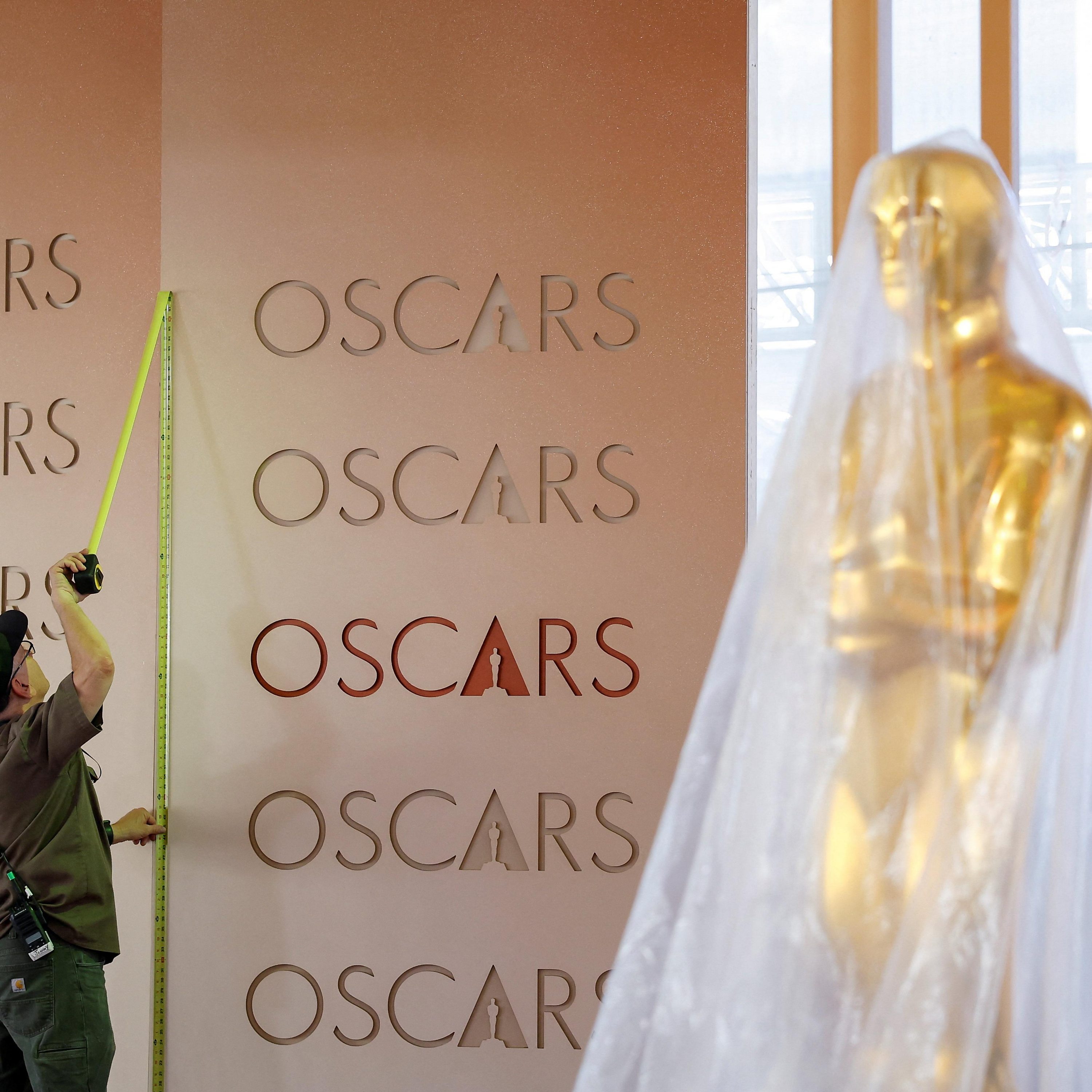
On Sunday, many of the film industry’s biggest stars will gather in Los Angeles for Hollywood’s biggest night: the 98th annual Academy Awards.Looming over the celebrations are some major upheavals in Hollywood: big corporate mergers, the incursion of AI, and mass layoffs. And it’s against that backdrop that the Oscars are increasingly nominating films, filmmakers, and actors from elsewhere in the world.BBC film reporter and critic Tom Brook explains how the Oscars went global, and what it can tell us about the status of American soft power.The Global Story brings clarity to politics, business and foreign policy in a time of connection and disruption. For more episodes, just search 'The Global Story' wherever you get your BBC Podcasts.Producers: Xandra Ellin and Valerio EspositoExecutive producer: James ShieldMix: Travis EvansSenior news editor: China CollinsPhoto: Workers make preparations for the 98th annual Academy Awards ceremony in Los Angeles Credit: Reuters / Caroline Brehman
Europe's night train renaissance: Still on track?
Night trains are making a comeback, once again connecting Europe’s cities with the promise of green, serene and iconic journeys. Just a decade ago, it appeared to be the end of the line for the continent’s sleeper services. But revitalised routes, new operators and innovative cabin designs have sparked renewed excitement around overnight train travel. Yet even as demand from passengers continues to boom, an array of obstacles puts the revival at risk. A number of major new routes have already hit the buffers, and entrepreneurial sleeper train operators face a host of challenges. Is a European night train renaissance simply a nostalgic pipedream, or is it full steam ahead? Speaking to railway operators, innovators and industry insiders, Jack Butcher rides the rails to find out.
Iran war: What's life like inside Iran?
The United States and Israel have now been at war with Iran for two weeks, since 28th February. In that time, there have been over 1200 civilian deaths in Iran, including 168, most of them children, at a girls’ school in Minab, central Iran. Supreme Leader Ali Khamenei, who had ruled Iran for over forty years, was killed on the first day of the war. There have been wider casualties throughout the region. Iran has fired missiles at neighbouring countries, including Dubai, Kuwait, Turkey, Saudi Arabia, UAE, Qatar, Bahrain and Israel. For journalists at BBC Persian, reporting on the war from outside of the country has been incredibly difficult. The internet has been shut down on the 90 million people living inside Iran, making it difficult for people to get information on what is happening round them and which locations are being hit by bombing. It is also extremely difficult for Iranians outside the country to contact those inside. BBC Persian's Ghoncheh Habibiazad and Taraneh Fathalian; and BBC Monitoring's Sarbas Nazari, discuss what is known about the situation within Iran. This edition was recorded on 12th March 2026. The Fifth Floor is at the heart of global storytelling on the BBC World Service, bringing you the best stories from journalists in the BBC's 43 language services. We're here to help you make sense of the stories making headlines around the world; to excite your curiosity and to get to grips with the facts. Recent episodes have investigated Russia’s youth armies and how they make soldiers of Ukrainian children; featured the BBC team who were the first journalists to the site of the Nigerian school kidnappings and reflected the effects of internet blackouts in Iran, Uganda and India. If you want to know more about Venezuela’s acting president, Delcy Rodriguez, and the legacy of Hugo Chavez; or how Vladimir Putin’s network of deep cover spies operates; or why Donald Trump signed an executive order granting white South Africans asylum in the US, we have all those stories and more. Presented by Faranak Amidi. Produced by Caroline Ferguson and Laura Thomas(Photo: Faranak Amidi. Credit: Tricia Yourkevich.)
Women and the future of Formula 1
Motor racing is one of the few sports where men and women can – in theory – compete on equal terms. But you wouldn’t think that from looking at almost any race. Only one in 10 drivers in motorsport are women and most compete in karting, the category of racing where professional drivers tend to begin their careers. The last woman to take part in an F1 race was Italy’s Lella Lombardi, and that was 50 years ago.To increase the pool of female drivers and return women to the top ranks of motor racing, F1 Academy was set up. In our conversation, three F1 Academy drivers – Rachel Robertson, Alba Larsen and Esmee Kosterman – share their experiences of speed, ambition and the sexism they have often faced from boys they have raced against.