The Documentary Podcast
2,222 episodes — Page 18 of 45
Assignment: Reproductive rights: A divided flock
The US ‘pro-life’ movement has gained ground in recent years, with courts overturning women’s right to an abortion and questioning the legality of IVF fertility treatments. The question at the heart of the debate is when does life begin? ‘Pro-life’ has become synonymous with evangelical Christianity - often considered a powerful voting bloc in America. But how united are Christian preachers? And what does this tell us about the upcoming election? Ellie House reports from the divided churches in the swing state of Michigan.
In the Studio: Erdem Moralıoğlu
Erdem Moralıoğlu is one of the UK’s most admired and creative fashion designers. Born in Canada to a Turkish father and British mother, he studied fashion at the Royal College of Art and went on to found his eponymous label in 2005. He has dressed the Princess of Wales, Michelle Obama and Nicole Kidman. His Spring Summer 2024 collection was inspired by the the late Dowager Duchess of Devonshire, also known as Debo, one of the famous Mitford sisters - the ‘It’ girls of the 1930s and '40s. Working closely with Susie Stokoe, head of textiles at Chatsworth House, Erdem has drawn on his own designs and many of the Duchess’ clothes and created an exhibition called Imaginary Conversations. Belinda Naylor meets Erdem at his studio in east London to discuss his inspirations and visits Chatsworth House to observe the installation of the exhibition.
The new Germans
Amid the 2015 migrant crisis, when millions of refugees were seeking safety in Europe, Germany’s then Chancellor, Angela Merkel, took an extraordinary step to take in more than a million asylum seekers, mostly from the Middle East. She famously declared, “Wir Schaffen Das” - We can do it. Now, almost 10 years on, many from this generation of refugees are living settled lives in Germany and a recent liberalisation in German citizenship law means they are now eligible for citizenship, giving them a vote in where Germany goes from here. But it is a fraught time to become German. The AfD, a far right party harshly opposed to immigration of all kinds, is rising in popularity, especially in the former East. Damien McGuinness meets former refugees now on a path to citizenship, and finds out what this piece of paper means to them.
The Fifth Floor: The silent death of an anti-Putin pianist
Pavel Kushnir was a classical pianist. But according to Russian authorities, he was also a dangerous dissident. In July 2024, he died on hunger strike in a remote prison in Far East Russia. Who was Pavel Kushnir, and why did he end up in jail? Liza Fokht from BBC Russian has been trying to piece together Pavel Kushnir’s story.Produced by Alice Gioia, Caroline Ferguson and Hannah Dean.(Photo: Faranak Amidi. Credit: Tricia Yourkevich.)
BBC OS Conversations: Talking to someone with suicidal thoughts
The rock legend Jon Bon Jovi made headlines around the world and earned much praise after he was seen helping a distressed woman on the ledge of a bridge in Nashville, Tennessee. He approached her, talked to her, and gave her a warm hug after she climbed back to safety. “What I’ve noticed is the most potent medicine that I can give somebody is a caring heart and a hug in their times of trial,” says first responder Marc Maikoski who has been involved in many such incidents in his own area in California. Marc and our other guests discuss how “seeing” an individual can be the crucial moment for a person in a dark moment and how the intervention of a stranger, who takes the time and shows the courage to talk, can turn a situation around.
Heart and Soul: I became a Muslim after the Taliban kept me hostage
Bara’atu Ibrahim speaks to Jibra’il Omar, formerly Timothy Weeks; an Australian educator who was held captive for three years in Afghanistan by the Taliban. However, Jibra’il Omar made news six years ago, after he converted to Islam whilst in captivity, and astonishingly went back to Afghanistan after his release. Over a period of some months, Bara’atu built up a relationship with Jibra’il over a messaging service whilst he was in Kabul. She spoke to him on two occasions, where he shared his story and gives the reasons of why he decided it was right for him to become a Muslim, and moreover celebrate with his captors once they came back into power.
Stories from the New Silk Road: Space
China's Belt and Road Initiative stretches physically with infrastructure projects across the globe, but there is one initiative that is the most ambitious yet - The Space Silk Road. The space race is heating up with new entrants like India and private companies like SpaceX, but it is the Chinese who are set to dominate by 2045. Central to the Space Silk Road is a controversial station in Patagonia, Argentina. The Espacio Lejano Ground Station has a powerful 16-story antenna, with an 8-foot barbed wire fence that surrounds the entire compound. Katy Watson asks astronomers, space engineers and Argentinian residents, how President Xi's Space Silk Road is impacting their universe.
BBC Trending: Woman, life, surveillance
The Iranian government is not coy about its silence tactics. Since Iran's Woman Life Freedom Movement began on 16 September 2022, unlawful executions, imprisonment, physical and sexual abuse has dominated headlines across the globe. It is estimated that tens of thousands of people have received some form of government retribution – and at the heart of it is a complex surveillance system that aids security forces in its endeavours. The Supreme Cyber Council oversees digital rule in the country, and combined with FATA (the Cyber police), BASIJ (volunteer law enforcement working with Iran’s security forces) and surveillance spy software amongst other things, clamping down on dissent has never been easier. We speak to the women on the digital frontline between the state and their communities, investigate how court summons are issued based on social media posts and talk to experts about Iran’s surveillance tactics.
The great dolphin release
Johnny, Rocky and Rambo were performers in the world’s last travelling dolphin circus and inside a Bali hotel swimming pool. This is the story of the fight to shut the circus down and the long journey to try to return the performing dolphins to the ocean. We hear why the world’s most famous dolphin trainer changed sides - playing a role instead in the fight for their freedom. It is the story of how Femke Den Haas, the Indonesian campaign director of the Dolphin Project, teamed up with former trainer Ric O'Barry.
Assignment: Ageing without a safety net in Malaysia
Industrialisation, modern cityscapes and strong economic growth promote an image of a youthful, vigorous Malaysia. But the country is now ageing rapidly, and this sudden transformation seems to have caught many - including the government - by surprise: Despite their country’s development, millions have little or no retirement income and face destitution or dependence in their golden years. What little provision is available was compromised during the Covid pandemic when the government allowed workers to withdraw retirement funds just to survive lockdown. Those who did so can now have almost nothing left in their accounts. Without any universal pension, many older Malaysians rely on their families – but younger relatives are often struggling in a low wage economy and find it increasingly difficult to provide for anyone but themselves. As Claire Bolderson reports, Malaysians may have to change their attitudes to retirement and to saving if they are to avoid the spectre of serious poverty in old age.
In the Studio: Lenin Tamayo and Q-pop
Peruvian singer Lenin Tamayo has been dubbed the founder of ‘Q-pop’. He combines traditional Andean folk music with K-pop inspired instrumentation and dance. His songs mix Quechua – one of Peru’s indigenous languages, and the official tongue of the Inca Empire – and Spanish. Lenin first launched his career when his videos went viral on TikTok. Now, he’s working on his second EP. Presenter Martin Riepl follows Lenin for five months uncovering Lenin’s process of fusing two very different musical styles.
Solutions Journalism: The African 'Babelfish'
Africa is home to around one-third of the world's languages, but only a smattering of them are available online and in translation software. So when young Beninese computer scientist Bonaventure Dossou, who was fluent in French, experienced difficulties communicating with his mother, who spoke the local language Fon, he came up with an idea. Bonaventure and a friend developed a French to Fon translation app, with speech recognition functionality, using an old missionary bible and volunteer questionnaires as the source data. Although rudimentary, they put the code online as open-source to be used by others. Bonaventure has since joined with other young African computer scientists and language activists called Masakane to use this code and share knowledge to increase digital accessibility for African and other lower-resourced languages. They want to be able to communicate across the African continent using translation software, with the ultimate goal being an "African Babel Fish", a simultaneous speech-to-speech translation for African languages. James Jackson explores what role their ground-breaking software could play for societies in Africa disrupted by language barriers. A Whistledown production for BBC World Service Photo: A woman using a mobile phone Credit: Getty Images
The Fifth Floor: Exam nightmares
Why are exams so stressful? Chinese journalists Wanqing Zhang and Eric Junzhe share personal memories about the infamous Gaokao exam in China, which this year reached a record of 13.42 million applicants; and India correspondent Soutik Biswas reports on the exam scandals threatening the future of millions of young people in India. Plus: why do we have recurring nightmares about exams? Caroline Steel from CrowdScience has the answer. If you also have questions about exams, email them to [email protected]. Produced by Caroline Ferguson, Alice Gioia and Hannah Dean.(Photo: Faranak Amidi. Credit: Tricia Yourkevich.)
BBC OS Conversations: Are we still in love with dating apps?
For millions of us, our phones or computers are the first place we go to look for romance. Dating apps are a multi-billion dollar business, and for a good few years it’s been booming. But recently there’s been discussion about whether they’re in decline, with fewer downloads and some regular users saying they feel burned out by their experiences on them. For some, the novelty has just worn off. Others have been put off by interactions with people they’ve been matched with. Host Luke Jones hears from three people who have decided they don’t want to meet people this way any more. Faith, a 27-year old Nigerian woman living in the UK says the final straw for her came when her date phoned her to arrange where to meet. “I could hear a girl’s voice in the background. I said ‘Who is that?’ and he said, "That’s my girlfriend, she stays with me". "He said oh they’re just going through a separation just now so they decided to take a break so he decided to download a dating app." On the other hand, there are success stories. Dyuti in India wrote a dating app profile specially designed to filter out all non-suitable matches, then met and instantly clicked with the man who’s now her fiancé. Victor and Tricia are another happy couple, and would never have met without a dating app, since they were living thousands of miles apparent when they first met digitally. Tricia was astonished that Victor, a Londoner, was prepared to fly to Singapore to meet her, “If guys from the same country I was living in would not make that much effort into meeting me, why would someone from 10,000km away, fly all the way over to see me?” They’d got on well online, and got on even better face to face, and were married a year later. A Boffin Media production in partnership with the OS team. (Photo: Faith. Credit: Faith)
Heart and Soul: Indigenous healing on the party island of Ibiza
Ibiza is an island of contrasts. A place which triggers thoughts of raucous partying, superstar DJs and excess. But it's also an area of raw natural beauty, rugged hills, with a rich spiritual history. No-one knows this duality better than Kim Booth - she's experienced both faces of the Balearic paradise island. Kim first visited as a party go-er tourist and 30 years on, she’s now a resident offering an alternative side to Ibiza. This tiny island island swells from a few hundred thousand residents, to over a million when tourists flock there over the summer months. But what pressure does this put on the people and the nature of Ibiza? After working in PR and for some of the biggest names in the music industry like superclub Pacha and dance label Defected Records, Kim chose a different path. Facing personal traumas in her life with the loss of her mum and her brother being murdered, Kim turned away from the parties and discovered the Red Road indigenous teachings. After experiencing this wisdom in Central and South America, her life mission changed. She brings healers and musicians from around the world to provide an alternative experience for those looking to “go inwards” - on an island full of people “losing themselves.” But is it realistic to unite these two worlds together in one of the busiest, commercial hotspots in the world? Reporter Amber Haque travels to Ibiza to witness the coming together of ancient, indigenous practices, on the tourist-packed island that is full of modern conflicts. Presenter: Amber Haque Producer: Rajeev Gupta Editor: Miriam Williamson Production Coordinator: Mica Nepomuceno
Trending: Can we live without our phones?
The BBC's Disinformation and Social Media Correspondent, Marianna Spring, speaks to parents, teenagers and social media company insiders to investigate whether the content pushed to their feeds is harming them. We hear what happens when two teens give up their phones for the week, and ask: should teenagers give up their smartphones?
Flying high: The return of the peregrine falcon
The peregrine falcon is not only the fastest animal on our planet, but also the most widely distributed bird of prey, found on every continent apart from Antarctica.In the 1960s Falco Peregrinus was close to extinction, but it has since made a remarkable comeback, hailed as a global success story of conservation.Recent decades have also seen the trend of this speedy raptor notably settling, nesting and flourishing alongside us, in man-made environments around the globe.Broadcaster, naturalist and writer David Lindo, a.k.a. ‘The Urban Birder’ travels from a hospital in London to a museum in Madrid and a power station in Kentucky, to explore how an iconic, apex predator is bouncing back from the brink, thriving in cities and towns across the world.Along the way David highlights their incredible hunting ability and how both our responsibility for the decline of the Peregrine and our pervading fondness for it, have helped to contribute to its astounding recovery.Image: Getty images
The Midwife’s Confession: Eye Investigates
For the last thirty years Indian journalist Amitabh Parashar has been investigating why a group of midwives in his home state of Bihar were routinely forced to kill baby girls. In a series of shocking interviews, the midwives explain what happened and how a remarkable social worker brought change. Together they began to save baby girls destined to be killed. Decades later BBC Eye finds a woman, who was possibly one of the girls. What will happen when she returns to meet the only surviving midwife? A warning, this program includes upsetting content. The Midwife’s Confession was produced by Anubha Bhonsle, Purnima Mehta, Debangshu Roy, Neha Tara Mehta, Annabel Deas, Rob Wilson and Ahmen Khawaja. The editors were Daniel Adamson and Rebecca Henschke. It was mixed by Neva Missirian. Image credit: BBC Eye
Assignment: Ivory Coast's cocoa crisis
From the journey from cocoa to chocolate in Ivory Coast. The price of cocoa - the essential ingredient in chocolate - has more than quadrupled on the international market in the last two years. Yet many of those growing it have not benefitted. In fact, drought, disease and a lack of investment have led to catastrophic harvests and, therefore, a drop in income for many small producers of cocoa, especially in Ivory Coast. This West African country is the world’s largest producer of cocoa - up to 45% of the world’s total. Most of the growers are small-scale, poor farmers. There are now calls for these growers to get a bigger chunk of the chocolate bar and, in so doing, to help ensure future production. John Murphy travels to Ivory Coast to delve into the world of chocolate production.
In The Studio: Tuan Andrew Nguyen - The healing power of art
Tuan Andrew Nguyen, who was born in Vietnam in 1976, was only two years old when his family were made refugees by the war. They ended up in Texas, in the US and in his early twenties, he decided to return to the city his parents had once fled. Here in Ho Chi Minh City, formerly known as Saigon, Tuan has become an artist of many mediums. Telling stories through film, sculpture and installations, his work often explores how memories haunt the present and the power of art to heal. Reporter Eliza Lomas joins Tuan in his home studio and workshop, as he shares his process for creating an ongoing series of resonant mobile sculptures. Made from once highly explosive bomb material left over from the war, Tuan reflects on how beliefs in animism and reincarnation inform his work, and why he’s drawn to transforming these objects of war, which are still excavated on a daily basis in Vietnam, into resonant sculptures of peace.
Bonus: Lives Less Ordinary
A bonus episode from the Lives Less Ordinary podcast.In 1982 Mississippi, two boys, Chris Strompolos and Eric Zala, aged 10 and 11, embarked on a crazy mission: to remake Indiana Jones Raiders of the Lost Ark, shot-for-shot in their back garden - and the long-forgotten tape that resulted would decades later end up bringing them face-to-face with one of their heroes.For more extraordinary personal stories from around the world, go to bbcworldservice.com/liveslessordinary or search for Live Less Ordinary wherever you get your BBC podcasts.Presenter: India Rakusen Producer: Edgar Maddicott
The Fifth Floor: Pakistan's internet mystery
Why are people in Pakistan struggling to use messaging apps and social media? BBC Urdu's editor Asif Farooqi explains why this might be more than just a simple internet glitch. Plus, we hear from colleagues who speak Spanish, Arabic and Bulgarian about their favourite filler words and sounds.Produced by Alice Gioia and Hannah Dean.(Photo: Faranak Amidi. Credit: Tricia Yourkevich.)
BBC OS Conversations: What's it like to have mpox
Mpox causes a headache, fever and a blistering rash all over the body. There have been more than 1,200 cases in parts of Central and West Africa since the start of this year. The milder version is now circulating in other parts of the world but the much stronger, possibly deadlier strain, called Clade 1b is also on the rise. A few weeks ago, the World Health Organisation announced that mpox constituted a public health emergency of international concern after an upsurge of cases in the Democratic Republic of the Congo (DRC) and other countries in Africa. Host Luke Jones brings together survivors from the UK and Nigeria to share their experiences. “I thought that I was dying,” said Harun in London. “Nobody knew what it was and I was getting worse every day. I remember looking at a bottle of water and I started crying because I wasn’t able to drink.” We also hear from three doctors about some of the challenges they face - from a mistrust in medical professionals, to a belief that mpox is not caused by a virus and so doesn’t require hospital treatment. “An elderly man started developing symptoms but felt his symptoms were not due to any pathogen but due to a spiritual attack,” said Dr Dimie Ogoina, from the Niger Delta Teaching hospital. A co-production between Boffin Media and the BBC OS team. (Photo: Elisabeth Furaha applies medication on the skin of her child Sagesse Hakizimana who is under treatment for Mpox, near Goma in North Kivu province of the Democratic Republic of Congo August 19, 2024. Credit: Arlette Bashizi/File Photo/Reuters)
Heart and Soul: Synagogue for sale
Dr Aleksandra Janus is a Polish Cultural Anthropologist with a Jewish background from Warsaw, Poland. Living in the capital flattened by Nazi bombs and then recreated by Communism, her multi-layered identity has always conjured mixed feelings about former Jewish memory and cultural spaces. As President of the organisation, Zapomniane Foundation (which means forgotten in English), one of her jobs is to trace mass graves in forests, cityscapes and death camps across the country in cooperation with local villagers, WWII survivors and non-invasive scanning technologies. Alerted by her friend Karolina Jakoweńko, she's come across an interesting proposition – an historic synagogue in the area of Poland that belonged to Germany before WWII. Once owned by a thriving Jewish community who were exterminated by the Nazis, now decades later the synagogue is in the hands of a private owner and Jewish people no longer live in the village. Synagogues in Germany were at first destroyed by the Nazis but not this synagogue – it miraculously survived. So, she's trying to grapple with the idea - does she buy a synagogue back to revive it or leave it where it belongs - in the past. The BBC’s Amie Liebowitz travels across Poland to explore the daily life of Aleksandra and her quest to both bury the dead and re-sanctify spaces. Driving through cities, forests and villages in between, Amie and Aleksandra alongside her colleagues unpacks what this purchase could look like and what post-Jewish, post-German spaces represent in modern Poland. Presenter/ Reporter: Amie Liebowitz
Bonus: CrowdScience - How do fish survive in the deep ocean?
In a bonus episode from CrowdScience - How do fish survive in the deep ocean?When listener Watum heard about the Titan submersible implosion in the news in 2023, a question popped up in his mind: if a machine that we specifically built for this purpose cannot sustain the water pressure of the deep ocean, how do fish survive down there? In this episode, we travel with marine biologist Alan Jamieson to the second deepest place in our oceans: the Tonga trench. Meanwhile, presenter Caroline Steel speaks to Edie Widder about the creatures that illuminate our oceans, and travels to Copenhagen to take a closer look one of the strangest deep sea creatures and its deep sea adaptations. But even fish have their limits! Scientist Paul Yancey correctly predicted the deepest point that fish can live, and it all comes down to one particular molecule. So is there anything living beyond these depths? Well, there is only one way to find out…CrowdScience takes your questions about life, Earth and the universe to researchers hunting for answers at the frontier of knowledge. For more episodes just search for CrowdScience wherever you got this podcast. Contributors: Prof Alan Jamieson, University of Western Australia Luke Siebermaier, Submersible Team Leader, Inkfish Dr Edie Widder, Ocean Research & Conservation Association Peter Rask Møller, Natural History Museum of Denmark Prof Paul Yancey, Whitman College Presenter: Caroline Steel Producer: Florian Bohr Editor: Martin Smith & Cathy Edwards Production Co-ordinator: Ishmael Soriano Studio Manager: Steve Greenwood (Image: Deep-sea fish - stock photo, Credit: superjoseph via Getty Images)
West Bank: Settlers, guns and sanctions
For more than six months, a BBC Eye team has been investigating extremist settlers establishing a new type of illegal settlement known as a “herding outpost”. Some have been sanctioned by the UK and US governments for forcing Palestinians from their homes as part of a “campaign of violence and intimidation”. We tell the story of the Palestinian communities living on the frontline of their outposts. We expose how some of these settlers have been supported by two powerful organisations in Israel, one which describes itself as “an arm of the Israeli state”.
Assignment: The 'ghost city' of Cyprus
The once glamorous Cypriot beach resort of Varosha has stood empty and frozen in time since war divided the island 50 years ago, but it is now partially open to tourists and there are hotly contested plans for its renewal.Maria Margaronis speaks to Varosha's former inhabitants - mostly Greek Cypriots - who fled in 1974 when Turkish troops invaded the island and have been unable to return ever since, after Turkey fenced off the town as a bargaining chip for future peace negotiations.Some of these Varoshians want to rebuild the resort together with the island's Turkish Cypriots - a potential model for diffusing hostilities across the whole island - and the UN says its original inhabitants must be allowed to return. But, following decades of failed peace talks, the internationally unrecognised Turkish Republic of Northern Cyprus, which controls Varosha, now says it intends to re-open and redevelop the entire town.
Global Dancefloor: Tbilisi
Frank McWeeny heads to Georgia’s capital Tbilisi, to meet the underground music community leading protests against government clampdown on freedom of expression and civil society groups. How vital is dancing in a country going through the biggest political and social crisis of its generation? We hear from the city most important techno club Bassiani, militant radio station and event space Mutant Radio, and members of the nightlife scene.
In the Studio: Laurie Anderson
American artist Laurie Anderson is putting the finishing touches to her new album Amelia at Miraval Studios in southern France. This is Laurie's first record in six years, and she tells the story of renowned female aviator Amelia Earhart’s tragic last flight in 1937. Earhart’s plane disappeared without trace over the Pacific as she attempted to circumnavigate the globe. The fate of Amelia and her navigator Fred Noonan became one of the most enduring mysteries of the last century. This 22-track album has been almost 25 years in the making, and Laurie has come to Miraval Studios in southern France to work with Emmy-winning sound engineer Damien Quintard. We go behind the scenes as they collaborate on a complex mix, which includes the Filharmonie Brno orchestra, a string trio and other solo musicians.
Three Million: 8. Road to the past
Kavita Puri goes to India to meet the last survivors of the 1943 Bengal famine. She looks for traces of how war and famine impacted Kolkata and then travels from the city along the road to where the story of famine begins. Kavita goes deep into the countryside and the jungle in West Bengal to find people who lived through that devastating time more than 80 years ago. For the past year and a half Kavita has been asking why there is no memorial to the three million people who died. But then in the Bengal jungle she finally finds it – and it’s not what she expected.
The Fifth Floor: Ukraine's 'Memory Cafés'
Could a cup of coffee become an act of love and remembrance? BBC Ukrainian's Ilona Hromliuk speaks to the relatives of fallen soldiers who have opened 'memory cafés' to pay tribute to their loved ones. Plus, Alfred Lasteck from BBC Africa tells us about a pioneering conservation project that helped restore the coral reef around the Mnemba island in Zanzibar, and sports journalist Emmanuel Akindubuwa meets the power couple of Nigerian para table tennis. Produced by Alice Gioia and Hannah Dean.(Photo: Faranak Amidi. Credit: Tricia Yourkevich.)
BBC OS Conversations: Three years of Taliban rule in Afghanistan
The withdrawal of US troops in 2021 prompted the collapse of the Afghan military, an interim government and then a power grab by the hardline Islamist regime. Since then there have been increasingly harsh restrictions on everything from freedom of movement to clothing. Women and girls are now longer able to attend school after the age of 12 or university and must not speak in public. Host Luke Jones brings together three women in Kabul and in the nearby Ghazni province to hear about their lives, ambitions and how the latest laws make them feel.
Heart and Soul: Afghanistan 20 years on
Twenty years ago, reporter Julia Paul was teaching media to young women in an Afghanistan where the Taliban were in retreat, if only temporarily. Now she has tracked down two of them again to find out how their lives have fared in the decades since. Some have fled abroad while others are still in Afghanistan, imprisoned in their homes. But even for those who have escaped, life is far from easy. As one of the army of secular western aid workers that flooded Afghan society all those years ago, Julia discusses with the women whether or not the West should have intervened in the first place.
Courting success: A journey to Paris 2024
One of the highlights of the Paralympics is wheelchair tennis and one of its true champions is Kgothatso Montjane. KG, as she likes to be known, was born with amniotic band syndrome, a condition that prevents limbs from developing properly. It did not stop her from pursuing her dreams. In 2021 KG became the first black South African to compete at Wimbledon. She tells the story of her life and career, the big successes and the challenges she faced. She speaks to Brad Parks, who co-invented the game, and Shingo Kunieda, regarded to be the best male player of all time, former champion Jordanne Whiley, and KG’s hero Esther Vergeer.
Bonus: The Inquiry - What does Hezbollah want?
Hezbollah has both political and military wings both of which are designated by several countries as terror organisations. It emerged several decades ago in Lebanon.Since Israel launched its war in Gaza in the wake of the Hamas attacks of October 7th, it has intensified its military activities along the border between Israel and Lebanon.The persistent question has been what is it trying to achieve? Are the attacks intended as a show of support for the Palestinians in Gaza or an attempt to take advantage of Israel’s diverted military focus? And could this dangerous front lead to an all-out war in the Middle East?This week on the Inquiry we are asking: What does Hezbollah want?For more, search "The Inquiry" whevever you get your BBC Podcasts.Contributors: Aurélie Daher, Associate Professor in political science at the University Paris-Dauphine Lina Khatib, Associate Fellow with the Middle East and North Africa program at Chatham House Dr Bashir Saade, Lecturer of Politics and Religion at the University of Stirling in Scotland Mehran Kamrava, Professor of government at Georgetown University in QatarPresenter: Tanya Beckett
Assignment: The struggle for Jerusalem’s Old City
Why Armenians in Jerusalem say they are fighting an existential battle. Is the identity of the Old City of Jerusalem changing - house by house? This small patch of land is of vital importance to Christians, Muslims and Jews alike. But, amid accusations of dodgy deals, corruption and trickery, there are concerns that the Old City’s historic multi-ethnic and multi-religious identity is being altered. In the Armenian Quarter a battle is going on for the control of land which the local community says is essential to its well-being and even its survival. Emily Wither visits one of the most contested cities in the world.
In the Studio: Architect Daniel Libeskind
Daniel Libeskind is one of the world's leading architects. Amongst his many projects, he devised the masterplan for the redevelopment of Ground Zero in New York and designed the Jewish Museum in Berlin. He tells Samira Ahmed about the Albert Einstein House in Jerusalem, a new building which will house Einstein's work and belongings, from his favourite novels, his letters as a peace campaigner, to his papers laying out his famous theory of relativity. He also talks Samira through the many other global projects he is working on, including a museum of anthropology in Iquique, Chile.
The next Paralympians
Deepthi Jeevanji grew up in a rural Indian village where she was bullied and mocked for being different. In Paris this summer, she will become India’s first ever Paralympian with an intellectual impairment. After winning 400m gold at this year’s World Para Athletics Championships, she may also come home with a medal. Dan Pepper, a British ex-Paralympic swimmer who has an intellectual disability, travels to India to meet Deepthi, her parents, and the team around her, as well as speaking to others across the world about the challenges facing athletes with an intellectual impairment.
The Fifth Floor: What really happened in Bakhmut?
In 2022, the city of Bakhmut in Eastern Ukraine was attacked by Russian forces. The fight for Bakhmut lasted over 10 months and claimed the lives of thousands of people on both sides, becoming the longest and bloodiest battle in this war so far. But why was this sleepy town such an important target for Russia? And what role did the mercenary Wagner group play there? BBC Russian’s Olga Ivshina and Ukrainecast presenter Vitaly Shevchenko investigate. Produced by Alice Gioia and Hannah Dean. (Photo: Faranak Amidi. Credit: Tricia Yourkevich.)
BBC OS Conversations: Women's safety in India
The recent rape and murder of a trainee doctor after a 36-hour hospital shift has, according to India’s top court, “shocked the conscience of the nation". It has produced protests, strikes and outrage and has focussed conversations on what it is like to be female in India, both at work and during everyday life. Arunima, for instance, lives close to the hospital, in Kolkata, where the murder happened. For her, even travelling on public transport has been traumatising after being touched inappropriately by another passenger. “That person was a father,” she said. “He had his own daughter literally sitting right on his lap". Host Luke Jones also hears from women doctors about security issues at their own hospitals in Ahmedabad, Gujarat - such as inadequate facilities to change scrubs or to sleep after long shifts. And two men share their thoughts on what is to blame for how some Indian men treat women and what changes they feel need to be made.
Heart and Soul: Corruption in the Curia
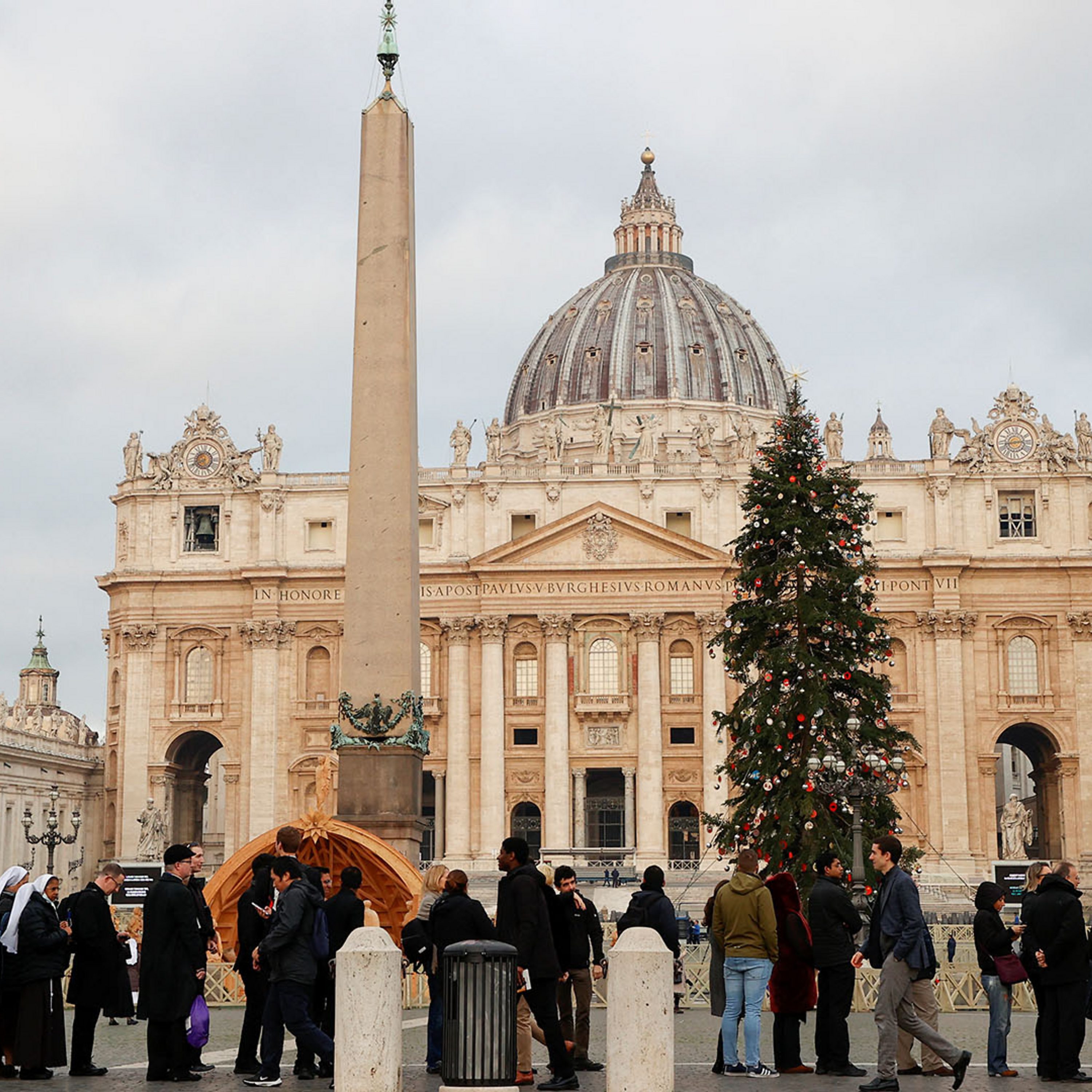
Pope Francis was hailed as a reformist when he became Pope in 2013. He vowed to get a handle on the scandals plaguing the Catholic Church, including how the Vatican managed its money. In 2015, he appointed the Vatican's first ever auditor, former Deloitte CEO and chairman Libero Milone. Along with his business partner, they went through the various Vatican departments checking the books, but came up against resistance from the 'old guard'. In one Vatican office in particular, Milone claims he met strong opposition when trying to audit their accounts. Eventually he claims being forced to resign because he was starting to uncover major financial irregularities. A few years after he was forced out, a high ranking Cardinal, Angelo Becciu, was found guilty in a Vatican court of embezzlement and fraud, for losing the Vatican over €100 million in a London property investment. Now Milone is taking a €9.3m lawsuit against the Vatican for unfair dismissal, loss of income, and emotional distress. Colm Flynn went to meet Libero Milone in Rome. LIbero says he took on the job as a way of giving back to his Church, and, driven by his faith.
Solutions Journalism: A better start
For every 10 babies born across the world one will be preterm and the fate of these tiny babies is often very uncertain. They are kept alive by science, care, and luck. Time in a neonatal unit can be a stressful and unpredictable time. We meet the people who are creating equipment and aids to create a kinder experience for both parents and babies alike to give them a better start in life. People like the founder of the Danish Octo Project, which kickstarted a movement across the world crocheting tiny Octopus toys to emulate the umbilical cord for premature babies, the engineer who kept her baby alive when the neonatal unit housing her son lost power in a devastating storm, leading to a remarkable invention. Finally, the foundation bringing purple butterflies to NICUs across the UK to help identify surviving children of multiple births.
Invisible souls
Fishermen from the Philippines, Ghana and Sri Lanka speak out about how badly, they say, they were treated by a Scottish fishing company that hired them. Most of the fishermen have been waiting in the UK for more than 10 years for their case to be heard. Despite two extensive police investigations, no convictions have been secured for human trafficking or modern slavery. This is the first time the fishermen have spoken out.
Assignment: Ukraine - on the front line
In Ukraine drone technology is transforming the battlefield and the rules of war are being rewritten. The BBC’s Quentin Sommerville travels to the frontlines in the northeast of the country, and meets some of the Ukrainian prisoners who could help solve a critical shortage of manpower in the country’s war with Russia.
In the Studio: Ad Minoliti
Artist Ad Minoliti lives and works in the Argentinian capital Buenos Aires. They are known for their vibrant, geometric designs and the colours in their artworks often leap from the canvas onto the walls and floors of the gallery space. Nature and the environment are an important part of their work and Ad surrounds themselves with wildlife, from growing plants to encourage butterflies and bees at their home, to helping to cultivate green spaces in Buenos Aires. Ad is creating an installation for Un Été au Havre, A Summer in Le Havre festival in northern France and wants their artwork to be enjoyed not only by people, but be beneficial for nature as well. The BBC's Andrea Kidd joins them in their studio as they design their piece called Hôtel des Oiseaux, a bird hotel that will be a welcoming space for the birds.
Under ash: Uncovering Maui’s past
In August of 2023, the tourist epicentre of the Hawaiian island of Maui caught fire and the blaze engulfed 2,000 houses, 800 businesses and took the lives of at least 115 people. But the history of the town of Lahaina means it did not go from being the lush and prosperous capital of Hawaii it once was, to disappearing through flames overnight. Born and raised on the island of Maui, Pūlama Kaufman returns there and, with cultural leader Hokulani Holt. They ask questions about the hidden stories of mistreatment, illegal ownership and cultural stripping that may have contributed to seeing Lahaina hidden under ash.
The Fifth Floor: The rise of caste influencers in India
India's ancient caste system can result in controversy and discrimination in the country. But a new trend has sprung up of young women flaunting their caste on social media. Our Delhi correspondent Divya Arya has met some of these women, to try and find out why they are so keen to express 'caste pride'. Plus BBC Mundo's Laura García meets the residents of a Parisian retirement home who have found their own way of embracing the Olympic spirit.
BBC OS Conversations: Life in Venezuela
International condemnation followed the elections in Venezuela at the end of July that saw President Maduro declared the winner for a third consecutive term. Those who oppose him have been protesting. There has been violence, many injuries and hundreds arrested and detained. We bring together Venezuelans inside the country and those aboard. You can hear the pride and hope that people have for their country, but also their underlying fears. We hear from a family that is spread across the world. The mother explains why she is the only one remaining in the country. Although she misses her family, her love for her country and its people make her reluctant to leave. However, she reveals how she has a ladder from a window in her home in case she needs to make a quick escape.
Heart and Soul: Muslim sex education
Despite some opposition from within their own faith communities, Muti’ah and Angelica are on a mission to teach other Muslim women how to have healthy and safe sex lives.Geeta Pendse meets them both and finds out how to deliver sex education that is both useful and appropriate for their students.Presenter: Geeta Pendse Producer: Linda Walker Series producer: Rajeev Gupta Production co-ordinator: Mica Nepomuceno
India's fight against TB
In 2015, the United Nations and the World Health Organisation set out their blueprints to eradicate Tuberculosis by 2030. TB is a potentially deadly bacterial disease that, despite being preventable and curable, kills just over a million people around the world every year. The disease is prevalent in India, where one person dies every 90 seconds from TB. In 2017, the Indian government announced their plans to eradicate TB by 2025. But with that date looming, can the country with the highest global burden of TB succeed in its massive challenge? We hear from policymakers about the public health strategies they have formulated and the medical professionals on the ground who are employing them across the country.