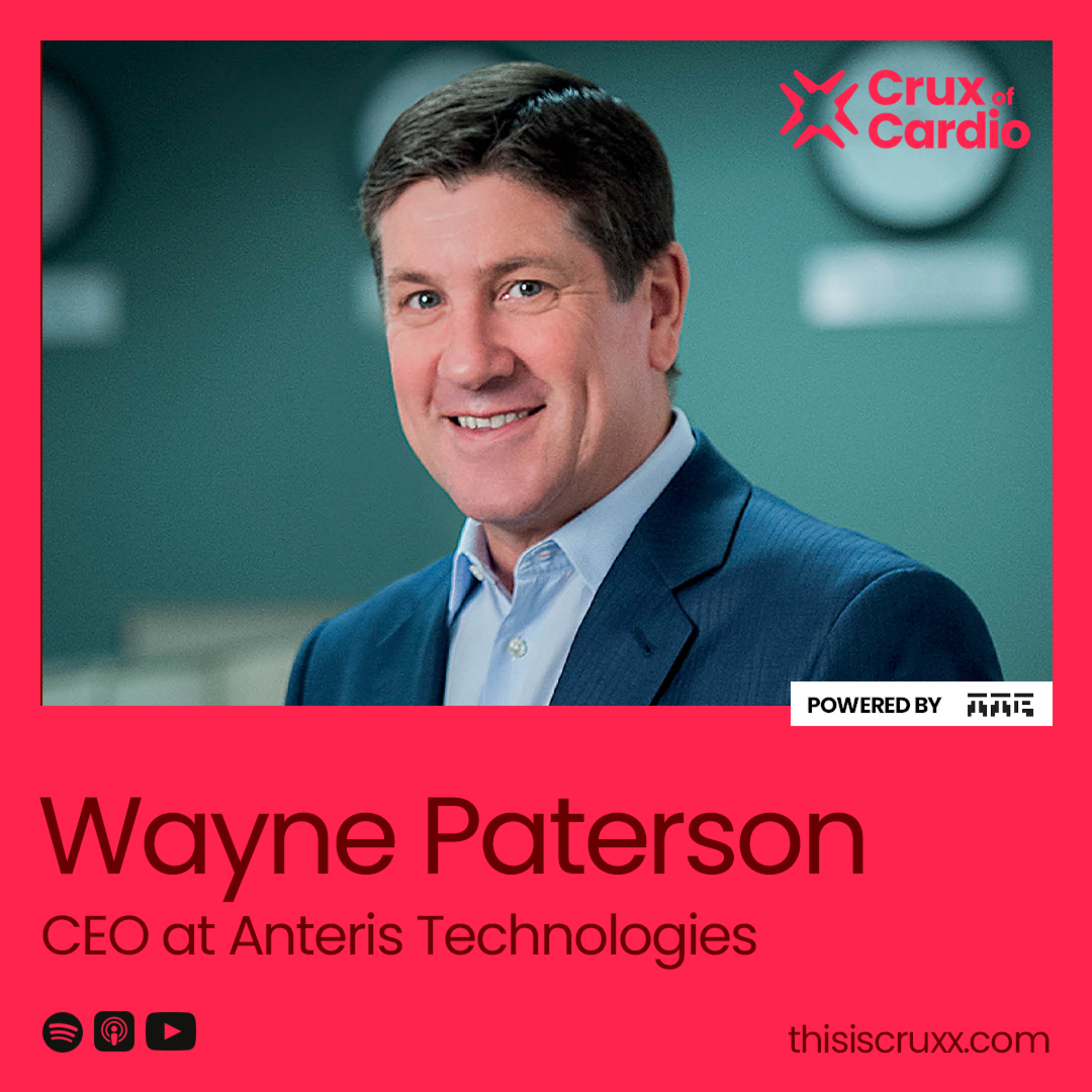
Wall Street Said It Couldn't Be Done, We Did It Anyway with Wayne Paterson
The Crux of Medtech · The Crux of Medtech
Audio is streamed directly from the publisher (anchor.fm) as published in their RSS feed. Play Podcasts does not host this file. Rights-holders can request removal through the copyright & takedown page.
Show Notes
Wayne Paterson, CEO and Vice Chairman of Anteris Technologies, joins host Jordan Bergen for a frank conversation about pivoting a failing drug company into the structural heart space and building what may be medtech's next billion-dollar product.
Wayne shares how 36 drug launches, a pharma-first lens on total disease management, and a blank sheet of paper led to the world's first biomimetic transcatheter heart valve — and why the market's two dominant players never saw it coming.
Key Topics
How a 25-year pharma career became the unlikely blueprint for disrupting TAVR
Building the first biomimetic TAVR valve from blank sheet to 140 patients
Raising capital from scrappy warrants to a record-breaking $320M oversubscribed round
Running the first randomised head-to-head RCT against Edwards and Medtronic
Why valve-in-valve is the next $3 billion opportunity and how DurAVR is already leading it
Related Insights
Why total disease management thinking standard in pharma is largely absent from structural heart
How Medtronic ended up on Anteris's register, and why values drove the partner selection
What lifecycle management from oncology can teach the medtech industry about long-term product strategy
The difference between engineering a device and treating a disease and why it matters for patient outcomes
Core Challenges
Existing TAVR valves leave patients in mild disease (20mmHg mean gradient). DurAVR targets the pre-disease state at 5–10mmHg a clinically meaningful and commercially critical distinction.
Getting 140 patients to consistent, curative outcomes without a prior blueprint required breaking conventional medtech development norms and keeping lead physicians in the room throughout.
Attracting institutional-grade talent to an early-stage, non-revenue public company meant years of patient execution before the brand had the equity to compete with Medtronic and Edwards for top-tier hires.
Tune in now to hear how Wayne Paterson took a failing ASX-listed drug company, bet everything on a radically new valve design, and built what could be medtech's most important structural heart product in a decade.