The Tsunami Of Crap, Misinformation, And Responsible Use Of AI With Tim Boucher
The Creative Penn Podcast For Writers
Audio is streamed directly from the publisher (media.blubrry.com) as published in their RSS feed. Play Podcasts does not host this file. Rights-holders can request removal through the copyright & takedown page.
Show Notes
After many years of people saying, “AI can never be creative, AI could never write fiction (i.e. make things up), it's now evident that the generative AI tools make a lot up — and we need to be aware of the potential ramifications.
How can we use the tools to achieve our creative purpose in an ethical manner, and understand that we need to curate, edit, and take responsibility for any usage? How can we educate ourselves and others on the way these AI models work? Tim Boucher and I have a challenging, wide-ranging discussion in this interview.
In the intro, I comment on ‘A concerning trend of AI-generated submissions' to short story market, Clarkesworld, and the ‘tsunami of crap' all over again [JA Konrath], and how we can use AI tools in a responsible manner.
Today's show is sponsored by my wonderful patrons who fund my brain so I have time to think about and discuss these futurist topics impacting authors. If you support the show, you also get the extra monthly patron-only Q&A audio. You can support the show at www.patreon.com/thecreativepenn
Tim Boucher is a hyperrealist AI artist and writer specializing in questionable alternative realities. He's worked professionally in content moderation policy, and counter-disinformation efforts on behalf of a major web platform, a blockchain protocol. And he has advised nonprofits and governments on related issues
You can listen above or on your favorite podcast app or read the notes and links below. Here are the highlights and the full transcript is below.
Show Notes
- How Tim started writing and publishing, and why he decided to experiment with AI tools for images and words
- Misinformation by humans and AI hallucinations, how we need to fact check , edit, curate, and manage outputs — and how these can be used in fiction
- Tim's AI-collaborative creative process and the tools he uses for words and images
- Labeling and ethical use of AI [see the Alliance of Independent Authors guidelines here]
- Why Tim uses Gumroad to sell direct and doesn't publish on Amazon
- How authors need to engage with the technology, experiment, and learn to stand out in an ever-increasingly crowded market
You can find Tim at TimBoucher.ca and his books at LostBooks.gumroad.com
Header image created by Joanna Penn on Midjourney.
Introduction: Addressing the flood of AI-generated content/books
In this introductory section, I want to talk about some of the news items that have arisen this week, and that fit into this episode very well.
From the headlines this week, “Sci-fi publisher Clarkesworld halts pitches amid deluge of AI-generated stories.” [The Guardian] and “Hundreds of AI-written books flood Amazon.” [The Independent].
I’m not sure why people are surprised about this, and of course, this will only increase. But as ever, the headlines are clickbait and we need to have a more nuanced approach.
Yes, there will be scammers, spammers, pirates, get-rich-quick schemes and plagiarisers using these tools to mass produce crap and publish it quickly.
But that is nothing new.
People who do this kind of thing have always done this kind of thing.
Everything I have ever written, recorded, or produced in every format has been plagiarised, pirated, stolen, and republished elsewhere. I used to try and stop it, and I still do make an effort when someone literally steals everything— but it takes up too much time to try and stop it all, so I focus on creating value for my true audience — all of you.
This happens to me, and I am a (mostly) unknown author in a tiny corner of the internet. The most famous books, blogs, films, music, etc, get pirated the moment they emerge, or even before release if leaked.
Humans are the problem, but of course, AI technology enables this to be done at scale — which makes it more of a problem.
But again, this is nothing new.
Have you checked your email spam folder lately?
Are you aware of how much content farm crap the Google algorithm filters out when you search?
Do you know how much content moderation there already is on the internet?
Are you aware of all the scams that go on even just in our little author corner of the internet?
Check Writer Beware for years of them, most of them prior to generative AI.
Do you know how many times Amazon has been ‘flooded’ with spam books?
Have a look at David Gaughran’s blog for a glimpse [Scammers break the Kindle store from 2017, Kindle Unlimited: A Cheater Magnet from 2021, and a whole load more.]
On The Guardian UK in 2018, Fake books sold on Amazon could be used for money laundering; and in 2019, Plagiarism, book-stuffing, click farms … the rotten side of self-publishing.
Because yes, we’ve heard this all before.
“The tsunami of crap” all over again
Back in 2011, JA Konrath, one of the early and most successful indie authors, wrote a blog post entitled, ‘The tsunami of crap.’
“Some people believe the ease of self-publishing means that millions of wannabe writers will flood the market with their crummy ebooks, and the good authors will get lost in the morass, and then family values will go unprotected and the economy will collapse and the world will crash into the sun and puppies and kittens by the truckload will die horrible, screaming deaths. Or something like that.”
I remember that time well.
I spent way too much time and effort trying to prove that an author could be serious about the writing craft and the business — and that professionally self-publishing, being an independent author, was a valid creative choice, and for many, a sensible business choice.
Yes, there was — and still is — a tsunami of crap, but don’t lump us all together. It is more nuanced than that.
Eventually, we stopped talking about it and just got on with writing books and reaching readers. The success of the indie author movement attracted more authors, and now, over a decade later, the ‘stigma’ of self-publishing is — almost — gone.
In fact, we are collectively a huge chunk of the book market. As Michael Tamblyn, CEO of Kobo said at Frankfurt Book Fair in October 2022,
“One in four books that we sell in English is a self-published title, which means that effectively for us self-publishing is like having a whole other Penguin Random House sitting out in the market that no one sees. It’s like the dark matter of publishing.”
So the stigma may be gone for indie authors, but now it seems we might have to go through the same situation all over again with AI tools. Because the situation is similar.
There ARE a load of crap self-published books, as there are a load of crap traditionally published books, and as per Sturgeon’s Law, 90% of everything is crap.
Have you changed your mind about self-publishing in the last decade? Are there other technologies you’ve changed your mind about?
So yes, there will be a ton of crap AI-generated books.
But readers aren’t stupid
As JA Konrath said in his original article,
“Readers don't care if some moron uploads his ten-years-in-the-making opus “Me and My Boogers: A Love Story.” They’ll be able to avoid it just by looking at the crummy cover art, the poor description, and the handful of one star reviews.”
The same is true of the masses of AI books generated in one second or less which are flooding the store.
As with every other flood of crap content, Amazon/Google/Meta, etc will crack down and those books will be culled, the ‘authors’ penalized, etc.
Inevitably, some ‘real’ authors will get crushed by the hammer, but they will appeal and be reinstated.
There will also be regulation, safety guidelines, legal shifts, and guardrails added to the technology in the coming months and years as things develop. For example, we had Microsoft Bing’s Sidney for just a few weird days, and now they have added guard-rails to stop it getting too creative. [The Verge]
Like fire, electricity, and the internet in general, ‘AI’ is both a tool and a weapon.
It is our job to engage and help shape it for the better — because it is not going away and the usage and applications of AI will only increase and accelerate.
Compare the internet of 2003 with the internet of 2023. The impact of AI will be much greater than this. Read AI 2041: Ten Visions For Our Future – Kai-Fu Lee and Chen Qiufan for a glimpse of the possibilities.
So what about Clarkesworld and other smaller companies (agents/publishers/journals etc)?
Every company and publication will need to apply filters of some kind.
I am a one-person business, and I already use a premium paid spam filter and a premium paid Contact form on my blog, because I get hit by hundreds of spam comments and messages per day. These types of filter products will emerge for spam AI content and that will help somewhat.
There may also need to be a submission fee, even just 1c/1p, to submit to a magazine, or an award, to join an organization, or even to publish on Amazon. Some say that would prevent marginalized writers submitting, but there could also be a fund set up that people could apply for so that isn’t an issue.
Some say that’s against the spirit of these free submissions but times have changed, technology has changed, and business practices need to change, too.
Back to JA Konrath’s blog post, he ends with,
“If you're really worried about readers being subjected to crap, here's what you can do: DON'T WRITE CRAP.”
So now we come to the authors who love to write and create and who want to reach readers — and who want to use technology to help them do that.
Use AI tools responsibly to create great art and run a better creative business
There are ‘real’ human authors right now using AI tools to create better books and to run a better business. I am one of them, which is not a surprise to regular listeners as I have been talking about AI since 2016, and I wrote a book about the potential impact in 2020.
Usage of AI tools is a continuum and we all sit at different places along the spectrum. We are already a diverse group and each person is using the tools in a different way.
Some only use AI tools for generating sales descriptions or ad copy. Others are using it to generate finished words and images, then editing and shaping those according to their creative direction, as Tim Boucher does in the following interview.
I have been writing for publication since 2005. I first self-published in 2008, and every year since, I have learned about and used new tools that help me improve my craft, write better books and run a better creative business.
I embraced blogging and selling ‘ebooks’ (PDFs back then) before the international Kindle and the iPhone made mobile and e-reading popular. I started podcasting in 2009, way before it went mainstream. I jumped on YouTube and Twitter, and used print on demand for print books, and later used paid ads, and then tools like Vellum and ProWritingAid as they emerged — and many more.
The tools I use now in 2023 are almost completely different to the ones I used in 2005 when I started out — and many of the tools I use now are AI-assisted.
If you use Grammarly or ProWritingAid, or you use Amazon, Meta (Facebook), TikTok, Twitter, or Google for social media, search, publishing or shopping, you are AI-assisted. In the next few months, if you use Microsoft Word, you will be AI-assisted [The Verge].
So please, let’s distinguish between humans who will spam and scam and plagiarize and want to get rick quick, and those of us who are genuine writers who use AI tools as a collaborator/brainstorming partner/marketing assistant etc to help us create what we want to, in our voice, with our creative direction, and to reach readers with our books.
I remember being attacked for my publishing choices back in the ‘tsunami of crap’ days, and this feels like that time all over again.
The fear, vitriol and personal attacks make me just as upset, and make me want to stop talking about this stuff in public because I am just another human, wanting to make my art, wanting to reach readers, and wanting to make a creative living.
But back then, I felt so excited and energized and empowered by my choice to self-publish that I wanted to share my lessons learned with others.
And I feel the same way now.
In fact, I am more excited about the years ahead. I am having so much fun using the tools, and I am filling my journals with ideas sparked by these emerging technologies.
I love this stuff! I’ve been saying for years that this is the most exciting time to be an author, and once again, I stand behind that. What a brilliant time to be a creator!
I hope it doesn’t take a decade for this to shake out, but in the meantime — as I did 15 years ago — I will keep writing the best books I can for my readers, and continue to make a living as a full-time author entrepreneur, and I will use tools to help me do that.
We are in the very early days of “AI in everything,” and as such, it is a chaotic time.
But these tools are not going away, so you have to decide how much you want to engage.
Personally, I try to come at everything with an attitude of curiosity and playfulness. I spend a lot of time laughing and giggling with ChatGPT in particular, it’s like my inner 2-year-old come to life which is a lot of fun! You must find your own way.
Here are more resources to explore further:
- Ethical guidelines for AI usage from the Alliance of Independent Authors
- My backlist episodes on AI and the future of publishing
- Book: Artificial Intelligence, Blockchain, and Virtual Worlds: The Impact of Converging Technologies on Authors and the Publishing Industry
- The AI-Assisted Author course (includes aspects of ethics, copyright, bias etc)
I haven’t covered the copyright side here, as I covered some of the current legal cases in the intro to episode 670, my last AI show on AI-generated art with Oliver Altair, and I have an intellectual property lawyer coming on the show soon to talk more specifically about that.
Thanks again to my patrons who support episodes like this, and if you have questions to ask me about this or anything else, please join me at patreon.com/thecreativepenn or if you found this useful, you can Buy Me A Coffee.
Right, let’s get into the interview with Tim and continue the challenging conversation!
Transcript of the interview with Tim Boucher
Joanna Penn
Tim Boucher is a hyperrealist AI artist and writer specializing in questionable alternative realities. He's worked professionally in content moderation policy, and counter-disinformation efforts on behalf of a major web platform, a blockchain protocol. And he has advised nonprofits and governments on related issues. Welcome to the show, Tim.
Tim Boucher
Thank you. Thanks for having me.
Joanna Penn
Oh, I'm excited to talk to you. but first up,
Tell us a bit more about you and how you got into writing and publishing.
Tim Boucher
Sure, well, I'd like to say that I'm living the American dream of becoming a Canadian. So I was born in the United States, but I've been up here now since 2011. And now I'm a dual citizen.
I've always been interested in writing, I think the more recent place that I started to really do it again, a lot was in 2020, just before the pandemic, I started working on a novel called The Lost Direction. And that got me really excited again, about this idea that I could just be a writer. I could try to do that and try to make that work. It's not yet my full-time thing, of course, and that's the genesis of a lot of this other work that has come out after.
Joanna Penn
Tell us more about the lost Books project, What is it? And why did you create it?
Tim Boucher
Well, it's really just kind of my personal imprint that I use for some print books and a bunch of ebooks. but I've looked around a lot at publishing and professionally in self-publishing, and I like to kind of do things the way that I want to do them and not have to compromise about the direction of the work.
So making my own kind of imprint or press made more sense to me and then trying to pursue publishing through another avenue.
Lost Books, it's primarily right now, my current project is doing AI Assisted writing. but that's not the only kind of writing that I've done. As I said, the original book that I started with was all just normal manual writing, I don't know what we call that now, just regular writing, but
Joanna Penn
I like that ‘manual writing,' but that sounds like handwriting, so you would just be just a normal writer with no AI assistance.
Tim Boucher
Right, because in 2020, or whatever, this was in its infancy, and arguably it still is. but it was kind of only over the last six months or seven months that I got really into the AI side of things.
The tools started to improve, they started to be more available. And there started to be image generation tools that were really exciting, like DALL-E and Stable Diffusion.
And I've always been an artist as well as a writer, so having the opportunity to mix images and texts, I think, finally gave me the ability to produce a lot of things quickly that I've had, that I'd had stored up for a long time.
Because, like writing, to draw things by hand or to paint or even do things digitally, it's really time-consuming. So this has been a way for me to express all of these things that have been locked up for a long time.
Joanna Penn
What is the genre of Lost Books and also is The Last Direction different to these other books you've produced?
Tim Boucher
The Last Direction is pretty much just like a straight-up epic fantasy. And then there were some follow-ons to that one of which was called The Quatria Conspiracy. So that's sort of a, a very tongue-in-cheek take on the world of the original book, The Last Direction, proposing that it's not just a fictional story, proposing that there was a hypothetical ancient civilization called Quatria, that the whole thing is based on and that it's been covered up.
So from that I kind of had this idea of pursuing the presentation of my fantasy world, within the context of conspiracy fiction, it's a kind of switching it a bit to a pulp science fiction world where it's heavy on the world building.
It's heavy on alternate realities, sort of the uncanny valley between AI and humans. And this word hyperreality has come up a lot for me, where it's this sort of postmodern idea that fact and fiction get blended together. And I really took that idea and run with it. And AI tools have been really helpful in that regard. Yeah,
Joanna Penn
So when you first pitched me, I went to your store, and I was like, ‘whoa, this guy is creating AI generated books that are full of conspiracy theories.' And it made me worried because one of the problems that we're now seeing with these AI tools is they are not facts, that they make stuff up and for us as fiction writers, this is brilliant, but also, you've worked in misinformation.
Of course, someone's conspiracy theory is someone else's truth. Right? So how do you feel about this line between misinformation, disinformation, and conspiracy theory?
Tim Boucher
Yeah, I mean, it's one of the things that I want to talk about with my writing, one of the conversations that I want to generate. And I've had a little bit of success with this.
One of the first AI books that I put out was called Mysterious Antarctica, and it again, it follows this theory that there was this lost civilization and that they were in Antarctica, and that I used DALL-E to create images that were supposedly like people discovering artifacts, buildings and stuff in Antarctica in the 1950s.
From that, I got contacted for a couple of somewhat big fact checkers, because other people took my content out of its original context, and repurposed it on Facebook, TikTok, YouTube, Twitter, all over the place, posting it as though it's a real historical thing.
And I got fact check requests from Reuters, and from France 24. There was another one. So it showed me that the way that these things travel, you might start with one intent, but then other people sort of grab on to it, and they kind of twist it, and it changes.
But this is the nature of stories and storytelling in general. And something I saw working in disinformation is these alternative models of how stories are told, and stories are transmitted from person to person. And they get distorted and changed over time.
This, to me, seems like a very kind of modern take on folklore and mythology. And there are good things and bad things about that. There are risks when you take a chance like that as an artist and create something and present it in a certain way that people won't take it in the way that you meant it that they might distort it and look at it in another way, but I tried to mitigate that somewhat by I tried to only focus on sort of, I want to say fun conspiracies, things that are low harm potential.
I don't want to do anything that's against people or against groups, or that's too controversial or creepy. I tried to keep things that are more on the light side, like it would be fun if there was a lost civilization discovered in Antarctica.
What I've seen is that people are excited about this kind of way of looking at the world that it's like, what's maybe possible, you know, what's maybe true in opening up that kind of speculation, and then also being able to talk freely about like.
The problems around these technologies, like you said, they hallucinate facts, and they just say things that are wrong, or that are offensive, and that there needs to be that human layer on top of it, too. And that's one of the things that I'm happy about having these organizations ask me for a fact check. I want to be able to say What I'm doing and why and start these conversations.
Joanna Penn
Just to explain to the listeners, I said no to you, I don't want to talk about misinformation. And then you replied and kind of re-educated me on this. And actually, and now I agree with you.
And we're having this conversation because actually, we want to tell people, that there there is this myth of misinformation and what I mean, what's crazy, is it's not just the machine, it's also the humans.
Humans are spreading misinformation. Humans seem to love these stories. I mean, when you talked about Antarctica, I mean, I've read HP Lovecraft At the Mountains of Madness, and ancient civilizations, these stories, like you mentioned, myths, these are kind of part of our human mythos, and so they spread.
To me, the biggest thing that we should be doing is educating people about how to discover what is really true.
And we have to behave in a different way. We can't just assume that what we search for, or what we create, or what we use with these tools is correct. And so it's almost like we need to educate people to go deeper than we're used to.
And even with, like with Google. Google's going to implement its Lambda model. But perhaps we shouldn't be trusting Google anyway. I mean, I think we've realized that over the years, so I totally agree with you about this education of everyone about what we can trust and what we can't — and that includes humans, right?
Tim Boucher
People criticize AI technologies, because they can be “confidently wrong,” but that's exactly what humans can do, too.
So the same problems that humans create are the same ones we're seeing in artificial intelligence, but they're amplified because the technologies can scale and that's where risk starts to set in when something can be rapidly created and distributed and millions of people can see it in a short time.
Joanna Penn
So what did Reuters say when you replied, look, this is fiction?
Tim Boucher
I mean, they just published my comments for the most part, and there wasn't a lot back and forth on that particular point. It's interesting, I think there's an issue with the fact checks that if you're somebody that you've gone really deep into some of this alternative conspiracy stuff, sometimes a fact check has the opposite of its intended effect.
And it's something I saw just in the world of moderation. And the world of working with nonprofits and stuff is that even a well-intentioned fact check can sometimes backfire. And then some people can take that as proof of a cover-up.
So it's hard to communicate that thing. What you have to communicate instead is the tools for people to find the answer and be able to trust that they're going to try to apply them.
And that's kind of what I'm hoping to do is to be able to provoke that reaction, like, I see when people take my images and copy them and other places. And then people will come in and say, ‘Oh, that's fake. And here's why.'
I liked that people are coming in, and they're just applying their critical thinking on the spot, sharing it with other people, and starting those conversations, because maybe those people wouldn't be reached by a conventional fact check. but having this provocation helps to inoculate a bit against, I hope, some of the worst elements of that stuff.
Joanna Penn
There's lots to unpack there. I did want to come back to one of your blog posts where you were talking about creating these books, you say we invert, basically, you're “embracing the flaws of AI, writing the poor coherence, the inability to track narrative arcs, the tendency to invent facts, we want to recognize these artifacts as a feature, not a bug,” [Tim's blog]. I really, I really love that.
And I say that to people about AI audio. We're not trying to make it human. Once it is so like humans, we can't distinguish, that's probably more of a worry.
Talk more about the flaws of AI. Do you think they will disappear?
Tim Boucher
I mean, I think they're going to disappear. What we're seeing now is like the 1980s or 1990s of computing that, like we'd have these like primitive graphics, and that it would take a super long time to download over your connection, your modem.
And I think coming generations of technology, it's going to just go faster and faster. but to me, like, one of the things that is sort of the ideal purpose of an artist is to interrogate the technologies that they use to create and what I mean by that is that you don't just passively use them, you actively use them, you question them, you try to push them to the edges and to the limits.
And you document that process of here's what I found when I went out exploring with this technology, and some of its good and some of its bad. And here are the questions that it makes me want to ask it to find the answers to. And I think it's really important for artists to get involved in these kinds of new technologies, because there's a real risk of having a preponderance of only the engineering mindset.
Joanna Penn
Tech bros!
Tim Boucher
Right, you know, I'm someone that I've worked a lot in technology and platforms and everything. but when I look at job listings, it's always for engineers. And it's like, I get it, that's the bread and butter of these technologies. but it can lead to lopsided ways of thinking about the human impacts of technology.
So I really encourage like artists and writers, anybody creative to get into these tools and become experts in them, like, take them apart, bit by bit and make your own tools make your own variations. Because when you become an expert, you can have a seat at the table in the conversation and the development of the technologies and you can help to steer it in a good direction. When you become an expert. And you have this firsthand experience, it's much more powerful than just sort of having a theoretical knowledge of it.
Joanna Penn
It's funny. I mean, obviously, I've been talking about this for years now. And I'm not I mean, I'm reasonably au-fait with technical things, but I'm not a programmer, and I'm not an engineer, for sure, but my feeling on this now is that let's assume that AI is going to get better and better — barring some big disasters, things will get better and better.
First of all, I agree with you, we should engage with these things, but equally, the AI tools ingest human artistic work so it will learn.
Someone emailed me yesterday, and they're like, Oh, I asked ChatGPT to roleplay as Joanna Penn and asked it to give me a pep talk about my writing.
And I said, ‘that's fantastic, send me the screenshots' and it was like ChatGPT was me. I love that. I have no issue with that at all.
But it was funny, because I kind of think, well, it's ingested all of me and I'm pretty positive. I mean, some of my fiction stories can be quite dark, but I have to believe that the machine will ingest all the happy things as well as all the sad things and all the beautiful art as well as all the terrible art and that it hopefully will come up on the side of beauty and goodness and all those things.
Although, I mean, there's always a dark side right, but part of me thinks that again, we're in such early days that it is only the technical people who are trying it, and a very few artists and writers and whatever, but that very soon this will be in everything, and people will be engaging with it, I guess in a more natural way, rather than trying to talk to the technical people.
Tim Boucher
I still come across these barriers sometimes that I'm not an engineer, but I've gotten fairly technically savvy about certain things. but there's kind of like levels of involvement in some of these things like that I still haven't crossed, like, when people link to like a Google collab notebook, I close out the tab, like, I don't want to get to the point of having to become a programmer to do the next level of stuff, but I think there are people that that's their skill set. And that's their interest who might not be programmers, but they might be able to make a real impact on that. So I think it's worth it for them.
There's a story that I like about the actor and director Buster Keaton when he first was presented with a movie camera. He took it home, or he took it to the hotel or whatever. And he took it apart piece by piece and figured out how everything worked, and then reassembled it and then kind of went from there.
So I think that's a really great way to approach tools and just like openly trying to discover them and experiment. And there's room for reluctance, because I understand that there are issues that need to be resolved. but don't let reluctance stop you from learning, from becoming educated, and gaining experience.
Joanna Penn
I totally agree.
I get a lot of comments, obviously, and emails and things, and I'm absolutely fine if someone has a reasonably educated view that is different from mine.
What I object to is someone who has not even looked at any of these tools, like someone who's not even gone to ChatGPT and tried anything, and then is just saying how awful everything is.
So just coming back to you being very open, and you have a blog where you share a lot of your process as well around this. And I kind of dug into that.
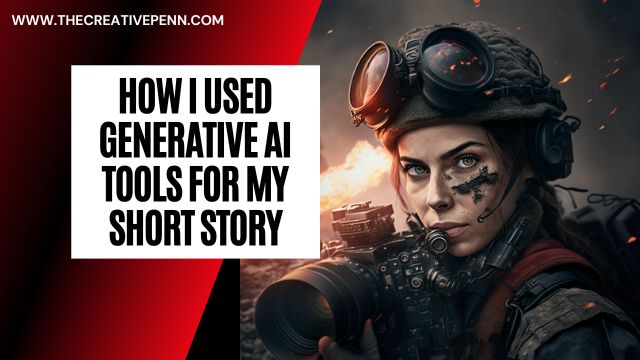
And I'm the same. I just had a blog post about my AI-assisted process for With A Demon's Eye, and I just list everything I used in terms of AI from images to text.
I was part of the ethical AI guidelines with the Alliance of Independent Authors. And one of the things that we're recommending is labeling.
So I label, my AI-narrated audiobooks have a little badge on them. I have this statement of AI usage in my books. I've been doing that. And what's so interesting is I've been criticized for using AI, and then I've been criticized for telling people that I'm using AI.
Tim Boucher
Right? So it's hard to win.
Joanna Penn
Yeah, it is hard to win. One cannot win.
But personally, I'm staying on the side of labeling even just to be aware of myself, like in 10 years' time, will I look back and say, well, it's interesting that I was labeling things, because clearly at the time, it was hard to know what was the right thing to do.
What are your thoughts on labeling and ethical and responsible usage of AI?
Tim Boucher
I think labeling is a really good and positive thing because it gives people an idea of what to expect.
If you're writing in a genre, you want to also label what your genre is, because people might not like that genre. So I think of it as a sort of a subcategory of whatever your genre is already.
But it's tricky because when people ask for labeling of content, they don't always know what it is that their objective is.
If you find out that something is AI-assisted or AI-generated, what does that tell you? It says different things to different people. And it's not necessarily clear what we should expect from that.
And it's tricky, too, because a lot of AI writing right now is hybrid-human and AI collaboration more than just purely AI-generated.
At a micro level, it becomes really difficult to say like, well, this part of it was written by AI, this part was written by me like how do we do that? Technically, as writers or within products that help us as writers that use AI?
So there are a lot of unanswered questions there that I'm interested in because I like tech products, and I like to try to figure them out. One thing I've thought about a lot is could we have sort of a simple markup or markdown way to within a text label, which parts are the AI-generated parts?
One of the things I've landed on is there's a historical mark of punctuation or the editor mark, I guess more called the obelus I'm not even sure how you pronounce it, but it's shaped in different forms. It's shaped like a division sign. Sometimes it's shaped more like a percent sign.
And I think what it was originally used for was in analysis of Homeric texts that people would mark on the side of the manuscript or whatever using this symbol, whether or not if they thought a part of the text was maybe invented that it wasn't actually true to Homer's original tale.
So there is a historical precedent for taking texts and marking them up to say this part is questionable, this part, we're not sure of the origin of it. So I think there's something there that can be explored of, of how can we do that and apply that at a really micro level within texts at an in line.
So I think that things like that, writers who have their own perspective and who have historical knowledge of analysis of texts, they're going to have a lot to contribute that an engineer might not know about. So that's another reason for people to get involved.
I think some of the other ethical issues I tend to think of, partly because of my professional background is in risk and analyzing risk, and then figuring out what do we need to do to reduce or to eliminate risks?
So I tend to think of things like internet technologies in terms of harms. Is there a harm to specific a specific person or to a specific group of people? Can you identify who they would be? And what would be the harm?
How harmful might it be? What is the likelihood? And things like that?
And then that gives me a more concrete framework from which to decide about? Who is impacted? And how much and why and is it really something that I want to engage in or not?
So I think something I'm seeing from artists and from writers who are hesitant to get into AI stuff is that I think people are waiting for ethical issues to be worked out over time. And I think that's a legitimate position. but I also think that if you're waiting for things to become perfect, and for all the possible problems to go away, you're gonna be waiting a really long time, and you're gonna miss out on being part of the conversation to develop it in a good and ethical direction.
Joanna Penn
For sure. I mean, on that, the ethical things, I mean, we even right now, as we record this, there's been all these articles about Roald Dahl, the children's author, I don't know if you've seen these about how his children's books are being rewritten to remove or anything considered offensive by a modern sensitivity reader. [The Guardian.]
And I grew up reading Roald Dahl. I'm in my late 40s now, and I still remember them very well. And they were brilliantly offensive, and I loved that as a kid, you know? And so there's a lot of hand-wringing over this.
Every generation has its own different decision on what is ethical and what is right.
So as you said, it will never stop. but I want to come back to that mark up in the text. That's definitely not what I meant by labeling, because personally, you mentioned hybrid writing earlier — that's how I'm using AI. It's in a very hybrid way.
There is no way at the moment with my writing process, I would label like, oh, this particular word is from AI.”
Tim Boucher: Oh, no, that would be too much.
Joanna Penn: Some people use it a lot more but what I also think is we will edit, so it is much easier to label an AI editor, an AI narrated audiobook, because that is it's final output. Like my book cover for With A Demon's Eye, that image is generated by Midjourney.
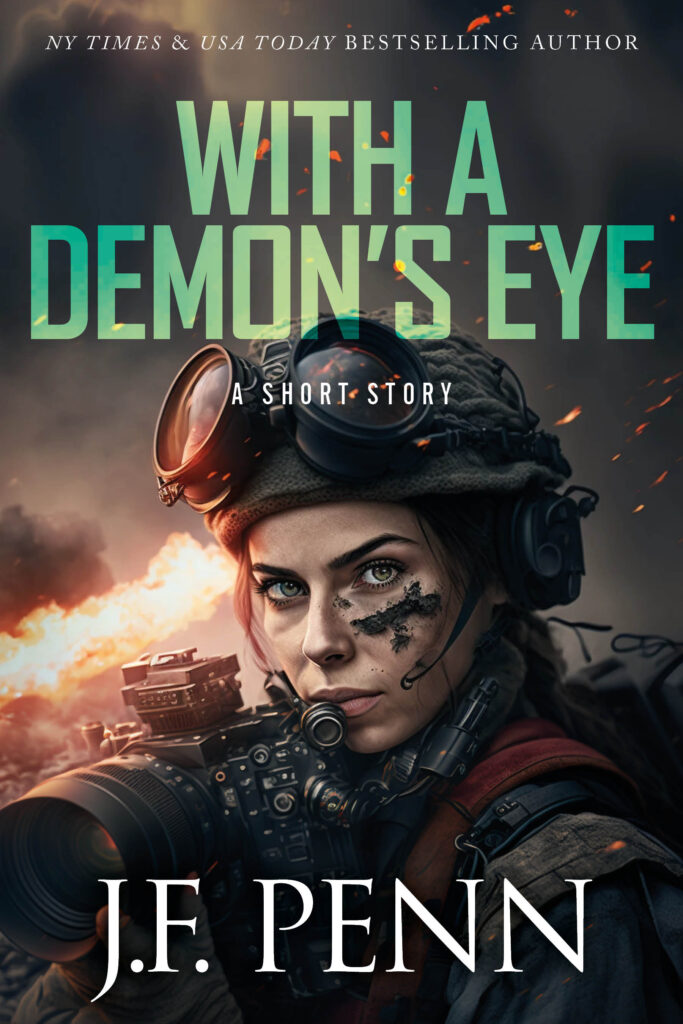
So that's easy, but I think text is hard.
Then coming back on harm. What is the harm? So let's come back to someone using ChatGPT to generate texts in the ‘voice' of Joanna Penn. Some people would not find that acceptable. Some people would say you should not be using my name in a prompt.
I'm delighted, but for some people that will indicate harm. You can go on to ChatGPT, you can say “write a blog post in the style of Joanna Penn about seven tips for first-time authors.”
Like literally go and do that now, and you could publish it under your name. Now, does that harm me? Where is the harm there? What do you think?
Tim Boucher
I mean, I think that has to be on an individual basis for creators because it's going to be a different limit for each person. I think there are risks there around the right of publicity of using someone's name or their likeness.
Or some people argue that style should be covered under that if it isn't already. I'm not sure exactly the technicalities, and then there's also the risk of impersonation, I guess that someone could use your name and then post something and then make it look like you posted something that it wasn't you I think it's just got to be figured out for each person.
Joanna Penn
But copyright law is not per person. Copyright law is copyright law.