The Importance Of Confident Creative Direction, Voice, And Taste, In Generative AI Art With Oliver Altair
The Creative Penn Podcast For Writers
Audio is streamed directly from the publisher (media.blubrry.com) as published in their RSS feed. Play Podcasts does not host this file. Rights-holders can request removal through the copyright & takedown page.
Show Notes
How can you use AI tools to ethically and responsibly create in whatever sphere you love? What are some of the tools and why are creative direction, voice, and taste, so important? I discuss these issues and more in a solo introduction and an interview with Oliver Altair.
In the first 28 mins of the podcast, I give an extended introduction about the various legal cases around AI and copyright, my thoughts on the best way to approach it for your creative work, and how to use AI tools ethically and responsibly. I've included the transcript below with lots of links and further resources, and you can find more at TheCreativePenn.com/future.
If you'd like to learn more, you can get 50% off my ebook and audiobook on Artificial Intelligence, Blockchain, and Virtual Worlds if you buy direct, and you can get 50% off my course, The AI-Assisted Author. Just use discount code: FEB23 at checkout for either.
Today's show is sponsored by my wonderful patrons who fund my brain so I have time to think about and discuss these futurist topics impacting authors. If you support the show, you also get the extra monthly patron-only Q&A audio. You can support the show at www.patreon.com/thecreativepenn
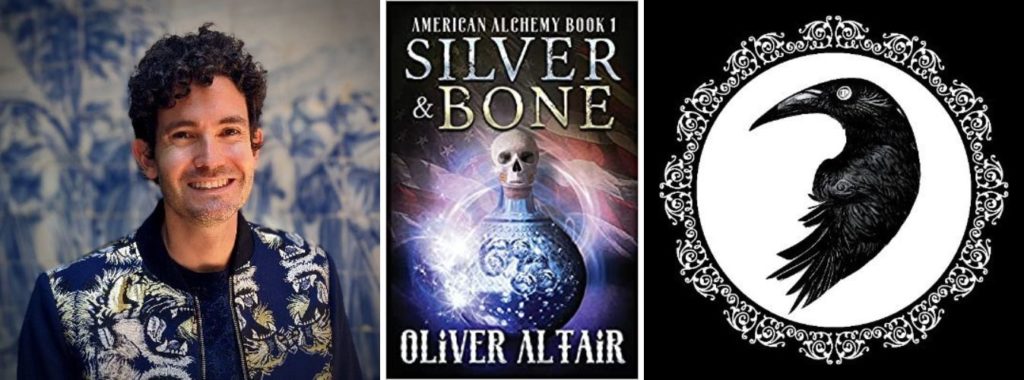
Oliver Altair is a dark fantasy author, a digital artist and creator of the Ravensfield Collection.
You can listen above or on your favorite podcast app or read the notes and links below. Here are the highlights and the full transcript is below. The interview starts at 28:33 mins.
Show Notes
- The creation of the Ravensfield Collection using AI art
- How AI art can be used as a marketing tool for authors
- Available tools for an AI-augmented creative
- How to write AI prompts to achieve the best results
- Concerns about intellectual property when training models
- What are the different kinds of Creative Commons licenses?
- The importance of creative confidence, voice, and taste, for making art with AI tools
- Generative writing tools as a brainstorming co-pilot
You can find Oliver Altair at OliverAltair.com. You can view the Ravensfield Collection at Ravensfield.art.
Header image by Joanna Penn on Midjourney.
Transcript of the solo introduction on generative AI with Joanna Penn
Before we get into the interview, I just want to add some over-arching comments as I’m getting a lot of emails about generative AI for art and obviously for words.
It feels like a lot of people are going through now what I did a few years back when I first heard about all this, so I understand how it feels to be kind of scared, kind of excited, kind of unsure as to what we can do with all this, and of course, you have to spend some time figuring out your position on it all and that’s not helped by the hyperbole, misunderstanding, and rage fuelled by press and social media.
There is a real sense of fear and confusion in the media and amongst different kinds of creators.
But instead of jumping into the outrage, take a deep breath and do some research for yourself from different points of view — and of course, I am only one point of view!
As I have talked about many times over the last few years, these generative AI systems are tools, and new technology always enables new forms of creative expression and helps creators of all kinds achieve new things.
Photography didn’t kill painting or drawing, online gaming didn’t kill tabletop games, ebooks didn’t kill beautiful print editions, synthesised music didn’t kill the live concert. In fact, all these things made the personal touch even more important.
Yes, there are many issues with generative AI, I know it’s not all rainbows and unicorns! Tools can also be weapons, to borrow the title of Brad Smith’s book on the promise and peril of the digital age — which was more about the disruption of the internet which has a similar dichotomy — but we can use these tools responsibly and ethically and encourage others to do the same.
Let’s first take a step back
These tools are not new, they have just been noticed by people outside the tech industry since ChatGPT was launched in late November 2023.
I started commenting about generative AI on the show back in 2016, and have done many interviews on it since then — you can find all the backlist episodes at TheCreativePenn.com/future
In July 2019, I did a solo episode on 9 Ways That Artificial Intelligence will Disrupt Authors and the Publishing Industry in the next decade, episode 437 if you want to listen.
My very first point was “Non-fiction books, blog posts, and news articles will be written by AI,” which is certainly happening with GPT3, ChatGPT, tools like Jasper, and more.
I also said that “Copyright law will be challenged as books are used to train AIs which then produce work in the voice of established authors.”
The first legal cases around copyright law have now been brought by artists as their art is being used to train models that can be used to produce work in the voice of established artists — it’s essentially the same thing as I wrote about.
There are a few legal cases about generative AI right now
As ever, I am not a lawyer/attorney, just an author, audiobook narrator and podcaster. I have an interview coming in the next few months with an IP lawyer on all this so we’ll circle back to it as the year progresses.
Three artists have filed a class action lawsuit against Midjourney, Stable Diffusion and DreamUp for scraping their images and using their intellectual property without consent.
I recommend listening to the excellent Hard Fork podcast episode from 20 Jan, 2023 which has a segment with artist Sarah Andersen on the lawsuit. She says they are not looking to shut down the technology, but they want consent so artists can opt their images in for training, rather than opt-out as default. They also want credit if their work is used, and compensation for any harm or infringement, and also for licensing data for training.
Getty Images are also suing Stable Diffusion for unlawfully scraping images from its site. In an article on The Verge, Getty Images CEO, Craig Peters “compares the current legal landscape in the generative AI scene to the early days of digital music, where companies like Napster offered popular but illegal services before new deals were struck with license holders like music labels.
Peters said Getty was not interested in financial damages or stopping the development of AI art tools, but in creating a new legal status quo. There are ways of building generative models that respect intellectual property.”
Rights Tech also has an article about the ins and outs of AI art and copyright, noting “While the litigation against image generators may be new, the debate over whether works produced by AI systems trained on copyrighted works should be considered derivative works under copyright law, and for which a license therefore should have been obtained, is not new.”
There’s also another class action lawsuit where Microsoft, GitHub, and OpenAI are being sued around GitHub Co-pilot being “trained on public repositories of code scraped from the web, many of which are published with licenses that require anyone reusing the code to credit its creators. Copilot has been found to regurgitate long sections of licensed code without providing credit — prompting this lawsuit that accuses the companies of violating copyright law on a massive scale.” The Verge
Some people have emailed me suggesting that these cases will end generative AI before it really gets going, but while these cases are interesting and important, none are intended to shut down generative AI tools.
They are intended to ensure creators and owners of intellectual property are fairly compensated for training models. So regardless of the outcome, AI development will continue apace. The genie is truly out of the bottle.
And it’s not just businesses that want AI development to continue.
I was part of a submission to the UK government on AI and copyright last year along with the Alliance of Independent Authors, and in reading the associated documents, there was a clear attempt to balance reward for creative work with the need to encourage AI innovation, not stifle it.
The US government would presumably be even more keen on ensuring the continuing development of AI. After all, do you really think the US wants another country to be predominant in AI?
Read AI SuperPowers by Kai-Fu Lee if you want a glimpse of the stakes.
Personally, I think the court cases will probably result in some kind of settlement fund for those artists who can prove damages, a change in copyright law to allow for licensing to train models — or it might even be made part of fair use — and there will be an opt-out for anyone who doesn’t want their art/words/music/whatever to be used in training data or used as a prompt.
Fine-tuning models to specific requirements will become much more accessible.
I wrote about this in my book on Artificial Intelligence, Blockchain, and Virtual Worlds, where I proposed a new license to train models with our work in copyright where the original creator gets paid, which would definitely fit with what is being discussed.

For example, a group of action-adventure thriller writers could get together and train a model with our work and then license it to other writers. I’m up for that as I discussed with Charlene Putney on episode 660.
So AI is not going away. It will only become more pervasive in every industry.
Andrew Ng, professor at Stanford, also worked at Google Brain, Baidu AI, and co-founder of Coursera, said that “AI is the new electricity,” in that it will be incorporated into every industry, and the creative sphere is just one tiny part of the transformation.
He also has a great free course on AI for Everyone, which I did a while back, and I recommend if you want to learn more.
In fact, you are also already using AI tools every day — in your car through Google or Apple Maps, if you edit with tools like Grammarly or ProWritingAid, if you publish or shop on Amazon, if you use advertising through Facebook or Amazon, if you use social media on sites like TikTok, YouTube, or Twitter.
Microsoft has also licensed OpenAI’s models for use in their platform and products so these tools are already being incorporated into things you use, and will likely be in MS Word soon, if it’s not already.
You are already AI-assisted. The question is how much do you want to use AI tools in your creative and business practices, as well as in your personal life and work?
So if you want to keep an open mind and try some of the tools, here are my thoughts on the best way to approach them.
Be curious. Be playful. Experiment.
As Oliver and I discuss in the upcoming interview, we are both having a lot of fun with these tools, both image and text tools. They are like a jumpstart for your brain, a crazy co-writer, or co-creator. They spark new ideas and make far more things possible. For the curious creative mind, they are expansive tools.
If you keep a fun, positive, open mindset when you approach AI tools, you may find possibilities you never expected.
As Kevin Kelly says in The Inevitable: Understanding the 12 Technological Forces That Will Shape Our Future.
“This is not a race against the machines. If we race against them, we lose. This is a race with the machines. You’ll be paid in the future based on how well you work with robots … It is inevitable.”
Use AI tools ethically and responsibly
I recommend reading and applying the Alliance of Independent Authors Ethical Guidelines for use of AI.
Some of the key points are:
Use the tools to enhance your creative work, not to infringe on other people’s IP or pass work off as others.
For example, I use Sudowrite (based on GPT3) as a way to help me write better sensory description in my stories, but I do not ask it to “rewrite this text in the style of Stephen King.”
As much as I love King’s books, I’m J.F. Penn and I have my voice and my own stories to tell. I want to use AI tools for my creative vision and enhance my own voice.
I don’t want to create in the style or tone or voice of someone else — and that is true of all artists in any creative niche. Yes, we read other people’s work, but ultimately we want to create our own thing.
If I use any text from Sudowrite or ChatGPT, I edit all generated text to fit my voice and also check it with ProWritingAid’s plagiarism checker, just in case I have mistakenly used someone else’s words. I did this prior to using AI tools anyway, as it’s good practice when you do a lot of research from other books.
In the same way, you can ask AI tools like Midjourney to create images without using the name of a living artist as a prompt. You can get plenty of amazing images without infringing on someone else’s art.
For example, the image on this post is made on Midjourney with the prompt “a robot holding an artists palette, metallic, colorful, detailed.”
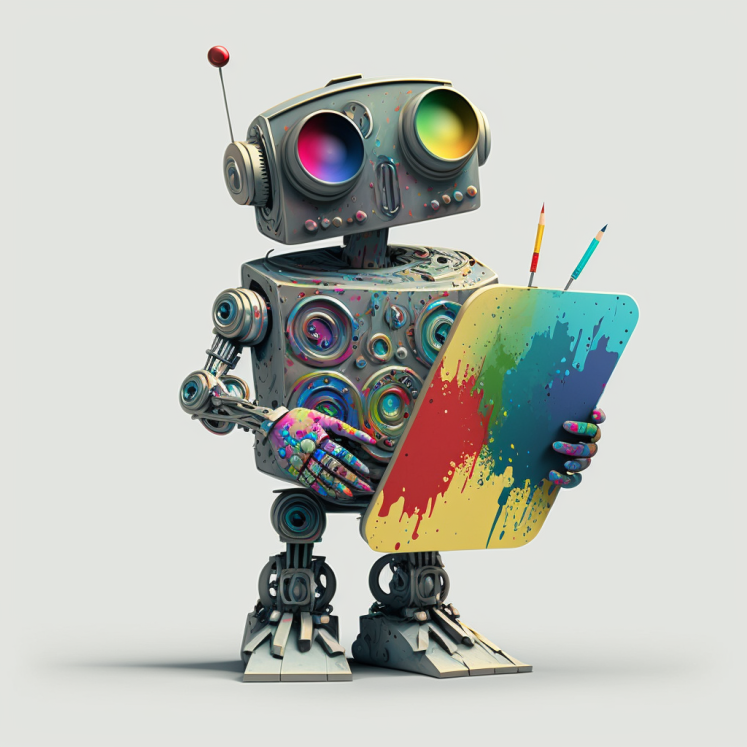
Then I checked the final image on Google Image Search to make sure it didn’t resemble someone else’s art.
Be honest and upfront about AI usage
I include a statement of AI usage at the back of my books and I label my AI-narrated audiobooks as well as when I use AI images on my blog posts or in my books.
I have a longer blog post coming in late Feb when I publish my first story with an AI-generated cover, which has also been edited by my cover designer.
How will AI tools impact our business models as authors (and artists)
As ever, it’s about creating original work that you want to create, with your voice, your creative direction, your emotion, and your life experience.
There will always be people who will use the latest tool to cheat and scam and make a quick buck and generally do all the things humans have always done. Plagiarism and piracy are nothing new, so just get on with creating and connecting with your readers and listeners.
Double down on being human, as complex and flawed as you are, and focus on connecting with other humans — however you choose to create — whether that’s with AI tools or without them.
This is one of the reasons why I am so excited about Kickstarter and selling direct on Shopify and other stores. It means we can do amazing quality products for our audience, sell directly and control the platform, as well as connect with the people who buy.
It also means I don’t have to compete on the same platform as all the other creators, as well as the scammers who only target the big platforms.
I can carve out my own little corner of the internet and create and sell happily over here!
(And yes, as this goes out, my Kickstarter for Pilgrimage is running until 5 Feb 2023!)
Even if AI tools can at some point write an amazing novel, or generate a moving song, or create incredible art — it doesn’t matter.
There are already billions of images, songs, and books that anyone can read.
We already have abundance and there will only be more of it to come.
The important thing is creating unique and wonderful stories/art/books/music and connecting with an audience of humans who it resonates with.
It’s about your voice, your angle on the story or topic, your personal experience, your face, your voice.
Your personal brand as a creator and controlling your own intellectual property and your platform is more important than ever in this age of AI.
Circling back to my 2019 article on how AI would disrupt the industry, I also said,
“Humans are innately creative and in this new AI-powered world, we can create even more than we ever dreamed possible.”
I’m more excited than ever about it, and as you’ll hear in the interview, Oliver is too, and we’ll get into that interview in a minute.
If you’d like to learn more, check out Artificial Intelligence, Blockchain and Virtual Worlds, which has chapters on writing in the age of AI and copyright law, written in 2020, but only now really coming true. As ever, I am early …
I also have a course on The AI-Assisted Author which goes into a lot more detail around attitudes to AI, problems, biases, ethical usage, and more.
You can get 50% off the ebook, audiobook, and the course if you buy direct. Use coupon FEB23 at checkout, links in the show notes, valid until March 2023.
There are a ton of newsletters and podcasts out there on these topics, and I wade through a lot of them every week!
I recommend The Algorithmic Bridge by Alberto Romero and Ben’s Bites in particular.
For AI-related podcasts, Hard Fork, Grey Matter with Reid Hoffman, A16Z, and Mindsets and Moonshots.
And check out my backlist podcast episodes and book list at https://www.thecreativepenn.com/future/
Right, let’s get into the interview.
Transcript of Interview with Oliver Altair
Joanna: Oliver Altair is a dark fantasy author, a digital artist, and creator of the Ravensfield Collection. So welcome, Oliver.
Oliver: Hey, Joanna. Thank you so much for having me.
Joanna: Oh, I'm excited to talk to you today. So first up —
Tell us just a bit more about you and how you got into writing and digital art.
Oliver: For me, it all goes way back to when I was a little boy. Creativity was very much encouraged in my household. Both of my parents have brilliant creative minds, my father is an artist. So for me, pretty much I spent all my time writing my stories and illustrating my own stories.
Then when I got my first computer, I got like intrigued about digital art. So I carried that with me until my adult life. And professionally, I became a graphic artist pretty much right after college. So I've been doing that for around 15 years. And when it comes to publishing, I wasn't aware of the self-publishing world until 2016/2017, so I was a bit late to the game. 2017 is when I published my first dark fantasy novel.
Joanna: Okay, well, no one is late. So you certainly weren't late then. And anyone starting now, you are not late. I mean, I feel like I'm a bit with Amazon on this, every day is day one. There's always something new. And we'll be talking about new stuff today.
Let's just tell people where you are in the world in case they're wondering what your accent is.
It's only very slight, but I think people will be interested.
Oliver: Yes. So I'm originally from Spain. I was born in the southwest of Spain, but then I moved to the United States in my early 20s, so I was there for pretty much until I was in my mid to late 30s. So it's been a while, but now I live between the US and Europe with my husband. Right now, today. I'm actually in the Lisbon area in Portugal, which is quite lovely.
Joanna: Oh, lovely place.
Tell us more about the Ravensfield Collection. What is this? And why did you create it?
Oliver: Yes, so I called the Ravensfield Collection my own museum of the weird. So it's an imaginary museum that I created and it has pieces of artwork that go from oil paintings to sculptures to just like objects of art, pretty much, whatever you could find in an eclectic museum. Think for example, the Metropolitan Museum in New York City.
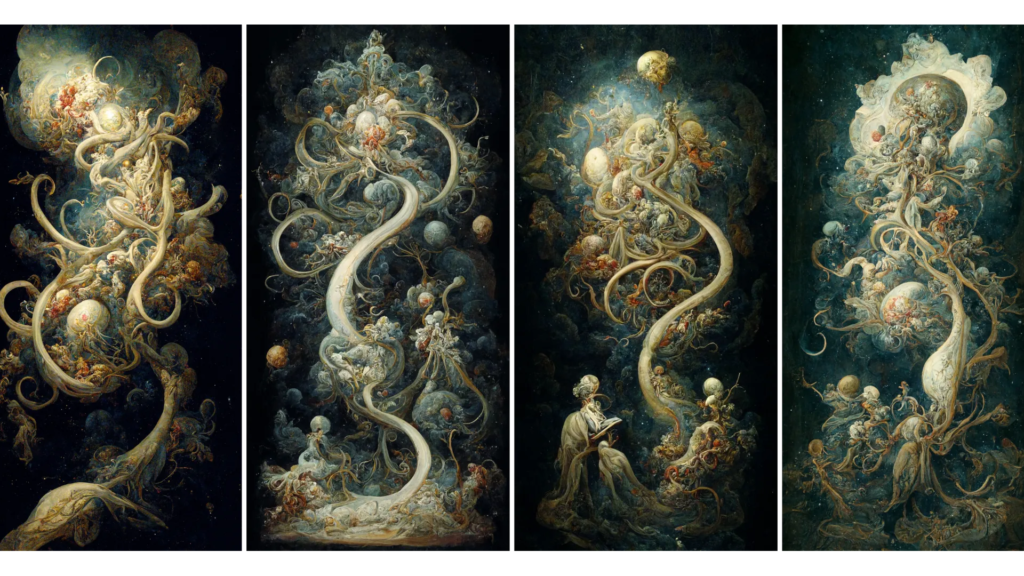
Then each little object has a short story, a bit of text related to the object. And it's usually something in the realm of like weird fiction, which is what I write about. And some of the stories are actually interrelated, so they give you information about that world, about the family that has curated the collection, etc.
The one thing that excites me the most is like all of the art pieces I made using an artificial intelligence image generator, which I believe adds a little bit of like weirdness and mysticism, if you will, to the whole project.
About the “why” of I decided to create this, I think there was both a creative reason and also a more practical reason.
Creatively, I've always loved anthology projects, things like, you know, The Martian Chronicles, or Chuck Palahniuk's Haunted, or of course, The Twilight Zone. So I decided that this was my chance to create my own.
Then at the same time, when I started my publishing journey, I was actually pretty happy with the response of the readers that I could find so far. But I think I felt a bit short when it came to widening my audience a little. And probably some of your listeners will share this feeling with me.
If you write something that is a bit hard to position on the bookshelf, it gets really tricky to find the correct readers.
So I thought this was a great chance to create a project that would interest the minds that I'm trying to reach, people that are just interested in things that have are a bit out there, a bit weird, a bit in the realms of strange fiction and horror and all that kind of stuff.
Joanna: And actually, this is why I'm talking to you. I mean, I've had a lot of pitches around, “let's talk about AI art.” And then I went on your Ravensfield Collection, and I was like, ‘oh, we have a similar mind in that way.' In that, you know, I've got Guillermo del Toro's Cabinet of Curiosities, the book about his house, which is just full of the weirdest stuff. And I have so many very expensive hardback books that are full of weird pictures from weird museums.
When I saw yours, I was like, ‘ah, this is a great idea.' And it totally gets into the things that we maybe can't find pictures of either. This is what's so awesome about AI art. And I might have to do something similar for my book Desecration, where just there are no pictures of some of the things I'm writing about. So I love that you're doing this from a creative point of view.
You mentioned the readers' response, so what has been the readers' response?
Have people been like, “oh, I want to know the story behind that object”? Has it actually led to book sales? Can you tell?
Oliver: So when it comes to book sales, right now, I'm in the middle of a huge project because I decided that the story that I wrote in my first few books, I felt the scope was too small. So I decided to actually re-edit both volumes, which is also one of the reasons I decided to put some effort into Ravensfield because that's a project that is going to take me a long time, and I wanted to still be active and be sharing content with readers out there.
The response so far has been pretty fantastic. Like people are just very intrigued and also I like surprising people that fall into the Ravensfield Collection because I think the first reaction is a bit confused. Like they don't know what the thing is about, is this a real place.
Then they start investigating and digging, and they get more and more into it. And then they message me, and they say, I cannot wait for the next object to drop. Or they actually want to meet the people in the family, or they request that I do images that are actually the portraits of these characters that I'm talking about.
So it's opening a lot of really fun interactions with people. And also, it opens the conversations in regards to AI art because that's also something that most people didn't expect.
Because to be fair, most people don't know that AI art even exists.
So they question like, where did I find those objects, if it's something that was like laying around my house and I decided to write a story about it. And I just have so much fun because like being in that kind of in-between ties so beautifully with the things that I write about.
Joanna: And I'm so glad you use the word “fun” there because we're going to get into some serious issues and problems that people have.
But when you're creating with these tools, and when I'm creating these tools, I'm having fun.
Just before this, I was in Midjourney, I was making some more character pictures, I was making some background pictures, and I love what you're doing there in terms of like, it's fun, and then you're using it to world build.
I feel like maybe as professionals, we get to the point of thinking everything we do has to generate income, like that particular thing has to be revenue generating. This almost goes back to what is creatively fun and just part of just the joy, I guess, of creation, which almost takes us back to the beginning of why we did this in the first place.
Oliver: Oh, absolutely. I couldn't agree more. And also, I probably am not alone in what happened during COVID, like a lot of us felt very creatively drained.
And for me, when I discovered this whole new world of AI art, it was like some spark was reignited, in a sense.
Joanna: Yeah, I think I was the same. COVID just was not good. It was not good in many ways. But creatively, it was just dead. So I love this. Let's get into some more specifics.
Which AI image tools are you using? What other tools are you using as an AI-augmented creative?
Oliver: Yes, so I use Midjourney. It's the one that you just mentioned. There are many apps and software when it comes to image generation out there, and I feel like every time I close my eyes there is new one. And they get more and more specific, which is pretty fantastic.
Right now, I decided to master just the one and then probably I'll move on because I'm the kind of creative that likes to have like a hefty toolbox, if possible. This is the one that has given me the best results so far for the goals that I have in mind.
Also, like you talked with Derek Murphy about this, so I will tell your listeners to go back and listen to that one because that was a great conversation. And he goes a bit more into depth about the nuances between the different tools.
Joanna: So well, let's talk about how you use Midjourney then. I'll tell you how I use it because I am not graphically trained, I'm not a visual artist. I do think they have some kind of visual taste.
But on Midjourney, like earlier, I did a “portrait photo of a female combat photographer against the backdrop of burning buildings.” So my prompt has a character type and a background, and I'm using version four, so I use the — v 4. And what I get out of that is pretty blooming good, to be honest. But you're an artist, you're a graphic artist —
What are your prompts like when you're prompting these engines?
Oliver: So my prompting varies depending on what I'm trying to achieve. What I do a lot is like — so I would say I like that you brought the word “taste”. There is definitely a taste level that you need to have to get your results to where you want them to be.
And also, for me, it's not only taste, it's also a tool that requires a lot of curiosity, and it requires you to be very observant. You need to have a very wide repertoire of references and words that you can use to talk to the machine, to the algorithm. And machines are very precise.
So in a sense, it's also like talking a new language from scratch because you cannot talk to Midjourney as we are talking, you and I, because it wouldn't understand you.
And for me, you need to find a balance between the result that you have in your head, and then you need to also leave the algorithm a bit of freedom because, usually, the machine is going to surprise you. And in my case, it always surprises you in the right ways, and it opens different pathways and different possibilities that you didn't think about.
In my case, what I love to do is mixing things that in our human logical minds maybe wouldn't mix. So for example, I tried to mix a fashion designer with a building.
And then the computer does it so beautifully, yet so seamlessly that the results are always so so bizarre. And then I take that into pretty much everything. And then depending on like the mood, then I add a lot of extra information when it comes to lighting, when it comes to color palettes, and when it comes to different mediums or textures, things like that.
So the good thing about image generators is the foundation is really accessible. So anyone can go into the tool and start experimenting. And the results, as you said, from the get go is pretty impressive. And then you can iterate and grow from there. But pretty much you have results that are shareable from the very first hours that you're using Midjourney.
Joanna: You've raised such great points there. And again, I just want to emphasize to people, when you're prompting, you mentioned a repertoire of references, so fashion designers and buildings. So you're not saying ‘house' and ‘fashion designer,' you're saying specific names around fashion designers and buildings.
And then you said lighting, color palette, textures. And the difference in a prompt, like if people haven't seen the difference in prompt — so my husband who's not at all visually artistic, the other day he did a prompt, and it was like ‘cat samurai.' And, I mean, it's a cat samurai, and it has a nice cartoon of a cat.
Oliver: Yeah, that's pretty cute.
Joanna: Yeah, it is cute, right? It's cute. And the picture that comes up in everyone's head right now is probably enough, but that would never be enough for you. Like you would never put cat samurai, right? You would come up with all kinds of other things.
I actually screenshot an artist doing a prompt earlier, and his prompt was like 500 words. You know, so I mean that's the difference, isn't it?
When people say, “oh, there's no room for real artists anymore” — but prompting and using the tools is a real art in itself.
Oliver: It is. I mean, tool is the keyword for me.
Midjourney, it's a tool, like a pencil is a tool. It's not a living being that is trying to take over the world or trying to obliterate artists from the face of the earth.
It is a tool that might interest some artists, it might not interest some others. And then it has a learning curve. And then it has a lot of experimenting that you can do.
The thing is, like as any other thing, it requires some extra thought if you want to find your own voice. It's pretty much very close to writing, right?
Like when you start writing, you're a bit shy, and you try to stick to like a lot of conventions, and then you start breaking free, and then you use things that are a bit more daring. To me, it's pretty much the same mental process.
First, you are a bit shy and you do prompts that are a bit less complex. And then when you start finding your footing, you start getting a bit more brave and then a bit more complex.
And then your prompts are larger, which by the way, not always means better. Some people confuse and they think that if you write pretty much the Bible as a prompt, you're going to get a better result, which is not always the case. It's like anything else, it depends on what you're trying to achieve.
For me, it's a very, very beautiful creative process because it requires a lot of mental clarity.
You need to have a very clear picture in your mind of what you want to achieve. And then you need to translate that into a prompt that is useful to the machine.
So just that is going to challenge your comfort zone creatively time and again, and I think it's just a very, very good way to keep your mind sharp.
Joanna: And so you mentioned ‘voice' there, you mentioned a clear picture of what you want to achieve. We've mentioned taste.
I always talk about creative direction, you know, and I talk about having maybe a supercar sitting there outside your house, and the supercar is not just going to do stuff on its own. You have to get in and drive it and take it to where you want it to go, and you're the one in charge.
So I think that this is so important, these tools don't have any agency.
I mean, as we're recording this certainly, in January 2023, there is no sentient AI artists that's like, “oh, this is my AI voice. This is what I'm going to create.”
And so everything that people are creating is all through the lens of what they want to do. And it's a bit like you can give the same writer a writing prompt, and they will create completely different stories.
You and I could have the same idea of something we want to create, but our outputs will be completely different using the same tool.
It is a tool. And obviously, we agree on this, but people listening, I think are struggling with this idea.
Oliver: Yes, absolutely. And I think there is a whole misconception about what it is and what it does.
And I think some people think that when you prompt, pretty much what you're doing is like a Google image search or you're looking for an image on a stock service. Like they think that what the service does is finds an image that kind of matches what you're saying and either gives you that same image or a carbon copy. And that's not even close to being remotely true.
You need to think that these tools are trained in billions of images around the world. And what they do is they understand what you're trying to achieve. And they take bits and pieces of all of those images of this information in pixels, and then they give you a series of results that you can each rate.
You can then create a whole new image that is going to be completely your own, and it's going to show your personality.
Especially, I think it happens to all creators, at some point, things that look too formulaic are not going to be good enough for you because we are very anal when it comes to finding our voices.
So that's when I think just by like the nature of being creative, you'll try to push new boundaries.
Joanna: Hmm. Yeah, absolutely. I've got some sort of key points of what people are objecting to.
First of all, “is AI art really art?”
And I mean, my opinion, first up, is there is no true AI art because humans are driving it all.
Also, I think there's a very clear difference between like — and I see it on the Midjourney open stream all the time, people upload a selfie, and then they say, ‘make me into a Pixar character.' This is a common thing.
Or make me into a Disney character or something like that. And there is a very, like Pixar, specifically, a very key visual cue that is a Pixar image and people's selfies as Pixar characters. That is not art. I mean, that's just kind of fun. It's what people want to do.
But there's a big difference between someone like yourself or people who are actually creating art with these tools, or people who are just using it for fun. So what are your thoughts on this? Is AI art really art?
Oliver: Yeah, I mean, I find it really funny because, is X, Y and Z art or not art? It's pretty much a debate that has been happening since art exists. So it's not new.
And also I think it's pretty pointless. I mean, is it? Isn't it? I mean, who knows, depends on who you ask. The things that are getting confused here is the novelty of new “toy”, and people that see potential creatively or professionally. Being so new, and I find it really fascinating, some people online are already treating AI art as if it were a mature industry. It's not, by any means. It's still in very, very early stages.
So it's, of course, like very common that people see a new and flashy thing, and they want to do silly experiments. And that's totally fine, and they can have their fun.
But I think all of those people eventually are going to find their interest somewhere else, and they're going to move on. And then the people that are going to remain are people that see a potential beyond the novelty. You know what I mean?
Joanna: Yeah, and I mean, photography is the classic example that people are using, which is when photography came along, early photography, all the painters went, “What are you doing? That's not real art.”
And then people started taking photos. And then it went from the old film to digital. And then there's all the tools like Photoshop you can use to manipulate it. And so on every scale — I mean, music, you don't need to play a violin now to make violin music, you know, all of these things have tools.
Yes, and it's funny you say that about people getting bored. Like, again, like my husband, for example, he does like occasionally doing like the cat samurai stuff, but he has no reason to use AI visual art in his daily life. And so he will rapidly get bored with it. And you will carry on, I will carry on in a lesser way than you will, but we all try these things and then find a place for them. And if there is no place for them, that's also fine.
Oliver: Absolutely. And I think finding the place, that's what people need to think about.
If it's a tool that has potential — which I believe AI does for several reasons — it will find its rightful place and then people will use it accordingly.
Not only that, like AI art existing probably is also going to open new synergies between AI and other artworks that already exist, in the movie world or even like a traditional name in writing.
When photography came to be, or film, also the other arts caught up and created new things that wouldn't exist otherwise.
And I think this is going to be pretty much the same thing. I mean, sometimes I wonder if the difference is the speed, right? This transition is happening so fast that sometimes I think the fear is related to this kind of like vertigo effect because things are just changing so rapidly that you cannot even grasp what they mean, or what the change might be, or if it's good or bad, and then people get just like absolutely stunned.
Joanna: Yes, and that is why I like to keep coming back to this because a lot of people actually have emailed me about t