The Creative Nonfiction Podcast with Brendan O'Meara
568 episodes — Page 1 of 12
Episode 547: Catherine Grace Katz Needs a Portable Murder Wall and PB&J to Write
Episode 546: Seth Wickersham is On That Hill
Episode 545: Stories Can Sit in the Notebook for Years. Just Ask Matthew Wolfe.
Episode 544: Writing a Book is Like Driving a Bus, says Joshua Robinson
Episode 543: Doubt, Vulnerability, Confidence. Is Chris Bennett Talking About Writing or Running?
Episode 542: Earl Swift and the Battle to Get the Reader to the Last Word
Episode 541: 'Touch the Work Every Day' says Shanda McManus
Episode 540: Holbrook Mohr and Mitch Weiss Tackle the Atomic City for The Atavist
Episode 539: How Jennifer Keishin Armstrong Writes Biographies of TV Shows
Episode 538: The Enduring Mystery of Amelia Earhart with Rachel Hartigan
Episode 537: Pamela Colloff's Now-or-Never Moment with 'Catch the Devil'
Episode 536: The Blood, Flesh, and Messiness of Human Existence with Matthew Wolfe
Episode 535: Alex Ronan's Masterclass in the Depth of Reporting
Episode 534: Shoeleather Reporting and Exploring the Riddles of America with Wil Haygood
Episode 533: Susan Orlean on Her 'Best' Rejection, Coming Up with Ideas, and Letting the Reporting Meander
Episode 532: Barry Meier Likes to be Open to Surprises
Episode 531: Austin Kleon Goes Beast Mode in 'Don't Call It Art'
Episode 530: Finding that 'Sinewy Strength' in the Prose with Maccabee Montandon
Episode 529: Dan John says, 'Inspiration is for Amateurs' … and He's Correct
Episode 528: Stuck? Ramona Ausubel Will 'Unstuck' You!
Episode 527: Isaac Fitzgerald says the Truth is a Block of Wood
Episode 526: Chanda Prescod-Weinstein's Literary Reading of the Universe
Episode 525: Mary Cain Started with Pure Anger in 'This Is Not About Running'
Episode 524: Nick Davidson Was Writing an Atavist Story All Along
Episode 523: Lidia Yuknavitch Troubles the Edges
Episode 522: Anthony DePalma Won't Wear Headphones on a Walk

Ep 521Episode 521: Giri Nathan Takes the Insider-Outsider Perspective
E"When I was writing the book, I used a lot of my interest in art criticism and nature writing to get cross pollinate into my sports writing. And I really try not to fall into a rut and just read only adjacent to my own subject or my own field," says Giri Nathan, author of Changeover: A Young Rivalry and a New Era of Men’s Tennis.Today we have Giri Nathan (@giricube on IG), he is a staff writer/cofounder of Defector and the author of Changeover: A Young Rivalry and a New Era of Men’s Tennis. It’s one of the best books I’ve read in the last couple years. It’s funny and voicey and if David Foster Wallace’s tennis writing made sweet, sweet love to John McPhee’s Levels of the Game, you get Changeover. How Giri is able to illustrate why Carlos Alcaraz and Jannik Sinner are so captivating and capable of inheriting the mantle held by Roger Federer, Rafa Nadal, and Novak Djokavic (who’s still going) is a triumph. This book may very well be the future of sports biography in that access to principal figures is almost impossible so you have to approach your subject more with a critical eye, like an art critic, and we talk about that …Giri Nathan’s work has appeared in New York Magazine, The NYT Book Review, The Believer, and National Geographic. He made the 2025 edition of the Year’s Best Sports Writing and The Best American Food & Travel Writing.In this conversation we talk about: Him taking John McPhee’s CNF class at Princeton Art criticism and nature writing as influences for Changeover Losing fandom The relationship to personality and style Writing from contemporaneous excitement Writing the fun scenes The insider-outsider perspective And keeping a running list of adjectives so he doesn’t repeat himselfReally fun stuff here.Order The Front RunnerWelcome to Pitch ClubShow notes: brendanomeara.com

Ep 520Episode 520: R. Renee Hess on the Work that Inspires her and the Founding of Black Girl Hockey Club
E"I think, like all writers, I will feel an itch that I have to scratch. There will be an idea in my head that I've got to get down on paper, whether I follow through with it or not," says R. Renee Hess, author of Blackness is a Gift I Can Give Her: On Race, Community, and Black Women in Hockey.Who do we have this week? It’s R. Renee Hess, but you can all her Renee, of Black Girl Hockey Club. She wrote the essay collection Blackness is a Gift I can Give Her: On Race, Community, and Black Women in Hockey. It’s published by McClelland & Stewart.After Renee finished her schooling and got a job and had some money, she sought to find a sport to follow that cut against the grain. Instead of baseball, football, or basketball, she thought, maybe hockey and it didn’t take long to realize that there very few Black people on the ice and in the stands. And even fewer Black women in the stands. In 2018, she launched Black Girl Hockey Club, a nonprofit organization that focuses on equity and including for Black women in ice hockey.Renee was named one of three finalists for the NHL’s Willie O’Ree Community Hero Award in 2021 for positively impacting the community, culture, or society through the sport of hockey. Her work has appeared in Black Nerd Problems, Spectrum Magazine, and Racebaitr. You can learn more about Renee and her work at blackgirlhockeyclub.org and find her on the socials at @blackgirlhockeyclubIn this conversation we talk about: Tackling other genres Short Fiction Reading as a writer Going back to the classics What sustains the writing Taking representation further And focusing inward vs. outward in her BGHC workReally fun conversation about the important work she’s doing and the work she draws inspiration from.Order The Front RunnerWelcome to Pitch ClubShow notes: brendanomeara.com
Ep 519Episode 519: Stephen Wood's 'Ocean's 11' Anti-Government Caper
E"I'm always calibrating when I'm interviewing somebody, like, how much of a prompt are they going to need, and what is what is going to get something out of them?" — Stephen Wood, whose Buffalo Raiders piece appears in The Atavist Magazine.What is the meaning of this Wednesday podcast! Middle of the week! It’s hump day, this holy day! It’s April 1st, is this some kind of joke! NO! Point being, it’s that Atavistian time of the month and I’m trying to get back to making the Atavist pod an extra pod, not just another Friday pod. So, consider your podcast feed warned, you filthy animal.Stephen Wood is here! Find him on LinkedIn, the professional that he is. He’s a journalist who writes about sports, history, and politics and he’s here to talk about his Atavist story “The Buffalo Raiders: With thousands of U.S. soldiers dying in Vietnam, a group of young Catholics in New York embarked on a secret mission to bring the war machine to its knees.” I’ll give Stephen a more formal introduction — top hat and monocle — just before his segment of the show.We’re gonna hear from Seyward Darby about her side of the table, which is always fun. Name another show where you get an editor talking about a piece, and then the writer talking about it. Exactly, visit patreon.com/cnfpod to contribute to the cause.Also, head to magazine.atavist.com to read Stephen’s story and maybe subscribe. I pay $25 a year to subscribe and I don’t get kickbacks or commissions. Yeah, I pay, too. Stephen Wood can be found at https://sbrycewood2.wixsite.com/ or, per his preference, at LinkedIn, https://www.linkedin.com/in/hey-its-stephen/ … His work has appeared in The Guardian, Current Affairs, Jacobin, The Athletic, and McSweeney’s. He was a producer with Gilded Audio where he worked on shows including Snafu with Ed Helms and The Reason We’re All Still Here.In this chat, we talk about: Calibrating an interview How sometimes podcasts hosts don't even do the interviewing What to do when there’s too much meat on the bone #toomuchmeat What’s a load-bearing element to the story Going in fear of the abstraction And a lot more.Order The Front RunnerWelcome to Pitch ClubShow notes: brendanomeara.com
Ep 518Episode 518: All Hail Gen-X with Geezer Magazine!
E"You can't go and find all of our stories. You can't just click a button and and be served up. You really have to appreciate them in person by holding the magazine in your hands, and that, to me, makes it more special," says Laura LeBleu, co-founder of Geezer Magazine.It’s Laura LeBleu and Paul von Zielbauer, the founders of Geezer Magazine, a new, print-only magazine exploring the Gen-X aging experience. It’s a killer experience. Issue 1 came out several months ago and it’s this 11x15-inch-sized thing and it has pieces by Kim Cross and Tommy Tomlinson. Issue 2 comes out any day now and features an essay from ya boi. You can read my pitch for the essay at welcometopitchclub.substack.com titled Pitchin’ from the Hip.So Laura dreamed up Geezer Magazine in the shower, that incubator of great ideas. She's been an Emmy award winning TV producer, a lead singer of an Italian band, voice of a virtual character, stilt-walking circus ringmaster, minor gay icon, and an NYC cabaret performer. She worked in tech for a bit and it was draining her soul and her creativity muscles were atrophying, she needed to do something, so she decided to bootstrap a magazine. I subscribed.Paul has ridden a bicycle from Hanoi to Ho Chi Minh City, spent 11 years as a journalist with the New York Times, where his work was nominated for the Pulitzer Prize, that little thing. As the Great Recession hit, he launched a business that got volunteers to build playgrounds for disadvantaged children overseas — kaboom kaboom kaboom, IYKYK. According to Geezer’s website, he works quietly in the basement until Laura tells him it’s okay to come upstairs.Fun chat that covers: The appeal of print in a digital world The cost of paper That fine line between being print only but how much should be digital, call it digital fish bait, maybe? Influences such as Mountain Gazette Zigging while others zag The strange creature coming out of the forest The oyster that forms the pearl The people trying to pick up the fountain And metaphors, all the metaphor!Really fun chat from a great magazine that needs your support. Visit geezermagazine.com to check them out and consider subscribing. It’s not cheap, but you get such a unique experience. It truly is one of a kind. I did and no, I don’t get kick backs or commissions.Order The Front RunnerWelcome to Pitch ClubShow notes: brendanomeara.com
Episode 517: The Miracle of Writing a Book with Keith O'Brien
"Those people who shaped the people are often more important than the subject, because they have insight into this young person that they were working with. It's crucial," says Keith O'Brien, bestselling author of Heartland: A Forgotten Place, an Impossible Dream, and the Miracle of Larry Bird.Today we have Keith O’Brien, author of five books, including his latest book Heartland: A forgotten Place, an Impossible Dream, and the Miracle of Larry Bird. It’s published by Atria Books.It’s a lean, propulsive biography framed as an origin story of Larry Bird before he went to the NBA to later become one of the ten best players in history.Keith is the New York Times bestselling author of Outside Shot, Fly Girls, Paradise Falls, Charlie Hustle, which won the PEN America award for biography, and now Heartland. You can learn more about Keith at keithob.com and follow him on the ol’ IG @obrienstory. This book has been crushing it. His events have been overflowing. In this episode we talk about: The dispiriting change we’re seeing in sports journalism Finding the people who shaped the people Sitting under the prism of history Writing an origin story His favorite part of the job And how writing a book is like a miracle every time you finish Lost of great stuff to chew on …Promotional support: The 2026 Power of Narrative Conference. Use narrative20 at checkout for 20% off your tuition. Visit combeyond.bu.edu.Order The Front RunnerWelcome to Pitch ClubShow notes: brendanomeara.com
Ep 516Episode 516: Tom Junod Wrote One of the Best Memoirs You'll Ever Read
E"A book is not a long magazine article, and it took me a long, long time to understand that, to even understand what it means. It's something that you can say, but you have to live it to understand it," says Tom Junod, author of the memoir In the Days of My Youth I Was Told What It Means to be a Man.Wow, look who visited the digital CNF Pod HQ: It’s Tom Junod.Listen, I don’t have all day to sing the praises and list the back-of-the-baseball-card details of Tom’s illustrious career writing for GQ, Esquire, and ESPN. He’s a two-time winner of the National Magazine Award. His piece in Esquire titled The Falling Man is a re-read for many of us around 9/11 and it takes a meditative and reportorial look at the man who had not chosen his fate, but appeared to embrace it. Tom wrote the iconic profile of Fred Rodgers that was turned a movie starring Tom Hanks. In many ways, so much of Tom’s work is writing about father figures, which of course brings us to the ultimate: In The Days of My Youth I Was Told What It Means to be a Man, a memoir about his father. It’s published by Double Day.Tom can be found on Instagram @tom_junod and on the Facebooks and stuff. Google his work to read wildly ambitious stories from that particularly crazy era that was pre-internet magazine culture. Dude was in a watch ad.In this episode: We talk about that watch ad The Mountain of writing a book The difference between writing a magazine story vs. a book The no nut-graf philosophy Saying yes Telling his life story from the work he does about other lives The one arrow in his quiver How there should be principles in journalism, but no rules Writing beginnings that hint at the ending Writing before referring to notes And combining love and truth telling in his memoirReally an amazing conversation.Promotional support: The 2026 Power of Narrative Conference. Use narrative20 at checkout for 20% off your tuition. Visit combeyond.bu.edu.Order The Front RunnerWelcome to Pitch ClubShow notes: brendanomeara.com
Ep 515Episode 515: Pitching Stories and Not Topics with Atavist Writer Peter Ward
E"The worst thing you can do is pitch a topic, not a story. You start with a topic. I like to talk to a few people before I write a pitch, which can be difficult because people you're asking to talk to don't know where it's going. I just look for topics that interest me first, and I dig down to an expert, and then from the expert, I try and find individual stories within that," says Peter Ward, whose "Master and Commander" appeared in The Atavist Magazine.It’s that Atavistian time of the month, so there might be some spoilers here. I can’t remember. Good chance of it. Visit magazine.atavist.com to read the story by Peter Ward, a writer whose work has appeared in GQ, The Atlantic, Wired, The Guardian, and others. He’s the author of two books of nonfiction, The Consequential Frontier and The Price of Immortality. This story for The Atavist titled Master and Commander is wild. Here’s the deck: When a scraggly band of folk musicians arrived to tour the UK, residents of a small Welsh town were enamored—until they learned that the band’s leader ruled with an iron fist.There’s sea shanties, people.We’re gonna hear from lead editor Jonah Ogles first and dive into the Atavist’s national magazine award nominations, namely Drew Philp’s story “There Will Be No Mercy.” You can hear out chat about it on Episode 449.Peter is here to talk about how he arrived at this story. Pitching a story, not a topic Off the record conversations for trust His cheat code How the story was a house of cards Better Call Saul Finding voice Interview prep And the video clip of Matt Stone and Trey Parker that really helps with story developmentPromotional support: The 2026 Power of Narrative Conference. Use narrative20 at checkout for 20% off your tuition. Visit combeyond.bu.edu.Order The Front RunnerWelcome to Pitch ClubShow notes: brendanomeara.com

Ep 514Episode 514: Tony Rehagen is Never and Always on the Clock
E"Come to editors with solutions, not with problems. A lot of young freelance writers will be like, 'Hey, hook me up with this editor. Do this and do that.' And I'm like, 'I can connect you, but you better have pitches. If you don't come with the idea you're just a problem,'" says Tony Rehagen, a long-time freelance writer.Seth Wickersham put me in touch with a colleague of his, someone he went to grad school with by the name of Tony Rehagen. Now, he’s a special kind of freelancer in that he’s a grinder. Much like Pete Croatto and other freelancer types who are balancing all kinds of work: content work, copy writing, alumni magazine work, and pure journalism, Tony has been in the thick of the freelance morass for a long, long time. He was featured in the 2015 anthology “Next Wave” for his piece called The Last Trawlers, a work of journalism that really reads like a short story.His work has appeared in myriad places like Indianapolis Monthly, Atlanta Magazine, Men's Journal, and Bloomberg.Tony was a blast … there are too many great nuggets from this conversation to list out, but I’ll list out a few. We talk about: His filing system for stories How many stories he’s working at a time Being on the clock and off the clock all the time Treating his writing as a service or a trade like plumbing or carpentry Treating editors more like clients Taking risks with how much skin he puts into a certain story And where his ambitions lie now. And that just scratches the surface.Promotional support: The 2026 Power of Narrative Conference. Use narrative20 at checkout for 20% off your tuition. Visit combeyond.bu.edu.Order The Front RunnerWelcome to Pitch ClubShow notes: brendanomeara.com
Ep 513Episode 513: Cutting the Toothbrush in Half with Melanie D.G. Kaplan
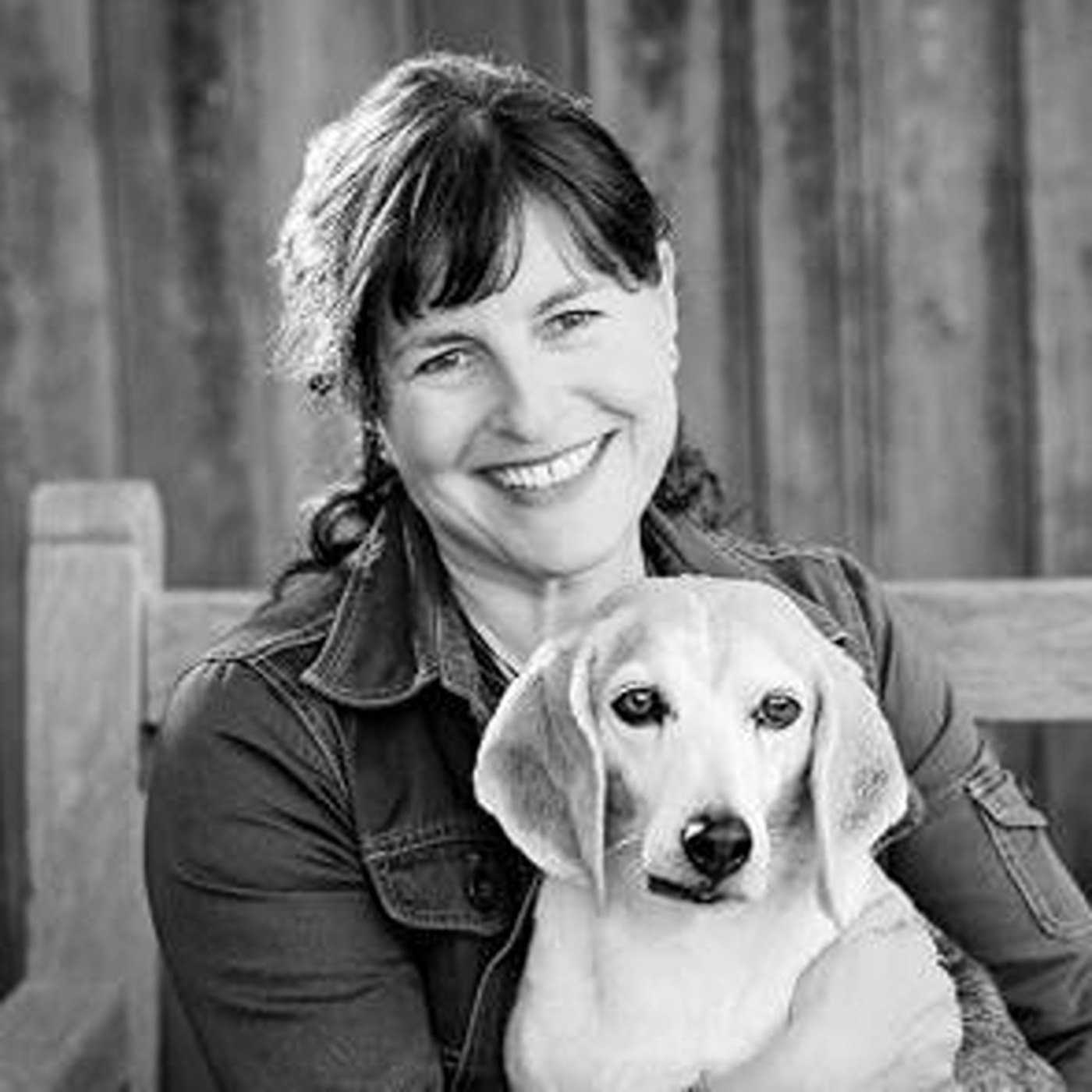
E"I wanted to keep reporting, and I'm like, it's not ready yet. And [a friend] reminded me over and over that this is a sales pitch. It's a proposal. The agents and publishers just want to know you can put a story together and tell a story that's longer than 2,000 words, and that there's some narrative arc to it," says Melanie D.G. Kaplan, author of Lab Dog: A Beagle and His Human Investigate the Surprising World of Animal Research (Hachette).Today we have Melanie DG Kaplan, author of Lab Dog. Not gonna lie, if you’re an animal lover and a believer in animal rights, it’s a tough read. I don’t mean it’s a bad book, it’s a very good book, it’s just … tough. Brought no fewer than 88 tears to my eyes at various points. The late Jane Goodall called it “remarkable.” So, there you go.Melanie is a journalist, an author, and when she’s feeling brave an ukulele player. Her work has appeared in the Atlantic, the New York Times, The Wall Street Journal, the Washington Post, among many, many others. She interviewed Miss Piggy. How many people can say that? Lab Dog is her first book and it chronicles her and her rescue beagle Hammy as they illuminate the world of animal testing and thus the testing that Hammy was subjected to for the first few years of his life. They find out where he was born, where he was subjected to various cruelties and indignities all in the name of science and progress. Her book details the advances in technologies and models that are proving to be just as effective as animal testing without the torture.In this conversation we also hit on: The dialogue between the animal research world and the animal activist world Changing her physical environment so she can focus and write Overcoming not being a “name” in this business Book proposal craft And the power of tech shabbat and how she turned me on to the “Light Phone”Order The Front RunnerWelcome to Pitch ClubShow notes: brendanomeara.com
Ep 512Episode 512: Mary Margaret Alvarado Likes Her Drafts Ice Cold
E"A certain sort of dogged obsessiveness seems to help. I remember hearing Tobias Wolfe speak once that talent is wonderful and widely distributed on Earth, but sitting down and putting in the hours is where it's at," says Mary Margaret Alvarado, who wrote "That's Somebody's Son" for The Atavist.It’s a little later than planned, but here we feature Mary Margaret Alvarado’s piece for The Atavist Magazine titled “That’s Somebody’s Son: Three Mothers, One Struggle: saving their children with schizophrenia.” It’s a piece that that Mia, as Mary Margaret goes by, pitched more than a year ago and it was rejected. But Mia went back to the drawing board, basically wrote the entire thing, came back, and boom here we are.We’re going to hear from Seyward Darby about her side of the table and why this piece was at first rejected and that special feeling when a great pitch comes across the transom.Mary Margaret Alvarado is a multi-faceted writer with her poetry and nonfiction appearing in The Iowa Review, The Kenyon Review, VQR, Outside, and The Georgia Review, among other publications. She is the author of the poetry collection Hey Folly and the nonfiction book American Weather. She lives in Colorado.In our chat we talk about: Dogged obsessiveness Cold drafts Ambition Trust Reimagining the MFA And stocking producePromotional support: The 2026 Power of Narrative Conference. Use narrative20 at checkout for 20% off your tuition. Visit combeyond.bu.edu.Order The Front RunnerWelcome to Pitch ClubShow notes: brendanomeara.com

Ep 511Episode 511: Writing to Leave the Past in the Past with Jane Marie Chen
E"To be a good writer, you have to really get into the visceral parts of the experience, right? You have to bring someone into that experience with you, which requires you to go back and understand every detail, every memory, all the visceral aspects of the experience, the sounds, the smells, everything that was happening," says Jane Marie Chen, author of Like a Wave We Break.Today we have Jane Marie Chen, author of Like a Wave We Break: A memoir of Falling Apart and Finding Myself. It’s published by Harmony. It’s a book whose ancestor is very clearly Eat, Pray, Love. A story of the cost of achievement and ambition, how childhood trauma permeates deep into adulthood, and the long nonlinear road to healing. Jane, being the entrepreneur she is, has quite the ecosystem around her memoir. At her website, there’s a self-worth quiz. I don’t feel like failing, so I’m not gonna take it. If I can’t copy off the smart kid, then why take the test, am I right? She does speaking and leadership coaching, workshops on building resilience, and she recently delivered a TED talk about resilience.Jane is the former CEO and co-founder of Embrace Global, which developed infant incubators that helped more than 1,000,000 babies, many of which would have died without this technology. She was recognized as Forbes Impact 30 and receive the Economist Innovation Award, Fast Company Innovation Award, and the World Economic Forum Social Entrepreneur of the Year Award. She has an MBA from Stanford and a Masters in Public Administration from Harvard. Didn’t I just have some clown on the show who studied at Yale and Harvard. What the fuck am I doing? If I don’t feel inadequate, I don’t feel alive, man.You can learn more about Jane at janemariechen.com and follow her, let’s just say on the gram, at janemarie.chen.In this podcast, we talk about: How she wrote the book to help people The importance of surfing in her life What’s enough? Burnout Writing the visceral Zooming in and Zooming out Playing with timelines Working with a collaborative writer Writing to leave the past in the past And not wanting to write a prescriptive memoirSome pretty rich shit, man, parting shot on, shit if I know, so let’s queue up the montage. Here’s Jane Marie Chen, huh!Order The Front RunnerWelcome to Pitch ClubShow notes: brendanomeara.com

Ep 510Episode 510: Daniel Pollack-Pelzner's Doesn't Waste His Shot in Lin-Manuel Miranda Biography
E"My teenage daughter looked at me. She said, 'Oh, Dad, you should put that in a folder called nobody cares.' Okay, not everything I learn will be in this book. And then the question became, 'What is Lin-Manuel learning from this story?' And if he's not learning anything from it, even if it's fun, it's got to go in the deleted scenes," says Daniel Pollack-Pelzner, author of Lin-Manuel Miranda: The Education of an Artist (Simon & Schuster).Daniel Pollack-Pelzner, the Notorius DPP, is charismatic as he is brilliant. Maybe some of that seasoning rubbed off on me. One can dream. He teaches English and theater at Portland State University. He received the Graves Award from the American Council of Learned Societies for outstanding teaching in the humanities. His work has appeared in The New Yorker, the Atlantic and the New York Times.Wanna know how sickening Daniel is? He has a BA in history from Yale and a PhD in English from Harvard. Gross. Ew, right? Ew. You can learn more about Daniel’s disgusting intelligence and equally freaky contributions to the culture at danielpollackpelzner.com and follow him on IG at danielpollackpelzner.This conversation was so lively and great and we talk about: How he pitched Lin-Manuel Miranda on being his biographer Being driven by curiosity Having to earn scenes The “fun of it” framing Balancing salt, acid, fat, and heat Maintaining a sense of play with the work What Daniel learned from Lin-Manuel And taking the harsh feedback from trusted readersOrder The Front RunnerWelcome to Pitch ClubShow notes: brendanomeara.com
Ep 509Episode 509: Howard Bryant Masterfully Braids History in 'Kings and Pawns'
E"Characters make books. Why are these guys in opposition? And were they actually really? How can you be in opposition with someone you never met? How can you be in opposition with somebody who's essentially sharing the same plight you're sharing in the country? And that brings in the other character. It's Branch Rickey. Branch Rickey is the puppet master of this entire book. Branch Rickey is the puppet master of that entire period," says Howard Bryant, author of Kings and Pawns: Jackie Robinson and Paul Robeson in America.We’ve got Howard Bryant (@howardbryantbooks) back on the show for Ep. 509. Howard is the best-selling author of several books and his latest is Kings and Pawns: Jackie Robinson and Paul Robeson in America. It’s published by Mariner Books.Howard’s book takes a new framing on two iconic Black American icons of the 20th century. Very few people know much about Paul Robeson, who was a brilliant football player, but perhaps more famous as a baritone singer and stage actor. Jackie Robinson was the first Black American to play major league baseball, breaking the color barrier in baseball.The two were separated by some twenty years, never met in person, but were pitted against each other during the second Red Scare, kings turned into pawns. The authoritarian, McCarythian overreach of the era very much echoes our current moment. Robeson’s career, his life, was ruined. It’s a complicated story brilliantly orchestrated by one of the best writers this country has on offer.Howard is the author of The Last Hero: A Life of Henry Aaron, Juicing the Game: Drugs, Power, and the Fight for the Soul of Major League Baseball, Rickey: The Life and Legend of an American Original, The Heritage: Black Athletes, A Divided America, and the Politics of Patriotism, and Full Dissidence: Notes from an Uneven Playing Field, and he also was the guest editor of The Best American Sports Writing Series. You’re in for a treat. You can learn more about Howard at howardbryant.net and follow him on IG @howardbryantbooks.In this episode we talk about: When you know it’s a book Who are your stars? How he reshaped the book by fixing the introduction How he bridged the gap between Robinson and Robeson’s timelines How Branch Rickey, this vaunted angle of integration, wasn’t exactly so holy And Howard’s favorite thing about writingOrder The Front RunnerWelcome to Pitch ClubShow notes: brendanomeara.com

Ep 508Episode 508: Motivated by Slights and Play Fighting in Our Underwear with Alison Lyn Miller
E"I spent several months trying to narrow down the cast. I had access to so many people with interesting stories. But what [my agent] said to me over and over again was, 'narrative arc, narrative arc,' all the time. What he needed to know in order to sell the book was like, 'Where does this book start? And if you can't tell me where it ends, at least tell me what are the ups and downs? What's gonna happen along the way?" says Alison Lyn Miller, author of Rough House: A Father, a Son, and the Pursuit of Pro Wrestling Glory (Norton).Who is our guest this week? It would appear to be Alison Lyn Miller (@alisonlynmiller on IG), author of Rough House: A Father, a Son and the Pursuit of Pro Wrestling Glory. It’s published by Norton.This is a great book and it’s an immersive story in an oddball subculture of amateur professional wrestling. It follows Hunter James, a young man who eschewed the traditional path, the path his father wanted for him, to pursue this dream of becoming the next superstar of the WWE. You’re gonna think I’m crazy, but this book has so many parallels to being a writer. The luck you need, the timing you need, the skill you need, the perseverance you need, the envy they feel, the subjectivity, voice, style, individuality. But we writers rarely need the abs. But don’t we all want the abs.So Alison is a freelance journalist based out of Georgia, which put her in direct overlap with this subculture of “backyarders,” these aspirational wrestlers and hobby wrestlers. It’s easy to poke fun at wrestling as fake. Well, it isn’t fake, so much as it’s scripted brutality. It’s danger adjacent, though there’s always physical risk when jumping, flipping, and kicking. Alison witnessed it all and delivers a heartfelt tale of ambition and striving, of a blind belief in the self.In this conversation, we talk about: Not being able to throw everything in the book Being motivated by slights Finding the narrative arc The year it took Alison to write her proposal How wrestling mirrors humanity Making the writing approachable And maybe we should all be play fighting in our underwearOrder The Front RunnerNewsletter: Rage Against the AlgorithmWelcome to Pitch ClubShow notes: brendanomeara.com
Ep 507Episode 507: 'Enshittification' Author Cory Doctorow Believes in a New, Good Internet
E"Practically speaking, mostly what I'm doing is I'm writing in a hotel room and then writing in the taxi, and then if the TSA queue is long, I might whip my laptop out and balance it on the stanchion and do some more writing, and then get on the other side and write in the lounge and then write on the plane, and whether that means that the laptop's nearly vertical because I'm on a discount airline with with terrible seat pitch, just writing. And so that's it, right? What my real practice is ... I just goddamn write," says Cory Doctorow, author of Enshittification: Why Everything Suddenly Got Worse and What to Do About It.This is exciting. We’ve got Cory Doctorow on the podcast today for Ep. 507. Cory is the author of more than 30 books of nonfiction and fiction, his latest being Enshittification: Why Everything Suddenly Got Worse and What to Do About it. It’s published by MCD, an imprint of Farrar, Straus, and Giroux.Ever wonder why Twitter, Facebook, Instagram, Amazon, and Apple suck ass? This book will explain why they do and how they got there and maybe, just maybe, how we can get out of this mess. Did you know that Apple factories in China installed suicide nets so workers couldn’t kill themselves? Think about that the next time you upgrade your phone. I’m ready for a new computer and it will likely be a Mac, even though they’ve gotten shitty over the years. Point is we all have blood on our hands.Cory is prolific, his blog posts epic, his books prescient and important. You can learn more about him at craphound.com or read his blog at pluralistic.net. He is a science fiction author, activist, and journalist. In 2020 he was inducted into the Candadian Science Fiction Hall of Fame and he is a special advisor to the Electronic Frontier Foudnation (eff.org), a nonprofit group that defnds freedom in tech law, policy, standards and treaties. You could spend a year or two reading nothing but Cory Doctorow books and, I might add, you’d be better for it.He’s one of the good guys, man, and he’s out to help us understand the internet. So in this episode we talk about: Internet literacy His ongoing relationship with his audience Getting a book done in six weeks Platform decay What exactly enshittification is and how Substack is slouching toward it And the influence of the writer Judith MerrilOrder The Front RunnerNewsletter: Rage Against the AlgorithmWelcome to Pitch ClubShow notes: brendanomeara.com
Ep 506Episode 506: Alexandra Marvar and the Trough of Despair, the Wall of Regret
E"I feel like many of us can relate to that, like, that's the trough of despair, right? Like, that moment where you're energetic optimism, diving in, and then, like, that's the wall of regret, where you're like, 'What was I thinking? This is not a story,'" says Alexandra Marvar, whose piece on Lummie Jenkins was revived by The Atavist.Today we Alex Marvar, this month’s featured Atavist writer, but this is something of a twist. Seyward Darby, who we will hear from in a sec, has launched an initiative called “Revived.” The idea being to resurrect long lost stories that are no longer available online. These stories that for one reason or another … disappeared. Seyward calls it a crisis of impermanence. You can learn and read more at magazine.atavist.com.Alex is a freelance writer and photographer. Her work has been appeared in the Believer, The Guardian, The New York Times, Vanity Fair and many others. She’s kind of a boss. She even won the prestigious East Knox Middle School’s 1995 DARE Student Essay Contest. She interviewed Iggy Pop for a documentary and got her picture taken with the punk legend, so, yeah, Alex is kinda sorta wicked cool.In our part of the conversation we talk about: Money Revisiting her younger self The trough of despair and the wall of regret Borrowing trust Saggy middlesOrder The Front RunnerNewsletter: Rage Against the AlgorithmWelcome to Pitch ClubShow notes: brendanomeara.com
Ep 505Episode 505: Leah Sottile and Ryan Haas Talk 'Hush', Investigative Reporting, and Breaking New Trail in Their Careers
E"We always were having conversations about, if we can't solve it, what then? What is this about? Why isn't it solved? And what is our job? Is the job of a journalist to solve crimes? No, it's to document. So what are we documenting? We're documenting what had to happen for there to be no answer in a situation where there should be an answer," says Leah Sottile, reporter, writer, Hush."Sometimes making yourself uncomfortable is the way to find new creativity, or to challenge yourself to find a smart idea within that," says Ryan Haas, reporter, producer.Today we’ve got a fun one with CNF Pod regular Leah Sottile, investigative journalist, podcaster, author of Blazing Eye Sees All and When the Moon Turns to Blood.And we also have her long-time collaborative partner Ryan Haas. They are primarily here to talk about season 2 of Hush, an incredible series put out by Oregon Public Broadcasting that chronicles how a small town has, to date, failed to bring closure on the death of 18-year-old Sarah Zuber in 2019. The red herring of it all is that it starts like a classic true crime show, but it quickly becomes an interrogation of the true crime genre. One of Leah’s great lines is that this isn’t true crime so much as it is bureaucratic horror in the rural town of Rainier, Oregon.I love getting a chance to chat with Leah, and this was special to hear from Ryan Haas, too, who up until recently spent more than a dozen years at OPB. She and Leah worked on the epic Bundyville Podcast together and two seasons of Hush. I’m gonna miss Hush because I would run five miles listening to primarily Leah, though Ryan pops in every now and again, narrate this incredible story about what happens when journalism folds up shop in a small town, when the greek choir of Facebook is the primary news source, when power-hungry people leverage a tragedy for personal gain, when law enforcement becomes lax.In this episode, they talk about: The Grid of Doom The evolution of their partnership How they push each other Interrogating the true crime genre White board conversations Being open to where the reporting goes Being open to complication Finding the cliff hangers And breaking news! The future of Leah and Ryan’s workOrder The Front RunnerNewsletter: Rage Against the AlgorithmWelcome to Pitch ClubShow notes: brendanomeara.com
Ep 504Episode 504: Seth Wickersham and the Macbethian Tragedy of the American Quarterback
E"You're constantly asking lean, open, neutral questions that start broad and then narrow, and you're asking more lean, open, neutral questions based on their answers. When you do that, it tells the subjects that you're actually listening to them very intensely, and you're asking questions based on the things that they say. And that accelerates trust and intimacy, I think, in a better way than kind of betting on your personality," says Seth Wickersham, the bestselling author of American Kings: A Biography of the Quarterback and an ESPN.com senior writer.Seth Wickersham is back. He is an ESPN.com senior writer, investigative reporter, the NYT best-selling author of It’s Better to Be Feared and, most recently, his best selling American Kings: A Biography of the Quarterback, it’s published by Hyperion.We had a tight window to get this interview done. It was 30 minutes and after the edit it was closer to 25. He was gassed. I think he did this as a favor since I’d been on his ass since July about this book. Well, mainly on his publicists’ asses, then I had to go over their heads. Sidebar: sometimes I think tight interviews are GREAT. Tony the Tiger level great. You can’t cover quite as much ground and get into the granularity of certain things, but there’s still so many great takeaways from this episode even though it’s half as long as the usual. Seth talks about: Getting to the heart of the matter Interviewing vs. conversations, and how he bristles at the “conversation” angle Establishing trust Writing out questions, but being OK with deviating How doing all this book promotion is just pennies in the bank His relationship to quarterbacking How he vetted the main quarterbacks he featured in American Kings And how the quarterback is a vector for American ambitionSeth is one of the good guys. You can’t say that about everyone. He’s a heavy hitter, he’s steady in the pocket, and his eyes are always downfield.Order The Front RunnerNewsletter: Rage Against the AlgorithmWelcome to Pitch ClubShow notes: brendanomeara.com

Ep 503Episode 503: An Atmospheric River of Rejection with Jason Brown
E"I will always go back to the well, and I will write until I die," says Jason Brown, author of Character Witness.Jason Brown is here. He is a brilliant short story writer and the author of the memoir Character Witness (University of Nebraska Press). It’s an incredible book and we recorded this conversation at the end of October as the fourth and final LIVE podcast of the year at Gratitude Brewing here in Eugene. Jason, as luck would have it, teaches at the University of Oregon in its writing department, forging the young minds who will publish in the most obscure lit journals, the future bitter podcasters of America, sorry, speaking from experience. I’m projecting, OK?But thanks to Jason and his clout with the University, we had our biggest gathering of the year, live and in person. There’s something pretty rad about the in-person jam.Jason can be found at writerjasonbrown.com. He writes fiction and nonfiction and was a Stegner Fellow and Truman Capote Fellow at Stanford University where he taught as a Jones Lecturer. He has received fellowships from Yaddo and Macdowell colonies. He taught for the MFA program at the University of Arizona and directs the MFA program at the U of O here in Eugene. He’s the author of the collection Driving the Heart and Other Stories, Why the Devil Chose New England For His work and his work as also appeared in The New Yorker, The Atlantic, Harper’s, Best American Short Stories, The L.A. Times, and The Guardian, among many others. This is getting obnoxious.In this conversation we talk about: Persistence Hiking out from the moment The atmospheric river of rejection Escape velocity Woodworking Rule breakers Maturing around himself And working with Tobias WolffOrder The Front RunnerNewsletter: Rage Against the AlgorithmWelcome to Pitch ClubShow notes: brendanomeara.com

Ep 502Episode 502: Christa Hillstrom Takes Pride in Her Rejections
E"Take pride in your rejections. It's a tough industry for putting yourself out there. You're like, doing a ton of work up front, not knowing if anyone will be interested in it. It's very easy to feel deflated about it. Your rejections are reaching for things that maybe aren't easy reaches," says Christa Hillstrom, writer of 14,445 and Counting for The Atavist.It’s that Atavistian time of the month. Not much by way of spoilers, but you know you’re in for a double dose of CNFin’ insights as we will hear from editor-in-chief Seyward Darby and, of course, the writer of this month’s feature, Christa Hillstrom. Her story is titled 14,445 and Counting: Inside a Texas nurse’s quest to document the life and death of every woman killed by a man in America. You can read the story at magazine.atavist.com. A sub is only $25 a year. No, I don’t get kickbacks; yes, I pay to subscribe as well. I’m the hipster doofus of the people.The Atavist doesn’t usually do profiles, per se, but this profile is of Dawn Wilcox and her “sacred work” of logging every femicide in the country, which is to say violent deaths directly against women by men. It’s a tough one, not gonna lie. Not because it’s not well done, but because, well, read the title.OK, so this piece is pretty heavy, but it’s a story of obsession and what the central figure calls her “sacred work” to bring attention to this epidemic of sorts.The credits for this piece are: Ed Johnson was the art director, Sean Cooper copy edited it, Emily Injeian fact checked it, Naheebah Al-Ghadban illustrated it and Jonah Ogles and Seyward Darby edited this suckah.Christa Hillstrom is a freelance journalist based in the Pac Northwest, but hailed from Minnesota originally and even attended Northwestern’s grad program in journalism. Doesn’t get better than that.She’s an award-winning reporter, editor, and multimedia producer in human rights, global health, gender-based violence, and trauma/resilience.We talk about: The little treasures in research The cost of doing this kind of reporting Outlining Task initiation How she wrote herself into this story Justing doing the writing And taking pride in your rejectionsCheck out her story at magazine.atavist.com and check out this conversation … right now.Order The Front RunnerNewsletter: Rage Against the AlgorithmWelcome to Pitch ClubShow notes: brendanomeara.com

Ep 501Episode 501: Julian Brave NoiseCat Aimed for a Woven Text
E"It's not actually about the questions you ask. It's about shutting up," says Julian Brave NoiseCat, author of We Survived the Night.It’s episode 501 with Julian Brave NoiseCat, author of the memoir We Survived the Night. It’s published by Knopf. It’s a pretty spectacular debut and we have a lively chat about it and the writing and structuring of it. Julian is a writer, filmmaker, powwow dancer, and student of Salish art and history. Julian, man, what a cool dude. He really came to play ball, which is fun for me. His memoir blends personal history, family history, cultural history, coyote lore, and even some journalistic spurs in the storytelling, which makes it a shapeshifting text, much like his coyote ancestors. The book has been getting a lot of attention and deservedly so.His work has appeared in The New York Times, The New Yorker, The Washington Post. He has won many awards for his journalism and his debut documentary, Sugarcane, premiered at the 2024 Sundance Film Festival. He is a proud member of the Canim Lake Band. He is @jnoisecat on IG and in this conversation we talk about: His early vision for the book Hidden histories How he aimed for a woven text How the book was a study in transformation Non-uni-direction assimilation Writing what you don’t know And his Bob Caro storyOrder The Front RunnerNewsletter: Rage Against the AlgorithmWelcome to Pitch ClubShow notes: brendanomeara.com
Ep 500Episode 500: Structure, Spec, and Panic with John McPhee
E"Anything beats writing. Writing is tough," says John McPhee, staff writer for The New Yorker and author of more than thirty books of nonfiction.Hey CNFers, this is Episode 500 of The Creative Nonfiction Podcast, the show where I speak to tellers of true tales about the true tales they tell. There are kilometer stones like 100, 200, 300, and 400, but this one, this is a milestone and it features the writer and journalist who made me want to write narrative nonfiction in the first place: John McPhee.John is a titan, a soft-spoken titan. He is the author of more than 30 books, including A Sense of Where You Are, Levels of the Game, his Pulitzer Prize-winning Annals of the Former World, and the book that made me want to write nonfiction: The Survival of the Bark Canoe. John is 94 years young, still lives in Princeton where he has taught an exclusive masterclass on factual storytelling, a class taken by the likes of David Remnick and the late Grant Wahl, I believe, among countless people who have gone on to write and report with distinction.He's been a staff writer for The New Yorker since the 1960s when William Shawn was the editor. Not long thereafter, he was offered a job to teach at his alma mater Princeton University and he famously edited students’ submissions not unlike how Shawn edited him at The New Yorker. He’s written about such wide ranging topics from basketball, to tennis, to bark canoes, to Alaska, to lacrosse, to oranges, to myriad topics in geology.John is synonymous with thinking through structure and coming up with unique structures for most of his stories, each one something of a fingerprint: no two are alike and the facts borne out from this intensive, slow reporting dictate the shape of the story he has locked into.His work is methodical and patient. He hangs out. He fills notebook after notebook, rarely uses a recorder, maybe only if there’s someone speaking in such technical jargon that there’s no way to keep pace. His career has been this wonderful balance of give and take: teach for most of the year and not write; then write and not teach. John is unassuming and gentle and an example of how you can do this work without bombast or pyro and still be riveting and sometimes downright hilarious.So we talk about: The influence of his high school English teacher Olive McKee Living room fighters Writing on spec The notebooks he’s used for decades How a lack of confidences is an asset What a good editor does Writing as teaching How having a plan frees you to write The panic of having not written leads to productivity And how proud of his daughters he isParting shot on what it all means at 500 and maybe where I see the show going for the next 500.Order The Front RunnerNewsletter: Rage Against the AlgorithmWelcome to Pitch ClubShow notes: brendanomeara.com

Ep 499Episode 499: The Post-Book Malaise is Real with Maggie Mertens
E"You start to wonder was it all worth it? Or what's the point in trying to do it again? You know, if there's going to be more disappointment in the future. I think it is something that you know probably just changes as you go on, regardless, right? I want to get that second book under my belt so it's not all just on this one, this one baby, you know?" says Maggie Mertens.Maggie is the author of Better, Faster, Farther: How Running Changed Everything We Know About Women (Algonquin Books). It’s a brilliant book that traces the advancement of women’s athletics through running. Hard as it is to believe, but it was thought that women couldn’t, nay, shouldn’t run farther than 800 meters. Running might affect their fragile constitution, they might even ruin the work place … there’s a name for headlines like that one: They’re called subscription cancellers. [Context: The New York Times ran a podcast headline with its conservative columnist asking “Did Women Ruin the Workplace?” Anyhoo …Maggie is making the freelance workplace a good time, thank you very much, and it’s a pleasure to get to celebrate her approach to the work and her incredible book that came out in 2024.So Maggie’s work has appeared in the Wall Street Journal, The Atlantic, NPR, Sports Illustrated, ESPNw, Creative Nonfiction, among others. She has a Substack called My So Called Feminist Life at maggiemertens.substack.com and she does much of social media-ing on IG @maggiejmertens and you can learn more about her and her work at maggiemertens.com.So Maggie and I talk about: The long book writing process Community Time pegs Strict deadlines for the self How she named her chapters in Better Faster Farther Taking the wins And the post-book malaiseOrder The Front RunnerNewsletter: Rage Against the AlgorithmWelcome to Pitch ClubShow notes: brendanomeara.com

Ep 498Episode 498: Sasha Bonét on Not Holding Back
E"I have this desire to write as a novelist might write but write nonfiction," says Sasha Bonét, the author of The Waterbearers: A Memoir of Mothers and Daughters (Knopf).Today we have the brilliant writer, the brilliant mind, Sasha Bonét, author of The Waterbearers: A Memoir of Mothers and Daughters. This book is a masterpiece that chronicles the matriarchal lineage of Sasha’s family, and the pain, and the struggle, and the triumph of will, of the slow, methodical, generational march forward and the residue of generational trauma, what we can outrun and we can never outrun. Damn, man, it’s something of a family epic that brought to mind A Hundred Years of Solitude to me in its scope, in its sweep. I don’t know. Maybe I have no clue what I’m talking about.Sasha is a writer, critic, and editor living in the socialist hellscape of New York City, woot, woot!Her essays have appeared in the Paris Review, Aperture, New York Magazine, Vogue, and BOMB, among others. She earned an MFA from Columbia University and teaches nonfiction writing at Columbia’s School of the Arts and Barnard College. You can learn more about Sasha at sashabonet.com and follow her on the gram @sasha.bonet.This is a rich conversation about: Community The in-between place Not holding back Her influences Her writing practice And how jazz informs her writingShe’s also good friends with G’Ra Asim, who appeared on these podcast airwaves way back on Ep. 256.Order The Front RunnerNewsletter: Rage Against the AlgorithmWelcome to Pitch ClubShow notes: brendanomeara.com