The Commercial Real Estate Investor Podcast
331 episodes — Page 1 of 7
406. This Building Hasn't Sold in 400 Days. Why?
405. An 8% Cap Rate Doesn't Mean You Earn 8%
404. Why You Can’t Find A Deal Anymore
403. Your Buildout Budget Is Off by Six Figures
402. Your Loan Matures in 18 Months. Now What?
401. How to Buy Your First Trailer Park
400. The Seller’s Numbers Are Lying to You
398. What $250,000 Actually Buys in Commercial Real Estate (2026)
397. 13 Years of Commercial Real Estate in One Livestream
396. Analyzing Commercial Deals Isn't As Hard As You Think
395. That 8% Cap Rate Is A Trap
392. How Developers Build Affordable Housing
390. Why Single Family Rentals Will Never Replace Your W-2
388. Watch Us 5x Our Returns in Self Storage (Deep Dive)
387. The Real Reason the Best Deals Never Hit the Market
386. How I Bought My First Commercial Property at 25 (just copy me)
385. The 1031 Move That Lets You Buy Before You Sell
384. Watch Me Underwrite a Real Industrial Deal in 30 Minutes
383. 100 Doors. 35% Returns. Why He's Walking Away.
381. He Doubled His Cash Flow Without Buying a Single New Property
380. Graham Stephan Just Made the Case for Commercial Real Estate
382. The Tax Strategy High-Earners Use to Offset Income With Real Estate
379. The Tax Code Was Written for Real Estate Investors
378. He Stopped Buying Airbnbs and Built a $20M Hotel Portfolio
377. I'm Building 43,000 SF of Flex Space at 1/3rd of The Cost - Office Hours
376. Gold Doesn't Pay You. This Does.
375. Why I'd Rather Buy an Empty Building Than a Full One Right Now
374. He Traded His Apartments for a Commercial Building and Made $100k
373. Is Market Uncertainty Actually Good for Commercial Real Estate Investors? — Office Hours
372. 33 Rental Houses vs. 1 Commercial Property (The Math Will Shock You)
371. Underwriting an Auto Garage Conversion | Office Hours
370. Nobody Wanted This Vacant Warehouse. He Bought It With $0 Down in 45 Days
Ep 369369. Stop Buying Rental Houses. Start Buying Commercial
Key Takeaways:Residential rentals are squeezedAverage profit is only about $713/month per house.Rising interest, insurance, and maintenance costs are outpacing rent growth.~80% of landlords self‑manage, effectively creating a low‑pay second job.Residential is hard to scaleShort 12‑month leases mean constant turnover and risk of bad tenants.Property value is based on comparable sales, so you’re largely “praying for appreciation” and dependent on neighbors and timing.Commercial real estate advantagesWith triple net (NNN) leases, tenants often pay taxes, insurance, and maintenance.Longer leases (3–10+ years) with built‑in rent bumps = more stable, predictable income.Forced appreciation: raising rents or filling vacancies directly increases value via higher NOI.Better tenants, better risk profileTenants are businesses, not individuals: rent is a business expense.You can get financials, personal guarantees, and corporate backing, and freely say no to weak applicants.Same purchase price, very different returnsA $500k house example: ~$45/month net, ~0.4% cash‑on‑cash.A $500k small NNN commercial building example: ~$825/month net, ~7.9% cash‑on‑cash, plus upside from forced appreciation.Transition strategyDon’t fire‑sale your portfolio; stop buying new weak residential deals.Sell problem properties first, use 1031 exchanges into small commercial buildings.Start with smaller commercial deals ($300k–$1M) to learn and scale.
Ep 368368. How Elite CRE Brokers Stop Hunting and Start Capturing Demand
Key Takeaways:Cycle Context & Opportunity WindowCRE has rebounded from a 20% peak‑to‑trough correction to a renewed upswing: 2025 volume hit $550B (+19% YoY) and 2026 is pacing toward $625B+, driven by both forced sellers (can’t refi) and elective sellers locking in gains. Brokers are in a prime window to scale deal volume.Shift from Hunting to Capturing DemandInstead of blanket cold calling, Logan and Tyler advocate reading capital flows and transaction data, then positioning yourself where capital is already chasing deals. Logan’s own shift to this model helped build $92M under contract/LOI and a $265M pipeline.Niche + Authority as the Core StrategyThe path to leverage is to pick one asset type, one geography, one buyer/seller profile, and become the authority. Examples include small‑bay industrial, IOS, data centers, medical office, flex, workforce housing, and build‑to‑rent in select markets. The goal: when investors search that niche + market, you are who shows up.Data & AI as a Proprietary EdgeBrokers should build their own proprietary databases—scraping public records, business journals, and listings; tracking every comp and closing; and using AI to underwrite, summarize, and turn deals into insights. This reduces dependence on platforms like CoStar/LoopNet and becomes a powerful listing and pitch asset.Proof Stacking: Every Deal Becomes MarketingEach transaction should be multiplied into case studies, market breakdowns, newsletters, and social posts that demonstrate expertise. This “proof stacking” turns one fee into future inbound deal flow and deeper relationships with a curated top‑100 list of ideal owners and buyers.Choosing Platform & Path (Big Brokerage vs Independent)Joining a large brokerage offers brand, training, and deal flow but comes with heavy splits and less control. Independent or smaller-shop brokers keep more economics but must self-generate business and infrastructure. The right answer depends on your strengths (hunter, data/ops, relationship builder) and willingness to build a niche platform.

Ep 367367. 90% of Her Warehouse Deals Come from Social Media (Not Cold Calling)
Key Takeaways: Social media is a massive, underused lever for CRE brokersMost commercial brokers still aren’t fully leveraging platforms like TikTok, Instagram, YouTube, and LinkedIn, especially in specific local/asset niches (e.g., Denver industrial).The ones who do show up consistently online are capturing outsized attention and deal flow.Content > cold calls for scalable lead generationAviva went from door-knocking and cold calling to getting 90–95% of her deal flow from social media [0:21:01–0:22:48].A video keeps working for you for years (e.g., Tyler’s 6‑year‑old YouTube video still driving views and watch time), whereas a cold call or networking event ends when you hang up or go home.Niche positioning and branding matterRebranding from the family name (Sonenreich) to Warehouse Hotline was intentional: when people see the name, they instantly know it’s about warehouses/industrial [0:11:00–0:13:19].Aviva picked an internet-facing, hyper-specific brand to win online search and mindshare, not just operate as another generic brokerage.Educational, tenant-focused content performs bestPure “just listed/just sold” posts are boring and low value; they don’t build authority [0:25:55–0:27:16].Aviva found that tenant-friendly, value-add content (explaining leases, rights, pitfalls, etc.) gets far more engagement than landlord-only messaging because there are more tenants and they need more help.Big, real deals do come from social mediaA $9.56M industrial sale in Colorado came from a social media lead:Heirs inherited capital, wanted to 1031 out of state, had seen Aviva repeatedly online, and hired her.Asking “Can we buy the building next door too?” turned it from one building into two [0:28:05–0:29:23].This directly counters the belief that social media is “not serious” or only for small or unsophisticated deals.Video, consistency, and authenticity are the futureThe consensus: everything is moving to video—short form (TikTok, Reels) and long form (YouTube) [0:17:51–0:19:37].YouTube is hard, but rewards grit, consistency, and strong titles/thumbnails more than almost anything else.As AI-generated content floods feeds, truly human, authentic video becomes even more valuable and differentiating.
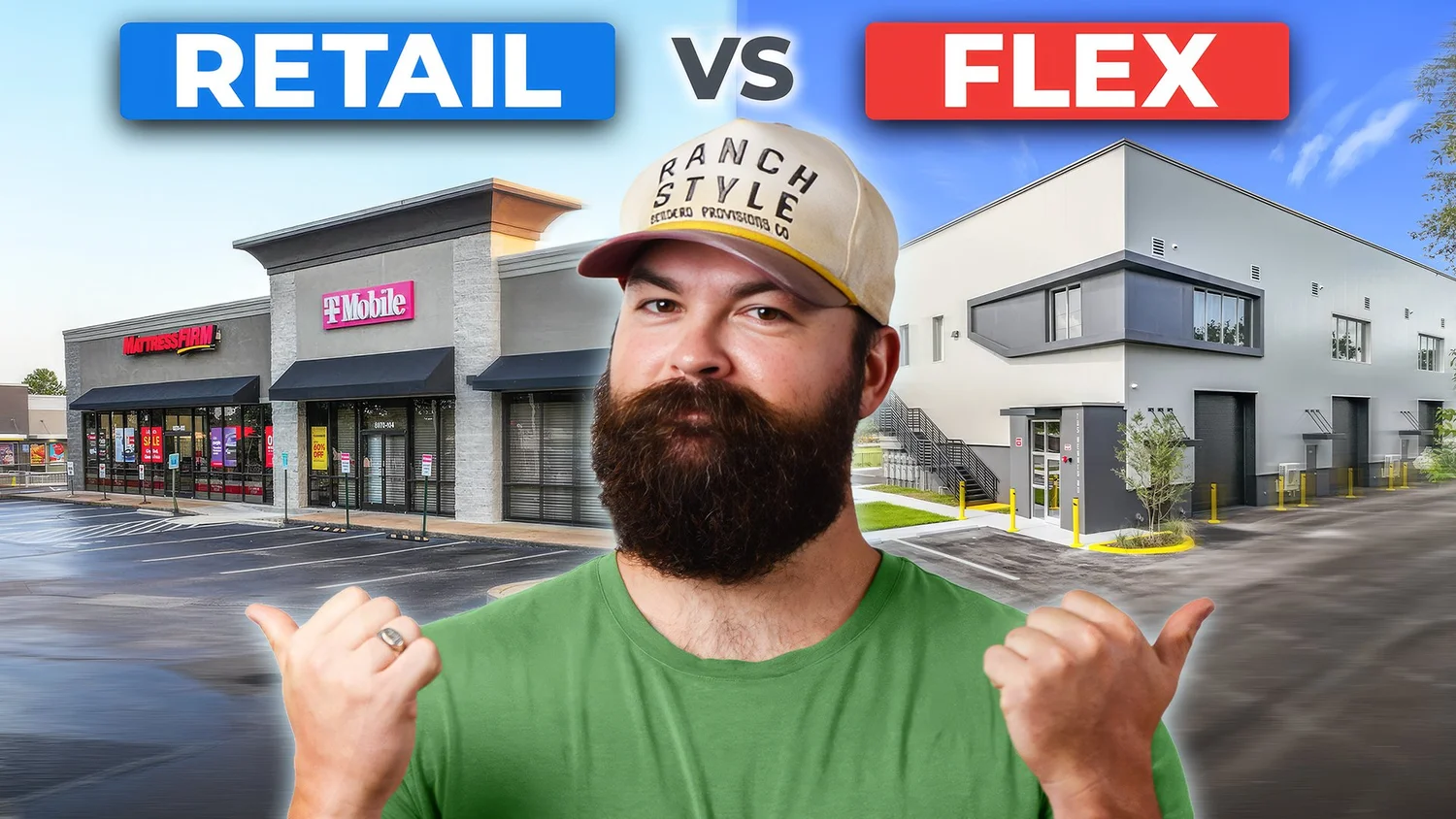
Ep 366366. Will Retail Outperform Flex in 2026? | Office Hours
Key Takeaways: Why Retail Looks Attractive for 2026Retail is poised to outperform, especially vs. flex/industrial, due to:Very low new development (only ~30M sq ft projected in 2026, ~70% single-tenant).Steady demand and low vacancies (around 5% vacancy, which aligns with typical underwriting assumptions).The U.S. is overbuilt on retail overall, but the type of new retail has shifted:Less big-box expansion.More mixed-use and smaller retail footprints.Investor sentiment is bullish:Cap rates have stabilized.Transaction volume is above pre-pandemic levels.Example: A Blackstone affiliate bought a $432M grocery-anchored portfolio, signaling strong conviction in retail.Retail’s Fundamentals & EvolutionE-commerce and Amazon did not kill physical retail, but forced:Some brands to adapt (e.g., Best Buy).Others to disappear (e.g., Circuit City).Successful retail is becoming more experiential:People still want to touch/try/see products in person.In-person shopping often beats the friction of returns from online purchases.Neighborhood Strip Centers: The Sweet SpotUnanchored / neighborhood strip centers (10k–50k sq ft) are increasingly attractive:High occupancy, steady rent growth, strong investor interest.Adaptive tenant mix and easier to manage turnover.Tyler’s own portfolio of neighborhood retail:Collected ~92–93% of rents during the pandemic by working flexibly with tenants.Demonstrates resilience of well-located neighborhood retail.Market Data & Tenants to WatchStore openings (ex‑restaurants) projected to grow 1.4% in 2026.Restaurant openings projected to grow 1.8%.Tenants/brands to watch:H‑E‑B, Michaels, Walmart, Dillard’s, Pop Mart, 7 Brew, Dave’s Hot Chicken, HomeGoods, EOS Fitness, Chuck E. Cheese.Markets to watch (for retail strength and rent growth):Salt Lake City, Reno (NV), Indianapolis, Raleigh–Durham, Tampa–St. Pete.Forecast average rent growth ~1.5%, but value‑add deals can outperform this via:Under-market rents.Older centers with room for modernization and repositioning.How Tyler Analyzes a Retail Deal (Key Lessons)Using a Walmart shadow‑anchored strip center near Hopkinsville (~32.6k sq ft, asking $5.613M, ~7–9% cap depending on inputs):Quick back-of-the-napkin test:Purchase price per sq ft × 10% ≈ rent per sq ft needed for a 10% cap.At $171/sq ft, that’s ~$17/sq ft NNN.Financials from the OM:Gross income ≈ $19.41/sq ft.NOI ≈ $15.47/sq ft → roughly $4/sq ft in expenses.Mix of NNN and gross/modified gross leases → value‑add by converting more to NNN.Modeling assumptions & challenges:Various scenarios on LTV (70–75%), interest rate (~6–6.5%), and rent bumps (1–5%/yr).With current pricing and debt costs, IRR initially comes out too low vs. a 15% target.To hit target returns, you either need:Lower purchase price, orStronger rent growth / re‑leasing at higher rates, orSome combination of both.But:Even at today’s terms, the deal can cash flow reasonably:Around 6–7% cash‑on‑cash in year one at higher equity (e.g., 50% down).Debt service coverage can be acceptable (~1.2x+) at some leverage levels.With modest rent increases (e.g., ~$1/sq ft more), the value jump can be large when capitalized at market cap rates.Practical Investing TakeawaysRetail vs. Flex:Flex is “easy” and forgiving for beginners.Retail is more nuanced (demographics, visibility, traffic counts, parking).But if you buy existing, stabilized centers, much of that risk has already been “tested by the market.”Follow the big players:Watch where Chick‑fil‑A, Starbucks, major grocers, and big PE firms (e.g., Blackstone) are putting money.They’ve already paid for the best data and analysis—you can ride their coattails.Value-add retail playbook:Target existing strip centers, especially near strong anchors (or shadow‑anchored).Look for:Under‑market rents.Non‑NNN leases you can convert.Short‑term leases you can roll to higher rates.Small rent bumps across multiple tenants can dramatically increase property value.Tyler’s Projects & Next StepsSalt Ranch boutique hotel in Nashville:Opening planned for April 1, 2026.He’s currently working through fire inspections and final permits.He’s written a six‑part blog series documenting the entire Salt Ranch journey (finding the deal, vendors, mistakes, etc.).Office Hours:He’ll be live again next Tuesday, 8:30am Central, for Q&A on deals, breaking into CRE, and strategy.
Ep 365365. You're Broke Because You Chase Cashflow
Key Takeaways:Cash flow vs. value-add strategyRelying on small monthly cash flow from rentals takes too long to replace a W2 income.Tyler advocates focusing first on value-add and forced appreciation (creating big equity pops) rather than slow cash flow.Example: Chattanooga office buildingBought for $1.8M, spent about $600K on soft costs and some work.Sold off-market for $4.6M in ~18 months, making roughly $2.2M.That profit was equivalent to about 7 years (84 months) of cash flow in one deal.Example: Small East Nashville retail dealBought for $435K; 2,200 sq ft single-tenant retail.Before closing, they secured a lease, which raised the appraised value to about $650K.Sold for ~$625K, making close to $200K over 3 years.The main value-add was simply getting a tenant and a lease, not major renovations.At ~$2K/month net cash flow, it would have taken about 100 months (~8+ years) to make the same $200K from cash flow.Role of taxes and 1031 exchangesConcerns about capital gains tax are addressed by using a 1031 exchange to defer taxes.Even when paying capital gains, the time value of money means big lump-sum gains now can still beat years of cash flow.Starting with little or no capitalTyler began as a commercial real estate broker, rolling his commissions as equity into deals (minimal cash out of pocket).Repeating value-add deals built up his capital base to where he could now sell everything and live off net-lease cash flow (e.g., Walgreens, Starbucks).Transition: value-add first, then cash flowThe strategy is:Use value-add deals to rapidly grow your capital base.Later, shift that capital into stable, cash-flowing assets (e.g., low cap rate, credit-tenant deals).Example: Buy dirt for $618K, rezone, sell for about $1.575M, then 1031 into income-producing property and fund a self-storage project projected to net $15K/month.Why commercial over residentialIn residential, value is mostly property + land; leases don’t dramatically move value.In commercial, value is tied to income and leases (like buying a business at a multiple of EBITDA).This makes it possible to “create” equity by:Signing or improving leasesRepositioning or rezoningThese levers don’t really exist in the same way in typical residential investing.Target audience and action stepStrategy is best for those starting with $0–$100K, not for people who already have ~$10M in cash (who can go straight into cash-flow investments).Tyler promotes his CRE Accelerator mastermind where he teaches how to:Find value-add commercial dealsFund themClose and execute the business plan.
Ep 364364. Why Underwriting is SO Important | Office Hours
Key Takeaways:1. Underwriting tells you if a deal actually worksA property may look attractive on the surface, but underwriting reveals the true performance by analyzing financing, rent, expenses, and exit assumptions.2. Small changes in assumptions can change the entire investmentAdjusting factors like purchase price, loan terms, or exit cap rates can significantly impact returns such as cash flow, IRR, and equity multiple.3. Understanding the “why” behind the numbers is criticalIt is not just about plugging numbers into a spreadsheet. Knowing what each input represents helps you identify which levers you can adjust to make a deal work.4. Strong underwriting builds credibility with lenders and investorsWhen you clearly present the numbers, risks, and projected performance, it shows you have done the work and understand the investment.5. It helps you compare opportunities the right wayUnderwriting allows you to evaluate real estate against other investments by factoring in cash flow, loan paydown, tax benefits, and long term value.6. The more deals you analyze, the better your judgment becomesConsistently underwriting deals helps you quickly recognize whether an opportunity fits your strategy and return goals.
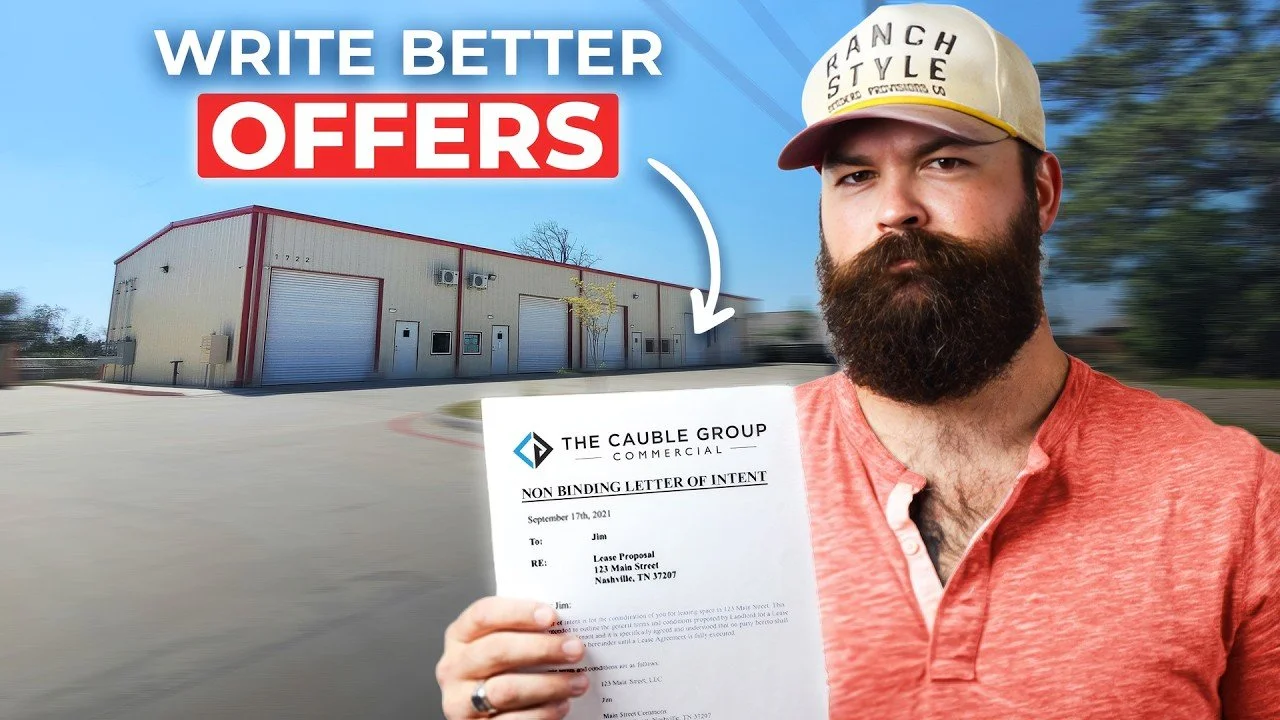
Ep 363363. Stop Writing Offers Like a Residential Investor - Do This Instead | Office Hours
Key Takeaways:LOIs are non-binding but criticalThey set the main business terms (price, timing, responsibilities) before you spend money on attorneys and full contracts.You must clearly state “non-binding”Put non-binding language in multiple places, plus a paragraph saying it is only a basis for preparing a formal contract.Use “and/or affiliated assigns” for the buyerThis lets you assign the contract to a new entity later and helps manage liability without having to rewrite the deal.Due diligence is your escape hatchDuring the DD period, you can terminate for almost any reason and get your earnest money back; after DD, you usually can still walk but lose the deposit.Commercial deals are priced on income and riskYou rely on NOI, actual financials, and realistic rent/expense assumptions, not “price per door” or emotional comps.Landlord–tenant responsibilities must be explicitSpell out who handles roof, structure, HVAC, TIs, fees tied to the tenant’s specific use, and how much the tenant’s costs are capped, to avoid ugly surprises later.
Ep 362362. Most developers go broke before they ever break ground with Meg Epstein
Key Takeaways:Became a developer in crisis: Meg started as a high‑end residential project manager and was forced to become a developer when a partner burned through about $1M on unfeasible plans; she took over to protect investors.Sees value others miss: She identified under‑loved Nashville locations (riverfront, Gulch‑adjacent) early and was willing to buy where locals thought she was “overpaying,” which later proved very successful.Capital without a rich network: With no wealthy friends/family, she raised ~$5–6M for her first deal by cold‑calling and using CCIM directories and BiggerPockets—showing the importance of research, persistence, and real phone calls.Sunk costs and pivots: Scrapping expensive concrete plans, switching to cheaper stick‑over‑podium, cutting ~25% of the budget, and waiving her own developer fee turned a near‑disaster into a profitable condo project.Cycles and business model shift: The frothy early‑2022 boom (big flips, many employees) was followed by a painful downturn when rates spiked and equity dried up. That pushed her toward leaner teams, fewer project types, and more long‑term, cash‑flowing/hold strategies.Niching and design differentiation: Her “big unlock” is focusing on niches (short‑term‑rentable condos/flexible living, select industrial) and distinct but cost‑disciplined design (landscaping, thoughtful finishes, no trendy white‑box commodity).Leadership lessons: The hardest part was people and overhead, not buildings—layoffs, departures, and restructuring. Out of that came a small, high‑caliber, focused team model.Current focus – Modernist: She’s now doubling down on flexible living condos (Modernist) that owners can use personally and also rent out for income—an institutional version of how she once Airbnb’d her own apartment to fund her start
Ep 361361. Backing Into an Offer Price on Vacant Commercial Property | Office Hours
Key Takeaways:Vacant properties still have value – you must underwrite future income and back into what you can pay today; don’t let brokers sell you tomorrow’s value at today’s price.Start with market rent per square foot – use similar properties, OM data, LoopNet/Crexi, and broker conversations to estimate realistic market rent, then compute gross income and NOI (after vacancy and operating expenses).Use NOI and a market cap rate to get stabilized value – value = NOI ÷ cap rate; track offering memorandums in your market to understand realistic cap rates for different asset types and conditions.Build in margins for risk and returns – target a required equity multiple (Tyler uses 2x over 5 years) and make sure your maximum allowable offer (MAO) leaves room for both value creation and investor returns.Two main MAO approaches – (a) pay no more than ~75–80% of stabilized value all-in, or (b) start from stabilized value and subtract required profit, capex, TI, lease-up commissions, and carry costs to get your max purchase price.Don’t ignore non‑purchase cash costs – beyond the down payment you must plan for closing costs, tenant improvements, leasing commissions, construction/renovation, and carry costs during vacancy; these can easily push your true “all-in” basis much higher.
Ep 360360. If You Can’t Find Deals, This Is Probably Why - Do This Instead | Office Hours
Key Takeaways:It is rarely the market. Most investors struggle because they look at everything instead of defining what they actually want. Asset type, size, location, zoning, cap rate targets, tenant profile, and condition. The more specific you are, the more seriously brokers will take you.A strong investor knows what they will not buy. If a deal hits a hard stop, walk away. There will always be another opportunity. The goal is to shrink thousands of potential properties down to a focused list you can actively pursue. Use simple back-of-napkin numbers to determine if rents and cap rates can realistically support your return targets. If it fails the quick test, move on.You only need to fully analyze a handful each year. A strong filter helps you cut 100 opportunities down to the 1 to 5 that actually deserve your time.When you present brokers with a clear Buy Box, you look like a closer, not a tire kicker. That alone increases the quality of deals you receive.

Ep 359359. You Think Apartments Are a Safe Investment?
Key Takeaways:Multifamily Isn’t “Safe” AnymoreThe old playbook—buy, renovate, raise rents, refinance—worked when you had margin. Today’s compressed cap rates and higher debt costs leave almost no room for error. When everything has to go right, that’s not safety.Competition Changed the GameInstitutional and out-of-state capital flooded major markets. Local operators who once competed with familiar players suddenly faced groups willing to pay far more—and accept thinner returns. COVID Exposed the FragilityEviction restrictions and drops in economic occupancy crushed cash flow. When 20–30% of tenants aren’t paying, the model breaks. Debt coverage becomes the priority, not growth. Expenses Are the Silent KillerInsurance and property taxes have skyrocketed. Even strong operators can’t out-operate doubling insurance premiums and massive tax increases.Timing Matters More Than EgoJosh exited residential in 2018, before the cracks became obvious. Capturing 4x–7x returns and redeploying capital was a strategic move—not an emotional one.Commercial Offers Control and PredictabilityFewer tenants. Longer leases. Less day-to-day “firefighting.” In many smaller commercial deals, there’s less competition and more ability to plan long-term capital expenses.
Ep 358358. Stop Investing in Real Estate for Cash Flow - Do This Instead | Office Hours
Key Takeaways:Cash flow alone will not scale you quickly.A 10 percent cash on cash return sounds strong, but earning 10K per year on 100K of equity can trap you in slow growth. It can take years just to stack enough capital for the next deal.Equity growth is the real accelerator.Forced appreciation, increasing NOI through better leases, operations, or repositioning, can create six figures in value almost overnight. Small income increases can dramatically change valuation.Commercial property is valued on income, not emotion.If you raise NOI by 10K and the market cap rate is 5 percent, you just created 200K in value. That is the power of understanding how properties are priced.Value creation beats passive investing early on.The most successful investors focus on creating value first. They put in the work, increase equity, then transition into more passive assets later.1031 exchanges multiply momentum.Instead of paying taxes on gains, rolling equity into larger deals compounds growth. This is how small deals turn into meaningful portfolios.Cash flow becomes powerful after equity is built.Once you have scaled your equity base, even a modest return generates significant monthly income. That is when cash flow truly changes your lifestyle.

Ep 357357. Using Energy Data to Find Vacant Buildings | Office Hours
Key Takeaways:Innovating Deal Search: The meeting covered a creative strategy of using New York City energy usage data and public financial filings to identify “phantom vacancies” and financial distress in office buildings—giving investors an edge in finding off-market deals.Community & Education: Tyler Cauble launched updates about the CRE accelerator mastermind, emphasizing personalized education, affordable resources, and networking opportunities for investors.Leveraging Technology: The team discussed integrating AI tools such as ChatGPT for streamlining property document review, underwriting, and lease abstractions—vastly increasing efficiency in property analysis.Personal and Project Updates: Tyler shared his experiences from his honeymoon and the opening of his hotel, along with an upcoming documentary on the lengthy hotel project.Action and Goal-Setting: Attendees were encouraged to set clear commercial real estate goals for the year and take specific action steps toward those goals.Regular Office Hours: Weekly live office hours were announced, offering ongoing community Q&A and deal review sessions.

Ep 356356. McDonalds owns their real estate. Why doesn’t Starbucks?
Key Takeaways:McDonald's treats its business as a real estate venture, owning much of the land under its restaurants and leasing it back to franchisees, enabling stable cash flow and capital for expansion.Starbucks, in contrast, leases nearly all its store locations, allowing rapid expansion, more flexible market entry, and the ability to invest in operations and marketing instead of property.McDonald's strategy provides long-term stability and predictable returns, making it ideal for patient, long-term investors who value control.Starbucks prioritizes speed, flexibility, and asset-light growth, which enables quicker market penetration and has proven effective for brand building and innovation.For real estate investors, Starbucks is considered a high-quality, secure tenant offering predictable rental income via long-term leases, though it is best suited for those seeking passive income rather than active, hands-on investment.Both companies’ approaches are successful but optimized for different goals: McDonald's for stability and control; Starbucks for speed and adaptability.The conversation also included tips and insights for investors interested in buying Starbucks-leased properties.

Ep 355355. Waterfront Flex, Medical Office Boom, Multifamily Delinquencies, and More | The Deal Desk
Key Takeaways:Waterfront Industrial & Blue Highways: Using waterfronts for industrial logistics is an emerging trend, with efforts in NYC to shift freight from road to boat transport, relieving congestion and creating new opportunities for flex-space developers.Marijuana Industry & Small Towns: Cannabis companies are revitalizing struggling towns by providing jobs and increasing tax revenue, though they face regulatory and licensing hurdles.Silicon Valley Real Estate: Real estate development in the region is at its lowest since 2013, with high leasing activity but elevated vacancy rates. Older office assets may provide conversion opportunities.Medical Office Buildings (MOBs): MOBs are a stable and in-demand investment, with strong occupancy, resilient rents, and increasing demand driven by healthcare trends.Multifamily Delinquencies: Multifamily property loan defaults have risen, with delinquencies at nearly 7%. Higher interest rates and flat rents present challenges for owners and investors.Overall Market Opportunities: Watch for flex-space and last-mile logistics opportunities, be open to cannabis sector tenancies, pursue MOB investment and conversions of underutilized office space, and approach multifamily investments cautiously.

Ep 354354. 10 Ways to Make Money from ONE Deal | Office Hours
Key Takeaways:There are at least 10 different ways to make money from a single commercial real estate deal, including:Brokerage fee (buying/selling commission)Acquisition feeProperty management feesAsset management feeDevelopment feeLeasing feeDisposition (sale) feeAdditional brokerage fee at saleEquity (ownership share in the deal)Debt (financing structure, sometimes with added fees)Combining these fees and equity can help sustain an investor, even on smaller ($1 million) projects.Fee percentages and structures are flexible and scalable depending on deal size, property type, and management choices.The transcript includes real-world advice, such as strategies for growing a property management business, managing tenants with below-market rents, and not relying on credit cards for financing commercial real estate.Personal and professional growth—such as company expansion, sabbaticals, and relationship-building—are emphasized as integral to real estate success.

Ep 353353. The Hidden Economics Behind Parking Lots
Key Takeaways:Chicago’s 2008 parking meter deal resulted in lost long-term revenue for the city, with investors earning profits and retaining rights for decades.Monroe Carroll, Sr.’s initiative to monetize underused railroad land in the 1950s evolved into Central Parking, benefiting from legal requirements and the car boom.The parking lot industry grew due to high operating margins, captive demand, and minimal maintenance, drawing attention from Wall Street and institutional investors.The business model has expanded into industrial outdoor storage, supported by trends like e-commerce growth and infrastructure investment, resulting in surging demand and rental rates.Operators have adapted to changes such as ride-sharing and eliminated parking minimums by introducing new uses: EV charging hubs, multi-purpose lots, and last-mile logistics.The enduring insight: overlooked, low-competition “boring” businesses (like parking lots and storage yards) can offer stable, significant long-term returns for savvy investors.

Ep 351351. Starting a Family Office | Office Hours
Key Takeaways:Practicing daily underwriting significantly improves deal analysis skills, and many viable deals can be found in common online marketplaces.Tyler advised against purchasing a specific industrial condo deal due to unfavorable returns and risks, stressing the importance of careful deal evaluation.For small family offices, use a holding company or trust with separate LLCs for each asset to maximize asset protection and management.Work with a specialized real estate CPA for optimized tax planning and execute 1031 exchanges by preparing ahead of asset sales.Allocate portfolios with a mix of stabilized assets, value-add properties, and selective higher-risk investments according to the family’s desired involvement and goals.