The Chronic Fatigue and Burnout Recovery Podcast
158 episodes — Page 4 of 4
Ep 6Episode 8 – Possible Root Causes of Chronic Fatigue
Shownotes Although knowing your root cause may not be essential to moving forward on your journey, it can make all the difference when it comes to a full recovery. In this episode Anna discusses possible root causes that you may want to have on your radar. She also shares her own personal journey and how, when she discovered this root cause, it was the final nail in her CFS coffin. Useful links: Website: https://annamarsh.co.uk/ Instagram: https://www.instagram.com/anna_marsh_nutrition/ Fatigue Recovery Quiz: https://app.annamarsh.co.uk/quiz Possible Root Causes of Chronic Fatigue Hello, and welcome back to the chronic fatigue and burnout recovery podcast. In this podcast, I’m going to be talking about the possible root causes of chronic fatigue. Suppose you have tuned into some of the recent previous episodes, specifically the cell danger response episode and the episode I released last week on the big picture of fatigue recovery. In that case, you may already have a sense of what the possible root causes could be. Feel free to go back and listen to those episodes if you haven’t already, but in this episode. I will touch on them a little bit more, not in huge detail, but just enough to give you a sense of what could be happening for you. So when I first became unwell with chronic fatigue, I guess there were certain biochemical imbalances that I was addressing in my body. For example, when I started working with a practitioner, I already had many self-care practices. I was meditating, I was practising yoga, I was spending time in nature, I was journaling, and there were a lot of things that I was already doing to look after my body. Therefore we jumped straight ahead, and we jumped into rebalancing some of those secondary biochemical imbalances. I worked a lot on my blood sugar in the beginning, I worked on my digestive health, I worked on oxygenation, a lot of those pieces of the puzzle that I mentioned in the previous episode, and then when I spoke with other people about what was going on in my body, a lot of the chronic fatigue, literature or resources or people posting things online, it’s all very much nervous system focused. There’s this assumption almost that chronic fatigue is just burnout. It’s just a dysfunction of the nervous system. I would say yes; we need to factor the nervous system, nourishment, or nervous system care into a chronic fatigue and burnout recovery plan. But sometimes, other things are going on. Ultimately, chronic fatigue develops when something has worn down the system over time. And yes, that could be chronic stress or big traumas which have happened in the past, changing the window of tolerance. Therefore, everyday stress is very stressful to an individual. But where I went so incredibly wrong in my journey was stopping there, thinking that I just needed some supplements for my mitochondria and needed to work on my blood sugar balance and supp...
Ep 6Episode 7 – Where to Start?
Shownotes Having a map and knowing where you are on that map can make all the difference to your fatigue recovery journey. Anna shares the framework she uses with her clients which includes the different stages of recovery and the most important tests, interventions, supplements and attitudes for each stage. Useful links: Website: https://annamarsh.co.uk/ Instagram: https://www.instagram.com/anna_marsh_nutrition/ Fatigue Recovery Quiz: https://app.annamarsh.co.uk/quiz Where to Start? Hello, and welcome back to the chronic fatigue and burnout recovery podcast. I am your host Anna Marsh, a trauma-informed functional medicine nutritionist and chronic fatigue survivor. Today I wanted to talk about where to begin or a high-level view of fatigue recovery. Fatigue recovery is multifaceted. You can do a lot of research and read many things, and it can become very overwhelming very quickly to know what you need to be working on and, more importantly, what order and how to approach it. Albert Einstein said the definition of genius is taking the complex and making it simple, and I’m not going to hold my hand up and call myself a genius. But I would like to simplify this fatigue recovery journey for you by giving you a framework or at least an idea of some roadmap that you can follow on your fatigue recovery journey. What I’ll share with you today is essentially the framework that I use when I’m working with my one-on-one clients. It’s this sort of big map that I have in my head. When I’m taking a client history, when I’m conversing with my clients, I’m filtering the information that I’m gathering from them through this lens, and then from here, making decisions about where we begin, what we do, how we structure things, how we order things, what tests to take, what supplements to take, and all those other parts of fatigue recovery. I’m a big-picture thinker, that’s my strength, and I think that works well in functional medicine and working with these chronic and complex cases because I can see the big picture, and sometimes that’s much more helpful than getting zoned in on the teeny tiny little details. I tend to work from the outside in, in the sense that I tend to deal with what I call the big rocks first, and then as we work on each rock one at a time, we can get a little bit more granular on what the specifics of those rocks are. This is a five-step process, which makes it sound super simple and super easy. But in reality, we all know that recovering from a chronic and complex health condition, chronic fatigue, fibromyalgia, or burnout, is anything but simple and easy. But I’m just going to break it down into this five-step process to simplify it for you and make it easier to communicate. Stage one of your fatigue recovery journey revolves around removing anything that is threatening the system, anything that’s triggering the system, and creating a relative sense of safety. I use the word relatively because it’s very hard for us always to feel 100% safe today. There’s so much complexity in everyone’s lives. But we want the body to feel relatively safer than before so that some interventions and processes can land in the body. This is where there’s both an art and a science to healing, the sciences, all the technical details, which I’m very well versed in....
Ep 5Episode 6 – Understanding The Cell Danger Response
Shownotes The cell danger response (CDR) is the body’s universal and ancient response to threat. It offers a framework from which we can begin to understand what may be happening in those experiencing burnout and fatigue conditions like CFS/ME. Knowing where you are in the CDR can help you to make decisions about what to focus on and where to prioritise your resources in your fatigue recovery journey. Useful links: Website: https://annamarsh.co.uk/ Instagram: https://www.instagram.com/anna_marsh_nutrition/ Fatigue Recovery Quiz: https://app.annamarsh.co.uk/quiz Understanding The Cell Danger Response Hello, everyone, and welcome back to the chronic fatigue and burnout recovery podcast. I am your host of functional medicine and nutritional therapist Anna Marsh, and today, we will talk about the cell danger response. The cell danger response is a fantastic framework for understanding or putting your chronic fatigue symptoms into context. So I came across the cell danger response through the work of Dr. Neil Nathan, who I absolutely love. He wrote the book toxic, which prompted me to test my urine and mycotoxins, and eventually discovered that that was a big factor in the symptoms I was experiencing. But all of that aside, the original creator of the model was Dr. Robert Navio. I’m not the expert that Dr. Neil Nathan or Dr. Robert Navio is in this area. But this podcast is not about bringing you all the very detailed science. And it’s about helping you understand these frameworks. So you have some context for what could be happening in your body and how to approach the different recovery phases. As I said already, I love this framework. The purpose of today is to teach it to you, and hopefully, some pennies will drop, some things will fall into place, and you’ll have a little bit more context to support you on your journey. I think one of the hardest things about experiencing a syndrome like chronic fatigue syndrome, when there are many hard things about experiencing a syndrome like chronic fatigue syndrome, is that there’s this lack of understanding because you’re not getting the support from your regular doctor, there are some incredible doctors out there. But for the most part, many people have these very traumatic stories of not being fully supported and fully understanding what’s going on. Today’s purpose is to give you a little bit more understanding and guide you on your journey. So the cell danger response is an ancient cellular intelligence. It is the body’s or the cells’ universal response to threat. It’s how the cells respond to danger in the body, as the name suggests. Talking about danger or a threat could be a trigger, like a chemical or toxin exposure, a physical threat, or a biological threat. It’s anything that exceeds the cell’s capacity to maintain homeostasis, which is essentially how...
Ep 5Episode 5 – Do You Need To Know Your Root Cause?
Shownotes Is it possible to recover your energy and vitality when you don’t know why you became unwell? Anna takes the time to address this question and offers a nuanced perspective that may be important for those that don’t know why they became unwell and for those that do! Useful links: Website: https://annamarsh.co.uk/ Instagram: https://www.instagram.com/anna_marsh_nutrition/ Fatigue Recovery Quiz: https://app.annamarsh.co.uk/quiz Do You Need To Know Your Root Cause Today I wanted to create a short episode to answer the question, do you need to know the root cause of your fatigue? So the root cause is often the thing that keeps your body in threat. In previous episodes, I discussed the cell danger response, universal response to threat, which affects the body differently. Essentially, this response keeps the body stuck in a particular state where rest, recovery, and repair are impossible until the body feels safe. With that framework in mind, I often talk about how we need to know why we became unwell to address those challenges, threats, or whatever may be going on in the body and move forward. Unfortunately, addressing the root cause may confuse some people because some may not know why they’re unwell. And then, obviously, that can create a sense of panic, perhaps anxiety. I don’t know why I’m unwell. I don’t know why I’m unwell. No one can help me. I don’t have access to the tests that I need, which that internal dialogue I appreciate is not very helpful for healing and well-being and supporting a well-regulated nervous system state. Dealing with a chronic and complex condition can be challenging for so many reasons. We don’t always get the support that we need through the medical professionals we’re working with, and we don’t necessarily get the support that we need from our friends and family because, through no fault of their own, they don’t understand what it’s like. So I want to empower people to move forward in their health journey, feeling as supported and informed as possible, and with empowering internal dialogues because that’s really important for regulating our nervous system and our mental well-being. I don’t want to create a spin of anxiety, and almost like an obsession around, I need to know why I’m unwell and why I’m unwell because I don’t think that’s helpful. But there is what I’ve noticed with the clients that I work with, and there is a strong desire to want to understand, to want to understand what’s happening in the body and what’s happening to them, and to help them to make sense of their symptoms. I think this desire to understand is a human desire to feel safer or more in control in a situation that feels very much out of control. And I get that. That’s why I love the framework of the cell danger response, the framework of understanding polyvagal theory, how the nervous system works, and this idea of fight, flight, and freeze because I think those frameworks help people understand their bodies a bit better. This idea of the cell danger responses: if the cells...
Ep 4Episode 4 – What Testing Do You Need For Fatigue?
Shownotes We’ve all been there – you go to the doctor, they run some tests, the results come in and you are told that everything is normal. Yet, your body, you feel anything but normal. In this episode Anna talks about the difference between functional and diagnostic reference ranges, how you can get more from your blood work than what your doctor is telling you and functional testing options that she finds most useful to support her 1:1 Fatigue Recovery Clients. Useful links: Website: https://annamarsh.co.uk/ Instagram: https://www.instagram.com/anna_marsh_nutrition/ Fatigue Recovery Quiz: https://app.annamarsh.co.uk/quiz What Testing Do You Need For Fatigue? Welcome back to the chronic fatigue and burnout recovery podcast. If you listen to the previous episode of the podcast, I went through the causes of fatigue generally and chronic fatigue specifically. And it was a fairly substantial episode. I think I spoke for about 30 minutes, talking through all the possible things that could be contributing to fatigue. So today, I want to answer the question you were probably asking as you were listening to that episode: How do I know if these things are a problem for me? What I’d like to talk about today is what testing you may want to explore, investigate, ask your doctor to run, or if you’re working with a functional medicine practitioner or nutritional therapist like myself, what do you want to maybe ask them about or ask them to help you with. So what I’m going to do is just kind of run through the various tests and terms of how I do this in my practice. Different practitioners may have different perspectives, and they may do things differently. But this is just a framework for how I work. Also, if that is something you’d like to do, if you’d like to work with me, you could also understand how we would work together to explore some of these options. So, where I like to start is to get a general big picture. Usually, by the time clients come to me, they’ve been to the doctor, they’ve had some blood work done, they’ve been told everything is normal, or there are just one or two things that are out of balance, but nothing that’s helping them to move forward. But if that hasn’t been done, if they haven’t had any recent bloodwork done, then I would like to get some updated bloodwork, just to get a set, get a sense of the lay of the land and what’s possibly going on. So I personally really like the Well Woman Panel by Medichecks. It’s just a nice, all-inclusive panel with some elements I want to see as I’m starting to work with a client. Specifically, things like vitamin D and C reactive protein. It includes a complete blood count, which would then give me a sense of what this person’s red blood cell health is like. Are they oxygenating adequately? Do we need to support them with nutrients for oxygenation? It also looks at elements relating to the immune system, like the white blood cell, counts the neutrophils, the lymphocytes, and the basal fill the monocytes, eosinophils. So these are all immune molecules, which can tell if the immune system is maybe a little bit active. I also want to see an iron panel including ferritin. So some of my clients will have low iron, and some of my clients will have very high iron. So if there’s lo...
Ep 3Episode 3: Causes of Fatigue Generally and Chronic Fatigue Specifically
Show notes Fatigue can be complex and multifaceted, with many possible combinations of contributing factors, and every case is different! In this episode, Anna talks through the framework she uses in clinical practice to narrow down the causes of fatigue for each client. Useful links: Website: https://annamarsh.co.uk/ Instagram: https://www.instagram.com/anna_marsh_nutrition/ Fatigue Recovery Quiz: https://app.annamarsh.co.uk/quiz Causes of Fatigue Generally and Chronic Fatigue Specifically Causes of Fatigue Generally and Chronic Fatigue Specifically Hello, and welcome back to the chronic fatigue and burnout recovery podcast. I am your host Anna Marsh. And today, we’re going to talk about the causes of fatigue generally and chronic fatigue specifically. I wanted to talk about general causes of fatigue because very often, even if someone has a chronic fatigue syndrome diagnosis or has burnout, it’s very common for them to have underlying imbalances, which are general causes of fatigue as well. So, for example, someone with chronic fatigue syndrome or burnout may have nutrient deficiencies, they may have blood sugar imbalances, they may have what I would call oxygenation issues or poor red blood cell health. When we’re working towards helping someone increase their energy and become more well, irrespective of the complexity of their case, we always want to ensure that all areas are covered. So these are the areas I will discuss in this podcast today. I will move through them in sequential order, starting from the most basic and obvious and then moving into the most complex. So this podcast is for you. If you have chronic fatigue syndrome or burnout, or you don’t know why you feel so tired, or maybe you’re actually quite a high functioning, but you’re just struggling with a little bit of fatigue, there will be information in this podcast that will be really, really useful to help you get to the bottom of things. Then further down the line, there’ll be another episode on testing so that you can begin to explore these things for yourself or know where to begin to explore these things for yourself if you want to dig a little bit deeper. So let’s just go straight in. This is the sequence or the, I guess, the sequence of my thinking when I’m working with a client. The very first thing we want to consider when we consider fatigue is the overall energy balance, which is that very simple scientific equation of energy in versus energy out. And essentially, is this person with fatigue? Or are you fatigued, doing too much, and not eating enough calories? Very, very typical for women, very typical for busy women, especially, who are just running like a million miles an hour, maybe there are kids, maybe there’s a career, maybe they’re very involved in work, or they have other life pressures, and they’re just not eating enough. There are a lot of demands, whether that is mental demands, physical demands, or emotional demands. All of these things take energy to cope with. And if we’re not eating enough and not resting enough, we’ll feel tired. Having previously run a successful weight loss program, sometimes this is something I asked my clients to check, do you feel that you’re eating enough? And we can use something like an app like My Fitness Pal, not forever not to become dependent on external apps. But just to say, let’s just check in and put you...
Ep 2Episode 2 – My Fatigue Recovery Story
Show Notes Who doesn’t love a recovery story? In this episode, Anna talks from the heart and shares her journey recovering from Chronic Fatigue Syndrome and Mold Illness. She shares both her personal and professional learnings that have shaped the framework she uses in her practice to help others make their own recoveries. Useful links: Website: https://annamarsh.co.uk/ Instagram: https://www.instagram.com/anna_marsh_nutrition/ Fatigue Recovery Quiz: https://app.annamarsh.co.uk/quiz MY FATIGUE RECOVERY STORY Hello, and welcome back to the fatigue and burnout recovery podcast. I am your host, Anna Marsh. In this episode, I’m going to share my fatigue recovery story. And just full disclosure, I haven’t planned anything; I will talk freely and hopefully share from the heart. Before I go into everything, I guess I wanted to say that often, for me personally, and maybe for many people as well, it can feel really self-indulgent, having this platform just to talk about yourself. So in some ways, I feel it can be quite cathartic to share one story. At the same time, there’s a lot of self-judgment thinking; or who would be interested in this, and is this just a self-indulgent way to express myself? So I’m just going to go for it, I think. And what I would say is that every single person’s story is different. I know in my own recovery, I would read stories, maybe from other people, and listen to other recovery stories. I would think maybe there are certain stories that really resonated with me. And then there are parts of stories that maybe resonated with me. Then there are other stories where I used to think, well, that person is 10 years younger than me, or that person had post-viral fatigue, and I didn’t have post-viral fatigue, so it’s not relevant to me. I would encourage you if you’re listening to this and you’re committed to listening to the rest of this episode, to notice how you respond to the content and take what serves you, discard what doesn’t, and come in with an element of curiosity, because there may be some lessons and insights which will help you reflect on your own story. And there could be something in here today that helps you move the needle forward with your own fatigue recovery journey. So from my heart to yours, I just want to say that I really hope there is something here today that can be of value to you. And if not, hopefully, there will be more value in future episodes. So the first thing that I guess I wanted to say and express was that I had my first fatigue experience quite young when I was nine years old. I had been doing my homework at the dining room table on a Sunday night. And then I lay down on the floor, and I just said, It’s too much, I can’t, I’m too tired. It wasn’t that I was trying to get out of doing my homework like most nine-year-olds probably would be on a Sunday night. But there was just a feeling of lethargy and exhaustion in my body, which I suspect at the time was emotional. To a certain extent, obviously, at the time, I didn’t know that there was a lot of family stress going on. My parents were separated and getting divorced. There were some other dynamics going on in the home, which made life a little bit stressful. There was just a lot going on for a nine-year-old girl who maybe didn’t know how to manage the emotional enormity of the situation. And nobody knew what was wrong with me. I took...
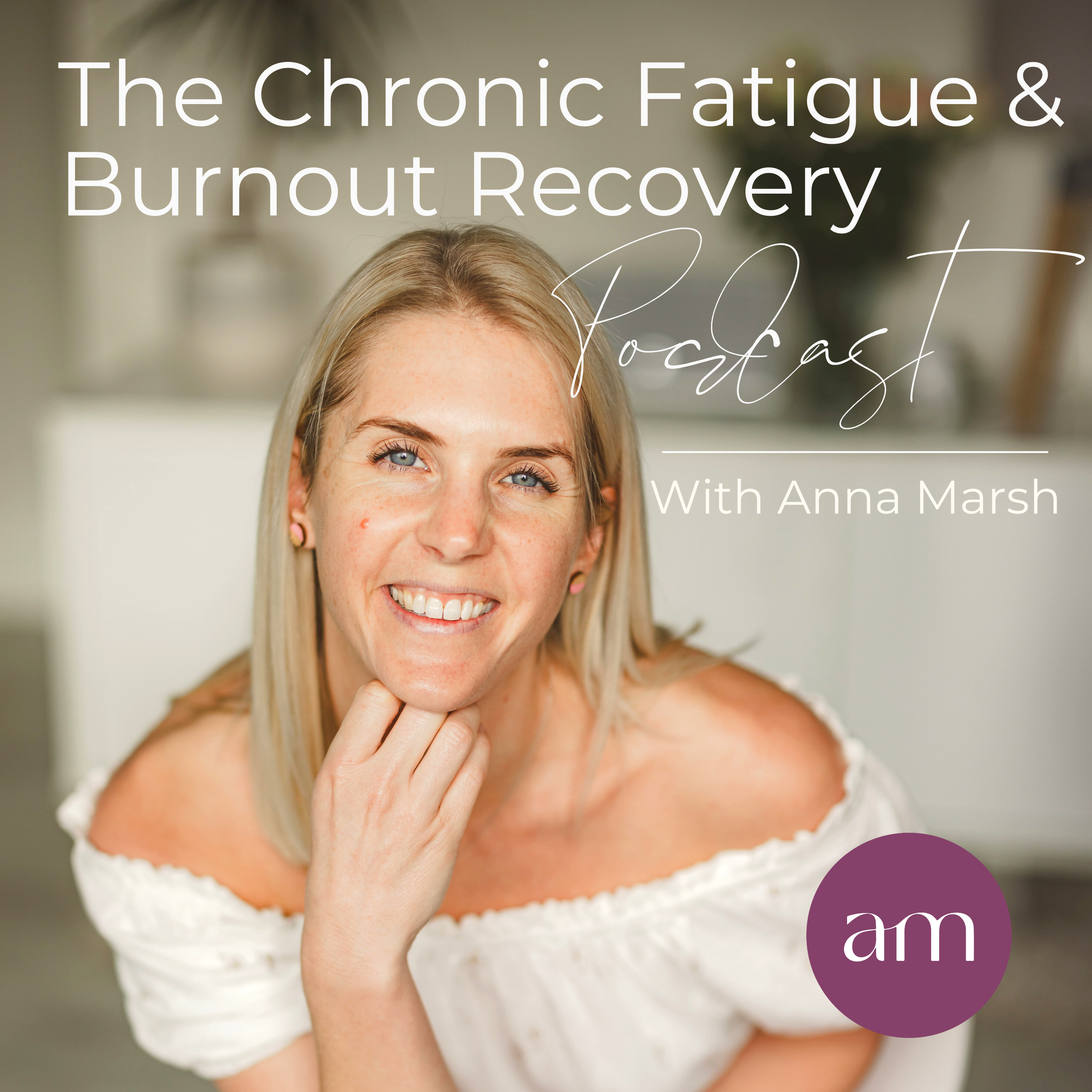
Ep 1Episode 1 – Welcome to the Chronic Fatigue and Burnout Recovery Podcast
Show Notes Welcome to the Chronic Fatigue and Burnout Recovery Podcast. Your host, Anna Marsh, introduces herself and explains what you can expect from listening to the show. Anna is a Trauma-informed Functional Medicine Nutritional Therapist who has worked in the health industry for over two decades. However, when her health began to circle the drain, and she was eventually diagnosed with Chronic Fatigue Syndrome (CFS),Anna realised there was so much she didn’t know she didn’t know about health generally and fatigue specifically. In her fatigue recovery journey, she realised there weren’t many valuable podcasts dedicated to fatigue recovery. The Podcasts that did exist were from people who had recovered but didn’t have the scientific background OR those who had scientific knowledge but not a personal experience of the debilitating effects of fatigue. Then there were those with a nervous system-centred background but without a deep understanding of where Functional Medicine meets trauma-informed care. Anna’s goal for this podcast is to offer insight from a deep understanding of the experience from a Functional Medicine and Trauma-informed lens while integrating her personal experience overcoming the condition. Useful links: Website: https://annamarsh.co.uk/ Instagram: https://www.instagram.com/anna_marsh_nutrition/ Fatigue Recovery Quiz: https://app.annamarsh.co.uk/quiz Welcome to the chronic fatigue and burnout recovery podcast. I am your host Anna Marsh, a trauma-informed Functional Medicine and nutritional therapist, which I appreciate is a bit of a mouthful. I just wanted to create this introduction episode today to talk to you a little bit about the podcast, and a teeny tiny bit about myself, so that you can know what to expect. And if it’s appropriate to keep on listening, I’ll be sharing a much more detailed account of my own fatigue recovery story in the next episode, but for today, I thought I would keep it brief and just share some of the bare bones back. So I have been practicing now as a nutritional therapist since 2009. Over time, I’ve also done my certification with the Institute of functional medicine. Although my master’s degree is in personalized nutrition, I am South African, if you can hear a little tinge of my accent. I grew up in South Africa and did my first degree in South Africa, in what was called Human Kinetics and Ergonomics, which I usually say to people is the same as Sports Science and Biochemistry. I have a lot of training in the human body and its workings, including working with clients. Despite all this experience and knowledge, I was not invincible. In 2019, I hit my health rock button or my energy crisis. I was diagnosed with chronic fatigue syndrome. When I was diagnosed, I began to search for more information. Of course, I was at an advantage because I already had a background in health and was already connected to various people, practitioners, and thinking frameworks. So maybe it was a little bit easier to find the information, but I foun...