
The Chris Hedges Report Podcast
266 episodes — Page 4 of 6
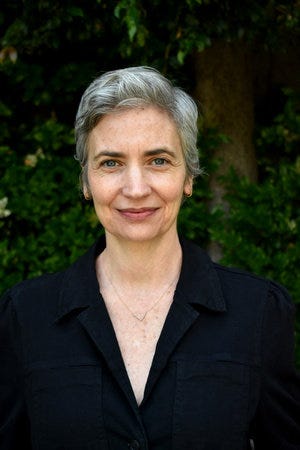
The Chris Hedges Report Podcast with Professor Joanna Schwartz on her book "Shielded: How Police Became Untouchable"
The police in the United States, through a series of Supreme Court decisions, as well as policies enacted by state and city governments, have become largely immune from prosecution, even when they commit serious felonies such as murder. Police officers are criminally charged in less than 2 percent of fatal shootings and convicted in less than one-third of those cases. When officers injure but do not kill, they are even less likely to be prosecuted. Police in America are virtually omnipotent, prosecuted in a handful of high-profile cases that receive national attention, but otherwise freed to engage in lawless behavior, especially in poorer communities. University of California law professor Joanna Schwartz in her book Shielded: How the Police Became Untouchable, details the myriad of ways the legal system has stripped the citizens of protections from police abuse. The wholesale blocking of civil rights litigation means that police are rarely held accountable for the crimes they commit, blunting all efforts to enact meaningful police oversight, legal accountability and reform. Joining me to discuss her book, our failed justice system and police forces that function, especially in poor communities, as rouge militias, is Professor Joanna Schwartz. This is a public episode. If you'd like to discuss this with other subscribers or get access to bonus episodes, visit chrishedges.substack.com/subscribe

Listen to this Article: "The Democratic Party's Crucifixion of Matt Taibbi"
Narrated by Eunice WongText originally published May 28, 2023Redacted - by Mr. FishOn Dec. 24, 2022 Matt Taibbi was in a room at the Parc 55 Hotel in San Francisco poring through reports sent to Twitter from an entity called the Foreign Influence Task Force (FITF). The FITF is an FBI-led interagency task force that forwards “moderation requests” from numerous government agencies, including Homeland Security, the CIA, the Pentagon and the State Department, to social media outlets. Taibbi was given access to the internal traffic by Twitter’s new owner, Elon Musk. It revealed how the FBI and other government agencies routinely suppressed news and commentary. He published a Twitter thread that night, Christmas Eve, with the headline “Twitter and Other Government Agencies”.“There would be a list of YouTube videos,” Taibbi said when I reached him by phone. “There would be a notation that would say ‘We assess that these are all created by the Internet Research Agency in Russia. We assess that they are promoting anti-Ukraine attitudes.’ I would see that all those videos were no longer on YouTube. You can make your own deduction from that, but that was the pattern. They would send Excel spreadsheets full of account names and either all or most of them would be gone.”The content that was suppressed included right-wing and left-wing reports critical of the dominant narrative advanced by the Democratic Party and the old establishment wing of the Republican Party, which has been folded into the Democratic Party. Threads from the Yellow Vests movement, activists from the Occupy movement, Global Revolution Live, negative stories about Joe Biden, reports on the Ukrainian energy company Burisma that paid Hunter Biden about $1 million a year while his father was vice-president, positive stories about Venezuelan president Nicolás Maduro, reports about Ukrainian human rights abuses and details of the contents of Hunter Biden’s laptop were part of the plethora of accounts that were flagged and disappeared. I was a victim of this censorship. The six-year archive of my show On Contact, broadcast on RT America, was erased from YouTube, although not one show was about Russia and none violated YouTube’s content guidelines. Episodes were later reposted on The Chris Hedges YouTube Channel. The show gave a voice to those targeted by the FITF — anti-imperialists, anti-capitalists, prison reform advocates, Black Lives Matter and Palestinian activists, anti-fracking activists and independent intellectuals, journalists and authors including David Harvey, Noam Chomsky, Sami Al-Arian, Glen Ford, Amira Hass, Mumia Abu Jamal, Roxanne Dunbar-Ortiz, Medea Benjamin, Nils Melzer, Pankaj Mishra, Glenn Greenwald, Matt Taibbi and Cornel West.The FBI, before the release of Taibbi’s Twitter thread on Dec. 24, had denounced the Twitter Files as the work of “conspiracy theorists” who fed the public “misinformation” and whose “sole purpose” was “discrediting the agency.” “They must think us unambitious, if our ‘sole aim’ is to discredit the FBI,” Taibbi responded. “After all, a whole range of government agencies discredit themselves in the Twitter Files. Why stop with one?”Taibbi was acutely aware these Christmas Eve revelations, which for the first time revealed the role of the CIA, would further enrage the intelligence agencies.“My understanding is that the FITF has a staff of at least 80,” Taibbi said. “It consists primarily of the FBI, but it also includes people from the Department of Homeland Security and the Office of the Director of National Intelligence. The FITF was the conduit for content moderation requests that went to the tech platforms. They had something called an industry meeting which was, at first monthly and then weekly, leading into the 2020 election. It included companies like Twitter, Facebook, Google, Pinterest, Wikimedia, a series of others, about two dozen of them. They would have a general briefing on trends. Individually, each of the companies were receiving notices. Some of them were receiving weekly notices from the FITF. Twitter was. We know that because there were very specific instructions about how it was done. Requests that came from the states went through the DHS. Requests that came from the Federal Government went through the FBI. They went through a program called Teleporter. That’s how we got those documents.”In March, Taibbi and Michael Shellenberger were called to testify before the Select Subcommittee on Weaponization of the Federal Government. While Taibbi was testifying on March 9, an IRS agent visited his house in New Jersey.Taibbi discovered that the IRS opened a case against him on the day he published his Christmas Eve Twitter thread from a letter House Judiciary Chair Jim Jordan sent to IRS Commissioner Daniel Werfel inquiring about Taibbi’s case. It was a Saturday. It was Christmas Eve. Taibbi did not owe taxes. The case was four years old. All this suggests that the IRS case was politically motivated and
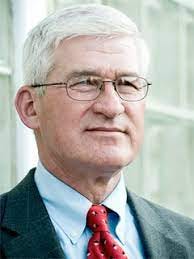
The Chris Hedges Show Podcast with retired Army Colonel, Vietnam War veteran and former history professor at Boston University Andrew Bacevich on bidding farewell to the American century.
At the end of any empire there are always a handful of chroniclers who, like Cicero in the Roman Republic, see clearly the looming disintegration of empire. They call out the bankruptcy of an inept and corrupt ruling class, blinded by hubris, as well as a populace that has checked out of civic life and is entranced by bread and circus spectacles. Chalmers Johnson in his trilogy “American Empire: Blowback,” “The Sorrows of Empire,” and “Nemesis” The Last Days of the American Republic,” does a masterful job of showing how and why we are disintegrating. So does Andrew Bacevich who in his newest book of essays, “On Shedding an Obsolete Past: Bidding Farewell to the American Century,” writes about the debacles that have beset the American empire since the Vietnam war, a conflict he fought in as a young army officer. He warns that our inability to be self-critical, to dissect and understand the litany of disasters that have followed on the heels of Vietnam, including the twenty-years of fruitless warfare in the Middle East, will have terrible consequences for us and much of the rest of the globe. Joining me to discuss his new book is Andrew Bacevich, the president and co-founder of the Quincey Institute for Responsible Statecraft. A West Point graduate and retired Army Colonel, he is also professor emeritus of history and international relations at Boston University. His other books include “The New American Militarism,” “The Limits of Power,” “America’s War for the Greater Middle East” and “After the Apocalypse: America’s Role in a World Transformed.” This is a public episode. If you'd like to discuss this with other subscribers or get access to bonus episodes, visit chrishedges.substack.com/subscribe
Listen to this Article: "Why the Conspiracy Theory About Trump and Russia Won’t Go Away"
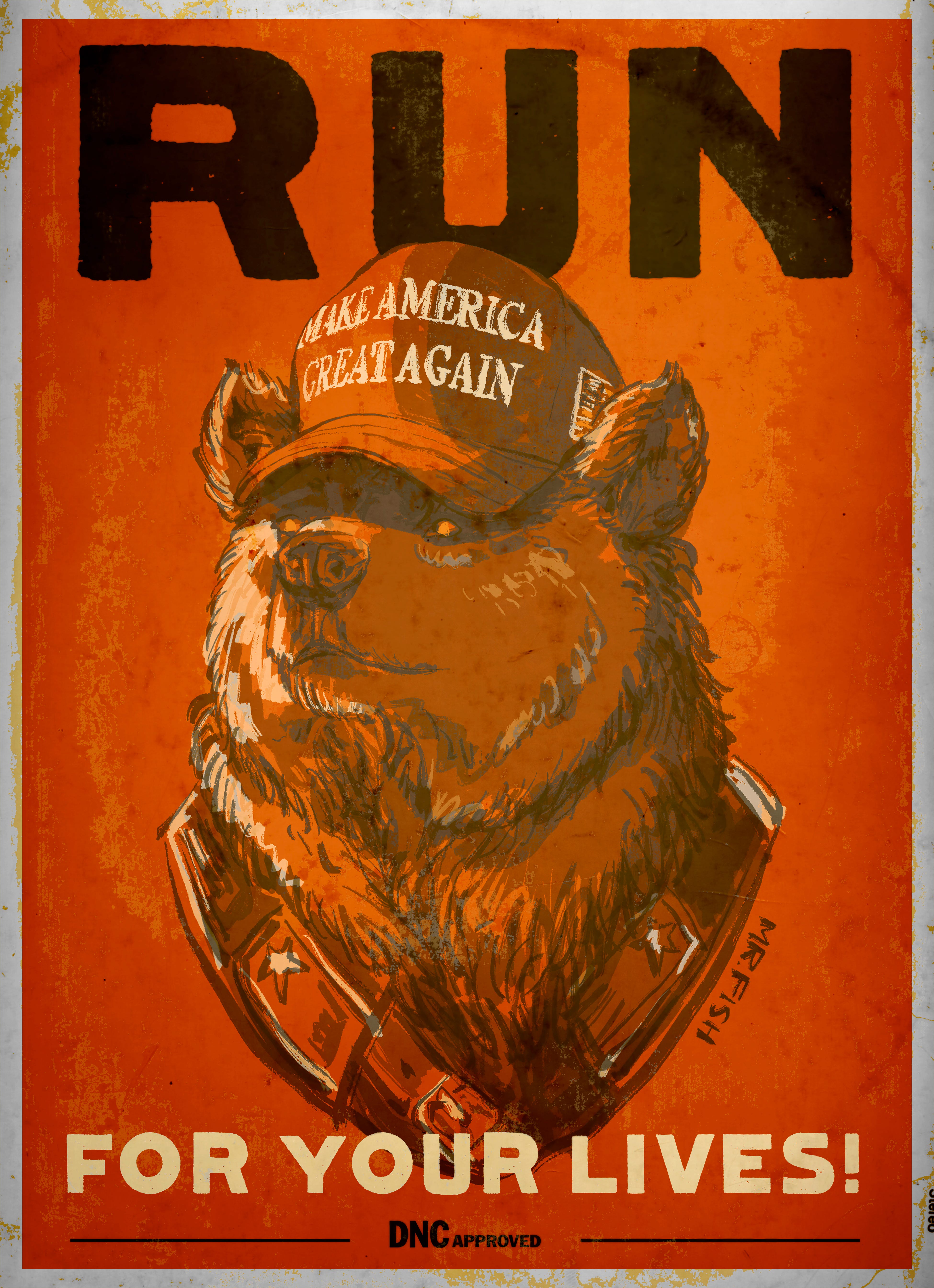
Narrated by Eunice WongText originally published May 21, 2023Run for Your Lives! - by Mr. FishThere is no report, investigation or new revelation, including the recent release of Special Counsel John Durham’s “Report on Matters Related to Intelligence Activities and Investigations Arising Out of the 2016 Presidential Campaigns” that will implode the myth that Russia was responsible for the election of Donald Trump. Myths are impervious to facts. They fulfill an emotional yearning. They are a short circuit from reality into a world of childish simplicity. Hard and painful questions are avoided. Thought-terminating cliches are spat out to blissfully embrace a willed ignorance. The cynical con the Democratic Party and the FBI carried out to falsely portray Donald Trump as a puppet of the Kremlin worked, and continues to work, because it is what those who detest Trump want to believe.If Russia is blamed for Trump’s election, we avoid the unpleasant reality of our failed democratic institutions and decaying empire. We avoid facing the inevitable rise of a Christianized fascism borne out of widespread impoverishment, rage, despair and abandonment. We avoid acknowledging the complicity of the Democratic Party in the orchestration of the largest social inequality in our nation’s history, the evisceration of our basic civil liberties, endless wars and an electoral system bankrolled by the billionaire class, which is legalized bribery. The myth allows us to believe that Democratic politicians, like the establishment Republicans who have joined them, are the guarantors of a democracy they destroyed.Our reality is bleak and frightening, especially given the abject refusal by the ruling oligarchs to deal seriously with the climate emergency. We face a precarious future. The monumental task of restoring democracy outside the confines of a broken electoral system and corporate-indentured institutions is daunting and not guaranteed. We stand on the cusp of tyranny. Blaming Vladimir Putin for the rise of an American demagogue — demagogues are always vomited up from dysfunctional political systems — magically makes the existential dilemma disappear.The liberal media during the Trump-Russia saga, including The New York Times and the Washington Post, which shared a 2018 Pulitzer Prize for reporting on alleged Russian influence during the 2016 election, provided thousands of stories and reports that falsely painted the Trump administration as a tool of Russia. Their readers, like the viewers of CNN and MSNBC, were fed a comforting myth. When you feed a public consoling myths — the most absurd being that America is a good and virtuous nation — there is no accountability. Myths make us feel good. Myths demonize those blamed for our self-created debacles. Myths celebrate us as a people and a nation. But it is like handing heroin to junkies. Shatter the myths, even if the facts are incontrovertible, and you become a pariah. I found this out when I and a handful of others, including Robert Scheer, Phil Donahue and Michael Moore, denounced calls to invade Iraq. It made no difference that I had been the Middle East Bureau Chief for The New York Times, was an Arabic speaker and had spent seven years reporting in the region, including in Iraq. I was censored, driven from The New York Times and attacked by George W. Bush’s useful idiots in the media, and the Democratic Party, as an apologist for Saddam Hussein.The same ugly reception greeted those of us who questioned the “evidence” used to argue that Trump was a tool of Russia. We were branded stooges of Moscow and Trump apologists. We were again locked out of the debate. Glenn Greenwald at The Intercept, Matt Taibbi at Rolling Stone and Aaron Mate at The Nation, found themselves under intense pressure for questioning the Trump-Russia narrative. All now work as independent journalists. You can see my interview with Taibbi here. Jeff Gerth is a Pulitzer Prize-winning investigative reporter who worked at The New York Times from 1976 until 2005. He spent two years investigating the Trump-Russia story for a four-part series published in the Columbia Journalism Review. He too became an object of vitriol. David Corn at Mother Jones, one of the most prolific shills for the Trump-Russia conspiracy, wrote a column after Gerth’s exhaustive 24,000-word series called “Trump-Russia Denialists Still Can’t Handle the Truth.” Gerth called Corn’s attack “a form of McCarthyism.” You can see my interview with Gerth here.All the investigations into Trump’s ties with Russia are unequivocal. There was no collusion. The Steele dossier, financed at first by Republican opponents of Trump and later by Hillary Clinton’s campaign, and compiled by former MI6 British intelligence officer, Christopher Steele, was a fake. The charges in the dossier — which included reports of Trump receiving a “golden shower” from prostituted women in a Moscow hotel room and claims that Trump and the Kremlin had ties going back five y

The Chris Hedges Report Podcast with Kavitha Chekuru on Israel's execution of the Palestinian-American reporter Shireen Abu Akleh and the failure to hold Israel accountable.
Shireen Abu Akleh, the Al Jazeera reporter with more than two decades of experience covering armed conflicts, knew the protocol. She and other reporters remained in the open, clearly visible to Israeli snipers about 650 feet away. Her flak jacket was emblazoned with the word “PRESS.”There were two initial rounds of shooting that were fired at the journalists. In the first, producer Ali Al-Samoudi was shot. As the journalists turned to run away from the gunfire, Shireen was shot below her helmet during the second round, according to the Human Rights organization Al Haq.There were a few seconds when the Israeli sniper saw profiled in his scope Abu Akleh, one of the most recognizable faces in the Middle East. The accuracy of the M-16, especially the M16A4s equipped with the Advanced Combat Optical Gunsight (ACOG), a prismatic telescopic sight, is very high. In the fighting in Fallujah so many dead insurgents were found with head wounds that observers at first thought they had been executed. The bullet that killed Abu Akleh was deftly placed between the very slim opening separating her helmet and the collar of her flak jacket.I have been in combat, including in clashes between Israeli and Palestinian forces. Snipers are dreaded on a battlefield because each kill is calculated. The execution of Abu Akleh was not an accident. She was singled out for elimination. Whether this killing was ordered by commanding officers, or whether it was the whim of an Israeli sniper, I cannot answer. Israelis shoot so many Palestinians with impunity my guess is the sniper knew he or she could kill Abu Akleh and never face any consequences. The shooting, Al Jazeera said in a statement, was “a blatant murder, violating international laws and norms.” Abu Akleh, the network added, was “assassinated in cold blood.”Abu Akleh, who was 51 and a Palestinian-American, was a familiar and trusted presence on television screens throughout the region, revered for her courage and integrity and beloved for her careful and sensitive reporting on the intricacies of daily life under the occupation. Her reporting from the occupied territories routinely punctured Israeli narratives and exposed Israeli abuses and crimes, making her the bête noire of the Israeli government. It is very hard to believe she was not a deliberate target. Joining me to discuss the murder of Abu Akleh and the refusal by the Biden administration to hold Israel accountable for the killing is Kavitha Chekuru, a senior producer for the Al Jazeera show Fault Lines that produced the investigative report titled The Killing of Shireen Abu Akleh. This is a public episode. If you'd like to discuss this with other subscribers or get access to bonus episodes, visit chrishedges.substack.com/subscribe
Listen to this Article: "Sammy Goes to School"
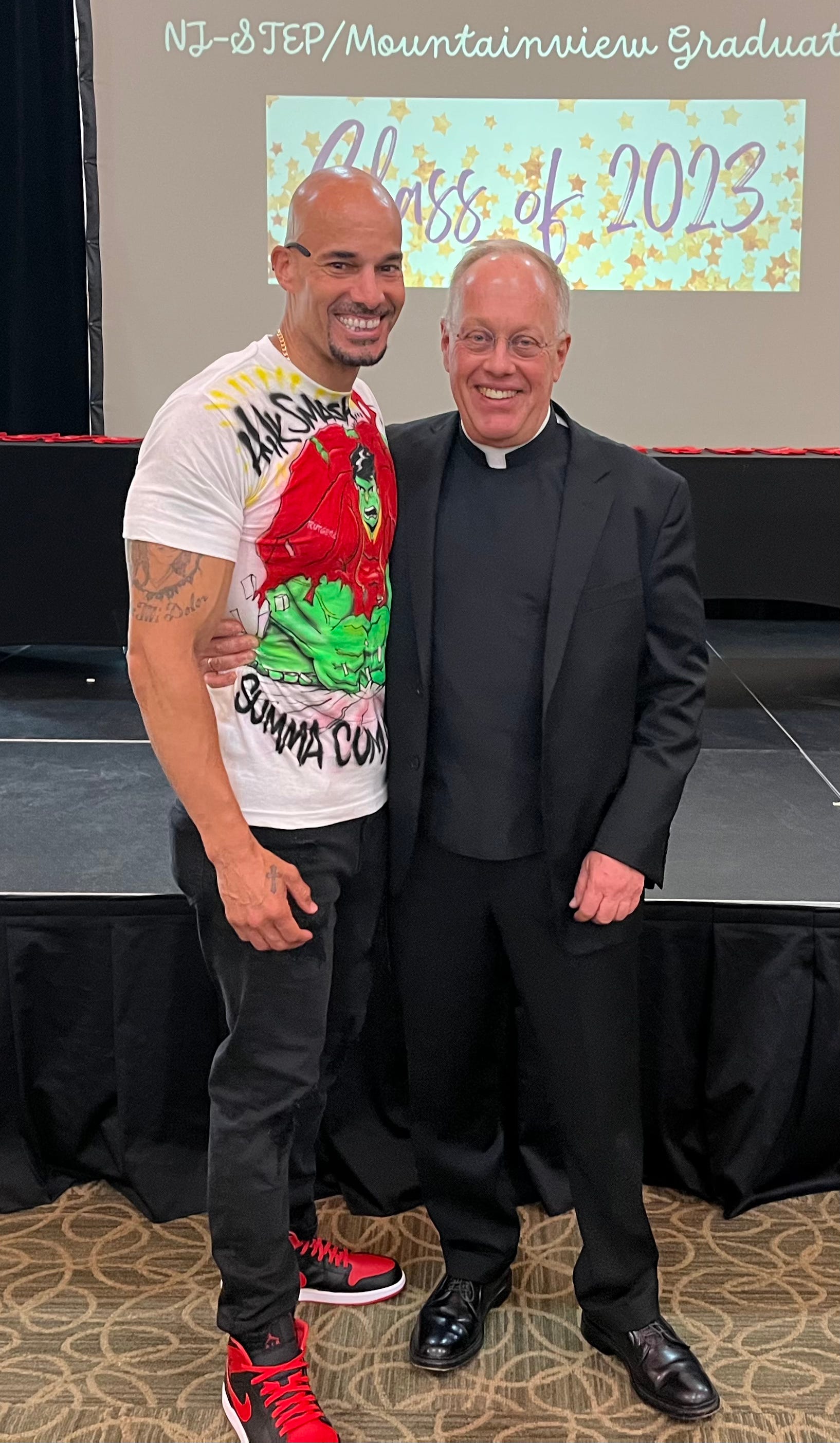
Narrated by Eunice WongText originally published May 12, 2023With Sammy at the graduation ceremony for formerly incarcerated students at Rutgers University in Newark on FridayNewark, N.J. — We know the story. The absent father who leaves when his son is five-years-old and moves back to Puerto Rico. The single mother, rarely at home because she works long hours to keep her three children fed and pay the rent. The poverty. The crime. The instability. Later, the stepfather who drinks, uses drugs and beats his stepchildren. The child acting up. Dropping out of school. Joining a gang. The robberies. The one that went wrong and left a man dead. Prison.The students I teach in prison have variations of the same story. They are funneled into the maw of the prison-industrial-complex, the largest in the world, and spat out decades later, even more lost and traumatized, to wander the streets like ghosts until most, unequipped to survive on the outside and without support, find themselves back in the old familiar cages.But I tell this story because it needs to be told. I tell it because this time the end will be different. This time the system will not win. I tell it because neglected and abused children, no matter what crime they commit, should not be imprisoned as if they were adults. I tell it because we are complicit. I tell it because until we stop investing in systems of control and start investing in people, especially children, nothing will change. It will only get worse.“I come from a very violent childhood,” says Sammy Quiles, who was released from prison after serving a 30-year sentence a few weeks ago. “My mother — once my father was out of the picture — worked and partied. Me and my sisters were relegated to making it on our own or with babysitters. And then when she met my stepfather that was only exacerbated. He was a drunk, drug-abuser and very violent. I was hit with fists, bats, hangers, you name it. It was physical, emotional and verbal abuse.”I taught Sammy in East Jersey State Prison in Rahway, New Jersey, in the Rutgers college degree program. I did not know his story until he was released. I never know the stories of my students. They are not their crime. And years, often decades later, they are not who they were. Sammy, in my classroom, was reserved, determined, hardworking, brilliant and unfailingly courteous. That is who Sammy is. Who he was, to me, is irrelevant.That is not how Sammy was seen as a child, a troubled boy coping with abandonment and terrible abuse. He threw temper tantrums. He could not sit still. He was disruptive. The school system labeled him “emotionally disturbed.” He was placed in special education classes in the second grade.“Decisions were made early on in my life that I would serve the service sector of society,” he says. “I wasn’t taught innovative curriculums. They sent me to woodshop or auto mechanic schools.”He dropped out of school in the 10th grade. At 15 he left home “because the streets seemed safer for me.” “I tried to get fast-food jobs, but I didn’t last long,” he says. “My behavior was erratic, problematic. I didn’t do well with authority and structured environments. I robbed and stole. I became a car thief, a stick-up kid. That’s how I ate.”He found the Latin Kings.“Every government institution abandoned me or punished me for my behavior, but it was a gang member that helped me with homelessness, with putting clothes on my back, putting a few dollars in my pocket, fed me — his family fed me,” he recalls. “I understand today that they exploited my aggressive behavior, but they’re the ones that helped me when I left home. It felt like I had a community. They taught me about my culture. They instilled this pride in me. There was protection.”He was initiated into the Latin Kings in a schoolyard in Lakewood, New Jersey. He had to recite from memory 10 small paragraphs, or lessons, in front of a circle of some 30 gang members. Then each member embraced him. They shot a hand gesture they called “crowns,” their gang greeting.“I felt empowered, I felt accepted, I felt like I had a family,” he says.He swiftly ascended within the ranks of the gang.“I had a knack for learning the lessons, the materials they gave,” he says. “I was very interested in the literature. It was all based on culture and a lot of Puerto Rican history and about revolutionaries and where I come from. And then the aggressive nature — I was very aggressive.”The gang sold cocaine and crack. But he continued working as a “stick up kid” who robbed drug dealers and members in rival gangs. A robbery usually brought in a few hundred dollars that was divided up with other gang members. He often used his portion to buy gifts, such as sneakers, for his two younger sisters.He looked up to older gang members who became surrogate fathers. One of them recruited him to rob a Kentucky Fried Chicken restaurant when he was 17.“My loyalty to this individual warped my judgment,” he says.The manager of the Kentucky Fri
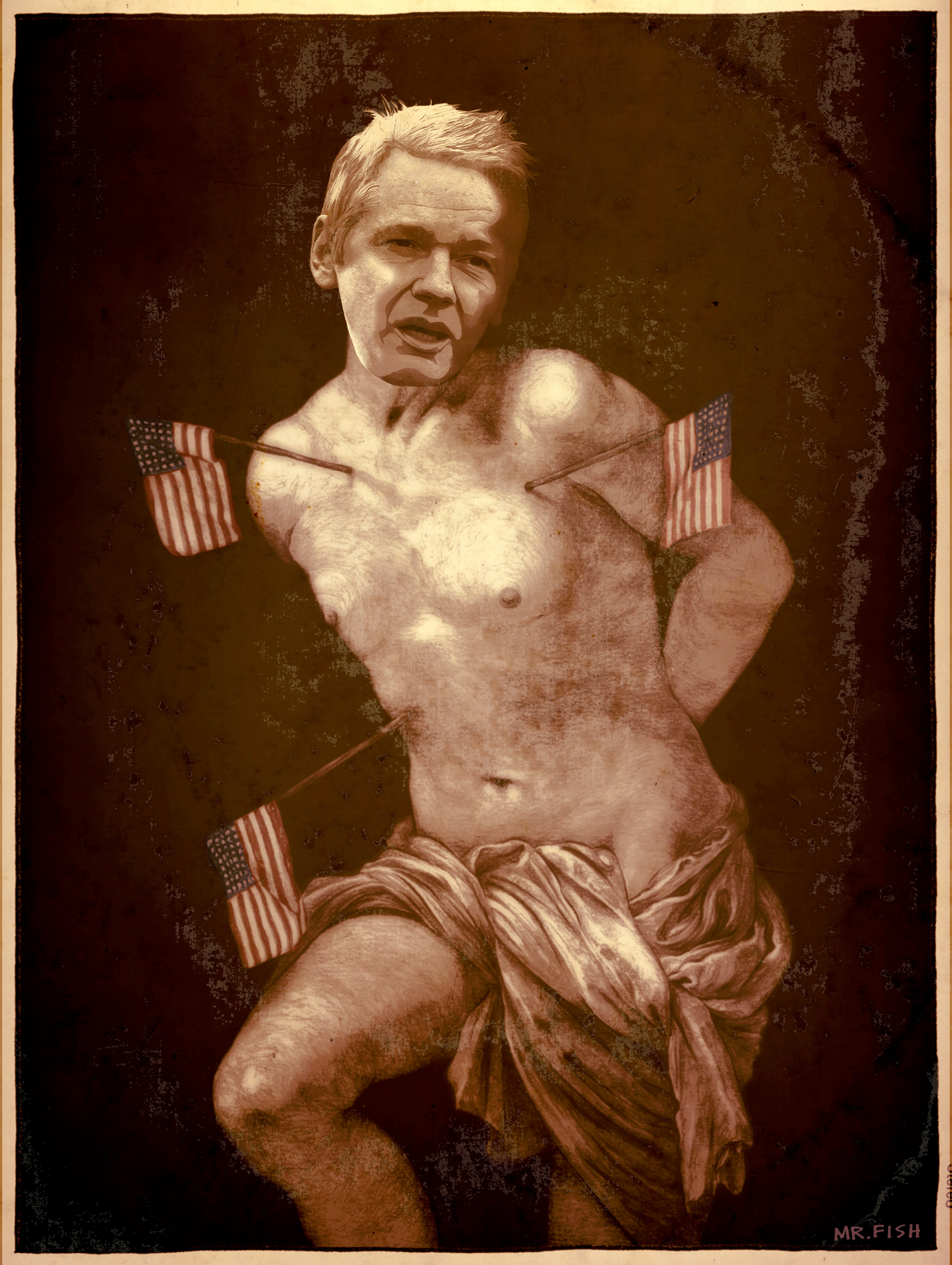
Listen to this talk I gave in New York City at a Rally Calling for the Immediate Release of Julian Assange on World Press Freedom Day
Narrated by Eunice WongText originally published: May 3, 2023And Our Flags Are Still There - by Mr. FishThe detention and persecution of Julian Assange eviscerates all pretense of the rule of law and the rights of a free press. The illegalities, embraced by the Ecuadorian, British, Swedish and U.S. governments are ominous. They presage a world where the internal workings, abuses, corruption, lies and crimes, especially war crimes, carried out by corporate states and the global ruling elite, will be masked from the public. They presage a world where those with the courage and integrity to expose the misuse of power will be hunted down, tortured, subjected to sham trials and given lifetime prison terms in solitary confinement. They presage an Orwellian dystopia where news is replaced with propaganda, trivia and entertainment. The legal lynching of Julian, I fear, marks the official beginning of the corporate totalitarianism that will define our lives.Under what law did Ecuadorian President Lenin Moreno capriciously terminate Julian’s rights of asylum as a political refugee? Under what law did Moreno authorize British police to enter the Ecuadorian Embassy — diplomatically sanctioned sovereign territory — to arrest a naturalized citizen of Ecuador? Under what law did Donald Trump criminalize journalism and demand the extradition of Julian, who is not a U.S. citizen and whose news organization is not based in the United States? Under what law did the CIA violate attorney-client privilege, surveil and record all of Julian’s conversations both digital and verbal with his lawyers and plot to kidnap him from the Embassy and assassinate him?The corporate state eviscerates enshrined rights by judicial fiat. This is how we have the right to privacy, with no privacy. This is how we have “free” elections funded by corporate money, covered by a compliant corporate media and under iron corporate control. This is how we have a legislative process in which corporate lobbyists write the legislation and corporate-indentured politicians vote it into law. This is how we have the right to due process with no due process. This is how we have a government — whose fundamental responsibility is to protect citizens — that orders and carries out the assassination of its own citizens, such as the Muslim cleric Anwar al-Awlaki and his 16-year-old son. This is how we have a press which is legally permitted to publish classified information and our generation’s most important publisher sitting in solitary confinement in a high security prison awaiting extradition to the United States.The psychological torture of Julian — documented by the United Nations special rapporteur on torture, Nils Melzer — mirrors the breaking of the dissident Winston Smith in George Orwell’s novel “1984.” The Gestapo broke bones. The East German Stasi broke souls. We, too, have refined the cruder forms of torture to destroy souls as well as bodies. It is more effective. This is what they are doing to Julian, steadily degrading his physical and psychological health. It is a slow-motion execution. This is by design. Julian has spent much of his time in isolation, is often heavily sedated and has been denied medical treatment for a variety of physical ailments. He is routinely denied access to his lawyers. He has lost a lot of weight, suffered a minor stroke, spent time in the prison hospital wing — which prisoners call the hell wing — because he is suicidal, been placed in prolonged solitary confinement, observed banging his head against the wall and hallucinating. Our version of Orwell’s dreaded Room 101.Julian was marked for elimination by the CIA once he and WikiLeaks published the documents known as Vault 7, which exposed the CIA’s cyber warfare arsenal which includes dozens of viruses, trojans and malware remote control systems designed to exploit a wide range of U.S. and European company products, including Apple's iPhone, Google's Android, Microsoft's Windows and even Samsung’s Smart TVs, which can be turned into covert microphones even when they appear to be switched off.I spent two decades as a foreign correspondent. I saw how the brutal tools of repression are tested on those Frantz Fanon called “the wretched of the earth.” From its inception, the CIA carried out assassinations, coups, torture, black propaganda campaigns, blackmail and illegal spying and abuse, including of U.S. citizens, activities exposed in 1975 by the Church Committee hearings in the Senate and the Pike Committee hearings in the House. All these crimes, especially after the attacks of 9/11, have returned with a vengeance. The CIA has its own armed units and drone program, death squads and a vast archipelago of global black sites where kidnapped victims are tortured and disappeared. The U.S. allocates a secret black budget of about $50 billion a year to hide multiple types of clandestine projects carried out by the National Security Agency, the CIA and other intelligence agencies, usua
The Chris Hedges Report Podcast with Professor Clarence Lusane on our bifurcated historical memory and competing national symbols and monuments.
When the new 20-dollar bill is issued in 2030 it is scheduled to have on one side a portrait of Harriet Tubman, the fiery abolitionist who made over a dozen clandestine trips south to free enslaved people and later served as a scout for the Union Army during the Civil War. The back of the bill is supposed to have a statue of the slaveholding 7th president, Andrew Jackson, who was one of the principal organizers of the genocidal campaigns against Native Americans. It is a bit like Germany issuing a bill with Ann Frank on one side and Adolf Eichmann on the other. This schizophrenia reflects the bifurcation within the country where the dwindling majority of whites often embrace the so-called white replacement theory, seeing in the effort to honor the nation’s diversity and own up to the sins of white supremacy, a campaign to erase them. The fight over symbols and monuments is grounded in this fear of dethronement, for as Erin L. Thompson writes “monuments aren’t history lessons---they’re pledges of allegiance.” Owning up to our past, the goal of critical race theory, shatters the myth perpetuated by white supremists that our racial hierarchy is not somehow engineered but the natural outcome of a meritocracy where whites are endowed with superior intelligence, talent and civilization, while Blacks deserve to be at the bottom of society because of their innate characteristics. Owning up to the past eradicates the whitewashing in textbooks, monuments, memorials and historical narratives and forces white Americans to grapple with a history every bit as evil as that perpetuated by German fascists. As Clarence Lusane, the author of “Twenty Dollars and Change: Harriet Tubman and the Ongoing Fight for Racial Justice and Democracy,” argues: “rolling out a Tubman twenty-dollar bill not only disrupts and diminishes the legacies of white supremacy that persist in official narratives, but that doing so is a necessary step toward diminishing and abolishing racist distortions of our political economy, health and medical institutions, and justice system.” Joining me to discuss this battle over national symbols and monuments is Professor Clarence Lusane, the director of the International Affairs program and former chair of the Political Science Department at Howard University. This is a public episode. If you'd like to discuss this with other subscribers or get access to bonus episodes, visit chrishedges.substack.com/subscribe

The Chris Hedges Show Podcast with Ellen Schrecker on the lost promise of American education.
The integrity and quality of public higher education in America has been under assault for decades, as Ellen Schrecker documents in her new book The Lost Promise: American Universities in the 1960s. The American dream of high-quality, affordable mass higher education is no longer within reach of many Americans. Tuitions, once low, if not free, have soared, and with them tremendous student debt. Although the Biden administration has made an effort to reduce some of this debt, but millions of students, graduates and drop-outs still owe a staggering $1.6 trillion dollars. State legislators and the federal government have dramatically slashed funding to public universities, forcing them to seek support from corporations and reduce most faculty to the status of poorly paid adjuncts, often lacking benefits, as well as job security. Nearly 75 percent of the instruction at colleges and universities is in the hands of adjuncts, who have no hope of being granted tenure. Public institutions, which serve 80 percent of the nation’s students, are chronically short of funding and basic resources. Higher education has evolved, even at major research universities, into primarily vocational training, no longer a vehicle for learning but economic mobility. The assault sees elite schools, where tuitions can run as high as $ 80,000 a year, cater to the wealthy and the privileged, locking out the poor and the working class. Joining me to discuss the crisis in higher education is Ellen Schrecker, a retired professor of history at Yeshiva University, and the author of numerous books, including her latest, The Lost Promise: American Universities in the 1960s. This is a public episode. If you'd like to discuss this with other subscribers or get access to bonus episodes, visit chrishedges.substack.com/subscribe
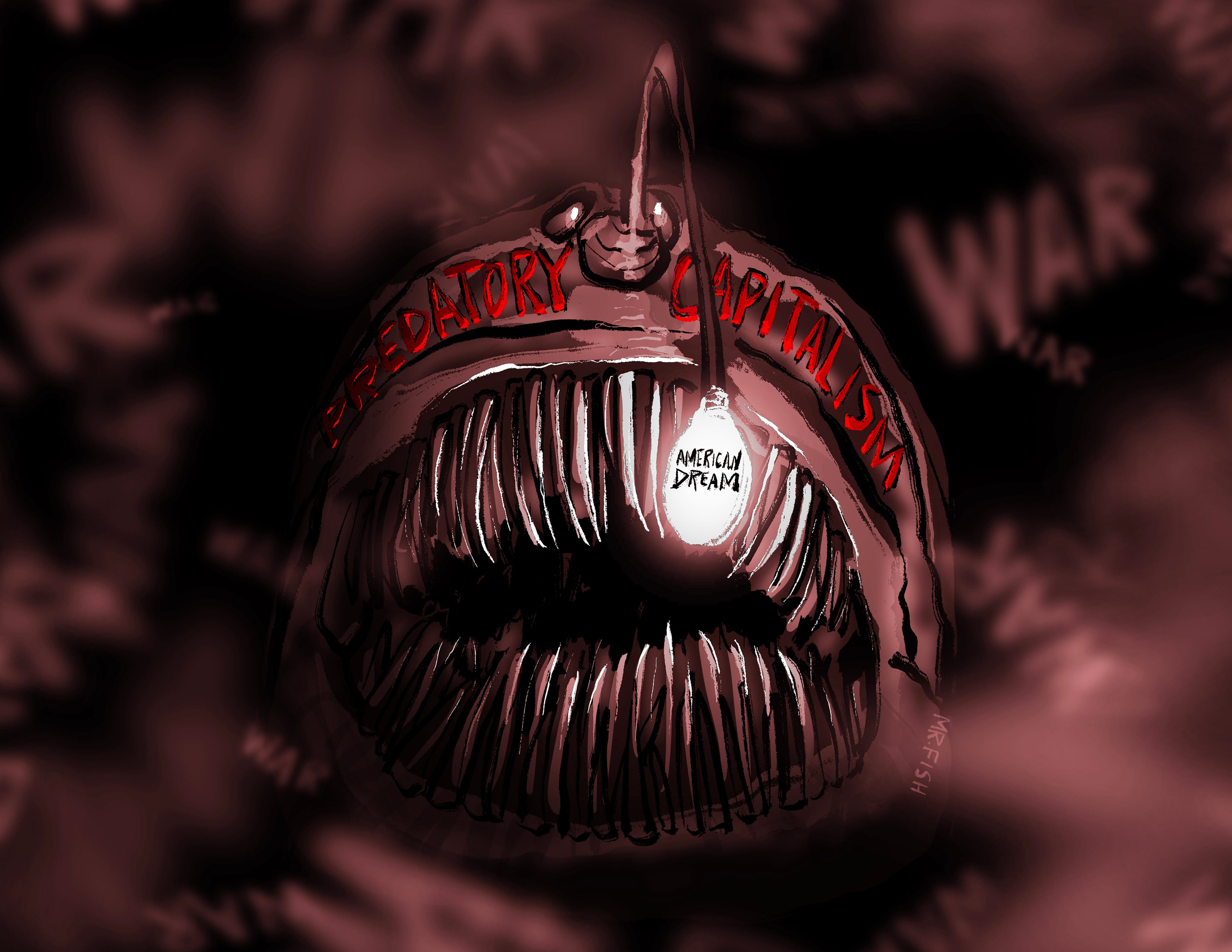
Listen to "The Enemy From Within"
Narrated by Eunice WongText originally published April 30, 2023You Are What They Eat - by Mr. FishAmerica is a stratocracy, a form of government dominated by the military. It is axiomatic among the two ruling parties that there must be a constant preparation for war. The war machine’s massive budgets are sacrosanct. Its billions of dollars in waste and fraud are ignored. Its military fiascos in Southeast Asia, Central Asia and the Middle East have disappeared into the vast cavern of historical amnesia. This amnesia, which means there is never accountability, licenses the war machine to economically disembowel the country and drive the Empire into one self-defeating conflict after another. The militarists win every election. They cannot lose. It is impossible to vote against them. The war state is a Götterdämmerung, as Dwight Macdonald writes, “without the gods.”Since the end of the Second World War, the federal government has spent more than half its tax dollars on past, current and future military operations. It is the largest single sustaining activity of the government. Military systems are sold before they are produced with guarantees that huge cost overruns will be covered. Foreign aid is contingent on buying U.S. weapons. Egypt, which receives some $1.3 billion in foreign military financing, is required to devote it to buying and maintaining U.S. weapons systems. Israel has received $158 billion in bilateral assistance from the U.S. since 1949, almost all of it since 1971 in the form of military aid, with most of it going towards arms purchases from U.S. weapons manufacturers. The American public funds the research, development and building of weapons systems and then buys these same weapons systems on behalf of foreign governments. It is a circular system of corporate welfare. Between October 2021 and September 2022, the U.S. spent $877 billion on the military, that’s more than the next 10 countries, including China, Russia, Germany, France and the United Kingdom combined. These huge military expenditures, along with the rising costs of a for-profit healthcare system, have driven the U.S. national debt to over $31 trillion, nearly $5 trillion more than the U.S.’s entire Gross Domestic Product (GDP). This imbalance is not sustainable, especially once the dollar is no longer the world’s reserve currency. As of January 2023, the U.S. spent a record $213 billion servicing the interest on its national debt. The public, bombarded with war propaganda, cheers on their self-immolation. It revels in the despicable beauty of our military prowess. It speaks in the thought-terminating clichés spewed out by mass culture and mass media. It imbibes the illusion of omnipotence and wallows in self-adulation.The intoxication of war is a plague. It imparts an emotional high that is impervious to logic, reason or fact. No nation is immune. The gravest mistake made by European socialists on the eve of the First World War was the belief that the working classes of France, Germany, Italy, the Austro-Hungarian Empire, Russia and Great Britain would not be divided into antagonistic tribes because of disputes between imperialist governments. They would not, the socialists assured themselves, sign on for the suicidal slaughter of millions of working men in the trenches. Instead, nearly every socialist leader walked away from their anti-war platform to back their nation’s entry into the war. The handful who did not, such as Rosa Luxemburg, were sent to prison. A society dominated by militarists distorts its social, cultural, economic and political institutions to serve the interests of the war industry. The essence of the military is masked with subterfuges — using the military to carry out humanitarian relief missions, evacuating civilians in danger, as we see in the Sudan, defining military aggression as “humanitarian intervention” or a way to protect democracy and liberty, or lauding the military as carrying out a vital civic function by teaching leadership, responsibility, ethics and skills to young recruits. The true face of the military — industrial slaughter — is hidden.The mantra of the militarized state is national security. If every discussion begins with a question of national security, every answer includes force or the threat of force. The preoccupation with internal and external threats divides the world into friend and foe, good and evil. Militarized societies are fertile ground for demagogues. Militarists, like demagogues, see other nations and cultures in their own image – threatening and aggressive. They seek only domination. It was not in our national interest to wage war for two decades across the Middle East. It is not in our national interest to go to war with Russia or China. But militarists need war the way a vampire needs blood.After the collapse of the Soviet Union, Mikhail Gorbachev and later Vladimir Putin lobbied to be integrated into western economic and military alliances. An alliance that included
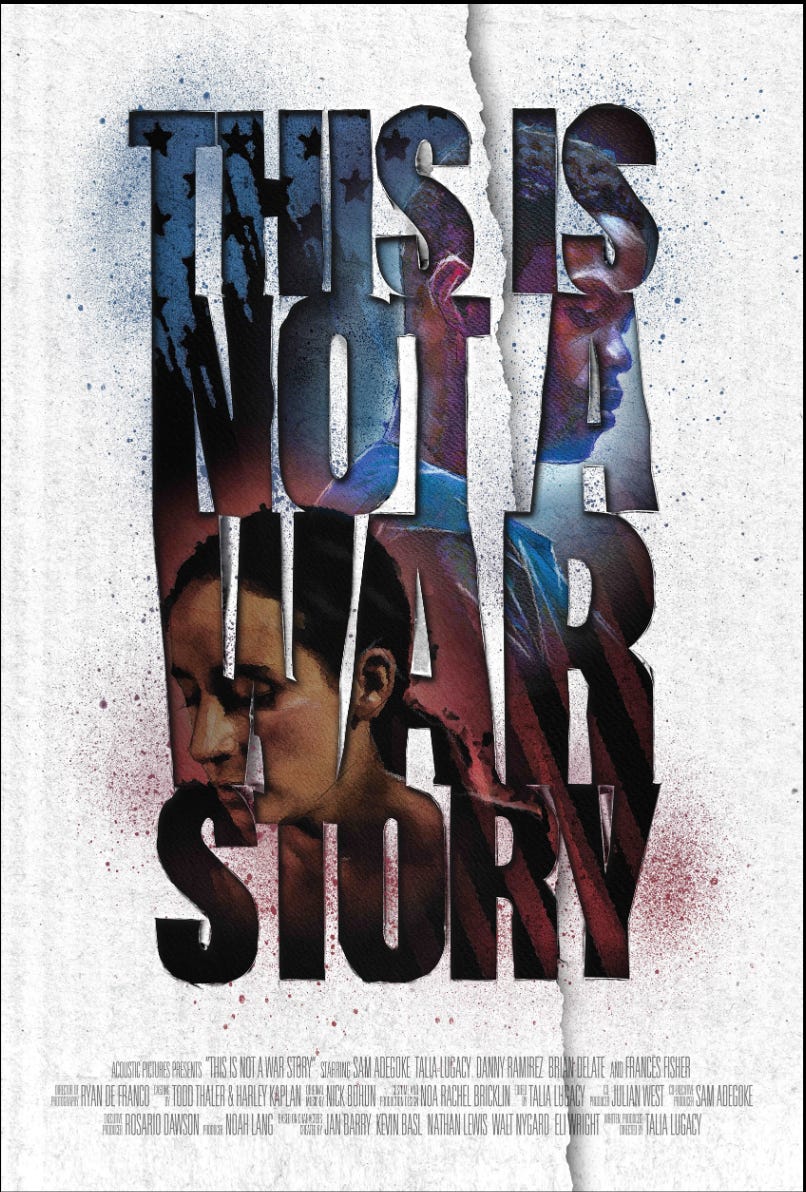
The Chris Hedges Report Podcast with filmmaker Talia Lugacy and combat veteran Eli Wright on their film This is Not a War Story, which shatters the myths about war peddled by Hollywood.
The real story of war is never told by Hollywood. Its senselessness, cruelty, gruesomeness and impersonalized wholesale industrial slaughter of innocents are redeemed for the old cliches of glory, honor, heroism and patriotism. The power of the lie makes it nearly impossible for those who return from war and speak the truth about war to be heard. Talia Lugacy in her new independent film This is Not a War Story rips back the veil on the vast enterprise of death that war is and tells the unflinching and painful story of the veterans who return, maimed physically and emotionally, coping with the deep existential crisis that comes with knowing we are not a good country or a virtuous people, that we are not the protectors of democracy and liberty, that we are not all powerful and destined to be triumphant. The film opens with the death of the veteran Timothy Reyes, a hustler on the New York City subway system who overdoes on pills and dies in an empty subway car. It goes on the follow the struggle of another veteran, Will LaRue, who was holding Timothy up, helping him battle back against his demons. LaRue seeks refuge in a multi-generational community of artist veterans, who make handmade paper out of military uniforms they shred pulverize into paper they use to express their rage, humor, memories, trauma, loss and hopes through art and poetry. The veteran Isabelle, played by Talia, joins this community. She and LaRue navigate a world where they no longer fit and are not understood. This film features a supporting cast of Iraq and Vietnam veterans, as well as their original artwork, poetry and music. Joining me to discuss the film is Talia Lugacy who wrote, directed and acted in the film and Eli Wright who was an Army combat medic in the US Army in Iraq and practices the craft of making handmade paper from military uniforms with fellow veterans in communities across the country. He also appeared in the film This is a public episode. If you'd like to discuss this with other subscribers or get access to bonus episodes, visit chrishedges.substack.com/subscribe
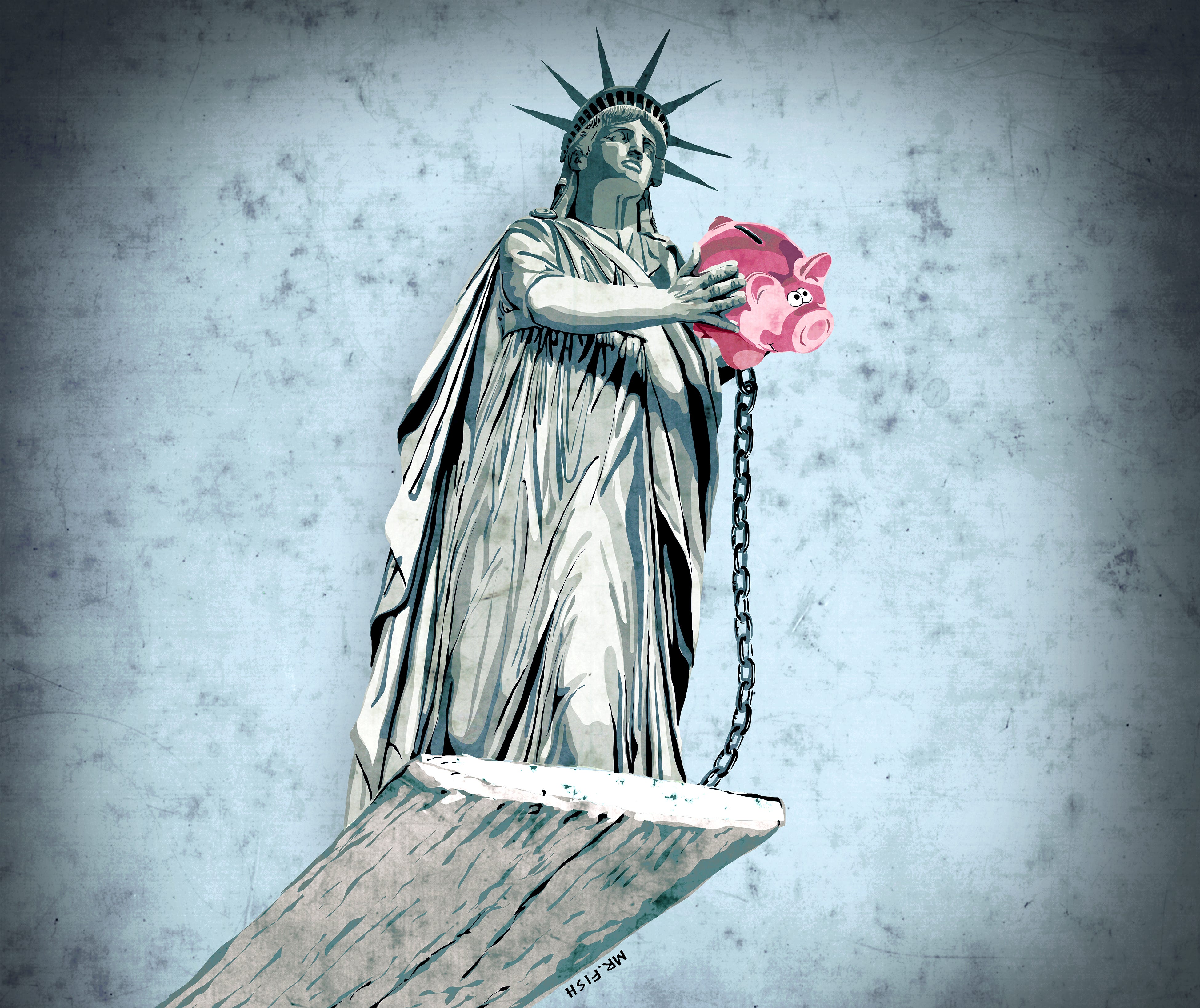
Listen to this Article: "The United States of Paralysis"
Narrated by Eunice WongText originally published April 23, 2023Follow the Money - by Mr. FishPolitical paralysis is snuffing out what is left of our anemic democracy. It is the paralysis of doing nothing while the ruling oligarchs, who have increased their wealth by nearly a third since the pandemic began and by close to 90 percent over the past decade, orchestrate virtual tax boycotts as millions of Americans go into bankruptcy to pay medical bills, mortgages, credit card debt, student debt, car loans and soaring utility bills demanded by a system that has privatized nearly every aspect of our lives. It is the paralysis of doing nothing about raising the minimum wage, despite the ravages of inflation, around 600,000 homeless Americans and 33.8 million people living in food insecure homes, including 9.3 million children.It is the paralysis of ignoring the climate crisis, the greatest existential threat we face, to expand fossil fuel extraction. It is the paralysis of pouring hundreds of billions of dollars into the permanent war economy rather than repairing the nation’s collapsing roads, rails, bridges, schools, electrical grid and water supply. It is the paralysis of refusing to institute universal health care and regulate the for-profit insurance and pharmaceutical industries to fix the worst health care system of any highly industrialized nation, one in which life expectancy is falling and more Americans die from avoidable causes than in peer nations. More than 80 percent of maternal deaths in the U.S. alone are preventable, according to the Centers for Disease Control and Prevention.It is the paralysis of being unwilling to curb police violence, dismantle the world’s largest prison system, end wholesale government surveillance of the public and reform a dysfunctional court system where nearly everyone, unless they can afford high-priced lawyers, is coerced into accepting onerous plea deals. It is the paralysis of standing passively by as the public, armed with arsenals of assault weapons, slaughter each other for crossing into their yard, pulling into their driveway, ringing their doorbell, angering them at work or school, or are so alienated and bitter at being left behind, they gun down groups of innocent people in acts of murderous self-immolation. Democracies are not slain by reactionary buffoons like Donald Trump, who was routinely sued for failing to pay workers and contractors and whose fictional television persona was sold to a gullible electorate, or shallow politicians like Joe Biden, whose political career has been devoted to serving corporate donors. These politicians provide a false comfort of individualizing our crises, as if removing this public figure or censoring that group will save us. Democracies are slain when a tiny cabal, in our case corporate, seizes control of the economy, culture and the political system and distorts them to exclusively serve its own interests. The institutions that should provide redress to the public become parodies of themselves, atrophy and die. How else to explain legislative bodies that can only unite to pass austerity programs, tax cuts for the billionaire class, bloated police and military budgets and reduce social spending? How else to explain courts that strip workers and citizens of their most basic rights? How else to explain a system of public education where the poor are, at best, taught basic numerical literacy and the rich send their children to private schools and universities with endowments in the billions of dollars?Democracies are slain with false promises and hollow platitudes. Biden told us as a candidate he would raise the minimum wage to $15 and hand out $2,000 stimulus checks. He told us his American Jobs Plan would create “millions of good jobs.” He told us he would strengthen collective bargaining and ensure universal pre-kindergarten, universal paid family and medical leave, and free community college. He promised a publicly funded option for healthcare. He promised not to drill on federal lands and to promote a “green energy revolution and environmental justice.” None of that happened.But, by now, most people have figured out the game. Why not vote for Trump and his grandiose, fantasy-driven promises? Are they any less real than those peddled by Biden and the Democrats? Why pay homage to a political system that is about betrayal? Why not sever yourself from the rational world that has only brought misery? Why pay fealty to old truths that have become hypocritical banalities? Why not blow the whole thing up?As research by professors Martin Gilens and Benjamin I. Page underscores, our political system has turned the consent of the governed into a cruel joke. “The central point that emerges from our research is that economic elites and organized groups representing business interests have substantial independent impacts on U.S. government policy, while mass-based interest groups and average citizens have little or no independent infl
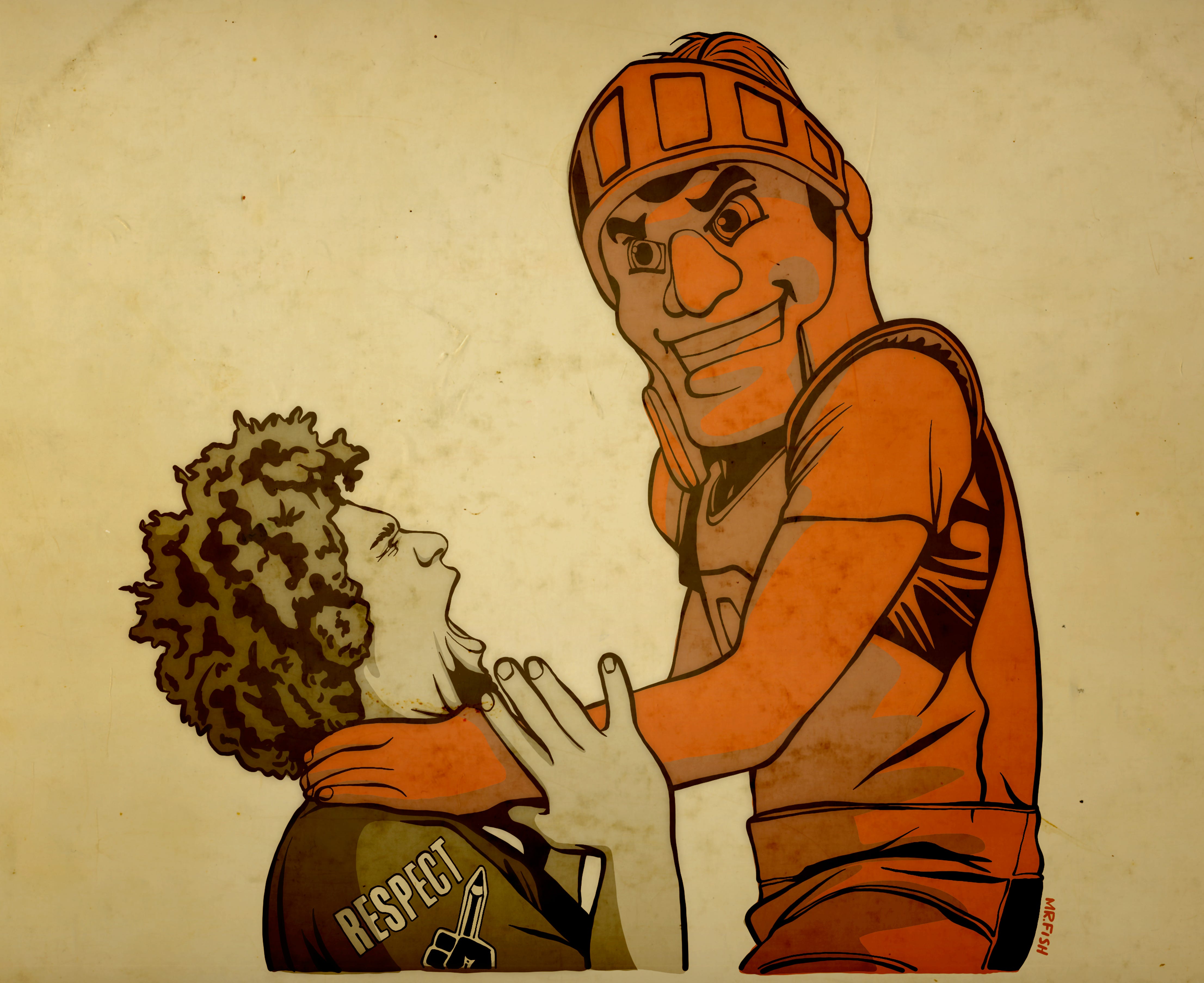
Listen to this Article: "Taking Back Our Universities From Corporate Apparatchiks"
Narrated by Eunice WongText originally published April 15, 2023No Respect - by Mr. FishNew Brunswick, N.J. — Here are some of the senior administrators I did not see joining us on the picket lines set up by striking teachers and staff at Rutgers University. Brian Strom, the chancellor of Rutgers Biomedical and Health Sciences, whose salary is $925,932 a year. Steven Libutti, the vice chancellor for Cancer Programs for Rutgers Biomedical and Health Sciences, who makes $929,411 a year. Patrick Hobbs, the director of athletics, who receives $999,688 a year. The president of the university, Jonathan Holloway, who is paid $1.2 million a year. Stephen Pikiell, the university’s head basketball coach, who has received a 445 percent pay raise since 2020 and currently gets $3 million a year. Gregory Schiano, the university’s head football coach, who pulls in $4 million a year. Here is who I did see. Leslieann Hobayan, a poet and single mother with three teenage daughters who makes $28,000 a year teaching creative writing as an adjunct professor and could not afford health insurance last year. Hank Kalet, who, by teaching seven courses a semester at Rutgers, Brookdale Community College and Middlesex College as an adjunct professor (a full course load for a semester is normally four courses) as well as teaching summer courses, can sometimes make $50,000 a year. But even he only has health insurance through his wife’s employer. Josh Anthony and Yazmin Gomez, graduate workers in the history department who serve as teaching assistants, and who each struggle to survive on $25,000 a year, $1,300 of which is deducted by the university for library, gym and computer fees.Rutgers, like most American universities, operates as a corporation. Senior administrators, who often have a Master of Business Administration degree (MBA) with little or no experience in higher education, along with sports coaches who have the potential to earn the university money, are highly compensated while thousands of poorly paid educators and staff are denied job security and benefits. Adjunct faculty and graduate workers are often forced to apply for Medicaid. They frequently take second jobs teaching at other colleges, driving for Uber or Lyft, working as cashiers, delivering food for Grubhub or DoorDash, walking dogs, house sitting, waiting on tables, bartending and living four or six to an apartment or camping out on a friend’s sofa. This inversion of values is destroying the nation’s educational system. Rutgers, in a questionable campaign to become a national powerhouse in sports, has an athletic department debt of more than $250 million with half of that being loans to cover operating deficits, according to an investigation by NorthJersey.com.“Even as Rutgers athletics continued to rack up annual operating deficits of $73 million — covered in part by taxpayers and student tuition revenue — athletics showed little restraint as it dropped millions on credit cards to pay for Broadway shows, trips to Disney, meals at destination Manhattan restaurants and other perks for its coaches, athletes and recruits, including a luau and beach yoga at sunset in Hawaii, a guided snorkeling tour in Puerto Rico, ax throwing in Texas, luxury hotels in Paris and London, and chilled lobster, seafood towers and Delmonico steaks back home in New Brunswick,” the NorthJersey.com report reads. “For more than a year, Rutgers University football players enjoyed a pricey perk that few other students had access to — free DoorDash food deliveries from restaurants, convenience stores and pharmacies, paid for by the university, and ultimately by taxpayers and students. And the costs piled up. Football players ordered more than $450,000 [paid by the university] through DoorDash from May 2021 through June of this year, according to a review of invoices and other documents obtained by NorthJersey.com.” Rutgers football team, with a terrible win-loss record for the last decade, rarely fills its 52,454 seat stadium.The members of Rutgers American Association of University Professors–American Federation of Teachers (AAUP-AFT), Rutgers Adjunct Faculty Union (PTLFC-AAUP-AFT) and Rutgers American Association of University Professors–Biomedical and Health Sciences of New Jersey (AAUP-BHSNJ) represent more than 9,000 faculty, part-time lecturers, graduate workers, postdoctoral associates and physicians. Union leaders, who shut down 70 percent of the university’s classes, are demanding increased pay, better job security, and health benefits for part-time lecturers and graduate assistants. They’re also asking the university to freeze rents on housing for students and staff and extend graduate research funding for one year for students who were affected by the pandemic. Tenured professors, in an important show of solidarity, agreed not to accept a deal unless the lowest paid academic workers’ demands were addressed. On Saturday the unions called for a pause to the strike pending a possible agr
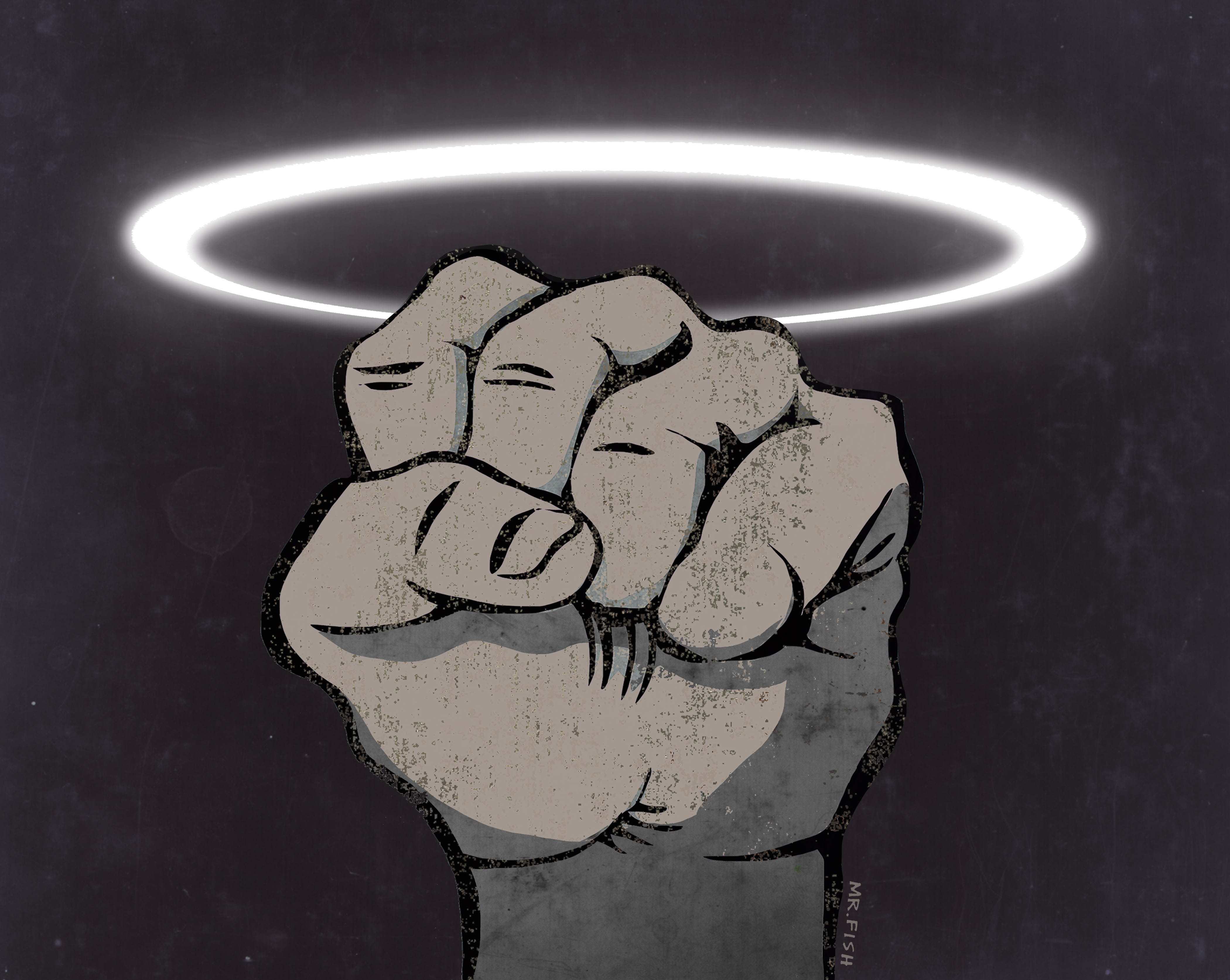
Listen to this talk: "The Hypocrisy of the Christian Church"
Narrated by Eunice WongThe text of this talk was posted on April 6, 2023Blessed Be The Protesters - by Mr. FishWe are not here to debate the moral squalor that defines the life of the hedge fund billionaire and chair of the seminary’s trustee board, Michael Fisch. We are not here to denounce him for the personal fortune, reportedly worth at least $10 billion, a fortune he built preying on the poorest among us, those families that went into debt to pay his prison telecommunications company’s exorbitant fees which charge up to $15 for 15-minute calls, fees that see families across the U.S. pay $1.4 billion each year to speak to incarcerated loved ones. We are not here to decry the pain he and his corporation ViaPath, formerly Global Tel Link, caused to hundreds of thousands of children, desperate to speak to an incarcerated mother or father, to tell them about school, or that they miss them, that they need to hear their voice to know everything will be okay, that they are loved. We are not here to contrast the lives of these children, bewildered at the cruelty of this world, living in dilapidated apartments in inner city projects, with the feudal opulence of Michael Fisch’s life, his three mansions worth $100 million lined up on the same ritzy street in East Hampton, his art collection worth over $500 million, his Fifth Avenue apartment worth $21 million and his four-story Upper East Side townhouse. So many luxury dwellings that sit empty much of the time, no doubt, while over half a million Americans are homeless. Greed is not rational. It devours because it can. It knows only one word — more.No, we are here today to call out the Pharisees that run this seminary, the ones who speak about loving the poor, the oppressed and the marginalized, in the abstract, but who really love the rich, including the rich who make their fortunes by exploiting the families of the students I teach in the Rutgers college degree program in New Jersey prisons, students, many of whom should have never been imprisoned, who are victims of our system of neo-slavery. We are here today to call out the liberal church, so quick to wrap itself in the cloak of virtue and so quick to sell virtue out when it conflicts with monetary interests and requires self-sacrifice.Is it any mystery that the liberal church is dying? Is it any mystery that its seminaries and divinity schools are contracting and closing? The church bleeds itself to death sustaining moribund institutions and paying the salaries of church bureaucrats and seminary presidents who speak in the empty and vague gibberish that Lee Walton, the President of Princeton Theological Seminary, uttered when presented with the fact that Michael Fisch, and all he stands for, is antithetical to the Christian gospel. This false piety, and the smug arrogance that comes with it, is killing the church, turning it into a museum piece. Is Black Lives Matter a commodity, a piece of branding, or does it mean we will stand with those Black and Brown and Asian and white bodies in our prison gulags and internal colonies? This seminary may have removed the name of Samuel Miller, a slaveholder who used the gospel to perpetrate and defend a crime of Nazi-like proportions, from the seminary chapel, albeit only when students protested, but it embraces a billionaire who makes his fortune fleecing incarcerated men and women who work 40 hour weeks in prison and are paid, when they are paid, little more than a dollar a day. Prisons are modern day plantations, and not surprisingly, a multi-billion dollar a year business for oligarchs such as Michael Fisch. The wealthy industrialists in the 1930s and 1940s poured money and resources into the church, including seminaries such as Princeton Theological, to crush the Social Gospel, led by Christian radicals and socialists. They funded a brand of Christianity — which today is dominant — that conflates faith with free enterprise and American exceptionalism. The church has gone down the rabbit hole of a narcissistic how-is-it-with-me form of spirituality. The rich are rich, this creed goes, not because they are greedy or privileged, not because they use their power to exploit others, but because they are brilliant and gifted leaders, worthy of being lionized, like Bill Gates or Jamie Dimon, as oracles. This belief is not only delusional, but Christian heresy. The word heresy comes from the Greek verb hireo, which means to grasp or to seize - to seize for yourself at someone else’s expense. You don’t need to spend three years at Harvard Divinity School as I did, to figure out Jesus did not come to make us rich. The liberal church committed suicide when it severed itself from this radicalism. Radical Christians led the abolitionist movement, were active in the Anti-Imperialist League, defended workers during bloody labor wars, fought for women’s suffrage, formulated the Social Gospel — which included campaigns for prison reform and educational programs for the incarcerated
The Chris Hedges Report Podcast with Roger Hallam, the co-founder of Extinction Rebellion who was recently released from jail, on why civil disobedience is all that can save us now from catastrophe.
Roger Hallam, the co-founder in 2018 of Extinction Rebellion, was recently released after nearly four months on jail. He was imprisoned for making a 20-minute speech on zoom. He was arrested and jailed because he called for civil disobedience by climate activists, specifically the blocking of major road networks in London. Hallam is one of the most important and fearless leaders in the climate movement. He was arrested in 2017 after spray painting King's College London's Great Hall. He was charged with criminal damage and fined £500. He was later cleared after a court ruled his actions were a proportionate response to the climate crisis. He led the occupation of a number of public sites in London in April 2019 and sit-down protests on major U.K. highways in the fall of 2021. Activists from his group Just Stop Oil glued their hands to the wall after throwing tomato soup at Vincent van Gogh's Sunflowers -- which was covered by protective glass -- at the National Gallery in London. Just Stop Oil activists have also spray painted a number of landmarks, including the Home Office, MI5, the Bank of England, an Aston Martin showroom and the rotating sign outside Scotland Yard. Two supporters of Just Stop Oil were arrested recently at the Herbert Museum in Coventry demanding that the government stop all new UK fossil fuel projects and calling on employees and directors of UK cultural institutions to join in civil resistance against the government’s genocidal policies. Hallam has carried out two hunger strikes and been to prison three times in the past three years. The Metropolitan Police, in his latest arrest, accused Hallam and Just Stop Oil of planning "reckless and serious" public disruption. The British High Court, in an effort to prevent further acts of civil disobedience, has issued an injunction to prevent Just Stop Oil protesters disrupting the flow of traffic. Blocking traffic, or assisting anyone who blocks traffic, now means activists can be held in contempt of court and face imprisonment, an unlimited fine, and the seizure of assets. But, as Hallam and Just Stop Oil warns, “Humanity is at risk of extinction, and so is everything we have ever created. Our works of art, our favorite novels, our historical buildings and artefacts, our traditions – we’re terrifyingly close to losing everything we value and love. We cannot rely on our criminal government or our cherished institutions to save us. Our government knows that new oil and gas means a death sentence for billions, yet they are continuing with plans to license over 100 new fossil fuel projects. This means more heatwaves, more crop failure and more death. It is criminal, an act of genocide against billions of people in the poorest countries on earth, and an act of war against the young.” “Either you are actively supporting civil resistance, Hallam goes on, “fighting for life or you are complicit with genocide.” Joining me to discuss the climate emergency and what we must do to save our species, and most other species on the planet, is Roger Hallam. This is a public episode. If you'd like to discuss this with other subscribers or get access to bonus episodes, visit chrishedges.substack.com/subscribe
The Chris Hedges Report Podcast with Dan Cohen and Kim Ives on Haiti's neocolonial dictatorship, paramilitary and police terror and popular resistance.
In Eric Hobsbawm’s book Bandits he examined how outlaws such as Salvatore Giuliano, Robin Hood, and Pancho Villa, transform themselves into social revolutionaries. The filmmakers Dan Cohen and Kim Ives have done the same in their three-part film “Another Vision: Inside Haiti’s Uprising.” They tell the story of Jimmy ‘Barbecue’ Cherizier, who has united half of Port au Prince’s slums, and the Revolutionary Forces of the G9 Family and Allies. The armed neighborhood federation is in the crosshairs of the U.S. empire which seeks to discredit it and blame it for the chaos and violence that plagues the country. The filmmakers chronicle Cherizier’s transformation from a member of the city’s corrupt and brutal police force into a revolutionary leader, the disinformation campaign waged against him by the US government and Haitian oligarchy, and how his neighborhood is punished for its effective resistance. The story they tell is one more chapter in the over two centuries of Haitian resistance to outside domination following the only successful slave revolt in human history, which overthrew the French slave-holding class in 1804. Haiti has been paying for this revolt ever since. Literally. France only recognized Haiti’s independence on the condition that it repay the slaveholders for their lost “property,” payments that were still being made to France in the 20th century. The country has been economically crippled since its independence. The western powers have installed a series of pliant and corrupt governments. The U.S. repeatedly carried out military interventions, including its invasion and occupation of the country from 1915 through 1934. The U.S. formed and trained the Haitian Army and police, used to crush liberation movements. It propped up the father-son dictatorship of François “Papa Doc” and Jean-Claude “Baby Doc” Duvalier as a counter-weight to Fidel Castro’s Cuba. It armed the country’s notorious death squads known as the “Tontons Macoutes,” which killed as many as 60,000 Haitians It turned Haiti into a planation and sweatshop for U.S. corporations, leaving the country the poorest in the western hemisphere. When a left-wing former Catholic priest Jean Bertrand Aristide was elected president 1990. He was overthrown in a 1991 military coup. He regained the presidency from 1994 to 1996 and from 2001 to 2004, ousted in another coup by right-wing ex-army paramilitary units that invaded the country from across the Dominican border. UN troops, which occupied the country from 2004 until 2019, oversaw the suppression of popular movements, exploited impoverished women in the sex trade, sanctioned the privatization of state industries and social services and introduced cholera—a disease previously unknown in the country—killing an estimated 10,000 people. Haiti has been left without a functioning government or infrastructure, including a health care system ever since. Nearly 60 percent of the population live in poverty, 30 percent are food insecure, and 50 percent lack access to clean water. Waves of Haitians have fled the country. Gang violence has turned whole parts of the island into lawless enclaves. The western powers, which should pay Haiti at least $ 21 billion in reparations, is determined to once again thwart the aspirations of the Haitian people, who, despite it all keep resisting. Joining me to discuss “Another Vision: Inside Haiti’s Uprising,” which you can watch on YouTube, and popular resistance in Haiti is Dan Cohen and Kim Ives. This is a public episode. If you'd like to discuss this with other subscribers or get access to bonus episodes, visit chrishedges.substack.com/subscribe
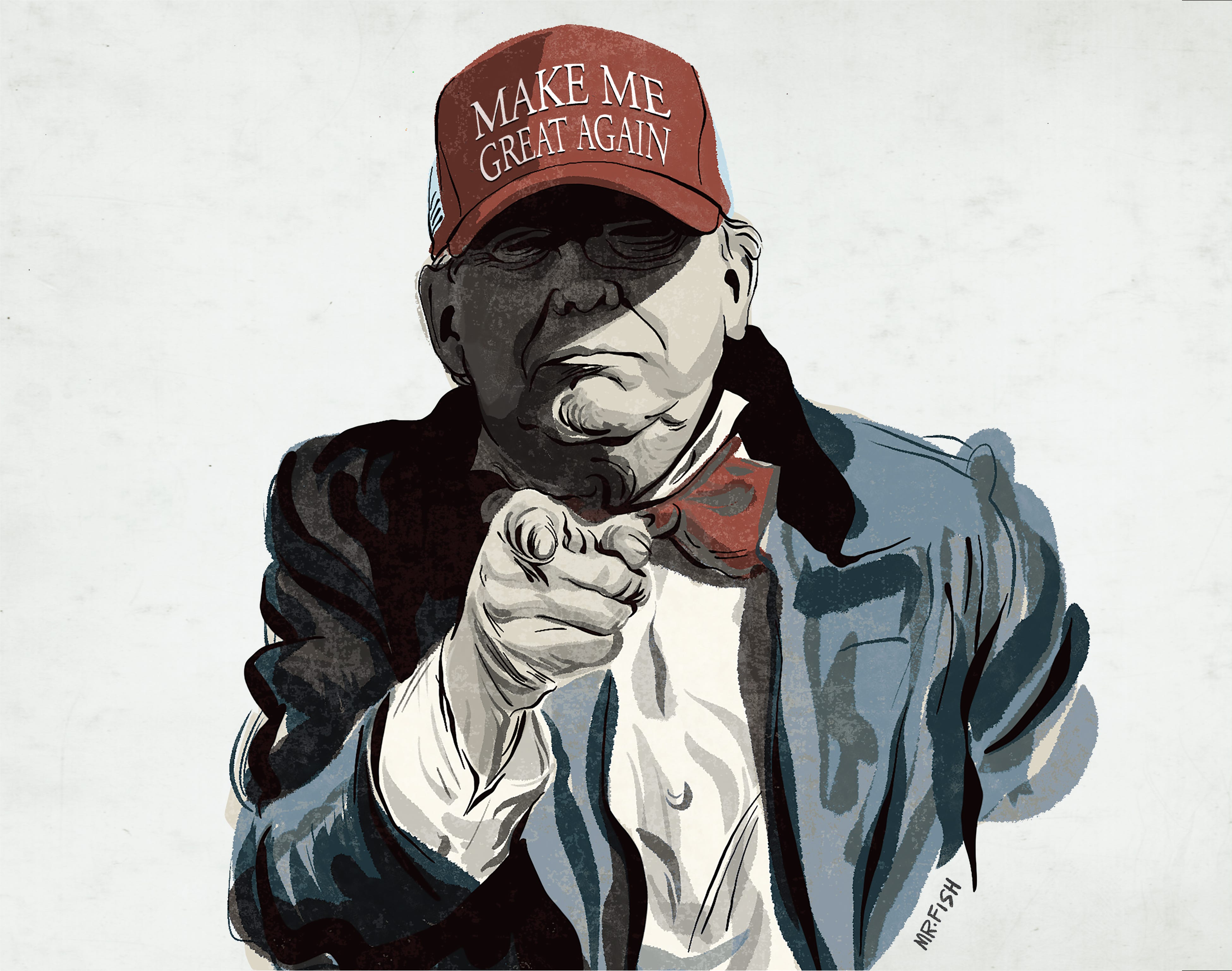
Listen to this Article: "The Donald Trump Problem"
Narrated by Eunice WongText originally published March 26, 2023Make Me Great Again - by Mr. FishDonald Trump — facing four government-run investigations, three criminal and one civil, targeting himself and his business — is not being targeted because of his crimes. Nearly every serious crime he is accused of carrying out has been committed by his political rivals. He is being targeted because he is deemed dangerous for his willingness, at least rhetorically, to reject the Washington Consensus regarding neoliberal free-market and free-trade policies, as well as the idea that the U.S. should oversee a global empire. He has not only belittled the ruling ideology, but urged his supporters to attack the apparatus that maintains the duopoly by declaring the 2020 election illegitimate.The Donald Trump problem is the same as the Richard Nixon problem. When Nixon was forced to resign under the threat of impeachment, it wasn’t for his involvement in war crimes and crimes against humanity, nor was it for his illegal use of the CIA and other federal agencies to spy upon, intimidate, harass and destroy radicals, dissidents and activists. Nixon was brought down because he targeted other members of the ruling political and economic establishment. Once Nixon, like Trump, attacked the centers of power, the media was unleashed to expose abuses and illegalities it had previously minimized or ignored.Members of Nixon’s re-election campaign illegally bugged the headquarters of the Democratic National Committee in the Watergate office building. They were caught after they broke back into the offices to fix the listening devices. Nixon was implicated in both the pre-election illegality, including spying on political opponents, as well as attempting to use federal agencies to cover up the crime. His administration maintained an “enemies list” that included well known academics, actors, union leaders, journalists, businessmen and politicians.One 1971 internal White House memo entitled, “Dealing with our Political Enemies” — drafted by White House Counsel John Dean, whose job it was to advise the president on the law — described a project designed to “use the available federal machinery to screw our political enemies.”Nixon’s conduct, and that of his closest aides, was clearly illegal and deserving of prosecution. There were 36 guilty verdicts or guilty pleas associated with the Watergate scandal two years after the break-in. But it was not the crimes Nixon committed abroad or against dissidents that secured his political execution but the crimes he carried out against the Democratic Party and its allies, including in the establishment press.“The political center was subjected to an attack with techniques that are usually reserved for those who depart from the norms of acceptable political belief,” Noam Chomsky wrote in The New York Review of Books in 1973, a year before Nixon’s resignation.As Edward Herman and Chomsky point out in their book, “Manufacturing Consent: The Political Economy of the Mass Media:” The answer is clear and concise: powerful groups are capable of defending themselves, not surprisingly; and by media standards, it is a scandal when their position and rights are threatened. By contrast, as long as illegalities and violations of democratic substance are confined to marginal groups or dissident victims of U.S. military attack, or result in a diffused cost imposed on the general population, media opposition is muted and absent altogether. This is why Nixon could go so far, lulled into a false sense of security precisely because the watchdog only barked when he began to threaten the privileged.”What led to the unraveling of Nixon’s government, and what lies at the core of the attacks against Trump, is the fact that, like Nixon, Trump’s targets included “the rich and respectable, spokesmen for official ideology, men who are expected to share power, to design social policy, and to mold popular opinion,” as Chomsky noted about Nixon at the time. “Such people are not fair game for persecution at the hands of the state.”This is not to minimize Trump’s crimes. Trump — nearly even in the polls with President Joe Biden in the 2024 presidential race — appears to have committed several misdemeanors and serious felonies.In November 2022, the Department of Justice appointed a special prosecutor to investigate Trump’s retention of classified documents at his Mar-a-Lago home in Florida and any potential criminal liability resulting from that act, as well as any unlawful interference with the transfer of power after the 2020 presidential election.Separately, a district attorney in Georgia is working with a special purpose grand jury in relation to Trump’s attempts to overturn the 2020 election result. A key piece of evidence is the notorious phone call between Trump and Georgia’s Secretary of State, Brad Raffensperger, in which the president kept insisting he needed more votes to be found. Charges in this case could include consp
The Chris Hedges Report Podcast with Dr. Margaret Flowers on the looming crisis in America's for-profit health care system.
The national emergency and public health emergency declarations related to the COVID-19 pandemic will terminate on May 11, 2023. These emergency declarations, in place since 2020, waived or modified requirements in a range of areas, including in the Medicare, Medicaid, and CHIP programs, as well as in private health insurance. The end of these special measures will see between 5 and 14 million Americans lose their Medicaid coverage, according to the Kaiser Family Foundation. More than 30 million Americans already don’t have health insurance and millions more are underinsured. Even with insurance, medical costs are so high that medical bills cause of bankruptcy for half a million people each year in the United States, the number one cause of bankruptcy. The average American spends more than $12,500 per year on personal health care, some $ 4 trillion annually. A citizen in France spends $5,468, on Canada $5,905, and on Germany $7,382 for universal care to it citizens. The Organization for Economic Cooperation and Development found that, despite the high cost of U.S. health care, on nearly every critical ranking, from life expectancy at birth and deaths from avoidable conditions, the U.S. is consistently at the bottom. 68,000 Americans die every year because they are uninsured or under-insured. This is because the U.S. health care system does not serve the public. It serves the medical, insurance and drug companies whose lobbyists gut regulations and block health care reform. In 2020, the CEOs of 178 major health care companies collectively made $3.2 billion in total compensation – up 31% from 2019 – all in the midst of the pandemic. According to Axios, in 2020, the CEO of Cigna, David Cordani, took home $79 million; the CEO of Centene, Michael Neidorff, made $59 million; and the CEO of UnitedHealth Group, Dave Wichmann, received $42 million in total compensation. The CEO of Moderna got a $926 million golden parachute after his company received $2.5 billion in taxpayer dollars from the Trump Administration to develop its COVID vaccine. These huge profits were being made when over 330,000 Americans died during the pandemic because they could not afford to go to a doctor on time. Joining me to discuss the debacle that is the U.S. health care system is Dr. Margaret Flowers an adviser to the board of Physicians for a National Health Program and one of the nation’s most prominent advocates for single payer health insurance. This is a public episode. If you'd like to discuss this with other subscribers or get access to bonus episodes, visit chrishedges.substack.com/subscribe
The Chris Hedges Report Podcast with Lori Grinker on the images of war you don't see and photographing the rise and fall of the boxer Mike Tyson.
I first encountered Lori Grinker’s remarkable work as a photographer in her book AFTERWAR: Veterans from a World in Conflict, where a century of war is represented by and through portraits of individuals and their haunting stories of war. Her other books include Dear Grinkers, a photographic series on diaspora, Six Days From Forty, an installation revolving around her brother’s life and his death from AIDS, and A Portrait of Audrey and All the Little Things, which considers her mother’s struggles with cancer and dementia in documentary and still life images. Her projects originate from the personal, but speak to our commonalities and the ephemeral transcendence of everyday experience. Grinker, for art school photography assignment, was shooting a project on young boxers under the guidance of the legendary trainer Cus D'Amato. Her main focus was a nine-year-old boxer Billy Hamm. While photographing him, Cus wandered over and asked why Lori was shooting Hamm, when the bigger kid in the corner working a speed bag would one day be the heavyweight champion of the world! The kid was a then 13-year-old Mike Tyson. Over the next decade Lori photographed the coterie that surrounded Mike; Cus's funeral, going home to Brownsville, old friends, trips abroad, in hotel suites before and after fights, his hook-up with Robin Givens, their wedding, their divorce, and the training and fights in between until Tyson's first defeat--the Buster Douglas fight in 1991. Joining me to discuss her books After War and Tyson is Lori Grinker. This is a public episode. If you'd like to discuss this with other subscribers or get access to bonus episodes, visit chrishedges.substack.com/subscribe
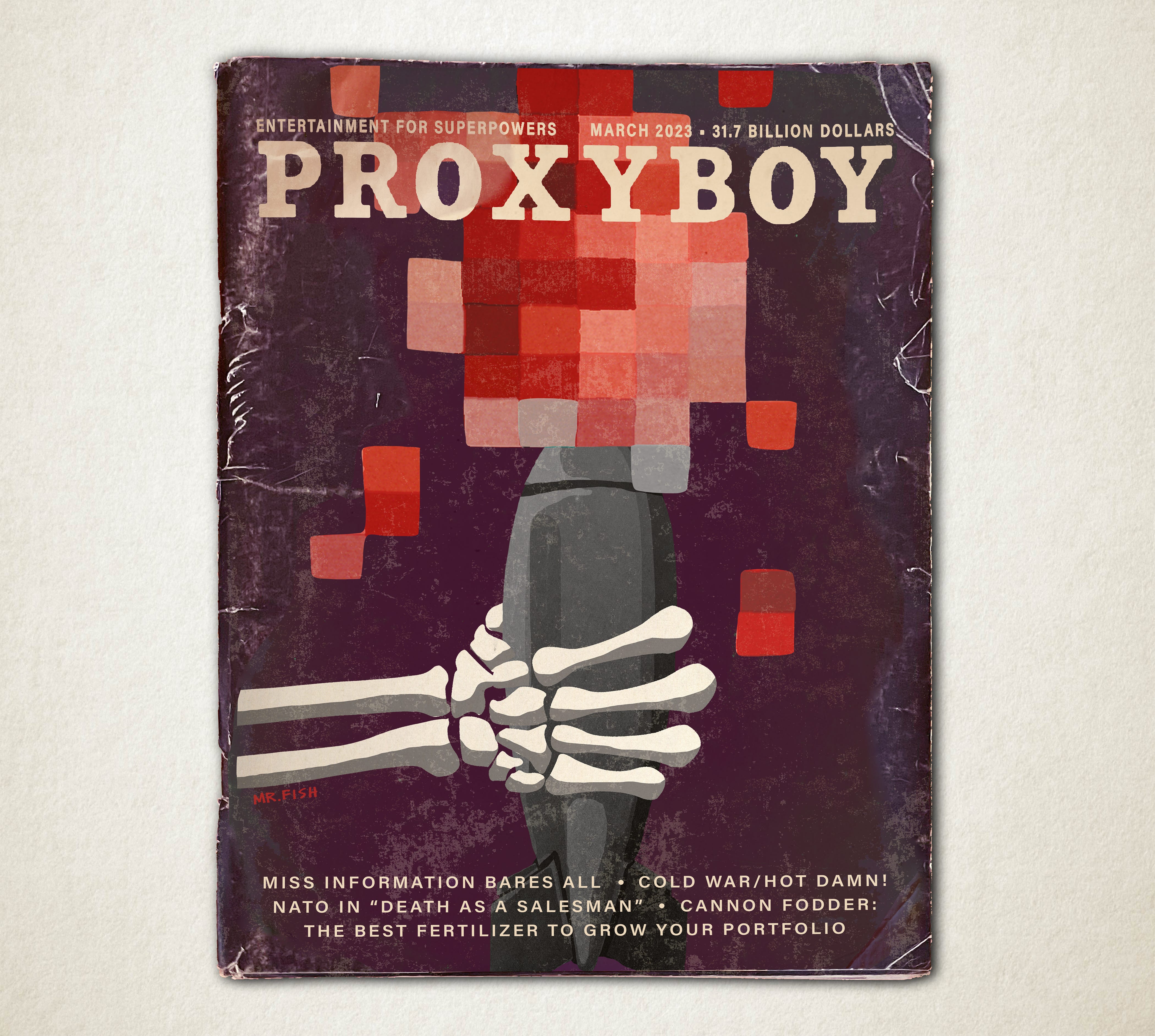
Listen to this Article: "Ukraine’s Death by Proxy"
Narrated by Eunice WongText originally published: 03/11/2023Proxyboy - by Mr. FishThere are many ways for a state to project power and weaken adversaries, but proxy wars are one of the most cynical. Proxy wars devour the countries they purport to defend. They entice nations or insurgents to fight for geopolitical goals that are ultimately not in their interest. The war in Ukraine has little to do with Ukrainian freedom and a lot to do with degrading the Russian military and weakening Vladimir Putin’s grip on power. And when Ukraine looks headed for defeat, or the war reaches a stalemate, Ukraine will be sacrificed like many other states, in what one of the founding members of the CIA, Miles Copeland Jr., referred to as the “Game of Nations” and “the amorality of power politics.”I covered proxy wars in my two decades as a foreign correspondent, including in Central America where the U.S. armed the military regimes in El Salvador and Guatemala and Contra insurgents attempting to overthrow the Sandinista government in Nicaragua. I reported on the insurgency in the Punjab, a proxy war fomented by Pakistan. I covered the Kurds in northern Iraq, backed and then betrayed more than once by Iran and Washington. During my time in the Middle East, Iraq provided weapons and support to the Mujahedeen-e-Khalq (MEK) to destabilize Iran. Belgrade, when I was in the former Yugoslavia, thought by arming Bosnian and Croatian Serbs, it could absorb Bosnia and parts of Croatia into a greater Serbia. Proxy wars are notoriously hard to control, especially when the aspirations of those doing the fighting and those sending the weapons diverge. They also have a bad habit of luring sponsors of proxy wars, as happened to the U.S. in Vietnam and Israel in Lebanon, directly into the conflict. Proxy armies are given weaponry with little accountability, significant amounts of which end up on the black market or in the hands of warlords or terrorists. CBS News reported last year that around 30 percent of the weapons sent to Ukraine make it to the front lines, a report it chose to partially retract under heavy pressure from Kyiv and Washington. The widespread diversion of donated military and medical equipment to the black market in Ukraine was also documented by U.S. journalist Lindsey Snell. Weapons in war zones are lucrative commodities. There were always large quantities for sale in the wars I covered.Warlords, gangsters and thugs — Ukraine has long been considered one of the most corrupt countries in Europe — are transformed by sponsor states into heroic freedom fighters. Support for those fighting these proxy wars is a celebration of our supposed national virtue, especially seductive after two decades of military fiascos in the Middle East. Joe Biden, with dismal poll numbers, intends to run for a second term as a “wartime” president who stands with Ukraine, to which the U.S. has already committed $113 billion in military, economic and humanitarian assistance.When Russia invaded Ukraine “[t]he whole world faced a test for the ages,” Biden said after a lightning visit to Kyiv. “Europe was being tested. America was being tested. NATO was being tested. All democracies were being tested.” I heard similar sentiments expressed to justify other proxy wars.“They are our brothers, these freedom fighters, and we owe them our help,” Ronald Reagan said of the Contras, who pillaged, raped and slaughtered their way through Nicaragua. “They are the moral equal of our Founding Fathers and the brave men and women of the French Resistance,” Reagan added. “We cannot turn away from them, for the struggle here is not right versus left, it is right versus wrong.” “I want to hear him say we’re going to arm the Free Syrian Army,” John McCain said of President Donald Trump. “We’re going to dedicate ourselves to the removal of Bashar al-Assad. We’re going to have the Russians pay a price for their engagement. All players here are going to have to pay a penalty and the United States of America is going to be on the side of the people who fight for freedom.”Those feted as heroes of resistance, like President Volodymyr Zelensky or President Hamid Karzai in Afghanistan, are often problematic, especially as their egos and bank accounts inflate. The flood of effusive encomiums directed towards proxies by their sponsors in public rarely matches what they say of them in private. At the Dayton peace talks, where the Serbian President Slobodan Milosevic sold out the leaders of the Bosnian Serbs and the Bosnian Croats, he said of his proxies: “[they] are not my friends. They are not my colleagues…They are s**t.”“Dark money sloshed all around,” The Washington Post wrote after obtaining an internal report produced by the Office of the Special Inspector General for Afghanistan Reconstruction.“Afghanistan’s largest bank liquefied into a cesspool of fraud. Travelers lugged suitcases loaded with $1 million, or more, on flights leaving Kabul. Mansions known as ‘poppy palaces’ r
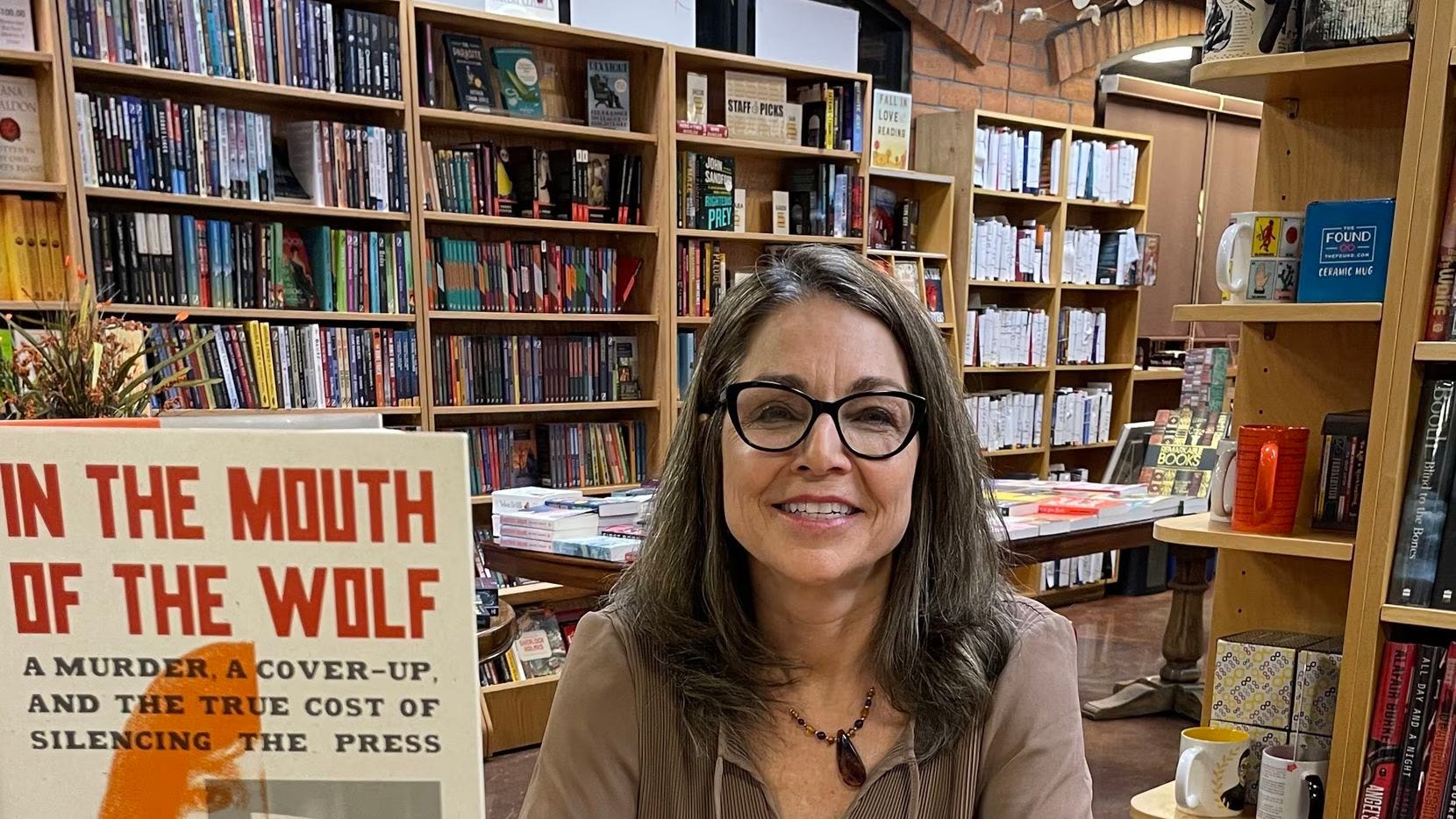
The Chris Hedges Report Podcast with Katherine Cocoran on How Mexico's Epidemic of Murdered Journalists is an ominous warning to the press everywhere.
On April 28, 2012 an intruder broke through the metal door leading into the garden patio of the investigative reporter Regina Martínez. He apparently surprised the Mexican journalist in her bathroom, where her body was discovered. The diminutive reporter, barely five feet tall, tried to fight off her attacker – skin was found under her fingernails. Her jaw was broken with brass knuckles. A rag was wrapped around her neck. She was apparently suffocated to death. She was one of one hundred and fifty journalists murdered in Mexico since 2000, 15 in the first eight months of 2022. These reporters, poorly paid, often working for local online publications, courageously expose the collaboration between government officials, the police and the powerful drug cartels. Martínez, who was killed at age 48, was working on an investigation into the corruption of two successive governors - Fidel Herrera and Javier Duarte - in her home state of Veracruz, considered the most dangerous place in the world to report.In Veracruz drug traffickers and their accomplices have executed hundreds of people, including teenage dealers, entire families, farmers and politicians. Even young women who attended their sex parties. Many of these bodies ended up in unmarked mass graves. Martinez refused bribes and ignored threats. Unable to be bought off or intimidated she, like many other Mexican journalists, was murdered. The current Mexican President Andrés Manuel López Obrador has asked that the homicide case be reexamined. Katherine Corcoran, the former Associated Press bureau chief in Mexico, in her book In the Mouth of the Wolf: A Murder, a Coverup, and the True Cost of Silencing the Press, uses the case of Martinez to look at a country where in many towns and cities there is no separation between government, the police, the military and organized crime. She chronicles what happens when the path of “fake news” and obfuscation, something that not only plagues Mexico but the United States, takes its natural course. Joining me to discuss her book In the Mouth of the Wolf: A Murder, a Coverup, and the True Cost of Silencing the Press is Katherine Corcoran. This is a public episode. If you'd like to discuss this with other subscribers or get access to bonus episodes, visit chrishedges.substack.com/subscribe
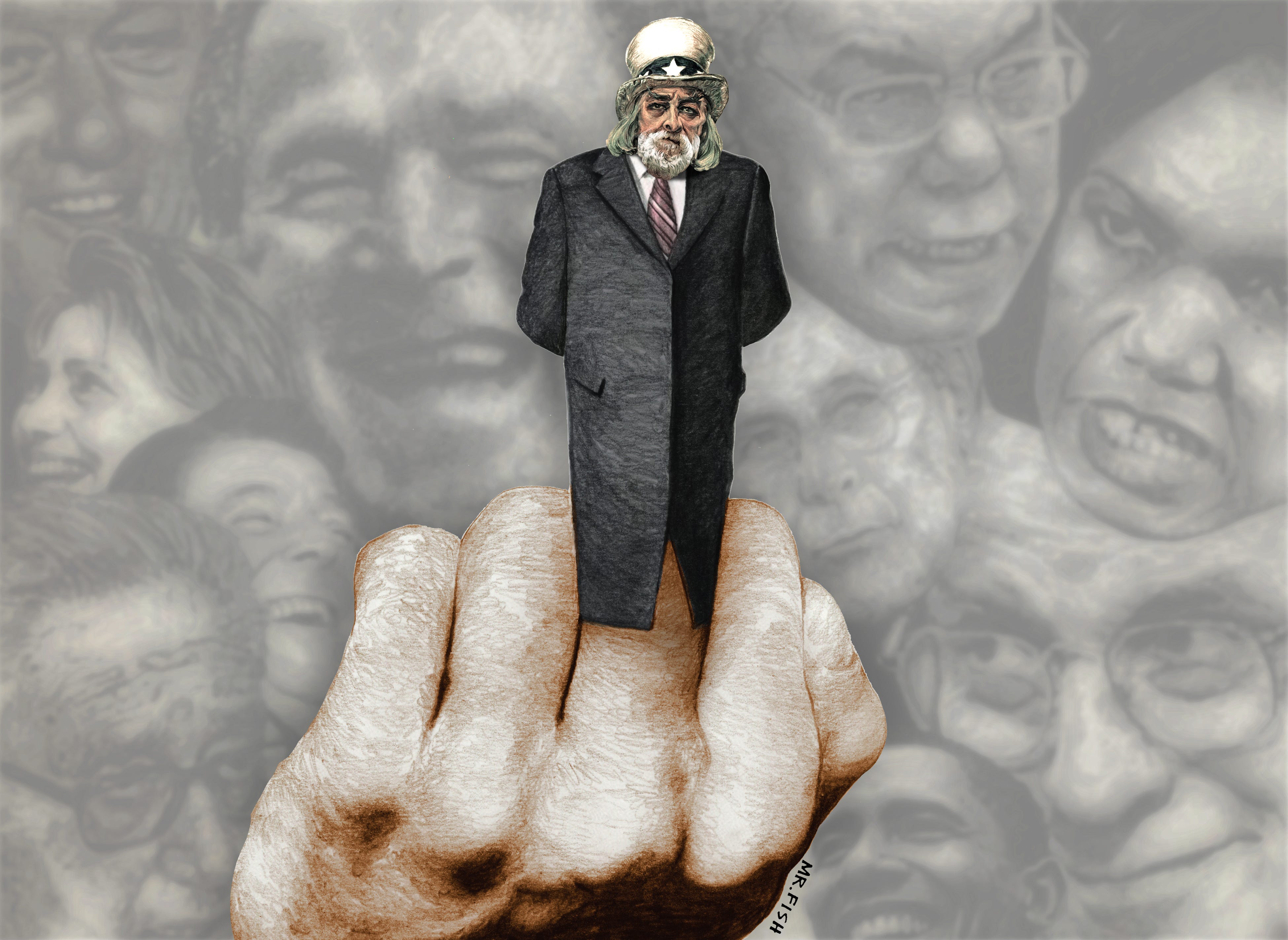
Listen to This Article: "The Lords of Chaos"
Narrated by Eunice WongText originally published 03/19/2023We’re Number One — by Mr. FishTwo decades ago, I sabotaged my career at The New York Times. It was a conscious choice. I had spent seven years in the Middle East, four of them as the Middle East Bureau Chief. I was an Arabic speaker. I believed, like nearly all Arabists, including most of those in the State Department and the CIA, that a “preemptive” war against Iraq would be the most costly strategic blunder in American history. It would also constitute what the International Military Tribunal at Nuremberg called the “supreme international crime.” While Arabists in official circles were muzzled, I was not. I was invited by them to speak at The State Department, The United States Military Academy at West Point and to senior Marine Corps officers scheduled to be deployed to Kuwait to prepare for the invasion.Mine was not a popular view nor one a reporter, rather than an opinion columnist, was permitted to express publicly according to the rules laid down by the newspaper. But I had experience that gave me credibility and a platform. I had reported extensively from Iraq. I had covered numerous armed conflicts, including the first Gulf War and the Shi’ite uprising in southern Iraq where I was taken prisoner by The Iraqi Republican Guard. I easily dismantled the lunacy and lies used to promote the war, especially as I had reported on the destruction of Iraq’s chemical weapons stockpiles and facilities by the United Nations Special Commission (UNSCOM) inspection teams. I had detailed knowledge of how degraded the Iraqi military had become under U.S. sanctions. Besides, even if Iraq did possess “weapons of mass destruction” that would not have been a legal justification for war.The death threats towards me exploded when my stance became public in numerous interviews and talks I gave across the country. They were either mailed in by anonymous writers or expressed by irate callers who would daily fill up the message bank on my phone with rage-filled tirades. Right-wing talk shows, including Fox News, pilloried me, especially after I was heckled and booed off a commencement stage at Rockford College for denouncing the war. The Wall Street Journal wrote an editorial attacking me. Bomb threats were called into venues where I was scheduled to speak. I became a pariah in the newsroom. Reporters and editors I had known for years would lower their heads as I passed, fearful of any career-killing contagion. I was issued a written reprimand by The New York Times to cease speaking publicly against the war. I refused. My tenure was over.What is disturbing is not the cost to me personally. I was aware of the potential consequences. What is disturbing is that the architects of these debacles have never been held accountable and remain ensconced in power. They continue to promote permanent war, including the ongoing proxy war in Ukraine against Russia, as well as a future war against China. The politicians who lied to us — George W. Bush, Dick Cheney, Condoleezza Rice, Hillary Clinton and Joe Biden to name but a few — extinguished millions of lives, including thousands of American lives, and left Iraq along with Afghanistan, Syria, Somalia, Libya and Yemen in chaos. They exaggerated or fabricated conclusions from intelligence reports to mislead the public. The big lie is taken from the playbook of totalitarian regimes. The cheerleaders in the media for war — Thomas Friedman, David Remnick, Richard Cohen, George Packer, William Kristol, Peter Beinart, Bill Keller, Robert Kaplan, Anne Applebaum, Nicholas Kristof, Jonathan Chait, Fareed Zakaria, David Frum, Jeffrey Goldberg, David Brooks and Michael Ignatieff — were used to amplify the lies and discredit the handful of us, including Michael Moore, Robert Scheer and Phil Donahue, who opposed the war. These courtiers were often motivated more by careerism than idealism. They did not lose their megaphones or lucrative speaking fees and book contracts once the lies were exposed, as if their crazed diatribes did not matter. They served the centers of power and were rewarded for it.Many of these same pundits are pushing further escalation of the war in Ukraine, although most know as little about Ukraine or NATO’s provocative and unnecessary expansion to the borders of Russia as they did about Iraq. “I told myself and others that Ukraine is the most important story of our time, that everything we should care about is on the line there,” George Packer writes in The Atlantic magazine. “I believed it then, and I believe it now, but all of this talk put a nice gloss on the simple, unjustifiable desire to be there and see.”Packer views war as a purgative, a force that will jolt a country, including the U.S., back to the core moral values he supposedly found amongst American volunteers in Ukraine.“I didn’t know what these men thought of American politics, and I didn’t want to know,” he writes of two U.S. volunteers. “Back home we might
The Chris Hedges Report Podcast with Seymour Hersh on how the U.S. blew up the Nord Stream pipelines and why the press has ignored what is arguably an act of war against Russia.
On Monday, September 26, 2022, a series of underwater explosions blew huge holes into the Nord Stream 1 and 2, two pairs of pipelines, constructed to carry Russian natural gas to Germany under the Baltic Sea. These four pipelines, steel-reinforced concrete cables built to withstand the direct impact of the anchor of an aircraft carrier, were destroyed in a clandestine act of sabotage, according to an investigation by Pulitzer-prize winning journalist Seymour Hersh. The pair of Nord Stream 1 pipelines carried Russian gas to Germany until Moscow cut off supplies at the end of August 2022. The pair of Nord Stream 2 pipelines, which would have doubled the amount of gas that would be available to Germany and Western Europe, were never operational as Germany suspended its certification process shortly before Russia invaded Ukraine on Feb. 24, 2022.White House spokesperson Adrienne Watson called Hersh’s report “false and complete fiction.” CIA spokesperson Tammy Thorp said: “This claim is completely and utterly false.” Denials by U.S. officials of covert operations, of course, are routine. Secretary of State Dean Rusk, for example, denied any U.S. involvement in the Bay of Pigs invasion in Cuba, assuring the American people that the invasion was not “staged from American soil.” When Seymour Hersh in 2004 published the first stories about the torture of Iraqi prisoners at Abu Ghraib, a Pentagon spokes called his reporting “a tapestry of nonsense,” adding that Hersh was a guy who “threw a lot of crap against the wall” and “expects someone to peel off what’s real.”Despite the denials, the United States has long expressed hostility to the pipelines. It worked to prevent the completion of the pipelines and imposed illegal sanctions on enterprises engaged in its construction. President Biden on February 7, 2022, prior to the invasion of Ukraine by Russia, stated: “If Russia invades … there will be no longer a Nord Stream 2 …We will bring an end to it.”During a Senate hearing, Victoria Nuland, undersecretary of state for political affairs, was asked by Senator Ted Cruz whether his legislation aimed at sanctioning the Nord Stream 2 gas pipeline, which was voted down in January 2022, could have stopped the war.“Like you, I am, and I think the administration is, very gratified to know that Nord Stream 2 is now, as you like to say, a hunk of metal at the bottom of the sea,” Nuland said.U.S. Secretary of State Antony Blinken described the destruction of the pipelines as a “tremendous opportunity,” which would enable EU countries to become less dependent on Russian energy.The New York Times reported in December that Russia had begun expensive repairs on the pipelines, raising questions about Washington’s claim that Russia had bombed its own pipelines.These explosions are not insignificant acts. They are acts of war. They expose not only the collapse of the rule of law, but the lack of oversight by Congress. I covered the mining of Nicaragua’s harbors in 1983 by the Reagan administration as a reporter in Central America. The mining was designed cripple the economy in Nicaragua and boost the fortunes of the US-backed contra rebels seeking to overthrow the Sandinista government. The mining backfired. It sparked outrage around the globe and saw Congress cut off funding for the Contras a year later. The International Court of Justice in 1986 ruled against the United States over its mining of the harbors.Hersh’s revelations should have led to a similar condemnation by Congress and an internal investigation into illegal activities by the CIA and Pentagon. It should have prompted news organizations to dig deeper into a scandal, a flagrant violation of the U.N. Charter and international treaties. It should have prompted a national debate about the war in Ukraine and the steady escalation of our involvement, one that could lead to a direct confrontation with Russia and nuclear war. Joining me to discuss his latest investigative piece is Seymour Hersh, one of our most important and fearless investigative reporters who, among many ground-breaking stories, exposed the U.S. Army’s 1969 My Lai massacre and cover-up, the Watergate scandal, the secret bombing of Cambodia, the torture by U.S. soldiers at Abu Ghraib of Iraqi prisoners and the false narrative told by the U.S. government about the events surrounding the killing of Osama bin Laden. This is a public episode. If you'd like to discuss this with other subscribers or get access to bonus episodes, visit chrishedges.substack.com/subscribe
The Chris Hedges Report Podcast with Kshama Sawant on why the only hope we have left is the building of a militant labor movement that will use strikes to destroy the corporate state.
Kshama Sawant, a socialist who served for over a decade on the Seattle City Council, has announced she will not seek reelection. Instead, she will launch a national coalition called Workers Strike Back this March in cities around the country. This coalition will organize for a $ 25 an hour minimum wage, build grassroots labor unions in corporations such as Amazon and advocate for a shorter work week without a cut in benefits and pay. It will also employ strikes when its demands are not met. It will work to build a massive green jobs program that can employ millions of workers in clean energy and prevent climate catastrophe, along with public ownership of the big energy corporations. Only the bosses profit from divisions among the working class, she notes. Workers Strike Back will be a united, multi-racial, multi-gendered movement of working people. It will battle anti-trans legislation and against all right-wing attacks on LGBTQ+ people. It will organize to win legal, safe, free abortions for all who need them. It will campaign to end racist policing, putting police under the control of democratically elected community boards with full power over department policy, hiring and firing. Her new labor organization calls for rent control with no rent increases above inflation, as well as a massive expansion of publicly owned, high-quality affordable housing by taxing the rich. We’re dying from unaffordable healthcare, she notes, as the pharma bosses and for-profit health insurance industry make money off of our sickness. She and Workers Strike Back will call for free, state-of-the-art, Medicare for All—owned and democratically run by working people. The Democrats and Republicans both answer to the billionaires, that’s why working people keep getting screwed, she says. Even so-called progressives in Congress, she notes, have completely failed to fight against the establishment, and offer no solutions. The elected leadership of Workers Strike Back will accept only the average workers’ wage, as did Sawant when she was a member of the city council. Sawant in her decade as a member of the Seattle city council has an impressive track record. She helped win a $15 minimum wage for Seattle workers, pushed the council to tax Amazon, and championed renter protection as the Chair of the Renters’ and Sustainability Committee. She joined the Socialist Alternative party in 2006 and since then has helped organize demonstrations for marriage equality, participated in the movement to end the wars in Iraq and Afghanistan, and the Occupy Movement. She is an active member in the American Federation of Teachers Local 1789, fighting against budget cuts and tuition hikes. Joining me to discuss the launch of Workers Strike Back is Kshama Sawant. This is a public episode. If you'd like to discuss this with other subscribers or get access to bonus episodes, visit chrishedges.substack.com/subscribe
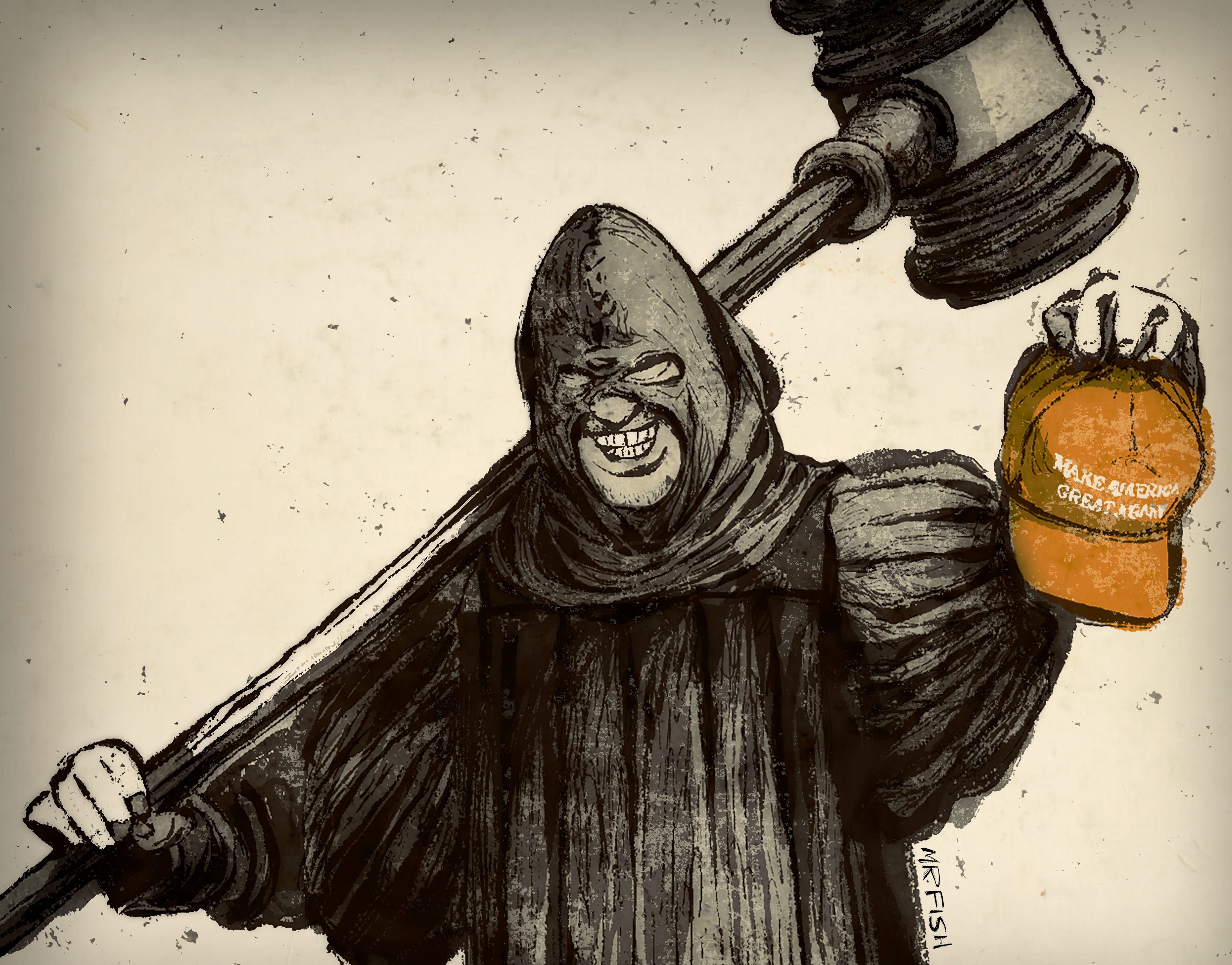
Listen to this Article: "Lynching the Deplorables"
Narrated by Eunice WongText originally published 03/05/23Executing the Law - by Mr. FishThere is little that unites me with those who occupied the Capitol building on Jan. 6. Their vision for America, Christian nationalism, white supremacy, blind support for Trump and embrace of reactionary fact-free conspiracy theories leaves a very wide chasm between their beliefs and mine. But that does not mean I support the judicial lynching against many of those who participated in the Jan. 6 events, a lynching that is mandating years in pretrial detention and prison for misdemeanors. Once rights become privileges, none of us are safe. The U.S. legal system has a very sordid history. It was used to enforce segregation and legitimize the reign of terror against Black people. It was the hammer that broke the back of militant union movements. It persecuted radicals and reformers in the name of anti-communism. After 9/11, it relentlessly went after Muslim leaders and activists with Special Administrative Measures (SAMs). SAMs, established by the Clinton administration, originally only applied to people who ordered murders from prison or were convicted of mass murder, but are now used to isolate all manner of detainees before and during trial. They severely restrict a prisoner’s communication with the outside world; prohibiting calls, letters and visits with anyone except attorneys and sharply limit contact with family members. The solitary confinement like conditions associated with SAMs undermine any meaningful right to a fair trial according to analysis by groups like the Center for Constitutional Rights and can amount to torture according to the United Nations. Julian Assange faces SAMs or similar conditions should he be extradited to the U.S. The Classified Information Procedures Act, or CIPA, begun under the Reagan administration, also allows evidence in a trial to be classified and withheld from defendants. The courts, throughout American history, have abjectly served the interests of big business and the billionaire class. The current Supreme Court is one of the most retrograde in decades, rolling back legal protections for vulnerable groups and denying workers protection from predatory corporate abuse.At least 1,003 people have been arrested and charged so far for participation in events on Jan. 6, with 476 pleading guilty, in what has been the largest single criminal investigation in U.S. history, according to analysis by Business Insider. The charges and sentences vary, with many receiving misdemeanor sentences such as fines, probation, a few months in prison or a combination of the three. Of the 394 federal defendants who have had their cases adjudicated and sentenced as of Feb. 6, approximately 220 “have been sentenced to periods of incarceration” with a further 100 defendants “sentenced to a period of home detention, including approximately 15 who also were sentenced to a period of incarceration,” according to the U.S. Attorney’s Office in Washington, D.C. There are six convictions and four guilty pleas on charges of “seditious conspiracy.” This offense is so widely defined that it includes conspiring to levy war against the government on the one hand and delaying the execution of any law on the other. Those charged and convicted of “seditious conspiracy” were accused of collaborating to oppose “the lawful transfer of presidential power by force” by preventing or delaying the Certification of the Electoral College vote. While a few of the organizers of the Jan. 6 protest such as Stewart Rhodes, who founded Oath Keepers, may conceivably be guilty of sedition, and even this is in doubt, the vast majority of those caught up in the incursion of the Capitol did not commit serious crimes, engage in violence or know what they would do in Washington other than protest the election results. Joseph D. McBride went to law school because his brother was serving a 15-year sentence for a crime he did not commit. He provided free legal advice as a law school student to those encamped in Zuccotti Park in New York City during the Occupy movement. Following law school, he worked as a public defender and in the Legal Aid Society. He represents several of those charged in the Jan. 6 incursion, including Richard Barnett. Barnett was photographed in Nancy Pelosi’s office with his leg propped up on her desk. Barnett was convicted by a federal jury, which deliberated for two hours, on eight counts, including disorderly conduct in the Capitol building. He faces up to 47 years in prison. He is scheduled to be sentenced on May 3.“The post 9/11 model is being applied to American citizens,” McBride told me when I reached him by phone. “That model is the 19 hijackers. Everyone who is a religious Muslim is a suspect for the next 20 years. They should be waterboarded. They should be put in f*****g jail and left in Guantanamo Bay. Lock them up. Throw away the key. Because they are psychopath extremists who believe in Allah and we don’t have
The Chris Hedges Report Podcast with Maximillian Alvarez on how essential front line workers are the first to be sacrificed and abandoned.
Working men and women kept the country from disintegrating during the pandemic. They staffed the hospitals, stocked the shelves, drove the buses, manned the cash registers, cooked and delivered the food, grew the produce, drove the trucks and collected the garbage. While they were recognized as essential frontline workers they were also sacrificed in disproportionate numbers in a system of grotesque inequality. In late 2020 and early 2021, at the height of the pandemic, Maximillian Alvarez conducted a series of interviews with workers battling to survive. They did not have the luxury of working from home, ordering what they needed and having it delivered. Their jobs, difficult before the pandemic, now came with grave health risks and little protection. Alvarez, as he does in his podcast, Working People, set out to tell their story. He raises up the voices and lives of those who the commercial media have largely rendered invisible, laying bare the huge divide between the haves and the have nots. Joining me to discuss his book The Work of Living and the untold stories of working men and women is Maximillian Alvarez. This is a public episode. If you'd like to discuss this with other subscribers or get access to bonus episodes, visit chrishedges.substack.com/subscribe
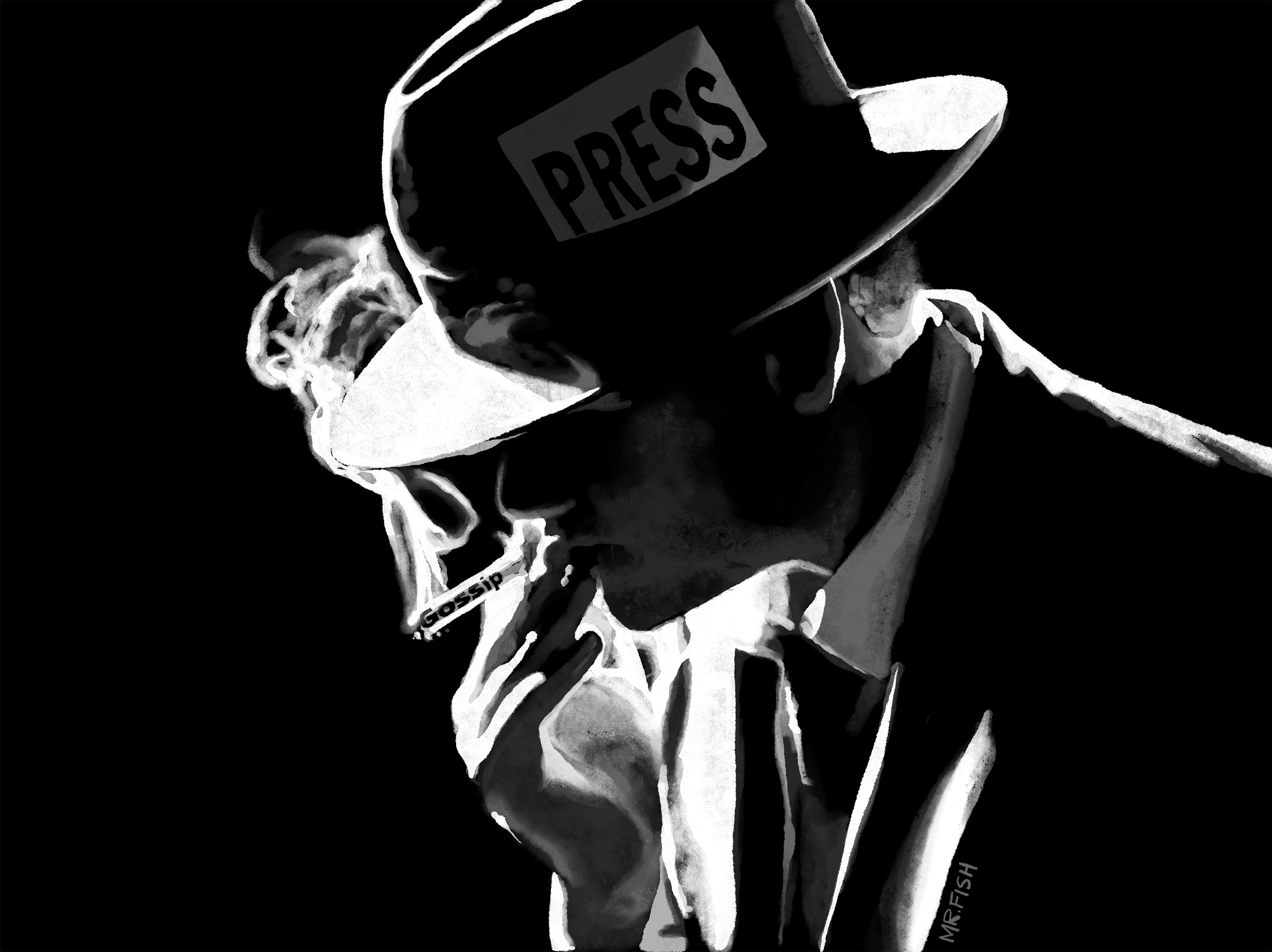
Listen to This Article: "The Trump-Russia Saga and the Death Spiral of American Journalism"
Narrated by Eunice WongText originally published 02/26/2023De-Pressed - by Mr. FishReporters make mistakes. It is the nature of the trade. There are always a few stories we wish were reported more carefully. Writing on deadline with often only a few hours before publication is an imperfect art. But when mistakes occur, they must be acknowledged and publicized. To cover them up, to pretend they did not happen, destroys our credibility. Once this credibility is gone, the press becomes nothing more than an echo chamber for a selected demographic. This, unfortunately, is the model that now defines the commerical media.The failure to report accurately on the Trump-Russia saga for the four years of the Trump presidency is bad enough. What is worse, major media organizations, which produced thousands of stories and reports that were false, refuse to engage in a serious postmortem. The systematic failure was so egregious and widespread that it casts a very troubling shadow over the press. How do CNN, ABC, NBC, CBS, MSNBC, The Washington Post, The New York Times and Mother Jones admit that for four years they reported salacious, unverified gossip as fact? How do they level with viewers and readers that the most basic rules of journalism were ignored to participate in a witch hunt, a virulent New McCarthyism? How do they explain to the public that their hatred for Trump led them to accuse him, for years, of activities and crimes he did not commit? How do they justify their current lack of transparency and dishonesty? It is not a pretty confession, which is why it won’t happen. The U.S. media has the lowest credibility — 26 percent — among 46 nations, according to a 2022 report from the Reuters Institute for the Study of Journalism. And with good reason.The commercial model of journalism has changed from when I began working as a reporter, covering conflicts in Central America in the early 1980s. In those days, there were a few large media outlets that sought to reach a broad public. I do not want to romanticize the old press. Those who reported stories that challenged the dominant narrative were targets, not only of the U.S. government but also of the hierarchies within news organizations such as The New York Times. Ray Bonner, for example, was reprimanded by the editors at The New York Times when he exposed egregious human rights violations committed by the El Salvadoran government, which the Reagan administration funded and armed. He quit shortly after being transferred to a dead-end job at the financial desk. Sydney Schanberg won a Pulitzer Prize for his reporting in Cambodia on the Khmer Rouge, which was the basis for the film “The Killing Fields.” He was subsequently appointed metropolitan editor at The New York Times where he assigned reporters to cover the homeless, the poor and those being driven from their homes and apartments by Manhattan real estate developers. The paper’s Executive Editor, Abe Rosenthal, Schanberg told me, derisively referred to him as his “resident commie.” He terminated Schanberg’s twice-weekly column and forced him out. I saw my career at the paper end when I publicly criticized the invasion of Iraq. The career-killing campaigns against those who reported controversial stories or expressed controversial opinions was not lost on other reporters and editors who, to protect themselves, practiced self-censorship.But the old media, because it sought to reach a broad public, reported on events and issues that did not please all of its readers. It left a lot out, to be sure. It gave too much credibility to officialdom, but, as Schanberg told me, the old model of news arguably kept “the swamp from getting any deeper, from rising higher.”The advent of digital media and the compartmentalizing of the public into antagonistic demographics has destroyed the traditional model of commercial journalism. Devastated by a loss of advertising revenue and a steep decline in viewers and readers, the commercial media has a vested interest in catering to those who remain. The approximately three and a half million digital news subscribers The New York Times gained during the Trump presidency were, internal surveys found, overwhelmingly anti-Trump. A feedback loop began where the paper fed its digital subscribers what they wanted to hear. Digital subscribers, it turns out, are also very thin-skinned.“If the paper reported something that could be interpreted as supportive of Trump or not sufficiently critical of Trump,” Jeff Gerth, an investigative journalist who spent many years at The New York Times recently told me, they would sometimes “drop their subscription or go on social media and complain about it.”Giving subscribers what they want makes commercial sense. However, it is not journalism.News organizations, whose future is digital, have at the same time filled newsrooms with those who are tech-savvy and able to attract followers on social media, even if they lack reportorial skills. Margaret Coker, the b
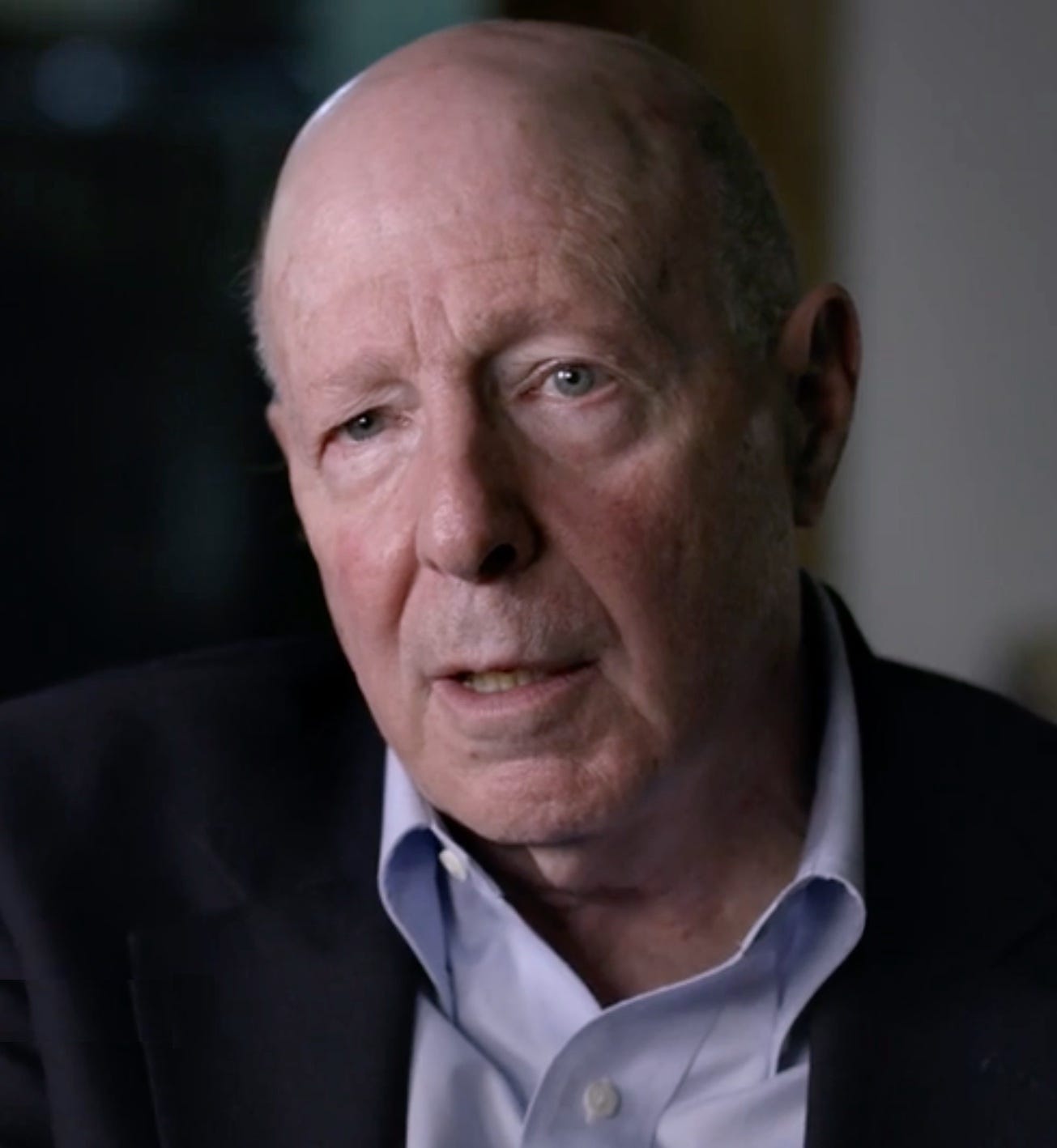
The Chris Hedges Report Podcast with Pulitzer-prize winning investigative reporter Jeff Gerth on the failure of the U.S. press to report the true story during the Trump-Russia saga.
Walter Lippmann in his 1920 book Liberty and the News warned that when journalists “arrogate to themselves the right to determine by their own consciences what shall be reported and for what purpose, democracy is unworkable.” Perhaps no other quote sums up the debacle known as Russiagate, the hundreds if not thousands of stories and news reporters that falsely painted the Trump administration as a tool of Russia and Vladimir Putin. The flawed reporting is an example of the steep erosion of journalistic ethics and standards and a lack of transparency and honesty on the part of the press. The Trump-Russia reporting has contributed to the steep decline of trust in the media and the bifurcation of the press into antagonistic tribes, neither of which are concerned with the truth but intent on catering to a particular demographic. The nation’s most reputable news organizations, as the investigative reporter Jeff Gerth points out, were guilty of egregious lapses. The New York Times, for example, in January 2018 ignored a publicly available document showing that the FBI’s lead investigator didn’t think, after ten months of inquiry into possible Trump-Russia ties, that there was much there. This omission, Gerth notes, disserved Times readers. The lie of omission is still a lie. And, to put it bluntly, in its eagerness to discredit Trump the lie of omission, combined with reliance on sources that peddled fictions designed to cater to Trump haters, as well as a failure to seek out those being attacked, dominated the liberal media landscape for four years of the Trump presidency. Hiding behind the wall of anonymous sources, frequently identified as “people (or person) familiar with” -- the Times used it over a thousand times in stories involving Trump and Russia between October 2016 and the end of his presidency – any rumor or smear was picked up in the news cycle with the source essentially unidentified and the information unverified. A routine, Gerth notes, soon took shape in the Trump-Russia saga. First, a federal agency like the CIA or FBI secretly briefs Congress. Then Democrats or Republicans selectively leak snippets that bolster their narrative. Finally, the story comes out, using vague attribution. The typical reader or viewer is clueless. This erosion has seen trust in the press plummet, with 86 percent of American saying they find press reports biased. The U.S. media has the lowest credibility – 26 percent – among forty-six nations, according to the Reuters Institute for the Study of Journalism. Stunningly, the decline has been accompanied by a lack of self-criticism and introspection by journalists and press organizations that month after month, year after year hyped a lie. To date, none of these press outlets, including The Washington Post, The New York Times, MSNBC, CNN, ABC, NBC, CBS and Mother Jones have provided a postmortem look at their coverage. Jeff Gerth, a Pulitzer-prize winning investigative reporter who worked at The New York Times from 1976 until 2005, spent the last two years writing an exhaustive look at the systemic failure of the press during the Trump-Russia story, authoring a four-part series of 24,000 words that has been published by The Columbia Journalism Review. Joining me to discuss his investigation is Jeff Gerth. This is a public episode. If you'd like to discuss this with other subscribers or get access to bonus episodes, visit chrishedges.substack.com/subscribe
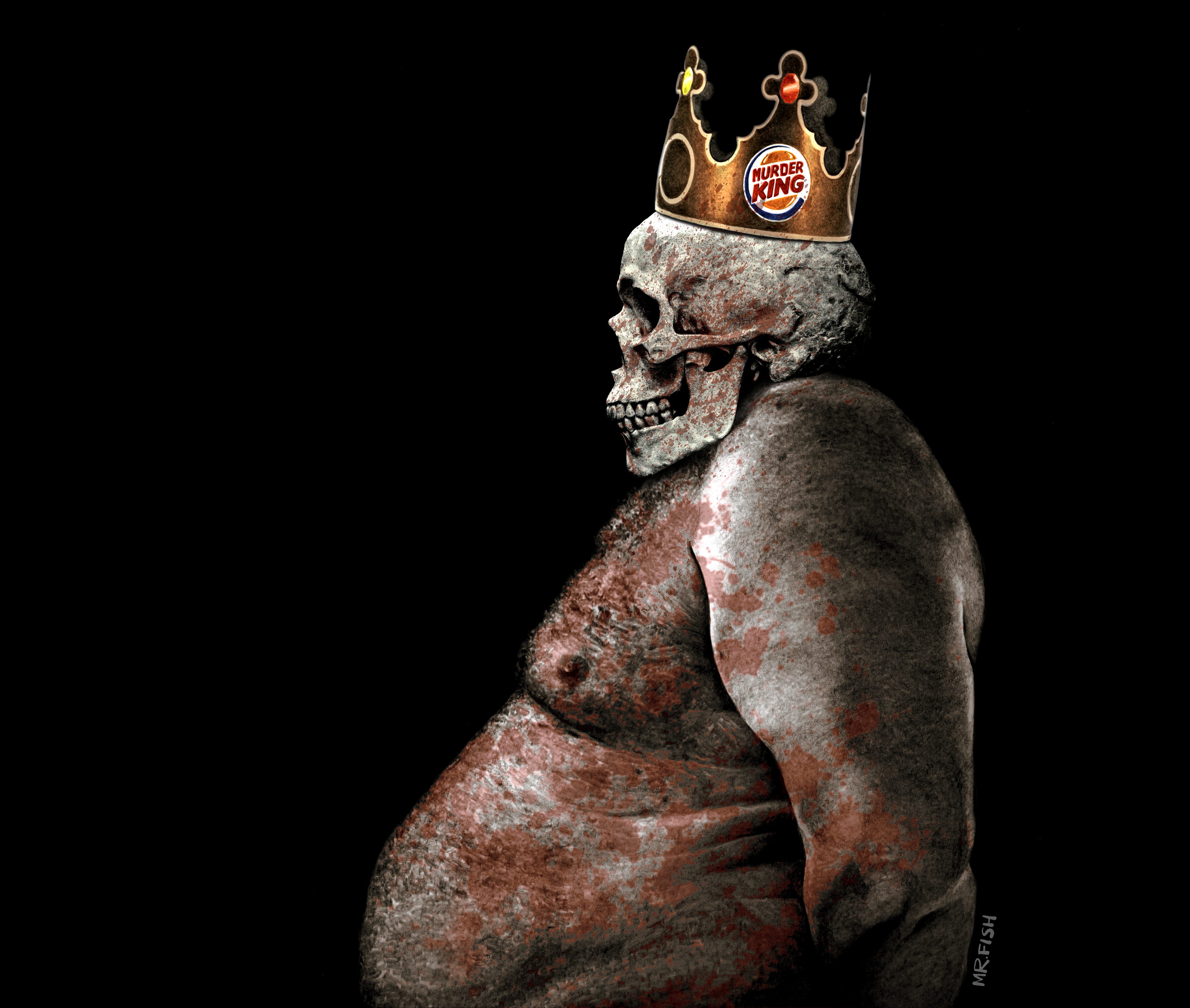
Listen to this text of the talk I gave in Washington, D.C. on Sunday at the Rage Against The War Machine rally
Narrated by Eunice WongText originally published 02/19/2023Murder King - by Mr. FishIdolatry is the primal sin from which all other sins derive. Idols tempt us to become God. They demand the sacrifice of others in the mad quest for wealth, fame or power. But the idol always ends by requiring self-sacrifice, leaving us to perish on the blood-soaked altars we erected for others. For empires are not murdered, they commit suicide at the feet of the idols that entrance them. We are here today to denounce the unelected, unaccountable high priests of Empire, who funnel the bodies of millions of victims, along with trillions of our national wealth, into the bowels of our own version of the Canaanite idol, Moloch.The political class, the media, the entertainment industry, the financiers and even religious institutions bay like wolves for the blood of Muslims or Russians or Chinese, or whoever the idol has demonized as unworthy of life. There were no rational objectives in the wars in Iraq, Afghanistan, Syria, Libya and Somalia. There are none in Ukraine. Permanent war and industrial slaughter are their own justification. Lockheed Martin, Raytheon, General Dynamics, Boeing and Northrop Grumman earn billions of dollars in profits. The vast expenditures demanded by the Pentagon are sacrosanct. The cabal of warmongering pundits, diplomats and technocrats, who smugly dodge responsibility for the array of military disasters they orchestrate, are protean, shifting adroitly with the political tides, moving from the Republican Party to the Democratic Party and then back again, mutating from cold warriors to neocons to liberal interventionists. Julien Benda called these courtiers to power “the self-made barbarians of the intelligentsia.”These pimps of war do not see the corpses of their victims. I did. Including children. Every lifeless body I stood over as a reporter in Guatemala, El Salvador, Nicaragua, Palestine, Iraq, Sudan, Yemen, Bosnia, or Kosovo, month after month, year after year, exposed their moral bankruptcy, intellectual dishonesty, sick bloodlust and delusional fantasies. They are puppets of the Pentagon, a state within a state, and the weapons manufacturers who lavishly fund their think tanks: Project for the New American Century, Foreign Policy Initiative, American Enterprise Institute, Center for a New American Security, Institute for the Study of War, Atlantic Council and Brookings Institute. Like some mutant strain of an antibiotic-resistant bacteria, they cannot be vanquished. It does not matter how wrong they are, how absurd their theories of global dominance, how many times they lie or denigrate other cultures and societies as uncivilized or how many they condemn to death. They are immovable props, parasites vomited up in the dying days of all empires, ready to sell us the next virtuous war against whoever they have decided is the new Hitler. The map changes. The game is the same.Pity our prophets, those who wander the desolate landscape crying out in the darkness. Pity Julian Assange, undergoing a slow-motion execution in a high-security prison in London. He committed Empire’s fatal sin. He exposed its crimes, its machinery of death, its moral depravity. A society that prohibits the capacity to speak in truth extinguishes the capacity to live in justice.Some here today might like to think of themselves as radicals, maybe even revolutionaries. But what we are demanding on the political spectrum is, in fact, conservative: the restoration of the rule of law. It is simple and basic. It should not, in a functioning republic, be incendiary. But living in truth in a despotic system, one the political philosopher Sheldon Wolin called “inverted totalitarianism,” is subversive. The architects of imperialism, the masters of war, the corporate-controlled legislative, judicial and executive branches of government and their obsequious mouth pieces in the media and academia, are illegitimate. Say this simple truth and you are banished, as many of us have been, to the margins. Prove this truth, as Julian did, and you are crucified.“Red Rosa now has vanished too…” Bertolt Brecht wrote of the murdered socialist Rosa Luxemburg. “She told the poor what life is about, And so the rich have rubbed her out.”We have undergone a corporate coup d'état, where the poor and working men and women, half of whom lack $400 to cover an emergency expense, are reduced to chronic instability. Joblessness and food insecurity are endemic. Our communities and cities are desolate. War, financial speculation, constant surveillance and militarized police that function as internal armies of occupation are the only real concerns of the state. Even habeas corpus no longer exists. We, as citizens, are commodities to corporate systems of power, used and discarded. And the endless wars we fight overseas have spawned the wars we fight at home, as the students I teach in the New Jersey prison system are acutely aware. All empires die in the same act of s

The Chris Hedges Report Podcast with actor Eunice Wong and director David Herskovits on William Shakespeare as Oracle and their new production of Shakespeare's play Pericles
I carried copies of William Shakespeare’s plays into conflicts in Central America, the Middle East and the Balkans. When I was taken prisoner by the Iraqi Republican Guard in Basra during the Shiite uprising following the first Gulf War, I had a copy of Anthony and Cleopatra in the pocket of my M-65 field jacket, along with Homer’s The Iliad. Sigmund Freud turned to Shakespeare, along with the Greek myths, to lay the foundations for Freudian Psychoanalysis. Karl Marx liberally quoted from Shakespeare, using The Merchant of Venice to explain economic theory. Writers such as Charles Dickens built on the foundations of Shakespeare. Herman Melville formed his characters in Moby Dick from the clay of the Bible and Shakespeare. Perhaps only the Bible rivals Shakespeare in its archetypical significance. Shakespeare invented thousands of words that remain part of our vocabulary – gloomy, monumental, castigate, assassination, addiction, cold-blooded – to name a few. His power as a writer came not only from the beauty of his poetry, but his deep understanding of the ambiguities and contradictions that go into making a human being and a human society. He grasped that human history is merely itself. It moves towards no goal. The universe is morally neutral. The gods favor you one day and turn their back on you the next. “As flies to wanton boys are we to the gods,” Gloucester says. “The kill us for their sport.” Good does not always triumph, indeed is often no match when pitted against murderous tyrannies. Anthony, in Anthony and Cleopatra, embraces love and passion and loses empire. Like Dido, by surrendering to love, he is no match for Octavius’s single-minded quest for power. Shakespeare brought hundreds of characters to life – King Lear, Hamlet, Macbeth, Cleopatra, Malvolio, Falstaff, Romeo, Juliet, Othello – and created narratives of such power that they continue to haunt our imaginations. Joining me to discuss William Shakespeare is David Herskovits, the founder and artistic director of Target Margin Theatre, and the actor Eunice Wong. Target Margin will mount a production of Pericles at the Doxsee Theater in Sunset Park Brooklyn starting on February 25 and running through March 26. You can find out more at targetmargin.org.The Chris Hedges Report is a reader-supported publication. To receive new posts and support my work, consider becoming a free or paid subscriber. This is a public episode. If you'd like to discuss this with other subscribers or get access to bonus episodes, visit chrishedges.substack.com/subscribe
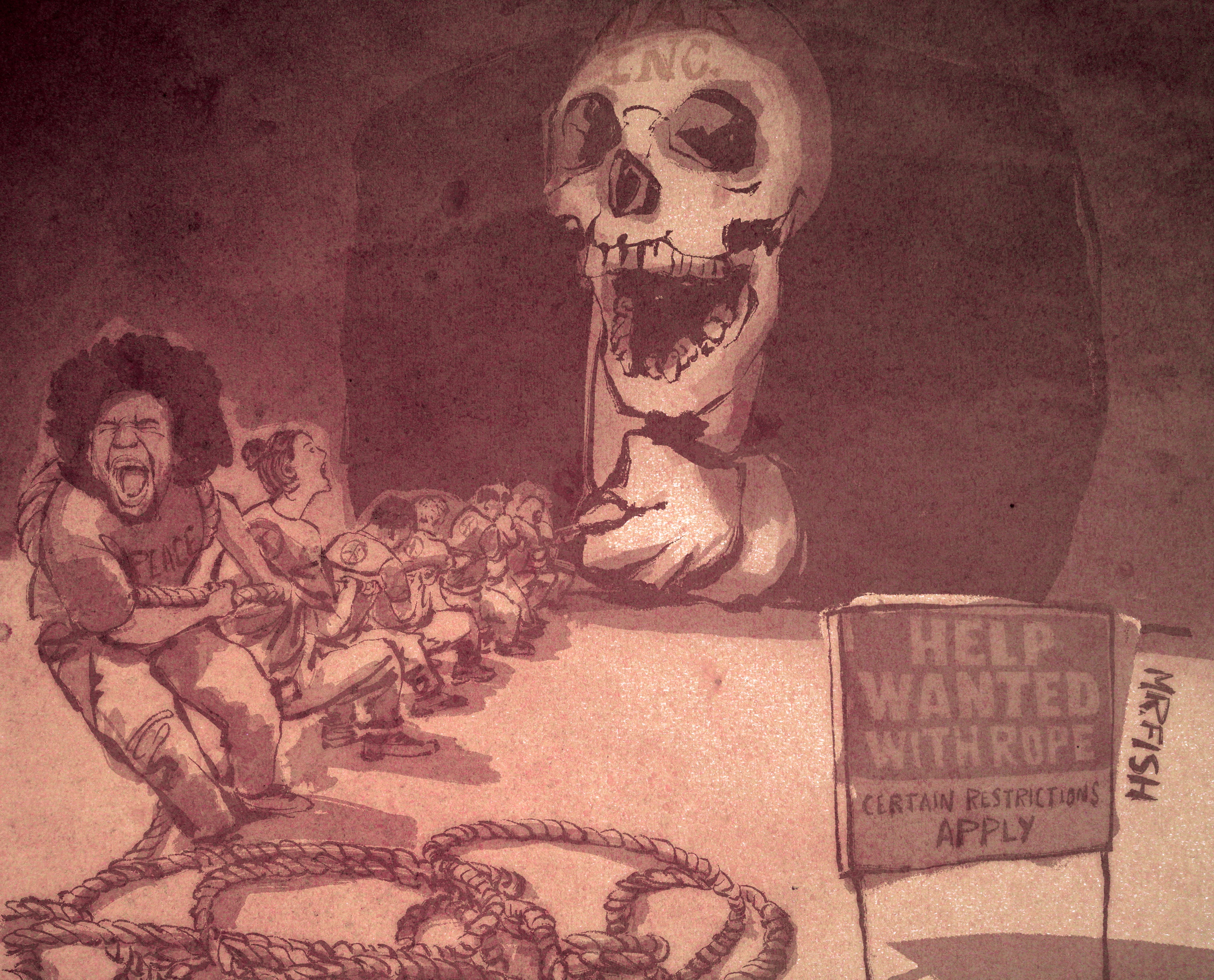
Listen to this Article: "There Are No Permanent Allies, Only Permanent Power"
Narrated by Eunice WongText Originally published 02/12/2023Give Enough Rope - by Mr. FishOn Sunday, February 19, I will be at the Lincoln Memorial in Washington at noon to speak at the anti-war rally, Rage Against the War Machine. There, I will be joined by Jimmy Dore, Dennis Kucinich, Ann Wright, Jill Stein, Max Blumenthal, Cynthia McKinney, Anya Parampil, David Swanson and other left-wing, anti-war activists I have shared platforms with for many years. I will also be joined by Ron Paul, Scott Horton and right-libertarian, anti-war figures whose political and cultural opinions I often disagree with. The inclusion of the right-wing has seen anti-war groups I respect, such as Veterans for Peace (VFP), refuse to join the rally. VFP issued a statement sent to me on Friday saying that “to endorse this event would have caused a huge disruption in VFP and had little effect on the outcome of the demonstration.” Code Pink asked its co-founder, Medea Benjamin, one of the nation’s most important and effective left-wing and anti-war activists, to cancel her scheduled talk at the rally. “The left has become largely irrelevant in the U.S. because it is incapable of working with the right,” said Nick Brana, chair of The People’s Party, which organized the rally with libertarians. “It clings to identity politics over jobs, health care, wages and war, and condemns half the country as deplorables.”We will not topple corporate power and the war machine alone. There has to be a left-right coalition, which will include people whose opinions are not only unpalatable but even repugnant, or we will remain marginalized and ineffectual. This is a fact of political life. Alliances are built around particular issues, in this case permanent war, which often fall apart when confronting other concerns. If I had organized the rally, there are some speakers I would not have invited. But I didn’t. This does not mean that there are no red lines: I would not join a protest that included neo-Nazi groups such as Aryan Nations or militias such as The Proud Boys or Oath Keepers. My father, a Presbyterian minister who was an army sergeant in North Africa during World War II, was a member of Concerned Clergy and Laity About Vietnam, an anti-war group that included the radical Catholic priests Philip and Daniel Berrigan. He took me with other clergy, almost all veterans, to anti-war rallies. There was much in the anti-war movement that he and other members of the religious group opposed, from the Yippies — who put forward a 145-pound pig named Pigasus the Immortal as a presidential candidate in 1968 — to groups such as the Weather Underground that embraced violence. He and the other clergy disliked the widespread drug use and propensity of some protestors to insult and bait the police. They had little in common with the Maoists, Stalinists, Leninists and Trotskyites within the movement. Daniel Berrigan, one of the most important anti-war activists in American history who was constantly in and out of jail and spent two years in federal prison, opposed abortion — a stance that today would probably see him deplatformed by many on the left. These clergy understood that the masters of war were their real enemies. They understood that the success of the anti-war movement meant forming alliances with people whose ideologies and beliefs were far removed from their pacifism, abstemious lifestyles and Christian faith. When I was about 12, my father told me that if the war was still going on when I turned 18 and I was drafted, he would go to prison with me. The jolt of that promise has remained with me my entire life.The demands of the Rage Against the War Machine rally are ones I share. They include Not One More Penny for War in Ukraine; Negotiate Peace; Stop the War Inflation; Disband NATO; Global Nuclear De-Escalation; Slash the Pentagon Budget; Abolish the CIA and Military Industrial Deep State; Abolish War and Empire; Restore Civil Liberties; and Free Julian Assange.I know war. I spent two decades reporting on conflicts all over the globe, including many months in Gaza, the world’s largest open-air prison, containing two million people including over a million children. I saw thousands of lives destroyed by United States military adventurism in Central America, Africa and the Middle East. Dozens of people I knew and worked with, including Kurt Schork, a Reuters reporter, and the Spanish cameraman Miguel Gil Moreno de Mora, died violent deaths. We must halt the decades of rampant and futile industrial killing. This includes ending the proxy war in Ukraine. It includes drastic cuts to the funding of the U.S. war machine, a state within a state. It includes disbanding NATO, which was established to prevent Soviet expansion into Eastern and Central Europe, not wage war around the globe. If Western promises to Moscow not to expand NATO beyond the borders of a unified Germany had been kept, I expect the Ukrainian war would have never happened.To those who suff
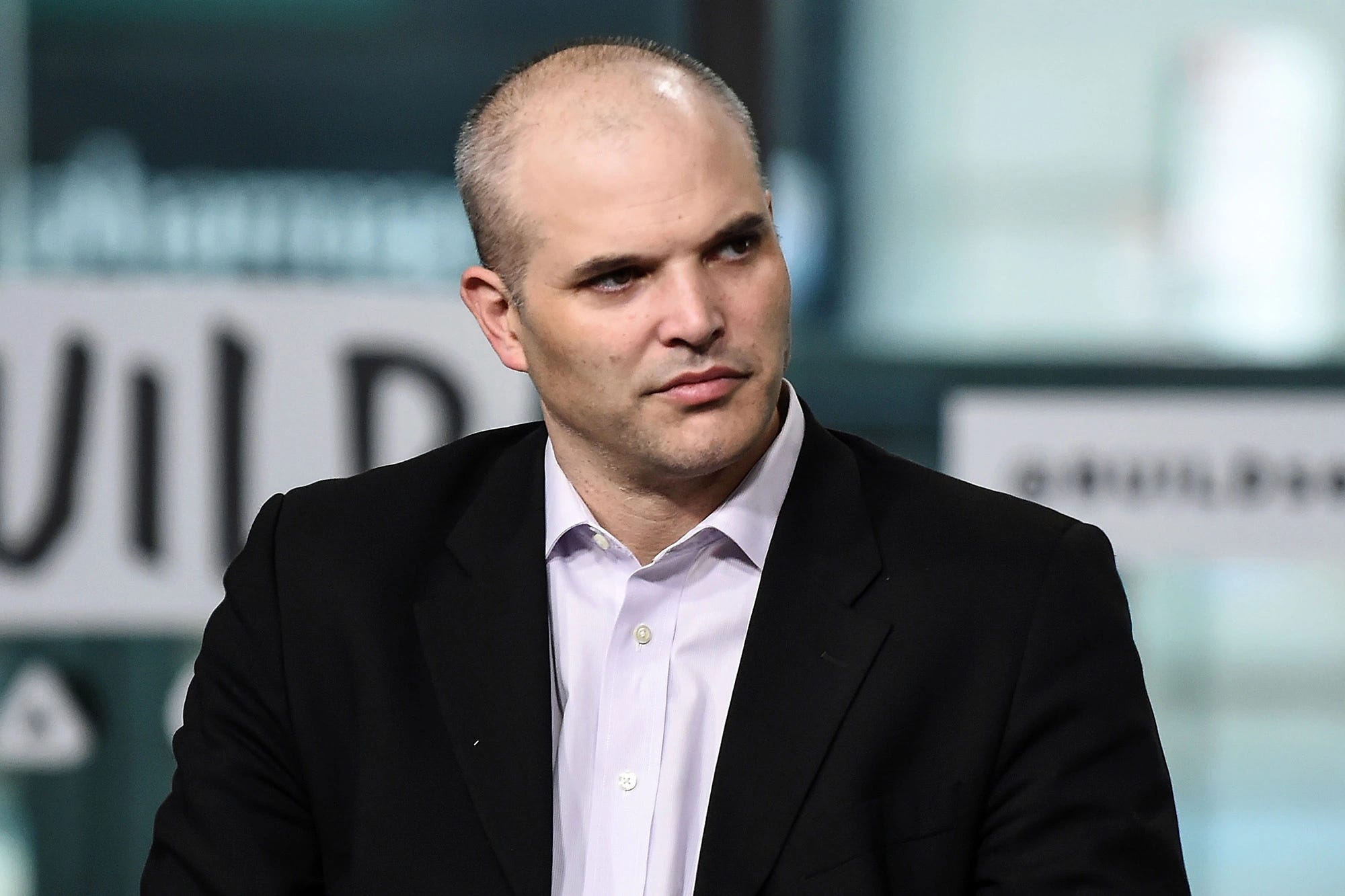
The Chris Hedges Report Podcast with Matt Taibbi about Russiagate and the most pernicious campaign of censorship since the red baiting of Joe McCarthy in the 1950s.
Matt Taibbi has published an investigation about a vast propaganda campaign called “Hamilton 68, launched a year after Donald Trump won the presidency, to smear critics of the Democratic Party, from the left and the right, as Russian assets. Hamilton 68 claimed it used complex data analysis and relied on so-called disinformation experts to ferret out information on social media that emanated from the Kremlin. Hamilton 68, a computerized “dashboard” designed to be used by reporters and academics to measure “Russian disinformation,” was run by Democratic operatives, including John Podesta, Hillary Clinton’s campaign chair, and figures from intelligence agencies such as the CIA, the FBI and Homeland Security, as well as neoconservatives and establishment Republicans, such as Bill Kristol, who do not support Trump and have been warmly embraced by the Democratic Party. Mainstream news outlets including The New York Times, The Washington Post, CNN, PBS, NBC, CBS, ABC, MSNBC, as well as Mother Jones – which ran 14 stories based on the group’s “research” – cited Hamilton 68 as an authoritative source, even as the site refused to disclose the data or methods it used to make its assessments. Hundreds, if not thousands, of media headlines were flagged as Russian bot infiltrations in online discussions about the Brett Kavanaugh hearings; Tulsi Gabbard’s campaign; the Parkland shooting; U.S. missile strikes in Syria and the Bernie Sander’s campaign and many, many other stories. Fact-checking sites like Politifact and Snopes also relied on Hamilton 68. Taibbi, given access to Twitter’s internal memos and emails by Elon Musk, who bought Twitter, was able to expose not only the fraudulent claims of Hamilton 68, but the failure of the press, which was a full partner in one of the worst forms of censorship since the red baiting of Joe McCarthy in the 1950s, one that targeted people with dissident or unconventional opinions and accused them of Un-American activities. This is a public episode. If you'd like to discuss this with other subscribers or get access to bonus episodes, visit chrishedges.substack.com/subscribe
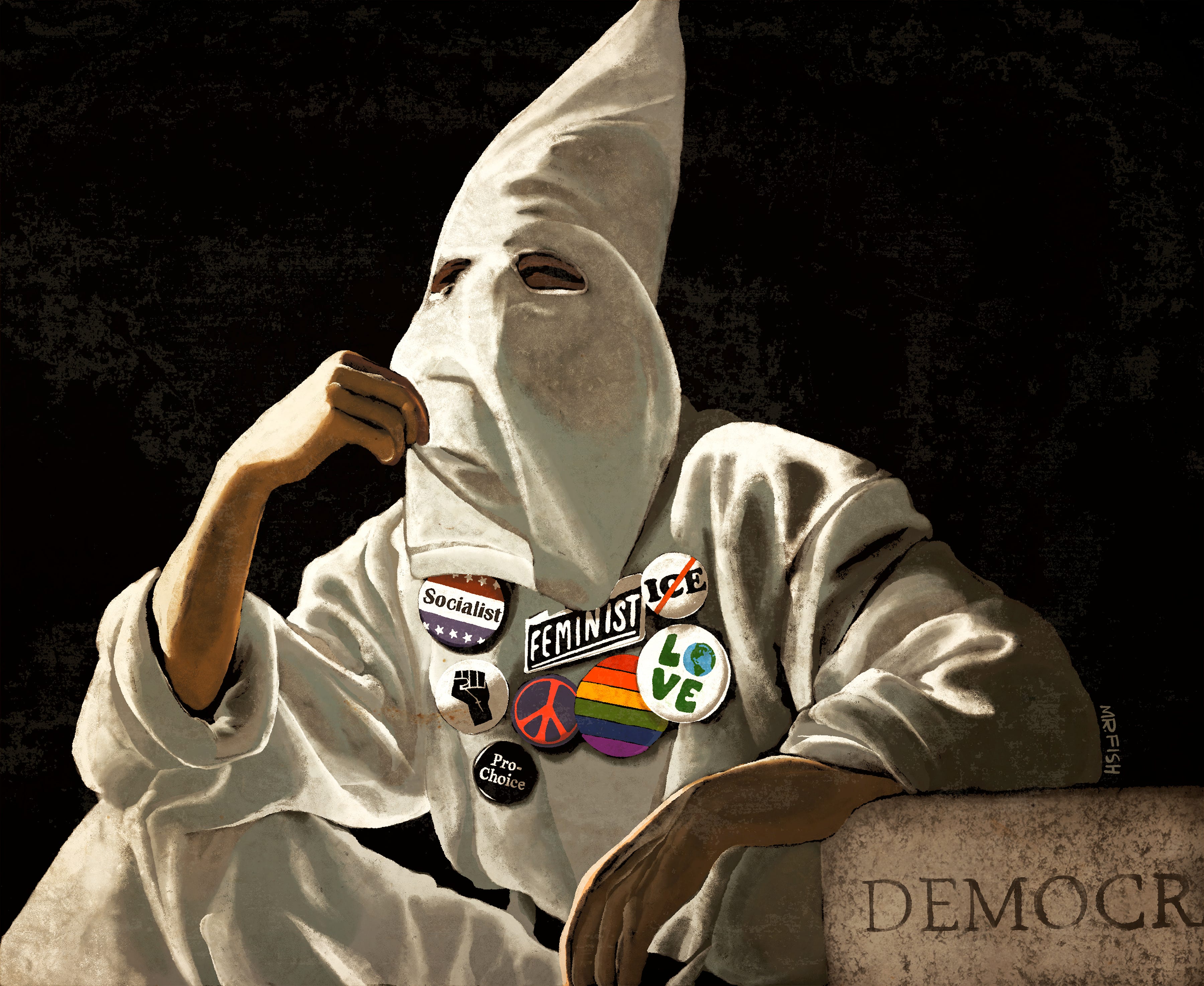
Listen to this Article: Woke Imperialism
Narrated by Eunice WongText originally published Feb. 5, 2023Identity Politics - by Mr. FishThe brutal murder of Tyre Nichols by five Black Memphis police officers should be enough to implode the fantasy that identity politics and diversity will solve the social, economic and political decay that besets the United States. Not only are the former officers Black, but the city’s police department is headed by Cerelyn Davis, a Black woman. None of this helped Nichols, another victim of a modern-day police lynching.The militarists, corporatists, oligarchs, politicians, academics and media conglomerates champion identity politics and diversity because it does nothing to address the systemic injustices or the scourge of permanent war that plague the U.S. It is an advertising gimmick, a brand, used to mask mounting social inequality and imperial folly. It busies liberals and the educated with a boutique activism, which is not only ineffectual but exacerbates the divide between the privileged and a working class in deep economic distress. The haves scold the have-nots for their bad manners, racism, linguistic insensitivity and garishness, while ignoring the root causes of their economic distress. The oligarchs could not be happier.Did the lives of Native Americans improve as a result of the legislation mandating assimilation and the revoking of tribal land titles pushed through by Charles Curtis, the first Native American Vice President? Are we better off with Clarence Thomas, who opposes affirmative action, on the Supreme Court, or Victoria Nuland, a war hawk in the State Department? Is our perpetuation of permanent war more palatable because Lloyd Austin, an African American, is the Secretary of Defense? Is the military more humane because it accepts transgender soldiers? Is social inequality, and the surveillance state that controls it, ameliorated because Sundar Pichai — who was born in India — is the CEO of Google and Alphabet? Has the weapons industry improved because Kathy J. Warden, a woman, is the CEO of Northop Grumman, and another woman, Phebe Novakovic, is the CEO of General Dynamics? Are working families better off with Janet Yellen, who promotes increasing unemployment and “job insecurity” to lower inflation, as Secretary of the Treasury? Is the movie industry enhanced when a female director, Kathryn Bigelow, makes “Zero Dark Thirty,” which is agitprop for the CIA? Take a look at this recruitment ad put out by the CIA. It sums up the absurdity of where we have ended up.Colonial regimes find compliant indigenous leaders — “Papa Doc” François Duvalier in Haiti, Anastasio Somoza in Nicaragua, Mobutu Sese Seko in the Congo, Mohammad Reza Pahlavi in Iran — willing to do their dirty work while they exploit and loot the countries they control. To thwart popular aspirations for justice, colonial police forces routinely carried out atrocities on behalf of the oppressors. The indigenous freedom fighters who fight in support of the poor and the marginalized are usually forced out of power or assassinated, as was the case with Congolese independence leader Patrice Lumumba and Chilean president Salvador Allende. Lakota chief Sitting Bull was gunned down by members of his own tribe, who served in the reservation’s police force at Standing Rock. If you stand with the oppressed, you will almost always end up being treated like the oppressed. This is why the FBI, along with Chicago police, murdered Fred Hampton and was almost certainly involved in the murder of Malcolm X, who referred to impoverished urban neighborhoods as “internal colonies.” Militarized police forces in the U.S. function as armies of occupation. The police officers who killed Tyre Nichols are no different from those in reservation and colonial police forces.We live under a species of corporate colonialism. The engines of white supremacy, which constructed the forms of institutional and economic racism that keep the poor poor, are obscured behind attractive political personalities such as Barack Obama, whom Cornel West called “a Black mascot for Wall Street.” These faces of diversity are vetted and selected by the ruling class. Obama was groomed and promoted by the Chicago political machine, one of the dirtiest and most corrupt in the country.“It’s an insult to the organized movements of people these institutions claim to want to include,” Glen Ford, the late editor of The Black Agenda Report told me in 2018. “These institutions write the script. It’s their drama. They choose the actors, whatever black, brown, yellow, red faces they want.”Ford called those who promote identity politics “representationalists” who “want to see some Black people represented in all sectors of leadership, in all sectors of society. They want Black scientists. They want Black movie stars. They want Black scholars at Harvard. They want Blacks on Wall Street. But it’s just representation. That’s it.”The toll taken by corporate capitalism on the people these “representationali

The Chris Hedges Report Podcast with Italian investigative journalist Stefania Maurizi, the only international reporter who worked on the entirety of the WikiLeaks secret trove of leaked documents.
Julian Assange and WikiLeaks have carried out the most important investigative journalism of our generation, revealing to the public the inner workings of power through the release of voluminous leaked documents. No other news organization has come close. This information has exposed the crimes, lies and fraud of the powerful, sparking the judicial lynching of Assange who awaits extradition to the US in a high security prison in London. It has allowed people across the globe to understand what their governments are doing behind their backs. In this show we will speak with the Italian investigative journalist Stefania Maurizi, author of Secret Power: WikiLeaks and Its Enemies, about some of the most important information provided to the public by WikiLeaks. These include the U.S. war logs from Afghanistan and Iraq, a cache of 250,000 diplomatic cables and 800 Guantanamo Bay detainee assessment briefs along with the 2007 “Collateral Murder” video, in which U.S. helicopter pilots banter as they gun down civilians, including children and two Reuters journalists, in a Baghdad street. They include the 70,000 hacked emails copied from the accounts of John Podesta, Hillary Clinton’s campaign chairman that exposed the sleezy and corrupt world of the Clintons, including the donation of millions of dollars to the Clinton Foundation by Saudi Arabia and Qatar, the $657,000 that Goldman Sachs paid to Hillary Clinton to give talks, a sum so large it can only be considered a bribe and her dishonesty, telling the public she would work for financial reform while privately assuring Wall Street she would protect their interests. The cache of leaked emails showed that the Clinton campaign interfered in the Republican primaries to ensure that Donald Trump was the Republican nominee, assuming he would be the easiest candidate to defeat. They exposed Clinton’s advance knowledge of questions in a primary debate and her role as the principal architect of the war in Libya, a war she believed would burnish her credentials as a presidential candidate. Joining me to discuss these and other revelations, and their importance, is Stefania Maurizi who is an investigative journalist for Il Fatto Quotidiano. She is the only international reporter who has worked on the entirety of the WikiLeaks secret trove of leaked documents. This is a public episode. If you'd like to discuss this with other subscribers or get access to bonus episodes, visit chrishedges.substack.com/subscribe
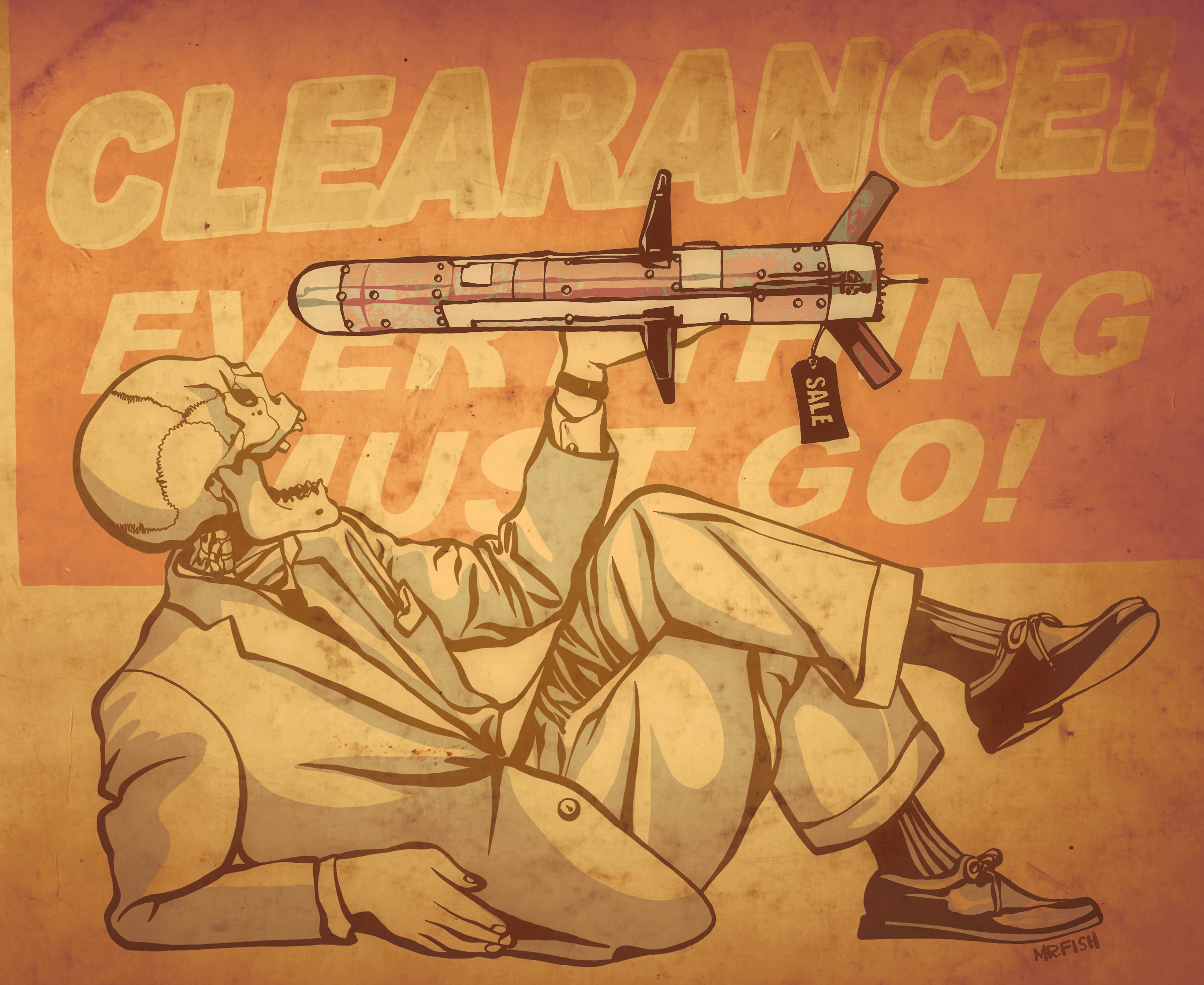
Listen to this Article: "Ukraine: The War That Went Wrong"
Narrated by Eunice WongText originally published: January 29, 2023Everything Must Go - Mr. FishEmpires in terminal decline leap from one military fiasco to the next. The war in Ukraine, another bungled attempt to reassert U.S. global hegemony, fits this pattern. The danger is that the more dire things look, the more the U.S. will escalate the conflict, potentially provoking open confrontation with Russia. If Russia carries out retaliatory attacks on supply and training bases in neighboring NATO countries, or uses tactical nuclear weapons, NATO will almost certainly respond by attacking Russian forces. We will have ignited World War III, which could result in a nuclear holocaust.U.S. military support for Ukraine began with the basics — ammunition and assault weapons. The Biden administration, however, soon crossed several self-imposed red lines to provide a tidal wave of lethal war machinery: Stinger anti-aircraft systems; Javelin anti-armor systems; M777 towed Howitzers; 122mm GRAD rockets; M142 multiple rocket launchers, or HIMARS; Tube-Launched, Optically-Tracked, Wire-Guided (TOW) missiles; Patriot air defense batteries; National Advanced Surface-to-Air Missile Systems (NASAMS); M113 Armored Personnel Carriers; and now 31 M1 Abrams, as part of a new $400 million package. These tanks will be supplemented by 14 German Leopard 2A6 tanks, 14 British Challenger 2 tanks, as well as tanks from other NATO members, including Poland. Next on the list are armor-piercing depleted uranium (DU) ammunition and F-15 and F-16 fighter jets.Since Russia invaded on February 24, 2022, Congress has approved more than $113 billion in aid to Ukraine and allied nations supporting the war in Ukraine. Three-fifths of this aid, $67 billion, has been allocated for military expenditures. There are 28 countries transferring weapons to Ukraine. All of them, with the exception of Australia, Canada and the U.S., are in Europe. The rapid upgrade of sophisticated military hardware and aid provided to Ukraine is not a good sign for the NATO alliance. It takes many months, if not years, of training to operate and coordinate these weapons systems. Tank battles — I was in the last major tank battle outside Kuwait City during the first Gulf war as a reporter — are highly choreographed and complex operations. Armor must work in close concert with air power, warships, infantry and artillery batteries. It will be many, many months, if not years, before Ukrainian forces receive adequate training to operate this equipment and coordinate the diverse components of a modern battlefield. Indeed, the U.S. never succeeded in training the Iraqi and Afghan armies in combined arms maneuver warfare, despite two decades of occupation.I was with Marine Corps units in February 1991 that pushed Iraqi forces out of the Saudi Arabian town of Khafji. Supplied with superior military equipment, the Saudi soldiers that held Khafji offered ineffectual resistance. As we entered the city, we saw Saudi troops in commandeered fire trucks, hightailing it south to escape the fighting. All the fancy military hardware, which the Saudis had purchased from the U.S., proved worthless because they did not know how to use it.NATO military commanders understand that the infusion of these weapons systems into the war will not alter what is, at best, a stalemate, defined largely by artillery duels over hundreds of miles of front lines. The purchase of these weapons systems — one M1 Abrams tank costs $10 million when training and sustainment are included — increases the profits of the arms manufacturers. The use of these weapons in Ukraine allows them to be tested in battlefield conditions, making the war a laboratory for weapons manufacturers such as Lockheed Martin. All this is useful to NATO and to the arms industry. But it is not very useful to Ukraine.The other problem with advanced weapons systems such as the M1 Abrams, which have 1,500-horsepower turbine engines that run on jet fuel, is that they are temperamental and require highly skilled and near constant maintenance. They are not forgiving to those operating them who make mistakes; indeed, mistakes can be lethal. The most optimistic scenario for deploying M1-Abrams tanks in Ukraine is six to eight months, more likely longer. If Russia launches a major offensive in the spring, as expected, the M1 Abrams will not be part of the Ukrainian arsenal. Even when they do arrive, they will not significantly alter the balance of power, especially if the Russians are able to turn the tanks, manned by inexperienced crews, into charred hulks.So why all this infusion of high-tech weaponry? We can sum it up in one word: panic.Having declared a de facto war on Russia and openly calling for the removal of Vladimir Putin, the neoconservative pimps of war watch with dread as Ukraine is being pummeled by a relentless Russian war of attrition. Ukraine has suffered nearly 18,000 civilian casualties (6,919 killed and 11,075 injured). It has also see

The Chris Hedges Report podcast with Julian Assange's brother, Gabriel Shipton, on his film Ithaka about Julian's prolonged torture and slow motion execution
The film Ithaka, the title taken from a poem by C.P Cavafy, chronicles the slow-motion torture and execution of the Australian journalist Julian Assange, currently awaiting extradition to the United States in a high security prison in London. It charts his journey from publisher of the most important revelations of our generation of fraud, war crimes, lies and corruption by the powerful to his refuge for seven years in the Ecuadorean Embassy in London from 2012 to 2019, his seizure and arrest by British police, who enter the embassy to detain him, and harsh imprisonment in Belmarsh prison where he currently fights a U.S. extradition request. It unflinchingly portrays the terrible emotional cost to him and his family, including his father John, his wife Stella and their two young children. The film, directed by Ben Lawrence and produced by Assange’s brother Gabriel Shipton, pits Assange, his family and his supporters against the opaque, ruthless and monolithic power of nation states, including Sweden, Great Britain and the United States, and more importantly the intelligence services that have long sought to silence and crush Julian in retribution. Assange is largely absent from this film, isolated in the high security prison and only able to communicate through periodic phone calls, some of which are filmed. In Cavafy’s poem, the wanderer Odysseus departs Troy for the long and perilous journey back to Ithaka. Cavafy warns us in the poem not to allow the evil forces that conspire against us to turn us too into monsters, to “Keep Ithaka always in your mind.”Cavafy writes:As you set out for Ithakahope your road is a long one,full of adventure, full of discovery.Laistrygonians, Cyclops,angry Poseidon—don’t be afraid of them:you’ll never find things like that on your wayas long as you keep your thoughts raised high,as long as a rare excitementstirs your spirit and your body.Laistrygonians, Cyclops,wild Poseidon—you won’t encounter themunless you bring them along inside your soul,unless your soul sets them up in front of you.Joining me to discuss Ithaka is Gabriel Shipton. This is a public episode. If you'd like to discuss this with other subscribers or get access to bonus episodes, visit chrishedges.substack.com/subscribe
Listen to this Article: "The Plague of Social Isolation"
Narrated by Eunice WongText Originally posted January 21, 2023Cell Damage - by Mr. FishThere is very little to recommend my old gym, other than the low monthly fee, where I worked out nearly every day from 2007 until the pandemic shut it down. The locker rooms were grimy with moldering carpets. There were brown rings around the basins and a thin blackish layer of slime, composed, I suspect, of dead skin, urine, hair, dust, dirt and assorted bacteria on the floor of the shower stalls. To step into the slime without flip flops was to take home athlete’s foot and toenail fungus, at the very least. The sauna in the locker room was reportedly listed on a gay pick-up app and attracted pairs of men looking for anonymous sexual encounters in clouds of steam. The gym management first tried to combat these liaisons by posting a sign on the door that read: “IT IS FORBIDDEN TO HAVE SEX IN THE SAUNA.” When this failed to slow the traffic in and out of the sauna, the door was removed and the sauna shut down. Robberies occurred in the early afternoon when the gym was nearly empty. One man would stand by the entrance of the locker room as a lookout while another quickly pried the hinges off the flimsy lockers and pocketed the wallets. The management was unsympathetic. They had posted signs not to leave valuables in the lockers. Theft was our problem.The treadmills, stationary bikes and ellipticals would break down and be blocked off for weeks with a chain and sign that read: “Out of Service.” The weight room, located in the windowless basement, is where I spent most of my time. And this is where the only redeeming feature of the gym could be found — the community of regulars who, month after month, year after year, embedded themselves into my life. It’s true that none of us wanted to pay the exorbitant fees to join the fancy gyms, but we also found comfort in the familiarity of each other’s company. We were united not by politics, class, status, education or profession but by working out. I lifted with two men my age: John, who had played in the NFL for the Jets and the Colts, and Marc, who had played college basketball. As former competitive athletes, we accepted that our workouts at this stage were managed decay, but there was something reassuring about this dogged determination not to resign ourselves to decrepitude. Besides, when uttered by John or Marc in the weight room, the most banal advice and information became a revealed truth, frustrating my wife Eunice, who had often said the same thing months — or years — earlier.Among our small band of regulars was Robert, a hairstylist who kept in shape, he said, because his boyfriend was older, and he was “the trophy wife.” Robert showed off his 30-inch waist and sleek, toned physique. One Halloween, he and his boyfriend went on a gay cruise where his costume was a thong and a feathered Native American war bonnet. “I looked fabulous,” he informed us. There was also a professional wrestler who was on the circuit in smaller cities like Wilmington and whose stage name was “The Mighty Vesuvius”; a deeply traumatized Iraq war vet whom we all kept at a distance and who once threatened a trainer who subsequently walked out of the gym and never returned; a police officer; a former Wall Street commodities trader who supported the American Israel Public Affairs Committee (AIPAC); Camillo, who had been a professional heavyweight boxer in Italy and who owned the restaurant next door to the gym; and my friend Boris who had once been homeless on the streets of Trenton, read Fyodor Dostoevsky in the original Russian and, while he held down a job, was attending Rutgers University part time to become a social worker. One afternoon, Camillo and I decided we would rekindle the glories of our boxing days by hammering the heavy bag without wearing the cotton wraps boxers coil around their hands before putting on gloves. This impulsive act of machismo left us with sprained wrists — not good for a cook or a writer.Because you could join the gym for as low as $36 a month, the locker room served as a public bathroom and shower facility for undocumented workers and the unhoused. One portly man, who lived out of his car, came every morning to shave and shower. He cheerily subscribed to every bizarre right-wing conspiracy theory and held forth about them to anyone willing to listen. Where is he now? Has he found another community where he is accepted with all his quirks, where he can shower and shave, or has he been, like so many, cast completely adrift? He was already living on the edge of catastrophe.The gym was run by a crime syndicate called the New York Sports Club. These business school wizards had perfected every technique for ripping off the lawyerless proletariat. None of their scams would have worked at the high-priced gyms, the ones with spas, swimming pools, immaculate locker rooms, plush towels, masseuses and fresh juice bars, which charged over $100 a month. The members of these high-en

The Chris Hedges Report podcast with Kevin Gosztola on Julian Assange and the End of Press Freedom
The long persecution of Julian Assange, the publisher of Wikileaks, is set to culminate in its final act – a trial in the United States this year. Kevin Gosztola has spent the last decade reporting on Assange, WikiLeaks and the wider war on whistleblowers. His new book, “Guilty of Journalism: The Political Case Against Julian Assange,” methodically lays out the complex issues surrounding the case, the gross distortions to the legal system used to facilitate through the extradition of Julian, now in a high security prison in London, the abuses of power by the FBI and the CIA, including spying on Julian’s meetings when he sought refuge in the Ecuadorian Embassy in London with his family, doctors and attorneys, and the dire consequences, should Julian be convicted, for the press. This is a public episode. If you'd like to discuss this with other subscribers or get access to bonus episodes, visit chrishedges.substack.com/subscribe
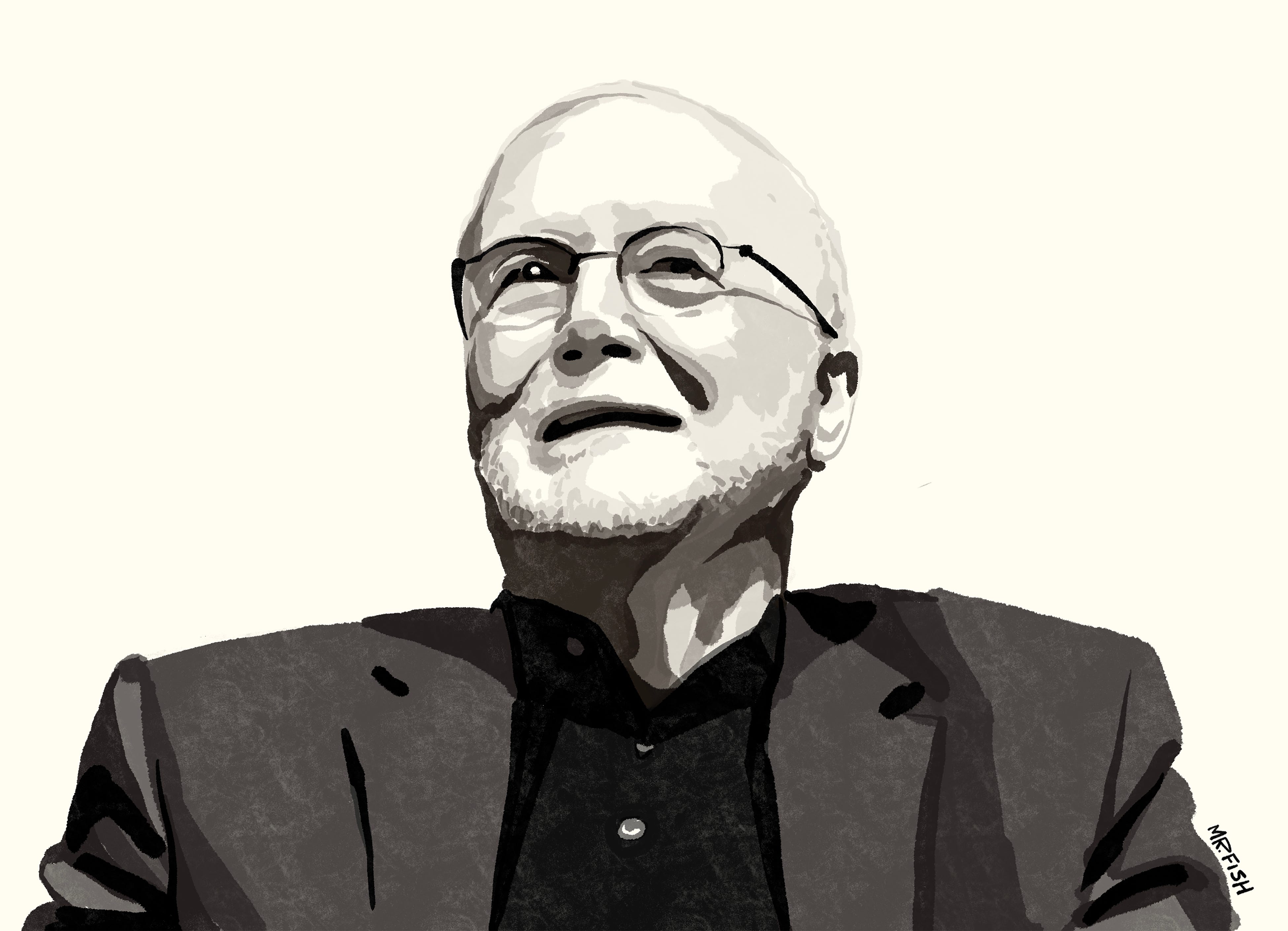
Listen to this Article: "Russell Banks, John Brown and the American Soul"
Narrated by Eunice WongOriginal Text posted January 15, 2023Russell Banks - by Mr. FishThe deep malaise that defines American society — the rage, despair and widespread feelings of betrayal and loss — is rarely captured and almost never explained in the pages of newspapers or on screens. To grasp what has happened to the United States, the savage economic and emotional cost of deindustrialization; the destruction of our democratic institutions; the Neolithic violence that sees us beset with almost daily mass shootings in malls, offices, schools and movie theaters; the rise of the militarized state; and the consolidation of national wealth by a tiny cabal of corrupt bankers and corporations, we must turn to our artists, poets and writers. Foremost among writers who explored our peculiar American zeitgeist was the novelist Russell Banks, who died on January 7th at the age of 82.His novel “Continental Drift” tells the story of Bob Dubois, a 30-year-old New Hampshire oil burner repairman who moves his family to Florida in a forlorn effort to strike it rich, and Vanise Dorinville, a Haitan immigrant, who flees Haiti in an overcrowded boat to the United States and endures rape, forced labor and the drowning of her child and nephew. With these two plot lines, Banks juxtaposes the glittering promise of America against its stark, indifferent callousness. “The more a man trades off his known life, the one in front of him that came to him by birth and the accidents and happenstance of youth, the more of that he trades for dreams of a new life, the less power he has,” Banks writes. “Bob Dubois believes this now. But he’s fallen to a dark, cold place where the walls are sheer and slick, and all the exits have been sealed. He’s alone. He’s going to have to live here, if he’s going to live at all. This is how a good man loses his goodness.”The novel is a savage indictment of the divides erected by globalization, racism, class and political systems. It was written, as Banks noted in the last line of the book, to “destroy the world as it is.” In “Affliction” the main character, Wade Whitehouse, lives in a dilapidated trailer and works odd jobs. In “The Sweet Hereafter,” a rural community is convulsed by a fatal school bus accident that kills 14 children. And in two other novels, “The Lost Memory of Skin,” the story of a 22 -year-old living with other sex offenders under a south Florida causeway, and “Rule of the Bone,” about a sexually abused homeless 14-year-old boy, Banks employs the plight of disaffected youths to expose the hypocrisy, mendacity and banality of the adult world.Banks also turned his fierce and uncompromising gaze on artists, as he did in his novel “Foregone” where sections of the book are scathingly autobiographical. It is written through the eyes of a renowned documentary filmmaker who is dying of cancer, the disease that took Bank’s life. It delves into the often selfish motivations of artists, the tricks of memory, the myths we use to build our fictional personas, the ways wealth can suffocate and corrupt us, the mutations of self that estrange us from those we love, the deep fear of being unloved and the heady idealism that is at once the charm and curse of youth.“Time, like cancer, is the devourer of our lives,” he writes in “Foregone.” “When you have no future and the present doesn’t exist, except as consciousness, all you have for a self is your past. And if, like Fife, your past is a lie, a fiction, then you can’t be said to exist, except as a fictional character.”Banks had no illusions about human nature or the moral neutrality of the universe.“Of all the animals on this planet, we are surely the nastiest, the most deceitful, the most murderous and vile,” he writes.“Despite our God, or because of him. Both.”Banks grew up in poverty. He dropped out of Colgate University — where he had been given a full scholarship — after eight weeks and hitchhiked through a snowstorm to Miami, Florida. His plan was to go to Cuba and fight with Fidel Castro. By the time he arrived in Florida, the Cuban Revolution was over. This was fortuitous, he said, as he had no idea of how to get to Cuba from Florida and did not speak Spanish. He worked as a laborer, including as a mannequin dresser at a Montgomery Ward department store and in New Hampshire with his father, who was a plumber and pipe fitter. Earl Banks was an alcoholic who was physically abusive to his son, striking him when he was two and damaging his left eye. Banks said he at once “hated and adored” his father, who abandoned the family when he was twelve. His novels often contain fraught relationships between fathers and sons.Banks writes with brutal honesty in his novels, short stories and screenplays about the struggles and unattainable dreams of those who have been marginalized, neglected and demonized by the wider society. He makes visible those rendered invisible. He never romanticizes the poor and the underclass, but at the same time has a deep empath
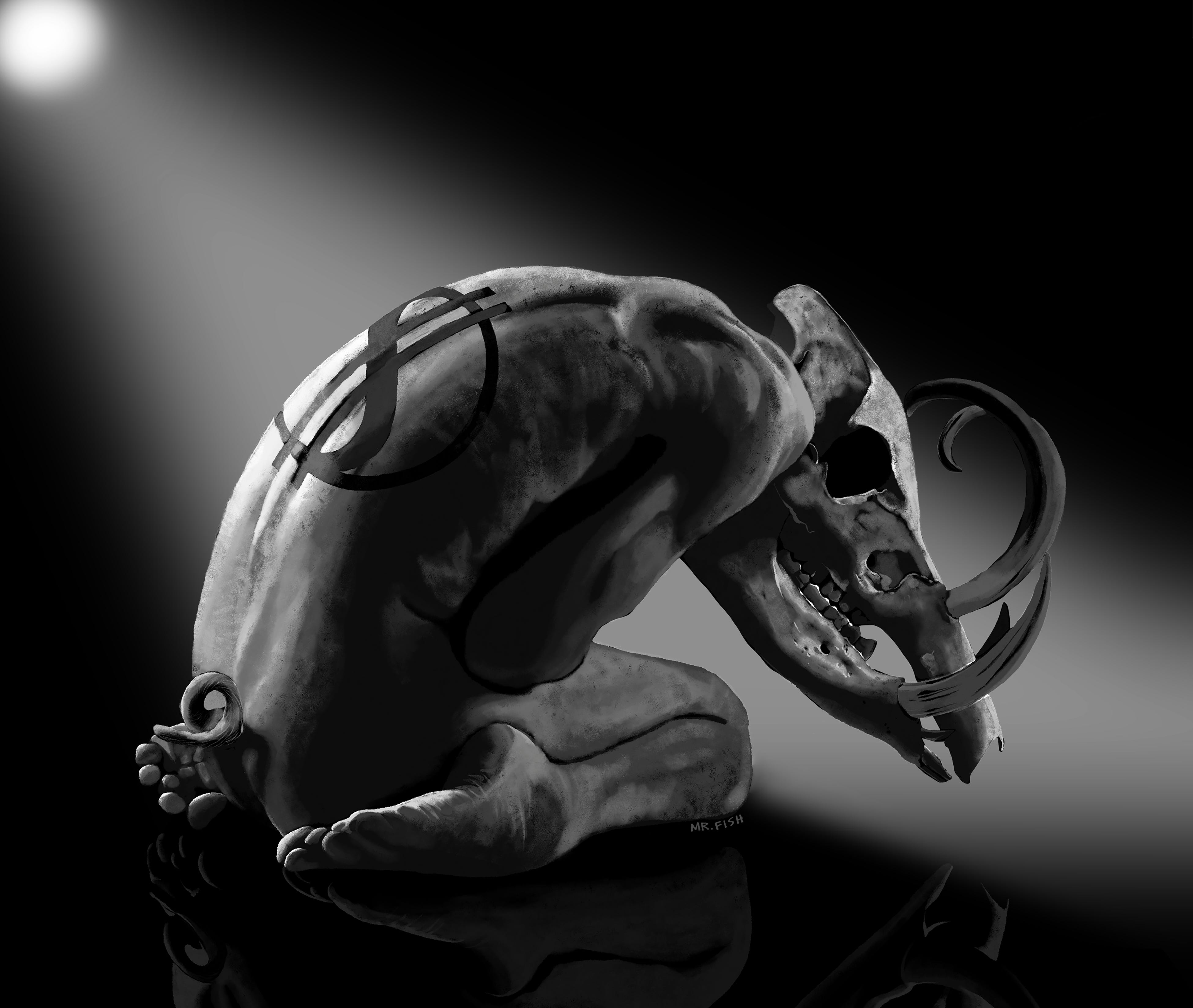
Listen to this Article: "America’s Theater of the Absurd"
Narrated by Eunice WongText originally published January 8, 2023Macdeath - by Mr. FishOur political class does not govern. It entertains. It plays its assigned role in our fictitious democracy, howling with outrage to constituents and selling them out. The Squad and the Progressive Caucus have no more intention of fighting for universal health care, workers’ rights or defying the war machine than the Freedom Caucus fights for freedom. These political hacks are modern versions of Sinclair Lewis’s slick con artist Elmer Gantry, cynically betraying a gullible public to amass personal power and wealth. This moral vacuity provides the spectacle, as H.G. Wells wrote, of “a great material civilization, halted, paralyzed.” It happened in Ancient Rome. It happened in Weimar Germany. It is happening here.Governance exists. But it is not seen. It is certainly not democratic. It is done by the armies of lobbyists and corporate executives, from the fossil fuel industry, the arms industry, the pharmaceutical industry and Wall Street. Governance happens in secret. Corporations have seized the levers of power, including the media. Growing obscenely rich, the ruling oligarchs have deformed national institutions, including state and federal legislatures and the courts, to serve their insatiable greed. They know what they are doing. They understand the depths of their own corruption. They know they are hated. They are prepared for that too. They have militarized police forces and have built a vast archipelago of prisons to keep the unemployed and underemployed in bondage. All the while, they pay little to no income tax and exploit sweatshop labor overseas. They lavishly bankroll the political clowns who speak in the vulgar and crude idiom of an enraged public or in the dulcet tones used to mollify the liberal class.Donald Trump’s seminal contribution to the political landscape is the license to say in public what political decorum once prohibited. His legacy is the degradation of political discourse to the monosyllabic tirades of Shakespeare’s Caliban, which simultaneously scandalize and energize the kabuki theater that passes for government. This burlesque differs little from the German Reichstag, where the final cri de coeur by a mortally ill Clara Zetkin against fascism on August 30, 1932, was met with a chorus of taunts, insults and jeers by Nazi deputies.H.G. Wells called the old guard, the good liberals, the ones who speak in measured words and embrace reason, the “inexplicit men.” They say the right things and do nothing. They are as vital to the rise of tyranny as are the Christian fascists, a few of whom held the House hostage last week by blocking 14 rounds of voting to prevent Kevin McCarthy from becoming Speaker. By the time McCarthy was elected on the 15th round, he had caved on nearly every demand made by the obstructionists, including permitting any one of the 435 members of the House to force a vote for his removal at any time, thus guaranteeing political paralysis.The internecine warfare in the House is not between those who respect democratic institutions and those who do not. McCarthy, backed by Trump and far-right conspiracy theorist Marjorie Taylor Greene, is as morally bankrupt as those trying to bring him down. This is a battle for control among con artists, charlatans, social media celebrities and mobsters. McCarthy joined the majority of House Republicans in support of a Texas lawsuit to void the 2020 Presidential result by preventing four states — Pennsylvania, Michigan, Wisconsin and Georgia — from casting electoral votes for Biden. The Supreme Court refused to hear the lawsuit. There isn’t much in the Freedom Caucus extremist positions, which resemble those of Alternative fur Deutschland in Germany and Fidesz in Hungary, McCarthy doesn’t embrace. They advocate greater tax cuts for the wealthy, further deregulation of corporations, a war on migrants, more austerity programs, champion white supremacy and accuse liberals and conservatives who do not line up behind Trump of treason.“I want you to watch Nancy Pelosi hand me that gavel. It will be hard not to hit her with it,” McCarthy said in audio posted to YouTube by a Main Street Nashville reporter in 2021. Pelosi, for her part, called McCarthy a “moron,” after he said that a possible renewed mask mandate was “a decision conjured up by liberal government officials who want to continue to live in a perpetual pandemic state.” This is what passes for political discourse. I yearn for the time when political rhetoric was geared to the educational level of a 10-year-old child or an adult with a sixth or seventh-grade education. Now we speak in imbecilic clichés.This political vacuum has spawned anti-politics, or what the writer Benjamin DeMott called “junk politics,” which “personalizes and moralizes issues and interests instead of clarifying them.” Junk politics “maximizes threats from abroad while miniaturizing large, complex problems at home. It’s a pol
The Chris Hedges Report with Boyah J. Farah about his new book "America Made Me a Black Man"
Boyah J. Farah fled the war in Somalia arriving in the United States as a refugee with his mother and siblings when he was fifteen. His romantic dreams of America quickly ran into the dark undercurrents of American racism. Living in a housing project in Bedford, Massachusetts he was forced to discover the curse of being Black in America, the daily humiliations and small, but insidious ways he was made to constantly feel an outsider by whites. He had experienced tribalism in Somalia. He saw in the divide between whites and Blacks, especially with the political ascendancy of Donald Trump and the far right, the same kind of deadly tribalism here, one that usually leads to internecine violence. He watched as other Somali families succumbed to the poison of American racism, writing that although they had survived the war in Africa, American broke them and carried them off. America is democratic, he concedes sardonically, for every Black person is, in the end, simply another disposable Black body. Joining me to discuss his memoir America Made Me a Black Man is Boyah J. Farah. This is a public episode. If you'd like to discuss this with other subscribers or get access to bonus episodes, visit chrishedges.substack.com/subscribe
The Chris Hedges Report Podcast with Mickey Huff & Nolan Higden about the dangerous bifurcation of the United States into antagonistic tribes that can no longer communicate
Democratic debate and dialogue have all but vanished in the United States. There is widespread censorship imposed by social media platforms, private corporations about which we know nothing, while they know everything about us. Mainstream news outlets champion censorship and deplatforming in the name of democracy. Brian Seltzer, for example, on CNN justified banning Donald Trump form social media because, he said, “reducing a liar’s reach is not the same as censoring freedom of speech.” Sean Hannity on Fox News spent 40 minutes talking over former New York Mayor Bill de Blasio, the same tactic CNBC host Rick Santelli used to shut down debate about COVID-19. The impulse is to silence opponents rather than engage in dialogue and debate. This extreme polarization, as Steven Levitsky and Daniel Ziblatt write in How Democracies Die, is one of the primary signs of a dying democracy. Nolan Higdon, a lecturer at Merrill College and the Education Department at University of California, Santa Cruz and Mickey Huff, the director of Project Censored and president of the nonprofit Media Freedom Foundation, join me to discuss this dangerous inability to communication among antagonistic groups and their new book Let’s Agree to Disagree: A Critical Thinking Guide to Communication, Conflict Management, and Critical Media Literacy. This is a public episode. If you'd like to discuss this with other subscribers or get access to bonus episodes, visit chrishedges.substack.com/subscribe

Listen to this Article: "The Democrats are Now the War Party"
Narrated by Eunice WongText originally published 12/25/2022Democratic Dark Side - by Mr. FishThe Democrats position themselves as the party of virtue, cloaking their support for the war industry in moral language stretching back to Korea and Vietnam, when President Ngo Dinh Diem was as lionized as Ukrainian President Volodymyr Zelensky. All the wars they support and fund are “good” wars. All the enemies they fight, the latest being Russia’s Vladimir Putin and China’s Xi Jinping, are incarnations of evil. The photo of a beaming House Speaker Nancy Pelosi and Vice President Kamala Harris holding up a signed Ukrainian battle flag behind Zelensky as he addressed Congress was another example of the Democratic Party’s abject subservience to the war machine.The Democrats, especially with the presidency of Bill Clinton, became shills not only for corporate America but for the weapons manufacturers and the Pentagon. No weapons system is too costly. No war, no matter how disastrous, goes unfunded. No military budget is too big, including the $858 billion in military spending allocated for the current fiscal year, an increase of $45 billion above what the Biden administration requested. The historian Arnold Toynbee cited unchecked militarism as the fatal disease of empires, arguing that they ultimatley commit suicide. There once was a wing of the Democratic Party that questioned and stood up to the war industry: Senators J. William Fulbright, George McGovern, Gene McCarthy, Mike Gravel, William Proxmire and House member Dennis Kucinich. But that opposition evaporated along with the antiwar movement. When 30 members of the party’s progressive caucus recently issued a call for Biden to negotiate with Putin, they were forced by the party leadership and a warmongering media to back down and rescind their letter. Not that any of them, with the exception of Alexandria Ocasio-Cortez, have voted against the billions of dollars in weaponry sent to Ukraine or the bloated military budget. Rashida Tlaib voted present. The opposition to the perpetual funding of the war in Ukraine has come primarily from Republicans, 11 in the Senate and 57 in the House, several, such as Marjorie Taylor Greene, unhinged conspiracy theorists. Only nine Republicans in the House joined the Democrats in supporting the $1.7 trillion spending bill needed to prevent the government from shutting down, which included approval of $847 billion for the military — the total is boosted to $858 billion when factoring in accounts that don’t fall under the Armed Services committees’ jurisdiction. In the Senate, 29 Republicans opposed the spending bill. The Democrats, including nearly all 100 members of the House Congressional Progressive Caucus, lined up dutifully for endless war. This lust for war is dangerous, pushing us into a potential war with Russia and, perhaps later, with China — each a nuclear power. It is also economically ruinous. The monopolization of capital by the military has driven U.S. debt to over $30 trillion, $6 trillion more than the U.S. GDP of $24 trillion. Servicing this debt costs $300 billion a year. We spend more on the military than the next nine countries, including China and Russia, combined. Congress is also on track to provide an extra $21.7 billion to the Pentagon — above the already expanded annual budget — to resupply Ukraine.“But those contracts are just the leading edge of what is shaping up to be a big new defense buildup,” The New York Times reported. “Military spending next year is on track to reach its highest level in inflation-adjusted terms since the peaks in the costs of the Iraq and Afghanistan wars between 2008 and 2011, and the second highest in inflation-adjusted terms since World War II — a level that is more than the budgets for the next 10 largest cabinet agencies combined.”The Democratic Party, which, under the Clinton administration aggressively courted corporate donors, has surrendered its willingness to challenge, however tepidly, the war industry. “As soon as the Democratic Party made a determination, it could have been 35 or 40 years ago, that they were going to take corporate contributions, that wiped out any distinction between the two parties,” Dennis Kucinich said when I interviewed him on my show for The Real News Network. “Because in Washington, he or she who pays the piper plays the tune. That’s what’s happened. There isn’t that much of a difference in terms of the two parties when it comes to war.”In his 1970 book “The Pentagon Propaganda Machine,” Fulbright describes how the Pentagon and the arms industry pour millions into shaping public opinion through public relations campaigns, Defense Department films, control over Hollywood and domination of the commercial media. Military analysts on cable news are universally former military and intelligence officials who sit on boards or work as consultants to defense industries, a fact they rarely disclose to the public. Barry R. McCaffrey, a retired four-s

The Chris Hedges Report Podcast with Helen Benedict and Eyad Awwadawnan on the efforts by industrial nations to lock out the 84 million forcibly displaced migrants around the globe.
There are some 84 million forcibly displaced people in the world, more than at any time since World War II. They are fleeing a combination of war, civil unrest, religious conflict, poverty, persecution, local violence and the climate crisis. As conditions worsen, authoritarian governments are on the rise that denounce immigrants and refugees as contaminants and impose draconian policies to turn them back, including at sea where whole boats of refugees are drowned. Pope Francis calls the Mediterranean “the largest cemetery in Europe. The persecution and abuse of refugees is becoming policy, including in Europe, Great Britain, Australia and the United States. It does not matter that the U.S. bears a direct responsibility for the more than 37 million people who have fled the wars in Iraq, Syria and Afghanistan since 2001, not to mention the U.S.-backed wars Central America. The U.S. proxy war in Ukraine has only exacerbated the crisis. The EU is providing money to Greece and Turkey to detain and prevent refugees from seeking asylum in other European countries. The EU is testing sound canons to blast at asylum seekers trying to cross into Greece from Turkey. The coast guards of Greece and the EU push refugees – including children – back out to sea, causing many to drown. Greece, which imprisons seven out of ten asylum seekers, denies new arrivals, including Afghans, the right to request asylum, unless these arrivals are Ukrainians. The increased hostility to refugees in the United States, Great Britain, Italy, Belarus, Poland, Croatia, Greece, Spain and Hungary are the building blocks of a new and heartless world order, once where the wealthy industrialized nations of the earth wall off the destitute to suffer and die. Joining me to discuss the crisis is Helen Benedict, who with Eyad Awwadawnan, wrote Map of Hope and Sorrow: Stories of Refugees in Greece. This is a public episode. If you'd like to discuss this with other subscribers or get access to bonus episodes, visit chrishedges.substack.com/subscribe

The Chris Hedges Report Podcast: Dystopia, octopus intelligence, and what makes us human with Ray Nayler
In Ray Nayler’s novel The Mountain in the Sea he explores the marine habitat of a hyperintelligent species of octopus, endowed with its own language and culture, is seized by a global tech corporation determined to harness this non-human intelligence for profit in new systems of artificial intelligence. This dystopian future world is one of total surveillance, vast polluted dead zones, climate breakdown, a pervasive alienation, frequent targeted assassinations by governments and corporations against those who resist bondage as well as the brutal enslavement of workers, especially those from the global south. The lack of empathy we have for each other is reflected in the lack of empathy for other life forms. Our last common ancestor with octopuses is a flatworm that inched along the sea floor 750 million years ago. At the point we and all cephalopods traveled down separate evolutionary pathways. We already know that Octopuses, with nine brains, including one for each tentacle, and three hearts, are highly intelligent. They can change their color and shape to render themselves indistinguishable from the surrounding landscape. They can recognize individuals outside of their own species, including human faces. They can escape from sealed aquariums and walk around at night. They have been observed using rocks, broken shells, broken glass, bottle caps and coconut shells as tools and construction material for underwater cities. As Peter Godfrey Smith writes in Other Minds: The Octopus, the Sea, and The Deep Origins of Consciousness: “Cephalopods are an island of complexity in the sea of invertebrate animals. Because our most recent common ancestor was so simple and lies so far back, cephalopods are an independent experiment in the evolution of large brains and complex behavior. If we can make contact cephalopods as sentient beings, it is not because of a shared history, not because of kinship, but because evolution built minds twice over. This is probably the closest we will come to meeting an intelligent alien.” And yet, as Nayler writes, we know little about them, how they think and communicate, how to interpret an intelligence so foreign to humankind, one that has the potential to rival our own. This lack of connectedness, with our own species and other species, Naylar argues, dooms us. Joining me to discuss his novel The Mountain the Sea is Ray Nayler. This is a public episode. If you'd like to discuss this with other subscribers or get access to bonus episodes, visit chrishedges.substack.com/subscribe
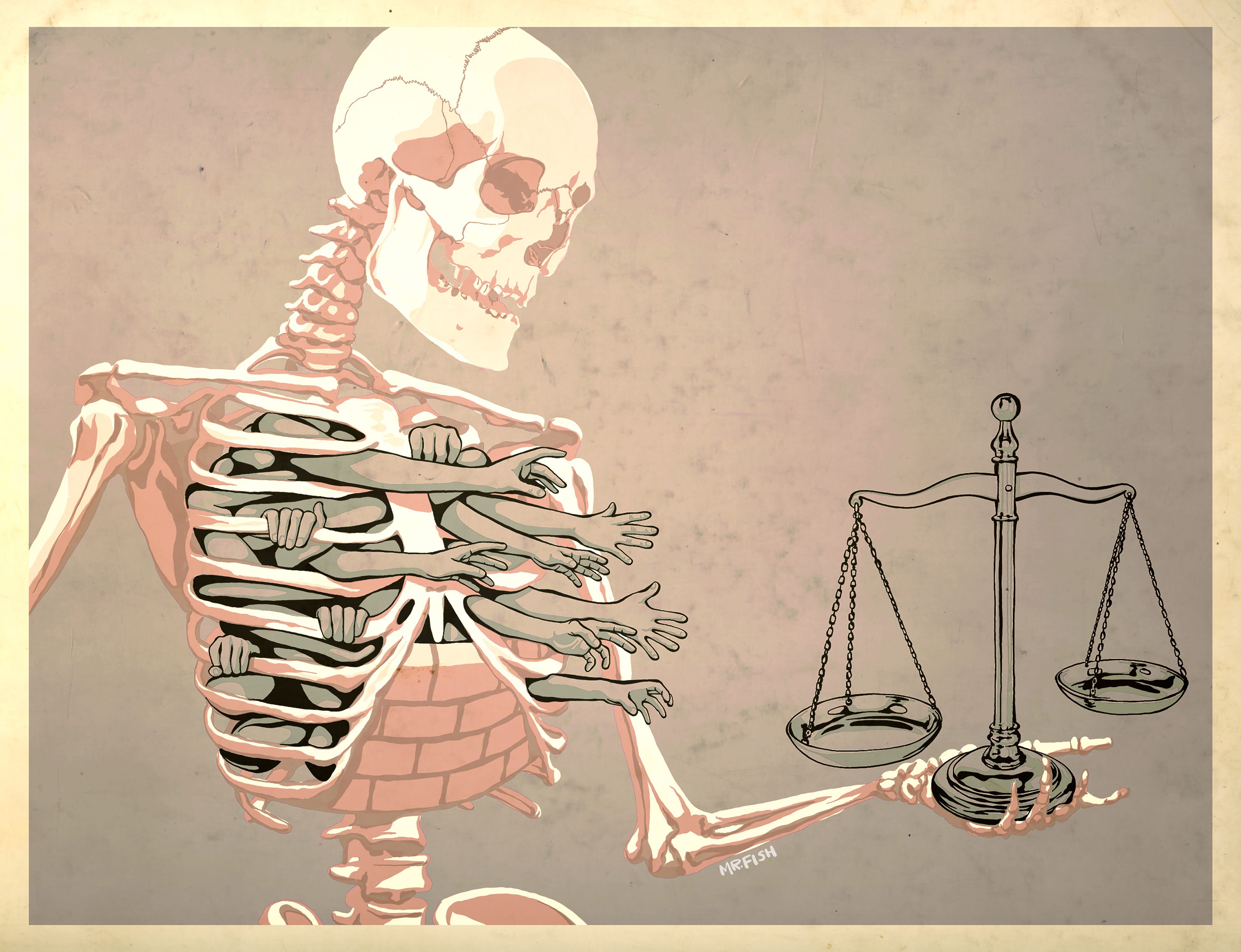
Listen to This Article: "Teaching Aleksandr Solzhenitsyn’s The Gulag Archipelago in Prison"
Narrated by Eunice WongOriginal Text published December 18, 2022No Justice No Peace - by Mr. FishTwo nights a week for the last four months, I plowed my way through the three volumes of Aleksandr Solzhenitsyn’s The Gulag Archipelago with 17 students in the college degree program offered by Rutgers University in the New Jersey prison system. No one in my class endures the extremities imposed on the millions who worked as slave labor, and often died, in the Soviet gulag, or work camps, set up after the Russian revolution. The last remnants of the hundreds of camps were disbanded in 1987 by Mikhail Gorbachev, himself the grandson of gulag prisoners. Nor do they experience the treatment of those held in Abu Ghraib, Guantanamo and our secret black sites who undergo mock trials and executions, torture, extreme sensory deprivation and abuse that comes disturbingly close to replicating the hell of the gulag.Nevertheless, what Solzhenitsyn underwent during his eight years as a prisoner in the labor camps was familiar to my students, most of whom are people of color, poor, often lacking competent legal representation and almost always coerced into signing confessions or accepting plea deals that include crimes, or versions of crimes they were involved with, which were often false. Over 95 percent of prisoners are pressured to plead out in the U.S. court system, which is not capable of providing jury trials for every defendant entitled to one, were they to actually demand one. In 2012, the Supreme Court said that “plea bargaining . . . is not some adjunct to the criminal justice system; it is the criminal justice system.”My students, like Soviet prisoners, or zeks, live in a totalitarian system. They too work as bonded laborers, putting in 40-hour work weeks at prison jobs and being paid $28 a month, money used to buy overpriced basic necessities in the commissary, as was true in the gulag. They too are identified by their assigned numbers, wear prison uniforms and have surrendered the rights that come with citizenship. They are deprived of nearly all personal possessions; stripped of all the outward markers of biography and individuality; forced to endure humiliation, including stripping naked before the guards; cannot express anger at their captors without severe retribution; endure military-style regimentation; cope with constant surveillance, including, as in the gulag, a network of prison informers; can be sent to prolonged isolation; are cut off from their families, as well as the company of women; and given lengthy sentences that, short of a miracle, will mean many will die in prison. They, too, have been demonized by the wider society, forced, as were those released into exile from the gulag, into a criminal caste system that punishes them for the remainder of their lives.They live in what the sociologist Gresham Sykes called A Society of Captives, with its peculiar customs, slang, rituals and codes of behavior, all of which were replicated in the gulag as they have been in prisons throughout the centuries.U.S. prisons, which hold around 20 percent of the world’s prison population, although we are less than five percent of the global population, are forms of social control, along with militarized police, propaganda campaigns that seek to make us fearful and therefore passive, wholesale surveillance of every citizen, and a court system that has stripped legal protection from the poor — in effect, criminalizing poverty. The deindustrialization of the U.S. and impoverishment of the working class, especially people of color, has effectively severed many from society, turning them into outcasts who live in internal colonies under the boot of paramilitary armies of occupation.The U.S. legal system, as under Stalin, shares a fondness for quotas, laying out in advance the number of arrests it needs, often for such non-crimes as selling loose cigarettes or having broken tail lights. Many police departments, prosecutor’s offices and even counties in the U.S. depend on revenue generated by imprisonment, tickets, fines and civil asset forfeiture — a form of legalized theft whereby the state can seize assets, including cash, cars and homes, alleged to be connected to unlawful activity, generally without requiring a conviction or even a criminal charge. A 2019 report by Governing, a research and analysis journal that focuses on local and state policies, found that nearly 600 small towns and cities across the U.S. obtain over 10 percent of their overall budget from such means. This increased to 20 percent of the budget for at least 284 towns and cities and to over 50 percent for 80 of them.“Look for the brave in prison,” Solzhenitsyn wrote in The Gulag Archipelago echoing an old proverb, “and the stupid among the political leaders!”The power of his book, arguably one of the greatest works of nonfiction from the twentieth century, is that it is as much a meditation on power, resistance and living a moral life, as it is a chro
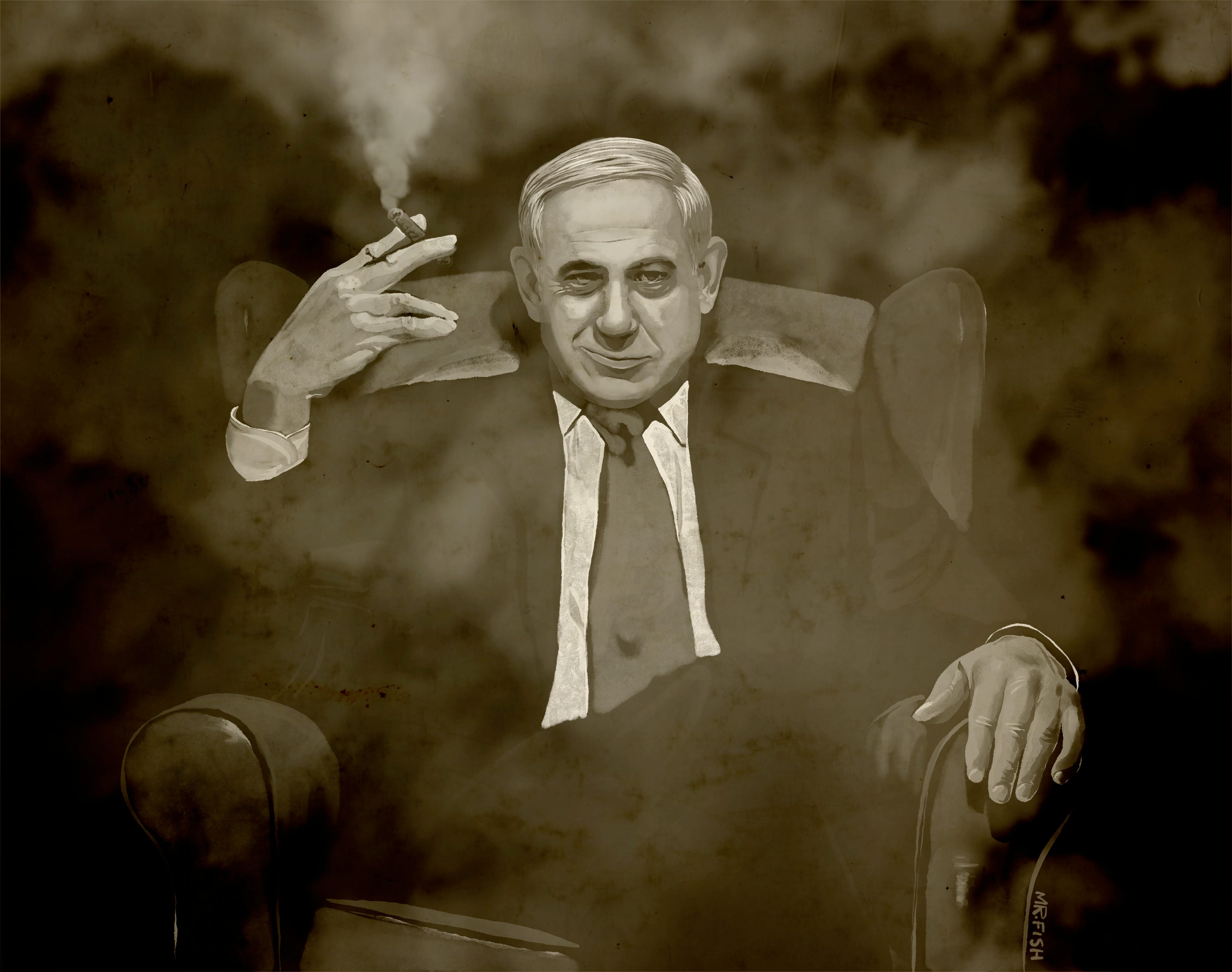
Listen to this Article: “Israel and the Rise of Jewish Fascism”
Narrated by Eunice WongText originally published Dec 11, 2022Where there’s smoke - by Mr. FishBenjamin Netanyahu’s proposed coalition government of Jewish extremists, fanatic Zionists and religious bigots represents a seismic change in Israel, one that will exacerbate Israel’s pariah status, erode external support for Israel, fuel a third Palestinian uprising, or intifada, and create irreconcilable political divides within the Jewish state. Alon Pinkas, writing in the Israeli newspaper Haaretz, calls the coalition government, scheduled to take power in one or two weeks, “a kakistocracy extraordinaire: government by the worst and least suitable collection of ultranationalists, Jewish supremacists, anti-democrats, racists, bigots, homophobes, misogynists, corrupt and allegedly corrupt politicians. A ruling coalition of 64 lawmakers, of whom 32 are either ultra-Orthodox or religious Zionist. Certainly not a coalition Zeev Jabotinsky, the father of Revisionist Zionism, or Menachem Begin, the founder of Likud, could have ever imagined.” Itamar Ben-Gvir, from the ultra-nationalist Otzma Yehudit, “Jewish Power,” party, will be the new minister for internal security. Otzma Yehudit is populated with members of Rabbi Meir Kahane’s Kach party, which was banned from running for the Knesset in 1988 for espousing a “Nazi-like ideology” that included advocating the ethnic cleansing of all Palestinian citizens of Israel as well as all Palestinians living under Israeli military occupation. His appointment, along with that of other far-right ideologues, including Bezalel Smotrich, to be in charge of the Occupied Palestinian Territories (OPT), effectively jettisons the old tropes liberal Zionists used to defend Israel – that it is the only democracy in the Middle East, that it seeks a peaceful settlement with the Palestinians in a two-state solution, that extremism and racism have no place in Israeli society and that Israel must impose draconian forms of control on the Palestinians to prevent terrorism. Ben-Gvir and Smotrich represent the dregs of Israeli society, one that promotes “Jewish identity” and “Jewish nationalism” in a Zionist version of fascism’s call for blood and soil. They are Israel’s equivalent of Lauren Boebert and Marjorie Taylor Greene. Their Religious Zionist bloc is now the third largest in the Knesset.Ben-Gvir, who was rejected for army service because of his extremism, stole a hood ornament from Yitzak Rabin’s car a few weeks before the then-Prime Minister was assassinated in 1995 by Jewish extremist, Yigal Amir. Amir, like many far-right Israelis, including arguably Netanyahu himself, considered Rabin’s support for the Oslo Accords to be an act of treason. “We got to his car, and we’ll get to him too,” Ben-Gvir said at the time. He calls for the deportation of Palestinians who confront Israeli soldiers, followers of the anti-Zionist ultra-Orthadox Neturei Karta movement, as well as Israeli-Arab Knesset member Ayman Odeh and the anti-Zionist Marxist Knesset member Ofer Cassif, who is Jewish. The old tropes Israel employed to justify itself were always more fiction than reality. Israel long ago became an apartheid state. It directly controls through its illegal Jewish-only settlements, restricted military zones and army compounds, over 60 percent of the West Bank and has de facto control over the rest. There are 65 laws that directly or indirectly discriminate against Palestinian citizens of Israel and those living in the OPT.The old tropes are being replaced by screed-filled diatribes that paint Palestinians and Arabs (Muslim and Christian) as contaminants and an existential threat to Israel. This hate speech is accompanied by a vicious internal campaign to silence Jewish “traitors,” especially those who are liberal or left-wing and secular. An Otzma Yehudit-run autocracy will shut down democratic debate, eviscerate the protections of civil society and further codify what has long been reality – Jewish supremacy and the ongoing ethnic cleansing of Palestinians from their own land that dates back to the founding of Israel in the 1940s.The once unthinkable is now thinkable, such as formally annexing large sections of the West Bank, including “Area C” where up to 300,000 Palestinians live. The killing of about 140 Palestinians this year, including the American journalist Shireen Abu Akleh, is the worst death toll since 2006 (not including major escalations of violence such as Israeli bombardments of Gaza). It has been accompanied by Palestinian attacks that have left 30 Israelis dead. The new government will accelerate these killings along with house and school demolitions, expulsions of Palestinians from East Jerusalem, the uprooting of Palestinian olive orchards, mass imprisonment and the ethnic cleansing of Palestinians. The totality of these crimes amount to the international crime of genocide, the New York-based Center for Constitutional Rights explained in 2016. Gaza, the world’s largest open-air pri
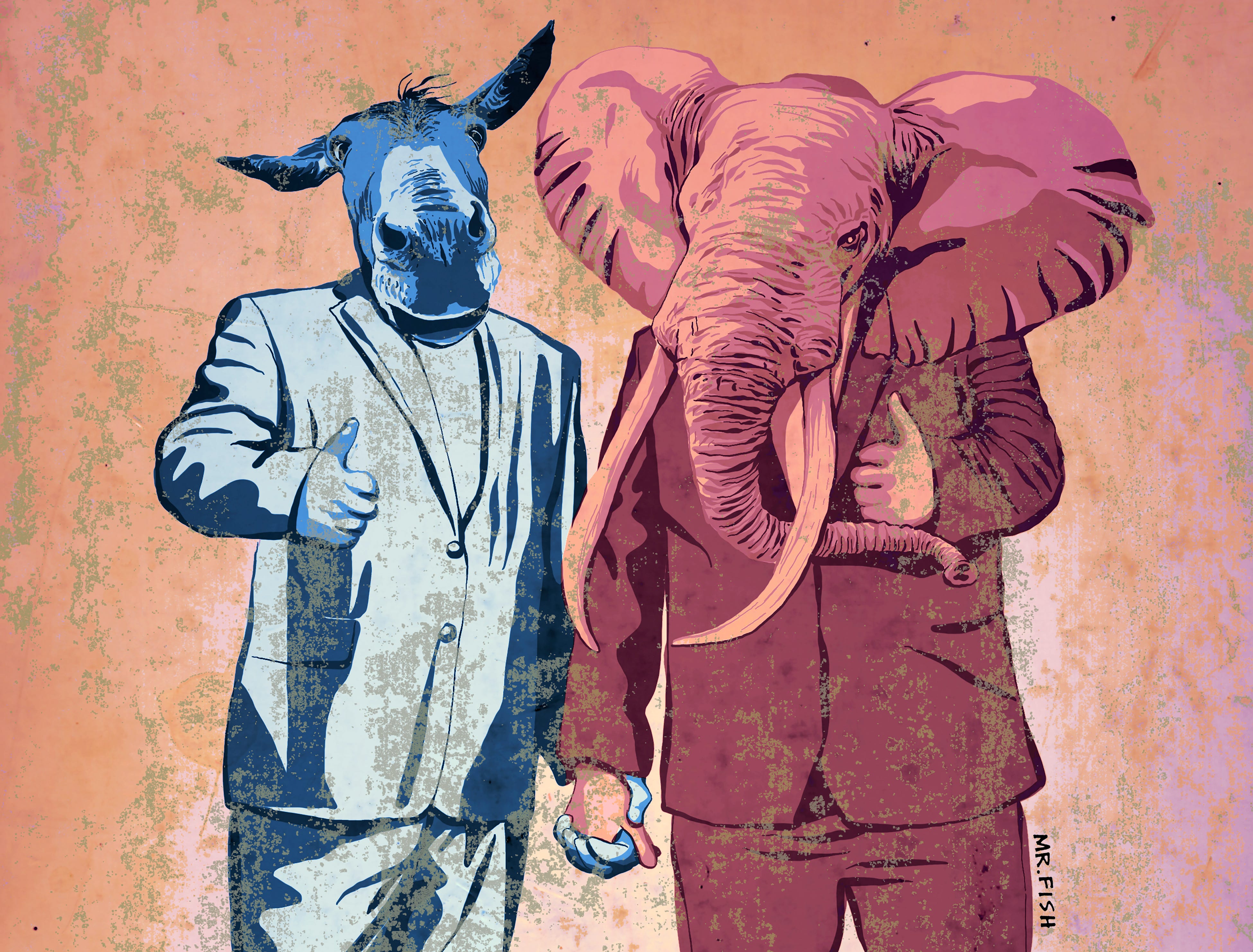
Listen to this Article: "Know Thine Enemy"
Narrated by Eunice WongText originally published Dec. 4, 2022Power Couple - by Mr. FishThe Congressional decision to prohibit railroad workers from going on strike and force them to accept a contract that meets few of their demands is part of the class war that has defined American politics for decades. The two ruling political parties differ only in rhetoric. They are bonded in their determination to reduce wages; dismantle social programs, which the Bill Clinton administration did with welfare; and thwart unions and prohibit strikes, the only tool workers have to pressure employers. This latest move against the railroad unions, where working conditions have descended into a special kind of hell with massive layoffs, the denial of even a single day of paid sick leave, and punishing work schedules that include being forced to “always be on call,” is one more blow to the working class and our anemic democracy.The rage by workers towards the Democratic Party, which once defended their interests, is legitimate, even if, at times, it is expressed by embracing proto-fascists and Donald Trump-like demagogues. Dating back to the Clinton administration with NAFTA, the greatest betrayal of the working class since the 1947 Taft-Hartley Act, the Democratic Party has become a full partner in the corporate assault on workers. The cloying feel-your-pain rhetoric, a staple of the Joe Biden White House, is offset by a hypocritical subservience to the billionaire class.In 1926, the havoc wreaked by rail strikes led to the federal government passing the Railway Labor Act to give itself the power to impose labor settlements on the rail industry. The Biden administration used this authority to broker a tentative labor agreement that would ensure a 24 percent pay increase by 2024, annual $1,000 bonuses and a freeze on rising health care costs. But workers would be permitted only one paid personal day and no paid sick leave. Of 12 unions voting on the deal, four of them — representing 56 percent of union membership in the industry — refused to ratify it. Biden signed the legislation into law on Friday.The railroad barons refuse to permit sick days because they have stripped the railroads down to skeleton crews in a process known as precision scheduled railroading, or PSR. In essence, no spare labor is available, which is why the reduced labor force is subjected to such punishingly short periods of time off and onerous working conditions.Class struggle defines human history. We are dominated by a seemingly omnipotent corporate elite. Hostile to our most basic rights, this elite is disemboweling the nation; destroying basic institutions that foster the common good, including public schools, the postal service and health care; and is incapable of reforming itself. The only weapon left to thwart this ongoing pillage is the strike. Workers have the collective power to slash profits and cripple industry, which is why the ruling class has gone to such lengths to defang unions and outlaw strikes. A rail freight strike, it is estimated, would cost the U.S. economy $2 billion a day, with daily losses increasing the longer a strike continued.The few unions that remain — only 10.7 percent of the workforce is unionized — have been largely domesticated, demoted into obsequious junior partners in the capitalist system. As of January 2022, private-sector unionization stood at its lowest point since the passage of the National Labor Relations Act of 1935. And yet, 48 percent of U.S. workers say they would like to belong to a union.Railroad workers have been especially hard hit. The workforce has shrunk from nearly 540,000 in 1980 to some 130,000 today. The consolidation of the rail industry means there are only seven Class I freight companies, with four of those companies controlling 83 percent of rail traffic. Service on the nation’s rail lines, along with working conditions and wages, has deteriorated as Wall Street squeezes the big railroad conglomerates for greater and greater profits. Indeed, the fragility of the rail system led to huge backlogs and delays during the pandemic.The Democrats insist they are the party of the working class. Joe Biden calls himself “a proud pro-labor president.” But they pile up one empty promise after another. In 2020, they promised, for example, that with control of the White House and both branches of Congress, they would pass a law to strengthen collective bargaining. Instead, they revoked the collective bargaining power of one of the few unionized industries that retains it. They promised to raise the minimum wage. They failed. They promised a national paid family and medical leave program allowing all employees to take up to 12 weeks of paid time off. It never happened. They promised to impose a federal tax rate on corporations ranging from 21 percent to 28 percent, so that “wealthy Americans and big corporations pay their fair share.” The proposed tax increase was scuttled. They promised to pass legislati

The Chris Hedges Report Podcast with Dennis Kucinich on the folly of the proxy war in Ukraine and how the military-industrial-complex has become the enemy from within.
There was once a wing of the Democratic Party that stood up to the war industry. J. William Fulbright. George McGovern. Mike Gravel. William Proxmire. But that was decades ago. The new Democrats, especially with the presidency of Bill Clinton, became shills not only for corporate America but the arms industry. No weapons system is too costly. No war, no matter how disastrous, goes unfunded. The massive military budget, with $858 billion in military spending allocated for Fiscal Year 2023, an increase of $45 billion over the Biden administration’s budget request, and nearly $80 billion over the amount appropriated by Congress for the current fiscal year, keeps growing. When 30 members of the party’s progressive caucus recently issued a call for Joe Biden to negotiate with Vladimir Putin they were forced by the party leadership and a war mongering media to back down and rescind their letter. What happened to the Democratic Party? Why has it become impossible to question war and the massive expenditures on arms? Why is such questioning political suicide? Why can’t a Democrat ask, especially at a time of economic hardship and huge deficits, how much we are going to divert to the war in Ukraine which has already consumed some $ 60 billion – as much as we spend on the State Department and AID -- with no end in sight? Joining me to discuss the extinction of anti-war Democrats in Dennis Kucinich, a former presidential candidate, who served eight terms in the House of Representatives before the Democratic Party gerrymandered his district to ensure his defeat. This is a public episode. If you'd like to discuss this with other subscribers or get access to bonus episodes, visit chrishedges.substack.com/subscribe
The Chris Hedges Report Podcast with Adam Hochschild on his new book American Midnight: The Great War, A Violent Peace, and Democracy's Forgotten Crisis
High school history textbooks have as remarkable ability to leave out one of the most crucial moments in 20th century history that took place during World War I and its aftermath. In popular American mythology we leap from the war to the roaring twenties. This willful historical amnesia blots out one of the darkest periods in American history – the severe state repression of political dissidents, the press, labor and Black Americans. This state repression saw the widespread use of political repression, mass imprisonments, deportations, torture, vigilante violence, censorship, killings of Black Americans and the crushing of labor movements. It was, as Adam Hochschild writes, a “story of how a war supposedly fought to make the world safe for democracy became the excuse for a war against democracy at home.” It is dangerous to erase memory, for it condemns us to repeat the sins of the past. “The struggle of man against power is the struggle of memory against forgetting,” Milan Kundera wrote. Joining me to discuss this crucial moment in American history, one that ominously reverberates today, is Adam Hochschild author of American Midnight: The Great War, A Violent Peace, and Democracy’s Forgotten Crisis. This is a public episode. If you'd like to discuss this with other subscribers or get access to bonus episodes, visit chrishedges.substack.com/subscribe