The Changelog: Software Development, Open Source
1,014 episodes — Page 8 of 21

How to write a good comment (News)
David Hugh-Jones has a lot to say about what makes a good comment, Hugging Face released a distilled variant of Whisper for speech recognition, The New Stack reports on C++ creator Bjarne Stroustrup’s plan for bringing safety to the language, Jeff Sandberg declares that CSS is fun again & Jose M. Gilgado praises the beauty of finished software.
Beat freak in residence (Friends)
We're joined this week by the beat freak in residence himself, the mysterious Breakmaster Cylinder. Listen along as we talk about how we make our beats, what inspires us for our music, and some behind the scenes on our latest albums.
Observing the power of APIs (Interview)
Jean Yang's research on programming languages at Carnegie Mellon led her to realize that APIs are *the* layer that makes or breaks quality software systems. Unfortunately, developers are underserved by tools for dealing with, securing & understanding APIs. That realization led her to found Akita Software, which led her to join Postman by way of acquisition. That move, at least in part, also led her to join us on this very podcast. We think you're going to enjoy this interview, we sure did.
What will React come up with Next? (News)
The hubbub of the web dev world right now is Next.js' integration of React Server Components, Kent C. Dodds writes up why he doesn't use Next, Lee Robinson responds with why he does, the NixOS team hits a milestone in their reproducible builds effort & OpenSign is an open source alternative to DocuSign.
Protecting screen time (Friends)
Jared Henderson joins us to discuss the state of the art in software parental controls and how we protect our children and lock down our home networks from the constant onslaught of malicious and unwanted content.
ANTHOLOGY — The way of open source (Interview)
This week we’re taking you to the hallway track of All Things Open 2023 in Raleigh, NC. Today’s episode features: Matthew Sanabria (former Engineer at HashiCorp working on Terraform Enterprise), Nithya Ruff (Chief Open Source Officer and Head of the Open Source Program Office at Amazon) & Jordan Harband (Open Source Maintainer-at-large with dependencies in most JavaScript apps out there. There has been many changes this year in open source, and each of these perspectives lends insight into challenging and changing waters happening right now in open source.
Next Level (Interview)
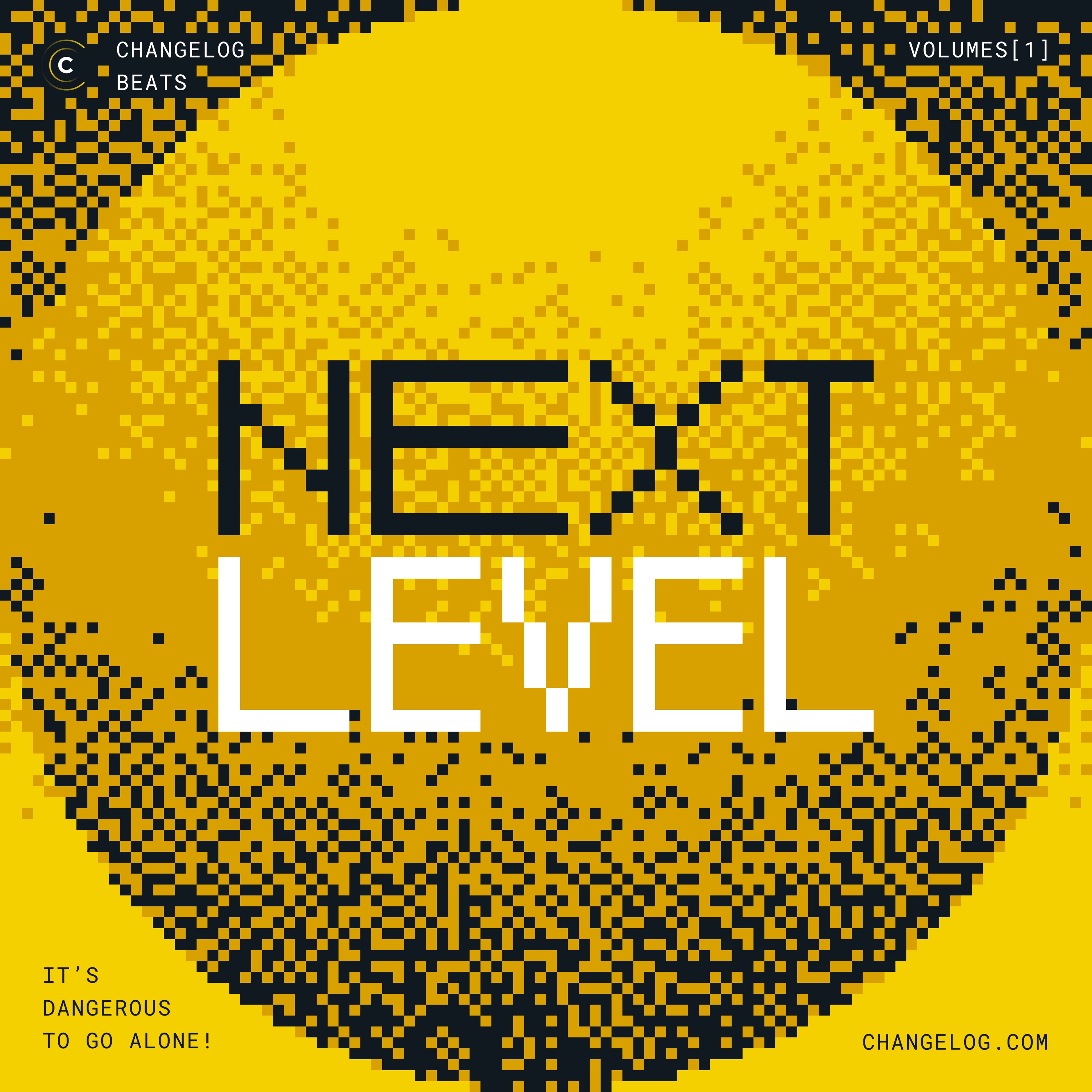
bonusListen to our Next Level album as a podcast! We grew up in the days of the Nintendo Entertainment System and the Sega Genesis. It's no surprise that so many of our tracks are inspired by the 8-bit and 16-bit music of our youth. From Castlevania to Contra, Sonic the Hedgehog, and many more — we were inspired by all the nostalgic soundtracks from the games that got us here, to give our pods one-of-a-kind vibes. If you've been head nodding to our beats during our shows and you've been wishing for a way to listen outside of our pods, then this release will be an absolute delight. It's dangerous to go alone! Take this on your next coding adventure or deep work session...
Introducing Changelog Beats (News)
Changelog drops full-length musical albums in collaboration with Breakmaster Cylinder, Justin Searls on why the right tools fail for the wrong reasons, The Unix Sheikh says we have too many level of abstractions, Adam at PiCockpit compares the newly-announced Raspberry Pi 5 to the competition & Jorge Medina assures us that we're not lacking creativity, we're just overwhelmed by content.
Human skills to pay the bills (Friends)
Long time friend KBall makes his "first" appearance on The Changelog by way of Changelog & Friends. You likely know Kevin from his panelist position on JS Party. Today he's sharing his passion for coaching and developing human skills.
Pushing ntfy to the next level (Interview)
This week Jerod goes solo with Philipp Heckel, creator of ntfy, to discuss this simple HTTP-based service that lets you send notifications to your phone or desktop via scripts from any computer. They discuss why he built it, how he built it, and what his plans are for the future of this beloved side hustle.
LMMS are the new LLMs (News)
Chip Huyen documents the shifting sand of large data models, Herman Õunapuu reviews the Zimaboard, Bryan Braun shares 4 of his most recent VSCode configuration discoveries & Swizec Teller wrote a great summary of the inaugural AI Engineer Summit.
Kaizen! Slightly more instant (Friends)
Gerhard joins us for the 12th Kaizen and this time talk about what we DIDN'T do. We were holding S3 wrong, we put some cash back in our pockets, we enabled HTTP/3, Brotli compression, and Fastly websockets, we improved our SLOs, we improved Changelog Nightly, and we're going to KubeCon 2023 in Chicago.
Coming to asciinema near you (Interview)
This week we're joined by Marcin Kulik to talk about his project asciinema. You've likely seen this out there in the wild — asciinema lets you record and share your terminal sessions in full fidelity. Forget screen recording apps that offer blurry video. asciinema provides a lightweight, text-based approach to terminal recording with lots of possibilities. Marcin shares the backstory on this project, where he'd like to take it, who's supporting him along the way, and we even included 11 minutes of bonus content for Changelog ++ subscribers.
RTO vs WFH & the case for strong static typing (News)
Jacob Kaplan-Moss' recommendations for remote vs colocated teams, Duarte Carmo created a neural search engine from Changelog transcripts, Tom Hacohen says strong static typing is a hill he's willing to die on, Orhun Parmaksız created a CLI that makes your keyboard sound like a typewriter & Luke Plant spits hard truths about simplicity.
The beginning of the end of physical media (Friends)
On September 29th, Netflix shipped its final DVDs, marking the end of an era in physical media. So, we invited our friend Christina Warren (aka film_girl) from GitHub to pour out a drink with us and lament the end of this golden age of access to the films we all love.
Tauri’s next big move (Interview)
This week we're joined by Daniel Thompson, Co-founder and Core Member of Tauri. It's been a year since we last had Daniel on the show. He catches us up on all things Tauri, their continued efforts towards Tauri 1.5 (which just released), the launch of CrabNebula and how they're the people pushing the Tauri ecosystem forward and building on top of it, the state of Electron vs Tauri, and UI with Tauri. He even surprises us with his idea of creating a web browser.
InfluxDB drops Go for Rust but gokrazy is really cool (News)
InfluxDB finishes a multi-year rewrite in Rust, the Raspberry Pi 5 will be on sale by the end of the month, the Bruno team builds an open source API explorer that's local-first and will never have a cloud, Xe Iaso thinks gokrazy is really cool & Matt Rickard shares lessons from years of debugging.
#define: a game of fake definitions (Friends)
Jerod gathers a group of friends for our first game show experiment here on Changelog & Friends! This is a game of obscure jargon, fake definitions & expert tomfoolery. Our contestants checked their imposter syndrome at the door, because they either know what these words mean or they fake it 'til they make their peers think they do.
Vibes from Strange Loop (Interview)
This week we're taking you to the hallway track of the final Strange Loop conference. First up is AnnMarie Thomas — an engineering, business, and education professor. AnnMarie gave one of the opening keynotes titled "Playing with Engineering." We also caught up with many first-time and multi-time attendees who shared their favorite moments from Strange Loop over the years. You'll hear from Richard Feldman, Colin Dean, and Taylor Troesh. Last up we talk with Pokey Rule. He gave a talk about his project called Cursorless which is a spoken language for structural code editing. Changelog++ subscribers get a super extended version of this episode which includes everything we recorded at Strange Loop. Become a Changelog++ subscriber
The missing sync layer for modern apps (News)
ElectricSQL is a project that offers a local-first sync layer for web and mobile apps, Ned Batchelder writes about the myth of the myth of "learning styles", Carl Johnson thinks XML is better than YAML, Berkan Sasmaz defines and describes "idempotency" & HyperDX is an open source alternative Datadog or New Relic.
Open source is at a crossroads (Interview)
This week we're joined by Steve O'Grady, Principal Analyst & Co-founder at RedMonk. The topic today is the definition of open source, the constant pressure on the true definition of the term, and the seemingly small but vocal minority that aim to protect that definition. In Steve's post _Why Open Source Matters_, he says "open source is at a crossroads" and there are some seeking to break the definition of open source to one that is more permissive to their desires, and they are closer than ever to achieving that goal. Today's conversation goes deep on this subject.
Death by a thousand microservices (News)
Andrei Taranchenko says the software industry is learning once again that complexity kills, Casey Muratori outlines a long list of Unity alternatives, Filip Szkandera builds a functioning (macro) processor for RISC-V & Matt Basta tells the tale of the time he built a web-based Excel clone inside Uber only to have it discarded a week later.
What do we want from a web browser? (Friends)
A hoy hoy! Our old friend Nick Nisi does his best to bring up TypeScript, Vim & Tmux as many times as possible while we discuss a new batch of web browsers, justify why we like the ones we do & try to figure out what it'd take to disrupt the status quo of Big Browser.
Attack of the Canaries! (Interview)
This week we're joined by Haroon Meer from Thinkst — the makers of Canary and Canary Tokens. Haroon walks us through a network getting compromised, what it takes to deploy a Canary on your network, how they maintain low false-positive numbers, their thoughts and principles on building their business (major wisdom shared!), and how a Canary helps surface network attacks in real time.
Bun 1.0 is here & Mojo is ready for download (News)
Bun 1.0 is out of the oven, Mojo is now available for local download, Vince Lwt asked 60+ LLMs a set of 20 questions & published the answers, Textual Web turns TUIs in to web applications & James Haydon dives deep to discover the bug that the UK air traffic control meltdown.
Doomed to discuss AI (Friends)
Author, journalist, travel writer & software engineer Jon Evans joins us to weigh in on the cultural history (and present-day sentiment) of AI doom. Along the way, we talk plausible Sci-Fi, ultrasound drug delivery, the maybe-evolving laws of physics & even weirder stuff.
OpenTF for an open Terraform (Interview)
This week we're talking about the launch of OpenTF and what it's going to take to successfully fork HashiCorp's Terraform. We're joined by Josh Padnick to discuss what exactly happened, how HashiCorp's license change changes things, who has been impacted by this change, and ultimately what they are doing about it.
A portrait of the best worst programmer (News)
Dan North tells the tale of Tim, the worst programmer he's worked with (who also is a heck of a programmer), Kevin Lin declares that OpenTelemetry delivers on its promise for open observability, Justin Garrison details Terraform vs GitOps vs System Initiative, Inc. writes how Apple beats burnout & Aline Lerner's advice on how (not) to sabotage your salary negotiations before you even start.
You call it tech debt I call it malpractice (Friends)
Go Time panelist (and semi-professional unpopular opinion maker) Kris Brandow joins us to discuss his deep-dive on the waterfall paper, his dislike of the "tech debt" analogy, why documentation matters so much & how everything is a distributed system.
Back to the terminal of the future (Interview)
This week on The Changelog Adam is joined by Zach Lloyd, Founder & CEO of Warp. We talked with Zach last year about what it takes to build the terminal of the future, and today Adam catches up with Zach to see where they are at on that mission. They talk about the business model of Warp, how they measure success, reaching product/market fit, building features developers love, integrating AI, and the pros and cons of going open source (again).
OpenTF sticks a fork in Terraform (News)
OpenTF announces they're forking Terraform and joining the Linux Foundation, Meta gets in the LLM-for-codegen game with Code Llama, Matt Mullenweg announces WordPress.com's new 100-year plan, Paul Gichuki from Thinkst learns that default behaviors stick (and so do examples) & Marco Otte-Witte makes his case for Rust on the web.
The serenity of building your own OS (Interview)
This week we're talking to Andreas Kling about SerenityOS and Ladybird. Andreas started SerenityOS as a means of therapy. It's self-described as a love letter to "'90s user interfaces with a custom Unix-like core." Andreas previously worked at Nokia and later at Apple on the WebKit team, so he had an itch to do something along the lines of a browser, and that's where Ladybird came from. We get into the details of compilers, OSs, browsers, web specifications, and the love of making software.
All your CAPTCHAs are belong to bots (News)
New research shows that CAPTCHAs are now utterly useless, hundreds of concerned technologists signed the OpenTF Manifesto to keep Terraform open source forever, Josh Collinsworth writes down all the things you forgot (or never knew) because of React, Mike Seidle shared some quick-but-powerful advice on building new software features & Erlend Sogge Heggen urges new open source projects to join the Fediverse (by way of Mastodon).
An aberrant generation of programmers (Friends)
Our friend Justin Searls recently published a widely-read essay on enthusiast programmers, inter-generational conflict & what we do with this information. That seemed like a good conversation starter, so we grabbed Justin and Landon Gray to discuss. Let's talk!
30 years of Debian (Interview)
This week we're talking with Jonathan Carter who's on his fourth term as Debian Project Lead (DPL) and we're talking about 30 years of Debian!
The relicensings will continue until morale improves (News)
HashiCorp adopts a Business Source license, Matt Rickard hypothesizes why Tailwind CSS won, WarpStream sets out to make a Kafka-compatible offering directly on S3, Vadim Kravcenko publishes an excellent guide for managing difficult software engineers & Russ Cox gives an update on Go 2.
Kaizen! S3 R2 B2 D2 (Friends)
Gerhard joins us for the 11th Kaizen and this one might contain the most improvements ever. We're on Fly Apps V2, we've moved from S3 to R2 & we have a status page now, just to name a few.
Thinking outside the box of code (Interview)
Leslie Lamport is a computer scientist & mathematician who won ACM's Turing Award in 2013 for his fundamental contributions to the theory and practice of distributed and concurrent systems. He also created LaTeX and TLA+, a high-level language for "writing down the ideas that go into the program before you do any coding."
The open source licensing war is over? (News)
Matt Asay thinks the open source licensing war is over, LangUI is an open source Tailwind component library for your AI chat app, Ivan Kuleshov modded a Mac mini to run via PoE, Apple joins Pixar and others in the Alliance for OpenUSD & John D. Cook says sometimes you shouldn't pick the best tool for the job.
DX on DX (Interview)
This week Adam is joined by Abi Noda, founder and CEO of DX to talk about DX AKA DevEx (or the long-form Developer Experience). Since the dawn of software development there has been this push to understand what makes software teams efficient, but more importantly what does it take to understand developer productivity? That's what Abi has been focused on for the better part of the last 8 years of his career. He started a company called Pull Panda that was acquired by GitHub, spent a few years there on this problem before going out on his own to start DX which helps startups to the fortune 500 companies gather real insights that leads to real improvement.
Something interesting is going on at Stack Overflow (News)
The fall of Stack Overflow, researches dig up some new (and potentially unavoidable) LLM attacks, Google proposes a new API that Ron Amadeo calls a DRM gatekeeper for the web, the Python Steering Council affirms PEP 703 & Lucas McGregor writes why no one wants to talk to your chatbot.
Homelab nerds, unite! (Friends)
Ok Homelabbers, it's time to unite! Join Adam and his new friend Techno Tim for 1.5 hours of homelab goodness. From networking and WiFi, virtualizing Ubuntu running Docker containers, to Home Assistant and automation, building a Kubernetes cluster, to gutting a perfectly good machine just to build exactly what you need to run the ultimate Plex server — that's what homelab is about. Let's do this.
From Docker to Dagger (Interview)
This week we're joined by Solomon Hykes, the creator of Docker. Now he's back with his next big thing called Dagger — CI/CD as code that runs anywhere. We're users of Dagger so check out our codebase if you want to see how it works. On today's show Solomon takes us back to the days of Docker, what it was like on that 10 year journey, his transition from Docker to Dagger, Dagger's community-led growth model, their focus on open source and community, how it works, and even a cameo from Kelsey Hightower to explain how Dagger works.
Supabase quietly went public (News)
Our friends at Supabase quietly went public today, Redpoint's InfraRed 100 report is out, Twitter is now X, GitHub's Copilot Chat now in public preview (for businesses) & Oxide has homelab plans (in 2050).
Bringing the cloud on prem (Friends)
Adam was out when Bryan made his podcast debut here on The Changelog, so we had to get him back on the show along with his co-founder and CEO Steve Tuck to discuss Silicon Valley (the TV show), all things Oxide, homelab possibilities, bringing the power of the cloud on prem, and more.
Storytime with Steve Yegge (Interview)
This week it's storytime with Steve Yegge! Steve came out of retirement to join Sourcegraph as Head of Engineering. Their next frontier is Cody, their AI coding assistant that answers code questions and writes code for you by reading your entire codebase and the code graph. But, we really spent a lot of time talking with Steve about his time at Amazon, Google, and Grab. Ok, it's storytime!
Magical shell history & why engineers should focus on writing (News)
Ellie Huxtable's Atuin makes your shell history magical, Dmitry Kudryavtsev writes why he thinks engineers should focus on writing, LazyVim promises to transform your Neovim setup into a full-fleged IDE, Geoff Graham shares with Smashing Magazine how he writes CSS in 2023 & Brad Fitzpatrick collects a public list of bad issue track behaviors.
Dear Red Hat... (Friends)
Red Hat's decision to lock down RHEL sources behind a subscription paywall was met with much ire and opened opportunity for Oracle to get a smack in and SUSE to announce a fork with $10 million behind it. Few RHEL community members have been as publicly irate as Jeff Geerling, so we invited him on the show to discuss.
Types will win in the end (Interview)
This week we're talking about type checking with Jake Zimmerman. Jake is one of the leads at Stripe working on Sorbet — an open source project that does Type checking in Ruby and runs over Stripe's entire Ruby codebase. As of May of 2022 Stripe's codebase was over 15 million lines of code spread across 150,000 files. If you think you have a bigger Ruby codebase, Jake is down to go byte-for-byte to see who wins. Jake shares tons of wisdom and more importantly he shares why he thinks types will win in the end.
Oracle smacks IBM over RHEL (News)
Oracle smacks IBM for their handling of RHEL, the folks at The Dam share a Slack clone in 5 lines of Bash, Justin Jaffray writes up 13 ways to think about joins, llama.cpp learns web chat thanks to a contribution by Tobi Lütke & Meta is willing to pay 3 engineers to remove Python's GIL.