
The Case Against ... with Gary Meece
84 episodes — Page 2 of 2
Ep 36Episode 34: More on Jessie's confession; first impressions on "Free Meek"
More progress on Jessie Misskelley's epic confession of June 3, 1993; and some observations about the decriminalization of crime and the anarchic implications of the "parole is slavery" movement exemplified in Amazon's pretty darn bad "Free Meek" pseudo-documentary
Ep 33Episode 33: Jessie Misskelley Confesses! (the first of many such confessions) Part 1
To learn more, purchase "Blood on Black" and "Where the Monsters Go" on Amazon.
Ep 32Episode 32: Prologue to "Where the Monsters Go," giving a quick synopsis of the case investigation
https://www.amazon.com/Blood-Black-Against-Memphis-Killers-ebook/dp/B06XVT2976/ref=sr_1_1?keywords=blood+on+black&qid=1559059428&s=gateway&sr=8-1 https://www.amazon.com/Where-Monsters-Go-Against-Memphis-ebook/dp/B06XVNXCJV/ref=sr_1_1?crid=XNLYB8QUIQ7F&keywords=where+the+monsters+go&qid=1559059470&s=gateway&sprefix=where+the+monsters+go%2Caps%2C167&sr=8-1 https://www.amazon.com/Case-Against-West-Memphis-Killers-ebook/dp/B07C7C4DCH/ref=sr_1_3?keywords=gary+meece&qid=1559059536&s=gateway&sr=8-3 https://www.amazon.com/gp/product/B0753HJZ1P/?ie=UTF8&keywords=gary%20meece&qid=1559059573&ref_=sr_1_6&s=gateway&sr=8-6 https://www.amazon.com/Blood-Black-Against-Memphis-Killers-ebook/dp/B06XVT2976/ref=sr_1_2?keywords=gary+meece&qid=1559059573&s=gateway&sr=8-2 Prologue There is the myth of the West Memphis 3 -- innocent teenagers railroaded by malicious police and prosecutors into murder convictions because of the way they dressed and the music they listened to, there being no evidence against them except the prejudices of Southern white Christians. And then there is the reality --- three criminally inclined young thugs involved in occultism who gleefully tortured three 8-year-old boys and then brought the justice system down upon them based on multiple factors, including a series of confessions, failed lie detector tests, failed alibis, eyewitness sightings and a history of violence. The second volume in this series, following "Blood on Black," continues to examine the evidence against Jessie Misskelley Jr., Jason Baldwin and Damien Echols in the murders of Christopher Byers, Michael Moore and Stevie Branch on May 5, 1993. Misskelley, Baldwin and Echols met up that afternoon just outside Lakeshore Estates Trailer Park, according to the multiple confessions of Misskelley. Echols and Baldwin were drinking beer. Misskelley had a bottle of whiskey jammed down into his pants. Misskelley had been told the plan was to go to West Memphis and beat up some boys. They walked about two miles into woods known as Robin Hood or Robin Hood Hills, just behind the Blue Beacon truck wash located on one of the network of service roads in West Memphis, Ark., where east-west Interstate 40 and north-south Interstate 55 briefly merged. Echols knew the woods well, having lived in the nearby Mayfair Apartments, frequently walking through the area as a shortcut between his home in West Memphis and his friends in the trailer parks and having been spotted in the woods recently by an acquaintance. Michael, Stevie and Christopher Byers, all second graders at Weaver Elementary School, lived south of the woods and, like other children in the area, visited the woods frequently to play. That afternoon they were spotted heading toward Robin Hood around 6, close to the time their killers entered from the north. When Echols heard the children approaching, he began making sounds to lure them in, while Misskelley and Baldwin hid. Then, according to the confessions of Misskelley, and indicated by the blood patterns at the scene and other evidence, the teens jumped the 8-year-olds, beat them viciously, stripped them of their clothes, mutilated Stevie's face, castrated Christopher, sexually molested them, hogtied them and dumped them in a muddy ditch, where Michael and Stevie drowned. Christopher already had bled out from his wounds. Misskelley quickly left the scene, which was scrupulously cleaned up. Echols was spotted walking along the service road near the crime scene later that evening in muddy clothes. After frantic parents sparked an extensive search for the missing children, their bodies were discovered the next afternoon by law enforcement officers. Tales of strange rituals held in the woods by mysterious strangers spread quickly among the crowd gathered near the crime scene. As detectives and other officers gathered information and talked to witnesses or potential suspects, Echols quickly drew the scrutiny of officers. Besides the talk among the boys' neighbors, the ritualistic aspects of the murder -- including the way the boys were bound, and timing possibly influenced by setting, proximity to a pagan holiday and celestial events -- furthered suggested occultism as an impetus for the killings. Local officers were familiar with Echols as a dangerous, mentally ill teenager immersed in witchcraft. Among the many tips coming into police were reports that Echols had been seen near the crime scene that night and that he was heavily involved in a cult. A series of police interviews with an all-too-knowing Echols did nothing but deepen suspicions. Echols failed a lie detector test, thereafter refusing to talk. Police heard that Echols had been telling friends about his involvement in the murders. Vicki Hutcheson, an acquaintance of Misskelley who also was friends with the Byers family, decided to "play detective. As a result of her investigation, and statements from her son, Aaron, who had been a playmate of the dead boys, the West Memphis police brought i
Ep 31Episode 31: Misskelly's Interrogation "THEY WERE GOING TO GO OUT AND GET SOME BOYS AND HURT THEM."
https://www.amazon.com/Blood-Black-Against-Memphis-Killers-ebook/dp/B06XVT2976/ref=sr_1_1?keywords=blood+on+black&qid=1559059428&s=gateway&sr=8-1 https://www.amazon.com/Where-Monsters-Go-Against-Memphis-ebook/dp/B06XVNXCJV/ref=sr_1_1?crid=XNLYB8QUIQ7F&keywords=where+the+monsters+go&qid=1559059470&s=gateway&sprefix=where+the+monsters+go%2Caps%2C167&sr=8-1 https://www.amazon.com/Case-Against-West-Memphis-Killers-ebook/dp/B07C7C4DCH/ref=sr_1_3?keywords=gary+meece&qid=1559059536&s=gateway&sr=8-3 https://www.amazon.com/gp/product/B0753HJZ1P/?ie=UTF8&keywords=gary%20meece&qid=1559059573&ref_=sr_1_6&s=gateway&sr=8-6 https://www.amazon.com/Blood-Black-Against-Memphis-Killers-ebook/dp/B06XVT2976/ref=sr_1_2?keywords=gary+meece&qid=1559059573&s=gateway&sr=8-2 "THEY WERE GOING TO GO OUT AND GET SOME BOYS AND HURT THEM." The initial confessions on June 3, 1993, were the basis of the charges against Jessie Misskelley Jr., Jason Baldwin and Damien Echols. The “Paradise Lost” films and many subsequent references to that confession frame it as the result of a 12-hour interrogation, with the implication that police browbeat the none-too-bright Misskelley into a false confession. The times are on record. The facts vary greatly from the “Paradise Lost” timeframe. At an 8 a.m. squad meeting that morning, West Memphis Police Department officers “discussed at- tempting to pick up Jessie Misskelley Jr. in reference to his being a member of cult that Damien Echols and Ja- son Baldwin are said to be members of. Check possibili- ty of his being a witness to homicide or any statement he may have overheard from Damien or anyone con- cerning the homicide.” Mike Allen went to the Misskelley home and was told Jessie Jr. was not there but his father was at his job at Jim’s Diesel Service. Allen talked to Jessie Sr. at 9:45. Jessie Jr. was picked up at the home of Vicki Hutcheson. Allen and Jessie Jr. drove to the police sta- tion. A subject description was filled out at 10 a.m., listing the 17-year-old’s height as only 5-1, with his 422 BLOOD ON BLACK weight at 125. He had an “FTW” (Fuck The World) tat- too on his right arm, tattoos of a skull with a dagger, the initials of a former girlfriend (A.H.) and “N.W.A.” on his left arm and a “Bitch” tattoo on his chest. Allen interviewed Misskelley. Ridge observed. Allen and Ridge took separate notes. According to those notes, Misskelley said Echols was “sick” and drinks blood, that Echols was always in the company of Baldwin and that Echols had a girl- friend, Domini, skinny, pregnant and red-haired. Misskelley said he had known Echols for about a year. According to Allen’s notes, Misskelley said he last saw Echols about three weeks before at Highland Trailer Park at the home of Vicki (Vicki Hutcheson). “I told her he’s sick.” Misskelley said he had never been in Robin Hood Hills. Ridge’s notes indicated Misskelley said he had not seen Damien in over two months and did not know anything about the murders. Misskelley denied any in- volvement in Satanism. He acknowledged introducing Hutcheson to Echols three weeks before (after saying he had not seen him in two months). According to both sets of notes, Misskelley had heard rumors that Damien and Robert Burch had com- mitted the crimes. Misskelley said he was working with Ricky Deese along with Josh Darby on roofing the week of the mur- ders; on May 5, he got off at 5 p.m. and went home and 'The Case Against the West Memphis 3 Killers, Vol. I' stayed home. There was no mention of wrestling, so- cializing or a police call. Misskelley said he went to the skating rink a lot and saw Echols there nearly every time he went. He had seen Echols with Carl Smith and Baldwin. Misskelley saw Baldwin get into a fight and get his nose busted at Lakeshore, and saw Echols stick his finger into the blood and lick it. He agreed to take a polygraph. Allen read Jessie Jr. his rights around 11 a.m. Misskelley signed the form. The police determined that Misskelley Sr. needed to sign a consent form. Little Jessie had been read his Miranda rights and signed similar papers on at least four previous occa- sions: in 1988, twice in late October 1992, and again that March. He had been put on probation for stealing flags from school in 1988, part of a harebrained plan to build his own raceway. Thirteen-year-old Tiffany Allen filed a police report on March 12, 1993, accusing Misskelley of punching her in the mouth. At 11:15 on June 3, Allen was driving with Jessie Jr. riding in the front seat when they spotted Jessie Sr. driving a tow truck on Missouri Street. The three met at the corner of Shoppingway at Chief’s Auto Parts. Big Jessie, who had been to prison and was familiar with the legal system, signed a waiver allowing Jessie Jr. to undergo a polygraph exam. 424 BLOOD ON BLACK Jessie Jr. was advised again of his rights by Bill Durham at around 11:30 a.m. in preparation for the exam. Jessie Jr. initialed and signed the form. Three charts were completed, at 11:55 a.m., 12:03 a
Ep 30Episode 30: "It was like it never even happened" Vicki Hutcheson's story with some side comments on Ryan Ferguson and Henry Lee Lucas
n a 2004 story in the Arkansas Times, Vicki Hutcheson said about the trip to the esbat: “Every word of it was a lie.” Lie or not, her testimony played no role in the Echols/Baldwin case and was not crucial to the conviction of Misskelley. Jurors there were largely convinced by the confession, particularly where Misskelley described chasing down Michael. Some jurors told reporters that the occult trappings were not particularly convincing and were ultimately irrelevant to reaching a guilty verdict. Though she later claimed coercion, police interviews indicated Vicki was eager to play a starring role in the investigation, perhaps with hopes of collecting a reward. As Bray described her role in his notes on a June 2, 1993, interview: “She said she was trying to play detective because she had heard Damien was involved in devil worship and she thought it might be connected to the murders.” In 2004, Hutcheson told the Arkansas Times that she only testified as instructed by the West Memphis PD, under a threat that she would have her child taken from her and that she could be implicated in the murders. There was no evidence of a police threat. She testified in 1994 that “West Memphis knew nothing” about her plan to “play detective” when she set up meetings with Echols. “I decided that on my own. Those boys I loved, and I wanted their killers caught.” As for the $30,000 reward, “it had nothing to do with it.” She did receive help from law enforcement in checking out occult books from the library, in an effort to impress Echols, and in setting up a recording device under her bed. Police said the resulting tapes were of such poor quality as to be of no use; she claimed to hear high-quality recordings. She testified she never met John Fogleman until a month or two before the trial. Her statements were filled with largely unsolicited and unschooled details about interactions with Misskelley and Echols. Aaron considered Michael and Christopher his best friends, dating from when he lived on East Barton. According to his mother, “those were his only friends.” In a May 28, 1993, interview with Ridge and Sudbury, she described picking up Aaron after school on May 5: “I was waiting in where the teachers park on the side of Weaver Elementary, and watching for Aaron. It was approximately 15 after 3, and Michael Moore came to one side of my truck and Christopher Byers to the other and Aaron you know close to them … and they were telling me Ms. Vicki there’s a Cub Scout thing tonight, and Aaron needs to go, and Michael’s father is their troop leader and … Michael was really incessant upon Aaron going, and uh, they just keep saying there’s a Cub Scout thing. Ms. Vicki … he has to go, he has to go. And I said no this is Wednesday night. Cub Scouts are tomorrow Thursday night and they just kept on. Finally you know, they got it through he wasn’t going to go, because I just thought they wanted to go and play, and um, he said well then can Aaron just come to my house, and you can pick him up in two hours. Which I had done frequently so he had assumed I would do it then, and I just said no because I had some errand to ran. Aaron did not go. … I went home.” She went to the grocery about 5:30 and stopped somewhere to eat, with Aaron in tow. “He was never alone.” They got home “probably about eight or so.” Among her errands, she would tell prosecutors, was going to the liquor store to purchase two bottles of Evan Williams whiskey for Jessie Misskelley Jr. and Dennis Carter, who were both underage. His mother’s story on May 28 contradicted any stories Aaron told about his trip to Robin Hood that afternoon. She gave a different version of Aaron’s activities for May 5 on June 2, abruptly becoming unable to account for him that afternoon while he was nominally under the care of a babysitter. The June 2 version gave Aaron time to go to the woods. On May 6, after discovering his friends were missing, she pulled Aaron out of school and took him over to the Moore house. She said, “Todd asked Aaron if he might know did Chris or Michael say anything to him, to the effect where they might be. He said no, there, you know you can tell when your child is lying and it was like he knew something was up. And uh, he said after we had left the Moores coming out of their door he told me Mama let’s to go the club house. We need to go to the club house.” She had been to the site before, the “clubhouse” being boards nailed up in a tree. She was not able to get there because the entry at the dead end of McCauley was cordoned off by police. The question persists as to whether there was a “clubhouse.” Jessie Misskelley in one confession mentioned the “clubhouse” and then corrected himself, saying he had been thinking of a clubhouse near Highland. Aaron gave little description of the clubhouse, which he repeatedly mentioned. It may have been formed largely by imagination —- whether by the boys or just Aaron. Boys commonly stake out territory as “clubhouses,” treeho
Ep 29Episode 29: Aaron Hutcheson
Disclaimer: There are two potential routes via bicycle between Highland trailer park and Robin Hood Hills. One would involve going down the eastside service road along I-55 on down from the trailer park to Missouri Street and then down the southside service road along I-55-40 and to the Blue Beacon. It's also possible and more feasible to go southbound on the service road to Alcy Road, following until it merges with Seventh Street and then onto the southside service road. I misstated about accessing the Seventh Street overpass from the service road. Sorry about that. Episode 28: “One of the guys had a devil worshiping book and we would go by it” October 27, 2019 https://www.amazon.com/Blood-Black-Against-Memphis-Killers-ebook/dp/B06XVT2976/ref=sr_1_1?keywords=blood+on+black&qid=1559059428&s=gateway&sr=8-1 https://www.amazon.com/Where-Monsters-Go-Against-Memphis-ebook/dp/B06XVNXCJV/ref=sr_1_1?crid=XNLYB8QUIQ7F&keywords=where+the+monsters+go&qid=1559059470&s=gateway&sprefix=where+the+monsters+go%2Caps%2C167&sr=8-1 https://www.amazon.com/Case-Against-West-Memphis-Killers-ebook/dp/B07C7C4DCH/ref=sr_1_3?keywords=gary+meece&qid=1559059536&s=gateway&sr=8-3 https://www.amazon.com/gp/product/B0753HJZ1P/?ie=UTF8&keywords=gary%20meece&qid=1559059573&ref_=sr_1_6&s=gateway&sr=8-6 https://www.amazon.com/Blood-Black-Against-Memphis-Killers-ebook/dp/B06XVT2976/ref=sr_1_2?keywords=gary+meece&qid=1559059573&s=gateway&sr=8-2 "It was like it never even happened" The Hutchesons, Vicki and son Aaron, were key to solution of the case, offering tantalizing evidence that resulted in the confession of Jessie Misskelley and subsequent arrests of Damien Echols and Jason Baldwin. Their stories, though, never quite panned out, as mother and son both put their imaginations to work on colorful yarns that increasingly posed problems for the prosecution. Tall, red-haired Vicki had a sketchy past, including charges for writing hot checks. In May 1993, she recently had separated from her husband, having moved April 19 from the West Memphis neighborhood adjacent to Weaver Elementary to Highland Trailer Park. There the 30-year-old had befriended Jessie Misskelley Jr. Aaron, a sturdily built, dark-haired 8-year-old, was in the same grade as the dead boys and in the Cub Scout troop run by Michael’s father, Todd. Aaron had played regularly with Michael and Christopher. Aaron’s description of their friendship grew over the course of police interviews into an ever-changing narrative in which he became a witness to the killings —- and ultimately an unwilling participant. But at first he was regarded as truthful in his tales of seeing five men participate in group sex in the woods and cooking a cat near the boys’ “club house,” near where the killings occurred. In a report on May 28, Ridge found Aaron’s claim to have seen cult activities from the “club house” to be credible. Ridge, though, was unable to find any sign of the “club house” —- apparently a tree stand that no longer existed by the time Aaron led officers into the woods. Meanwhile, his mother, drinking heavily and consuming a variety of prescribed and illegal drugs, resolved to “play detective” by getting to know Jessie’s friend Damien. She had heard rumors that Echols was responsible for the murders. She claimed she learned that he was involved with a group known as the Dragons, who supposedly worshipped dragons and whose meetings included a ritual in which they sacrificed genitals. Victoria Hutcheson first heard about the murders while at the Marion Police Department on May 6, as news of the discovery of the bodies spread. She had taken a lie detector test about a $200 credit overcharge at the truck stop where she worked. She was checking on the results; she passed the polygraph and was cleared of potential charges but was fired nonetheless. She brought Aaron with her to the station, after checking him out of school when she learned the boys were missing. The boys were not known to be dead when the Hutchesons arrived at Marion PD. When Assistant Chief of Police Donald Bray learned Aaron had been friends with Michael and Christopher, he called the WMPD to inform them that Aaron might be a source of information. Then he was told the bodies had been discovered. Bray immediately began questioning Aaron and his mother. Vicki said Chris and Michael had asked Aaron to come play with them Wednesday right after school but she had refused permission. Aaron said he had been with his friends several times at Robin Hood Hills and that Michael had gone swimming in the ditch. His initial account contained none of the over-the-top details that marked later statements. Bray was well-acquainted with Jerry Driver and Steve Jones, two juvenile officers who had extensive dealings with Echols and friends. Bray readily concurred with them about possible occult aspects to the killings and with their suspicions about Echols and Baldwin. Bray was quickly convinced that Aaron could be the source of vital clues. He p
Ep 28Episode 28: "One of the guys had a devil worshiping book and we would go by it"
https://www.amazon.com/Blood-Black-Against-Memphis-Killers-ebook/dp/B06XVT2976/ref=sr_1_1?keywords=blood+on+black&qid=1559059428&s=gateway&sr=8-1 https://www.amazon.com/Where-Monsters-Go-Against-Memphis-ebook/dp/B06XVNXCJV/ref=sr_1_1?crid=XNLYB8QUIQ7F&keywords=where+the+monsters+go&qid=1559059470&s=gateway&sprefix=where+the+monsters+go%2Caps%2C167&sr=8-1 https://www.amazon.com/Case-Against-West-Memphis-Killers-ebook/dp/B07C7C4DCH/ref=sr_1_3?keywords=gary+meece&qid=1559059536&s=gateway&sr=8-3 https://www.amazon.com/gp/product/B0753HJZ1P/?ie=UTF8&keywords=gary%20meece&qid=1559059573&ref_=sr_1_6&s=gateway&sr=8-6 https://www.amazon.com/Blood-Black-Against-Memphis-Killers-ebook/dp/B06XVT2976/ref=sr_1_2?keywords=gary+meece&qid=1559059573&s=gateway&sr=8-2 "One of the guys had a devil worshiping book and we would go by it." Self-confessed Satanists in trouble with the law became a prime source of information. Alvis Clem Bly, 36, had been charged with sexual abuse, first degree in March 1993, and was still in the Crittenden County Jail when Detective Allen talked to him on June 29 about his involvement in the cult. Bly at times seemed almost incoherent while nonetheless giving details that concurred with others' statements. Bly had lived on East Barton in West Memphis, in the neighborhood of the victims, and in Lakeshore prior to being arrested. He had been involved in the cult for about a year. About 20 people, never less than eight, were involved. “We always had a certain time to meet out there during the week. ... We always go on Sunday” at 6 o’clock in the evening. “It was in the book that’s what time you’re suppose to start it.” “Buckland’s Complete Book of Witchcraft,” the go-to text locally for witches, said, “Most covens meet once a week, but there really is no hard and fast rule.” There was little agreement among professed occultists talking to police about meeting times. Bly explained: “Well we just go out there and one of the guys had a devil worshiping book and we would go by it, which was sacrificing dogs or chicken. We would drain their blood. Then we would take and cut the heart out and put it in the center of the pentagram and set fire to it and worship the devil.” He described the pentagram as “a devil symbol” placed “on the floor.” “They had some chalk, some white powder chalk and some blue chalk like carpenters chalk and would draw it with it.” Bly, who had been following the case in the news, named Misskelley and Baldwin as participants. He said cult members called Baldwin “Davien.” Allen got out a newspaper with a story about the killings and photos of the three suspects. Allen: “Okay is this the one they call Damien?” Bly: “No sir.” Allen: “That’s, I’m point to Jason Baldwin?” Bly: “I see, that’s ... that’s not Davien, the other boy was Damien, I don’t see him on th ... there he is, that’s Davien there.” Allen: “Okay that’s the one they call Damien there.” Bly: “Yes sir.” Allen: “Davien, what ever you know him as.” Bly: “Davien that’s devil name.” Allen: “Okay, and this is the person you know as Baldwin?” Bly: “Yes sir.” Allen: “Point to a picture of Jason Baldwin and this person here, do you recognize him?” Bly: “He’s the leader, Misskelley is.” Clearly, Misskelley was not the leader. Allen: “Okay, um.” Bly: “All I know is Jason or Jes or Jessie, something like that.” Bly named locations for cult activities, such as an old red barn behind Lakeshore, a huge, empty house out on Highway 50 North and a shed behind a house on Rich Road in West Memphis. Bly claimed he had had a ski boat and had taken Misskelley down to Hernando Point in Mississippi the previous summer (though he was uncertain about Misskelley’s first name). Bly: “I don’t know how we brought it up but I used to not believe in the Bible or the Lord, and he ask me if I was atheist and I told him yes and that’s how I come about getting in it, he told me that devil would give me more than God ever would.” Allen asked about illegal activities within the group. Bly: “Killing the dogs was illegal to start with because we would steal the dogs from people and um, that rape where they rape that girl out there I know that was illegal.” He said the rape of a girl who was a member of the cult occurred at Stonehenge. Ricky Climer had mentioned a rape as part of a hanging ritual. Bly: “Well, Misskelley came up with the idea of it and then Baldwin went along with it. Baldwin was the first one that rape her, which she kinda went along with, but when the other guy started doing it, she had a fit about it, said she would tell.” He named a 16-year-old who lived in Lakeshore as the victim. She apparently was never interviewed. Stonehenge, he said, was “the only place we sacrifice dogs at.” “How we do the dogs, we beat them to death first ... with sticks ... and they were alive when they we hung them up. We would beat them to death over the top of the pentagram. ... “The pentagram would be drawn on the floor right under where we hung the dog up ... We wou

Ep 27Episode 27: "They were in the occult"
"THEY WERE IN THE OCCULT" On June 16, 1993, Ricky Don Climer, 16, described life in a gang of Satanists in lurid and unlikely detail. Climer’s statement was full of wild accusations about Baldwin, Misskelley, Echols and others involved in the Crittenden County witch cult. As with stories from Aaron and Vicki Hutcheson, Garrett Schwarting or the Echols family, the truth was difficult to determine. Climer had spent time in the Arkansas State Hospital. He was in state custody at the DeDe Wallace Wilderness Program in Shelbyville, Tenn., after he was taken from his parents due to behavioral problems. He had confessed his involvement in the occult to program counselors. Climer also had been friends with a group of West Memphis youths who had come under scrutiny. He described one exceedingly unlikely incident in which he and a group of boys had jumped a police officer or security guard and beaten him up, with Climer claiming he used a baseball bat while Misskelley used his fists. They supposedly left the officer unconscious. Concerning Misskelley, Echols and Baldwin, Climer told Ridge that “they were in the occult ... I knew that they rape some people ... they always made barn fires uh in the woods. Uh, I know that they jumped a cop, they cut, you know, a pig’s head off, you know put it on a porch ... Occult, a satanic type, it’s pretty much the same thing.” He explained occult symbols, such as a pentagram: “With the symbol being all black, you know it suppose to be an updown cross look like somebody’s hanging from it.” The pig’s head was placed on the porch “to scare and show people that death is on its way ... to show people that we have power.” He said parts of cats and dogs were cooked and eaten at ceremonies and a variety of intoxicants used: marijuana, cocaine, alcohol, gasoline sniffing and acid. Climer said drug use sometimes would lead to fights or “you’re be sitting there, you know, the next thing you’ll start thinking of some cartoon character. Let’s say, the little guys in blue ... Smurfs, things like that.” In contrast to others, Climer didn’t seem to have any idea of special days or times for the Satanic meetings held around Lakeshore and the Marion area. Climer, with some prodding and leading questions from Ridge, said they discussed plans on how to get away with murder. He said if they killed someone, they would use “torture, you get a thrill out of torture.” He claimed that they had killed someone “in the projects” over “Bloods, you know that’s a gang.” He claimed “cult are Crips, you know, some cult people are Crips.” On June 18, Climer told police in a phone conversation that he had witnessed Baldwin and Echols torture a girl with a rope, hanging her from a tree with a slip knot around her neck. Climer said he didn’t know the girl, who was from Marion and wasn’t a girlfriend. He said he left the scene, which happened in woods toward Marion, after she dropped. Climer said of the rapes: “I don’t know if you want to call it talking her into it, by getting her doped up and everything, that she would say, yes. ... I don’t know if you would call that talking.” Climer repeated his claim that Baldwin and Misskelley had “jumped” a police officer and “did it because you just hated cops, you know.” Climer said he had been involved in the occult group since he was 8 or 9, which would have been around 1985, and had left it two years before. According to Misskelley’s confessions, Misskelley was a relatively recent recruit to the occult scene and only participated in a few ceremonies. There was little evidence to suggest that Baldwin was involved in the occult earlier than 1991. Even Echols may have gotten involved in witchcraft mostly as the result of his relationship with Deanna. Echols claims he first became interested in “magick” around age 12, which would have been around 1987. Despite the many problems with Climer’s story, his description of certain cult practices —- cooking and eating animal parts, drug abuse, the pentagram, sexual assaults — agreed with other descriptions of the local occult scene. Meece, Gary. Blood on Black: The Case Against the West Memphis 3, Volume I (The Case Against the West Memphis 3 Killers Book 1) .
Ep 26Episode 26: Domini Teer, Part 2
"WE NEVER WALKED ON THE SERVICE ROAD. EVER." Domini Alia Teer, pregnant girlfriend of Damien Echols, gave an account of May 5 that placed her safely off the scene from the horror at moonrise. Domini, a slender redhead, first was questioned by police with Jason Baldwin and Echols the Sunday after the killings in the front yard of the Baldwin trailer at 245 W. Lake Drive South. Domini told Shane Grif fin and Bill Durham “that on 5/5/93 she, Damien and Jason Baldwin were at Jason’s uncle’s house somewhere around Dover Road mowing the lawn in the early afternoon. Then stated that she got home around 6:00 pm and was there the rest of the night (verified by mother).” Durham reported: “ … Damien phoned his father to pick them up at the laundrymat at Missouri and N. Worthington. They said they were picked up at 6:00PM and Damien’s father took Jason and Dominic home and Damien went home.” Bryn Ridge interviewed Domini at West Memphis Police Department headquarters on May 10, with Mary Margaret Kesterson of the Arkansas State Police sitting in.. Ridge reported: “Domini claimed that on Wednesday 5-5-93 that she went with Damien, Jason, and Ken to Jason’s uncle’s house to watch as Jason mowed his yard. Domini and Damien went to the laundry where they called for Damien’s mother to pick them up. Domini stated that the time was about dark or just before it got dark. Domini stated that she was dropped off at her house and Damien went home. Domini stated that (she) called Damien and that he told her he was tired and was going to sleep. Domini’s mother stated that Domini came in when Time Trax was on TV on Wednesday evening. “Domini stated that on Thursday she and Damien had an argument and took out stress on each other. Domini claimed that the conflict was to do with Jason Baldwin & his girl friend.” Notes indicated the mowing was around 5:45 and that Damien’s mother picked them up around 7:45 to 8 p.m. Also mentioned were teenagers in the local witch cult, Chris (Littrell), Murray (Farris) and Deanna Holcomb. Discrepancies quickly grew in various accounts of the day. For example, police first were told that Damien’s father picked them up, then Damien’s mother, and finally the whole Echols family was in the car. “Time Trax” started at 7 p.m., well before dark. Sunset was at 7:49 p.m. In a later statement, Domini said she got home even earlier, perhaps as early as 5:30. In later statements, she made no mention of a phone call in which Echols claimed he was tired and going to sleep; her description of that conversation is the single instance in which one of the four girls Damien claims he was talking to on the phone actually said they had a phone conversation with Damien in the late afternoon/ early evening. Echols and his family also claimed to have gone to the home of family friends at varying times that evening and afternoon, but well before 8 p.m. Domini took a nap not long after she got home, and then argued with Damien starting around 10 about Baldwin’s supposed girlfriend calling Echols. Police con fiscated a notebook from Domini that contained dark-themed poems with themes of death and suicide. Full of typical teenage angst, they were much of a piece with her boyfriend’s morbid musings in his “Book of Shadows.” Teer gave an extensive statement to John Fogleman on Sept. 10 under a subpoena. Also in the room were her appointed attorney, Gerald Coleman; her mother, Dian Teer, and Gary Gitchell of the WMPD. She explained she dropped out in the 10th grade because she was pregnant and described how she had moved around among various local addresses, her father’s home in Illinois and California. Fogleman asked Domini about Jennifer’s relationship with Damien. Domini explained: “Jason was going out with a girl named Holly and Holly was Jennifer’s best friend.” Fogleman: “Uh huh. Is that what Damien told you?” Domini: “Yeah.” Fogleman asked: “Do you know Heather?” Domini: “Yeah, that was another one of Jason’s girlfriends.” Fogleman: “How many girlfriends does Jason have?” Domini: “Jason started going out with the Holly girl, and then him and her didn’t get along or whatever and they broke up and then he started going out with Heather.” Holly George had no interest in Baldwin and had never been his girlfriend. Echols, 18-year-old prospective father of Domini’s child, was talking on the phone to his “other” girlfriend, 12-year-old Jennifer Bearden, every day, and was using supposed phone calls from Holly as cover. Domini described her day on May 5 for Fogleman, saying Echols had not spent the night previously, and that “a friend of his, Ken,” had skipped school and come over at about 7 a.m. They “sat around and waited for Jason and Damien ... Damien got there around 1, and then me and him and Ken just kind of sat around waiting for Jason to get out of school.” Fogleman asked: “Alright. Is this something that y’all had planned before, about getting together?” Domini: “Yeah, we had planned it a day before.” Fogleman: “Alright, wh
Ep 25Episode 25: Domini Teer, Part 1 "We never walked on the service road. Ever."
From "Blood on Black," available on Amazon.
Ep 24Episode 24: "I'VE HEARD FROM A LOT OF PEOPLE THAT HE HAS BEEN POSSESSED" Blood on Black: The Case Against the West Memphis 3, Volume I .
https://www.amazon.com/Blood-Black-Against-Memphis-Killers-ebook/dp/B06XVT2976/ref=sr_1_1?keywords=blood+on+black&qid=1559059428&s=gateway&sr=8-1 https://www.amazon.com/Where-Monsters-Go-Against-Memphis-ebook/dp/B06XVNXCJV/ref=sr_1_1?crid=XNLYB8QUIQ7F&keywords=where+the+monsters+go&qid=1559059470&s=gateway&sprefix=where+the+monsters+go%2Caps%2C167&sr=8-1 https://www.amazon.com/Case-Against-West-Memphis-Killers-ebook/dp/B07C7C4DCH/ref=sr_1_3?keywords=gary+meece&qid=1559059536&s=gateway&sr=8-3 https://www.amazon.com/gp/product/B0753HJZ1P/?ie=UTF8&keywords=gary%20meece&qid=1559059573&ref_=sr_1_6&s=gateway&sr=8-6 https://www.amazon.com/Blood-Black-Against-Memphis-Killers-ebook/dp/B06XVT2976/ref=sr_1_2?keywords=gary+meece&qid=1559059573&s=gateway&sr=8-2 "I'VE HEARD FROM A LOT OF PEOPLE THAT HE HAS BEEN POSSESSED" Stories originating from Baldwin buddy Garrett Schwarting had almost as much credibility as the “Hobbs family secret” or the later imaginings of Aaron Hutcheson. During his many interviews with investigators, the 15-year-old Schwarting was a font of information, some of it clearly misinformation, some possibly disinformation, often not only at great odds with statements from others but with himself. While attempting to help Echols and Baldwin, Schwarting tended to confirm suspicions about them. He didn’t help out Misskelley either. For instance, he said that his sister’s best friend, Tiffany Allen, had been going out with Jessie, “and she would come to school telling me stories like he beat her and all kind of stuff like that. She had black eyes, busted lip.” Bryn Ridge, acting on a tip that Schwarting knew Echols and Baldwin and might have information on the murders, talked to Schwarting on May 19. Schwarting told Ridge that he had not seen Baldwin in over three weeks. On May 25, Schwarting told juvenile of ficer Steve Jones that Echols was not involved in the murders. Then, on June 7, the Monday after the arrests, Schwarting ran into Jones at Barfield’s, a local store. Schwarting was looking for a copy of the Commercial Appeal so he could read about the arrests. He explained that Baldwin could not have been a part of the murders. Schwarting claimed that he had gone to the Baldwin residence on May 5 on three occasions, first at 7 p.m., then at 7:30 and finally a third time. Schwarting had wanted to borrow a long white Ozzy Osbourne T-shirt that the Baldwins could not find at first. So Schwarting returned twice more, bringing along his friend, 13-year-old Kevin Lawrence, the final time. Schwarting claimed he stayed and played Nintendo at Baldwin’s home until 9 or 9:30, when he went to spend the night at Kevin’s. At first Schwarting’s alibi for Baldwin seemed to have backing (sort of) from Kevin Lawrence. Even so, Lawrence’s version raised a question about Baldwin’s school attendance that day. Jones compiled his information from Schwarting in a handwritten report dated June 7 and filed on June 10. On June 11, just before Ridge held an extensive interview with Schwarting, Lawrence told police that his mother had checked him out of school on May 5 at 12:45 p.m., and that Schwarting dropped by his home. Lawrence said that around 2 p.m. they went to Jason’s home to retrieve a shirt he had loaned to Jason (over four hours earlier than Schwarting had described). After Mrs. Grinnell opened the door, Jason told them that “he couldn’t find the shirt or that he had to go get it from his friend,” according to Lawrence’s statement, handwritten by Ridge at the boy’s request. The boys returned to Kevin’s house. About 20 minutes later Schwarting went back over to Jason’s, returned about 15 minutes later without the shirt, and left again for Jason’s about 30 minutes later. That trip took about 30 minutes. Schwarting returned again without a shirt. Schwarting stayed at Lawrence’s until about 7 or 8, playing Nintendo, before going home, said Lawrence. No one else had claimed that Jason and his mother were both home at around 2 p.m. that afternoon. Jason’s attendance at school was documented. Schwarting claimed he was hanging around the Baldwin home until 9:30 while Lawrence claimed Schwarting had been at his home that evening. The timeline from Lawrence provided no alibi for Baldwin. Ridge then questioned Schwarting, who claimed he had gotten out of school at the usual time on May 5 and that Kevin showed up around 5 or 5:30 and they had gone to Kevin’s home in Lakeshore, arriving about 6 or 6:30. Schwarting said he called his mother to get permission to spend the night with Lawrence. He claimed he had gone to Baldwin’s home three times, at roughly 30-minute intervals, starting around 6:45, the last time staying and playing Super Nintendo with Matt, little Terry and Ken while Jason looked for the shirt. He said Ken left around 7:30 to 8:30. They began playing Street Fighter around 8. Schwarting also told Ridge that, after Jason cut his uncle’s lawn, Jason had gone to Wal-Mart and played Street Fighter while a youth named D
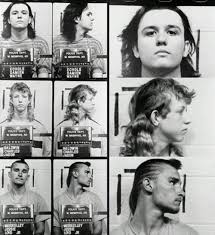
Ep 23Episode 23: The Hollingsworth Sighting "We saw Damien and Domini"
"We saw Damien and Domini .... " Those who depended on the “Paradise Lost” movies for information about the West Memphis 3 killers heard little about eyewitnesses who placed Damien Echols near the scene of the murders. The jury who heard testimony from Narlene Hollingsworth and her son, Anthony Hollingsworth, in the Echols/Baldwin trial labeled their stories “honest” in jury notes. Narlene called the police on May 9, 1993. According to a handwritten note, she saw "Dominique" and "Damion" “walking from Blue Beacon toward Lakeshore Estates. They looked dirty. L. G. Hollingsworth (age 17) was at the laundromat at 9:30 p.m., it was noted. “According to Mrs. Hollingsworth, her nephew L.G. made the statement on Thursday that he knew about what happened before anyone else. “L.G. has 666 on the side of his boots. “Damion is mean & evil, according to Mrs. Hollingsworth.” The next day at 4:05 p.m., Mike Allen took an anonymous tip from “an old white female who stated she had overheard that a Dominick + Damion killed the three little boys + that L.G. last name unknown took and laudered there clothing. Caller stated that Damion had body parts in a box from the children. The called ... didn’t give her name + (stated) that she heard that L.G.’s mother was going to lie about L.G.’s where abouts.” At 4:20 p.m. that afternoon, Detective Charlie Dabbs and Lt. Diane Hester took a statement from Narlene Virginia Hollingsworth, a 42-year-old Lakeshore resident. Ricky Sr., 37, and Narlene had four children who figured also in the narrative: Anthony Hollingsworth, 21, Ricky Hollingsworth Jr., 14, Tabitha Hollingsworth, 16, and Mary Hollingsworth, 10. Narlene told police: “What happened was Dixie Hollingsworth had asked me to pick her up at where she works at a laundry mat, she said, will you pick me up, I get off at 10, I said yes I will ... OK, I got ready to go, and my husband went with me and my children were too. And, on our way, coming down like you’re going to Love’s, I saw Dominic and Damian coming down the street ... This was exactly 20 minutes till 10, exactly, cause we had our watches and we knew what time it was. OK they had dark clothing on and they were not cleaned.” Dabbs: “You said at one time that they were muddy all over.” Narlene: “They did have dirt on them, yes they did, now. ... They was coming back towards Lakeshore, this way .... They were, it was a yellow uh, sign thing up in, some stick standing up and then they were just before they got to there, where they was. ... OK, as we were driving by, she pointed the stick ... to us, and it’s right there on the off ramp, where ... as you go east down the interstate … the off ramp to the South Service Road … is where the yellow stick or marker was.” She had turned her brights on “so that I could get a good look at them … to see who they were, yes I did. And I said, that’s Dominic and Damien, no look like, it is and I got a good close look and said, it sure is. ... I really don’t know Damien, cause I don’t go around him from all the bad things I hear about him, but therefore, I don’t let my children go around him and Dominic, I’ve known her all of her life. Cause I use to hold her on my hip when she was six months baby. ... “... I was upset about it, for them being out that late and around that area, but you know I was wondering what they were doing out at that time of night. My husband told me to quit worrying about it, cause they are out all the time. He said that he sees them all the time. So, he told me to quit worrying about it. … “… I don’t know what L.G. is capable of, and I am not saying that he would do it, and I am not saying that he wouldn’t, but I know Damien. Everybody said that Damien, I know that he’s suppose to have 666 on his shoes. …” Hester: “And your husband and your children saw him and Dominic both.” Narlene: “Yes, ain’t no way they missed that.” She repeated the information on May 20: “... I left home about 9:30 I was going down the south service road and I looked to the right and I saw Daymeion Dominique walking they were dirty and muddy go to the laundrymat Dixie said LG just left and I said I just saw Daymeion and she asked was Dominique with him and I said yes.” Narlene testified in the Baldwin/Echols trial on March 3, 1994: “Well see, we spent most of our day together, Dixie and I did. And we had lunch together. And she asked me that day, would I come back and pick her ... Well, she got off at 10, but we got there a little early.” She said she left home at exactly 9:30 p.m. and had all her children, along with a young friend, packed into a red 1982 Ford Escort. John Fogleman asked: “... As you were approaching Love’s and Blue Beacon, uh - did you see anybody there on the service road?” Narlene: “Yes, we did. ... We saw Damien and Domini. ... Damien had on a pair of black pants and a dark shirt. Domini had on a pair of tight pants - you know, fit tight. And she had flowers, looked like white flowers to me on her pants. ... Which I know th
Ep 22Episode 22: The infinitely convoluted saga of the "4th Suspect," or how LG Hollingsworth Jr. created a world of trouble for himself
https://www.amazon.com/Blood-Black-Against-Memphis-Killers-ebook/dp/B06XVT2976/ref=sr_1_1?keywords=blood+on+black&qid=1559059428&s=gateway&sr=8-1 https://www.amazon.com/Where-Monsters-Go-Against-Memphis-ebook/dp/B06XVNXCJV/ref=sr_1_1?crid=XNLYB8QUIQ7F&keywords=where+the+monsters+go&qid=1559059470&s=gateway&sprefix=where+the+monsters+go%2Caps%2C167&sr=8-1 https://www.amazon.com/Case-Against-West-Memphis-Killers-ebook/dp/B07C7C4DCH/ref=sr_1_3?keywords=gary+meece&qid=1559059536&s=gateway&sr=8-3 https://www.amazon.com/gp/product/B0753HJZ1P/?ie=UTF8&keywords=gary%20meece&qid=1559059573&ref_=sr_1_6&s=gateway&sr=8-6 https://www.amazon.com/Blood-Black-Against-Memphis-Killers-ebook/dp/B06XVT2976/ref=sr_1_2?keywords=gary+meece&qid=1559059573&s=gateway&sr=8-2 "L.G. Stated ... that they were talking about him that he was the 4th suspect." Like Heather Cliett and Vicki Hutcheson, L.G. Hollingsworth Jr. is an oddly ubiquitous character who popped up in the strangest places in the West Memphis 3 story. L.G. was listed among possible teenage suspects just days after the killings. Two lists were compiled by Lt. James Sudbury from information from Steve Jones and Jerry Driver, familiar with the teens as Juvenile Court officers. One list had Damien Echols at the top, followed by Jason Baldwin, L.G., Domini Teer and, further down, Murray Ferris. A similar list had Echols at the top, followed by Baldwin, L.G., Domini and, further down, Ferris and Chris Littrell. While all the others were often listed as members of a Satanic group or witch cult, there’s little evidence that L.G. was involved in occult activity. Jessie Misskelley. though well-known to law enforcement, was not on the lists. Like Jessie, L.G. was in frequent trouble with the law. Investigators soon discovered he called or visited Domini, his “cousin,” regularly and was well acquainted with Echols. Hollingsworth also had formed a friendship with an older man that officers found questionable. L.G.’s aunt, Narlene Hollingsworth, called in a tip on May 9 that added to early suspicions about L.G. Besides stating she had seen Damien and Domini walking away from the murder site on May 5, she said “L.G. made a statement on Thursday that he knew about what happened before anyone else. L.G. has 666 on the side of his shoes.” Narlene made a similar claim about Echols’ boots. In a case loaded with confusing family relations, the Hollingsworth connections were particularly elaborate. When asked on the stand during the Echols/Baldwin trial to identify L.G., Narlene said, “... He’s my ex-husband’s son, which is -” The attorney asked, “So it’d be your step son -- at one time he was your step son then.” Narlene: “No.” Scott Davidson: “No?” Narlene: “No, I’m - I’m his aunt through marriage. It’s just by marriage.” Davidson: “You’re his aunt by marriage. But he’s your ex-husband’s son?” Narlene: “Yes sir. I know it’s confusing.” Davidson: “I’m confused on that one. Now, L.G. is you -” Narlene: “- Ex-husband’s -” Davidson: “-Ex-husband’s son, but you’re his aunt by marriage, how did that happen?” Judge David Burnett: “Is that really relevant? Let’s don’t try to sort it out,” prompting laughter in the courtroom. Narlene wasn’t just L.G.’s aunt. She had once been married to L.G. Sr., divorcing him after he became involved with her best friend. Narlene then married L.G. Sr.’s brother, Ricky Sr. Narlene was also related after a fashion to Domini, whose mother, Dian Teer, had a sister, Dixie Hufford, who was divorced from the father of Ricky Sr. and L.G. Sr. Domini named Dixie Hollingsworth (Hufford) as one of her relatives in an early interview. Hufford was tied in with the Echols sighting, as well as reports of the puzzling activities of L.G. Narlene continually referred to Hufford as Dixie Hollingsworth and described her on the stand as “my ex-husband’s use to be step mother” (Narlene and Ricky divorced between the time of the sighting and the trial). The Teers rented a trailer in Lakeshore from Pamela Hollingsworth, who was Narlene’s sister and had married into the Hollingsworth family. L.G. Jr. spent much of May 5 riding around with Narlene and hanging around Domini before showing up late that evening at the Flash Market laundromat on Ingram Boulevard, managed by his grandfather’s ex-wife, Hufford. After Narlene’s tip, West Memphis police made contact with L.G. the next day, Monday, May 10. Hollingsworth was a dark-haired 17-year-old ninth-grade dropout recently employed as a sacker at the Big Star West grocery. He had “little gangster” tattooed on his right biceps and a cross on his left first finger. The use of “little gangster” drew on his name, L.G.; the initials did not stand for anything. No record seems available on the May 10 interview, but apparently L.G. said little that would allay suspicions. At the time that police were talking to L.G., down the hall they were interviewing Echols, who named L.G. as a possible suspect. Police promptly searched the Hollingsworth home on McC
Ep 21Episode 21: A note on Bob Ruff, Central Park 5, Skateland, a little on LG Hollingsworth
https://www.amazon.com/Blood-Black-Against-Memphis-Killers-ebook/dp/B06XVT2976/ref=sr_1_1?keywords=blood+on+black&qid=1559059428&s=gateway&sr=8-1 https://www.amazon.com/Where-Monsters-Go-Against-Memphis-ebook/dp/B06XVNXCJV/ref=sr_1_1?crid=XNLYB8QUIQ7F&keywords=where+the+monsters+go&qid=1559059470&s=gateway&sprefix=where+the+monsters+go%2Caps%2C167&sr=8-1 https://www.amazon.com/Case-Against-West-Memphis-Killers-ebook/dp/B07C7C4DCH/ref=sr_1_3?keywords=gary+meece&qid=1559059536&s=gateway&sr=8-3 https://www.amazon.com/gp/product/B0753HJZ1P/?ie=UTF8&keywords=gary%20meece&qid=1559059573&ref_=sr_1_6&s=gateway&sr=8-6 https://www.amazon.com/Blood-Black-Against-Memphis-Killers-ebook/dp/B06XVT2976/ref=sr_1_2?keywords=gary+meece&qid=1559059573&s=gateway&sr=8-2
Ep 20Episode 20: The physical evidence against the WM3 -- "It is Our opinion the crime had taken place where the bodies of the victims were recovered."
https://www.amazon.com/Blood-Black-Against-Memphis-Killers-ebook/dp/B06XVT2976/ref=sr_1_1?keywords=blood+on+black&qid=1559059428&s=gateway&sr=8-1 https://www.amazon.com/Where-Monsters-Go-Against-Memphis-ebook/dp/B06XVNXCJV/ref=sr_1_1?crid=XNLYB8QUIQ7F&keywords=where+the+monsters+go&qid=1559059470&s=gateway&sprefix=where+the+monsters+go%2Caps%2C167&sr=8-1 https://www.amazon.com/Case-Against-West-Memphis-Killers-ebook/dp/B07C7C4DCH/ref=sr_1_3?keywords=gary+meece&qid=1559059536&s=gateway&sr=8-3 https://www.amazon.com/gp/product/B0753HJZ1P/?ie=UTF8&keywords=gary%20meece&qid=1559059573&ref_=sr_1_6&s=gateway&sr=8-6 https://www.amazon.com/Blood-Black-Against-Memphis-Killers-ebook/dp/B06XVT2976/ref=sr_1_2?keywords=gary+meece&qid=1559059573&s=gateway&sr=8-2 "It is Our opinion the crime had taken place where the bodies of the victims were recovered." Despite fake news that authorities had no evidence against the WM3, investigators found physical evidence at the scene that linked the murders to the murderers. Other physical evidence pointed to the West Memphis 3. None of the evidence was conclusive, but none offered grounds for exoneration. Other evidence, such as inadmissible Luminol testing and a blood-spattered pendant discovered too late to be entered into evidence, didn’t make it to the courtrooms for various reasons. The killers did not leave a great number of forensic clues. Because of submersion in water, no fingerprints were found of anyone, including the victims. Similarly, clothing items tested negative for traces of blood. Virtually all of the DNA recovered and tested matched the boys. Several imprints from tennis shoes were found, but none matched the killers and may have been left by searchers or others walking through the woods. By the time the bodies were found, a number of searchers had been over the woods, where the gumbo soil was muddy from several inches of rain earlier in the week. The crime scene itself had been cleaned up, with the banks washed and smoothed over. The killers had gone to great lengths to obscure the location of the bodies, which were found only when a boy’s tennis shoe (a Scout cap in some versions of the story; two shoes, according to Allen’s testimony in the Misskelley trial) was spotted floating in the water. The West Memphis case has been influenced by the “CSI effect,” in which the public has come to expect a higher level of forensic evidence than often exists at crime scenes. As a corollary to the effect, the value of circumstantial evidence has been discounted. Television shows focusing on DNA and other forensics in investigations necessarily rely on such evidence to figure into the plot. Consequently the public is largely unaware that DNA from killers is found in a relatively small fraction of all murders, with latent fingerprints or any kind of biological trace found in much fewer than half of cases. Further contributing to the relative lack of forensic evidence in the West Memphis case were the cleanup at the scene, the submersion of the bodies in dirty water over an extended time and their exposure to heat and insects in the open air for about an hour, contamination by search efforts and subsequent recovery of the bodies, etc. As a result, for example, two samples of apparent bodily tissues found in the ligatures of the shoelace bindings on Christopher and Michael were too small and degraded to yield DNA results. “CSI: Crime Scene Investigation,” the prototype of the forensics-based crime shows, premiered in October 2000, so the series and its many offshoots and imitators would have had no effect on the original juries. Even the O.J. Simpson murder case in 1994-1995, the breakthrough case for public awareness of DNA testing, followed the WM3 trials. Even so, forensic science played a role in perceptions about the case from the beginnings. The initial “Paradise Lost” film, while leaving out much about evidence against the killers, included the strange episode of a knife that Mark Byers gave one of the “Paradise Lost” cameramen as a gesture of goodwill. Remnants of blood were found in the knife. Testing revealed the blood could have been a match for either Byers or his stepson — an example of the ambiguous results often obtained from DNA testing. Byers had told police, “I don’t have any idea how it could be on there.” Byers ended up giving testimony during the defense portion of the Echols/Baldwin trial about his fold-back Kershaw knife. Byers testified he could not say for sure that Christopher had never played with the knife. He testified he had used it to trim his toenails. He recalled cutting his thumb with the knife while trimming venison for Thanksgiving 1993. During a Jan. 26, 1994, interview, he told Chief Inspector Gitchell that he had not used the knife at all but had said he had used it to cut venison. He also told Gitchell he might have used it to trim his fingernails. He told Gitchell he did not remember cutting himself with the knife but recalled during tes
Ep 19Episode 19: "Jessie took a knife out of his pocket and put a knife to my throat" The Case Against with Gary Meece
https://www.amazon.com/Blood-Black-Against-Memphis-Killers-ebook/dp/B06XVT2976/ref=sr_1_1?keywords=blood+on+black&qid=1559059428&s=gateway&sr=8-1 https://www.amazon.com/Where-Monsters-Go-Against-Memphis-ebook/dp/B06XVNXCJV/ref=sr_1_1?crid=XNLYB8QUIQ7F&keywords=where+the+monsters+go&qid=1559059470&s=gateway&sprefix=where+the+monsters+go%2Caps%2C167&sr=8-1 https://www.amazon.com/Case-Against-West-Memphis-Killers-ebook/dp/B07C7C4DCH/ref=sr_1_3?keywords=gary+meece&qid=1559059536&s=gateway&sr=8-3 https://www.amazon.com/gp/product/B0753HJZ1P/?ie=UTF8&keywords=gary%20meece&qid=1559059573&ref_=sr_1_6&s=gateway&sr=8-6 https://www.amazon.com/Blood-Black-Against-Memphis-Killers-ebook/dp/B06XVT2976/ref=sr_1_2?keywords=gary+meece&qid=1559059573&s=gateway&sr=8-2 "Jessie took a knife out of his pocket and put a knife to my throat" Even more so than Echols, Jessie Misskelley Jr.’s name was linked to a number of violent episodes, often aimed at younger children. John Earl Perschke Jr., a 14-year-old eighth-grader living at Lakeshore, confirmed to Detective Bill Durham on Sept. 6, 1993, that he had been attacked by Misskelley. Perschke said the incident in January 1992 on the railroad tracks northwest of Lakeshore was witnessed by at least five others. “We heard someone coming up ...,” said Perschke’s handwritten statement. “We tried to hide. ... Jason, Damien, Jessie, Buddy and four other boys were with them and so Jessie shoved me against the side .... Jessie was first talking to me and then after a while Jessie took a knife out of his pocket and put a knife to my throat and he said would you like to be dead and so he shoved the knife harder and so he put the knife up and then Jessie hit me and Buddy too and ... I couldn’t tell who all was hitting me. Damien and Jason and the other boys were still on the railroad tracks and there he was yelling at me and then they all left. I walked home. I was coughing up blood.” The incident was another example as well of Echols, Baldwin and Misskelley hanging out together. A girl at that scene, Tiffany Allen, was a 13-year-old Lakeshore resident when she gave a statement on Oct. 7, 1993, about another violent attack by Misskelley: “We had gotten into an argument and he had been spreading a rumor around that he was having sexual intercourse with me to all these people and I confronted him with it and he kept saying all this stuff so I slapped him ... For a year I didn’t hear anything from him and ... somebody came up to me and said that he had been looking for me and so I just didn’t worry about and one day I was walking through the park and he was at the road and .... he came up to me. He started running at me and my boyfriend stepped in front of me and he hit Carl. … He hit Carl and then he hit me and we started to walk away and he started coming after us again, so we ran ... until one of my friends’ parents came and got us and took me to my house.” She had a busted lip. Ridge had a copy of the complaint dated March, 12, 1993, the day after, that gave essentially the same account. Her mother, Gayla Allen, was present during the interview along with the child’s grandmother, Vera Hill. Gayla Allen told Ridge she had gone to the Misskelley home after the incident. Jessie Jr. ran out the front door while she was knocking on the back door. When she returned later, “OK, I knock on the door. Jessie Sr. was sitting in there and he said that he just could not do anything with his son.” Tiffany said Susie Brewer, Misskelley’s girlfriend, had made threats: “She just said that if I put Jessie in court or in jail or anything like that I better watch my back because they were all going to be after me, and all this stuff, and um, his cousins confronted me with it, and everything and I never ever, ever heard nothing from Jessie. It was always somebody else.” Tiffany, identified as a cult member by Misskelley, denied any direct knowledge of a Satanic cult at Lakeshore but said that if one did exist, it would be meeting at nighttime in a field behind the old sewage plant. Ridge reported: “Tiffany admitted that she was aware that a cult like group did exist in or around the trailer park but she did not know any of the members nor had she attended any of the meetings. She seemed afraid for her safety and reluctant to give any information concerning these activities because of the fears she had for her safety. Tiffany stated that she did not know Jessie to be a member of a Satanic group, however she also stated that she has been with people that she had heard were in the group and she was unaware that they were members as well.” She also described a fight she had witnessed between Jason Baldwin and John Perschke. “John hit him hard and he started bleeding and then after the fight and everything Damien bends down, put his finger in, dips into the blood and then sticks it in his mouth.” Misskelley repeatedly told a similar story, widely told around the trailer parks, that contributed to the belief that Echol
Ep 18Episode 18: "I'm going to kill you, I'm going to rip your eyes out" Damien's attack on a romantic rival in which he attempted to claw out his eyes
From "Blood on Black": "I'm Going to Kill you, I'M Going to Rip Your eyes out" In his book “Life After Death,” Damien claimed that the only act of violence he ever committed was a fight at school. Echols minimized the attack as just a typical schoolyard confrontation. Not so. It was serious enough that, months later, in February 1993, when the other boy in the fight, Shane Divilbiss, had gone missing, foul play was suspected because Echols had made threats on Divilbiss’s life. Eventually Divilbiss turned up unharmed. Divilbiss, 18, gave a statement to West Memphis Detective Mike Allen on June 17: “Alright, I was going to school and met Deanna Holcomb and in turn Damien Echols. Because they were boyfriend, girlfriend at the time, I began to hang around with them. “I spoke with Damien Echols on several occasions just like friends, then emotional things began to develop between me and Deanna Holcomb. She broke up with Damien and soon went out with me, which led Damien to believe I had stolen Deanna from him. He threatened to kill Deanna, threatened to kill several of my family members, just not my uncle, but several others. He threatened to kill me and then later came up behind me in the hallway while I was at my locker. “I knew he was back there so I just started to walk. I didn't look at him or anything. He jumped on me from behind draggin’ me down to the ground and clawing at my face with his fingernails. He uh, people was saying he was trying to rip my eyes out and my the scars is what it looked like. When I got up I turn around and I was going to fight but he was being held down by several of the people that were in the hallway witnessing it so I didn't have to.” Echols routinely filed his fingernails into one and a half inch-long points. Echols was suspended while Divilbiss was allowed back in class. “One of the threats was against my uncle, whom had told him that if he had fought with me that my uncle would jump into (the fight),” said Divilbiss. Echols “threatened him by say if he jumped in, he cut him to pieces and bury him in Deanna’s front yard.” The uncle was 16-year-old Kyle Perkins, also a student at Marion High. “Most of (the threats) were generally just short, you know, like, I'm going to kill you or you know, like, when he had me down on the ground he said, I'm going to kill you, I'm going to rip your eyes out and all this stuff, you know, generally, you know, just short phrases. There was no long drawn out threats,” said Divilbiss. Concerning Echols, Divilbiss said, “He was a very imposing person … when he was around ... quote friends he could silence them with just a glance. I mean, he could look at them and they would be quiet. You know, if they were saying something he disagreed with or if they were disagreeing with him, he would just have one look and they would be quiet. It seemed to me that all his friends feared him including Deanna Holcomb. The way it seemed to me that she was around him because she was afraid that if she left he would kill her. ...” “She did tell me that he scared her, that she thought he was crazy. … She didn't tell me anything about sacrifices or anything but she did tell me that at one time they had sexual intercourse in a room full of people watching them, she told me of, you know, that is the main thing she told me, about like a circle of people were watching them, and that is with candles around and everything like that. .…” Sexual intercourse between ceremonial leaders is a longstanding practice in Wicca, dating back to the witch cult founder Gerald Gardner’s proclivities for flagellation, nudity and exhibitionism. Divilbiss said Echols was highly intelligent and “he know a lot about things; he knows how to work with a person’s mind; he can manipulate (a person’s) mind to ... what he believes in.” Divilbiss described Baldwin and Holcomb as “susceptible to another person’s mind.” Divilbiss said Holcomb “said that he proclaim himself to be the son of Satan occasionally, that he did some strange things that led her to believe he was (demonic) ... He let off the image that he was generally, people would think like he was a Satan worshiper just by looking at the time I know him. You know, because of the way he dressed .... just his general outlook. …” Divilbiss added that “if he were in black magic there would be bi-sexual tendencies ... because in all magic ... there are ceremonies which include bi-sexual sex magic is what it is called. It does include, you know, bisexual intercourse.” Divilbiss said Echols wore “necklaces and things like that with bones on them” and had given Deanna a golden coin and a crow’s foot when they broke up. “The crow’s foot was generally used in black magic, was suppose to be a hex ... the crow’s foot was supposed to represent pain. Okay, I mean that he did things that represent black magic.” The crow’s foot often was used in death spells in witchcraft. Divilbiss admitted he had “done a little study in that area and … looked up quite a
Ep 17Episode 17: Jason Baldwin: "When I do get angry ..." Episode 17 of the Case Against with Gary Meece
From "Blood on Black" available on Amazon "WHEN I GO GET ANGRY IT IS USUALLY NOT A PRETTY SITE." Though Damien Echols routinely and wrongly has been described as “innocent” or even “exonerated,” Jason Baldwin in many ways has been more effective with his assertions of innocence than the weird and off-putting Echols. The perpetually smiling Baldwin projects a whimsical and slightly goofy image for one supposedly mistreated by the justice system. In many ways unchanged from the skinny little murder defendant who looked as if he should still be drawing race cars and airplanes at the back of a classroom, Baldwin continues to speak without self-consciousness of his simple beliefs in justice, truth and loving your mom. While perpetual poser Echols scowls and sulks in his frequent media portraits, Baldwin today seems positively blithe. Crime novelist Charles Willeford’s description of a heartless young criminal as a “blithe psychopath" sums up many a man lacking a conscience, eager to rob, rape, cheat or kill with never a doubt, qualm or worry. For those who consider Baldwin’s actions on May 5, 1993, “out of character,” consider that his very best, his inseparable friend was a violent, mentally ill dabbler in the occult who went to great lengths to project an image of foreboding evil. In a hearing in 2009, Samuel Joseph Dwyer, a neighbor and playmate of the Baldwin brothers at Lakeshore in 1993, described how Jason began to adopt Echols’ manner of dress and distinctive way of speaking after they began hanging out together. Even so, Dwyer carefully characterized Baldwin as someone who was not a follower, but as one who kept his own counsel. Jason, like the disturbed Echols and the thuggish Misskelley, already had had several brushes with the law prior to his arrest for murder. Also in counterpoint to his reputation as a mild-mannered animal lover with an artistic soul were several incidents of violent acting- out. There were troubling incidents. On June 5, 1987, the Baldwin/Grinnell clan was living in a rundown sec- tion of rural Shelby County when someone set fire to a bedroom with a lighter. Setting fires is one of the earliest and surest signs of budding criminal psychopathology. Exactly six years later, on June 5, 1993, in the first shock of the arrests, Jason’s paternal grandmother, Jessie Mae Baldwin of Sheridan, Ark., expressed doubts about his innocence to the Commercial Appeal. She said, “I thought in my own mind when those boys were killed that my grandson is sorta superstitious about that devil stuff. He was always catching lizards and snakes, something was going on in that child’s mind.” Years later, Baldwin testified he first was placed on probation when he was 11. As juvenile records are closed and Baldwin has been stingy with details, the facts surrounding this encounter with the law are not clear. In a letter to girlfriend Heather Cliett written from lockup, Baldwin wrote: “I have never been in jail before, except for once and I was only there for one hour that was nothing.” Most 16-year-olds would count a trip to jail as a life-defining moment, but for Baldwin getting into trouble was “nothing” and going to jail re- ally didn’t count as going to jail. His thinking lacked proportion and betrayed a pervading sense of unfairness, hence his complaint that “they keep me locked up in my cell for 24 hours a day. while the other prisoners get to get out of their cells all day long to play games, eat steaks, and all kinds of stuff.” He made it sound as if he was not allowed to go to summer camp. At age 12, Jason, his brother Matt and several other boys broke into a building and went on a destructive spree vandalizing the antique cars stored inside. They broke out the windows on several autos and wrecked the place. They were caught jumping on the cars by two men who called the police. The boys were charged with breaking and entering and criminal mischief. The incident often has been framed as harmless adolescent mischief, but prosecutor John Fogleman was concerned enough to recommend that the boys be placed in reform school for two years. They were all placed on probation. Gail Grinnell was ordered to pay a fine of $450 each for her boys. Typically, family members portrayed this as an unfair burden on poor, hard- working Mom, who only paid $30 of the fine. Jason got into trouble again, at age 15, when he shoplifted potato chips and M&Ms from the Walgreens in West Memphis. He was placed on diversion of judgment for a year with the stipulations that he stay in school and out of trouble. That court order was one reason why Baldwin did not skip school on the day of the murders or the day after. Meanwhile, his family life was in turmoil. Jason’s mother, known today as Angela Gail Grinnell Scheidmiller, had been involuntarily committed to the East Arkansas Regional Mental Health Center in February 1992. There had been four trips to the emer- gency room at Crittenden Memorial Hospital in January 1992, where Mrs. Gr
Ep 16Episode 16: "I'll get you. I'm gonna kill you. You're gonna die." Ep. 16 of the Case Against
From "Blood on Black" "I'LL GET YOU, I'M GONNA KILL YOU. YOU'RE GONNA DIE." Echols was notorious around West Memphis and Marion for walking everywhere, often in a black trenchcoat. He testified that he walked around areas of West Memphis frequently, and was in the area where his victims lived “probably an average of two or three times a week” over “probably at least two years.” Echols would testify that he often had to walk through the neighborhood of the victims to make his way between Lakeshore and his parents’ trailer on South Broadway. Despite having lived in the neighboring Mayfair Apartments, he testified that he had never been in Robin Hood. That claim had no credibility, since the pipe over 10 Mile Bayou offered one of the few pedes- trian shortcuts between the Echols/Hutchison trailer and Lakeshore — a route Echols testified he regularly used. When he moved to Salem, Mass., briefly, after his release from prison, the Lurker in Black quickly gained notoriety as the convicted child killer who was constantly walking around the town. Now apparently based in New York City’s Harlem, he is just one amid a vast throng of black-clad hipsters trudging around the big city. Echols has described this lifelong pattern of obsessive walking in interviews. He told Justin M. Norton of www.metalsucks.net that “When I first got out, I would go and walk and walk for hours, just looking in shop windows and feeling the wind and the rain. I would be exhausted to the core and want to go lay down, but as soon as I’d get back in, I would want to go right back out.” Echols in his 2012 memoir, “Life After Death,” described, without a lot of specifics, his dissatisfaction in his relationship in 1993 with Domini and how he sought out his old girlfriend: “I thought of Deanna frequently, wondering what had happened. Through sheer coincidence (I use that word but don’t believe there’s any such thing) I found out Deanna’s family had started attending church. The possibility of seeing her again plagued me. I couldn’t get it out of my head. I constantly wondered what would happen, how she would react, what I would see in her eyes, and I had a plethora of questions I needed answers to. I couldn’t understand how she had so thoroughly and completely severed our connection. I needed an explanation ... “Sunday morning found me preparing to descend into the hellish realm of fundamentalism. ... I knew I didn’t belong there but I had to do it or I would get no rest. .... “Scanning the rows, I saw Deanna sitting in the dead center of the room with her family. ... I couldn’t breathe. She looked at me ... and looked away. I didn’t even see a flicker of recognition. What did that mean? “I had been expecting something — anything — but her eyes passed over me as if I were not even there. ... “When it was over, I walked outside and stood on the sidewalk. I was trying to figure out what this meant as I watched her family get in their car and drive away.” Echols did not give a date for this attempted encounter, but the stalking incident closed a chapter in the book that then opened on news of the May 5 killings. After his arrest, reports surfaced about Echols, or someone closely resembling him, observing children in an obsessive and secretive manner. Some reports predated the killings. On March 1, 1993, Jennifer Ball, who lived at Lakeshore, reported to police that she had been threatened by Michael “Beshears” (Beshires), 14, on several occasions. On March 1, she said, someone had threatened to kill her by shouting through her window. The police report de- scribed “Suspect B,” who was not Beshires, as a slim white male about 18 dressed in a black T-shirt, black jeans and a black jacket. Jennifer saw him make the threats, then enter the fenced-in backyard. On June 10, she gave police this hand-written statement: “The first contact I had with Damien Echols was when he was at my window (March 1 93). I had heard about him and heard that he was into devil worshipping. So was Michael & Amanda Lancaster. Well Michael had told her that he was going to blow my house up & stay away from me. Well she didn't believe him & we continued to be friends. Well he called her one day & told her to watch out that he had Mark Beshires & Damien Echols watching us all this was happening in March. About March 1 I was on three-way with Amanda Lancaster & Jack Held. It was storming that day. I kept on hearing something but I thought that it was just the rain. Well I was in the kitchen. I was look- ing out the window & somebody jumped in front of it shouting ‘you bitch, I'll get you, I'm gonna kill you. You're gonna die’ I started screaming & hollering I didn't know what to do. I dropped down in the corner of the kitchen. Amanda was hollering at me ‘Jennifer what is wrong. Jennifer what is going on.’ I told her that someone was at my window & it looked like Damien. She told me stay where I was & she was going to call me right back. I hung up the phone. I looked out the window to
Ep 15Episode 15: Review of Terry Hobbs memoirs
In the preface to "Blood on Black," I wrote that one of the untold stories about the West Memphis 3 case worthy of a book treatment was "how the victims’ families were devastated first by the loss of the boys and then by a series of betrayals and accusations that still dog them over 20 years later." There already had been a book about Mark Byers, father of Chris Byers, by Greg Day, "Untying the Knot: John Mark Byers and the West Memphis 3." The book was a sympathetic, balanced look at a troubled man, obviously deeply grieving the loss of his son, but it was not a book written from the heart. At long last, after many years of talk about his prospective book, the story of Terry Hobbs has finally been told. "Boxful of Nightmares," which is Hobbs' story as told to his cousin, Vicky Edwards, is the straightforward, deeply felt testament of a man who, after many harrowing years living in the aftermath of the murder of stepson Stevie Branch, was blindsided by a string of high-profile accusations based on the flimsiest of evidence. Evidence doesn't get much thinner than a single hair that may or may not have been from Hobbs and is perfectly explainable as a secondary transfer of evidence. The hair evidence was found in the laces that bound Michael Moore when he was murdered by drowning in the ditch that also took the life of Stevie, and where the body of their friend, Christopher Byers, was also dumped in the late afternoon of May 5, 1993, in West Memphis, Ark. The bodies of the three boys, all 8-year-old second-graders, were found the next day after an extensive search. Eventually three local teens, Damien Echols, Jason Baldwin and Jessie Misskelley, were arrested after Misskelley confessed to the crimes. The three were convicted of the murders in 1994 but eventually released in 2011 after pleading guilty in exchange for release for time served. The impetus for the plea deal came from a groundswell of public opinion after two documentaries on HBO misled the public into thinking the case had been mishandled by the police and the courts. Various rock stars and Hollywood celebrities took the "Free the West Memphis 3" cause to heart. Until 2007, the public was led to believe that the likeliest suspect was Mark Byers based not on evidence but mostly on his wild demeanor, which was largely an act for the benefit of the cameras paid for by filmmakers Joe Berlinger and Bruce Sinofsky. A book, "Devil's Knot," by an Arkansas writer devoted much of its text to Byers' life while minimizing the deeply troubling records of the convicted killers. The name of Terry Hobbs appears just four times in the index, while a whole column of indexed references cite Mark Byers. Such was the state of the case in 2002, the date of the copyright. All that changed after defense investigators used deception to gather cigarette butts probably left by Terry Hobbs and found that his DNA could not be ruled out as a source for the crime scene hair, with about 1.5 percent of the public being possible sources. Suddenly the media bought into the idea that Hobbs was a viable suspect, despite the obvious flimsiness of the "evidence." Hobbs and David Jacoby were interviewed by the West Memphis Police Department on June 21, 2007, about their recollections of May 5 and 6, 1993. Both men admitted to having difficulty recalling the exact sequence of events from a stressful time some 14 years earlier, and their stories were not consistent on details. Still, Hobbs, and Jacoby, a friend of Hobbs, described a series of events that, combined with other documented facts, effectively gave Hobbs an alibi, if one was needed. In 2009, Jacoby gave another statement describing Hobbs searching extensively for his stepson that evening, often with Jacoby and with a number of contacts with Jacoby during the time the boys were believed to have been murdered. In an online letter to fans in November 2007, Dixie Chicks lead singer Natalie Maines posted about her then-recent involvement in the West Memphis 3 cause, based on seeing the documentaries and subsequent close contact with Echols' wife, Lorri Davis. Maines claimed that DNA evidence linked to Hobbs and Jacoby was found at the crime scene. She also cited various other tenuous claims against Hobbs. Maines followed up with similar statements at a Little Rock rally for the killers in 2007. This drew a defamation lawsuit in 2008 from Hobbs, who alleged the statements were false. He sought compensation for damages to his reputation. The suit allowed her attorneys to depose Hobbs extensively and then query him on a variety of unproven allegations, with the videos then posted in public media. While the depositions provided no proof that Hobbs was in any way a viable suspect, they provided further fuel for Hobbs' attackers. As Hobbs says in the book, "The questioning was brutal and most of it was designed to implicate me in a crime I didn't commit." The lawsuit was dismissed by the courts in 2009, with the judge ruling that "actual
Ep 14Episode 14: "I know I'm Going to Influence the world -- People will remember me" THE CASE AGAINST with Gary Meece
From "Blood on Black" by Gary Meece "I know I'm Going to Influence the world -- People will remember me" After three trips to mental hospitals, Damien Echols again was wandering Crittenden County. He turned 18 in December 1992, still relying on his much-loathed adopted father for food and lodging. Echols was referred back to counseling on Jan. 5, 1993. His medication remained imipramine, the Tofranil brand. While imipramine effectively treats depression and is sometimes prescribed for panic attacks or anxiety, the medication can cause or worsen emotional problems, such as mood, anxiety, panic attacks, insomnia, impulse control, irritability, hostility, aggression, restlessness, hyperactivity, depression and self-abuse or suicidal ideation. The intake sheet for Jan. 5 prepared by social worker Sherry Dockins contained extensive notes, noting hospitalizations and that he was on probation. Dockins wrote: “‘Damien reports his problems began at age 8 when his parents divorced and Pam remarried. ‘They were constantly fighting — tried to ignore it but finally started fighting back.’ …. 3 months ago mother divorced him and remarried father. Sister, mother and father currently live in Portland, Oregon. He has little contact with family. Currently lives with stepfather Jack Echols. ‘It’s the only way I could live here in Ark.’ They do not get along but rarely see each other. Damien is planning to move in with girlfriend and her mother when they get an apartment. Reports he and Domini (gf) have been together for long time?” Six months before, Damien was threatening to kill himself if he could not be with Deanna; now he and Domini were a longtime item. The report continued: “Damien wants to live in West Memphis because of his friends and ‘it’s where I belong.’” Despite his subsequent disparagement of West Memphis, Damien regarded the town as home; he was willing to risk constant scrutiny to live there. A further irony was his association with Jack Echols, listed as his parent/guardian on the intake papers, who was allowing Damien to live in his home. Concerning Damien’s state of mind: “Describes self as feeling ‘neutral/nothing’ most of the time. Denies current suicidal/homicidal ideation.” Dockins wrote: “Reports history of self mutilation — cutting self with knives/razors. Last time was 3 months ago. Denies symptoms of depression. ‘I usually don’t smile.’ He quit school in ninth grade (this year) because he was not allowed to return to his previous school (Marion High School). Reports sleeping most of the day and then goes to Domini’s house.” Damien was holding down a part-time job with a roofing company. “Relates that he tends to ‘trance out’ when by himself. He has done this since the 5th grade.” Dockins wrote: “Reports history of alcohol/drug usage — coke, acid, pot, alcohol. Denies current usage …. Reports being harassed by local authorities as ‘they think I’m a Satanic leader.’ He admits being caught with Satanic items and with handwritten books about witchcraft. Denies cult involvement. Is interested in witchcraft for past 8 years. He has tried to steal energy from someone else and influence other minds with witchcraft. States he was able to do these things.” Echols believed he could “steal energy” from other people; he later testified that children contained more energy for magickal purposes than adults. Dockins also reported: “Describes self as ‘pretty much hate the human race.’ Related that he feels people are in two classes — Sheep & Wolves (wolves eat the sheep). “Dressed in black, wearing silver cross and earring studs. Intense eye contact.” The “wolf in sheep’s clothing” is an ancient concept, cited in the Bible: “Beware of false prophets, who come to you in the clothing of sheep, but inwardly they are ravening wolves.” Psychopaths often describe themselves in wolfish terms. For instance, the sadistic psychopath Eric Harris, one of the two Columbine High killers, described fantasies of ripping apart “weak little freshmen” like a wolf. Charles Manson referred to his followers as “slaves” or “sheep” and recorded a record album “Way of the Wolf.” The theme is also popular in occult circles. The Church of Satan Web site, for example, maintains extensive Web pages devoted to “Lycanthropy: A Handbook of Werewolfism,” describing occult exercises for transforming the practitioner into a man-wolf, “a person who has regressed, by force of will and desire, to a feral or wolflike state.” At turns grandiose and pitiable, Damien’s wildly fluctuating self-regard was on display throughout the records. Dr. Woods described Echols’ return to East Arkansas Mental Health Center: “There is an abundance of evidence to show that Mr. Echols’ serious mental illness required long term hospitalization and more aggressive treatment than he received in prior hospitalizations. In January of 1993 Mr. Echols again sought help at East Arkansas Mental Health Center where mental health professionals described Mr. Echols’ elaborate history
Ep 13Episode 13: The Case Against ... "Sucking the blood ... frightening" #WM3 #TheCaseAgainst
Commentary from Gary Meece, based on his book, "Blood on Black," concerning Damien Echols of the West Memphis 3, along with some brief observations on the glut of true crime documentaries, including those on Adnan Syed, Madeline McCann and Steven Avery from "Blood on Black" "BROKE PROBATION ... SUCKING THE BLOOD ... FRIGHTENING TO COMMUNITY MEMBERS" A homesick Damien Echols returned to Arkansas. Echols later told friends that a Satanic priestess followed him from Oregon, with the intent of either murdering him or pulling him back into the cult. In his 2001 affidavit, Dr. George Woods described Echols’ circumstances: “Mr. Echols was completely incapable of caring for himself when he returned to Arkansas. He had no money and his mental illness and lack of skills and experience prevented him from working. He lived on the streets and even stayed at the home of his abusive step- father, Andy Echols, a few nights. Within days he was identified by his probation officer who believed that Mr. Echols should be treated in a long-term residential psychiatric facility. The probation officer had Mr. Echols detained in the juvenile facility for violating his parole by returning to Arkansas. Staff and residents at the facility describe Mr. Echols as losing touch with reality. His behavior deteriorated drastically. One resident reported he observed Mr. Echols ‘. . . sucking the blood off the scratch that . . .’ another inmate ‘. . . had on his arm.’ Mr. Echols was placed in isolation and on suicide watch. The juvenile facility quickly obtained a court order and sent Mr. Echols to Charter Hospital for the purpose of ‘determining the appropriate method of referral to a residential treatment facility.’ Mr. Echols was readmitted to Charter Hospital in Little Rock, Arkansas, on September 14, 1992, where he remained until his discharge on Sept. 22, 1992.” While driving Echols to Little Rock, Jerry Driver asked about the blood sucking incident. At first Echols told him it was a joke “and then he said that’s how you receive power. He said I’ve been doing this for years ... and generally it’s with willing people and he had some scars on his arms and he said he and his girlfriends and other people .... had done that, and that’s how they receive power.” Echols’ aunt, Patricia Liggett, was given temporary custody so she could admit him to the hospital. Charter notes from Sept 15 indicated: “Damien’s behavior has become frightening to community mem- bers in Jonesboro …. Had been suspected of witchcraft and/or devil worship prior to incident involving arrest. … Again, thought to be suicidal, but not afraid to die, per Damien. Knows he can ‘come back.’” Dr. Woods reported: “The provisional diagnoses at Charter Hospital were psychotic disorder, not otherwise specified, and dysthymia. Staff members immediately noticed Mr. Echols’ bizarre behavior, including his ‘growling’ and making other strange sounds. … “Mr. Echols also had noticeable problems with attention and concentration. He ‘stared off into space’ and daydreamed in class and group activities. When staff members attempted to bring him back to the task at hand he ‘would then act like he was very startled, as if “jolted” back into the group process.’ “Other serious problems noted by staff members include ‘[a]lteration in thought processes evidenced by delusional thinking and inappropriate social behavior.’ His appearance was ‘disheveled’ and ‘unkempt,’ and he had consistently ‘poor’ eye contact. He dressed ‘in en- tirely black clothing, frequently [wrote] poems and [drew] pictures of symbols’ which one staff member erroneously interpreted as ‘closely associated with devil worship.’ Mr. Echols stated that he was ‘a witch’ not a vampire or devil worshiper. “Mr. Echols’ mood disturbances continued unabated. His affect ‘was extremely flat,’ he showed ‘absolutely no observable evidence of emotion’ and he appeared anxious and uncomfortable. Charter Hospital records reflect that Mr. Echols had almost no insight into the nature or severity of his problems. “Like all other staff who observed Mr. Echols over time, he was described by Charter mental health staff as ‘calm,’ ‘compliant and cooperative.” A psychiatrist noted that even though Mr. Echols had ‘difficulty with reality testing’ he related in ‘a very quiet and withdrawn fashion’ and ‘was actually quite pleasant.’ “ Mr. Echols was discharged … with diagnoses of psychotic disorder not otherwise specified, and dysthymia. He was released to the care of his step father, Andy Echols, who lived in West Memphis, Arkansas. Mr. Echols was instructed to continue taking his daily dose of 150 mg. of Imipramine and report to the local mental health center for follow-up care.” The discharge notes included this pledge: “Will not participate in occult beliefs.” The discharge summary added that Echols had stabilized and no longer needed to be in acute care. “Damien ‘contracted’ that he will not attempt to harm anyone after time of discharge.” Mental healt
Ep 12Episode 12: The Case Against ... #DamienEchols, #WM3 Damien's suicidal rampage in Oregon and hospitalization
Episode 12, The Case Against From "Blood on Black" by Gary Meece "Suicidal, threatening family, drug Use, Parental concern re: Satanism" When Pam Echols and Joe Hutchison picked up Damien from Charter Hospital in Little Rock, Hutchison had not seen his son for years and didn’t recognize him at first. “I was in there and turned around to Pam and ask her, ‘Is this him?’ You know, I was very confused,” Hutchison later testified. In a Sept. 3, 2000, declaration, Hutchison talked about Damien’s time in Oregon: “I told Pam I thought we should move to Oregon and we packed up the family and took off. Michael was having a really hard time then. He had just broken up with his girlfriend Deanna and cried the entire ride up there. He was just really, really sad. When we got to Oregon, I set Michael up with a job at one of the BP gas stations that I ran. I thought Michael would do a really good job working there and I was hoping that everything was going to work out.” Echols spent several weeks with the family in Aloha, Ore., just outside Portland, before matters came to a head. As with many accounts from the Echols family, what actually happened remained unclear. Several incidents led up to Echols being readmitted to a mental hospital. One medical professional subsequently downplayed Echols’ display of symptoms, suggesting he was using alleged mental problems as a means of manipulation. Indeed, Echols often has seemed able to turn the “crazy” off at will, using his “mental illness” as just another attention-seeking schtick, like dressing up in black, or as an excuse for bad behavior. Echols was either dangerously mentally ill or doing a very good imitation of a violent maniac in Portland. As Joe Hutchison later testified, “The altercations that was brought up is two different instances made in one. The first instance was this is —- I was afraid —- he had a habit of shutting his bedroom door and had been by himself and him being depressed as he was, and the medicine that he was taking, I was worried. I went into the bedroom. I opened the bedroom door. He did have a knife. It wasn’t an altercation at that time. I asked him one time, ‘Hand me the knife.’ There was never an argument, never a cross word. He handed me the knife.” Hutchison testified Echols had been talking about committing suicide. As for the second incident, Hutchison testified, “I am the one who took him to the hospital. … And the altercation that broke out he did tell me he would eat me alive but it was after I made the first move …. He had —- he didn’t want to be there but he went there because I took him there for them to do observation on him and at that time and the way that I am, sometimes my temper gets the best of me. If you say just one little word, you know, it would kind of tee me off. But it was my mistake. I’m the one who cause him to tell me that … He stood up in there and he said somebody is going to get slapped. Well, if anybody had to be slapped, I’d rather it had been me. I stood in front of him and called him names that I shouldn’t have called him. I called him a punk and I’m one —- I can’t —- it’s my fault. He did tell me he would eat me alive but it was after that. I’m the one who caused it.” Hutchison testified that Echols remained in the hospital about two weeks, though records showed he was there just two days. “From there he was homesick for his girlfriend and everything. I had to make arrangements for her to come out there.” Echols supposedly had been distraught over his breakup with Deanna but had also reconnected with Domini. Given the time frame, it’s not clear how Hutchison would have been able to make arrangements for Domini “to come out there.” “And he was set on coming back into Arkansas, back to West Memphis, and at that time Jack was living down there.” Hutchison testified, “And finally I said, ‘Well, you know if that’s what he wants, then, you know, let him have him.’ And that’s when he come back to live with Jack. … I put him in a cab. I had a cab take him to the bus station.” According to records at St. Vincent’s Hospital and Medical Center in Portland, Echols was admitted on on Sept. 2, 1992. Echols was described as “suicidal, threatening family, drug use, parental concern re: satanism.” According to notes from a social worker: “Dad says that Damien has been sniffing gasoline & that at dinner table tonight he talks about drinking a bottle of bleach & that it would be over soon. Pt told sister that he would be killing himself in the next 3 days … has made threats to kill himself by hanging w/bed sheet or tying socks together & told grandmother today that he would cut his mother’s throat.” Hutchison later struggled to explain the incident to WMPD Chief Inspector Gary Gitchell and John Fogleman: “There had been some kind of misunderstanding one night, you know, I was in on it. And I was, somebody had uh, a matter of fact, his grandmother had told me, well, you know, he’s got a knife. He’s got a knife out of the drawer …
Ep 11Episode 11: "A bizarre and unusual manner" The Case Against with Gary Meece, #WM3 #DamienEchols #TrueCrime
From "Blood on Black: The Case Against the West Memphis 3 Killers, Volume I" by Gary Meece: "A Bizarre and Unusual Manner" Damien Echols was first referred to family treatment from the Department of Human Services on May 5, 1992, a year to the day before the murders. The family was living in Lakeshore. The referral form, based on allegations from his sister Michelle, stated: “Child reported her step-father has been sexually abusing her for a long time. Her mother knows about it but has done nothing to stop it. Sexual abuse reportedly occurred periodically from age 7 until present. The abuse included fondling.” Charges were pending contingent on counseling. According to records from the East Arkansas Regional Mental Health Center in West Memphis, the family was in deep disarray. Gloria Stevenson, the family service worker, reported: “It appears that the Echols family has extreme problems related to an ongoing history of sexual abuse, suspected emotions problems and undefined interpersonal relationship disorders. Mr. Echols admits to being overly affectionate with Michelle and to have been charged for indecently exposing himself to an older daughter, however, Mrs. Echols states that she feels Michelle is lying as she has been skipping school and sexually acting out. Michelle alleges to have had several miscarriages though the mother denies it. Damien Echols on the other hand, holds his adopted father in low regard and feels the allegations are in fact true. Mrs. Echols states Damien is in need of counseling and evaluation as he feels he is ‘smarter than everyone else’ and will verbalize this fact. He also reportedly has little regard for others and stated he feels people have no true feeling for each other; Their main purpose is to use and bring harm to others around them. Mrs. Echols reports that Damien has attempted to fight with her on occasion.” Beyond the lack of consensus on reality among the Echols family, Damien’s mother described his persistent grandiosity and a view of reality typical of psychopathic personalities who have little empathy and view others as objects to be used. His mother gave the lie to Damien’s claim that he was not violent as a teenager. She later told caseworkers that she “was most concerned about son ‘not learning to deal with anger and rages.’ {Mother} mentioned her belief that son may be responding to outside stimulation. Voiced fear ‘son may be crazy.’” Besides the family drama, Damien’s teenage love life took a histrionic turn. “By the age of sixteen Mr. Echols’ depression and hopelessness was written all over his body,” wrote Dr. George Woods in his 2001 report. “He wore black clothes, hair and nails. His strange, often flat affect kept him out of step with mainstream life in a small Arkansas town. Yet he found one person, a young girl with problems of her own, whom he felt could understand him. They developed a relationship and became inseparable. Her parents strongly opposed their dating and tried to keep them apart. “Desperate to stay together, they planned to go to California. Mr. Echols’ mother, overtaxed with her own problems, did not intervene to keep the troubled teenagers near their parents. Instead, she gave them no more than $10.00 to $15.00 - the only money she had - as a contribution toward expenses.” Echols and Deanna Holcomb, 15, had broken up earlier that spring at the insistence of her parents. Echols’ violent reaction brought charges of terroristic threatening. Echols promptly found a new girlfriend, Domini Teer, but continued to pursue Deanna. Finally, Damien and Deanna decided to run away together to California. They didn’t get far. The teens were reported as runaways on May 19, 1992. Police found them hiding in the closet of an abandoned mobile home in Lakeshore. The teens were “partially nude from the waist down,” according to the arrest report. Damien and Deanna were both charged initially with burglary and sexual misconduct and taken to the county jail. Juvenile Officer Jerry Driver was contacted, and the teenage lovers were permanently separated. Echols shared a different, infinitely more romantic memory of his final encounter with Deanna in a May 14, 1996, letter to future wife Lorri Davis, as revealed in “Yours for Eternity”: “ … When I was 16, I was very much in love. Her name was Deanna. One day we skipped school together. We walked for miles until we found a place that was absolutely beautiful. There were hills, and the grass was so full and soft and green, the sky was grey and overcast. We spent hours talking, telling each other things that we had never told another living soul, our worst fears, our most wished-for dreams, and we made love several times. I never suspected that that would be the last time that I ever saw her. There’s no way that words can ever do this memory justice, but it’s a day that has returned to haunt me every day of my life.” This pastoral interlude set amidst the nonexistent hills of Crittenden County was a far cry from
Ep 10Episode 10: "An alien ... not like any human from Earth" The Case Against with Gary Meece #WM3 #DamienEchols #TrueCrime
Episode 10 of The Case Against examines the documented mental ills of young Damien Echols. #WM3 #DamienEchols #TrueCrime From "Blood on Black" by Gary Meece 'AN ALIEN, FROM ANOTHER WORLD, NOT LIKE ANY HUMAN ON EARTH" “I think at the time I probably suffered from what most teenagers suffer from, you know, just teenage angst, maybe depression, maybe sometimes even severe depression,” Damien Echols explained to CNN’s Larry King in 2007 about his adolescence, making it sound as if he was a typical moody teenager. Echols painted a self-portrait of a fairly ordinary kid just a little out of the norm: “Things weren't exactly the same — especially in the South — as they are now. I believe that I probably stood out in the small town where we were living just because of the music I listened to, the clothes that I wore, things of that nature. They considered me an oddity. So I drew attention. For example, one of the things they used against us at trial was the fact that I listened to Metallica. You know, back then, 15 years ago, that was something that was considered strange. Now you hear it played on classic rock stations. It's no big deal at all.” The West Memphis police had more promising leads than who was listening to Metallica, which would have been a rich field for suspects. By 1993, Metallica was one of the top rock acts internationally, playing 77 shows worldwide on its “Nowhere Else to Roam” tour, including dates in such Southern towns as Johnson City, Tenn., Lexington, Ky., and Greenville, S.C. Five years earlier, Metallica had been one of the headliners for the Monsters of Rock Tour at Liberty Bowl Memorial Stadium, just across the river from West Memphis. Two years before that, Metallica had opened for Ozzy Osbourne at the Mid-South Coliseum at the Memphis Fairgrounds. Then as now, being a Metallica fan was no big deal and not something that would single anyone out as a murder suspect. Echols was known around Marion and West Memphis for his carefully cultivated persona as a sneering specter in black stalking along the side of the road, reveling in his bad reputation as a practitioner of the dark arts. What troubled authorities was not an immature poseur with Gothic pretensions but the deeply troubled youth behind the cliched facade. In 2001, Dr. George W. Woods, a Berkeley, Calif., psychiatrist, attempted to clarify what was wrong with Damien Echols in a lengthy statement with an encompassing survey of Echols’ mental troubles and background, based greatly on suspect self-reporting. Dr. Woods’ evaluation was requested by the Echols defense to determine if his mental illness affected his competency to stand trial. The defense, attempting to appeal the conviction, contended that antidepressants Echols was taking in 1992-1993 heightened his manic episodes, creating a “psychotic euphoria” that included hallucinations and the delusion that “deities” were transforming him into a “superior entity.” The problems and limitations were longstanding, Dr. Woods explained. “Mr. Echols’ mother, Pamela, was adopted under mysterious circumstances and reared as the only child of her adoptive mother, who was trained as a practical nurse, and her adoptive father, who was an illiterate blue collar worker. When Mr. Echols’ mother began junior high school, she developed bizarre behavior that intensified as she grew older. She stopped attending high school because, in her words, it made her ‘crazy.’ She was unable to cope with the stress of school, stopped leaving her home entirely, and received psychiatric treatment. Her adoptive mother was forced to quit work in order to stay home and care for her. Mr. Echols’ mother, Pamela, married Mr. Echols’ father, Joe Hutchison, when she was only 15. “Mr. Echols’ mother became pregnant with Mr. Echols during the first year of her marriage. Due to her age and mental condition the pregnancy was high risk and marked by numerous complications. According to her, the pregnancy ‘almost killed me.’ She remained so nauseated and ill that she lost 50 pounds over the course of nine months. Her diet was very poor; she was not well nourished. Her long, high risk labor necessitated a caesarean section from which she recuperated slowly. “Not surprisingly, Mr. Echols had many problems as an infant and young child. He was ‘fretful and nervous and cried all of the time.’ His mother could not soothe him, and he slept fitfully for only three or four hours a night. At a very young age he began to demonstrate troubling behaviors. He repetitively banged his head against the wall and floor until he was three. ... “Following Mr. Echols’ birth his mother suffered a miscarriage and soon after became pregnant with his younger sister. ... Mr. Echols’ mother was not able to care for her two small children, so she sent Mr. Echols to live with his maternal grandmother. Although Mr. Echols returned to live with his mother and father, his mother was very dependent on her mother for assistance in caring for Mr. Echols and,
S1 Ep 9Episode 9: "Damien admits to a history of violence." #WM3 The Case Against with Gary Meece
While Damien Echols has consistently downplayed his violent history in softball media interviews, the records, as usual, tell a very different tale than heard from Echols and his supporters. "DAMIEN ADMITS TO A HISTORY OF VIOLENCE." The central figure in the investigation, prosecution, incarceration and release of the West Memphis 3 was the flamboyant and problematic Damien Echols, whose boyhood ambition to become a world-class occultist put him out of step with his peers in the Arkansas Delta. Quickly pegged as a likely suspect in the murders from multiple sources, including his own all-too-knowing initial interviews with police, Echols seemed to have adopted his black-clad “figure of the night” persona as a defense against often-rough circumstances. Becoming a self-proclaimed witch and part-time vampire made sense to a mentally ill misfit who could turn his outsider status into a means of drawing attention to himself. Intrinsic to this dark image was the creation of the impression that he was capable of great and weird violence. For those who knew him, it was not surprising that he fulfilled his self-created legend as a dreaded monster. He worked hard at becoming the terror of the town. On the road to infamy, he built up a history of violence that gave credence to an ability to torture and kill. 'According to his discharge summary from Charter Hospital of Little Rock in June 1992: “Supposedly, Damien chased a younger child with an ax and attempted to set a house on fire. He denied this behavior. He reported that his girlfriend’s family reported this so that they could get him in trouble. He was also accused of beating a peer up at school. Damien admits to a history of violence. He said prior to admission he did attempt to enucleate a peer’s eye at school. He was suspended subsequently from school. He was suspended on seven different occasions during the school year. He related he was suspended on one occasion because he set a fire in his science classroom and also would walk off on campus on several occasions. He was disruptive to the school environment. He was also disrespectful to teachers. He has been accused of terroristic threatening.” Echols had gotten into trouble in one in- stance for spitting on a teacher. Much of this history of violence came from Echols himself. His teenage acquaintances told grisly stories about Echols’ casual cruelty. Joe Houston Bartoush, Jason Baldwin’s cousin, offered another insight into Echols’ violent character; a portion of Baldwin’s “alibi” centered on the fact that he had cut the lawn of his great-uncle Hubert Bartoush, Joe’s father, on May 5. On June 14, 1993, Detective Bryn Ridge was interviewing Hubert when Joe Bartoush volunteered a statement. Joe, in his early teens, said he and Echols had been walking down the road west out of Lakeshore into a field when they came upon a sick dog. Echols grabbed a brick and began attacking the dog. Joe told Ridge: “On 10-27-92 I was at Lakeshore Trailer Park with Damien Echols when he killed a black Great Dane. The dog was already sick and he hit the dog in the back of the head. He pulled the intestines out of the dog and started stomping the dog until blood came out of his mouth. He was going to come back later with battery acid so that he could burn the hair and skin off of the dog’s head. He had two cat skulls, a dog skull and a rat skull that I already knew about. He kept these skulls in his bedroom at Jack Echols house in Lakeshore. He was trying to make the eyeballs of the dog he killed pop out when he was stomping. Damien had a camouflage survival knife to cut the gut out of the dog with.” Joe was sure of the date of the dog killing because he had skipped school that day and had been caught. Joe said Echols had used the survival knife to carve his name into his arm on another occasion. A similar survival knife recovered behind the Baldwin home, known as the “lake knife,” was a highly publicized piece of prosecutorial evidence. His former girlfriend also described Echols having a similar knife, and Echols testified that he had owned “a bunch” of Rambo-style camouflage survival knives. Heather Cliett, Baldwin’s girlfriend, told investigators of similar animal cruelty: “States that one time at 'The Case Against the West Memphis 3 Killers, Vol. I' the skating rink Damien told her that he stuck a stick in a dog’s eye and jumped on it and then burned it.” Timothy Blaine Hodge, a 14-year-old ninth-grader at Marion who lived in Lakeshore, had known Baldwin for some time but only knew Echols since his return from Oregon. “I’ve heard Jason say that Damien was in the crazy house in Oregon. Damien and Jason were always together. They spent a lot of time in West Memphis at Wal-Mart. They stole a lot of stuff. I always seen just Jason and Damien and Domini together walking around Lakeshore. There was a big black Great Dane dog at Lakeshore that I was on the trail over the bridge to the right as you go over the bridge. It was dead. Its
S1 Ep 8Episode 8: "I thought we were sort of Friends" #WM3
Episode 8 of "The Case Against" tackles another persistent falsity about the West Memphis 3 case: Belying the claim that Damien Echols and Jason Baldwin were barely acquainted with Jessie Misskelley are their own words and the words of their friends and acquaintances. They knew each other and frequented the same teenage hangouts. https://www.amazon.com/Case-Against-West-Memphis-Killers/dp/B071K8VNBM/ref=sr_1_4?s=digital-text&ie=UTF8&qid=1549233637&sr=1-4 https://www.amazon.com/Where-Monsters-Go-Against-Memphis-ebook/dp/B06XVNXCJV/ref=sr_1_5?ie=UTF8&qid=1549233533&sr=8-5&keywords=blood+on+black https://www.amazon.com/Blood-Black-Against-Memphis-Killers-ebook/dp/B06XVT2976/ref=sr_1_1?ie=UTF8&qid=1549233533&sr=8-1&keywords=blood+on+black https://www.amazon.com/Case-Against-West-Memphis-Killers-ebook/dp/B07C7C4DCH/ref=sr_1_2?ie=UTF8&qid=1549233533&sr=8-2&keywords=blood+on+black https://www.facebook.com/WestMemphis3Killers/ "I THOUGHT WE WERE SORT OF FRIENDS" Damien Echols and Jason Baldwin were best friends, blood brothers, two boys from the trailer parks who had formed an inseparable bond. In May of 1993, Echols was a high school dropout who received Social Security Disability checks due to various mental illnesses. He stayed some of the time at his parents’ home at Broadway Trailer Park in West Memphis and some of the time at his 16-year-old pregnant girlfriend’s home in Lakeshore Estates, a trailer park between West Memphis and Marion, Ark. Jason’s trailer was just down the street from where Domini Teer and her mother lived. Echols’ parents had recently remarried after years of separation. His mother, who had lifelong troubles with mental illness, had divorced his stepfather the previous year over allegations of sexual abuse of Echols’ younger sister, Michelle. The sprawling, trash-strewn trailer parks were near where Interstate 55 came from the north to join east-west Interstate 40 for a brief stretch through West Memphis. While Baldwin, a skinny 16-year-old, lived in Lakeshore and attended Marion High School, much of his social life revolved around the video galleries, bowling alley and skating rink across the interstate in West Memphis. Baldwin lived with two younger brothers and a mentally ill mother who had recently separated from his habitually drunken stepfather. His mother’s new boyfriend, a chronic felon, had moved in a few weeks ago. Echols told of ficers handling a juvenile offense in May 1992 that he and Baldwin were heavily involved in “gray magic.” One of their mutual friends, Jessie Misskelley Jr., 17, a school dropout and another trailer park teenager, was regarded as a bully and a troublemaker. Misskelley had been in repeated trouble for attacking younger children. He eventually would admit that he had been involved in satanic rituals with Echols and Baldwin. One of the WM3 myths is that Misskelley was a distant acquaintance of the other two. Misskelley and Baldwin had been off and on as close friends for years, and Misskelley and Echols often spent time together. In a letter to girlfriend Heather Cliett written from the detention center, Baldwin, showing a sense of betrayal, wrote: “What gets me is why Jessie would make up such a lie as that, because I thought we were sort of friends except for the night at the skating rink when he tried to steal my necklace, and that made me pretty mad, but not as mad as all of this is making me.” Mara Leveritt’s book “Dark Spell: Surviving the Sentence” tells of Baldwin’s first encounter with Misskelley on his first day in sixth grade at Marion Elementary School. According to the book, Misskelley attacked Baldwin without provocation during recess, “hollering like he meant to kill him.” In eighth and ninth grades, the two boys lived on the same street in Lakeshore. They “got to be pretty good friends.” Around that time, Echols’ grandmother moved to Lakeshore and Echols began hanging out, mowing lawns and using the money to fund his interest in skateboards. In “Life After Death,” Echols described first noticing Baldwin, “a skinny kid with a black eye and a long, blond mullet.” Echols was struck by the number of music cassettes Baldwin carried in his backpack — “Metallica, Anthrax, Iron Maiden, Slayer, and every other hair band a young hoodlum could desire.” After his Nanny suffered her second heart attack and had her leg amputated, the Echols family moved to Lakeshore. In “Life After Death,” Echols described Lakeshore as full of “run-down and beat-up” mobile homes, filled with jobless drunks and addicts who earned their money through petty crime or scrounging up recyclables. Echols more recently imagined that the dilapidated trailers somehow have improved with age along with the neighborhood: “I suppose it would now be considered lower middle class.” Not so. While some of the homes are kept up nicely, many of the yards are littered, youths roam the streets aimlessly and trailers often catch fire, sometimes from meth labs. Lakeshore residents routinely show
S1 Ep 7The Case Against ... with Gary Meece ... Episode 7, "A Swirling Cauldron of Suspicion" in the West Memphis 3 case
In Episode 7 of The Case Against, Gary Meece draws upon the "Swirling Cauldron of Suspicion" in "Blood on Black" to present the evidence that the West Memphis police did not focus almost exclusively on Damien Echols as a suspect, and specifically citing some of the more memorable leads the police followed, including "Mr. Bojangles," "the tattooed man" and James K. Martin. https://www.amazon.com/Blood-Black-Against-Memphis-Killers-ebook/dp/B06XVT2976/ref=sr_1_4?ie=UTF8&qid=1548626473&sr=8-4&keywords=gary+meece https://www.amazon.com/Case-Against-West-Memphis-Killers/dp/B071K8VNBM/ref=sr_1_7?ie=UTF8&qid=1548626473&sr=8-7&keywords=gary+meece https://www.facebook.com/WestMemphis3Killers/?ref=br_tf&epa=SEARCH_BOX https://www.amazon.com/Blood-Black-Against-Memphis-Killers/dp/0692802843/ref=sr_1_1?ie=UTF8&qid=1548626375&sr=8-1&keywords=gary+meece https://www.amazon.com/Case-Against-West-Memphis-Killers-ebook/dp/B07C7C4DCH/ref=sr_1_2?ie=UTF8&qid=1548626375&sr=8-2&keywords=gary+meece https://www.amazon.com/Where-Monsters-Go-Against-Memphis-ebook/dp/B06XVNXCJV/ref=sr_1_3?ie=UTF8&qid=1548626375&sr=8-3&keywords=gary+meece
S1 Ep 6Episode 6: WMC, John Mark Byers, Terry Hobbs, True Detective
Episode 6 of The Case Against goes over the statements surrounding John Mark Byers and Terry Hobbs on the West Memphis 3 case. Gary Meece, author of "Blood on Black" and "Where the Monsters Go," also talks about the upcoming book about Hobbs and season 3 of "True Detective," which obviously drew some inspiration from the West Memphis case. https://www.facebook.com/WestMemphis3Killers/ https://www.amazon.com/Blood-Black-Against-Memphis-Killers-ebook/dp/B06XVT2976/ref=sr_1_1?crid=1W1WMNY91UUPC&keywords=blood+on+black&qid=1547941113&sprefix=blood+on+black%2Caps%2C186&sr=8-1 https://www.amazon.com/Case-Against-West-Memphis-Killers-ebook/dp/B07C7C4DCH/ref=sr_1_3?keywords=blood+on+black&qid=1547941148&sr=8-3 https://www.amazon.com/Blood-Black-Against-Memphis-Killers/dp/0692802843/ref=sr_1_4?keywords=blood+on+black&qid=1547941185&sr=8-4 https://www.amazon.com/Where-Monsters-Go-Against-Memphis-ebook/dp/B06XVNXCJV/ref=sr_1_5?keywords=blood+on+black&qid=1547941235&sr=8-5
S1 Ep 5Episode 5: WM3, The Threefold Death, the power of three and occult ritual sacrifice
Gary Meece, author of "Blood on Black," "Where the Monsters Go" and "The Case Against the West Memphis 3 Killers," delves into the perhaps the most controversial aspect of the West Memphis 3 case, the occult angle, taking a look in this episode at what the overkill deaths of Michael Moore, Stevie Branch and Christopher Byers might mean in terms of occult ritual. Was Damien Echols influenced by pagan practices in his plans for murdering these children? https://www.amazon.com/Case-Against-West-Memphis-Killers/dp/B071K8VNBM/ref=sr_1_7?ie=UTF8&qid=1547419250&sr=8-7&keywords=gary+meece https://www.facebook.com/WestMemphis3Killers/?ref=bookmarks https://www.amazon.com/Blood-Black-Against-Memphis-Killers-ebook/dp/B06XVT2976/ref=sr_1_2?ie=UTF8&qid=1547419250&sr=8-2&keywords=gary+meece https://www.amazon.com/Blood-Black-Against-Memphis-Killers/dp/0692802843/ref=sr_1_1?ie=UTF8&qid=1547419250&sr=8-1&keywords=gary+meece https://www.amazon.com/Where-Monsters-Go-Against-Memphis-ebook/dp/B06XVNXCJV/ref=sr_1_3?ie=UTF8&qid=1547419250&sr=8-3&keywords=gary+meece https://www.amazon.com/Case-Against-West-Memphis-Killers-ebook/dp/B07C7C4DCH/ref=sr_1_4?ie=UTF8&qid=1547419250&sr=8-4&keywords=gary+meece
S1 Ep 4Episode 4: WM3, No Satanic Panic, more from Blood on Black
In this week's episode in this ongoing podcast exploring the case against the West Memphis 3 killers, Gary Meece reviews press coverage of the case and determines that the so-called Satanic Panic involved in the case stemmed from the confession of Jessie Misskelley and Damien Echols proudly proclaiming his occult beliefs. Prior to the arrests, while there were rumors and local talk of occultism tied to the killings, there was no such media presence. Some press coverage during the trial revealed that jurors and spectators thought the occult angle was unconvincing. An excerpt from "Blood on Black" explains the events that made Damien Echols a prime suspect, and they had nothing to do with black T-shirts, listening to Metallica or having a funny haircut. https://www.amazon.com/Blood-Black-Against-Memphis-Killers/dp/0692802843/ref=sr_1_1?ie=UTF8&qid=1546823336&sr=8-1&keywords=gary+meece https://www.amazon.com/Where-Monsters-Go-Against-Memphis-ebook/dp/B06XVNXCJV/ref=sr_1_2?ie=UTF8&qid=1546823336&sr=8-2&keywords=gary+meece https://www.amazon.com/Case-Against-West-Memphis-Killers-ebook/dp/B07C7C4DCH/ref=sr_1_3?ie=UTF8&qid=1546823336&sr=8-3&keywords=gary+meece https://www.facebook.com/WestMemphis3Killers/?modal=composer&ref=page_homepage_panel
S1 Ep 3Blood on Black prologue
We begin a series of podcasts surveying the texts in "Blood on Black" and "Where the Monsters Go," starting with the prologue for the first book about the West Memphis 3. We also talk about the upcoming book from Terry Hobbs and talk a bit about "Making A Murderer" and other true crime documentaries and podcasts. https://www.facebook.com/WestMemphis3Killers/ https://www.amazon.com/Blood-Black-Against-Memphis-Killers-ebook/dp/B06XVT2976/ref=sr_1_3?ie=UTF8&qid=1546390407&sr=8-3&keywords=gary+meece https://www.amazon.com/Case-Against-West-Memphis-Killers-ebook/dp/B07C7C4DCH/ref=sr_1_2?ie=UTF8&qid=1546390407&sr=8-2&keywords=gary+meece https://www.amazon.com/Where-Monsters-Go-Against-Memphis-ebook/dp/B06XVNXCJV/ref=sr_1_4?ie=UTF8&qid=1546390407&sr=8-4&keywords=gary+meece www.callahan.mysite.com
S1 Ep 2The Case Against ... with Gary Meece
Episode two examines recent media coverage of Damien Echols and the West Memphis 3, particularly a Sept. 26 New York Times piece that demonstrated a poor grasp of the facts of the case.
S1 Ep 1The Case Against ... with Gary Meece
The author of "The Case Against the West Memphis 3 Killers" examines the misconceptions surrounding the cases in light of recent developments, with a particular emphasis on media portrayals and news coverage. While many future episodes will continue to explore the WM3 killings of Christopher Byers, Michael Moore and Stevie Branch, Meece will also be looking at how other crimes are being falsely portrayed on film, TV, print and broadcast.