
The Burnt Toast Podcast
207 episodes — Page 4 of 5
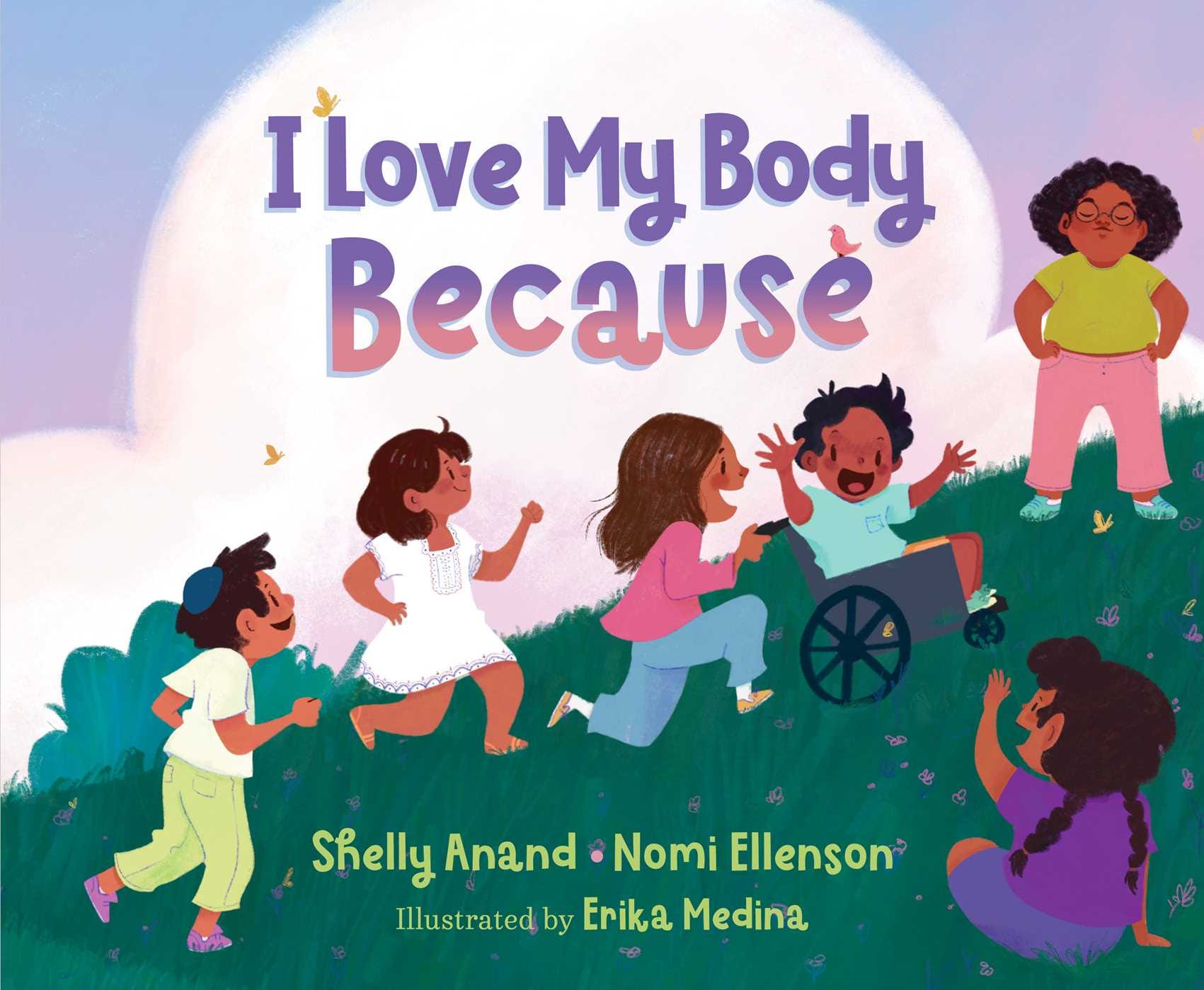
"My Daughter Now Asks Me: 'Why Are You Shaving Your Legs?'"
Today’s episode is a delightful conversation with Shelly Anand and Nomi Ellenson, co-authors of the wonderful new picture book I Love My Body Because. If you want more conversations like this one, please rate and review us in your podcast player! And become a paid Burnt Toast subscriber. It's just $5 per month or $50 for the year. Producing a weekly podcast requires a significant investment of time and resources from several talented people. Paid subscriptions make all of our work possible and enable us to offer an honorarium to expert guests, which is key to centering marginalized voices in this space.And don't forget to preorder Virginia's new book! Fat Talk: Parenting In the Age of Diet Culture comes out April 25, 2023 from Henry Holt. Preorder your signed copy now from Split Rock Books (they ship anywhere in the USA). You can also order it from your independent bookstore, or from Barnes & Noble, Amazon, Target, Kobo or anywhere you like to buy books.Disclaimer: Virginia is a journalist and human with a lot of informed opinions. Virginia is not a nutritionist, therapist, doctor, or any kind of health care provider. The conversation you're about to hear and all of the advice and opinions she gives are just for entertainment, information, and education purposes only. None of this is a substitute for individual medical or mental health advice.BUTTER & OTHER LINKSWant to come on Virginia's Office Hours? Please use this form.Shelley's first book Laxmi’s MoochErika Medina, illustrator of I Love My Body BecauseRoxane Gay's book HungerSonya Renee Taylor's book, The Body Is Not an ApologyTyler FederNabela Noor (Beautifully Me)More body positive picture books studies on representation of kids of color in children's booksNomi's Butter: The Cycles JournalCREDITSThe Burnt Toast Podcast is produced and hosted by Virginia Sole-Smith. Follow Virginia on Instagram or Twitter.Burnt Toast transcripts and essays are edited and formatted by Corinne Fay, who runs @SellTradePlus, an Instagram account where you can buy and sell plus size clothing.The Burnt Toast logo is by Deanna Lowe.Our theme music is by Jeff Bailey and Chris Maxwell.Tommy Harron is our audio engineer.Thanks for listening and for supporting independent anti-diet journalism. This is a public episode. If you would like to discuss this with other subscribers or get access to bonus episodes, visit virginiasolesmith.substack.com
"I Sometimes Wonder What I Would Be Capable of if My Legs Didn’t Hurt."
Today’s episode, a conversation with blogger and fat liberation activist Linda Gerhardt, is the kind of story I can only tell on Burnt Toast. Because lipedema—despite impacting some 11 percent of women worldwide—isn’t a Sexy News Story. It doesn’t have the kind of hook mainstream media outlets want. Lipedema patients aren’t the kind of victims (i.e. thin white ladies) that America loves to rally around. But there are millions of them living quietly, in pain, unable to access healthcare or even clear answers because, as Linda puts it, “lipedema lives in this cursed intersection of medical fatphobia and medical misogyny.”If you want more conversations like this one—about the true costs of anti-fat bias, told in ways that center fat folks—please rate and review us in your podcast player! And become a paid Burnt Toast subscriber. It's just $5 per month or $50 for the year. Producing a weekly podcast requires a significant investment of time and resources from several talented people. Paid subscriptions make all of our work possible and enable us to offer an honorarium to expert guests, which is key to centering marginalized voices in this space.And don't forget to preorder Virginia's new book! Fat Talk: Parenting In the Age of Diet Culture comes out April 25, 2023 from Henry Holt. Preorder your signed copy now from Split Rock Books (they ship anywhere in the USA). You can also order it from your independent bookstore, or from Barnes & Noble, Amazon, Target, Kobo or anywhere you like to buy books.CW: This episode does contain some discussion of medical fatphobia and medical trauma, as well as prescription weight loss and weight loss surgery. If any of that wouldn't be good for you to listen to, please take care of yourself and give this one a miss.Disclaimer: Virginia is a journalist and human with a lot of informed opinions. Virginia is not a nutritionist, therapist, doctor, or any kind of health care provider. The conversation you're about to hear and all of the advice and opinions she gives are just for entertainment, information, and education purposes only. None of this is a substitute for individual medical or mental health advice.BUTTER & OTHER LINKSWant to come on Virginia's Office Hours? Please use this form.Linda blogs at Fluffy Kitten PartyLinda's (awesome!) Instagram is @littlewingedpotatoesThe Standard of Care for Lipedema in the United States by Dr. Karen HerbstRagen Chastain on why movement doesn’t have to be joyful and health is not a moral obligationVirginia is watching Bad Sisters (on Apple TV). CREDITSThe Burnt Toast Podcast is produced and hosted by Virginia Sole-Smith. Follow Virginia on Instagram or Twitter.Burnt Toast transcripts and essays are edited and formatted by Corinne Fay, who runs @SellTradePlus, an Instagram account where you can buy and sell plus size clothing.The Burnt Toast logo is by Deanna Lowe.Our theme music is by Jeff Bailey and Chris Maxwell.Tommy Harron is our audio engineer.Thanks for listening and for supporting independent anti-diet journalism. This is a public episode. If you would like to discuss this with other subscribers or get access to bonus episodes, visit virginiasolesmith.substack.com
It's Time to Talk About School Lunch (Again)
This week, we're taking it old school with a solo Virginia episode! She's reading her most popular essay to date, about why you should stop romanticizing your child's lunchbox. (Note: We recorded this before the White House Conference on Hunger, Nutrition, and Health; check the transcript for some thoughts on these new developments.) If you'd like to support Burnt Toast, please rate and review us in your podcast player! And become a paid Burnt Toast subscriber. Subscriptions are on sale this week only, so you can take 20 percent off and join for just $4/month or $40 for the year. Producing a weekly podcast requires a significant investment of time and resources from several talented people. Paid subscriptions make all of our work possible and enable us to offer an honorarium to expert guests, which is key to centering marginalized voices in this space.We've got an urgent call to action for the Burnt Toast Giving Circle! Details in the transcript. Help us fight for a blue majority in the Arizona state legislature. And don't forget to preorder Virginia's new book! Fat Talk: Parenting In the Age of Diet Culture comes out April 25, 2023 from Henry Holt. Preorder your signed copy now from Split Rock Books (they ship anywhere in the USA). You can also order it from your independent bookstore, or from Barnes & Noble, Amazon, Target, Kobo or anywhere you like to buy books.Disclaimer: Virginia is a journalist and human with a lot of informed opinions. Virginia is not a nutritionist, therapist, doctor, or any kind of health care provider. The conversation you're about to hear and all of the advice and opinions she gives are just for entertainment, information, and education purposes only. None of this is a substitute for individual medical or mental health advice.BUTTER & OTHER LINKSWant to come on Virginia's Office Hours? Please use this form.The original essayHere's the Biden administration’s new National Strategy on hunger and nutrition, including school lunches. The pandemic school lunch scramble.Jennifer Gaddis on school lunchesSchool lunches are healthier than you thinkSo, what about processed foods?Meal planning mental loadstress-organizing my kitchenTomorrow and Tomorrow and Tomorrow by Gabrielle ZevinCome hiking with this amazing groupCREDITSThe Burnt Toast Podcast is produced and hosted by Virginia Sole-Smith. Follow Virginia on Instagram or Twitter.Burnt Toast transcripts and essays are edited and formatted by Corinne Fay, who runs @SellTradePlus, an Instagram account where you can buy and sell plus size clothing.The Burnt Toast logo is by Deanna Lowe.Our theme music is by Jeff Bailey and Chris Maxwell.Tommy Harron is our audio engineer.Thanks for listening and for supporting independent anti-diet journalism. This is a public episode. If you would like to discuss this with other subscribers or get access to bonus episodes, visit virginiasolesmith.substack.com
Feeling Bloated, Sober September, and Fall Soft Pants
This week, Corinne joins Virginia for another Ask Us Anything episode! We have a lot of thoughts about pants. So buckle up for that. We also talk about snacks. Pants and snacks, and I know, you're already in.If you'd like to support Burnt Toast, please rate and review us in your podcast player! And considering becoming a paid Burnt Toast subscriber. It's just $5 per month or $50 for the year. Producing a weekly podcast requires a significant investment of time and resources from several talented people. Paid subscriptions make all of our work possible and enable us to offer an honorarium to expert guests, which is key to centering marginalized voices in this space.You can also now officially preorder Virginia's new book! Fat Talk: Parenting In the Age of Diet Culture comes out April 25, 2023 from Henry Holt. Preorder your signed copy now from Split Rock Books (they ship anywhere in the USA). You can also order it from your independent bookstore, or from Barnes & Noble, Amazon, Target, Kobo or anywhere you like to buy books.Disclaimer: Virginia is a journalist and human with a lot of informed opinions. Virginia is not a nutritionist, therapist, doctor, or any kind of health care provider. The conversation you're about to hear and all of the advice and opinions she gives are just for entertainment, information, and education purposes only. None of this is a substitute for individual medical or mental health advice.BUTTER & OTHER LINKSWant to come on Virginia's Office Hours? Please use this form.For previous Corinne episodes, start here and then go here and here. Corinne's amazing jumpsuitShould you get rid of your scale?Jeans ScienceUniversal Standard black leggingsUniversal Standard ponte pantUniversal Standard buttoned down shirt similar pink clogs to Virginia'sEileen Fisher lantern pantDraper James dressDacy Gillespiecashmere bike shortsCorinne’s Barbell Lift Off experiencethe conversation I had with SerenaCREDITSThe Burnt Toast Podcast is produced and hosted by Virginia Sole-Smith. Follow Virginia on Instagram or Twitter.Burnt Toast transcripts and essays are edited and formatted by Corinne Fay, who runs @SellTradePlus, an Instagram account where you can buy and sell plus size clothing.The Burnt Toast logo is by Deanna Lowe.Our theme music is by Jeff Bailey and Chris Maxwell.Tommy Harron is our audio engineer.Thanks for listening and for supporting independent anti-diet journalism. This is a public episode. If you would like to discuss this with other subscribers or get access to bonus episodes, visit virginiasolesmith.substack.com

The Myth of the Maternal Instinct
This week, Virginia chats with Chelsea Conaboy, author of an amazing new book, Mother Brain: How Neuroscience Is Rewriting the Story of Parenthood.If you'd like to support Burnt Toast, please rate and review us in your podcast player! And considering becoming a paid Burnt Toast subscriber. It's just $5 per month or $50 for the year. Producing a weekly podcast requires a significant investment of time and resources from several talented people. Paid subscriptions make all of our work possible and enable us to offer an honorarium to expert guests, which is key to centering marginalized voices in this space. BUTTER & OTHER LINKSWant to come on Virginia's Office Hours? Please use this form.Chelsea's NYT Op-ed: Maternal Instinct Is a Myth That Men CreatedChelsea's chapter book read-aloud picks: The Wild Robot, The Wild Robot Escapes and (strong co-sign from Virginia) Dory FantasmagoryVirginia's Instagram Gardening Content.CREDITSThe Burnt Toast Podcast is produced and hosted by Virginia Sole-Smith. Follow Virginia on Instagram or Twitter.Burnt Toast transcripts and essays are edited and formatted by Corinne Fay, who runs @SellTradePlus, an Instagram account where you can buy and sell plus size clothing.The Burnt Toast logo is by Deanna Lowe.Our theme music is by Jeff Bailey and Chris Maxwell.Tommy Harron is our audio engineer.Thanks for listening and for supporting independent anti-diet journalism. This is a public episode. If you would like to discuss this with other subscribers or get access to bonus episodes, visit virginiasolesmith.substack.com

When Dieting Is the Family Business
This is a free preview of a paid episode. To hear more, visit virginiasolesmith.substack.comIt's our September bonus episode! And we're trying out a new format: Virginia's Office Hours, where a Burnt Toast subscriber comes on the pod to chat with Virginia about fatphobia, diet culture, parenting and health. Our first guest is Serena, who is trying to navigate family gatherings while in eating disorder recovery—but her relatives aren't just diet-y, they are diet culture creators. If you are already a paid subscriber, you’ll have this entire episode in your podcast feed and access to the entire transcript in your inbox and on the Burnt Toast Substack.If you are not a paid subscriber, you'll only get the first chunk. To hear the whole conversation or read the whole transcript, you'll need to go paid. It's just $5 a month or $50 for the year—and you get the first week free!This episode does contain some discussion of eating disorders, eating disorder recovery, and family medical crisis. If any of that wouldn't be good for you to listen to, please take care of yourself and give this one a miss.Disclaimer: Virginia is a journalist and human with a lot of informed opinions. Virginia is not a nutritionist, therapist, doctor, or any kind of health care provider. The conversation you're about to hear and all of the advice and opinions she gives are just for entertainment, information, and education purposes only. None of this is a substitute for individual medical or mental health advice.BUTTER & OTHER LINKSWant to come on Virginia's Office Hours? Please use this form.Virginia has previously discussed her daughter's medically necessary (but awful!) fat-free diet in this episode. Serena recommends this poem by spoken word poet Andrea Gibson. CREDITSThe Burnt Toast Podcast is produced and hosted by Virginia Sole-Smith. Follow Virginia on Instagram or Twitter.Burnt Toast transcripts and essays are edited and formatted by Corinne Fay, who runs @SellTradePlus, an Instagram account where you can buy and sell plus size clothing.The Burnt Toast logo is by Deanna Lowe.Our theme music is by Jeff Bailey and Chris Maxwell.Tommy Harron is our audio engineer.Thanks for listening and for supporting independent anti-diet journalism.
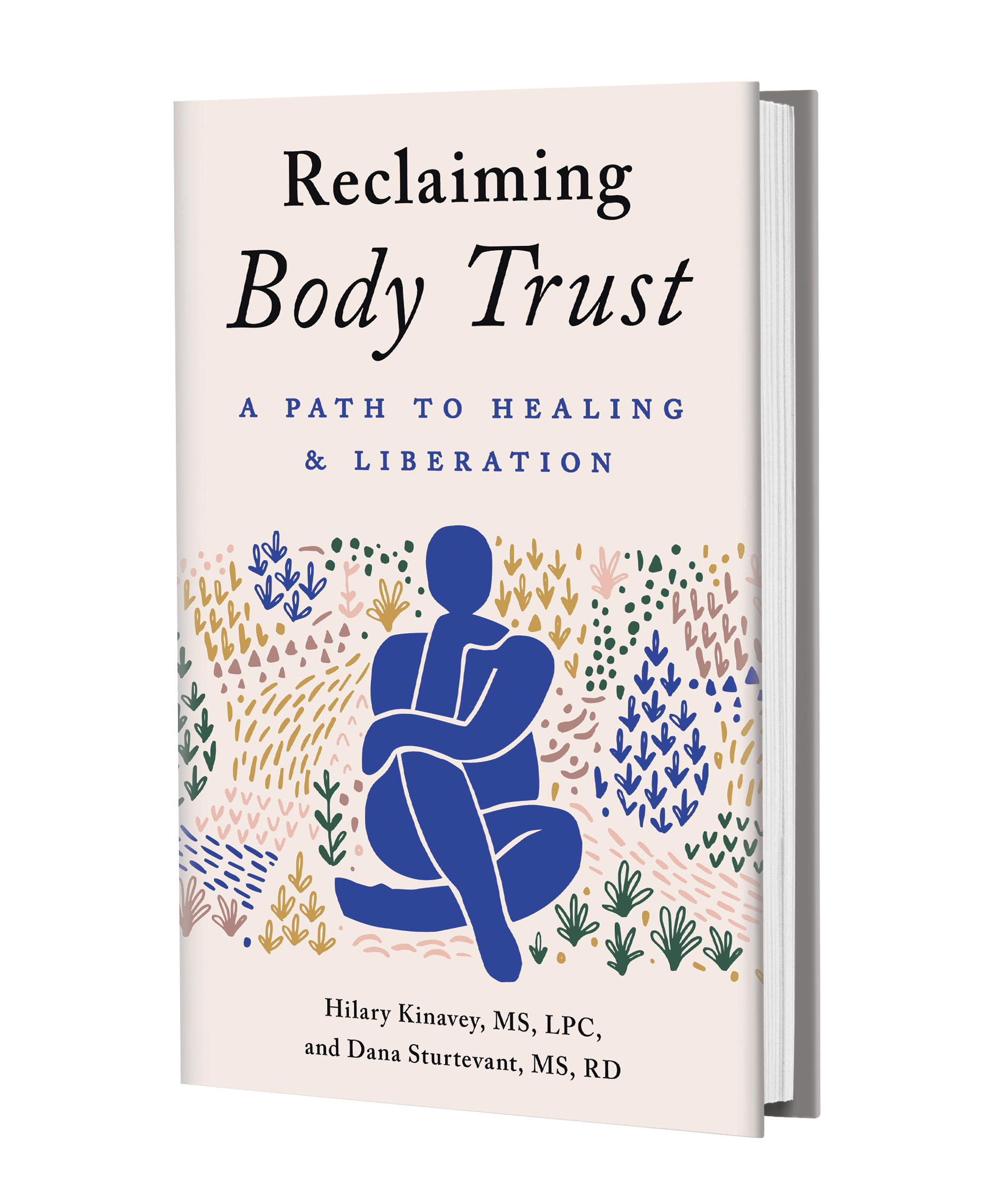
“All Are Welcome Here” Is Very Different From “This Was Made With You in Mind”
This week, Virginia chats with with Hilary Kinavey and Dana Sturtevant, cofounders of the Center for Body Trust, and authors of a new book out this week, Reclaiming Body Trust: A Path to Healing and Liberation.If you'd like to support Burnt Toast, please rate and review us in your podcast player! And considering becoming a paid Burnt Toast subscriber. It's just $5 per month or $50 for the year. Producing a weekly podcast requires a significant investment of time and resources from several talented people. Paid subscriptions make all of our work possible and enable us to offer an honorarium to expert guests, which is key to centering marginalized voices in this space.Post-Publication Note: Dana let us know after this episode aired that credit for this episode title (which she also quotes in the conversation below) belongs to Dr. Crystal Jones. We apologize for not properly attributing that during the conversation. BUTTER & OTHER LINKSWe're getting ready to do another AMA episode soon. And we need your questions! Put them here, so we stay organized. Hilary and Dana were on the Dear Sugars podcastVirginia previously interviewed them for a Health Magazine pieceOne of the frameworks Hilary and Dana use is Barbara Love’s liberatory consciousness, which is something they learned from Desiree Adaway and Ericka Hines.Nonbinary psychologist and Body Trust provider Sand Chang contributed to their book.Hilary is obsessed with the show on Apple TV called Home and her dog Arrow. Dana is obsessed with her hot tub, heated or not, and English muffins from Sparrow Bakery.Virginia and her lower back are obsessed with this $29 heating pad from TargetCREDITSThe Burnt Toast Podcast is produced and hosted by Virginia Sole-Smith. Follow Virginia on Instagram or Twitter.Burnt Toast transcripts and essays are edited and formatted by Corinne Fay, who runs @SellTradePlus, an Instagram account where you can buy and sell plus size clothing.The Burnt Toast logo is by Deanna Lowe.Our theme music is by Jeff Bailey and Chris Maxwell.Tommy Harron is our audio engineer.Thanks for listening and for supporting independent anti-diet journalism. This is a public episode. If you would like to discuss this with other subscribers or get access to bonus episodes, visit virginiasolesmith.substack.com
Is Sugar Really Addictive?
This week, we revisit an old episode of Comfort Food where Virginia Sole-Smith and Amy Palanjian chat with Lisa Du Breuil, an incredible fat activist and clinical social worker who specializes in eating disorders and addiction. They discuss sugar addiction and how to navigate endless treats with your kids.If you'd like to support Burnt Toast, please rate and review us in your podcast player! And considering becoming a paid Burnt Toast subscriber. It's just $5 per month or $50 for the year. Producing a weekly podcast requires a significant investment of time and resources from several talented people. Paid subscriptions make all of our work possible and enable us to offer an honorarium to expert guests, which is key to centering marginalized voices in this space.CREDITSThe Burnt Toast Podcast is produced and hosted by Virginia Sole-Smith. Follow Virginia on Instagram or Twitter.Burnt Toast transcripts and essays are edited and formatted by Corinne Fay, who runs @SellTradePlus, an Instagram account where you can buy and sell plus size clothing.The Burnt Toast logo is by Deanna Lowe. This is a public episode. If you would like to discuss this with other subscribers or get access to bonus episodes, visit virginiasolesmith.substack.com

“Budgeting is Diet Culture For Your Money”
This week, Virginia chats with Dana Miranda, a certified educator in personal finance and the founder of Healthy Rich, a platform for inclusive budget-free financial education. Check out her podcast and her Substack newsletter, Founder Notes.If you'd like to support Burnt Toast, please rate and review us in your podcast player! And considering becoming a paid Burnt Toast subscriber. It's just $5 per month or $50 for the year. Producing a weekly podcast requires a significant investment of time and resources from several talented people. Paid subscriptions make all of our work possible and enable us to offer an honorarium to expert guests, which is key to centering marginalized voices in this space.BUTTER & OTHER LINKSVirginia found Dana through this great Culture Study interview. Dana recommends literal burnt toast with butter, and also playing the flute.Virginia recommends the Maui Mat. CREDITSThe Burnt Toast Podcast is produced and hosted by Virginia Sole-Smith. Follow Virginia on Instagram or Twitter.Burnt Toast transcripts and essays are edited and formatted by Corinne Fay, who runs @SellTradePlus, an Instagram account where you can buy and sell plus size clothing.The Burnt Toast logo is by Deanna Lowe.Our theme music is by Jeff Bailey and Chris Maxwell.Tommy Harron is our audio engineer.Thanks for listening and for supporting independent anti-diet journalism. This is a public episode. If you would like to discuss this with other subscribers or get access to bonus episodes, visit virginiasolesmith.substack.com

The Perfect Roast Chicken Does Not Exist.
Today, Virginia is chatting with Julia Turshen. Julia is a New York Times best-selling cookbook author. Her latest book is Simply Julia, she writes a fantastic newsletter, and she’s the host and producer of the podcast, Keep Calm and Cook On. Julia lives in the Hudson Valley, with her spouse Grace and their pets. And she teaches live cooking classes every Sunday afternoon. Follow her on Instagram: @Turshen.If you'd like to support the show, please rate and review us in your podcast player! And considering becoming a paid Burnt Toast subscriber. It's just $5 per month or $50 for the year. Producing a weekly podcast requires a significant investment of time and resources from several talented people. Paid subscriptions make all of our work possible and enable me to offer an honorarium to expert guests, which is key to centering marginalized voices in this space.BUTTER & OTHER LINKSVirginia and Julia talk about a presentation that Julia recently gave at the Culinary Institute of America about fatphobia and diet culture in the food industry.Julia's Butter is the Body Liberation Hiking Club. Find them on Instagram and Facebook. Virginia's Butter is cutting up the cheese before you serve it, the way Julia taught her. CREDITSThe Burnt Toast Podcast is produced and hosted by Virginia Sole-Smith. Follow Virginia on Instagram or Twitter.Burnt Toast transcripts and essays are edited and formatted by Corinne Fay, who runs @SellTradePlus, an Instagram account where you can buy and sell plus size clothing.The Burnt Toast logo is by Deanna Lowe.Our theme music is by Jeff Bailey and Chris Maxwell.Tommy Harron is our audio engineer.Thanks for listening and for supporting independent anti-diet journalism. This is a public episode. If you would like to discuss this with other subscribers or get access to bonus episodes, visit virginiasolesmith.substack.com
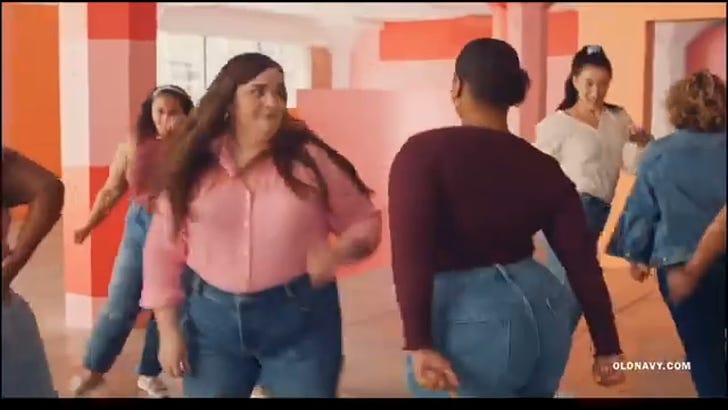
"We Couldn't Have a Campaign That Was Just For Fat People."
This is a free preview of a paid episode. To hear more, visit virginiasolesmith.substack.comThey're dealing with a consumer that they've never marketed to before and they don't really have the tools to do that. They don't know what's going to speak to that consumer. And it's also fatphobia, right? Because the brand doesn't want to center fat people as their customer. So they have to put everybody together in order for it to be okay. You're listening to Burnt Toast. This is the podcast where we talk about diet culture, fatphobia, parenting, and health. I'm Virginia Sole-Smith and I also write the Burnt Toast newsletter. Today I am chatting once again with the fantastic Mia O'Malley. Mia is content creator on Instagram and Tiktok (@MiaOMalley and @plussizebabywearing). Mia has been on the show before, so you’re probably already a big fan. I asked her back today because we needed to have a deep dive conversation about everything happening at Old Navy with plus size clothing.Also! Substack has asked us to try out a new format for this episode. Paid subscribers, you’re getting the full audio and full transcript, below. (So nothing has changed, just consider this your July bonus episode!) Free list folks: You’re getting the first chunk of my conversation with Mia (both audio and transcript), but if you would like the full version, you’ll need to become a paid Burnt Toast subscriber. Reader subscriptions enable me to pay guests like Mia for their time and labor, so please, consider investing in these conversations if this is work you care about. When you get full access to my conversation with Mia, you’ll get way more juicy details on the whole Old Navy situation. And you’ll find out the two brands we think are doing a surprisingly GOOD job on plus size clothes right now. I bet it’s not who you think! PS. You voted and the results are in: We’ll be reading ESSENTIAL LABOR by Angela Garbes for the August Burnt Toast Book Club! Mark your calendars for Wednesday, August 31 at 12pm Eastern.Episode 55 TranscriptVirginiaHi Mia. So we'll start by reminding listeners who you are and what you do.MiaI'm Mia O'Malley. I'm a content creator on Instagram. I have my account @MiaOMalley where I share a lot of resources for fat and plus sized people and some of my own style and life. And then I have an account called @plussizebabywearing on Instagram and I'm @plussizebabywearing on TikTok.VirginiaLast time, we had a pretty wide-ranging conversation where we talked about the intersection of fat activism and momfluencing, about finding a fat-friendly health care provider—all sorts of stuff. But this time, we have a very specific mission. When this news story broke, I was in the middle of writing my book, and I had no time to think about it, but you were on it. Your Instagram is this amazing resource. And I was like, Thank God, Mia will come on and explain to us what is happening with Old Navy and plus size clothing. I mean, it's a mess. How did this all start? MiaSo in August of 2021, old Navy launched what they called BODEQUALITY, and it was like, “the democracy of style.” They were going to offer sizes 0 to 30 and XS to 4x at the same price and then they would have it in 1200 stores. And they would be rolling out sizes 0 to 28 with no special plus size section. They also wanted us to know that there were going to be mannequins size 12 and 18. The CEO of Old Navy said, “It's not a one time campaign. It's a full transformation of our business and service to our customers, based on years of working closely with them to research their needs.” The marketing campaign included a TV commercial with Aidy Bryant from SNL and Shrill.VirginiaSo, none of this was subtle. This was a very full-throated, “We are here for plus sizes.”MiaWell, yes and no. The campaign was not subtle, but the campaign was also confusing. So many people did not even realize what BODEQUALITY meant.VirginiaWell, they made up that word. MiaAnd they made sure to include all diverse body types which, in general, is great. But it's part of a watered down body positivity, where we're not really getting to the heart of the matter and helping the people that are marginalized, that need to be helped and need to be lifted up. A lot of people did not recognize that this campaign meant that plus sizes were being carried in stores. It included people of “diverse body types,” it said “democracy of fashion.” But what does this really mean to someone? Does this mean that I can get my size in your store? It's not really clear. This is me editorializing, but I just think: We couldn't have a campaign that was just for fat people. We have to do it adjacent to thin people.VirginiaIt gives them this cover, because they're using this aspirational rhetoric, instead of saying explicitly, “We have screwed over fat customers.” MiaExactly. It just was not clear enough to the fat consumer that they were going to be able to access their clothes in store. It was muddled in the same way that body po

"The Way Our Hair Grows Out of Our Heads is a Problem for People."
I think it's important for people to recognize that no matter how fascinated you might be by a Black person’s hair, we are not an exhibit or curiosity.You're listening to Burnt Toast. This is the podcast about diet culture, fatphobia, parenting, and health. I’m Virginia Sole-Smith, and I also write the Burnt Toast newsletter.Today I am speaking with anti-racism activist, writer, and educator Sharon Hurley Hall. Sharon is firmly committed to doing her part to eliminate racism as the founder and curator in chief of Sharon's Anti-Racism Newsletter, one of my favorite Substacks. Sharon writes about existing while Black in majority white spaces and amplifies the voices of other anti-racism activists. Sharon is also the head of anti-racism and a special advisor for the Diverse Leaders Group. I asked Sharon to come on the podcast to talk about a piece she wrote on the newsletter a few weeks ago about the CROWN act, Black hair, and the ways in which white people perpetrate racism against Black people for their hair. We also get into how to talk about hair and skin color differences with your kids, which I found super, super helpful and I think you will, too. If you enjoy this episode, please subscribe, rate and review us in your podcast player! It’s free and a great way to help more folks find the show.And! It’s time to decide what we should read for the next Burnt Toast Book Club! I’ve culled through all of your suggestions and narrowed it down to these five (mostly because the Substack poll-maker limits me to five choices). I was going to stick with fiction because it’s summer and I’m in beach read mode, but I made an exception for Angela Garbes because, it’s Angela Garbes. (Which is to say, if we don’t pick her for August, we’ll do it for September or October!) You have until the end of this week to vote. I’ll announce the pick on Tuesday. (The discussion thread will go live Wednesday, August 31 at 12pm Eastern!) Episode 54 TranscriptVirginiaHi Sharon! Why don't we start by having you tell my listeners a little more about yourself and your work?SharonOkay, so I am an anti-racism writer and educator, a former journalist, and I have been writing about anti-racism-related stuff for longer than it appears. I actually wrote my first article in 2016, but I wasn't doing it consistently. I launched an anti-racism newsletter in 2020. So it's just been going for just about two years now. In it, I share my perspectives as a global citizen. I was born in England, I grew up in the Caribbean, I lived in England as an adult. I visited the US. I lived in France. I've been in a lot of places, and I've experienced racism everywhere. And so I bring that lens to what I write about. You know, quite often we think what we're experiencing is the only way it's being experienced or is unique to the location that we're in. And my experience is that there's a lot of commonality in how these things operate in different places. VirginiaOh, that's so interesting. I have British and American citizenship, but I've lived my whole life in America. And I definitely tend to think of racism as this very American issue. But as you're saying that, I'm realizing how incredibly reductive that is. Although Americans certainly are a big part of the problem. SharonYes, but—or yes and, I suppose. Let's not forget that all of this started with the British people—well, British and Europeans—who colonized everywhere.VirginiaSure did. Yup. Absolutely. SharonThere are many places besides the USA that share this history of enslavement. Barbados and the Caribbean being among those places. So there are similarities, there are commonalities, I think. It operates in a particularly American way, but it doesn't mean that it doesn't exist in other places. Because it does. It's sometimes less visible. And of course, because so many other places don't have a gun culture, you're less likely to end up dead as a Black person, even if people are being racist towards you. VirginiaYes. We add that extra layer of things. Well, I am having you here today to talk about a piece of American legislation because you wrote a really excellent piece for your newsletter. I want everyone to subscribe to your newsletter and to be supporting your work. Often you're putting things on my radar that I have missed and I just really appreciate the education that you do. This was a piece you wrote recently on the CROWN Act, which I have to admit I wasn't even aware of as something that was happening. So for starters, for folks who aren't who aren't familiar with this, can you tell us a little bit about what the CROWN act is and what inspired it? SharonThe CROWN Act stands for Create a Respectful and Open World for Natural hair. I believe it was (first) sponsored by State Senator Holly Mitchell from California. And then other states have since passed similar laws. There is also a federal act, which was passed by the House earlier this year. The idea is that Black people should be able to wear thei

"Well, if we have to break the law, how are we going to do it?"
People don’t have a choice about whether or not to fight these things. You have to keep learning all you can, you have to keep finding the allies you can. And to despair is to abandon all the people who need us most.You’re listening to Burnt Toast. This is the podcast about diet culture, fatphobia, parenting, and health. I’m Virginia Sole-Smith, and I also write the Burnt Toast newsletter. Today is a very special episode because I am interviewing one of my very favorite people in the world: My stepmother, Mary Summers. Mary is a Senior Fellow in the Fox Leadership Program and a lecturer in political science at the University of Pennsylvania. She’s also a former physician assistant, political speechwriter, and a lifelong activist. And 52 years ago, she and three other activists made a 28 minute black and white film about what it was like to live in a country where abortions were illegal. (Watch it and get involved!) This was in 1970. The Roe v Wade Supreme Court decision legalizing abortion throughout the country was three years in the future. And of the approximately 800,000 abortions performed in 1970, only 1% were obtained legally. 300,000 resulted in complications and 8000 resulted in death. We are now living in post-Roe America. There is much about this fight that has changed in the past 52 years, but also much that stays the same. So, I asked Mary to come chat with me about her work on the film as well as what we can learn from the people who fought for legal abortion before as we begin to do it again. PS. Mary was delighted to donate her $100 podcast honorarium to the National Network of Abortion Funds. Thank you to the Burnt Toast paid subscribers who made that possible! And big news: The Burnt Toast Giving Circle has exceeded our goal! We’ve raised $20,111 and counting for Arizona state legislature races. You can join us here, and read more about why that helps in the fight to legalize abortion here. Episode 53 TranscriptVirginiaLet’s start by telling listeners a little bit about you and about your work.MaryI am a senior fellow with the Robert Fox Leadership Program at the University of Pennsylvania. I’ve been, for the last 20 years, a lecturer in political science, teaching service learning courses on the politics of food and agriculture and on schools as sites where inequalities and economic status and and health, health especially, can either be addressed or reproduced. My students, as well as being in class with me, are working in schools and after-school programs and food stamp snap enrollment campaigns and programs like that, so that they’re learning about institutions on the ground as well as in the classroom.VirginiaAnd that just one of many things you have done in your life. Do you want to also just go back a little further and tell us what you did, especially around the time you made the film?MaryI got involved in making the film right as I was graduating from college in 1970 I was at Radcliffe. And I had gotten interested in film, and interested in the women’s movement. That period at Harvard was the height of the anti-war movement. We basically were on strike most spring semesters that I was there. Especially the Harvard strike of 1969 was really important to me, seeing the entire university mobilized around stopping ROTC on campus. People who had been meeting in tiny rooms trying to organize, by the end of that strike, were meeting in the football stadium. Faculty and students were working together, voting on the demands of the strike and passing them overwhelmingly and the administration basically conceding everything we were fighting for. That gave me a real sense that we could change the world. In the years both prior to and after graduation, I was also getting more interested in the women’s movement as one more important way of thinking about relationships within the anti-war movement, within the student movement, and in society as a whole. Men were clearly very dominant. And women were starting to be very interested in talking to each other, about everything from clitoral orgasms to shared housekeeping in ways that were exciting and interesting. And then, a person I was taking some classes from told me about a group of women who were making a film about abortion. So I contacted them. They originally started out of the same group of women who eventually would become the founders of Our Bodies Ourselves. It was a big Bread and Roses office that was generating all this activity around women’s health and consciousness raising groups and just lots of excitement about thinking about the inequalities of gender roles, and how could we address that. So I wrote a little grant to a program called Education for Action that that gave me funding to join this group of four women who were making this film on abortion. It had originally been inspired, I think, by Jane Pincus, the person who made it possible to make a film because her husband was a documentary filmmaker then at MIT and we were able
You Never Need to Wear Skinny Yoga Pants
Yoga Journal, which is the long standing print magazine for yoga professionals, and the yoga community, is owned by the same parent company that publishes Clean Eating magazine. So there’s a lot of intersection in the writing and the journalists between them. And I find it very problematic. Extremely problematic. But that’s capitalism, right? You’re listening to Burnt Toast. This is the podcast where we talk about diet culture, fatphobia, parenting, and health. Today I’m chatting with Jessica Grosman! Jessica is an experienced anti-diet registered dietitian and certified Intuitive Eating counselor, weight inclusive health practitioner, and yoga teacher. She is on the faculty of Yoga for Eating Disorders, where she teaches the popular compassionate and mindful yin yoga series. And she’s a co-founder of Anti-Diet Culture Yoga, a platform with a mission to keep diet culture out of yoga spaces by providing training and educational opportunities for teachers. So, as you can probably guess from her bio, Jessica and I are discussing the intersection of diet culture and yoga today. This was such a fascinating conversation for me, because I truly did not know the extent to which yoga has been colonized and appropriated by white people and diet culture. If you have a fraught relationship with yoga, or have had that over the years like I have, I think you will get a lot out of this one. I do want to acknowledge that Jessica and I are two white, privileged ladies having this conversation. I’m very aware that in order to divest from yoga from diet culture and white supremacy more completely, we need to be learning this from people of color. We do shout out some of those voices towards the end of the episode. But I would love to know who else you are learning from—post suggestions in the comments so we can continue this conversation! If you enjoy this episode, please subscribe, rate and review us in your podcast player! It’s free and a great way to help more folks find the show.Keep sending in your questions for Virginia’s Office Hours! If you have a question about navigating diet culture and anti-fat bias that you’d like to talk through with me, or if you just want to rant about a shitty diet with me, you can submit your question/topic here. I’ll pick one person to join me on the bonus episode so we can hash it out together.PS. Also hi new subscribers/listeners! I think a bunch of you found me through Julia Turshen’s podcast Keep Calm and Cook On. I have loved her entire series on Unapologetic Appetites and was delighted to join her for this conversation. Post-Publication Note from Virginia: After this episode aired, a listener let us know that Jessica’s Instagram contains some old content that may be triggering to folks in eating disorder recovery. I don’t expect Burnt Toast Podcast guests to align with me on every single issue; I also don’t expect podcast guests to have lived their lives free from diet culture influences (if I did, I’d have no one to interview!). And I find tremendous value in the conversation we had on this episode. But I wanted to offer this word of caution for folks in the Burnt Toast community who are in recovery. Please take care of yourselves.Episode 52 TranscriptVirginiaHi, Jessica! Why don’t we start by having you tell our listeners a little bit about yourself and your work?JessicaMy work is primarily patient-focused nutrition therapy, and I work to help individuals reestablish a comfortable connection with food and body most often after years of living and diet culture. I am a member of ASDAH, the Association of Size Diversity and Health and use HAES principles in my individualized care. I’m also a yoga teacher, as I mentioned, and really love bringing together all sorts of ways to help people feel comfortable in their body.VirginiaI think you’re our first yoga teacher on the podcast and today that’s going to be our focus — this intersection of diet culture and yoga. I think for a lot of listeners, this probably isn’t breaking news. We’ve all kind of seen the Lululemon version of yoga, and the Gwyneth Paltrow / Goop version. I think a lot of us may assume that diet culture has been baked into yoga from the start. But is that true or do you see this as a more recent co-option of yoga?JessicaI want to start by asking you if you know what the word yoga means. So I want to spin this question back to you. VirginiaI feel like I knew this when I did a lot more yoga, and now I’m going to fail this quiz. JessicaIt’s okay! Yoga is a Sanskrit word that means “to yoke” or “to join.” So right there, the word yoga does not mean acrobatics, leggings, green juice, restrictive diets, or any other stereotype that has been portrayed in the media through diet culture. I want to acknowledge that right from the start that yoga has nothing to do with diet culture in its origin. I’m going to give you a little history lesson here. There are eight limbs of yoga, with only one being the physical practice of yoga, the p
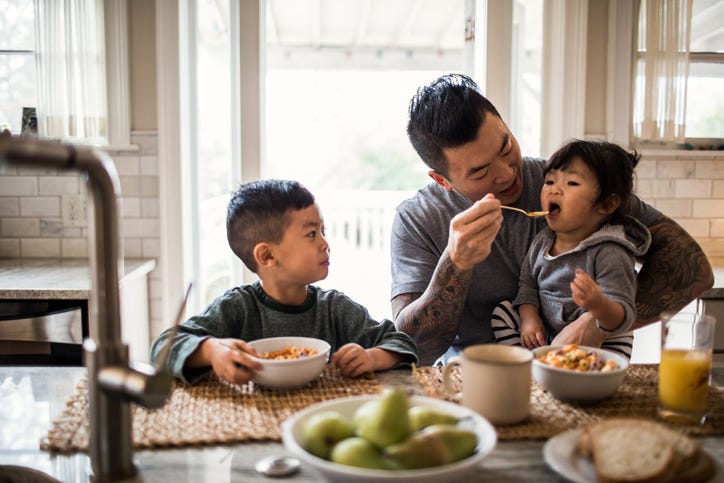
"Health Is About More Than Food. Health Is About The Whole Child."
You’re listening to Burnt Toast! We have another Comfort Food rerun for you this week. Hopefully, by the time you’re listening to this, I have turned in my book manuscript, and I am taking this week to chill out. It’s the first week of July and we’ve got family visiting. My whole goal for this first week is to just spend a ton of time in my pool and my garden, and let my post book brain melt. There’s a stage in book writing where you just feel like you have used all the words. There is nothing left and you have nothing to say. But don’t worry, it’s temporary! It always comes back. And I will be back in your feeds next week with a brand new podcast episode, so make sure you’re subscribed to get that in your podcast player.In the meantime, we are revisiting the Comfort Food archives again. This is episode 53 which aired on December 5, 2019. Our guest on this episode was Jennifer Berry, who is a feeding therapist and founder of Thrive by Spectrum Pediatrics. I’m a huge fan of Jeni’s. I first met her when I was reporting a story for the New York Times Magazine in 2015. I mean, we go way back. I spent a lot of time reporting on the approach that Jeni and her colleagues take towards child-led weaning off feeding tubes and child-led feeding therapy in general—or responsive feeding therapy, as it’s now known. Jeni is just a really trusted source on all questions related to family feeding, all the dynamics, how to think about the different skills, the emotional development piece of it, and the nutrition piece of it.This conversation is about why nutrition is much less important to successful family meals than we think. I know that may feel uncomfortable for a lot of us. We hear all the time that our big responsibility as parents is to feed our kids a healthy diet and more fruits and vegetables and all of that. But that so often gets in the way of feeling good about how you’re feeding your family. So we talk about how to set aside your nutrition anxieties at the family dinner table and how that might improve some of the struggles you’re having there. But Jeni is a trained therapist with a strong research background. I’m a health journalist. So we also talk a lot about the way that nutrition science gets done, and how flawed and misleading both the studies themselves can be and the media coverage of nutrition science. We talk about how to interpret what you’re seeing in the media and by media, I mean mainstream media outlets and I also mean social media. When you see people throwing out statistics throwing out these really broad claims about different foods, or making claims about “healthy” eating in general. So I think this is another super useful episode! Keep sending in your questions for Virginia’s Office Hours! If you have a question about navigating diet culture and anti-fat bias that you’d like to talk through with me, or if you just want to rant about a shitty diet with me, you can submit your question/topic here. I’ll pick one person to join me on the bonus episode so we can hash it out together.And don’t forget: Next Wednesday, July 13 is our first Burnt Toast Book Club! We’re reading The School of Good Mothers by Jessamine Chan and wow is that book even more of a gut punch now than when I picked it. CW for child endangerment, prison abuse, foster system abuse, mother shaming (to put it mildly) and psychological torture… but also know that this book is compulsively readable, heart-breaking, and thought-provoking in all the best ways. I’ll post the book club thread at 12pm Eastern on Wednesday, and be on there live for the hour. (But if you can’t join us at that time, feel free to join the discussion later—that’s the beauty of a thread chat!) Episode 50 TranscriptVirginiaHello and welcome to episode 53 of Comfort Food! This is the podcast about the joys and meltdowns of feeding our families and feeding ourselves.AmyThis week we’re talking about what to do and everything you know about nutrition is starting to make you a little crazy. Because sometimes what you know about nutrition seems to not be true depending on the day. So we’re gonna brainstorm some ways you can find a better balance for yourself and your family with a very special guest.VirginiaI’m the author of The Eating Instinct: Food, Culture, Body Image, and Guilt in America. I write about how women relate to food and nutrition and our bodies in a culture that gives us so many unrealistic expectations about all those things.AmyAnd I’m Amy Palanjian, a writer, recipe developer, and creator of Yummy Toddler Food. And I love helping parents to stop freaking out about what their kids will and won’t eat and also about nutrition news because lately it’s been like every week, there has been something in the news that is just…VirginiaIt’s been kind of crazy. So this week, we are so happy to have Jennifer Berry of Thrive by Spectrum Pediatrics back on the podcast. Jeni, welcome.JeniThank you. Hi! How are you guys doing today?VirginiaWe are good. We are so ex
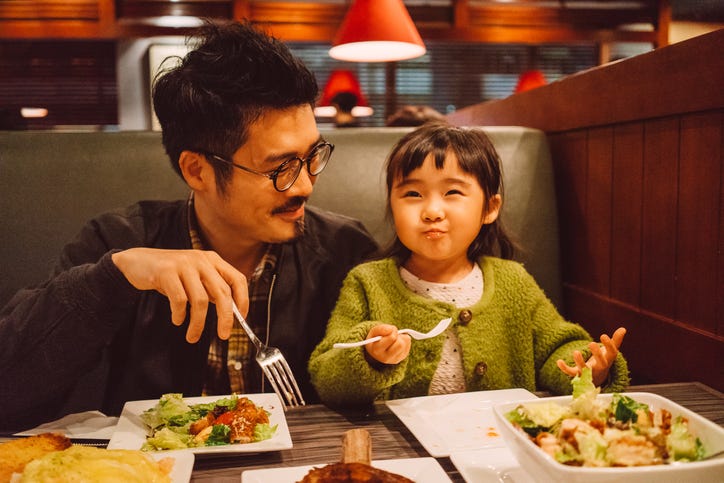
On Reclaiming Comfort Food
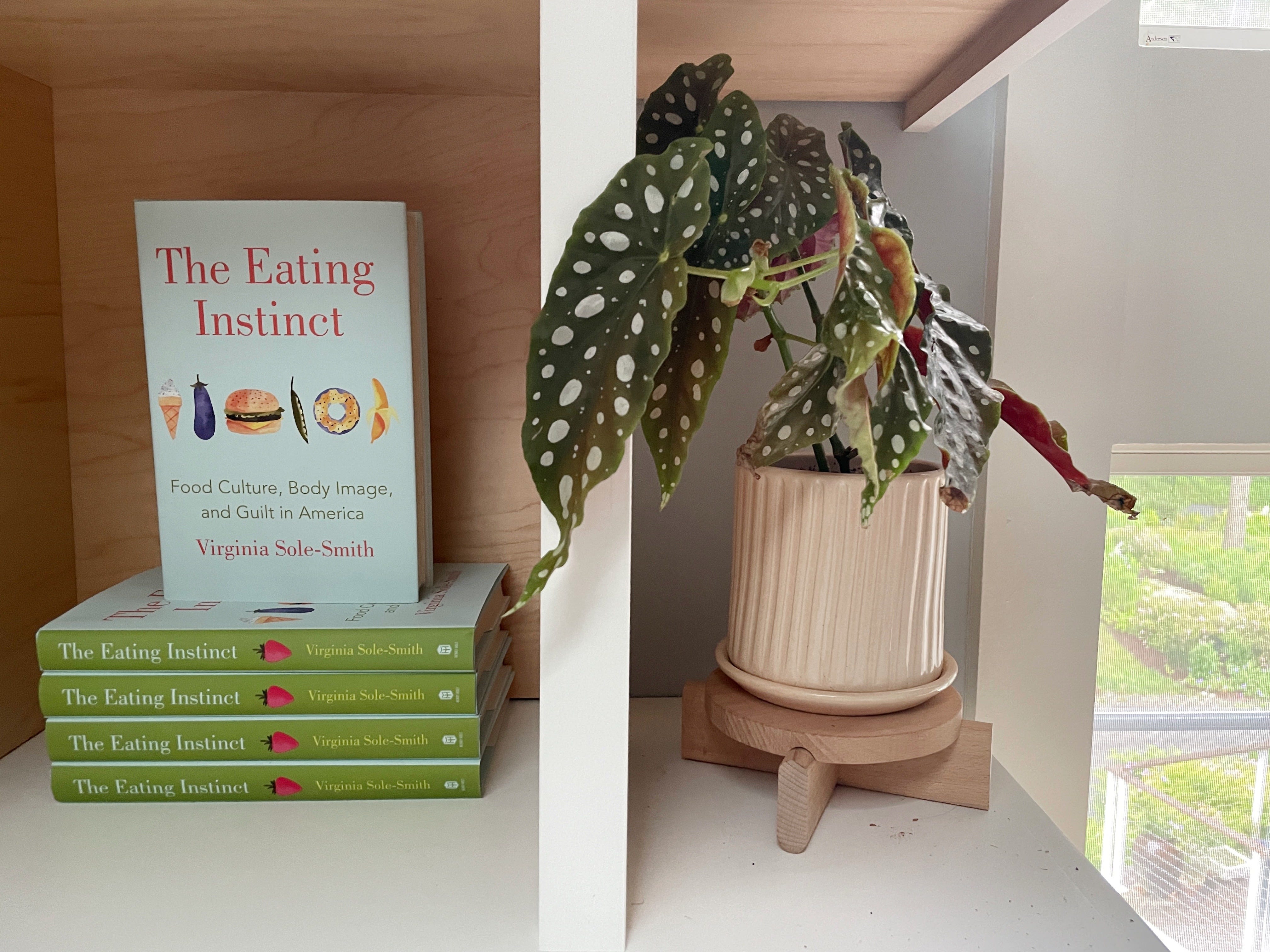
Kids turn one and our expectations change. Suddenly, we want them to eat for nutrition and “food is fuel.”You're listening to Burnt Toast! This is the podcast (and newsletter) about diet culture, fatphobia, parenting, and health. As you are listening to this podcast today, I am also writing the last pages of my next book. It is called Fat Talk: Parenting in the Age of Diet Culture. It will be out next April. I'm recording this with still about 6,000 words ahead of me. I'm hoping by the time you're hearing this, it's like a thousand or five hundred words left. Or even none left! That would be great! It's such a weird experience. I love writing books. I love being immersed in the research and the storytelling and the issues that I'm thinking about constantly. But I'm definitely also in the can-no-longer-see-the-forest-for-the-trees stage of this first draft. So, that is how I am feeling. Hopefully, by the time you're listening to this, it will be feeling much closer to relieved and celebratory! Because I am swamped with getting this manuscript finished, I am giving you a couple of weeks of rerun episodes so I can stay firmly locked into book world and do a little less bouncing between book, newsletter, podcast, the way I have been for the last many months. So this week's rerun is a conversation that Amy Palanjian and I had on our old podcast Comfort Food, about emotional eating. This episode first aired on February 27, 2020. And I think it's one where we were actually a little ahead of our time because once Covid happened, the conversation around comfort eating changed. There was so much demonization of comfort eating and stress eating that we did see this really powerful backlash of folks saying, “No wait, actually we're going through a global trauma, making sourdough and enjoying it is a great way to cope with your anxiety.” A lot of that is what Amy and I are talking about in this episode. We are longtime fans of comfort eating—that's why we named the podcast Comfort Food!—and of emotional eating as a benign coping strategy. It's something I continue to talk about: The importance of reclaiming these coping strategies for yourself, of removing the guilt and shame because that's what causes them to feel so harmful. A lot of what we talked about may not feel entirely new to you, if you've been following Burnt Toast for a while, but I do think we hit a lot of the key points really well. If you are struggling with feeling okay about feeding yourself in any way, it should be a really useful lesson. If you enjoy this episode, please subscribe, rate and review us in your podcast player! It’s free and a great way to help more folks find the show.And don’t forget! Today is your last day to fill out the reader survey and be entered in the Burnt Toast Book Giveaway! It’s also your last chance to enter the giveaway by becoming a paid subscriber (or renewing an existing subscription if yours was set to expire this month). AND it’s the last day to take 20 percent off that subscription price! PS. If you’ve already done the survey or gotten/renewed a subscription and aren’t sure you entered the giveaway, please fill out this form.And keep sending in your questions for Virginia’s Office Hours! If you have a question about navigating diet culture and anti-fat bias that you’d like to talk through with me, or if you just want to rant about a shitty diet with me, you can submit your question/topic here. I’ll pick one person to join me on the bonus episode so we can hash it out together.VirginiaHello and welcome to episode 64 of Comfort Food! This is the podcast about the joys and meltdowns of feeding our families and feeding ourselves.AmySo this week we are going to explore the concept of emotional eating and some of the myths and misconceptions that can come up and also to talk about is it okay to eat when you're not physically hungry?VirginiaI'm Virginia Sole-Smith, I'm a writer, a contributor to Parents Magazine and New York Times Parenting, and I'm the author of The Eating Instinct: Food, Culture, Body Image, and Guilt in America, which is out in paperback now and it has such a pretty new cover. Maybe I'll get Amy to put a picture in the show notes, you should definitely check it out. Anyway, I write about how women relate to food and our bodies in a culture that gives us so many unrealistic expectations about those things.AmyAnd I'm Amy Palanjian, a writer, recipe developer, and creator of Yummy Toddler Food. And I love helping parents to stop freaking out about what their kids will and won't eat and sharing doable recipes that fit into even the busiest family schedules. Okay, so obviously, the name of our podcast is Comfort Food. So, we think that food should be comforting, but we realized we never explicitly talked about it in depth— about the concept of comfort as it relates to food and why we think it's important.VirginiaYeah. And it's a really fundamental to what we do. I mean, again, we named the podcast after it. I
Why Anti-Thin Jokes are Anti-Fat
The reason people are angry at thin women is because they hate fat. Yes, of course, we should not be yelling at skinny people. But it’s important to hold that together with, when those jokes get made, they’re actually anti-fat jokes. They’re not anti-thin jokes.You’re listening to Burnt Toast! This is the podcast where we talk about diet culture, fatphobia, parenting, and health.Today we are doing another Ask Me Anything episode! Corinne Fay is back by popular demand, and we’re both answering a whole bunch of your questions. We intended this one to be writing-themed but we ended up talking about houseplants a lot. You’re welcome. If you enjoy this episode, please subscribe, rate and review us in your podcast player! It’s free and a great way to help more folks find the show. Of course, the other best way to support the show is with a paid subscription. And as we wrap up June and Burnt Toast’s one year anniversary, I’m giving you a week to take a permanent 20 percent off your subscription price! That gets it down to just $4/month or $40 for the year ($3.33/month, the cheapest this ever gets). Yes, you can both get this discount AND enter the Burnt Toast Book Giveaway. Sometimes life rewards procrastinators. Also: I’m always happy to offer comp subscriptions if paying isn’t feasible for you. And you can still enter the giveaway by completing our reader survey!PS. If you’ve already done the survey or gotten/renewed a subscription and aren’t sure you entered the giveaway, please fill out this form. And keep sending in your questions for Virginia’s Office Hours! If you have a question about navigating diet culture and anti-fat bias that you’d like to talk through with me, or if you just want to rant about a shitty diet with me, you can submit your question/topic here. I’ll pick one person to join me on the bonus episode so we can hash it out together.Episode 49 TranscriptVirginiaAll right, we’ve got a whole big list of questions we’re gonna work through. Where do you want to start?CorinneThe first question is: How did you get started as a writer?VirginiaI have written about this before, so here is one of the early episodes of the podcast where I give the whole story. I was an English and creative writing major in college. I went to school in New York, so I did a bunch of free internships at magazines. My first job out of college was as an editorial assistant at Seventeen magazine. That is where I got my start writing, so a lot of “get your best bikini body” stories and prom bodies. Lots of event-based bodies in the teen magazine world. We did also do some really good health reporting. I remember doing a big story about vaginas. A misconception about women’s media is that everyone who works there hates women, when it’s actually mostly run by feminists who are up against advertising and always caught in that vortex. So, I learned a ton. There was a lot of very good journalism happening there, but always under this umbrella of how do we sell beauty products and clothes to teenage girls. From there I went to another women’s magazine and then in 2005, I went freelance and that’s what I’ve been doing ever since. Okay the next question is for you! How and why did Corinne start @SellTradePlus? It is such a unique community and vision. CorinneI started @selltradeplus in 2018. I started it because I was addicted to looking at other buy/sell/trade accounts on Instagram and was never seeing my size. I just thought, if I were going to a used clothing store, I would just go to the section that was my size. So why not just make a size-based Buy Sell Trade account? And that’s kind of how it got started. And then I really liked the people that I was meeting. And I think it’s turned into a bit more of a community.VirginiaIt is a lovely community. You’re very good at community building. Corinne Thank you. VirginiaI hear a lot of Corinne love from people who find my work through you.CorinneThat’s so nice. VirginiaAs well they should be. And we will also link back to the first time you were on the podcast, because you kind of told your whole origin story in more detail there, too. So folks can catch up there. And you do those weekly discussion posts where people chat about all sorts of different things. It is much more than just the clothes, although the clothes are excellent. CorinneIt’s a fun place to be. Okay, the next question is: Can you share a little bit about your own progression from dieting to anti-diet mentality? VirginiaI think we should both answer this one, if you’re up for it. So, as I mentioned, I started in women’s magazines and wrote a lot of shitty diet stories. Very much in the diet world, while also feeling conflicted about it and rationalizing many of those stories to myself. Like, “this one’s not really a diet, it’s just about portion control.” Or, you know, “this one’s not really a diet, it’s eating the way Michael Pollan told you to eat, so that’s fine,” etc, etc, and increasingly getting frustrated about th
Nobody Asked Mark Bittman Why He Needed Childcare.
Like yesterday, I included goldfish crackers in a lunch picture. And I’m like, how long is it going to take before someone yells at me about the goldfish?You’re listening to Burnt Toast! This is the podcast where we talk about diet culture, fatphobia, parenting, and health. Today I am chatting with fan favorite, and my best friend, Amy Palanjian. Amy is the creator of the blog Yummy Toddler Food, and she’s on Instagram and Tiktok, as we’ll talk about. She’s also my former podcast co-host of the Comfort Food podcast, and a frequent flyer here on Burnt Toast. Today we’re talking about the business of kid food blogging, and the line Amy walks in trying to present realistic relatable content, but also have people be aware that this is a business and have that labor be somewhat visible. No one has ever asked Mark Bittman (or any other male food writer) if they are making a living writing recipes. We know and understand they run a business—but when women do this, and especially when moms do it, we act like it’s not work. We also get into broader themes about how we make domestic work visible and what happens when we do that. If you enjoy this episode, please subscribe, rate and review us in your podcast player! It’s free and a great way to help more folks find the show.For an upcoming bonus ep, I’m trying out a new format: Virginia’s Office Hours. If you have a question about navigating diet culture and anti-fat bias that you’d like to talk through with me, or if you just want to rant about a shitty diet with me, you can submit your question/topic here. I’ll pick one person to join me on the bonus episode so we can hash it out together.Bonus episodes are for paid subscribers only, so join us here so you don’t miss out! VirginiaThis conversation is inspired by a piece you wrote for your newsletter a little while ago where you kind of… came out to your audience. You were like, “Guys, this is a business. I’m a blogger, recipe developer, influencer, cookbook author. This is a business.” So I just want to start by saying it feels weird that you had to explain this to people. My first thought in reading it was: Does Mark Bittman have to explain to people that he runs a business? I don’t think so.AmyThere’s this assumption maybe that the recipes that I share are like, a food diary. That I’m taking pictures of the food I’m making for my kids, and then just happening to share them. And I think that’s the way that blogging started many, many years ago. Blogs were sort of diaries. And there are a lot of people on social media now that are stille doing that. They don’t have fleshed out websites. They’re just sharing stuff on Instagram or Tiktok. I think the assumption is, Oh, she just happened to make this for her family and she’s sharing it with us. But most of the time when I’m cooking for work, my children are not even home. I have a content calendar that is scheduled out many, many months ahead of time. I am doing almost nothing in real time. Because I can’t! There’s production time on shooting everything and writing all the content and doing all the videos. I have to be ahead of schedule, because that’s the way you run most businesses.VirginiaYou do run them with a plan. You don’t tend to just show up one day and be like, Hey, let’s make some stuff.AmyI think there are people that do that. But I run my website like we ran magazines. I have gotten a lot of requests like, “Can you show the ‘after’ plate?” Like, I’m not gonna sit there and videotape everything that my kids are eating, right? Because a that’s a giant pain. And it’s such a strange thing to do to a kid.VirginiaIt’s a real invasion of privacy to be like, “Okay, eat dinner, I’m just going to be here cataloging whether you like it and what you eat!”AmyAnd how much my kids eat has no bearing on how much your kids eat. It’s a strange request for information because it’s basically meaningless.VirginiaThey just either want some reassurance that your kid doesn’t eat it either. Or they want to feel bad because your kid eats something that their kid won’t eat. No good comes from these comparisons. AmyAnd my kids don’t eat everything that I make for the website. They are a sample size of three! I have enough food experience that I can taste a recipe and judge whether or not it’s good, from a much different lens than my children can. VirginiaThat’s another way I feel like the labor of all of this is made invisible. Because you are writing recipes for kids, there is an assumption that your children are the experts on your work. As opposed to understanding that you develop recipes because you have years of experience developing recipes, and you know what tastes good because this is your work. Again when any male food writer is like, here’s this amazing stew, we’re not like, But did your wife like it? Did your friends eat it? We trust them when they say this was amazing. I’m insulted on your behalf that people are like, Did Selway eat it? No offense, Selway, but it’s not re
"Skincare Culture is Dewy Diet Culture"
Because this is what we do to ourselves every day. We put in so much effort to just exist as basic people in the world. Like, we’re not like knockout celebrities. We’re not like stunning anybody. Like, we put in all of this work for a reward that doesn’t actually ever come.You’re listening to Burnt Toast! This is the podcast where we talk about diet culture, fatphobia, parenting, and health. Today I’m chatting with Jessica Defino. Jessica is a pro-skin, anti-product beauty reporter who is dismantling beauty standards, debunking marketing myths, and exploring how beauty culture impacts people. Her work has appeared in the New York Times, Vogue, Allure, and more. She also writes the beauty-critical newsletter, The Unpublishable. If you enjoy this episode, please subscribe, rate and review us in your podcast player! It’s free and a great way to help more folks find the show.For next month’s bonus ep, I’m trying out a new format: Virginia’s Office Hours. If you have a question about navigating diet culture and anti-fat bias that you’d like to talk through with me, or if you just want to rant about a shitty diet with me, you can submit your question/topic here. I’ll pick one person to join me on the bonus episode so we can hash it out together. Bonus episodes are for paid subscribers only, so join us here so you don’t miss out! Episode 47 TranscriptVirginiaI feel a weird compulsion to tell you that as I contemplated this conversation, my skin broke out very dramatically. And I was like, do I need to disclose this to her? And then I was like, No, it’s fine. It’s fine.JessicaIt’s totally fine. You’re just a normal human being with skin.VirginiaYes, exactly. But it was very funny timing. Why don’t we start by having you tell listeners a little bit about yourself and your work?JessicaI describe myself as a pro-skin, anti-product beauty reporter. I report on beauty and skincare, mostly through the lens of skin first, and then what we put on the skin and the consumerism of it all second, which is pretty rare in the beauty space. It’s also really hard in the beauty space. I was finding all this information about skin and skincare culture and beauty culture and really wanting to report on it, and found that I had a hard time placing these more controversial pitches. My bread and butter is still freelancing. I write for places like the New York Times and Vogue and Allure, but mostly these days, I’m working on my own newsletter The Unpublishable where I can dive a little deeper and explore some of these not industry-friendly topics.VirginiaYou’re speaking to my soul. As my readers know, I started Burnt Toast so that I could write diet culture stories that I can’t write in the outlets that run diet ads next to my work. I spent a long time at women’s magazines and the ethical conundrum of the beauty department is fascinating. And I don’t think people understand the extent to which advertising and beauty content are interwoven. Sketch that out a little bit for us.JessicaIt’s intense. I had no idea until I started reporting on the beauty industry, too. Beauty media is pretty much funded by beauty advertisers, which means it’s not within a publication’s best interest to publish anything that goes against advertisers’ interest—which means a lot of beauty content is very product focused. It’s very sort of light and airy, and not diving deep to question, like, how are these products affecting our skin, our health, our endocrine systems. Beauty media makes money in one of two ways: Through advertising or through affiliate sales. So there’s a big internal incentive to push a lot of products on people, because the publication will get a cut of all those products that are sold online. It’s very interwoven. I have had so many stories killed or completely edited to remove brand names, softened, just really toned down in order to appease advertisers. VirginiaI want to tell you my story of this, which is taking us all the way back to 2007, pre- social media. I did my first big investigative feature piece, which was a deep dive into working conditions in nail salons. I wrote it for Jane magazine, when Jane was the coolest women’s magazine, and also the sort of counterculture women’s magazine. I spent all this time with these nail salon workers, exploring every aspect of this, and they killed it right before we went to press because of nail polish advertisers. And because a big portion of subscribers were nail salons, and they thought they would lose subscribers. That was such a transformative moment for me as a journalist. I was like, Oh, I have to figure out different ways to do this. Because that was a media outlet that I don’t think you would have expected to be as beholden to their advertisers as they were. I can talk about this all now because they folded a million years ago and the piece did end up finally running in The Nation, which obviously has no beauty advertisers. But it also was read by a much smaller audience, not all of wh

Do We Owe It To Our Kids To Be Healthy?
We have to disconnect the idea of good parenting from health and fitness. Because people don’t have a moral imperative to health.You’re listening to Burnt Toast! This is the podcast where we talk about diet culture, fatphobia, parenting and health. Today I am chatting with Amanda Martinez Beck. Amanda is a fat activist, author and host of the Fat and Faithful podcast. She focuses on the ways that fatphobia and ableism have intertwined with American Christian culture. We are discussing Amanda’s second book, More of You: the Fat Girls Field Guide to the Modern World which came out this week.Some news: Beginning with today’s episode, I’m now able to pay every podcast guest a $100 honorarium, to compensate them for their time and labor. This will make it easier for the podcast to center the voices of marginalized folks (a goal I previously discussed here). And our incredible community of Burnt Toast subscribers is making this possible! So thank you so much, if you’re already subscribed, for helping me do this. And if you’re not, but want to hear more conversations like this one, consider joining us. (I also offer comp subscriptions—just email if that would be helpful to you.)PS. If you enjoy this episode, please also subscribe, rate and review us in your podcast player! That’s free and a great way to help more folks find the show. And: I wanted to note that Amanda and I recorded this conversation before news of the Uvalde school shooting broke, so you won’t hear us discuss it, though of course it is now all I can think about. As I said, all too recently, after the Buffalo shooting: Remember that gun reform is now a states issue. Everytown has a website that lets you see — state by state — what the laws are in each state. We know that electing new majorities in our target states will make it possible to pass gun safety legislation. The States Project helped flip Maine in 2018, and were able to deepen that new majority in 2020 — this was an outcome in their 2021 session. So this is, yet again, where the Burnt Toast Giving Circle can do some good. Join us, if you need a place to put your rage. Episode 45 TranscriptVirginiaHi Amanda, I’m so glad to have you on! And big congratulations on the new book. Why don’t we start by having you tell us a little bit about yourself, your work, and your family?AmandaOkay. I am a fat activist. My middle name is Martinez, which alludes to my Cuban background. My dad was a Cuban refugee, so I grew up in a home that was half Latinx, half white. My husband Zachary is a university professor and we have four kids, and they’re in bodies that don’t conform to societal standards, most of them. So I’m doing this work for myself and for my kids. I have a podcast called Fat and Faithful, which talks about fat liberation through a Christian lens. I wrote a new book, which we’re going to talk about. And I have an Instagram, which is called @your_body_is_good. In addition to my body image coaching that I do, that’s the work that I’m doing right now.VirginiaThat’s not a short list of work, so thank you for all of that. We met when I interviewed you for a story on how anti-fat bias was impacting the treatment of fat folks with COVID. You were in early recovery, at that point, from COVID. I would love, if you don’t mind, to talk a little bit about how that’s gone. How are you doing?AmandaI’m doing really well, but it has been a long road. I was hospitalized for 40 days and was on a ventilator for two weeks and lost the ability to walk, in addition to just all the respiratory things that come along with COVID. While I was in the hospital, I encountered fatphobia in some very glaring ways and some very systemic ways—you wrote a whole piece on that. But I am on a good path right now. I have been off of oxygen since October of 2021. I was on oxygen for about a year. My lungs are doing really well. And I have more mobility than I did even before going into the hospital. I credit that to a fabulous doctor who’s taken my post-acute COVID syndrome really seriously, or what we call long COVID, to help me with getting on the right medicines, and specifically, to help with the brain fog, to get on medicine for that, and I feel like a new person. Really.VirginiaI worried about you for a long time. I know there are a lot of us who have been rooting for you. I’m glad to hear you’re in a better place and also so grateful that you did share your story, because it was so important, I think, for us to continue to follow this path, past the initial COVID and through long COVID. I know when you’re in the middle of something like that, I know how much additional labor it is to share that and put that out there, so thank you for doing that. I’m curious to hear a little more about what misconceptions came up the most? What do you still find yourself having to challenge or correct with folks around COVID and weight?AmandaIn the beginning, I felt really guilty for getting COVID because there was definitely a narrative tha
Skinny Husbands, Bad Bras, and Talking Bodies with Kids.
You’re listening to Burnt Toast! This is the podcast where we talk about diet culture, fatphobia, parenting and health. Today we’re doing a very fun Ask Me Anything episode. A lot of great questions came in, so I’ve asked Corinne to help out with this one. For folks who don’t know, Corinne works on Burnt Toast with me and she is also the founder of @selltradeplus, an Instagram account where you can buy and sell plus size clothing. She very graciously agreed to come ask me your questions and even answer one of her own. Also! We’re planning another AMA ep for next month, to celebrate ONE YEAR of Burnt Toast (in its current fully-formed newsletter/podcast iteration). So if you’ve got even more questions for us, and especially if you have questions about the newsletter, or my book (which is also getting done next month!) put them here. If you enjoy this episode, please subscribe, rate and review us in your podcast player! And subscribe to the Burnt Toast newsletter for episode transcripts, reported essays, and more.Episode 44 TranscriptVirginiaHi Corinne! I have drafted you to come on and help with this AMA episode. These things are always so weird and I have feelings about them. So, I’m glad you’re here to do it with me.CorinneI love an AMA.VirginiaThey are the kind of thing that I kind of hate doing myself but also love other people’s. So I recognize that people enjoy it. CorinneHere’s our first question: I’d love to know if there’s any body related topic you ever have a hard time discussing with your kids. And if when that happens, what do you do to get better at having the conversation / beginning the conversation?VirginiaSo for context, my kids are four and eight. I’m sure there are many body conversations we have yet to have that may be hard for me in the future. But, I have covered genitalia in a lot of detail. I’ve explained what the clitoris is for. And certainly, there’s a lot of fat positive talk in our house. All of those conversations I sort of weirdly enjoy. I guess because often in parenting, you’re not really having meaningful conversations with your kids, you’re just trying to move them through the day. When they ask a question like that, it’s like, oh, this is an opportunity to actually tell you something I know something about, it’s weirdly rewarding. So those questions don’t throw me too much. The stress point for me on this is more related to food, when I’m navigating my children’s strong feelings about not wanting to eat what I’m serving, what they wish I was serving, that kind of thing. I’m just more exhausted by it and annoyed by it, whereas with the curiosity about bodies I’m like, “Yeah, man! Let’s be curious about bodies! That’s great!” But when it’s more feelings about me wanting to keep all foods neutral but maybe once a week we eat a vegetable, I can sometimes feel more unsure in the moment. My kids also can use my work against me, which is very smart of them, but also frustrating. There will be a lot of, “It’s my body, my choice” when it’s like, “But can you brush your teeth?” And then it’s like, well, crap. Good work, guys. I would also say there are definitely conversations where I was overwhelmed the first time we had them. The great thing is you never have the conversation just once. I remember trying to explain periods to both my kids. The first time I kind of traumatized them a little bit. I explained what a period was and my younger daughter was like, “Then it’s over and you’re better, right?” And I was like, “Oh, no. You do it every month for the rest of your life.” And then she sobbed “I don’t want to bleed forever,” and went upstairs to her room. And I was like, Do I explain about IUDs? Or have I already taken this too far?I have plenty of examples of we had a conversation, and I kind of fucked it up. But then you get another chance! And you can normalize it and come back to it. Even if you feel like you really freeze in the moment, or tell them more than they’re asking for and they cry, you can fix it later. Or, you know, it’s good for them to have stuff to work on in therapy. CorinneThat seems like good advice. Next question! I am pregnant with my second, due in mid July. My first kid will have just turned four. Seems like your kids have a similar age gap. Got any tips for handling this major life transition for our four year old? I feel like he will inevitably hate us and the baby occasionally, but hoping to find ways to maintain some sanity and happiness at the same time. Hopefully?VirginiaI love this age spread! My kids are four years and two months apart. It was awesome in the baby stage because the older kid can really get into being a big kid. When my kids were three, they didn’t really want to be big kids, they still wanted me to do everything for them. Then sometime around four, they both have switched into “No, wait. I can do it!” and feeling good about that. So, you could lean into like, “Can you go get me the diaper? Can you go get the bottle?” and they woul
Essential Labor and Essential Pleasure, with Angela Garbes
We hear so much about Betty Friedan, and the Feminine Mystique. And the whole thing was women find power and fulfillment and identity outside of the home by working professionally. Right? The thing that that leaves out is when you go outside of the home, who’s in the home? Like that work never went away.Hello and welcome to Burnt Toast! This is the podcast where we talk about diet culture, fatphobia, parenting and health.Today I am chatting with Angela Garbes, author of Like a Mother and the brilliant new book Essential Labor. I am a huge fan of Angela’s. We’ve been sort of admiring one another from afar over the internet for several years now, and this is our first IRL conversation (Well, IRL+Zoom, if you will.) We talk a ton about her new book, which is about the social construction of modern motherhood and what we need to do to truly support mothers, but also all caregivers and care work. It’s a really fun and sort of surprisingly funny conversation for what’s a pretty heavy topic. I think you will get so much out of it and even more out of her book Essential Labor, which I really recommend you run right out and get. If you enjoy this episode, please subscribe, rate and review us in your podcast player! And subscribe to the Burnt Toast newsletter for episode transcripts, reported essays, and more.PS. The Burnt Toast Giving Circle is over $11,000! You are all amazing. We will be picking which state election to fund in the next few weeks, so stay tuned for details there. And if you’ve been thinking about joining, we still need you! Here’s the Burnt Toast episode where I announced it, ICYMI, and the link to donate.Episode 43 TranscriptVirginiaSo the new book is just incredible. How are you doing? How are you feeling? AngelaThank you for asking! I’m feeling so many things. I’m feeling tired. I hate to be the person that leads with “I’m tired,” but I feel like writing a book is is a frankly terrible process. I feel like my brain is still sort of recovering from that. And I was on kind of an accelerated timeline. I finished edits on the book in like December/January. And now it’s coming out. But I mean, I’m excited. I feel like I have been cooped up with these ideas and these thoughts for like, two years, and I am ready to like, be on the loose. COVID variants willing, I’m ready to go on tour and connect with people. I’m really desperate for that contact and conversation. So I feel really good. And I feel proud. I feel really proud of the book I’ve written. I’m trying to just hold on to that because amidst all the chaos that is going to happen, and hearing what other people think, I want to always remember how good I feel about this book and how that’s really the only thing that matters.[Virginia Note: So far, people think it’s amazing. Here’s Jia Tolentino and Sara Louise Petersen saying so, among others.]VirginiaYour book is very of the moment. Did the idea come out of the pandemic? Or was it something you’ve been thinking about, because it also ties so closely to your first book?AngelaThe secret history of this book is that I sold a second book right after my first book came out in 2018. It was a book of essays about the human body, like the body as a lens for how we move through the world and how we process the world. I was trying to write that book for two years, and it was due the summer of the pandemic. A couple of weeks into lockdown I contacted my editor and I was like, “There’s no way. There’s no way I can meet this deadline.” I’m a professional, like, I always get it done. And luckily, she was totally understanding because she was like, “I just told my husband, I think I have to quit my job.” So like everyone was going through this thing. So we pushed the deadline back several times. I used to co-host a podcast called The Double Shift with my friend, Katherine Goldstein. She invited me, during the pandemic, to cohost this with her because she wanted to continue to make the podcast during a time in which it felt almost impossible to do it and during a time in which we both felt mother’s voices, and the voices of caregivers, were both vitally important, but on the edge of being erased. And just consumed by domestic work. In September 2020, 865,000 women dropped out of the workforce in one month, because no one could be a caretaker, a virtual school proctor, and a professional worker at the same time. So I said, “women’s participation in the workforce is directly tied to their participation in public life. And what happens if women disappear for a year? Or more?”So, from that lighthearted thought, I had a wonderful editor who reached out to me and she was like, “Do you want to write about this? I want someone to write about it and I think you need to do it.” I had not been writing and I was scared to do it. But I basically put every bad thought I’d been having about disappearing, about feeling unsatisfied by domestic labor, about questioning ambition, about just everything, and I wrote this piece for T
Calf Liver Gummies Are Not Delicious.
If you asked any of these gentle parenting experts, they would say parenting is the most important work in the world. But they are also perpetually downplaying the hardest parts of it—which means not ever making visible the parts of parenting that we most need to change.Welcome to Burnt Toast! This is the podcast where we talk about diet culture, fatphobia, parenting, and health. Today I am chatting again with Sara Louise Petersen. She’s the Burnt Toast resident momfluencer expert, and you can catch her previous episodes here and here. Sara is also the author of an upcoming book about momfluencers and the awesome new Substack newsletter In Pursuit of Clean Countertops, which is a must-subscribe!Today, Sara and I are chatting about the gentle parenting trend—and how it intersect with our conversations around gender roles, diet culture, and more. If you enjoy this episode, please subscribe, rate and review us in your podcast player! And subscribe to the Burnt Toast newsletter for episode transcripts, reported essays, and more.PS. The Burnt Toast Giving Circle is almost to $9,000! We are so close to our goal and will soon be picking which state election to fund. So if you’ve been thinking about joining, we still need you! Here’s the Burnt Toast episode where I announced it, ICYMI, and the link to donate.Episode 41 TranscriptVirginiaHi Sara! You are the resident Burnt Toast momfluencer expert, which I admit is not a category of expert I knew that I needed when I launched the podcast, but it turns out it very much is. And you just started your own Substack newsletter! So let’s talk about that first.SaraIt’s called In Pursuit of Clean Countertops. It’s not about countertops. It’s not about cleaning. The title is a nod to all of the things that momfluencer culture invites you to pursue and desire and want. I started it a little over a month ago based on an inflammatory post by @BallerinaFarm, Hannah Neeleman. She’s a big one. Her husband Daniel Neeleman started his own Instagram account relatively recently. He posted about the way that Hannah loves to clean and natural light and children like to congregate around her. It just made me feel a lot of a lot of feelings, Virginia. So that was the the post that started it at all.VirginiaI had a lot of feelings about that post, as well. I also love your new Weekly WTF which is so cathartic to read. SaraMy goal is to take the text threads that we all have with our friends, which can be more like, “Holy s**t. Did you see this? This is enraging this is infuriating,” and explore why is it infuriating. Why am I feeling these feelings? To expose the systemic issues at play.VirginiaToday you are coming back on this podcast because we want to dissect a sub-trend of momfluencing culture. We’re talking about “gentle parenting.” I also see it called “positive parenting.” It’s important to say right off the bat, there is no official definition of this concept. Jessica Grose wrote a piece for The New York Times where she described it as “a sort of open-source mélange, interpreted and remixed by moms across the country.” And yes, that is really what it is. Sara, do you want to read this definition that we found in this piece in The New Yorker by Jessica Winter, just so everyone’s on the same page about what we’re talking about here.SaraSo, okay:In its broadest outlines, gentle parenting centers on acknowledging a child’s feelings and the motivations behind challenging behavior, as opposed to correcting the behavior itself. The gentle parent holds firm boundaries, gives a child choices instead of orders, and eschews rewards, punishments, and threats—no sticker charts, no time-outs, no “I will turn this car around right now.” Instead of issuing commands (“Put on your shoes!”), the parent strives to understand why a child is acting out in the first place (“What’s up, honey? You don’t want to put your shoes on?”) or, perhaps, narrates the problem (“You’re playing with your trains because putting on shoes doesn’t feel good”).The gently parented child, the theory goes, learns to recognize and control her emotions because a caregiver is consistently affirming those emotions as real and important. The parent provides a model for keeping one’s cool, but no overt incentives for doing so—the kid becomes a person who is self-regulating, kind, and conscientious because she wants to be, not because it will result in ice cream. VirginiaThat is what I want my children to be, is the thing. This is the goal I think a lot of us have for kids. And yet the path for getting there is so convoluted. Let’s talk about when we each first became aware of this trend and how it’s showing up in our parenting.SaraI became aware of it by way of attachment parenting, which was just everywhere when I had my first kid, who is now almost 10. Attachment parenting is the whole 'if the kid is crying, the kid is not being annoying. It’s expressing needs or desires and it’s your job as the parent to interpret the cries.’ In a
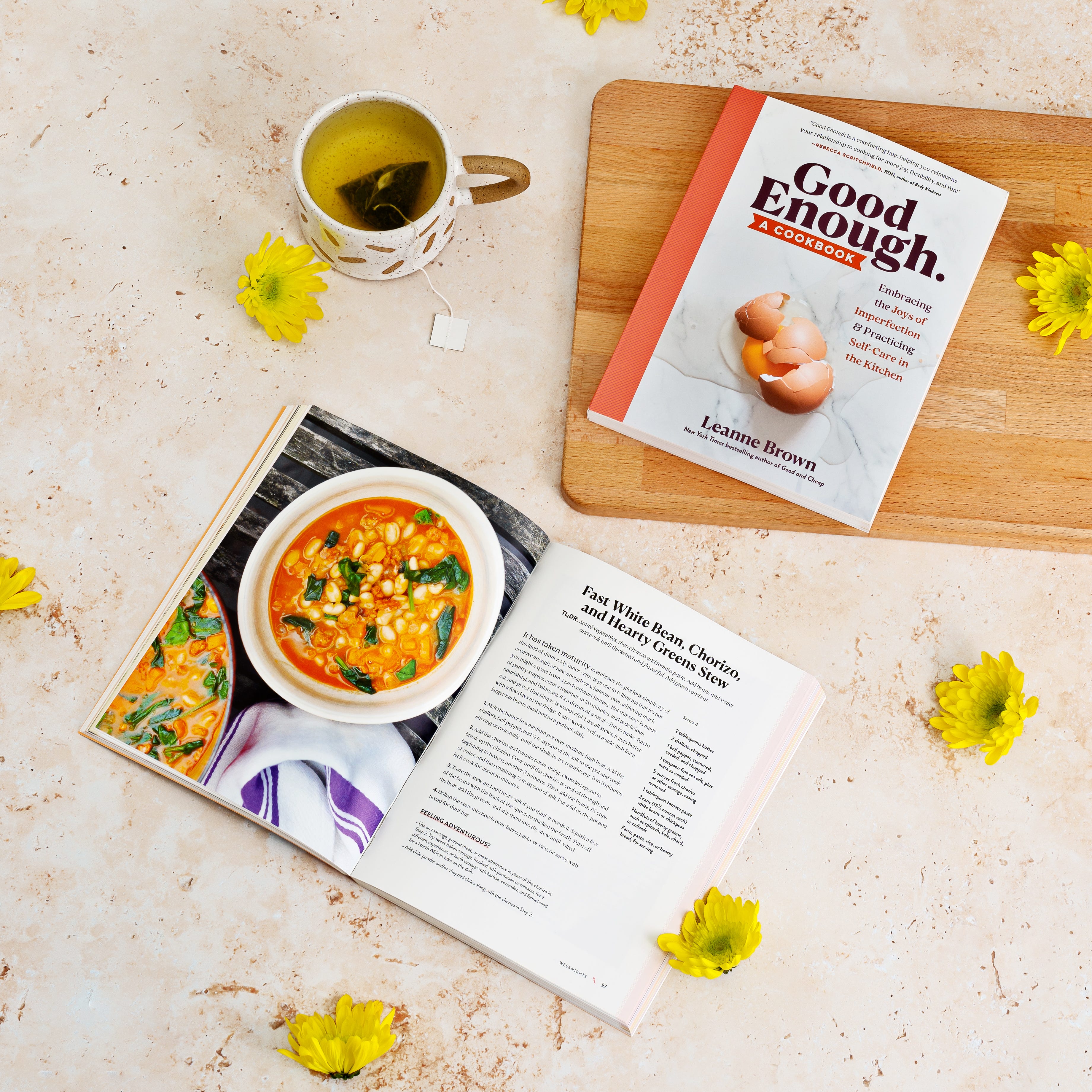
Stop Apologizing For How You Cook
“Sometimes I’ve just shoved some granola in my face, because I knew that I needed to have some fuel in my body. I didn’t really enjoy it. And that’s okay. That’s absolutely appropriate for that moment.”Welcome to Burnt Toast! This is the podcast where we talk about diet culture, fatphobia, parenting, and health.Today I am chatting with Leanne Brown who is the author of the cookbooks Good and Cheap and Good Enough. Leanne focuses on making cooking more accessible and affordable. She also does a lot of important work challenging our perceptions around what cooking should be and how we can make it into whatever we want it to be, including stuff on toast or bowls of cereal. If you’re feeling stressed about family meals or about feeding yourself, or if cooking is feeling hard for you, whether it’s because of who you’re feeding or your relationship with food: Leanne’s work may be a helpful starting point in terms of growing your confidence around food and cooking and recognizing what’s useful and what’s not useful. If you enjoy this episode, please subscribe, rate and review us in your podcast player! And subscribe to the Burnt Toast newsletter for episode transcripts, reported essays, and more.PS. The Burnt Toast Giving Circle is almost to $9,000! We are so close to our goal. And if you’ve been thinking about joining, we still need you! Here’s the Burnt Toast episode where I announced it, ICYMI, and the link to donate.Episode 40 TranscriptVirginiaHi Leanne! Why don’t we start by having you tell us a little bit about yourself and your work?LeanneI’m a cookbook author, but at the same time, I don’t think that that really describes what I do. It’s certainly a huge part of what I do—I love the creating cookbooks aspect. What I really want to do is welcome anyone and everyone into the kitchen. And I think I have a particular soft spot in my heart for people who don’t really think of themselves as cooks or aren’t necessarily as naturally attracted to cooking. I believe that they have a place in the kitchen. Becoming comfortable with cooking—not even cooking but simply making food for oneself and for those in your life that you want to make food for—brings so much empowerment. My passion is in connecting with people, and finding a way to make peace with food in your life. VirginiaI am someone who loves cooking, but I’m also very big on not putting cooking on such a pedestal, because it’s so often held to these impossible standards. So I went on this little journey reading your work where at first I was like, Oh sure, cooking solves everything, fine. And then I was like, Oh, wait, but she’s also saying it’s okay if you don’t like cooking!LeanneWhen I introduce myself as a cookbook author, it puts me into the world of food media. Which is all these videos, TV shows, and beautiful magazines, and it’s all this glorification of food. There’s obviously a place for that. I think it adds so much to our lives and our culture. There’s this artistic aspect to it, and there’s so much beauty in it. But at the same time: I hear from so many people who say, “Oh, I’m a terrible cook.” Why are any of us judging ourselves like that? So long as you’re able to feed your body every day, that’s really all that matters. I’ve been going through a lot of family emergency stuff and that means that I don’t have a very big appetite a lot of the time because I have a nervous tummy. So sometimes I’m just like, well, I just shoved some granola in my face, because I knew that I needed to have some fuel in my body. I didn’t really enjoy it. And that’s totally okay. That’s appropriate for this moment. There are so many times in life like that and I shouldn’t internalize them as ‘I’m a failure,’ or ‘what kind of a cook am I?’ But I’ve gone through periods of life where I’ve felt that way. So I really want to share this message with others, because I think it’s such an important balance to all that beautiful, curated stuff that we see all the time.VirginiaAs you’re talking, I’m just thinking: Why do we expect ourselves as home cooks to live up to this standard? It would be like expecting to do your taxes as well as a professional accountant or solve your own medical crisis. We need professionals! Cooking is a professional skill. And it’s this thing we have to do day-to-day. But why do you expect yourself to execute it like someone who’s had years of training and has a whole team and a huge budget? I feel like this has to be somewhat rooted in the way we devalue cooking as women’s work. We’re socially conditioned to have cooking be a default part of our gender identity, so it’s not valued or made visible—and yet we’re also expected to be effortlessly great at it. LeanneWe could absolutely do a whole episode trying to unpack that. VirginiaWell, let’s talk about the new cookbook. So it’s called Good Enough and it is so much more than a cookbook. It’s a different genre of book because you have recipes—and the recipes are wonderful—but then you have just essa
“The More You Feel Like You Don’t Have Permission to Eat It, the More You Will Crave It."
NOTE: We're planning a special AMA episode of the podcast and we want your burning questions! Please submit your questions via this Google Form to help us stay organized.Welcome to Burnt Toast! This is the podcast and newsletter where we talk about diet culture, fatphobia, parenting, and health. We don’t have a brand new episode for you today because I’m on spring break this week. As many of you know, I used to co-host another podcast with my best friend Amy Palanjian, the creator of Yummy Toddler Food. Our podcast was called Comfort Food and we had to retire it in 2020, for a whole lot of reasons. Amy has given me her blessing to occasionally pull some of our best episodes and share them, which I’m really excited to do because there were a lot of great conversations. A lot of these are more parenting-focused, but I’m hoping everyone can get something out of it.The episode I am sharing today first aired on March 5, 2020, right before the world shut down. Definitely do listen to this like you’re a historian, looking back at our earlier work. You can see where a lot of my thinking on these issues started—I don’t think I was all the way there yet. We’re all works in progress. In particular, Amy and I were really just beginning to understand how we wanted to talk about kid diet culture on Instagram. You’ll hear moments where we’re both chafing against some diet mentality of our own. I think we do a pretty good job of naming those things as they come up, but I just want to be clear that I wouldn’t necessarily repeat all of this today and neither would Amy. If that makes you nervous or if you’re worried about potential for harm, certainly feel free to skip this one. We do talk about different forms of restrictive eating. If that’s something you’re interested in hearing and puzzling out with us and you bump on something as you’re listening, feel free to put it in the comments so we can discuss! I welcome that accountability and the chance to revisit and give you a take on where I would land now. Episode 39 TranscriptVirginiaHello and welcome to episode 65 of Comfort Food! This is the podcast about the joys and meltdowns of feeding our families and feeding ourselves.AmyThis week we’re exploring how food restriction can creep into our everyday without us even really being aware of it, and the impacts that this can have on our own relationship with food and the way that we’re feeding our kids.This topic has been on my mind lately because often when we talk about food restriction, we think of it as a calorie counting diet or strict portion control, but there are a lot of other ways that it can creep in and cause harm or confusion, or just make us not super clear on our goals with both how we eat and how we’re feeding our kids.VirginiaTotally. I have also had those moments of kind of recognizing in yourself that this is a restriction thing. It can just pop up because it’s so conditioned into us. This might sound a little radical, but if you think back to like elementary school, when we were given the food pyramid—the food pyramid may not be the most harmful diet out there, but it still was like teaching us this hierarchy of foods, good and bad and less of this and more of that. It’s really difficult with kids who think so concretely in black and white about food, to tell kids how to eat in that way. Then we all grow up and get into diet culture, and more messages and more messages about restriction. So I think restriction is like at the core of how a lot of people interact with food in ways they just don’t even realize.AmyIt’s extra hard, because as you’re talking about that my gut reaction is “but I want my kids to eat more nutritious foods.” How do you do that without limiting the other foods? Some foods tastes better than others and that’s the primary driver that kids have when they’re eating. They want it to taste good. They don’t have the capacity to understand about nutrients in different foods. VirginiaNor should they! That’s not an age appropriate expectation, that a six year old is like, “You know, what I’m worried about today? Cholesterol. What’s happening with my arteries in 40 years?” It’s not where we want their minds to go. Let’s back up and talk about why restriction does backfire. Because some people listening may be thinking exactly like you, like "give me back my food pyramid or my ‘my plate’ or whatever, this is totally fine. What we need to understand is that research shows over and over that the more limited you feel around a food, the more you feel like you don’t have permission to eat it, the more fixated on it you will be and the more you will crave it. Just saying to kids, “I want you to eat more fruits and vegetables” makes the fruits and vegetables less interesting. We can put in the show notes the famous study done by the iconic food researcher Leann L Birch, where they told half the kids in the study that they could have as much soup as they wanted, and then have dessert. And then they told
You're Missing: Homeschool Diets and Monomeals!
Hey there! Just wanted to make sure you know that the April subscriber-only bonus episode came out this morning! I’ve got another diet trend deconstruction for you, and this time we’re getting into Whole30, Bright Line Eating, and Raw Till Four. I also explore what happens when diets become homeschool curriculums and why Jennifer Aniston allegedly lives on baby food but this one reader’s ex eats only potatoes. To listen to the whole thing, you’ll need to be a Burnt Toast subscriber. It’s just $5 per month or you can save $10 and do $50 for the year.Producing a weekly podcast and newsletter requires a significant investment of time and resources from several talented people, and paid subscriptions make all of our work possible. Subscriber support also makes it possible for me to keep most Burnt Toast content free and accessible to all, and to offer comp subscriptions to those who need them. (If that’s you, just email and let me know, no questions asked!)In addition to getting these fun monthly bonus episodes (with transcripts!), you’ll also become a part of the Burnt Toast community with commenting privileges and full access to my Ask Virginia columns, and our awesomely helpful Friday Threads. You can read more about my decision to add paid subscriptions to the newsletter here.Thanks for supporting independent, anti-diet journalism! This is a public episode. If you would like to discuss this with other subscribers or get access to bonus episodes, visit virginiasolesmith.substack.com
The Myth of Visible Abs
It was just this overnight conversion. Like, oh, okay, yep, the way I've been doing things my entire career is super wrong, and super harmful, and has hurt a lot of people. And that's terrible. And I'm very done with that.Welcome to Burnt Toast! This is the podcast where we talk about diet, culture, fatphobia, parenting, and health. Today I'm chatting with Anna Maltby. Anna is a longtime magazine and digital editor and someone I've worked with many times over the years, including at Medium’s Elemental Magazine, where I wrote features on diet culture and fatphobia that she edited. And right here on the Burnt Toast newsletter, Anna is often the person who does a top edit for me on particularly tricky reported essays. Another cool thing about Anna is that she’s a certified personal trainer and Pilates instructor. In addition to her editorial work, she does a lot of fitness consulting and training. That gives her this pretty unique perspective on the world of fitness journalism and the fitness industry —and on the harm that these industries have caused to folks in marginalized bodies, what changes are happening, and where we still need to make these spaces better and safer for all kinds of marginalized folks. But Anna is really here to talk to us about the myth of visible ab muscles.I want to say really clearly before we start the show: Health and fitness are not moral obligations. Core strength is certainly not a moral obligation, although it is practically useful. We are talking about core strength in a very different and much more functional and accessible way. But if even that feels triggering to you, I get it. There was a long time where I just couldn't engage in abs talk at all. One more disclaimer that Anna is a thin white lady. We both have a lot of thin and able-bodied privilege in this conversation. I'm seeing this episode very much as the start of a conversation about fitness I want to have on Burnt Toast. There are lots of folks in marginalized bodies doing really amazing work in the fitness space that we also need to center and hear from and we talked about some of them on the show. I'm hoping some of them will be joining me in future episodes. PS. Friends! The Burnt Toast Giving Circle is over $8,000! We are so close to our goal. And if you’ve been thinking about joining, we still need you! Here’s the Burnt Toast episode where I announced it, ICYMI, and the link to donate.Episode 37 TranscriptVirginiaHi Anna! Why don't we start by having you tell us a little bit about yourself and your work?AnnaI started my career as a magazine editor. I worked mostly in the service space, so magazines that tell you how to do things: Men's Health and Self and Marie Claire and Real Simple. I've worked in the digital space as well for a while: Refinery29 and one of the in house publications at Medium. I've done a lot of things, but but health has been a main thread for me. I've also been a certified personal trainer for about seven years. I'm a pre- and postnatal certified exercise specialist, and I received my mat Pilates certification about a year ago. I now do a bunch of freelance editorial and fitness-y things, like fitness programming, fitness performance coaching, and then I also train a few clients every week. I do a mix of Pilates and weight training.VirginiaDid you start out as a journalist and then go into the health and fitness stuff? AnnaI definitely was not into sports or exercise or movement at all, as a kid. I always loved reading magazines and that was what I focused on in school. I sort of fell into this internship at Men's Health when I was in college, and my manager there was like, “Okay, if you're going to write stories for us, you're going to need to know some of the basics of scientific reporting.” Like how to read a study, how to talk to a researcher, how to interview a medical expert. I loved that process. I suddenly had at my fingertips just being able to pull a study and understand what it said. Then, through a random series of magazine world misfortunes—which I'm sure you're very familiar with—I ended up going freelance. I got a job as the fitness editor at Fit Pregnancy magazine and I really loved that work. I found more flow in it, honestly, than more hardcore health reporting. One of the things that I did for that job was to be on set during workout photoshoots. We would always have to hire a personal trainer to be on set as well, to oversee the form for the models to make sure everything was safe and accurate. I was just so interested in it and I felt like I kind of had the basics of what these people were doing. So I was like, “For the cost of this person's day rate, my company could just pay for me to become a personal trainer.” Which was like a lot easier said than done, because it's really hard. All of the studying that you have to do and the reading and the test is really intense. I recently made kind of a big career change and went freelance again and started building my own busi
When The Pregnancy App Talks About "Belly-Only Weight Gain," We Have Work To Do.
How you feel about your body does not exist in a vacuum. It’s not just about your body, it’s about all the things in your life. So I ask people to really reflect on how size-friendly is their life? Welcome to Burnt Toast! This is the podcast where we talk about diet culture, fatphobia, parenting, and health. Today I am chatting with Mia O’Malley, a content creator on Instagram and the creator of @plussizebabywearing. Mia’s work sits at the intersection of fat advocacy and momfluencing. She’s doing a lot of important work on access to fat friendly doctors and we also talk about influencing—and the potential and promise for fat advocacy in the space. PS. Friends! The Burnt Toast Giving Circle is up to almost $8,000! We are so close to our goal. And if you’ve been thinking about joining, we still need you! Here’s the Burnt Toast episode where I announced it, ICYMI, and the link to donate.Episode 36 TranscriptVirginiaHi Mia! Can you tell listeners a little bit about you and your family and your work?MiaHi, I’m Mia. I am @MiaOMalley on Instagram and @plussizebabywearing on Instagram and TikTok. I’m a content creator. I’m based out of Connecticut. I’m a mom of an almost four year old and I do a lot of work on my social platforms on advocating for people in larger bodies and sharing resources for people in larger bodies and how to navigate the world. I’m a babywearing educator, as well, with a focus on celebrating parenting in larger bodies.VirginiaSara Peterson was on the podcast recently and we sang your praises on the babywearing piece in particular. That was something I struggled with, with both of my babies. The bias against fat bodies, fat moms— all of that came into play for me. So I’m grateful for the work you’re doing to change that conversation. As I was doing my homework for this episode, I read your interview on Cup of Jo—which has great fashion inspiration—and I love that you said you look at fashion as an advocacy issue. Was this always your plan? How did this come about?MiaI was pregnant with my son around 2017-2018 and I felt very isolated as a fat pregnant person. I had taken these beautiful maternity photos. But when I shared them, I was like, “This isn’t the whole story.” Because those photos were really hard for me to take. I couldn’t find anyone who looked like me who had done maternity photos. Like for inspiration, if you looked on Pinterest, there were no bodies like mine. And that’s how I felt going through all of my pregnancy. I never saw people in similar bodies being pregnant. I felt very underrepresented and isolated. So when I posted my maternity photos, I kind of said that quiet part out loud. I said, “I feel invisible as a plus-sized pregnant person.” And my world kind of opened up with that post, just in the sense that I kept saying those things that I kept to myself. I realized that there are other people like me who are feeling the same way. To be in community with those other people is amazing. It made me realize that the fat experience is so, so shared. We’re all going through a lot of the same things, across generations. And fashion is just another one of those issues. I can’t talk about fashion without seeing it as an advocacy issue. There are people who can’t find winter coats! There are people who literally don’t have a bra that fits them at their size. It doesn’t exist. I talked to someone who was a C-suite executive and she has nothing to wear to meetings with her colleagues! She had no suits that fit her. She talked about just how humiliating that was for her. When we say those quiet things out loud, they become advocacy issues because so many people have that shared story. So yeah, I talk about fashion, but it often becomes about sharing resources because there’s so many people that feel like certain things are inaccessible for them—and are truly inaccessible for them. The same thing goes for babywearing. So many parents said to me, “I didn’t even think I could wear my baby at this size.” And that’s not true! There are plenty of options for all bodies to wear their babies. But there’s a perception that this is an inaccessible thing to do because of marketing, because the lack of representation. VirginiaWas it scary to start sharing? Because I think a lot about how what advocacy asks of us is to share in this very personal way. It’s so important because you’re articulating something that someone else hasn’t been able to say out loud, but that also means you’re the person who has to say it out loud. MiaI have to take really long breaks from some of the work that I do. I will take a week or two long break where I don’t post content and I step away, because I hold so many people’s stories. Most of my time spent online is in DMs, sharing stories and resources. But that comes a lot with having to face my own experiences that were hard. It’s a lot to hold on to. So I do take a lot of breaks and I do experience burn out, but I also find it incredibly rewarding. It’s the part of
"They Say 'Failure to Thrive' but Moms Hear 'Failure To Feed.'"
I remember the my daughter’s gastroenterologist saying, “Wow, you’ve really found a lot of great foods.” And, “We have so many patients who are less compliant than you.” I said, “Well, you know, it was really hard. It was, at minimum, a halftime job. Do all of your patients, families have the time and energy for this?” And he said, “Well probably not.”Welcome to Burnt Toast! This is the podcast where we talk about diet culture, fatphobia, parenting, and health. Today I’m chatting with Debi Lewis, author of the beautiful new memoir Kitchen Medicine: How I Fed My Daughter Out of Failure to Thrive. Debi has also written for the New York Times, Bon Appetit, Huffington Post, and many other outlets. She lives in the Chicago suburbs with her husband and teenage daughters. This conversation is close to my heart. As most listeners know, my own daughter spent the first two years of her life dependent on a feeding tube. So reading Debi’s memoir hit home in all sorts of ways that we talk about, but I think this is a book that will resonate with so many of you. If you are a parent who has fed a kid—even if it went swimmingly, without medical complications—there is so much here that you will relate to about Debi’s journey, and the struggle to live up to external expectations about what feeding our kids looks like, and what it means for motherhood. CW: We do discuss critically ill kids, medical trauma, and fatphobic comments that people (maddeningly) make in those situations. Take care of yourself. PS. Friends! The Burnt Toast Giving Circle raised over $6,000 in less than a week! I am so insanely proud of us. And if you’ve been thinking about joining, we still need you! Here’s last week’s Burnt Toast ICYMI and the link to donate. Episode 35 TranscriptVirginiaHi Debi! Can you tell us a little bit about yourself, your family, and your work?DebiMy name is Debi Lewis and I am the mom of two teenage girls, 19 and 16, and married to my husband and we live in the suburbs of Chicago. This is my first book that I’m very excited to share with all of your listeners. And in the rest of my day I make websites.VirginiaWe are here to talk about your new book Kitchen Medicine and when this episode airs, it will be your launch week. So folks, it’s in bookstores everywhere! It is just the most beautiful memoir of your experiences feeding your daughter, Sammi, who was diagnosed with failure to thrive at a really young age. Let’s start by talking a little bit about that failure to thrive diagnosis. Tell us about your experience with it, because I think it is such a horrific term in a lot of ways. It’s both very common and deeply misunderstood.DebiI think there’s a lot of things wrong with the term. “Failure to thrive” is not a very specific diagnosis. It’s kind of a catchall and the real search is for why. Why would you diagnose a child with that? It’s not the end, it’s a symptom. And the other problem is that it’s a wildly inaccurate term. Because if you had met my daughter during most of the years in which she fell under that umbrella of “failure to thrive,” you would never look at her and think this child is not thriving. This was a pink cheeked, energetic, bubbly, cute little girl, meeting all her developmental milestones except for the ones that required her to be tall enough. FTT was really diagnosing the fact that she wasn’t growing on the trajectory that doctors wanted. If you looked over many years, you could see that that growth trajectory was her own and steady and she didn’t drop very often and it was nothing that, in retrospect, I should have been worried about. But because she was tiny and because she wasn’t getting less tiny compared to her peers, we kept hearing that. And the way that diagnosis comes out is when a doctor or nurse points their finger at the parent and kind of wags it a little and says, "Whoops, Mom! She’s still failure to thrive! Got to get a few more calories in her," as though that isn’t the one thing you spend most of your life trying to do. As though I wasn’t chasing her around our house with a cup of Carnation Instant Breakfast already. So that’s the problem with that term. The diagnosis says “Failure To Thrive,” but what it sounds like, at least what it sounded like to me, is failure to feed.VirginiaThere’s so much inherent judgment and blame in that failure concept. The idea that we would be labeling a child’s body as a failure in some way is horrifying. And that we would be putting that on parents without giving the benefit of the doubt that, of course, this is a parent who loves their child and is trying so hard. It reminds me, too—on the flip side, obviously on Burnt Toast we talk a lot about kids in bigger bodies—and it’s so often the same thing. It’s the same judgment and the same assumption that somehow a parent needs to be informed of their child’s body, when you’re living in the world with this kid who’s not in the 50th percentile in whichever direction, so you’re getting the comments from stran
It's Time to Stop Panic Giving.
These are the folks who are going to a state capitol and deciding whether to expand Medicaid or deciding whether there’s one abortion clinic left in the state or deciding whether there’s LGBTQ protections for folks on the job. It’s wild that there aren’t more eyes on it, but it’s not the way we’re trained.Welcome to Burnt Toast! This is the podcast where we talk about diet culture, fat phobia, parenting and health. Today I am chatting with Melissa Walker, who is the head of Giving Circles at The States Project. This is a little bit of an unusual episode for Burnt Toast! I know you come here for the analysis of diet culture and anti-fat bias, but today we’re gonna save democracy. I am so excited to launch the Burnt Toast Giving Circle, which will raise money to flip state legislatures in battleground states. If you have been in a rage about the state of our country and you want to do something about it, I am hoping this will be your thing! Because together we can have a huge impact. I’m setting a goal that our can raise $10,000 — which is 1,000 Burnt Toast listeners giving ten bucks each. There are a lot more than a thousand people who listen to this podcast and read this newsletter. So even if you’ve only got five dollars or two dollars to give, please join us. And if you want to give more, that is great, too. (And keep listening, we’ve got more ideas for how you can get even more involved.) Episode 34 TranscriptVirginiaWhen I think about the political issues that are keeping me up at night, it’s stuff like: What’s going to happen when we lose Roe? Why did Build Back Better fail so spectacularly around paid family leave and child care? What is happening in Ukraine right now? Thinking nationally about politics is how I’ve been trained to think about politics. So, let’s start by helping people (me) understand why does state government matter so much? MelissaState governments have really been overlooked for a very long time. When I started looking into this work, which honestly was in late November 2016, I started to understand that most folks don’t really know who their state representatives are. When I looked up who my state senator was, I had never heard of him. I did not have eyes on the people going to Albany for me. I started to understand that everything that I was worried about, and everything that I cared about, in terms of our country was actually being controlled in state legislatures and not in Washington, DC. State legislatures are in charge of everything from environmental policy to education funding to gun safety to healthcare to civil rights. They’re also in charge of the very core of our democracy: Voting rights are decided state by state. State legislatures decide whether to suppress or expand voting. They have the power to gerrymander. They are drawing the district lines that decide who goes to the state legislature, who goes to Congress, who goes to Washington DC. So I started to see that there were all these kitchen table issues being decided in state legislatures and that they were also incredible tools of federal power. A lot of things started to make sense to me that hadn’t before. I started to think about things like my home state of North Carolina, where the bathroom bill passed, and I started to understand that lawmakers in Raleigh did that. Things like the Stand Your Ground gun law in Tallahassee that let Trayvon Martin’s murderer go free (and then passed in 25 other states)—that was lawmakers in Florida, and then in those other states. And in Flint, Michigan, I realized, oh, that’s a Lansing problem. That’s not a Washington DC problem. VirginiaThis is blowing my mind. Why do you think we are so trained to focus on Washington? Why am I now having this epiphany? Why don’t we think about states?MelissaWell, it’s complicated. There are really 50 mini Congresses in this country and they’re deciding things state-by-state. These are local races. They do not get national attention. The truth is that there is someone who’s been paying attention to state legislatures and it’s the radical right. They’ve been organizing for state legislative power for a very long time. From 2010 to 2016, we lost nearly 1,000 state legislative seats. And in those states where Republican majorities took over, people’s lives got bad. They defunded education. They put in right to work laws. They gutted environmental protections. And when people’s lives got bad, they didn’t say, oh, that must be my state senator, I’m gonna go down to Main Street and talk to them, because they have an office there (because they do). Most people don’t know who their state senators are, even maybe that they have one. So they blame what they could see on what they hear about on the news every day, which is Washington DC, often the president, sometimes something about Congress. The roots of Trumpism were being seeded in state legislatures. It’s a body that operates in darkness and it really has been overtaken by special interests.Virgin
This Diet Wants You To Throw Out All Your Food.
I think any time you’re wondering, “is it a diet?” And they have a bridal program? The answer is obviously yes.We’re doing something a little different with this month’s bonus episode! I polled folks on Twitter and Insta about the diet trends that are bugging you most right now, so I could spend this episode deconstructing their marketing. And also just, um, reacting to the nonsense? My algorithm is a mess now, but that’s how committed I am to helping you sort the b******t from the… other kinds of b******t. We’ve got mysterious green powders, we’ve got Internet doctor scams, we’ve even got a gizmo you can breath into every day for a little dose of oxygenated judgment!So enjoy this preview. And if you’d like to listen to the whole thing, you’ll need to be a Burnt Toast subscriber. It’s just $5 per month or $50 for the year. Producing a weekly podcast and newsletter requires a significant investment of time and resources from several talented people, and paid subscriptions make all of our work possible. Subscriber support also makes it possible for me to keep most Burnt Toast content free and accessible to all, and to offer comp subscriptions to those who need them. (If that’s you, just email and let me know, no questions asked!) In addition to getting these fun monthly bonus episodes (with transcripts!), you’ll also become a part of the Burnt Toast community with commenting privileges and full access to my Ask Virginia columns, and our awesomely helpful Friday Threads. You can read more about my decision to add paid subscriptions to the newsletter here.Thanks for supporting independent, anti-diet journalism! This is a public episode. If you would like to discuss this with other subscribers or get access to bonus episodes, visit virginiasolesmith.substack.com

"If My Daughter Wanted to 'Eat Healthier,' I Would Respond Like She Wanted to Smoke Cigarettes."
Teens have the ability to know how much they need to eat. And when we interfere with that, as parents, we start to break down their natural ability. When we model that we trust our children to listen to their bodies, that they are in charge of their bodies, it also models consent.Welcome to Burnt Toast! This is the podcast where we talk about diet culture, fatphobia, parenting, and health. Today I’m chatting with Signe Darpinian who is a Licensed Marriage and Family Therapist, certified eating disorder specialist, and host of Therapy Rocks, a personal growth podcast. She is also the co-author of No Weigh!: A Teen's Guide to Positive Body Image, Food, and Emotional Wisdom and the new book Raising Body Positive Teens: A Parent’s Guide to Diet-free Living, Exercise, and Body Image. I’m really thrilled to have Signe on the podcast because she is someone who can answer all your questions about intuitive eating and anti-diet life with teenagers.If you enjoy this episode, please subscribe, rate and review us in your podcast player! And subscribe to the Burnt Toast newsletter for episode transcripts, reported essays, and more.ICYMI! I joined Signe on her podcast last week. We focused on how to talk about fatness and fatphobia with teenagers; listen here.VirginiaI am such a fan of your work, and especially the new book. Can you tell our listeners a little more about yourself and your work?SigneI’ve been treating eating disorders now for over 20 years. And I actually had the good fortune of being exposed to non-diet and weight-inclusive approaches right in the beginning, when I was really green. It’s something that I was very lit up about right from the beginning. It’s been interesting in 20+ years to see the different trends. Like you talked about in your book, The Eating Instinct, to see the trends of diet culture, which were more straightforward in the beginning, like Jenny Craig, to today’s wellness culture. A couple other things about me: I started a podcast right in the beginning of the pandemic. And I’m what some people call a single mother by circumstance, a little bit different than a single mom by choice. It was a happy accident! It can be interesting being a single parent and doing this food piece. My lived experience is more like, well, we’re going to do it this way. That’s not always a parallel to what other people experience — doing food when partners feel differently about diet culture can be tough.I have a 12-year-old daughter and this book was a much bigger project. My daughter threatened to stab the book in the heart when it comes out. VirginiaIs that because of the time it took or because she disagrees with the content?SigneShe doesn’t really know the content. It’s a funny question because the teen book is actually just perfect for her. Age 12 would be a great starting age. She has it on her bookshelf and I asked her if she would consider reading it. She’s like, “Only if you pay me.” I’m like, “Are we talking about twenty bucks?” She’s like, “More like one hundred.” I’m like, “Forget it.” So no, it’s not the content because I don’t think she’ll ever know. She has no interest. It’s more like, you know how it is with writing. It took a lot of time. It was a much bigger project and those last few weeks are pretty daunting. It’s a lot of hard work—and really fun! But she was ready for it to be done, which I understand.VirginiaMy eight-year-old often asks, “Oh, are you still writing that book?” And there’s a little tone there! A little judgment. She’s like, “How many chapters are you trying to do?”SigneVirginia, what about your recent post about your eight-year-old never wanting to be a writer unless she had to for the money?VirginiaI was like, “Oh, how do I explain to you that if you have to do things for the money, this is not the thing?”SigneI’ve definitely got a reluctant reader over here.VirginiaMine’s a reader, but she does not like writing. She feels sorry for me with this career choice. Okay, so the big reason I wanted to have you on is because I get lots of questions from parents of teenagers. I really relate to the sense of panic I get in these emails where parents say, “I’m just now discovering concepts like intuitive eating or diet culture or fatphobia.” Maybe during their kids’ earlier childhood they were more controlling around food or they were on diets themselves. And they’re just feeling like, well, now, what do I do? My kid is 14 or 16 or 20, and this is a shift we want to make. But is it too late?SigneThe short answer is: It’s never too late. We’re not modeling perfectionism, as parents. We’re modeling humanity. I don’t know about you, Virginia, but I try to do my best in modeling good mistake-making. I’m really taking ownership for my part in things more than I’m trying to model being perfect. Well, because I couldn’t anyway. I’ve tried that it doesn’t work. We are all immersed in diet culture and it’s really, really sneaky. There’s so much morality around food. Parents are in the sa

What Thin Fashion Designers Don't Know About Fat Bodies.
I have only recently put my foot down and said, “No, I deserve to be here and I will be here and I’m staying here,” and I’ve been in the industry almost 10 years. It’s taken a really long time to not only convince people that I have the talent and the staying power, but also convince myself.Welcome to Burnt Toast! This is the podcast where we talk about diet culture, fatphobia, parenting, and health. Today I am chatting with Kyeshia Jaume, a senior apparel designer for Forever21. She’s also one of the only working designers at a major corporate fashion label, who both makes plus size clothes and lives in a larger body. Regular newsletter readers will know Kyeshia from Jeans Science. She’s working hard to change things in fashion from the inside. Her story is really important and I’m so excited to share this conversation with you. If you enjoy this episode, please subscribe, rate and review us in your podcast player! And subscribe to the Burnt Toast newsletter for episode transcripts, reported essays, and more.Also! I had a great chat with Signe Darpinian, host of the Therapy Rocks! Podcast on Monday. We focused on how to talk about fatness and fatphobia with teenagers; listen here. Episode 31 TranscriptVirginiaHi, Kyeshia. Thank you for being here. KyeshiaHi, Virginia. I’m so excited to be joining you.VirginiaTell us how you got into fashion design. What called you to this work?KyeshiaUp until maybe 11th grade, I wanted to go to music school to pursue music. I just wanted to be a singer and I loved music. But I took a fashion merchandising class my senior year of high school and just fell in love with it. And I was like, I could do this. I could be in the fashion industry. I feel like I could really influence and impact it in some way. My fashion merchandising teacher was amazing, really encouraging, really excited about hearing that I wanted to be in the industry. And I remember she said something specific to me: “We need more people like you in the industry.” VirginiaWere you interested in clothes as a kid? Like always playing dress-up, that kind of thing? KyeshiaYeah, I was. My mom is a very fashionable person. She always made sure that we had really fashionable things to wear. And she was always very strong about individuality and really making sure that we stay true to ourselves and not follow trends that other people were doing. It’s so interesting, too, being a child who loves fashion, but also a child who couldn’t wear the fashion. Because I remember only being able to shop at like, Dillards and JC Penney. I couldn’t go into Limited Too. We would get Delia’s catalogs and I remember just flipping through and circling things I wished that I could wear. Back then that’s how you shopped.VirginiaThe Delia’s catalog was formative to my existence. Remember the belts with the seatbelt buckles? Which, now that I think about it, is many layers of problems. We know airplanes are not a size inclusive space, but I didn’t really think about it as an eighth grader. I just wanted that belt so badly. KyeshiaI wanted to be a Delia’s girl! I wanted to wear the denim. I wanted to wear the fun prints. Even like the house section, the bedding. I was all about it. Also I was a Nylon girl. I remember just dreaming and wishing that could be me. I wished I could have that stuff for myself and just being really sad that I couldn’t. VirginiaEspecially back then, those were not brands that were remotely size inclusive—or really any kind of inclusive. You were seeing the same skinny white girl over and over again in that Delia’s catalog. The low rise jeans and all that visible torso really, really did a number on our generation. And fashion, historically and currently, is a very thin, white industry. So how has that been for you, as a plus size woman and a woman of color getting into those rooms?KyeshiaI was born and raised in Utah. Utah’s like a bubble. You don’t understand anything outside of what your world is inside this very cookie cutter picture. Not only that, but I was a biracial brown girl who was not Mormon being raised in the middle of Utah. Religion is a very big part of the community in Utah, especially where I was living. The county that we lived in everybody calls “Happy Valley.” VirginiaIt’s an evocative name.KyeshiaSo I don’t think that I was fully aware of my diversity and how different I was from other people. I lived in my own little world. I moved to LA after university, to pursue fashion. I went to FIDM. I was aware of how different the world is outside of Utah, but not fully aware of how I would be treated differently, not only for the color of my skin, but also being a fat, brown woman in the industry. Going through fashion school, I think a lot of my peers underestimated me. I didn’t understand how hard it was going to be to get in the industry. I didn’t realize how difficult it would be to advocate for myself and to really say, “I deserve a seat at this table.” I have only recently put my foot down and
Getting The Thin White Momfluencer Out of the Room.
In a perfect world, the specter of that perfect, white, thin, cishet mom wouldn’t be there at all. We wouldn’t be tasked with defining ourselves against that ideal because she wouldn’t be the biggest thing in the room. You’re listening to Burnt Toast. This is the podcast where we talk about diet culture, fatphobia, parenting, and health. Today I’m bringing back Sara Louise Petersen for another installment of momfluencer talk. Sara is a writer based in New Hampshire, and currently working on a book called Momfluenced. She came on a few weeks ago and you folks had a ton to say about that episode! Hearing your thoughts and questions made us realize there is a lot more to discuss here. This might become a new subgenre of the Burnt Toast podcast.If you enjoy this episode, please subscribe, rate and review us in your podcast player! And subscribe to the Burnt Toast newsletter for episode transcripts, reported essays, and more.Also! I’ll write more about this in a newsletter soon, but I’m very thrilled to announce that I’ve started a Burnt Toast Giving Circle with The States Project. We will be raising money to help flip a state legislature Democratic this November because radical right wing state governments are dismantling free and fair elections in swing states, suppressing the right to vote, denying people quality, affordable healthcare and eradicating our right to choose. But we can take those states back! And early money matters. I’d love if you could make a donation of any size; Burnt Toast will match the first $1000 we raise. We’ll talk soon about which state to support and the issues on the table. Stay tuned! And: The brilliant folks behind the Sunny Side Up Podcast spent this episode talking about Instagram and how we feed kids, inspired by this essay of mine. Great companion listen to today’s Instagram deep dive! Episode 30 TranscriptVirginiaSo today we want to talk about whether it is possible for momfluencer culture to diversify, and to represent different types of moms. And w e’re also asking: Should that even be the goal? SaraThere totally is room to follow moms that do not subscribe to cishet, white, normative, nuclear family ideal. So many moms have disrupted that narrative and have used their platforms in really cool, energizing ways to form really needed communities online. They have a different vibe than the stereotypical beachy waves, white momfluencer, the the type that we were talking about in our last episode. It feels like a totally different world.VirginiaI want to read this really great email I got from a listener after your episode because she is articulating the problem in a way that I hadn’t quite thought about before. So this is from Tori, and she writes: I noticed that at the beginning of this missive you mentioned that you and Sara are both cis, straight moms with varying levels of thin privilege, who gave birth, and at the end, you say that the next “phase” is seeing non-thin, non-white, non-straight, non-cisgender moms shifting the narrative. That struck a nerve with me. I’m a white, cis, lesbian with a non-binary partner (she gave birth to our child.) Our kid is four and does not call either of her parents mom, in my partner’s case, because that word is feminine, and my partner is transmasculine. And in my case, mostly because even as a femme lesbian, I didn’t want to embody the culture of motherhood that has been pretty toxic in my life and it didn’t feel right for me. I read today’s newsletter with some distance, because I have found that even engaging with these momfluencers by critiquing them gives them too much space in my brain. I feel lucky that I do not generally feel mom guilt. I do not buy into most of the cultural pressures that straight, white moms often struggle with. And I think that’s because I had a way out from the beginning. The queer parents I know just don’t even talk about it and we don’t compare ourselves. We talk about the absurd things our kids do, and arguments with our partners, and we share gossip about queer celebrities, but we do not really participate in this aspirational stuff. I am grateful to queer people for offering that pathway out of straight, white mom culture, and also from the fatphobia of that culture. Many lesbians are fat and I’m grateful to my people for showing me how to love other women’s interesting bodies as I learn to love my own. I guess I just want to gently suggest that all of this is optional. White moms—because I do think this is a whiteness problem—can stop putting their eyeballs on the momfluencers. I know that as a cultural critic, they’re available for you to talk about since Instagram is a visual medium, etc. And there’s comments and captions to analyze. But even the critique feels like adding fuel to the fire. I just want to offer up that focusing on people who do things differently (the ones you spoke about at the end of your conversation) is an even more powerful way of shifting around the way we talk about bodies. As
"Using Weight as Our Main Marker of Health Isn't Working."
Welcome to Burnt Toast! This is the podcast about about diet culture, fatphobia, parenting, and health. I’m Virginia Sole-Smith.Today’s conversation is with Gregory Dodell, MD, a weight-inclusive endocrinologist in New York City, better known as @everything_endocrine or “that one good diabetes doctor!” on Instagram. I know so many of you have questions about weight and diabetes, and a newsletter essay on these issues is forthcoming! But in the meantime, I’m delighted to bring you this conversation with Dr. Dodell, which challenges so many of our assumptions about carbs, weight and diabetes risk. If you enjoy this episode, please subscribe, rate and review us in your podcast player! And subscribe to the Burnt Toast newsletter for episode transcripts, reported essays, and more. (Here’s a 20% discount if you’d like to go paid!)VirginiaI am delighted today to be chatting with Dr. Gregory Dodell, who is an endocrinologist in New York City. Welcome!GregThanks for having me on.VirginiaI’m really excited to have you here. I think I get a question about diabetes about once a week. It comes up in a lot of different ways, from parents, from people worried about their own health or a parent’s health. It also comes up a lot from trolls, right? It’s the argument that they think you can’t fight back on. We’ll be having this very nuanced conversation about the relationship between weight and health and why it’s so important to separate weight from health, and someone will throw in, “But what about diabetes?” It feels like this third rail. Like, okay, people can be healthy at any size, but maybe not with diabetes. So, why don’t we start there? Why is diabetes so inextricably linked to weight and our collective understanding of this condition?GregYeah, it’s tough to tease out. It’s tough to answer, just because of what we hear in the media and what a lot of doctors probably say in the office. The first thing is, it’s really important to realize that correlation and causation are not the same things. There’s 40 some-odd things that impact blood sugar, just like there are many, many, many things that determine body weight. You can’t just say one causes the other when you look at weight and diabetes. There’s people across the size spectrum that have diabetes. I see people in my office across the BMI spectrum—of course, BMI is not a useful indicator of health—but just to put it in context. Not everyone who has a higher BMI has diabetes and there are many people with a “normal” BMI that have diabetes. A lot of the research doesn’t control for things like weight stigma, access to healthy food, stress levels, sleep—real behaviors that impact these things. So that’s really what I would say: Let’s focus on the behaviors. Let’s really look at the research critically, like a lot of people in the field are thankfully starting to do, to tease out the relationship and see. There may not be anything there and there may be something there. Even if there is, we need to treat people and focus on behaviors and things that we can do to improve health. Focusing on weight as a main marker of health just isn’t working.VirginiaRight, because we don’t have effective and safe ways for most people to lose weight. So prescribing that and zeroing in on that as the entire treatment plan is underserving people. And I’m glad you highlighted the stigma piece, too, because I think that’s difficult to tease out for folks. It’s not like researchers are acknowledging this bias as they’re doing the studies. Because this has been so baked into our culture for so long, a lot of researchers who are studying these questions are starting from the premise that there’s a causal relationship without the data to support that. GregRight. When you start with a research study and a protocol, you have to look at all the factors that impact all the different variables. I think, if you come into a study with a preconceived notion that weight is what’s gonna cause this, and you’re not controlling for other variables, it’s not a good study. Every research paper, or a lot of them, start outs by acknowledging we’re in this epidemic of people gaining weight. It’s an assumed thing, leading into this conclusion without really looking at all the other variables.VirginiaIt also means that if they are able to document any weight loss in the study, and they see that people’s numbers got better, they’ll say, well, the weight loss caused that improvement, without asking what else changed for people? Did they change behaviors? And what if it’s the behaviors that cause the improvement?GregTotally. And there is that great review paper that just came out that was like 250 reference articles documenting very clearly that independent of weight loss, increases in activity improve health and diabetes and cardiovascular function, all those things. So that has to be taken into account.VirginiaSo, obviously, you are somewhat unusual in your field, because you are taking a weight-inclusive approach to

The Value and Visibility of Momfluencer Bodies
There’s a slew of “Look at this mama, she’s so beautiful inside and out.” And it’s always on the photos of women who are thin. We see this equating of “you are slaying motherhood,” with “you don’t have any physical reminders that you’ve created a human and birthed a human.” Welcome to Burnt Toast! This is the podcast about about diet culture, fatphobia, parenting, and health. I’m Virginia Sole-Smith.Today’s conversation is with Sara Petersen, a writer based in New Hampshire. Her first book Momfluenced, which examines the performance of motherhood through momfluencer culture, what this reveals about the texture of modern motherhood, and what we might learn from it, is coming next year from Beacon Press.If you enjoy this episode, please subscribe, rate and review us in your podcast player! Andsubscribe to the Burnt Toast newsletter for episode transcripts, reported essays, and more. (Here’s a 20% discount if you’d like to go paid!)Quick disclaimer: Sara and I are both white, straight, cisgender women who had our children biologically. We both have varying degrees of thin privilege. This conversation is inevitably focused on the experience of motherhood as this white, straight, cisgender phenomenon because that’s the reality of momfluencing. It’s not an inclusive world.If a conversation about pregnancy, childbirth and body changes does not sound safe for you, feel free to skip this one. Episode 27 TranscriptVirginiaHi, Sara, thank you for being here!SaraHi, I’m so psyched.VirginiaWhy don’t we start by defining some terms. What is a momfluencer? I loved the way you put it in your Harper’s Bazaar piece, that “they enrage us and yet we cannot look away.”SaraThe standard definition is an influencer who is also a mother who has monetized her social media platforms. I’m broadening it for my research and book to look at how we all perform motherhood on social media, whether or not we have a monetized following.VirginiaInteresting. That makes sense because it is true you get micro-influenced by mothers in your space, even if they’re not “capital M” momfluencers.SaraTotally, and it impacts how you think about posting your own motherhood content on your own page. It’s this self-conscious narratization of your own story. You start calling yourself a mama versus a mother or a mom. And there’s a romanticization of the basic facts of motherhood.VirginiaAs professional momfluencers have become a legitimate industry, we are seeing much more analysis and discourse around them, which I really cannot get enough of. And I’m so excited for your book. What made you want to dive so deep into this topic?SaraTaza, Naomi Davis, was one of my first obsessions. She made motherhood look so joyful. That was confounding for me because I’m someone—obviously I love my kids and I’m super grateful for them—but nine times out of ten, I don’t love the work of motherhood. It’s tedious, it’s monotonous, it’s boring a lot of the time, like playing store or whatever. So seeing someone constantly posting this beautiful, joyful picture of motherhood got in my psyche. Why wasn’t I so readily able to access that same joy? And then I went down the rabbit hole from there.VirginiaThere’s also the aesthetics of momfluencing. I’m recording in my four year old’s bedroom right now because my office is under construction. I’m sitting next to a giant sloth named Stella who is an important part of our family and she’s pretty hideous. SaraI really should have brought Kevin. I have a dolphin in my house. Oh, it’s narwhal named Kevin.VirginiaI find motherhood is a real drag on my aesthetic vibe. This room is filled with stuffed animals that I would never have chosen to surround myself with because they bring my children great joy. But in the momfluencer vision, your children perfectly fit into this beautifully curated life. Their children do not have giant sloths and narwhals. Or they have the cute Etsy versions. SaraThe detritus of children in a home is ugly, nine out of ten times. I just spoke to Bethanie Garcia about this—The Garcia Diaries. She’ll do the staged photoshoots with her kids in cute little shaker fishermen cardigans, but she’s transparent about the fact that she bribes her kids to wear those because as soon as the photoshoot is done, they want to wear their SpiderMan onesies. VirginiaWe should mention for folks who are as fascinated by momfluencers as we are, if you want more on these topics, we recommend Kathryn Jezer-Morton’s newsletter Mothers Under the Influence and the podcast Under the Influence with Jo Piazza. And Meg Conley wrote about the mommies of Instagram. But we are going to talk about momfluencer’s bodies and how the momfluencing sphere intersects with diet culture. It’s important to articulate that these women are both products of and creators of diet culture. They are both living under these rigid standards about what their bodies should look like and reinforcing those standards through all this content creation. There’s also a very s
"We All Know Too Much About Nutrition."
“I think in general, we all know too much about nutrition. I say that as a dietitian. Even the most intuitive eating of kids will be a picky eater. And that’s fine. We don’t need to nutrition them out of that. There isn’t of a nutrient in broccoli or kale that they can’t get from something else, I promise.”Welcome to Burnt Toast! This is the podcast about about diet culture, fatphobia, parenting, and health. I’m Virginia Sole-Smith. I’m the author of The Eating Instinct and the forthcoming Fat Kid Phobia.Today’s guest is Amee Severson. Amee is co-author of How to Raise an Intuitive Eater with Sumner Brooks, RD. Amee is also a registered dietitian who specializes in eating disorder recovery, healing and preserving food/body relationships, and provides gender-inclusive and LGBTQ-affirming care.Amee joins us today to discuss their new book. We will be talking about feeding kids but also about doing your own work and why we need to forget everything we know about nutrition.If you enjoy this episode, please subscribe, rate and review us in your podcast player! And make sure you’re subscribed to the Burnt Toast newsletter for episode transcripts, reported essays, and so much more. (Here’s a 20% discount if you’d like to go paid!)Have a question or a topic you want us to tackle in a future episode? Post it as a comment on this episode of the newsletter or send it to [email protected]. Episode 26 TranscriptVirginiaI am so excited. I’ve interviewed you a few other times for articles and things, but it is always such a pleasure to chat with you.Today we are talking about your new book, How to Raise an Intuitive Eater. This is the book I’ve been dying to be able to hand to people. This is a resource we desperately need. I think a lot of people are expecting that they’re going to pick up this book and be told, “Step one to feed your child. Step two to feed your child.” Instead you spend the first 150 pages or so—really half the book—talking about parents. Why we as parents need to do our own work and how we can do that work. So, why start there? Especially because it is so hard, Amee. You’re making us do really hard work.AmeeI know. I wish I could make it easy and just have it be a complete step-by-step guide, but we would have been missing a lot.It’s not an uncommon question: Why make so much extra work in there? I remember when I was a kid, every woman in my family had super short hair. Over the age of like 35 or 40, everyone just cut their hair short. I had this assumption that you got old (because that was old to me when I was seven) and you cut your hair short. You didn’t have long hair when you were old. That’s ridiculous, you know? There’s just this assumption that this is what you do. And it was the same for dieting for my family. You reach teenage-hood and you joined Weight Watchers. You hated your body and you tried to lose weight. I just assumed that’s what you did as an adult. I know that I’m not alone because we see it everywhere. The way parents or caregivers talk about not just their body, but food in general. You don’t ever have to say anything explicitly to your child. You never have to say, “I think your body is wrong,” or “I think you’re eating wrong,” or “This is your fault.” If you are saying it to yourself, if you are living your life like that, your kids are tiny sponges who soak up all that and reflect it back in the world.VirginiaSomething I hear a lot from parents is, “My child is three or my child is thirteen and I’m now realizing I need to do this. And is it too late?” They’re wishing this was something they fixed about themselves before they became parents. Of course, we cannot go back to our pre-child selves and work on this. AmeeJust like with intuitive eating, it’s never too late to start working on it. I think at a certain point, it is probably more beneficial for your older teenage child to do their own work, as opposed to you having different rules or attitudes around food. It can feel so overwhelming to start, like, oh, I have to fix myself and master the first half of the book before I’m allowed to start trying to introduce these concepts to my kid. Especially when your kid is older, it can feel more urgent, too, like I need to do this now. I already screwed up so much. As a parent, I get that. You, as a parent or as a caregiver, are repairing your own relationship with food while continuing to foster your kids having a good relationship with food—those two things can happen concurrently. It can be very important, especially if your relationship with food isn’t what you want your kid to grow up with or if you get that sinking feeling that this is not what I want to see my kid doing in 20 years. Then doing it concurrently is important.VirginiaI think that’s reassuring, too, because it lets us know that we don’t have to fix it completely to do better for them. I hope people find that liberating. I know I do! I just think, okay, I don’t have to be getting an A+ on this, yo
"The Goal Is Not A Kid Who Eats Everything."
“This is exactly what diet culture, and everyone who gives advice on Instagram doesn’t want you to know, because it’s not straightforward. And there’s no clear solution.”Welcome to Burnt Toast! This is the podcast about why your kids should be eating more waffles and frozen burritos for dinner. We also talk about diet culture, fatphobia, parenting, and a bunch of other stuff. I’m Virginia Sole-Smith. I’m the author of The Eating Instinct and the forthcoming Fat Kid Phobia.Today’s guest is Burnt Toast fan favorite and friend of the show, Amy Palanjian. Amy is the creator of the kid food blog Yummy Toddler Food. She’s also a mom of three, my lifelong work wife, and my former co-host on the Comfort Food Podcast. Amy joins us today to dissect the concept of the “back-up meal.” If your kids hate what’s for dinner, should you let them swap it out for something else? And more to the point: Since many of you have told us you are doing this, how do we let go of the guilt they can inspire?If you enjoy this episode, please subscribe, rate and review us in your podcast player! And make sure you’re subscribed to the Burnt Toast newsletter, for episode transcripts, reported essays and so much more. Have a question or a topic you want us to tackle in a future episode? Post it as a comment on this episode of the newsletter or send it to [email protected]. PS. Amy’s and my last conversation was about Halloween candy. If you are stressing about holiday food right now, this might be a good one to go back and listen to because all the strategies we talked about for Halloween candy definitely still apply. Episode 25 TranscriptVirginiaToday we are talking about backup meals. This first came up when I wrote an essay on Burnt Toast about how my grandmothers fed their families. My British grandmother did not cook a weeknight dinner, ever. In England, they have tea as an evening meal. In my grandmother’s house, tea meant literally a cup of tea and two pieces of toast, maybe some sponge cake. That is all you serve and it is possibly genius. I do love that this newsletter is called Burnt Toast. I didn’t know this story about her when I named it that, but it feels very appropriate. A lot of readers, after that essay, said, "We don’t do exactly that, but if our kids don’t like what we’re eating for dinner, we let them pick a backup meal like peanut butter and jelly or a bowl of cereal." And then you, Amy, messaged me and said, "Oh yeah, our backup meal is a frozen burrito." And my head exploded because you and I have been talking about how we feed our kids for the last eight-and-a-half years and I had no idea you did this! AmyWe did it with our first kid. She could have toast if she didn’t like the main meal. Then we had more children and I stopped doing it regularly because it seemed like too much work. Instead, I leaned in hard to making sure that there were easy sides on the table. But I’ve got a kid who’s nine, and she likes what she likes. Sometimes she’s willing to try new things and sometimes she’s not. I have discovered that I don’t actually need to make her eat food she doesn’t want to eat. So we have easy options that I don’t actually have to get up and cook. The only problem with our current backup meal is that it requires me to buy a lot of frozen burritos, which I should maybe just embrace. But there’s a particular one from Amy’s that all three of my kids really like. It’s just bean and cheese. I should just buy it by the case.So, maybe twice a month she really dislikes the meal. She will get up and make herself a frozen burrito. Right now I’m testing recipes for a cookbook, so my kids are seeing recipes that they’ve never seen before, or they’re seeing things in slightly different ways, because we tend to eat the same thing and I can’t make a cookbook with five recipes.VirginiaNo. You need, like, 75 recipes and that is a lot of new food to throw at your kids all the time. That’s like the cobbler’s kids have no shoes. Or in your case, many, many pairs of shoes that they don’t want to wear.So, an interesting thing to me about the whole backup meal conversation is that when people started telling me they were doing it, it was a little apologetic or ashamed. Like, “Yeah, we know we’re not supposed to, but this happens at our house.” And I just thought, where have we gone wrong here? Because to me, this does not sound like a failure. You have a nine-year-old who’s capable of making her own burrito for dinner! This feels like a triumph! So, let’s unpack this a little bit. Where do you think this sense of backup meals as a parenting failure comes from?AmyI think a lot of it is this pressure on family meals, that we’re all eating the same thing. The point of family meals is to expose kids to a range of foods over time so that they eat them. Which, as you and I know, is not really the way that humans work. Backup meals feel like a departure from what we’ve been taught. So I think it’s both the pressure on family meals
The New Burnt Toast Podcast!
We need our own place to critique diet culture and combat fatphobia, without the continual compromise required by corporate media. And, we need this podcast. Because you will never need to worry that the host is going to pause mid-episode and tell you how much I love Noom.Welcome to Burnt Toast! This is the podcast where we explore questions (and some answers) about fatphobia, diet culture, parenting, and health. I’m Virginia Sole-Smith. I’m a journalist who covers weight stigma and diet culture. I’m the author of The Eating Instinct, the forthcoming Fat Kid Phobia and the newsletter Burnt Toast. This is technically Episode 24 of the Burnt Toast podcast, but also for a lot of you it’s going to be Episode 1. So we’ll start with some backstory on how I went from a writer of women’s magazine diet stories to a diet culture dismantler and why having a space to do independent, anti-diet journalism is so important, right now. I’ll also be answering your questions: How to help a 3-year-old who won’t stop grazing? How can we respond thoughtfully to casual fatphobia? What should I do if I’m a houseguest and my host is on a diet? And can my kid really eat ice cream every day? If you enjoy this episode please subscribe and rate and review Burnt Toast in your podcast player. And sign up for the Burnt Toast newsletter, to get episode transcripts, reported essays and more. [Editor’s Note: Regular newsletter readers will recognize the first half of this episode from this essay. Feel free to scroll down to the next line break to get to your questions!]So, I thought today we would start with some backstory. Eighteen years ago I graduated from college and started my first job the very next day as an editorial assistant at Seventeen Magazine. I was living in a shoebox studio apartment next to the Queens Midtown Tunnel. I walked to work in my Reef flip flops because I couldn’t actually stand up for more than ten minutes in the shoes we wore around the office. I made $27,000 a year. But for those first few months, I was in heaven at Seventeen. My bosses were these smart, feminist editors who thought that the intelligence of teenage girls was undervalued. We did features on things like hookup culture and youth marketing. And yes, I realized that last one now sounds a little ironic. One of my tasks as an assistant at the magazine was to track down statistics or expert quotes when the editors were working on a feature and realized that it needed some things like that, that the writers had failed to deliver. Seventeen is where I started to learn how to report.I was learning to report in a way that would pass muster with our research chief who was this completely terrifying person who would throw your reporting file out of her office if you tried to use a non-primary source or a newspaper, or couldn’t backup a controversial fact to her liking. Yes, this is the same Seventeen that published “I got my period in front of my crush,” the horror stories you remember from Trauma-Rama. And yes, this is the same Seventeen that first published Sylvia Plath. I learned really quickly that being a feminist in women’s media, but also all mainstream media, meant that you had to hold these strands together as lightly as you could. It meant successfully pitching a story on birth control, only to have your editor write in the margins, “But wait, isn’t Plan B the same thing as having an abortion?” No, it is not. And it meant every day reading letters from girls who hated their thighs, girls who tried to cut the fat off their stomachs, girls who skipped breakfast and made themselves throw up after lunch, girls who were trying to shrink their bodies in every conceivable way. And then going into a meeting where we would brainstorm five new ways to put the phrase “bikini body” on the cover.I didn’t last long at Seventeen. A few months after I was hired, a new editor came in with a new team and a new vision. Suddenly there was a lot less meticulous reporting about teenage health and a lot more of that “Bikini Body” stuff, glossed over, of course, with the kind of “Girl Power” talk that wooed so many of us into thinking weight loss could be a valuable self improvement project. So, I moved on. First to another junior editor job at another women’s magazine, and then, when that publication folded, to being a full-time freelance writer. That move freed me up to move out of the city, to wear shoes I could walk in, and to write stories I really cared about. But: I ran into the same tension everywhere I went, especially when I wrote about weight and health. So I spent most of the next decade still deep inside the diet culture beat, at first rationalizing it with the usual, “Well, this one’s not a diet, this one’s a lifestyle plan.” That same song and dance we talk about all the time. And then slowly, but determinedly trying to crack it apart. And that was uphill work. I found myself translating the principles of Health at Every Size into language that a women’s mag
"Healthcare for Fat People is Based on the Premise that it's Acceptable to Kill Us to Make Us Thin."
Hello, and welcome to another audio version of Burnt Toast!Today, I am so so thrilled to be chatting with Ragen Chastain, who is a professional speaker and writer, trained researcher, and co-author of The HAES Health Sheets. Ragen is also a multi-certified health and fitness professional, and a queer fat woman. Ragen, thank you so much for being here!RagenThanks for having me. I love your work so much. I’m giddy as a school girl! VirginiaRagen and I have been in each other’s orbits for a very long time. We were talking about something that we worked on where the website doesn’t even exist anymore. RagenVirginia gave me my very first paid freelance work in this space. She was leaving a platform and recommended me, so she’s been supporting my work, and just be an awesome leader in her own right, for a long time.VirginiaThat’s very lovely of you to say. When I first found your work in the mid-2000s you were extremely patient with my learning curve. For folks who don’t know, Ragen created the beloved fat activism blog Dances With Fat. She is now writing a Substack called Weight and Healthcare. So let’s start with that, Ragen. You have this amazing blog, you’ve been doing it forever, you have, I don’t even know, 1000 posts there. What inspired you to also say I need a newsletter?RagenI started Dances With Fat in 2009. There are a little over 1800 posts on there now. In the same year, I started doing talks for healthcare professionals around working with higher weight patients: Best practices, weight, stigma, weight science, health care. I wrote about that on Dances With Fat, but recently I’ve started to do more of that work and to do it at a higher level, and when I’m talking with a VP of a major healthcare group, sending them to Dances with Fat is not ideal, even though I’m very proud of that blog. It’s not quite the the thing that they’re looking for. I knew about Substack and I knew about Burnt Toast, so I reached out to Virginia, who helped give me a sense of how Substack worked. It seemed like a really good platform for this type of work. I got a little logo made from Toni Tails, a little researcher Ragen icon, and then put together some of the posts from Dances With Fat that were classics. Now I’m going to be writing new stuff, as well. VirginiaI sort of love the idea of healthcare CEOs going to Dances With Fat. It gives me a lot of joy. But it’s a smart activism strategy to have it all in one place. We’re recording this, I should say, right after your first launch week. So you’ve been putting up a lot of pieces that I will be linking to forever. You are covering these really fundamental questions that can be kind of exasperating, like, “This question is coming up again?” But for people who are new to challenging this huge paradigm, you do have to start with these fundamental questions and grapple with stuff. One question people often ask is, “Isn’t obesity a disease?” So, walk us through it, Ragen.RagenThis is something that has been coming up more and more, this idea that just existing in a fat body is a chronic lifelong health condition for which people should get treatment. This has been pushed for a while now by people who sell dangerous and expensive “treatments” for weight loss. I first started seeing it happening in the most insidious way, with organizations that claim to be advocacy organizations—like the Obesity Action Coalition—but that are actually well-funded by diet drug manufacturers and weight loss surgery purveyors. For the diet drugs, for example, their product doesn’t work long term. People gain the weight back as soon as they go off the drugs. So the drug companies say, “Oh, well, it’s a chronic and lifelong condition, then we can just keep them on the drugs forever,” which is exactly what Novo Nordisk is doing, and why they’re pushing this so hard right now. It also expands their market to every fat person alive. That helps them with what is their golden goose, which is insurance coverage. They can’t get insurance to cover these things because they’re expensive and because they don’t work. So by saying, “Oh, well, it’s because you haven’t let us do it long enough,” they are expanding their market. But that it doesn’t make any sense, and here’s why: Thin people get all the same health issues that fat people do. So, being thin can neither be a sure preventative nor a sure cure. That’s just not how that works. This idea that if fat people experience a health problem more often than thin people, then obviously their body size is the problem and making them thinner is the solution is not a science-based conclusion. We have to look at what are the confounding variables that could be causing this? And in this case, weight cycling, weight stigma, and healthcare inequalities are well researched for their negative impacts on fat people’s health. And this idea of fat being a chronic condition increases those three things. I want to be super clear, there is no shame in having a health condition. T

"Ankles Don't Get Fat at the Same Rate as Butts."
Hello, and welcome to another audio version of Burnt Toast!Today, I'm delighted to be chatting with Corinne Fay, who is my awesome newsletter assistant and the founder of @SellTradePlus, an amazing Instagram account where you can buy and sell plus size clothing.VirginiaWelcome! Thanks for being here.CorinneThanks so much for having me. I'm really excited to be a tiny crumb of Burnt Toast.VirginiaIf we're going to use this metaphor, you would be the butter or some other very important component. The crust? You are a really crucial part of Burnt Toast, behind the scenes. For folks who don't know, Corinne edits the newsletters every week. She catches my many typos and word repetitions and things like that. She also, even more crucially, edits the transcripts (that you may well be reading right now) and makes them legible. She takes out all the times I say “you know,” and “um,” which is really a gift. You also do many other amazing things. So, tell us a little bit about yourself—where you live, what else you do professionally, and anything else you want to share.CorinneI live in Albuquerque, New Mexico. My main full-time gig is doing social media—mostly Instagram, actually—for a local design and manufacturing studio. Our main product is very high-end commercial wall covering. It's the kind of thing that you would see in the Bank of America corporate offices or a tech company office. It's made out of merino wool felt and has very geometric designs. It’s sound absorbing. It’s a very nice product! I have no children, but I do have a very rambunctious dog named Bunny. Hopefully we will not hear her barking in the background. If you follow me on Instagram, I post many photos of her. VirginiaShe's so freaking cute. She's gray and adorable. And you're in New Mexico, home to the most amazing burritos, which we're going to talk about later. I am regularly jealous of your burrito content. More importantly, you do @SellTradePlus! Tell us about that. Tell us the origin story of what inspired you to to launch this because it is a very crucial service in the plus size community.CorinneI started @SellTradePlus in 2018. At the time, I was following two other sell/trade accounts on Instagram. I was following them because they were reselling clothes that I was interested in buying, but also could not afford. I had post notifications on, so I'd get a little ding on my phone every time something posted. But every time something posted, I'd get incredibly sad and frustrated because it was never my size. Maybe like one piece out of hundreds might fit me. So, I started thinking about how if I were shopping in real life—at a thrift or secondhand store—I would just go to the section that was my size. That made so much more sense to me, as a way to shop. I decided that I would start an account that focused on size, first and foremost.When I started @SellTradePlus in 2018, it felt like there were no slow fashion brands or independent designers doing plus sizes. I was also interested in meeting other people who were interested in the same kind of clothes and who wanted to chat about which brands we could squeeze into or make work.The way @SellTradePlus works is, if you have something you want to sell, you send in an email. In the body of the email is the text of the post—we have a format we use with the item, size, condition price, etc—and then you attach photos of the garment. Then it goes into a queue and eventually, I post it on Instagram. People who are interested will leave their zip codes in the comments. Twenty-four hours after the post goes up, the seller randomly selects a person to sell the piece to. This is a little different than some other sell/trade accounts. We do it that way just so people have more of a window to think, “Do I want this? Is this something I need?”VirginiaThat's nice. It takes away the pressure of first come first serve, and maybe you don't actually need the thing but you’re afraid you'll miss your chance. CorinneExactly. So it's not always just the first person commenting who wins. And then, if and when the garment sells, I take a small fee. That’s how I keep things running.VirginiaAs well, you should, because this is a lot of work you’re doing. It's such a smart model. I really hear you about that experience of just wanting to be able to go to my size range and cut out all that other noise. It is so difficult to do, both because in person shopping has become increasingly not a thing for many of us for reasons, and then even when you're shopping online, it's exhausting. Then if you add in that you are wanting more ethically produced fashion, there are so few brands doing that in the plus size space. There have been some improvements, but not enough. So buying buying secondhand is a nice workaround for that. It's very genius. I think you're doing a real service. In addition to solving all these practical problems for people, you've been building this really lovely Instagram community. You have these great,
"I Spent My Whole Life Wondering if There Was Room for Fat Folks to Fall in Love."
Hello and welcome to another audio version of Burnt Toast!Today I’m delighted to be chatting with Crystal Maldonado who is the author of Fat Chance, Charlie Vega, one of my favorite YA books—maybe one of my favorite books, period. Crystal also has a new book coming out in February called No Filter and Other Lies.CrystalThank you so much for having me. I can’t believe you said it’s maybe one of your favorite books. I’m gonna go cry.VirginiaI cried when I read it. I love it very deeply. So I’m excited to talk about it. I’ve been fangirling you on social media since the book came out. CrystalI fangirl you! When you reached out, I was like, “Oh my god, my dreams are coming true!”VirginiaWell, get ready for a mutual fangirl episode because that’s what we’re doing. Why don’t you start by telling us a little more about yourself?CrystalAs you mentioned, I am the author of Fat Chance, Charlie Vega, which was my first book ever. I have a day job where I do social media marketing for higher education. I live in Western Massachusetts. I have a great husband, who was the inspiration behind the love story in Fat Chance, Charlie Vega. Together we have this adorable dog, Toby, and we have a two-year-old named Maya. I love things like glitter. I love Beyoncé. I love having a lot of feelings and I love trying to dismantle things like fatphobia and capitalism.VirginiaI am so here for dismantling fatphobia and capitalism with glitter.CrystalWe all bring something, and I bring glitter.VirginiaGlitter is a controversial topic in my house because my husband hates cleaning it up. He can’t even talk about it without becoming enraged. My daughters and I are like, “But, GLITTER!”CrystalIt sparkles! What more do you need?VirginiaI’m always like, “Okay, let’s do the glitter project outside,” because I want to hold space for his mess intolerance. It’s fair. But glitter nail polish isn’t messy, so… CrystalGlitter nail polish, that’s a good one! I’m going to keep that in my back pocket because my husband wants me to feel like I can do whatever I want with glitter, but then sometimes he finds a rogue glitter on his head.VirginiaIt is true that once glitter enters your home, it will never not be in your home. I don’t think we’ve purchased glitter for an art project in five years and I still find it places. It is problematic in that way, but it is also very joy-inducing. CrystalIt’s just sprinkling joy that you find later. VirginiaSome joy on your bathroom floor!Okay, let’s talk about Fat Chance, Charlie Vega. When I read it last year, it was such a bright spot in pandemic life. I love so much about Charlie and how you’ve subverted a lot of expectations and stereotypes about her. What is Charlie’s origin story for you?CrystalI really went into this book wanting to write a fat romcom. As someone who just loved reading love stories and romances, especially within the young adult genre, I felt like I spent my whole life wondering if there was room for fat folks to fall in love. It seemed like I never saw that. I was lucky if fat people existed at all in young adult books. If they did exist, they had to fit into these weird boxes that didn’t make sense and certainly weren’t anything like me. I was a total dreamer, like Charlie, and I wanted to be kissed and I wanted someone to love me. I wanted to make Charlie into this person who is soft. She is dreamy, and wants what she wants. She embraces that yearning, in ways that I think fat people don’t always get to do.I have always felt that if I, as a fat person, yearn for something, it’s considered pathetic. I’m not supposed to want anything, you know? That’s weird! I am a human. I’m allowed to want.I wanted this fluffy book that had all of these typical romance tropes, but for a fat girl to be the main character. She gets to be desired. She doesn’t lose weight. And she gets to fall in love with herself, too. I wrote the book during the 2016 election, as well. I was really going through it at that time, feeling like I was living in a society that was telling me I didn’t belong in any realm. This book was my response. Like, “Oh yeah? Well, I’m going to write a book that celebrates all the things you don’t like about me.” VirginiaYearning is such a big part of that life stage! But we don’t have representation of kids yearning and getting what they yearn for when they are in marginalized bodies. I love that she has desires. Those are some of the most fun parts to read. It’s really sweet and sexy. I can imagine so many girls in all body types, but particularly bigger girls, appreciating that.CrystalWe deserve that, too.VirginiaLet’s talk a little bit about what you were writing against. Obviously there was Trump, but also the way fat kids are portrayed in YA literature. Charlie does talk about her weight. She is aware of her size and how her mom is dealing with it, but it is not a book about her needing to change. She just has to own the fact that she does accept herself. Can you talk about what you were
"You’re Showing Up in the World, and Nobody is Fooled," with Dacy Gillespie of Mindful Closet
Hello, and welcome to another audio version of Burnt Toast!Today I am chatting with Dacy Gillespie, a personal stylist and creator of Mindful Closet. If you follow me on Instagram, you might have noticed I have been posting a little more fashion content. If you think anything I’ve been wearing is cute, it is because of Dacy. She is brilliant at fashion. She is even more brilliant at helping us release the patriarchal rules that we have felt like we had to follow about getting dressed. Dacy does it all from a weight-inclusive, Health at Every Size perspective. She is an amazing unicorn in the fashion universe.DacyThank you, Virginia, for the really kind words.VirginiaAll extremely true. For folks who don’t know you, let’s start by having you give us a little of your story. You are a classical musician-turned-stylist. You are also very much not what people think of when they think of a stylist! I would love to hear a little more of how you got into this work.DacyI appreciate that you say I’m not what you would think of when you hear “stylist.” For me, that is a good sign that someone connects with what I feel like I’m doing, in a weird way. I truly feel that way myself, so it’s nice to be recognized. I’ll try and give the short version of the story. I know we’re going to talk later about the messages that people get around clothing and fashion. My story started with a message I got from my parents, which was: If you care or think about clothes or fashion, you’re superficial and silly, and not a serious, caring person. I know a lot of people can relate to that. Fashion was something I always, always loved. If it weren’t for that message, I probably would have gotten into something in the fashion field much earlier on. Instead, I went into classical music which was an approved field of study. It was an interesting career for a while, but ultimately a really high stress one. When I decided to change careers in my mid-thirties, style and fashion was what I went back to. I did some research on fields within the industry and realized that something I’d been informally doing for people my whole life actually was a job: Personal styling. I was always that person who would come over and help you clean out your closet or help you decide what you were going to wear to an event. It never felt validated as something that I could actually do, partially because of that message from my parents, and partially because I just never felt cool enough to be in fashion. Thanks to a really supportive husband and a lot of privilege, I started this business about nine years ago.VirginiaI went into fashion magazines, but worked in the health departments. I was like, “I’m not cool enough for the fashion people.” Which was both true and not true. The fashion industry is very insular and puts up barriers, but it’s ridiculous that these barriers exist and that we internalize them. We’ve been working together in your one-on-one coaching program. It’s been low-key life-changing. And it’s a lot more like therapy than I expected, in a good way. I was like, “Oh, I want to work with Dacy because I need to figure out what styles work on my body,” and like, “maybe she’ll just tell me what to wear and that’ll be so great.” And instead, you were like, “What messages have you absorbed about your body? Let’s unpack this! Where did this come from?” I started realizing I had all these ideas, like that I should only wear flowy tops or I should only wear dark colors. You helped me sort through that and figure out where it comes from. So, I’m curious to hear why you think it’s so important to start with those stories that we tell ourselves about clothes.DacyWell, I think awareness is always the first step towards growth and change. You have to be aware of those stories that you’ve been told before you can let them go. You have to hold them and look at them and say, “Is this true for me? Or is this just someone else’s idea of what I should be doing?”As women, we’re so used to taking in others’ opinions and changing our actions around those opinions. I see this as an entry point to getting in touch with what your true needs are. Fashion is just a way to practice that. You talk about intuitive eating and Health at Every Size, and there are so many similarities and parallels in this work. It’s about listening to your body and what it needs. I always ask, “Is it external influence or is it an internal motivation?”The whole first session when I work with someone is called “Style Stories.” It’s about asking, “What has your relationship with clothes been over the course of your life? Who dressed you? Who took you to buy clothes? Who influenced what you thought you should be wearing? Who gave you messages?” It can be anyone, from our mothers to fashion magazines and of course, social media. It’s so important to acknowledge those messages and decide whether you want to accept them or let them go.VirginiaYes, yes, absolutely. We talked a lot about middle school for m
"Can I Make My Kid's Candy Disappear?" with Amy Palanjian of Yummy Toddler Food
Hello and welcome to another audio version of Burnt Toast!Today is a very exciting crossover episode with my best friend Amy Palanjian, who is the creator of Yummy Toddler Food; parts of this conversation will also run next week on Amy’s newsletter. Longtime listeners will remember Amy from our podcast Comfort Food (RIP) and from her previous Burnt Toast. And! Just a reminder that guest episodes of the audio newsletter are now free for all listeners! That means you can go back and listen to Rachel Millner, Gwen Kostal, Alyson Gerber, the founders of the National Plus Guide, Tyler Feder, Christy Harrison, Anna Sweeney, Marquisele Mercedes, and Aubrey Gordon, all for free.I’m able to make this content accessible with the help of paid subscribers. If you’d like to support what I’m doing, click here to take 20 percent off your subscription and get cool perks.VirginiaI’m so happy we’re together again! I mean, we’re sort of always spiritually together.AmyIt’s funny, someone the other day someone was like, “When is the podcast coming back?” and I was like, “What are you talking about? Virginia and I talk all the time.”VirginiaWe do miss doing the podcast. It stopped making sense for a variety of reasons related to childcare. Also, it’s very expensive to run a podcast that doesn’t make money. It wasn’t our best business decision, but we both loved doing it. Now Amy can join us on Burnt Toast and we can still have some of that magic.So this crossover episode was Amy’s idea because we are both getting questions about Halloween candy—something that causes stress for parents every year. We do have an old Comfort Food podcast episode I will link, for people who want even more on this.AmyI would like everyone to know that I actually found a bag of our Halloween candy from last year as I was looking for some candy to photograph. Apparently, lollipops are not super popular in my house!VirginiaMeanwhile, the other day, Violet said, “We haven’t had lollipops in a very long time,” as if I had greatly wronged her. I said, “Okay, tell Daddy to put them on the grocery list.” But I was thinking the same thing, that the last time I bought lollipops, we had a box sitting in the pantry for months. They pick out the three red ones and then they don’t want the rest of the bag. Do people like other colors of lollipop? There’s a very strong red bias when it comes to lollipops. And popsicles, too.AmyTrue. It’s logical. They taste better.VirginiaWho likes a yellow lollipop? Anyway, we’re not here to shame your lollipop preferences. Everyone knows Amy and I strongly believe that there are no bad foods—though possibly there are some bad lollipops. The question that comes up over and over is parents wanting to know how to limit or regulate candy consumption for sugar obsessed kids on Halloween. We got several versions of this question: What are the best low sugar options for toddlers? How do I prevent the sugar tantrums? Guys, sugar is not heroin. It's okay. Take a deep breath.AmyThere’s also the question, “What’s the best time to eat candy?” As if eating candy at 2pm might be somehow better. We put all this pressure on the food. We forget that Halloween is super exciting! It only happens once a year and you’re wearing a costume and you get to run down the street ringing doorbells! It’s novel for kids. If you took the candy out of the equation, they still might have a tantrum just because it’s new and their routine is upset. We want to control what we can, so we immediately go to the candy. It’s sort of an easy scapegoat, but it makes us forget the bigger picture.VirginiaIt’s the birthday phenomenon! People think the cupcakes at the birthday party make kids crazy. But no, it’s the fact that the birthday party was at a trampoline place for two hours! They are overstimulated from being around screaming children bouncing on things. Lots of research has debunked the sugar high phenomenon. I will link to things that I have written for anyone still saying, “But wait, really? I think it makes me kid super hyper.” It doesn’t. It’s circumstantial. Step one is recognizing that candy is going to be a big part of Halloween. Candy is, along with the costumes, the entire point of the day. The more you can relax and lean into the joy of that, instead of trying to limit, the less stressed you’re going to be. Trying to control sugar is going to end up with you in a power struggle with your kid about what this day can be for them. That’s not a fun way to experience a holiday!AmyYeah, it would be like trying to limit the amount of presents that your kids get on Christmas. I guess you could ignore the candy part of Halloween if you just didn’t leave your house. But this is a temporary situation. Whatever happens on this day is not an indicator of the health or well-being or emotional state of your child for the rest of their life. It can sometimes feel like we’re bad parents for giving our kids these foods that are culturally shamed, especially with the emphasi

Fatness Is Not The Trauma, with Rachel Millner
Hello and welcome to another audio version of Burnt Toast!This is a newsletter where we explore questions (and some answers) around fatphobia, diet culture, parenting, and health. I am Virginia Sole-Smith. I’m a journalist who covers weight stigma and diet culture, and I’m the author of The Eating Instinct and the forthcoming Fat Kid Phobia.Today, I’m pleased to be chatting with Dr. Rachel Millner, a psychologist based in Newtown, Pennsylvania who specializes in eating disorders. Welcome, Rachel! I’m so excited to talk to you. Before we dive into our big topic, why don’t you tell our listeners a little more about yourself and your work?RachelAs you already said, I’m a psychologist, outside of Philadelphia, I’m in private practice here. I work primarily with folks who are dealing with eating disorders, disordered eating, those wanting to heal their relationship with food and body. I do a lot of work around anti fat bias and weight stigma. And I frequently talk about “atypical anorexia” and weight stigma and how those issues play out within the eating disorder field.VirginiaAnd you have an awesome Instagram that I will link to in the transcript. I also interviewed you for a New York Times piece last year. (And this Good Housekeeping story!) What I wanted to chat with you about today, what kind of inspired this conversation, is an Instagram post you did back in June, and I’ll just read the text here. You wrote: And I sort of had a real like, yes moment reading this. I think this probably resonated with a lot of folks, and for other folks, this might be sort of confusing. There are a lot of misconceptions about the relationship between trauma and weight. There’s just a lot we can unpack here.So first, I would love to hear a little bit of the background of what inspired this post for you.RachelI think, you know, there is so much nuance here. And it’s one of those topics that I think does bring up a lot for people, because of all the weight stigma. You know that when we start a conversation around trauma and fatness, given the weight stigma in the culture, of course, we all kind of go into high alert and brace ourselves for like, okay, what’s coming next? What prompted this Instagram post was just sitting with clients and hearing their stories and feeling like their stories aren’t being told. And wanting to name that for some people, there might be a connection between fatness and trauma. The other side of that narrative that’s so harmful, is this idea that if we heal trauma, then somehow we’re magically not going to be fat anymore. This is something that’s projected onto my clients all the time. So I was just thinking about these conversations that I have in my office all the time, that are never told.VirginiaI’ve heard this from readers before, where they almost feel like they’re being a “bad fatty” if they say, “I think my body size is related to this experience I had.” That really denies their truth. And it makes it difficult for them to tell their story.I mean, it gets really messy, it gets really messy. So, I guess, you know, for folks who are newer to this conversation, it might be useful to start by talking about some of those relationships you’re seeing among your clients? How does trauma sometimes relate to body size? What scenarios are you kind of referencing here?RachelThe story that I hear from my clients is that when they were going through trauma, particularly childhood trauma, although I think it’s also true for people who have experienced trauma as an adult, that oftentimes food is what’s available to cope. If somebody is in a home where they’re being traumatized, or a child who doesn’t have access to therapy or other ways of getting support, food is often available. And it’s a really effective coping mechanism. It can be really helpful to eat in response to sadness or pain or suffering. And for some people, that eating may lead to weight gain, not for everybody, but there’s, you know, people who, that eating in response to emotions over time might lead to them gaining weight.Then too, I think for a lot of people who have trauma around weight stigma, and are put on diets at a very young age, we know that dieting often leads to weight gain. A lot of my clients talk about what it was like to have trauma around weight stigma, being told that their body was wrong at a young age, and being forced to restrict their food intake, which then, of course, leads to bingeing and leads to weight gain.VirginiaAnother narrative I often hear about is what Roxane Gay wrote about in Hunger. She framed it as almost more of a deliberate decision to eat as a form of protection. What are your thoughts are on that, if that’s something you also see coming up for folks?RachelI appreciated Roxane Gay’s book so much, because I think this is a narrative that doesn’t get told. And I’m really of the belief that we need to believe people. And you know, when people share their story, we can trust that what they’re saying is true

Unlearning Diet Culture at School, with Gwen Kostal
Hello and welcome to another audio version of Burnt Toast!This is a newsletter where we explore questions and some answers around fatphobia, diet culture, parenting, and health. I am Virginia Sole-Smith. I’m a journalist who covers weight stigma and diet culture, and I’m the author of The Eating Instinct and the forthcoming Fat Kid Phobia.On Tuesday we talked about why parents need to question our own biases around school food. Today we are getting into all of your concerns about the diet culture your kids encounter at school. I am very excited to be chatting with Gwen Kostal, a Canadian registered dietitian and the co-founder of Dietitians4Teachers. Welcome, Gwen!GwenThank you. It’s so great to be here. I’ve followed your work. VirginiaWell, likewise. You are who I always send everybody to when I get school questions, because your Instagram is amazing. These topics come up in such complicated ways and I always want to make sure I’m sending them to someone who is a dietitian and really understands this issue from multiple sides. So why don’t you tell us a little more about yourself and your work? How did you end up launching Dietitians4Teachers?GwenThat’s a great question and a little bit of a funny story because we sort of stumbled into it. So I started this work with a colleague of mine, who’s moved into consulting for this, but we were honestly going for a walk in September of last year and sort of grumbling around, like, Oh, shoot, it’s started already. The comments are back. And then we had a really great chat about, Well, how come this isn’t working? So many dietitians, so many people are talking about this. How come it’s not landing? I’m trained in change management and quality improvement, which is really a fancy way of saying solving problems that people think, well, it’s just the way we’ve always done it. And so we started to look at the problem a little differently. And we said, Oh my gosh, what if we showed up for teachers, instead of just chastising people and making people feel like they’re always wrong? What if we showed up and started to help people unlearn this? And so we started testing the water, seeing if there was interest with an Instagram account, and talking to some teachers we knew, and it’s just gotten so exciting. And so it’s me, and then I consult with different dietitians, depending on the expertise needed, but I’ve worked with so many great teachers, and many, many of them are ready and they want to do this differently. They know it feels icky. They just don’t have the time, the resources, and the knowledge. And when we keep wagging our fingers and not showing up to help, nothing’s going to change. So that’s a big part of where it’s come from, and it’s just been so exciting. Teachers are incredible to work with.VirginiaI love this because, you know, I’m mostly hearing from the parents, as I’m sure you do, too. And often, the moment a parent notices this is an issue is when something has happened to their child. So they’re very emotional, understandably. They’re feeling extremely concerned about harm being caused to their child. But then immediately, we’re in this parents-versus-teachers place, which is really uncomfortable, really unfair to the teachers, really hard to navigate out of. And so I love the idea of, let’s not start there. Let’s start by engaging with these incredibly hardworking professionals, and in a respectful way. That’s fantastic.So let’s talk big picture. I’m sure I have some listeners who aren’t parents or teachers and are kind of new to this conversation, or parents of preschoolers who haven’t totally experienced it yet. How is diet culture showing up in schools? What are you noticing the most? And why is it there?GwenThis is such a complicated question because it’s there for so many reasons. It’s in the curriculum to teach healthy eating, in every curriculum you come across. It’s there somehow, and 99 percent of the time, it’s written in super vague language, which is then on the teacher to interpret. Dieting has been the lay of the land for the last 50 years, so most of our teachers grew up in pro-diet culture space. So when our curriculum writers have left things really vague, they’ve left that interpretation into a space where the diet culture machine has programmed us to think healthy eating means X, Y, Z. A healthy snack is X, Y, Z. So the curriculum is part of why we’re here. Even national food policies, like food guides, they’re new. It’s just over 100 years since the first micronutrient was identified. This is not something that’s been around a really long time. And our first food guides came out of scarcity, right? They came out of war measures and all of that, and then they got adopted more widely. And anytime there’s a national policy on something—when curriculums are national, or here, provincial, and I think in the U.S., state—they get adopted because it’s endorsed material. They don’t have to source out new things. So that’s how we got here.

Writing Disordered Eating, with Alyson Gerber
Hello and welcome to another audio version of Burnt Toast!This is a newsletter where we explore questions and some answers around fatphobia, diet culture, parenting, and health. I am Virginia Sole-Smith. I'm a journalist who covers weight stigma and diet culture, and I'm the author of The Eating Instinct and the forthcoming Fat Kid Phobia.Today, I am delighted to be chatting with Alyson Gerber, author of the critically acclaimed novels Focused, Braced, and, most recently, Taking Up Space. Alyson, welcome! AlysonThank you so much for having me. VirginiaI'm so excited to talk to you. I have followed your work for a long time, so this is a real treat. So why don't we start with you just telling us a little bit about yourself?AlysonSure. As you said, I'm an author. I write middle grade books for readers 8 and up, and the adults who care about them, so teachers and parents, doctors, anybody who's interacting with kids of this age. I really started to write for this age group because I experienced a lot of trauma right around sixth, seventh, and eighth grade. I wore a back brace to treat my scoliosis, which was the beginning of my journey to body image struggles. And at the same time, I had undiagnosed attention deficit hyperactivity disorder (ADHD), and I cover those topics in my first two middle grade novels, Braced, about scoliosis, and Focused, about a girl, a chess player, with undiagnosed ADHD.And Taking Up Space was really the novel that I pushed off writing because I knew how difficult and challenging it would be for me to dig into it. I started writing it when I was pregnant with my daughter and I had a pretty significant disordered eating relapse. I really wanted to talk openly about what it feels like to struggle under the diagnosis. To really be facing food struggles and body image and not have a way to talk about it, I think it can become very complicated. Because there isn't a medical diagnosis for disordered eating, it becomes something that people don't talk about. So I'm always curious and interested in—and most of my books really cover—the topics that we'd rather brush under the rug because we're ashamed of them, for whatever reason.VirginiaRight. That's such an important point. What Sarah struggles with in the novel isn't necessarily what would meet criteria for an eating disorder, but it is really serious and really difficult and way too common. You're giving voice to that struggle, which I think we are all inclined to normalize or push away or have reinforced by people in our lives, by diet culture, all that kind of stuff. I was curious because I knew the first two novels were very personally inspired: It sounds like with Taking Up Space, the topic is something you've really dealt with, as well. Are any of the characters drawn from your own life? Or was it more taking the issue and putting it into a fictional world?AlysonThat's a great question. For all three of my books, actually, I really wrote the story of the main character from the heart of what I experienced. So from the ups and downs and the pain of feeling misunderstood and feeling alone and unsupported and confused about whether or not what I was going through was worthy of attention and deserving of comfort—even conversation—and deserving of support. And so especially with Taking Up Space, I really drew on that experience of being confused about what are the rules of eating. Are there rules of eating? And how do you learn how to eat and feed yourself? Sarah's journey to understand that she has all the tools she needs within herself by listening to her body, that really has been a lifelong journey for me. And so the emotional arc of the character is from my real life, and the plot of what happens to her as this incredible basketball player whose family identity is about basketball—she wants to be part of it and she wants to continue to play at an advanced level because it's so important to her identity—that is fiction. I never played basketball. I was not a basketball star.VirginiaWow. I am a complete non-athlete, so I can't say how authentic it was, but it felt very authentic to me—the team culture, the coach relationship. I thought you did such a nice job. I think something that a lot of parents with kids in sports struggle with is how body stuff gets handled in sports. We think about it a lot with gymnastics or cheerleading, which are very aesthetic-based sports, but even in sports like basketball, there's so much emphasis on your body being a certain way to be good at the sport. And the way Sarah was struggling with, “Is my body changing? And do I have to fix that in order to be good at my sport?” I thought that was so, so important to articulate that struggle. AlysonThank you. I actually purposely picked a sport that wasn't endurance or aesthetic because it is such a problem in all sports and I wanted to really showcase that this is an issue that's impacting a big part of the population. It's not just the stereotypes. I wanted h
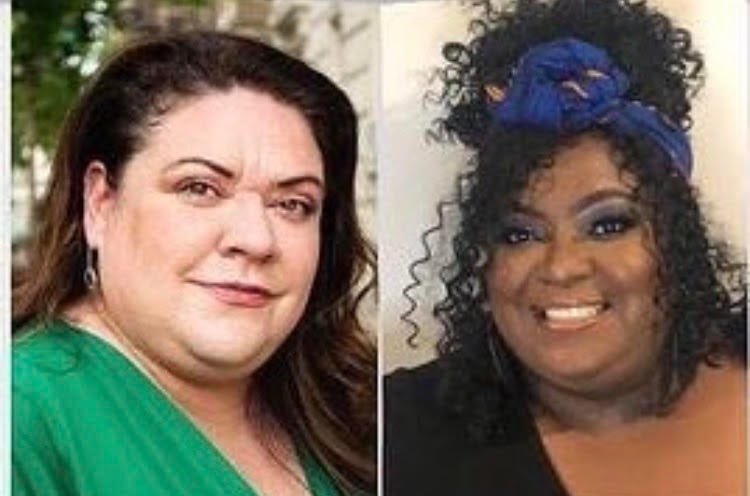
Building a World for Fat Bodies
Hello and welcome to another audio version of Burnt Toast!Audio newsletters are like podcasts in your email. You can listen to the episode right here and now by pressing play, or you can add it to the podcast player of your choice and listen whenever, by clicking that “listen in podcast app” link, above. And just in case you don’t like listening (or that’s not accessible to you), I’m including a full transcript (edited lightly for clarity) below.Today, I’m really thrilled to be chatting with Nyemade Boiwu and Janet Conroy-Quirk, who are the creators of the National Plus Guide. Welcome.NyemadeThank you for having us. VirginiaThank you so much for being here. So why don’t we start with each of you telling my listeners just a little more about you, your background? And what drew you to doing this work?NyemadeSure! This is Nyemade, I actually created the National Plus Guide just off of my own experience. I had moved to a new town from Florida to Delaware, and I was trying to find a new doctor, which anyone who lives in a larger body or marginalized body knows can be difficult sometimes. Just finding someone who doesn’t have that fatphobia. So I found myself just wishing there was somewhere I could go for recommendations or see who other people would suggest in that area. And there wasn’t anything like that, so I figured I should try to create something.Originally, I was thinking about just doing it for that purpose, specifically doctors, but then I’m like, well, there are so many areas where, you know, sometimes we struggle to find the right thing. I know, like if my friends want to go out, I pull up Yelp to look at pictures of the restaurant, see what the seating is like, what the stairs are like, things like that. So I’m like, it’d be so great if there was a place where people could just go to get all that. So that’s where the idea came from. And that’s basically what we’re trying to build!A little bit about me, I realize I totally skipped over that.VirginiaNo worries!NyemadeLittle bit about me: I work full time at a bank, but I do a lot on the side as well. I do a lot of advocacy around mental health and mental illness, I volunteer with Nami [National Alliance on Mental Illness]. I also do communications stuff, I do a lot of IG Lives: I do self-love on Sundays, mental health on Tuesdays, and then whatever other topics come up in between. And then I have a show called More Than My Size that I do with my friend Alicia, where we’re just two larger bodied women living life. Because we feel a lot of times, when there is representation of larger bodies, it’s always like this depressed place, like, oh, we’re so lazy, or we’re not doing anything and blah, blah, blah. And we wanted to show some of us are out here kicking butt. So we started that show. So that’s on YouTube. So that’s what I do with my time! I talk a lot.VirginiaI love it. I mean, that’s what you're supposed to do on a podcast. And I will definitely link to all of that in the transcript so folks can follow you in all of those places, because that sounds amazing.Janet, tell us a little bit about yourself.JanetSo I’m an MSW. I was a social worker in New York City for about 15 years working with different populations. I worked with homeless individuals, the older population. And then I kind of transitioned out of that, it’s a pretty high stress job. I started doing some writing and a lot of acting, and then I became involved in the fat positivity movement. I started to write about my experiences, in theater and in the world and a big body, and eventually went on to start doing more freelance writing. I was briefly the editor of a plus magazine that I’m no longer with, which was at least a good experience. So I have just been getting back into doing more acting, a lot more writing, and when Nyemade told me that she was working on this, I was so drawn to it, because I’d had the same experiences. In medical settings, of course, and also just in things like, you know, buying a wedding dress—I have a horrific story about that. Or just going to places like restaurants and being either physically not able to feel comfortable or being mistreated in some way. So it’s so important to me to be able to help create this database, this place where people can go and make sure that they’re going to be respected and comfortable and safe, is so important to me.VirginiaIt’s so important, and I’m so grateful to both of you for doing this work and for getting this project off the ground. I mean, this comes up all the time in my reporting and conversations with friends, exactly what you were saying about how I want to go to a restaurant, but need to do this sleuthing online and try to find photos of what the chairs look like. It’s so much added emotional labor that people are asked to do just to feel like they can be safe in their bodies out in the world. And it’s so important to challenge that. So you both touched on medical experiences, restaurants, what other types of busin

It's Nice to Be Soft, With Tyler Feder
Hello and welcome to another audio version of Burnt Toast!This is a newsletter where we explore questions and sometimes answers around fatphobia, diet culture, parenting and health. I’m Virginia Sole-Smith. I’m a journalist who covers weight stigma and diet culture. I’m the author of The Eating Instinct and the forthcoming Fat Kid Phobia.My voice is a little raspy because I was at my sister’s wedding all weekend screaming at the top of my lungs. Not like in an angry way, in a joyful way. You know. Dancing Queen came on. Anyway! Today I am, raspily, but very excited-ly, chatting with Tyler Feder, an artist whose work explores big feelings, feminism, and pop culture, all of which are things I’m obsessed with.Tyler is the author of the young adult graphic memoir Dancing at the Pity Party. She also illustrated Together We March and Unladylike: A Field Guide to Smashing the Patriarchy and Claiming Your Space. She runs the very awesome Etsy shop Roaring Softly. And her newest project, which we’re going to talk about today is a body positive picture book for preschoolers called Bodies Are Cool.Tyler, welcome.TylerThank you so much for having me.VirginiaI’m so excited to chat with you. I really fangirl about your work. Your illustrations are amazing. And you know, this new book is the book that I feel like my readers, everyone in my life really, has been asking for, for so long. And I’ve been looking for as the mother of a former preschooler and a current preschooler. It’s just so needed. So thank you.Before we talk about the new book, I’d love to hear a little bit of your story, how you became an artist. And specifically, an artist who focuses on feminism and big feelings, because I mean, those really are my favorite things.TylerI grew up always very into art. I was always doodling more than I was supposed to be in my notebooks in school. I would like take every art class that I could. But I always thought it was just like, my special thing, that is just like, a cool talent or whatever, but not a career. And I went to college and studied screenwriting.VirginiaAlso a solid career path.TylerThat one felt more legit, a lot of classes on how to market yourself. And somehow I ended up combining the two things that I love art and writing, and doing comics. I did comics for a school newspaper growing up, and they’re really embarrassing. Like, I can’t believe that I was showing that to a lot of people.VirginiaI feel like all of us who work in creative professions have some—I wrote a lot of one act plays in high school, and I had a lot of big teenage feelings that went into those plays. And I really can’t quite think about them now.TylerI have a lot of compassion for the person that I was.So, my mom got cancer between my freshman and sophomore years of college, and then she died during spring break of my sophomore year. So that is what my first book Dancing at the Pity Party is about. I had always liked just drawing pictures, but I never put them into a project of that length before. Definitely not anything that deep. I mean, when my mom first died, I was taking a lot of writing classes in college and I did a lot of poetry and screenplays, and play scripts, and everything was about dead moms. And it was very on the nose because that’s all that I had in my brain.VirginiaI mean, you had to write through it. That makes sense.TylerSo I made this book 10 years after my mom died, so there was a little time to work on actually making it more thoughtful and working on the tone and having it not be just like 100% a death march, just this, horrible, horrible sad like—I mean, it’s still pretty sad, but I tried to make it a little light, too.VirginiaIt’s such a tricky thing. I’ve written quite a lot about my older daughter’s heart condition and honestly probably needed more distance than I had when I was writing some of those pieces. I was writing about it while we were still going through intense open heart surgeries and long ICU stays. And that’s completely not the same thing as a personal loss like yours. But it was very traumatic in its own way. There’s a weird experience of needing to write to sort of survive your trauma, but trying to figure out, is that the part that goes out in the world? Or is that writing as therapy? Sometimes the line there is very blurry.TylerJust because something is in your journal, does that mean it’s a book that people who aren’t you should read?VirginiaThat is a strange space to navigate. So tell me about the new book. What inspired Bodies Are Cool? I mean, like I said, I feel like this is such a needed book when I saw it I was like, finally it exists, but I’d love to know what led you to doing it?TylerAfter I finished Pity Party, I was like, I need to do something fun and colorful and playful and positive and less intense. And this was a perfect fit for me. I’ve been really into the body positivity and fat liberation movement for many years. My family has a history of a lot of mental health issues an
Maybe You Just Think Rice Makes You Sluggish? With Christy Harrison
Hello and welcome to another audio version of Burnt Toast! This is a newsletter where we explore questions and sometimes answers around fatphobia, diet culture, parenting and health. I’m Virginia Sole-Smith. I’m a journalist who covers weight stigma and diet culture. I’m the author of The Eating Instinct and the forthcoming Fat Kid Phobia.Today I am chatting with Christy Harrison, a dietitian, host of the beloved Food Psych podcast and author of Anti-Diet, one of my favorite books, and the forthcoming Rethinking Wellness. Welcome, Christy!ChristyThanks, Virginia. So good to be here. VirginiaI’m so glad to have you on. Christy and I have been guests on each other’s podcasts over the years, so it is fun to be doing it again. Christy, I am sure most of my listeners are going to know your work because you are kind of a legend in this space. But why don’t you give us a little background on you and your work?ChristyLike you said, I’m a journalist and dietitian. I started my career as a journalist, and also had my own undiagnosed eating disorder at the time. It kind of made me obsessed with food, nutrition and health, and that’s what I sort of fell into reporting on. And that can really exacerbate disordered eating. Even people who don’t have pre-existing disordered eating, sometimes falling into those beats can create some disorder in one’s relationship with food. So I really struggled with that, but was slowly recovering and had a therapist and had some good people around me, supporting me to at least expand my horizons a little bit with food. I ended up working at a food magazine, Gourmet—RIP—and worked there for a couple years until it folded. And during that time, I realized that the magazine was maybe a little bit on the rocks, and the magazine industry in general was not a great—VirginiaNot a sustainable business model—Christy Yeah, not the most sustainable, and that has really kind of proven to be true. So I went back to school to get my dietitian’s license and get my master's in public health nutrition. And at the time, my goal was to be the next Michael Pollan, or like, Michael Pollan meets Marion Nestle. I wanted to write about sustainability and food systems and ending the “obesity epidemic.” I had really bought into that rhetoric. I think it came out of my own disordered relationship with food and how much I had bought into to diet culture, and specifically the version of diet culture that I now call the wellness diet, which was sort of birthed by the Michael Pollan paradigm. You know, “eat food, not too much, mostly plants,” which is enough to just drive a person up a wall, thinking about the minutiae of that. And of course, my thinking about calories and carbs, and all the sort of overt diet-culture stuff never really went away, either. So it was just a hot mess in my head.Fortunately, when I was in grad school, I started researching a book that I never ended up writing, but that kind of, in a roundabout way, became the basis of Anti-Diet 10 years later. And that original book that I was researching was about emotional eating. I considered myself an emotional eater at the time. I now can see that it’s because I wasn’t eating enough. When people are deprived of food, it makes them eat more in response to emotions, and it also can make them eat more and attribute it to emotions, when really it’s attributable to the deprivation itself, to hunger.I wasn’t really aware of all that. But I started to find research on restrained eating and the effects of that. And I discovered the book Intuitive Eating. And those things started to shift my relationship with food, especially the book Intuitive Eating, and I started to try to practice that and brought it into my therapy. Fortunately, I had been an intuitive eater up until the age of 20, when my eating disorder started. Luckily, no one had interfered in my relationship with food growing up, so I was able to have that intuitive relationship with food, I think largely because of thin privilege—which is the privilege of being thin enough to have nobody say, “you’re too big, you need to lose weight,” and also the privilege of having food security. Those things allowed me to keep on eating intuitively through my adolescence, and I think it was a little bit easier to click back into it because I had that base. It did still take a long time, it took years to really heal my relationship with food, get back to a place of intuitive eating. But I think having that sort of memory was helpful.Once I had gone through that I, you know, was now a nutritionist and soon to be full-fledged dietitian, and I worked for three years as a nutritionist at the New York City Department of Health. And that’s while I was recovering, and sort of re-learning intuitive eating. So the cognitive dissonance of what I was teaching and preaching to people, and what I was doing in my own life, started to be pretty clear to me. I started thinking a lot more about people’s relationships with food, a