
The Bookshelf: Business & Self-Improvement
231 episodes — Page 3 of 5
The Willpower Instinct: How Self-Control Works, Why It Matters, and What You Can Do to Get More of It
by Kelly McGonigal—The first book to explain the new science of self-control and how it can be harnessed to improve our health, happiness, and productivity.After years of watching her students struggling with their choices, health psychologist Kelly McGonigal, Ph.D., realized that much of what people believe about willpower is actually sabotaging their success. Committed to sharing what the scientific community already knew about self-control, McGonigal created a course called "The Science of Willpower" for Stanford University's Continuing Studies Program. The course was an instant hit and spawned the hugely successful Psychology Today blog with the same name.Informed by the latest research and combining cutting-edge insights from psychology, economics, neuroscience, and medicine, McGonigal's book explains exactly what willpower is, how it works, and why it matters. Readers will learn:Willpower is a mind-body response, not a virtue. It is a biological function that can be improved through mindfulness, exercise, nutrition, and sleep. People who have better control of their attention, emotions, and actions are healthier, happier, have more satisfying relationships, and make more money. Willpower is not an unlimited resource. Too much self-control can actually be bad for your health. Temptation and stress hijack the brain's systems of self-control, and that the brain can be trained for greater willpower.In the groundbreaking tradition of Getting Things Done, The Willpower Instinct combines life-changing prescriptive advice and complementary exercises to help readers with goals ranging from a healthier life to more patient parenting, from greater productivity at work to finally finishing the basement.
The Productivity Project: Accomplishing More by Managing Your Time, Attention, and Energy
by Chris Bailey—A fresh, personal, and entertaining exploration of a topic that concerns all of us: how to be more productive at work and in every facet of our lives. Chris Bailey turned down lucrative job offers to pursue a lifelong dream—to spend a year performing a deep dive experiment into the pursuit of productivity, a subject he had been enamored with since he was a teenager. After obtaining his business degree, he created a blog to chronicle a year-long series of productivity experiments he conducted on himself, where he also continued his research and interviews with some of the world’s foremost experts, from Charles Duhigg to David Allen. Among the experiments that he tackled: Bailey went several weeks with getting by on little to no sleep; he cut out caffeine and sugar; he lived in total isolation for 10 days; he used his smartphone for just an hour a day for three months; he gained ten pounds of muscle mass; he stretched his work week to 90 hours; a late riser, he got up at 5:30 every morning for three months—all the while monitoring the impact of his experiments on the quality and quantity of his work. The Productivity Project—and the lessons Chris learned—are the result of that year-long journey. Among the counterintuitive insights Chris Bailey will teach you:· slowing down to work more deliberately;· shrinking or eliminating the unimportant;· the rule of three;· striving for imperfection;· scheduling less time for important tasks;· the 20 second rule to distract yourself from the inevitable distractions;· and the concept of productive procrastination.In an eye-opening and thoroughly engaging read, Bailey offers a treasure trove of insights and over 25 best practices that will help you accomplish more.

Spy the Lie: Three Former CIA Officers Reveal Their Secrets to Uncloaking Deception
by Philip Houston—Three former CIA officers - among the world’s foremost authorities on recognizing deceptive behavior - share their proven techniques for uncovering a lie.Imagine how different your life would be if you could tell whether someone was lying or telling you the truth. Be it hiring a new employee, investing in a financial interest, speaking with your child about drugs, confronting your significant other about suspected infidelity, or even dating someone new, having the ability to unmask a lie can have far-reaching and even life-altering consequences.As former CIA officers, Philip Houston, Michael Floyd, and Susan Carnicero are among the world’s best at recognizing deceptive behavior. Spy the Lie chronicles the captivating story of how they used a methodology Houston developed to detect deception in the counterterrorism and criminal investigation realms, and shows how these techniques can be applied in our daily lives.Through fascinating anecdotes from their intelligence careers, the authors teach listeners how to recognize deceptive behaviors, both verbal and nonverbal, that we all tend to display when we respond to questions untruthfully. For the first time, they share with the general public their methodology and their secrets to the art of asking questions that elicit the truth.Spy the Lie is a game-changer. You may never experience another book that has a more dramatic impact on your career, your relationships, or your future.
Scrum: The Art of Doing Twice the Work in Half the Time
by Jeff Sutherland—The definitive account of the Scrum methodology from its co-creator and the CEO of Scrum, Inc., Jeff Sutherland. Scrum is the revolutionary approach to project management and team building that has helped to transform everything from software companies to the US military to healthcare in major American hospitals. In this major new book its originator, Jeff Sutherland, explains precisely and step by step how it operates - and how it can be made to work for anyone, anywhere.

Organize Tomorrow Today: 8 Ways to Retrain Your Mind to Optimize Performance at Work and in Life
by Jason Selk & Tom Bartow—Dr. Jason Selk helps well-known professional and Olympic athletes as well as Fortune 500 executives and organizations develop the mental toughness necessary to thrive in the face of adversity and achieve elite-level results. Tom Bartow, following a career as a winning college basketball coach, became one of the country's top financial advisors and is now one of the premier business coaches nationwide. Together, Selk and Bartow reveal the secrets of how both elite athletes and business leaders climb to the top.In Organize Tomorrow Today (OTT), two of the top minds in human performance come together to deliver the pathway to extreme success. Doing more is not the answer and Selk and Bartow walk you through how to achieve more by doing less. There is a huge difference between knowing something and understanding. There is an even wider gap between understanding and doing. Highly successful people never get it all finished in any given day; however, they always get the most important things completed. Selk and Bartow offer the 8 fundamentals of doing what is most important. OTT will show you the performance gains that athletes, executives, and salespeople spend tens of thousands of dollars to achieve.
The Power of Moments: Why Certain Experiences Have Extraordinary Impact
by Chip Heath & Dan Heath—The New York Times bestselling authors of Switch and Made to Stick explore why certain brief experiences can jolt us and elevate us and change us—and how we can learn to create such extraordinary moments in our life and work.While human lives are endlessly variable, our most memorable positive moments are dominated by four elements: elevation, insight, pride, and connection. If we embrace these elements, we can conjure more moments that matter. What if a teacher could design a lesson that he knew his students would remember twenty years later? What if a manager knew how to create an experience that would delight customers? What if you had a better sense of how to create memories that matter for your children?This book delves into some fascinating mysteries of experience: Why we tend to remember the best or worst moment of an experience, as well as the last moment, and forget the rest. Why “we feel most comfortable when things are certain, but we feel most alive when they’re not.” And why our most cherished memories are clustered into a brief period during our youth.Readers discover how brief experiences can change lives, such as the experiment in which two strangers meet in a room, and forty-five minutes later, they leave as best friends. (What happens in that time?) Or the tale of the world’s youngest female billionaire, who credits her resilience to something her father asked the family at the dinner table. (What was that simple question?)Many of the defining moments in our lives are the result of accident or luck—but why would we leave our most meaningful, memorable moments to chance when we can create them? The Power of Moments shows us how to be the author of richer experiences.
One Million Followers: How I Built a Massive Social Following in 30 Days
by Brendan Kane—Over 60 billion online messages are sent on digital platforms every day, and only a select few succeed in the mad scramble for customer attention. This means that the question for anyone who wants to gain mass exposure for their transformative content, business, or brand or connect with audiences around the globe is no longer if they should use social media but how to best take advantage of the numerous different platforms. How can you make a significant impact in the digital world and stand out among all the noise? Digital strategist and “growth hacker” Brendan Kane has the answer and will show you how—in 30 days or less. A wizard of the social media sphere, Kane has built online platforms for A-listers including Taylor Swift and Rihanna. He’s advised brands such as MTV, Skechers, Vice and IKEA on how to establish and grow their digital audience and engagement. Kane has spent his career discovering the best tools to turn any no-name into a top influencer simply by speaking into a camera or publishing a popular blog—and now he’ll share his secrets with you. In One Million Followers, Kane will teach you how to gain an authentic, dedicated, and diverse online following from scratch; create personal, unique, and valuable content that will engage your core audience; and build a multi-media brand through platforms like Facebook, Instagram, YouTube, Snapchat, and LinkedIn. One Million Followers is the ultimate guide to building your worldwide brand and unlocking all the benefits social media has to offer. It’s time to stop being a follower and start being a leader.
The $100 Startup: Reinvent the Way You Make a Living, Do What You Love, and Create a New Future
by Chris Guillebeau—In The $100 Startup, Chris Guillebeau shows you how to lead of life of adventure, meaning and purpose – and earn a good living. Still in his early thirties, Chris is on the verge of completing a tour of every country on earth – he’s already visited more than 175 nations – and yet he’s never held a “real job” or earned a regular paycheck. Rather, he has a special genius for turning ideas into income, and he uses what he earns both to support his life of adventure and to give back. There are many others like Chris – those who’ve found ways to opt out of traditional employment and create the time and income to pursue what they find meaningful. Sometimes, achieving that perfect blend of passion and income doesn’t depend on shelving what you currently do. You can start small with your venture, committing little time or money, and wait to take the real plunge when you're sure it's successful. In preparing to write this book, Chris identified 1,500 individuals who have built businesses earning $50,000 or more from a modest investment (in many cases, $100 or less), and from that group he’s chosen to focus on the 50 most intriguing case studies. In nearly all cases, people with no special skills discovered aspects of their personal passions that could be monetized, and were able to restructure their lives in ways that gave them greater freedom and fulfillment. Here, finally, distilled into one easy-to-use guide, are the most valuable lessons from those who’ve learned how to turn what they do into a gateway to self-fulfillment. It’s all about finding the intersection between your “expertise” – even if you don’t consider it such -- and what other people will pay for. You don’t need an MBA, a business plan or even employees. All you need is a product or service that springs from what you love to do anyway, people willing to pay, and a way to get paid. Not content to talk in generalities, Chris tells you exactly how many dollars his group of unexpected entrepreneurs required to get their projects up and running; what these individuals did in the first weeks and months to generate significant cash; some of the key mistakes they made along the way, and the crucial insights that made the business stick. Among Chris’s key principles: if you’re good at one thing, you’re probably good at something else; never teach a man to fish – sell him the fish instead; and in the battle between planning and action, action wins. In ancient times, people who were dissatisfied with their lives dreamed of finding magic lamps, buried treasure, or streets paved with gold. Today, we know that it’s up to us to change our lives. And the best part is, if we change our own life, we can help others change theirs. This remarkable book will start you on your way.

Make Your Bed: Little Things That Can Change Your Life...And Maybe the World
by William H. McRaven—If you want to change the world, start off by making your bed. On May 17, 2014, Admiral William H. McRaven addressed the graduating class of the University of Texas at Austin on their Commencement day. Taking inspiration from the university's slogan, "What starts here changes the world," he shared the ten principles he learned during Navy Seal training that helped him overcome challenges not only in his training and long Naval career, but also throughout his life; and he explained how anyone can use these basic lessons to change themselves-and the world-for the better.Admiral McRaven's original speech went viral with over 10 million views. Building on the core tenets laid out in his speech, McRaven now recounts tales from his own life and from those of people he encountered during his military service who dealt with hardship and made tough decisions with determination, compassion, honor, and courage. Told with great humility and optimism, this timeless book provides simple wisdom, practical advice, and words of encouragement that will inspire readers to achieve more, even in life's darkest moments.

The Age of Agile: How Smart Companies Are Transforming the Way Work Gets Done
by Stephen Denning—More value from less work.An unstoppable business revolution is under way — and it is Agile. Companies that embrace Agile Management learn to connect everyone and everything . . . all the time. They can deliver instant, intimate, frictionless value on a large scale.Agile began emerging many decades ago, but truly took off in the software development industry. Sparking dramatic improvements in quality, innovation, and speed-to-market, the Agile movement is now spreading quickly throughout all kinds of companies. It enables a team, a unit, or an enterprise to nimbly adapt and upgrade products and services to meet rapidly changing technology and customer needs. And the process is applicable anywhere — companies don’t need to be born Agile, like Spotify. Even centuries-old Barclays is making the transition and reaping rewards.Filled with examples from every sector, The Age of Agile helps readers:Master the three laws of Agile Management (team, customer, network) ● Embrace the new mindset ● Overcome constraints ● Employ meaningful metrics ● Make the entire organization Agile ● And moreWith this breakthrough approach, even global giants can learn to act entrepreneurially. Their future depends on it.

Emotional Intelligence 2.0
by Travis Bradberry—For the first time ever in a book, TalentSmart's revolutionary program helps people identify their EQ skills, build these skills into strengths, and enjoy consistent performance in the pursuit of important life objectives. The book contains proven strategies from a decade-long effort to accurately measure and increase emotional intelligence. Trusted by upper-echelon leaders inside companies worldwide, these strategies will enable you to capitalize on the skills responsible for 58% of performance in all types of jobs.Includes a passcode for online access to the world's bestselling emotional intelligence test, the Emotional Intelligence Appraisal®, which will show you where your EQ stands today and what you can do to begin maximizing it immediately.Rooted in sound research involving more than 500,000 responses, this new edition of the test will:--Pinpoint which of the book's 66 emotional intelligence strategies will increase your EQ the most.--Reveal the specific behaviors responsible for your EQ scores.--Allow you to test yourself a second time to measure how much your EQ has increased from your efforts.The book's smooth narrative style turns rigorous research into memorable stories and practical strategies that anyone can use to his or her advantage.With 90% of top performers high in EQ, and EQ twice as important as IQ in getting where you want to go in life, who can afford to ignore it?

The 4 Disciplines of Execution: Achieving Your Wildly Important Goals
by Sean Covey—Do you remember the last major initiative you watched die in your organization? Did it go down with a loud crash? Or was it slowly and quietly suffocated by other competing priorities? By the time it finally disappeared, it’s likely no one even noticed. What happened?Often, the answer is that the “whirlwind” of urgent activity required to keep things running day-to-day devoured all the time and energy you needed to invest in executing your strategy for tomorrow. The 4 Disciplines of Execution can change that forever.The 4 Disciplines of Execution (4DX) is a simple, repeatable, and proven formula for executing your most important strategic priorities in the midst of the whirlwind. By following the 4 Disciplines—Focus on the Wildly Important; Act on Lead Measures; Keep a Compelling Scoreboard; Create a Cadence of Accountability—leaders can produce breakthrough results, even when executing the strategy requires a significant change in behavior from their teams.4DX is not theory. It is a proven set of practices that have been tested and refined by hundreds of organizations and thousands of teams over many years. When a company or an individual adheres to these disciplines, they achieve superb results, regardless of the goal. 4DX represents a new way to think and work that is essential to thriving in today’s competitive climate. The 4 Disciplines of Execution is one book that no business leader can afford to miss.
TED Talks: The Official TED Guide to Public Speaking
by Chris Anderson—For anyone who has ever been inspired by a TED talk… ...this is an insider’s guide to creating talks that are unforgettable. Since taking over TED in the early 2000s, Chris Anderson has shown how carefully crafted short talks can be the key to unlocking empathy, stirring excitement, spreading knowledge, and promoting a shared dream. Done right, a talk can electrify a room and transform an audience’s worldview. Done right, a talk is more powerful than anything in written form. This book explains how the miracle of powerful public speaking is achieved, and equips you to give it your best shot. There is no set formula; no two talks should be the same. The goal is for you to give the talk that only you can give. But don’t be intimidated. You may find it more natural than you think. Chris Anderson has worked behind the scenes with all the TED speakers who have inspired us the most, and here he shares insights from such favorites as Sir Ken Robinson, Amy Cuddy, Bill Gates, Elizabeth Gilbert, Salman Khan, Dan Gilbert, Mary Roach, Matt Ridley, and dozens more — everything from how to craft your talk’s content to how you can be most effective on stage. This is the 21st-century’s new manual for truly effective communication and it is a must-read for anyone who is ready to create impact with their ideas.

Mistakes Were Made (But Not by Me): Why We Justify Foolish Beliefs, Bad Decisions, and Hurtful Acts
by Carol Tavris—Why do people dodge responsibility when things fall apart? Why the parade of public figures unable to own up when they screw up? Why the endless marital quarrels over who is right? Why can we see hypocrisy in others but not in ourselves? Are we all liars? Or do we really believe the stories we tell?Renowned social psychologists Carol Tavris and Elliot Aronson take a compelling look into how the brain is wired for self-justification. When we make mistakes, we must calm the cognitive dissonance that jars our feelings of self-worth. And so we create fictions that absolve us of responsibility, restoring our belief that we are smart, moral, and right -- a belief that often keeps us on a course that is dumb, immoral, and wrong.Backed by years of research and delivered in lively, energetic prose, Mistakes Were Made (But Not by Me) offers a fascinating explanation of self-deception -- how it works, the harm it can cause, and how we can overcome it.
Your Best Brain: The Science of Brain Improvement
by John Medina—Inside your head sits the most complex object in the known universe - the human brain. This amazing organ has unique powers to make predictions about the future, form relationships with other people, adapt to rapidly changing circumstances, and so much more. We all have a basic conception of how our brains function, but when did you last dive into the fascinating world of neuroscience to truly understand the inner workings of your mind?For decades, the field of neuroscience has been in a near-constant state of disruptive transformation, as we continually learn more about our incredible brains. Thanks to rapid advances in technology and in our understanding of the brain, today’s neuroscience research goes far beyond trying to understand how the brain works, and into the search for proven ways to optimize brain performance. In Your Best Brain, Professor John J. Medina - an award-winning scientist, New York Times best-selling author, and leading advocate for brain research - delivers 24 exciting lectures that probe the origins of consciousness, memory, emotion, attention, intelligence, and beyond. He focuses on five key areas of study in neuroscience: the brain’s physical structure and function, and how it enabled us to become the planet’s apex predator; the ways in which the brain processes information, and how that relates to intelligence; the intricacies of emotions and socialization, and how empathy is a vital survival mechanism; how our brains develop and change throughout our lifetimes; and how we can best use and expand our cerebral processing performance. After gaining a thorough understanding of the science behind your best brain, you’ll learn scientifically proven methods for improving your memory, boosting your creativity, and keeping your mind sharp for years to come.
Payoff: The Hidden Logic That Shapes Our Motivations
by Dan Ariely—Bestselling author Dan Ariely reveals fascinating new insights into motivation--showing that the subject is far more complex than we ever imagined.Every day we work hard to motivate ourselves, the people we live with, the people who work for and do business with us. In this way, much of what we do can be defined as being "motivators." From the boardroom to the living room, our role as motivators is complex, and the more we try to motivate partners and children, friends and coworkers, the clearer it becomes that the story of motivation is far more intricate and fascinating than we've assumed.Payoff investigates the true nature of motivation, our partial blindness to the way it works, and how we can bridge this gap. With studies that range from Intel to a kindergarten classroom, Ariely digs deep to find the root of motivation--how it works and how we can use this knowledge to approach important choices in our own lives. Along the way, he explores intriguing questions such as: Can giving employees bonuses harm productivity? Why is trust so crucial for successful motivation? What are our misconceptions about how to value our work? How does your sense of your mortality impact your motivation?

The Upside of Irrationality: The Unexpected Benefits of Defying Logic at Work and at Home
by Dan Ariely—The provocative follow-up to the New York Times bestseller Predictably IrrationalWhy can large bonuses make CEOs less productive?How can confusing directions actually help us?Why is revenge so important to us?Why is there such a big difference between what we think will make us happy and what really makes us happy?In his groundbreaking book Predictably Irrational, social scientist Dan Ariely revealed the multiple biases that lead us into making unwise decisions. Now, in The Upside of Irrationality, he exposes the surprising negative and positive effects irrationality can have on our lives. Focusing on our behaviors at work and in relationships, he offers new insights and eye-opening truths about what really motivates us on the job, how one unwise action can become a long-term habit, how we learn to love the ones we're with, and more.Drawing on the same experimental methods that made Predictably Irrational one of the most talked-about bestsellers of the past few years, Ariely uses data from his own original and entertaining experiments to draw arresting conclusions about howand whywe behave the way we do. From our office attitudes, to our romantic relationships, to our search for purpose in life, Ariely explains how to break through our negative patterns of thought and behavior to make better decisions. The Upside of Irrationality will change the way we see ourselves at work and at homeand cast our irrational behaviors in a more nuanced light.
Upstream: The Quest to Solve Problems Before They Happen
by Dan Heath — Most of us spend our days handling a deluge of pressing issues. We’re so accustomed to managing emergencies as they strike that we often don’t stop to think about how we could prevent crises before they happen. Why stop at treating the symptoms when you could develop a cure? How many daily headaches do we tolerate because we’ve forgotten to fix them? Whether it’s time management, supply chain logistics, or healthcare decisions, all over the world, persistent problems cost time, money, and lives. Upstream explains how to target the source of the problem rather than just reacting to it as it happens and introduces you to the thinkers who are chipping away at everyday frustrations and deep-rooted issues. One travel company saved 25 million customer phone calls every year by adding a simple step to its booking system. An insurance business, determined to help YMCAs across the country lower their number of accidental drownings to zero, has saved an untold number of lives. The LAPD track down more accurate addresses for suspects by buying access to the delivery data from local pizza shops. The CDC realized they could anticipate flu outbreaks by tracking thermometer sales in local pharmacies. Drawing on hundreds of interviews, as well as his own innovative behavior research, New York Times bestselling author Dan Heath delivers practical solutions for preventing problems rather than simply reacting to them—revolutionizing how we approach professional and personal goals in our daily lives.
The Power of Agency: The 7 Principles to Conquer Obstacles, Make Effective Decisions, and Create a Life on Your Own Terms
by Paul Napper — Introducing The Power of Agency, a science-backed approach to living life on your own terms. Agency is the ability to act as an effective agent for yourself—reflecting, making creative choices, and constructing a meaningful life. Grounded in extensive psychological research, The Power of Agency gives you the tools to help alleviate anxiety, manage competing demands and help you live your version of success. Renowned psychology experts Paul Napper and Anthony Rao will help you break through your state of overwhelm by showing you how to access your personal agency with seven empowering principles: control stimuli, associate selectively, move, position yourself as a learner, manage your emotions and beliefs, check your intuition, deliberate and then act. Featuring stories of people who have successfully applied these principles to improve their lives, The Power of Agency will give you the insights and skills to build your confidence, conquer challenges, and live more authentically.
The Science of Fear: Why We Fear the Things We Shouldn't—and Put Ourselves in Greater Danger
by Dan Gardner — From terror attacks to the war on terror, real estate bubbles to the price of oil, sexual predators to poisoned food from China, our list of fears is ever-growing. And yet, we are the safest and healthiest humans in history. Irrational fear seems to be taking over, often with tragic results. For example, in the months after 9/11, when people decided to drive instead of fly—believing they were avoiding risk—road deaths rose by more than 1,500. In this fascinating, lucid, and thoroughly entertaining examination of how humans process risk, journalist Dan Gardner had the exclusive cooperation of Paul Slovic, the world renowned risk-science pioneer, as he reveals how our hunter gatherer brains struggle to make sense of a world utterly unlike the one that made them. Filled with illuminating real world examples, interviews with experts, and fast-paced, lean storytelling, The Science of Fear shows why it is truer than ever that the worst thing we have to fear is fear itself.
Rewire: Change Your Brain to Break Bad Habits, Overcome Addictions, Conquer Self-Destructive Behavior
by Richard O'Connor — We humans tend to get in our own way time and time again—whether it comes to not speaking up for ourselves, going back to bad romantic partners, dieting for the umpteenth try, or acting on any of a range of bad habits we just can’t seem to shake. In Rewire, renowned psychotherapist Richard O’Connor, PhD, reveals exactly why our bad habits die so hard. We have two brains—one a thoughtful, conscious, deliberative self, and the other an automatic self that makes most of our decisions without our attention. Using new research and knowledge about how the brain works, the book clears a path to lasting, effective change for behaviors that include: Procrastination Overeating Chronic disorganization Staying in bad situations Excessive worrying Risk taking Passive aggression Self-medication Bringing together many different fields in psychology and brain science, Dr. O’Connor gives you a road map to overcoming whatever self-destructive habits are plaguing you, with exercises throughout the book. We can rewire our brains to develop healthier circuitry, training the automatic self to make wiser decisions without having to think about it; ignore distractions; withstand temptations; see ourselves and the world more clearly; and interrupt our reflexive responses before they get us in trouble. Meanwhile, our conscious minds will be freed to view ourselves with compassion at the same time as we practice self-discipline. By learning valuable skills and habits—including mindfulness, self-control, confronting fear, and freeing yourself from mindless guilt—we can open ourselves to vastly more successful, productive, and happy lives. The book even demystifies how to overcome what Dr. O’Connor calls the “undertow” (the mysterious force that sabotages our best efforts when we’re just on the edge of victory) for long-lasting change. Offering a valuable science-based new paradigm for rewiring our brains, Rewire is a refreshing guide to becoming a healthier, happier self.
Brain Rules: 12 Principles for Surviving and Thriving at Work, Home, and School
by John Medina—Most of us have no idea what’s really going on inside our heads. Yet brain scientists have uncovered details every business leader, parent, and teacher should know—like the need for physical activity to get your brain working its best.How do we learn? What exactly do sleep and stress do to our brains? Why is multi-tasking a myth? Why is it so easy to forget—and so important to repeat new knowledge? Is it true that men and women have different brains?In Brain Rules, Dr. John Medina, a molecular biologist, shares his lifelong interest in how the brain sciences might influence the way we teach our children and the way we work. In each chapter, he describes a brain rule—what scientists know for sure about how our brains work—and then offers transformative ideas for our daily lives.Medina’s fascinating stories and infectious sense of humor breathe life into brain science. You’ll learn why Michael Jordan was no good at baseball. You’ll peer over a surgeon’s shoulder as he proves that most of us have a Jennifer Aniston neuron. You’ll meet a boy who has an amazing memory for music but can’t tie his own shoes.You will discover how:Every brain is wired differentlyExercise improves cognitionWe are designed to never stop learning and exploringMemories are volatileSleep is powerfully linked with the ability to learnVision trumps all of the other sensesStress changes the way we learnIn the end, you’ll understand how your brain really works—and how to get the most out of it.
Cognitive Surplus: Creativity and Generosity in a Connected Age
by Clay Shirky—For decades, technology encouraged people to squander their time and intellect as passive consumers. Today, tech has finally caught up with human potential. In Cognitive Surplus, Internet guru Clay Shirky forecasts the thrilling changes we will all enjoy as new digital technology puts our untapped resources of talent and goodwill to use at last.Since we Americans were suburbanized and educated by the postwar boom, we've had a surfeit of intellect, energy, and time-what Shirky calls a cognitive surplus. But this abundance had little impact on the common good because television consumed the lion's share of it-and we consume TV passively, in isolation from one another. Now, for the first time, people are embracing new media that allow us to pool our efforts at vanishingly low cost. The results of this aggregated effort range from mind expanding-reference tools like Wikipedia-to lifesaving-such as Ushahidi.com, which has allowed Kenyans to sidestep government censorship and report on acts of violence in real time.Shirky argues persuasively that this cognitive surplus-rather than being some strange new departure from normal behavior-actually returns our society to forms of collaboration that were natural to us up through the early twentieth century. He also charts the vast effects that our cognitive surplus- aided by new technologies-will have on twenty-first-century society, and how we can best exploit those effects. Shirky envisions an era of lower creative quality on average but greater innovation, an increase in transparency in all areas of society, and a dramatic rise in productivity that will transform our civilization.The potential impact of cognitive surplus is enormous. As Shirky points out, Wikipedia was built out of roughly 1 percent of the man-hours that Americans spend watching TV every year. Wikipedia and other current products of cognitive surplus are only the iceberg's tip. Shirky shows how society and our daily lives will be improved dramatically as we learn to exploit our goodwill and free time like never before.
You're Not Listening: What You're Missing and Why It Matters
by Kate Murphy — At work, we’re taught to lead the conversation. On social media, we shape our personal narratives. At parties, we talk over one another. So do our politicians. We’re not listening. And no one is listening to us. Despite living in a world where technology allows constant digital communication and opportunities to connect, it seems no one is really listening or even knows how. And it’s making us lonelier, more isolated, and less tolerant than ever before. A listener by trade, New York Times contributor Kate Murphy wanted to know how we got here. In this always illuminating and often humorous deep dive, Murphy explains why we’re not listening, what it’s doing to us, and how we can reverse the trend. She makes accessible the psychology, neuroscience, and sociology of listening while also introducing us to some of the best listeners out there (including a CIA agent, focus group moderator, bartender, radio producer, and top furniture salesman). It’s time to stop talking and start listening.
Do the Work: The Official Unrepentant, Ass-Kicking, No-Kidding, Change-Your-Life Sidekick to Unfu*k Yourself
by Gary John Bishop—Based on the New York Times bestseller Unfu*k Yourself comes an all new book of prompts, questions, and exercises, giving you the tools to intentionally commit to finally unfu*king your life.In Unfu*k Yourself, Gary John Bishop inspired people to put his words into action to transform their fu*king lives. Through seven paradigm shifting assertions such as: “I am wired to win,” “I embrace the uncertainty” and “I expect nothing and accept everything,” Bishop helped millions of readers to move past their self-imposed limitations.Still, Bishop knows it’s hard to go from reading the book, feeling inspired, and then actually doing the necessary work. That’s where Do the Work comes in: it’s the kick in the ass you need to get moving and create the life you want. The workbook drills down into three categories — self, people, and purpose — to help you identify and remedy the challenges that frustrate and often cripple us.Filled with entirely new material, including personalized prompts and exercises with ample lined space to journal and process, Do the Work expands the lessons in Unfu*k Yourself, giving you the tools to intentionally commit to taking on your life.“This is a personal workshop for your brain, a legit resource where you can work your life out, what matters to you, what’s going to make the biggest difference and empower you to act in ways that make some palpable change to the direction your life is currently taking.”The truth will set you free, right? So what are you waiting for?
Stop Doing That Sh*t: End Self-Sabotage and Demand Your Life Back
by Gary John Bishop—From the author of the New York Times and international bestseller Unfu*k Yourself, Gary John Bishop presents a no-holds-barred guide to breaking through our cycles of self-sabotage to get what we want out of life.In Unfu*k Yourself, Gary John Bishop told us it was time to stop making excuses—to recognize and take responsibility for the negative self-talk holding us back.In Stop Doing That Sh*t, he builds on that message, teaching us how to stop self-sabotaging behavior. Bishop explains how our destructive cycles come down to the way that we’re wired. He then identifies different types of people and the ways we fu*k ourselves over: We can’t save money. We land in the same type of toxic relationship. We’re stuck in a rut at work. Analyzing why we act the way we do, including what our common grenades are that blow up our lives, Bishop then shows how we can interrupt the cycle and stop self-sabotaging our lives.Written in the same in your face style as Unfu*k Yourself, Stop Doing that Sh*t will help us get in touch with our psychological machinery so we learn to interrupt negative thoughts and behavior before they start, allowing us to give our attention to something else, and start to find success in the areas we thought we never could.We can take back our lives. We may have fu*ked up in the past, but Stop Doing That Sh*t will show us how to break the patterns in order to live the lives we yearn to have.
Unfu*k Yourself: Get Out of Your Head and Into Your Life
by Gary John Bishop—Have you ever felt like a hamster on a wheel, furiously churning your way through life but somehow going nowhere? It seems like there’s a barrage of information surrounding us in our everyday lives with the keys to this thing or that thing, be it wealth, success, happiness or purpose. The truth is, most of it fails to capture what it truly takes to overcome our greatest barrier to a greater life…ourselves. What if everything you ever wanted resided in you like a well of potential, waiting to be expressed? Unfu*k Yourself is the handbook for the resigned and defeated, a manifesto for real life change and unleashing your own greatness.
Winning the Brain Game: Fixing the 7 Fatal Flaws of Thinking
by Matthew May—Mindful thinking is the new competitive edgeScience confirms the distinction between the biological brain and the conscious mind. Each day, a game of mind versus matter plays out on a field defined by the problems we must solve. Most are routine, and don t demand a more mindful approach. It s when we re faced with more difficult challenges that our thinking becomes vulnerable to brain patterns that can lead us astray.We leap to solutions that simply don t work. We fixate on old mindsets that keep us stuck in neutral. We overthink problems and make them worse. We kill the ideas of others, as well as our own. Worse, we "keep" doing these things, over and over again, naturally and instinctively.But it doesn t have to be that way.In "Winning the Brain Game," author and creative strategist Matthew E. May explains these and other fatal flaws of thinking, catalogued over the course of ten years and hundreds of interactive creative sessions in which he gave more than 100,000 professionals a thought challenge based on a real case far less complex than their everyday problems. Not only did less than 5% arrive at the best and most elegant solution, but the solutions given were remarkably similar, revealing seven observable problem-solving patterns that can block our best thinking.Calling on modern neuroscience and psychology to help explain the seven fatal flaws, May draws insights from some of the world s most innovative thinkers. He then blends in a super-curated, field-tested set of fixes proven through hundreds of creative sessions to raise our thinking game to a more mindful level. Regardless of playing field, mindful thinking is the new competitive advantage, and the seven fixes are a magic set of tools for achieving it."Winning the Brain Game" will lead you to better decision-making, higher levels of creativity, clearer strategies, and overall success in business, work and life.Matthew E. May is a five-time author and recognized thought leader on strategy and innovation. A popular speaker, facilitator, and seminar leader, he confidentially coaches executives, artists, and athletes, and conducts custom thinking sessions for leading organizations all over the world. "
Wait, What?: And Life's Other Essential Questions
by James E. Ryan — Based on the wildly popular commencement address, the art of asking (and answering) good questions by the Dean of Harvard University’s Graduate School of Education. Whether we’re in the boardroom or the classroom, we spend far too much time and energy looking for the right answer. But the truth is that questions are just as important as answers, often more so. If you ask the wrong question, for instance, you’re guaranteed to get the wrong answer. A good question, on the other hand, inspires a good answer and, in the process, invites deeper understanding and more meaningful connections between people. Asking a good question requires us to move beyond what we think we know about an issue or a person to explore the difficult and the unknown, the awkward, and even the unpleasant. In Wait, What?, Jim Ryan, dean of Harvard University’s Graduate School of Education, celebrates the art of asking—and answering—good questions. Five questions in particular: Wait, what?; I wonder…? Couldn’t we at least…?; How can I help?; and What truly matters? Using examples from politics, history, popular culture, and social movements, as well as his own personal life, Ryan demonstrates how these essential inquiries generate understanding, spark curiosity, initiate progress, fortify relationships, and draw our attention to the important things in life—from the Supreme Court to Fenway Park. By regularly asking these five essential questions, Ryan promises, we will be better able to answer life’s most important question: “And did you get what you wanted out of life, even so?” At once hilarious and illuminating, poignant and surprising, Wait, What? is an inspiring book of wisdom that will forever change the way you think about questions.

The Intelligent Investor
by Benjamin Graham — More than one million hardcovers sold Now available for the first time in paperback! The Classic Text Annotated to Update Graham's Timeless Wisdom for Today's Market Conditions The greatest investment advisor of the twentieth century, Benjamin Graham taught and inspired people worldwide. Graham's philosophy of "value investing" -- which shields investors from substantial error and teaches them to develop long-term strategies -- has made The Intelligent Investor the stock market bible ever since its original publication in 1949. Over the years, market developments have proven the wisdom of Graham's strategies. While preserving the integrity of Graham's original text, this revised edition includes updated commentary by noted financial journalist Jason Zweig, whose perspective incorporates the realities of today's market, draws parallels between Graham's examples and today's financial headlines, and gives readers a more thorough understanding of how to apply Graham's principles. Vital and indispensable, this HarperBusiness Essentials edition of The Intelligent Investor is the most important book you will ever read on how to reach your financial goals.
Bull's-Eye: The Power of Focus
by Brian Tracy—Your aim in life should be to achieve all of the wonderful things that are possible for you. There is no reason for you not to be earning twice as much as you are today, or even five or ten times as much. Your potential is practically limitless, if you could just learn how to utilize it.Clarity, Focus, and Concentration: Three strong, simple attributes needed to hone in your potential and hit the bull's eye! And just as you can develop your physical muscles through hard work and concentration, you can develop your mental muscles through continuous repetition.You have the ability right now to achieve more than you ever have before. Bull's Eye will teach you how to unleash your powers for success and accomplish more in the next few months than many people do in a lifetime.
So Good They Can't Ignore You: Why Skills Trump Passion in the Quest for Work You Love
by Cal Newport — In this eye-opening account, Cal Newport debunks the long-held belief that "follow your passion" is good advice. Not only is the cliché flawed-preexisting passions are rare and have little to do with how most people end up loving their work-but it can also be dangerous, leading to anxiety and chronic job hopping. After making his case against passion, Newport sets out on a quest to discover the reality of how people end up loving what they do. Spending time with organic farmers, venture capitalists, screenwriters, freelance computer programmers, and others who admitted to deriving great satisfaction from their work, Newport uncovers the strategies they used and the pitfalls they avoided in developing their compelling careers. Matching your job to a preexisting passion does not matter, he reveals. Passion comes after you put in the hard work to become excellent at something valuable, not before. In other words, what you do for a living is much less important than how you do it. With a title taken from the comedian Steve Martin, who once said his advice for aspiring entertainers was to "be so good they can't ignore you," Cal Newport's clearly written manifesto is mandatory reading for anyone fretting about what to do with their life, or frustrated by their current job situation and eager to find a fresh new way to take control of their livelihood. He provides an evidence-based blueprint for creating work you love. So Good They Can't Ignore You will change the way we think about our careers, happiness, and the crafting of a remarkable life.

Digital Minimalism: Choosing a Focused Life in a Noisy World
by Cal Newport — Minimalism is the art of knowing how much is just enough. Digital minimalism applies this idea to our personal technology. It's the key to living a focused life in an increasingly noisy world. In this timely and enlightening book, the bestselling author of Deep Work introduces a philosophy for technology use that has already improved countless lives. Digital minimalists are all around us. They're the calm, happy people who can hold long conversations without furtive glances at their phones. They can get lost in a good book, a woodworking project, or a leisurely morning run. They can have fun with friends and family without the obsessive urge to document the experience. They stay informed about the news of the day, but don't feel overwhelmed by it. They don't experience "fear of missing out" because they already know which activities provide them meaning and satisfaction. Now, Newport gives us a name for this quiet movement, and makes a persuasive case for its urgency in our tech-saturated world. Common sense tips, like turning off notifications, or occasional rituals like observing a digital sabbath, don't go far enough in helping us take back control of our technological lives, and attempts to unplug completely are complicated by the demands of family, friends and work. What we need instead is a thoughtful method to decide what tools to use, for what purposes, and under what conditions. Drawing on a diverse array of real-life examples, from Amish farmers to harried parents to Silicon Valley programmers, Newport identifies the common practices of digital minimalists and the ideas that underpin them. He shows how digital minimalists are rethinking their relationship to social media, rediscovering the pleasures of the offline world, and reconnecting with their inner selves through regular periods of solitude. He then shares strategies for integrating these practices into your life, starting with a thirty-day "digital declutter" process that has already helped thousands feel less overwhelmed and more in control. Technology is intrinsically neither good nor bad. The key is using it to support your goals and values, rather than letting it use you. This book shows the way.

Good Economics for Hard Times: Better Answers to Our Biggest Problems
by Abhijit V. Banerjee — Figuring out how to deal with today's critical economic problems is perhaps the great challenge of our time. Much greater than space travel or perhaps even the next revolutionary medical breakthrough, what is at stake is the whole idea of the good life as we have known it. Immigration and inequality, globalization and technological disruption, slowing growth and accelerating climate change--these are sources of great anxiety across the world, from New Delhi and Dakar to Paris and Washington, DC. The resources to address these challenges are there--what we lack are ideas that will help us jump the wall of disagreement and distrust that divides us. If we succeed, history will remember our era with gratitude; if we fail, the potential losses are incalculable. In this revolutionary book, renowned MIT economists Abhijit V. Banerjee and Esther Duflo take on this challenge, building on cutting-edge research in economics explained with lucidity and grace. Original, provocative, and urgent, Good Economics for Hard Times makes a persuasive case for an intelligent interventionism and a society built on compassion and respect and show how economics, when done right, can help us solve the thorniest social and political problems of the day. It is an extraordinary achievement, one that shines a light to help us appreciate and understand our precariously balanced world.
The Effective Executive: The Definitive Guide to Getting the Right Things Done
by Peter F. Drucker — What makes an effective executive? The measure of the executive, Peter F. Drucker reminds us, is the ability to "get the right things done." This usually involves doing what other people have overlooked as well as avoiding what is unproductive. Intelligence, imagination, and knowledge may all be wasted in an executive job without the acquired habits of mind that mold them into results. Drucker identifies five practices essential to business effectiveness that can, and must, be learned: Managing time Choosing what to contribute to the organization Knowing where and how to mobilize strength for best effect Setting the right priorities Knitting all of them together with effective decision-making Ranging widely through the annals of business and government, Peter F. Drucker demonstrates the distinctive skill of the executive and offers fresh insights into old and seemingly obvious business situations.

The Life-Changing Magic of Tidying Up: The Japanese Art of Decluttering and Organizing
by Marie Kondō — Despite constant efforts to declutter your home, do papers still accumulate like snowdrifts and clothes pile up like a tangled mess of noodles? Japanese cleaning consultant Marie Kondo takes tidying to a whole new level, promising that if you properly simplify and organize your home once, you'll never have to do it again. Most methods advocate a room-by-room or little-by-little approach, which doom you to pick away at your piles of stuff forever. The KonMari Method, with its revolutionary category-by-category system, leads to lasting results. In fact, none of Kondo's clients have lapsed (and she still has a three-month waiting list). With detailed guidance for determining which items in your house "spark joy" (and which don't), this international best seller featuring Tokyo's newest lifestyle phenomenon will help you clear your clutter and enjoy the unique magic of a tidy home - and the calm, motivated mindset it can inspire.

Rich Dad, Poor Dad
by Robert T. Kiyosaki — Rich Dad Poor Dad is Robert's story of growing up with two dads — his real father and the father of his best friend, his "rich dad" — and the ways in which both men shaped his thoughts about money and investing. The book explodes the myth that you need to earn a high income to be rich and explains the difference between working for money and having your money work for you.
Spark: The Revolutionary New Science of Exercise and the Brain
John J. Ratey — A groundbreaking and fascinating investigation into the transformative effects of exercise on the brain, from the bestselling author and renowned psychiatrist John J. Ratey, MD. Did you know you can beat stress, lift your mood, fight memory loss, sharpen your intellect, and function better than ever simply by elevating your heart rate and breaking a sweat? The evidence is incontrovertible: Aerobic exercise physically remodels our brains for peak performance. In SPARK, John J. Ratey, M.D., embarks upon a fascinating and entertaining journey through the mind-body connection, presenting startling research to prove that exercise is truly our best defense against everything from depression to ADD to addiction to aggression to menopause to Alzheimer's. Filled with amazing case studies (such as the revolutionary fitness program in Naperville, Illinois, which has put this school district of 19,000 kids first in the world of science test scores), SPARK is the first book to explore comprehensively the connection between exercise and the brain. It will change forever the way you think about your morning run---or, for that matter, simply the way you think
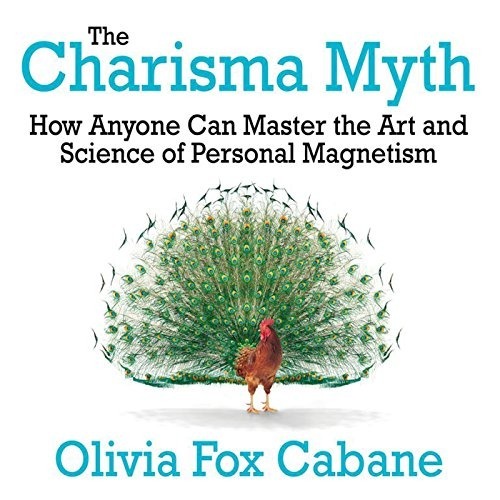
The Charisma Myth: How Anyone Can Master the Art and Science of Personal Magnetism
by Olivia Fox Cabane — What if charisma could be taught? For the first time, science and technology have taken charisma apart, figured it out and turned it into an applied science: In controlled laboratory experiments, researchers could raise or lower people's level of charisma as if they were turning a dial. What you'll find here is practical magic: unique knowledge, drawn from a variety of sciences, revealing what charisma really is and how it works. You'll get both the insights and the techniques you need to apply this knowledge. The world will become your lab, and every person you meet, a chance to experiment. The Charisma Myth is a mix of fun stories, sound science, and practical tools. Cabane takes a hard scientific approach to a heretofore mystical topic, covering what charisma actually is, how it is learned, what its side effects are, and how to handle them.
Flow: Living at the Peak of your Abilities
by Mihaly Csikszentmihalyi — This audiobook seems to be a condensed version of Csikszentmihalyi's book 'Flow: The Psychology of Optimal Experience.' Running time: 5 hours, 30 minutes. From the publisher: "In flow, everyday experience becomes a moment by moment opportunity for joy and self-fulfillment. Flow is the brain-child of a fascinating psychologist, Mihaly Csikszentmihalyi, a renowned social scientist who has devoted his life's work to the study of what makes people truly happy, satisfied and fulfilled. While much of the study of psychology investigates disorders of the human mind, Dr. Csikszentmihalyi takes a different route."
7 Habits of Highly Effective Families
by Stephen R. Covey — In his first major work since The 7 Habits of Highly Effective People, Stephen R. Covey presents a practical and philosophical guide to solving the problems--large and small, mundane and extraordinary―that confront all families and strong communities. By offering revealing anecdotes about ordinary people as well as helpful suggestions about changing everyday behavior, The 7 Habits of Highly Effective Families shows how and why to have family meetings, the importance of keeping promises, how to balance individual and family needs, and how to move from dependence to interdependence. The 7 Habits of Highly Effective Families is an invaluable guidebook to the welfare of families everywhere.
Games People Play: The Basic Handbook of Transactional Analysis
by Eric Berne — We think we’re relating to other people–but actually we’re all playing games. Forty years ago, Games People Play revolutionized our understanding of what really goes on during our most basic social interactions. More than five million copies later, Dr. Eric Berne’s classic is as astonishing–and revealing–as it was on the day it was first published. This anniversary edition features a new introduction by Dr. James R. Allen, president of the International Transactional Analysis Association, and Kurt Vonnegut’s brilliant Life magazine review from 1965. We play games all the time–sexual games, marital games, power games with our bosses, and competitive games with our friends. Detailing status contests like “Martini” (I know a better way), to lethal couples combat like “If It Weren’t For You” and “Uproar,” to flirtation favorites like “The Stocking Game” and “Let’s You and Him Fight,” Dr. Berne exposes the secret ploys and unconscious maneuvers that rule our intimate lives. Explosive when it first appeared, Games People Play is now widely recognized as the most original and influential popular psychology book of our time. It’s as powerful and eye-opening as ever.
Bigger Leaner Stronger: The Simple Science of Building the Ultimate Male Body
by Michael Matthews — If you want to be muscular, lean, and strong as quickly as possible without steroids, good genetics, or wasting ridiculous amounts of time in the gym and money on supplements...then you want to read this book. Here's the deal: Getting into awesome shape isn't nearly as complicated as the fitness industry wants you to believe. You don't need to spend hundreds of dollars per month on the worthless supplements that steroid freaks shill in advertisements. You don't need to constantly change up your exercise routines to "confuse" your muscles. I'm pretty sure muscles lack cognitive abilities, but this approach is a good way to just confuse you instead. You don't need to burn through buckets of protein powder every month, stuffing down enough protein each day to feed a third world village. You don't need to toil away in the gym for a couple of hours per day, doing tons of sets, supersets, drop sets, giant sets, etc. (As a matter of fact, this is a great way to stunt gains and get nowhere.) You don't need to grind out hours and hours of boring cardio to shed ugly belly fat and love handles and get a shredded six-pack. (How many flabby treadmillers have you come across over the years?) You don't need to completely abstain from "cheat" foods while getting down to single-digit body fat percentages. If you plan cheat meals correctly, you can actually speed your metabolism up and accelerate fat loss. In this book you're going to learn something most guys will never know: The exact formula of exercise and eating that makes putting on 10 to 15 pounds of quality lean mass a breeze...and it only takes 8-12 weeks. This book reveals secrets like... The 6 biggest myths & mistakes of building muscle that stunt 99% of guys' muscle gains. (These BS lies are pushed by all the big magazines and even by many trainers.) (Page 28) How to get a lean, cut physique that you love (and that girls drool over) by spending no more than 5 percent of your time each day. (Page 61) The 4 laws of muscle growth that, when applied, turn your body into an anabolic, muscle-building machine. You'll be shocked at how easy it really is to get big once you know what you're doing... (Page 32) How to develop a lightning-fast metabolism that burns up fat quickly and leaves you feeling full of energy all day long. (Page 41) The carefully-selected exercises that deliver MAXIMUM results for your efforts, helping you build a big, full chest, a wide, tapered back, and bulging biceps. (Page 91) A no-BS guide to supplements that will save you hundreds if not THOUSANDS of dollars each year that you would've wasted on products that are nothing more than bunk science and marketing hype. (Page 100) How to get shredded while still indulging in the "cheat" foods that you love every week like pasta, pizza, and ice cream. (Page 83) And a whole lot more! The bottom line is you CAN achieve that "Hollywood hunk" body without having your life revolve around it--no long hours in the gym, no starving yourself, no grueling cardio that turns your stomach. Imagine, just 12 weeks from now, being constantly complimented on how you look and asked what the heck you're doing to make such startling gains. Imagine enjoying the added benefits of high energy levels, no aches and pains, better spirits, and knowing that you're getting healthier every day.

Blitzscaling: The Lightning-Fast Path to Building Massively Valuable Companies
by Reid Hoffman — LinkedIn cofounder, legendary investor, and host of the award-winning Masters of Scale podcast reveals the secret to starting and scaling massively valuable companies. What entrepreneur or founder doesn't aspire to build the next Amazon, Facebook, or Airbnb? Yet those who actually manage to do so are exceedingly rare. So what separates the startups that get disrupted and disappear from the ones who grow to become global giants? The secret is blitzscaling: a set of techniques for scaling up at a dizzying pace that blows competitors out of the water. The objective of Blitzscaling is not to go from zero to one, but from one to one billion -as quickly as possible. When growing at a breakneck pace, getting to next level requires very different strategies from those that got you to where you are today. In a book inspired by their popular class at Stanford Business School, Hoffman and Yeh reveal how to navigate the necessary shifts and weather the unique challenges that arise at each stage of a company's life cycle, such as: how to design business models for igniting and sustaining relentless growth; strategies for hiring and managing; how the role of the founder and company culture must evolve as the business matures, and more. Whether your business has ten employees or ten thousand, Blitzscaling is the essential playbook for winning in a world where speed is the only competitive advantage that matters.
Hacking Growth: How Today's Fastest-Growing Companies Drive Breakout Success
by Sean Ellis — The definitive playbook by the pioneers of Growth Hacking, one of the hottest business methodologies in Silicon Valley and beyond. It seems hard to believe today, but there was a time when Airbnb was the best-kept secret of travel hackers and couch surfers, Pinterest was a niche web site frequented only by bakers and crafters, LinkedIn was an exclusive network for C-suite executives and top-level recruiters, Facebook was MySpace's sorry step-brother, and Uber was a scrappy upstart that didn't stand a chance against the Goliath that was New York City Yellow Cabs. So how did these companies grow from these humble beginnings into the powerhouses they are today? Contrary to popular belief, they didn't explode to massive worldwide popularity simply by building a great product then crossing their fingers and hoping it would catch on. There was a studied, carefully implemented methodology behind these companies' extraordinary rise. That methodology is called Growth Hacking, and it's practitioners include not just today's hottest start-ups, but also companies like IBM, Walmart, and Microsoft as well as the millions of entrepreneurs, marketers, managers and executives who make up the community of GrowthHackers.com. Think of the Growth Hacking methodology as doing for market-share growth what Lean Start-Up did for product development, and Scrum did for productivity. It involves cross-functional teams and rapid-tempo testing and iteration that focuses customers attaining them, retaining them, engaging them, and motivating them to come back and buy more. An accessible and practical toolkit that teams and companies in all industries can use to increase their customer base and market share, this book walks readers through the process of creating and executing their own custom-made growth hacking strategy. It is a must read for any marketer, entrepreneur, innovator or manger looking to replace wasteful big bets and "spaghetti-on-the-wall" approaches with more consistent, replicable, cost-effective, and data-driven results.
Find Your Why: A Practical Guide to Discovering Purpose for You and Your Team
by Simon Sinek — The next step for applying the life-changing lessons of the bestseller Start With Why. With Start With Why, Simon Sinek inspired a movement to build a world in which the vast majority of us can feel safe while we are at work and fulfilled when we go home at night. However, many people have had trouble bringing the book's message into their own career and company. Now, along with two of his colleagues, Peter Docker and David Mead, he has created a guide to the most important step any business can take: finding your why. This easy-to-follow guide starts with the search for your personal why, and then expands to helping your colleagues find your organization's why. With detailed instructions on every stage in the process, the book also answer common concerns, such as: What if my why sounds like my competitor's? Can you have more than one why? And, if my work doesn't match my why, what do I do? Whether you're entry level or a CEO, whether your team is run by the founder or a recent hire, these simple steps will lead you on a path to a more fulfilling life and longterm success for you and your colleagues.
The 10x Rule: The Only Difference Between Success and Failure
by Grant Cardone — Achieve "Massive Action" results and accomplish your business dreams! While most people operate with only three degrees of action-no action, retreat, or normal action-if you're after big goals, you don't want to settle for the ordinary. To reach the next level, you must understand the coveted 4th degree of action. This 4th degree, also know as the 10 X Rule, is that level of action that guarantees companies and individuals realize their goals and dreams. The 10 X Rule unveils the principle of "Massive Action," allowing you to blast through business clichZs and risk-aversion while taking concrete steps to reach your dreams. It also demonstrates why people get stuck in the first three actions and how to move into making the 10X Rule a discipline. Find out exactly where to start, what to do, and how to follow up each action you take with more action to achieve Massive Action results. Learn the "Estimation of Effort" calculation to ensure you exceed your targets Make the Fourth Degree a way of life and defy mediocrity Discover the time management myth Get the exact reasons why people fail and others succeed Know the exact formula to solve problems Extreme success is by definition outside the realm of normal action. Instead of behaving like everybody else and settling for average results, take Massive Action with The 10 X Rule, remove luck and chance from your business equation, and lock in massive success.
Sell or Be Sold: How to Get Your Way in Business and in Life
by Grant Cardone — The ability to sell others is as critical to your success as food, water and oxygen is to life. While you may think that an exaggeration, every person on this planet is required to sell others on their ideas to advance themselves and their goals. The skill of selling is a MUST for promoting yourself, your business and your ideas. While many think that if they do a better job and work hard they will get raises and promotions. The facts prove otherwise though, as the only people that are getting promoted in life are those that are able to most successfully sell their ideas to others. It is said that the number one reason a business fails is a shortage of capital, but the reality is that business fails because of the inability to sell ideas, products and services to the public in quantities great enough to insure its success. While this book will be read by millions of career sales people it is written for those that do not consider themselves sales people but who want to achieve more success in their life. This book is about how to get more done in your life through selling and to show the reader how success is impossible without understanding the concepts of selling. You will be introduced to incredibly simple ways to sell any product or idea to anyone at any time. You will learn how to get others to “buy in “ and agree with your ideas and get behind you and help you. You will learn strategies that will insure you are successful in life and show you exactly how to get to where you want to go. You will know how to eliminate confrontation and end disagreements with just words and your attitude. You will be shown what the “greats“ do to be persuasive, the only reason people don't like sales, how to predict what others will do and say, how to build trust, how to separate yourself from the average, why your prospect gets weird around money, how to “hard sell“ without using pressure, the two single most important steps to success in sales and much much more. This is a fresh look at selling and how to use this forgotten art in a respectful, ethical way to get everything you want in life.
Good to Great: Why Some Companies Make the Leap... and Others Don't
by James C. Collins — To find the keys to greatness, Collins's 21-person research team read and coded 6,000 articles, generated more than 2,000 pages of interview transcripts and created 384 megabytes of computer data in a five-year project. The findings will surprise many readers and, quite frankly, upset others. The Challenge Built to Last, the defining management study of the nineties, showed how great companies triumph over time and how long-term sustained performance can be engineered into the DNA of an enterprise from the very beginning. But what about the company that is not born with great DNA? How can good companies, mediocre companies, even bad companies achieve enduring greatness? The Study For years, this question preyed on the mind of Jim Collins. Are there companies that defy gravity and convert long-term mediocrity or worse into long-term superiority? And if so, what are the universal distinguishing characteristics that cause a company to go from good to great? The Standards Using tough benchmarks, Collins and his research team identified a set of elite companies that made the leap to great results and sustained those results for at least fifteen years. How great? After the leap, the good-to-great companies generated cumulative stock returns that beat the general stock market by an average of seven times in fifteen years, better than twice the results delivered by a composite index of the world's greatest companies, including Coca-Cola, Intel, General Electric, and Merck. The Comparisons The research team contrasted the good-to-great companies with a carefully selected set of comparison companies that failed to make the leap from good to great. What was different? Why did one set of companies become truly great performers while the other set remained only good? The Findings The findings of the Good to Great study will surprise many readers and shed light on virtually every area of management strategy and practice. The findings include: Level 5 Leaders: The research team was shocked to discover the type of leadership required to achieve greatness. The Hedgehog Concept (Simplicity within the Three Circles): To go from good to great requires transcending the curse of competence. A Culture of Discipline: When you combine a culture of discipline with an ethic of entrepreneurship, you get the magical alchemy of great results. Technology Accelerators: Good-to-great companies think differently about the role of technology. The Flywheel and the Doom Loop: Those who launch radical change programs and wrenching restructurings will almost certainly fail to make the leap.
Essentialism: The Disciplined Pursuit of Less
by Greg McKeown — Have you ever found yourself stretched too thin? Do you simultaneously feel overworked and underutilized? Are you often busy but not productive? Do you feel like your time is constantly being hijacked by other people’s agendas? If you answered yes to any of these, the way out is the Way of the Essentialist. The Way of the Essentialist isn’t about getting more done in less time. It’s about getting only the right things done. It is not a time management strategy, or a productivity technique. It is a systematic discipline for discerning what is absolutely essential, then eliminating everything that is not, so we can make the highest possible contribution towards the things that really matter. By forcing us to apply a more selective criteria for what is Essential, the disciplined pursuit of less empowers us to reclaim control of our own choices about where to spend our precious time and energy – instead of giving others the implicit permission to choose for us. Essentialism is not one more thing – it’s a whole new way of doing everything. A must-read for any leader, manager, or individual who wants to learn who to do less, but better, in every area of their lives, Essentialism is a movement whose time has come.