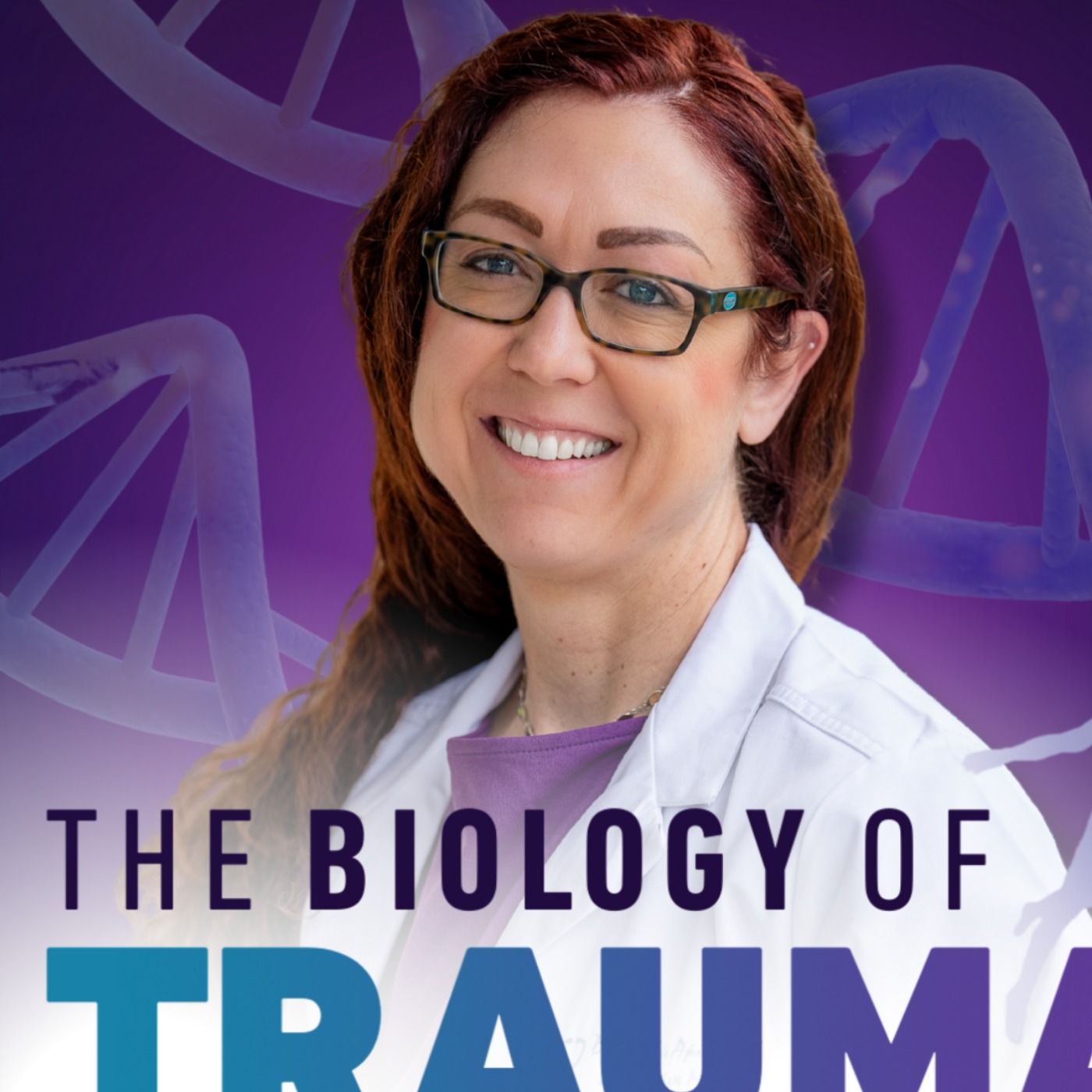
The Biology of Trauma® With Dr. Aimie
251 episodes — Page 4 of 6
Ep 100Stress In The Body: Trauma-Informed Medicine & Why Dysregulation Should Be Included In Every Assessment with Dr. Jorina Elbers
Why should medicine consider trauma as a diagnosis of inclusion and not just when nothing else is found wrong? The failure to recognize and treat the stored trauma that drives many patients' health challenges has profound and far-reaching consequences. It perpetuates a cycle of ineffective care. It worsens patient outcomes and undermines the overall effectiveness of the healthcare system. As a medical physician and also one who has been this type of patient, this episode and the Trauma-Informed Medicine Project coming out of this was really important to me. One of the key problems is that trauma manifests in diverse ways across multiple bodily systems, making it difficult to identify as the common thread. Patients may present with a range of symptoms such as migraines, chronic pain, digestive issues, sleep problems, and mood disorders. Rather than recognizing these as interconnected signs of nervous system dysregulation stemming from trauma, the medical system often compartmentalizes the symptoms, referring patients to various specialists to treat each one in isolation. This leads to a "medical merry-go-round" where patients bounce from one provider to the next, undergoing test after test, without ever getting to the root of their issues. Which is why I bring in Dr. Jorina Elbers, a board certified physician in neurology with a masters in epidemiology and former assistant professor and pediatric neurologist at Stanford University. She has authored over 25 research articles and book chapters, and really focuses on what's going on in the nervous system in regards to stress and trauma and how to recognize it. She is currently the director of the Trauma Recovery Project at the Heart Math Institute and runs her own trauma sensitive neurology clinic. In this episode, you will hear Dr. Elbers journey of how she discovered the critical link between trauma, stress, and neurological disorders. You will hear how she started asking better questions of her patients, uncovering stories of family trauma from her patients and just what to do especially when labs and tests show nothing wrong. In this episode, you'll learn: How to ask better questions that lead to discovering the true causes behind seemingly inexplicable diagnoses What tools can healthcare practitioners integrate into consultations to uncover patient's trauma history and why this is so important The importance of including trauma in differential diagnoses, especially when conventional medical tests don't reveal a clear cause. How to move away from treating symptoms on a neurotransmitter level and into treating the whole nervous system The autonomic nervous system and heart rate variability Medical trauma from procedures and treatments that actually contribute further to symptoms and chronic conditions For more information and show notes, please visit our website: https://biologyoftrauma.com/biology-of-trauma-podcast/
Ep 99Survival Mechanisms: How Early Attachment Trauma Shapes Your Breathing & Behavior Patterns with Dr. Aimie Apigian
In this episode, I want to teach on an important topic that is either commonly misunderstood or just missed, muscle bracing patterns that have their origins in our attachment style. I am teaching on how to recognize attachment bracing adaptations to answer the one question How does our attachment create bracing patterns in our body to protect us from pain? This is important because these same bracing patterns will affect both our breath and our freeze response - our shut down in the face of certain emotions. In this episode, you'll learn: How to recognise bracing patterns Which emotions bracing helps protect us from How bracing patterns developed during our attachment years to protect our physiology How bracing patterns affect the breath The relationship between bracing patterns and the freeze response For more information and show notes, please visit our website: https://biologyoftrauma.com/biology-of-trauma-podcast/
Ep 98A Gut Stuck In Survival Mode: Restoring Gut Microbiome Balance With Nervous System Regulation with Steven Wright
How do we restore the gut microbiome that has been affected by trauma, stress and nervous system dysregulation? In this episode, we'll focus on how we can get our gut and nervous system back into a space where they can feel safe enough to relax and process the trauma and stress our body is carrying. Steven Wright is my guest for this episode. Because of his story and life experience with trauma, stress and nervous system dysregulation since infancy affecting his gut, he has had to learn solutions to fight for his health. He is truly a health engineer to understand nervous system and gut connection and solutions. and founded a business based on what he has learned. I really wanted to have Steven on because he really had to go to a deeper level than most have ever needed to in order to find solutions for a gut impacted by trauma and nervous system dysregulation. Being born with a birth defect that resulted in something called visceral hypersensitivity, he has experienced anxiety, panic attacks and depression, obesity and IBS… and is here to share his story and what he learned that can help us with our gut and nervous system connection. In this episode, you'll learn: How early life experiences program survival mechanisms into our nervous system How those survival programs become health dysfunctions The 3 nutrients that are power houses for the gut-nervous system connection The optimal ways, types and dosages for the body to absorb these supplements properly Why you still may be struggling with gut issues despite a clean diet How to choose properly functioning digestive enzymes For more information and show notes, please visit our website: https://biologyoftrauma.com/biology-of-trauma-podcast/
Ep 97Pain as Protection: Why Your Body Creates Chronic Pain & The 3 Questions to Ask to Release It with Georgie Oldfield
Does the overwhelm and experience of trauma create a pre-existing state in our nervous system that sets the stage for chronic pain conditions? In this episode, we will be talking about chronic pain as a message from our body. Part of an unconscious protective response learned by nerve pathways rather than a physical abnormality. While chronic pain can be traced back to an injury or event, the science suggests chronic pain is caused by our brain's attempt to protect us from unbearable emotions. In fact, this purpose of protection is at the root of many common complaints, including back pain, sciatica, migraines, fibromyalgia and many other symptoms. I have an incredible guest for this episode, Georgie Odlfield, a physiotherapist and chronic pain specialist, who has been a real leader in this space. Georgie is a TEDx speaker and the author of Chronic Pain: Your Key to Recovery. She is a woman, steady and strong in her leadership in trauma-informed care for chronic pain. I first came across her work when I sought out training in psychosomatic medicine while in preventive medicine residency. I had just switched out of general surgery and knew that I wanted to lean in more into the root cause of conditions that I had only previously been taught to treat with a pill or surgery. This is how I came across these leaders in the space, and have been happy to see Georgie provide such value and community for those with chronic pain and practitioners who work with chronic pain. In this episode, you'll learn: How chronic ongoing pain or recurring symptoms can actually be neuroplastic mind body symptoms How to ask questions that will help you get to the root of your chronic pain symptoms and release them Why somebody is more likely to develop chronic pain after having an acute injury and the predisposing factors for this How chronic pain can be the body's protective response to keep us from falling apart emotionally How to communicate with your body, and not just hear but also understand the answers it's giving you For more information and show notes, please visit our website: https://biologyoftrauma.com/biology-of-trauma-podcast/
Ep 96Trauma and Toxins: Methylation & Unblocking Your Body's Detoxification Pathways with Dr. Albert Mensah
Does trauma affect our methylation process and our body's capacity to detox? Trauma doesn't just live in our minds; it resides in our cells, influencing fundamental biological processes. One of these processes is detoxification, our body's natural ability to eliminate harmful substances. When trauma is stored in the body, it affects the biology of our detoxification pathways, making it harder for us to rid ourselves of toxins. A build-up of toxins can impede our progress in trauma therapy and healing. It's a two-way street: trauma affects our ability to detoxify, and toxins affect our ability to process and release trauma. I am very excited about our guest today since he has been a leader in implementing mental health nutrition at the clinical level. It is hard to be a leader, and I want to acknowledge the effort he has put in to create a different experience for his patients. Albert Mensah has been a family practice physician for over twenty years now. He received his medical degree from Finch University of Health Sciences, Chicago Medical School, and then completed his residency at Swedish Covenant, leading him to follow a very different path than conventional medical, making his approach to body and biochemical imbalances very unique. In this episode, you'll learn: The science behind trauma-toxin connection and provide practical insights on what to do about it Learn to recognize methylation imbalances and its health issues Understand how to support your body's detox pathways Learn nutritional and diet tools For more information and show notes, please visit our website: https://biologyoftrauma.com/biology-of-trauma-podcast/
Ep 95Nutrition for Trauma Recovery: 3 Superfoods To Calm Adrenaline & Anxiety with Luis Mojica
How can we better manage anxiety by decreasing adrenaline levels through our food and eating habits? In this episode, we will be talking about the major hormone of stress and trauma - adrenaline. This episode will help you better understand the important role of adrenaline in stress, dsyregulation and stored trauma. Moreover, it will give you knowledge of how to learn more about your adrenaline levels based on your eating habits and the nutritional tools for balancing adrenaline. My good friend Luis Mojica, a somatic therapist, nutritionist and a musician is my guest for this episode. Like me, he started noticing how his biology and nutrition were affecting somatic work, got curious and started asking questions and testing his theories on himself. Luis came into this work through personal experience, having endured a lot of relational trauma in his personal life, he realized he used to binge eat thousands of calories in one sitting just to suppress his anxiety and social fear, until one day, by mistake, he played the guitar. This is when he discovered co-regulation and parasympathetic response, and he set off to research other modalities that could also create the same feeling of safety and was led to the type of trauma work he does now. In this episode, you'll learn: To track cravings back to childhood when we used food for internal regulation How eating certain types of foods can help us metabolize adrenaline How compulsive eating helps us regulate our nervous system What foods lead to experiencing perceived threats and chronic PTSD because of their effect on the adrenal glands How can we metabolize excess adrenaline using food Somatic practices that can help with accessing stored trauma in our stomach, managing cravings and digestive issues For more information and show notes, please visit our website: https://biologyoftrauma.com/biology-of-trauma-podcast/
Ep 94Is Lithium the Answer to a Regulated Nervous System, Depression & Addiction Treatment? with Dr. James Greenblatt
Can lithium influence nervous system dysregulation? In this episode, we are looking at lithium's role on the nervous system. You will find that it needs to be central to the conversation for mental health, addiction, and the trauma healing journey, particularly its stabilizing effects on the nervous system. I have brought in a guest whose work I have high respect for and helped me see the possibilities beyond mood medications for myself. Dr. James Greenblatt has been in clinical practice since 1988 and is the founder and pioneer in the field of integrative and functional psychiatry. In this episode, you'll learn the role of lithium in helping a dysregulated nervous system become more flexible, regulated and stable: Lithium's role in impulsivity The interface between lithium and the immune system The use of lithium for depression, suicidal thoughts and addiction Why you should understand your family's mental health history prior to considering lithium treatment What other symptoms might indicate the need for a lithium treatment How lithium interacts with other minerals like copper and zinc For more information and show notes, please visit our website: https://biologyoftrauma.com/biology-of-trauma-podcast/
Ep 93How Chaos of Early Childhood Trauma Affects Our Adult Nervous System with Dr. Tian Dayton
Does growing up in chaos impact our nervous systems even as adults? In this episode, we are looking at early childhood dynamics and how it's expressed in adulthood through unconscious behaviors and coping mechanisms. I have brought in a guest who is especially dear to my heart and has played a very significant and pivotal role in my own journey. Dr. Tian Dayton specializes in addiction and trauma, especially when it comes to speaking to the adult child of an alcoholic. Dr. Dayton is also a leading voice in psychodrama, and she has a very incredible way of combining movement and the body with it, which gives her patients the opportunity to access different times in their past, be able to role play with them and give them a voice that they did not have before. In this episode you'll learn: The kind of coping mechanisms we develop in response to early trauma The importance of integrating movement and emotional expression in therapy The importance of physical touch and intimacy in early childhood development How perceived sense of danger can lead to a collapse in the nervous system What kind of environments provide the structure needed for trauma resolution For more information and show notes, please visit our website: https://biologyoftrauma.com/biology-of-trauma-podcast/
Ep 92The Neuroscience of Chronic Pain: How Our Brain Predicts And Creates A Biology of Pain with Dr. Howard Schubiner
What 2 Neuroscience Features Will Reinforce chronic pain and make it habitual? In this episode, we are joined by Dr. Howard Schubiner, board certified in pediatrics, adolescent medicine, internal medicine and a leading voice in the mind body medicine field. We'll be discussing how the brain regulates and generates a wide range of chronic symptoms, from pain to fatigue to anxiety and how to understand when these symptoms are mind-body related. His research and clinical experience led him to develop therapies that help to effectively "unlearn" these chronic symptoms by addressing the underlying neural circuits and emotional factors driving these psychophysiological conditions. In this episode, you'll learn: Predictive processing and the brain's role in chronic pain The role of emotional injuries and neural circuit pain in chronic conditions How pain can become habitual and reinforced by fear and conditioned responses Why you should treat the brain like a child and the principle of graded exposure How Internal Family Systems can be used to address fear and anger towards sensations and pain For more information and show notes, please visit our website: https://biologyoftrauma.com/biology-of-trauma-podcast/
Ep 91Beyond Talk Therapy: The Biochemical Basis of Behavior & Changing Our Responses with Dr. Robert Lustig
How can we change our biochemistry to change our trauma responses? In this episode, we are looking at thoughts and behavior through hormones, metabolism and biochemistry. I have brought in a distinguished guest, Dr. Robert Lustig, a pioneering neuroendocrinologist. A neuroendocrinologist is someone who studies and works with the intersection of the nervous system with the endocrine system, or hormones. His work has been instrumental in understanding metabolic disorders and their role in stress and mood. He had a big influence on me as I came into functional medicine in search of answers for my own health issues during my surgery residency. His work on metabolic chronic health issues, obesity, diabetes, and metabolic syndrome, was fascinating, especially coming in with my background, with a Masters degree in biochemistry. It helped to make sense of what I was experiencing in my own physiology, health and mood at the time. In this episode, you'll learn: Whether the global epidemic of chronic health problems are a result of separate issues or part of a single larger root issue in our stress resilience and physiology. The four "brakes" of the amygdala in fear conditioning How our metabolism influences serotonin and our stress and mood regulation The intersection of our metabolism, cortisol, and insulin on depression How our thoughts and actions are created at the cellular level by biochemistry and proteins For more information and show notes, please visit our website: https://biologyoftrauma.com/biology-of-trauma-podcast/
Ep 90Tapping, EFT and Energetic Boundaries For Inner Child and Trauma Recovery with Jennifer Partridge
How can tapping on specific points on the body help regulate the autonomic nervous system and promote holistic wellness? I'm really excited for this episode because we're talking about acupuncture and meridian points on our body as a tool to work with our trauma. We're going to hear the powerful story of Jennifer Partridge, a friend of mine, who found EFT tapping and it changed her life and helped to reverse her colitis. The outcome was so profound that she made it her life's purpose to empower others through tapping and the gift of emotional mastery that it brings. Jennifer is a world renowned tapping expert, author and speaker. Not only will she explain how to use tapping to reduce physical symptoms and relax the nervous system, but she'll also explain how she uses tapping to enliven the system and tap into your purpose. In this episode, you will learn about: The possibilities with tapping and reducing various physical health problems How to integrate Chinese medicine, energy healing and Western medicine How trauma affects the autonomic nervous system and why this leads to chronic health issues Methods to create a safe environment that allow us to access and work through buried traumas How tapping techniques can help with inner child work Understand the importance of setting energetic boundaries to prevent the absorption of others' stress and emotions For more information and show notes, please visit our website: https://biologyoftrauma.com/biology-of-trauma-podcast/
Ep 89Authenticity & Somatic Experiencing: How to Access Deeper Intimacy After Trauma with Dr. Peter Levine
How can authenticity help us heal from trauma and achieve deeper, more intimate relationships? Dr. Aimie Apigian is joined by Dr. Peter Levine, the pioneer of Somatic Experiencing, to discuss how trauma disrupts our connection to our authentic selves, which in turn affects our ability to form deep, meaningful relationships. Together, they will explain how we can begin to restore deep intimacy and connection with others through the practice of somatic healing. Allowing for genuine intimacy and presence in our lives after having experienced trauma. In this episode, you will learn about: How trauma disrupts our authentic self and impacts our relationships The significance of authenticity and human connection when it comes to healing this trauma How to achieve greater intimacy through authenticity How a dysregulated nervous system impacts our ability to achieve our goals and strategies how to manage this The connection between the flow state and authenticity The importance of authenticity and self-awareness in personal growth For more information and show notes, please visit our website: https://biologyoftrauma.com/biology-of-trauma-podcast/
Ep 88Hidden Triggers For Insomnia & Solutions For a Stressed Subconscious Nervous System with Dr. Michael Breus
How does unresolved trauma disrupt our sleep patterns, and what can we do about it? I'm thrilled to welcome Dr. Michael Breus, a double board-certified clinical psychologist and clinical sleep specialist. We'll be discussing the profound effects of trauma on our sleep, exploring how our nervous system processes life experiences and their lasting impact on our rest. Dr. Breus will explain how trauma can disrupt sleep patterns, examine unique case studies from his practice and explore practical solutions for overcoming these challenges. In this episode, you will learn about: How past traumas continue to affect sleep long after the event The importance of a felt sense of safety for falling asleep The link between freeze response, escapism and sleep and how to stop numbing in order to sleep How to discover your chronotype and improve your sleep cycle based on it How nightmares prevent emotional processing and how dream therapy can help individuals work through trauma How trauma can make us feel 'wired and tired' 2 practical techniques for calming the mind and body before sleep For more information and show notes, please visit our website: https://biologyoftrauma.com/biology-of-trauma-podcast/
Ep 87Is Trauma Genetic or Epigenetic? Insights with Dr. Bruce Lipton
What is the role of genes and epigenetics in trauma at the cellular level? Joining us today is none other than Dr. Bruce Lipton, an internationally recognized leader in bridging science and spirit. Dr. Lipton will share his pioneering insights into how our perceptions and environment can reshape our biological responses, especially regarding trauma and together we'll explore the foundational concepts of epigenetics, the role of the environment in gene expression, and how our consciousness plays a crucial role in trauma development. In this episode, you will learn about: Do genes or environment determine our cellular behavior How identical cells in different environments perform How positive or negative thoughts alter the chemical composition of our blood How chronic trauma affects our epigenetics making us more susceptible to diseases The cause of cancer through the eyes of epigenetics and Practical tools to apply the principles of epigenetics and consciousness to your life to promote an innate state of healing For more information and links for this episode, please visit our website: https://biologyoftrauma.com/biology-of-trauma-podcast/
Ep 86Stress & Freeze Response: How to Achieve & Sustain High Performance with Olympian Louise Tjernqvist
How can we effectively harness our stress response and work with our freeze response to achieve sustained, high and healthy performance? Our focus today is on Olympian level of performance. In a world that gives us the message that we need to manage our stress, actually, that may not be what we want to do. We are going to look at our stress physiology through the lens of high performance, because let's face it, trauma work and personal development can be like Olympian performance for us. It's hard, it's long, and we want to know how to use our stress response to help us accomplish the changes we want in our life. In this episode, you will learn: The 2 important measures of performance: activation physiology and recovery capacity The importance of mastering both stress activation and recovery The role of routines and biological rhythms in optimizing performance Overcoming the guilt and discomfort associated with taking time to rest How the messages behind physical health symptoms like shingles or adrenal fatigue are not messages just of stress and what those messages are What relationship you need to have with your freeze response for optimal performance Techniques to increase your ability to handle high-stress situations without compromising your well-being For more information and links for this episode, please visit our website: https://biologyoftrauma.com/biology-of-trauma-podcast/
Ep 85Cellular Resilience And Post-Traumatic Growth with Ari Whitten
How can we build resilience to stress and trauma at a physiological level in addition to psychological level? I am joined by Ari Witten, a natural health expert and founder of The Energy Blueprint. Ari is the best-selling author of "The Ultimate Guide to Red Light Therapy" and "Eat for Energy: How to Beat Fatigue and Supercharge Your Mitochondria for All-Day Energy." With a Bachelor of Science in Kinesiology, certifications in corrective exercise and performance enhancement, and extensive graduate-level training in clinical psychology and human nutrition, Ari brings a wealth of knowledge on human energy optimization. His expertise in cellular processes and physiological resilience is unparalleled. In this episode, we will explore: Whether physiological resilience is actually more important than psychological resilience How trauma responses occur not just on a psychological level, but also on a cellular and mitochondrial level The difference between post-traumatic stress disorder (PTSD) and post-traumatic growth Can the right amount of stress actually build resilience instead of breaking us down How your environment and lifestyle factors affect trauma and resilience Practical strategies to enhance physiological resilience, including regular exposure to manageable stressors like exercise, sun exposure, and cold plunging For more information and links for this episode, please visit our website: https://biologyoftrauma.com/biology-of-trauma-podcast/
Ep 83Breaking Free: How to Get Out of the Stress-Trauma Cycle by Using the Science of Anxiety with Emma McAdams
Is it possible to use our anxiety as a way to help us? In this episode, I am joined by Emma McAdams, a licensed marriage and family therapist who has worked in settings such as juvenile corrections, adventure therapy programs, high schools, and wilderness therapy programs. Together, we will discuss the difference between stress and anxiety, why anxiety actually isn't a bad thing, and what to do when you start to feel anxiety in your body. You'll hear more about: The behavioral patterns at the root of anxiety The different forms of avoidance and how they contribute to anxiety What's actually causing your anxiety (hint: it's not the TRIGGER!) How to know you are being affected by hidden anxiety The kinds of messages that you can get from anxiety What to do if you wake up in the middle of the night and feel anxious And more! For more information and links for this episode, please visit our website: https://biologyoftrauma.com/biology-of-trauma-podcast/
Ep 82Using Biological Rhythms to Recover From Trauma with Dr. Leslie Korn
How can we use the body's natural biological rhythms to recover from trauma? In this episode, I am joined by Dr. Leslie Korn, a clinical fellow in the Department of Psychiatry at Harvard University. She has been in private practice for 40 years, integrating psychotherapy and integrative medicine. Together we will discuss awareness and effective utilization of the body's natural rhythms, such as circadian rhythm, digestive rhythm, and sleep rhythm. This episode helps us understand that trauma disrupts our biological rhythms, and aligning with them is part of the trauma healing journey. You'll also hear more about: What happens to the body's biological rhythms after trauma How natural rhythms can be used for trauma recovery The role of allostatic overload in trauma A big missing piece in trauma recovery we need to bring back in Which rhythm we can utilize that is more effective than antidepressants The important rhythm of relationships and community And more! For more information and links for this episode, please visit our website: https://biologyoftrauma.com/biology-of-trauma-podcast/
Ep 82Trauma, Toxins and Autoimmunity: Simple Solutions To Prevent Or Reverse with Dr. Tom O'Bryan
If you have had trauma, early life trauma, what should you know about decreasing your risk for autoimmunity? I have a distinguished guest for this episode, a leading expert in functional medicine, Dr. Tom O'Bryan, who holds teaching positions with the Institute of Functional Medicine and the National University of Health Sciences. Often referred to as the Sherlock Holmes for chronic disease, Dr. O'Bryan is a chiropractor who has dedicated his career to uncovering the underlying mechanisms that trigger immune responses. What you will learn in this episode: The science of autoimmunity and dysregulated immune responses The influence of environmental toxins after trauma for the risk of autoimmunity The significance of predictive autoimmunity and early detection The role of you gut microbiome in regulating inflammation Whether you need to eat organic or not for decreasing your autoimmune risk Practical steps and specific changes to make today to prevent or reverse autoimmunity after a history of trauma For more information and links for this episode, please visit our website: https://biologyoftrauma.com/biology-of-trauma-podcast/
Ep 80Why We Choose and Stay in Unhealthy Relationships After Complex Trauma with Dr. Frank Anderson
How do our early experiences shape our ability to love, be loved and feel loved? In this episode, I am joined by Dr. Frank Anderson, a Harvard trained psychiatrist, psychotherapist, and author of To Be Loved, a memoir of his upbringing and life, Transcending Trauma, and coauthor of the Internal Family Systems training manual. Together we will discuss the relational trauma of not feeling loved in our early life, our own self-love, receiving love, and giving love to others. You'll also hear more about: How trauma blocks love The different types of trauma we can experience as children How attachment trauma is related to neglect, not just abuse The importance of distinguishing between attachment and connection Why it can feel unsafe to connect with others authentically Two reasons why it will feel dangerous to feel good after early relational trauma Why we stay in unhealthy relationships And more! For more information and links for this episode, please visit our website: https://biologyoftrauma.com/biology-of-trauma-podcast/
Ep 79How Chronic Health Challenges and Your Work Impact Each Other with Sally Riggs
Is your health impacting the way you show up for work? In this episode, I am joined by Sally Riggs, an entrepreneur, psychologist, and COVID long-haul coach. Together, we'll discuss the interconnectedness of work and health and the strategies and principles you can use to keep going when your body is struggling with long-term health issues. You'll hear more about: The impact chronic health challenges have on work and how work impacts health Using polyvagal theory to optimize your work and health The most common mistake made when working with the nervous system to improve health and work The #1 component for a business and what can sabotage it What will prevent your business from making a bigger impact in the lives of others How hidden emotions can negatively impact your work and health And more!
Ep 78How to Transform Yourself During Grief by Empowering Others with Melissa Dlugolecki
How do we navigate the hidden challenges that can arise when experiencing grief? Today, I am joined by Melissa Dlugolecki, a mother who lost her daughter at around 4 months of age. In the episode, Melissa shares the journey of losing her daughter, the surprising challenges that popped up during her grief journey, and how she's been able to get emotionally where she is today. You'll hear more on: Navigating grief as a family Hidden dangers that can occur in relationships while navigating grief The role of community in grieving What it looks like to be committed to our grief Rebuilding your world after a life-changing loss How to prevent getting stuck in grief Finding purpose after pain And more! For more information and links for this episode, please visit our website: https://biologyoftrauma.com/biology-of-trauma-podcast/
Ep 77The Effects of Relational Adaptations From Insecure Attachment Styles with Dr. Diane Poole-Heller
Are your attachment pains and patterns impacting not only your relationships, but also your nervous system and overall health? In this episode, I am joined by Dr. Diane Poole-Heller, an internationally recognized speaker, author, and expert in the field of attachment theory and trauma resolution. Together, we will discuss attachment and how it influences the way your form and maintain relationships, communicate (or don't!), and what you can do to start moving towards a secure attachment and healthier relationships! You'll hear more about: Defining attachment based on your biology How the nervous system gets confused when connection isn't always safe The markers and milestones that indicate you're moving towards a secure attachment What it means when you ghost people Why you can't just think your way out of your attachment and relationship patterns Building new relational skills for connection and authenticity And more! For more information and links for this episode, please visit our website: https://biologyoftrauma.com/biology-of-trauma-podcast/
Ep 76Polyvagal Theory: Become an Active Operator of Your Nervous System During Grief with Deb Dana
Grief is something that everyone feels, but how they process it depends on their past history. So how do we know which way we experience grief? There are challenges each of us must face and overcome based on our past experiences. These experiences will help decide what our grief looks like and if we will get stuck in grief. Today, Deb Dana, a polyvagal therapist, joins me to discuss grief, but in particular, what are Dorsal Days and how do we work these days to create life after loss! You'll hear more about: The three organizing principles of the nervous system and how they influence our unique way through grief What not to ask someone who is grieving Asking this key question to become an active operator of your nervous system The surprising equation our nervous system uses to create our grief reactions Why dysregulation is a normal response and the key to returning to regulation The profound impact of our preexisting state on the grief response The most important thing to provide your nervous system during times of grief The role of glimmers in grief For more information and links for this episode, please visit our website: https://biologyoftrauma.com/biology-of-trauma-podcast/
Ep 75Fear, Attachment & Relational Trauma: Solutions For The Hyper-Sensitive Gut with Dr. Aimie Apigian
Are the symptoms of Irritable Bowel Syndrome (IBS) connected to trauma? In this episode, I dive into what I've been learning about a hypersensitive and hyperreactive gut looking through the lens of IBS. I answer where IBS comes from, its origins, and the REAL solutions to fixing it. Forget what you think you know about Irritable Bowel Syndrome, because the truth might just shock you! You'll learn more about: Common misconceptions around IBS and mental health The specific emotion during our attachment years that is connected with IBS What "global high intensity activation" is and its role in gut hypersensitivity The right way to address the hypersensitivity and hyperreactivity of the gut. Personalizing interventions to help IBS symptoms (and get your life back!) And more! For more information and links for this episode, please visit our website: https://biologyoftrauma.com/biology-of-trauma-podcast/
Ep 75Why Stored Traumas Become Syndromes & Somatic Solutions with Peter Levine
How is trauma work different when there is a syndrome involved? Today, I'm delighted to bring you another episode featuring Dr. Peter Levine. Dr. Levine is the Developer of Somatic Experiencing® and the Founder of both the Ergos Institute of Somatic Education and Somatic Experiencing International. Together, we will discuss how stored trauma can lead to syndromes and the somatic solutions that can help. You'll hear more on: The main element in your body that drives all syndromes Why somatic work is one of 3 pillars of stored trauma What every physician should know about syndromes The role of childhood trauma in chronic syndromes What dysautonomia is (and its role in syndromes) The key to somatic work with any and all syndromes And more! For more information and links for this episode, please visit our website: https://biologyoftrauma.com/biology-of-trauma-podcast/
Ep 73Early Attachment Shocks: How Unexpected Stressors Can Cause Developmental Trauma & What To Do
What is the impact of an early heart shock on our mind and body? Most of the time we don't even know we've experienced a heart shock. But even if we don't know we've experienced one, it has already made an impact on our lives. In this episode, I discuss what a heart shock is, the impact it can make on our body and mind and why it's so important that you be the hero of your own story. You'll learn more about: How early life heart shocks affect attachment and survival The deep impact heart shocks have on the body How heart shocks change the nervous system and neuroception The connection between early life heart shocks and adult diseases Recognizing the "part" of us affected by early life shocks For more information and links for this episode, please visit our website: https://biologyoftrauma.com/biology-of-trauma-podcast/
Ep 72Gaps In Trauma-Informed Care: Boundaries, Attachment and Generational Impact with Thomas Hübl
Why is it essential for you to do your own trauma work while also understanding the impact of collective trauma? In this episode, I am joined by Thomas Hübl, a renowned teacher, author, and international facilitator whose lifelong work integrates the core insights of the great wisdom traditions and mysticism with the discoveries of science. Together, we will discuss how each person can create attuned and co-regulated relationships that are necessary for being trauma informed. We talk more on: Attachment's role in our emotional responses as adults The impact of intergenerational and ancestral trauma on attachment Strategies to stay regulated and connected in relationships Moving from distancing behaviors to being fully present in relationships The role of flow, stagnation and embodied practices in attachments And more! For more information and links for this episode, please visit our website: https://biologyoftrauma.com/biology-of-trauma-podcast/
Ep 71Understanding the Trauma Connection Between Attachment, Autoimmunity, and Fatigue with Dr. Aimie Apigian
What is the connection between attachment, autoimmunity and fatigue? The answer… your nervous system! Many practitioners have noticed there has been an uptick in those who are experiencing autoimmunity. What's causing this uptick? In this episode, I'm discussing how the nervous system, and more specifically the freeze response, is connected to attachment, autoimmunity, and fatigue. You'll hear more about: The 3 normal stress responses How the freeze response is a component of the stress response both mentally and physically How the freeze response contributes to autoimmune conditions and fatigue Why working on your nervous system Common symptoms of the freeze response What role do early attachment relationships and traumatic events play in shaping an individual's stress responses Ways to increase your awareness of your stress responses and explore strategies for managing them effectively For more information and links for this episode, please visit our website: https://biologyoftrauma.com/biology-of-trauma-podcast/
Ep 70A Blueprint for Healing: Lessons from a Pioneer in Mind-Body Medicine Dr. James Gordon
Is it possible to heal trauma on your own or does it take a village? In this episode, I'm joined by Dr. James Gordon, a Harvard educated psychiatrist and Founder and CEO of the nonprofit, The Center for Mind-Body Medicine. We will discuss the devastating impact untreated trauma can cause, the importance of relationships in your healing journey, and why you need to find a self care strategy that works for YOU! Here's what you will learn in this episode: The Three P's of trauma healing How self care makes changes in your physiology and your nervous system What you will experience if you work on healing yourself first The power in realizing trauma is a universal experience (and how this can help you heal!) How doing the work can transform your life Why you need to be intentional in your own healing And more! For more information and links for this episode, please visit our website: https://biologyoftrauma.com/biology-of-trauma-podcast/
Ep 69How Attachment Shapes Our Biology and Behavior with Dr. Aimie Apigian
How do we begin to have secure attachments as adults? We develop our attachment style in childhood and there are 3 different types of attachment. But how do we know what our attachment style is and how it impacts our life? One of them, secure attachment, iI've only seen a few times in my life. The other two styles are what most of us tend to be and that's ok! But how can we move from these styles into secure attachments? That's the question I'll be answering on today's episode. You'll hear more about: The basics of attachment styles and their impact on our lives How our nervous system influences our attachment patterns The journey from insecure to secure attachment The role of somatic work, parts work, and addressing biology in healing attachment issues Insights into "earned secure attachment" and what it means to work towards it And more! For more information and links for this episode, please visit our website: https://biologyoftrauma.com/biology-of-trauma-podcast/ CONNECT WITH ME ON SOCIAL MEDIA: Facebook LinkedIn Instagram Disclaimer: By listening to this podcast, you agree not to use this podcast as medical advice to treat any medical condition in either yourself or others. Consult your own physician for any medical issues that you may be having. This entire disclaimer also applies to any guests or contributors to the podcast. Under no circumstances shall Trauma Healing Accelerated, any guests or contributors to The Biology of Trauma podcast, or any employees, associates, or affiliates of Trauma Healing Accelerated be responsible for damages arising from the use of the podcast.
Ep 68Struggling with Sleep? How to Regain Restful Nights with Suzie Sink
How to create the safety in my nervous system to sleep well? In this episode, I am joined by Suzie Senk, functional medicine practitioner, holistic sleep specialist, speaker and author. Together we discuss not only the importance of sleep but how trauma (and an unsafe sleeping environment) can adversely affect the quality of your sleep. You'll hear more about: Understanding why individuals who have trauma experience a tougher time falling and staying asleep The importance of consistency in achieving better sleep What you should — and shouldn't have — in your bedroom if you have trauma Exploring the role EMFs play in sleep health Discovering the ONE thing you need to know to get better sleep And more! For more information and links for this episode, please visit our website: https://biologyoftrauma.com/biology-of-trauma-podcast/
Ep 68Bonus Episode: Cuál es la mejor forma de ayudar a nuestras familias a recuperarse de su trauma? (Episode 16 Replay in Spanish!)
Hoy en Biología del Trauma, escuchamos a Heather, una graduada del viaje en línea de 21 días hacia una vida tranquila. Después de ver el impacto positivo de abordar su trauma, Heather continuó con su programa de capacitación de mentores para dirigir ejercicios somáticos y guiar a otros en su viaje de curación. En este episodio, abordamos cómo ayudar a su familia a recuperarse del trauma. ¿Quieres saber más información sobre este episodio? ¡Dirígete a nuestro para obtener más información! Descargo de responsabilidad: Al escuchar este podcast, usted acepta no utilizarlo como consejo médico para tratar ninguna condición médica ni en usted ni en los demás. Consulte a su propio médico sobre cualquier problema médico que pueda tener. Este descargo de responsabilidad completo también se aplica a cualquier invitado o colaborador del podcast. Bajo ninguna circunstancia Trauma Healing Accelerated, ningún invitado o colaborador del podcast The Biology of Trauma, ni ningún empleado, asociado o afiliado de Trauma Healing Accelerated serán responsables de los daños que surjan del uso del podcast.
Ep 67Gabor Mate: Healing Trauma and Chronic Illness Through Connection (Part 2)
How can we repair the disconnection from trauma that causes disease? In part two of this series, we continue our conversation on trauma and chronic illness with Gabor Maté. Gabor has spent his career exploring the connections between trauma, childhood development, and stress. Together, we discuss how trauma disconnects us from ourselves and others and creates dysregulation that drives illness. We explore how our bodies speak to us, and why trauma isn't what happens to you, but your response to it. Reconnection and regulation are possible! You'll hear more about: How disconnection is a survival adaptation The mistake I made and what I learned from it Why 80% of autoimmune disorders happen to women Changing our relationships in the world to heal our diseases Gabor's personal practice of staying connected to himself And more! For more information and links for this episode, please visit our website: https://biologyoftrauma.com/biology-of-trauma-podcast/
Ep 66Gabor Mate: The Biology Piece We Have Missed In Trauma & Depression (Part 1)
Is there a missing biology link between trauma and chronic illness? In this episode, I am joined by the one and only Gabor Maté. Gabor has spent his career exploring the connections between trauma, childhood development, and stress. It was his work that inspired me to pursue addiction medicine. Together, in part one of this series, we will discuss the lessons we've both learned around trauma and chronic illness. We talk more about: Why chronic health conditions can be a sign of trauma & dysregulation How most chronic illnesses are less genetics and more trauma-driven The role copper plays in trauma and depression How trauma makes your body more susceptible to toxins The benefits of starting with regulation for chronic illness And more! For more information and links for this episode, please visit our website: https://biologyoftrauma.com/biology-of-trauma-podcast/
Ep 65Betrayal Trauma Recovery: How To Heal From The Hurt with Debi Silver
How do you start to heal from the hurt of a betrayal? Betrayal is one of the most painful emotions you can experience as a person. Betrayal is not limited to just romantic relationships, it can be felt in all types of different relationships. Today, my good friend and colleague, Debi Silber, joins me to discuss the 5 stages of betrayal and how you can start to heal from the hurt. You'll hear more about: The symptoms of betrayal trauma Why betrayal can trigger a trauma response Why trauma work is an integral part of healing The coping mechanisms you might use to avoid the pain How to know if you're stuck — and the steps you can take to become the best version of yourself For more information and links for this episode, please visit our website: https://biologyoftrauma.com/biology-of-trauma-podcast/
Ep 64Are The Trauma Parts Of You Making You Sick? with Dr. Richard Schwartz
Why are your trauma parts possibly making you sick? Dr. Richard Schwartz began his career as a systemic family counselor and academic. This work led him to discovering that family therapy alone did not achieve full symptom relief and is what led him to developing Internal Family Systems (IFS). In this episode, we will discuss if your trauma parts are making you sick and what you can do about it! You'll hear more about: What parts work is and its importance in trauma healing The role of protector parts and how they can affect physical health How the battle between parts can lead to physical symptoms and health issues The power of connecting with self to improve your health And more! For more information about this episode, please visit our website: https://biologyoftrauma.com/biology-of-trauma-podcast/
Ep 63How to Apply Energy Psychology to the 7 Stages of Addiction Recovery with Dr. David Feinstein
How can we apply energy psychology to the seven key stages of the addiction recovery process? My guest this episode is Dr. David Feinstein, a clinical psychologist who serves as national director for the Energy Medicine Institute. Dr. Feinstein sent me his manual on energy healing for the addiction recovery process and I knew I wanted to interview him. In this episode, we will discuss the difference between energy psychology and energy medicine, how energy psychology supports addiction recovery and how it can help with the big emotions that can come up during that process, and the seven stages of addiction recovery. For more information and links for this episode, please visit our website: https://biologyoftrauma.com/biology-of-trauma-podcast/
Ep 62Energy Medicine: A New Tool in Autoimmunity & Trauma Work with Donna Eden
Which meridian is the first one to balance in people with autoimmunity during their trauma recovery? In this episode, I am joined by Donna Eden, a practitioner of Energy Medicine who applies energy work, medicine, and psychology to help those on the autoimmune path. Together we will discuss emotions that need to shift if people have autoimmunity, the first steps in balancing meridians and what that means, and tips for healers who work with those who have autoimmune issues and are trying to heal their trauma. For more information and links for this episode, please visit our website: https://biologyoftrauma.com/biology-of-trauma-podcast/
Ep 61What It Takes to Safely Guide Another Through Trauma Work with Licia Sky
How do I need to be to safely guide myself or another through the trauma healing journey? In this episode, I am joined by Licia Sky, an artist, singer-songwriter, and bodyworker who works with traumatized individuals and trains mental health professionals to use Embodied Self Experience in movement, theater exercises, writing, and voice as tools for attunement, healing, and connection. Together we will discuss embodiment, what it is and which emotions we need to do it, along with becoming a strong leader for others going through a trauma journey. Finally, we will discuss attunement and trust within the healing journey. For more information and links for this episode, please visit our website: https://biologyoftrauma.com/biology-of-trauma-podcast/
Ep 60Is False Anxiety Causing You Stress? with Dr. Ellen Vora
What is causing us false anxiety (anxiety that isn't caused by anything that is wrong)? In this episode, I am joined by Dr. Ellen Vora, board-certified psychiatrist, acupuncturist, yoga teacher, and author of The Anatomy of Anxiety. Together we will discuss something that could save your life - stress and anxiety, and especially false anxiety. We are talking about stress and trauma, mood medications and managing withdrawals of anxiety, how trauma is "brain indigestion," and where to start addressing your anxiety. For more information and links for this episode, please visit our website: https://biologyoftrauma.com/biology-of-trauma-podcast/
Ep 59How to Parent Adopted Children with Early Life Trauma with Robin Karr-Morse
How do we love our adopted children to help them overcome trauma and create change? In this episode, we will be talking about parenting children with trauma surrounding their early life experiences, specifically focusing on adoption. We will be debunking some common myths surrounding adoption, look at how adoption trauma can be expressed in behaviors, and the importance of relationship repair. Our guest this week is childhood expert, therapist, and author of Scared Sick: The role of childhood trauma in adult diseases, Robin Karr-Morse. For more information and links for this episode, please visit our website: https://biologyoftrauma.com/biology-of-trauma-podcast/
Ep 58Parenting in a Traumatizing World: The answer Our Children Need with Dr. Gordon Neufeld
What is the best protection we can give our children as we raise them in a traumatizing world? In this episode, we will be talking about parenting and the crisis of confidence so many parents face when it comes to knowing what our children need. As parents who do not want to pass along their own traumas to their children, we want to set them up to be happy and know inside themselves that the opinions and powers of others aren't what dictates their worth. Dr. Gordon Neufeld is a developmental psychologist known for his work in with attachment and is joining us today. We will discuss the roots of attachment, several elements of parenting that are key to know, and how to raise those children in a traumatizing world. For more information and links for this episode, please visit our website: https://biologyoftrauma.com/biology-of-trauma-podcast/
Ep 57ACEs: How the Body Holds and Hides Pain with Dr. Vincent Felitti
What do ACEs show us about escapes from our pain? In this episode we are going to talk about ACEs - Adverse Childhood Experiences - with Dr. Vincent Felitti. We will look at the history of ACEs, what they taught us about coping mechanisms, and how we hide our pain. For more information and links for this episode, please visit our website: https://biologyoftrauma.com/biology-of-trauma-podcast/
Ep 56Hormones: A Portal Into Our Stored Trauma with Dr. Aimie Apigian
In this episode we're going to talk about women's health - specifically around how trauma affects womens' hormones. We will discuss how if you feel something is off, it probably is, the wrong advice doctors are giving about hormones, and the times in our lives when we are more prepared to deal with past traumas due to hormonal changes. We will also cover why the term "estrogen dominance" is misleading and the two main hormones that are really affecting you (and they aren't estrogen and progesterone!). For more information and links for this episode, please visit our website: https://biologyoftrauma.com/biology-of-trauma-podcast/
Ep 553 Food Groups That Affect Autoimmunity with Palmer Kippola
What is the role of trauma in autoimmunity that leads us to a clear path forward for prevention or recovery? This is the question that I answer in today's Biology of Trauma Podcast. In this episode we are talking about autoimmunity and trauma. Trauma in all its forms - emotional, toxins, foods toxins, etc. - and the role it might play in switching on or off these so-called incurable conditions, such as MS or Hashimoto's. My guest Palmer Kippola and I will talk about the three big root causes that influence autoimmunity, three main food groups to look at in relation to autoimmunity, and six environmental factors that we can control in relation to autoimmunity. For more information and links for this episode, please visit our website: https://biologyoftrauma.com/biology-of-trauma-podcast/
Ep 54Mirroring in Trauma: Mastering How You Hold and Guide Others with Dr. Aimie Apigian
How do you use mirroring when wanting to hold the container for someone to safely go into their freeze response for healing? This is the question that I answer in today's Biology of Trauma Podcast. This episode is an excerpt from one of my professional development training sessions for those who become mentors and lead the breakout groups in the Foundational Journey. During this session, I chat with those group members about what mirroring is, how to use it to excite, subside, or maintain whatever the emotional state is, and how mirroring someone's own words back to them creates a connection. I will also explain what to do when someone goes into a freeze state and how to be a safe place for that person. For more information and links for this episode, please visit our website: https://biologyoftrauma.com/biology-of-trauma-podcast/
Ep 53Sexual Grief: More Than Just Sexual Trauma with Edy Nathan
* Trigger warning for suicide and sexual trauma* Today's Question: What role does sexual grief play in the trauma-healing journey? This is what we answer in today's episode. Together with my good friend, Edy Nathan, who is an author, public speaker, and licensed therapist in New York City, we take a deep dive into understanding what sexual grief is. In defining the sexual grief effect, Edy brings to light the profound impact of sexually traumatic experiences on individuals. This grief is not static; it evolves, shifts shape, and manifests uniquely in each person. By applying techniques from internal family systems and somatic parts work, we learn to engage in intentional, transformative conversations with the different parts of ourselves. Head over to the Dr. Aimie's website to learn more about this episode: https://biologyoftrauma.com/biology-of-trauma-podcast/ Disclaimer: By listening to this podcast, you agree not to use this podcast as medical advice to treat any medical condition in either yourself or others. Consult your own physician for any medical issues that you may be having. This entire disclaimer also applies to any guests or contributors to the podcast. Under no circumstances shall Trauma Healing Accelerated, any guests or contributors to The Biology of Trauma podcast, or any employees, associates, or affiliates of Trauma Healing Accelerated be responsible for damages arising from the use of the podcast.
Ep 52The Trauma Behind Chronic Pain with Dr. Les Aria
What is the role of the autonomic nervous system specifically in chronic pain? That is what we cover in this episode on the trauma behind chronic pain! In this episode, I talk about chronic pain with Dr. Les Aria, a pain psychologist in practice for 19 years and co-founder of Menda health, a digital pain recovering platform, where he serves as the chief science officer. I invited him to this podcast episode because of his unique ability to explain chronic pain through the Polyvagal Lens. Please head over to the website to learn more about this episode. Disclaimer: By listening to this podcast, you agree not to use this podcast as medical advice to treat any medical condition in either yourself or others. Consult your own physician for any medical issues that you may be having. This entire disclaimer also applies to any guests or contributors to the podcast. Under no circumstances shall Trauma Healing Accelerated, any guests or contributors to The Biology of Trauma podcast, or any employees, associates, or affiliates of Trauma Healing Accelerated be responsible for damages arising from the use of the podcast:
Ep 51Is Neuroplasticity Good or Bad in Trauma? with Dr. Aimie Apigian
In this episode, I break down neuroplasticity and discuss the role it plays in the trauma-healing journey. I discuss how our nervous system, often stuck in patterns due to prolonged symptoms, can be retrained and redirected toward a healthier, more positive state. I also share insights from professionals who have currently in the advanced level of training in my Biology of Trauma Certificate Training Program and have used this information on their clients. Ultimately, this podcast episode answers the question – how to use neuroplasticity to help you on the trauma healing journey? Head over to our website to learn more about this episode. Disclaimer: By listening to this podcast, you agree not to use this podcast as medical advice to treat any medical condition in either yourself or others. Consult your own physician for any medical issues that you may be having. This entire disclaimer also applies to any guests or contributors to the podcast. Under no circumstances shall Trauma Healing Accelerated, any guests or contributors to The Biology of Trauma podcast, or any employees, associates, or affiliates of Trauma Healing Accelerated be responsible for damages arising from the use of the podcast.