
The Best 5 Minute Wine Podcast
195 episodes — Page 4 of 4

S2 Ep 45Clearwater Canyon Cellars - Lewiston, ID Pt. 2
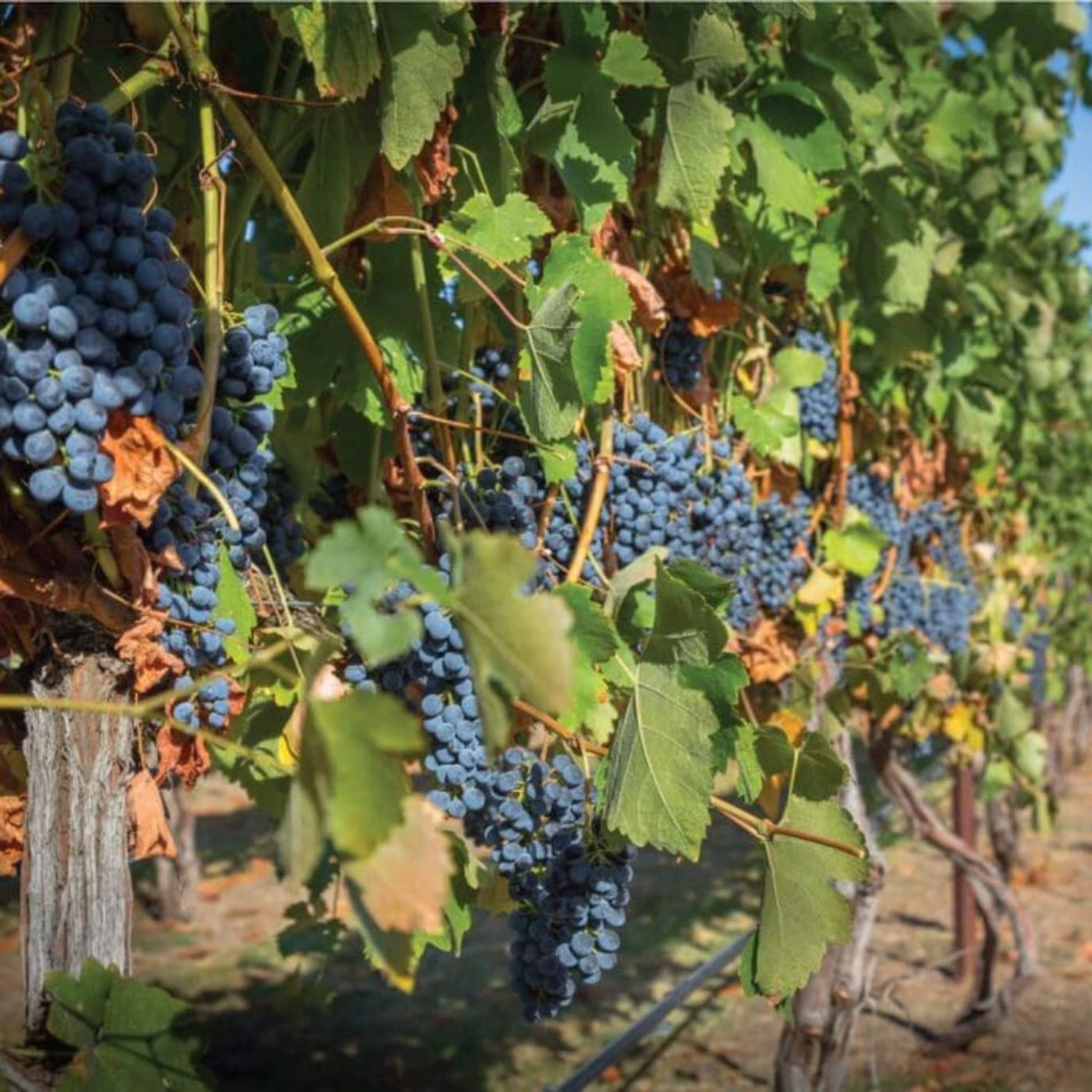
Welcome to The Best Five Minute Wine Podcast, I'm your host, Forrest Kelly. From the seed to the glass, wine has a past. Our aim at The Best Five Minute Wine Podcast is to look for adventure at wineries around the globe. After all, the grape minds think alike. Let's start the adventure. Our featured winery is: We continue our conversation with Coco Umiker of Clearwater Canyon Cellars. The last episode you kind of touched on the topic of Brettanomyces. It's always hard for me to say it, let alone spell it. B, R, E, TT, A, N, O M Y C E S - I've never been good at spelling orally because it is so difficult to say. Iin the industry, a lot of times people refer to it as BRETT - B, R, E, TT, wine.In looking it up, it comes from the Greek term for British fungus. You could see when you tell people how the process works at a molecular level, you can kind of see their eyes glaze over. Oh, my gosh. Getting a chemical lesson here for you. That's where the joy is, right?Oh, my God. Yeah. I love I was thinking yesterday, actually, how just obsessed Karl. Both are with the continual learning and crafting of wine from the grape to the bottle. This has been a crazy summer and we may only have like a week to to carve off or maybe not even a full week. We might have like a weekend to carve off a somewhat of a vacation. And we're actually talking about going to a different wine area and checking it out. You would think when you make and grow wine every single day, you would want to go do something else on your vacation. But yeah, we're obsessed. And you know, that science of it to me is where the magic is. The most interesting manipulation is if you want to say that you can do in a wine as a winemaker to make different flavors, really pop to accentuate certain characteristics. Seemingly simple timing of adding oxygen timing on leaves and how you manipulate that leaves. So leaves is like all the yeast and little bits of skins and grapeseed that settle at the bottom of the barrel. You put that great must when you're done fermenting through primary fermentation, you put that grape mass in the press and you press it off and people either go to a tank or a barrel. I usually go to a barrel. You know, the press removes a majority of the skins and seeds, but not all of it. There's always little bits that get through the yeast. And a lot of times you continue fermenting in the barrel for a while through the fermentation and things like that. So when all is said and done, it settles to the bottom of the barrel in this delicious mud. It's kind of a red color usually because it takes on some of the wine color and yeast and bacteria and a little bit skins and seeds. And how you handle that leaves as a winemaker is a big dealBecause we jump back for just a second in the time frame. Was there a point because you are so young and you're starting out with this ambitious goal, was there a point when you said, wow, what kind of an epiphany we can make this work?Yeah, it's funny. You know, nobody's really asked me that question before. My family's been here since 1916 and I'm the fourth generation. 1916?Yeah. OK, so we're in Idaho Century Farm. Sometimes people ask me why the farms lasted and I believe it's because we've all been long-lived. My great grandparents started it. Grandma Irene ended up having to run the farm on her own. Actually my great grandfather died, but my great grandmother Irene lived to be 93. She passed it on to my grandfather, who lived to be 96. And then he was the one that Carl and I discussed this next generation with him about like the next hundred years, Grandpa, like, what did it look like for us? And then we came to him and my mom, too. So my mom is still living and grandpa and my mom really kind of handed the baton to my my husband and I. But when we asked them if we could plant that quarter acre, you know, I think most of Lewison probably thought we were kind of crazy. I was twenty two. I was...
S2 Ep 44Clearwater Canyon Cellars - Lewiston, ID Pt. 1
Welcome to The Best Five Minute Wine Podcast, I'm your host, Forrest Kelly. From the seed to the glass wine has a past. Our aim at The Best Five Minute Wine Podcast is to look for adventure at wineries around the globe. After all, minds think alike. Let's start the adventure. Our featured winery is: We head to my hometown. It's where I grew up and at 10 years of age, delivering the Lewiston Morning Tribune newspaper spent many of Saturday mornings canvassing the neighborhood looking for lawn mowing and car washing jobs so that I could head to Lewis-Clark State College play pinball all day long. I also learned to hunt and fish accumulated hundreds of miles in the Army Corps of Engineer levee system. I also began my radio career here as a senior in high school and started working full-time at KOZE FM and AM. We head to the panhandle of Idaho to the city of Lewiston. My name is Coco Umiker and I am a winemaker and co-owner of Clearwater Canyon Cellars. Ok, Coco, you've really built Clearwater Canyon Cellars into something impressive and we'll get to that later. But where did this begin? Well, it really started with my love of science and strangely, it stretches all the way back to when I was a little kid. But I was 11 years old. I had cancer. And that ended up, you know, I being in hospitals a lot and around medical people. And so when I took off for college, I'm much better now. I'm good. Got through it in good shape. But when I went off to college, I thought, you know what? I'm going to be a pediatric oncologist and the undergrad premed program at the University of Idaho. They encourage students to do a double major in microbiology, molecular biology, and biochemistry. I got into it and I loved it.Wow. That's very ambitious, microbiology, OK? I could see how that could dovetail into winemaking is Louis Pasteur. You're kind of originated that and then molecular biology, seeing how the biological activity in and between cells and then biochemistry, the processes with living organisms, I could see where that would be kind of all-consuming with your time and your thoughts and your studies. But I'm guessing that's not the course that you ended up takingPartway through. I just realized that I wanted to do something more creative. I wanted to be outside. I wanted to be able to come back to my family farm in Lewiston and do something with that place. I never lived in Lewiston, I lived in Boise. I spent all my summers up in the Lewis and farm with my grandparents. And so I stayed in that degree and was just this hardcore science nerd. So University of Idaho and Washington State University are about eight miles apart in Washington State University is the leader in the northwest in terms of wine programs. And so it was very wonderful for me because I was able to actually cross some classes. And in the program over there, I was so sold. I mean, I just when I found and discovered fermentation and wine and all of that, I was like I knew that's what I wanted to do. I actually planted so my boyfriend at the time and I ended up becoming my husband he I second to last year of my undergrad. So I was two thousand three, asked my grandfather if we could plant a quarter acre of vines on the family farm down here, and he let us do it. And then in two thousand four, we started a winery in a garage.So in two thousand four, you start the winery with your boyfriend at the time, Karl, who turns out to be your husband later to start the winery, because you've got all of these angel investors lined up and you've got all this money and you think it's a great idea. Let's start a winery. Right? We had three other partners in the beginning of Clearwater Canyon because we were young and we had no money. At that point, Karl had paid off his student loans. You got a sweet deal. He actually grew up in Arkansas and his dad was a professor at the University of Arkansas in the music department. So he...
S2 Ep 43Pippin Hill Farm & Vineyards - North Garden, VA Pt. 5
Welcome to The Best Five Minute Wine Podcast; I'm your host, Forrest Kelly. From the seed to the glass, wine has a past. Our aim at The Best Five Minute Wine Podcast is to look for adventure at wineries around the globe. After all, grape minds think alike. Let's start the adventure. Our featured winery is: we conclude our interview with Dean Andrews of Pippin Hill Farm and Vineyards in Virginia.I think I would have you talk to Brooks because Brooks is actually an awesome story because he's one of the people I mentioned earlier. OK, let's bring Brooks into the conversation. Brooks, would you agree with that? Is it interesting? Interesting or long? That depends on the listener. I have definitely been here for pretty much the whole decade that we've been here. And I started in the kitchen. I then became a chef. So I worked on the code line helping prep, and worked weddings. And then I became a bartender, and then I became the senior bartender. And then I left to work with our winemaker. I came back, and then I became our vineyard manager. I operate more as our vineyard production manager now. So, Jack, of all trades, master of none, I guess.In doing all of those different jobs and things, where does education, where does college come into the mix?At the time, I wanted to add a degree, and I was going to get my degree and go back to grad school. So I went to the front of the house, and that's how I started studying chemistry, and that got me into one. So my degree was actually in psychology at the time. I was actually taking my degree and then go to grad school for, you know, potentially, you know, either like becoming a psychiatrist or a clinical counselor. But to get my brain back in school mode, I started taking chemistry. And that led to me thinking, well, fermentation science is pretty cool. I thought I was throwing around the idea of making beer, but I already worked at the winery at the time. So I was like, well, let's just see where this goes. And half a decade later, I'm running the production for an entire winery. You know, it's funny because I haven't actually gone to school for viticulture or winemaking. So if you can show it to me, you know, show me three times, you know, I'll try and get it right by their time. And especially when you're working in a vineyard, know you can read books about pruning techniques and how to deal with a vineyard. But until you actually do it, you know, it's a different story.At the time, we're recording this. Just looking at your temperatures, the highs are in the upper 70s to the mid-70s, and yet the overnight lows are dipping into the 30s. What are you doing at this time of year when you see that kind of temperature?We're still technically in what I call frost watch season. Frost can come and kill your entire crop. I've been basically on call for all of April. I consider myself on call until the end of May. So there's only really a couple of things you can do. One is just hope and pray that it doesn't get below 32 degrees. But we're looking for that freezing point, 32 degrees. And we're looking at the wind speeds because it's breezy, like about five miles per hour, six, seven, eight miles per hour. The wind isn't going to settle, and the wind is carrying water vapor. And so you also have to look at the dew point. If the dew point is getting close to the actual temperature. That means that the water droplets are going to settle, and they're going to crystallize and freeze. And that's going to necrotize your blood tissue, the blood tissue, necrotizing; then you're not going to get a flower to pollinate. So we have these wind machines that we can turn on, and they're amazing machines. And essentially, it's a helicopter blade fan that's attached to a tower, and it rotates like your normal house fan would. But in a 360-degree radius above us, there's this pocket of warm air about 100, 150 feet up. And the spinning of that fan creates a vortex that...

S2 Ep 42Pippin Hill Farm & Vineyards - North Garden, VA Pt. 4
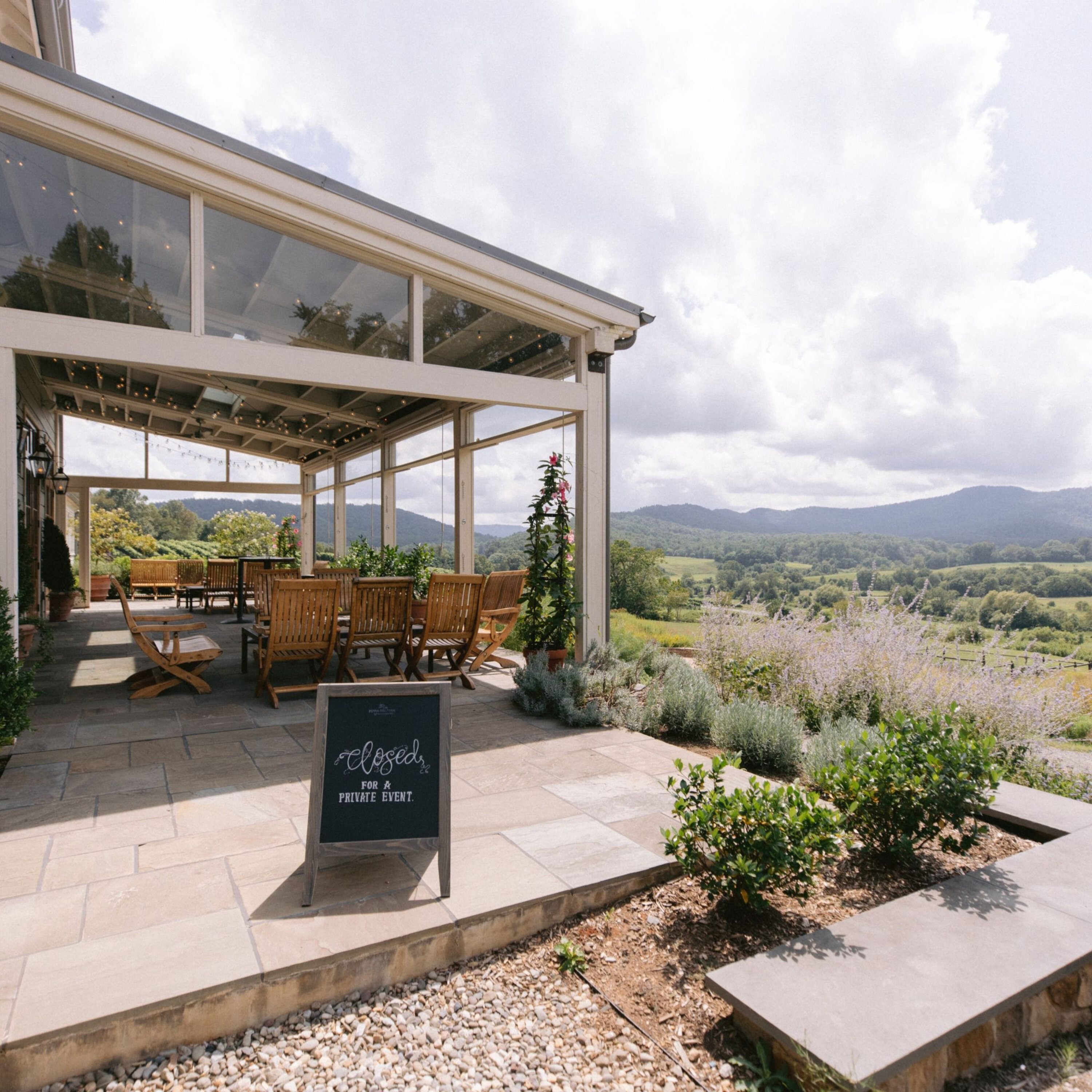
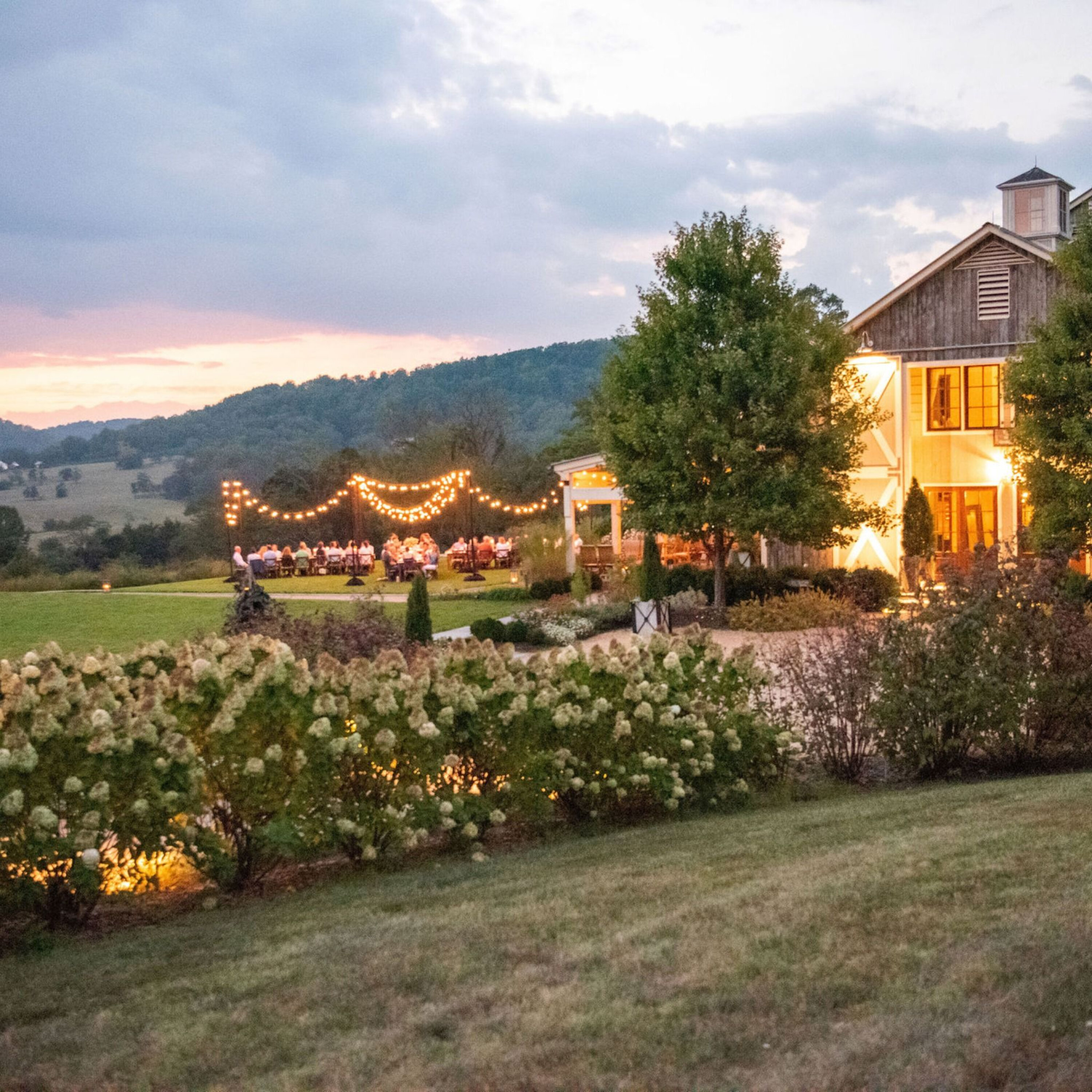
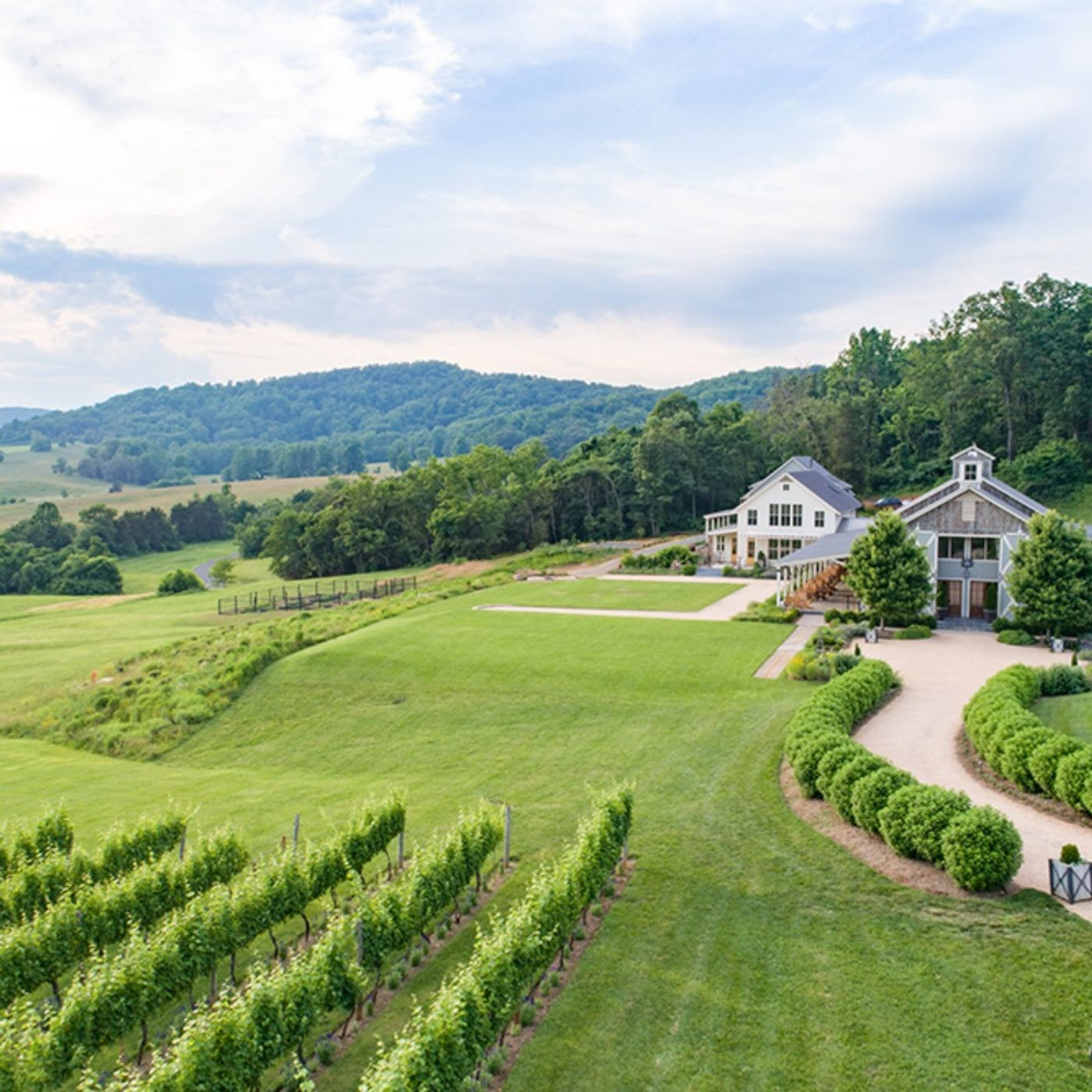
Welcome to The Best Five Minute Wine Podcast, I'm your host, Forrest Kelly. From the seed to the glass, wine has a past. Our aim at The Best Five Minute Wine Podcast is to look for adventure at wineries around the globe. After all, grape minds think alike. Let's start the adventure. Our featured winery is: OK, in this episode, and I'm just going to give you some random questions, Dean. I can imagine having a farm and vineyard located in Virginia. It's very scenic. So what do we see when we come into the parking lot of Pippin Hill Farm and Vineyards? You're looking out over the valley, OK It is up on the high side of the valley facing west, and that there are four mountain ranges. When you come out of the valley, it ends up being where the Blue Ridge Mountains are. So you got four beautiful mountain ranges sort of float in your view and the future and you think they will never be developed close in because John Grisham, the author, owns a big chunk of the ones right in front of us. And the rest of it is part of our Bondurant farm, which is a conservation easement ownership group. So it is all rural. We won't have any homes or anything built in our viewshed. And you're looking out over our six acres of vines, down across a wildflower meadow, and over to some closer woods where we've been able to go in and pull out all the invasive species. And there is a program this last year that was granted to plant native trees. So we were able to go in and replace it with some native oaks and other trees. So it's just a very pristine rural view, very calm.Well, your wife, Lynn, has an exceptional design and event expertise and founded EASTON Events, so merging those two worlds together into the creation of Capitol Hill Farm and vineyards. Was that a difficult transition?After I left, Orient-Express Lynn's business on the Easton Events side was just taking off. She had been doing events just here in Virginia but was beginning to do more nationally. And one of the points she mentioned to me was that she had a lot of clients who really wanted to come to this particularly beautiful part of rural Virginia and to host an outdoor wedding. But there really weren't enough places to do it. And that was when the lights sort of went off my mind. I thought I always sort of love the winery and the vineyard business from having been involved with it in Italy primarily, and so wanting to do it. And it provided us a means of both collaborating and working together. And without Lynn, we wouldn't have been able to get those the initial clients to come in to help underwrite the overall investment. So doing weddings and private events helps underwrite the broader picture of the wine business. So that was kind of what our collaboration was. And her office is still here with us out here. And she also has an office in Charleston, South Carolina as well. So it's been it's been a great partnership because not only are we partners in life, it's now seven grandchildren. But we also have been able to work successfully together with Lynn taking lead on some of the design side and some of the concept development side and my kind of make it happen on a day-to-day basis.We both wanted this important point. We both wanted to create a winery which had a very experiential focus if you will. And what I mean by that is we have, in addition to just doing wine tastings and focusing on just the wine as a singular aspect of it. We do cooking classes, we do horticultural gardening classes, we do some classes. Which are your traditional Sunni view of what we're doing with our wines? Of course. And then seasonally, we do each fall harvest full moon dinner where we bring our primarily our wine club members out and we take over the lawn and we are doing outdoor tables and you're able to go down and actually see some grapes being harvested and go down the garden and you pull up some of beets out of the ground and become part of the dinner. And then the...
S2 Ep 41Pippin Hill Farm & Vineyards - North Garden, VA Pt. 3
Pippin Hill Farm & Vineyards - North Garden, VA Pt. 3Welcome to The Best Five Minute Wine Podcast; I'm your host, Forrest Kelly. From the seed to the glass, wine has a past. Our aim at The Best Five Minute Wine Podcast is to look for adventure at wineries around the globe. After all, grape minds think alike. Let's start the adventure. Our featured winery: we continue our conversation with Dean Andrews' of Pippin Hill Farm & Vineyards. The wine industry has a five billion dollar economic impact on the state of Virginia, and Virginia ranks in the top 10 of most wineries per state. So I imagine, Dean, that you are always looking to improve and enhance the experience of when people come to visit your property. We also have been looking at what we can do when people get here. We have a garden map. So if they want to take some time to get to know the property a bit more, you can do a self-guided tour of the vineyards and understand what is planted, where you can go down the garden and see the seasonal variation is bed by bed. You can go and play with the chickens for a while and come up for your table. So it again is delivering on that full farm experience.Ok, let's suppose that I'm in the area, and I'm going to Washington, D.C., visiting the Smithsonian Institute and checking out the Struggle for Justice exhibit. And I want to visit Pépin Hill Farm and Vineyards. Tell me what happens after that.You're in Washington. You want to come down here on Sunday and have the two-hour wine experience and the food and wine experience and garden tours and all that. You can go on our website, and you can pick the date in the time size of your party. You click on it, you have a confirmed table for that time, and then we're able to communicate with you in advance to set expectations, answer any questions. And so we know that you will actually be showing up at that time. And it's great because ninety-five percent of the people are book show up.Soon after I do the two-hour wine tasting experience, I'm getting hungry, so I want to get some food. What is that step like?When you come here to the tasting room, every single dish we serve along with our wines is part of our wine pairings. We don't do the traditional thing where you come in and just do wine tasting and wine pairings. We have it set up with food, so every dish has one or maybe two wines that are specifically designed to be paired with that dish, to come to sort of like small plates, to come in with small plate cuisine experience. And we have the equivalent of a chef's table, which we call the vintner's table. You know, anywhere from eight people, up to 12 people. That can be four-course, five-course that are paired with our wines. So it really presents a real-world example of how the cuisine in the wines parallels each other."This place inspires me to come to work every day and look at this view is magical, and being able to pick things fresh from our chef's garden gives me even more respect for my ingredients and the environment." That's a direct quote from your chef. Ian Rynecki is one of the top catering chefs in New York. In Manhattan, he and his wife planned to leave Manhattan, will come down and settle into a quieter, smaller town for the next chapter in their lives. So I have a strong culinary team. Diane has three people working for her on the viticulture side, and we have a full garden. In the last two years, we've added on chickens, and we've got our bees. So we make our own honey, we've got chickens, and we've got gardens. So really, it's a complete story.Whenever I go on vacation, and I visit someplace memorable, I love to bring back a little souvenir, a little reminder of the great time I had. And you've come upon a great idea.We put together these terrific small glass bottles for people can custom select put wines they want to taste. We give them tasting notes and a card. And because they have these files,...
S2 Ep 40Pippin Hill Farm & Vineyards - North Garden, VA Pt. 2
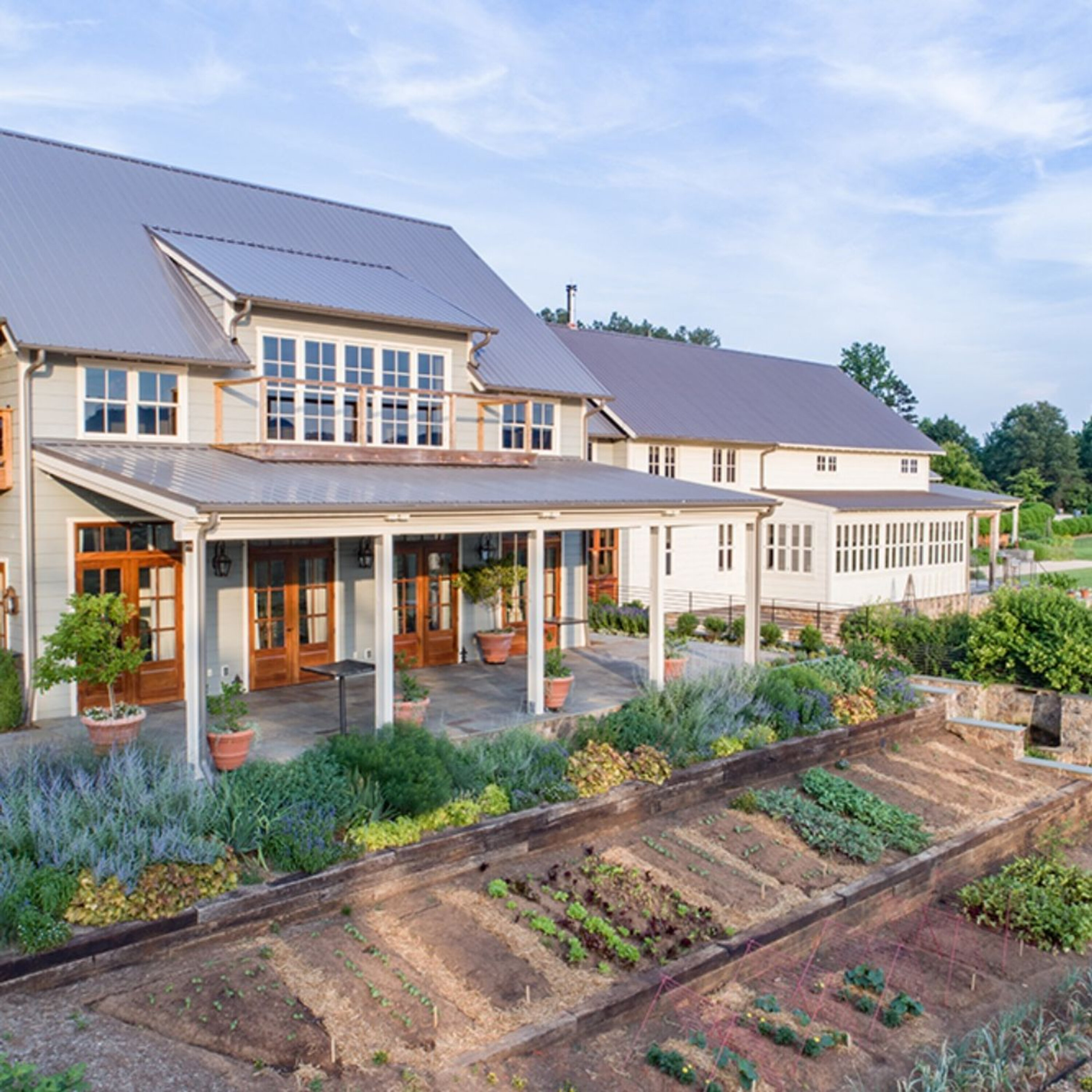
Welcome to The Best Five Minute Wine Podcast, I'm your host, Forrest Kelly. From the seed to the glass, wine has a past. Our aim at The Best Five Minute Wine Podcast is to look for adventure at wineries around the globe. After all, grape minds think alike. Let's start the adventure. We continue our conversation with Dean Andrews' of Pippin Hill Farm & Vineyards through your networking and connections. I love the story where you tell me about how you incorporated your winemaker into Pippin Hill Farm & Vineyards. Well, yeah, actually, interesting points. When I took over and we bought the 21 Club in New York from the original family. And so we came in and spent money converting their former apartments into the private dining board rooms. And we revamped the whole thing and we did the whole original prohibition area. The wine cellar is part of that. I put together a marketing program for we would bring in winemakers from every region in the world where we own the property. So we brought in winemakers from South Africa. We were brought in winemakers from France, Italy, and because we owned Keswick Hall here in Charlottesville and the Virginia wine industry, and Monticello Wine trail was just getting going back then. Back then, we're probably only like three or four vineyards at all within wineries. And we were the 10th to join but before that. So I was doing bringing in winemakers into the twenty-one club to do private lunches primarily for the press and influencers. And so I came across Michael Shaps, who is our winemaker here. He was just getting his business going, making wines. He's classically trained in Bordeaux. So he was here trying to make it work in Virginia. So I hooked up with him. He is our winemaker. So we now own a portion of his custom crush business as well. As custom crush is more popular in California than it is elsewhere. But we have about a dozen clients and we are the anchor or the largest one, and we're the anchor on it. But he has other smaller private labeling and custom blending that we are doing for other members as well. So Michael Schatz's are our winemaker and he is someone that I met. Probably almost 10 years before we opened here. So Michael and I have known each other and worked together for about 20 years. Now you've got your winemaker, but your hiring is not finished there. So we started off with a viticulturist and then we were able to hire the horticulturalists. Diane was the lead horticulturist at Monticello, Jefferson's home here. So she had a huge experience. We bought some railroad ties and they did about eight or ten raised beds, primarily to grow herbs for the garden. I'm guessing here. But just looking at how organized everything is around your website and everything is done for a reason, then what's your growing and cooking is in harmony with the wine.When you come here to our tasting room, every single dish we serve along with our lines is their wine pairings. We don't do the traditional thing where you come in and just do wine tasting and wine pairings. We have it set up with food, so every dish has one or maybe two lines that are specifically designed to be paired with that dish, to come to sort of like small plates, so you come in with a small plate cuisine experience. And we have the equivalent of a chef's table, which we call the vintner's table, you know, anywhere from eight people, up to twelve people. That can be four-course, five-course that are paired with our wines. So it really presents a real-world example of how the cuisine in the wines parallels each other.Looking back at 2020, and even into this year, what have you taken out of the pandemic and modified perhaps to make the winery and the farm better?In order to both control, the people coming in from the tastings for just overall safety and sanitary cleanliness? We changed the spacing and we went to a pure reservations model. So now and it's continued, even though we're...
S2 Ep 39Pippin Hill Farm & Vineyards - North Garden, VA Pt. 1
We visit the state of Virginia, home to our latest winery. Hi, this is Dean Andrews from Pippin Hill Farm and Vineyards outside Charlottesville, Virginia. There are over two hundred fifty registered vineyards and wineries in the state of Virginia. Pippin Hill Farm and Vineyards is located in the Monticello American viticulture area. It's a member of the Virginia Winery Association in the Monticello Wine Trail. As we will learn in the upcoming episodes, Pippin Hill Farm and Vineyards has got everything your imagination could want in a farm and winery. And Dean, what inspired all of this? I was interested in building up my own small boutique hotel winery ownership and management company because, for a number of years, I was the senior operating officer of Orient-Express Hotels. I joined them in nineteen ninety-five when I sold our Charleston Place Hotel in Charleston, South Carolina; as part of building up Orient Express on the North American side, we owned a number of fantastic luxury businesses, including the 21 Club in New York. So the 21 Club, which has one of the largest and most renowned wine cellars in the U.S., was also a good experience for me to learn. And I was able to get the import license to bring the Capannelle wines into the U.S. So I think I sort of understood the winery business from a very pragmatic, entrepreneurial. How do you build up a winery? So it's not about going in and planting grapes and then kind of figuring out what happens down the road. So it is a much more strategic investment. And after having left the Orient Express, my wife, Lynn, and I, we're settled here in Charlottesville, and we're taking a look at what we can do together as a partnership on the business side. Lynn has Eastern events, which is one of the premier destinations, wedding planning, and design. I'm proud of her. She's been named by publications like Vogue and Harper's Bazaar, and Town and Country Weddings is one of the top planners and designers for her industry literally in the world. So we put our heads together, and we looked at what she's probably 20 different properties and kept coming back to this one particular location. And then we brought in viticulture, listen, to determine what the soil was like and the wells and everything. And that's how we decided to go ahead and build up and launch Pippin Hill. So after doing your due diligence, seeing that the area and the soil can sustain a winery, how did you decide what type of winery you would create? Because not only have you got to financial responsibility, but this part of Virginia has got a huge history of deep, rich American history. And you want to do all of that proud. We set out to build a very different business model for the winery. We wanted it to be a culinary winery, which had a really strong connection to our immediate grounds. So when we put together the initial business plan on it, we hired a viticulturist, obviously, to help us get the vines in and sort out the soil conditions in the varietals. And we expanded the starting from six acres to where we now have 40 acres. So it's growing a lot when we start the first year, only doing fifteen hundred, eighteen hundred cases, and we're up to about ten, twelve thousand cases now. So it was very much a planned growth. And we also...
S2 Ep 38Table Mountain Winery - Huntley, WY Pt. 4
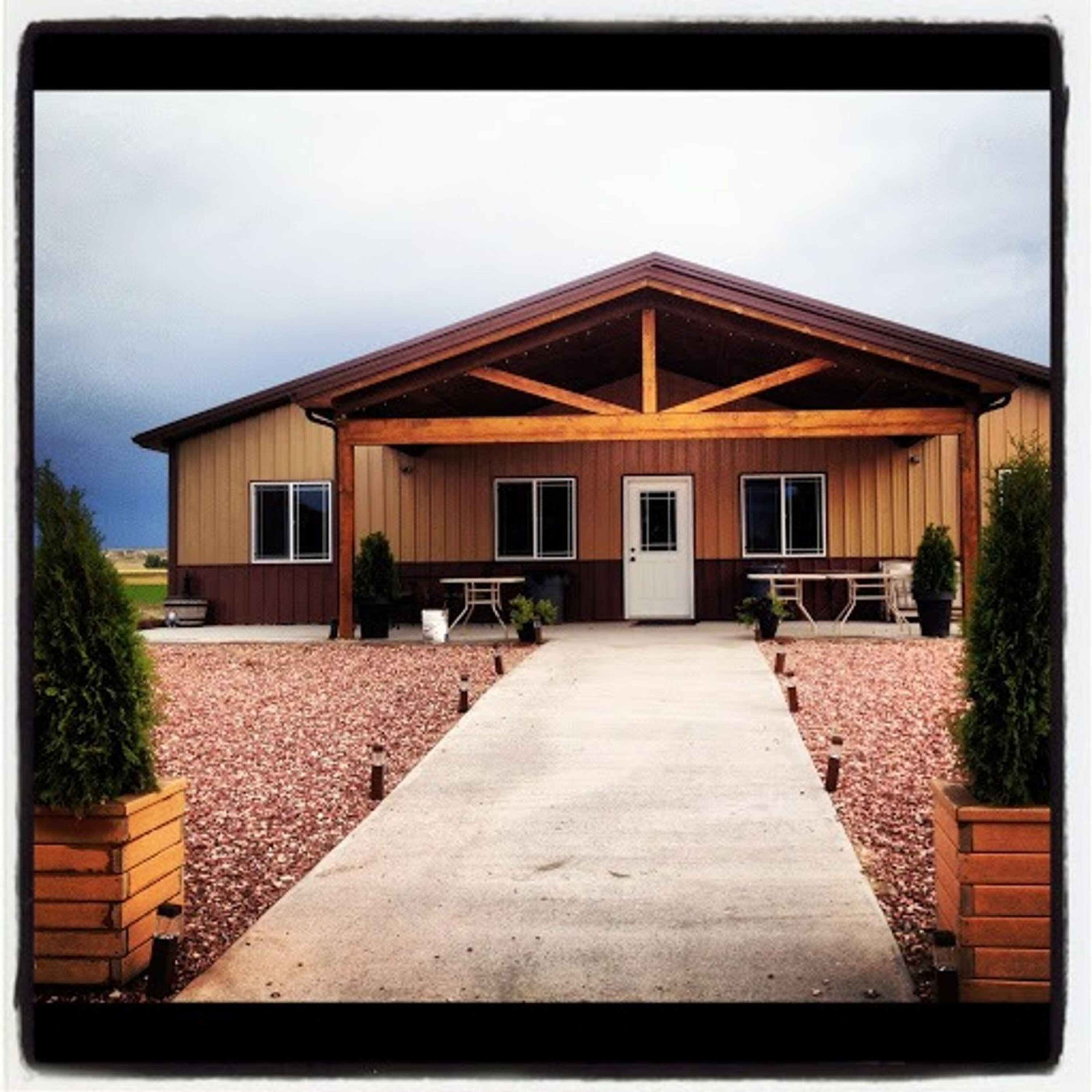
Grape experimentation, paint night its part of our concluding conversation with Patrick Zimmerer of Table Mountain Winery in Huntley, Wyoming.
S2 Ep 37Table Mountain Winery - Huntley, WY Pt. 3
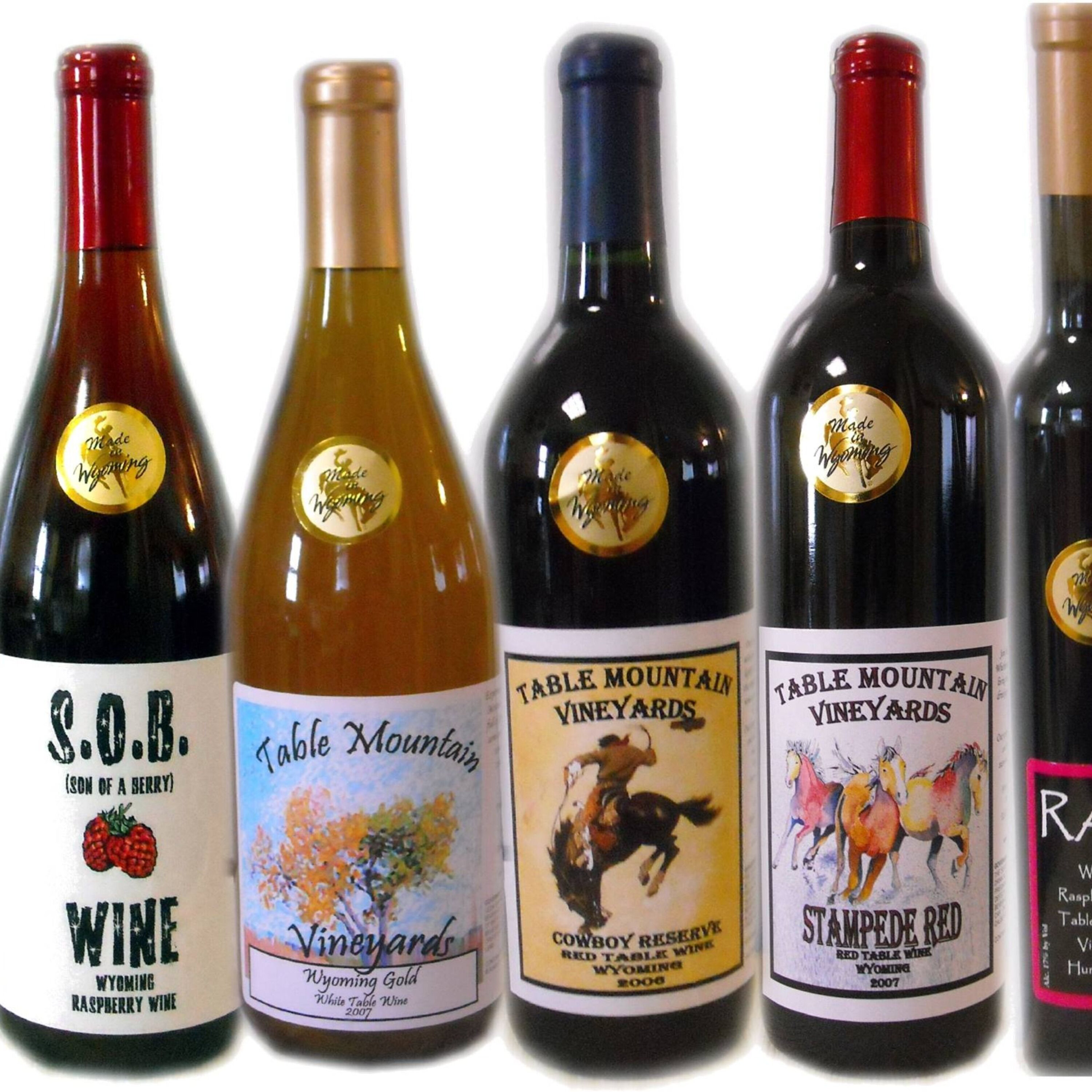
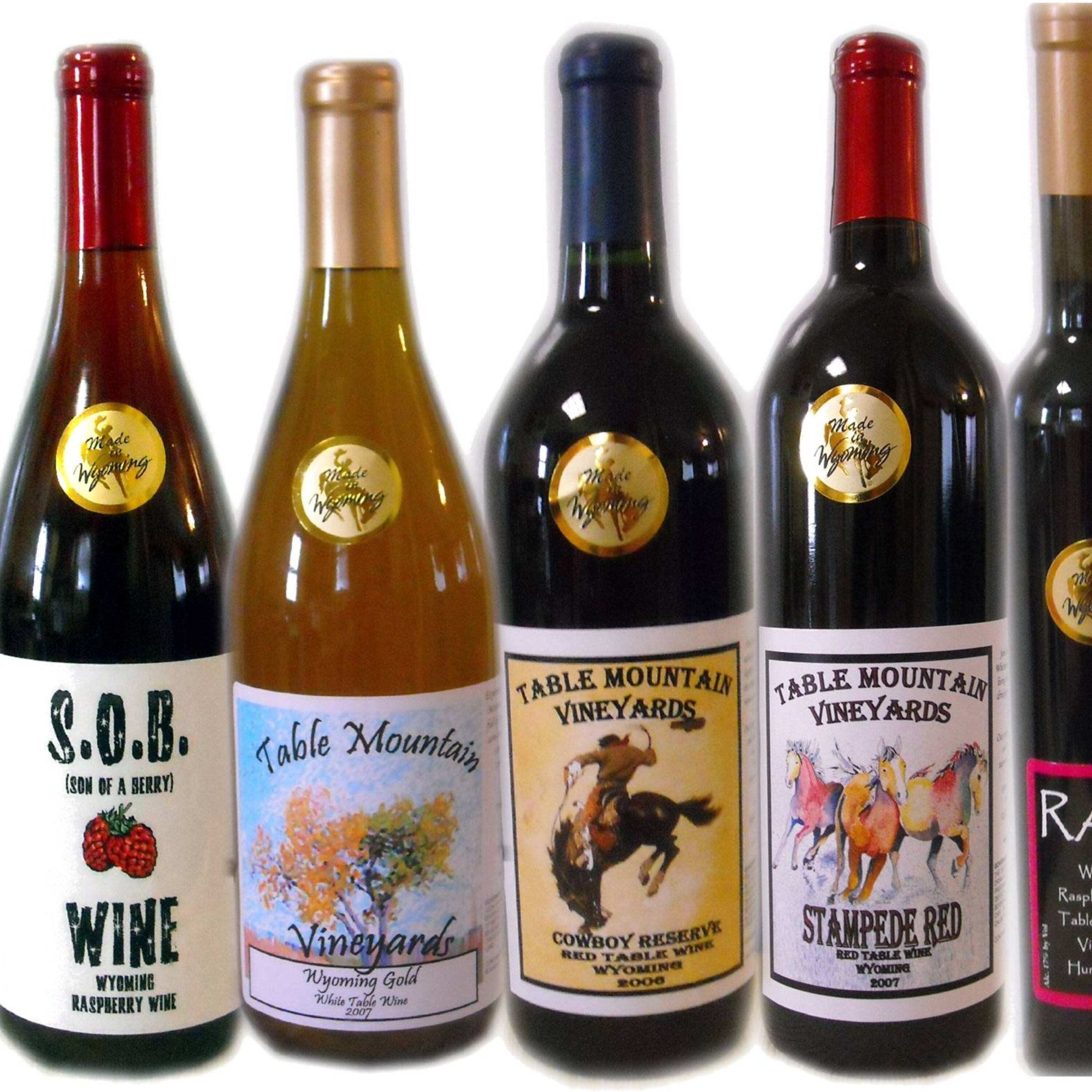
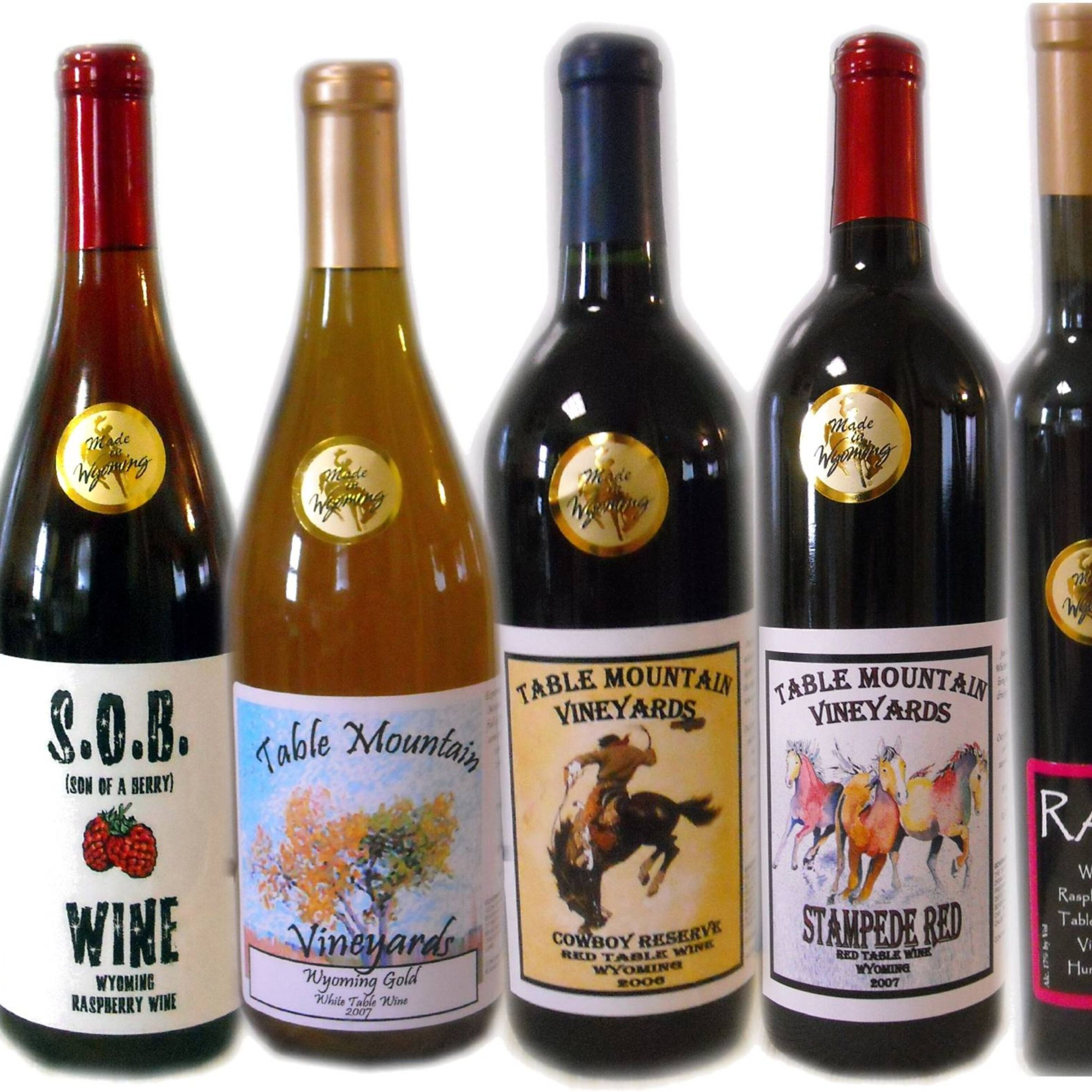
Welcome to The Best Five Minute Wine Podcast, I'm your host, Forrest Kelly. From the seed to the glass, wine has a past our aim at The Best Five Minute Wine Podcast is to look for adventure and wineries around the globe. After all, grape minds think alike. Let's start the adventure. Our featured winery is: We continue our conversation with Patrick, owner of Table Mountain Vineyard in Wyoming. I think, Patrick, you offer a flair that not many wineries in the entire world can't offer, you've got other crops that you're working on simultaneously while producing wine? Well, we still do traditional farming as well to try and keep the farm going. The winery has turned into 10 acres. Could really be a full-time job. And we do it as well as we can. But, yeah, we do need you to know, when they tell you to diversify in any industry, they don't. So you need 10 or 20 more people to handle that extra little extra hats that you wear. So on top of that, you've been hosting we have the winery. You know, we're grateful and we've kind of become a community hub. We hosted wedding showers and baby showers and weddings and classes on the weekend. So we really do have four or five different very active parts of the winery all in play. But they do come out to make a be a successful venture that the thing itself and allows us to stay on the farm and keep enjoying what we enjoy. How much has the vineyard grown since you first started? In terms of the vineyard. When we started in 04, we probably had about five acres total of grapes. We kind of keep planting every year. We never did everything on one big block. We started our very first year with three hundred minding our own wine and then progressively planted one two acres every year. So right now in 2021, we're about ten acres, which we we do about a thousand vines per acre. Our capacity in terms of the winery ebbs and flows based on the weather. We'll have a bumper crop and then the next year will have a very, very small harvest. So our our capacity, we're pretty variable, three to six thousand gallons in terms of wine, which we measure in gallons, which tells you how small we are. But again, we're just a pretty small mom and pop and son shop. And we do harvest anywhere in terms of grapes. We do have some other growers who grow for it. We go anywhere from 15 to 30 times a grapes a year. Obviously, last year, 20, 20 was a change for all of us. But how have you adapted to the new retail climate? Yeah, I'd say most people really hit the ground running with online sales and where we self distribute, we really slowed our retailing or our wholesale down just because we needed to. Our retail sales just here at the tasting probably made up 60 percent this year, which is about 40 percent wholesale. In other years we've been flipflop that way, 60 40 the other way. So we do have an Internet presence. We don't ship as much as we probably or more to that avenue as much as you do. We kind of just stick more to our base and through the tasting room and then through retail stores that we do have. How many different kinds of varieties of grapes are you growing? We have about 14 different varieties that we're growing up grapes and a few of them weather related, soil related, don't always show up at the same time. So we have a few that we'll get a harvest off of maybe every two to three years. We have some other growers who kind of ebb and flow the same way. So at any given time, we can have about 10 to 11, 11 different wines. Right now we're at a pretty constant seven with the variety that we have that continually produce your labels. Looks like you have a lot of fun. Did you do the labels on all of your wine? We do. It's kind of a collective family and friends effort. But we will you know, we're modeling here in the vineyard. We we try and come up with names and and different labels. And a lot of the labels are inspired or this artwork of pictures we take around the farm and then again, some retro kind of...
S2 Ep 36Table Mountain Winery - Huntley, WY Pt. 2
Welcome to The Best Five Minute Wine Podcast, I'm your host, Forrest Kelly. From the seed to the glass, wine has a past. Our aim at The Best Five Minute Wine Podcast is to look for adventure at wineries around the globe. After all, grape minds think alike. Let's start the adventure. Our featured winery is in part two of our conversation with Table Mountain Winery in Huntley, Wyoming. Patrick explains what a lawyer is doing running a winery. Focused on agricultural law, natural resource law in Wyoming. We're pretty arid, so water laws a very important aspect to anybody in agriculture in Wyoming. Just once the entire west, just water rights protecting what we have. And I mean, that's the basic one. We have a lot of endangered species in Wyoming that producers have to work around and the ins and outs of trying to keep agriculture going and the regulations that come out of the industry that producers have to face and how to deal with those. Yeah, you are facing some different obstacles. I see where there are twenty four species in Wyoming that are endangered, including the black footed ferrets, the Canadian lynx, yellow billed cuckoo, some very familiar with what I see early on in the farm before wine became a crop, you had sugar beets, beans, alfalfa, corn. Throughout the decades, our farm is always in a diversified farm and we kind of change with the way the industry goes. And in the 2000s, the sugar beet industry was leaving our county and leaving our area. It wasn't you have to be pretty big scale this thing. And so, again, my thesis was just looking at ways to take small acreages, keep them in agriculture and maybe be able to do something different with them. And, you know, growing grapes is the most value added ag products you can get from, you know, from berried bottle and from the ground up. You're in control the grapes. And if you choose to go the winery route, it truly is a 100 percent value added ag product, which was something that our state was a little behind on. And we had some microbreweries, but we just didn't have an industry that really focused on that at the time. So you've got this plan put together and then what happened in 2004 kind of threw you curve. All these grapes on the ground. I think by 2004 we had five or six acres producing. We found a winery in a nearby town, Cheyenne, Wyoming, and they were producing wines with grapes from Colorado. And they said, we'll buy anything you grow. But we weren't too worried about the winery part because we had a market. And that spring when we were going to start to kind of have our first harvest, we called them and checked in on them and they said, oh, we're closing, we're disbanding of the company and we're no longer going to be a winery. So our kick start with our business plan that we had created really went into play immediately in the 10000 that we won, disappeared very quickly by the time we had our old farmhouse that we converted quickly and changed a few things around and were able to have a makeshift winery, probably home brewers had a better set up than we did when we first became a winery. But we we were able to get it done and and we had no idea of what would happen with harvest. We started kind of home winemaking on the side, but we we sure learned a lot just by the grapes coming in and having to figure out how to go from there, Having the experience of being a farmer with the sugar beets and alfalfa and the corn, etc. I'm sure that helped a little bit. But there had to be a learning curve in growing grapes. Grapes are very drought tolerant, if you will. I mean, we planted our grapes in the midst of one of the worst droughts that we ever had. We kind of joke for about three or four years. They haven't seen much water at all. We went to a few workshops and they said, you have to make the vines struggle. You can't over water, then hibernate in the winter. And this was all based on the Eastern Nebraska University, Nebraska. And we went to a few...
S2 Ep 35Table Mountain Winery - Huntley, WY Pt. 1
Welcome to The Best Five Minute Wine Podcast, I'm your host, Forrest Kelly. From the seed to the glass wine has a past our aim at The Best Five Minute Wine Podcast is to look for adventure and wineries around the globe. After all, grape minds think alike. Let's start the adventure. Our featured winery is. In this episode, we head to the state that is the 10th largest state in the area, it's the least populated, it's home to Old Faithful. In Yellowstone, almost half the state is owned by the federal government through national forests grasslands. An Air Force base, Rocky IV was filmed here, Ivan Drago not on the frozen landscape of Russia, but the Grand Tetons National Park in Wyoming. Hello, this is Patrick Zimmerer of Table Mountain Vineyards and Winery in Wyoming. Owner, winemaker, and we are Table Mountain Vineyards and winery. We're actually growing grapes and making 100 percent Wyoming wines. So before Table Mountain Winery, there was the family farm. And what year was that established? In 1926. So kind of the establishment of our family farm, which is still in our family today, my great grandfather homestead in World War One veteran and I came to this area from Nebraska to Homestead and make a farm, Keeping your farm going as a full-time business. So I mentioned it to starting the winery was probably inspired by you. I was a senior at the University of Wyoming. My major was AG Economics. We had to do a thesis project. I came home one winter. There was a meeting. We live right next to Nebraska from the University of Nebraska about growing grapes and the possibility of starting a new industry, the wild area basically throughout my thesis paper, and thought it was interesting enough to write a whole paper on it. And after that was said and done, my dad said, you did all this work. We've got a few acres here and there with plant grapes, and that's really how we got into it. No plan was kind of a vision of trying to grow something outside of the realm of normal agriculture in Wyoming and being able to keep the same amount of land and start a new venture off of this. So this is two thousand one. We've already landed a man on the moon, and yet wine and grapes hadn't been grown in Wyoming, in Nebraska, in the area before that successfully. They had not been not successful. I mean, there were a lot of homesteaders and immigrants throughout the generations that brought grapes with them. There's some history to find that there would be some Italians here and there who would just bring truckloads of wine or grapes in from California or wherever. But nobody was actually trying to essentially do a vineyard. But at the time, there weren't any spots truly in Wyoming climate-wise that the traditional vinifera would grow there. So it took 20 years in the making from the University of Minnesota and other great leaders in the Midwest that we're able to develop these cold, hardy hybrids that can survive our very, very cold winters. Yeah, I would say Wyoming is extreme weather climate is drier and windier in comparison to most of the United States with greater temperature extremes. The average high temperature during November, December, and January is a robust thirty-four degrees. In part two of our interview with Patrick of Table Mountain Winery in Wyoming, we'll find out how getting a law degree helps in the winemaking business. What's going to happen at this time? Boys and girls for our listener voicemail. Hi, this is Devin from San Antonio. I was wondering if you could grow grapes in any climate. What's the coldest climate the grapes grow in? And do all fifty states produce grapes within reason? Yes, you can grow grapes. In any climate, many European international grape varieties could survive temperatures as low as minus 20 degrees Fahrenheit. In fact, Minnesota's most popular cold climate hybrid varieties have been studied to survive temperatures as low as minus thirty-five. Wind production is undertaken in all 50 states. In fact,
S2 Ep 34Wollersheim Winery - Prairie du Sac, WI Pt. 4
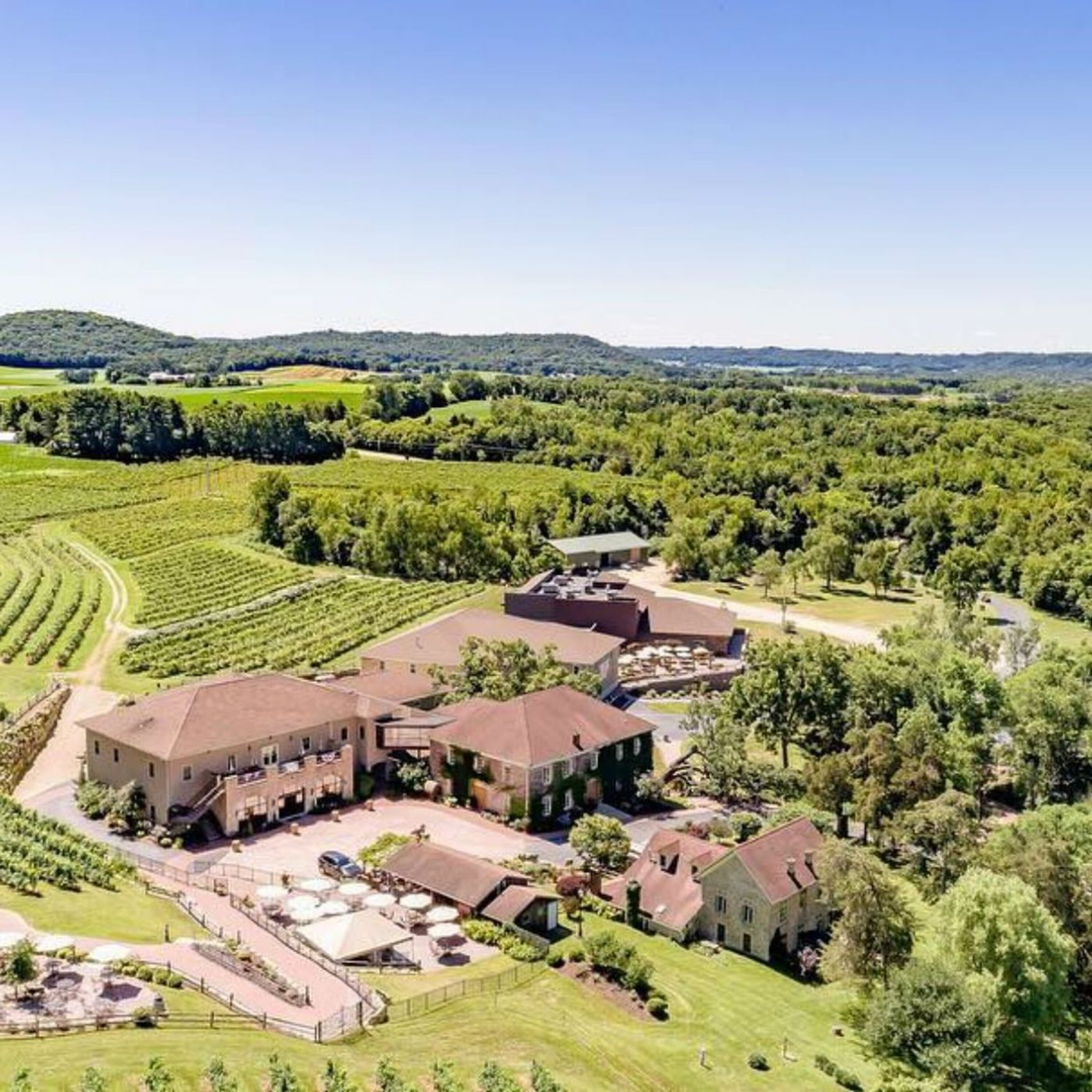
Welcome. to The Best Five Minute Wine Podcast, I'm your host, Forrest Kelly. From the seed to the glass, wine has a past. Our aim at The Best Five Minute Wine Podcast is to look for adventure at wineries around the globe. After all, grape minds think alike. Let's start the adventure. We finish our interview with Wollersheim Winery. Phillip, you're just not a winery, are you? I started the Distilling Side in 2010, and then my son and Celine's husband, Tom Leonard is the distiller is managing that side of the business. I do all the tasting with them. We have about maybe twelve hundred barrels of aging right now of bourbon, brandy, rye, apple. And I love tasting, so I'm always involved in the tasting. I can't run it all. My son is running the bistro. So Roman went to. So you did UW Madison in Food Science and then you went to France and he did. Bocuse Culinary School is one of the greatest culinary school of the world. So Roman studied at that school. And so now we can do we have not we're not calling it a restaurant. We have a bistro. So we're not opening in the evening for supper and fancy stuff like that. A sandwich, that bread. It looks fancy looking at the website and the menu. It looks Fancy. Yeah, it is fancy without the price tag. I'd like to find out where the passion lies. And I think asking what you're most proud of. We'll answer that. Proud of showcasing Wisconsin that it is not all Bordeaux and California, that we are a profitable and valuable, vibrant, beautiful business, that we are supporting 40 families. Yeah, we have 35 Full-Time Employee, 50 Part-Time. And we spread the wealth. You know, we have four weeks of paid vacation after ten years plus one week of sick days. We've done it a little bit the French way. So that's the pride of showcasing Wisconsin. And yes, it can be done successfully. You said at the winery, small was small and it's had gone through some changes and things. But looking at the website, it looks massive. How big is the property? It used to be small. I mean, the winery we used to make whining about where the eight foot ceiling and that bone is no longer there. So in nineteen ninety three we built a fermentation room and then we expanded our scenes just to give you a quick scale. And I will answer your question on the property. We we were doing eight thousand gallons in 1984. We doing two hundred sixty thousand gallons today. Wow. From the barn to just 260000 gallons now.So the property itself is about eighty acres and is 20 acres of vineyard on this property. And then we lease another 10 acres miles down the road. Yeah. Because you've got you've got three businesses kind of all packaged on to the property, you've got the winery, the distillery and then the bistro. Yeah. And it's looking, you know, just looking at the website, it's it's you know, very Wisconsin built a tough room for the elements. It's beautiful. Yeah, exactly. And, you know, it's interesting because, you know, in 1993 when we did our first expansion, we rented a car because we we didn't to have a car that could take us all the way around Lake Michigan. We rented a car and we drove all the way around Lake Michigan and we stopped at many wineries. Schottel, Grand Traverse, Leelanau Peninsula, all the way down to San Julian. And it for us, it was pointless to go to California to visit winery because we're dealing with two feet of snow and inches of ice and it's winter from December 1st to March 1st. So, yeah, it has to we have to think of where do we put the snow? Where do. You know, the truck insulation, so the pipes don't freeze and also everything is inside. Everything is insulated. So from the outside, you don't realize how big it is inside with. We have 40 tanks that are fifty eight hundred gallons, you know. Thank you for listening. I'm Forrest calling this episode of The Best Five Minute Wine Podcast was produced by I his if you like the show, please tell your friends and pets and subscribe until next time or the...
S2 Ep 33Wollersheim Winery - Prairie du Sac, WI Pt. 3
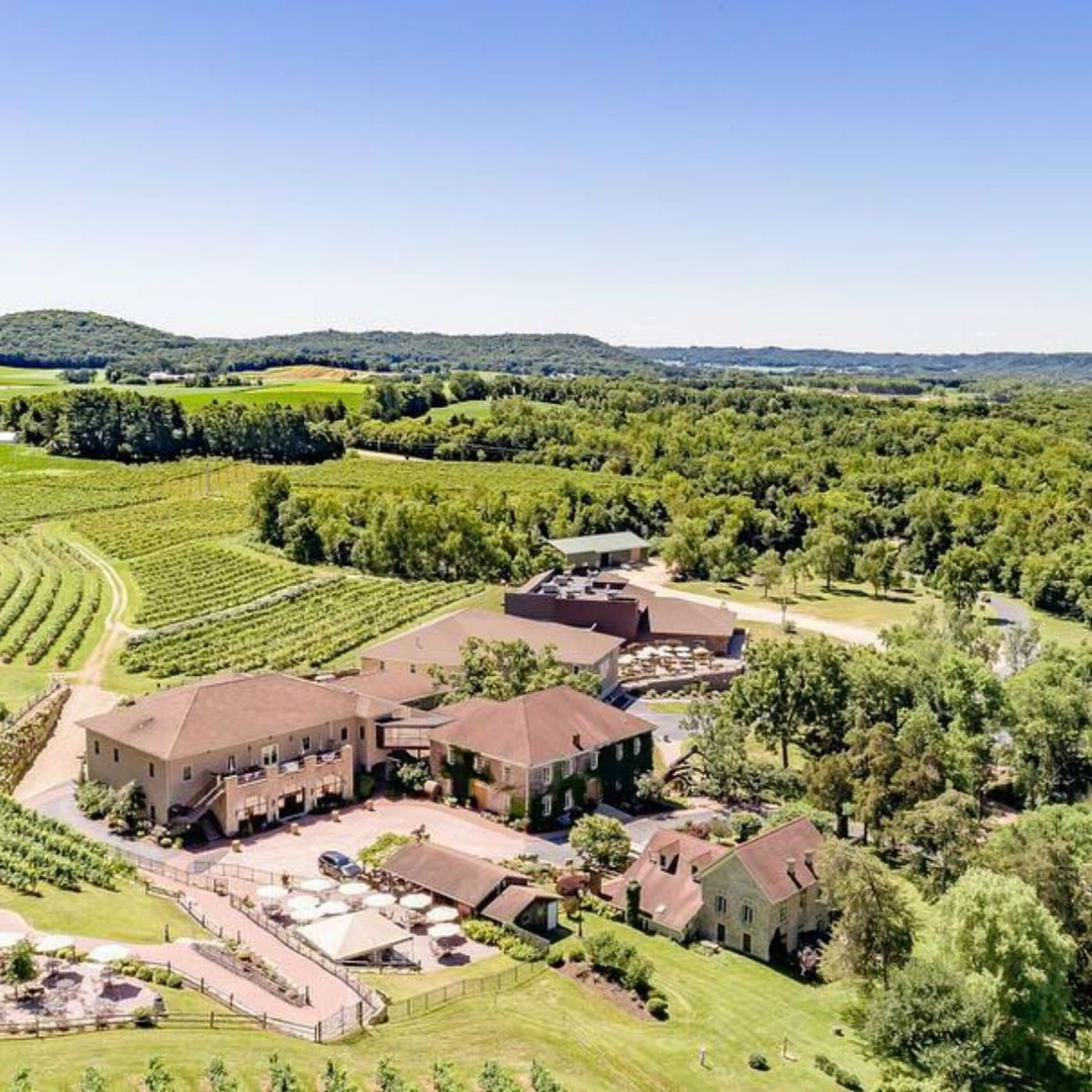
Welcome, to The Best Five Minute Wine Podcast, I'm your host Forrest Kelly. From the seed to the glass, wine has past. Our aim at The Best Five Minute Wine Podcast is to look for adventure at wineries around the globe. After all, the grape minds think alike. Let's start the adventure. Our featured winery is as we continue our conversation with Philippe Coquard of Wollersheim Winery in Wisconsin. But looking at your website, I see you've got a wine called Domaine Reserve. If we're going by just price. This is the most expensive wine you have. However, there's a reason for that. Explain that to me a little bit. Domain Reserve is made out of 100 percent Marshall for a French American hybrid. The vines are 48 years old. It is on our steeper slope. It's picked last. It's made as traditionally as it gets. It is age wine, you and Custom-made Barrel of Wisconsin, oak and French oak. We were the first winery in the nation to request 50 50, exactly the same number of Stav of French Oak and Wisconsin Oak. We've been doing that for 25 years. And that wine is you can put down that wine next to a cow going call a coolness. It's it has its own. Talulah It is one field. Nobody else in the world is making a wine like this Domain Reserve. And that to me is is the pride and the difference. It doesn't have to be Cab from Bordeaux or from California. It's we can do it here as well. Well, being the owner and the winemaker and having your experience that you've got, you can basically do everything at the entire winery. However, what is your favorite part? Oh, man. Oh, I love to. Well, I'm going to do I'm going to make myself a teacher someday. All I want to do is grow grapes. I want to do is make wine because you know, the business side of it. You know, the air travel side to finance or. Yeah, it's all part of business. But man, I'd rather be next to a barrel and taste a wine out of the barrel with my daughter. One of my passion is to pass the same passion to my daughter, Céline who will be the next winemaker after me. My she is thirty three. Thirty two, thirty three years old. She is our war in enologist and she is in my footsteps tasting wine with me. So I love tasting wine. I love to be in the vineyard. I am a grape farmer winemaker. So she got a little higher degree than you. I see she's a master of wine science from Cornell. Absolutely. And I so welcome it. I got everybody. She is a lot smarter than me so she can run the lab. She talks sexy like you though? No, I'm the only one stuck with a French accent. Gotcha. OK, OK. I'd like to ask this question. What is it that you would consider a big obstacle that you had to overcome to be successful? Being in Wisconsin, being in Wisconsin? Because you have to you always have to defend and prove the point. And just a quick story. And you I'm sure you will love that my father in law and I used to go to tasting Milwaukee and Chicago and so on trade show, and we would say, oh, would you like to taste a Wisconsin white, people would literally pull the glass out of the way and oh, no, no, it's all sweet. It's all fruit wine. I'm not interested. I knew the wine was the future of the winery. I knew that wine was the winner and one of the best wine around. And so you get hurt, you get slapped in the face. And then so we totally changed our approach. And for about five years, we never even said Wisconsin wine or would you like to taste this wine? Wow, it's so good. We're good friends. Then slowly we were able to...
S2 Ep 32Wollersheim Winery - Prairie du Sac, WI Pt. 2
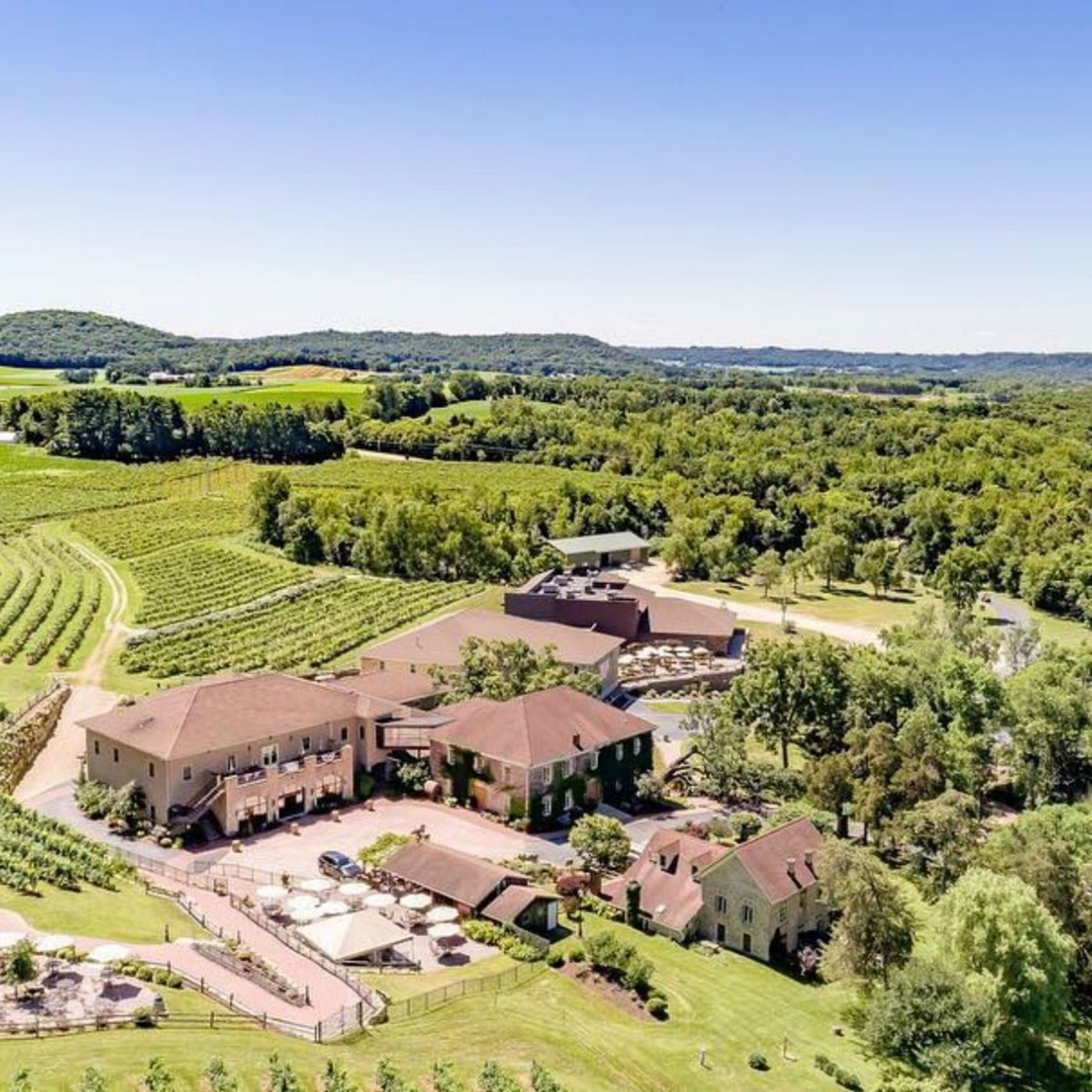
Welcome to The Best Five Minute Wine Podcast, I'm your host Forrest Kelly. From the seed to the glass, wine has a past. Our aim at The Best Five Minute Wine Podcast is to look for adventure and wineries around the globe. After all, grape minds think alike. Let's start the adventure. Our featured winery is: In Part One of our conversation with Philippe of Wollersheim Winery. We learned the winery had been purchased in 1972 and had been struggling until Philippe and his father-in-law came upon an idea. In 1988, I created a wine called Prairie Fume, which is made of Seyval Blanc, custom-grown in New York, a French American hybrid from New York State. We used to grow Sebald here in Wisconsin, but we made a different style of wine with it. So we bought grapes from New York State and came up with a totally different wine, a Pinot Grigio style 30 years ahead of the fashionable Pinot Grigio. We stopped fermentation. That was the first time we did that way back in 87, 88. So natural sweetness, no sugar, light, crisp, 10 percent of alcohol, high acid. And the first year we released that wine, it got four gold medals and it hit the news. When you first tasted it, did you know that? Hey, I've got something here. Yeah. And, you know, it's interesting because it was intentionally made. It wasn't like, oh, man, by accident. That tastes great. And that the intention was, you know, and I can I can picture myself in 1988 right next to the tank. And my goal was to capture the aromatics of fermentation in a bottle. So was OK, how do I do that? How can I freeze that fragrance? Because put up to this point your whole background and your whole family had let it do its thing and complete the fermentation process. But you want to stop it? Exactly. Absolutely. Yeah, I'm used to you know, I'm used to a dry red Beaujolais, fresh, fruity, light, but bold and dry. And here talking this white Seyval Blanc, it was I mean, it was perfume. It was aromatic. It was citrus. It was orange. It was it was so awesome. And so I wanted to capture that. That was my ultimate goal. So with crushin with cold temperature, knocking the yeast out and sulfite killing the yeast, then it was a stable white wine, a German style, let's call it that way, without the thickness of a German white. This one was more Italian Pinot Grigio, crisp, like fresh, fruity and it just it was a big hit. So when you were at that moment when you were tasting it, was there anybody else around or did you just run off and say, you've got to taste this, you got to check it out? My father-in-Law. I mean, we were working closely together. We developed that concept together. But, you know, I mean, just it was I knew it was, you know, deep down we had that secret excitement. It's one competition, a gold medal, second competition, another gold medal. And we never had we never had a successful wine like this ever. You know, I mean, the word got around in Michigan, the word go around in Illinois. The word got around in New York State. The Dallas Morning News wrote a nice article about it because we had gotten a gold medal in California as we as awarded a lot of gold medal to that line. So it it created its own own little interest. And and now this wine is 40,0000 bottles and we run out of it every year. Wow. And your wife probably looked at you and said, finally, I've got something I can market! Exactly. And I said, you know, it's an interesting development in life because without that wine, we really wondered if we were going to go bankrupt. You know, it was, you know, financially, it could not really support two families and and kids. And we were just wondering. And then suddenly I was just like a breath of fresh air. I just like, wow. Oh, that's the story gave me goosebumps. It's Prairie Fume. If you me and what are you doing Philippe? It's only ten dollars a bottle. I don't know. And, you know, it's funny because I was just running yesterday, we had a meeting with an apple...
S2 Ep 31Wollersheim Winery - Prairie du Sac, WI Pt. 1
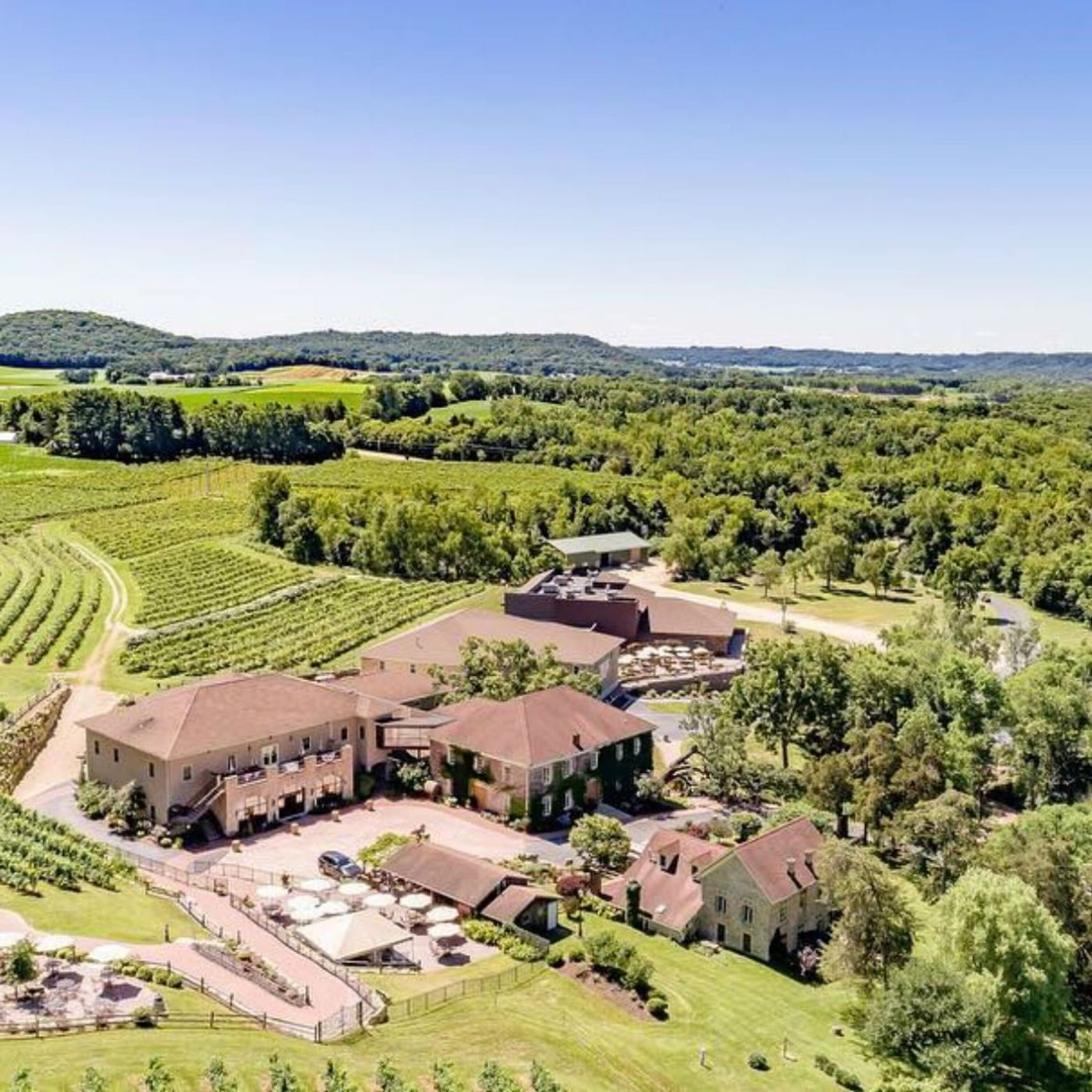
Welcome, to The Best Five Minute Wine Podcast. I'm your host, Forrest Kelly. From the seed to the glass, wine has a past. Our aim at The Best Five Minute Wine Podcast is to look for adventure at wineries around the globe. After all, the grape minds think alike. Let's start the adventure. Our featured winery is in this episode. We head to the state where the first-ever ice cream sundae was served in 1881. It's home to my favorite architect, Frank Lloyd Wright. Nearly all of the ginseng grown in the United States and about 10 percent of the world's supply comes from this state. At one time, Steve Miller called the state home. My name is Philippe Coquard. I'm the owner with my wife, Judy, the winemaker and the president of Watershed Winery Inc. And I've been in America for 38 years. And you still have the accent there heavily. And I don't even hear the Wisconsin accent. No, not quite. But you know what? All the ladies tell me it's super sexy. So you still listen to the ladies? Oh, yeah. We're in France. You originate from. So I grew up in Beaujolais. I am a third-generation winemaker, both sides of my family. I mean, growing grapes and making wine and somewhere around sixteen hundred. Well, that's a pretty good background. That's solid. Yeah, it's, it's in my blood. Sometimes I joke around that I have more wine than blood running through my veins, so. And that would make sense. Says that wine growing region into France. Beaujolais has over 4000 vineyards growing up in Beaujolais. Both of my uncles had wineries. My grandfather worked with them. My father was a vineyard consultant his entire life, so I was in the vineyard since I can remember going to the winery, tasting wine, putting bottles on the bottling line when I was eight years old, picking weeds, picking brush, picking grapes, driving the tractor with my uncles. I took a liking to that. I went to school for winemaking, wine marketing, Bachelor of Science from Mackle Winemaking School in South Burgundy, and then a fresh out of school. My childhood dream was to come to America, so I applied to many different ways and I ended up coming with A Future Farmers of America in 1984, and my father in law picked up my name on the list of interns wanting to come to the US and that's how I ended up in Wisconsin. So then that gets you to America. And then that was eighty-four. So the winery had already been established? Yes, the winery was, let's call it a small place. We were doing eight thousand gallons. Thirty-seven thousand bottles. Some were, some were good, some were okay. Financially difficult, struggling lack of cash flow. In the meantime, as a good Frenchman, I fell in love with the owner's daughter. Got to Judy. My wife was still in college in marketing and business at UW Madison, and then she joined the family business. We were raising a couple of kids, so it was financially it was very difficult. Ok, so in 1972, your in-laws bought the winery. Tell me a little bit about that, Bob and Jillian Wollersheim, both natives of Wisconsin. My father-in-law was an electrical engineer. He put himself through college electrical motor rewinding. My mother and I worked at different banks while my father-in-law was studying and ended up teaching electrical engineering at UW Madison. I ended up working for the Science Center tire of the high-tech world. He was an avid home winemaker, backyard grape grower, knew of this historic winery, and got interested in purchasing the place. And he put a business plan together. Talk to the local bank with whom we still bank bought the property in 1972. The property had been a winery since 1866, closed down after Prohibition became a Wisconsin farm, and then nineteen seventy-two. My in-laws Bob the place restarted everything from scratch without a dime in their pocket. In part two of our interview with Philippe, owner, and winemaker of Wollersheim Winery in Prairie du Sac, Wisconsin. We learned of a very important discovery in 1988. I created a...
S2 Ep 30Fullerton Wines - Portland, Oregon Pt. 3
Welcome to The Best Five Minute Wine Podcast, I'm your host, Forrest Kelly. From the seed to the glass, wine has a past. Our aim at The Best Five Minute Wine Podcast is to look for adventure at wineries around the globe. After all, grape minds think alike. Let's start the adventure. Our featured winery is Ok, Alex. Let's get down to it at Fullarton Wines. Which wine is your most popular? So our Three Otters label is what we make the most of and three quarters Pinot Noir, which is a blend of vineyards from throughout the Willamette Valley. Again, that's our most popular wine. I guess if you look at production and that is something special about us too, is we don't make all the wines the same. We like to optimize each vineyard and we do a lot of different production techniques. We like to experiment. Sometimes the experiments work out and then we move that direction. Sometimes we don't like it as much and move away from that direction. And Three Otters really gets a huge diversity of different things while still maintaining what it is to be a lot of our work, which is a little bit lighter, easy, approachable, but still with lots of flavor, some space and the earthiness and then red tones sometimes leading into a little bit of darkness, but generally a redder aspect to the fruit profile. And that really is what we're going for obviously now. Ok, that's a little different name for wine, even by Oregon standards. So explain that to origin for me. Three Otters that does come from our family crest portion is my last name of Scottish origin, not Scandinavian. And on the old 13th century Scottish family crest for Fullerton and our three little otter heads. So our Three Otters label is named in honor of our family. Your other line is Five Faces. So Five Faces is an acronym for my family. There's five of us and our initial spell F.A.C.E.S. That's my big little brother and was six foot 10. Filip So it's spelled with an F the Scandinavian spelling. And then I'm Alex. My little sister Caroline luckily spelled non Scandinavian, otherwise we would be the F.A.K.E.S. And then Eric and Suzanne, my parents. Are your parents still active in the winery? Yes, we so we started in 2012 and they are the hardest working, hard working people that I know there. Without them, we do not have a thriving wine company. My goal is to give them more free time. As we close out our conversation. Alex, tell me about your tasting rooms and then looking at your website, I see you've been quite active with virtual tasting rooms. Our tasting rooms are all outdoors right now. So we we actually bought gazebos and we are allowed to have three of the parking spots outside of our tasting room, which I should clarify is in downtown Portland. So we're an urban tasting room setting. We do have a little dressing room set up in the winery in Corvallis. If you come to is there, it'll be me or one of my two assistants in the winery.The winery is in Corvallis and that's our old tasting room. That's where I am right now, our our vineyard and our world headquarters. So we've been doing a lot of virtual tastings, which we have. Two main options now is curate yourself, but two options for tastings that will send it out to people and then they can join on as you can go. You have actually quite a lot of success with those people are interactive. I even enjoy hosting them. Well, we're using Google. It's actually let's make sure that we get all of your contact information on the Web and phone numbers. So WWW.fullertonwines.com. If you want to reach out, you can email me at [email protected] or [email protected] And if you want a call you can call 503.544.1378 Thank you for listening. I'm Forrest calling. This episode of The Best Five Minute Wine Podcast was produced by I guess if you like the show, please tell your friends and pets and subscribe until next time for the line and ponder your next adventure.This...
S2 Ep 29Fullerton Wines - Portland, Oregon Pt. 2
Welcome to The Best Five Minute Wine Podcast, I'm your host, Forrest Kelly. From the seed to the glass, wine has a past. Our aim at The Best Five Minute Wine Podcast is to look for adventure at wineries around the globe. After all, grape minds think alike. Let's start the adventure. Our featured winery is: We continue our conversation with Alex Fullerton of Fullerton Wines in Oregon. What life changing decision happened in 2011?In 2011, we decided to make a garage wine. So unknowingly we were kind of joining a small movement, made a little bit of wine in my dad's one of my dad's best friend's garages/ crawlspaces. My dad and I were kind of gung ho on starting to produce a little bit of wine. So we convinced my mom to start a little wine company in 2011, started producing about 250 cases in 2011, and within a few years, we're producing 5000 cases a year now.Wow, that was a nice start, making wine in a garage/crawl space. And then what happened?The next year, 2012, we started in a co-op winery in Portland where several different winemakers all ran a little sliver of space in this winery. And since then, we've we moved to one winery for one harvest. And after that, we've been sharing an old defunct winery space with another producer. So it's two of us under one roof in a much more harmonized facility with a lot of bells and whistles.Now, the Willamette Valley in Oregon is not just home to 70 percent of the population. So if you picture it, it runs north and south in Oregon and it's 150 miles long, obviously, because of location, the climate is cooler than California. And how does that affect you?Yeah, the growing season is quite a bit shorter. And then I guess I should just say the growing degree days are a lot shorter as well. And that's a measure of accumulation of heat units that the plant can use to grow. The types of grapes that we can consistently ripen in the Willamette Valley are quite different from Napa Valley. We do have quite a diversity of temperatures within the valley, different temperatures and different places as we have for for example, it's really hot here and it's too hot for the really warm sites to express themselves in their best possible way. Then maybe some of our cooler sites will be really, really nice. And then in the cooler years, it can be nice to have some warmer sides to ripen earlier. So you're not putting all your eggs in one basket and having having too cooler year for one vineyard. So that's actually one reason why we really love working with a wide variety of vineyards throughout the Valley.Well, is it true I was reading somewhere that the Willamette Valley is home to some of the best and most expensive Pinot Noir in the world?Yeah, we do. I mean, there are producers now that are that are selling $300 hundred dollar bottles of Willamette Valley Pinot Noir, which is definitely a statement, I will say, about just the climate in the Willamette Valley. It's beautiful for growing Pinot Noir and Chardonnay and those many places, many pockets of California that I love and super interesting Canadian Pinot Noir. And I'm very biased when I say this, but my favorite Pinot Noir growing region in North America is the Willamette Valley.Well, I guess this next question would be kind of twofold at Fullarton Wines. How do you feel your wine is unique and what do you believe to be unique about the Willamette Valley? really Well, we always have told people and what you what you can come to our tasting room and experience is the whole Willamette Valley, not just one place within the Willamette Valley, which is very fun to do, tasting one vineyard at one place. We love working with a wide variety of vineyards and then working to showcase what we like about that vineyard will hopefully taste a huge variety within our wines, even though for the most part it's a lot of pinot noir. There are some other varietals growing within the small geographic distance...
S2 Ep 28Fullerton Wines - Portland, Oregon Pt. 1
Welcome to The Best 5 Minute Wine Podcast. I'm your host, Forrest Kelly. From the seed to the glass wine has a past hour at The Best 5 Minute Wine Podcast, we look for adventure at wineries around the globe. After all, grape minds think alike.Let's start the adventure. Our featured winery is, oh, you've heard the expression, and the grass is always greener. Well, the grass is always greener in Willamette Valley. It grows more turf and forage grasses than anywhere else in the world. Eric Asimov of The New York Times calls Willamette Valley the country's most exciting wine area. It's a favored destination for whitewater rafting and home to; this is Alex Fullerton of Fullerton wine. I am the co-owner and winemaker. All right, Alex, give us a little history on how Fullerton wine came about. So my dad, his best friend, inherited his grandpa's wine cellar. So he grew up driving down to Burgundy and Bordeaux with old bottles and but mainly his best friend, my godfather, ended up starting a wine importation company in Denmark. I was born in Denmark. My mom is Swedish. My dad was born in California to an American dad and a Danish mom. Long story; my dad kind of got me into wine. So when I was graduating high school, he ended up taking me on a trip to Burgundy Champagne and Cognac. And we picked up one of my best friends from Denmark, him and his dad. We picked them up at the airport drive to Burgundy. I just fell in love with how different the wines were. And all lot of story short, I stood too close to this guy. He had the contagious wine bug. And I caught that since he's a big fan of wine, he kind of shocked me with some more affordable stuff throughout college. So I'm kind of started home brewing, had a little bit of a bootlegging operation going. My roommates and I got into fermentation that way. I was graduating with an Econ degree, was tasting at Penner-Ash and got a job in the wine industry, and just fell in love with everything about the industry.Ok, since you are the winemaker at Fullerton Wines, let's get your degree background. I originally got an economics degree from the University of Oregon.But then I ended up getting a job at Penner-Ash, fell in love with the industry, worked in New Zealand for a bit, worked at Bergström Wines, then ended up deciding to go back to school at Oregon State with a bitter rival. So I'm a rare platypus, which is a beaver and a duck. Then I'm going back to school for viticulture and technology, which is grape growing and winemaking. You've got a huge selection of wines at Fullarton Wines, but which one is your most popular? So are three. Five FACES Pinot Noir, Lux Chardonnay, and The three Otter's Pinot Noir, are a blend of vineyards from throughout the Winery Valley. And that's our most popular wine. I guess if you look at production and that is something special about us too, is we don't make all the wines the same. So we like to optimize each vineyard, and we do a lot of different production techniques with experiments. Sometimes the experiments work out, and then we move in that direction. Sometimes we don't like it as much to move away from that direction. The wines get a huge diversity of different things while still maintaining what it is to be a well, even if you are, which is a little bit lighter, easy, approachable, but still with lots of flavors, some spice, and earthiness, and then red tones sometimes leading into a little bit of darkness, but generally a redder aspect to the fruit profile. And that is what we're going for.Alright, Boys and girls, it’s our listener voicemail, Hi Forrest, this is Brad from North Carolina; my buddies and I are sitting around drinking a couple of boxes of wine. I don't know what the hell kind of unit you're running here. I just want to know why is wine stored on its side? That's a good question, Brad. No, it's not because the wine is tired. For the wine to last, the cork has got to stay moist. So putting it on its side
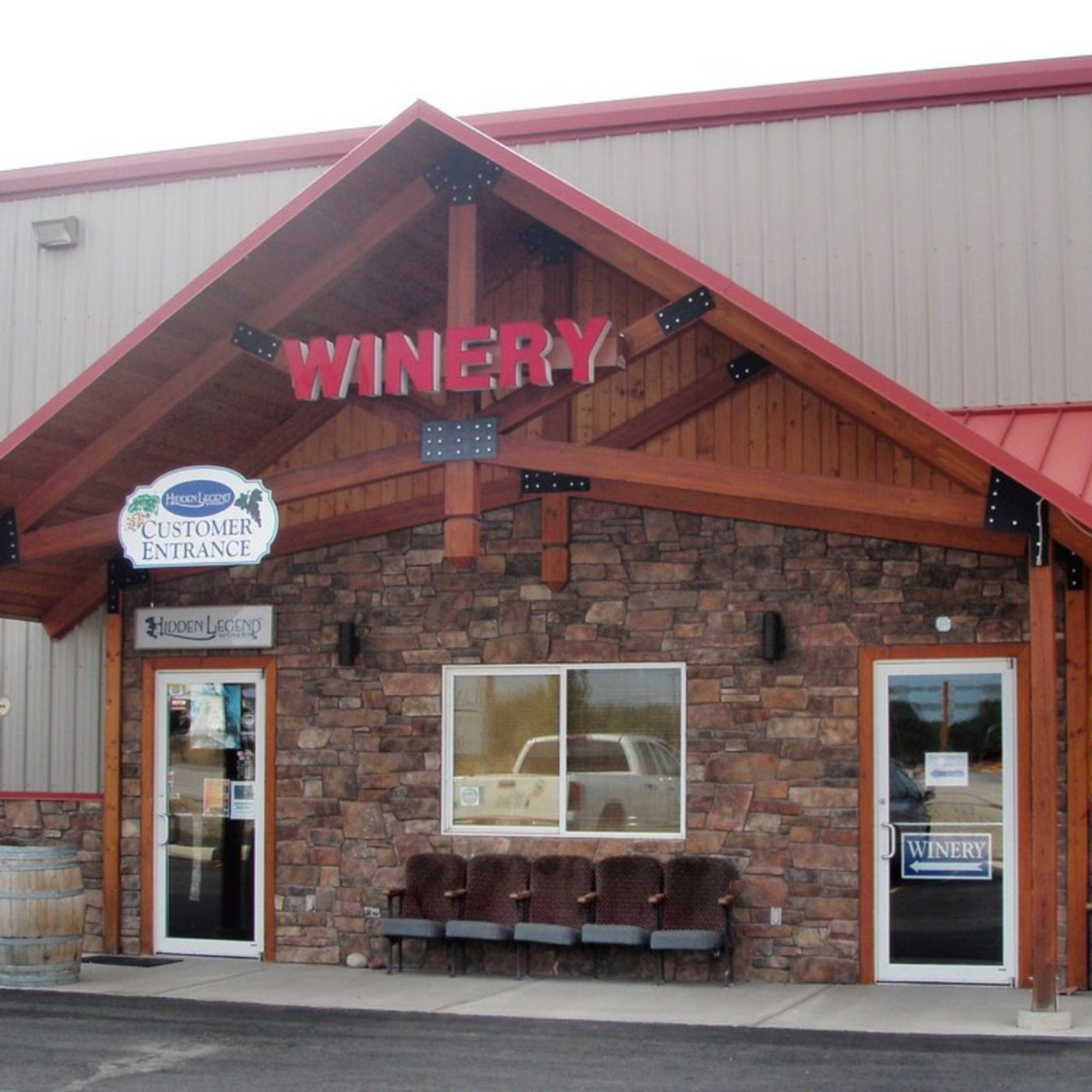
S1 Ep 27Hidden Legend Winery - Victor, Montana Pt. 3
Welcome to The Best Five Minute Wine Podcast. I'm your host, Forrest Kelly. From the seed to the glass, wine has a past. Our aim at The Best Five Minute Wine Podcast is to look for adventure at wineries around the globe. After all, the grape minds think alike. Let's start the adventure.Our featured winery is as we conclude our interview with Ken Schultz of Hidden Legend Winery. We learn where that personality first started that would eventually make award winning Mead.I set out to see things in life a very, very early age. I blame my fifth grade teacher introducing us to National Geographic and I just could not stand it. I was like just fidgeting until I got out of high school and took off. I started as a merchant marine on the Great Lakes and then TWA started offering cheap tickets to Europe back in 69, 70, whenever that was. And I got one. And when I got there, I tore up the return trip and I was just gone four years. I'm not sure how many crowned heads I visited, but I got thirty three countries under my belt.Reading on your website, it says that you were across from Pioneer Log Homes in the Sheafman Plaza in Victor Montana. Tell me about your location. Well, it's a little tiny strip plaza. There's like five businesses in it on the corner. We're actually five miles south. We're right on the border between Victor and Hamilton, but we're five miles south of Main Street, Victor itself, pretty much in the middle of nowhere. So you're not getting a lot of foot traffic. Well, being in a small plaza and having a beverage like a wine like beverage, it's not something that people come in and have three or four glasses of. I keep threatening to put in one of those banks of drawers that the Japanese used for their executive power naps. Oh, yeah. Yeah. So that, you know, after three or four glasses of Mead, I can just put you in there and set the timer. We don't have a lot of tasting room traffic. What we do have is wide distribution and Internet sales. We ship to thirty seven states in this pandemic world. It doubled it literally, literally from the middle of March on. If you would look at our warehouse room, our inventory, you would think all kind of Winery insists there's nothing. I'm making it. I'm not making it quite as fast as it's going out the door right now. We have a term for that. We call it full COVID. No, we don't have time to do much other than just try and keep up with the bottling and packaging.And we've recently been out of our two top sellers and just got those back online. And we've got other flavors that we're trying to get back online. We're I think we're down about four flavors right now. Seriously, that four o'clock glass of wine became more than just kicking back. Tell me about your Mead award winners. Well, we most of them have won top awards at one time or another since ninety since the 90s. And we've got some bottles on the top shelf of a display cabinet that pretty much you can't even see the bottles anymore. They're so laden with artwork. We pick on like the Finger Lakes in New York, Tasters Guild in Michigan, The Indie international at Purdue. Out here in Washington, we have the Tri Cities Wine Society and of course, the Mazer Cup International Mead Competition in Broomfield, Colorado. Every year we try and spread it out and get a good overview from reputable judges. It basically keeps me on track. And except for this year, there are usually a dozen shows that I like to go to, anything from Art shows to Highland Games to Renaissance festivals to Pirate festivals. And of course, I don't get to see much of the festivals I'm staying or serving Mead for eight hours a day. But it's fun to dress like a pirate and see everybody happy with my product. All right, Ken, thank you very much. And as we close out, go ahead and give us your Web address on how we can reach out to you. Hiddenlegendwinery.com Well, we do have a Facebook presence. I was in Ireland and I was talking to a...
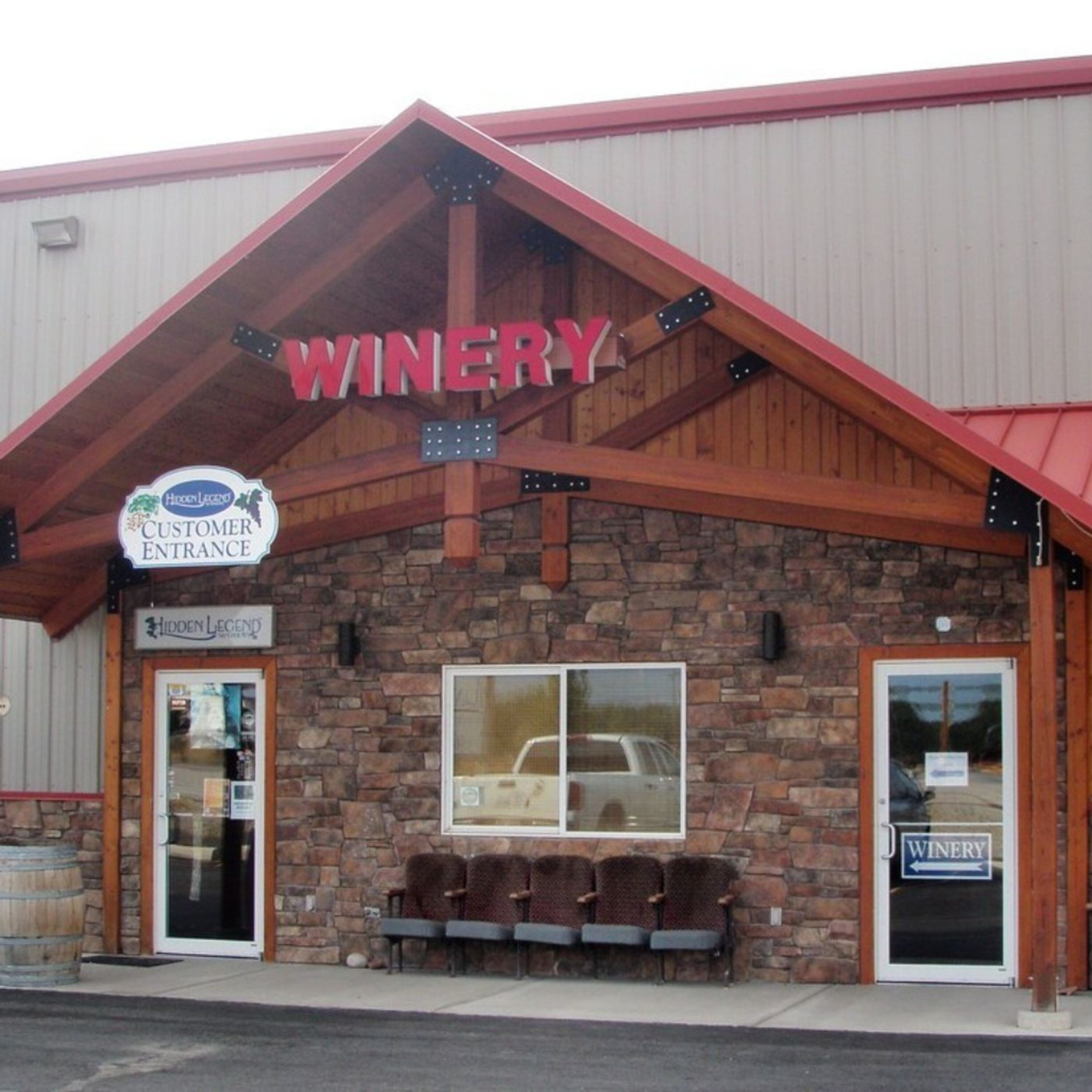
S1 Ep 26Hidden Legend Winery - Victor, Montana Pt. 2
In a winery, grapes come ripe in the fall. Of course, there are things to do all year, but that's called the crush. They harvest the grapes, they crush them, they press them, they get them in the tanks and they ferment. And then they sit in the tanks for a while. Then they look to finishing the wines and the whites come first and they're usually in the bottle before Christmas. And then the reds sit all winter and they're in the bottle by June. They really only make wine once a year. And that's during the fall. I make wine continuously. I buy honey twelve to thirty thousand pounds at a time and I am continually if I get an empty, empty tank, I fill the tank. That can be a couple of times a month. And so I don't have to once a year look up how I did it last year. What kind of honey are you dealing with in Montana? Oh yeah. We have basically two types here in Montana. We have wildflower honey in western Montana, I should say, up and down the western side of the Great Divide. We have five valleys and there's probably five major producers up, say, half a million pounds a year. Most of it is a wildflower, which used to be before the state declared war on it. Most of it was spotted in. And then there's a fair amount of clover, honey, and we use both. And we have two very distinct styles of meat that we make from each. And the clover honey here is entirely different. I grew up on Clover Honey in Ohio and I thought it was a trap. I hear it's very exciting. The national blenders just take everything they can get their hands on. It poured into a big battle. Honey bears. Oh no, that's hard work. Yeah, that's very easy. You don't hear much out of beekeepers because they're always working. We've all had honey crystalize in the cupboard and then with Montana winters I imagine you get honey in all different varieties of stages and things. How do you deal with that? Montana is second in the nation in honey production. When we get it in the drums, it's rock-solid, it is barely filtered. There are bee parts floating around in there and in raw honey in that sugar is very quickly so you can knock on it. It's like knocking on wood. So the first thing I have to do is put a strap a heater on the drum and raise it. And I do it over a four or five-day period very slowly to about 100 degrees. Let it melt. Now, I really try to be careful with the natural properties of honey. I want it to come through in the mid, whatever those properties may be, magical or medicinal. And both played a big part in historical meat make Out of the whole process. What is your favorite part? I'm going up to the mountain cabin and kicking back in front of the fireplace and having a horn of mead with friends. You say a horn of not Just a horn that fits into advanced meed enthusiasts. Yeah, we import horns from England Cups, mugs, and natural horns, just like in the Thirteenth Warrior or Robin Hood or Game of Thrones. Yeah, two of my three sons are principals in the company and a sort of a half son, a young fellow that we took in at an early age and raised along with our boys, so and my wife. So there are five of us principally. We say you have to be related to work here or somebody else. And it's time, boys and girls for our listener voicemail. Hi. I was wondering, did anyone besides the Vikings first make mead? At the risk of upsetting a Viking? I would have to say yes, only because Mead is the oldest known alcoholic beverage in world history. However, I would say that the Vikings did enjoy meed the most. Thank you for listening. I'm Forrest Kelly. This episode of The Best Five Minute Wine Podcast was produced by IHYSM. If you like the show, please tell your friends and pets and subscribe until next time or the wine and ponder your next adventure.This podcast uses the following third-party services for analysis: Chartable - https://chartable.com/privacyPodcorn - https://podcorn.com/privacy<a href="https://www.patreon.com/thebestwinepodcast"...
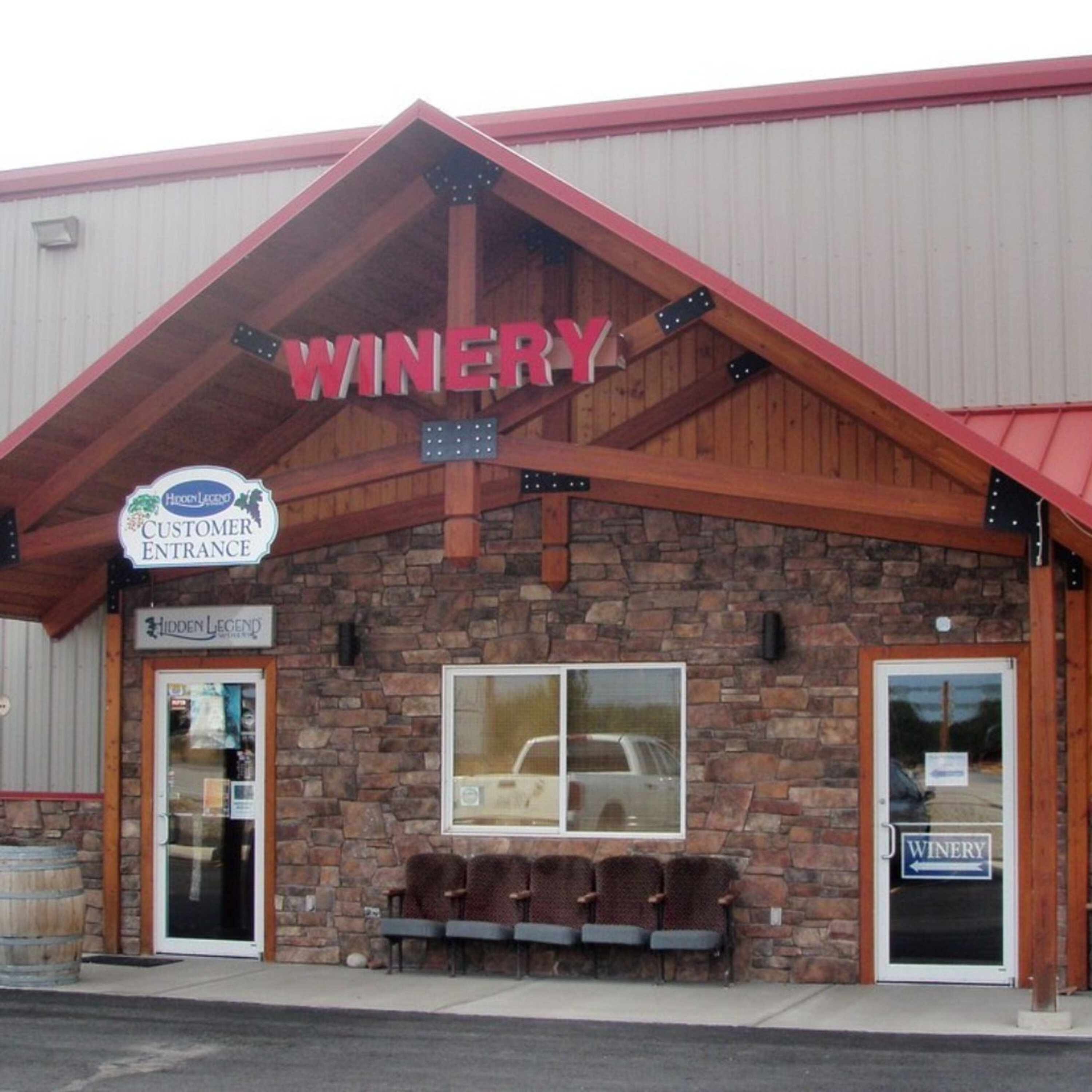
S1 Ep 25Hidden Legend Winery - Victor, Montana Pt. 1
Welcome to The Best 5 Minute Wine Podcast. I'm your host Forrest Kelly from the seed to the glass. Wine has a past. Our aim at The Best 5 Minute Wine Podcast is to look for adventure at wineries around the globe. After all, grape minds think alike. Let's start the adventure. Our featured winery is so basically I opened the Hidden Legend Winery for at Harvard Business School would call the worst possible reason to open a business, and that's because the neighbors thought it was a good idea.In this episode, we head to the state that has the largest migratory bird in the nation, the only state with a triple divide allowing water to flow into the Pacific, Atlantic and Hudson Bay. We head to Victor, Montana. I'm Ken Shultz and I am the founder and winemaker at Hidden Legend Winery in Victor, Montana. Ok, Ken, let's go back to the beginning. Where did this spark come from? Well, when we were kids, I had an uncle that was a research chemist and a serious hobby winemaker, friends with the head of the technology department at Purdue and various vineyard owners. And things of that nature in his basement had all the right glassware. It was like Frankenstein's laboratory. So I guess that was the spark. Oh, yeah, that was early. You know, under 13, I turned 21. I was going to school in Lausanne, Switzerland. I worked overseas for a number of years and I came back. I got married when I was twenty three and the very first time I owned a closet I made. Me personally, I've lived all over Montana and I just love the big sky. But how about, you know, I was still in Ohio when I got married and we came out here, we got married in seventy five, came out to Montana, saw it, fell in love with the place in seventy six and finally moved here in seventy nine. Well my wife is Norwegian and she thought it looked like Norway and because I had worked there I thought it looked like northern Pakistan but no monkeys or water buffalo. There's something captivating about the Bitterroot Mountains.You can look off in the distance and see a whole train. Well, you know, at some point when hiking and fishing and vistas and all of you know, the alluring things of Montana kind of settle down to a little bit.I thought I'd make some wine and evidently I hadn't thought it through very well because there's no grapes. However, I had read The Hobbit and I knew what meat was. And so I came across a bucket of honey that somebody was just disposing of and I thought I'd make mead. I mentioned it to my peers in Ohio and Pennsylvania, and they were like, oh, my God, can no, don't make me. It's horrible. It's thick. Vikings drank it. You'll give winemakers a bad name. I thought, well, you snob's, I'll show you that I can make a mead every bit as complex as your wines. And so I made mead in the mid eighties. Let me just put it this way. I have a driveway that's a half a mile long, three switchbacks up a mountainside. And the guy that used to keep it clear for me in the wintertime would do it twice for a for a bottle.Ok, let's rewind just a little bit without getting technical, but getting technical just to fill everybody in and be especially neat is often referred to as honey wine, but that's not really accurate. You make the wine with honey water and yeast rather than fruit. So technically meat is kind of in its own category of an alcoholic beverage.Well, the word mead goes way back to the Sanskrit and the word Megu is honey in Sanskrit. And it's where the English word Medo comes from, which doesn't mean field of flowers. It means we're nectars gathered. And so Mead is actually a shortened meadow.Well, I imagine that the chemical process is very similar. You're dealing with sugars, but just different kinds of sugars. So are there some nuances to the whole process?The process is very similar, although we do have to create an environment for the yeast in honey because there's nothing in it but sugar and a grape...
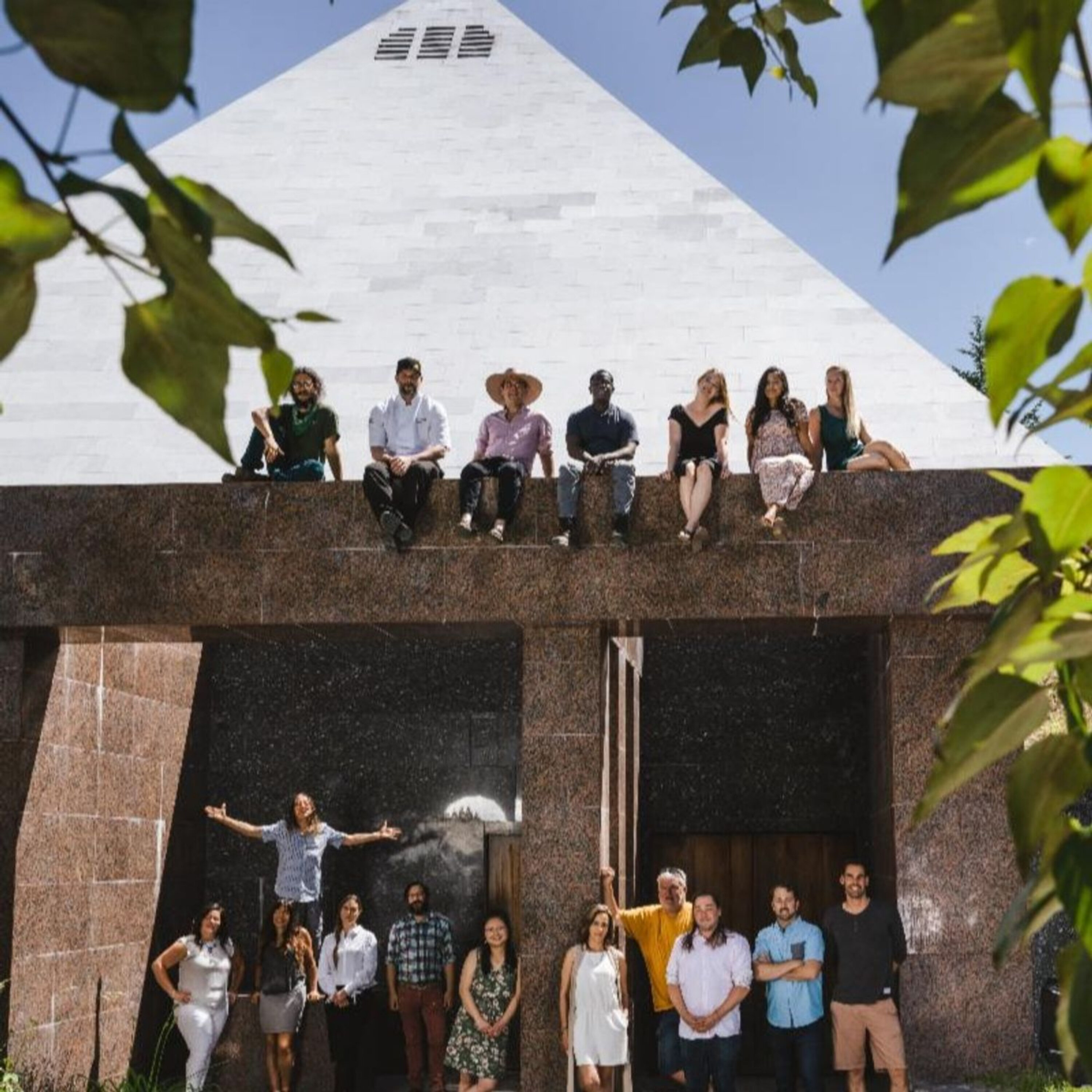
S1 Ep 24Summerhill Pyramid Winery-Kelowna, BC Canada Pt. 4
Welcome to The Best 5 Minute Wine Podcast. I'm your host Forrest Kelly from the seed to the glass. Wine has a past. Our aim at The Best 5 Minute Wine Podcast is to look for adventure at wineries around the globe. After all, grape minds think alike. Let's start the adventure.Our featured winery is we conclude our interview with Stephen Cipes, proprietor of Summerhill Pyramid Winery in Kelowna, British Columbia. As we've learned in past episodes from Stephen, it's all about making wine to its purest form, and that includes serving local and organic food in their restaurants. And what exactly does local and organic mean, and why is that so important?It's the largest impact on global warming is the food production for the eight billion of us. This business of 30-mile-long, that's a death in the oceans. And the sprays that come over on the jet streams from Asia to North America and the amount of carbon footprint to move all these, you know, thousands of tons of food everywhere. It's got to stop. It's ruining the earth at an astounding rate. If we go back to local and organic, we're going to have a much bigger difference in our breathing the air and keeping the planet alive. One of the biggest things that impacted us is the tractor. By going up and down in the fields, all the topsoil disappeared, and now we have to put chemicals to top topsoil and these pesticides. Already, according to The New York Times, 90 percent of the insects on the planet are gone, including the bees and the butterflies. And these are our pollinators. You know, I can understand why people don't realize that every time they buy something that's not organic, they are contributing to pesticides that are killing our insect. And if we don't have our insects, we are in big trouble in our conversation.Stephen, I could tell that you're very progressive in that you're continually moving forward and trying to perfect whatever process you're in the middle of. But in the upcoming years, what kind of goals do you have?I would say my goal is to get other wineries to convert to organic and other food producers to convert to organic. And I've started a declaration which has a website, organic, Okanogan dot com, organic Okanogan dot com. And you can sign the declaration online. And it's even if you're from California or Brazil or wherever you're from. It shows that you know, we are anxious to be a model and make a model of being organic. So that would be my wish is that our properties with some real property are a model to the world of man and nature and the beautiful wines we produce and also then, you know, the healthy wines that we make. I see the correlation in France, the amount of cancer in children of people living near vineyards there, and their population is so much higher than ours. And I have the link on our website. It's pathetic to see all these children with their hair shaved off, and you see the coffins going down into the earth. Children, you know. For what? For chemical wine. It's ridiculous. I can't believe that one child's life, to me, is worth all the wine in the world.The world is the way it is. And I'm sure I can't change it all in one and one day. But I'm going to try.Well, that's good, because you're trying makes me try. And then collectively, we start to make an impact on this whole thing, start to improve the planet for everybody. All right. As we close it out, let's get all of your contact information, Stephen, and you can contact me, Steve. I'm the proprietor at 250. 764.8000 ext 199 or ext. 11. Our websites are, https://www.summerhill.bc.ca/I also have http://organicokanagan.com/ and http://alloneera.comThat's the precious one that I'm working on with
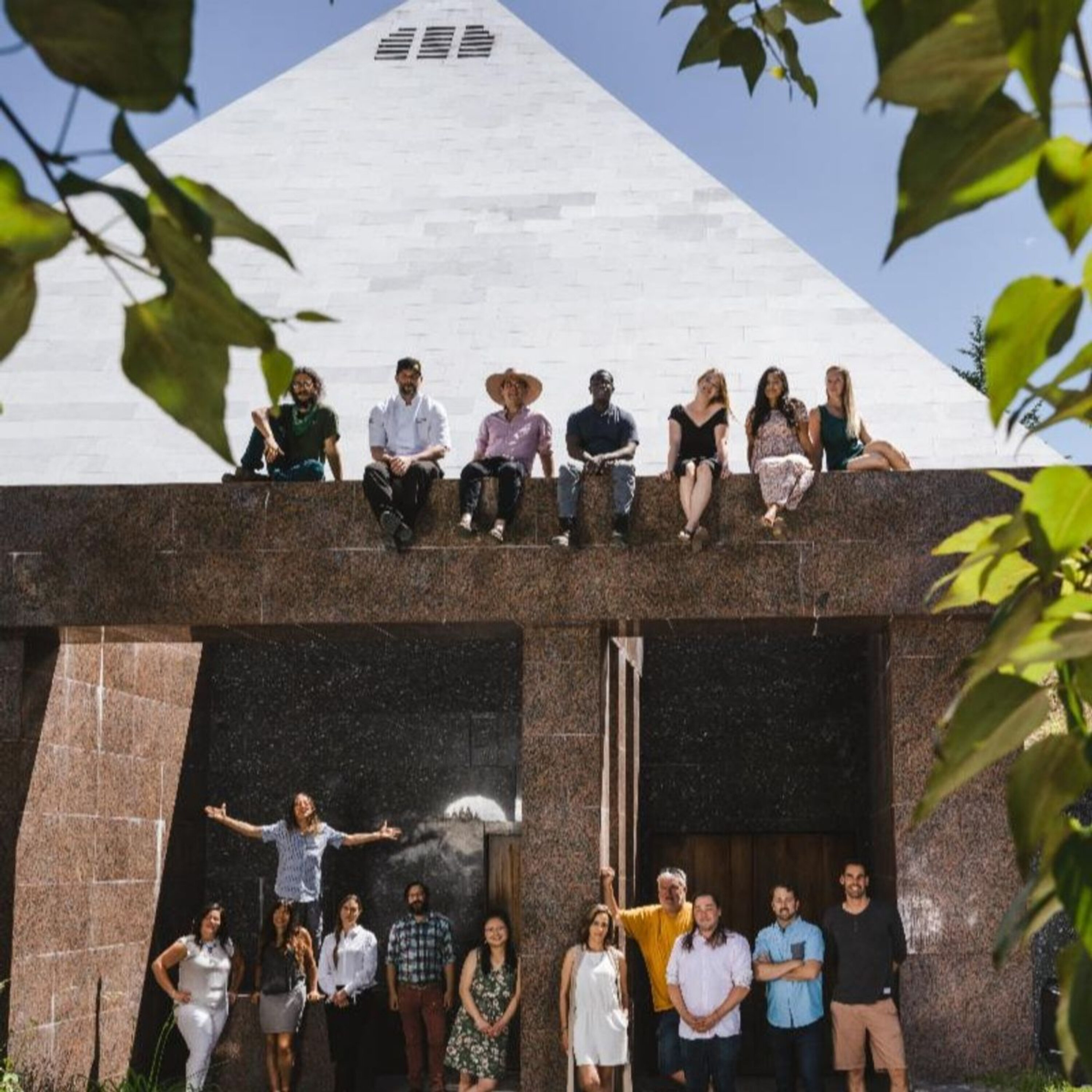
S1 Ep 23Summerhill Pyramid Winery-Kelowna, BC Canada Pt. 3
Welcome to The Best 5 Minute Wine Podcast. I'm your host, Forrest Kelly. From the seed to the glass wine has a past. We look for adventures at wineries around the world. After all, grape minds think alike. Our featured winery is we continue our conversation with Stephen Cipes, proprietor of Summerhill Pyramid Winery in British Columbia, Canada.Well, we started out of our little garage making wine in 1990, 91, and we introduced the same Strutt in December 91 to right in the beginning in 92 in New York City to great reviews there, as I mentioned. So the official opening is 92, but we've been making wine since the late 80s. You know, we came here in 1986, my family and I from New York for 30 years now. We've just been dedicated to the amazing growing conditions here and the lovely people here. I have to say that British Columbia is a treat to be here. Such lovely, honest, and wonderful people are all around us at all times. Our crew, our employees like family. It's beautiful. A lot of people join Summerhill because they want to. I even get comments like Steve we'd work here for if you didn't pay us.We love this place. There are so few things in this world that give us energy. Most things take energy. Yeah. So that's wonderful.Something we learned in a previous episode was that Steven built a pyramid on the property to incorporate that pyramid into the winemaking process.What I think it is, is sacred geometry is related to the electrical nature of life itself. And it brings out I would say it's not it does not make any liquid worse or better. It clarifies it. So if you put wine in there, for instance, that has flaws in it, it will bring out the flaws and make wine like cooking wine. You can't drink it. And if it has good qualities, it'll bring out good qualities—the same with milk or orange juice or any other liquid. And we've proven that time and time again in the last over 30 years now. And it's very conclusive, and we're very thrilled with the experiments and plan to go on bigger and better and more experiments to prove the value of sacred geometry on liquids. The size of our pyramid would be the exact size of the capstone on the Great Pyramid. Ironically, we didn't plan it that way, but it just happened to come out to be exactly what the size of the capstone on the pyramid would have been—sixty feet square and four stories high. Well, You are one of the most visited wineries in Canada. I imagine that you've got quite a few employees every year. We have about 170 employees in the season, and that drops down to about half of that in the shoulder seasons. But of course, with COVID, we're running way below that because most of the weddings have been canceled, not allowed to have more than 50 people and they have to be six feet apart. And the Chinese tourists that we get every day, busloads of tourists from China are not coming. We're not getting any tourists from the United States. Even our own in Canada are coming much less frequently. So we're way down in and visits this year because of COVID. And yet, interestingly, our sales have gone up incredibly because of the Internet sales, the wonderful online sales have been fantastic. I think we had a fifteen hundred percent increase over the same months last year. So, yeah, people want to buy our wine. That's organic; it's the pyramid, this gold medal-winning, whatever. And they love the wine, so they don't come to see us anymore, whether it's ordering online and we deliver. And a portion of those employees that you just mentioned are working at the website. Your restaurant is just a wonderful restaurant. Very proud of that. We have a 200 seat organic restaurant and catering. We usually do over 100 weddings a year. So we do a lot of food. We at one time were called by the suppliers, the biggest outlet in all of Kelowna, which is huge. That means all the hotels and all of the big restaurants and everything. We were...
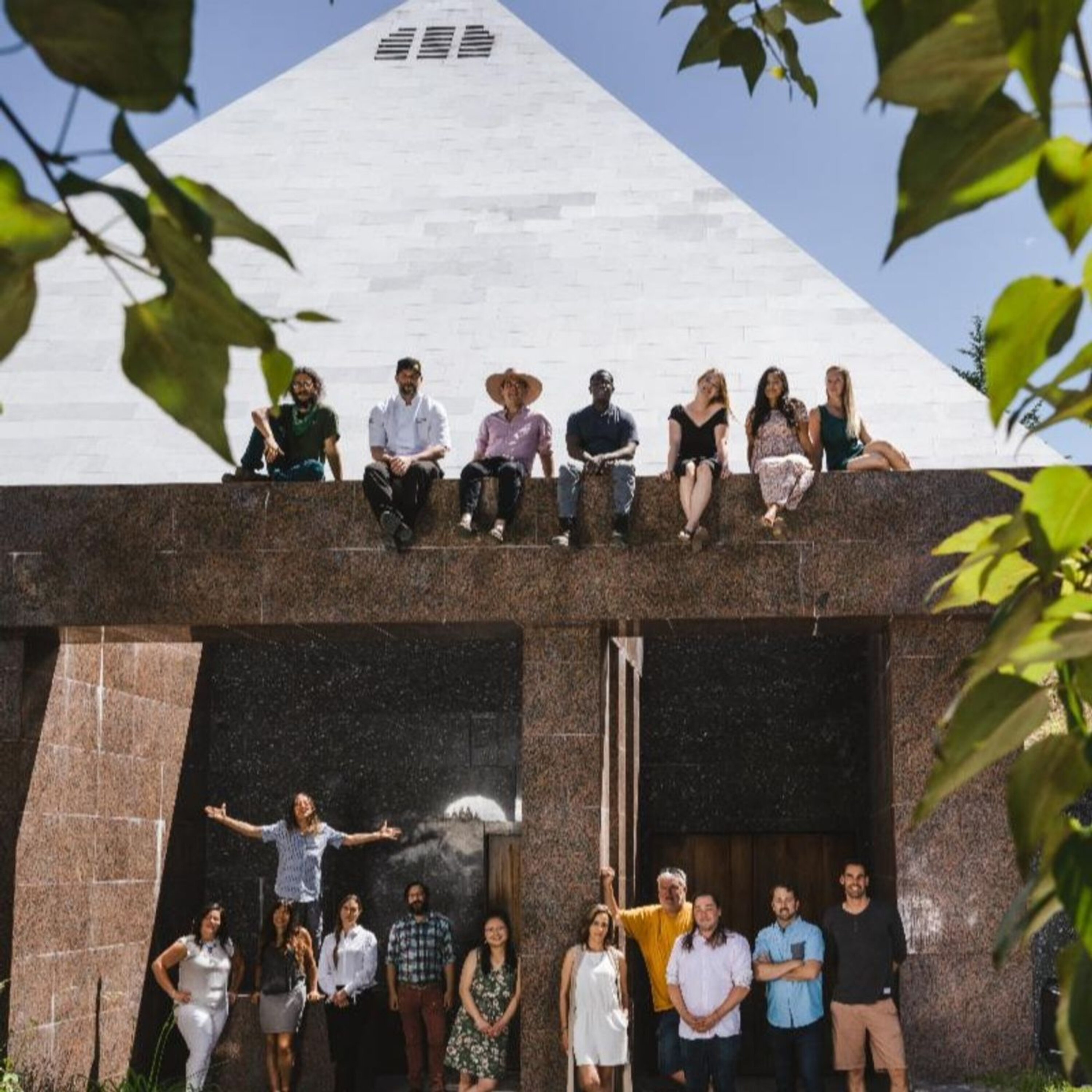
S1 Ep 22Summerhill Pyramid Winery-Kelowna, BC Canada Pt. 2
Welcome to The Best 5 Minute Wine Podcast. I'm your host Forrest Kelly from the seed to the glass. Wine has a past. Our aim at The Best 5 Minute Wine Podcast is to look for adventure at wineries around the globe. After all, grape minds think alike. Let's start the adventure.Our featured winery is; we continue our conversation with Stephen Cipes, proprietor of Summerhill Pyramid Winery. I'm not asking for the secret sauce here. What do you feel attributes to all of the awards that you get for your winemaking?Yes, it's a combination of things that we do. First of all, and most importantly, the grapes are grown organically and biodynamic. And they are processed in a certified organic cellar as well. What does that mean by everything? What does that mean by biodynamic is a term we can use if you get a Demeter certification out of Germany, which is the highest way to get organic certification like it's the biggest test. And everything is done by Rudolf Steiner, who is the founder of Demeter and Biodynamics, really. And he specifies when you can plant by the moon and when you harvest, and you put in making a tea from the right and grapes from last year. Everything is composted, compost, tea, there's a lot of the things that you need to do and be done with your plant is really at the end of the day, it's about nature and communication with man. It's a wonderful man and nature quencher. I call it.Going through those two processes sounds very complex in themselves, let alone having to do two of those. And yet you decided to add another element to try to raise wine to its highest form.And we took it to another process as well. And we built a sacred geometry chamber to put the wines in for the marriage period from dosaging to going on to the shelf. So when you make sparkling wine, as most people do know, you make a base wine like any other wine, and then you put that base one in a bottle that has a stick and can handle the pressure, and you add yeast and sugar and represent it in that bottle again, and it lays on the dead yeast cells. You sell the leaves for 18 months to 15 years. And each year, depending on what kind of grapes you have it made out of, produces more of the subtle flavors and nuances that you get out of fine sparkling wine. And then you wake up the bottle by riddling it and getting the dead yeast cells out of it. And then you dosage it with a sweet little reserve because the yeast has eaten all of the sugar. So its own dry and most people can handle it that way. And then the dosage period is what we call the marriage period. And in Europe, in Germany and Spain and France, many places where they make sparkling wine, they put the bottles in a sacred geometry chamber, which in those areas is almost always a Roman arch cellar. n Spain has, I think, 30 miles of Roman cellars to house their bottles after they've been discharged. And we built a precision pyramid after the Great Pyramid in Egypt to several trips that I was privileged to make with Egyptologists, then John Anthony West. So we did a precision pyramid, and we put all our wines now into that pyramid, which makes them again with a tiny winery, we're only 30,000 cases a year, and yet we win a huge amount of awards every year with our people. Love the flavors at the organic wine, and the pyramid adds a dimension to it as well.Well, listening to the details that you put into every single process of what you do, I can...

S1 Ep 21Summerhill Pyramid Winery-Kelowna, BC Canada Pt. 1
Welcome to The Best 5 Minute Wine Podcast. I'm your host Forrest Kelly from the seed to the glass. Wine has a past. Our aim at The Best 5 Minute Wine Podcast is to look for adventure at wineries around the globe. After all grape minds think alike, let's start the adventure.Let's start the adventure. Our featured winery is; in today's episode. We head to the land of hockey, maple syrup, brutally cold winters. Butter Tarts, Duncker Roos, of course. Drake, Tim Hortons. Canada's most visited and largest organic winery, Summerhill Pyramid Winery, Stephen Cipes with a PH and the proprietor and founder of Summerhill Pyramid Winery in Kelowna, British Columbia.Ok, enough of the kidding around. Let's get down to the wonderful story of Summerhill Pyramid Winery. Stephen, your accomplishments would fill a New York City phone book. But let's start back at the beginning. Where did all of this being in connection with the Earth of the land and begin? It goes back to my childhood. I love growing things and being in the soil and being outdoors and climbing trees a little. As a little boy, I've always been an outdoor kid and I, you know, got involved in real estate development in a way that would save the wetlands and the and the steep slopes and very involved in early in the 60s, 60s hippie, if you will, out there protesting the way people built things. I was one of the founders of why environmental rules are so strict today, why they can't just fill in wetlands and stuff like that was my original push in New York, which was a big suburb of Manhattan. Feel like I am part of the Earth, and I wanted to get closer and brought my little family of four little boys and my wife Wendy at the time. And we came up here and bought a little vineyard, and Kelowna had to take out almost all of the vines. There were grapevines that weren't really good for making wine. They were for table grapes and for hybrid grapes and things like that. And I went to France, bought some clones there that were making the finest sparkling wine in the world because I got an inspiration here that we had the ideal climate to make sparkling wine very exciting. You know, sparkling wine is made all over the world. But it's most famous, of course, in Champagne. Sparkling wine is the same thing as Champagne. It's just. Yeah, if it's not from Champagne, it can't be called Champagne.That's correct. Especially if you make it in the traditional way, which is to use the three grapes that you must use in Champagne in order for it to be called Champagne, which is Pinot Noir and Chardonnay, in any given amount, you can even have a two percent Monet doesn't matter as long as you have all three here. We don't call it Champagne because we're not allowed to in a strictly enforce that. But we actually won the most prestigious award in the world in France, the best sparkling wine in the world. They couldn't believe it from a little place in an unknown wine region like Kelowna, British Columbia. Who would have thunk it? Those are the vines that you when you went to France. Yes. One of the biggest reasons is that if you have intensely flavored grapes, they will hold their flavor through the second fermentation in the bottle. And we here in the Okanagan have a very dry climate. It's called a semi-desert. And this low rainfall as we growers keep the irrigation down off really, and we get these intensely flavored grapes that make the best wine that will hold the flavor through the second fermentation in the bottle. And that's just been winning awards all over the world. In fact, when we first introduced our Sipes brewed in New York, where I'm from, I got rave reviews in The New York Times, The Wall Street Journal. And oh gosh, it was a hit, and it was all sold out here at home because we got such great notoriety in New York.And the awards just keep coming. I understand you are home to the most awarded wine in Canada.Yes, we also have an abundance of...
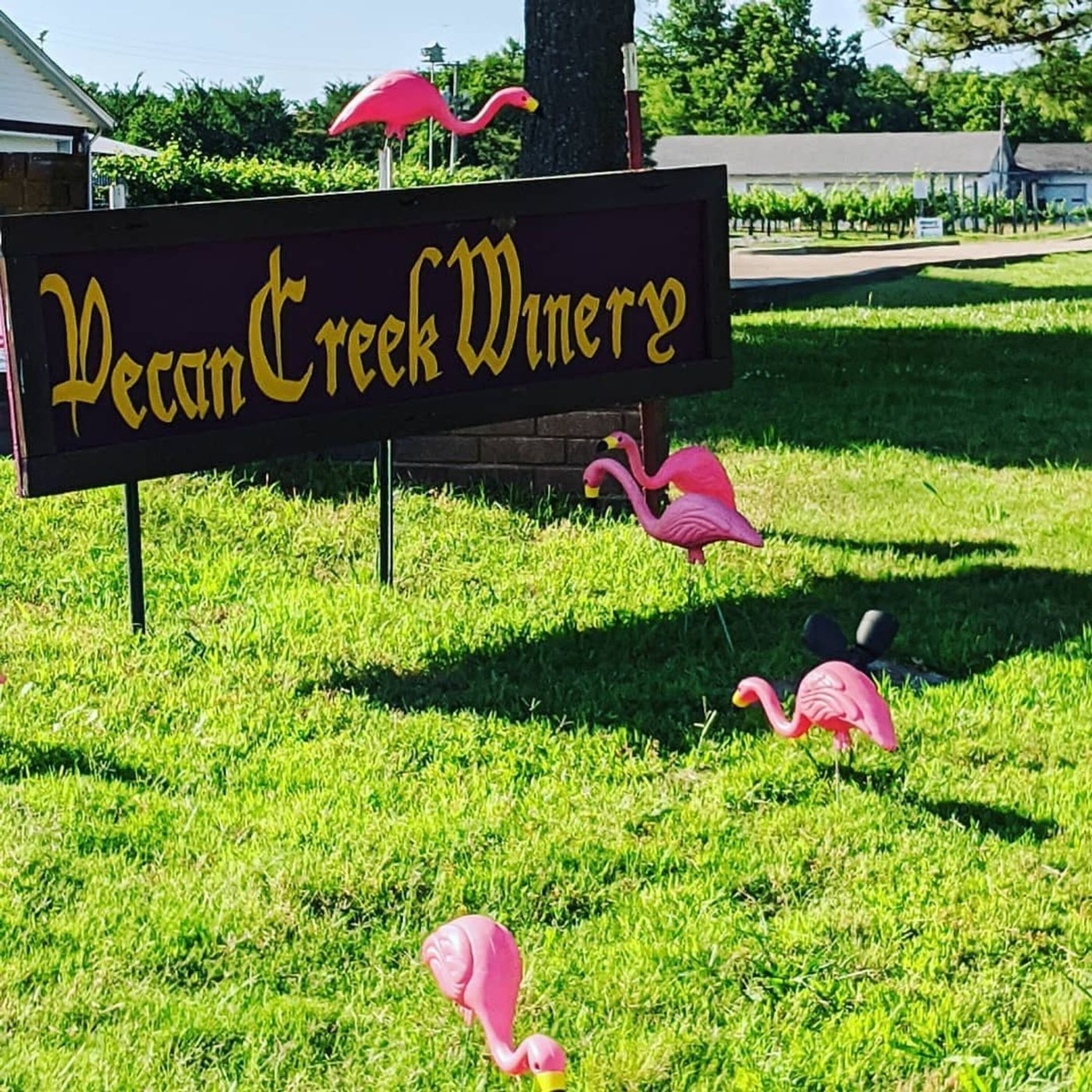
S1 Ep 20Pecan Creek Winery - Muskogee, OK Pt. 3
Welcome to The Best 5 Minute Wine Podcast. I'm your host Forrest Kelly from the seed to the glass. Wine has a past. Our aim at The Best 5 Minute Wine Podcast is to look for adventure at wineries around the globe. After all, grape minds think alike. Let's start the adventure. We wrap up our conversation with Bob Wickizer of Pecan Creek Winery, Muskogee, Oklahoma.OK, Bob, let's get down to the nitty-gritty. How many labels do you have?We actually have 20 labels. There are dry and sweet labels. And there are there's only two that are not from grapes or products that we get locally. We started. Everybody in the world wants cabernet sauvignon. Cab is hard to get, and frankly, it's hard to grow here. We do grow some, and we have a limited production right now. We did win bronze at San Francisco Chronicle for a couple of years ago. So I start getting nice source grapes from Lodi originally and now from Washington State. We make one line called Purple Martin. That's grapes that are not local, but it's a pretty darn good wine. And we also buy some mead from a Missouri mediary, and we add about five percent of one of our white wines to it to give it a little more acid and balance it up. And those are the only two at either end of the spectrum that we don't source and make entirely locally. So hypothetically, Bob, if a vineyard from California ever said you couldn't compete with what we produce here in California, what would you say?I still do say that any idiot can make good wine from West Coast fruit. But if you want a real challenge, you want to come out here, try it. The UC Davis field book for all the pests and bugs and viruses and bacteria and molds that affect wine is about 30 pages long. And the Oklahoma State University field book is about 200 pages. We have more things to worry about here than a grape grower in California would ever even dream about in their worst nightmares. And then we have the weather. Of course, you know, it was our meteorological data of last freezes, supposedly April 15th tax date. But April twenty-sixth this year, we had twenty-five degrees for four hours. And our Vitis vinifera plants especially, we're pushing out shoots about two, three, four inches long and they just turned brown and fell off. It was like, oh my gosh. But, you know, you never worry about a freeze, especially. And after your butt out started pushing out chutes, that's unheard of in most grape-growing regions. So, you know, we have that, and we have ridiculously humid hot summers. So the difference between the day and nighttime temperature, it can be 30 or 40 degrees in California, nighttime. Sometimes it doesn't cool off below 80 degrees. It's hard for the vines to rest metabolically. That's one of the reasons why our sugar levels are not as high as they get in California, but our acid levels tend to be very good. I personally do not like high alcohol wines, anyway. I prefer 12 to 13, maybe 13, four percent above. Thankfully, we can't grow alcohol here, so we take what we can get. We're having fun, and we're kind of the contrarian's. My partner, Dr. Wilkinson, and our vineyard manager Gary Ketchum is just fabulous at managing the vineyard.And finally, Bob, because you take such great...
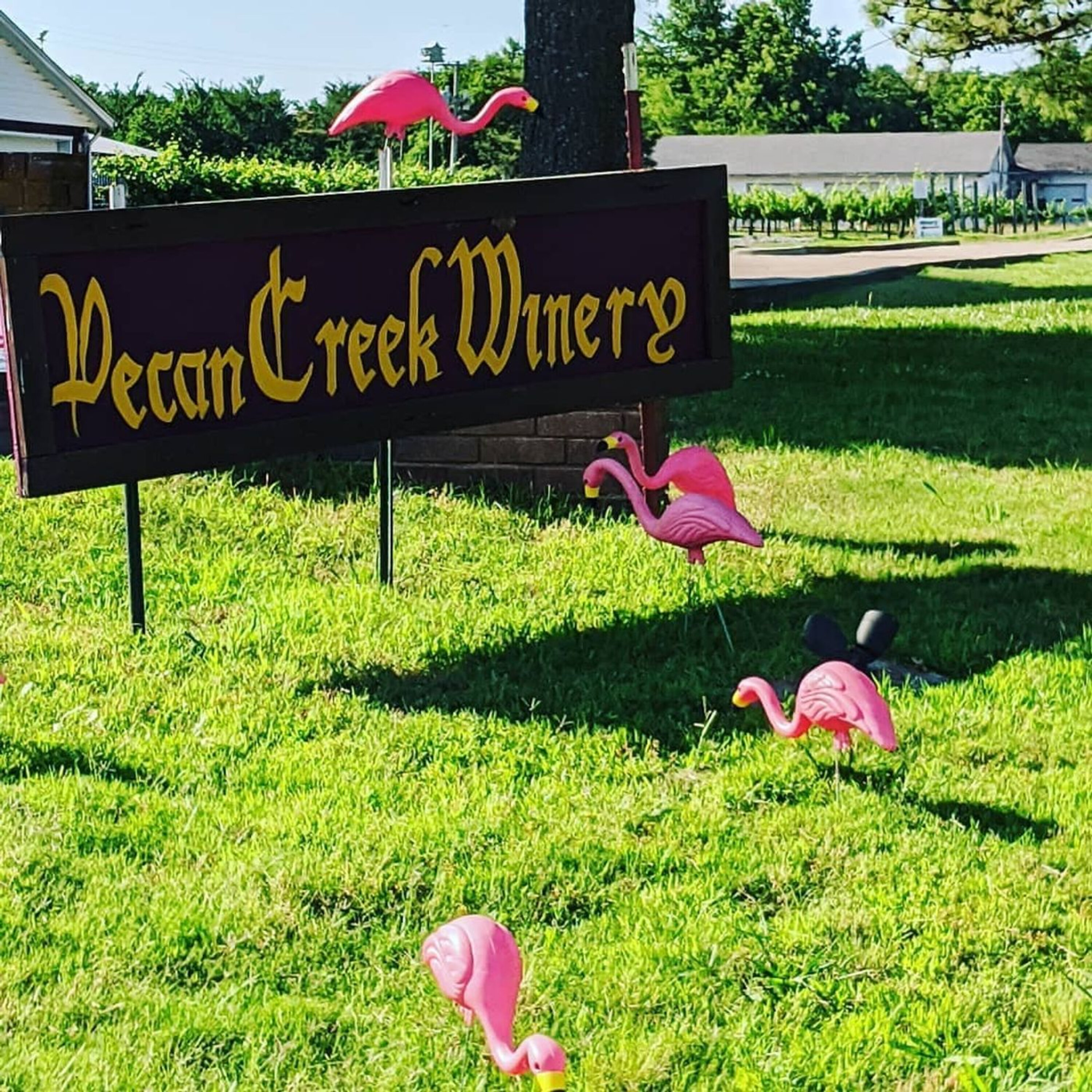
S1 Ep 19Pecan Creek Winery - Muskogee, OK Pt. 2
Welcome to The Best 5 Minute Wine Podcast. I'm your host Forrest Kelly from the seed to the glass. Wine has a past. Our aim at The Best 5 Minute Wine Podcast is to look for adventure at wineries around the globe. After all, grape minds think alike. Let's start the adventure. Our featured winery is, we continue our conversation with Bob Wickizer owner-operator of Pecan Creek Winery in Muskogee, Oklahoma. How do we get to your place? Well, first of all, you come down, I think one of the bumpiest roads on the planet, outside of the roads in the rainforest in Costa Rica. Once you've managed to traverse three or four miles of you, first see the vineyard on my partner's ranch. And a lot of people want to turn in there. But there are signs that say wineries another mile. We have about two or three hundred grapevines, cab, and Tempranillo around the winery. But the big vineyards down the road, the winery is in a 5000 square foot converted garage. I proudly tell the story of the origin of the word and the wine industry, Garagistes, it's a French or Italian word literally means someone who works in a garage like a mechanic. Then the big wineries picked it up to disparage the up-and-coming young winemakers who were, you know, they couldn't afford the Chateau and Napa or wherever. So they get a car garage, start making wine in it. So the Garagistes was originally a derogatory term. And lo and behold, over the last 10 or 20 years, people are paying attention. These small, artisanal wineries are making some pretty darn good stuff. And it might be worth visiting the small guys next time you go to Paso Robles and then then the giant places. And we're one of those. So we're proudly one of the Garagistes. We make wine in a car garage. Gosh, it was six bays or a couple of brothers and a big body shop in the back. And so they kept their high-end race cars, and they actually had a John Deere antique tractor collection as well in the garage where a winery is. So you'll see it, a nondescript metal building with a red door for the tasting room. And eventually, we're going to get our name on the building. But there's a sign out front on the road. But that's where we are for now. I mean, if we're in wildly successful days, we could move over to the farm next to the vineyard. And we've got some really cool space over there that would be great to expand into. But we just have to run the business conservatively and make it all work.So when you started the winery, were you at all hesitant about whether it would work in your climates and your soil? They say if it grows peaches, it'll grow grapes. And where our vineyard is part of a former six hundred acre ranch. Our consultant came out there that first day, and we said, well, meet us in the peach farm. And he said, oh, you won't even need it to get soil samples. If you had peach trees here. You're good to go. We took soil samples anyway, but you'll see that like the Palisades in California, I think there are some vineyards in South Africa like that where you'll see vineyards and peach orchards next to each other. So there's something about that. I guess the conditions are comparable, were favorable for both. We have a great site for a vineyard, and we grow about 30 percent of our production is hybrids.It's time, boys and girls for our listener voicemail. Hi, this is Judy from North Carolina. How do you choose the right wine glass? Me personally, I don't even use a glass. I just drink straight from the bottle. But if you're going to be sophisticated, you want a wide glass for reds, narrow for whites, tall, narrow flute style for sparkling. Thank you for your question, Judy. I'll get your free T-shirt out to you as soon as possible. Thank you for listening. I'm Forrest Kelly. This episode of the Best 5 Minute Wine podcast was produced by IHSYM. If you like the show, tell your friends and pets and subscribe. Until next time, pour the wine and ponder your next...
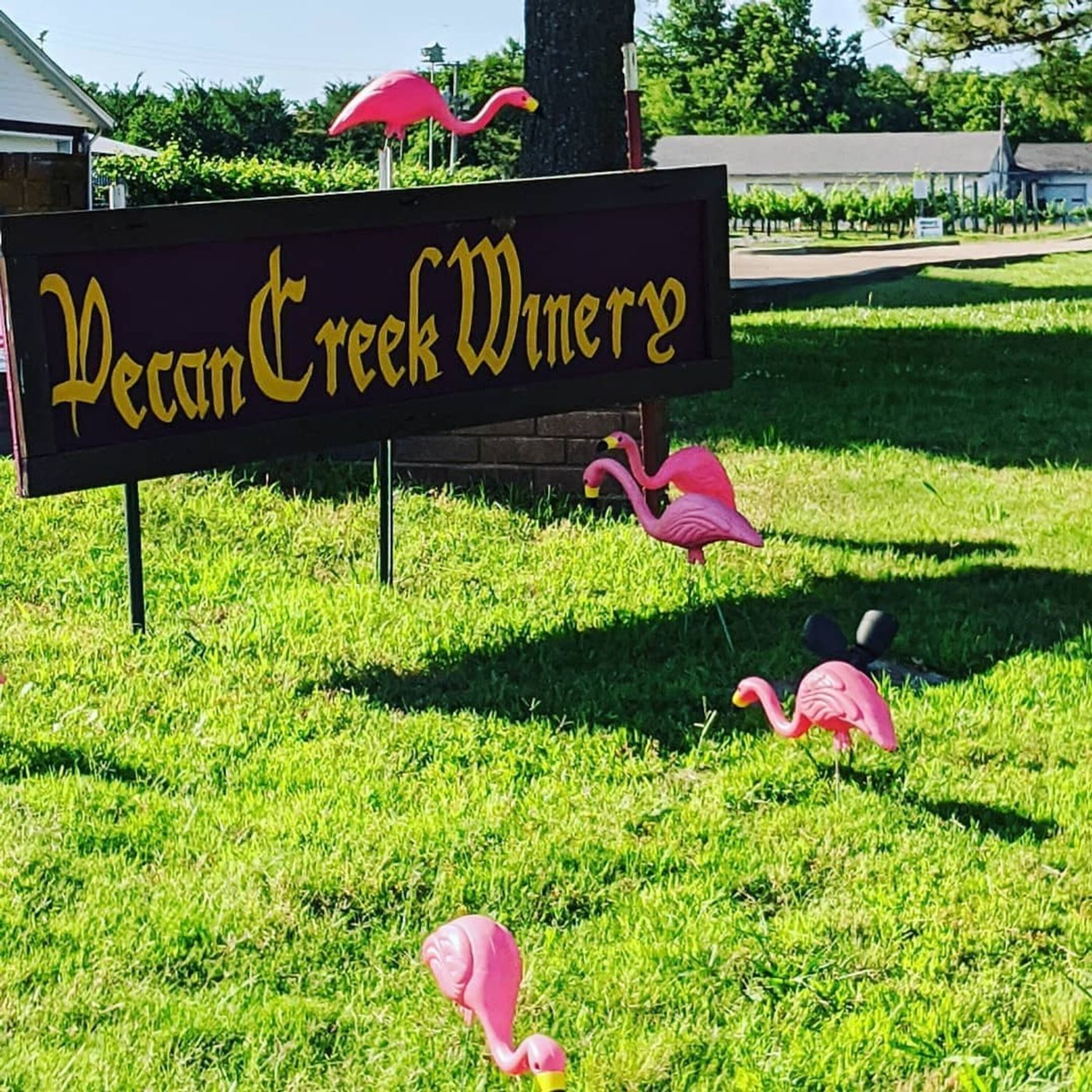
S1 Ep 18Pecan Creek Winery - Muskogee, OK Pt. 1
Welcome to The Best 5 Minute Wine Podcast. I'm your host Forrest Kelly from the seed to the glass. Wine has a past. Our aim at The Best 5 Minute Wine Podcast is to look for adventure at wineries around the globe. After all grape minds think alike, let's start the adventure—our featured winery in this episode. We head to Oklahoma City, where the average commute time is 17 minutes. Not bad considering mine is an hour and a half. The average household size is two. Median family income forty-seven thousand. Yes. Carrie Underwood was born here talking about Muskogee, Oklahoma, also home to: I'm Bob Wickizer. I am the winemaker and co-owner of Pecan Creek Winery in Muskogee, Oklahoma.Glad to be here. How did you get to this point where you started Pecan Winery? Well, wasn't that the Grateful Dead? Who's saying about what a long, strange trip it's been? My resumé and in brief ranges from being a physicist and medical imaging and starting and selling to companies, software companies, and Silicon Valley to firms. And that's where I learned winemaking and wine appreciation wine pairing; after a number of years and three years of commuting to Asia for a semiconductor project, I went to seminary in Cambridge, Mass. Became an ordained Episcopal priest, was up and down the East Coast in Washington, D.C., at the National Cathedral for a year. And then I got tired of that and wanted to be under the radar. So I've been in Muskogee, Oklahoma, for about ten years. I would get frozen grapes and make wine as kind of a hobby. And a member of the community says, gosh, you got to do something with that. Well, we partnered up, and he's the farmer. I'm the winemaker with that background.Bob, I imagine that you get pretty adventurous sometimes in winemaking.I have made a little bit of wine from concentrates just to see what it's like in general. We do not use concentrate except in two parts of the production process. And by the way, those are completely legal in France and California. One is chaptalization, when in fermentation, and we may use the grape concentrate to boost our sugar level up one or two bricks just to get a desired final alcohol concentration. And we may also use grape concentrate in the final sweetening back sweetening of the wine to produce a sweeter wine outside of that. No, there's no concentrate in this process at all.In the wine business, your job can be varied. Is there such a thing as a typical day for you?I wouldn't know. Typical if it hit me between the eyes. But a lot of times, I'm still the rector of an Episcopal church. Now we have virtual services and all that stuff besides writing and producing services. Every week I have three or four other articles I write online. And we're the only Episcopal Church in Muskogee. But I'm right church stuff for three or four hours, between four-thirty each, starting about four, 30, or five in the morning. And then myself, crew, I'll get something to eat some coffee myself. Our crew gets in about 9:00 every Monday. They have one or two pages of a detailed list of what to do. And I go over every day for about 45 minutes or just to clarify and answer questions and occasionally do calculations.I get an aside, being a physicist, I'm astonished at the lack of math skills in the general population.So I'm doing all the dosing calculations and transfer calculations and filtering determination's stuff like that. So any problems need to get resolved. I may do them in the morning, or I'll go back to church or stay home, one of those three, and then the winemaking duties.Besides that, it also amounts to managing sales, managing finance, purchasing department. I thought the other day; I counted up 17 hats I wear.So it's a good thing, too, because I don't have any hair all its time—boys and Girls for our listener voicemail.Hi, this
S1 Ep 17Prairie Berry Winery - Hill City, SD Pt. 3
Welcome to The Best 5 Minute Wine Podcast. I'm your host Forrest Kelly from the seed to the glass. Wine has a past. Our aim at The Best 5 Minute Wine Podcast is to look for adventure at wineries around the globe. After all grape minds think alike. Let's start the adventure. We finished our last episode with Angela from Prairie Berry Winery talking about their wine club and it's one of the biggest wine clubs in the United States. How big is it?So we have one of the largest wine clubs in the country. We have about 5000 wine club members from across the United States. We ship our wines four times a year to our members and then they enjoy other benefits, such as events and discounts and shipping perks and our wine clubs called Gen five. So it's a play on Generation five, which, as I mentioned before, is the fifth generation winemaker. I've never seen anything like it. When our guests come in this summer and they try our wines, most often they live outside of the region. They want to continue that relationship with us in the Black Hills. And then you go to the wine club information and you can enroll right online or you can call any of our wine club concierge and I can walk you through the enrollment process. But it's pretty simple. You just tell us what kind of wine you want to get. We do a mix, so that would be a dry and sweet wine. Or you can choose all the sweet. And then we include a beautiful newsletter that includes recipes and information about wine and some fun stories and tidbits from the company.I must say, I'm very impressed to look at the statistics of visitorship to Mount Rushmore and the visitors that you get at Prairie Berry Winery. They're very close. So pretty much everybody who goes to the park is also stopping by to see what you have to offer. Right. Yeah, You can't have one without the other. Right. The marketing campaign for this summer is actually South Dakota, home of red ass rhubarb and Mount Rushmore, where you take the lead on our campaign this summer. So your winery is just not about Red Ass Rhubarb wine. It's not just to fruit wines. You have a very large variety. Most people are eager and excited. They've seen our billboards. They've seen, you know, our social media. And so they have an idea of what to expect. But I think lots of people are pleasantly surprised when they try. You know, a wine, native rhubarb, or a wine native blackcurrants. We have a pumpkin wine. So I think the eye-opening experience for some who will maybe never experienced a fruit wine. We do also make great lines. You know, your traditional European style cabernet is in and things of that nature. So we have something for everybody. We are definitely proud of the fruit wines we make. And I like to surprise people who maybe have a preconceived notion of what a fruit, fruit wine is like. You know, based on either their family tradition or other wine experiences they might have had. Our Anna Pesa line is made kind of as a nod to that heritage from Eastern Europe. So those are going to be a more traditional style wine. You know, your drier reds and whites and some common grapes that you might recognize, such as Marleau, for example. But some other more Eastern European grapes that maybe people aren't always quite familiar with, like blouse franc issues is a great dry red wine that we make for the and a line. It's just a delight. Okay. As we conclude part three of our adventure to Prarie Berry Winery in Hill City, South Dakota. Let's get all your contact info.Our Web site is PrairieBerry.com. And our phone number is 605.574.3898. And you can find us on Facebook, Instagram, Twitter if you follow Prairie Berry.Will, somebody answer that phone? Its time, boys, and girls for our listener voicemail. Hi, this is Janet from New Mexico. I am not much of a wine drinker, but some of my friends are. So what would be a good way to start with?Thank you for your question, Janet. Surely can't be serious. I have...
S1 Ep 16Prairie Berry Winery-Hill City, SD Pt. 2
Welcome to The Best 5 Minute Wine Podcast. I’m your host Forrest Kelly from the seed to the glass. Wine has a past. Our aim at The Best 5 Minute Wine Podcast is to look for adventure at wineries around the globe. After all grape minds think alike. Let’s start the adventure.Our featured winery is, we continue our conversation with Angela of Prairie Berry Winery in Hill City, South Dakota. So we’ve won over a thousand international awards for our wine. When I tell people that sometimes, you know, they look at our labels are very whimsical and attractive, people enjoy the artwork on our labels. Right. And so when I tell them about the awards that we won, for example, for our flagship wine Red Ass Rhubarb, they’ll say, oh, it’s the name, but wine competitions are blind. So the judges don’t know what they’re tasting, speaks for itself. Okay. I would be remiss if I don’t ask about your most awarded wine and how you came about the name.Ralph, our winemaker’s dad was helping Sandy out of the winery one day with wine back then that we called it, Razzy Rhubarb wine. So the story goes that his face turned red. He felt like an ass for messing up the wine. And so the wine became red as rhubarb and then we added a donkey to the label. And it’s our most famous line now, our most award-winning wine. It’s a fine wine. It’s 90 percent rhubarb and 10 percent raspberry. It’s quite lovely. So Hill City, where the winery is located, I see where the population is just under a thousand people. So doesn’t necessarily reflect on how many visitors you get your winery per year. Doesn’t know our hill city communities are great and they support us very much. But being in the Black Hills of South Dakota, not too far from Mount Rushmore, it’s a very popular tourist destination. So our door count, the number of people and guests we welcome into our winery each year is generally around one hundred and fifty thousand people that come and visit us. We’re happy to welcome them when they’re out visiting Mt. Rushmore, touring Deadwood, and looking at the Web sites. Your complex just looks huge. So I imagine the two you’ve got guests when they come that they’re just not staying for wine tasting. They’re doing a multitude of things. We have not only very, very winery, but right next door. In 2013, we opened a miner brewing company. So a craft brewery, Sandy void, our winemakers, actually our brewmaster as well. She’s a woman of many talents. We also have an event center on-site where we host parties and weddings, reunions, things of that nature. And then we have a concert at normal times. Every summer we’d be hosting outdoor concerts. We have a basketball court, long games. So we really encourage our guests to join us for more than a wine tasting and spend an afternoon having lunch with us or enjoying some live music, having a pint of beer so you can really make a day of it. And I love it to the tune. Kind of a holistic approach at the winery because it’s just not about wine. You’re also helping with the community, with the farmer’s market. We do. We hosted a farmer’s market every Tuesday morning. It is a community’s farmer’s market and we just welcome them to our station and help promote it. And so that’s great for the community. The locals, as well as the tourists, have fresh produce once a week and in our area. Yeah. Yeah. Local farmers. Local growers. Yeah. You can pick up fresh meat at a farmer’s market in South Dakota. Nothing wrong with a big scoop of Midwestern charm. You sound very proud to work at Prairie Brewery. Have you been there long? Yeah, it’s been really amazing to see. I started as a tasting room associate. Just doing wine...
S1 Ep 15Prairie Berry Winery – Hill City, SD Pt. 1
Welcome to The Best 5 Minute Wine Podcast. I’m your host Forrest Kelly from the seed to the glass. Wine has a past. Our aim at The Best 5 Minute Wine Podcast is to look for adventure at wineries around the globe. After all grape minds think alike. Let’s start the adventure.Our featured winery is: We venture to Hill City, South Dakota. The oldest existing city in Pennington County. A 15-minute mule ride from Mount Rushmore. And about 70 miles from Belle Fourche, South Dakota, which is the geographic center of the United States. Hi, this is Angela from Prairie Berry Winery. I am the director of sales and marketing. Hello, Angela. I’ve heard of a Rocky Mountain oyster, but what is a prairie berry? It came from our winemaker, Sandy Vojta as a family heritage, actually in the late eighteen hundreds, her family, who came making wine in Europe, emigrated to the plains of South Dakota when they got here. There wasn’t much to make wine from. Obviously no grapes, things of that nature. So her great great grandmother. Her name was Anna Pesä. She started picking berries and chokecherries and buffalo berries, anything that she could find on the prairie of South Dakota. And she would refer to them as prairie berries. That story has been passed down for five generations and the winemaking tradition. And so when Sandy and her father and husband decided to start this business, it was easy to decide on the name. Prairie Berry Winery. And Anna Pesä comes here from Europe. What time frame in American history are we talking about? 1876. That was about the time in South Dakota with Deadwood was coming up in Wild Bill and Calamity Jane. And they happened to immigrate to the northern north-central plains of South Dakota, near Mobridge. Today’s what some Mobridge, South Dakota, not far from there. So 1876, Was she doing this for commercial reasons or just doing it because of what they did in her heritage to do it for themselves? Certainly, it was the tradition the women in the family would make the wine, course in the cold plains of South Dakota. That’s probably something they wanted to do to continue. Her husband would go down to the banks of the Missouri River and cut down oak trees, actually, and make her wine barrels so that she could continue producing wine just for the family. So your winemakers Sandy is a fifth-generation winemaker and she picked it up from her father, Ralph. Tell me about that. So he was making wine in his basement in Mobridge, South Dakota, long before the winery started. And she was a young girl learning, learning the ways. And it just became a passion for her and her and her husband, Matt, and Ralph. Her dad decided in the late 1990s it was time to make it real and start an wine actual business with it. We just celebrated our 20th anniversary as a winery. Last year, 1999 was our first vintage and so to speak, of wine. Now, 20 years later, we are one of the most award-winning wineries in the region. So we’ve won over a thousand international awards for our wine. That concludes part one of our interview with Angela from Prairie Brewery Winery. In our...
S1 Ep 14Dry Farm Wines - Todd White - Pt. 3
Welcome to The Best 5 Minute Wine Podcast. I’m your host Forrest Kelly from the seed to the glass. Wine has a past. Our aim at The Best 5 Minute Wine Podcast is to look for adventure at wineries around the globe. After all grape minds think alike. Let’s start the adventure.We are speaking with Todd White, founder, and CEO of Dry Farm Wines. So having strict guidelines for your wine, how did you come up with the wineries? How did you select them? Because you just can’t go to Google and find these wineries. In the natural wine business. There are very specific subsections of the wine industry. It’s tiny, very, very small. And so everybody basically knows everyone else. There are natural wine fairs, about 50 of them. There are three in the United States, but there is about 50 across Europe. And so we attend all of these natural wine fairs. We’re not right now, but historically we have. Now, today, we’re the largest buyer and seller of natural wines in the world by multiple of probably 25 X, maybe more than that. So we’re internationally known, you know, as a buyer. Now, in the beginning, when I started the company, there were probably about 40 natural wine importers in the United States, meaning that all they sell are natural wine. Like in San Francisco. There are two natural wine bars I’m sorry, three now. They’re just activists. Right. Like, you just wouldn’t have a non-natural wine in there. It’s just not it’s a it’s a revolution. There are three, arguably only three natural wine retailers in San Francisco. Right. And they’re very small stores. So in the beginning, you know, I started reaching out to natural wine importers. I discovered this importer in Paris and American his name’s Josh Adler, who used to live in San Francisco and he moved to Paris and he started a national wine importing company into the United States. And he was the first one that discovered he owns a company called Paris Wine Company. We’re probably his largest customer today, I would imagine. But we do a lot of business with them. But in the beginning, I contacted him to learn about sort of the natural wine world. I began to uncover and discover people and get referred to other importers who specialize in natural wines. Now, today, we’re the largest importer of natural wines in the world. So we still work with about 80 importers today. But we also import directly our own wines. And we do that. We have normally this time of year, we would have four to six people on the ground spread across Europe right now, buying wines that normally we would spend the first six months of the year in Europe buying wines.So you’ve got the sourcing figured out. So now comes the part on what to present to the customer, right? Well, we don’t sell wine by the bottle. We do custom curation for people. So. So every single box that our member gets is different and has different wines. And oh,...
S1 Ep 13Dry Farm Wines - Todd White - Pt. 2
Welcome to The Best 5 Minute Wine Podcast. I’m your host Forrest Kelly from the seed to the glass. Wine has a past. Our aim at The Best 5 Minute Wine Podcast is to look for adventure at wineries around the globe. After all grape minds think alike. Let’s start the adventure. We go on a different journey. We don’t drop into a specific winery.We are speaking with Todd White, founder, and CEO of Dry Farm Wines.There are 76 additives approved by the FDA for use in winemaking. Four of them are quite toxic. The most toxic is Dimethyl dicarbonate marketed under the brand name Velcorin. And it’s used to treat Brettanomyces, which is the most common bacterial fault and why it’s highly toxic. If you go to Dimethyl dicarbonate on Wikipedia, you’ll see how toxic it is. Okay, I did look it up on Wikipedia Dimethyl dicarbonate. It is classified as toxic. The first warning is harmful if swallowed. It’s also toxic by inhalation. It causes burns. Well, that’s not really something that you want to be ingesting, especially if you’re going to be drinking it over a lifetime. Now, the public doesn’t know about these additives some and in fairness some are natural. Many are not. The wine industry spends millions of dollars a year and lobby money to keep content labeling and nutritional information off of wine labels. So you don’t have any idea how much sugar is in the wine you’re drinking. To people who care about their health sugar is a very important thing they want to know about. So our job is education. The wine sells itself. Now, that brings up the question. Dryfarmwines.com because of these strict guidelines. Why don’t you carry any domestic wines? The reason being is that there are not really any U.S. wines that meet our criteria. And so you talk about U.S. wines. There are a number of difficult criteria for them to meet. And they’re in the order of dry farming. So almost all domestic vineyards are irrigated. Number two, alcohol. We don’t accept any alcohol over twelve and a half percent. And that’s lab tested by us. Alcohol stated on a wine bottle is not required by law to be accurate. So we did lab testing for alcohol. So there are virtually no U.S. wines made that are twelve and a half percent or lower in alcohol. Virtually none. And then the third most prevalent reason that a U.S. wine wouldn’t qualify for our program is cost. So all of our wines sell for exactly the same amount. They’re $22.00 a bottle. There are no U.S. wines that meet our criteria of organic or biodynamic dry farming and alcohol that cost anywhere close to $22.00. The primary driver on a domestic wine price is going to be the cost of the land. All of U. S. vineyard costs are just so much higher than the capital cost of land in Europe and places like Beaujolais, where anywhere across Europe where most of these small family farms that produce natural wines that we buy wine from, most of them are multigenerational landowners, that they don’t have any capital costs.We’re constantly being told to hydrate, drink more water. That philosophy does not transfer to grapevines. There are a lot of reasons not to irrigate a grapevine. And in most of Europe, it’s against the law to irrigate...
S1 Ep 12Dry Farm Wines - Todd White - Pt. 1
Welcome to The Best 5 Minute Wine Podcast. I’m your host Forrest Kelly from the seed to the glass. Wine has a past. Our aim at The Best 5 Minute Wine Podcast is to look for adventure at wineries around the globe. After all grape minds think alike. Let’s start the adventure. We go on a different journey. We don’t drop into a specific winery.We are speaking with Todd White, founder, and CEO of Dry Farm Wines.Yes. Dryfarmwines.com. The only health-focused natural wine club in the world. We’ll get into the intricacies a little bit later. But first, let’s get where the inspiration came from.Well, Dry Farm Wines was not intended to be a business in the beginning. So I do remember a specific inspiration that was a specific wine like a Pinot Noir from Mosel, Germany, that I was drinking at Zuni Cafe in San Francisco. That led me to the exceptionally inspired by natural wines. So I wasn’t thinking of Dry Farm Wines as a business at that time. I was just had discovered quite by accident the remarkable taste and texture of natural wines. And as a result, that kind of started me down the path of investigating natural wines and at a deeper level, which eventually led to the business.Okay. Before your mind gets too far down the road of traditional wine thinking.The first thought from Todd is we think of ourselves as a health food company, not as a wine club. This is a health food company first. So the second point is less than one-tenth of one percent of wines in the world are naturally grown and produced.Why do you let your mind marinate around those two thoughts? Todd continues to educate us on the philosophy of the company.Well, I mean, nobody. We created the category of healthy wines and sort of branded, as we think of ourselves as a health food company, not as a wine club. So we just happened to sell wine, have healthy food. So no one had really captured lab testing and quantifying wine around health quantifications. So we were the first to do it. Really were the only one to do it even today. As a result, when we started educating people on what’s really in commercial wines, not just organic wines. So organic is a farming method. You can have organic wines, but they’re not natural. Natural wine is a very specific protocol and category. And it’s very rare. Less than one-tenth of one percent of wines in the world are naturally grown and produced. So natural wine is a very specific category that has a very clear and specific understanding around the world for people who are in the natural wine business. We just happen to be in the right place at the right time in trying to solve a problem from ourselves. I wanted to drink healthier, lower alcohol wines that were sugar-free and met other criteria that were of interest to me. It turns out that the same concept was of interest to a lot of other wine drinkers. And so it’s always been my feeling that regular wine drinkers, meaning that people who drink daily as I do, people who drink wine every evening, most of them think they probably drink too much. Right. And so offering them a lower alcohol alternative that’s also natural and sugar-free, which is of interest to our customers. There just wasn’t any offer out there in the marketplace that did so, combining that with a long <a...
S1 Ep 11Post Winery – Altus, AR Pt. 3
Welcome to The Best 5 Minute Wine Podcast. I’m your host Forrest Kelly from the seed to the glass. Wine has a past. Our aim at The Best 5 Minute Wine Podcast is to look for adventure at wineries around the globe. After all grape minds think alike. Let’s start the adventure.We continue our conversation with Tina Post of Post Winery and Altus, Arkansas, as she explains the depths they go to ensure quality control.We take care of our vineyards and we harvest. We haul that. We bring it to the winery, which it’s just six miles away, which is really nice for the assurance of fruit quality. And then we process it. We package it. We develop the package. And we distribute to at four different levels. We know we work with brokers. We work in different states. We what we are our distributor. We also do retail. So we’re a business. And I think this is just wonderful. It makes it really interesting always to that take something from the ground to the table. And usually, that’s not the case. You’re one part of that, you know, in the process. But we literally do it from the ground to the table. You know, we built a distribution center that’s temperature controlled. We use the same refrigeration that we use for our cold fermentation tanks and our distribution centers. So everything is controlled. And, you know, with wine, that’s a big thing. You need sterile filtering. You need you know, we do liquid nitrogen drip on the line to everything to try and ensure the quality and the end being shelf-stable. You know, back in the 60s, it was very different. We had a bunch of wooden tanks and I hope over the years now we use wooden stays or wood chips for some of the things that, you know, everything’s stainless steel cold fermentation. Do you either evolve or you won’t get shelf space anymore? There’s too much competition to not make a good shelf, stable wine.I can’t imagine that it’s an easy task. Running a winery, the size of yours, and the diversity that you have. So as a business, I’m sure you’re always looking to pivot to something new or changing, I think is the business.Any business you always have to be reinventing yourself because the markets changed. You know, a couple of years ago for us in Arkansas, we had small farm winery laws and now we it’s opened up to national brands. That competition got fierce. It’s you know before it was a little easier because only small farm wineries could sell in your convenience stores chain accounts. And now it’s opened that. And so the competition is really fierce.We’ll take a short break. And when we come back, Tina will tell us what Post Winery is working on for the future need to satisfy a hungry mind.Every week, Your Brain on Facts brings you science. Why does Mint feel cold? History. King Charles. The 2nd of Spain was so inbred his family didn’t bother educating him music. Many hit songs and even entire albums were written for revenge technology. The first videogame was made on an oscilloscope in 1958 and every other topic under the sun. Look for your brain on facts, on your favorite podcast app or at <a href="http://yourbrainonfacts.com/" rel="noopener noreferrer"...
S1 Ep 10Post Winery – Altus, AR Pt. 2
Welcome to The Best 5 Minute Wine Podcast. I’m your host Forrest Kelly from the seed to the glass. Wine has a past. Our aim at The Best 5 Minute Wine Podcast is to look for adventure at wineries around the globe. After all grape minds think alike. Let’s start the adventure.Our featured winery is as continue our conversation with Tina Post of Post Winery and Altus, Arkansas. So since you are one of the biggest wineries in the United States, just a rough estimate, how many people have you got coming through your establishment?Oh, gosh. We have about oh, I would say 50,000 a year in retail maybe. But we are also the largest producer in Arkansas. We are as far as size, you know, where you could put all the other wineries here together and that be about not even half of what we produce. So as far as just getting an idea, I guess size, but yeah, it’s impressive.So to paint a picture when you come into the parking lot. What do we see?We have a retail outlet where you can take tours, do tastings, eat and the Trellis room. And just, you know, we have a gift shop in there and around the retail, we have a picnic area. And then around it, it’s kind of work into our beds around the winery, which we have. We grow everything from cucumbers and tomatoes to all the herbs we use in the kitchen. There are places to run the dogs and stretch your legs. We also in our south part of the parking lot we have Harvest’s House members that come in they can stay overnight.Staying overnight is obviously an added bonus if you fully engulf yourself in your experience of going through everything that you’ve got at the time that we’re recording this. We’re in the middle of the Covid -19 pandemic. And I’m just guessing that to your winery is closed as well.Yes, we have. In fact, I’m we’re just literally trying to figure out what the new normal is going to be. And then when you ask the question, what do you see? And, you know, I was. Well, that’s what you’re going to see as far as what we’re going to be able to do. That’s really up in the air, like taking a tour through the facility. Do we have everybody in a mask which our tours are really fun because they’re a basic winemaking tour and you get to see if we’re crushing that day. You get to watch a crash. If we’re bottling, you get to watch that. It’s so it’s really an interesting tour. It’s like winemaking one-to-one. And a lot of people really appreciate getting to see the distribution center and see how that works. Education is a potent part of what we do, whether it’s about wines behind the tasting bar or just about the whole process and how nature works. You know, the different seasons. That’s one thing people do like. They’ll say, you know where the grapes. But sometimes they say that in the middle of the winter, which is kind of interesting.So to get people, you know, this is how it works. This is how the process works and, you know, getting people back connected to the dirt, to the land, because at the end of the day, we’re farmers first to winemakers and we’re actually a winery who that actually produces are even we make cuttings. We make cuttings. And so we plant the grapes. We take cuttings from the vines because to propagate grapes you have you don’t do it from a seed. You don’t know what you get. So you do it from the wood of the vine that you want to propagate. So we make cuttings and it’s just pieces of that by. We cut and we propagate from that. And we...
S1 Ep 9Post Winery – Altus, AR Pt. 1
Post WineryWelcome to The Best 5 Minute Wine Podcast. I’m your host Forrest Kelly from the seed to the glass. Wine has a past. Our aim at The Best 5 Minute Wine Podcast is to look for adventure at wineries around the globe. After all grape minds think alike. Let’s start the adventure. Our featured winery in this episode is Post Winery.We head to the state that ranks number one in rice and poultry production. My wife’s favorite author, John Grisham is from the state. The state’s musical instrument is the fiddle.You’ve got to have a fiddle in the band. What was that? You’ve got to have a fiddle in the band. Thank you, Alabama. No, we’re not talking about Alabama.We’re talking about the only state that produces diamonds.Arkansas is home to Post Winery, it is the largest winery in this region. It is in the top 60 as far as size goes in the United States. We produce about 268,000 gallons of wine and juice every year. My name is Tina Post and I’m one of the fifth-generation family members working here at Post. We wear several hats. Mine is managing the retail and gift shop. The Trellis Room which is our farm to table food program. I do H.R. and things like cultivating our garden for our restaurant. We’re located in northwest Arkansas really at the base of the Boston mountains Altus.Arkansas is the site and because of where it’s located it offers some unique growing capabilities.We actually have a recognized as a viticulture area. It’s called Altus the outer sort of cultural area and we grow 5 different species of grapes which is very unique and I think America to grow those commercially. We’re kind of where the North meets the South and the East meets the West potentially. We have the beta Spanish fruit. Like your Chardonnay and Zinfandel. Labrusca like the Niagara Delaware Concord of course falls into that category. French hybrids like save all the doll and yellow beta festivals which is the Cynthia and the great. It’s also known as Norton if you go into Missouri and they’ll call it Norton and beat us pretend to follow which are the mascot eyes. This is as far north as it grows commercially Altus, Arkansas.So out of those 5 varieties that you mentioned do you have a favorite?Yes. The muscadine line it’s a flagship great for us. It’s a thick-skinned grape that hangs in clusters as opposed to bunches and it is indigenous to North America. And it only grows below the <a...
S1 Ep 8Ports of New York Winery – Ithaca, NY Pt. 3
Welcome to The Best 5 Minute Wine Podcast. I’m your host Forrest Kelly from the seed to the glass. Wine has a past. Our aim at The Best 5 Minute Wine Podcast is to look for adventure at wineries around the globe. After all grape minds think alike. Let’s start the adventure. I’m the owner Frédéric Bouché and the winemaker of Ports of New York Winery. Welcome to Part 3 of our conversation with Frédéric Bouché. Can’t wait to get into it. So many fascinating stories with Mr. Bouche. Imagined having a winery with your style and the way that you’re so personable that you hear some interesting stories from your patrons had something to do.I mean, the winery there is because we make fortified wines and expands. Not that long ago, that was beautiful fast. I had a group of Indians from India and they were all scoters. Only one of them did not speak English at all. And as we were talking about various types of fortified wines, I was using the term Madeira, which is also Portuguese. That person wouldn’t even speak English. I actually picked up on that word and get some saying it over and over again. So I asked the other guests. How come that person doesn’t speak English? Clearly knows that word. Well, this was because Madeira is the word in overdo. That means alcohol.And that opens a completely incredible page of each story. In fact, the Portuguese have been bringing Madeira to exchange for spices.And so it ended up being that they adopted that word Madeira to mean alcohol because, again, it’s not for this alcohol. So I understand that you do not have a vineyard on sites. You do not grow your own grapes. But this isn’t something that is new to you. This goes back a long way. The winery I grew up in, our vineyards were not on site. They were in the fall of the region, which we get them until the late 70s, early in the family. But the winery was the main building where I grew up was no more. So I don’t want to deal with going great. It’s a whole other job. So we are in the middle of it. They got along the water and it’s an open winery, one of the very first one in New York. So it was very challenging as far as laws and everything to make that happen. Well, I should mention something else, actually. We pre-buy our grapes by the ton without knowing what the harvest is, somebody quality. So in a sense, it’s as if we were growing old grape. But the final product is whatever nature is going to bring us. We’re going to deal with it. And it is truly a very different thing to own, to make the wine. Then two on top of it has to deal with a farm.Let me see if I can get the timeline correct, you arrived in Ithaca, New York in about 1994. The thought of the winery, things started marinating, and then in 2003, there were some new laws are going to be put into effect that would affect your plans built on the land. You put the buildings up, the lights on, and you got to the equipment and everything was finished in 2006. And then four years later, you opened in 2010 and you started making the ports because that takes what you were telling me, a four-year minimum. So from 1990 forward to 2010, almost 16 years, you poured your money into this, so. Yeah. You’ve got to have some money if you want to start a wine business.I always say to everybody, I go, you have a lot of money. Keep your job. And that’s exactly what we did. We stayed really tight to focus and invested in the know at all in this whole thing and very carefully.I mentioned this
S1 Ep 7Ports of New York Winery – Ithaca, NY Pt. 2
Welcome to The Best 5 Minute Wine Podcast. I’m your host Forrest Kelly from the seed to the glass. Wine has a past. Our aim at The Best 5 Minute Wine Podcast is to look for adventure at wineries around the globe. After all grape minds think alike. Let’s start the adventure.**Our featured winery is Ports of New York as we continue our conversation with Frédéric Bouché Ports of New York, owner-operator.And then what happened is that my wife and I moved to the Finger Lakes region in 94 because she got a position at Cornell University and was to join the region. So it was kind of ironic after all the years that I was away from it, I fell back into it. And so I built a lot of issues and a lot of antiques and stuff from science here. And that’s one thing that we all for this completely unusual is that I was facing some kind of a little museum of French wine equipment.So in between, that’s a time you obviously knew your family’s history and the leanings and the influence that they had had had. You had kind of a secret interest in dipping back into that or when you went to school in high studies?I didn’t I you know, it was a very patriarchal world, not a pleasant place to hang out. So it wasn’t much more about the work.And so I grew up in that and I just wanted to getaway. And when I went to study in Paris, I was super happy to not be thought of that. Although as we were traveling, my wife and I had a falling fifteen years. So we kept on making our old wine. Where I go or various grapes or you go under your truth. And so I never really left that. And coming in the Finger Lakes, I got in touch with other wine real owners then. And clearly Vienna was interested to get back into it. I understood the value of it, which I had not understood when I was much younger.You’re having your background and things. Did you bring something a little different to winemaking? Table?Yes. Here we decided. My wife and I decided to make wines that were different from what is made in the region because there are a lot of other wineries that make all the classic reasoning for that. So we make only French by wine, which means that blended. And we make a lot of that, a wholesale style which is so renewable. We make a bottle final, which is classic. We are talking about different origins, slightly different than the North American notion of a table wine.In France, a table wine is not necessarily a cheap wine.Supplying that you can rely on every day and one day is generally very versatile compared to the number of food. I’ll drink it by itself. I don’t fall very high in alcohol, only 12% some currently. We would go higher than that. And when I grow up, I’ll table wines were between nine and eleven for some alcohol. So that’s what we decided to focus on, but also fill these out for our base wines. But also we make too high on the wine, which are fortified wines, all that method wines. And these are a lot truculently. The oldest one is then that is 14 years old and the youngest blend is four years old.So I don’t know. I’m from you go with a full airline system, but it’s a blend from the intake shooting days.That concludes part two of our interview with Frédéric Bouché of Ports of New York.In our final episode, we’ll find out what he likes most about the winemaking industry.Thank you for listening. I’m Forrest Kelly. This episode of the Best Five Minute Wine podcast was produced by IHSYM. If you like the show tell your friends and pets and subscribe until next time, pour the wine, and ponder your next adventure.Please subscribe from your favorite Podcast Platform: <a...
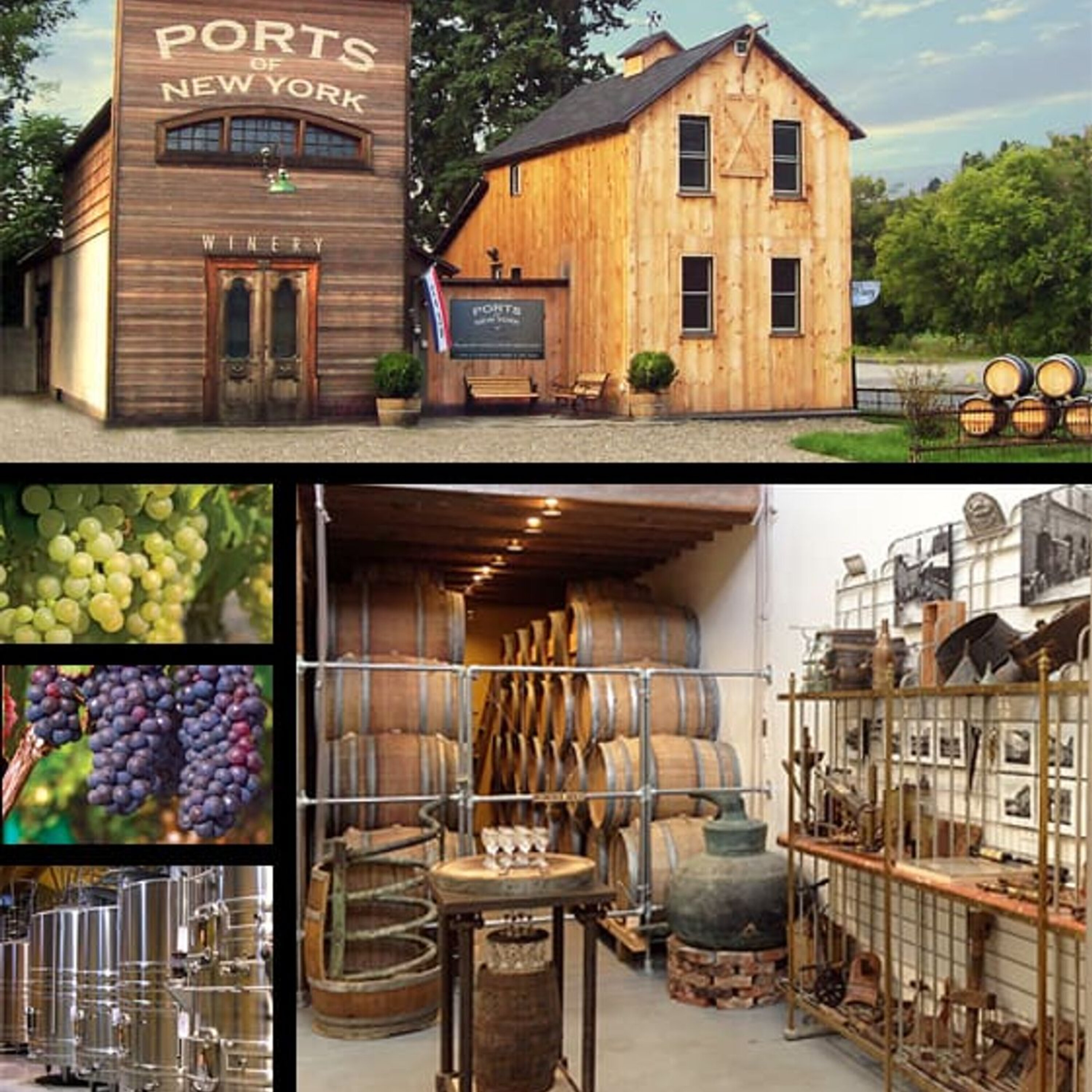
S1 Ep 6Ports of New York Winery – Ithaca, NY Pt. 1
In this episode, we talk with Frederic Bouche of Ports of New York Winery. We discuss his history of winemaking and French background.Welcome to The Best 5 Minute Wine Podcast. I'm your host Forrest Kelly from the seed to the glass. Wine has a past. Our aim at The Best 5 Minute Wine Podcast is to look for adventure at wineries around the globe. After all, grape minds think alike. Let's start the adventure.Our featured winery is, we travel to Ithaca, New York, home to Cornell University, and also has the highest percentage of workers who walk to work. Seventeen percent of their workers walk to work. Also home to Alex Haley, the Roots author, and Vladimir Nabokov, the Lolita author, and most importantly, home to Frédéric Bouché, and I'm the owner and a winemaker of lots of New York winery.As you can probably guess, Frederic is from France. So just a little background on France. They produce 78 billion gallons of wine per year. And going back even further, the Catholic Church at one time was the largest vineyard owner in France. However, in 1860, France was plagued with wine maladies. They hadn't quite perfected the making. And so, they declared it a national crisis in 1860. So they called in Louis Pasteur. Yes, the same man who perfected pasteurization. And in 1866, his essay, Studies on Wine, became the foundation of modern winemaking. He had saved France's wine industry. So that brings us up to Mr. Frédéric Bouché and his family history.So it started with my great grandfather in 1919. And that was in France, in Normandy. So basically, my great grandfather told me he had vineyards in Baldo, which is yet another region, a true wine region. But he moved to Normandy in 1919 because his wife was from there. And when he moved there, he realized there was no wine, no more. Which was not a wine region? So he saw the opportunity and brought in some of the table wine, just to put it in kind of context.How big is wine intertwined in their culture at that time?So in Normandy, nobody drank wine or very few people because there was no access to it. So they were drinking hard cider. And you are still very complex. Hot cider, cold calvados. And so he brought in the words and ignoring warnings from everywhere from France and then bottled them under his name, alanine, and then that's what he would sell. So he was one of the very first people to sell French wine cellar to hotels and restaurants in the region.They were loving this. They were there was a huge step up from cider to what he was producing. It was really high-end because you could. I mean, at that time, you could get the amazing wines for not much money and restaurants real. So we're doing custom labels for sure. Restaurants. Wow. It's quite amazing. Yeah. You think about 1999, the technology, and just what they were dealing with at the...

S1 Ep 5Discovering Hawaiian Pinot Noir: A Journey to Volcano Winery - Pt. 2
Welcome to The Best 5 Minute Wine Podcast. I’m your host Forrest Kelly from the seed to the glass. Wine has a past. Our aim at The Best 5 Minute Wine Podcast is to look for adventure at wineries around the globe. After all grape minds think alike. Let’s start the adventure. Our featured winery in this episode. Our featured winery is Aloha, Volcano Winery.As we continue our interview with Kendall of Volcano Winery in Volcano, Hawaii, in our first episode, we learned that Volcano Winery is about 4000 feet high and is surrounded by volcanoes. And with that, it brings some special qualities to their appeal to what we call our Pinot Noir here on site. It’s considered one of our smaller batch wines. So it’s a little bit more exclusive compared to our house wines. And we take a lot of pride in our pinot noir. It’s very different from any other Pinot that I’ve personally tasted. It’s very light-bodied and super sulfuric and it’s got a lot of volcanic generality and cherry tart tones and subtle tannins. And it’s just very easy drinking. And it’s a hit with the community and from people all over the world because, you know, Pinot Noir is known for being a very temperamental grape. And there’s a lot of different regions in the world that are known for Pinot Noir. So it’s kind of fun to come over here and taste it. Hawaiian Grill and Pinot Noir Grape.I read online were a Canadian couple came to the winery and I guess they bought more wine and it was allowed for them to get back into Canada with. So they had to make arrangements probably give it away or something. It was so good.Man, that’s a bummer. Yeah. Yeah. We are a small production here. So when it comes to shipping back to other places, there are a lot of our customers. We do ship to the majority of the United States to ship to about 39 states in that shipping via alcohol license things and kind of matching them up with the other states. Unfortunately, we don’t ship to everybody and we don’t distribute. We only distribute within the Hawaiian Islands because you’re at 4000 feet. Is that an advantage or disadvantage if you’re here during our follow winter season and you’ll notice that the vines look a little sad. I don’t want to say that, but they’re actually dormant. So there’s no greenery. There are no grapes on the plant physically at this time during the fall and winter season. And that’s just because they’re kind of gearing up, getting ready for that spring and summer season when they will be flourishing and they’ll be green and they’ll be pumping out the great the grape plants. So it takes about eight years for the grape plant to produce fruit. Once it’s planted, once it’s producing fruit in order to produce a healthy grape. It has to go into a state of dormancy. And that’s pretty much for half a year in that dormancy is achieved by the plant being in a location that reaches temperatures below 40 degrees. And that temperature has to remain below 40 degrees consistent enough. So a majority of the day for come and maintain that dormancy.That’s the trigger. Yet that’s the trigger that luckily that’s our biggest advantage of being at this elevation, allowing us to have those mountain winds in those cooler temperatures through the winter season, which in turn would have that natural dormancy for our grape. So that’s a big plus for us here.Wow. Some good stuff with Volcano Winery in Volcano, Hawaii. Thank you, Kendall. If anybody wants to get a hold of you, obviously, how can they do that?Not only can you give us a call anytime during our business hours roll. Happy to help you with any kind of questions or shipping or orders on the phone. We have (808) 967-7772. On our web site, you’ll have a list of all of our wines, all the states that we ship to. You’ll have...
S1 Ep 4Lava Tubes and Cork Trees: Inside Volcano Winery
Welcome to The Best 5 Minute Wine Podcast. I’m your host Forrest Kelly from the seed to the glass wine has a past. Our aim at The Best 5 Minute Wine Podcast is to look for adventure at wineries around the globe. After all, grape minds think alike. Let’s start the adventure. Let’s start the adventure. Our featured winery in this episode.We find out America’s Southern Most Winery. Do you have a guess? Let me give you a hint. Aloha. Oh, you guessed it’s Volcano Hawaii is where we venture to.My name’s Kendall. And I’m the assistant manager and my associate here at Volcano Winery. Well, hello, Kendall. When you first come into the parking lot, and you look at the winery, what are we looking at?Yeah. So when you first take a glance at Volcano Winery, the first thing that’ll definitely jump out to you is that we grow grapes here. We have rows of grapevines, Japanese tea plants, olive trees, and a one of a kind Hawaiian grown cork tree.Now, what is also a cork tree?So it’s a cork tree, but it’s harvested. You harvest cork from it. So the outer layer of the tree is how you harvest the cork. And it regenerates every seven years.And that’s what you used to cork up the wine, as you know, cork says, what we up in that bottle. They keep it nice and sealed up. We also have a small tasting room. And in addition to that, we offer a free vineyard and production room tours in the backdrop. You’ll see Mauna Loa volcano on the left and Monacan volcano on the right. And then we’re heavily forested up in this area.We have tons of native forests and lava tubes on the property here. Lava tube? What is that?The volcano system on this island. They are not the explosive volcano that you would expect to see. They’re called shield volcanoes. And so, a shield volcano, instead of exploding out, it houses the lava in a big crater. And then when it goes to release the lava, it shoots it out, kind of like a plumbing system. It shoots it through all the lava tubes which are under our feet.So you’re just outside of Hawaii Volcanoes National Park. I imagine you get a lot of traffic coming from the park.Yeah. So we’re about two miles from the national park entrance. So a lot of the time, we have customers that are hiking during the day, and then they come to check us out for an afternoon tasting or kind of the opposite. People come in first thing in the morning and do a little tasting so that they can go hiking with a little by little wine.Right. It’s sort of that mountain. That volcano doesn’t look so big when they’re taking it.Yeah. In reality, those are the two biggest mountains in the world. If we measure them from under the ocean to the tippy, tippy top of those mountains, taller than Mt. Everest. Yeah. Wow. So I was reading on the Web site where you’re very passionate about sustainability. So I imagine over the years, you’ve had to do some experimenting to make that happen.We’ve experimented with a lot of different great varietals here, and we’ve narrowed it down to four varietals that work well for our microclimate here in the volcano. And those would include a great cold symphony, and symphony is a hybrid. UC Davis, California, actually created this grape in the 40s by doing a cross of the Mascotte grapes and the Grenache grape. So it’s kind of a cedar white grape. And we tried to blend it through a lot of our wine since it’s the main grapes that we’re producing here. We also do a grape called Cayuse Awaits. And that was created at <a...

S1 Ep 3Vintage Wisdom: The Art of Aging Wine in Arizona
This episode brings you insights from Ken Callaghan of Callaghan Vineyards, as we explore the intriguing world of wine production in Elgin, Arizona. Callaghan shares his experiences and expertise accumulated over nearly 30 years, emphasizing the importance of understanding wine aging through a unique library tasting event. Listeners will discover the distinctions between wine grapes and table grapes, highlighting the complexity and variety inherent in winemaking. Ken's achievements, including accolades from prestigious competitions, showcase the quality and craftsmanship at Callaghan Vineyards. Join us for a delightful journey into the art of winemaking, where every vintage tells a story and every sip is an adventure.Welcome to The Best 5 Minute Wine Podcast. I’m your host Forrest Kelly from the seed to the glass. Wine has a past. Our aim at The Best 5 Minute Wine Podcast is to look for adventure at wineries around the globe. After all grape minds think alike. Let’s start the adventure. Let’s start the adventure.Our featured winery is we return to Elgin, Arizona, for part two of our interview with Kent Callaghan Vineyards. Some of the events that they put on at the winery is a library tasting where they share a library worth of wines and they take you to a behind the scenes special event. You get to sample wines from their earliest vintages back when they started in early 1990 to the wines that they are producing now. So you get to compare the two.I think it’s interesting for them to see, you know, the library historical data to see how the wines age, what’s done well, you know, and how these images are different, because we definitely have vintage variation in Arizona in general, and particularly in Sonoita, the monsoon rainfall that we would get.So when you’ve been working with the vines for close to 30 years, as Kent has, you tend to get recognized in the wine industry with some awards, most recently a governor’s dinner in 2017 San Francisco Chronicle, probably a competition that people in California can relate to. And we got Pinot 19 in competition got Best of Class. Got the craft in the last competition and 2020 launches happen in January. Man, I have been there a white one best of class. So they tend to do pretty well in the competition. If you’d like to inquire more about what’s going on with the events or even visit the winery in Elgin, Arizona, at Callaghan Vineyards, how can people get a hold of you can go to the website Callaghanvineyards.comAll right. Thank you very much for your time. It has been very enlightening. Yeah. Thanks for us. Thank you.It is time now for our listener voicemail question.My name is Jolene Erickson and I’m from Flagstaff, Arizona. And I was wondering when making wine do you have to have seedless grapes? If you could answer that question. That would be awesome. Thank you.No, you do not have to use seedless grapes. However, there is a difference between wine grapes and table grapes. There are over a thousand different varieties of grapes made for winemaking. They’ve converged them over the years. Plus, wine grapes have a very thick skin, unlike the table grape, which has a very thin skin. So it’s easy to eat and the differences go on and on. That’s what makes winemaking so intriguing. The layers are endless.Thank you for listening. I’m Forrest Kelly. This episode of The Best 5 Minute Wine Podcast was produced by IHYSM.If you like the...
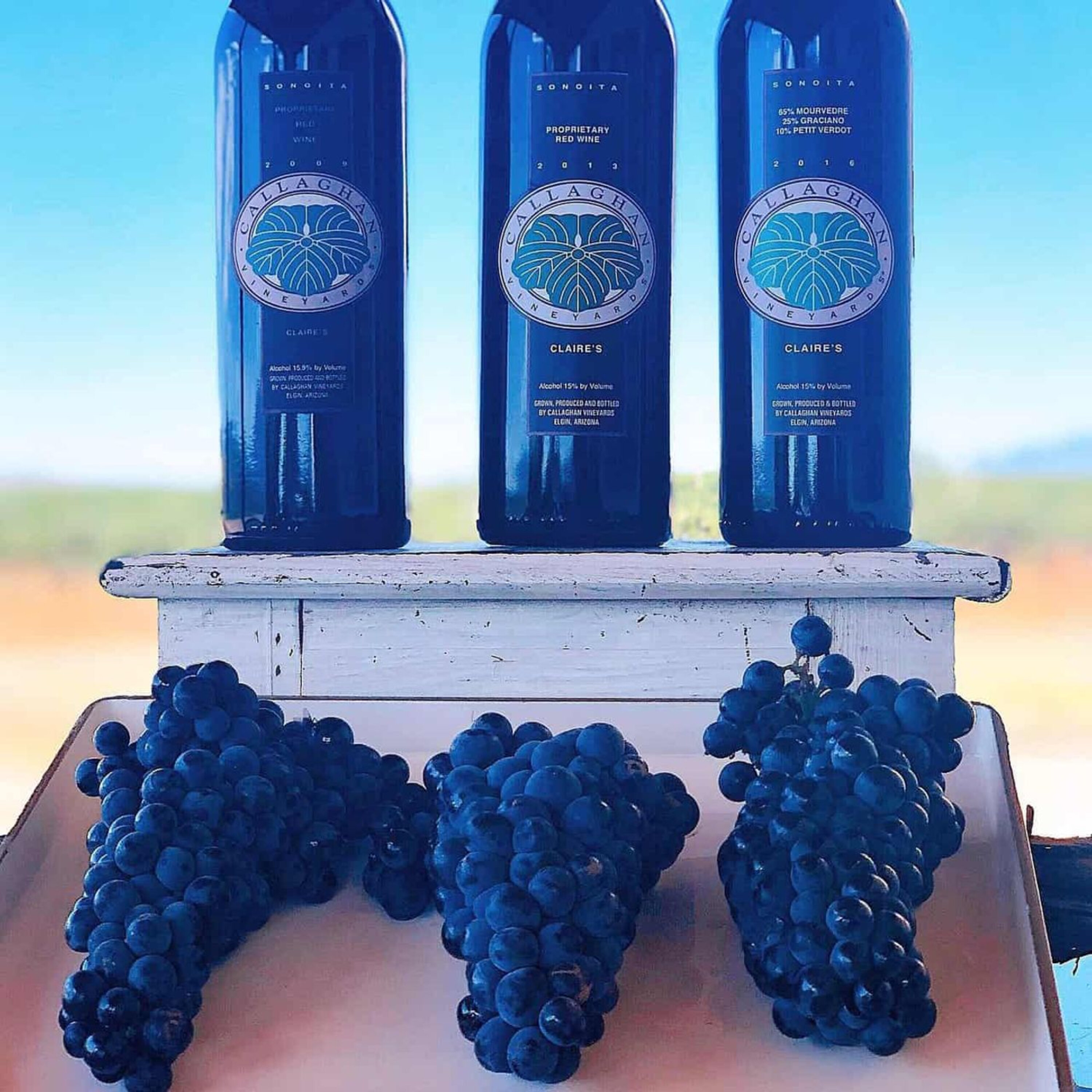
S1 Ep 2Heat Waves and Harvests: The Challenges of Arizona Winemaking
Discover the fascinating journey of Callaghan Vineyards, a winery in Arizona that emphasizes the importance of quality over quantity in winemaking. Host Forrest Kelly interviews Kent Callaghan, who shares insights into the challenges faced when starting the vineyard amidst extreme weather conditions in the 1990s. With over 30 years of experience, Kent discusses the critical role of pruning in achieving success and the ongoing quest to determine which grape varieties thrive best in Arizona’s unique climate. Listeners will also learn about the intriguing history of the corkscrew, a tool essential for wine lovers. Join us for an adventure through the world of winemaking, where Kent’s passion and dedication shine through, making it clear that the journey of discovery is just as important as the final product in the glass.Welcome to The Best 5 Minute Wine Podcast. I’m your host Forrest Kelly from the seed to the glass. Wine has a past. Our aim at The Best 5 Minute Wine Podcast is to look for adventure at wineries around the globe. After all grape minds think alike. Let’s start the adventure.Our featured winery is: We venture to Arizona. Callaghan Vineyards. Dr. Gordon Dutt, doing some research for a project that he was working on, was surprised to find that there were no wineries in the state, even though the soil composition was similar to Burgundy France after some funding. The wine business was born in Elgin, Arizona. The state of Arizona has over 100 wineries, but in a particular area, we’re talking about is fifteen, including Kent, Callaghan Vineyards.So we go back to summertime 1990, Ken’s parents decide to start the vineyards along with Kent. But Mother Nature didn’t exactly greet him with open arms.Well, we planted in the middle of a heatwave. It was the first time, as far as I know, Sky Harbor Airport in Phoenix had shut down. Think it was 122 for a couple of days. It was 105 here in Elgin.So we lost a lot of our plantings right off the bat in Cabernet, which was about 9000 of those vines to us, probably twenty-five hundred.It’s going to be all that hard work. Then to see those vines die because of the extreme heat, you probably wonder whose idea was this anyway?It was my dad’s idea. He had been a real home winemaker, so they thought this parcel man asked me to come on to help them plant the starting point of entry and start a winery. I was right out of college at that point, basically.So you graduate from college. Where did you to college? Pomona in Claremont. Okay. In Southern California. And graduated with a degree in philosophy. So from that to the current time, you’ve been doing this. What? Let’s say you do the math. You’re a little over 30 years.Yeah, 30 years. 30 of vintage this year and then 31st first year growing.How big is pruning into the success of a vineyard? It’s huge. In my opinion, the single most important thing that you do if I had to rank them.Why is it so critical? Well, It sets the stage for basically everything else. If you prune correctly, you know, you’re just setting yourself up for success the vine architecture, the way the vine grows is going to give you hope what you know, he’s intending to get with less need for inputs, particularly manual input.Without getting too...
S1 Ep 1Exploring Alaska's Unique Fruit Wines: A Journey with Bear Creek Winery
Join us as we explore the fascinating world of fruit wines at Bear Creek Winery in Homer, Alaska, where the flavor profiles are refreshingly distinct from traditional grape wines. Host Forest Kelly engages with winery owner Lewis, who shares insights into the challenges and triumphs of crafting wines from local berries and fruits in a region known for its halibut fishing. Discover the innovative spirit behind their popular strawberry rhubarb wine and the exciting plans for new products, including sparkling apple wine. Lewis highlights the collaborative nature of the winemaking community in Alaska, emphasizing the unique tastes that fruit wines bring to the table. This episode promises to expand your palate and inspire your next culinary pairing adventure.Bear Creek WineryWelcome to The Best 5 Minute Wine Podcast. I’m your host Forrest Kelly from the seed to the glass. Wine has a past. Our aim at The Best 5 Minute Wine Podcast is to look for adventure at wineries around the globe. After all grape minds think alike. Let’s start the adventure. Our featured winery is Bear Creek Winery as we venture to Homer, Alaska. Population just over 5,000, the halibut fishing capital of the world. Home to such famous people as the singer Jewel. Mr. Motel 6 Tom Bodett. Tom Bodett: We’ll sure leave the light on for you. Forrest Kelly: Thanks Tom and Bear Creek Winery, owner-operator Louis Mauer. That is correct. So when we pull into the parking lot at Bear Creek Winery, what do we see? Beautiful set of grounds and gardens that you can see and so there’s a little aft people can walk through and we’ve highlighted some of the berries, the fruits, and berries that we use in our wines in the garden. No, the first thing people think of, you know, a winery in Alaska. How is that possible? Are there any hardships?Well, yes. If we were trying to grow our grape, it would be extremely difficult. Which we’ve actually tried cultivating grapes and they’ll root and they do okay during the summer months, but then they’re very difficult over winter with the cold. Our most challenging thing is probably shipping items, getting stuff up here, and getting things back down the lower 48. It is always a challenge and costly.In the early years, you were doing five-gallon batches and now you’re over what, 20,000 gallons a year? That’s correct. Right now, we ship anywhere in the US.So your featured wine, your home run, your grand slam home run wine would be?Our strawberry rhubarb. We have two brands, one’s a Bear Creek and the strawberry rhubarb is by far our most popular wine. We make a strawberry wine and then a rhubarb wine and blend the two together. And then for our Glacier Bear, which is our sister label that we’ve produced in order to highlight the guaranteed to be grown in Alaska fruit wines. We have a golden raspberry that we make that’s extremely popular.Do you get any push back from traditional wineries?No, not from wineries but within wine tasters. Everything’s interested in what we’re doing, it’s very collaborative. We get more blowback from customers coming into the tasting room and not understanding what it is that we do more so than people in the industry.It’s the taste of a fruit wine that much...