
The Art Angle
382 episodes — Page 3 of 8

Can Machine Vision Replace Art Expertise?
Say the words "artificial intelligence" or simply, "A.I." in an art setting, and people think of either cutting-edge, new media art, or of misinformation., hallucination, and plagiarism. But there's a case to be made that those words should prompt you to think about very old art and about very new technology's use in finding out what's real. My colleague at Artnet, Jo Lawson-Tancred has a new book out called A.I. and the Art Market, that serves as an accessible guide to a range of ways that artificial intelligence and machine learning are impacting the art market. There's a lot in the book about valuing art, about selling art, and about navigating the intellectual property challenges around A.I., but we thought we'd drill down into the question of art authentication, which has drawn plenty of headlines and controversy in recent years, all on its own. After all, huge amounts of money hinge on the question of whether a given piece of paint on canvas is actually considered to be by a particular old master painter. The art market has an entire robust world of art historical expertise built up around art authentication, which is revered, but sometimes also viewed with suspicion as corruptible and subjective. Then, here come various forms of A.I. art authentication with its own jargon and new kinds of suspicion aimed at it. So who should you trust? Jo has spent a lot of her time talking to various players to help begin to answer that question, and today we dig into the thorny question.
Re-Air: A Reporter Goes Undercover in the Art World
The contemporary art world is nothing if not confusing. It is simultaneously deeply frivolous, and takes itself way too seriously. Its business dealings combine total mystification with conspicuous consumption, and the exact mechanisms by which one type of art gets celebrated above another are very often impossible to figure out. If you've ever struggled to make sense of it all, the journalist, Bianca Bosker's new book is worth picking up. It's called Get the Picture, A Mind-Bending Journey Among the Inspired Artists and Obsessive Art Fiends who Taught Me How to See, and it joins books like Anthony Hayden Guest's classic True Colors from 1998 and Sarah Thornton's Seven Days in the Art World from 2008, as an entertaining behind-the-scenes chronicle of art, though in a very different and maybe even more confusing moment. Bosker previously wrote Original Copies (2013) about architecture in China that replicates famous world monuments, and Cork Dork (2017), where she went inside the world of fine wine to try to decode its rituals. For Get the Picture, Bosker inserted herself in the striving, less-visible layers of the art industry, just beneath the glamorous images. She works the booth at a satellite fair in Miami where a gallery's very survival hinges on a few sales. And as a studio assistant for a painter whose success becomes a major headache as speculators start flipping her work. In some ways, Get the Picture will confirm all of the worst stereotypes about the contemporary art industry, and in others is the story of someone who slowly learns how to look past the caricatures by throwing herself into the thick of it, finding her own way to appreciate some of art's more eccentric values.
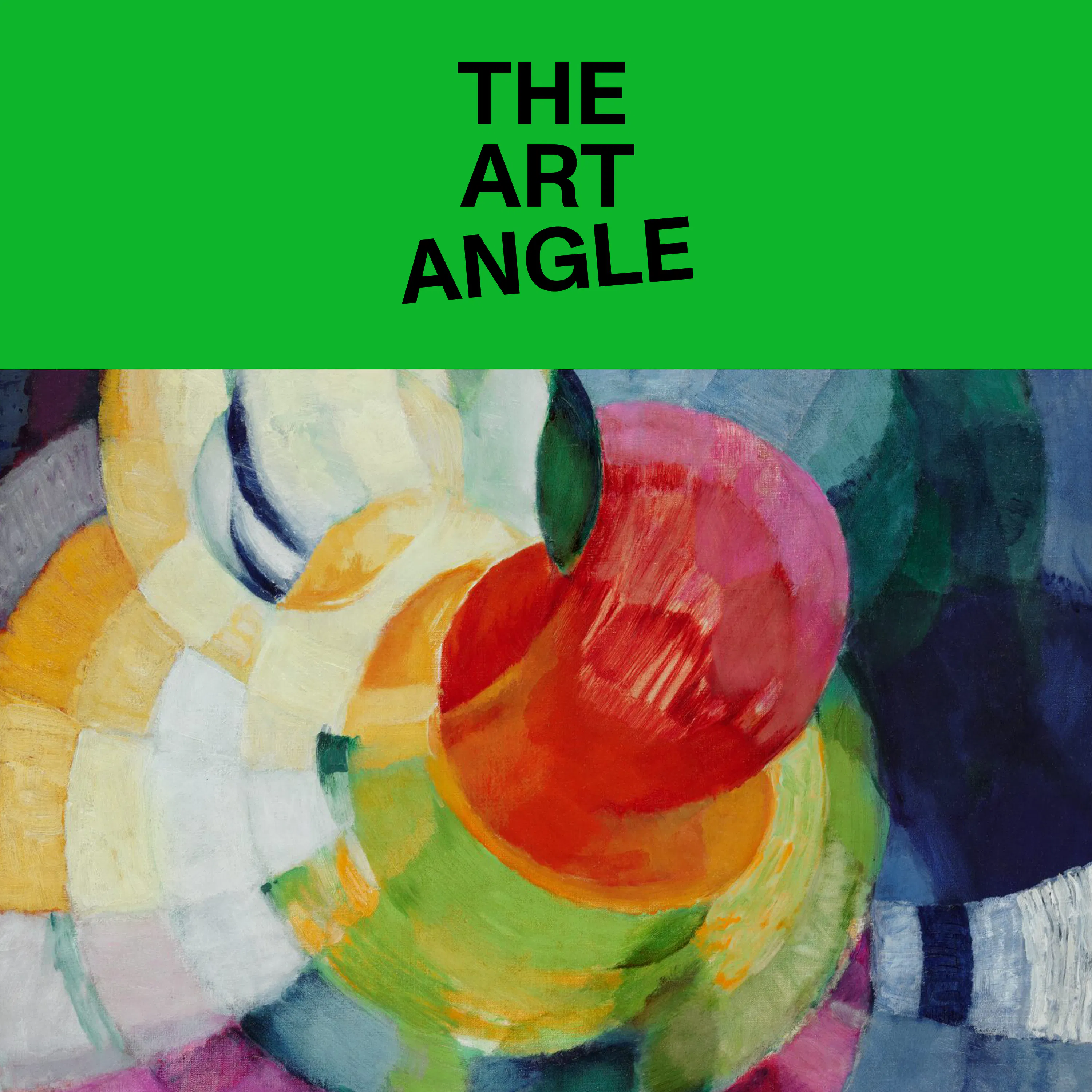
What Is Orphism, History's Most Enigmatic Art Movement?
In the early 1900s, art movements within the then-burgeoning category of modern art were exploding in multiple directions, and among them was a strand called Orphism. What was it? In some ways, it is hard to say. Relatively short-lived and debated even as soon as it was coined around 1912, Orphism was a form of abstract art, informed by motion, radial shapes of vibrant colors. Most known and neatly associated with Orphism are Robert and Sonia Delaunay, who thought colors could be used to create visual harmonies, where form and hue worked on a canvas in the same way that notes worked to build a piece of music. The artist could be thought of as composer. And yet the contours movement is still somewhat vague. In fact, there were debates about what Orphism was or meant from within the group that was most often associated with it. It remains elusive. My co-host, the art critic Ben Davis, recently went to a major showing of Orphist works, an exhibition called “Harmony & Dissonance: Orphism in Paris, 1910–1930” at the Guggenheim, in New York that opened earlier this month and will run until March 2025. We discussed about the art form and its impact as well as some of the the unanswered questions he left the show with.
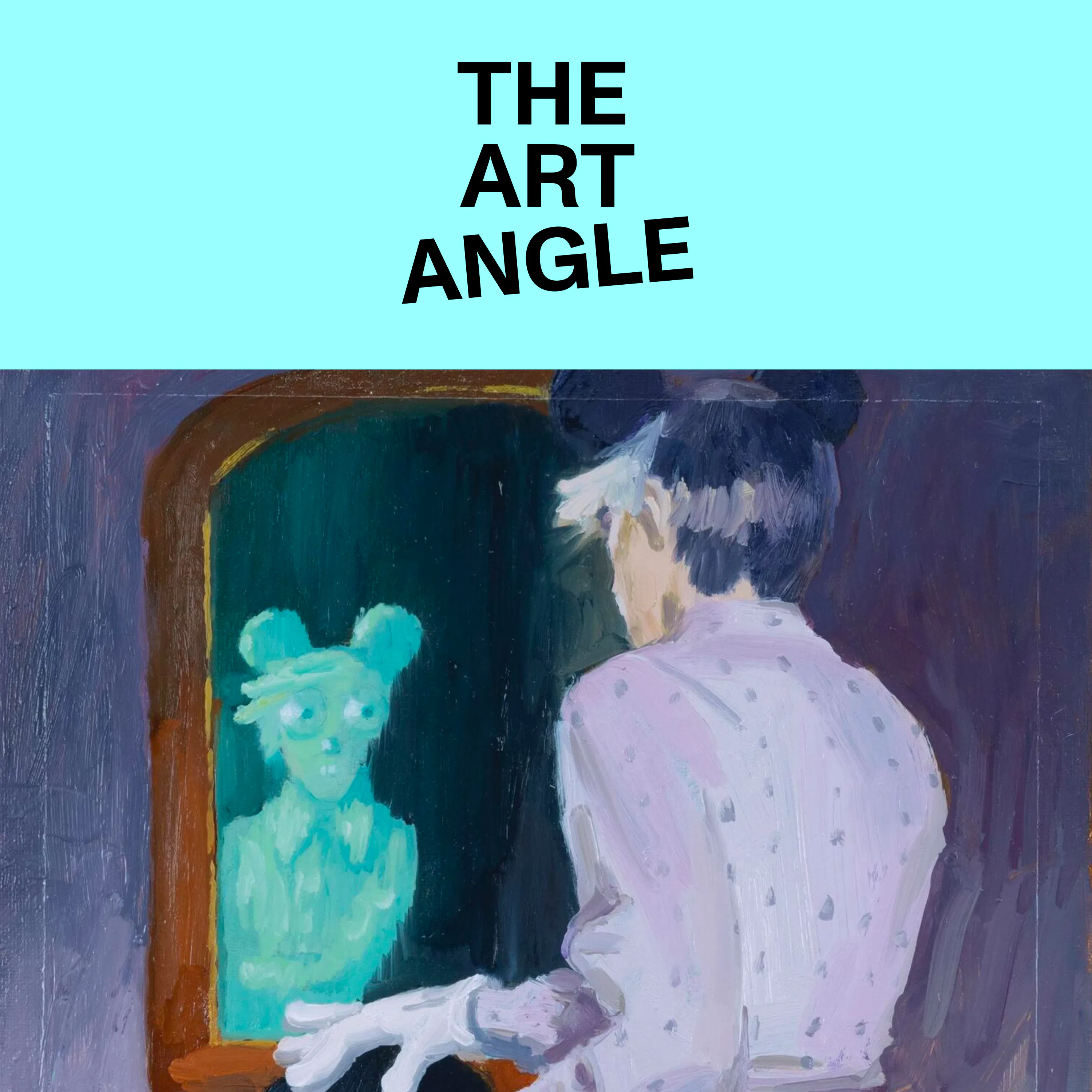
A Famous Novelist's Alternate Art World
As a novelist, Jonathan Lethem is basically a genre all his own. His books mash up literary fiction and pulp into disorienting but engaging combinations, for which he’s won both a MacArthur Grant and the National Book Award. Since the success of Motherless Brooklyn in 1999, he's published many very well received novels—including The Fortress of Solitude in 2003 and Brooklyn Crime Novel, from last year—as well as many more short stories and essays for places including the New Yorker, Harper’s and Rolling Stone. And it turns out he's written a lot about art too—enough in fact, to fill an entire volume. Cellophane Bricks: A Life in Visual Culture, published this summer by ZE Books, is its own type of unexpected hybrid of writing. It spans genres, containing short stories, essays, and criticism, as well as types of art, its essays hopping between his reverence for a Hans Holbein at the Frick and respect for the “scratchiti” artist Pray. Part of the joy of the book is Lethem’s determinedly eclectic and personal taste, giving his attention to both names you know and obscure children’s book authors or indie comics artists. Among other things, Cellophane Bricks offers Lethem's personal recollections of growing up around artists, including his father, painter Richard Lethem, in the grassroots alternative art world rooted in the collective spaces of a pre-gentrified Brooklyn. He also writes of the ethos of the graffiti-art world around his brother, Blake "KEO" Lethem. Aside from a spirit of unconventionality, the biographical material may seem to come from another world from the delirious and sometimes fantastic short fictions in the volume, mostly written for artist catalogues for the likes of Nan Goldin, Jim Shaw, and Fred Tomaselli and gathered here for the first time. However, these also embody an ethos that clearly relates to the communal creative scenes of his youth: Lethem insists on only offering short stories as catalogue contributions, paying with his art, while accepting only artworks in return as payment. There’s more still to Cellophane Bricks: essays on what it means to live with art, and varied reflections on what art and literature, word and image, bring to each other. Introducing Lethem at an event recently at the Brooklyn Public Library, the art critic Dan Fox said that, as a novelist, Lethem had left the same kind of indelible mark on how people see Brooklyn that Warhol had on Manhattan. With Cellophane Bricks, he is leaving his imprint on the art world. A footnote for the future: The book is nicely illustrated with pictures of the eclectic work it describes, and next year, the art from Cellophane Bricks the basis for a show that will be at the Benton Museum of Art at Pomona College in Southern California. “Jonathan Lethem’s Parallel Play: Contemporary Art and Art Writing” is described as “a chronicle of an author who roams among visual artists,” and ill feature art by Gregory Crewdson, Rosalyn Drexler, Charles Long, and others. Look out for it.

What New Is There to Say About Leonardo da Vinci?
Legendary documentary filmmaker Ken Burns is famous for his deep dives into topics of American history, ranging from the American Revolution, Benjamin Franklin, the Civil War, and the history of baseball, to name just a few. Now Burns is delving into the fascinating life of 15th century genius Leonardo da Vinci, examining his life and his numerous roles as a draftsman, painter, and scientist. This venture marks the first time the director has tackled a subject that is not American. The film, which is divided into two, two-hour segments was co-written by his daughter Sarah Burns along with Dave McMahon, and was directed and produced by all three. Leonardo's many notable achievements are explored via close examination and analysis of his prolific personal notebooks alongside accounts of his life and on-camera interviews with leading scholars, contemporary artists, engineers, and some famous fans like biographer Walter Isaacson and filmmaker Guillermo del Toro. Leonardo da Vinci also marks a departure from Burns's traditional filmmaking style, in which a pan or zoom added in post-production across a still image gives the illusion of movement. That style of filmmaking has become so closely associated with his material that it has garnered his own filter in iMovie software as what else? "The Ken Burns effect," of course. However, here, the filmmakers use split screens with images, videos, and sound effects from a range of time periods to highlight da Vinci's many achievements through his artistic and scientific explorations, along with the original music commission from celebrated composer Caroline Shaw. It creates a compelling effect and new stylistic approach for the iconic documentarian. This week, Burns joins Senior Market Editor Eileen Kinsella to discuss the endlessly revelatory and fascinating life of Leonardo.
Re-Air: The One Word That Explains Art Now
Re-Air from August 15,2024 There’s so much culture now that it can be hard just to keep up, let alone to think about it all as a whole… but that only makes the effort to find perspective more important. It’s not always clear when you’re in the thick of it, but almost certainly when people in the future look back, they will see more clearly than we do the common concerns beneath the fragmented surface of the culture of the 2020s. The literary scholar Anna Kornbluh has an idea about all this. She argues that what characterizes the art of the now might be, in fact a particular hunger for now-ness. Her book published this year by Verso is called “Immediacy or the Style of Too Late Capitalism.” Across a broad array of culture, both high and low, Kornbluh tracks, as she writes, “immediacy as a master category for making sense of 21st century cultural production.” She shows how the drive towards immediacy can help explain a vast array of developments and asks why. It’s a thin but challenging book. Immediacy was Ben Davis’s pick for our summer reading list, and we’re not the only ones who has found it useful. In the magazine Art Review, author Alex Niven wrote that Kornbluh has done better than almost anyone in recent memory to define the elusive claustrophobic spirit of the age. It’s heady terrain to explore, and this week on the podcast, Kornbluh joins Ben Davis to guide us through it.
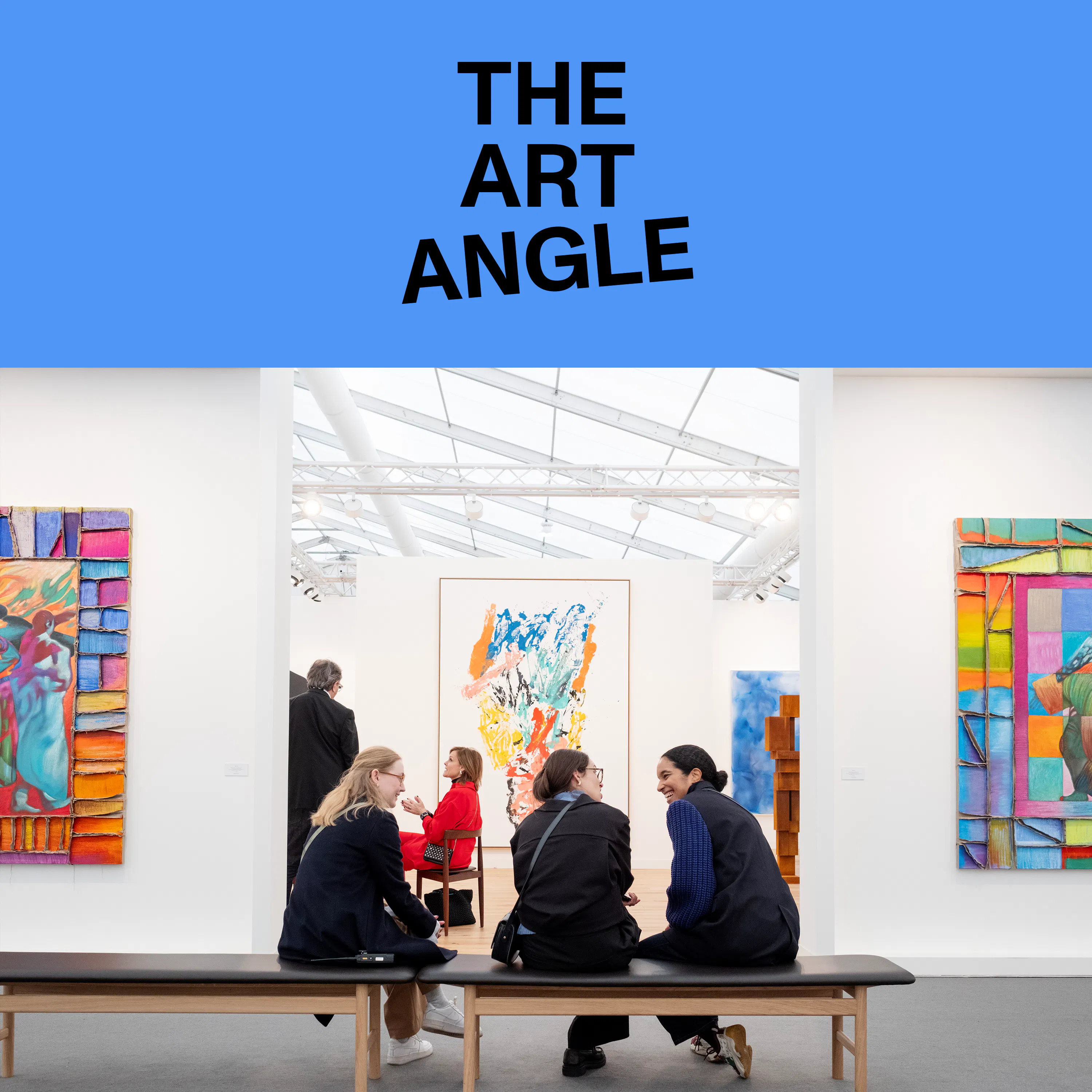
The Round-Up: Van Gogh Soupers Get Jail, Art Market in Flux, Elon Musk's Copycat Problems
We are back this week with our monthly edition of the Art Angle Roundup, where co-hosts Kate Brown and Ben Davis are joined by a guest to parse some of the biggest headlines of the month. This week, Naomi Rea, newly appointed editor in chief of Artnet News joins the show. Kate and Naomi just returned from reporting on the ground at Art Basel Paris, which came just one week after Frieze London and Frieze Masters, where a clearer picture of the art market was taking shape. Before we get to that, speaking of London, there was big news that activists were sentenced to prison time for the souping of a very famous Vincent Van Gogh painting. The trio discusses what the implications of this punishment are for the activists using soup-throwing and other tactics to get their message across, and if it's working at all. Next, we dive into the state of the art market, which has been the subject of many think pieces, often providing contradictory views. Finally, we dig into the man of many controversies: Elon Musk. He has been the subject of multiple accusations of alleged plagiarism in the past couple of weeks. First, Alex Proyas, who directed the 2004 adaptation of the short story I, Robot, called out Musk's Tesla on social media, writing simply: “Hey Elon, can I have my designs back please?” and shared a side-by-side image of his work on the film next to those of newly-released prototypes of Optimus, Cybercab, and Robovan at a long-awaited October 10 event intended to showcase Tesla’s future products to investors. Just days later, the producers of Blade Runner 2049 filed a lawsuit suing Tesla for using imagery from that film without permission. In fact, Alcon Entertainment denied a request from Tesla and Warner Bros Discovery to use images from its film, and then Musk went ahead and used A.I.-generated references anyway. Alcon Entertainment called it “a bad-faith and intentionally malicious gambit.”
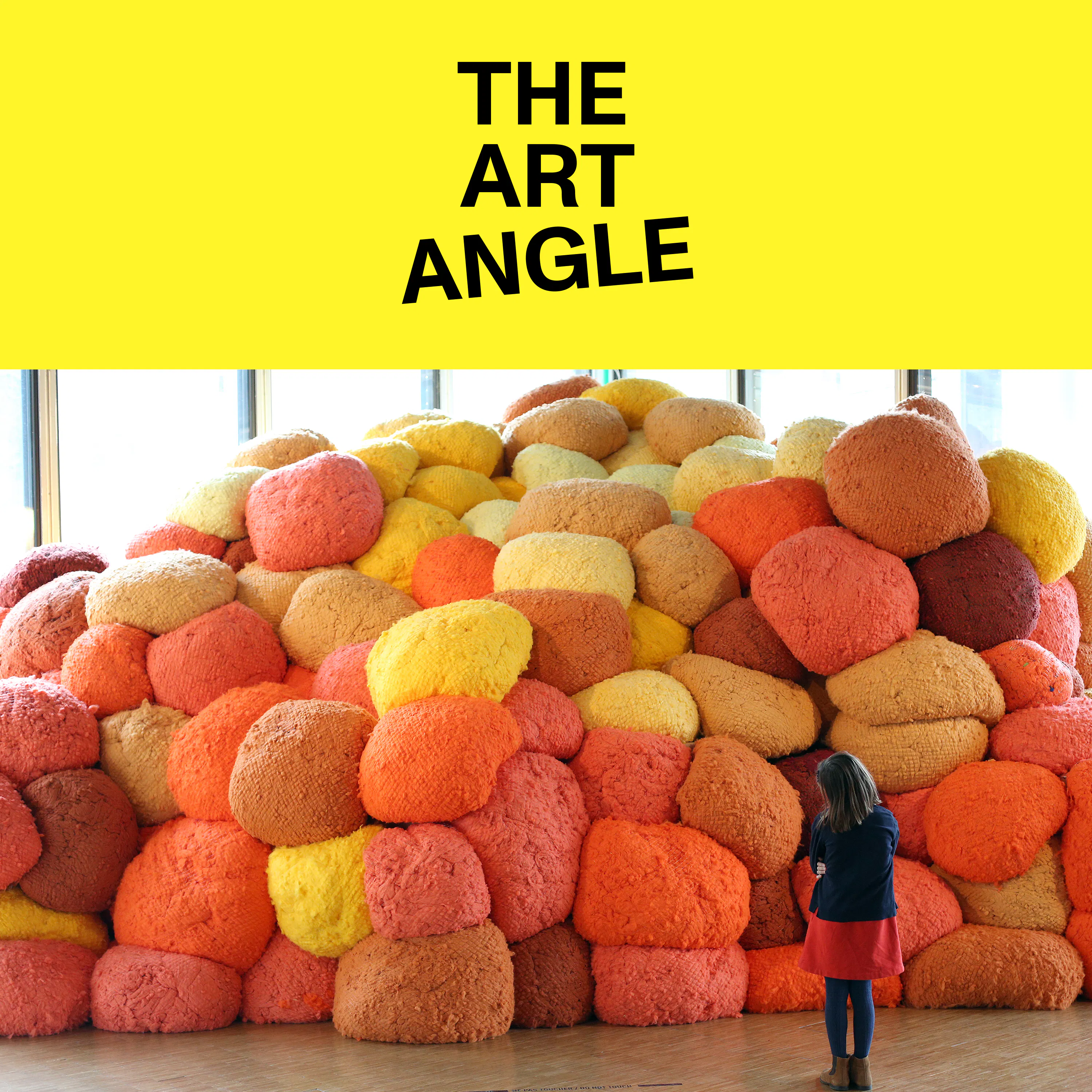
How Textiles Took Over the Art World
Contemporary art comes in many shapes and forms, but close your eyes and think of what an artist looks like and nine times out of 10, I bet you are still thinking of a painter in front of a canvas. If recent interest for museums and galleries is any indication, however, that image should be joined by another one: the fiber artist. Think of a weaver seated at the loom or a quilt-maker laboriously stitching together layers of fabric. The textile arts have experienced a quiet but steady groundswell of interest in the last decades, and recently I've noticed that it feels as if it is kicked into a new, even higher level, from the many kinds of textile based art throughout the most recent Venice Biennale to the major show "Woven Histories: Textiles and Modern Abstraction," which is on a tour of some of North America's most important museums right now. As many textile scholars will tell you, tapestry was once as exalted as painting as an art form, and it may be so again. This surge of interest is bringing new audiences, new histories, and new vocabularies into the center of the action that are worth getting familiar with, and to unravel all the different threads, I turned to Elissa Auther, a scholar who looked at the tangled history of fiber art in her book String Felt, Thread: The Hierarchy of Art and Craft in American Art. More importantly, she's been closely observing and encouraging the contemporary boom in textile art as the chief curator at the Museum of Arts and Design in New York. This week she joins me on the podcast to discuss what's behind the resurgence of interest in this medium. —Ben Davis Fiber Art Is (Still) Having a Moment Artists working in fiber and textile are increasingly visible at art fairs, museums and galleries, and there's no sign of a slowdown.

A Damning Appraisal of Art World Elitism
Few creative works ever managed to get the weird pathologies and unique characters of the art world quite right. But journalist and author Hari Kunzru's newest novel Blue Ruin is definitely one of those works. Set in the early stages of the pandemic, Kunzru's novel looks at how wealth and privilege function and fester in the art world. It's an astonishing and incisive exploration of the power dynamics and value creation in art by an author who has been keenly observing the art world's odd rituals for decades. Blue Ruin moves between lockdown in upstate New York where some art professionals are hiding out on a very nice property, and then moves back in time to the optimistic art scene of the 1990s in London. Between these places, we follow Jay, a British artist who makes a grand gesture of quitting art in his twenties, only to find himself ramped back into the art world and the people who haunted it, all of which he had tried to leave behind. Originally from Britain and based in New York. Kunzru is the author of seven novels, including White Tears and Red Pill. Blue Ruin is the third of this trilogy. He's also a regular contributor to the New York Review of books in the New York Times and writes a column for Harpers. Kunzru also teaches in the creative writing program at New York University and is the host of the podcast Into the Zone.
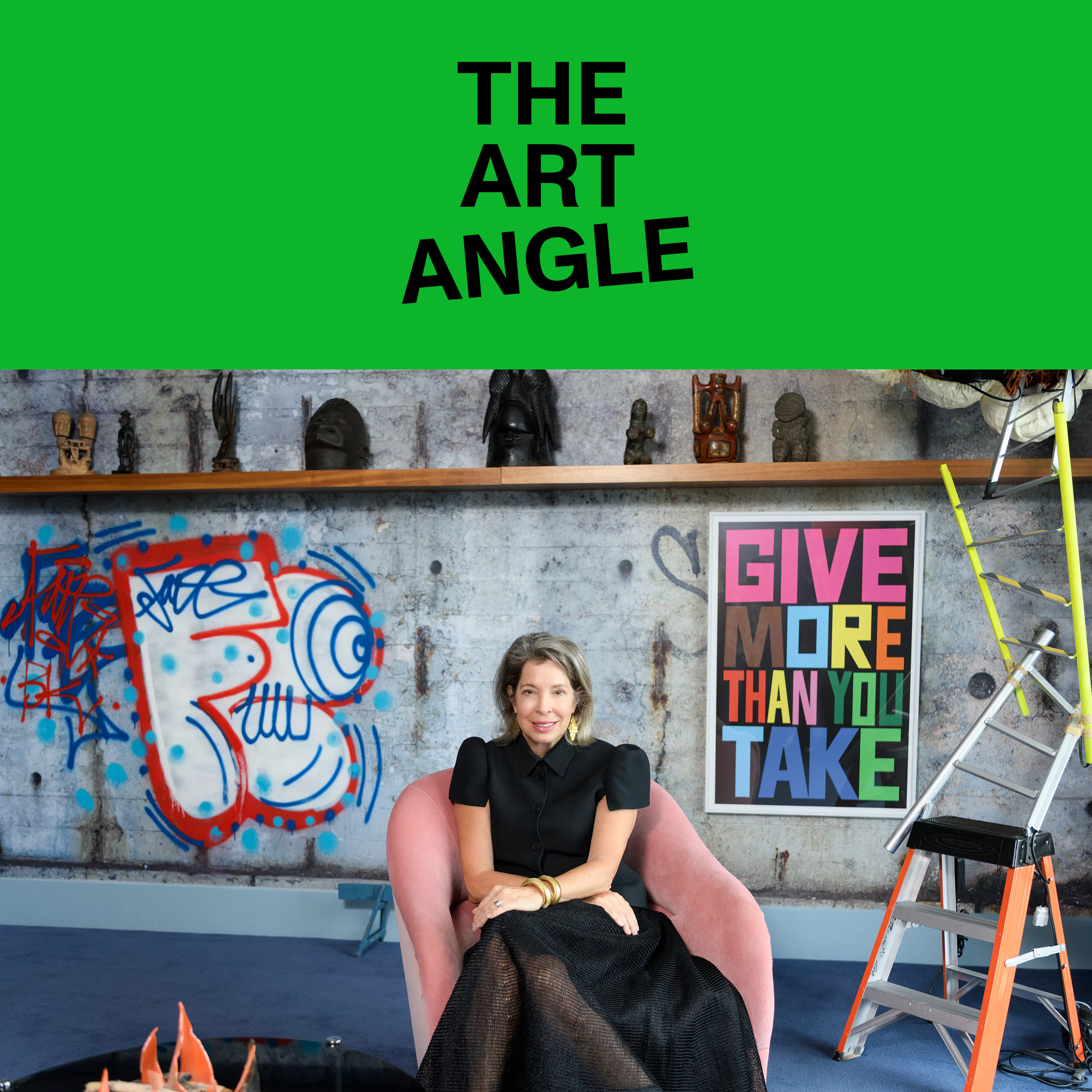
The Brooklyn Museum Is Turning 200. What’s Next?
Over the past 200 years, a museum in New York has quietly grown to become one of the city's most esteemed cultural institutions. You might think I'm talking about the Metropolitan Museum of Art or the MoMA, but no, it's the Brooklyn Museum. Founded in 1823 as a community library which later merged with the Brooklyn Institute, the Brooklyn Museum is now firmly fixed on the city's cultural landscape. Its James Polshek-designed glass facade is immediately recognizable. It comes backed by a collection spanning historical artifacts and contemporary art, and it remains dedicated to reflecting the diversity of the borough it calls home. Recently, the museum has grabbed headlines for high-profile shows from "Giants," a very starry showcase of Alicia Keys and Swizz Beatz's collection, to "It's Pablo-matic," the Picasso retrospective curated by comedian Hannah Gadsby, which caught a lot, a lot of heat. But behind those headlines, the museum has been programming for its community. It has staged crowd-curated exhibitions, hosted pop-up markets, and served as a polling station. Its Spike Lee exhibition last year was accompanied by events including ASL and stroller tours intended to engage the community with a filmmaker who was also born and bred in the borough. For almost a decade, the Brooklyn Museum has been led by director Anne Pasternak. She has sought to balance the needs of its audience as well as the evolving role of a cultural institution. It's a position that's been rewarding as much as it has been challenging. Ahead of the museum's 200th anniversary, I caught up with Anne, who shared more about the opportunities and headwinds facing the Brooklyn Museum today and what it means to lead the institution into its third century.
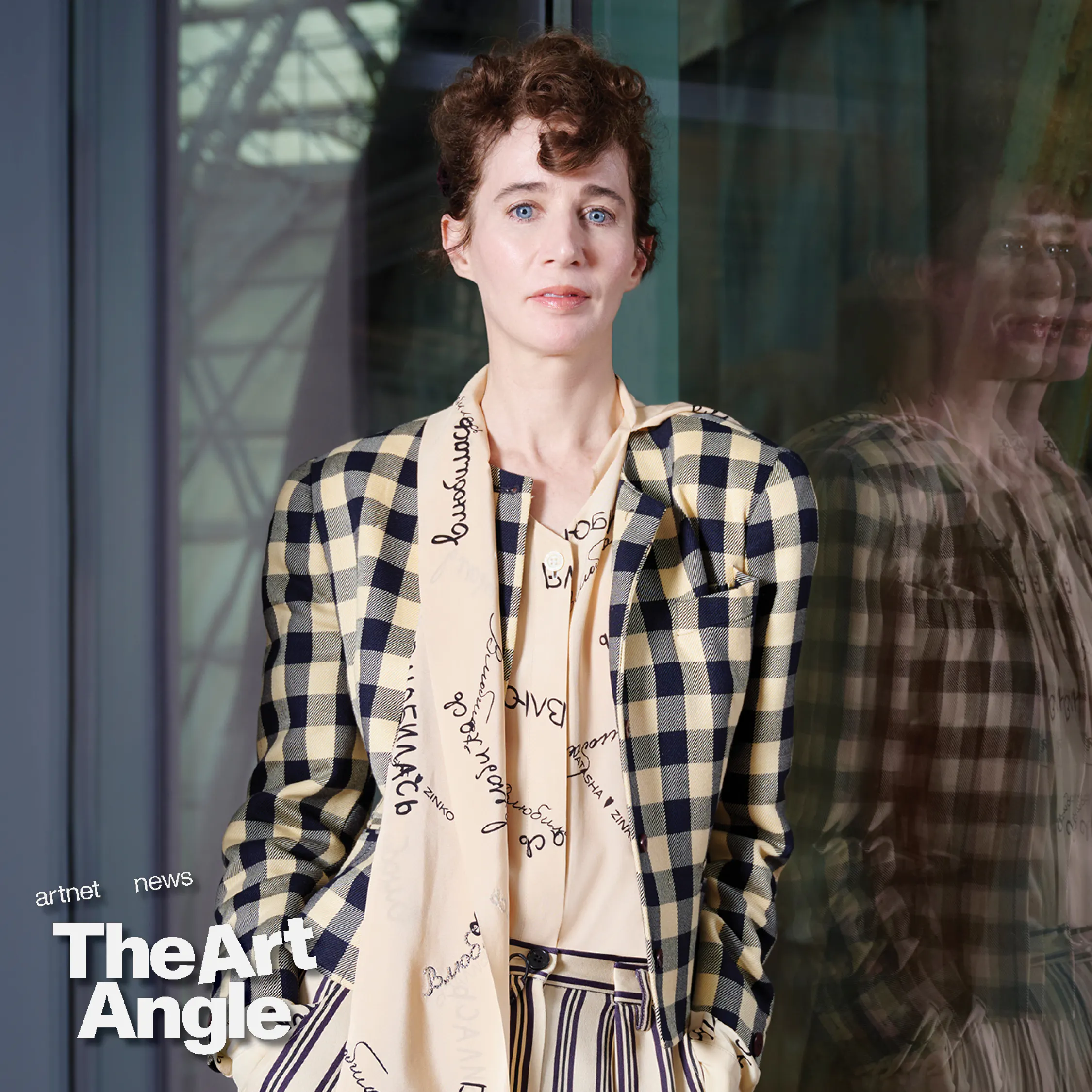
Is There Anything Miranda July Can't Do?
The filmmaker, artist, and writer Miranda July has worked across such a variety of media over the years, one might say it is almost hard to categorize her work. But there is actually a strong through line that emerges when you consider July's vast oeuvre: an interest in how the remarkable may occur in small everyday moments and interactions—an interest in loneliness, sexuality, and death, and needing each other in our capacity to change and love—all these aspects that really make us human. With this, July has built a diverse and awe-inspiring body of work. It includes a messaging app she developed called Somebody and an interfaith secondhand shop. Her art has been on view with the Venice Biennale, and she's also made three feature length films, two of which she starred in. She's published four books and a participatory website called Learning to Love You More that she created with American artist Harold Fletcher that consists of assignments for the general public who make the art. There are instructions like "make a portrait of your friend's desires," or "perform the phone call someone else wishes they could have." One of these assignments is part of her first solo exhibition, a major retrospective on view at Fondazione Prada in Milan until the end of October. It is "Assignment 43: Make an exhibition of the art in your parents' house," and it was completed by a local woman from Milan. It is one piece among many in a show that spans 30 years of July's practice. There is also a new participatory video series in the mix called F.A.M.I.L.Y (Falling Apart Meanwhile I Love You). Her newest novel, All Fours was published in May this year. A New York Times bestseller and long list finalist for the National Book Award, All Fours is an astonishingly candid look at sexuality and transformation, but also at an extremely underrepresented topic in literature: menopause and female aging. When I connected with July, she was in her home, which is also her studio in Los Angeles, a small painting by Louise Bonnet hung just behind her. It's called Miranda, and it's a contemplative portrait of a female figure in what looks like a state of metamorphosis. It suits July's universe quite poetically.

The Round-Up: Lowry Leaves MoMA, the Artists All Over Museums, a Long Lost Gentileschi
It is time once again for our Round Up episode for the month of September, where we talk about some of the most interesting and timely art news stories of the last month with our writers here at Artnet. This month, Art Angle co-hosts Ben Davis and Kate Brown are joined by senior writer Sarah Cascone, and the three stories they discuss all center around museums. The first is the announcement that longtime director of New York's Museum of Modern Art Glenn Lowry will retire after 30 years, which marks the end of an era, and perhaps the beginning of something new. Artnet's Katya Kazakina wrote an article speculating on who might replace Lowry, and the panel discusses what this means for the future of one of the world's most famous museums. There's been a lot of leadership around New York museums, with the news of Alex Rüger taking over the role of director at the Frick Collection from Ian Wardropper, who is stepping down in 2025; plus the departure of Klaudio Rodriguez from the Bronx Museum, which has seen three directors in just seven years. Next up, the trio takes a deep dive into an article penned by Ben Davis that shares the result of an analysis he did looking at the shows on view at over 200 museums across the United States to see which artists are cropping up most frequently. The results were surprising, and give us all a window into the cultural zeitgeist. Finally, we talk about the news of a rediscovered painting by beloved Baroque artist Artemisia Gentileschi that is going on view in Texas, based on a story written by Sarah Cascone.

K-Culture Chronicles: Inside Korea’s Art Boom
At the start of September, a massive chunk of the international art world descended on South Korea for a bounty of high-profile art offerings. The marquee event was Frieze Seoul, in its third edition, at the Coex convention center in the luxe Gangnam district, running alongside the long-established Korea International Art Fair. But they represented just one element of the action. All over Seoul, museums and galleries were opening big shows, angling for attention. Samsung’s Leeum museum hosted an Anicka Yi blowout and a superb show of young artists curated by Rirkrit Tiravanija. The beauty giant Amorepacific welcomed Elmgreen & Dragset at a museum in the basement of its David Chipperfield–designed headquarters, while Gagosian set up shop with a Derrick Adams exhibition on the ground floor. Up above, local heavyweights came out swinging—PKM with Yoo Youngkuk, Pace with the potent pairing of Lee Ufan and Mark Rothko, and Jason Haam with Urs Fischer. Celebrities were everywhere. Parties were everywhere. No one seemed to be sleeping. Everyone was on the move. And the festivities were not confined to Seoul. The esteemed Gwangju Biennale inaugurated its 15th edition in that southern city the day after the fairs opened, a sharp, tough show curated by the Frenchman Nicolas Borriaud that ran alongside more than 30 national pavilions. And along the country’s southern coast, the latest Busan Biennale also drew crowds, with more than 60 artists selected by its curators, Vera Mey and Philippe Pirotte. There was so much happening that it was impossible to see it all—even with a dedicated driver—which many VIPs had—and even if you were willing to forgo moments of rest. This week, Artnet Pro editor Andrew Russeth is joined by London-based reporter and co-author of the Asia Pivot newsletter Vivienne Chow to discuss the art, the food, and everything in between.

The Great Art Market Reset
If you've been keeping an eye on the art market, you know that the industry has been going through some turbulent times... there's really no other way to say it: It's been a tough year, as the frothy post-pandemic surge in the art business has fully retreated. Amid this market slowdown comes our latest data-packed and information-rich issue of the Mid-Year Intelligence Report, which is appropriately titled The Art Market Reset: Riding the Waves of Change. This Fall issue looks at the numbers behind the mood, and it is packed with relevant insights that will help buyers, sellers, and spectators make informed decisions in the months ahead. Katya Kazakina, Artnet's award-winning columnist who pens a weekly art market column called The Art Detective is joining Art Angle co-host Kate Brown on the podcast this week to discuss her must read cover story for the new Intelligence Report. In it, she investigates what led to the sharp drop in the demand for art, as well as resale values for once coveted pieces. They discuss how the data reveals a market in free fall, where galleries have been faced with cost-cutting measures, or are shuttering altogether. There are some silver linings in her story, as Katya examines the smart responses that are being made across the industry, revealing how sales tactics are evolving and why some people actually believe that a slowdown in art production is not a bad thing altogether. Before we get to that, a few more words about the rest of the report. Our illuminating By the Numbers section details how, as compared with last year, there has been a substantial drop in money being spent on Ultra Contemporary art, a downturn in the sales generated by the big three auction houses (Sotheby's, Christie's, and Phillips), fewer artworks selling publicly for over $10 million, and the average price of art at auction is also going down. You can find specific breakdowns in the actual report. What does it all mean though? News editor Margaret Carrigan, gives a spin-free analysis of the auction stats. Also in this issue, our Editor in Chief Naomi Rea, spoke with Art Basel Paris Fair Director Clément Delépine about what to expect at the revamped art fair, which is moving back into the Grand Palais next month. Our market reporter, Eileen Kinsella, spoke to Sotheby's Phyllis Kao about how the secondary market is adjusting its working processes amid the flux, and our marketplace section brings you the stories behind the top selling works, and the scoop on artists whose markets are on the rise. Even amid this slump, Artnet's esteemed reporters and editors have worked hard and put together an excellent issue that will help you navigate the current art market season, where the road ahead feels anything but clear.
Thurston Moore and Jamie Nares on Art, Rock, and Art Rock
Thurston Moore is one of the most famous names in rock. With Kim Gordon and Lee Ronaldo, he formed Sonic Youth, one of the definitive art rock bands... yes, ART rock. Sonic Youth album covers famously spotlighted artists, from Gerhard Richter’s candle on the cover of 1988’s Daydream Nation to Raymond Pettibon’s cartoon couple on the cover of 1990’s Goo to Mike Kelley’s stuffed animal on the cover of 1992’s Dirty to Marnie Weber’s collage for 1998’s A Thousand Leaves. Well, now Moore is back, putting out a new dreamy solo album titled Flow Critical Lucidity, and true to form, the cover is another literal work of art: a photo of a sculpture of what appears to be metal helmet, studded with tuning forks. This is a work called Samurai Walkman, by the artist Jamie Nares. Nares is a figure of major cachet herself. She only just had a film retrospective at the Museum of Modern Art here in New York in the summer. Back in 2020, her fantastic 2011 video Street was the first film to be projected on the exterior of the Metropolitan Museum of Art—Thurston Moore, in fact, did the soundtrack to that film. Nares and Moore have a fruitful history of collaboration together, having both come up in the chaotic, experimental No Wave scene of the 1970s, and this week they join Ben Davis on the podcast to discuss. We're also thrilled to announce the launch of Art Market Minute, our new micro-podcast, hosted by news editor Margaret Carrigan. It offers a weekly snapshot of essential art market news, expertly compiled by the Artnet PRO editorial team. You can find it wherever you get your podcasts every Monday.
The Round-Up: Michael Jackson Auction Drama, a Russian Artist Freed, Banksy's 'Zoo Period'
We are back this week with our monthly roundup, where we talk through some of the big stories that are making waves in the art world. Today co-hosts Kate Brown and Ben Davis are joined by Artnet's art and pop culture editor, Min Chen. Min commissions and edits a lot of our news coverage including a couple of the stories that we're going to be talking about today. It's August, and despite the fact that this is supposed to be the month where art and culture tends to gear down and the professional art world goes to Greece or the Hamptons, increasingly with every passing summer it seems that the news doesn't stop at all, and in fact sometimes actually ramps up. This week we're going to discuss the abruptly halted auction of artworks allegedly made by Michael Jackson, the art stories on both sides of a prisoner exchange that occurred this month between Russia and the West, and finally the artist who just can't quit: Banksy. He dropped nine animal-themed art pieces this month around London and many are wondering if the world's most famous street artist has slightly lost his touch. Tune in to find out.
Re-Air: Andrew Bolton, The Reanimator: Life, Death, and Sleeping Beauties at the Met
There is a lot to unpack—literally and figuratively—in the Metropolitan Museum’s Sleeping Beauties: Reawakening Fashion” which closes on September 2. It’s about nature and the cycle of life (and as it turns out, there is a lot about death). It also touches on chemistry, biology, mythology, and so much more, all told through the lens of fashion. Added to this litany of themes, the show also tells the story of The Met itself, and the goings-on behind the scenes. It’s about how archived garments are preserved and how they are disintegrating. It’s not just about clothes, but about how they were worn and who wore them. It tells the story of us. It’s a visceral exhibition of over 400 years of fashion that engages the senses. It can be a heady experience. There are the sounds of waves crashing, and birds calling, and poems being read aloud. There is textured wallpaper you can touch—and courtesy of the German artist Sissel Tollas, wallpaper you can scratch and sniff and tubes you can snort. Frankly, this portion of the exhibit kicks like a mule and is unforgettable, with scent being such a powerfully triggering memory force. “Sleeping Beauties” was curated by this week’s guest Andrew Bolton, the Curator in Charge of The Costume Institute at The Metropolitan Museum of Art, who previously helmed such blockbusters as “Alexander McQueen: Savage Beauty,” “China Through the Looking Glass,” and “Heavenly Bodies: Fashion and the Catholic Imagination,” which were some of the most visited exhibitions in the museum’s entire history. Today’s fashion-exhibit-heavy museum landscape has a lot to do with Bolton’s successes, but with his trained anthropologist’s eye, he never fails to zero in on the intellectual and human connotations in the garments.
The One Word That Explains Art Now
There's so much culture now that it can be hard just to keep up, let alone to think about it all as a whole... but that only makes the effort to find perspective more important. It's not always clear when you're in the thick of it, but almost certainly when people in the future look back, they will see more clearly than we do the common concerns beneath the fragmented surface of the culture of the 2020s. The literary scholar Anna Kornbluh has an idea about all this. She argues that what characterizes the art of the now might be, in fact a particular hunger for now-ness. Her book published this year by Verso is called "Immediacy or the Style of Too Late Capitalism." Across a broad array of culture, both high and low Kornbluh tracks, as she writes, "immediacy as a master category for making sense of 21st century cultural production." She shows how the drive towards immediacy can help explain a vast array of developments and asks why. It's a thin but challenging book. Immediacy was Ben Davis's pick for our summer reading list, and we're not the only ones who has found it useful. In the magazine Art Review, author Alex Niven wrote that Kornbluh has done better than almost anyone in recent memory to define the elusive claustrophobic spirit of the age. It's heady terrain to explore, and this week on the podcast, Kornbluh joins Ben Davis to guide us through it.
The New Style of Artist Career
What is the future of an art career? Where do you look to find relevant new culture? And as an artist, where do you find collaborators and fans in art as in so much else? A lot has changed in the last decade, and the answers to all of these important questions feel tenuous and up for grabs. On the one hand, traditional art institutions seem both dominated by wealth and starved for resources. On the other, there's an explosion of Internet culture full of subcultural energy, but also terrible incentives with a race-to-the-bottom quest for attention that hardly seems ideal for supporting art. The artist Joshua Citarella is someone who's been thinking hard about these problems, and above all, about how to steer a course in between these different, often competing worlds. His artwork has been exhibited in illustrious places including Berlin's KW Institute for Temporary Art in its recent "Poetics of Encryption" show, which attracted a lot of buzz, but he's also been cited as an authority on the ideologies and aesthetics of Internet subcultures by the New York Times, the Guardian, and many other outlets. This week, Citarella joins Artnet's Ben Davis to talk about his position as a figure in a new hybrid type of internet era, moving between art maker, podcaster, micro influencer, and community manager of the heady online platform Do Not Research, and theorizing how all these strands fit together. On the podcast, the two discuss the evolving demands on artists in the digital era, the changing art audience, and a lot more.
Decoding the Ancient Sculpture That Defines Olympic Athleticism
It is mid-summer and as always there a lot of exciting things going on in Paris, but this year is special as it sets the stage for the Summer Olympic Games. Now in full swing, there are scores of events and performances around iconic landmarks of the city, from equestrian racing on the grounds of Versailles to swimming in the Seine. While at first blush it may not seem like the place for an art publication, art and the Olympics have a long and storied history from the ancient to modern games, artists used to compete in various media as Olympic events, in fact. And so this month we turned the lens of our popular Three Things column—an article that looks at three (or more) fascinating aspects of a well-known and well-loved work of art, often illuminating lesser-known backstories—to a hallmark of the Olympics. This week we're focused on one of the most famous pieces of art that is about the Olympics, the Discobolus, which depicts an ancient Greek athlete at the exact moment of tension before hurling the discus, which is one of the oldest events in the Olympics. Artnet's Galleries Editor Annikka Olsen wrote a very compelling article fleshing out this symbolic artwork, and she joins co-host Kate Brown on the podcast this week. The duo talk about the amazing and complex history of the discus thrower in all of its many iterations from the before-Christ era right up to today.
The Round-Up: That Trump Photo, a Beheaded Sculpture, the 'Ladies-Only' Picasso Controversy
It is time, once again for our monthly roundup where we talk about three of the big stories of the month. In the summer sometimes the art news slows down, but the news news has not slowed down at all, of course. And we have three stories that we're going to talk about that are very much about where art and the news collide. Today we're going to talk about the critical reaction to the instantly famous photo of Donald Trump with his fist raised in the air immediately after the attempted assassination on him two weeks ago in Butler, Pennsylvania. A lot of art critics said that this photo was so powerful, it could define the race. Art critic Ben Davis had his doubts. Obviously, the news cycle moves very fast. This past weekend, Joe Biden dropped out of the presidential race and endorsed vice president Kamala Harris, and there's a whole new round of uses of the word "unprecedented" floating around. So we are going to talk about what, if anything, the lasting impact of this photo might be. Why it got such a reaction, and what the perils of decoding news images through the lens of art are. Then we're gonna talk about the defacement of a goddess statue by the artist Shahzia Sikander in Texas, which had been protested as satanic, and the artist's decision to leave it in its damaged form rather than repair it as a statement. And finally, we go down under to Australia for a story that has made international headlines. An artist created an art installation in the ladies' bathroom of a museum as a statement about sexism and gender discrimination, filling the washroom with Picasso paintings. But in a twist that has brought the story back into the news, the Picassos have now been revealed to be fake. Is this a serious story? Is it silly? It's a question that Art Angle co-hosts Ben Davis and Kate Brown tackle along with this week's guest, our hardworking news correspondent Adam Schrader.
How a '90s Cult Novel Is Still Inspiring Artists
The Gladstone gallery director Alissa Bennett was one of a legion to fall under the thrall of Donna Tartt’s 1992 novel The Secret History. A years-spanning mystery told in reverse, the book has sold some five million copies and remains a cult fan favorite. It details a small cadre of college students studying ancient Greek at an isolated North East campus. Myth, reality, and ritual overlap and ultimately Dionysian rites collide with hubris. Here is how Bennett sums up the protagonists: "while their fantasies ricochet around a technicolor past filled to overflowing with gods and mysteries and the seismic tragedies of Homer, their bodies remain tethered to a Taco Bell present." The book has yet to be seen on the big screen, but Bennett has managed to find a super-low-budget obscure video art adaption from 2006, which is now on view as part of the "The Secret History," (on view through August 2) a group art exhibition she curated, on view now at Gladstone 64, the gallery’s upper east side outpost in a converted townhouse. The artists featured in the fascinating show range from familiar names like Matthew Barney, Rachel Rose, and Hope Atherton to younger artists like Matt Hilvers and Karyn Lyons, and her own personal astrologer (and former Art Angle guest) Micki Pellerano. Bennett joined Artnet editor William Van Meter to discuss the show, and her meandering path in life that includes a stint as a runway model, a co-host alongside Lena Dunham of the acclaimed podcast The C-Word, a teacher at the Yale School of Art, and author of the zine "Dead is Better." Now, she holds a post as a gallery director, and along the way she remembers her mentor, Barbara Gladstone, the legendary gallerist who passed away last month.
Art's New Yen for Psychoanalysis
Art and psychoanalysis have had a very long and intense relationship over the years, and it makes sense that these two fields would be drawn to one another. Critics have long looked at psychoanalysis as offering a sophisticated model of decoding images and fantasies. Artists have made productive use of ideas like the unconscious and the uncanny, and of course, are very concerned with the questions of self-expression and desire that are at the core of analysis. One figure who has gained quite a bit of attention in art lately for her ideas on all these things is Jamieson. Webster. Webster is an analyst and a teacher, and is among the founders of Pulsion, a new school for psychoanalysis here in New York City. She's also the author of essays for places including The New York Times and the New York Review of Books, as well as books of her own, including the Life and Death of Psychoanalysis from 2019 and Disorganization and Sex from 2022. Recently Webster spoke with art critic and podcast co-host Ben Davis about the fresh uptick of interest in psychoanalysis among artists now, the uses and abuses of therapy in art, and her new pamphlet titled The Psychoanalyst and the Artist, where she writes about what analysts can learn from two artists in particular, the sculptor Louise Bourgeois and the painter Carroll Dunham.
Re-Air: Why Adriano Pedrosa Sees His Venice Biennale As ‘Paying a Debt’
Summer is in full swing, which means that crowds from the world over are heading on vacation and many of them are descending in huge numbers into one of the most famous cities in the world—Venice, Italy. Earlier this spring, the 60th edition of the Venice Biennale opened, curated by the highly esteemed Brazilian curator Adriano Pedrosa. His exhibition “Foreigners Everywhere” is a major feat, and a big talking point of the year. It features more than 330 artists, many of whom are participating in the biennale for the first time, and shines a light on artists who were woefully overlooked in their time. There are multiple ways to look at the show and its title “Foreigners Everywhere,” which is inspired by a famous work of the same name by artist collective Claire Fontaine. It is both an acknowledgement of the artistic positions of exile of the immigrant or outsider, but also importantly asks of the audience to think about who exactly is a foreigner… and who is not. Pedrosa argues that deep down we are all foreigners, and this exhibition, which the curator describes as a “provocation,” arrives as the world is facing a multitude of emergencies centered around the very concepts of exile and belonging. The reviews are in and well-worth reading; Artnet's critic Ben Davis has a great three-part review of the show, and host Kate Brown spoke to Pedrosa before the exhibition opening in a wide-ranging interview that we're revisiting this week. He offers tips on how to walk through the show, key background on the exhibition’s concept, and thoughts on how his show is repaying a debt.
The Round-Up: Basel Breakdown, Art and Algorithms, Remembering Barbara Gladstone
Although the art business world may be on holiday right now, we're still pounding the (international) pavement to bring you a report of the most important and talked-about events in the art world right now. This week, hosts Kate Brown and Ben Davis are joined by Artnet's London correspondent Vivienne Chow for the monthly roundup. Just two short weeks ago collectors, curators, museum bigwigs, and celebrities arrived in Basel Switzerland for Art Basel's flagship event. Dealers were quick to announce big-ticket sales, but there was an undercurrent of conversation regarding the so-called "doom porn" narrative swirling in the press. As Artnet News's Katya Kazakina has been reporting, the market is in the midst of a major correction. Beyond the fair, where well-heeled visitors traipsed between the installation of Agnes Denes's iconic Wheat Fields and the beloved cow pastures, there was lots to see. In a recent editorial, host Kate Brown wrote about how social media algorithms are affecting performance art, and the trio discuss this trend in relation to the activations in and around the fair. Finally, the trio discuss the life and legacy of Barbara Gladstone, the highly esteemed art dealer who passed away at age 89.
An Artist Pushing the Limits of Her Audience
If you've seen the artworks of Marianna Simnett, you know that it is not easy to forget them. The multidisciplinary artist who works between film, installation, drawing, painting, sculpture, and even theater, is a world-builder of surreal and sometimes horrific proportions. Her works lodge themselves deep into your psyche with an unsettling amount of imagery, dark humor, and mythologically tinted storylines where animals may become nefarious protagonists, and roadkill might come back to life. Simnett often deals with the body as a site of pain, control, vulnerability, and intervention. And her artworks may make you squirm or even evoke fear, and you may just find yourself wondering, 'am I supposed to be watching this?' I think the answer is yes. While Simnett's boundary-pushing art may not be for the faint of heart, as viewers it is important to be challenged, roused out of our complacency and our comfort zones, it is one way to become more empathetic. Simnett has been showing widely at institutions on both sides of the Atlantic. Her film, The Severed Tail, was a major talking point at the 59th Venice Biennale, "The Milk of Dreams." It tells the tale of a little pig who enters a fetishistic underworld after a farmer snips off her tail. This coming fall Simnett will be included in Manifesta 15 in Barcelona. Currently, the artist has a solo exhibition on view at the Hamburger Bahnhof in Berlin. Called Winner, it is part of the official cultural program for the Euro 2024 Soccer Championship, which is being hosted in Germany this year. In this multi-channel video installation Simnett takes on the world's and rituals of soccer, its fouls, injuries, social dynamics, and hooliganism. I won't spoil it for you, but it is definitely soccer like you've never seen it before. On top of all that talent and accolades, Simnett is also a classically trained flutist. It's an instrument that I find compliments her wider art practice perfectly—its fantastical, folkish, a bit eerie, and definitely other-worldly. On this episode of the Art Angle, Senior Editor Kate Brown speaks to Simnett, who also obliged us by playing the flute at the top of the episode. All audio excerpts in this episode are included courtesy of Marianna Simnett.
Can the Art Trade Become More Sustainable?
There's no denying that we live in an era of crisis, from geopolitical strife to economic squeezes and widening wealth disparity. Looming behind all of that is the ecological devastation brought on by climate change. All of these challenges have had an impact on the art market and the wider cultural sector writ large. Artists, galleries, museums, and cultural policy-makers are all looking for ways to respond to these issues, and change the way the art world works to foster a brighter and more sustainable future. Speaking of sustainability, it's perhaps worth noting that in the same time that awareness of the global climate emergency has grown over the last two decades, so too has the art market, which has swelled to an annual turnover of $65 billion in revenue. This has been fueled in part by the ever higher prices for art as the global high-net-worth population has grown, but also a proliferation of galleries, fairs, and events, all of which have contributed to a year-round travel schedule for collectors, curators, dealers, advisors, journalists, and everyone in between. Victoria Siddall is one of the figures at the forefront of a push for change within the industry. After a nearly 20 year career at Frieze where she helped grow the fair into the global platform it is today, she's now the founding director of Murmur, a charity launched earlier this year that is aimed at helping the art and music industries combat climate change by funding initiatives to decarbonize, empower artists to create major societal change, and financing transformative climate work. She's also the co-founder and trustee of the Gallery Climate Coalition, and continues on with Frieze as a non-executive director, while also working with museums and art environmental organizations on strategy, advocacy, and fundraising. There's perhaps no better place to broach the question of the art world's responsibility to climate initiatives than in Venice, a bastion of art, architecture, and culture that is especially vulnerable to rising sea levels. That's where this year's Art For Tomorrow conference took place, at which Siddall spoke about how both museums and the market must take steps to offset their carbon footprint. Additionally, she touches on how the fair landscape has changed over the last 20 years, as have galleries needs, and whether the growth of the market side of the industry has changed the way we view cultural value in the art world.
How Warhol's Handmade Art Shaped His Famed Pop Factory
With his themes of repetition and appropriation, Andy Warhol’s work can seem mass produced. He was prone to say that his assistants did his work for him and often invented different narratives in interviews. In fact, weaving tall tales and shaping his own mythology was another important aspect of his art: he was creating the ultimate persona of an artist every bit as Pop as his paintings, one who specialized in glacial coolness and glib detachment. Although the paintings might look like they came off of a conveyor belt, that was by design, and Warhol maintained close involvement with his work. In fact, before silkscreen printing became his trademark, Warhol hand-painted the 32 canvasses that make up the iconic 1962 work Campbell’s Soup Cans. Warhol gained fame in the 1960s as part of the Pop boom, but this was actually the second phase of his career. He spent the 1950s in New York as a successful commercial illustrator, doing advertisements, book and record covers. All the while he made personal work and had a smattering of shows in small galleries, most of which were ignored or poorly received. But the seeds of his subversive repertoire were being slyly developed in his intimate drawings to which Warhol would return in his later life. For this week’s episode, Artnet editor William Van Meter is joined by the journalist, critic, and author of the 2020 biography Warhol, Blake Gopnik. What more could be said about the artist that the heap of other biographies hadn’t covered? It turns out, plenty. Gopnik spent eight years researching and writing Warhol, and at almost 1,000 pages it is filled with wonderful details and newly discovered data. On this episode we discuss Warhol by-hand, his pre-pop era as well as some of his later, less mechanized moments such as his collaboration with Jean-Michel Basquiat, and how he managed to leave his mark on every aspect of his work, handmade and beyond.
The Round-Up: Auction Week Hacked!, Maurizio Cattelan's Misfire, Royally Bad Paintings
It is the exhausted end of a jam-packed month of May, and we're staring into what promises to be a similarly jam-packed June. It's overwhelming to think about it all, but exciting to discuss some of the biggest stories of the last few weeks. That's right, it's time again for our monthly roundup, this month hosted by Artnet's national art critic Ben Davis, senior editor Kate Brown, and European news editor Margaret Carrigan. Based in Berlin, Germany, Kate recently visited the Marianna Simnett show at the Hamburger Bahnhof museum, which was commissioned to coincide with the 2024 European Football Championship, being hosted by Germany. Maggie, though based in London, traveled to New York for the Art Business Conference and took in Stanley Whitney's retrospective at the Buffalo AKG, where she suggests visitors pay a visit to Albert Bierstadt's The Marina Piccola, Capri, which was gifted to the institution by the artist himself in 1863. Finally, Ben recommends the project "Means of Production" organized by Lunch Hour, which brings together the work of 75 New York-based artists in a former hosiery factory in Red Hook, Brooklyn. First up on this edition is what may be the biggest story of recent weeks and maybe even all of recent auction history, that is the hack of Christie's website that spanned the all-important week of sales in New York, which continues on, and now features a countdown clock threatening to leak valuable client data. Next, the trio discusses a dispute between the artist Maurizio Cattelan and Anthony James over who owns the right to a specific art idea, which in this case is shooting a gun at a metal panel and presenting it as a painting. And finally, we'll talk about the public's overwhelmingly critical outrage over recent portraits of British Royals, specifically King Charles and Princess Kate Middleton. Although they are the most recent instances, there is in fact a long history of unpopular royal portraits.
The Art Angle Presents: Artist Jim Denevan on Creating Massive Land Artworks That Are Here Today, Gone Tomorrow
Land art, the movement which emerged in the 1960s and 70s with artists such as Robert Smithson, Nancy Holt, and Michael Heizer erecting monumental works in far-flung destinations, is widely regarded for its engagement with the environment and its elements. These remarkable installations are crafted in concert with the Earth, meant to evolve as sun, storms, and seasons weather them continuously over time. But what if you homed in on the core of this concept, creating sweeping land artworks in ways and places where they would be truly temporary, imprints made for a moment before disappearing back into the Earth? This is the crux of California-based artist Jim Denevan’s dynamic practice, which involves interacting with topographies and terrains to craft ephemeral compositions that play with the impermanence of our ever-changing world. Since the mid-1990s, Denevan has traversed the globe creating unfathomably massive works in sand, earth, and ice, often using no more than a rake, stick, or even the soles of his feet. He has etched miles-long Fibonacci circles in Siberia’s frozen Lake Baikal, drawn shore-spanning spirals in San Francisco’s Ocean Beach, and sculpted concentric rings of sand mounds at international public art exhibitions Desert X AlUla in Saudi Arabia and Manar Abu Dhabi. His work has been featured in institutional shows at MoMA PS1, the Peabody Essex Museum, and the Yerba Buena Center for the Arts, as well as the Oscar long-listed documentary Man in the Field, which explored Denevan’s artistic career and his culinary trajectory as the founder of Outstanding in the Field, a roving restaurant set where food is sourced to connect diners with the origins of their meals. This spring, Artnet collaborated with Denevan on an original project, titled “You Only Live Once,” showcasing the all-new 2024 Lexus GX alongside the artist bringing to life an incredible land artwork in Lake Harper north of Los Angeles. Taking the shape of the universal number “1,” the more than quarter-mile piece is a dramatic testament to making the most of our time on this Earth by confidently pursuing our curiosities and drive for adventure.
The Art Angle Presents: How Curator Yung Ma is Redefining Contemporary Exhibition Models
Who are the rising talents in the art world poised for greatness? Discover them in ‘Up Next’, Artnet’s popular series of profiles introducing you to key visionaries on the verge of stardom. This month, we’re airing two special Art Angle episodes spotlighting two figures shaping their fields in innovative ways. Subscribe to The Art Angle wherever you get podcasts to hear both episodes, and visit News.Artnet.com to catch the latest up-and-comers we’re celebrating in ‘Up Next’. Yung Ma is an international curator who has held positions at some of the world's most prestigious art institutions. In 2021 he was appointed senior curator at London's Hayward Gallery, and previously held positions at M+ in Hong Kong, and the Centre Pompidou in Paris. He served not once, but twice, as the co-curator of the Hong Kong Pavilion at the Venice Biennale, and was the artistic director of the Seoul Mediacity Biennale in 2021. It's fair to say that Ma knows better than most what audiences want from museums, and his track record organizing acclaimed exhibitions of artists like Cao Fei, and a recent retrospective of Mike Nelson proves that he knows how to deliver. Artnet's London correspondent Vivienne Chow spoke to Ma about the changing tides within the realm of museums and his personal experiences at the forefront of contemporary art.
What 'Good Taste' Looks Like in 2024
What is a connoisseur? Who can be one? What role do they play in shaping tastes of the art market and the large expanse of art history? There's perhaps no better place to ask these kind of questions than at TEFAF, the many splendored Dutch fair where art, antiquities, and antiques take center stage. Each spring, the event returns to New York City and a swath of visitors—international and local, new and returning, celebrity and, well, not—flock to the storied Park Avenue Armory. Last week amid those festivities, as dealers sold every kind of treasure from ancient Roman sculptures to contemporary Korean paintings, Artnet and TEFAF hosted a panel featuring three experts discussing the state of connoisseurship today, and how a new generation of collectors is approaching that field. This week, listen to a recorded version of that lively conversation moderated by Artnet Pro Editor Andrew Russeth, joined by Adam Charlap Hyman, Principal at Charlap Hyman & Herrero; Eleanor Cayre, Art Advisor, Cayre Art Group; and Ebony L. Haynes, Senior Director, David Zwirner & Director, 52 Walker.
The Art Angle Presents: How Dealer Alexander Shulan Is Building New Markets for Underrecognized Artists
Who are the rising talents in the art world poised for greatness? Discover them in ‘Up Next’, Artnet’s popular series of profiles introducing you to key visionaries on the verge of stardom. This month, we’re airing two special Art Angle episodes spotlighting two figures shaping their fields in innovative ways. Subscribe to The Art Angle wherever you get podcasts to hear both episodes, and visit News.Artnet.com to catch the latest up-and-comers we’re celebrating in ‘Up Next’. Alexander Shulan has a knack for spotting emerging talents. The founder and curator of Lomex Gallery is a born-and-bred New Yorker who began the venture as a sort of "collaborative project" between himself and a group of artist friends. That lark turned into a full-blown commercial enterprise showing the likes of Robert Bittenbender, Emma McMillan, and Andrea Fourchy, and Maggie Lee. While the gallery's ethos has long been dedicated to showing new-New York artists, when the gallery moved from its original home in the Bowery to the new art mecca of Tribeca, Shulan has begun to expand his purview beyond "hyper-local" confines. In a roving interview with Artnet's Wet Paint columnist Annie Armstrong, Shulan discusses how the gallery is forging a new path in the ever-crowded art world.
Andrew Bolton, The Reanimator: Life, Death, and Sleeping Beauties at the Met
There is a lot to unpack—literally and figuratively—in the Metropolitan Museum’s new Costume Institute show, “Sleeping Beauties: Reawakening Fashion” which opens on Friday May 10. It’s about nature and the cycle of life (and as it turns out, there is a lot about death). It also touches on chemistry, biology, mythology, and so much more, all told through the lens of fashion. Added to this litany of themes, the show also tells the story of The Met itself, and the goings-on behind the scenes. It’s about how archived garments are preserved and how they are disintegrating. It’s not just about clothes, but about how they were worn and who wore them. It tells the story of us. It's a visceral exhibition of over 400 years of fashion that engages the senses. It can be a heady experience. There are the sounds of waves crashing, and birds calling, and poems being read aloud. There is textured wallpaper you can touch—and courtesy of the German artist Sissel Tollas, wallpaper you can scratch and sniff and tubes you can snort. Frankly, this portion of the exhibit kicks like a mule and is unforgettable, with scent being such a powerfully triggering memory force. “Sleeping Beauties” was curated by this week’s guest Andrew Bolton, the Curator in Charge of The Costume Institute at The Metropolitan Museum of Art, who previously helmed such blockbusters as "Alexander McQueen: Savage Beauty," "China Through the Looking Glass," and "Heavenly Bodies: Fashion and the Catholic Imagination," which were some of the most visited exhibitions in the museum’s entire history. Today’s fashion-exhibit-heavy museum landscape has a lot to do with Bolton’s successes, but with his trained anthropologist’s eye, he never fails to zero in on the intellectual and human connotations in the garments.
Special Preview: Previously Unknown | A History of Independent
We're sharing a special preview of Previously Unknown, a podcast from our friends at Independent New York. Previously Unknown reframes and reevaluates what we think we know about contemporary art. In this segment from the latest episode, Artnet News Pro Editor Andrew Russeth moderates a discussion with Independent art fair founder Elizabeth Dee, curatorial advisor Matthew Higgs and artist Joel Mesler. In 2019, Mesler performed an act of radical generosity by painting portraits of visitors at the fair, to benefit the not for profit gallery White Columns. Mesler will return to Independent this year, to restage the memorable presentation with a series of new portraits made on-site, in honor of the 15th anniversary of the art fair. Tune in to Previously Unknown on your favorite podcast platform.
How Jeffrey Gibson Went from Almost Quitting Art to the Venice Biennale
As anyone who has been listening to this show recently will already know, the world's largest and most closely scrutinized art event—the Venice Biennale— is now open in Italy. Every two years, different countries compete for the attention of art lovers and judges with individual national pavilions. For the 2024 Biennale, among the most talked about is that of the United States, which chose Jeffrey Gibson as its representative artist. Gibson is one of the most visible artists currently working, and with his Cherokee and Choctaw heritage, he is also the first Native American to represent the U.S. in Venice. Representing your country at the Biennale is among the highest honors that any artist might receive, and also among the most fraught. Even from this show's title, which is "The Space in Which to Place Me," you can tell that Gibson is pondering what national representation means. Gibson has transformed the U.S. pavilion's brick exterior with prismatic murals. Inside you find a spectacle that is clearly the work of vast amounts of team labor. There are 10-foot-high figures with ceramic faces draped in beads, ribbons, and large fringe; sculptures of large birds and human busts meticulously decked out in detailed rainbow bead work. Vibrant paintings that incorporate artifacts by unknown indigenous makers were sourced from estate and garage sales. Meanwhile, a bright red central chamber contains one of the types of work that has become Jeffrey Gibson's signature, a punching bag that he has transformed via intricate bead work into a hanging sculpture, this one featuring the vaunted phrase, "we hold these truths to be self-evident." Whether that line refers to the truths of the Declaration of Independence that it is citing, or to the truths of the other art that surrounds it, you have to decide for yourself. Gibson's pavilion climaxes with a nine screen video installation featuring a dancer performing a traditional Ojibwe powwow dance to a techno beat, the images ultimately breaking apart into kaleidoscopic abstraction in its mix of historical references and pop, and above all, in its color and warmth. "The Space in Which to Place Me" is a fine introduction to the themes that define Jeffrey Gibson's career. In the lead up to the opening, host Ben Davis spoke with him about his long road to the Venice Biennale.
The Round-Up: On the Ground at the Venice Biennale
It is time for another edition of the Art Angle Roundup, where we look at some of the biggest headlining stories of the past month. But really, let's be honest, in the art world there's just one headlining story, and that is the 60th edition of the Venice Biennale, the so-called "Olympics of the Art World," which opened to the public last Saturday, April 20. Brazilian curator Adriano Pedrosa's "Foreigners Everywhere" was a major feat, and it brought together more than 330 artists and collectives, the vast majority of whom have not been seen at the Biennale before. So it was truly exciting. And all over Venice, there were scores of collateral shows, galleries that brought their own exhibitions, private foundations pulling their weight as well with all of their palazzos. Suffice to say, the lagoon was busy. As we know, it's a challenge to get anywhere fast in a city without cars and bikes, and it's very easy to get lost along the way, but there is, naturally, a lot of great art to see. This week, Art Angle co-hosts Kate Brown and Ben Davis are joined by acting Editor in Chief Naomi Rea, who were all together at the vernissage and are now back to remotely chatting from Berlin, New York, and London respectively. After a very busy week, a look back at what it was like on the ground in Venice, beginning with the main show curated by Pedrosa (who was a recent guest on the podcast); the protests that took place around the Biennale art week; and finally the national pavilions, the nation-state pavilions, and all of the hits, misses, and stories that came out of it.
Why Are Art Resale Prices Plummeting?
The art press is filled with headlines about trophy works trading for huge sums: $195 million for an Andy Warhol, $110 million for a Jean-Michel Basquiat, $91 million for a Jeff Koons. In the popular imagination, pricy art just keeps climbing in value—up, up, and up. The truth is more complicated, as those in the industry know. Tastes change, and demand shifts. The reputations of artists rise and fall, as do their prices. Reselling art for profit is often quite difficult—it’s the exception rather than the norm. This is “the art market’s dirty secret,” Artnet senior reporter Katya Kazakina wrote last month in her weekly Art Detective column. In her recent columns, Katya has been reporting on that very thorny topic, which has grown even thornier amid what appears to be a severe market correction. As one collector told her: “There’s a bit of a carnage in the market at the moment. Many things are not selling at all or selling for a fraction of what they used to.” For instance, a painting by Dan Colen that was purchased fresh from a gallery a decade ago for probably around $450,000 went for only about $15,000 at auction. And Colen is not the only once-hot figure floundering. As Katya wrote: “Right now, you can often find a painting, a drawing, or a sculpture at auction for a fraction of what it would cost at a gallery. Still, art dealers keep asking—and buyers keep paying—steep prices for new works.” In the parlance of the art world, primary prices are outstripping secondary ones. Why is this happening? And why do seemingly sophisticated collectors continue to pay immense sums for art from galleries, knowing full well that they may never recoup their investment? This week, Katya joins Artnet Pro editor Andrew Russeth on the podcast to make sense of these questions—and to cover a whole lot more.
Why Adriano Pedrosa Sees His Venice Biennale As 'Paying a Debt'
Next week, the art world will descend into the Venetian Lagoon for the Venice Biennale, the most highly anticipated art event of this year. The Brazilian curator Adriano Pedrosa is at the helm of the prestigious group exhibition, which is now in its 60th edition, and his show includes more than 300 artists and collectives presented in the historic Arsenale and the Central Pavilion in the Giardini. Many of these artists, who are largely based or from the global South, are on view for the first time in these revered spaces. There are multiple ways to look at the show and its title "Foreigners Everywhere," which is inspired by a famous work of the same name by artist collective Claire Fontaine. It is both an acknowledgement of the artistic positions of exile of the immigrant or outsider, but also importantly asks of the audience to think about who exactly is a foreigner... and who is not. Pedrosa argues that deep down we are all foreigners, and this exhibition, which the curator describes as a "provocation," arrives as the world is facing a multitude of emergencies centered around the very concepts of exile and belonging. Just as everything was coming together over the last weeks ahead of the April vernissage, Artnet's Kate Brown spoke to Pedrosa about what visitors can expect from "Foreigners Everywhere" and his overarching vision for the show. He shared his views on how one should navigate an exhibition of this scale, and discusses his background as a curator in São Paulo, which included organizing pioneering exhibitions of marginalized perspectives and histories during Jair Bolsonaro's populist reign in Brazil. The two also speak about Pedrosa's understanding of what it means to be a foreigner from both a political and artistic perspective.
Two Critics on the Whitney Biennial
Every two years, the Whitney Museum of American Art returns with its signature and much-anticipated biennial. Founded in 1931, the Whitney Biennial is one of the most historically important art events in the United States, a survey that brings together artists from throughout the country, and more recently, from around the world. Often controversial, the Whitney Biennial is viewed by art fans as more than just a show to enjoy. It is closely scrutinized as a statement about art now. Well, the 2024 edition of the Whitney Biennial has just opened here in New York, with the title “Even Better Than the Real Thing.” It is curated by Meg Olni, a curator-at-large, and Chrissie Iles, a veteran Whitney curator. It features just a little more than 40 artists laid out across the museum's galleries. Artnet's critic Ben Davis has written a take on the 2024 Whitney Biennial for Artnet—and so has Danielle Jackson, a critic and Artnet contributor. So, how does this show feel, how does it stack up to previous editions, and what does it all mean? Two art critics got together to hash it all out.
The Round-Up: Damien Hirst's Formaldehyde Fail, a Photo Star Rediscovered, and Artnet News Turns 10
Well, it is the end of March, spring has sprung, and April showers are coming in fast and furious. We're back with the monthly Art Angle Round Up, where we focus our attention on three headline-making stories that have made the rounds in the last month. This week, Art Angle hosts Ben Davis and Kate Brown are joined by Artnet brand editor William van Meter. First up is the latest from controversy-machine Damien Hirst. The former YBA enfant terrible is back in the news for fudging the dates of his signature formaldehyde animal series, which itself follows the news from a few years ago that those same sculptures "leaked noxious gas." Next up is a conversation about the International Center of Photography (ICP), which celebrates its 50th anniversary this year. Ben's story, titled "How Do You Tell Photography’s History? ICP’s Big Birthday Show Embodies the Struggle" and William's "The Exquisite Life of Photographer David Seidner" broach larger questions about what ICP's vision is as a photography museum and more broadly address the state of photography today. Finally, it's our birthday! In February, we marked 10 years of Artnet News, and the trio revisits some of the biggest stories published over the last decade, and the future of art media.
A Peek Behind the Curtain at Auction Houses
A few years back, electrifying bidding wars and monumental transactions routinely had us all on the edge of our seats in the auction room, but this sort of in-room excitement now feels a long way off. Although you wouldn't necessarily know it from the triumphant post-sale press releases that are just as routinely put out by the auction houses who are keen to signal confidence in the market and, of course, in their performance. But in 2023, there's no denying that the art market finally came back down to earth. It took a breather for a combination of reasons, including rising interest rates, geopolitical uncertainty, and let's not forget the crypto crash. But the point is not to wax poetic about the state of the art market because Artnet's Intelligence Report is all about data, and we have the numbers to back it up. Let's refresh with some top line figures: The average price of a fine artwork sold at auction last year dropped almost 16 percent from 2022. Total fine arts sales generated by the big three auction houses—that's Sotheby's, Christie's, and Phillips—dropped 23 percent year over year. And the total spent on fine art at auction in 2023 is down 12.7 percent. This week we have two speakers here to pull back the curtain on the findings of the latest Intelligence Report, from a conversation first recorded exclusively for Artnet Pro members. First, is Artnet's investigative journalist Katya Kazakina, who won a 2023 National Arts and Entertainment award from the Los Angeles Press Club for her cover story of the last Intelligence Report. Her feature story this time around is just as fascinating. It delves into the Oscar-worthy performances of those very auction houses. To the casual observer (and often, even to those in the art world) it's not that obvious how the houses carefully stage manage their proceedings and, sometimes, even the results. The practice has become all the more insidious following the repeal of a set of laws governing the auction houses in New York City. The second guest this week is Margaret Carrigan, another sharp market mind and the editor behind our insightful Artnet Pro newsletter "The Back Room." Read the full story at the heart of Katya and Margaret's conversation, and the entire Intelligence Report, now.
A Reporter Goes Undercover in the Art World
The contemporary art world is nothing if not confusing. It is simultaneously deeply frivolous, and takes itself way too seriously. Its business dealings combine total mystification with conspicuous consumption, and the exact mechanisms by which one type of art gets celebrated above another are very often impossible to figure out. If you've ever struggled to make sense of it all, the journalist, Bianca Bosker's new book is worth picking up. It's called Get the Picture, A Mind-Bending Journey Among the Inspired Artists and Obsessive Art Fiends who Taught Me How to See, and it joins books like Anthony Hayden Guest's classic True Colors from 1998 and Sarah Thornton's Seven Days in the Art World from 2008, as an entertaining behind-the-scenes chronicle of art, though in a very different and maybe even more confusing moment. Bosker previously wrote Original Copies (2013) about architecture in China that replicates famous world monuments, and Cork Dork (2017), where she went inside the world of fine wine to try to decode its rituals. For Get the Picture, Bosker inserted herself in the striving, less-visible layers of the art industry, just beneath the glamorous images. She works the booth at a satellite fair in Miami where a gallery's very survival hinges on a few sales. And as a studio assistant for a painter whose success becomes a major headache as speculators start flipping her work. In some ways, Get the Picture will confirm all of the worst stereotypes about the contemporary art industry, and in others is the story of someone who slowly learns how to look past the caricatures by throwing herself into the thick of it, finding her own way to appreciate some of art's more eccentric values.
James Fuentes Has His Own Playbook for Success. It’s Working.
It has been 17 years since James Fuentes first hung a shingle out under his own name. In the years since, he has carved out a unique position in the contemporary art world, representing an eclectic mix of older, sometimes overlooked artists, alongside younger, buzzier names. Prior to striking out on his own, Fuentes worked for a handful of high-profile gallerists, including Jeffrey Deitch, whose eye he first caught with an ambitious pitch for a reality television show about artists, an idea that was way ahead of its time, considering it was the early aughts. Fuentes has long been a mainstay of the Lower East Side, which happens to be the same area where he grew up. Between his first smaller gallery on the appropriately named St James Place, and later at a larger location on Delancey Street, he has watched neighborhood undergo seismic shifts. Amid all of the changes, he still regards the Lower East Side as a thriving and incredibly diverse place to live and work. Last year, Fuentes joined the ranks of East Coast dealers heading out West to open a gallery in the burgeoning art scene of Los Angeles. Just as he is set to mark the one year anniversary on Melrose Avenue, another major change is underway: a big move across town in Manhattan to the new gallery hub of Tribeca, into a 3,000-square-foot, ground-floor space on White Street. This week on the podcast, senior reporter Eileen Kinsella caught up with Fuentes to talk about growing up in New York City during the heyday of hip hop and graffiti art, and his unique approach to the art business, alongside the broader growth and changes in the art world at large.
The Round-Up: Museums vs Patrons, a Contested Sculpture Stars in Venice, and Koons on the Moon
On this week's episode, hosts Ben Davis and Kate Brown are joined by the newly-minted Artnet Pro editor and veteran art journalist and critic Andrew Russeth. We're thrilled to have him as a part of our team, and he's making his Art Angle debut with another edition of the Round Up, where we discuss three topics making headlines and sparking conversation in and around the art world. The first subject is the opening of The Dean Collection at the Brooklyn Museum, a show featuring the collection of Swizz Beatz and Alicia Keys titled "Giants," which is generating a lot of buzz for championing the works of Black artists including Kehinde Wiley, Ebony G. Patterson, Jordan Casteel, Henry Taylor, and Hank Willis Thomas, among many, many others. But that's not the only reason it's in the news. Andrew edited a piece by resident Art Detective Katya Kazakina titled "Should Museums Show Art Owned by Patrons? It's Tempting. It Can Also Blow Up" that investigates the fraught history of institutions doing just that. Though Swizz Beatz resigned as a trustee of the Brooklyn Museum three months before the show opened, "Public museums, critics argue, need to guard their curatorial independence and should not be used by wealthy patrons to boost the value of their holdings." The next topic of conversation is about a long-standing issue of ownership and repatriation surrounding an ancestral sculpture from Africa that was bought and sold to the Virginia Museum of Fine Arts, where it has resided since 2015. A recent push by the art collective Cercle d’Art des Travailleurs de Plantation Congolaise (CATPC) has resulted in a temporary loan agreement in which the sculpture will be shown at a local gallery in the Democratic Republic of Congo, and simultaneously live-streamed to the Dutch Pavilion at the Venice Biennale. Finally, on a lighter note, we turn to the recent news of Jeff Koons's art making its lunar landing after hitching a ride on the Odysseus Lander. Koons set a record in 2019 when his mirrored sculpture Rabbit fetched a total of $538.9 million, the most expensive price for a living artist at auction. In recent years though, his market has faltered, and the trio discusses if his moonshot will help send his prices back into the stratosphere.
The Roots of the Harlem Renaissance—and Its Power Today
The words the “Harlem Renaissance” have immense magnetism for vast numbers of people. In art history, however, the Harlem Renaissance has often been treated as a footnote to the main story of 20th century art. It’s often been given scant attention in textbooks, and even U.S. museums have historically given more attention to European movements of the 1920s, such as French Surrealism and Russian Constructivism, than to what was happening with Black artists in their own cities. A new exhibition at the Metropolitan Museum of Art, called “The Harlem Renaissance and Transatlantic Modernism,” is out to correct the record. Curated by Denise Murrell, it places the explosion of creativity and experimentation by Black artists from the '20s to the '40s at the center of international art conversation in those years. The 160 works on view range from figures like Aaron Douglas and Jacob Lawrence, whose works have long been celebrated, to a host of less familiar names whose stories are not widely known. There’s so much to say about it. To get some perspective on what makes this show such a big deal, art critic Ben Davis spoke to Bridget Cooks. Cooks teaches art history and African American studies at the University of California, Irvine, and is the author of Exhibiting Blackness, an important 2011 book about the history of U.S. museums’s relationship to Black artists. Cooks also happens to be one of a star group of experts who was on the Advisory Committee for this Met show. With “The Harlem Renaissance and Transatlantic Modernism” drawing major attention, they talked about both the history of the Harlem Renaissance itself and the history how museums have treated the subject in the past.
Inside the Art Fraud Feud of the Century
Last month, much of the art industry was transfixed on the goings-on in a courtroom in downtown Manhattan, where the Russian businessman Dimitry Rybolovlev and a group of Sotheby’s auction house representatives were taking turns on the witness stand. The matter at issue was artworks that Rybolovlev had purchased via the Swiss art dealer Yves Bouvier. The Russian accused Sotheby’s of conspiring with Bouvier and defrauding Rybolovlev out of tens of millions of dollars in art sales and Sotheby’s denied any wrongdoing. The works in question are masterpieces, not least of which was Leonardo da Vinci’s Salvator Mundi. That work later made headlines for a totally different reason, when Rybolovlev sold it at Christie’s for $450 million in 2017 Rybolovlev ended up losing his case against the auction house last month, and the verdict is likely the last gasp in a high profile art fraud dispute that has travelled to courtrooms all over the world over the last years. And the Sotheby's trial this January was just part of a wider story that actually tracks back to a time before 2014 when the Russian businessman spent around $2 billion acquiring a world class art, collection of art by the likes of Paul Gaugin, Pablo Picasso and Henri Matisse. His right-hand man in getting him these works was Bouvier. Their relationship soured though when Rybolovlev discovered that Bouvier was marking up the prices. In some cases, Bouvier would speak with Sotheby's to get works evaluated After years of litigation in court actions, the two men eventually settled out of court in December, 2023. While the details of their settlement are fully confidential, the proceedings with Sotheby's in January have shed light on the secretive world of our business dealings. Artnet’s Senior Editor, Kate Brown spoke about the case with Senior Market spoke with Eileen Kinsella, who has been following this dispute for years, since the very beginning and watched the trial in person last month.
The Enduring Obsession With Abstraction
The term “abstraction” gets thrown around a lot in the art world, usually as a vague catchall to describe an otherwise inexpressible style of painting or sculpture. Just going by the dictionary’s definition, “abstract” is described as being disassociated from any specific instance, or having only intrinsic form with little or no attempt at pictorial representation or narrative content. Today, abstract art is not in and of itself considered particularly revolutionary, it is just one of many approaches artists take in pursuit of their vision. But this wasn’t always the case, and the history and tradition of abstraction and abstract art is still rather new in comparison to the long stretch of art history. And there is a lot that can still be mined by looking back to the roots of the movement, to learn about what inspired artists' departure from traditional figurative and representational modes of art making—as well as by looking at how the reverberations of early abstraction can still be felt today. To delve into what abstractionism is, and highlight some of the most important historical practitioners, Artnet's Gallery Editor Annikka Olsen spoke to Artnet’s Co-Head of Post-War and Contemporary Art Martina Batovic, and curator, collector and partner at Leslie Feely Gallery Dakota Sica.
Unexpected Ways A.I. Might Rewire Art
Artificial intelligence was one of the hottest topics in art in 2023—and we can predict that it will continue to be a major topic in 2024. We can debate whether we should be cautiously optimistic or in an existential panic, but most of us can agree that the impact will be enormous. Way back in May 2022, Art Angle co-pilot, art critic Ben Davis, talked about what A.I. means for art in an episode of the Art Angle in his book, Art in the After-Culture—just when the world was first being transfixed by images generated by Dall-E 2, and before ChatGPT took the world by storm in November 2022. The year and a half after that conversation brought a huge wave of fascinating—if unnerving—developments around the fields of art and creativity—the most human of pursuits. As we head deeper into 2024, what forms and aesthetics could emerge or take precedence? Recently, Ben put together a new essay, offering 10 speculative predictions about how generative A.I. might transform how art is made, how artists work, and what an audience expects from art. We found them very persuasive. Some are unexpected. Some are alarming. We will have to wait and see if he’s right, but things are moving pretty quickly, so we may not have to wait long. In a wide-ranging conversation, senior editor Kate Brown and Ben review some of the most memorable touchstones around A.I. and art from last year, before going in depth about a few of Ben’s predictions that jumped out from his article—if you want to read all 10, you can check out the full essay, “10 Predictions About Unexpected Ways A.I. Will Reshape Art (Part 1 of 2) and 10 Predictions About Unexpected Ways A.I. Will Reshape Art (Part 2 of 2).
The Round-Up: Market Predictions, Venice Biennale Shake-Ups, and Marina Abramovic's Skincare
We are well into 2024 now, coming to the end of January, and looking back at 2023, one of our favorite innovations was this monthly round up here at the Art Angle. Each month, we bring together Artnet News editors and writers to discuss the biggest art news developments of the last month, and take the pulse of what's happening around the world. This week, we have a fully-international cohort, with Ben Davis in New York, Kate Brown in Berlin, and Jo Lawson-Tancred in London. We also have a very diverse set of talking points today, including performance artist Marina Abramović's new skincare line (which may or may not actually be a work of art in itself); a spate of controversies dogging the national pavilions gearing up for the Venice Biennale; and some predictions from art advisors about what to expect in the art market this year.