
The AI in Business Podcast
1,218 episodes — Page 23 of 25

Calling Siri Names? You're Not Alone
After receiving her PhD in Computer Science from the University of New York in 2002, Dr. Sheryl Brahnam's research interests steered her toward studying human abuse and misuse with computers, specifically conversational agents such as Siri, phone-based auto agent systems, and even chat support. Her research yields questions in relative new territory: Are AI prone to receiving misuse?; why do people misuse these agents in ways that they would not treat a human?; and, what types of regulations will we need as AI improves and becomes more intelligent?

Trending Now: The Evolution of Strong Artificial Intelligence
Dr. Joscha Bach is a software developer and researcher, who is currently developing a cognitive AI framework at MIT Media Lab and the Harvard Program for Evolutionary Dynamics. In this episode, he speaks about the troubles in projecting when strong AI may be developed, and sheds light on the trends taking us there, including deep and reinforcement learning.

Why We Must Hardware AI if We Want to Sustain the Human Race
Is it possible to make AI friendly to humans via software or will we have to hardwire consideration for humanity into an advanced AI? Louis Del Monte, best-selling author and expert in the field of Artificial Intelligence, argues the latter. In this discussion, Del Monte talks about how he came to these conclusions and wrote a book on the topic, in part inspired by a particular AI study that provoked his grave concern for where AI may take us in the future.

To Get Real with Artificial Intelligence, Take Off the Hollywood Fear Goggles
Dr. András Kornai wants to put emphasis on the real and near-term ethical considerations around AI. In this interview, Kornai peels off the Hollywood myth "layers" around consciousness and AI in order to spotlight the very real, present, and advancing algorithms. He explains how such algorithms, which are slowly taking over the financial, medical, and automotive industries, are increasingly relevant as machines start to govern and make more decisions in our everyday interactions.

Tuning the Keys for Robot Harmony
Daniel Berleant is an expert in information science and artificial intelligence, and is the author of the book he Human Race to the Future: What Could Happen - and What to Do. In this interview, we discuss how robots and automation are already affecting industry, and how these impacts might shape not only the future landscape of our economy, but also our conception of what it means to work and earn a living.

How Unconsciousness and Technology Shape Our Chaotic Worlds
Katherine Hayles is best known for her work as a postmodern social and literary critic. Now a professor at Duke University, Hayles joins TechEmergence for a discussion about the difference between consciousness and cognition, from the features that differentiate the two to the types of technologies that facilitate each. Hayles contributes her views on how the technologies of the future may impact human consciousness and the very role of human being

Thinking Outside the Body
Could we one day upload ourselves into a computer or chip? Keith Wiley thinks that one day, we might be able to replicate consciousness within another entity. In this episode, Dr. Wiley speaks to us about why uploading human identity in a computer substrate might be possible in the coming decades, and the type of progress we're making today in the areas of computing and mapping the brain.

Do Unto Your Smartphone as You Would Do Unto Others
When should we care about robots? How quickly should and will that change? These are just some of the thought points addressed by Professor David Gunkel, whose work on the moral valuations of AI is some of the first of its kind. In this interview, we consider the extent to which our "moral weighing" of other entities is arbitrary, and ask what a biased process might imply when we create other aware entities.

Artificial Intelligence Gives Power of Foresight in the Next Decade
We talk a lot about the future of technology on TechEmergence - the long-road potentials and ethical considerations that intersect the various paths of artificial intelligence. But keeping the conversation real and present necessitates looking through binoculars rather than a telescope from time to time. In this episode, Eyal Amir, Associate Professor of Computer Science at University of Illinois and Co-Founder of Parknav and AI Incube, Inc., gives his zoomed-in perspective of the types of technological progress that he believes will be relevant in the next 5 to 10 years.

A Robot Without a Body is Not Up for Thought
Do you need a body to think? This is a worthwhile (and also a perplexing) question, and an ongoing debate amongst roboticists. Cognitive Roboticist Dr. Mark Bickhard is part of a field of belief that cognition and intelligence - and maybe consciousness itself - requires embodiment and direct interaction with the world. In this interview, he discusses the concept of normative function and self maintenance in entities, and why this matters when it comes to thinking.

How Humans Do, and Will, Relate to Robots
Stephan Vladimir Bugaj is a modern visionary with extensive experience in screenwriting, technical artistry and directing in animation and games. He is the Creative Director at Hanson Robotics, where he specializes in robot personality and functional design. He is also a writer-director for WakingUp media and Visioneer studios, two screenwriting and production companies, and part of the story "brain trust" for Limitless VR. Stephan worked for over 10 years as a screenwriter and technical director with Pixar Animation Studios, and before that was a multimedia researcher at Bell Labs and artificial intelligence developer at Intelligenesis/Webmind. In this episode, Stephan draws on his robotics background to articulate what it takes to give a humanoid robot a "personality", and explains the differences between responses and propensities. Androids are already making news in the entertainment and retail industries, but we delve into why the health sector is next, and how culture might influence social acceptance.

RoboLobsters Have What It Takes to Open Up New Dimensions in AI - with Dr. Joseph Ayers
Do lobsters really have something to teach us about developing AI and robotics? Dr. Joseph Ayers, a professor of Marine and Environmental Sciences at Northeastern University, has dedicated his research and work to the subject and has paved new directions for the future of AI and robotics in the domain of biomimetics. In this episode, Dr. Ayers provides a comprehensive overview of his development of autonomous underwater robots that help discover and destroy dangerous underwater land mines, and the potential for other animal-like robots to perform other "dull and dangerous" services for humankind. He provides a concluding perspective on two major obstacles facing robotics, one of which is the concept of autonomy, providing valuable insight in light of the current events around autonomous AI.
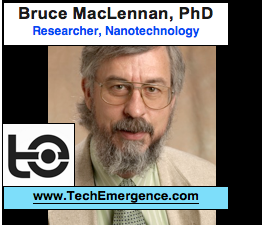
United Neurons Stand Strong, Divided Neurons Fall - with Dr. Bruce MacLennan
Dr. Bruce MacLennan is an Associate Professor in the Department of Electrical Engineering and Computer Science at the University of Tennessee Knoxville (UTK), as well as past editor-in-chief of the International Journal of Nanotechnology and Molecular Computation. His research in natural computation has led to active, interdisciplinary involvement in the fields of neuroscience, cognitive science, and philosophy. In this episode, Bruce discusses how studying the mind has influenced, and will continue to influence, the development of artificial intelligence. In a largely digital world, he turns a clarifying light on the topic of digital versus analog computing, and articulates on how the latter may be making a slow comeback in the wake of discoveries in neural information processing.
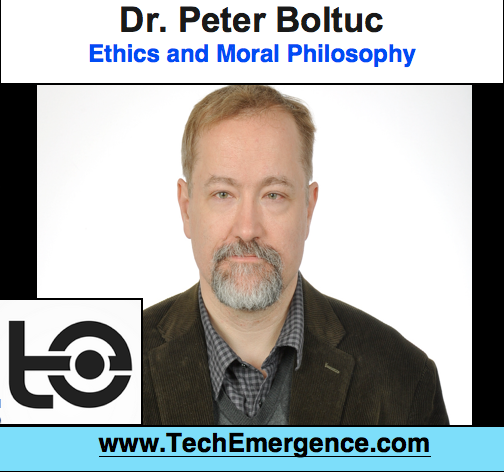
Can and Should We Create Conscious Machines - with Dr. Peter Boltuc
Dr. Peter Boltuc has a PhD in Philosophy and is currently a Professor at University of Illinois Springfield. His background in Moral and Political Philosophy has leveraged his research into the subjectivity of moral experience and the moral implications of machine consciousness. In this episode, Peter discusses whether machines could ever be granted consciousness. He believes, hypothetically, that we could create such machines, and elaborates from an ethical perspective on why we may want to "curve moral space" in a way that values human-level sentience and moves us toward living harmoniously with such machines.

What Our Brains are Good at, and Bad at, and Why That Matters - with Dr. Gary Marcus
Dr. Gary Marcus is the Director of the NYU Center for Language and Music, and Professor of Psychology at New York University, and is author of well known books such as The Birth of the Mind, The Algebraic Mind: Integrating Connectionism and Cognitive Science, and the New York Times Editor's Choice called Kluge: The Haphazard Construction of the Human Mind. In this episode, Dr. Marcus gives us some insight as to what the brain is good and bad at, and why - in addition to what this might imply for the future of human enhancement.

Public Opinion Around Artificial Intelligence, is the Media Helping or Hurting? - with Dr. Joanne Pransky
Dr. Joanne Pransky received her doctorate from Tufts University in the mid 1980's, and began championing public awareness and exposure to robotics and AI technology, playfully calling herself the "first robot psychiatrist." Since then, she's been featured on CNN, The Discovery Channel, the Sci-Fi Channel, and even the Tonight Show with Jay Leno - aiming to expose the world to technology and it's ethical implications. In this interview, Dr. Joanne speaks with me about the virtues and vices of how the media portrays AI to the public… and why she likes recent AI movies like "Her" and "Ex Machina," but questions scandalous newspaper headlines about industrial robots "killing people", as well as her thoughts about the types of conversations that she believes America (and world) should be having in order to move technology forward safely and fruitfully.

We're Cyborg's Now, but Here's What Cyborg's Will Be in the Future - with Dr. Chris Hables Gray
Dr. Hables Gray graduated with a PhD in applied philosophy from UCAL Santa Cruz, and is best known for his writings on technology, war, and cyborgs (the combination of organic and inorganic, the evolved and the invented). In this interview, Dr. Hables Gray explains his ideas around how seemingly mundane technologies and social media help to blur the line between man and machine, as well as his predictions for how car cyborgs will progress in the coming decades (including the integration of drone technology, brain-machine interface, and more).
The Work and Death - an Interview with Filmmaker Sean Blacknell
Sean Blacknell has spent the last year working on a filmed called "The Future of Work and Death," based on interviews with futurists, economists, philosophers, and other experts - with an aim to bring the film to Sundance and other prominent festivals in the coming year. In this interview, Sean explains some of the most meaningful lessons he's gained about the future of humanity from all of the interviews for his own film.
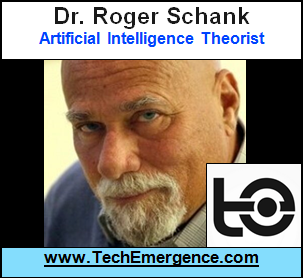
The Kind of Artificial Intelligence That Google Doesn't Care to Build - with Dr. Roger Shank
Dr. Roger Schank received his PhD from Stanford, taught at Yale, and altogether has spent around three decades attempting to solve the big problems of artificial intelligence. In this interview, Dr. Schank talks about a kind of helpful "teaching" artificial intelligence that would go beyond Siri and help us to make the right decisions at the right times given our own objectives. He explains why he believes such a project is not on Google's agenda, and what he believes might be required to create such an AI.

Computers Do Their Own Kind of "Creative," Not Like Ours - with MIT's Nick Montfort
Dr. Nick Montfort doesn't hold Shakespeare and DaVinci as the high water mark of "creativity," nor does he believe that human creative endeavor is the only worthwhile kind. In this interview, Dr. Montfort shares some of his own examples of how computers can aide the creative process in ways that might result in "art" that humans aren't capable of making alone. In addition, he provides his insight as to where the intersections of artificial intelligence and "creativity" might really lie.

How "Ordinary" Civilian Needs Drive "Extraordinary" Biotech Advancement - with UPENN's Jonathan Moreno
Dr. Jonathan Moreno's book "Mind Wars" has contributed to his current reputation as one of the most prominent bioethicists in America today. In this interview, Dr. Moreno shares his thoughts about the government agencies like DARPA and the NIH are invested in and involved with the latest biotechnology initiatives, from neuro-prosthetics to psychedelics and beyond. He also shares with us his ideas about how civilian needs are often a prime driver of the direction of biotechnology development (even for behemoths like DARPA).

Inevitably Transhuman - Human Nature's Momentum Beyond Itself - with Neuroscientist and Philosopher Nayef Al-Rodhan
Normal 0 false false false EN-US X-NONE X-NONE /* Style Definitions */ table.MsoNormalTable {mso-style-name:"Table Normal"; mso-tstyle-rowband-size:0; mso-tstyle-colband-size:0; mso-style-noshow:yes; mso-style-priority:99; mso-style-parent:""; mso-padding-alt:0in 5.4pt 0in 5.4pt; mso-para-margin:0in; mso-para-margin-bottom:.0001pt; line-height:115%; mso-pagination:widow-orphan; font-size:11.0pt; font-family:"Arial","sans-serif"; color:black;} Dr. Al-Rodhan spent decades studying the human mind, and it helped him form a theory of humanity, its nature, and its technological future. Namely, that our very nature will inevitably bring us to go beyond nature - not merely in the extension of our capacities through devices - but through a literal enhancement and extension of our bodies and minds. In his belief, human beings are emotional creatures with a moral compass that exists for their own egotistical needs. Our desire for power, profit, pleasure, pride and permanency - says Neyef - will drive us beyond the bounds of our physical condition, and it's the role of governments (not corporations) to regulate that process of enhancement and experimentation for the good of humanity. If you're interested in human motivation and the next 20 years of enhancement technology, this is an interview you won't want to miss.

Did the Evolution of the Brain… Evolve Our Morality? - Interview with Neurophilosopher Dr. Patricia Churchland
Normal 0 false false false EN-US X-NONE X-NONE /* Style Definitions */ table.MsoNormalTable {mso-style-name:"Table Normal"; mso-tstyle-rowband-size:0; mso-tstyle-colband-size:0; mso-style-noshow:yes; mso-style-priority:99; mso-style-parent:""; mso-padding-alt:0in 5.4pt 0in 5.4pt; mso-para-margin-top:0in; mso-para-margin-right:0in; mso-para-margin-bottom:10.0pt; mso-para-margin-left:0in; line-height:115%; mso-pagination:widow-orphan; font-size:11.0pt; font-family:"Calibri","sans-serif"; mso-ascii-font-family:Calibri; mso-ascii-theme-font:minor-latin; mso-hansi-font-family:Calibri; mso-hansi-theme-font:minor-latin;} Dr. Patricia Churchland is UC President's Professor of Philosophy Emerita at the University of California, San Diego. He popular books such as "Braintrust: What Neuroscience Tells Us about Morality" grapple with issues at the intersection of philosophy and neuroscience. In this interview, Dr. Churchland explains how the evolution of the mammalian brain may have influenced our underlying core moral values, and her belief that society must be strong yet flexible enough to deal with the moral quagmire of new technologies / values / ways of living as we transition into the future..

Pushing Healthcare Forward with Emerging Technology - with BioscanR Founder Tracy Ingram
Normal 0 false false false EN-US X-NONE X-NONE /* Style Definitions */ table.MsoNormalTable {mso-style-name:"Table Normal"; mso-tstyle-rowband-size:0; mso-tstyle-colband-size:0; mso-style-noshow:yes; mso-style-priority:99; mso-style-parent:""; mso-padding-alt:0in 5.4pt 0in 5.4pt; mso-para-margin-top:0in; mso-para-margin-right:0in; mso-para-margin-bottom:10.0pt; mso-para-margin-left:0in; line-height:115%; mso-pagination:widow-orphan; font-size:11.0pt; font-family:"Calibri","sans-serif"; mso-ascii-font-family:Calibri; mso-ascii-theme-font:minor-latin; mso-hansi-font-family:Calibri; mso-hansi-theme-font:minor-latin;} Tracy Ingram's mother was misdiagnosed with a brain aneurism and placed on bed rest for two years - a problem that likely resulted from a typo or similar minor error. Tracy founded BioscanR to help turn biological information from patients into more reliable diagnostic data for doctors, and he competed with his idea in the Qualcomm X-Prize. In this interview, Tracy talks about three reasons why healthcare is often slower to adopt new technologies, as well as his predictions about the coming 10 years of healthcare progress and the innovations that he believes may be most useful for patients and physicians alike.

Progress and Next Steps in Neuroscience - Dr. Hal Blumenfeld of Yale University
Normal 0 false false false EN-US X-NONE X-NONE /* Style Definitions */ table.MsoNormalTable {mso-style-name:"Table Normal"; mso-tstyle-rowband-size:0; mso-tstyle-colband-size:0; mso-style-noshow:yes; mso-style-priority:99; mso-style-parent:""; mso-padding-alt:0in 5.4pt 0in 5.4pt; mso-para-margin-top:0in; mso-para-margin-right:0in; mso-para-margin-bottom:10.0pt; mso-para-margin-left:0in; line-height:115%; mso-pagination:widow-orphan; font-size:11.0pt; font-family:"Calibri","sans-serif"; mso-ascii-font-family:Calibri; mso-ascii-theme-font:minor-latin; mso-hansi-font-family:Calibri; mso-hansi-theme-font:minor-latin;} Dr. Hal Blumenfeld is a pathbreaking neuroscience researcher in the domains of deep brain stimulation and epileptic conditions. His recent Yale research work pertaining to the neurological mechanisms of consciousness and awareness (specially in patients with epilepsy) has garnered quite a bit of attention in recent years. In this interview, Dr. Blumenfeld speaks with us about what he sees as the most important neuroscience developments of the past decade, his hopes for the next decade ahead, and his ideas about the future of brain-machine interface technologies.

Understanding the "Self" Through the Lens of Neurosceince - with Harvard's Dr. Rudolph Tanzi
Normal 0 false false false EN-US X-NONE X-NONE /* Style Definitions */ table.MsoNormalTable {mso-style-name:"Table Normal"; mso-tstyle-rowband-size:0; mso-tstyle-colband-size:0; mso-style-noshow:yes; mso-style-priority:99; mso-style-parent:""; mso-padding-alt:0in 5.4pt 0in 5.4pt; mso-para-margin-top:0in; mso-para-margin-right:0in; mso-para-margin-bottom:10.0pt; mso-para-margin-left:0in; line-height:115%; mso-pagination:widow-orphan; font-size:11.0pt; font-family:"Calibri","sans-serif"; mso-ascii-font-family:Calibri; mso-ascii-theme-font:minor-latin; mso-hansi-font-family:Calibri; mso-hansi-theme-font:minor-latin;} Dr. Rudolph Tanzi is a neuroscientist and renowned researcher at Harvard University. Selected as one of TIME Magazine's 100 most influential people of 2015 for his groundbreaking alzheimer's research, Dr. Tanzi also serves as the Director of the Genetics and Aging Research Unit at Massachusetts General Hospital (MGH). In this interview, Dr. Tanzi shares his perspective on the relation of thought, the "self," and free will - as well as his perspective on human enhancement and evolution (which he believes will occur at a biological and genetic level, not through a merger with machines).

How Can We Safely Build Something Smarter Than Us? - an Interview with Dr. Steve Omohundro
Normal 0 false false false EN-US X-NONE X-NONE /* Style Definitions */ table.MsoNormalTable {mso-style-name:"Table Normal"; mso-tstyle-rowband-size:0; mso-tstyle-colband-size:0; mso-style-noshow:yes; mso-style-priority:99; mso-style-parent:""; mso-padding-alt:0in 5.4pt 0in 5.4pt; mso-para-margin-top:0in; mso-para-margin-right:0in; mso-para-margin-bottom:10.0pt; mso-para-margin-left:0in; line-height:115%; mso-pagination:widow-orphan; font-size:11.0pt; font-family:"Calibri","sans-serif"; mso-ascii-font-family:Calibri; mso-ascii-theme-font:minor-latin; mso-hansi-font-family:Calibri; mso-hansi-theme-font:minor-latin;} Dr. Steve Omohundro earned degrees in physics and mathematics from Stanford University and a Ph.D. in physics from the University of California, Berkeley. Today, most of his best-known work In this interview, Dr. Omohundro shares his thoughts about how we might "scaffold" our security measures to match the intelligence of our machines in order to prevent them from getting out of hand.

Transformative Futrue Next 10 Years of Emerging Technology - with Vivek Wadhwa of Singularity University
Normal 0 false false false EN-US X-NONE X-NONE /* Style Definitions */ table.MsoNormalTable {mso-style-name:"Table Normal"; mso-tstyle-rowband-size:0; mso-tstyle-colband-size:0; mso-style-noshow:yes; mso-style-priority:99; mso-style-parent:""; mso-padding-alt:0in 5.4pt 0in 5.4pt; mso-para-margin-top:0in; mso-para-margin-right:0in; mso-para-margin-bottom:10.0pt; mso-para-margin-left:0in; line-height:115%; mso-pagination:widow-orphan; font-size:11.0pt; font-family:"Calibri","sans-serif"; mso-ascii-font-family:Calibri; mso-ascii-theme-font:minor-latin; mso-hansi-font-family:Calibri; mso-hansi-theme-font:minor-latin;} Vivek Wadhwa began as a software entrepreneur and now is a well-known speaker, writer, and Vice President of Academics and Innovation at Singularity University. In this interview, Mr. Wadhwa shares his heartfelt predictions about what he sees as the complete overhaul of healthcare and education in the coming decades ahead - and the widespread benefits of emerging technology for what he sees as a healthier and more informed future generation.

The Transhuman is Now - an Interview with Dr. Steve Fuller, Author of "Humanity 2.0"
Normal 0 false false false EN-US X-NONE X-NONE /* Style Definitions */ table.MsoNormalTable {mso-style-name:"Table Normal"; mso-tstyle-rowband-size:0; mso-tstyle-colband-size:0; mso-style-noshow:yes; mso-style-priority:99; mso-style-parent:""; mso-padding-alt:0in 5.4pt 0in 5.4pt; mso-para-margin-top:0in; mso-para-margin-right:0in; mso-para-margin-bottom:10.0pt; mso-para-margin-left:0in; line-height:115%; mso-pagination:widow-orphan; font-size:11.0pt; font-family:"Calibri","sans-serif"; mso-ascii-font-family:Calibri; mso-ascii-theme-font:minor-latin; mso-hansi-font-family:Calibri; mso-hansi-theme-font:minor-latin;} Dr. Steve Fuller is philosopher and professor at the University of Warwick in the UK. After writing "Humanity 2.0" in 2011, Steve has received increasing attention for his ethical perspective on human enhancement and the transhuman transition. In this interview, Dr. Fuller covers covers what he considers to be the most important present considerations of transhumanism - namely - the potential economic impacts (and gross inequality) of enhancing humanity. Dr. Fuller shares why he considers these issues as the best path forward for bringing human enhancement concerns to modern politics.

"Evolving Ourselves" - and Interview with Author, Speaker, and Investor Juan Enriquez
Normal 0 false false false EN-US X-NONE X-NONE /* Style Definitions */ table.MsoNormalTable {mso-style-name:"Table Normal"; mso-tstyle-rowband-size:0; mso-tstyle-colband-size:0; mso-style-noshow:yes; mso-style-priority:99; mso-style-parent:""; mso-padding-alt:0in 5.4pt 0in 5.4pt; mso-para-margin-top:0in; mso-para-margin-right:0in; mso-para-margin-bottom:10.0pt; mso-para-margin-left:0in; line-height:115%; mso-pagination:widow-orphan; font-size:11.0pt; font-family:"Calibri","sans-serif"; mso-ascii-font-family:Calibri; mso-ascii-theme-font:minor-latin; mso-hansi-font-family:Calibri; mso-hansi-theme-font:minor-latin;} Juan Enriquez gave a TED talk in 2009 called "The next species of human," and video went viral - and is now one of the most popular futurist talks in TED history. In addition to previously founding the Life Sciences Project at the Harvard Business School, Juan is now managing partner in Excell Venture Management in Boston, MA. In this interview we discuss Juan's thoughts about the most relevant technologies that might "tinker with what's human," and which such technologies might be the first to require serious ethical consideration from humanity as a whole, in the public and private sectors.
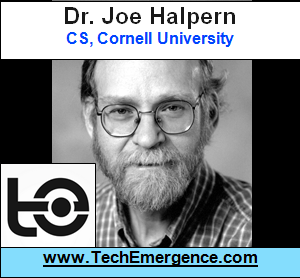
Handling Uncertaintly on a Grand Scale - an Interview with Cornell's Dr. Joe Halpern
Normal 0 false false false EN-US X-NONE X-NONE /* Style Definitions */ table.MsoNormalTable {mso-style-name:"Table Normal"; mso-tstyle-rowband-size:0; mso-tstyle-colband-size:0; mso-style-noshow:yes; mso-style-priority:99; mso-style-parent:""; mso-padding-alt:0in 5.4pt 0in 5.4pt; mso-para-margin-top:0in; mso-para-margin-right:0in; mso-para-margin-bottom:10.0pt; mso-para-margin-left:0in; line-height:115%; mso-pagination:widow-orphan; font-size:11.0pt; font-family:"Calibri","sans-serif"; mso-ascii-font-family:Calibri; mso-ascii-theme-font:minor-latin; mso-hansi-font-family:Calibri; mso-hansi-theme-font:minor-latin;} Decades ago, Cornell's Dr. Joe Halpern wrote a book called "Reasoning with Uncertainty." In this interview, we discuss alternative approaches to handling large-scale uncertainty - as might be applied to broad concerns such as environmental policy, or the management of hard-to-predict emerging technologies. Through thought experiments and some philosophical exploration, Prof. Halpern explains some potential alternatives to "probabilities," and opens up the door to other, potentially more robust methods of managing large, uncertain, important questions for humanity's future.

Fact and Fiction in the Left and Right Hemisphere - Neuroanatomy Basics with Dr. Jill Bolte Taylor
Normal 0 false false false EN-US X-NONE X-NONE /* Style Definitions */ table.MsoNormalTable {mso-style-name:"Table Normal"; mso-tstyle-rowband-size:0; mso-tstyle-colband-size:0; mso-style-noshow:yes; mso-style-priority:99; mso-style-parent:""; mso-padding-alt:0in 5.4pt 0in 5.4pt; mso-para-margin-top:0in; mso-para-margin-right:0in; mso-para-margin-bottom:10.0pt; mso-para-margin-left:0in; line-height:115%; mso-pagination:widow-orphan; font-size:11.0pt; font-family:"Calibri","sans-serif"; mso-ascii-font-family:Calibri; mso-ascii-theme-font:minor-latin; mso-hansi-font-family:Calibri; mso-hansi-theme-font:minor-latin;} Dr. Jill Bolte Taylor became remarkably well-known following her TED talk called "My stroke of insight," where she explained her experience of having a stroke from her perspective… that is to say: perspective of a neuroscientist. Since then Jill has been featured on Oprah, and her book (with the same title as her TED talk) is available in over 30 languages worldwide. In this interview, Dr. Taylor explains her perspective on the place and purpose of the left and right hemispheres, and how an understanding of neuroanatomy might help us make sense of our own desires / drives, and help us lead a more fulfilling or productive life.
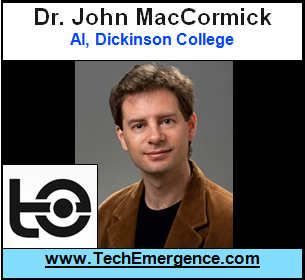
Basic Building Blocks of Artificial Intelligence - with Dr. John MacCormack
Normal 0 false false false EN-US X-NONE X-NONE /* Style Definitions */ table.MsoNormalTable {mso-style-name:"Table Normal"; mso-tstyle-rowband-size:0; mso-tstyle-colband-size:0; mso-style-noshow:yes; mso-style-priority:99; mso-style-parent:""; mso-padding-alt:0in 5.4pt 0in 5.4pt; mso-para-margin-top:0in; mso-para-margin-right:0in; mso-para-margin-bottom:10.0pt; mso-para-margin-left:0in; line-height:115%; mso-pagination:widow-orphan; font-size:11.0pt; font-family:"Calibri","sans-serif"; mso-ascii-font-family:Calibri; mso-ascii-theme-font:minor-latin; mso-hansi-font-family:Calibri; mso-hansi-theme-font:minor-latin;} Dr. John MacCormick is the author of the book "Nine Algorithms That Changed the Future: The Ingenious Ideas That Drive Today's Computers," and in this interview, he shares some of the fundamental algorithms that support modern artificial intelligence, and his optimistic views on the future of AI.

What Would it Take to Model the Human Mind? - Computational Neuroanatomy with Dr. Gregory Hickok
Normal 0 false false false EN-US X-NONE X-NONE /* Style Definitions */ table.MsoNormalTable {mso-style-name:"Table Normal"; mso-tstyle-rowband-size:0; mso-tstyle-colband-size:0; mso-style-noshow:yes; mso-style-priority:99; mso-style-parent:""; mso-padding-alt:0in 5.4pt 0in 5.4pt; mso-para-margin-top:0in; mso-para-margin-right:0in; mso-para-margin-bottom:10.0pt; mso-para-margin-left:0in; line-height:115%; mso-pagination:widow-orphan; font-size:11.0pt; font-family:"Calibri","sans-serif"; mso-ascii-font-family:Calibri; mso-ascii-theme-font:minor-latin; mso-hansi-font-family:Calibri; mso-hansi-theme-font:minor-latin;} Dr. Gregory Hickok is working on modeling brain circuits related to hearing and auditory information at the University of California, Irvine. Listen into this interview to hear what Greg believes might be the grandest application of cognitive neuroscience in the coming decade, and why - when asked about modeling the human brain in the coming decades - he says "I don't see the brain giving up it's secrets in the next couple of generations."

A Brief History of Artificial Intelligence, and a Look Towards it's Future - with Stanford Researcher Dr. Nils Nilsson
Normal 0 false false false EN-US X-NONE X-NONE /* Style Definitions */ table.MsoNormalTable {mso-style-name:"Table Normal"; mso-tstyle-rowband-size:0; mso-tstyle-colband-size:0; mso-style-noshow:yes; mso-style-priority:99; mso-style-parent:""; mso-padding-alt:0in 5.4pt 0in 5.4pt; mso-para-margin-top:0in; mso-para-margin-right:0in; mso-para-margin-bottom:10.0pt; mso-para-margin-left:0in; line-height:115%; mso-pagination:widow-orphan; font-size:11.0pt; font-family:"Calibri","sans-serif"; mso-ascii-font-family:Calibri; mso-ascii-theme-font:minor-latin; mso-hansi-font-family:Calibri; mso-hansi-theme-font:minor-latin;} Dr. Nils Nilsson was one of the early researchers in emerging technology back in the 1960s - graduating with his doctorate from Stanford before it had a computer science department. In this interview, Dr. Nilsson joins me from his retirement residence in Oregon and shares his overview of the history of artificial intelligence - and his thoughts about it's most meaningful impact in the coming 10-20 years.

Transhumanist for President? Interview with Author and 2016 Transhumanist Party Candidate for US President, Zoltan Istvan
Normal 0 false false false EN-US X-NONE X-NONE /* Style Definitions */ table.MsoNormalTable {mso-style-name:"Table Normal"; mso-tstyle-rowband-size:0; mso-tstyle-colband-size:0; mso-style-noshow:yes; mso-style-priority:99; mso-style-parent:""; mso-padding-alt:0in 5.4pt 0in 5.4pt; mso-para-margin-top:0in; mso-para-margin-right:0in; mso-para-margin-bottom:10.0pt; mso-para-margin-left:0in; line-height:115%; mso-pagination:widow-orphan; font-size:11.0pt; font-family:"Calibri","sans-serif"; mso-ascii-font-family:Calibri; mso-ascii-theme-font:minor-latin; mso-hansi-font-family:Calibri; mso-hansi-theme-font:minor-latin;} Zoltan Istvan doesn't believe that issues of life extension, genetic modification, and neural prosthetics are the problems for the president in the year 220, but that they're among the most important considerations of the future of America, and of human life in general. In this interview, I ask Zoltan what kinds of technology and health initiatives he'd get behind as a president, as well as his own thoughts as to how concerns of merging technology might be brought to the forefront of American awareness (without a disaster, that is).

Explaining the Exponential - an Interview with Futurist Speaker / Author Gray Scott
Normal 0 false false false EN-US X-NONE X-NONE /* Style Definitions */ table.MsoNormalTable {mso-style-name:"Table Normal"; mso-tstyle-rowband-size:0; mso-tstyle-colband-size:0; mso-style-noshow:yes; mso-style-priority:99; mso-style-parent:""; mso-padding-alt:0in 5.4pt 0in 5.4pt; mso-para-margin-top:0in; mso-para-margin-right:0in; mso-para-margin-bottom:10.0pt; mso-para-margin-left:0in; line-height:115%; mso-pagination:widow-orphan; font-size:11.0pt; font-family:"Calibri","sans-serif"; mso-ascii-font-family:Calibri; mso-ascii-theme-font:minor-latin; mso-hansi-font-family:Calibri; mso-hansi-theme-font:minor-latin;} Gray Scott's mission is to bring the concerns of the future to the public - and with recent coverage in Psychology Today, New York Post, and the World Future Society, he's picking up steam. In this interview, Gray and I discuss the most important societal shifts that he believes are opening up our generation and culture to take issues like life extension and brain-machine interface. We discuss how modern skepticism of religious dogma plays a role in the social shift towards transhumanism.

The Brain, Now Less of a Black Box - a Neuroscience Interview with Columbia's Dr. Jeffrey Lieberman
Normal 0 false false false EN-US X-NONE X-NONE /* Style Definitions */ table.MsoNormalTable {mso-style-name:"Table Normal"; mso-tstyle-rowband-size:0; mso-tstyle-colband-size:0; mso-style-noshow:yes; mso-style-priority:99; mso-style-parent:""; mso-padding-alt:0in 5.4pt 0in 5.4pt; mso-para-margin-top:0in; mso-para-margin-right:0in; mso-para-margin-bottom:10.0pt; mso-para-margin-left:0in; line-height:115%; mso-pagination:widow-orphan; font-size:11.0pt; font-family:"Calibri","sans-serif"; mso-ascii-font-family:Calibri; mso-ascii-theme-font:minor-latin; mso-hansi-font-family:Calibri; mso-hansi-theme-font:minor-latin;} Dr. Jeffrey Lieberman is no slouch when it comes to understanding the human mind - particularly the diagnoses and treatment of mental illness. In addition to being chair of psychiatry at Columbia University, Dr. Lieberman sits on the advisory board of many of the world's largest drug companies. In this particular interview, Dr. Lieberman shares his thoughts around the most transformative technological developments in understanding the mind in the last 10 years - as well has his predictions as to which technologies and approaches will break the most ground in the future of diagnosing and treating mental illnesses.
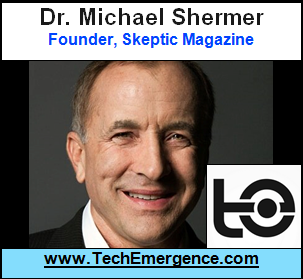
Applying Reason to the Future - Talking Singularity with Dr. Michael Shermer, Founder of Skeptic Magazine
Normal 0 false false false EN-US X-NONE X-NONE /* Style Definitions */ table.MsoNormalTable {mso-style-name:"Table Normal"; mso-tstyle-rowband-size:0; mso-tstyle-colband-size:0; mso-style-noshow:yes; mso-style-priority:99; mso-style-parent:""; mso-padding-alt:0in 5.4pt 0in 5.4pt; mso-para-margin-top:0in; mso-para-margin-right:0in; mso-para-margin-bottom:10.0pt; mso-para-margin-left:0in; line-height:115%; mso-pagination:widow-orphan; font-size:11.0pt; font-family:"Calibri","sans-serif"; mso-ascii-font-family:Calibri; mso-ascii-theme-font:minor-latin; mso-hansi-font-family:Calibri; mso-hansi-theme-font:minor-latin;} There are "techno-optimists" and "techno-pessimists"… and there's those who just don't know what they're talking about. Skeptic Magazine's founder Michael Shermer shares his thoughts on what's hyped-up and what's worth considering in the human race to the future.

A Zap to the Head Might Do Us All Some Good - Talking Brain Stimulation with Dr. Brent Williams
Normal 0 false false false EN-US X-NONE X-NONE /* Style Definitions */ table.MsoNormalTable {mso-style-name:"Table Normal"; mso-tstyle-rowband-size:0; mso-tstyle-colband-size:0; mso-style-noshow:yes; mso-style-priority:99; mso-style-parent:""; mso-padding-alt:0in 5.4pt 0in 5.4pt; mso-para-margin-top:0in; mso-para-margin-right:0in; mso-para-margin-bottom:10.0pt; mso-para-margin-left:0in; line-height:115%; mso-pagination:widow-orphan; font-size:11.0pt; font-family:"Calibri","sans-serif"; mso-ascii-font-family:Calibri; mso-ascii-theme-font:minor-latin; mso-hansi-font-family:Calibri; mso-hansi-theme-font:minor-latin;} It's called "transcranial direct-current stimulation (tDCS)," haven't you heard about it? The process involves zapping your brain through subtle electrical stimulation on the outside of the head - and though research has been going on in this field for decades, the mechanisms for it's effects on mood, memory, and more, are still mostly unknown. Dr. Brent Williams is the director of the iTeach Center at KSU, and he landed in WIRED magazine for some of his work on tDCS. In this episode, he talks about the potential future of tCDS to enhance normal human function and potentially allow us more control over our emotional state and mental performance, as the technology progresses. It's enough to make you want to go to Radio Shack and build one yourself.

Swarm Robots - When Will They Enter Society? With Dr. James McLurkin
Normal 0 false false false EN-US X-NONE X-NONE /* Style Definitions */ table.MsoNormalTable {mso-style-name:"Table Normal"; mso-tstyle-rowband-size:0; mso-tstyle-colband-size:0; mso-style-noshow:yes; mso-style-priority:99; mso-style-parent:""; mso-padding-alt:0in 5.4pt 0in 5.4pt; mso-para-margin-top:0in; mso-para-margin-right:0in; mso-para-margin-bottom:10.0pt; mso-para-margin-left:0in; line-height:115%; mso-pagination:widow-orphan; font-size:11.0pt; font-family:"Calibri","sans-serif"; mso-ascii-font-family:Calibri; mso-ascii-theme-font:minor-latin; mso-hansi-font-family:Calibri; mso-hansi-theme-font:minor-latin;} Dr. James McLurkin works with swarm robots at Rice University, and his unique work on robot communication has landed him on PBS's "Nova," in addition to speaking engagements at events like TED and Singularity Summit. In this episode, Dr. McLurkin discusses how swarm robots have been inspired by insect behavior - and exactly swamp robots are best suited for. In many cases, argues McLurkin, a group of smaller, inexpensive robots can perform a job much better than a single, more capable robot. Dr. James also sheds light on when and how swarm robots might become a part of everyday life and industry in the coming decades.

"Finding Quicksand" - The Purpose of Fiction in Building a Better Future - with David Brin
Normal 0 false false false EN-US X-NONE X-NONE /* Style Definitions */ table.MsoNormalTable {mso-style-name:"Table Normal"; mso-tstyle-rowband-size:0; mso-tstyle-colband-size:0; mso-style-noshow:yes; mso-style-priority:99; mso-style-parent:""; mso-padding-alt:0in 5.4pt 0in 5.4pt; mso-para-margin-top:0in; mso-para-margin-right:0in; mso-para-margin-bottom:10.0pt; mso-para-margin-left:0in; line-height:115%; mso-pagination:widow-orphan; font-size:11.0pt; font-family:"Calibri","sans-serif"; mso-ascii-font-family:Calibri; mso-ascii-theme-font:minor-latin; mso-hansi-font-family:Calibri; mso-hansi-theme-font:minor-latin;} David Brin is recognized as one of the most iconic futurist fiction writers of our time. With huge bestsellers like "The Postman" (later turned into a movie starring Kevin Costner), David's work explores the ramifications of human choices of our collective future. In this interview, David talks about fiction's unique role in helping humanity find a beneficial future - a job done in large part by pointing out what we want to avoid most, says David. If you're an entrepreneur, researcher, or writer yourself, David's insights into "imagination" as a force for good are important to listen closely to.

Real Applications of Virtual Humans - Dr. Regis Kopper
Normal 0 false false false EN-US X-NONE X-NONE /* Style Definitions */ table.MsoNormalTable {mso-style-name:"Table Normal"; mso-tstyle-rowband-size:0; mso-tstyle-colband-size:0; mso-style-noshow:yes; mso-style-priority:99; mso-style-parent:""; mso-padding-alt:0in 5.4pt 0in 5.4pt; mso-para-margin-top:0in; mso-para-margin-right:0in; mso-para-margin-bottom:10.0pt; mso-para-margin-left:0in; line-height:115%; mso-pagination:widow-orphan; font-size:11.0pt; font-family:"Calibri","sans-serif"; mso-ascii-font-family:Calibri; mso-ascii-theme-font:minor-latin; mso-hansi-font-family:Calibri; mso-hansi-theme-font:minor-latin;} Regis Kopper runs the Duke Immersive Virtual Environment, or "DiVE." His research focuses on the interactions of virtual and real humans. In this interview, he discusses his predictions for the non-gaming applications of virtual reality - and the surprising evidence that virtual reality humans might "relate" to us in much the way that real humans do. What happens when we can't tell the difference? Normal 0 false false false EN-US X-NONE X-NONE /* Style Definitions */ table.MsoNormalTable {mso-style-name:"Table Normal"; mso-tstyle-rowband-size:0; mso-tstyle-colband-size:0; mso-style-noshow:yes; mso-style-priority:99; mso-style-parent:""; mso-padding-alt:0in 5.4pt 0in 5.4pt; mso-para-margin-top:0in; mso-para-margin-right:0in; mso-para-margin-bottom:10.0pt; mso-para-margin-left:0in; line-height:115%; mso-pagination:widow-orphan; font-size:11.0pt; font-family:"Calibri","sans-serif"; mso-ascii-font-family:Calibri; mso-ascii-theme-font:minor-latin; mso-hansi-font-family:Calibri; mso-hansi-theme-font:minor-latin;} For More Information, Visit the HUB of Startups / Business in Emerging Technology. From Robotic Limbs to Getting Angel Investment, from Biotech to Intellectual Property: http://www.TechEmergence.com Interested in the Future of Humanity and the Ramifications of Emerging Tech? Sentient Potential Covers the Ethical Considerations and Future Projections at the Crossroads of Technology and Consciousness:

Technology as a Driver of Behavior Change - with Happify Co-Founder Ofer Leidner
Normal 0 false false false EN-US X-NONE X-NONE /* Style Definitions */ table.MsoNormalTable {mso-style-name:"Table Normal"; mso-tstyle-rowband-size:0; mso-tstyle-colband-size:0; mso-style-noshow:yes; mso-style-priority:99; mso-style-parent:""; mso-padding-alt:0in 5.4pt 0in 5.4pt; mso-para-margin-top:0in; mso-para-margin-right:0in; mso-para-margin-bottom:10.0pt; mso-para-margin-left:0in; line-height:115%; mso-pagination:widow-orphan; font-size:11.0pt; font-family:"Calibri","sans-serif"; mso-ascii-font-family:Calibri; mso-ascii-theme-font:minor-latin; mso-hansi-font-family:Calibri; mso-hansi-theme-font:minor-latin;} Ofer Leidner is co-founder of Happify, and app aimed at supporting behavior change for well-being. In this interview, Ofer explains his views on the potential for technology to influence habits, and where he feels this particular kind of technology might mold our wearable / technologically immersive future. Normal 0 false false false EN-US X-NONE X-NONE /* Style Definitions */ table.MsoNormalTable {mso-style-name:"Table Normal"; mso-tstyle-rowband-size:0; mso-tstyle-colband-size:0; mso-style-noshow:yes; mso-style-priority:99; mso-style-parent:""; mso-padding-alt:0in 5.4pt 0in 5.4pt; mso-para-margin-top:0in; mso-para-margin-right:0in; mso-para-margin-bottom:10.0pt; mso-para-margin-left:0in; line-height:115%; mso-pagination:widow-orphan; font-size:11.0pt; font-family:"Calibri","sans-serif"; mso-ascii-font-family:Calibri; mso-ascii-theme-font:minor-latin; mso-hansi-font-family:Calibri; mso-hansi-theme-font:minor-latin;} For More Information, Visit the HUB of Startups / Business in Emerging Technology. From Robotic Limbs to Getting Angel Investment, from Biotech to Intellectual Property: http://www.TechEmergence.com Interested in the Future of Humanity and the Ramifications of Emerging Tech? Sentient Potential Covers the Ethical Considerations and Future Projections at the Crossroads of Technology and Consciousness:
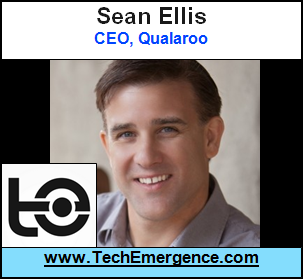
Startup Marketing - Nailing Product Market Fit and Delivering Value Like a Boss - with Seal Ellis
Normal 0 false false false EN-US X-NONE X-NONE /* Style Definitions */ table.MsoNormalTable {mso-style-name:"Table Normal"; mso-tstyle-rowband-size:0; mso-tstyle-colband-size:0; mso-style-noshow:yes; mso-style-priority:99; mso-style-parent:""; mso-padding-alt:0in 5.4pt 0in 5.4pt; mso-para-margin-top:0in; mso-para-margin-right:0in; mso-para-margin-bottom:10.0pt; mso-para-margin-left:0in; line-height:115%; mso-pagination:widow-orphan; font-size:11.0pt; font-family:"Calibri","sans-serif"; mso-ascii-font-family:Calibri; mso-ascii-theme-font:minor-latin; mso-hansi-font-family:Calibri; mso-hansi-theme-font:minor-latin;} Sean Ellis is recognized as the originator of the term "growth hacking," and is widely recognized as one of the world's best startup and technology marketers. Heading up growth at companies like DropBox and LogMeIn, Sean has gone on to found Qualaroo, a qualitative data collection startup. In this interview, Sean discusses the proper use of qualitative data, polling questions, and customer interviews in order to discover a true picture of the customer's needs in order to deliver a killer product and soaring sales. If you're involved in a tech startup - or plan to "feel out" an idea for a company or technology of your own - you won't want to miss this interview. Normal 0 false false false EN-US X-NONE X-NONE /* Style Definitions */ table.MsoNormalTable {mso-style-name:"Table Normal"; mso-tstyle-rowband-size:0; mso-tstyle-colband-size:0; mso-style-noshow:yes; mso-style-priority:99; mso-style-parent:""; mso-padding-alt:0in 5.4pt 0in 5.4pt; mso-para-margin-top:0in; mso-para-margin-right:0in; mso-para-margin-bottom:10.0pt; mso-para-margin-left:0in; line-height:115%; mso-pagination:widow-orphan; font-size:11.0pt; font-family:"Calibri","sans-serif"; mso-ascii-font-family:Calibri; mso-ascii-theme-font:minor-latin; mso-hansi-font-family:Calibri; mso-hansi-theme-font:minor-latin;} For More Information, Visit the HUB of Startups / Business in Emerging Technology. From Robotic Limbs to Getting Angel Investment, from Biotech to Intellectual Property: http://www.TechEmergence.com Interested in the Future of Humanity and the Ramifications of Emerging Tech? Sentient Potential Covers the Ethical Considerations and Future Projections at the Crossroads of Technology and Consciousness:
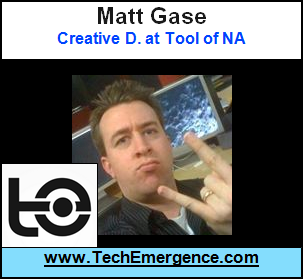
How to Create a Unique Virtual Reality Experience - with Matt Gase of Tool
Tool creates cool digital experiences for big companies all over the world (including UX work for online giants like Google and Facebook), and when they created a virtual reality experience of South Park - they couldn't have imagined how fast it would catch on. After tremendous coverage on sites like TechCrunch and WIRED (and many lessons learned), Matt speaks to us about how to create a unique virtual reality experience that people will enjoy as not just novel, but fun and worth revisiting again and again. For More Information, Visit the HUB of Startups / Business in Emerging Technology. From Robotic Limbs to Getting Angel Investment, from Biotech to Intellectual Property: http://www.TechEmergence.com Interested in the Future of Humanity and the Ramifications of Emerging Tech? Sentient Potential Covers the Ethical Considerations and Future Projections at the Crossroads of Technology and Consciousness: http://www.SentientPotential.com

Enhancing Mental Performance via Brain Stimulation - with Thync CEO Isy Goldwasser
Current brain-machine interface technologies like MUSE or Mellon detect your mental activity with a headband, and represent it in unique apps. Thync is aiming to actively stimulate your mental activity, creating a more excited or tranquil mental state at your discretion. In this episode, we explore the possibilities of cranial stimulation, and the bigger trend of how technology and psychology are beginning to integrate and what it might imply for consumers and humanity. For More Information, Visit the HUB of Startups / Business in Emerging Technology. From Robotic Limbs to Getting Angel Investment, from Biotech to Intellectual Property: http://www.TechEmergence.com Interested in the Future of Humanity and the Ramifications of Emerging Tech? Sentient Potential Covers the Ethical Considerations and Future Projections at the Crossroads of Technology and Consciousness: http://www.SentientPotential.com

Beyond Ice Buckets: ALS Assistive Tech Tends - with Alisa Brownlee
Normal 0 false false false EN-US X-NONE X-NONE /* Style Definitions */ table.MsoNormalTable {mso-style-name:"Table Normal"; mso-tstyle-rowband-size:0; mso-tstyle-colband-size:0; mso-style-noshow:yes; mso-style-priority:99; mso-style-parent:""; mso-padding-alt:0in 5.4pt 0in 5.4pt; mso-para-margin-top:0in; mso-para-margin-right:0in; mso-para-margin-bottom:10.0pt; mso-para-margin-left:0in; line-height:115%; mso-pagination:widow-orphan; font-size:11.0pt; font-family:"Calibri","sans-serif"; mso-ascii-font-family:Calibri; mso-ascii-theme-font:minor-latin; mso-hansi-font-family:Calibri; mso-hansi-theme-font:minor-latin;} Our podcast frequently covers the business and research sides of emerging technology, but in this episode we talk about some of it's direct applications. Alisa Brownlee of the ALS Association has been working with assistive technologies for decades, and she explains what truly works best to help weakening ALS patients communicate and live full lives and what kind of developments she'd love to see from the tech and maker communities to help more ALS patients worldwide. For More Information, Visit the HUB of Startups / Business in Emerging Technology. From Robotic Limbs to Getting Angel Investment, from Biotech to Intellectual Property: http://www.TechEmergence.com Interested in the Future of Humanity and the Ramifications of Emerging Tech? Sentient Potential Covers the Ethical Considerations and Future Projections at the Crossroads of Technology and Consciousness: http://www.SentientPotential.com

Where Augmented Reality Will Change the World FIRST - with the Atheer Labs Team
Normal 0 false false false EN-US X-NONE X-NONE /* Style Definitions */ table.MsoNormalTable {mso-style-name:"Table Normal"; mso-tstyle-rowband-size:0; mso-tstyle-colband-size:0; mso-style-noshow:yes; mso-style-priority:99; mso-style-parent:""; mso-padding-alt:0in 5.4pt 0in 5.4pt; mso-para-margin-top:0in; mso-para-margin-right:0in; mso-para-margin-bottom:10.0pt; mso-para-margin-left:0in; line-height:115%; mso-pagination:widow-orphan; font-size:11.0pt; font-family:"Calibri","sans-serif"; mso-ascii-font-family:Calibri; mso-ascii-theme-font:minor-latin; mso-hansi-font-family:Calibri; mso-hansi-theme-font:minor-latin;} Ketan Joshi and Vishal Shah of Atheer Labs share their ideas about the immediate future of augmented reality, and how interactive computing can be facilitated though an augmented experience. We explore use-cases of the near future, as well as applications underway now. For More Information, Visit the HUB of Startups / Business in Emerging Technology. From Robotic Limbs to Getting Angel Investment, from Biotech to Intellectual Property: http://www.TechEmergence.com Interested in the Future of Humanity and the Ramifications of Emerging Tech? Sentient Potential Covers the Ethical Considerations and Future Projections at the Crossroads of Technology and Consciousness: http://www.SentientPotential.com

What the World Loses and Gains in a "Virtual" World - with Altitude's CEO, Dan Ostrower
Normal 0 false false false EN-US X-NONE X-NONE /* Style Definitions */ table.MsoNormalTable {mso-style-name:"Table Normal"; mso-tstyle-rowband-size:0; mso-tstyle-colband-size:0; mso-style-noshow:yes; mso-style-priority:99; mso-style-parent:""; mso-padding-alt:0in 5.4pt 0in 5.4pt; mso-para-margin-top:0in; mso-para-margin-right:0in; mso-para-margin-bottom:10.0pt; mso-para-margin-left:0in; line-height:115%; mso-pagination:widow-orphan; font-size:11.0pt; font-family:"Calibri","sans-serif"; mso-ascii-font-family:Calibri; mso-ascii-theme-font:minor-latin; mso-hansi-font-family:Calibri; mso-hansi-theme-font:minor-latin;} Dan Ostrower gets to work with some amazing and innovative companies at Altitude (a creative consultancy), and has a keen eye for for the future. A writer for WIRED and a myriad of other publications, Dan shares his thoughts about the pros and cons of our increasingly digital future, and how companies can keep relationships and interaction alive with technology that doesn't make us lose what's "human." For More Information, Visit the HUB of Startups / Business in Emerging Technology. From Robotic Limbs to Getting Angel Investment, from Biotech to Intellectual Property: http://www.TechEmergence.com Interested in the Future of Humanity and the Ramifications of Emerging Tech? Sentient Potential Covers the Ethical Considerations and Future Projections at the Crossroads of Technology and Consciousness: http://www.SentientPotential.com