
Tel Aviv Review
686 episodes — Page 2 of 14
Text, Subtext, Context: Monitoring Antisemitism Online
Dr Matthias Becker, research fellow at Reichman University and the University of Cambridge, discusses his Decoding Antisemitism project, using novel scholarly and technological tools to monitor and analyze online hate speech. This episode is made possible by the Israel office of Konrad-Adenauer-Stiftung, which promotes peace, freedom, and justice through political education.
Everything You Wanted to Know About Hate but Were Afraid to Ask
Eran Halperin, professor of psychology at the Hebrew University and the founding director of aChord, a leading research center dedicated to promoting social change in Israel through the tools of social psychology, discusses his new book, Warning: Hate Ahead. Why is hate such a powerful emotion, and what can be done to contain it? The episode is sponsored by the Sady and Ludwig Kahn Chair in Jewish History at UCLA and co-hosted by Prof David N. Myers.
Israeli Exceptionalism?
Dr Yoav Fromer, a senior lecturer at the Department of English and American Studies and the head of the Center of US Studies at Tel Aviv University, discusses his new book (co-edited with Ilan Peleg), The Americanization of the Israeli Right.
A Jewish Roadmap for a People in Crisis
Joshua Leifer, an American journalist (Dissent, The New York Review of Books, The Guardian) and PhD candidate in history at Yale University, discusses his new book Tablets Shattered: The End of an American Jewish Century and the Future of Jewish Life. The episode is sponsored by the Sady and Ludwig Kahn Chair in Jewish History at UCLA and co-hosted by Prof David N. Myers.
Impersonality Disorders
Eviatar Zerubavel, Distinguished Professor Emeritus of Sociology at Rutgers University, discusses his new book "Don't Take It Personally: Personalness and Impersonality in Social Life."
Early Israel's 'Emotional Regime'
Prof. Orit Rozin, a historian at Tel Aviv University, discusses her new book Emotions of Conflict: Israel 1949-1967, analyzing the efforts of the Israeli establishment in the 1950s and 60s to control the people's emotional response to the impending sense of insecurity.
A Forgotten Aliyah, Remembered
Liora Halperin, Professor of International Studies and History and Distinguished Endowed Chair of Jewish Studies at the University of Washington in Seattle, discusses her book The Oldest Guard: Forging the Zionist Settler Past.
The Desert: A Cultural History
Yael Zerubavel, Professor Emerita of Jewish Studies and History at Rutgers University, discusses her new book Desert, Island, Wall: Symbolic Landscapes and the Politics of Space in Israeli Culture, which has just been published in Hebrew and is an updated version of her 2019 book Desert in the Promised Land.
The Rise of Israeli Diaspora
Dr. Jonathan Grossman explores Israel's evolving attitude and discourse toward Israeli emigrants, shifting from viewing them as selfish deserters to embracing them as loyal partners, fostering a legitimate and valuable diaspora community abroad. This episode is made possible by the Hebrew University of Jerusalem's Jacob Robinson Institute for the History of Individual and Collective Rights.
Human Rights in Troubled Times: How Much Individualism Do We Need?
Anne Rethmann examines post-1945 human rights discourses, highlighting the concept of justice by the Austrian-Jewish lawyer Franz Bienenfeld. Comparing it with T. W. Adorno's notion of maturity, she emphasizes the significance of dignity within the framework of human rights. This episode is made possible by the Hebrew University of Jerusalem's Jacob Robinson Institute for the History of Individual and Collective Rights.
Jewish Nationalism, Sovereignty, and International Law
Prof. Rotem Giladi discusses his book "Jews, Sovereignty, and International Law: Ideology and Ambivalence in Early Israeli Legal Diplomacy" (Oxford 2021), which explores the role of ideology in shaping Israel's early attitudes towards international law. This episode is made possible by the Hebrew University of Jerusalem's Jacob Robinson Institute for the History of Individual and Collective Rights.
Minority Rights and Jewish Non-Territorial Autonomy in Interwar Estonia
Dr. Timo Aava examines Estonia's establishment of non-territorial autonomies during the interwar period, with a particular focus on the Jewish self-government case, thereby providing intriguing insights into Estonia's treatment of minorities. This episode is made possible by the Hebrew University of Jerusalem's Jacob Robinson Institute for the History of Individual and Collective Rights.
Diplomacy Without Sovereignty: The Zionist Movement at the League of Nations
Dr. Eran Shlomi discusses Zionist diplomacy and representation at the League of Nations, the UN predecessor, during the interwar period. He analyzes the League's role in the Zionist path to statehood. This episode is made possible by the Hebrew University of Jerusalem's Jacob Robinson Institute for the History of Individual and Collective Rights.
Law in Times of Crisis: The Life and Legacy of Jacob Robinson
Dr. Iris Nachum introduces the jurist Jacob Robinson (1889-1977), emphasizing his activism for minority rights and compensation for expulsion. A research institute in his name has recently been established at the Hebrew University of Jerusalem. This episode is made possible by the Hebrew University of Jerusalem's Jacob Robinson Institute for the History of Individual and Collective Rights.
The Many Faces of Antisemitism
Prof. Jeffrey Herf, Distinguished Professor Emeritus of History at the University of Maryland, College Park, discusses his book, The Three Faces of Antisemitism: Right, Left and Islamist. What common ground do these three markedly different worldviews hold when it comes to the Jews?
Parallel Injustices: Holocaust Memory in Apartheid South Africa
Dr Roni Mikel-Arieli, a postdoctoral and teaching fellow at Ben Gurion University's Department of Sociology and Anthropology and until recently the academic director of the Oral History Division at the Hebrew University's Avraham Harman Research Institute of Contemporary Jewry, discusses her book Remembering the Holocaust in a Racial State: Holocaust Memory in South Africa from Apartheid to Democracy (1948-1994).
Antisemitism: A Serious Problem, Taken Seriously
Katharina von Schnurbein, the European Commission's Coordinator on Combating Antisemitism and Fostering Jewish Life, talks about the EU's response to anti-Jewish hate crimes and speech. Despite the alarming increase in cases, she says that the Union has taken many measures (some of them long before October 2023) that have begun to bear fruit. This episode is made possible by the Israel office of Konrad-Adenauer-Stiftung, which promotes peace, freedom, and justice through political education.
Walk the Walk: What Do Germans Mean by 'Never Again'?
Dr Andrew Port, a historian at Wayne State University, discusses his new book Never Again: Germans and Genocide after the Holocaust, analyzing German responses to cases of genocide from the 1970s to the 1990s.
Israel-Hamas War, 7 Months On
A special collaboration with the Jerusalem Unplugged podcast, where host Robert Mazza and the Tel Aviv Review's Gilad Halpern discuss the current moment for Israel domestically and internationally.
Post-October 7th: Crises and Opportunities
Dr Lihi Ben Shitrit, the director of the Taub Center for Israel Studies at NYU and editor of the forthcoming The Gates of Gaza: Critical Voices from Israel on October 7 and the War with Hamas, and Dr Dahlia Scheindlin, author of The Crooked Timber of Democracy in Israel: Promise Unfulfilled assess what lies ahead for Israel: A sea change, or more of the same? Dr Ben Shitrit and Dr Scheindlin (and Dr Agbaria, in the older ep) are fellows at the Institute of Advanced Israel Studies at Brandeis University's Schusterman Center for Israel Studies. The interview was recorded on the sidelines of the "Democracy and Its Alternatives: The Origins of Israel's Current Crisis" conference, held at Brandeis University and organized in partnership with the Center for Jewish History in New York.

Whither the Palestinian Citizens of Israel?
The already volatile situation of the Palestinian citizens of Israel has been exacerbated by the October 7th massacre and the war with Hamas that ensued. Dr Ahmad Agbaria of the Department of Middle Eastern Studies at the University of Texas, Austin, talks about how their status and democratic rights have been affected, and what role they might play in its aftermath. The interview was recorded on the sidelines of the "Democracy and Its Alternatives: The Origins of Israel's Current Crisis" conference, held at Brandeis University and organized in partnership with the Center for Jewish History in New York.
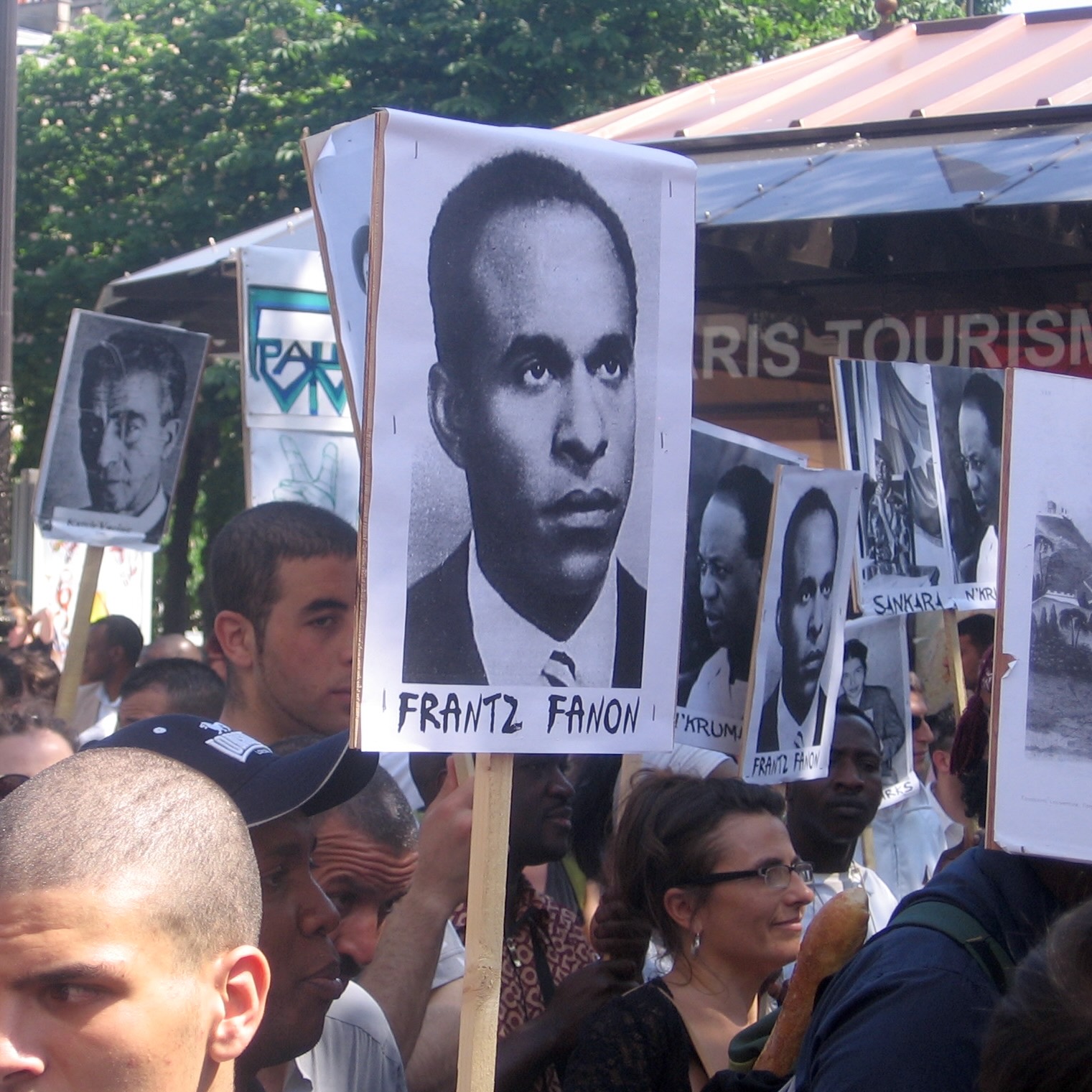
The Undying Legacy of Frantz Fanon
Adam Shatz, author and writer, US Editor for the London Review of Books and a visiting professor at Bard College, discusses his book The Rebel's Clinic: The Revolutionary Lives of Frantz Fanon.
Has the Jewish Nation-State Model Run Its Course?
The October 7th attack undermined some of the basic assumptions Israelis have had about the tenets of their sovereignty. Will the crisis send the country into a post-nation-state phase? Dr. Julie Cooper, Senior Lecturer in Political Science at Tel Aviv University, and a fellow of the Institute of Advanced Israel Studies at Brandeis University's Schusterman Center for Israel Studies, shares her thoughts at the "Democracy and Its Alternatives: The Origins of Israel's Current Crisis" conference.

Israel/Palestine: A Gaze From Below
Dr Dafna Hirsch, senior lecturer at the Open University of Israel's Department of Sociology, Political Science and Communication, discusses her edited book, Entangled Histories in Palestine/Israel: Historical and Anthropological Perspectives.
The Prophet: On Judah Magnes' Politics and Theology
Dr David Barak-Gorodetsky, Lecturer in Israel Studies at the University of Haifa and the Director of the Ruderman Program for American-Jewish Studies, discusses his book Judah Magnes: The Prophetic Politics of a Religious Binationalist, a biography of one of the more unusual characters in the history of Zionism.
Rabbi Binyamin: Zionism's Ultimate Contrarian
Dr Avi-Ram Tzoreff, a Polonsky Post-Doctoral Fellow at the Van Leer Jerusalem Institute, discusses his new book R. Binyamin, Binationalism and Counter-Zionism, dedicated to one of the most unusual Jewish and Zionist intellectuals of the 20th century. The episode is sponsored by the Sady and Ludwig Kahn Chair in Jewish History at UCLA and co-hosted by Prof David N. Myers.

Their War, Our War
Yaroslav Trofimov, chief foreign affairs correspondent for the Wall Street Journal, discusses his new book Our Enemies Will Vanish: The Russian Invasion and Ukraine's War of Independence. What parallels can be drawn between Ukraine's war with Russia and Israel's with Hamas?
Jews for Palestine, The First Generation
Dr Geoffrey Levin, Assistant Professor of Middle Eastern and Jewish Studies at Emory University, discusses his book Our Palestine Problem: Israel and American Jewish Dissent, 1948-1978. The book looks at a network of early anti-Zionist and pro-Palestinian thought leaders, active in the immediate aftermath of the establishment of the State of Israel. The episode is sponsored by the Sady and Ludwig Kahn Chair in Jewish History at UCLA and co-hosted by Prof David N. Myers.
The Time They Wrote Old Dixie Up
Yael Sternhell, Professor of History and American Studies at Tel Aviv University, discusses her book, War on Record: The Archive and the Afterlife of the Civil War, a historians' history which looks at Washington's Civil War archive, rather than through it.

People of the Books
Yosef Halper, a legendary Tel Aviv bookdealer, discusses his book The Bibliomaniacs: Tales from a Tel Aviv Bookseller.

Climate Change: A Middle Eastern Perspective (Rerun)
Dan Rabinowitz, Professor of Sociology at Tel Aviv University, discusses his book The Power of Deserts: Climate Change, the Middle East and the Promise of a Post-Oil Era, analyzing the role of the Middle East as both a major generator and a primary victim of climate change, the dashed and renewed hopes for a coherent climate policy, and the role of social science in policy-making.
Staying Alive: Mental Health in the Wake of October 7th
Jonathan Huppert, Professor of Psychology and the director of the Laboratory for the Treatment and Study of Mental Health and Well Being at the Hebrew University of Jerusalem, discusses mental health response in the wake of the October 7th attack. Is Israel, a society riddled with trauma, facing unprecedented challenges? This episode is made possible by the Israel office of Konrad-Adenauer-Stiftung, which promotes peace, freedom, and justice through political education.

The Many Lives of Bruno Schulz
Benjamin Balint, an award-winning American-Israeli writer based at the Van Leer Jerusalem Institute, discusses his book Bruno Schulz: An Artist, A Murder, and the Hijacking of History. The literary legacy of Schulz, the so-called Polish Kafka, has been the subject of an international legal, cultural and diplomatic debate.
Schooling the Nation
Hilary Falb-Kalisman, Professor of History and Jewish Studies at the University of Colorado-Boulder, discusses her book, Teachers as State Builders: Education and the Making of the Modern Middle East.
The Third Way to Peace and Justice
Dr Limor Yehuda, lecturer in law at the Hebrew University of Jerusalem, discusses her book Collective Equality: Human Rights and Democracy in Ethno-National Conflicts. Taking national identity seriously, she charts a new way of thinking about statehood and partition.
"We Are All Still Living October 7th"
Amir Tibon, diplomatic correspondent for Haaretz newspaper and a resident of Kibbutz Nahal Oz, survived the October 7th massacre with his wife and young daughters. He talks about his harrowing story, about Israel's systemic failure to protect its citizens, what it will take for them to return to live less than a mile from Gaza City, and why he doesn't regret having done it in the first place. This episode is made possible by the Israel office of Konrad-Adenauer-Stiftung, which promotes peace, freedom, and justice through political education.
Before and After 1948: Gaza, a Prehistory
Dr. Dotan Halevy, environmental and social historian of the late Ottoman Empire and the Modern Middle East at the Van Leer Jerusalem Institute, discusses the history of Gaza from the mid-19th century until today. How did Gaza come to encapsulate 1948, and the essence of the Israeli-Palestinian conflict? This episode is made possible by the Israel office of Konrad-Adenauer-Stiftung, which promotes peace, freedom, and justice through political education.
"Hamas Is Not Going Anywhere"
Dr Michael Milstein, head of the Palestinian Studies Forum at Tel Aviv University's Moshe Dayan Center for Middle Eastern and African Studies and the former Head of the Palestinian Department for the IDF intelligence, analyzes what Israeli military leaders and political decision-makers got – and are still getting – wrong about Hamas. This episode is made possible by the Israel office of Konrad-Adenauer-Stiftung, which promotes peace, freedom, and justice through political education.

Hope. Yes, Hope
Dr Oded Adomi Leshem (rethink-hope.com), political psychologist at the Hebrew University of Jerusalem, discusses his new book Hope Amid Conflict: Philosophical and Psychological Explorations. The book was published in eerie proximity to Hamas' Oct. 7th attack, which many see as having delivered a tremendous blow to the hope of a peaceful resolution to the Israeli-Palestinian conflict. Dr Leshem's facts and figures paint a more complex picture. Photo: Abed Rahim Khatib/Flash90
Jerusalem as a Contested City: Role Model or Cautionary Tale?
Dr Marik Shtern, political geographer and a research fellow at the Jerusalem Institute for Policy research, discusses his co-authored paper "Shared Spaces in Contested Cities: A Model for Analysis and Action." Jerusalem is, at the same time, the most segregated and most integrated urban area in Israel/Palestine – what lessons can be drawn from the city's experience? This episode is made possible by the Israel office of Konrad-Adenauer-Stiftung, which promotes peace, freedom, and justice through political education.
Land and Power: Understanding How the Politics of Space Shape Our Lives
Professor Oren Yiftachel discusses more than a decade of his scholarship on colonial regimes, identities and futures in Israel and Palestine through the lens of geography and urban planning.
Intractable Conflicts: Between Temptation and Resistance
Daniel Bar-Tal, professor (emeritus) of social psychology at Tel Aviv University, discusses his new book, Sinking into the Honey Trap: The Case of the Israeli-Palestinian Conflict. How can social psychology contribute to our understanding of a conflict that never ends? The episode is sponsored by the Sady and Ludwig Kahn Chair in Jewish History at UCLA and co-hosted by Prof David N. Myers.
Meet Jerusalem's Top Catholic Monk
Abbot Nikodemus Schnabel, the head of Jerusalem's Dormition Abbey, in conversation about Christian life in Israel (including of thousands of migrant workers), the nature of interfaith dialogue amid mounting extremism, the role of religion in diplomacy and conflict resolution, and more. This episode is made possible by the Israel office of Konrad-Adenauer-Stiftung, which promotes peace, freedom, and justice through political education.
Detente? Christian-Jewish Relations in the Postwar Era
Dr Karma Ben-Johanan, religion scholar at the Hebrew University of Jerusalem, specializing in modern Christianity and Jewish-Christian relations, discusses her new book Jacob's Younger Brother: Christian-Jewish relations after Vatican II. What were the implications of the Vatican's new approach to Judaism, announced in the 1960s, across the Catholic world and among Jewish theologians? This episode is made possible by the Israel office of Konrad-Adenauer-Stiftung, which promotes peace, freedom, and justice through political education.
What Do Israeli Haredim Really Care About?
Dr Nechumi Yaffe of Tel Aviv University's School of Social and Policy Studies, the first ultra-Orthodox woman to serve as a faculty member in an Israeli university, discusses her research on ultra-Orthodox "capabilities" – a tool used by social scientists to measure the well-being and opportunities afforded to people – as well as the relationship between a Haredi lifestyle and higher education. The episode is sponsored by the Sady and Ludwig Kahn Chair in Jewish History at UCLA and co-hosted by Prof David N. Myers.
The Forces of Nature
Irus Braverman, Professor of Law, Geography and Environmental Studies at the State University of New York at Buffalo, discusses her book Settling Nature: The Conservation Regime in Palestine/Israel. How does Israel's management of nature fit into its broader settler logic? Get a 40% percent discount with coupon code MN90160 (visit z.umn.edu/settlingnature)
Revolution and National Liberation
Tamir Sorek, professor of history at Penn State University specializing in Palestinian politics and culture in the State of Israel, discusses his book The Optimist: A social biography of Tawfiq Zayyad, the story of one of the foremost Palestinian politicians and intellectuals in Israel of the 1970s, 1980s and 1990s
Withdrawal: The Continuation of Occupation by Other Means?
Dr Rob Geist Pinfold, a lecturer at Durham University's School of Government and International Affairs, discusses his book Understanding Territorial Withdrawals: Israeli Occupations and Exits, offering a cross-section examination of several cases of territorial expansion and realignment throughout Israel's history.
Man of the Night
Joseph Berger, formerly a New York Times journalist, discusses his book Elie Wiesel: Confronting the Silence, the first English-language biography of the iconic Jewish intellectual and Holocaust author.
This Is Israel
Isabel Kershner, Israel reporter for the New York Times, discusses her new book The Land of Hope and Fear: Israel's Battle for its Inner Soul. This episode is made possible by the Israel office of Konrad-Adenauer-Stiftung, which promotes peace, freedom, and justice through political education.