Teaching Python
162 episodes — Page 3 of 4
Ep 62Episode 62: The New Normal
Kelly and Sean take some time to reflect on what has worked well over the past year of teaching, what could be better, and what we hope stays with us once things go back to "The New Normal." Whether it's getting back collaborative whiteboarding, keeping screen sharing over Zoom, or appreciating how much better department meetings can be when we use breakout rooms, join us to talk more about how teaching and coding have jumped ahead during the time of COVID-19. As mentioned by Sean, the wordlist file on Macs can usually be found at /usr/share/dict/words.
Ep 61Episode 61: Object-Oriented Thinking
Kelly and Sean try to figure out the role of object-oriented programming in teaching. From how much to focus on objects and methods, to whether it makes sense to teach classes, this is a journey through the opinionated topic of object-oriented thinking.
Ep 60Episode 60: Shooting the "Stuff"
A grab bag of topics this week with Kelly and Sean. From using NLTK to summarize speeches by civil rights leader Martin Luther King to plotting Parler data from the Capitol incident on Jan 6 to WiFi-enabled washing machines. Kelly and Sean spend the afternoon discussing the things that we've been watching and learning about this week. No guests, no specific topic. Just hang out with us and talk about all things Python, teaching, and learning.
Ep 59Episode 59: Crossover with PyBites!
Kelly and Sean team up with Bob Belderbos and Julian Sequeira from @PyBites to answer questions about how our students learn Python using the PyBites platform with small code challenges. In this special crossover episode, we cover everything from how students learn to the way they learn Pytest reporting output to the mindset and chemistry of learning something new.Special Guests: Bob Belderbos and Julian Sequeira.
Ep 58Episode 58: Figure It Out
In this episode, Kelly and Sean dive into the topic of teaching kids to “Figure it out,” a phrase we love to use in class. This year, we seek specific skills that help us teach reluctant learners, techniques for figuring things out, and understanding how different teachers support this skill in their classrooms. In this episode, we ask some of our colleagues to share their experiences on how they as adults solve problems and how they teach their students this critical life long skill.Special Guests: Jessica Gilbert and Roslynn Jackson.
Ep 57Episode 57: Holiday Gift Guide for Techy Kids
We get a lot of questions about what parents should buy for their children for the holidays. In this episode, Kelly and Sean list out some of their favorite gifts for the holidays. Episode highlights: Kelly & Sean celebrate two years of the Teaching Python and 183,000 downloads later. Kelly wins with a student that demonstrates year over year improvement in Computer Science. Sean builds a FastAPI and gets a steep learning curve. Kelly gets a birdbrained robot finch.
Ep 56Episode 56: AI and Machine Learning for Kids with Dale Lane (@dalelane)
In this episode, Kelly and Sean talk with Dale Lane an IBM Event Streams Lead Developer. - IBM awarded Dale, the 2018 IBM Volunteer Excellence Award—the highest form of volunteer recognition given by the company—which also earned a USD 10,000 grant from IBM for Solent Youth Action. “Machine learning systems are all around us. We all use, interact with, or are affected by, machine learning systems every day. If our goal is to help children to understand how the world around them works, then understanding machine learning is an important topic. Also, the impact machine learning systems will have on our lives will only continue to increase. There is a growing need for society to make decisions about how we want such systems to be managed, controlled, and regulated. Understanding machine learning is an essential topic to help the next generation engage in that societal debate.” Dale Lane IBM InterviewSpecial Guest: Dale Lane.
Ep 55Episode 55: Unfiltered Friday Conversations
Kelly and Sean flip on the voice recording app and record a random Friday afternoon conversation about teaching approaches for computer science. What makes student learning the most effective?
Ep 54Episode 54: Making Projects Happen with Eric Matthes (@ehmatthes)
Sean and Kelly invite Eric Matthes, teacher and author of Python Crash Course to discuss student projects in computer science. Eric was with us on Episode 33 and we ended the episode with discussions about completing projects and programming with purpose. In this episode we discuss finding a project, separating academic and project success criteria, helping student coders find a project, how to deal with failure, and some examples of great projects for learning.Special Guest: Eric Matthes.
Ep 53Episode 53: Developing for Mobile, the Web, and Desktop with Russell Keith-Magee ( @freakboy3742 )
This week's guest is Russell Keith-Magee from the Beeware project. Our conversation this week is about teaching students Python with native desktop applications, mobile, and the web. Plus, why do we have to use the command line? And do coding books from the early 80s hold up in Python? Django core developer and the founder and maintainer of the BeeWare project Former president of the Django Software Foundation BeeWare is a collection of tools and libraries for developing desktop and mobile applications; BeeWare aims to make it easy to write a native application for macOS, Windows, Linux, iOS, or Android that you can then distribute to end users as an installable app. BeeWare isn't a single tool or library - it's a collection of projects that can be used to help develop, debug, and launch Python software. Each tool follows the Unix philosophy of doing one thing well. Each tool can be used in isolation, or they can be chained together to provide a rich set of programming tools. Special Guest: Russell Keith-Magee.
Ep 52Episode 52: Teaching the Full Stack with Ali Spittel (@alispittel)
Sean and Kelly invite Ali Spittel to talk about how teachers can go beyond their first programming language and help students learn to create more robust projects. If you’ve started with Python, how do you learn HTML, CSS, and JavaScript to make a front end for a project? Or vice versa? Ali is a Senior Developer Advocate at AWS, the co-host of the Ladybug Podcast, and a frequent tech writer and speaker. She has been employed in the tech industry since 2014, holding multiple software engineering positions at startups and a Distinguished Faculty and Faculty Lead role at General Assembly's Software Engineering Immersive.Special Guest: Ali Spittel.
Ep 51Episode 51: Engaging Your Students With The Right Language Featuring @jolson_codes
Sean and Kelly invite Jeff Olson (@jolson_codes) to the show. Let’s take a look at language in the Computer Science classroom and focus on how we can put our students first by engaging them in the “right language for their learning.” Special Guest: Jeff Olson.
Ep 50Episode 50: Teaching Robotics With Python
This week, Sean & Kelly discuss how they are using Python to teach robotics in middle school, including the hardware and software it takes to get students thinking about how robots sense, process, and move in the world. With coronavirus precautions in place, our traditional approaches to robotics competitions through organizations like FIRST Lego League have been put aside. We're using this as an opportunity to get back to basics and teach students about sensors, servos, Python code, and more.
Ep 49Episode 49: Python Tutor with Philip Guo
This week, Kelly and Sean interview Philip Guo, associate professor of cognitive science at UC San Diego. As a grad student in 2010, Philip created Python Tutor, the most widely-used program visualization tool for education. Using this tool, teachers and students can write Python programs directly in the web browser (without installing any plugins), step forwards and backwards through execution to view the run-time state of data structures, and share their program visualizations on the web. Over ten million people in more than 180 countries have used Python Tutor to visualize over 100 million pieces of code, often as a supplement to textbooks, lectures, and online tutorials.Special Guest: Philip Guo.
Ep 48Episode 48: What We Are Using in 2020 To Teach Python
Let’s take a look at the tools we’re using in our classroom for the 2020-2021 school year to teach Python for middle school students. From IDEs to flash cards, coding challenges to Colab notebooks, and micro:bits to eBooks, we’ll look at what we’re currently using and how each one contributes to the learning experience of our students. Episode Outline Importance of variety in Lessons Motivation Increase Focus/Keeps classroom live and Active Combat Boredom/Avoids dullness Demonstrating concepts in multiple settings reinforces learning Importance of Lesson Planning Basic Objectives Activities Assessments Time Management Result- oriented Creating Environments for learning:Good Teaching Tools for SEL/21st Century Skills Delivery and sharing of resources LMS Weekly Overview Screenshots Sharing of Colab documents SEL Core Competencies: Self Awareness, Self Management, Social Awareness, Relationship SKills, Responsible decision making. Padlet- reflection and sharing ideas? Focusing Tools: Strick Workflow : block specific sites for 25 minutes by a click of a chrome extension Self Learning Opportunities: “Curiosity is the main driver of learning.” Teaching Techniques/Communication Tools Looking at a lot of code: Screenshare (Currently feature in Zoom) - allow students to share their code and have students look for errors on other student codes/Air server/Cast Use of Videos: Loom/Screencastify- give students short videos that they can use on their own time. Use of Class Time: Time to Talk it out (Think alouds) - give students time to talk about code verbally Pre-Teaching Vocabulary Pause, Ask Questions, Pause, Review Class Challenges Share the tools and how we use them IDE’s (details in episode 25) Mu Editor Great IDE for beginners and comes packaged with Python Works for pure Python, hardware, web development, games Intentionally limited to encourage students to move beyond In 2020: Kelly & Sean use it for programming micro:bits with sixth grade Best Audience: complete newbies to Python, hardware hackers Available for Mac, Windows, Linux Colab - Jupyter Notebooks in Google Apps system Pure Python with visualizations, graphing, etc. In 2020: Kelly & Sean use it for Python review sheet & quick demos Showing iterations/versions of code without Git Includes sharing/commenting features of Google Drive Best audience: newbies already familiar with Google Docs, more accomplished programmers that want to practice concepts without writing full “software” Repl.it Web-based coding environment for Python Multiplayer mode, assignment submissions with automated testing Classroom environment works well for adult learners In 2020: Kelly & Sean use it for student projects, especially those that run 3rd party packages Best audience: students that want to live code with others and share programs easily with teacher or peers Advance coding Options Used for differentiation with students or advanced applications like EV3 coding We use these ourselves to write software for school use Goal is to have 8th graders ready for these environments Options Visualization Tools Python tutor Python Turtle Mu Debugger Class Challenges versus Codechalleng.es Manipulatives: Robots and Hardware Microbits CircuitPython devices DFRobot Maqueen Plus
Ep 47Episode 47: Deconstructing the List Lesson
Let’s take a deeper look at how we teach students about one of Python’s most venerable data structures: the list. For many learners, the list is the first data structure that they encounter and it can be tricky to understand at first. Episode Outline: Start with clear goals for topic Why are we teaching this? Backwards by design process What do we want the kids to do? What should students know when we’re done? Are the objectives differentiated? Can students demonstrate more advanced understanding according to Bloom’s Taxonomy? Where do they go next? What do students need to know before we start? Introducing the List Mathes’ : cheat sheet https://t.co/KZdJkdPz7i?amp=1 The problem of organizing too many bits of data Programmers use data structures to organize related data Vocabulary Data structure Ordered Mutable Sequence Examples and Demonstrations Real World Grocery List Brainstorming types of lists in the real world Python Grocery List Practical applications List sizes Small lists (choices, menus, limiting options) Medium Lists (class rosters, schedules, phone apps, etc) Large Lists (weather data, sensor measurements, etc) List limits (when not to use a list) Order doesn’t matter Searching by key (use dictionary) List shouldn’t change (use tuple) List indices are confusing at first Zero-indexed Negative index List methods Append & Insert Pop & Remove Sort & Sorted Tools for visualization and understanding Python Tutor Mu Debugger Synthesis Opportunities Using for loops with lists List slicing List of Lists Functions/methods Creativity & Fun Class Schedule Rock Paper Scissors
Ep 46Episode 46: Musings About A Very Different School Year
Kelly and Sean discuss many of the upcoming changes for a school year heavily influenced by COVID, distance learning, hybrid/flexible classrooms, and prioritizing health and safety over content. Episode Contents: Wins of the Week Main Topic: The Upcoming School Year Integrating New Ideas Safely Teaching Physical Computing PyBites / CodeChalleng.es Flipped Classroom Using Reflection Choice Boards Routines and Rituals Teacher Self Care Setting Realistic Expectations Follow @TeachingPython on Twitter. Send us a message at teachingpython.fm
Ep 45Episode 45: The Lost Episode
Ever had one of those moments where you thought you did something but then found it unfinished months later? Here's an episode we recorded back in May about how to keep your distance learning fresh and new. We're calling it the Lost Episode. New episodes are coming every Tuesday starting on August 18! In this episode, Kelly and Sean talk about ways they keep their distance learning sessions fresh and engaging for students. From refresher exercises to virtual classroom management, we've got some ideas that can help you teach no matter where you or your students are sitting.
Ep 44Episode 44: Communicating With Video For Effective Learning
As teachers around the world move into online teaching and learning, we must consider ways to modify our way of teaching. Writing and communicating in an online learning environment, while making connections with your students, is a very important first step. This is the second episode in a two-part series. Video can help students connect with the concepts and provide an opportunity for teachers to engage and add opportunities to connect with their students. How will teachers adapt their teaching in order to communicate and engage learners? What materials will teachers develop to ignite motivation with students? How will connections and community be built via online courses? In this episode, Sean and Kelly talk with Christopher Bailey from Real Python. We will share tips and techniques for developing quality online videos for learners. Ten Tips for Developing Video Content online: Make an outline Use a table of contents Use of slides and code editor Short video lengths Intro, teach, repeat Recreating Display the code -speeding it up Try out a repl that works well (B python for code completion) Remove the jargon make it audience specific Find your pacing "The goal of online communications is the same as the goal in face-to-face communications: to bond; to share information; to be heard, and to be understood. Fostering a sense of community in online classes will make the learning experience more meaningful for online students and help them stay connected during the life of the course." From Humanizing Online Teaching and LearningSpecial Guest: Christopher Bailey.
Ep 43Episode 43: Writing Content for Asynchronous Learning with David Amos
As teachers around the world move into online teaching and learning, we must consider ways to modify our way of teaching. Writing and communicating in an online learning environment, while making connections with your students, is a very important first step. This is the first episode in a two-part series. How will teachers adapt their online writing in order to communicate and engage learners? What materials will teachers develop to ignite motivation with students? How will connections and community be built via online courses? In this episode, Sean and Kelly talk with David Amos, a writer for Real Python about how he makes connections with his Real Python tutorials and we will share tips and techniques for developing quality online writing for learners. David Amos Real Python https://realpython.com/team/damos/ https://realpython.com/python-gui-tkinter/ https://realpython.com/python-rounding/Special Guest: David Amos.
Ep 42Episode 42: Teaching Resilience and Building Equity with Elena Aguilar
“Resilience in teachers is key for creating quality classrooms and schools. The opportunity for becoming resilient originates in how an educator makes sense of irritants, interruptions, and unexpected events, because interpretation dictates actions. By cultivating resilience, teachers can fulfill the intentions that brought them into the teaching profession.” Elena Aguilar In this episode, Kelly and Sean invite Elena Aguilar to our show for a little twist of conversations. Elena Aguilar “Elena has trained thousands of educators across the United States and abroad in transformational coaching. She is the author of four highly acclaimed books: The Art of Coaching, (2013) and The Art of Coaching Teams, (2016) Onward: Cultivating Emotional Resilience in Educators (2018) and the Onward Workbook (2018 and her newest book is being released in August, Coaching for Equity.). She is a regular contributor to Edutopia and ASCD’s Educational Leadership, and she was a blogger for EdWeek Teacher for many years. “ Kelly first met Elena at a workshop she attended in 2016. Special Guest: Elena Aguilar.
Ep 41Episode 41: Pythonic Parenting With The Shaw Family
Python for Parents or so you want your child to code? Sometimes it just takes a few creative ideas and a short amount of time to make some fun little projects. Sean and Kelly, with the help of Anthony Shaw and his lovely daughters, ‘ Zebra’ and ‘Jaguar’ have a little fun with this topic! The Shaws’ help us to dive into the topic of #pythonicparenting. Together we discuss things that a parent can do to help your child have the same passion for coding as you do. Or at least some interest! Whether you are an experienced coder or just a beginner, you can still find some projects that you can build with your kids at home. We encourage you to have a little fun, enjoy a lot of giggles and make loads of memories with your kids, while learning Python,.Special Guest: Anthony Shaw.
Ep 40Episode 40: A New Way of Teaching
With our campus closed due to COVID-19 and distance learning in full swing, Kelly and Sean discuss the brighter side of all these sudden changes to education. The sudden shift to distance learning for much of the world has introduced more than a few challenges, but many opportunities arise as well. Kelly and Sean talk about the importance of using online tools to capture attention, to shift learning from synchronous to asynchronous delivery, and even how to ask questions of your students that engage their learning. We'll be recording from home, so you may hear quite a bit of background noise as we record amongst our busy families. Thanks for your patience and understanding!
Ep 39Episode 39: Livestreaming about Distance Learning
Kelly and Sean stream their show on Twitch as the world moves to quarantines and distance learning. What does this mean for teaching and coding? Learn about the things we took home from our classroom and how we are planning to teach in this new COVID-19 quarantined world.
Ep 38Episode 38: Fun with the Arcade Library and Paul Craven
Trying to find an easier way to get students excited about programming? Feeling stuck with the PyGame library? Paul Craven, maintainer of the Arcade Python library joins us to talk about using game design to teach programming. Arcade is a easy to use Python library that lets you quickly create games using OpenGL and a simple API that's perfect for beginners. Better still, the Arcade library includes a wide variety of sample programs and comprehensive documentation that is written for new programmers. Whether you want to make a platformer, recreate the Asteroids games of your youth, or teach students how to make a roguelike adventure game, the Arcade library may be a great way to start. Paul is the chair of the Computer Science department at Simpson College in Iowa. He started programming in Python more than 10 years ago and has used nearly every game library in Python to teach introductory programming. Special Guest: Paul Craven.
Ep 37Episode 37: What Happens Behind The Scenes While Teaching Python
It's not always easy to be a Python teacher. Whether it's trying to find the right words to explain something, handling severe frustration, building perseverance, or losing students while coding together, Python teachers are facing problems beyond just the code. Sean and Kelly discuss five of the things that frequently go wrong in the classroom and how we handle it. Helping the naturally gifted- keeping up; keeping them learning Developing the vocab that allows students to solve problems Losing students during code-alongs Kids stuck in Turtle module Getting past the frustration level - waiting on the “click” As a special bonus, we talk about a few of the new arrivals in our classroom, including the newest LEGO Education Robot, the Spike Prime!
Ep 36Episode 36: An Interview with Peter Chan, 4th Grade Teacher
Peter Chan is a 4th grade teacher in Quebec, Canada. In addition to using Python in his classroom, Peter also employs maker techniques, math exploration, and English language skills. Kelly and Sean talk with him about how Python can be used as part of a decentralized teaching style where students are more self-directed and have more agency and control in their learning direction. Special Guest: Peter Chan.
Ep 35Episode 35: Not Just Coders
In this episode, Kelly and Sean explore the idea that everyone should learn to code-- not to become a programmer but for so much more! How do we continue to foster an interest in coding for those kids that are not so interested in computer science?
Ep 34Episode 34: Bonus: Holiday Buying Guide
In celebration of the great retail holiday of Black Friday, Kelly and Sean share their holiday buying guide for computer science teachers, including 3d printers, #PythonHardware, and books. Also this week, Bob and Julian from the PyBites website are making their Newbie Bites 40% off, with half of the proceeds going to the Teaching Python podcast! Check it out on their latest newsletter post
Ep 33Episode 33: Interview with Eric Matthes
Kelly and Sean interview Eric Matthes, author of Python Crash Course, about how he began programming, what led him to teaching, and the important lessons from Python to be learned both inside and outside of the classroom. This episode is sponsored by Real Python. As a special offer for listeners and friends of the show, you can get a free copy of the video course Cool New Things in Python 3.8 when you visit realpython.com/teachingpython. Note: there are a limited number of free copies available for the next few weeks, so get yours now!Special Guest: Eric Matthes.
Ep 32Episode 32: Teaching Python With TwilioQuest
This week, Kelly and Sean embark on a journey with Twilio Developer Evangelist Kevin Whinnery using TwilioQuest to learn more Python in the classroom. What is TwilioQuest? Learn to code and lead your intrepid crew on a mission to save The Cloud in TwilioQuest, a PC role-playing game inspired by classics of the 16-bit era. Free forever, and available now for Windows, Mac, and Linux. Players will learn how to code in Python, set up a developer environment, use Git to contrubute to open source projects, and access Twilio APIs to communicate using code.
Ep 31Episode 31: The School of 2024
Can you belive it's only been five years since Alexa launched? Or that identifying birds in photos was considered a hard problem for machine learning? In this episode, Kelly and Sean discuss plausible trends in machine learning, artificial intelligence, augmented and virtual reality, and data science that we may see in schools by 2024. We focus on 5 areas from microscale in the classroom to macro across the entire educational system. Trends in the Computer Science classroom Integration into other subjects Reducing Teacher Workload For Student Access to Tools As a School-wide Initiative It's amazing to think that many problems in Machine Learning were considered hard just 5 years ago. What will the next 5 years bring?
Ep 30Episode 30: Teaching Adult Learners
In this episode, Kelly and Sean speak to Reuven Lerner about how to teach adult learners and people switching to Python from other languages. Reuven is a corporate trainer of Python and Data Science. He helps developers around the world learn how to code in Python. As fellow teachers, we dive into the similarities and differences of teaching adults versus students. What works? What is new and interesting? Our guest, Reuven Lerner, is a full-time Python trainer. In a given year, he teaches courses at companies in the United States, Europe, Israel, and China — as well as to people around the world, via his online courses. Reuven created one of the first 100 Web sites in the world just after graduating from MIT’s computer science department. He opened Lerner Consulting in 1995, and has been offering training services since 1996. Reuven’s monthly column has appeared in Linux Journal since 1996, and was a panelist on the Freelancers Show podcast from 2015 - 2019. He is also the CTO of Rent Like a Champion, an event-based home-rental company based in Chicago, Illinois. Reuven’s most recent book is “Python Workout,” a collection of Python exercises with extensive explanations, published by Manning. Reuven’s free, weekly “Better Developers” newsletter, about Python and software engineering, is read by more than 10,000 developers around the globe. His “Trainer weekly” newsletter is similarly popular among people who give corporate training. Reuven has a bachelor’s degree in computer science and engineering from MIT, and a PhD in learning sciences from Northwestern University. He lives in Modi’in, Israel with his wife and three children.
Ep 29Episode 29: Non-Traditional Python Education
This week, Kelly and Sean are joined by Brianne Caplan from Code Your Dreams and Gabrielle Rabinowitz from the BridgeUP: STEM Program at the American Museum of Natural History to discuss K-12 Python Education that happens outside of the classroom.Special Guests: Brianne Caplan and Gabrielle Rabinowitz.
Ep 28Episode 28: 10 Things We Wish We Knew
Has it already been a year of learning and teaching Python for Kelly and Sean? In this episode, our co-hosts talk about the things they wish they knew a year ago to make their Python journey even better. 10 Things We Wish We Knew Before We Started Python Don't Be Afraid of the Unknown There's Never Going to be Enough Time Reading Error Codes Simple and Slow beats Complex and "Correct" Read a little. Code a lot. Projects Really Work You Have to Teach To Someone Reach out to the Python Community Don’t Let Imposter Syndrome Get You You Don’t Have to Answer Every Question
Ep 27Episode 27: Automate the Boring Teaching Stuff
Isn't it surprising how much repetition goes into the job of teaching? What if you could use Python to automate that and focus on the work that adds the most value for your students? Or at least eliminate the boring teaching stuff like transferring grades or setting up iPads. With thanks to Al Sweigart and his book, Automate the Boring Stuff With Python, Kelly and Sean look at how teachers can leverage Python to speed up or eliminate the most boring and repetitive aspects of teaching. This episode includes a walkthrough of an example project that Sean built to automate iPad setup at his school using Google Cloud Functions, JAMF Server APIs, and Apple Device Management.
Ep 26Episode 26: Building Lessons and Planning the Curriculum
In this episode, Kelly and Sean discuss how their philosophy of teaching helps them to design their daily curriculum for the course.
Ep 25Episode 25: The Best Editors and IDEs for Teaching Python
What are the best editors for teaching in Python? In this episode, Kelly and Sean examine a variety of different environments for students to learn to code Python. Should it be online or local? Paid or free? Simple or full-featured? An editor or an IDE? Here's what made our list: Mu Editor Visual Studio Code PyCharm Edu python.microbit.org Repl.it Jupyter
Ep 24Episode 24: Avoiding the Summer Slide (For Teachers)
Many teachers give advice to parents on how to keep kids engaged during the summer. Sean and Kelly take their own advice and apply it to teachers and professional development. In this episode, we discuss how to avoid the “Summer Slide” and what we are doing to keep on learning.
Ep 23Episode 23: Being Reflective: A Year of Learning, Teaching, and Python
Kelly and Sean both agree that reflecting on your teaching is vital for our growth as educators and learners. In this episode, they take a few moments to reflect on their year, their lessons, their learning, and their progress. “ Learning without reflection is a waste. Reflection without learning is dangerous.”-Confucius
Ep 22Episode 22: Talking About Teaching With Meg Ray
In this episode, Kelly and Sean talk to freelance educational consultant Meg Ray. She was the founding Teacher in Residence at Cornell Tech where she was responsible for the implementation and design of a coaching program for K-8 CS teachers in New York City schools. An experienced middle and high school computer science teacher and special educator, Meg directed the design of the Codesters Python curricula for middle school students and served as a writer for the Computer Science Teachers’ Association K-12 CS Standards and as a special advisor to the K12 CS Framework. She lives in New York.Special Guest: Meg Ray.

Ep 21Episode 21: Agriculture and AI with FarmFemmes
In this episode, Sean and Kelly chat with Karen Hildebrand and Teresa Vallotton from FarmFemmes. These two ladies are using technology to inspire the next generation of farmers. By offering one-day tech camps, and hosting international students, Karen and Teresa hope to bring a new life and meaning to an agricultural career. Their hope is to bring their “technical knowledge and a relateable voice to showcase the unique ways women can contribute to agriculture in the 21st century.” Dr. Karen Hildebrand has a PhD in Information Systems specializing in Data Mining, but we just call her Karen. Teresa coached K-12 teachers, taught high school math and was chosen as Sioux Falls, SD Teacher of the Year. Special Guests: Karen Hildebrand and Teresa Vallotton.
Ep 20Episode 20: Building Your Python PLN (Personal Learning Network)
In this episode, Sean and Kelly discuss the importance of having a Personal Learning Network or PLN, why we use it, and how to develop one for your computer science teaching with Python.
Ep 19Episode 19: No Longer PyCon Newbies
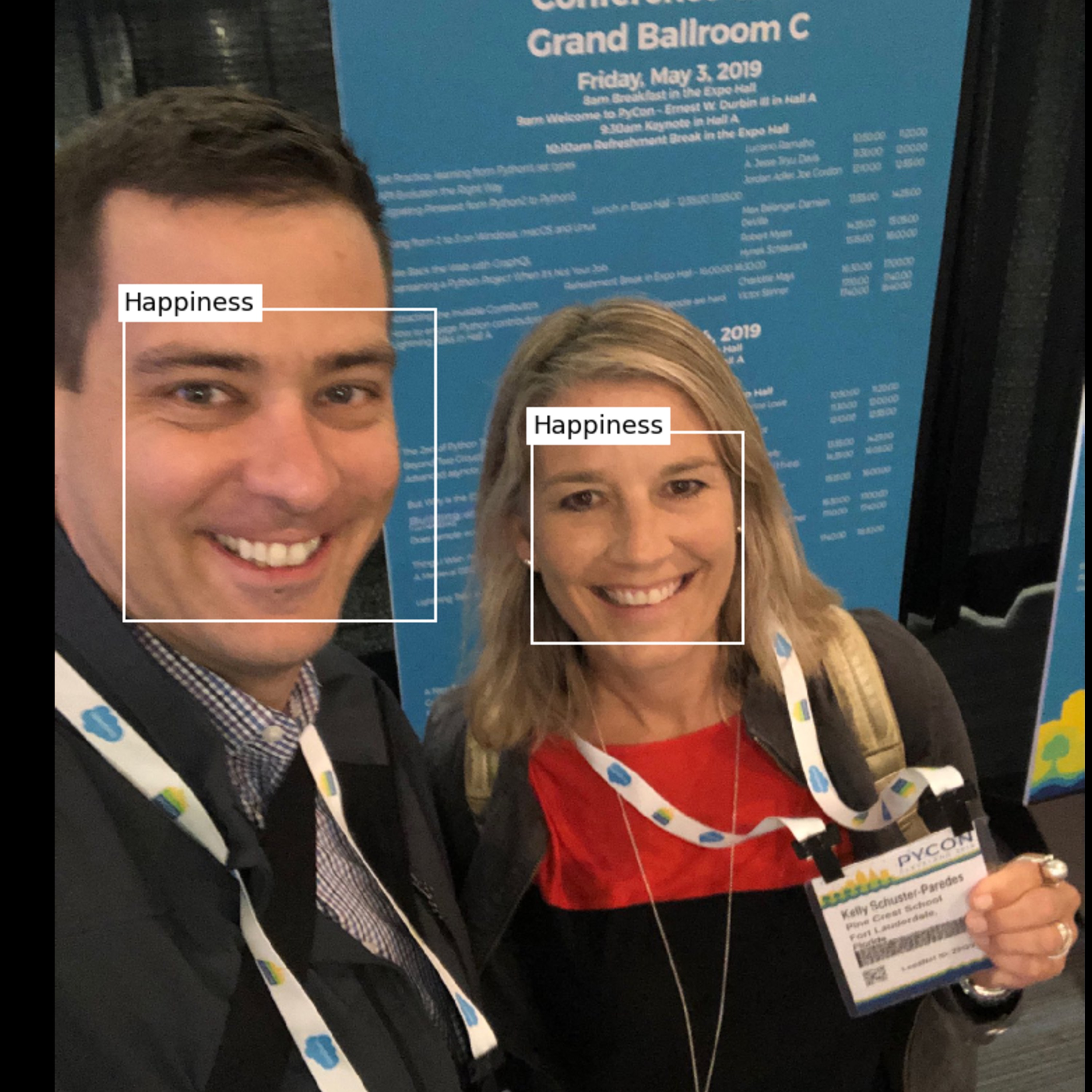
This week, Kelly and Sean attended their first ever PyCon in Cleveland, Ohio. Before we flew home, we recorded our thoughts and reflections on this amazing experience. We also interviewed educator attendees from places like the US Coast Guard Academy, Stanford University, and the American Museum of Natural History. Join us as we reflect on all the amazing people we've met and things we've seen at #PyCon2019.Special Guest: Gabrielle Rabinowitz.
Ep 18Episode 18: Mini-Episode: Pre-PyCon Top 5
Kelly and Sean are headed to their first PyCon next week. In this special mini-episode, they discuss their Top 5 things that they're looking forward to at the conference. Are you going? Want to meet up with us? Send us a tweet!
Ep 17Episode 17: Abstraction and Analytical Thinking
Kelly and Sean get motivation from Michael Kennedy’s Talk Python to Me podcast episode Beginners and Experts. Where Michaels and the panelists discuss, how do you go about attacking a problem? In this episode, Kelly and Sean digest abstraction and analytical thinking in the school setting and how computational thinking plays a part in all this. They discuss the activities that are used to help promote these skills.
Ep 16Episode 16: When Philosophy and Python COLLIDE! - Part 2
Sean and Kelly continue their conversation about the philosophy and ethics of machine learning and artificial intelligence in Python. This episode focuses more on resources and tools for AI learning after last episode's focus on philosophy and ethics.
Ep 15Episode 15: When Philosophy and Python COLLIDE! - Part 1
After a two day workshop on AI and Deep Learning, Kelly and Sean get philosophical about Python. From deep fakes to logical proofs to future non-driving generations that rely on self-driving cars, they'll explore the close relationship between computer science, ethics, and philosophy
Ep 14Episode 14: Innovation In An Innovative Field
With their school's Innovation Institute coming up, Kelly and Sean explore the topic of innovation in education. How do you cultivate it in yourself and others? What skills help you become more innovative? How do you teach it? With more than 35 combined years of experience working or teaching in innovation areas, Kelly and Sean have a lot to share. This week's episode includes resources from innovation thought leaders, tips to become more innovative in your classroom, and a review of critical skills for innovators.
Ep 13Episode 13: Block-based Python with Josh Lowe
In this episode, Kelly and Sean talk to Joshua Lowe, a Python entrepreneur who invented Edublocks to help bridge the gap from Scratch to Edublocks and then into Python 3. Joshua started learning Python in 2013 and wanted to find a way to make it easier for others to understand.Special Guest: Josh Lowe.