Show overview
Talking Indonesia has been publishing since 2015, and across the 11 years since has built a catalogue of 300 episodes. That works out to roughly 170 hours of audio in total. Releases follow a fortnightly cadence.
Episodes typically run twenty to thirty-five minutes — most land between 30 min and 38 min — and the run-time is fairly consistent across the catalogue. None of the episodes are flagged explicit by the publisher. It is catalogued as a EN-language News show.
The show is actively publishing — the most recent episode landed 2 weeks ago, with 22 episodes already out so far this year.
From the publisher
In the Talking Indonesia podcast, Dr Jemma Purdey, Dr Jacqui Baker, Tito Ambyo and Dr Elisabeth Kramer present an extended interview each fortnight with experts on Indonesian politics, foreign policy, culture, language and more. Find all the Talking Indonesia podcasts and more at the Indonesia at Melbourne blog.
Latest Episodes
View all 300 episodesVerena Meyer - Theologies of Remembering: Modernity, Ambiguity and Transcendence
Elna Tulus: Instant Noodles, Ultra-Processed Food, and Gastro-Capitalism
Abdil Mughis Mudhoffir - Disorder and the Preman State
Natalie Sambhi-Militarising Indonesia
Mitha Eka & Linda Bennett - Patient Education for Cancer
Imam Ardhianto - Changing Human-Tiger Relations in Sumatra
Dania Joedo - LGBTQI+ Community under Attack
Syarafina Vidyadhana - Indonesia's Independent Publishing
Liam Prince - Experiencing Indonesia
Austin Jenish - Environmental activism, the law and SLAPP
Tito Ambyo and Jamie Edmonds - Indonesian Ghosts and Ghost Stories
Airlangga Julio - The People versus Fadli Zon
Wengki Ariando: Sea Nomads and the Future of Our Ocean
Murni Sianturi - Education in Papua
Panggah Ardiyansyah: 'Kramat' and the Politics of Indonesian History
Rassela Malinda - Papua, Development and Politics From Below
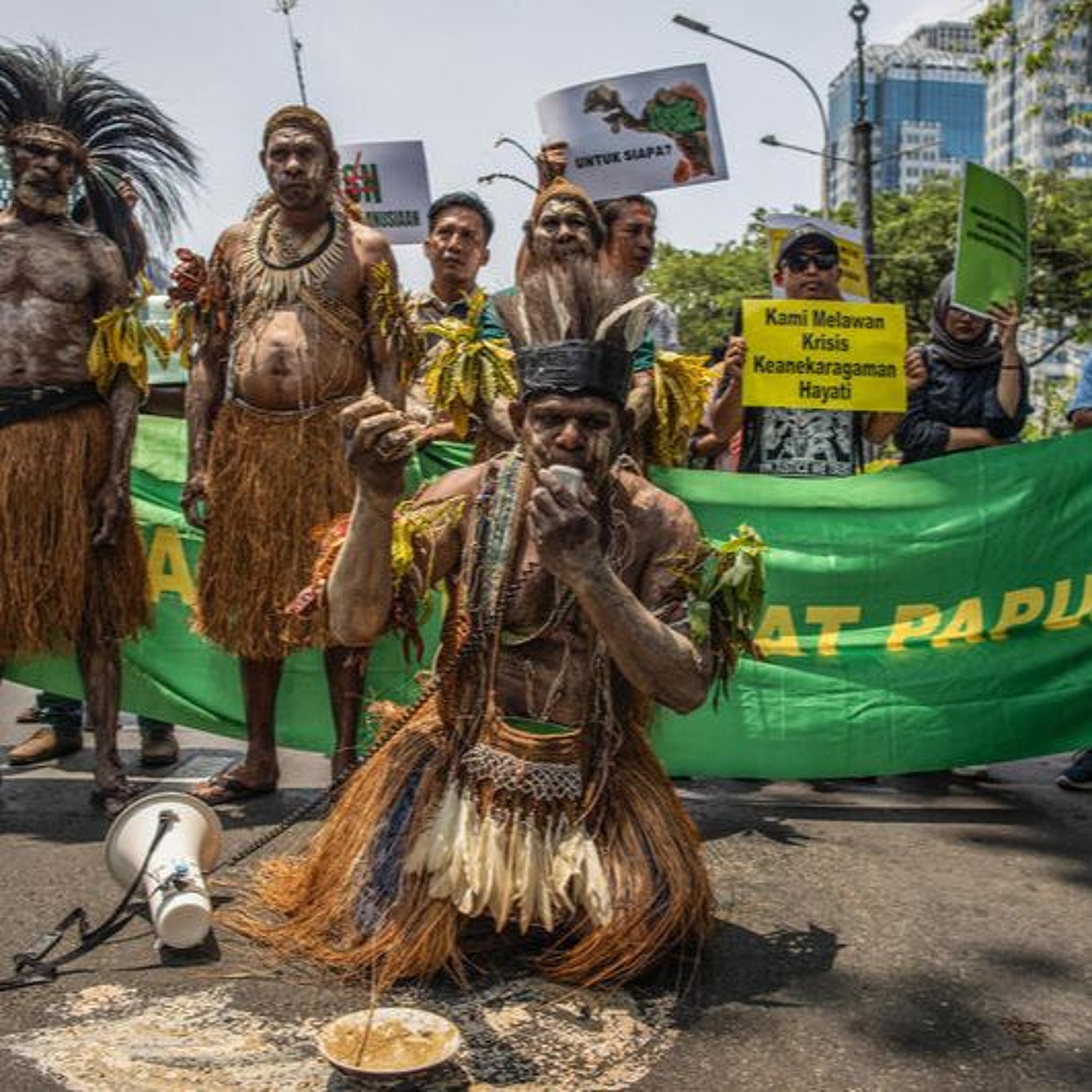
Rassela Malinda – Papua, development and politics from below In his inauguration speech in October 2024 President Prabowo Subianto reiterated his campaign pledge to “achieve food security in the shortest possible time”. He was not the first Indonesian president to make such a declaration. For Jokowi’s administration too and now Prabowo’s, West Papua occupies a central place in its ambitions to achieve both food and energy security, with the rollout of massive sugarcane and palm oil plantations to meet increasing biofuel targets, as well as mega rice production. These plans involve the clearing and development of hundreds of thousands of hectares of forests, the customary lands of the indigenous peoples of these regions. Resource extraction at such scale by the state and the corporations is backed by military force, often rendering the indigenous communities helpless to respond. But some are fighting back. So just what recourse do the customary owners of the forests of Papua have to resist and take a stand, in the face of such powerful forces? In this week's episode Jemma chats with Rassela Malinda, a PhD candidate at the University of Melbourne who lived and worked with indigenous communities in Papua and whose research gives us rare insights into their struggles from below. She previously worked with the NGO Yayasan Pusaka Bentala Rakyat whose report she draws on in this podcast. In 2026, the Talking Indonesia podcast is co-hosted by Dr Jemma Purdey from the Australia-Indonesia Centre, Dr Jacqui Baker from Murdoch University, Dr Elisabeth Kramer from the University of New South Wales, Tito Ambyo from RMIT and Dr Clara Siagian from University College, London. Image 1: Indigenous activists protesting Merauke food estate project in front of Defence Ministry in Jakarta – October 16, 2024 (Photo by Afriadi Hikmal/Greenpeace)
Linda Susilowati: Gender Transformation in Rural Java
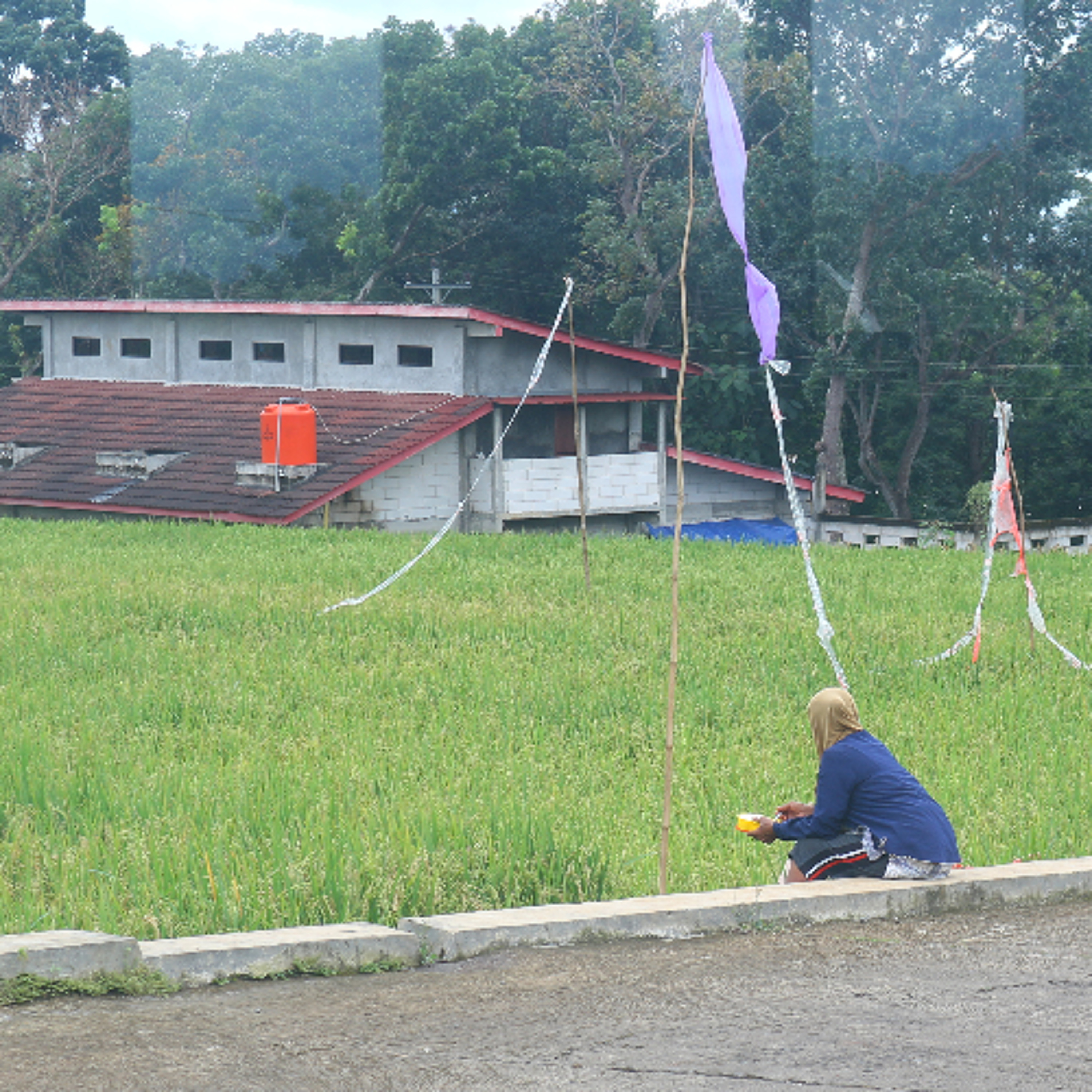
Rural Java has changed enormously over the past half-century. Girls now finish school, women hold community leadership positions, and dual incomes have become the norm rather than the exception. And yet, many Javanese women will tell you they still cook every meal, manage the household, and show up visibly as devoted wives, on top of everything else. It is this gap between what has changed and what has not that drives the research of Dr Linda Susilowati, a lecturer at Universitas Kristen Satya Wacana in Salatiga. Drawing on her doctoral fieldwork in Wonogiri, Central Java with over two hundred women, men, and community members across generations, Linda traces how gender roles have been renegotiated, and how cultural expectations have proven far more resilient than economic or infrastructural change alone. In this episode, recorded in the spirit of International Women’s Day, Dr Clara Siagian chats with Linda about generational shifts in rural Javanese women’s lives, the enduring weight of kodrat (predetermined nature) and kewajiban (obligation), and how Julia Suryakusuma’s concept of State Ibuism appears in contemporary Indonesia. In 2026, the Talking Indonesia podcast is co-hosted by Dr Clara Siagian from the University of College London, Dr Jacqui Baker from Murdoch University, Dr Elisabeth Kramer from the University of New South Wales, Dr Jemma Purdey from the Australia-Indonesia Centre, and Tito Ambyo from RMIT.
Melissa Johnston: Resilient Patriarchies
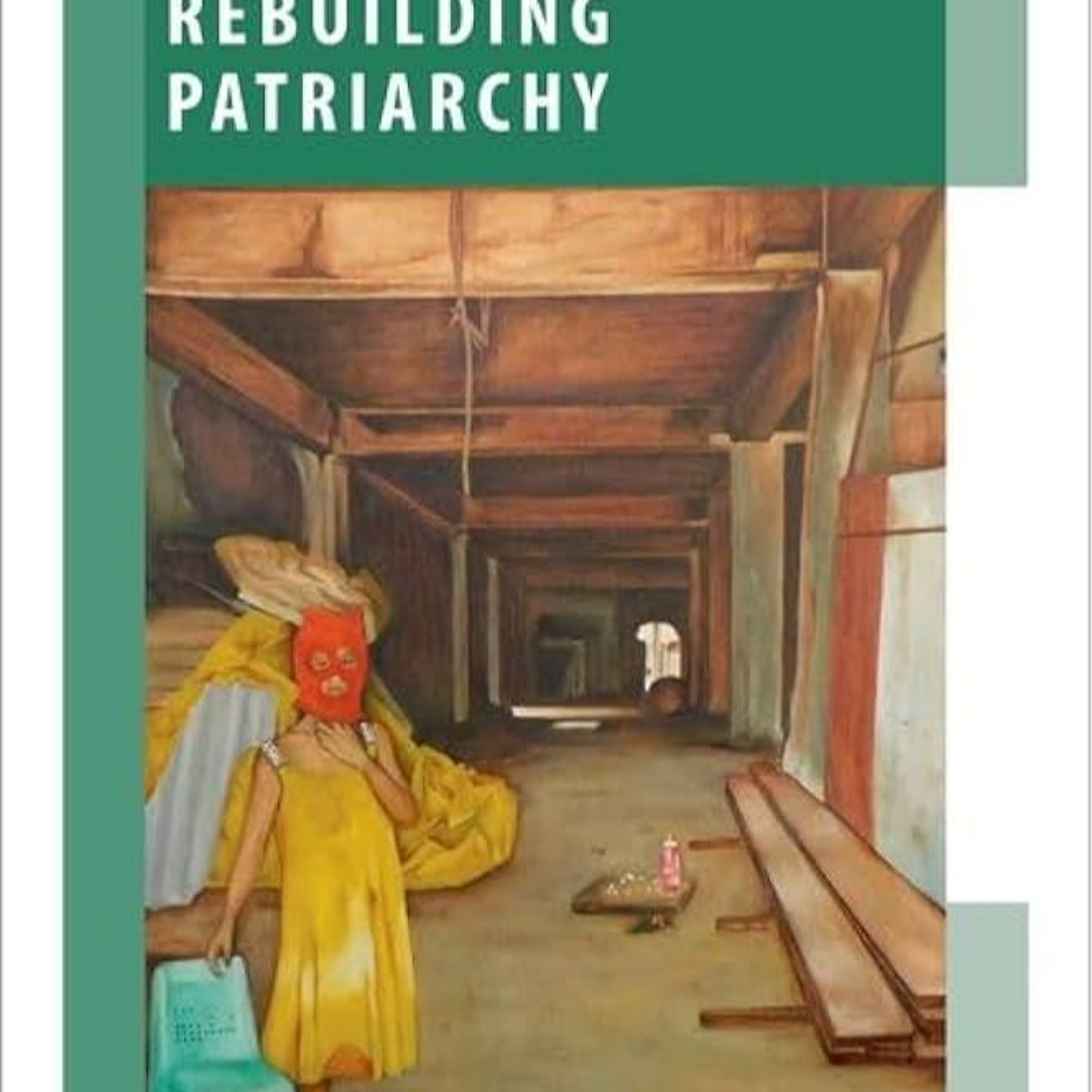
Timor Leste became independent from Indonesia in 2002, after 24 painful years of Indonesian occupation built on centuries of Portuguese colonisation. Both regimes were deeply violent and extractive, and as my guest today argues, drew Timorese society into different forms of a valorised armed masculinity that would have repercussions well after Timor’s independence. It’s in this post-conflict context that Mel Johnston examines Timor’s gender interventions. Gender mainstreaming is a global set of strategies, interventions and approaches that seek to address the inequality of being a women in policy-making. These set of principals have particular traction in the region. Gender mainstreaming has been mandatory in Indonesia since 2000. In Timor Leste, gender mainstreaming is so important its crystallised in the actual constitution. And yet, Mel went to East Timor to investigate women’s lives after independence, she found deep tensions between the goal of peace on one hand and gender equality on the other. Why would this be so? Did Timor’s independence transform the role of women in Timorese society? How did major gender reforms like microfinance and the law against domestic violence impact ordinary Timorese women? Today we will be talking about Mel Johnston’s prize winning book, Building Peace, Rebuilding Patriarchy

Maidina Rahmawati - The New Criminal Code
On January 2nd, 2026, Indonesia entered what officials are calling a "new era" of criminal justice. The country implemented a completely new Criminal code – KUHP - and a new Criminal Procedure Code—known as KUHAP—that changes what counts as a crime and how crimes are identified, investigated and punished. The government says this marks a shift toward "restorative justice" that prioritizes rehabilitation over punishment. Officials describe it as "more humane, modern, and just". But civil society groups are sounding the alarm. They're calling the new law "draconian and illiberal"—and potentially worse than the system it replaces. At the heart of the controversy: police can still arrest and detain people without a warrant and Amnesty International has identified 88 articles that could be used to silence critics and criminalize peaceful dissent. So which is it? A historic reform that modernises the Indonesian justice, or a step backward that gives authorities concerning new powers? In this episode, we're speaking with a legal expert who's been following this law since its drafting. Maidina Rahmawati has over 8 years of experience in criminal justice reform advocacy. She is a certified advocate/litigator and mediator, and currently serves as the Deputy Director of the Institute for Criminal Justice Reform (ICJR). Mai holds a Master of Laws from the University of New South Wales, specialising in Criminal Justice and Human Rights. She is newly appointed as a lecturer in Criminal Law and Human Rights at Atma Jaya University Jakarta and in Criminal Law in the undergraduate Criminology program at the University of Indonesia (UI).
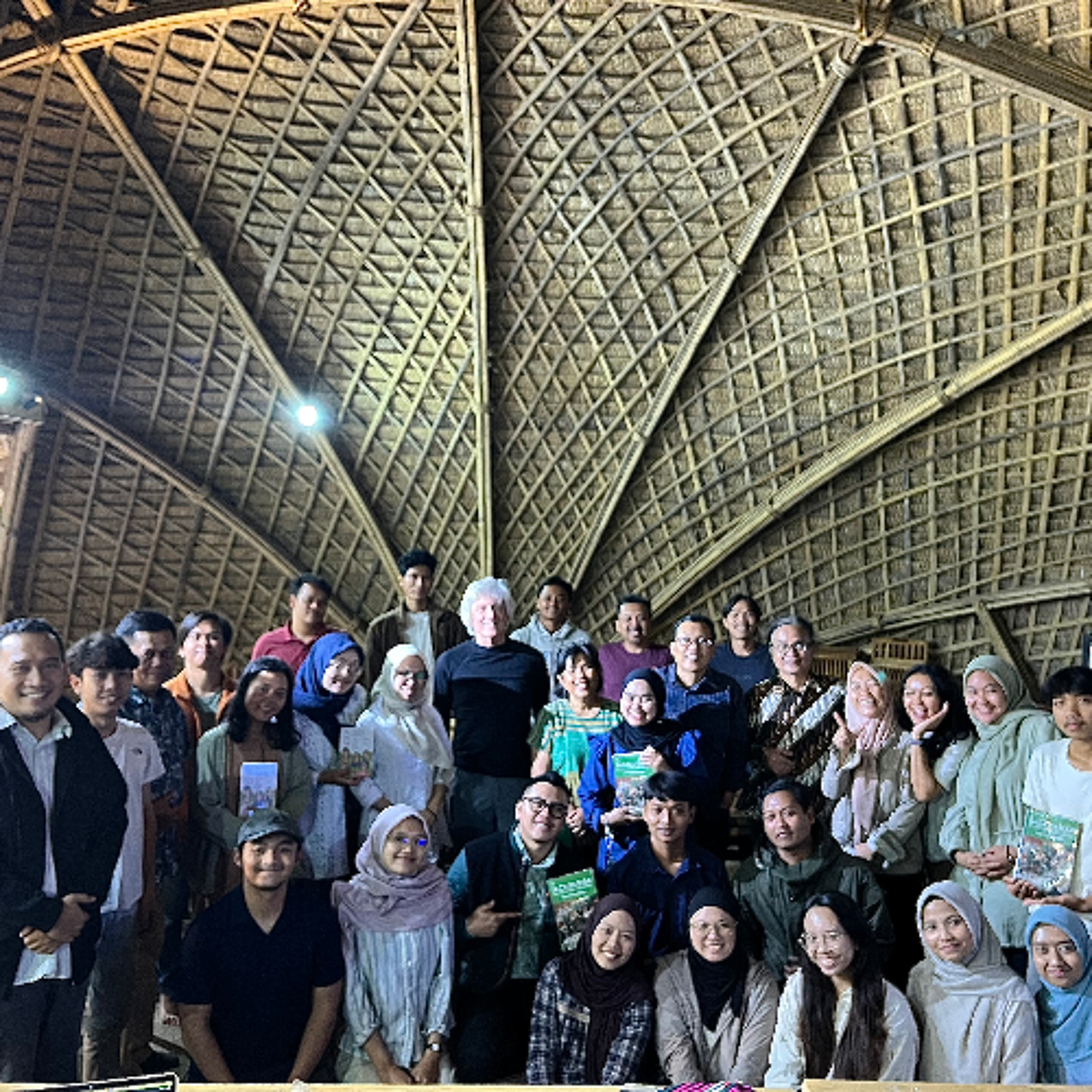
Farabi Fakih and Fathun Karib: Indonesian Ecological Thinking
As Indonesia grapples with increasingly frequent climate disasters—from the devastating floods in Sumatra and Aceh to prolonged droughts affecting food security—a new book is rejecting the usual solutions. No carbon credits. No waiting for the next Elon Musk. Instead, Bacaan Bumi asks: what if the answers lie in Indonesia's own revolutionary history, its constitutional foundations, and its diverse philosophical traditions? Published by Yayasan Obor Pustaka Indonesia last year, Bacaan Bumi began as a monthly supplement for Inside Indonesia magazine—where, we should acknowledge, several Talking Indonesia hosts are also involved. (Yes, this is a slightly nepotistic episode, but we promise the ideas are worth it.) The supplement was initiated by Gerry van Klinken, a longtime Indonesia scholar and one of the board members of Inside Indonesia, and brought together 17 Indonesian academics, activists, and thinkers who argue that technology and market mechanisms alone won't save us. Instead, they propose something more radical: an eco-socialist manifesto rooted in Indonesian soil. The book emerged from conversations sparked by a groundbreaking summer school on critical environmental history at Gadjah Mada University—Indonesia's first university program of its kind. The response has been striking: packed book launches across Java, students demanding more courses, and activists finding new language to connect Marxist commodity analysis with Javanese mysticism, Islamic green theology with feminist readings of adat traditions, and Sukarno's Marhaenism with 21st-century ecological citizenship. The editors don't call it an academic collection. They call it a manifesto. In his introduction, Farabi Fakih writes that Indonesia's environmental movement in the 21st century is “the natural continuation of the Southern revolution imagined by Sukarno.” He explicitly rejects what he calls the “techno-magical narrative” of Silicon Valley billionaires and the “declensionist narrative” of inevitable doom—both of which, he argues, serve to disable collective action against capitalism. But what does an environmental manifesto look like in the Indonesian context? How do you connect Marx's theory of metabolic rift to flood disasters in Sumatra? Why do young Indonesians find hope in pan-psychism and Kendeng mountain feminism? And what happens when you discover that Indonesia's 1945 constitution already contains ecological philosophy that's been largely forgotten? In this episode, we had a conversation with two of Bacaan Bumi's key contributors: Farabi Fakih, who heads the Master's program in History at Gadjah Mada University where the critical environmental history curriculum was born, and Fathun Karib, a historical sociologist, postdoctoral fellow at the Asia Research Institute, and founding member of punk band Critical Death. Together they explore why genuine solutions must come from within Indonesia, why book tours revealed both hope and anxiety among younger generations, and how a 1960s Indonesian constitutional provision about the earth might offer more wisdom than all of Silicon Valley's promises combined. In 2026, the Talking Indonesia podcast is co-hosted by Dr Jemma Purdey from the Australia-Indonesia Centre, Dr Elisabeth Kramer from the University of New South Wales, Tito Ambyo from RMIT, Dr Jacqui Baker from Murdoch University, and Clara Siagian from University College London.