Talk of the Bay from KSQD
270 episodes — Page 3 of 6
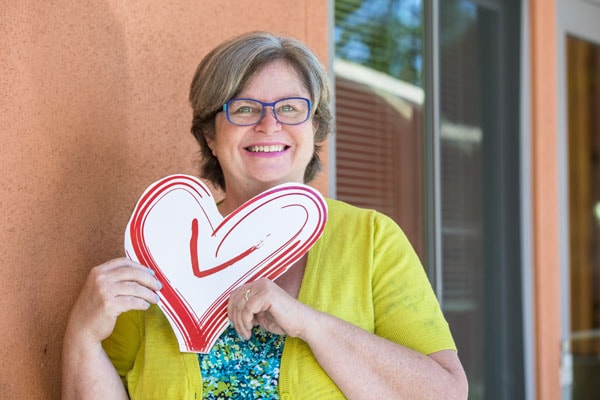
Karen Delaney of Volunteer Center on “Team Hope and Joy”
Do you ever feel helpless to influence big events? Want to make a difference locally but don’t know where to start? Karen Delaney, the soon-to-be-retiring Executive Director of the Volunteer Center of Santa Cruz County has some ideas on how to plug in, tune in, and get to work volunteering for a cause you care about.

Saabira Chauduri tells how big brands got us hooked on plastic, and explores the pathways out
Saabira Chaudhuri is a London-based journalist and the author of Consumed – How Big Brands Got Us Hooked on Plastic. She frequently writes about sustainability, plastics, corporate strategy, environmental regulation and consumer culture. Her work has been published in outlets including the Wall Street Journal, the New York Times, Bloomberg, The New Scientist, The Guardian, Wired, The Times of India, FastCompany.com, Forbes and Business Insider. Saabira Chauduri spent 12 years as a staff reporter for the Wall Street Journal in London and New York, stepping down in May 2025. Before that she worked on staff for Dow Jones newswires, Forbes magazine, Mint (the New Delhi-based business newspaper) and Fastcompany.com Saabira grew up in Bangalore and still returns there as much as she can. She earned a BA in sociology from Mount Holyoke College in Massachusetts, then spent a year abroad studying law and sociology at the London School of Economics. She was awarded the Wall Street Journal’s fully-funded Asia fellowship to New York University where she earned an MA in Business and Economic Reporting. Consumed is her first book. It was born out of years of reporting on consumer goods companies’ increasingly difficult relationship with plastic, and it was published by Bonnier Books in May 2025. Consumed was named one of the Financial Times’s Best Books of 2025, longlisted for the FT & Schroder’s Business Book of the Year Award and shortlisted for the Society of American Business Editors and Writers (SABEW) Best Business Book of the Year Award. She did the impossible task of researching and writing the book while tending to her two children under two.

Interview with David Bean, KSQD Station Manager
Andrew Schoneberg interviewed David Bean about his extensive history in radio and the recording industry. He shares interesting information about the history of local radio in the Monterey Bay, including KSQD, KUSP, and KAZU.

A Deep Dive with “Save the Catalyst” Advocate Hector Marin – Talk of the Bay
Host Chris Krohn welcomes Hector Marin to the airwaves for a deeper dive so we can get to know him beyond his role as the organizer of the “Save the Catalyst” campaign. Krohn and Marin discuss the City of Santa Cruz housing-related ballot measures B and C, as well as the sugar tax, Z. We also learn a bit about Hector’s origins and what drew him to Santa Cruz.

Iranian musicians Parisa Karimi Molan and Amir Amiri share reports from Iran and the music that brought them out into the world
From a very early age, Parisa Karimi Molan dreamed of becoming a singer. Growing up in a musical family—her father was a singer and tar player—she was surrounded by melodies, even as she lived in Iran, where women are forbidden to sing publicly. Despite this, she studied music for nearly twenty years in secrecy with some of Iran’s most celebrated vocal masters, including Parissa and Pari Maleki, alongside many talented women who shared the same quiet determination. Although the road was long and often uncertain, Parisa continued learning with the hope of preserving this rich musical heritage and one day sharing it freely. In 2017, she moved to Montréal, where she could finally pursue this lifelong dream openly. There, she co-founded Tehrani Drom and began creating music rooted in Persian, Azeri, and Roma traditions—turning a once-impossible dream into reality. Amir Amiri is a santur player, composer, and cultural inventor. He dwells at the center of a unique musical universe where ancient inspiration, dazzling virtuosity, and bold creativity meet. Surrounding himself with outstanding collaborators from the worlds of jazz, classical and world music, Amiri fearlessly transcends genres and borders, exquisitely transporting his ancient instrument into the musical conversations of our time. Throughout his performances with a vast spectrum of ensembles, concerts and tours, Amiri’s down-to-earth and profound connection with audiences always enchants. Born in Tehran, Iran, Amiri is a master of the santur, a 72-string instrument dating from approximately 500 BCE. Since first arriving at the Banff Centre from Iran in 1996, Amiri has forged deep relationships with musicians across Canada and the world. He has collaborated in a variety of ensembles with double bass player Jean Félix Mailloux, violist Richard Moody, and jazz pianist Jean-Michel Pilc. In his enthralling Amir Amiri Quartet, he is accompanied by violist Olivier Marin, percussionist Roméo Monteiro and cellist Myrtille Hetzel. The ground-breaking world music ensemble includes the presence of a Whirling Dervish, a dancer in the act of Sufi meditation. Amir Amiri was awarded the 2003 CBC Artist of the Year, and The Betty Mitchell Best Composition and Sound Design award.

A Tribute to the King of Zydeco with Grammy award winner John Leopold
Who ever said awards shows are no place for politics? Former Santa Cruz County Supervisor John Leopold made local history this past weekend when he took home a Grammy for Best Regional Roots Music Album. The longtime local politician, who served on the board for 12 years, became the first Santa Cruz County supervisor to take home one of the coveted national music awards. Leopold executive produced an album titled “A Tribute to the King of Zydeco,” which honored Louisiana musician Clifton Chenier on what would have been his 100th birthday last year. Chenier died in 1987 at age 62. Roughly 72 hours after his appearance on the national stage, Leopold stopped by the KSQD studio in Santa Cruz to talk about his whirlwind of a weekend, his enduring fascination and passion for music and, of course, his striking sartorial choices. You can stream A Tribute to the King of Zydeco on all major platforms, but John encourages the purchase of the album to directly support the Clifton Chenier Memorial Scholarship fund at the University of Louisiana at Lafayette.

California Sued for Confusing Pesticide Regulations
Angel Garcia, our guest, is a spokesperson for Californians for Pesticide Reform which just filed a lawsuit against the state of California for dragging their feet on clarifying pesticide regulations. Here is their recent press release further explaining the reason for the suit. They claim the state’s approach to regulation is both confusing and dangerous, given the hazardous nature of 1,3-D, which is applied by the hundreds of thousands of pounds per year on fields in Santa Cruz and Monterey Counties. Farmworker Advocates Sue California Over Conflicting Regulations for Cancer-Causing Fumigant Pesticide 1,3-D Nine years after landmark court victory, California Department of Pesticide Regulation’s 1,3-D regulations still fall far short, say advocates Lindsay, CA — Nearly a decade after community members first sued the California Department of Pesticide Regulation (DPR) for its unlawful regulation of the cancer-causing fumigant 1,3-Dichloropropene (1,3-D), affected residents and advocacy organizations are back in court. On Friday, community residents Rocio Ortiz and Ana Barrera, along with Californians for Pesticide Reform and Pesticide Action and Agroecology Network, filed suit challenging DPR’s regulations governing the use of 1,3-D. The lawsuit alleges that DPR’s newly adopted regulations violate fundamental requirements of the Administrative Procedure Act (APA) by failing to provide clarity and internal consistency, and violate the California Food and Agricultural Code, by allowing the public to be exposed to pesticide emissions at levels that cause harm to human health. After nearly nine years of litigation following the 2017 case Vasquez et al. v. Department of Pesticide Regulation, DPR has now issued two separate regulations for 1,3-D that conflict with one another. The first regulation, for people living near pesticide applications (known as residential bystanders), took effect in 2024 and uses a regulatory target air level of 0.56 parts per billion (ppb) per day over a 70-year lifetime. On January 1, 2026, a second regulation took effect, intended to protect people who work near 1,3-D applications, known as occupational bystanders. This second regulation uses a threshold of 0.21ppb per 40 hours per week over 40 years. Each regulation applies different target air concentration levels to essentially the same population, creating regulatory confusion and undermining the state’s duty to protect communities and workers from a known carcinogen. “After everything our communities have endured, it is devastating to see DPR still refuse to do its job,” said Ana Barrera, a plaintiff in the case. “We live, work, and raise our children near fields where this chemical is used. DPR knows it causes cancer, yet they continue to write rules that protect the industry instead of the people breathing this air every day.” Rocio Ortiz, also a plaintiff, emphasized the human cost of regulatory failure. “These regulations are not just words on paper — they’re the difference between families like mine feeling safe at home or living with constant worry. DPR had years to get this right. Instead, they created confusing, contradictory rules that put our communities at risk of harmful exposure. We should not have to keep suing the state just to be protected from cancer-causing chemicals.” The state’s expert cancer risk assessment branch, the Office of Environmental Health Hazard Assessment (OEHHA), in 2022 established a lifetime cancer risk level for 1,3-D, known as a No Significant Risk Level, or NSRL, equivalent to 0.04ppb — far lower than either of DPR’s regulatory targets. The regulatory target for DPR’s occupational bystander regulation accepts the OEHHA NSRL but allows for far more exposure because it assumes that workers are only exposed to 1,3-D for 40 hours a week

Sunday Assemblies Launch in Santa Cruz County
My guest is Kischka Bluspiro organizer of the local Sunday Assembly Santa Cruz, which is a secular (non-religious) gathering that promotes community and inspiration. They gather monthly to listen to inspiring speakers, sing together, and get to know each other. They also have small groups based on specific interests (games, movie night, etc.), and they’ll be doing some community service projects as well. Sunday Assembly Santa Cruz is a part of a global network of Sunday Assemblies that started in London in 2013. The local branch has been going for a couple months now, but in March they’ll be moving to a new, larger space, the community room at the Capitola branch library.

The Election and Recall of the First Transgender Mayor of Calexico, Raul Ureña
On today’s Talk of the Bay, we explore the role of recalls and censures in electoral politics. Host Meilin Obinata welcomes Raul Urena, former mayor of the border town, Calexico, who was elected into office with 70% of the vote but later the subject of a successful recall by the Republican Party which weaponized Urena’s gender identity. Urena is also a current graduate student at UC Santa Cruz. Obinata also speaks with Peter Szalai, a voter who shares his thoughts about the social media posts and the censure of Salinas City Councilmember Andrew Sandoval. That’s today, at 5PM, on Talk of the Bay, right here on KSQD.
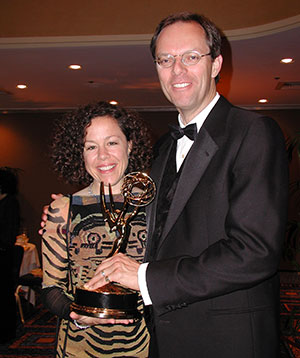
Spencer Critchley on Morality and Democracy
Spencer Critchley is an award-winning communication strategist and national media commentator with experience in journalism, digital media, public relations, advertising, and music. He’s the author of Patriots of Two Nations and host of the podcast Dastardly Cleverness in the Service of Good, and founder of Boots Road Group. He talks with me about the moment we are in and how to view it in light of history and philosophy.

Documentary Sequoias of the Sea Calls for Kelp Help
Film maker Ana Blanco and biologist Natasha Benjamin team up for a film about saving the kelp forests and their link to local coastal economies. The local premiere of the film shows on February 6th at the surfshop, the Santa Cruz Boardroom on 41st Avenue and includes a discussion and action talk. Sequoias of the Sea – Community Screening & Ocean Action Night Friday, February 6, 2026 | 6:30–8:30 PM Santa Cruz Boardroom 825 41st Ave, Santa Cruz, CA 95062
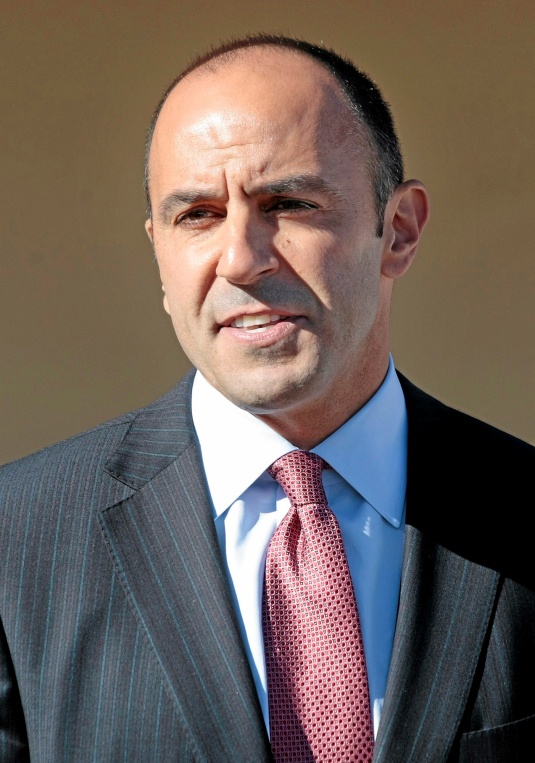
Jimmy Panetta Presser re: ICE funding
Representative Jimmy Panetta held a press conference on Thursday, January 28th to affirm his opposition to passing a funding bill for the Department of Homeland Security which oversees ICE. Ami Chen Mills and Nyanko Nyasu were there and have this report.

Meet the Save the Catalyst Campaign
Talk of the Bay, host George Cadman discusses the history and the future of The Catalyst in downtown Santa Cruz with her guests Alyssa Pullen owner of the Teahouse Spa, David Bean host of KSQD’s New Squid in Town music program and local music scene expert, and Hector Marin, organizer of the the Save the Catalyst campaign and local activist. They will discuss how they see the plans to rebuild the Pacific Ave property as seven stories, six of which would be residential units without parking, with ground floor retail. To stay on top of the Save the Catalyst campaign: [email protected] Instagram: https://www.instagram.com/savethecatalyst/ Official project planning page: https://www.santacruzca.gov/Government/City-Departments/Community-Development/Current-Planning/Significant-Projects-Planning/Projects/Pacific-Avenue-1009-1011-1015 Save the Catalyst from demolition Petition: https://www.change.org/p/save-the-catalyst-from-demolition

Latest Controversy Over the Rail and Trail Project
On this Monday’s Talk of the Bay, your host Meilin Obinata invites you to learn about the latest fiery news regarding the Rail and Trail Project. Guests Lani Faulkner of Equity Transit and former candidate for District 1 County Supervisor, Stephanie Auld a disability and elderly rights transportation advocate and James Weller a land title expert, share their views and expertise regarding what you need to know about the status of passenger rail in Santa Cruz County. What do the recent decisions of the Santa Cruz County Regional Transportation Commission mean? What is the current vision for supporters of rail? We welcome your questions and comments so please be sure to email us at [email protected]. That’s this Monday, January 26th, at 5PM, on Talk of the Bay.

Jess Craven: Hope, Action, and Democracy
Talk of the Bay host George Cadman spoke with Jess on January 20th about her Substack & social media videos, her activism, and what motivates her. They also spoke about using anger and grief as fuel for good. There are so many attacks on our democracy, our rights, and our bodies every day, that it is hard to know where to start. It can feel overwhelming. Jess Craven addresses how ordinary working Americans who are raising families and trying to survive can resist this tidal wave of attacks on our freedom, on our democracy, and on our well being – how they can respond in a meaningful way with the time and resources that they have. She curates daily impactful actions to help people to get involved, even if they are short on time or money. She talks about the practical actions ordinary Americans are taking to stand up to this regime, build community & support one another, with examples from Minneapolis and other communities where residents are standing up and standing together. Jess also shares her thoughts on the 2026 mid term elections, public opinion polls, and why she has hope. And how she takes care of herself & finds balance in her life. Jess Craven is an activist, political content creator, and the author of Chop Wood, Carry Water Daily Actions on Substack. Her goal is to help average Americans become more engaged in the political process and help elect more progressive lawmakers everywhere.

Thousands March on MLK Day
On Monday, January 21, thousands of marchers filled the streets of Santa Cruz to honor the legacy of Martin Luther King, Jr. Your Squid on the Street was there! Special thanks to Daymia Rousseau for their help editing.

Local Iranians Respond to Protest Crackdown
There are some 5 million Iranians living in the United States. A large population live in the Monterey Bay and the Bay Area. On this program, we hear from activist/student Elnaz Sarbar, Data Scientist, Azadeh Sanjari, and Santa Cruz City Council member, Shebreh Kalantari-Johnson about what they are hearing from family members. Since the government of Iran cut off internet, it has been difficult for journalists and families living abroad to find out the fate of their loved ones after what appears to have been a mass killing of protesters in Iran.

Community Voices for Change • From the Streets
Join host Omar Dieguez for a powerful conversation with Yanely Martinez, longtime Safe Ag Safe Schools (SASS) organizer, Camila, a rising future leader in the movement, and Señor Torres, representing a family rooted in generations of activism fighting pesticide exposure in our communities. From Monterey County to Sacramento and the Pajaro Valley, this episode highlights the real work happening on the ground—uplifting youth voices, organizing families, and building collective power to protect our children, our schools, and our land. This podcast centers the next generation of leaders and honors the families who continue to stand strong against pesticide harm. The movement is alive, and the youth are leading the way. ✊🏽🌱 Safe Ag Safe schools, FUTURE LEADERS OF CHANGE, SPRAY DAYS!

Santa Cruzans march for hope
One of your Squids on the Street, Suki Wessling, caught up with locals at the Martin Luther King, Jr. parade and rally to find out which of King’s words or deeds especially resonate with them during these difficult time.
Prof. Nolan Higdon on Venezuela Media Coverage
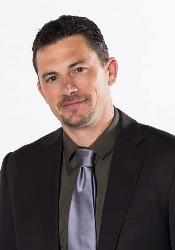
Nolan Higdon, profesessor of media studies at UCSC discusses the way the U.S. media is framing what is happening in Venezuela leading up to and after the kidnapping of President Maduro.

Oil Drilling and Sea Bed Mining off California’s Coast?
Ocean advocate, Dan Haifley discusses the intricacies and urgency of preventing oil drilling and mining off California’s coastline, as the Trump administration goes all in for “drill, baby drill” policies that would open the coastal waters to extractive industries. The deadline for comment is January 23rd. Comments can be submitted to the Federal Register by January 23, 2026, at: Regulations.gov. Contact your Congressional representative Jimmy Panetta at: Congressman Jimmy Panetta | Representing the 19th District of California.

King Tides and Sea Level Rise
Hello, I’m Daymia Rousseau, a UCSC Intern reporting for KSQD. In 2023, Santa Cruz county experienced one of the worst storms in the city’s history. In cities like Capitola, streets were flooded , waves crashed into various businesses, and the wharf was destroyed. Meteorologists called it a bomb cyclone with lots of rain and wind. As Santa Cruz county endures storm season once again, many coastal communities remain anxious about another natural disaster, or how California’s coast will handle storms as sea-levels rise. Griggs“What’s gonna be more problematic…in the relatively near-term in the year 2050, or the year 2075, will be these short-term extreme events we witnessed these past three winters… so really high tides, and really large waves.” Daymia: That’s Gary Griggs, Professor of Earth and planetary Sciences at UCSC. He’s, an author, scientific reporter, & board member of the Ocean Science Trust. Professor Griggs’ is an expert in climate modeling and sea-level rise. His recent research has also projected a 0.5-1.2ft sea level rise by the year 2050. What might our future coastline look like with this change? Griggs “So we really have two, well, maybe three different kinds of coastal environments… one is… steep coastal mountains, plunging thousands of feet to the water. A foot or two doesn’t really make a difference…Then we have places like much of Santa Cruz county…these coastal marine terraces, these flat benches. We may have a beach in front of there, we may not. But what happens as sea levels continue to rise, and as storms continue, we erode back that bluff. West cliff might be the best example of this… The third, where we will see this the most, probably the clearest, are lowline areas, which are nearly at sea level now. And we look at, say, the waterfront of Santa Cruz beach, Seabright, Capitola, and Rio Del Mar…many of the homes and businesses were built on the beach, so a foot or two will really make a difference…” Daymia: 2023 saw intense storm damage at places like West Cliff Drive, where whole sections of roadway fell into the sea. The city of Santa Cruz has established a 5-year roadmap to monitor sea level rise and minimize the eroding impacts of storms. This includes a new coastal change monitoring network, incentivized storm water management, and infrastructure redesign. Each project could cost upwards of tens of millions of dollars. Additionally, Beaches like Capitola and Rio Del Mar will be more susceptible to flooding & sand buildup all year, not just in winter. Griggs“So, we’ve got this preoccupation with sea level rise, though we need to keep in mind these short term events, which are gonna be way more problematic.” Daymia: Michael W. Beck, the director of the UCSC Center on Coastal Climate Resilience, raisesd concerns about sea-level rise’s impacts on marine wildlife, as well as coastal communities. In a 2024 article he stated, quote, “it’s not just a huge bummer for future summer vacations…Our beaches also provide a natural buffer from flooding, erosion and other natural disasters for millions of California residents.” Professor Griggs is not so sure all of these beaches will provide a buffer when the really big storms hit. Grigs “A lot of his work is based on the tropics, where we have coral reefs and mangroves that live in salt water that do provide this natural buffer. So if we have this really wide beach – I’m gonna pick Sea Bright beach – they definitely provide a buffer. By the time you get to Capitola… in the winter, there’s not much there, and as you saw, the waves come over that little sea wall into the downtown, into the restaurants… So I’m less optimistic in my consideration of how important those beaches are. They’re definitely important, but when you get a big winter, all bets are off…Capitola’s been hit with at least 15 major storms in the last century..” Daymia: As of January 5th, intense winds & flooding
Filmmakers Zaya and Maurizio Benazzo share the revelations of the making of Wisdom of Our Ancestors
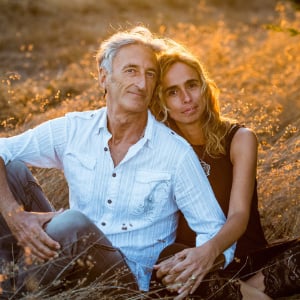
Zaya Ralitza Benazzo was born and raised in Sofia, Bulgaria. For as long as she can remember, she has been fascinated with exploring life’s big questions. She feels most at home in nature and, increasingly, within herself. Zaya is a producer and film director with engineering, environmental science, and film degrees. For many years, she worked as an environmental activist in Europe. Her deepest passion is bringing together wisdom from spiritual traditions in service of all life. Zaya believes that individual and collective liberation are inextricably interwoven. Maurizio Benazzo grew up in Italy, and in 1984 came to the United States on a 98-year-old sailing boat. He started working as an actor, model, and filmmaker, but his thirst for knowledge was only satisfied in 2001 upon encountering I Am That, the seminal work by Sri Nisargadatta Maharaj, while he was in India shooting the award-winning documentary Short Cut to Nirvana. Maurizio and Zaya merged their lifelong passions for science and mysticism when they met in 2007, and their first project together was filming the documentary Rays of the Absolute on the life and teachings of Sri Nisargadatta Maharaj. This project sparked their next level of creation and collaboration: Science and Non-Duality, a global community inspired by the timeless wisdom traditions, informed by modern science, and grounded in direct experience. Together they have produced and directed several award-winning documentaries including The Wisdom of Trauma, The Art of Life, Rays of the Absolute, Where Olive Trees Weep, The Eternal Song, Mauri, and If an Owl Calls Your Name. They have a new film, In the Circle of Life, which will be shown this Friday, January 16th, at the Resource Center for Nonviolence in Santa Cruz. They live, work and play on the unceded ancestral lands of the Coast Miwok and Southern Pomo people, in Sebastopol, California.

Who’s Watching Santa Cruz? Flock Safety, Surveillance, and Public Trust
Talk of the Bay’s George Cadman hosts a conversation on the controversy surrounding Flock Safety, and their cameras that appear to track more than just license-plates. After revelations that the police have illegally shared data with ICE and other agencies, the Santa Cruz City Council will meet Tuesday, January 13th, to consider ending the contract with Flock Safety. Can technology and government be reined in to protect our 4th amendment rights of privacy? The city’s two-year contract is set to expire on March 27, 2026. It allows for a termination of the agreement with 30 days’ notice, which would mean the end of the contract would be Feb. 12 at the earliest if the SC City Council decides to terminate it. Peter Gelblum is a retired attorney who has lived in the San Lorenzo Valley since 2008. As an attorney in Los Angeles for 30 years, he worked on such cases as the OJ Simpson civil case, RIAA vs. Napster, and a case involving ownership of Alberto Vargas’s artwork. He was on the Board of the ACLU of Northern California for 10 years and still serves on their Legal Committee. He has been the Chair of the Santa Cruz County Chapter of the ACLU of Northern California for over 10 years, and has been working on issues relating to ALPRs since 2015. Julia has lived in Santa Cruz County over 25 years, and has been active in political and community organizing all her life. Coming both from a privileged background and also a place of intersectional identities, Julia leads with compassion and empathy for the struggles of all people. She has lobbied for political campaigns; organized at her alma mater UCSC; rallied with marginalized groups including LGBT+, disabled, and BIPOC communities; and is actively of service in many community organizations, including Indivisible Santa Cruz County, where she co-leads the Media Team. Sean Dougherty has worked as a software engineer since 1999, including 7 years at IBM and 10 years at Apple, during which he worked on operating systems and hardware modeling. He recently resigned his position at Apple in order to run for office in Congressional District 19 against incumbent Jimmy Panetta. He and his wife have lived in Santa Cruz for 10 years and have a 3 year-old son. Syd Jones is a retired security professional, residing in Santa Cruz County. Meeting Date: January 13, 2026 Time: 2:30PM Council Chambers 809 Center Street To participate on Tuesday’s city council meeting: https://zoom.us/j/94684401344 View Tuesday’s city council meeting live: https://www.santacruzca.gov/Government/City-Council/Council-Meetings/View-Council-Meetings Composite graphic by local artist and musician Russell Brutsche
Indivisible organizers encouraged by large crowd at Get ICE Out for Good Rally
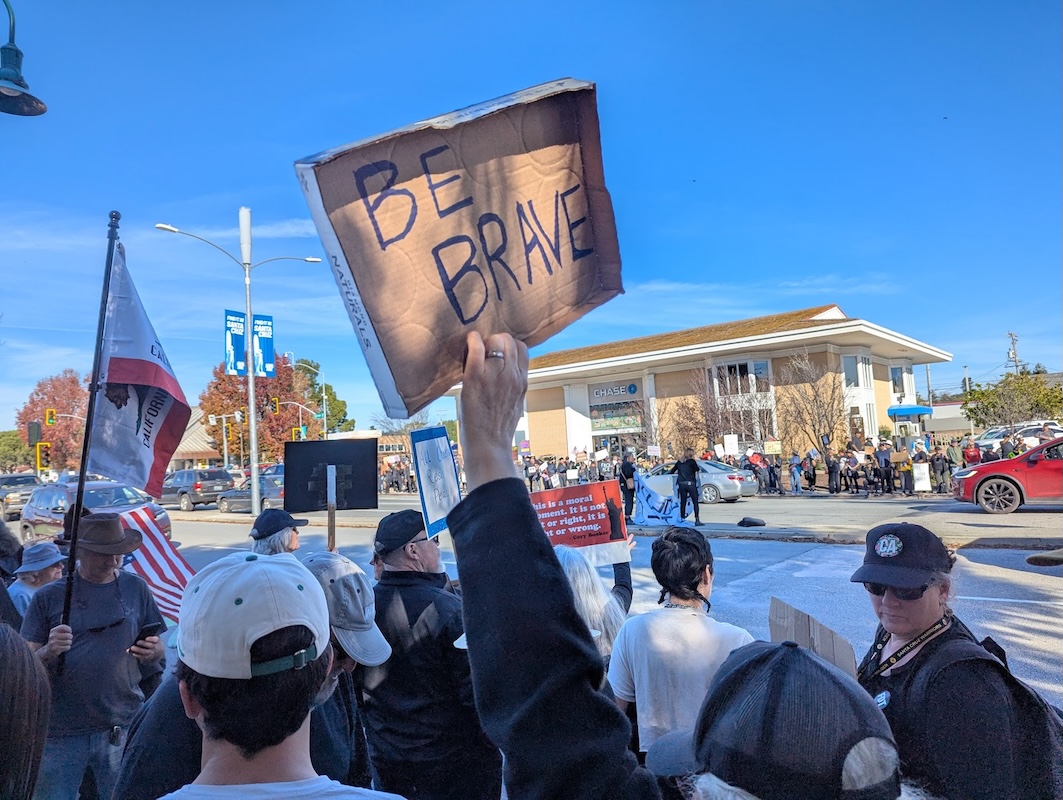
Your Squid on the Street, Suki Wessling, caught up with Kelly Menehan and Faye Johnson of Indivisible to talk a little bit about the rally and their organization at the January 2026 Get ICE out for Good Rally in Santa Cruz.
Locals speak up at ICE Out For Good rally in Santa Cruz
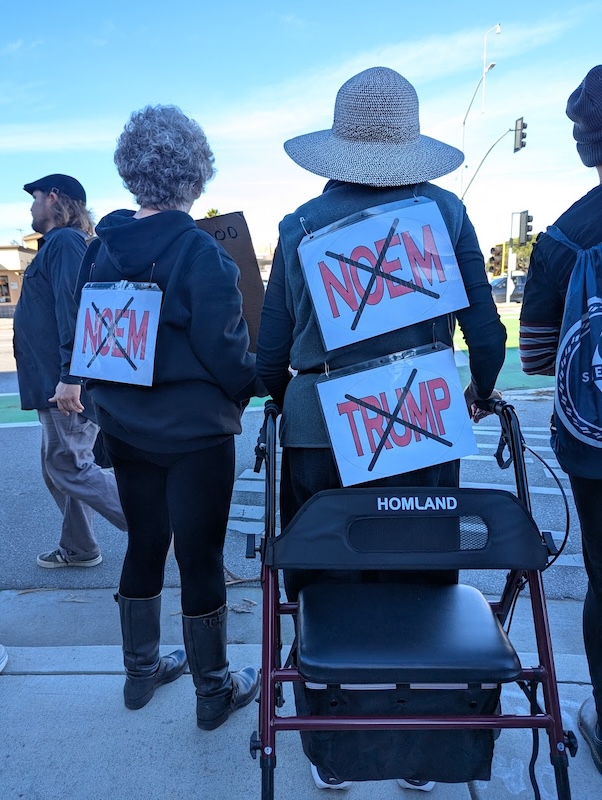
Your Squid on the Street interviews rally-goers at the corner of Ocean and Water Streets in Santa Cruz about their reasons for attending the rally on January 11, 2026.

Writing Through Writer’s Block with author, educator Aaron Colton
If you’ve had writer’s block — and for all the listeners out there who have ever put pen to paper, chances are a good that you have — there’s no shortage of pithy quotes or “how to” books from famous authors that can help snap you out of it. “Write what you know,” goes one. “No surprise in the writer, no surprise in the reader,” goes another. As inspiring as some of these aphorisms can be, perhaps our deepest understanding of writer’s block can be gleaned from fictional representations of the commonly experienced phenomena — a meta analysis, if you will, provided by the authors themselves. Because there’s no shortage of those either. And nobody know’s that better than writer, educator Aaron Colton. “Writing Through Writer’s Block: Lessons from Modern American Fiction” is the title of a new book by Colton, an associate teaching professor and director of first-year writing in the Department of English at Emory University in Atlanta, Georgia. Within his authorial debut, Colton offers the first book-length analysis of the archetype of the blocked writer, at once acting as a thorough meditation on literary theory while also providing practical insights into the complex thoughts and feelings of the working writer, novice and veteran alike. In doing so, Colton reframes blockage not as something to be desperately avoided, but as something that could be deputized or even befriended by the aspiring writer. Colton completed his Ph.D. in English at the University of Virginia, and has previously taught at The Georgia Institute of Technology and Duke University. His research focuses on representations of writers and writing in American literature, and his scholarship has appeared in venues including Arizona Quarterly, Studies in American Fiction, College Literature, and Pedagogy, as well as in Public Books and Inside Higher Ed. He also happens to have grown up here in Santa Cruz, so we were extra pleased to welcome a local boy to the show.
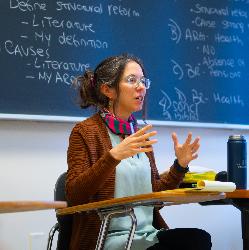
Making Sense of the U.S. Invasion of Venezuela
Sara Niedzwieck is a professor of politics at UC Santa Cruz and studies South American politics. She offers her analysis of what is currently happening in Venezuela, a developing story.
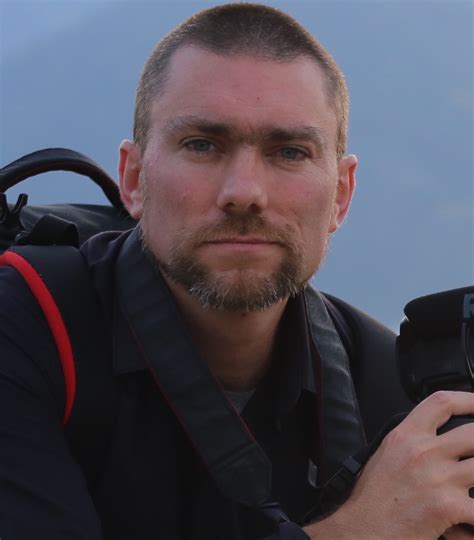
Journalist Michael Fox on Venezuela
On January 3rd the U.S. military conducted a strike on the capital of Venezuela, Caracas, killing dozens of people, and capturing President Maduro and his wife and bringing them to New York to stand trial. What does this mean for the region? What is it really about? Michael Fox is a Latin America-based media maker and the former director of video production at teleSUR English. He puts the action into context.

Watsonville Vigil for Renee Nicole Good
Omar Dieguez reports live from the vigil marking the killing by an ICE agent of Renee Nicole Good in Minneapolis.

Empowering and Inspiring Musicians Support Indigenous Community
From the Streets brings you a powerful live podcast and performance featuring Dub Souljah, Safaa (Baytal), Miguel Kultura, and Shinelight—artists using resistance music to inspire, awaken, and empower our youth to rise as leaders. Join us January 24, 2026, at the Veterans Hall, 846 Front St. Doors open at 12 PM. Featuring additional performances by The Neighborhood Kids and The Indigenous Cats, plus vendors, drum circles, and danzantes. Part of the proceeds benefit The Center for Farmworkers. Come show love, build community, and support the movement. This event is sponsored by Indigenous Justice. More info: @RESISTANCE.ENTERTAINMENT ✊🔥 https://www.eventbrite.com/e/the-neighborhood-kids-full-live-band-indigenous-cats-in-santa-cruz-tickets-1977304939301
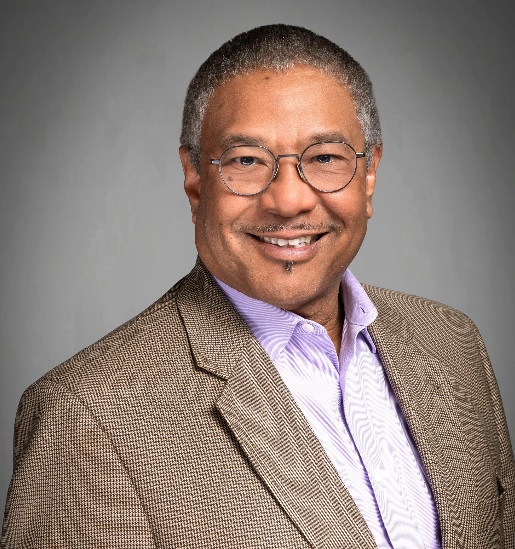
Mark Toney of T.U.R.N. describes the fights to keep California utility costs in check
Mark Toney has been the Executive Director of The Utility Reform Network (TURN) since 2008. Mark has transformed TURN into a social movement organization, whose 27 staff are two-thirds women and two-thirds people of color, and has expanded its impact to promote and win racial and economic justice in energy affordability, climate action, and broadband equity. Mark was appointed in 2020 to the California State Bar Board of Trustees by Governor Newsom and reappointed in 2024. He also currently serves on the National Whistleblower Center board, and previously served on the boards of ACLU Northern California and California Shakespeare Theatre. Mark served as executive director of the Center for Third World Organizing for four years, and of Direct Action for Rights & Equality for eight years. He holds a B.A. from Brown University, a Ph.D. in Sociology from UC Berkeley, and has been recognized as a Kellogg National Leadership Fellow, National Science Foundation Fellow, Echoing Green Fellow, and Mother Jones Heroes for Hard Times.

Behind the Mic with Christine Barrington, host of Apocalyptic Supper Club
Christine Barrington starts a new show on KSQD this Friday: Apocalyptic Supper Club. But Christine is hardly new to KSQD—in fact, she’s a Squid super-volunteer. Apart from hosting Talk of the Bay for several years, Christine was a board member, volunteer coordinator, behind-the-scenes producer, and host of a series called Behind the Mic. In this series she interviewed many of the roster of fascinating people who make up KSQD’s volunteer on-air presence. This week, Babblery host Suki Wessling turns the tables and sends Christine to the other side of the board so she can talk about her new show. Christine explained what it’s all about: “It’s called The Apocalyptic Supper Club, nourishment for dire times. And the reason I call it that is it’s sort of at many levels, but most important, it’s that for us to show up when times are so hard, I believe we have to be fed many, many more stories, many, many more ideas and strategies that actually lift us up and make us feel better. So much political news and political talk is really quite depressing. It fills us with fear and uncertainty, it impacts our neurochemistry and instills what I call civic learned helplessnessPeople kind of check out and we need them to check in and find joy in getting involved. So they need to get nourished. And so it’s a supper club. It’s gonna all kinds of beautiful, tasty things.” The first episode airs Friday at 5 pm PT and will be available as a podcast. Please listen in and subscribe. Mentioned in this episode: This Is Your Brain on Music: The Science of a Human Obsession by Daniel Levitin Hang Out Do Good Red, Wine, and Blue Your Brain at Work: Strategies for Overcoming Distraction, Regaining Focus, and Working Smarter All Day Long “\” by Christopher Armitage A selection of Behind the Mic shows with Christine Barrington: Classical music and gardening host Joe Truskot What a Week hosts Erik Nelson and Tony Russomanno Be Bold, America host Jill Cody Narrative Species host Rick Kleffel Don’t Fence Me In host Bruce Larson Heritage Gospel Uplift’s Jinx Deruisa New Squid in Town’s David Bean B in the Night’s Bobby Bishop The Computer Guy, Luigi Oppido KSQD Chief Engineer Sandy Stone Brooklynbilly Mashup’s Andy Fuhrman <a href="https://ksqd.org
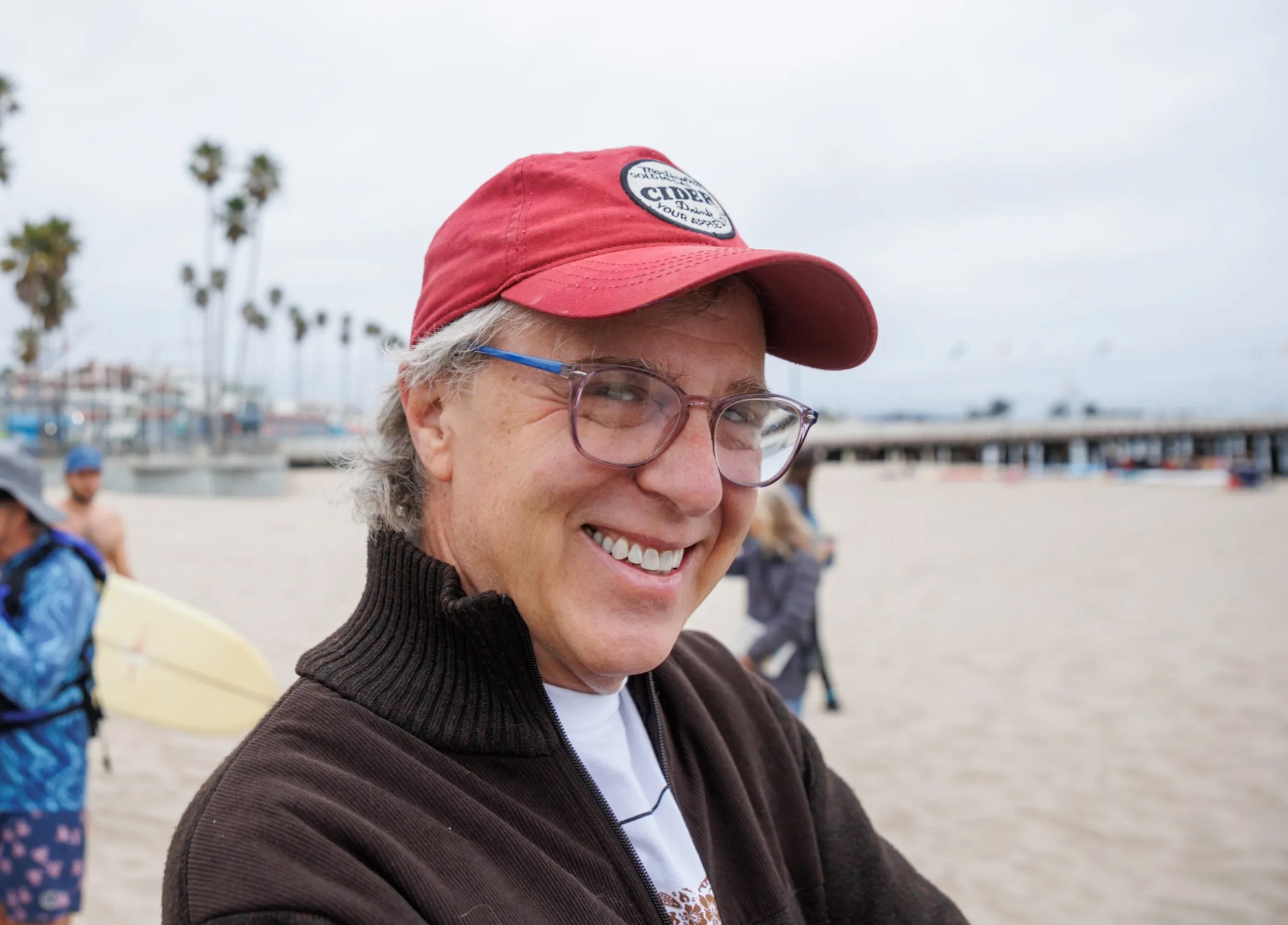
Wallace Baine Exit Interview
Long-time arts and culture journalist for Santa Cruz, Wallace Baine is retiring from his post at Lookout, the online news site, but not before they won the Pulitzer Prize for local journalism. We look back at some of his most exciting interviews with the likes of Randy Newman and Carol Burnett, plus his take on the changes he’s seen over his thirty year tenure covering the cultural life of our community.
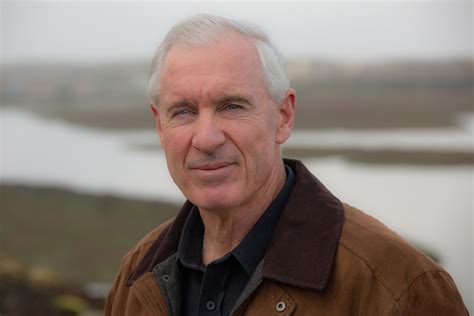
Living with Sharks in the Monterey Bay
Dr. David Ebert is an expert on shark biology with the Moss Landing Marine Laboratory and San Jose State University with the Pacific Shark Research Center. In the wake of the death of triathlete Erika Fox at Lover’s Point in Pacific Grove, sharks are once again in the news. But are they the human killers they’ve been made out to be in the media? What motivates them? Why are some encounters fatal and others survivable? Do those bracelets marketed as shark repellents actually work? How are sharks doing in our Monterey Bay? These are just a few of the questions we explore in this fascinating interview.

PVUSD Board Meeting Live Coverage – 12/22/25
🎙️ FROM THE STREETS | Special Broadcast Hosted by Omar Dieguez on KSQD This Monday’s episode of From the Streets was a powerful and necessary conversation, broadcast live from a special School Board meeting addressing the devastating cuts proposed in our school district. Parents, students, and school board members spoke directly about the impact of eliminating mental health clinicians, school counselors, special education services, and art programs—programs our youth desperately need to survive and thrive. KSQD once again opened the mic and created space for our community to speak their truth, express their pain, and demand accountability. These are not just budget numbers—these are lives, futures, and the well-being of our children. Thank you to every parent, student, educator, and community member who showed up, spoke out, and stood strong. ✊🏽 Our voices matter. Our kids matter.

Last Night a “do-it-yourself” New Years Eve Tradition
Last Night is a do-it-yourself, decentralized, collective, spontaneous, open, public New Year’s Eve celebration in Santa Cruz, California since 2005. Celebrating what we can do as a community when we work together. Sunset on New Year’s Eve every year starting at Pacific & Spruce (behind Ace Hardware), and ending with a street party at Pacific and Cooper! Guests: Stacey Falls has been an active participant in the last night DIY parade for 20 years. Though she is not one of the original founders, she has been invested in keeping it going as a wonderful Santa Cruz cultural phenomenon.Stacey is also a teacher at Santa Cruz High School and has lived in Santa Cruz since 2002. Grant Wilson is a puppet builder, artist-activist & social worker. Has lived in Santa Cruz since 1976 and was active in the First Night parades from 1994 to 2004, & the Last Night DIY Parades for the past 20 years. Chris Krohn is an active and rabid radio listener and programmer. He currently has a show on KSQD called “Chris Krohn, 80 something I have known.” He is a former mayor of Santa Cruz, and a retired educator. Chris was the internship director for 20 years at UC Santa Cruz in the Department of environmental studies. He has attended more than a half dozen DIY New Year’s events. https://www.lastnightdiy.org/
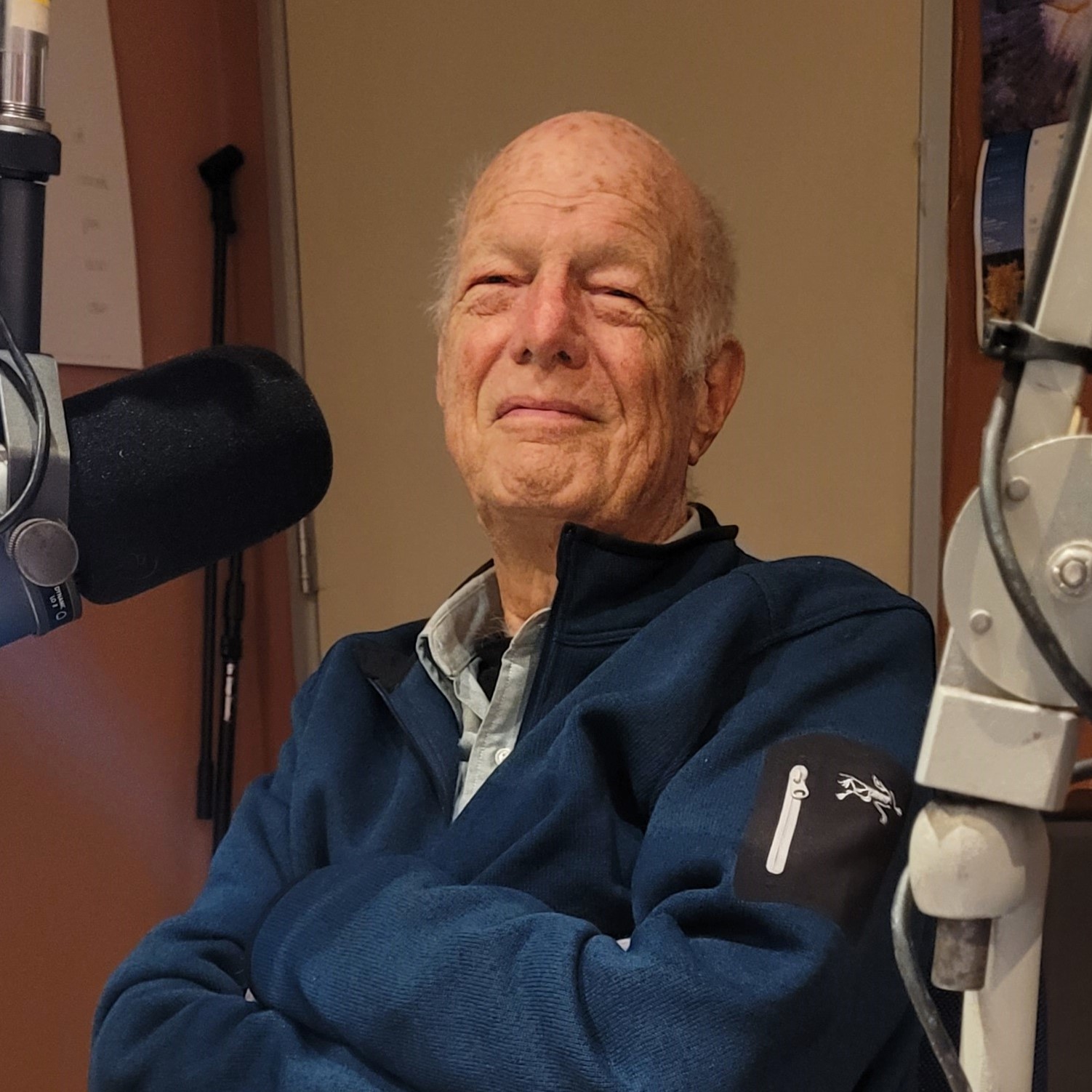
Richard Hodge, retired lawyer and judge, shares stories from courtroom battles, contracts, mediations, and life lessons
When he was a young man of college age, Richard Hodge was attending seminary and thought he was going to become a Methodist minister. As the fates would have it, he instead went on to become a lawyer, who defended some of the most notorious, and politically charged, crime cases in America, including the Oakland 7, the Soledad 3, and Los Siete. He later developed a specialization in entertainment law, and represented a wide range of clients, including Richard Brautigan, Kenny Loggins, the Steve Miller Band, Boz Scaggs, and many others. He eventually became a judge in the Alameda County Superior Court, where he served for 20 years, adjudicating hundreds of cases, including the landmark water rights case Environmental Defense Fund v. East Bay Municipal Utility District. He also served as Justice Pro Tem on the First District Court of Appeals on four occasions. He has lectured extensively before attorney organizations, environmental organizations, and educational institutions, including the Practicing Law Institute, Boalt Hall at UC Berkeley, Hastings Law School, and Golden Gate Law School. Now retired, Richard Hodge lives in Santa Cruz, and shares stories and insights gained from his long legal career.

Critical Conversation on PVUSD Cuts Impacting Student Mental Health
KSQD Community Radio Hosts Critical Conversation on PVUSD Cuts Impacting Student Mental Health On Talk of the Bay From the Streets, we aired a one-hour program addressing recent cuts within Pajaro Valley Unified School District that have reduced mental health clinicians, counselors, and special education supports. Hosted by community advocate Omar Eduardo Dieguez, the program features: Brandon Diniz, President of the Pajaro Valley Federation of Teachers Gabe Medina, PVUSD Trustee and Agenda Setting Committee member Mike Christensen, PVUSD parent The discussion centers student safety, transparency, environmental justice, and the urgent need for community-driven solutions.
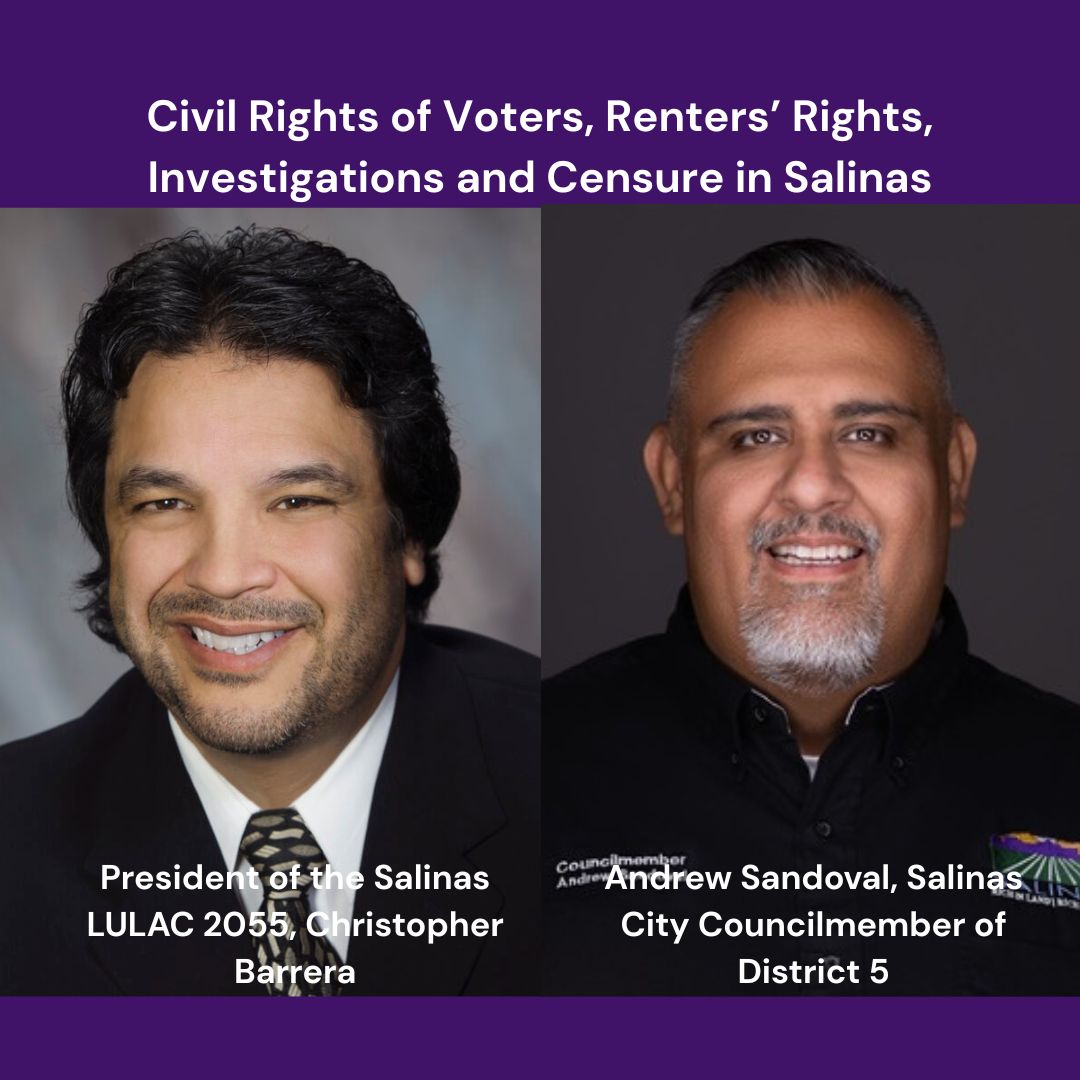
Civil Rights of Voters, Renters’ Rights, Investigations and Censure in Salinas – Talk of the Bay
On Talk of the Bay host Meilin Obinata, welcomes Christopher Barrera of the Salinas chapter of the League of United Latin American Citizens known as LULAC and Salinas City Councilmember Andrew Sandoval. Barrera discusses the civil rights concerns LULAC has regarding the Monterey County District Attorney’s Office investigations into the signature gathering process of the Protect Salinas Renters campaign, while Sandoval, a major supporter of the Protect Salinas Renters Coalition, shares his experience of facing a censure motion from his colleagues which has ultimately been postponed.

46th Annual Eco-Farm Conference – Talk Of The Bay
46th Annual Eco-Farm Conference at Asilomar (Jan 21-24) – Talk of The Bay On Tuesday, Dec. 9th, Talk of The Bay host George Cadman spoke with Rebecca North (Executive Director of the Ecological Farming Association) and Ken Foster (co-owner of Terra Nova Ecological Landscaping & permaculture instructor at Cabrillo College) about the upcoming 46th annual Eco-Farm conference which will be held at Asilomar from Jan. 21st to Jan. 24th. EcoFarm is the oldest and largest organic farming conference west of the Mississippi, bringing together more than 1,500 farmers, ranchers, and food system leaders each year. It’s an inspiring gathering dedicated to ecological agriculture, social justice, and building resilient, equitable food systems. Rebecca North is the Executive Director of The Ecological Farming Association, where they lead with purpose, passion and a deep commitment to farmers. New to the nonprofit world, with 20+ years experience working in the produce industry nationwide, Rebecca has a proven track record of building strategic partnerships, growing impact, and driving sustainable change. Mother, queer, gardener, hobby herbalist, straight-edge punk, East Coaster, Spartan racer, and lover of cherries, Rebecca has a masters degree in transnational feminism from SFSU and lives in the Bay Area. Ken Foster – a native of Santa Cruz – was born in the fifties and raised by Quaker parents. He was an apprentice at the UCSC Farm & Garden in 1985, holds an Associate’s degree in Horticulture from Cabrillo College and has taught the Permaculture class at Cabrillo since 2012. Ken is also a landscape contractor, a certified permaculture designer and the founder & co-owner (with his wife Jillian) of Terra Nova Ecological Landscaping since 1988. He lives in Santa Cruz with his wife, their four dogs, chickens, worms and bees at their permaculture demonstration home site. Ken believes that the permaculture ethics “Care for The Earth and Care for the People” are a way of life here on the Central Coast. https://www.eco-farm.org/
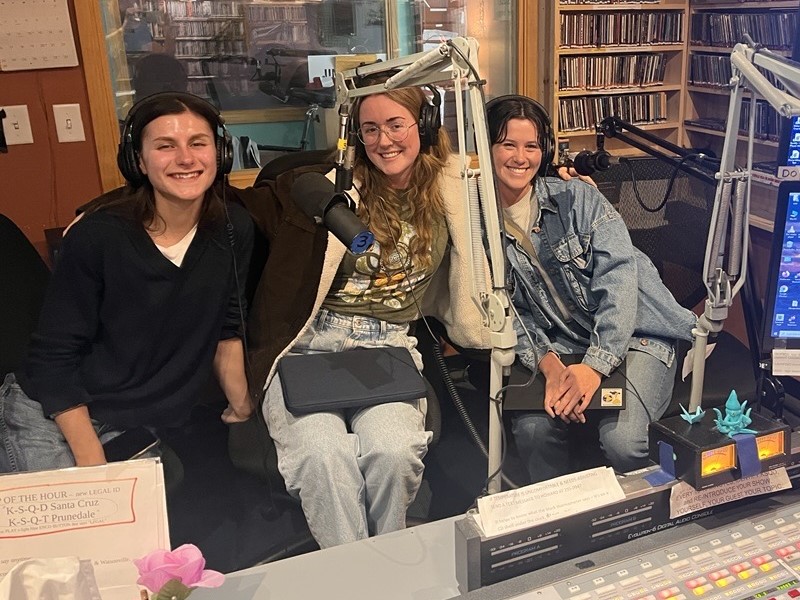
Resilient Central Coast helps local residents and communities prepare for the impacts of global warming
Anjelka Stipanovich, Anna Michel, and Julia Alaimo are the Program Coordinators for the Resilient Central Coast program at Ecology Action. The program is only a few months old. Resilient Central Coast introduces everyday actions and local resources to help you prepare for the unexpected, electrify your home, and build community climate resilience.
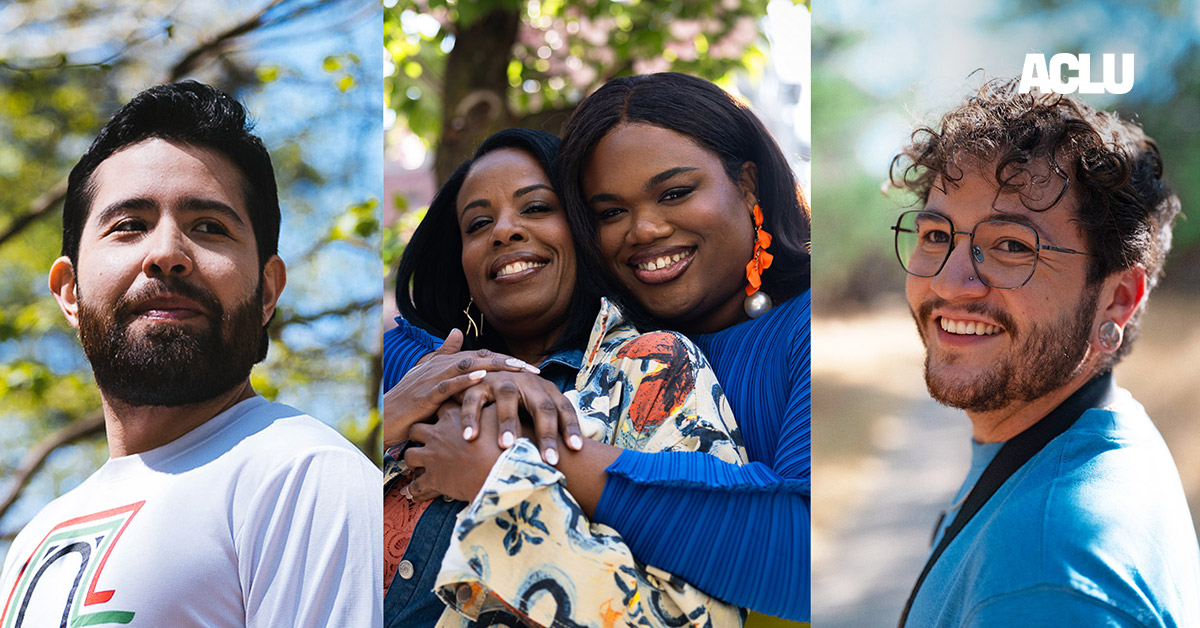
Trump’s Attacks on Trans Rights Have Real Consequences
Hello, I’m Daymia Rousseau, a UCSC Intern reporting for KSQD. The Trump Administration’s attacks on DEI programs have hit especially hard when it comes to access to gender affirming care for trans youth. Regardless of the intense pressure on schools by the Department of education to remove all forms of “gender ideology”, many schools and healthcare settings are challenging this position and moving to protect trans youth. Adam : “There are implicit and explicit impacts that trans youth, and trans young adults, are experiencing right now. The explicit ones…are that Gender affirming care is becoming more difficult to come by if you are a transgender person under the age of 18. Even in our area. ” That’s Adam Spickler. Adam is a trans man, and a member of Cabrillo College’s board of trustees, an elected member of the Santa Cruz Democratic Party, and is currently involved with the Queer Youth Task Force. Given Adam’s credentials,, I asked him how Trump and the GOP’s incentive to target “gender ideology” has impacted the community. Adam “So, if you are a young person in Santa Cruz county, who in the …last 9 months…has realized that your gender identity might require – gender affirming care. For the first time ever, having a conversation with your doctor is pretty scary. And not knowing whether your doctor is affiliated with a healthcare providing agency that offers gender affirming care, you might have less information provided to you. Because healthcare affiliates and healthcare providers, understandably, are scared to get flagged in a larger way, as ‘providing’ gender affirming care. …We’ve watched how the federal government has gone after them, legally, and illegally. Threatening to withhold grant money if they do provide gender affirming care.” So, healthcare providers are hesitant to advertise that they offer gender affirming due to the potential financial risk & political backlash from the federal government – regardless of whether they actually provide it or not; therefore limiting its accessibility. Or, as was the case this August at the Children’s Hospital Los Angeles, preemptive measures may be taken by healthcare providers in the wake of the administration’s demands, regardless of their legality. Difficulty getting a passport that matches one’s identity and reducing health access are two explicit threats, but equally concerning are the attempts to erase trans identities. Again, Adam Spickler. Adam…But the implicit messages that are part of, and go beyond those two things, are the ways in which permission is being given. At best, to be dismissive in acknowledging trans identities. And, at worst, being violent… that is on the rise.” Adam’s comments made me especially curious about the ways in which trans youth and elders are able to circumvent these changes. Being a prominent trans figure in the Santa Cruz community, Adam : “… I have been terrified of the reality of being trans like I never have been before… I have never been more aware than I have been, the last few months, of what it must feel like, all of your life, to be visibly marginalized. …Having such a target on our backs now, from white nationalists…from people who feel emboldened to call transgender people ‘terrorists’ – completely wrong…but to be utilizing that false information to target trans people in a really scary government, at the same time the federal government wants to give credibility to those claims…And it is terrifying in a way I never understood until it was happening to me.” Adam points out that different groups, depending on ethnic identity, may experience these impacts in different ways. This is especially relevant when you consider that DEI programs, of which are under direct attack from the department of education, encompass all these concepts under that umbrella term; intersecting in complicated ways. So how is the current What can we learn
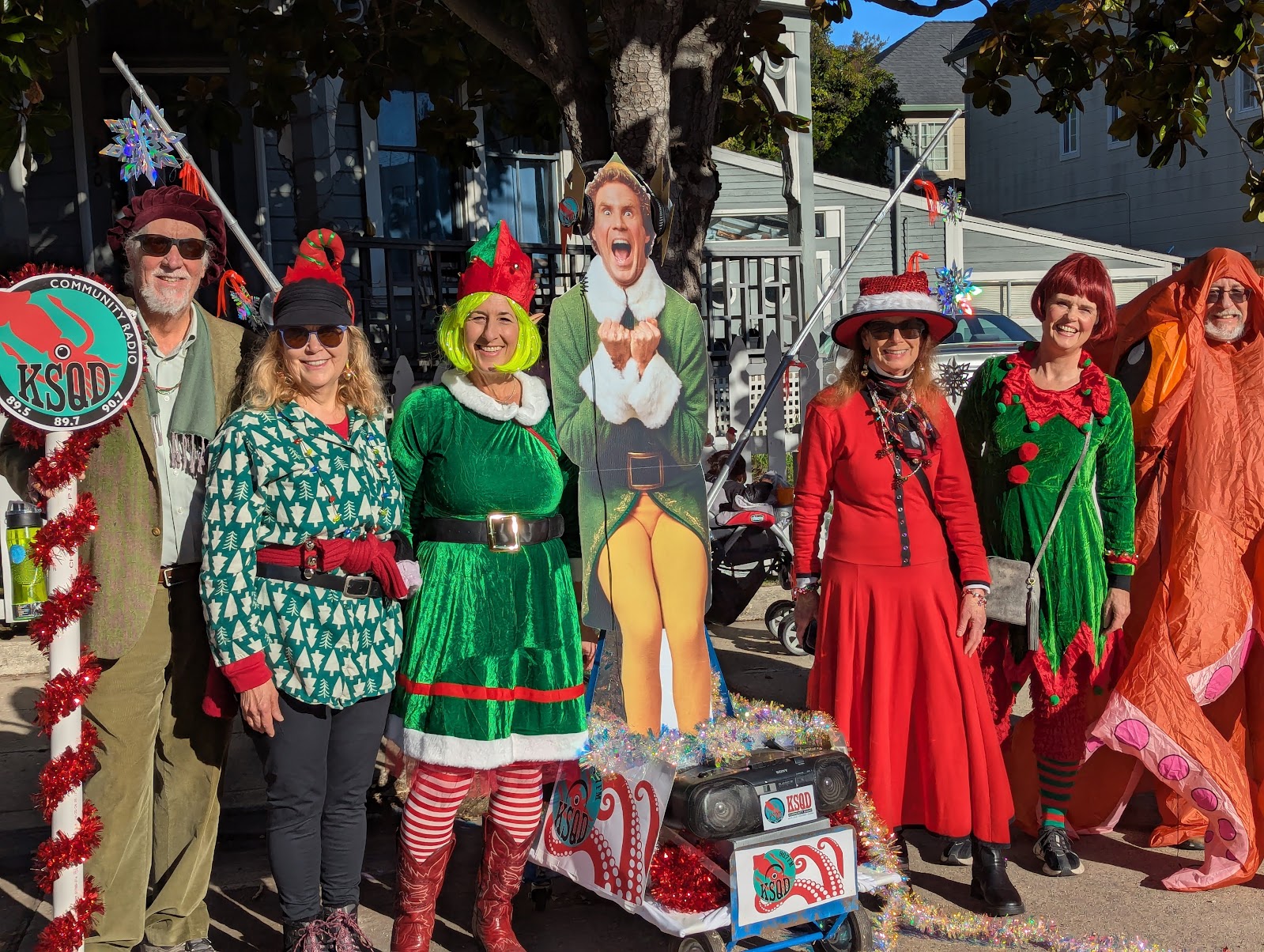
Reflections of Community: the 2025 Santa Cruz Holiday Parade
What does Santa Cruz love about the holiday season? Squid on the Street spoke to parade participants and attendees at the 2025 Holiday Parade in downtown Santa Cruz. It was a joyous celebration of food, song, costumes, and above all, community. Listen to their voices and click here to see a gallery of photos.
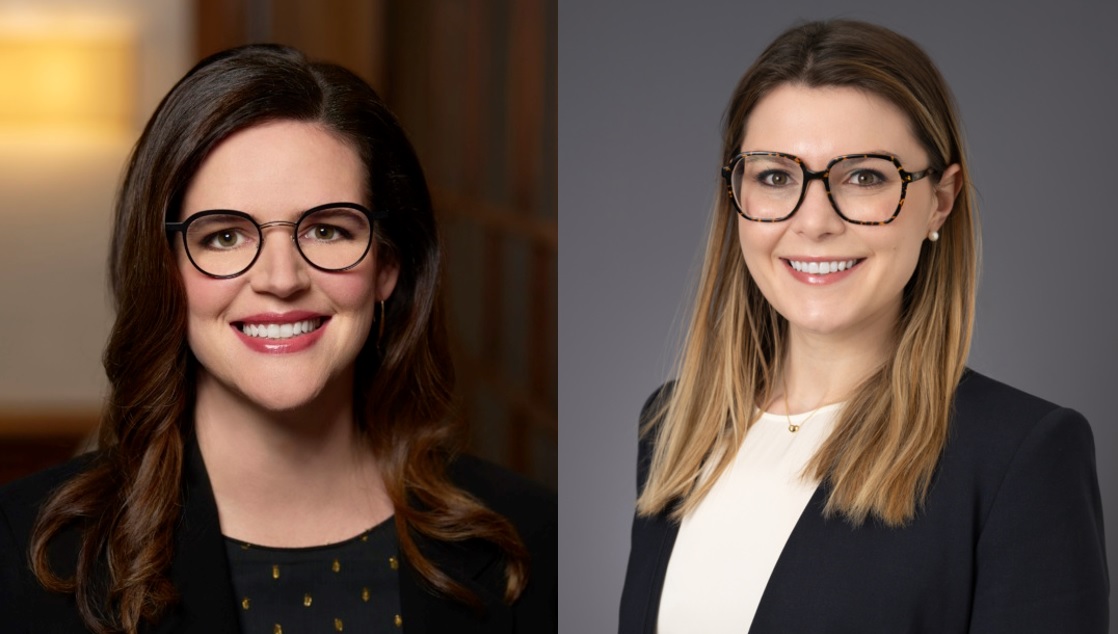
Debunking economic doublespeak – Groundwork Collaborative provides an enlightened narrative
Lindsay Owens, Ph.D., is the Executive Director of the Groundwork Collaborative. Widely known for her ability to communicate pressing economic concepts and arguments, Lindsay has been credited with changing the way we understand inflation by leading the charge to expose – and articulate – the role of firm pricing power and corporate profiteering in price increases. Her work has been hailed by Jon Stewart as “music to my ears” and consumer advocate Ralph Nader described her as “a burst of new energy in the civic community in Washington, D.C.” Washingtonian Magazine named her one of the “Most Influential People Shaping Policy.” Her opinion pieces have been featured in The New York Times and The Washington Post. She is a frequent commentator for PBS NewsHour, The Beat with Ari Melber, The ReidOut with Joy Reid, The Problem with Jon Stewart, Marketplace, Pod Save America, Bloomberg, Vox, and the New York Times. She is the author of the forthcoming book, GOUGED: The End of a Fair Price in America. Prior to joining Groundwork, Lindsay served as a senior economic policy adviser to Senator Elizabeth Warren, and deputy chief of staff and legislative director to Representatives Keith Ellison and Progressive Caucus Chair Pramila Jayapal. She holds a Ph.D. from Stanford University and a Bachelor’s degree from the University of Pennsylvania. Elizabeth Pancotti is the Managing Director of Policy and Advocacy at Groundwork Collaborative. Prior to Groundwork, Liz advised Sen. Bernie Sanders (I-Vt.) on economic policy and researched economic policy at the Roosevelt Institute, Employ America, and the National Bureau of Economic Research. Her research has been featured in the New York Times, the Washington Post, and the Guardian. Liz has a BS in economics from American University and lives in Washington, D.C.

Mythbusting the Rail and Trail Project of Santa Cruz County
On this episode of Talk of the Bay, with host Meilin Obinata, guests James Weller, a land title expert and Barry Scott a clean energy educator bust the latest myths and misunderstandings regarding the Rail and Trail Project of Santa Cruz County. Our third guest, Debora Fudge, has multiple decades of experience serving on the board of the Sonoma Marin Area Rail Transit (SMART) and as the chair for multiple terms. SMART was able to build a 43 mile passenger (and freight) rail project with a trail out of an existing set of train tracks, a situation extremely similar to that of Santa Cruz County, yet with a larger and more complex project for a fraction of some of the cost estimates for the Santa Cruz County Rail and Trail Project: less than $1B. The opportunity to learn from Fudge was very valuable as it is an excellent point of comparison for our Rail and Trail Project. Fudge mentioned that there are residents of Marin who opposed the SMART project who are also involved with opposing passenger rail in the Santa Cruz County. This was a live broadcast so we took calls from people expressing various views and posing questions for our guests, who shared their expertise and corrected factual inaccuracies callers raised at times. Guests and callers discussed the matter of SMART and the Santa Cruz RTC hiring the same consultant for guidance, at different stages of development of the passenger rail and trail plans. This show also includes recorded audio clips including one from Rod Diridon, the inspiration for Diridon Station in San Jose. Because this show was recorded live on November 17, we’ve added an update at the top of the show, from Barry Scott, to reflect the new proposal from Fred Keeley and Manu Koenig to “Build those stretches of trail on top of the railroad tracks” as the Lookout Santa Cruz November 25th article describes it. This proposal will be part of the agenda for this Thursday’s RTC meeting which the public is welcome to join either in person at the Watsonville City Council Chambers or on Zoom from 9AM to 12PM. We encourage you to stay in touch with the commissioners and drop them a line to share your thoughts at: [email protected]. This is a link to a letter from Mayor Keeley to the Santa Cruz County Regional Transportation Commission 12/01/25: https://www.sccrtc.org/wp-content/uploads/2025/12/Handout-item-26-Partner-Letter.pdf. Christine Barrington did a wonderful series of shows about the Rail and Trail which you can access here: https://ksqd.org/the-true-story-of-santa-cruz-rail-trail/

The Power of Her Voice: Poetry Reading Benefit for Santa Cruz Community Health
For decades Santa Cruz Community Health has faithfully pursued its mission to improve the health of its patients and the community and advocate the feminist goals of social, political, and economic equality. On December 4th the public is invited to enjoy “The Power of Her Voice” featuring Poet Ellen Bass and many others. Join host Christine Barrington interviewing Dena Loijos, Community Health’s Chief Strategy and Impact Officer, along with event lead, Patrice Vecchione, and poet Dion O’Reilly to share why this event is a call to come together in a moment when progress must be defended, and the voices of those impacted must be amplified. This milestone event will honor Community Health’s history, celebrate its achievements, and gaze forward to a future of continued service and advocacy. The evening features a series of Monterey Bay Area poets sharing their voices. Ellen Bass headlines the event, joined by poets Terri Drake, Nancy Fowler, Teri Ketchie, Veronica Kornberg, Jennifer Lagier, Ruth Mota, Dion O’Reilly, Linda Serrato, and Patrice Vecchione, who will read from the anthology Women in a Golden State: California Poets at 60 and Beyond. Thursday, December 4, 2025, 7:00 PM. Temple Beth El: 3055 Porter Gulch Road, Aptos. Tickets are on sale now. To learn more and purchase tickets: https://www.schealthcenters.org/the-power-of-her-voice-a-benefit-poetry-reading-for-scch/ Enjoy an evening of poetry, community, and connection. Light refreshments will be served, and books will be available for purchase at the event. About Santa Cruz Community Health Through the Santa Cruz Women’s Health Center, Santa Cruz Mountain Health Center and our new Live Oak Health Center, Santa Cruz Community Health (a Federally Qualified Health Center) provides comprehensive primary care services in English and Spanish to all ages, genders, ethnicities, abilities and sexual orientation, regardless of their ability to pay. SCCH’s health centers serve over 13,000 patients through a dedicated staff of medical providers, nurses, licensed clinical social workers, health educators, and administrative personnel. Since its founding, SCCH has remained committed to health care as a human right and has continuously worked to advocate for social, political, and economic equality. Today, that mission is under a renewed threat. Across the country, efforts to undermine access to essential primary health care and weaken critical health protections continue to escalate. These dangerous shifts put lifesaving care at risk and compound the financial burdens facing community health centers that provide vital services for underserved communities.
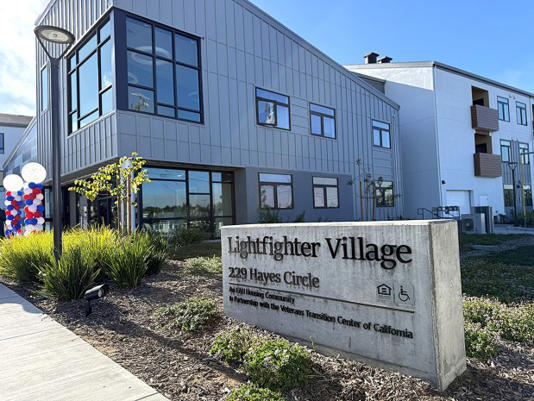
Homeless Veterans in Marina Find Home at Lightfighter Village
In this podcast we hear from Welton Jordan, chief real estate development officer with EAH, about a new housing project for veterans at the former Fort Ord military base in Marina. Lightfighter Village will house 71 homeless veterans. It has wrap around services for residents needing help with health, job training, or economic issues. It may surprise people that so many people (estimated 400 in Monterey County alone) who served our country experience homelessness, but it’s a sad fact. Now, Monterey County veterans without homes will have supportive housing, thanks to the new Lightfighter Village complex which had its grand opening last week.

Coastal Lawmakers Speak Out on Oil Drilling Leases
On Thursday, November 20th, Rep. Jimmy Panetta joined a virtual press call with Rep. Jared Huffman (D-Calif.), Ranking Member of the House Natural Resources Committee, and U.S. Senator Alex Padilla (D-Calif.), a member of the Senate Energy and Natural Resources Committee, and other Congressional Democrats to respond to the Trump administration’s newly released five-year offshore leasing plan which includes 2 lease sales off the Central Coast. KSQD was there to capture the Q and A segment. In attendance were: Rep. Jimmy Panetta (D-Calif.) Rep. Jared Huffman (D-Calif.), Ranking Member of the Natural Resources Committee Sen. Alex Padilla (D-Calif.) Rep. Salud Carbajal (D-Calif.) Rep. Mike Levin (D-Calif.) Rep. Luz Rivas (D-Calif.)
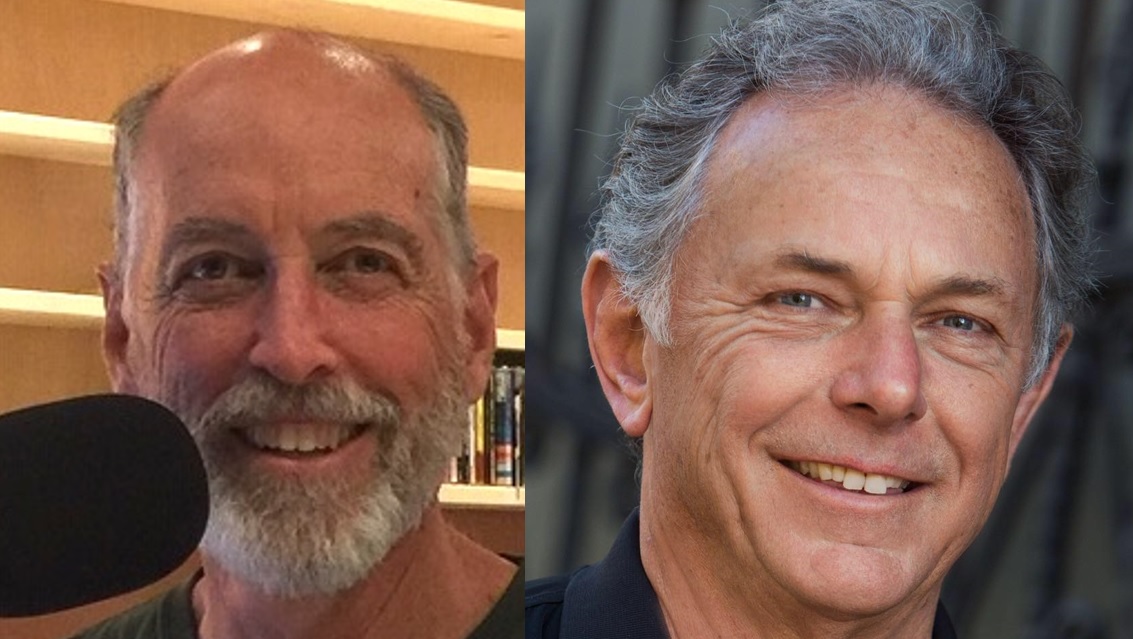
Behind the mic: David Thiermann interviews KSQD Talk of the Bay host Len Beyea
Len Beyea has been a host of KSQD’s Talk of the Bay program since 2019. In this episode, the roles are switched, and Len is interviewed by David Thiermann. Len and Dave have known each other since 1970, when Len took a Swahili class from David at UCSC. David suggested the role reversal, and here is the interview that resulted from that. David Thiermann has worked in Tanzania, Brazil, and Japan. He owned a juice bar & cafe in Santa Cruz in the late 70s and early 80s, where he hosted performers from all over the central coast. He became a professional career consultant in midlife, to help clients dissatisfied with their careers see through their personal and professional inhibitions, and to follow their dreams. “There are many people out there who need to clarify and diversify their career goals,” says Thiermann. “They need a glimpse of their true potential.” Since 1987, Thiermann has used biographical techniques to help some 2000 international clients make career changes and upgrades. His approach to securing his clients’ goals differs from that of other career counselors, by emphasizing support, unconditional acceptance and what he calls The ID Process. “I get to know someone very well. I use biographies, surveys, testing, and gather information for a portfolio,” says Thiermann. This surprisingly personal biographical technique is applauded by Thiermann’s clients – more than half of whom are referrals.