Sustainability, Climate Change, Renewable Energy, Politics, Activism, Biodiversity, Carbon Footprint, Wildlife, Regenerative Agriculture, Circular Economy, Extinction, Net-Zero · One Planet Podcast
Mia Funk
Show overview
Sustainability, Climate Change, Renewable Energy, Politics, Activism, Biodiversity, Carbon Footprint, Wildlife, Regenerative Agriculture, Circular Economy, Extinction, Net-Zero · One Planet Podcast has been publishing since 2021, and across the 5 years since has built a catalogue of 559 episodes, alongside 1 trailer or bonus episode. That works out to roughly 290 hours of audio in total. Releases follow a several-times-a-week cadence, with the show now in its 10th season.
Episodes typically run twenty to thirty-five minutes — most land between 12 min and 48 min — with run-times ranging widely across the catalogue. None of the episodes are flagged explicit by the publisher. It is catalogued as a EN-language Science show.
The show is actively publishing — the most recent episode landed 4 weeks ago, with 14 episodes already out so far this year. The busiest year was 2023, with 143 episodes published. Published by Mia Funk.
From the publisher
The story of our environment may well be the most important story this century. We focus on issues facing people and the planet. Leading environmentalists, organizations, activists, and conservationists discuss meaningful ways to create a better and more sustainable future. Participants include EARTHDAY.ORG, Greenpeace, UNESCO World Heritage Centre, PETA, European Environment Agency, Peter Singer, 350.org, UNESCO Mahatma Gandhi Institute of Education for Peace and Sustainable Development, Citizens’ Climate Lobby, Earth System Governance Project, Forest Stewardship Council, Global Witness, National Council for Climate Change, Sustainable Development and Public Leadership, Marine Stewardship Council, One Tree Planted, Polar Bears International, EarthLife Africa, Shimon Schwarzschild, and GAIA Centre, among others. Interviews conducted by artist, activist, and educator Mia Funk with the participation of students and universities around the world. One Planet Podcast Is part of The Creative Process’ environmental initiative. www.oneplanetpodcast.orgwww.creativeprocess.info INSTAGRAM @creativeprocesspodcast
Latest Episodes
View all 559 episodesA Handbook for Climate Hopefuls with Veteran Environmental Journalist FRED PEARCE
We Are Becoming Earth: Scientists, Writers, Musicians, Environmentalists & Indigenous Voices on the Living World
Why Do We Listen to the Talkers More Than the Builders Saving the Planet? - Physicist, Designer, Investor TOM CHI - Highlights
Climate Capital: Investing in the Tools for a Regenerative Future - TOM CHI, Google X Co-founder, Founding Partner At One Ventures
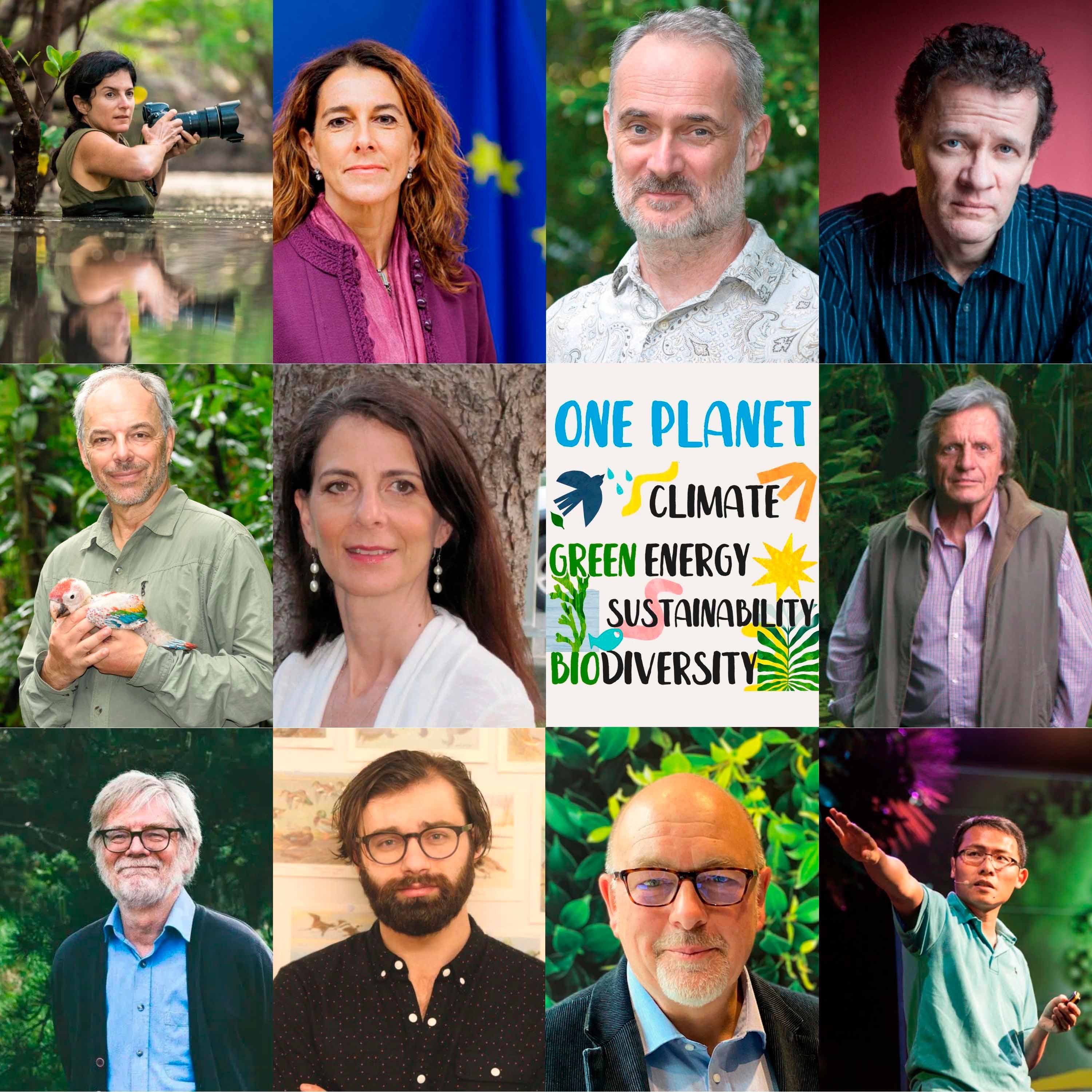
S10 Ep 554Listening to the Living World: Ami Vitale, Yann Martel, Carl Safina, David George Haskell & Others on Climate Change & The Rights of Nature
Today, we hear from writers Yann Martel, Carl Safina and David George Haskell on the practice of listening to the living world. Tom Chi discusses the dangerous volatility of a one-degree shift. Clayton Aldern explores how climate change alters brain health and behavior, while Ami Vitale,Osprey Orielle Lake and Martín Von Hildebrand remind us of the kinship we share with nature. Fred Pearce discusses 40 years as a journalist reporting on climate from around the world, while Richard Black of the environmental think tank Ember and Paula Pinho, European Commission’s Chief Spokesperson, talk about policy, hope and the radical empathy required to protect the planet for future generations.(0:00) Clayton Page Aldern – Finding awe and beauty in the world(0:40) David George Haskell – On consequences of humans tuning out the sounds of the living world(2:11) Yann Martel – How animals ask us to step out of our humanity(3:12) Carl Safina – The interior lives of non-human animals(5:08) Ami Vitale – Environmental collapse and human conflict(6:37) Martín von Hildebrand – Indigenous views of nature(8:00) Richard Black – Transition to clean energy vs. massive fossil fuel subsidies(10:01) Tom Chi – Climate destabilization(11:07) Paula Pinho – Europe’s vision for energy independence(14:04) Osprey Orielle Lake – Māori concept of "I am the river and the river is me”(16:08) Bill Hare – On limiting global warming to 1.5 degrees(17:19) Fred Pearce – Finding hope in nature’s resilienceTo hear more from each guest, listen to their full interviews.Episode Websitewww.creativeprocess.info/pod@creativeprocesspodcast
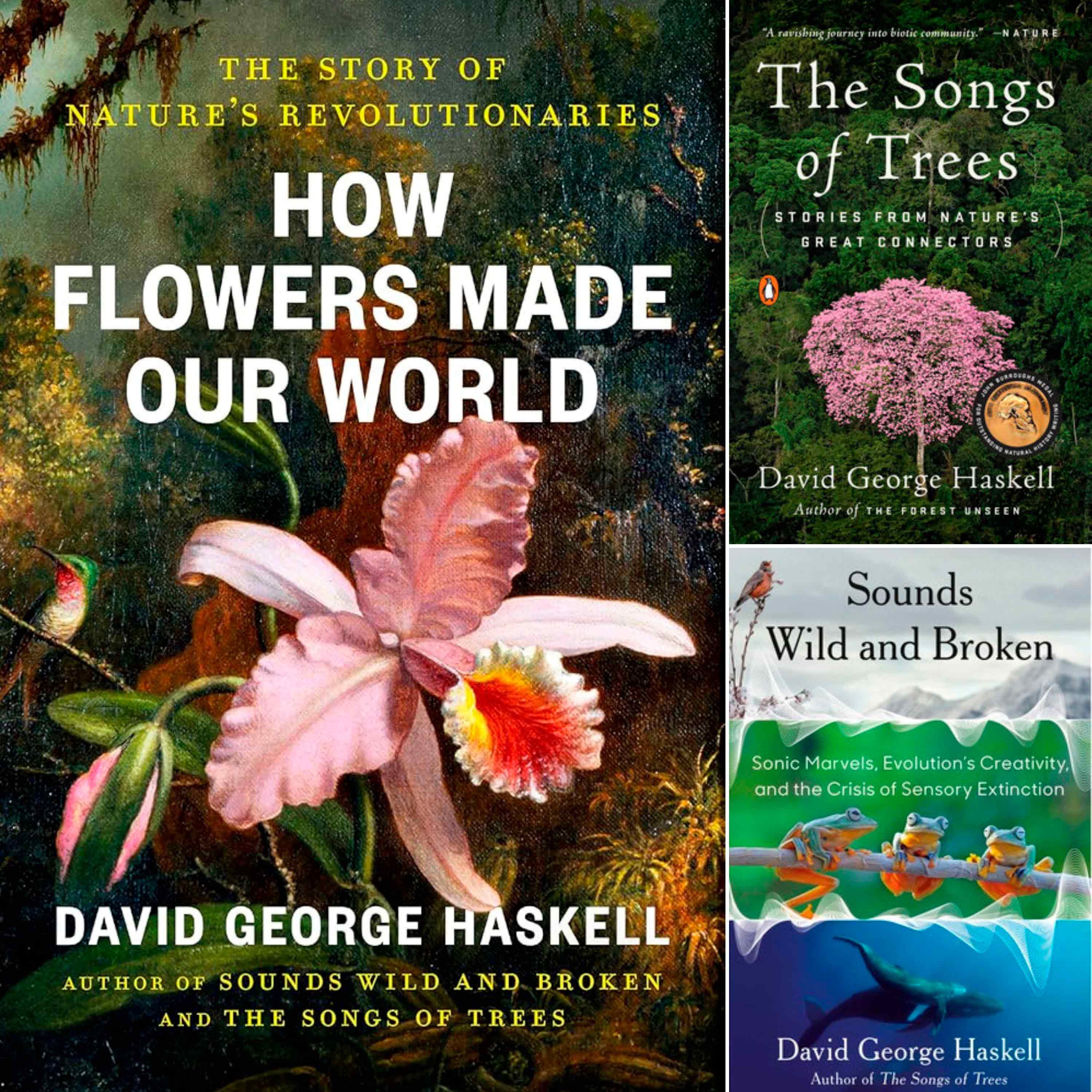
S10 Ep 553Listening to the Living World: Biologist DAVID GEORGE HASKELL on Flowers, Forests & Songs of Nature - Highlights
Step into the deep time of the forest floor, where a single fallen leaf contains the history of the world, and invisible fungal networks hum with ancient conversations. Biologist and acclaimed author David George Haskell reveals a staggering truth: we are completely dependent on the botanical world, and our belief in strict human individuality is a biological illusion.Haskell has spent much of his life training himself to see the universal within the infinitesimally small. He's famously sat for a year in a single square meter of Tennessee's forest, a mandala experience that revealed the deep history of the world through a single fallen leaf. He's a two-time finalist for the Pulitzer Prize for his books The Forest Unseen and Sounds Wild and Broken, and he received the John Burroughs Medal for The Songs of Trees.His work often focuses on what he calls the unwaged labor of the natural world, the complex biological communities that sustain our planet without a monetary ledger. And his latest book is How Flowers Made Our World. In it, he argues that we are essentially grass apes dependent on the ancient innovations of flowering plants for two-thirds of our daily calories. (0:00) How Flowers Made Our World(1:33) Networked Connection is the Foundation of Life(2:00) Contemplating the Small(4:07) Consciousness, Intelligence & Memory in the More-Than-Human-World(4:18) We Are Grass Apes(5:41) Memories of His Childhood in Paris & Wild Orchids(6:34) The Networked Intelligence of Forests(7:45) The Earth in Full Song(8:46) The Practice of Listening(10:11) Escaping the Screen: Real Connections in the Classroom(11:35) The True Cost of AI(12:11) Transforming Ourselves(14:23) Silence Without Expectation(15:32) A Sensory Legacy for the FutureEpisode Websitewww.creativeprocess.info/podInstagram:@creativeprocesspodcast
S10 Ep 552How Flowers Made Our World: DAVID GEORGE HASKELL on Deep Time, Plant Intelligence & Listening to the Living World
What if the defining revolution of Earth's history wasn't led by animals or humans, but by flowers? Are we truly individuals, or are our bodies and minds just walking ecosystems?Our guest today is David George Haskell, a biologist who has spent much of his life training himself to see the universal within the infinitesimally small. He's famously sat for a year in a single square meter of Tennessee's forest, a mandala experience that revealed the deep history of the world through a single fallen leaf. He's a two-time finalist for the Pulitzer Prize for his books The Forest Unseen and Sounds Wild and Broken, and he received the John Burroughs Medal for The Songs of Trees.His work often focuses on what he calls the unwaged labor of the natural world, the complex biological communities that sustain our planet without a monetary ledger. And his latest book is How Flowers Made Our World. In it, he argues that we are essentially grass apes dependent on the ancient innovations of flowering plants for two-thirds of our daily calories.(0:00) How Flowers Made Our WorldThe incredible ancient history of flowers on Earth(4:56) Contemplating the SmallExpanding our world by restricting our gaze(14:30) The Illusion of IndividualityWhy atomism is false and interconnectedness is the foundation of life(26:08) We Are Grass ApesThe evolutionary origins of humans and our dietary dependence on grass(33:32) Memories of His Childhood in Paris & Wild Orchids(38:55) The Networked Intelligence of ForestsHow trees communicate and share resources beneath the soil(44:00) The Earth in Full SongTracing the sonic history of our planet(51:08) The Practice of ListeningWhy tuning in to the natural world is crucial for our survival(1:01:21) Silence Without ExpectationSitting with nature without demanding progress or enlightenment(1:11:01) Transforming OurselvesWhy personal change matters in the fight for the climate(1:15:20) Escaping the ScreenFinding real human-to-human connection away from technology(1:16:16) The True Cost of AIThe devastating impact of data centers on our fossil fuel consumption(1:23:18) A Sensory Legacy for the FutureWhat we must preserve for the generations not yet bornEpisode Websitewww.creativeprocess.info/podInstagram:@creativeprocesspodcast
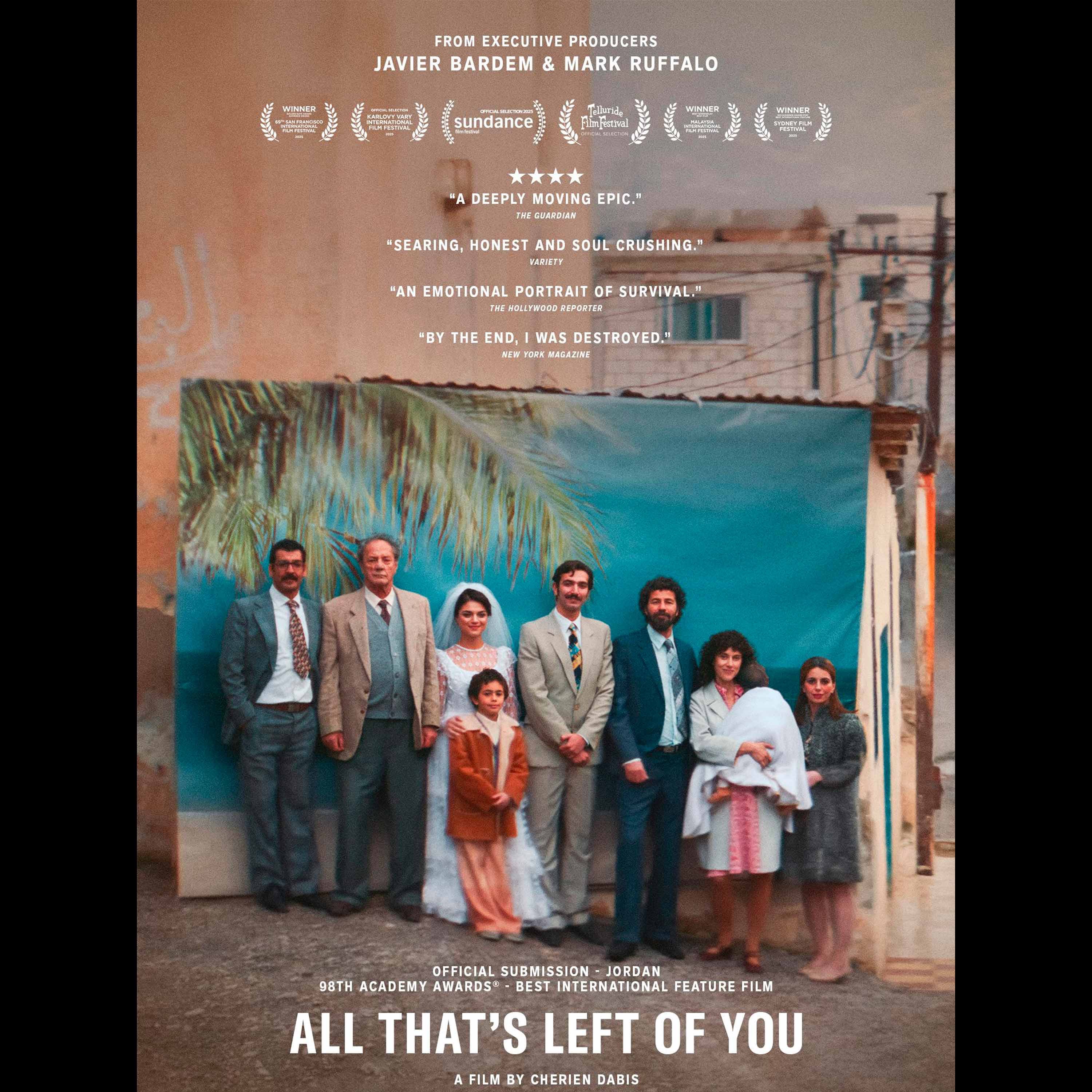
S10 Ep 522The Environmental, Psychological, Emotional Impact of Occupation w/ Actress, Director CHERIEN DABIS
In this special environmental highlights edition, Dabis reflects on the "ecocide" occurring in Gaza—the loss of ancient orange trees, the contamination of 95% of the water supply, and the long-term chemical impact on the soil. She explores how this ecological destruction mirrors the "continuous Nakba" and the inheritance of generational trauma.My guest today is Cherien Dabis. She’s a filmmaker and actress who has spent much of her career trying to fill the silences in the American narrative. In 2022, she became the first Palestinian to receive an Emmy nomination. She has worked on everything from The L Word to Ozark, Only Murders in the Building to the hit Netflix series Mo, always with an eye toward breaking the one-dimensional mold that has historically defined Arab representation in the West. But her latest project is perhaps her most ambitious yet. It’s a film called All That’s Left of You. It follows one Palestinian family across three generations, beginning in 1948 and ending in 2022. It is a story of exile and memory, and it’s Jordan’s official submission for this year’s Academy Awards.(0:00) Ecological Loss in Gaza Dabis reflects on the devastating environmental impact of the conflict, from the destruction of ecosystems and food supplies to the severe contamination of water and soil(2:14) The Inheritance of Trauma An exploration of how the Nakba remains a collective, living trauma passed down through generations, shaping Palestinian identity regardless of direct lineage(4:01) Inherited Trauma: Identity And History The passage of trauma requires a multi-generational lens to truly understand how history and political events shape a people's humanity(4:24) The Moment Of Activation: Racism In Ohio Experiencing severe racism and death threats during the first Gulf War ignited Dabis's lifelong drive to challenge dangerous media stereotypes through authentic storytelling(6:49) Filming The Nakba: Art Imitating Crisis Evacuating Palestine weeks before shooting forced the crew into a state of crisis, resulting in a film where art and life merged amidst an unfolding tragedy(9:04) The Bakri Acting Dynasty: Collaborative Lineage Collaborating with four generations of the Bakri family—including the late Mohammad Bakri—brought immense authenticity and a real-world family dynamic to the screen(10:37) Previous Films, Television And Craft Directing episodes for acclaimed series like Ozark and Only Murders in the Building(11:28) Psychological Violence: Impact Of Humiliation The film moves beyond physical violence to examine how non-physical harassment and the humiliation of a patriarch leave devastating, permanent relational scars(13:50) Broken Distribution: Industry Gatekeepers Dabis addresses the systemic fear in Hollywood distribution and her decision to form an artist-driven model to bypass traditional gatekeeping(14:39) Truth Seekers: The Next GenerationEpisode Websitewww.creativeprocess.info/podInstagram:@creativeprocesspodcast

S10 Ep 551 The Score: How to Stop Playing Somebody Else's Game with C. THI NGUYEN - Highlights
"To be in the process of making things, to be in the process of talking to people about what things mean. The creative process is actually, I think, the most meaningful part of life, but it's very hard to measure. When we get shoved towards a world that demands easy measurables, it's very hard to optimize away from the creative process and optimize towards things that are more static."On this episode of The Creative Process, philosopher C. Thi Nguyen joins us to discuss his new book, The Score: How to Stop Playing Somebody Else's Game. He unpacks the profound concept of "value capture"—the moment we stop caring about the rich, subtle experiences of life and start obsessing over simplified, external metrics like grades, likes, and screen time.Beyond the trap of quantification, C. Thi Nguyen explores the liberating power of games and art. We discuss how true play requires us to step lightly between different rule sets, the difference between art and craft, and how reclaiming our creative process might just be the ultimate meaning of life.(0:00) THE TRAP OF VALUE CAPTURE How external metrics and scoring systems hijack our personal values and creativity(7:09) THE LOGIC OF QUANTIFICATION Why simple numbers travel well but strip away vital human context, from screen time to grades(11:58) THE MAGIC CIRCLE OF PLAY Understanding the difference between a gamified life and the true, disattached beauty of struggle(14:57) ART, CRAFT, AND METRICS Why taking the hard way leads to genuine creative expression, and how to spot value-laden systems(19:34) THE POLITICS OF MEASUREMENT Questioning the assumption that complex human traits, like IQ or consciousness, can be quantified on a single scale(21:31) THE SPIRIT OF PLAY Using constraints to boost collaborative storytelling and learning to step lightly between different rule worldsEpisode Websitewww.creativeprocess.info/podInstagram:@creativeprocesspodcast

S10 Ep 550 Games that Help Us Reconnect with Nature, Our Sense of Wonder & Play with C. THI NGUYEN
We live in a world obsessed with tracking. From our sleep scores to our social media engagement, invisible systems constantly quantify our worth. But when we replace our deepest values with these thin, easily measurable numbers, we lose a part of our humanity. It is time to step outside the magic circle of optimization and reclaim the unstructured joy of being alive. C. Thi Nguyen is a philosopher whose work gets to the heart of the invisible structures that define modern life. He first established himself as a food writer, exploring the sensory world, before turning his intellectual gaze toward the philosophy of games and agency. He’s the author of Games: Agency As Art.His new book is The Score: How to Stop Playing Somebody Else's Game.He argues that when we simplify our values for the sake of a leaderboard, something inside the human spirit begins to die. In it, he explores a concept called "value capture"—the moment we stop caring about the experience and start obsessing over the metric. He joins me now to discuss how we can lead a playful, spontaneous life without getting lost in the scoring systems of the 21st century.(0:00) THE MEANING OF LIFE IS THE CREATIVE PROCESS Why the most valuable parts of life are impossible to measure(6:46) VALUE CAPTURE DEFINED How external metrics and institutional scoring systems take over our personal values(11:38) THE METRICS WE LIVE BY The invisible toll of screen time, credit scores, and daily optimization(19:44) THE LOGIC OF QUANTIFICATION Why simple numbers travel well but strip away vital human context(24:13) THE MAGIC CIRCLE OF PLAY Understanding the difference between a gamified life and the true beauty of struggle(31:56) ART AS A GAME How taking the hard way and avoiding efficiency leads to genuine creative expression(38:48) THE POLITICS OF TECHNOLOGY Why tools and systems like factories and databases are never truly value-neutral(44:23) AI AND HUMAN CREATIVITY Navigating the tension between automated efficiency and expressive human art(50:44) THE POLITICS OF IQ Questioning the assumption that complex human traits can be measured on a single scale(1:01:12) NARRATIVE SCAFFOLDING How structured constraints in role-playing games can actually boost collaborative storytelling(1:10:00) THE SPIRIT OF PLAY Stepping lightly between different rule worlds and reclaiming our agencyEpisode Websitewww.creativeprocess.info/pod@creativeprocesspodcast

S10 Ep 549Alive in the Merciful Country with Author, Activist, Stand-up Comedian AL KENNEDY - Highlights
"All the advice is, if you start, take a walk. Be somewhere beautiful, look at something beautiful. Be in an elevated place. Be in a place that's larger than you to make yourself and your problems go back to the right scale. I always love nature, and I love ravens. I put a lot of ravens into the novel just because they're adorable. Some places that I love are New England, London, Essex, Sark and beautiful Colonsay. I was writing mainly during lockdown and unable to go to any of the places I loved, so I went back to them."My guest today is AL Kennedy. She is not only a celebrated novelist but also an essayist, standup comedian, dedicated environmental and anti-nuclear activist, and university lecturer. She advocates strongly for the protection of education as the foundation of a healthy democracy and is one of Britain’s most acclaimed and versatile literary voices, a writer who can inhabit the internal life of a soldier in a POW camp, as she did in her Costa Book Award-winning novel Day, as easily as she can navigate the "professional lying" of a modern civil servant.Her latest novel, Alive in the Merciful Country, takes place during the 2020 lockdown. It tells the story of a primary school teacher who receives a confession from an undercover police officer who infiltrated her life decades earlier. It’s a provocative investigation into state power, the "Spy Cops" scandal and the search for mercy in an age of surveillance. It’s a book about the breakdown of trust. We talk about her life, her activism, and why she believes fiction is the only way to tell the truth when the facts are forbidden and how she balances the truth of her novels with the relief of stand-up comedy.(0:00) Finding Your VoiceAlfred Wolfsohn voice method and the power of being fully expressed(2:30) Reading from Alive in the Merciful CountryExploring hope and resilience in dark times.(6:22) Education and the Foundation of DemocracyThe dangers of dismantling education and how critical thinking protects us from fascism.(10:26) The Spy Cop Scandal and State Surveillance(13:59) Lockdown: A Global Pause and the Inrush of EmpathyThe fleeting moment of unified humanity during the pandemic and how it was ultimately betrayed. (17:34) Writing Without Theft: The Ethics of Character Creation(28:16) AI, Digital Slop, and the Loss of Trust(33:13) Lockdown: A Global Pause and the Inrush of EmpathyThe fleeting moment of unified humanity during the pandemic and how it was ultimately betrayed.(30:03) Nature, Spirituality, and the Merciful CountryFinding healing in the natural world and navigating the future with love and awareness.Episode Websitewww.creativeprocess.info/podInstagram:@creativeprocesspodcast

S10 Ep 548The Climate of Truth: Lockdown Rewilding & Environmental Resistance with Author AL KENNEDY
What happens when the state infiltrates your most intimate relationships? How do we protect the innocence and imagination of children in an increasingly authoritarian world? "If you have love, eventually you're going to win. It's not that people aren't going to die. It's not terrible things aren't going to happen. But if you stay with that and you stay centered in that, you'll get through and you will not have turned into a monster in order to overcome monsters.”My guest today is AL Kennedy. She is one of Britain’s most acclaimed and versatile literary voices, a writer who can inhabit the internal life of a soldier in a POW camp, as she did in her Costa Book Award-winning novel Day, as easily as she can navigate the "professional lying" of a modern civil servant.Her latest novel, Alive in the Merciful Country, takes place during the 2020 lockdown. It tells the story of a primary school teacher who receives a confession from an undercover police officer who infiltrated her life decades earlier. It’s a provocative investigation into state power, the "Spy Cops" scandal and the search for mercy in an age of surveillance. It’s a book about the breakdown of trust. We talk about her life, her activism, and why she believes fiction is the only way to tell the truth when the facts are forbidden and how she balances the truth of her novels with the relief of stand-up comedy.(0:00) Finding Your Voice On the Alfred Wolfsohn voice method and the power of being fully expressed(2:17) Education and the Foundation of Democracy The dangers of dismantling education and how critical thinking protects us from fascism.(5:14) The Myth of Shrinking Attention Spans Challenging the narrative that modern audiences cannot focus, and the importance of engaging storytelling.(8:23) Reading from Alive in the Merciful Country Kennedy shares a passage from her latest novel, exploring hope and resilience in dark times.(17:45) The Spy Cop Scandal and State Surveillance Unpacking the reality of undercover police infiltrating peaceful protests and intimate lives.(22:07) AI, Digital Slop, and the Loss of Trust Reflections on artificial intelligence as an unstable plagiarism machine and its impact on truth.(28:29) The Power of the Powerless: Radical Whimsy How absurdity, humor, and inflatable costumes can disrupt authoritarian mindsets and potential violence.(33:13) Lockdown: A Global Pause and the Inrush of Empathy The fleeting moment of unified humanity during the pandemic and how it was ultimately betrayed.(42:53) Writing Without Theft: The Ethics of Character Creation Kennedy explains her imaginative process and why she refuses to steal details from real people's lives.(1:29:40) Nature, Spirituality, and the Merciful Country Finding healing in the natural world and navigating the future with love and awareness.Episode Websitewww.creativeprocess.info/pod@creativeprocesspodcast

S10 Ep 547Who Are We? What Makes Us Care? Jim Shepard, Neil Patrick Harris, John Patrick Shanley & Artists Share Their Stories
Can curiosity and empathy be taught? How can we expand our sense of solidarity through stories? In this episode, we explore the internal dialogues of artists, actors and writers to ask what it means to step into someone else's shoes.(0:00) Novelist Jim Shepard discusses Literature as a Tool for Emotional Education and Exploring History(2:05) Tony Award-winning Actor Neil Patrick Harris on Being Moved by Theater and its Ability to Bridge Worlds(3:55) Novelist Katie Kitamura on How a Book is Made in Collaboration with the Reader(5:00) Screenwriter, Playwright Laura Eason on Inhabiting the Hearts of Characters Different from Ourselves(6:03) Academy Award-winning Director Sharmeen Obaid-Chinoy on the Art of Visual Storytelling(6:37) Cinematographer, Director Benoit Delhomme on the Freedom of Handheld Cinematography(7:19) Author Etgar Keret on Looking for Humanity through Shared Intention(8:18) Viet Thanh Nguyen – Opposing Power through Expansive Solidarity(9:27) Adam Moss – Author, Fmr. Editor New York magazine on “The Work of Art”(10:29) John Patrick Shanley – Tony & Academy Award-winning Writer, Director on Finding Value in Ordinary Experiences and the Creative Power of Daydreaming(11:56) Pulitzer Prize-winning Journalist Nicholas Kristof on Why Individual Stories are Necessary to Generate ConnectionTo hear more from each guest, listen to their full interviews.Episode Websitewww.creativeprocess.info/podInstagram:@creativeprocesspodcast

S10 Ep 546The Wisdom of Nature: Artists & Scientists on The Beauty & Fragility of Our Planet
In this special edition, we hear from our guests from across the arts and sciences. From composers and poets to forest ecologists and climate envoys, they tell the story of our planet. Moving beyond the data of destruction, we explore the intelligence of nature, the ethics of what we eat, and the empathy required to save our future.MAX RICHTER, Composer, Sleep, The Blue NotebooksCARL SAFINA, Author, Becoming WildADA LIMÓN, 24th US Poet LaureateCYNTHIA DANIELS, Grammy Award-winning Sound Eng.SUZANNE SIMARD, Finding the Mother TreeJOELLE GERGIS, Lead Author, IPCC 6th Assessment RptNOAH WILSON-RICH, CEO, Best Bees CompanyINGRID NEWKIRK, PETA FounderBERTRAND PICCARD, Solar Impulse FoundationDAVID FARRIER, Author, FootprintsKATHLEEN ROGERS, Pres, Earth Day NetworkODED GALOR, Unified Growth TheoryPETER SINGER, PhilosopherGEOFF MULGAN, Another World Is PossibleCLAIRE POTTER, Welcome to the Circular EconomyCHRIS FUNK, Dir. Climate Hazards Car.JENNIFER MORGAN, Special Envoy, International Climate ActionTo hear more from each guest, listen to their full interviews.Episode Website

S9 Ep 545The Musician Who Sings to Animals - PLUMES on Trust & Cross-Species Communication - Highlights
On Music, Trust and Connection with the Animal World“Mostly I’ll play in a minor key, something sad, which I think can work for an animal because they can sense the sadness, and they try to reassure me and comfort me. I chose love songs because I'm convinced they are very intuitive and they can sense what I am trying to say to them, and profess my love in a way. I think there's always a way to connect, and if you're being cautious and don't threaten the animals, something beautiful can happen.”Musician Plumes takes his guitar to the world's most unlikely concert halls—farms, sanctuaries, and wild habitats. A passionate advocate for veganism and animal welfare, we discuss what animals hear, how trust forms, and what music can reveal when it enters a world not made for humans alone.Episode Websitewww.creativeprocess.info/podInstagram:@creativeprocesspodcast

S9 Ep 544Animals & The Healing Power of Music with Musician PLUMES
How is music a pathway to understanding animals?Musician Plumes takes his guitar to the world's most unlikely concert halls—farms, sanctuaries, and wild habitats. A passionate advocate for veganism and animal welfare, we discuss what animals hear, how trust forms, and what music can reveal when it enters a world not made for humans alone.“Mostly I’ll play in a minor key, something sad, which I think can work for an animal because they can sense the sadness, and they try to reassure me and comfort me. I chose love songs because I'm convinced they are very intuitive and they can sense what I am trying to say to them, and profess my love in a way. I think there's always a way to connect, and if you're being cautious and don't threaten the animals, something beautiful can happen.”Episode Websitewww.creativeprocess.info/podInstagram:@creativeprocesspodcast

S9 Ep 543Speaking Out of Place - DAVID PALUMBO-LIU on Reclaiming Our Political Voices - Highlights
On the urgent need to reclaim our political voices, the forces that silence dissent, and how art and poetry are crucial tools for survivalOur guest today is an activist scholar who believes the classroom is inseparable from the public square. David Palumbo-Liu is the Louise Hewlett Nixon Professor of Comparative Literature at Stanford University and a founding faculty member of Stanford’s Program in Comparative Studies in Race and Ethnicity. But his work has long reached beyond the academy. Through his book, Speaking Out of Place: Getting Our Political Voices Back, and his podcast of the same name, he insists that the great global crises of our time—from escalating wars and democratic failures to environmental collapse—are fundamentally crises of value and voice. His recent work has put him on the front lines of campus activism, challenging institutions, resigning his membership from the MLA, a move that highlights the ethical cost of speaking truth to power. We’ll talk about what he calls the "carceral logic" of the modern university, why art and poetry are crucial tools for survival in times of war, and what he tells his students about preparing for a future defined by uncertainty. His perspective is rooted in literature, but his urgency is all about the world we live in now. We will discuss the forces that silence dissent, the "imperial logic" of AI, and what it means to be a moral, active citizen when the systems we rely on are failing.“There is a dispute about what the American Dream is or how it would play out in different circumstances. The American dream has essentially been narrowed into a white Christian nationalist notion of things so that everything that falls outside what they imagine that to be is not only undesirable, but should be the subject of extermination, deportation, and detention. I am heartened by the fact that more of our 'better angels' are emerging with a more capacious and expansive notion of what the American dream could be.”Episode Websitewww.creativeprocess.info/podInstagram:@creativeprocesspodcast

S9 Ep 542Reclaiming the American Dream with DAVID PALUMBO-LIU – Stanford Professor, Author & Host, Speaking Out of Place
On the urgent need to reclaim our political voices, the forces that silence dissent, and how art and poetry are crucial tools for survival“There is a dispute about what the American Dream is or how it would play out in different circumstances. The American dream has essentially been narrowed into a white Christian nationalist notion of things so that everything that falls outside what they imagine that to be is not only undesirable, but should be the subject of extermination, deportation, and detention. I am heartened by the fact that more of our 'better angels' are emerging with a more capacious and expansive notion of what the American dream could be.”Our guest today is an activist scholar who believes the classroom is inseparable from the public square. David Palumbo-Liu is the Louise Hewlett Nixon Professor of Comparative Literature at Stanford University and a founding faculty member of Stanford’s Program in Comparative Studies in Race and Ethnicity. But his work has long reached beyond the academy. Through his book, Speaking Out of Place: Getting Our Political Voices Back, and his podcast of the same name, he insists that the great global crises of our time—from escalating wars and democratic failures to environmental collapse—are fundamentally crises of value and voice.His recent work has put him on the front lines of campus activism, challenging institutions, resigning his membership from the MLA, a move that highlights the ethical cost of speaking truth to power. We’ll talk about what he calls the "carceral logic" of the modern university, why art and poetry are crucial tools for survival in times of war, and what he tells his students about preparing for a future defined by uncertainty. His perspective is rooted in literature, but his urgency is all about the world we live in now. We will discuss the forces that silence dissent, the "imperial logic" of AI, and what it means to be a moral, active citizen when the systems we rely on are failing.Episode Websitewww.creativeprocess.info/podInstagram:@creativeprocesspodcast

S9 Ep 541In the Presence of the DALAI LAMA - Doc. Director of WISDOM OF HAPPINESS Discusses her Path to Joy - Highlights
“I can change my mind. I can reduce anger, hatred. Nothing to do with religion. All religions carry the message of love, loving kindness, and tolerance. With different views, there is a possibility to synthesize new ideas. If majority of the world leaders become female, world become safer. I feel that. Compassion is the key factor. Non-violence, compassion and self-confidence, these are key factors for happy individual, happy community, peaceful world. This century should be century of compassion, century of peace. No more bloodshed. We should develop a big “we,” rather than “we” or “they.” With these wings, you can fly.” -DALAI LAMAFor decades, the Dalai Lama has been a global symbol of peace, compassion, and resilience, a spiritual leader living in exile from his home in Tibet. But how do you capture the essence of his wisdom—the kind that can truly change a life—in a way that feels intimate and personal? My guest today, documentary filmmaker Barbara Miller, has managed to do just that in her new film, Wisdom of Happiness. It’s a beautiful film that feels less like a documentary and more like a private, heart-to-heart conversation, where he invites us into his thoughts and shares practical steps for finding inner peace in a chaotic world. She's dealt with anti-globalization, domestic violence, and the fight for female pleasure in her previous works. We’ll talk about how she shifted from exposing systemic pain to focusing on radical hope and her collaboration with Executive Producer Richard Gere and Manuel Bauer, the Dalai Lama’s personal photographer for the last thirty-five years, who made his cinematography debut with this film. She shares what the Dalai Lama taught her about living in harmony with our body, nature, and the world.Episode Website www.creativeprocess.info/podInstagram:@creativeprocesspodcast

S9 Ep 540WISDOM OF HAPPINESS - Heart-to-Heart w/ DALAI LAMA - Conversation w/ Director Barbara Miller
“ Everybody wants happiness, joyfulness, peaceful world. Our 21st century will not be easy century. Fear, anger, hatred. In our mind we created distinctions. Different nationality, different color, different religion. Strong concept of “we” and “they”. Brothers and sisters of this small planet, we are same human beings. Meanwhile, global warming is a serious problem. Destruction of this planet is actually destruction of yourself. Our common responsibility should be work together, to save our world. We all have this marvelous human brain. The problem is, when negative emotions develop, our whole mind is taken over. So, we must deal with emotions.I can change my mind. I can reduce anger, hatred. Nothing to do with religion. All religions carry the message of love, loving kindness, and tolerance. With different views, there is a possibility to synthesize new ideas. If majority of the world leaders become female, world become safer. I feel that. Compassion is the key factor. Non-violence, compassion and self-confidence, these are key factors for happy individual, happy community, peaceful world. This century should be century of compassion, century of peace. No more bloodshed. We should develop a big “we,” rather than “we” or “they.” With these wings, you can fly.” -DALAI LAMAFor decades, the Dalai Lama has been a global symbol of peace, compassion, and resilience, a spiritual leader living in exile from his home in Tibet. But how do you capture the essence of his wisdom—the kind that can truly change a life—in a way that feels intimate and personal? My guest today, documentary filmmaker Barbara Miller, has managed to do just that in her new film, Wisdom of Happiness. It’s a beautiful film that feels less like a documentary and more like a private, heart-to-heart conversation, where he invites us into his thoughts and shares practical steps for finding inner peace in a chaotic world. She's dealt with anti-globalization, domestic violence, and the fight for female pleasure in her previous works. We’ll talk about how she shifted from exposing systemic pain to focusing on radical hope and her collaboration with Executive Producer Richard Gere and Manuel Bauer, the Dalai Lama’s personal photographer for the last thirty-five years, who made his cinematography debut with this film. She shares what the Dalai Lama taught her about living in harmony with our body, nature, and the world.Episode Website www.creativeprocess.info/podInstagram:@creativeprocesspodcast