Show overview
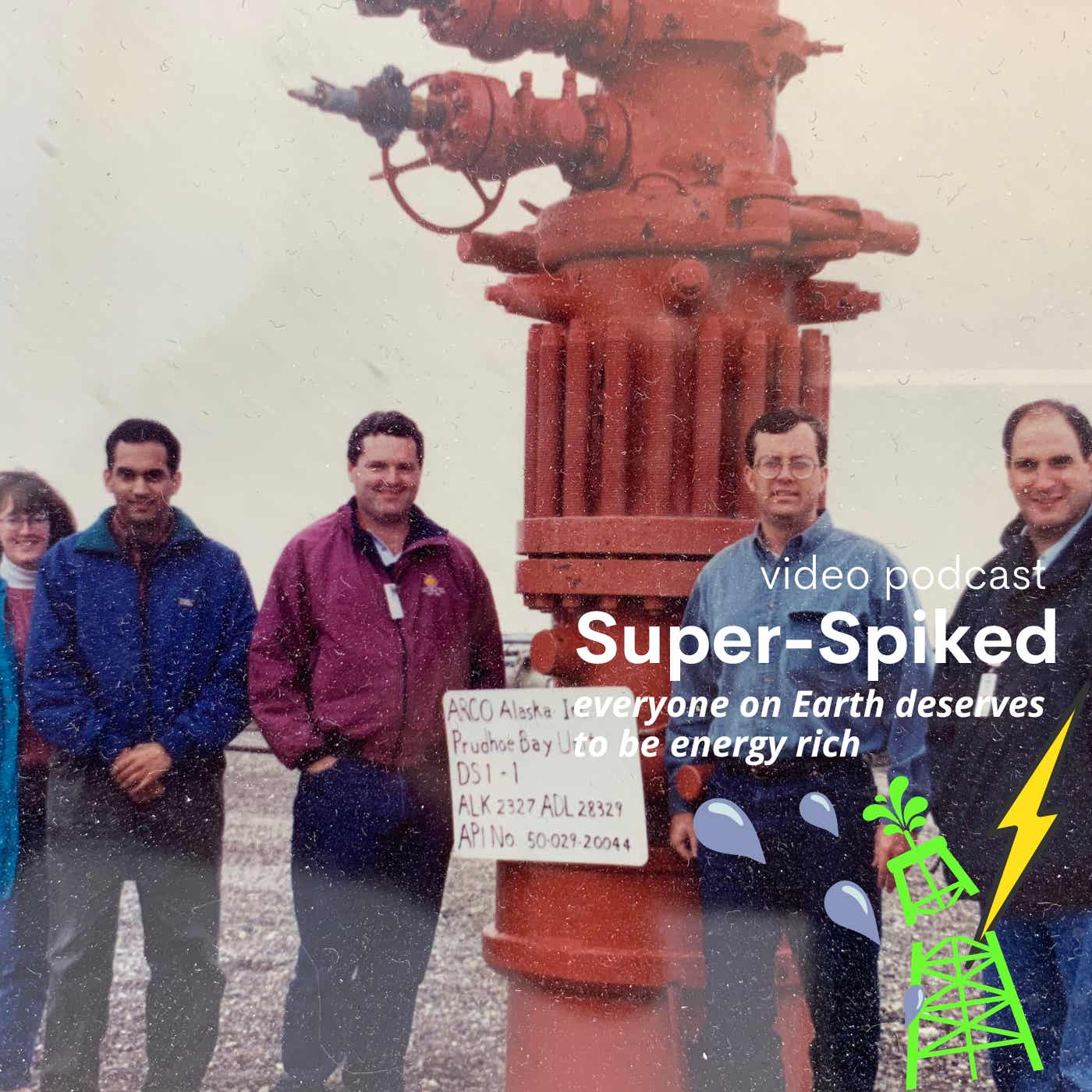
Super-Spiked Podcast has been publishing since 2021, and across the 5 years since has built a catalogue of 104 episodes. That works out to roughly 40 hours of audio in total. Releases follow a fortnightly cadence.
Episodes typically run twenty to thirty-five minutes — most land between 18 min and 27 min — though episode length varies meaningfully from one episode to the next. None of the episodes are flagged explicit by the publisher. It is catalogued as a EN-language Business show.
The show is actively publishing — the most recent episode landed 6 days ago, with 14 episodes already out so far this year. The busiest year was 2025, with 31 episodes published. Published by Arjun Murti.
From the publisher
Super-Spiked Podcast focuses on the mission of everyone on Earth someday becoming energy rich and what that would mean for corporate strategy and energy & environmental policy, markets and commodities arjunmurti.substack.com
Latest Episodes
View all 104 episodesEP100: Immutable Themes and Reframing Macro Scenarios
EP99: Long-Takes: Iran, UAE & OPEC, Canada
Energy Tech, Convergence, and the Hyperscalers
EP98: A New Era of Geopolitical Super Vol
EP97: Peace Sells, We Are Buying

EP96: CERAWeek 2026 Takeaways
WATCH the video on Substack by clicking the play button above or on YouTube (here).STREAM audio only on Apple Podcasts (here), Spotify (here), or your favorite podcast player app.DOWNLOAD a pdf of a lightly edited transcript using the blue Download button below. There is no power point slide deck this week.We spent the past week in Houston at the always great CERAWeek conference hosted by S&P Global. On behalf of all my colleagues at Veriten, a big thank you to Dan Yergin and the entire S&P Global team for putting on a great event. CERAWeek 2026 came amidst what is now week four of the War in Iran and the continued de facto closure of the Strait of Hormuz. We are recording this late on Wednesday, March 25 and as always hope that by the time this is released on Saturday morning, the Strait will have reopened to normal flows and the war ended. Its ongoing closure is simply untenable for the global economy. It is ultimately not good for energy companies, which is our focus area, even if current oil and gas pricing is elevated. A quick end to the war and the reopening of the Strait is the best-case scenario for energy companies everywhere.This week we’ll provide some takeaways from CERAWeek 2026. We will bucket our takeaways in 3 key themes: (1) Macro outlook and scenarios; (2) The day after the war ends, what comes next for energy companies? (3) What unexpected changes will come from this crisis?Our current plan is to not publish Super-Spiked over Easter/Passover weekend. We hope everyone is able to take some time off.Subscribe to Super-Spiked to receive all content. Also available at https://veriten.com.📜 Credits* Intro & Outro music: Wolf Hoffman: Concerto for 2 Cellos in G Minor, Rv 531: I. Allegro Moderato.* This episode of Super-Spiked Videopods was edited and produced by Veriten Productions.⚖️DisclaimerI certify that these are my personal, strongly held views at the time of this post. My views are my own and not attributable to any affiliation, past or present. This is not an investment newsletter and there is no financial advice explicitly or implicitly provided here. My views can and will change in the future as warranted by updated analyses and developments. Some of my comments are made in jest for entertainment purposes; I sincerely mean no offense to anyone that takes issue. This is a public episode. If you would like to discuss this with other subscribers or get access to bonus episodes, visit arjunmurti.substack.com

EP95: Q&A on Long-Term Impacts of War in Iran
WATCH the video on Substack by clicking the play button above or on YouTube (here).STREAM audio only on Apple Podcasts (here), Spotify (here), or your favorite podcast player app.DOWNLOAD a pdf of a lightly edited transcript and the slide deck using the blue Download buttons below.We recorded this video podcast on Wednesday, March 18. This week we address five questions that have arisen regarding our views on the potential long-term impacts of the war in Iran.* Does our Super-Spike oil demand destruction framework need adjusting for an abrupt geopolitical spike?* What advance warning signs are we watching to assess economic damage and risks to capital markets?* How does Iran impact our view of the traditional energy profitability cycle and terminal value recognition?* Does the war change which regions we prefer for future CAPEX?* How does Iran impact our Power Surge (power super-cycle) view?Subscribe to receive all content. Also available at Veriten.com.SLIDE 3: Super-Spike Framework In A Geopolitical Event?Key points:* Our March 2005 “Super-Spike” framework was used to assess how high oil prices could reach in order to slow oil demand growth to levels of available supply in an environment of structurally strong global GDP growth (BRICs expansion).* We chose “super” to indicate the oil upcycle was multi-year in nature. We chose “spike” to remind ourselves and our clients that inevitably oil would surely rollover as cycle dynamics ensured a future period of oversupply (or under-demand).* At the end of the day, the super-cycle is always one of sector profitability, with oil prices just one (important) component along with costs and capital intensity.Current environment:* The War in Iran and closure of the Strait of Hormuz is not analogous to that 2004-2014 period. This is an acute geopolitical disruption.* Therefore, the framework we used over 2004-2014 has its limitations. Most notably, the sudden, dramatic jump in oil prices could mean that absolute levels do not need to reach the heights implied in the table on the right.* It also suggests that “Super Vol” remains the better framing for energy commodity markets, including crude oil, oil products, and global spot LNG prices.* Be wary of perma bears and perma bulls! For the bears: cycles have to play out. For bulls: it is always a cycle.Exhibit 1: “Super-Spike” oil demand destruction frameworkSource: Bloomberg, EIA, Federal Reserve, Veriten.SLIDE 4: What Advance Warning Signs Are We Watching?* Bull to bear can happen quickly and unexpectedly…July to December 2008 saw WTI drop from over $140/bbl to under $40/bbl.* How can one differentiate between the July 2007 collapse of two Bear Stearns credit funds and the March 2023 issues with Silicon Valley Bank?* So why worry this time? The closure of the Strait of Hormuz is simply intolerable if measured in months rather than weeks. The Age of Drones is a game changer, as we see in Russia-Ukraine.* Fortress balance sheet, understanding controls and contracts, and aiming to not only survive but thrive during turmoil is the goal.SLIDE 5: How Does Iran Impact The Profitability CycleKey points:* It remains our view that traditional energy is firmly within a new profitability super-cycle that began in 2021 and would be expected to last 10+ years.* Structural profitability cycles are inherently long-term in nature, 10-15 years up, 10-15 years down. The prior downcycle ran from a 2010 peak to a 2020 trough.* Within the structural up or down cycles, numerous mini-cycles occur along the way. We believe 2025 marked a “normal” trough following a 2.5 years mini-downcycle.* We rejected “oil glut” arguments that have prevailed since Liberation Day (April 2025). We agree that the closure of the Strait of Hormuz renders impossible a true accounting of who was right—oil glutters or us.Current environment:* We have been surprised by the fact that capital discipline at the sector level has remained intact.* A true, multi-year upcycle would undoubtedly test discipline. But let’s judge it as we go: so far, so good.* The main risk to seeing a “deep trough” (as opposed to normal) would be an extended closure of the Strait and a collapse in the global economy. We take this risk seriously.* The best case scenario for the profitability cycle would be a quick re-opening that ensured limited adverse global GDP impacts.Exhibit 2: Traditional energy sector profitabilitySource: Bloomberg, FactSet, VeritenSLIDE 6: Does The War Change Regional CAPEX Preferences?* There are no absolutes…it is all opportunity specific.* Oil exploration: Algeria vs UK North Sea circa 1991-1994.* Natural gas import infrastructure: New York state (Appalachia) versus Germany (Russia).* Many areas of the Middle East will attract capital irrespective of how this plays out.* Between COVID, Russia-Ukraine, and now Strait of Hormuz, supply chain security will remain ascendent as an issue. Positive for NAM, power, energy source diversification (new and old tech).SLIDE 7: What I

Super-Spiked Videopods (EP94): Strait of Hormuz: Assesssing Impacts on Oil, LNG
For Super-Spiked subscribers that prefer that written posts, we have included a lightly edited transcript of the video (blue download button below) along with a downloadable copy of the slide deck.WATCH the video on Substack by clicking the play button above or on YouTube (here).STREAM audio only on Apple Podcasts (here), Spotify (here), or your favorite podcast player app.DOWNLOAD a pdf of a lightly edited transcript and the slide deck using the blue Download buttons below.We recorded this video podcast on Wednesday, March 11. As we think everyone by now realizes, the Strait Hormuz is a critical bottleneck to not only crude oil exports from the region but also LNG from Qatar. We have no idea how long the current war will last. The longer it goes, the greater the risk of a painful energy crisis materializing. We do not think that fact is lost on anyone that is participating in or observing the conflict.In this kind of very acute situation, an energy crisis would be bad for everyone be it citizens, governments, and even traditional energy companies over the long run as whatever benefit accrues from short term price appreciation would likely be lost from future economic weakness. No reasonable person in and around the energy sector is rooting for war. Even if shipping were to resume in coming days or weeks out of the Straight, we suspect the realization of what has long been considered a “worse case” geopolitical risk for oil markets—and now LNG—will motivate countries to pursue changes that mitigate this risk of future disruptions.This week we have two key messages: (1) we revisit our “Super-Spike” oil demand destruction framework we first rolled out in March 2005 at Goldman Sachs. It was a career call for us. The basic points of our analysis we think stand the test of time. (2) we discuss various diversification opportunities that we think countries will or should take to reduce the risk of future disruptions long after this current crisis has hopefully abated.Subscribe to Super-Spiked to receive all content via email. Also available on https://veriten.com.SLIDE 1: Cover SlideSLIDE 2: Strait of Hormuz: Long-Term Impacts On Oil, LNG* How will it be secured in an age of drones?* Inverse COVID: Refreshing our oil demand destruction framework.* Baseload energy diversification opportunities:* US Natural Gas: Lots of growth, where to invest?* Coal: A base-load domestic fuel, why not an EU comeback?* Nuclear: Back in vogue, but how long to grow again in US/EU?* Considerations: (1) What’s real, what’s hype? (2) Where in value chain to invest? (3) Who do you trust to allocate capital?SLIDE 3: Revisiting Our Oil “Super-Spike” FrameworkKey points:* We used the US since it has sizeable demand and freely floating retail gasoline prices.* Wider economy structurally outperforms gasoline.* But that means a much higher nominal price is required to destroy demand versus a prior cycle.* Gasoline demand is highly inelastic.* Both absolute price and rate of change are relevant.How to read the table/graph:* The graph shows historic gasoline spending (demand x retail price) relative to personal consumer expenditures.* Retail gasoline price equals the crude oil price + refining margin (to turn crude oil into gasoline) + gasoline taxes + “all other” (retail margin + other costs).* The table holds retail margin plus all other as constant and shows sensitivities to varying levels of gasoline spending as a % of PCE and refining margins.Exhibit 1: “Super-Spike” oil demand destruction frameworkSource: Bloomberg, EIA, Veriten.SLIDE 4: US Natural Gas: Lots of Growth, Where to Invest?US natural gas markets have doubled over past 20 years and are on-track to grow substantially over next decade. US natural gas resource is plentiful; infrastructure-enabled access to higher-valued end markets is critical.Exhibit 2: Global demand for US natural gasSource: EIA, Veriten.Exhibit 3: Gas value chain CROCISource: FactSet, VeritenSLIDE 5: Coal: A Baseload Domestic Fuel, EU Comeback?Growth in coal in China has swamped the reduction in EU and US coal use. We see no reason the EU & US could not, at a minimum, reverse the declines seen over the last 25 years. It’s a drop in the bucket! Moving factories from the EU & US to China is net negative for carbon emissions, geopolitical security, and labor markets in the EU and US.Exhibit 4: Size of global power marketsSource: Energy Institute, VeritenExhibit 5: Growth in coal consumptionSource: Energy Institute, VeritenSLIDE 6: Nuclear: Back In Vogue, But How Long To Grow?Nuclear is again recognized as an important baseload fuel that can favorably add to system diversification. China is growing rapidly versus stagnation in the US and decline in EU. What opportunities exist to improve execution in the developed world? What is the viability (vs hype) of advanced technologies to boost growth?Exhibit 6: Nuclear generation by country/regionSource: Energy Institute, Veriten.⚡️On A Personal Note: 21 Years Later…📜 Credi

Super-Spiked Videopods (EP93): Long-Take From The Road: War in Iran
For Super-Spiked subscribers that prefer that written posts, we have included a lightly edited transcript of the video (blue download button below) along with a downloadable copy of the slide deck.WATCH the video on Substack by clicking the play button above or on YouTube (here).STREAM audio only on Apple Podcasts (here), Spotify (here), or your favorite podcast player app.DOWNLOAD a pdf of a lightly edited transcript using the blue Download buttons below.We are coming to you from Houston following my participation earlier this week at the Aspen Institute’s Winter Energy Forum. This week we provide thoughts on Iran and the latest Middle East conflict. As usual, our focus is on what the long-term implications could be for companies and investors. Our ten initial long-term takeaways are as follows: 1 - Super Vol remains our commodity macro mantra. 2 - Middle East turmoil now as relevant to LNG (liquefied natural gas) as crude oil. 3 - Overhyped oil glut call. 4 - Energy source/technology diversification is a must for countries. 5 - Renewables and other new energies will continue to gain traction. 6 - The case for coal. 7- The case for Canada. 8 – Use unexpected free cash flow to reinforce fortress balance sheets. 9 - Undisruptable oil, gas, coal, copper, and critical minerals. 10 - Commerce over chaos and a brighter future for the Middle East. 🔔 4 Ways to Subscribe* All Content: If you subscribe to Super-Spiked via email, you will receive all content to your inbox and it is also all on the Super-Spiked website.* Veriten: You can also subscribe to Super-Spiked content via the Veriten website (here) and receive Veriten’s flagship COBT video podcast.* YouTube channel for video only: You can subscribe directly to the video feed ofSuper-Spiked Videopods on my YouTube channel Super-Spiked by Arjun Murti.* Apple Podcasts, Spotify for audio only. You can subscribe directly to the audio only feed on Apple Podcasts, Spotify or your favorite podcast player app. The podcast is simply the audio for the YouTube videos.📜 Credits* Intro & Outro music: Wolf Hoffman: Concerto for 2 Cellos in G Minor, Rv 531: I. Allegro Moderato.* This episode of Super-Spiked Videopods was edited and produced by Veriten Productions.⚖️DisclaimerI certify that these are my personal, strongly held views at the time of this post. My views are my own and not attributable to any affiliation, past or present. This is not an investment newsletter and there is no financial advice explicitly or implicitly provided here. My views can and will change in the future as warranted by updated analyses and developments. Some of my comments are made in jest for entertainment purposes; I sincerely mean no offense to anyone that takes issue. This is a public episode. If you would like to discuss this with other subscribers or get access to bonus episodes, visit arjunmurti.substack.com

Super-Spiked Videopods (EP92): Long-Takes From The Road: Terminal Value
For Super-Spiked subscribers that prefer that written posts, we have included a lightly edited transcript of the video (blue download button below) along with a downloadable copy of the slide deck.WATCH the video on Substack by clicking the play button above or on YouTube (here).STREAM audio only on Apple Podcasts (here), Spotify (here), or your favorite podcast player app.DOWNLOAD a pdf of a lightly edited transcript using the blue Download buttons below.We would encourage those of you that only listen to or watch the video podcasts to go and read our written post from last week (here), as we plan to be more inclusive of coal, copper, and critical minerals going forward to go along with our analysis and commentary on traditional and new energy and power. The title was “Undirsuptable” and focused on the significant profitability and growth opportunities we see in oil, gas, coal, copper, and critical minerals amidst the A.I. boom and our new era of geopolitical competition.This week we want to address a comment we received last weekend about how we think about terminal value in especially the legacy areas of energy; we will add coal and copper to that list. In a nutshell, that was the point of last week’s post! Here’s the punch line: Yes, we think traditional energy, coal, and copper companies are as a group deserving of terminal value recognition in their share prices especially for the leading companies that have most clearly demonstrated the potential for long-term returns and growth. We see the three key drivers of terminal value recognition as being (1) rising demand for all the raw material inputs to modern life; (2) double-digit full-cycle corporate-level returns on capital; (3) growth and risk taking.🔔 4 Ways to Subscribe* All Content: If you subscribe to Super-Spiked via email, you will receive all content to your inbox and it is also all on the Super-Spiked website.* Veriten: You can also subscribe to Super-Spiked content via the Veriten website (here) and receive Veriten’s flagship COBT video podcast.* YouTube channel for video only: You can subscribe directly to the video feed ofSuper-Spiked Videopods on my YouTube channel Super-Spiked by Arjun Murti.* Apple Podcasts, Spotify for audio only. You can subscribe directly to the audio only feed on Apple Podcasts, Spotify or your favorite podcast player app. The podcast is simply the audio for the YouTube videos.📜 Credits* Intro & Outro music: Wolf Hoffman: Concerto for 2 Cellos in G Minor, Rv 531: I. Allegro Moderato.* This episode of Super-Spiked Videopods was edited and produced by Veriten Productions.⚖️DisclaimerI certify that these are my personal, strongly held views at the time of this post. My views are my own and not attributable to any affiliation, past or present. This is not an investment newsletter and there is no financial advice explicitly or implicitly provided here. My views can and will change in the future as warranted by updated analyses and developments. Some of my comments are made in jest for entertainment purposes; I sincerely mean no offense to anyone that takes issue. This is a public episode. If you would like to discuss this with other subscribers or get access to bonus episodes, visit arjunmurti.substack.com

Super-Spiked Videopods (EP91): Long-Takes From The Road: FAQ on "Take Risk"
For Super-Spiked subscribers that prefer that written posts, we have included a lightly edited transcript of the video (blue download button below) along with a downloadable copy of the slide deck.WATCH the video on Substack by clicking the play button above or on YouTube (here).STREAM audio only on Apple Podcasts (here), Spotify (here), or your favorite podcast player app.DOWNLOAD a pdf of a lightly edited transcript using the blue Download buttons below.We are still in road warrior mode, having only been at our primary residence for 13 of the first 45 days of 2026. Though I have to say, industry events this year in Miami, Whistler, and Cabo will leave many of you not feeling too sorry for us. So this week we have a very quick FAQ on the “take risk” messaging we’ve been using for 2026, and they are all around the theme of how to think about corporate strategy in a world of maturing US shale oil. 🔔 4 Ways to Subscribe* All Content: If you subscribe to Super-Spiked via email, you will receive all content to your inbox and it is also all on the Super-Spiked website. I have been aiming to publish about once a week, usually on Saturday.* Veriten: You can also subscribe to Super-Spiked content via the Veriten website (here) and receive Veriten’s flagship COBT video podcast.* YouTube channel for video only: You can subscribe directly to the video feed ofSuper-Spiked Videopods on my YouTube channel Super-Spiked by Arjun Murti.* Apple Podcasts, Spotify for audio only. You can subscribe directly to the audio only feed on Apple Podcasts, Spotify or your favorite podcast player app. The podcast is simply the audio for the YouTube videos.📜 Credits* Intro & Outro music: Wolf Hoffman: Concerto for 2 Cellos in G Minor, Rv 531: I. Allegro Moderato.* This episode of Super-Spiked Videopods was edited and produced by Veriten Productions.⚖️DisclaimerI certify that these are my personal, strongly held views at the time of this post. My views are my own and not attributable to any affiliation, past or present. This is not an investment newsletter and there is no financial advice explicitly or implicitly provided here. My views can and will change in the future as warranted by updated analyses and developments. Some of my comments are made in jest for entertainment purposes; I sincerely mean no offense to anyone that takes issue. This is a public episode. If you would like to discuss this with other subscribers or get access to bonus episodes, visit arjunmurti.substack.com

Super-Spiked Videopods (EP90): Picture Show: AI to Power to Metals to Oil?
For Super-Spiked subscribers that prefer that written posts, we have included a lightly edited transcript of the video (blue download button below) along with a downloadable copy of the slide deck.WATCH the video on Substack by clicking the play button above or on YouTube (here).STREAM audio only on Apple Podcasts (here), Spotify (here), or your favorite podcast player app.DOWNLOAD a pdf of a lightly edited transcript and the slide deck using the blue Download buttons below.This week we have some fun with Bloomberg pictures we created that highlight the information one can sometimes glean about traditional energy from other commodity markets like copper and other metals and minerals. Through the first half of the 2000s super-cycle, we used to spend a bunch of time looking at copper, steel, and iron ore for hints on what was going on with China, global oil demand, and broader macro conditions. Like oil, those other areas are plays on global GDP growth and infrastructure expansion, CAPEX if you will. Today, we think we are in the early days of another one of those cycles via the combination of AI & digital transformation, expanding energy access, and growing geopolitical competition when it comes to both industrial reshoring and also military. We see each of those trends contributing to a virtuous GDP cycle. In the five pictures we go through today, we show that AI & tech started the trend, which then spread to power markets and most recently to copper and other metals. We think oil markets will be the next to benefit. Our base case view has been that oil is in a bottoming phase characterized by perhaps modest oversupply in 1H2026 but no oil glut, and that the next upcycle takes hold either later this year or 2027. Either way, now is the time for energy companies to be thinking about where they want to take risk in order to drive shareholder value for the decade ahead.🔔 4 Ways to Subscribe* All Content: If you subscribe to Super-Spiked via email, you will receive all content to your inbox and it is also all on the Super-Spiked website. I have been aiming to publish about once a week, usually on Saturday.* Veriten: You can also subscribe to Super-Spiked content via the Veriten website (here) and receive Veriten’s flagship COBT video podcast.* YouTube channel for video only: You can subscribe directly to the video feed ofSuper-Spiked Videopods on my YouTube channel Super-Spiked by Arjun Murti.* Apple Podcasts, Spotify for audio only. You can subscribe directly to the audio only feed on Apple Podcasts, Spotify or your favorite podcast player app. The podcast is simply the audio for the YouTube videos.📜 Credits* Intro & Outro music: Wolf Hoffman: Concerto for 2 Cellos in G Minor, Rv 531: I. Allegro Moderato.* This episode of Super-Spiked Videopods was edited and produced by Veriten Productions.⚖️DisclaimerI certify that these are my personal, strongly held views at the time of this post. My views are my own and not attributable to any affiliation, past or present. This is not an investment newsletter and there is no financial advice explicitly or implicitly provided here. My views can and will change in the future as warranted by updated analyses and developments. Some of my comments are made in jest for entertainment purposes; I sincerely mean no offense to anyone that takes issue. This is a public episode. If you would like to discuss this with other subscribers or get access to bonus episodes, visit arjunmurti.substack.com

Super-Spiked Videopods (EP89): Long-Takes From The Road: Taking Risk
For Super-Spiked subscribers that prefer that written posts, we have included a lightly edited transcript of the video (blue download button below) along with a downloadable copy of the slide deck.WATCH the video on Substack by clicking the play button above or on YouTube (here).STREAM audio only on Apple Podcasts (here), Spotify (here), or your favorite podcast player app.DOWNLOAD a pdf of a lightly edited transcript and the slide deck using the blue Download buttons below.We are just back from nine days on the road across the western U.S. and British Columbia. A key theme we highlighted at both the Goldman Sachs energy conference in Miami earlier this month and at a CIBC dinner panel last week in Whistler was the need for companies to take risk. Three points we discuss in the video podcast: (1) Why the “take risk” messaging now?: (2) The distinction between large-cap and SMID-cap risk taking; and (3) SMID-cap opportunities.🔔 4 Ways to Subscribe* All Content: If you subscribe to Super-Spiked via email, you will receive all content to your inbox and it is also all on the Super-Spiked website. I have been aiming to publish about once a week, usually on Saturday.* Veriten: You can also subscribe to Super-Spiked content via the Veriten website (here) and receive Veriten’s flagship COBT video podcast.* YouTube channel for video only: You can subscribe directly to the video feed ofSuper-Spiked Videopods on my YouTube channel Super-Spiked by Arjun Murti.* Apple Podcasts, Spotify for audio only. You can subscribe directly to the audio only feed on Apple Podcasts, Spotify or your favorite podcast player app. The podcast is simply the audio for the YouTube videos.📜 Credits* Intro & Outro music: Wolf Hoffman: Concerto for 2 Cellos in G Minor, Rv 531: I. Allegro Moderato.* This episode of Super-Spiked Videopods was edited and produced by Veriten Productions.⚖️DisclaimerI certify that these are my personal, strongly held views at the time of this post. My views are my own and not attributable to any affiliation, past or present. This is not an investment newsletter and there is no financial advice explicitly or implicitly provided here. My views can and will change in the future as warranted by updated analyses and developments. Some of my comments are made in jest for entertainment purposes; I sincerely mean no offense to anyone that takes issue. This is a public episode. If you would like to discuss this with other subscribers or get access to bonus episodes, visit arjunmurti.substack.com

Super-Spiked Videopods (EP88): Geopolitical Pragmatism and Crude Oil Markets
For Super-Spiked subscribers that prefer that written posts, we have included a lightly edited transcript of the video (blue download button below) along with a downloadable copy of the slide deck.WATCH the video on Substack by clicking the play button above or on YouTube (here).STREAM audio only on Apple Podcasts (here), Spotify (here), or your favorite podcast player app.DOWNLOAD a pdf of a lightly edited transcript and the slide deck using the blue Download buttons below.2026 kicked off with the dramatic news of the US’s incursion into Venezuela and capture of its president Nicolas Maduro. Protests against the ruling regime in Iran have also captured the world’s attention. We will aim to put those events into the context of our long-term oil macro view, which of course is our focus at Super-Spiked. As a reminder and as a disclaimer, we look at these events through our lens as an energy equity research analyst and a current partner at Veriten. There is no commentary in this video about specific companies.⚡️On A Personal Note: RIP Bob Weir🔔 4 Ways to Subscribe* All Content: If you subscribe to Super-Spiked via email, you will receive all content to your inbox and it is also all on the Super-Spiked website. I have been aiming to publish about once a week, usually on Saturday.Subscribe to Super-Spiked to receive all content via email.* Veriten: You can also subscribe to Super-Spiked content via the Veriten website (here) and receive Veriten’s flagship COBT video podcast.* YouTube channel for video only: You can subscribe directly to the video feed ofSuper-Spiked Videopods on my YouTube channel Super-Spiked by Arjun Murti.* Apple Podcasts, Spotify for audio only. You can subscribe directly to the audio only feed on Apple Podcasts, Spotify or your favorite podcast player app. The podcast is simply the audio for the YouTube videos.📜 Credits* Intro & Outro music: Wolf Hoffman: Concerto for 2 Cellos in G Minor, Rv 531: I. Allegro Moderato.* This episode of Super-Spiked Videopods was edited and produced by Veriten Productions.⚖️DisclaimerI certify that these are my personal, strongly held views at the time of this post. My views are my own and not attributable to any affiliation, past or present. This is not an investment newsletter and there is no financial advice explicitly or implicitly provided here. My views can and will change in the future as warranted by updated analyses and developments. Some of my comments are made in jest for entertainment purposes; I sincerely mean no offense to anyone that takes issue This is a public episode. If you would like to discuss this with other subscribers or get access to bonus episodes, visit arjunmurti.substack.com

Super-Spiked Videopods (EP87): Good Call-Bad Call For 2025 Tactical Questions
For Super-Spiked subscribers that prefer that written posts, we have included a lightly edited transcript of the video (blue download button below) along with a downloadable copy of the slide deck.WATCH the video on Substack by clicking the play button above or on YouTube (here).STREAM audio only on Apple Podcasts (here), Spotify (here), or your favorite podcast player app.DOWNLOAD a pdf of a lightly edited transcript and the slide deck using the blue Download buttons below.Last week’s video podcast was a look back on our Big Themes for 2025 that we highlighted in January (here). We did pretty well with the 3 main themes, but not so good on 4 sub-topics we teased. We will aim to be better targeted on what we highlight for 2026. This week we evaluate how we did on our “Top 10 Tactical Calls” that we published in late January (here). We use a “Good Call” or “Bad Call” framework to assess how we did. Spoiler alert: Overall we did well, but were far from perfect. Finally, we do a broader assessment on how we are feeling about major Super-Spiked themes and topic areas after what has now been 4 years of publishing. What are we proud of, what if anything are we not, and what are we thinking looking ahead. We heard from many of you that appreciated that we did a proper assessment of our calls. Someone even said we were a tough self-grader. It baffles us why everyone doesn’t take this approach. Companies put out targets or promises, Wall Street analysts make calls and publish outlook reports, academia and policy shops do their own version of opinion making. All those groups, in our humble opinion, would benefit from doing their own self-assessment. People like them! It’s popular. It builds credibility and accountability. This will be our final Super-Spiked of 2025. We will return most likely on January 10th. On behalf of everyone associated with Super-Spiked and Veriten, we wish you and your families a Happy Hanukkah, Merry Christmas, Happy New Year, and a great Holiday Season!!!🔔 4 Ways to Subscribe* All Content: If you subscribe to Super-Spiked via email, you will receive all content to your inbox and it is also all on the Super-Spiked website. I have been aiming to publish about once a week, usually on Saturday.Subscribe to Super-Spiked to receive all content via email.* Veriten: You can also subscribe to Super-Spiked content via the Veriten website (here) and receive Veriten’s flagship COBT video podcast.* YouTube channel for video only: You can subscribe directly to the video feed ofSuper-Spiked Videopods on my YouTube channel Super-Spiked by Arjun Murti.* Apple Podcasts, Spotify for audio only. You can subscribe directly to the audio only feed on Apple Podcasts, Spotify or your favorite podcast player app. The podcast is simply the audio for the YouTube videos.📜 Credits* Intro & Outro music: Wolf Hoffman: Concerto for 2 Cellos in G Minor, Rv 531: I. Allegro Moderato.* This episode of Super-Spiked Videopods was edited and produced by Veriten Productions.⚖️DisclaimerI certify that these are my personal, strongly held views at the time of this post. My views are my own and not attributable to any affiliation, past or present. This is not an investment newsletter and there is no financial advice explicitly or implicitly provided here. My views can and will change in the future as warranted by updated analyses and developments. Some of my comments are made in jest for entertainment purposes; I sincerely mean no offense to anyone that takes issue. This is a public episode. If you would like to discuss this with other subscribers or get access to bonus episodes, visit arjunmurti.substack.com

Super-Spiked Videopods (EP86): A Look Back on Our “Big Themes for 2025”
For Super-Spiked subscribers that prefer that written posts, this week we are including for the first time a lightly edited transcript of the video (blue download button below) along with a downloadable copy of the slide deck.WATCH the video on Substack by clicking the play button above or on YouTube (here).STREAM audio only on Apple Podcasts (here), Spotify (here), or your favorite podcast player app.DOWNLOAD a pdf of a lightly edited transcript using blue Download button below.In this week’s video podcast we take a look back at the major themes we highlighted at the start of this year in a written post on January 11, 2025 (here). The 3 major topic areas were (1) energy scenario normalization; (2) power; and (3) how we thought about various energy sources and technologies. We had also teased several sub-themes about crude oil, China, M&A, and US/Canada policy. With nearly a year’s hindsight, we did decently well on the three major topic areas, but left a lot to be desired on the four bonus topics. We believe it is always a good idea with those kind of posts to revisit how things played out. 🔔 4 Ways to Subscribe* All Content: If you subscribe to Super-Spiked via email, you will receive all content to your inbox and it is also all on the Super-Spiked website. I have been aiming to publish about once a week, usually on Saturday.Subscribe to Super-Spiked to receive all content via email.* Veriten: You can also subscribe to Super-Spiked content via the Veriten website (here) and receive Veriten’s flagship COBT video podcast.* YouTube channel for video only: You can subscribe directly to the video feed ofSuper-Spiked Videopods on my YouTube channel Super-Spiked by Arjun Murti.* Apple Podcasts, Spotify for audio only. You can subscribe directly to the audio only feed on Apple Podcasts, Spotify or your favorite podcast player app. The podcast is simply the audio for the YouTube videos.📜 Credits* Intro & Outro music: Wolf Hoffman: Concerto for 2 Cellos in G Minor, Rv 531: I. Allegro Moderato.* This episode of Super-Spiked Videopods was edited and produced by Veriten Productions.⚖️DisclaimerI certify that these are my personal, strongly held views at the time of this post. My views are my own and not attributable to any affiliation, past or present. This is not an investment newsletter and there is no financial advice explicitly or implicitly provided here. My views can and will change in the future as warranted by updated analyses and developments. Some of my comments are made in jest for entertainment purposes; I sincerely mean no offense to anyone that takes issue. This is a public episode. If you would like to discuss this with other subscribers or get access to bonus episodes, visit arjunmurti.substack.com

Super-Spiked Videopods (EP85): Long-Takes From The Road: The Middle East
WATCH the video on Substack by clicking the play button above or on YouTube (here).STREAM audio only on Apple Podcasts (here), Spotify (here), or your favorite podcast player app.We are coming to you this week from the Middle East. We are in the middle of a great trip that has been put together by the Center on Global Energy Policy, where we are an advisory board member. As of this recording, we have spent time in Abu Dhabi, Dubai, and Riyadh, with 2 more stops still to come. We are going to have to keep this video short amidst a packed schedule, so will limit our comments to some quick macro takeaways on (1) oil markets; (2) China’s manufacturing dominance; and (3) other energy sources.🔔 4 Ways to Subscribe* All Content: If you subscribe to Super-Spiked via email, you will receive all content to your inbox and it is also all on the Super-Spiked website. I have been aiming to publish about once a week, usually on Saturday.Subscribe to Super-Spiked to receive all content via email.* Veriten: You can also subscribe to Super-Spiked content via the Veriten website (here) and receive Veriten’s flagship COBT video podcast.* YouTube channel for video only: You can subscribe directly to the video feed ofSuper-Spiked Videopods on my YouTube channel Super-Spiked by Arjun Murti.* Apple Podcasts, Spotify for audio only. You can subscribe directly to the audio only feed on Apple Podcasts, Spotify or your favorite podcast player app. The podcast is simply the audio for the YouTube videos.📜 Credits* Intro & Outro music: Wolf Hoffman: Concerto for 2 Cellos in G Minor, Rv 531: I. Allegro Moderato.* This episode of Super-Spiked Videopods was edited and produced by Veriten Productions. This is a public episode. If you would like to discuss this with other subscribers or get access to bonus episodes, visit arjunmurti.substack.com

Super-Spiked Videopods (EP84): A Virtuous Power Growth Dynamic?
For Super-Spiked subscribers that prefer that written posts, this week we are including for the first time a lightly edited transcript of the video (blue download button below) along with a downloadable copy of the slide deck.WATCH the video on Substack by clicking the play button above or on YouTube (here).STREAM audio only on Apple Podcasts (here), Spotify (here), or your favorite podcast player app.DOWNLOAD a pdf of a lightly edited transcript using blue Download button below.DOWNLOAD a pdf of the slide deck using the blue Download button below.This week we dive into the global macro picture around the power super cycle theme, what we are calling Power Surge! There is a lot of attention especially here in the U.S. about the domestic opportunity set. We share that enthusiasm but view the power super cycle as a global theme as well.Some of the major questions we hope to address either in this video podcast or in future weeks include: Does a power super-cycle imply an acceleration in global GDP growth like we saw 20 years ago with the China/BRICs expansion theme? Will a power super-cycle lift all energy boats or just some? What might be the drivers of different energy sources doing better or worse than expected in the coming decade? And finally what are the best ways for corporates and investors to play the power super-cycle theme? This week we focus on: (1) global trends in power vs oil demand; (2) regional variations in growth. Key messages: (1) the idea that we will have a power super-cycle but plateauing oil demand is non-sensical...both will grow (2) US appears to be joining notable emerging markets as a pro-growth region.🔔 4 Ways to Subscribe* All Content: If you subscribe to Super-Spiked via email, you will receive all content to your inbox and it is also all on the Super-Spiked website. I have been aiming to publish about once a week, usually on Saturday.Subscribe to Super-Spiked to receive all content via email.* Veriten: You can also subscribe to Super-Spiked content via the Veriten website (here) and receive Veriten’s flagship COBT video podcast.* YouTube channel for video only: You can subscribe directly to the video feed ofSuper-Spiked Videopods on my YouTube channel Super-Spiked by Arjun Murti.* Apple Podcasts, Spotify for audio only. You can subscribe directly to the audio only feed on Apple Podcasts, Spotify or your favorite podcast player app. The podcast is simply the audio for the YouTube videos.📜 Credits* Intro & Outro music: Wolf Hoffman: Concerto for 2 Cellos in G Minor, Rv 531: I. Allegro Moderato.* This episode of Super-Spiked Videopods was edited and produced by Veriten Productions.⚖️DisclaimerI certify that these are my personal, strongly held views at the time of this post. My views are my own and not attributable to any affiliation, past or present. This is not an investment newsletter and there is no financial advice explicitly or implicitly provided here. My views can and will change in the future as warranted by updated analyses and developments. Some of my comments are made in jest for entertainment purposes; I sincerely mean no offense to anyone that takes issue. This is a public episode. If you would like to discuss this with other subscribers or get access to bonus episodes, visit arjunmurti.substack.com

Super-Spiked Videopods (EP83): Then and Now: Five Thoughts On Energy Super-Cycles
In last week’s Super-Spiked (here), we wrote about Power being the third super-cycle in our lifetime. In this week’s short video podcast, we wanted to share some thoughts on how the early days of the China-BRICs expansion compares and contrasts with the current AI-driven mania and its impact on power markets. We are calling this “Then and Now” with the aim of trying to take the best lessons from the last super-cycle so we can be better prepared and hopefully do a better job navigating the current one. We have five points to make:(1) Global GDP acceleration coming?Will we see an acceleration in global GDP back above 3.5% and possibly 4% versus the slower 3% or so that we have been seeing in recent years? One of the big things most oil analysts got wrong early in the China/BRICs period was that global GPD was accelerating, in that example led by China but ultimately spilling over to many other parts of the world. Today, we see signs that energy usage in both China and the United States is on-track to be better than many had feared for 2025. That’s not the same thing as saying we are back to boom times like 20+ years ago. But it does bear watching.(2) All commodity areas benefitted from the China/BRICs expansionOil most notably, but natural gas, coal, steel, copper, etc., all had their own period of strong performance. It is our assessment that oil was the most important of the China/BRICs commodities given its size and global criticality. This go round we see oil as merely a beneficiary of a power super cycle, not its driver. And to be clear since some of you have asked, oil markets will benefit from general economic expansion that will come from a Power Surge as well as the increased construction activity from building data centers. We are not arguing for oil-fired power generation per se, though perhaps we do get some of that as well. Diesel generators come to mind.(3) Model out a super-cycle on revenues and earningsFor winning sectors, make an effort to examine what top of cycle conditions can truly look like. As an example, at a time oil prices were around $40/bbl, we ran scenarios as to what $100/bbl oil would like, which is very different than the +/- $10 sensitivities most analysts would run. For some of you, that may not mean much. What we are saying is play-out as best as you can what a multi-year bull market looks like and don’t anchor yourself to what was a different recent past. It is not about placing a 100% probability on that upside coming true, but if the probability is greater than zero, model it as best as you can.(4) Figure out the signposts for peakTry to figure out the signposts for what would truly cause the cycle to peak and then turn. In the China/BRICs area, we sought to model demand destruction pricing which we originally estimated would occur at $105/bbl. That was partly correct. It certainly helped frame the oil price upside. But for oil and gas equities, we did not give adequate consideration to what we now call our “Quadrilateral of Death” which means that peak return on capital for the sector was what mattered most for oil and gas equities, not the raw oil price peak. As we noted in last week’s post, we suspect the Quadrilateral of Death is not the correct analytical framework for most power-oriented sectors. We need to figure out what is, so we can better assess when this super-cycle has truly reached its half-life. We think we have some time to figure this out. (5) Navigating volatilityThe final area to think through is how as an investor or corporate do you want to navigate volatility. A great example was the Deep Seek sell off last December. I am sure there will be many more to come where the first thought from people will be “power theme had a great run, it’s now over, sell the stocks”. My personal style is the buy-and-hold long term approach and trying to figure out the ultimate super-cycle peak. For those of you that are truly good short-term traders, have at it. Everyone else, you’re going to have to decide for yourself. For corporates, the trick is often understanding what the long-term steady state will be and your ability to adapt with the mix of assets and balance sheet that you have if conditions are materially different than expected. An example is that some companies and businesses adapted faster and better to the move from $100/bbl to a sustained post-super-cycle $50-$60/bbl range than did others. This is a public episode. If you would like to discuss this with other subscribers or get access to bonus episodes, visit arjunmurti.substack.com

Super-Spiked Videopods (EP82): Long-Takes From The Road: Power Surge!
WATCH the video on Substack by clicking the play button above or on YouTube (here).STREAM audio only on Apple Podcasts (here), Spotify (here), or your favorite podcast player app.We have just wrapped up an especially heavy 3-week stretch of board, management, and industry meetings. Included have been various meetings in and around the power sector. As someone who has spent his career on the other side of energy--i.e., oil & gas--it has been a lot of fun ramping up on the power side of the business. Historically oil & gas and power have been essentially two completely separate industries, each with their own macro drivers, corporate outlooks, and analyst coverage. And while today many differences of course remain, there are a growing number of areas of convergence. In this short video, we will give a few thoughts from our recent travels that we will expand upon in coming months. There are five points we want to highlight:First, we think energy is in the early days of the 3rd major super-cycle in our lifetime. The first was the Arab Oil Embargo years of the 1970s and the second was the Chia/BRICs expansion of the 2000s. Both were at their core crude oil market events. Geopolitical security was the dominant narrative of the 1970s. Billion-person scale emerging market (EM) demand growth characterized the latter. The current super-cycle marries both drivers but it is power, rather than crude oil, that is at the heart of this era. AI datacenters rightfully get a lot of attention. But aging developed market grids that need new investment is also an important trend. Perhaps most importantly, the substantial unmet energy needs of the other 7 billion people on Earth will arguably be the greatest driver of global power demand. This super-cycle is all about global power needs on multiple fronts. Second point and a key lesson from the mis-guided “The Energy Transition” era is that the world clearly is going to need all forms of energy, including many newer technologies where the timing of scaling economics is still uncertain. Examples of that last point are nuclear SMRs and enhanced geothermal to name just two. Power is an enabling driver of crude oil demand in the developing world. We suspect this is most visible in Africa today as an example. It is interesting and ironic: growth in renewables power is boosting oil demand.Third point: energy sources and technologies are not in competition with each other for a finite pool of demand. That is the energy substitution argument being trotted out by those that in recent years believed in The Energy Transition. Rather, relative economics, reliability, and geopolitical security are going to cause periods of strong and weaker demand at various points of time for different areas. As an example, LNG priced at world oil prices we do not think displaces domestic coal demand in places like India and China. But it is a complementary and diversifying fuel for power generation which is important to having a healthy power market. And new areas like LNG trucks can help reduce dependence on crude oil imports from what would otherwise be the case. Again, it is additive, not substitutive. Fourth, where crude oil cycles are inherently global in nature, power is typically highly local or regional, but today also has a global overlay via EM growth. Fifth, we are perhaps most optimistic to see major energy consumers, in particular Big Tech and Big Industrials, proactively engaging in energy macro and policy discussions. We see this at Veriten via an expanding and increasingly diversified client base. We see it in the many meetings we have attended. This in our view significantly raises the odds that we move away from the divisive rhetoric and policies that characterized The Energy Transition era to one that appropriately prioritizes energy’s natural hierarchy of needs.🔔 4 Ways to Subscribe* All Content: If you subscribe to Super-Spiked via email, you will receive all content to your inbox and it is also all on the Super-Spiked website. I have been aiming to publish about once a week, usually on Saturday.Subscribe to Super-Spiked to receive all content directly via email.* Veriten: You can also subscribe to Super-Spiked content via the Veriten website (here) and receive Veriten’s flagship COBT video podcast.* YouTube channel for video only: You can subscribe directly to the video feed ofSuper-Spiked Videopods on my YouTube channel Super-Spiked by Arjun Murti.* Apple Podcasts, Spotify for audio only. You can subscribe directly to the audio only feed on Apple Podcasts, Spotify or your favorite podcast player app. The podcast is simply the audio for the YouTube videos.📜 Credits* Intro & Outro music: Wolf Hoffman: Concerto for 2 Cellos in G Minor, Rv 531: I. Allegro Moderato.* This episode of Super-Spiked Videopods was edited and produced by Veriten Productions.⚖️DisclaimerI certify that these are my personal, strongly held views at the time of this post. My views are my own and not attributable t