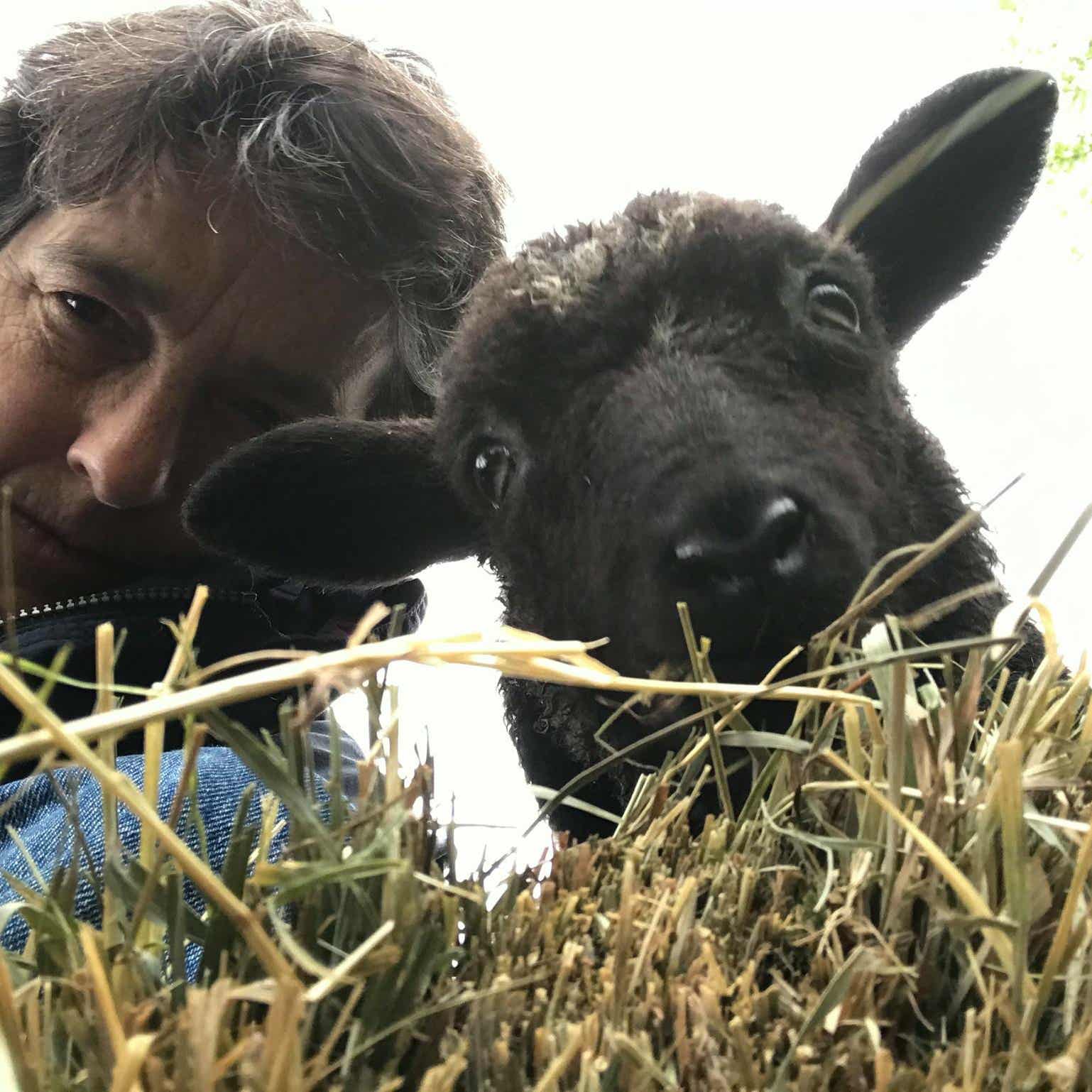
Story Time at Clatter Ridge Farm
59 episodes — Page 2 of 2
S1 Ep 9A Chorus of Crickets
Male tree crickets are responsible for the nighttime trilling we hear in late August. By rubbing their wings together, like a finger dragged across the top of a plastic comb, they create the relentless buzzing which makes you think your tinnitus has suddenly gotten much worse. In reality, it’s the sound of hundreds of insects looking for a mate, and it’s the sound of summer nearing its end.Because crickets are cold blooded, the ambient temperature affects the speed with which they move - including how quickly they can rub their wings together. The colder they become, the slower their chirping is until they fall completely silent after the first hard frost. You can tell the temperature outside by counting the number of chirps they make in 15 seconds and adding 40. (For Celsius count the number of chirps in 25 seconds, divide by 3 and add 4.)Cicadas are what you hear during the heat of the day and Katydids are what you hear in the evening. The sound of Katydids is easily distinguished from crickets. It’s as if they are arguing with themselves as they’ll call out “katy did - katy did - katy did did, - katy did not”August nights with that chorus of crickets and katydids used to fill me with absolute dread. It meant I’d be going back to school soon and stuck in a classroom, bored senseless until spring. Now, it’s just a gentle reminder that there’s much to be done before this season ends. We need to stack more firewood and cut all of our hay for the winter. We need to harvest the hazelnuts soon before the squirrels beat us to it. We need to pick a ram and move him in with the ewes if we want any lambs in the spring. We need to put a light on in the coop before the days become much shorter, or the hens will stop laying completely. There is in fact a lot to be done and fewer hours left in the day with which to do it. I don’t mind though. Each season is as special as the next and as long as I don’t have to get on the school bus in the morning, I’m really quite happy just listening to the nighttime chorus of hundreds of insects arguing and falling in love.Thanks for reading Clatter Ridge Farm! Subscribe for free to receive new posts and support my work. This is a public episode. If you would like to discuss this with other subscribers or get access to bonus episodes, visit clatterridgefarm.substack.com
S1 Ep 8Chimney Swifts
After my first encounter with a chimney swift, I googled “what in God’s name is living in my chimney and how do I get rid of it?”It was the beginning of Covid, and we had too many dogs, too many humans, and too many bottle-fed lambs living in our house.It felt like we were stuck together in an overcrowded lifeboat stranded on the open sea. We were all doing our best to ride out the storm, and not get on each other’s nerves in the process. The last thing any of us needed was a chimney full of raucous, overly protective, birds.By the time I learned what the noise was, there was already a nest filled with eggs, so I figured “what’s a few more beings for a few more weeks?” We planned that once the little ones fledged, we’d cover the top of the chimney with wire mesh so they couldn’t come back.But the more I learned about swifts, the less annoyed I became, and by the time they left, I had actually grown rather fond of them. At the very first hint of dawn, even before any other birds start to sing, the swifts leave the chimney en mass with a thunderous woosh that never fails to send the dog fleeing from the room. Apparently, the acoustics of a clay lined chimney are a truly fantastic way to magnify and amplify sound. It can make four small birds sound like there are a hundred - or more. (I checked and there really were only four).Once airborne, swifts spend the entire day flying and don’t touch down again until they return to their preferred chimney at dusk. They never perch, stop or rest. They eat, drink, bathe, and mate on the wing. They dart about frenetically, like swallows, weaving, dodging and devouring insects wherever they go; like aerial vacuum cleaners hoovering up 1/3 of their body weight in insects every day. To drink or bathe, they delicately skim the surface of a river or lake as they fly by. A happy endless chatter accompanies them wherever they go, and I think that’s what I love most about them. Wherever I am on our farm, even when I can’t see them, I can hear them as they go blasting by.At dusk they return, make sweeping circles over our house. Circles which get narrower and tighter as evening fades, ending like a little funnel cloud as they drop inside the chimney and grab hold of the rough mortar – where they roost until dawn.Much to our dog’s relief, they left us this week – just as abruptly as they appeared in the spring – no note or forwarding address, just suddenly gone.They’ve probably already reunited with the rest of their extended flock, preparing to migrate to South America for the winter.I miss their chatter and seeing them throughout the day. I miss watching them in the evening as they return “home” to roost. I even miss the woosh of their early morning exodus, but I know they’ll be back to nest again next summer – and the summer after that. In fact, multiple generations of swifts have been known to return to the same chimney for decades.I wish I could explain my fondness for them to our dog because, though I know someone will eventually put wire mesh around the chimney to keep them out – it definitely won’t be me.Thanks for reading Clatter Ridge Farm! Subscribe for free to receive new posts and support my work. This is a public episode. If you would like to discuss this with other subscribers or get access to bonus episodes, visit clatterridgefarm.substack.com
S1 Ep 7Artificially Intelligent
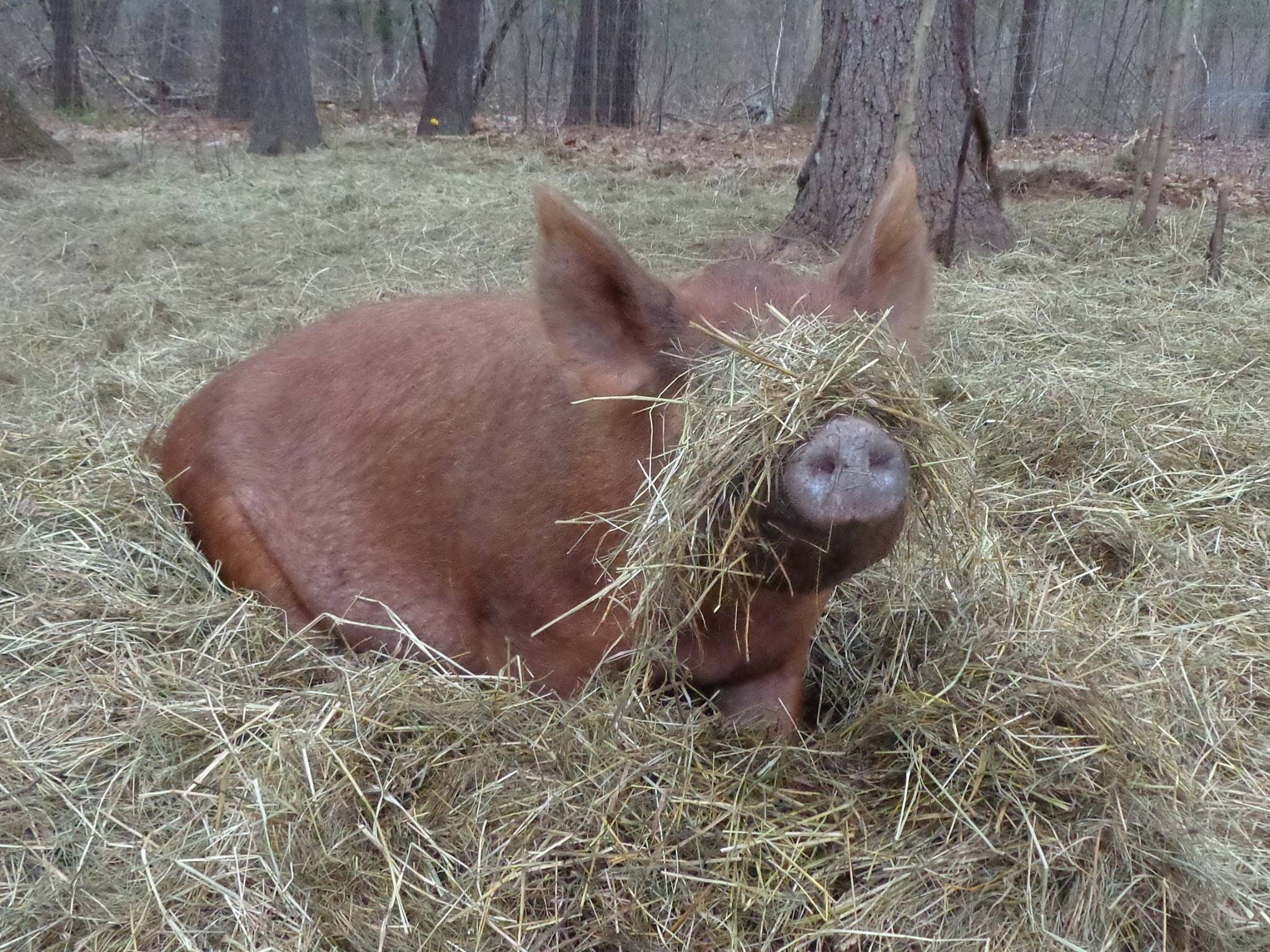
A.I. has been in the news and on the minds of many people lately, and clearly, for better and for worse, a new day has dawned. To most people “A.I.” means artificial intelligence and brings to mind super computers, robotic humans and a futuristic dystopia. To many pig farmers though, A.I. stands for artificial insemination and brings to mind very different images.(Feel free to stop listening now because this only gets worse from here.)At various times in the past, I considered AI for our pigs - usually right after a boar made a nuisance of himself. The predictable unpredictability of a 400-pound boar falling in love on a monthly basis has led to some spectacular escapes, nasty injuries and costly collateral damage. But as appealing as it was to imagine life without a boar, it was always offset by the realization that we would then need to take on managing the fertility of our herd. This would mean figuring out, for ourselves, how to do everything he was born already knowing how to do. However, the cost of feed has doubled and having one less (very large) animal to feed became even more appealing. So, we sent our boar packing and have taken on his responsibilities. The hardest part is figuring out each sow’s heat cycle. The boar always knew - and started frothing at the mouth a couple days in advance. The foam that covered his snout (and anything he came in contact with), had pheromones that were meant to attract the sow.As his anticipation and frustration grew, he would “vocalize”. His lovesick vocalizations sounded like a mountain lion being stretched on a medieval torture rack or perhaps a timber wolf with its tail caught in an elevator door. Our normally peaceful barnyard was soon filled with desperation, frustration, and rage.Last week, once we determined one of our sows was coming into heat, we picked out the sperm from a catalog of available boar studs. After we placed our order, the sperm was added to an “extender fluid” which keeps it viable for 10 days. It was then packaged in a box clearly labeled “Reproductive Product” and shipped overnight. (I’m not sure I want to know what our mail carrier thinks – and I seriously doubt an explanation from me would make it any better).Carefully following the directions on the container, we kept it in a dark temperature-controlled environment until we were ready to use it. That part made sense to me, but the instructions also said the container needed to be gently shaken 3 times a day. Apparently, if left unshaken, the sperm sinks to the bottom and the nutrients rise to the top, leaving the sperm to starve. I’m not sure which I find more disturbing: the idea that sperm need to eat - or that, despite their reputation, they really don’t know how to swim.I sure don’t miss the 400-pound slobbering, screeching display of testosterone, but I now fully appreciate all I took for granted. He always just seemed to know when, and how, to do what needed to be done. I, on the other hand, stared blankly at the contents of our “starter insemination kit” as Anne read the instructions out loud.I think we did everything right and one way or the other, we’ll know soon enough. I’m just hoping those little guys really can swim, and I’m a little worried that maybe I should have packed them a lunch. Thanks for reading Clatter Ridge Farm! Subscribe for free to receive new posts and support my work. This is a public episode. If you would like to discuss this with other subscribers or get access to bonus episodes, visit clatterridgefarm.substack.com
S1 Ep 6Father Joe
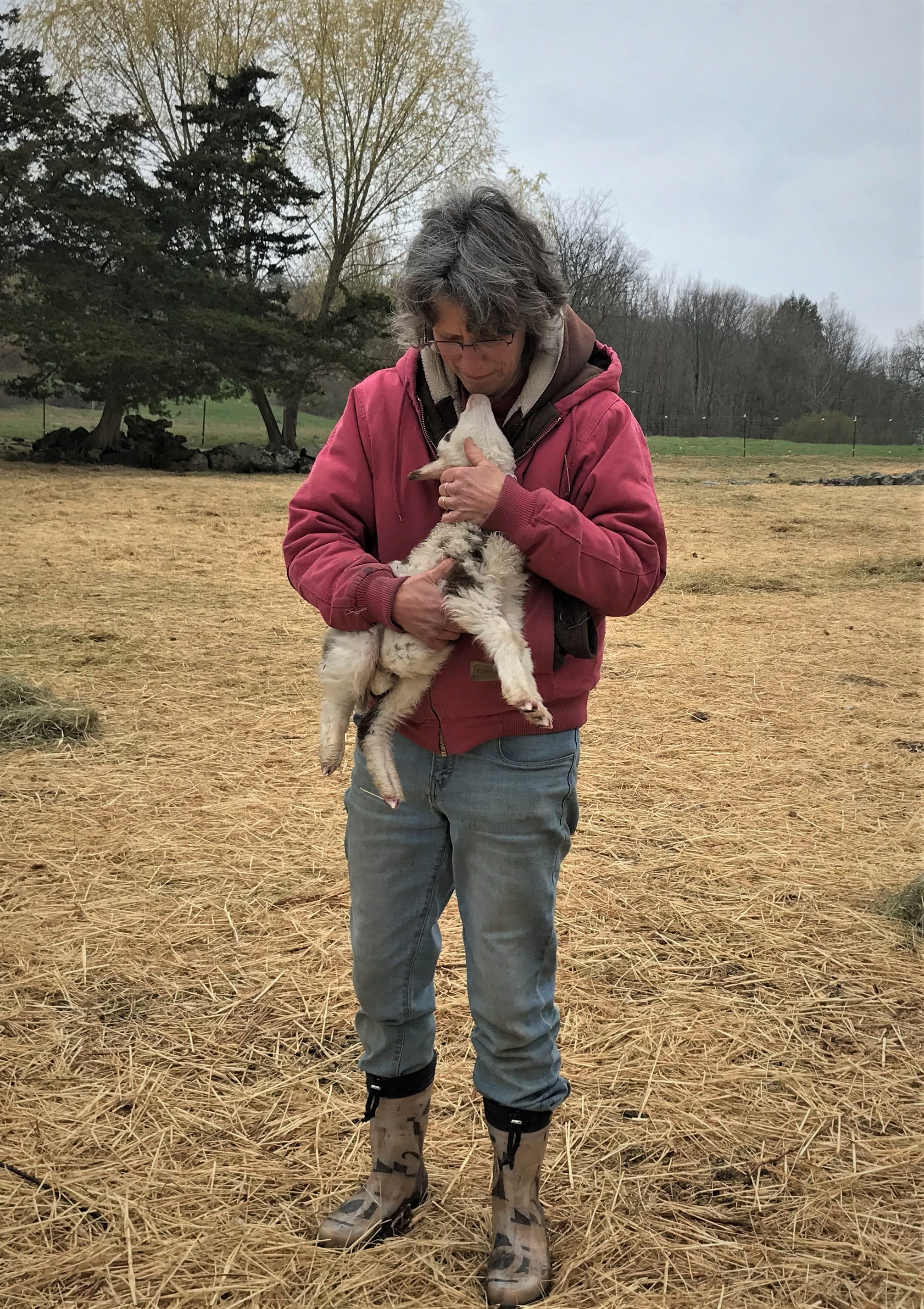
This rain has been heavenly! It's revived the pastures and replenished the watershed, out of which our little stream flows.The pigs again have mud to wallow in, and since, contrary to the old adage - pigs really cannot sweat, they need the mud to stay cool. The chickens are thrilled (in their own chickeny kind of way) with all the insects that flourish after a good soaking rain. Ants, worms and beetles come out above ground, where they are "easy pickings" for the foraging hens. The sheep, have new growth in their pasture, which whenever given a choice, they much prefer over the old.There is a retired Roman Catholic Priest who visits our sheep at Hill-Stead, as he has done for the past 15 years. Our beliefs diverge on a great many things, and probably could never be reconciled, so we avoid those discussions, and instead, have found common ground in our love of farming and all things "nature". While his beliefs are certainly biblical, and mine are solidly ecological, we both appreciate the gentle rain, and find joy in all the perks that a good soaking can bring. Whenever we part, he says "May God be with you" - and I respond “I'm a farmer, Joe, that goes without saying...” This is a public episode. If you would like to discuss this with other subscribers or get access to bonus episodes, visit clatterridgefarm.substack.com
S1 Ep 5Bluebirds
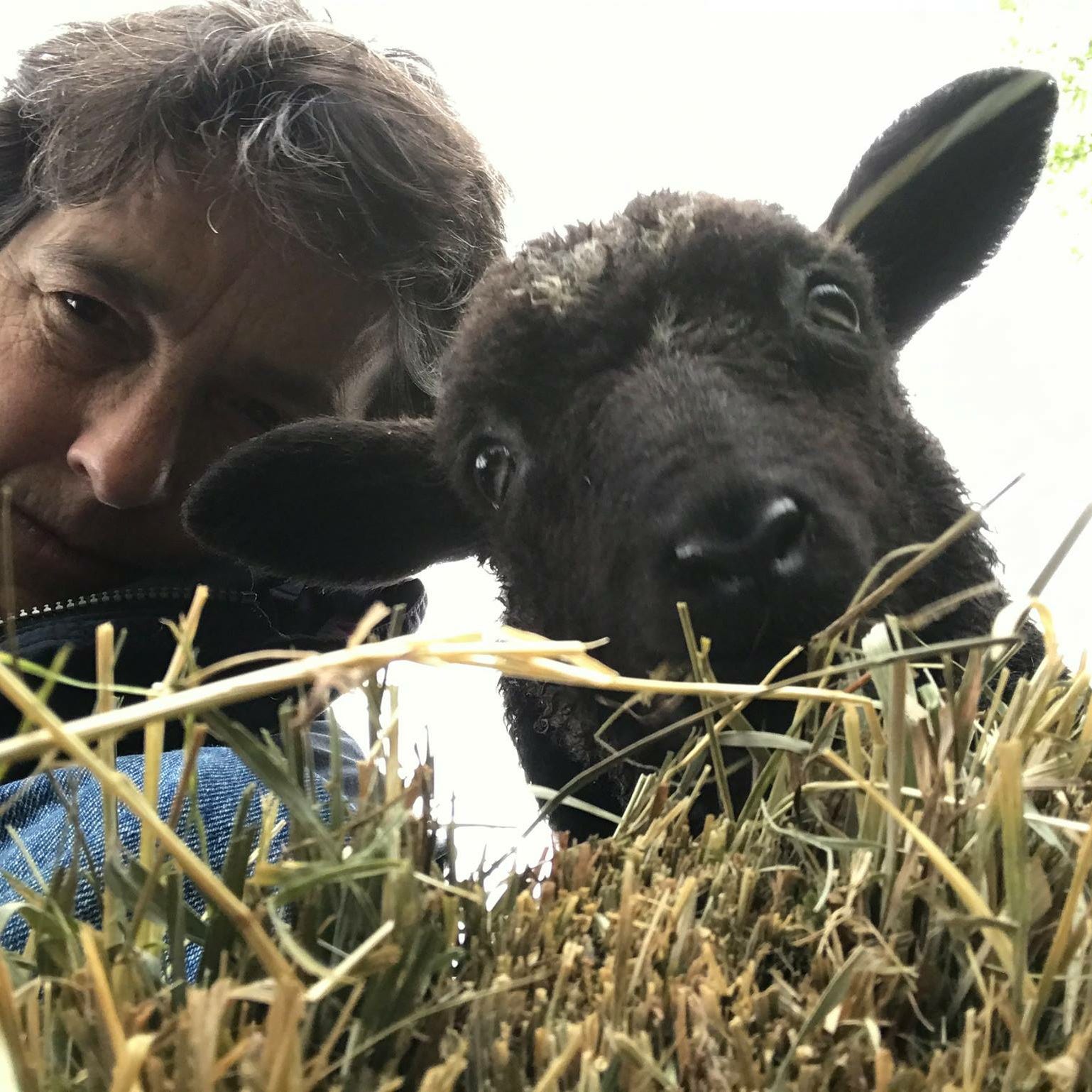
Two bluebirds are nesting in a bluebird box outside our dining room window. We might as well set a place for them at the table, as we spend much of our evening meal discussing their comings and goings. After a day spent taking care of our animals, it’s oddly relaxing to watch another pair so diligently provide for their own.We watched as the male collected twigs for the nest the female was building. He seemed very particular, searching at length for just the right stick – small enough to fit through the opening and flexible enough to bend around the edges of the nest. He must have known what he was doing as there is very little that the female rejected. She is clearly the one in charge of all the nest building - he is merely a glorified “go-fer” (albeit a gorgeous one).The last few days, the male has been foraging for bugs while the female sits on her eggs. Bluebirds have excellent eyesight and can spot a caterpillar in tall grass 150 feet away. We grazed our sheep by the bluebird box last Fall, so the grass is very short and must make his insect hunting practically effortless.The eggs will hatch in a couple weeks and after that, they’ll both be very busy collecting enough food for their new brood. For now, though, he has a lot of free time and spends most of his day on top of the box resting, or on a branch nearby surveying his estate.I wonder, as I go about my chores, if they are watching us and remarking on our comings and goings, in the same way we comment on theirs.The female sitting on her nest might remark:“It’s so nice to see that Bobbie and Anne got all their sheep back on pasture so early - and what a lovely batch of lambs they have this Spring! I do hope they have a productive grazing season.”The male perched on the top of the box preening his brilliant blue feathers might respond:“Weather be willing! Not too much rain, and no more droughts - I think they’ll be just fine. Yes, I’m sure of it, it’s going to be a particularly splendid summer.”Where there is joy, there’s hope.Thanks for reading Clatter Ridge Farm! Subscribe for free to receive new posts and support my work. This is a public episode. If you would like to discuss this with other subscribers or get access to bonus episodes, visit clatterridgefarm.substack.com
S1 Ep 4Happily Irrelevant
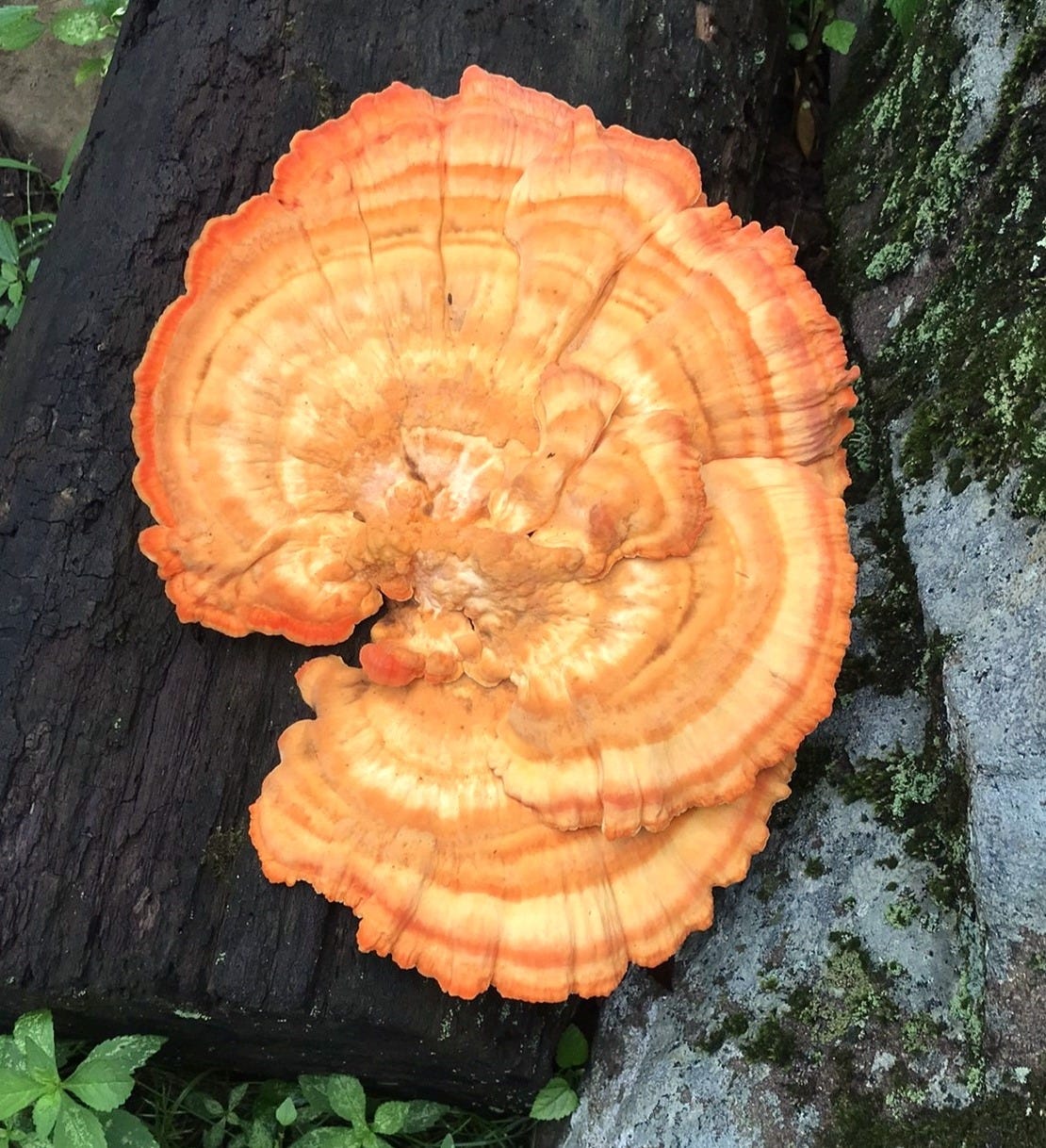
Nothing draws people to our farmers’ market booth like a table filled with orange and yellow edible mushrooms. The brightly colored “Chicken of the Woods” fungi stops people in their tracks, and most can’t resist coming up and asking what it is. Some want to know “How do I know it’s not poisonous?” I explain that killing our customers is a very poor business model, so we only sell items we are quite sure are okay. It’s a conversation starter and even if I can’t convince them that not all mushrooms are deadly, we have a chance at least of interesting them in something a little more mundane like a dozen eggs or a scarf made from our sheep’s wool.Our last batch of Chicken of the Woods was beginning to lose its vibrant color, so last night I decided to find a replacement. The sun was low on the horizon, but I knew if I hurried, I could at least go check out a log just below the ridgeline that always produces a nice crop in early fall. Just about the time I got to the log, though, and heard the rustling of dry leaves and snapping of twigs around the corner, I realized, belatedly, that there were two significant flaws to my plan. The first was that we haven’t had a good soaking rain in weeks so the log I was checking out was too dry - I needed to look along the shaded edges of the brook where the logs would still be damp. The second realization was that in my hurry to get out the door, I’d forgotten my bear spray and that the sound of rustling leaves and snapping twigs was definitely heading my way.I climbed up on the log hoping that, if I was about to meet a bear, that the additional three feet of height might make me look slightly less edible. I waited and much to my relief a flock of wild turkeys came into view. They were southbound and I had been headed north, each of us following the path along the talus slope below the ridge line.I have a foraging map stored in some recess of my brain, and I imagine the turkeys do as well. I usually know where different mushrooms fruit at various times of the year - I also know the pattern of the animals I prefer to avoid. I stay out of the swampy areas in the spring so as to avoid the bears eating skunk cabbage and I avoid the young hemlock grove so as to not disturb the deer that bed down there at dusk. I’m sure the turkeys know where all the acorns can be found this time of year -and when daylight begins to fade, they start foraging their way up the ridge line where the added elevation enables them to easily access and roost in the tops of the trees below them. I’m sure they also know how best to avoid bears and coyotes, and somewhere in their brain, they were trying to recall if they’d ever encountered a human staring at them while standing on a log in the fading daylight and if it posed any danger.“No, you’re good” I said out loud, hopping off the log– “I’ll go this way - you go that way.” I turned downhill and headed to the brook where I did, in fact, find an enormous chicken of the woods and made it home with plenty of light.I left the turkeys happily scratching up the leaf litter and swallowing their acorns whole. I made a mental note to look for chanterelles in that spot next summer as the disturbance in the soil often encourages the mycelium to fruit. On some level, I’m sure the turkeys were updating their database to include me as well. Pretty much a non-entity, neither good nor bad - just momentarily in the way.Thanks for reading Clatter Ridge Farm! Subscribe for free to receive new posts and support my work. This is a public episode. If you would like to discuss this with other subscribers or get access to bonus episodes, visit clatterridgefarm.substack.com
S1 Ep 3Fence Works!
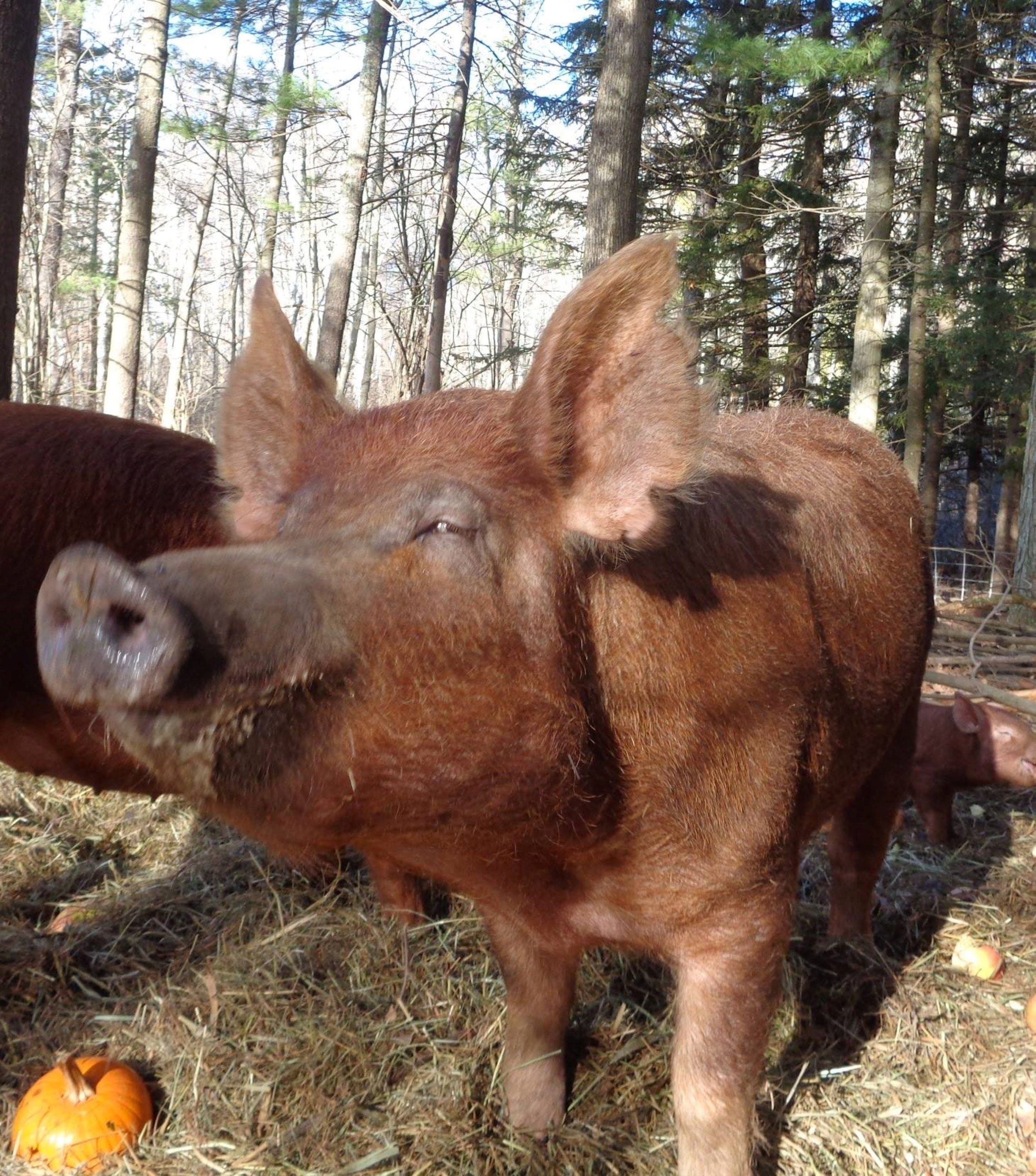
Whenever one of our pigs touches the electric fence, and lets out an impressive heart rendering squeal, Anne and I, in perfect unison, cheerfully proclaim “fence works!”.Our friends look at us in horror, and I guess it probably does seem a bit callous, but anyone who has spent an afternoon trying to retrieve a wayward pig understands our enthusiasm. A little zap on the nose seems like a very small price to pay, to remind the little wanderers which side of the fence is theirs.Pigs, in general, are hard on fences. Their constant rooting of rocks and dirt, shovels debris on top of the bottom wire, shorting out the electrical charge and rendering the fence basically useless.When it’s just adult pigs in the paddock, we can raise the lowest wire to keep it out of the dirt. But if there are piglets around, and we raise the bottom wire too high, the piglets can slip underneath it- which they happily do for no other reason than that they can, and that it clearly annoys me.Since we always have piglets around, I spend an inordinate amount of time, each day, trying to keep the fence suitably electrified.Sometimes a short is obvious, like a fallen tree or an uprooted stump, but more often I need to retrace the pig’s steps, following the fence line, looking for uprooted rocks, a broken insulator or a snapped wire.Yesterday, I had to hop over a stream where 5 inches of rain, from Hurricane “Henri” had buried the bottom wire in storm related debris. Hopping over the stream was easy enough, but I slid on the muddy bank, into the fence. I grabbed the metal post, as I slid by, which indeed kept me from falling, but completed the circuit just the same.It’s true the shock really wasn’t that bad, but I still bellowed out in pain, and I swear in the distance, I heard one of the piglets enthusiastically yell “fence works!!!”Thanks for reading Clatter Ridge Farm! Subscribe for free to receive new posts and support my work. This is a public episode. If you would like to discuss this with other subscribers or get access to bonus episodes, visit clatterridgefarm.substack.com
S1 Ep 2Barnyard Graffiti
This is a public episode. If you would like to discuss this with other subscribers or get access to bonus episodes, visit clatterridgefarm.substack.com
S1 Ep 1A Brood of Her Own
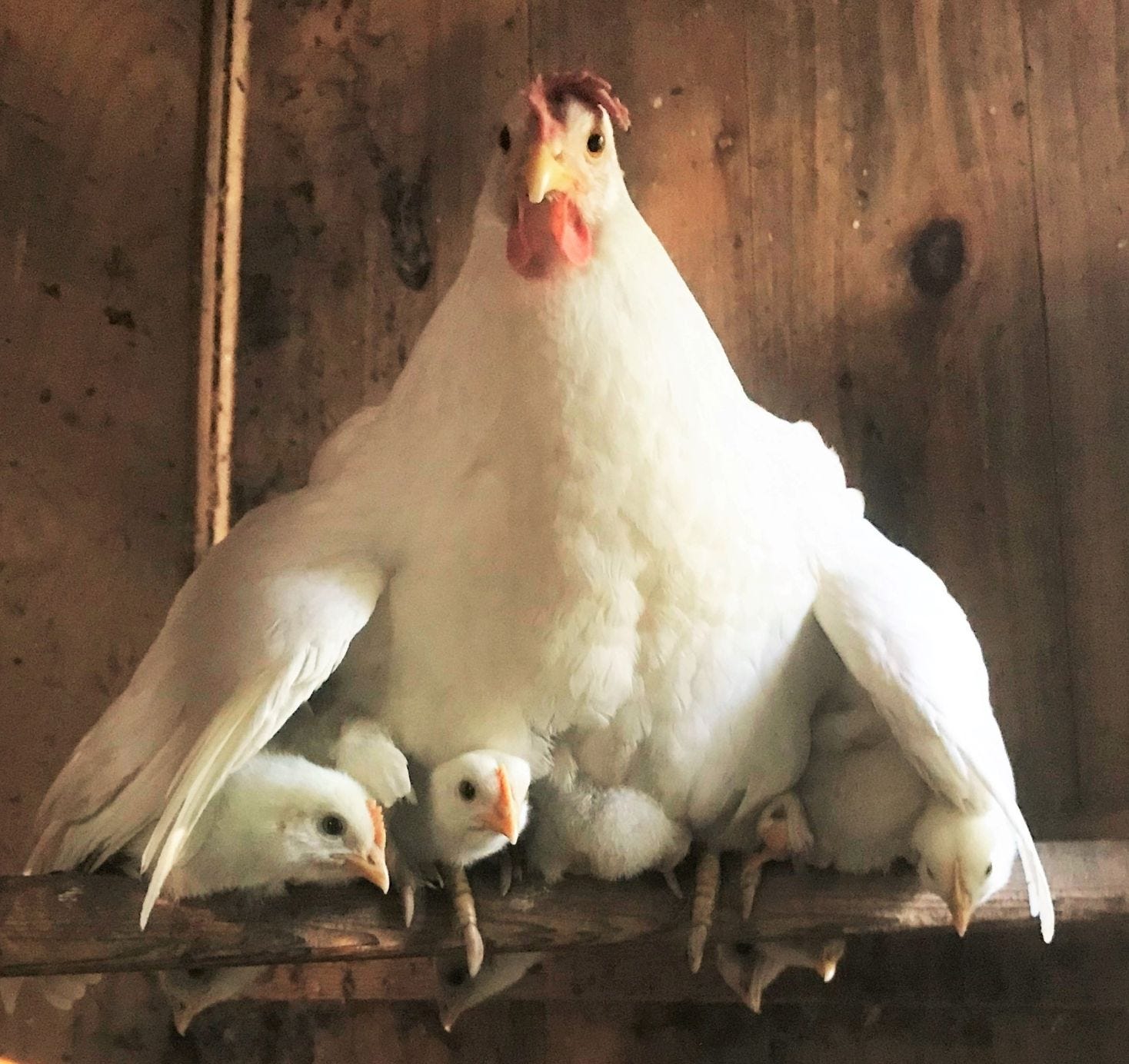
I've been arguing with a chicken for months. She’s insisted on laying her eggs underneath our back porch and my days of happily crawling under the porch to retrieve those eggs are over, so we put an end to that. Anne and I blocked her access by covering the opening with poultry netting, and perhaps predictably she started laying eggs under the front porch. We covered up those openings as well, so she started laying eggs in an old kindling box on top of the porch - the dogs chased her out of there. Next, she went to the herb garden on the side of the house, then to the flower garden, then into the tall grass by the pond. She has been nothing if not persistent. Time and time again she'd find a new spot and eventually I'd discover it. Our early morning commuter routes often passed, mine out to the barn to do chores, hers off to some forbidden place to lay an egg. I would take note of what direction she was heading so I could go back later to retrieve it. The absurdity of it all was entertaining but in the end there are way too many other things I should be doing, to spend my time tailing a chicken. I finally declared defeat several weeks ago. I told Anne that when I had the chance, I'd catch the hen and put her in the new coop where her free ranging activities would be severely curtailed. Just announcing it made me feel better, though I think a part of me admired her stubbornness, and I never actually got around to doing it. Today when I got home, she greeted me with 10 little chicks in tow, all happily strutting across the front lawn. How she managed to pull off sitting on the eggs for 21 days without me or the dogs (or the fox, coyote, possum, skunk or black snake) finding her is beyond me. But she did, and she seems very pleased with herself.I suspect she brought all the chicks out into the open because she was hungry and she knew, that despite our differences, I'd provide. As much as she wanted a free meal, she was spectacularly protective, attacking me whenever I got too close. Anne and I did manage to catch her and her brood and lock them in the barn with a pile of food and plenty of water, which I hope for now she appreciates more than her freedom. As soon as her brood is old enough to live safely on their own, I'll open the door and she can do as she pleases. In fact, I've already made a small opening for her in the poultry netting under the porch. This is a public episode. If you would like to discuss this with other subscribers or get access to bonus episodes, visit clatterridgefarm.substack.com