Story Time at Clatter Ridge Farm
59 episodes — Page 1 of 2
A Million and One Penguins
Precisely What We Need
I Love Hard Work
Stacking Hay
The Gift of Clover
How a Dragon Flies
Busy as a Bird
The Woodcock's Dance
Weaning Time
Hope Springs Eternal
A Nice Place to Live
Lessons Learned (or not)
Good Friends
Ready For The Swarm!
Between The Brook and The Cedars
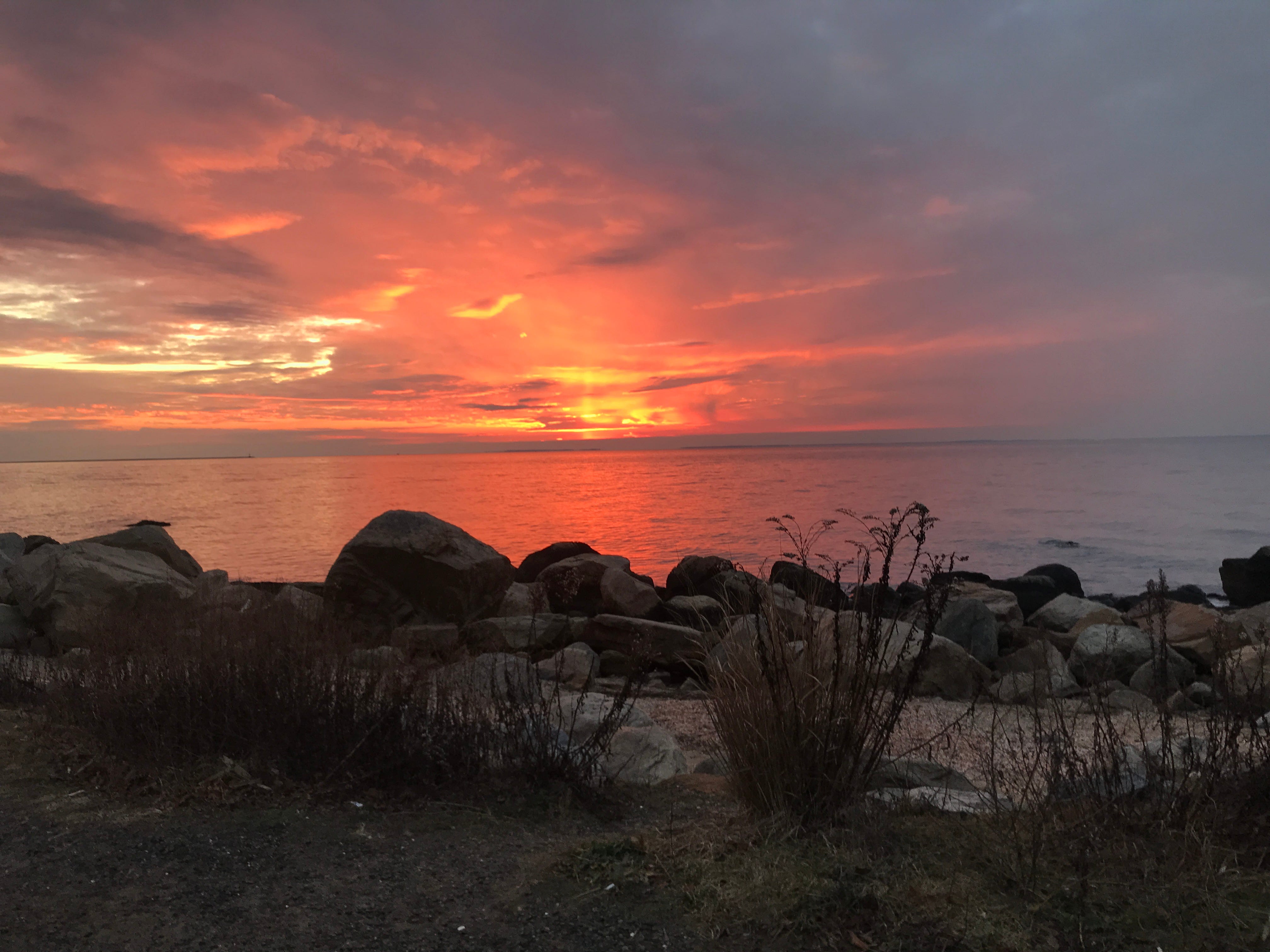
S2 Ep 14Stay Awhile
Life to me is like a dinner party that I don’t ever want to end. Everyone I have ever cared about is seated at the table next to me. I am surrounded with friendship and immersed in love. The food is phenomenal (all grown locally and sustainably of course.) The beeswax candle on the table flickers, and smells divine, but it never melts. A gentle fire crackles in the fireplace nearby. A nostalgic playlist sets the mood and reminds us of all the good times we’ve had together. Toasts are being made and the conversation flows easily. The meal glides seamlessly from one course to the next. I never feel full; the food is just endlessly enjoyable.And then, one by one, the people I love begin to leave.No one was surprised by my parents’ departure, least of all not me. We could all see it coming. Their shoulders were slumped and their eyes were glazing over. They were profoundly tired and it was getting late. I desperately wanted them to stay but I knew it was time to let them go. After they left, we raised a glass and toasted their life, their love, their friendship, and their legacy. At some point we all leaned in a little to fill the gap their absence created, and the evening moved on.Since then, many friends and family have said their goodbyes and taken their leave. One by one. We raised our glasses, toasted their departure, leaned in a little and the evening moved on.There were loved ones too, that just vanished with no warning at all. They never said anything, I had only looked away for a moment and when I turned back, they were gone. We all expressed our shock and sorrow and leaned in a bit and did our best to carry on.My mom always told us to take the Christmas tree down while it was still green and to not be the last person at a party to leave. Lately, I’ve become painfully aware of all those empty places at the table. When I noticed the hostess starting to yawn and look my way, I knew I’d overstayed and that she was about to ask me to go. But instead, she just smiled and asked if I wanted another slice of pie.Perhaps a little too enthusiastically I said “yes please! At least one more- and some ice cream too, if there’s room on the side”I raised my fork and settled back in. Though my table is definitely getting smaller, I’m still in no hurry to leave. This is a public episode. If you would like to discuss this with other subscribers or get access to bonus episodes, visit clatterridgefarm.substack.com
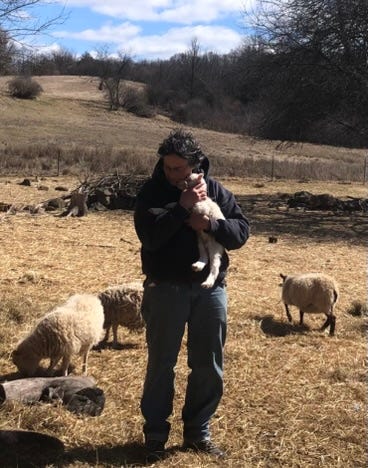
S2 Ep 13Welcome Shiitakes, Lambs, and Spring!
We had several lambs born this week. Most of them are very healthy and full of beans, but as always, we have a couple whose commitment to staying alive is dubious at best. I had a vet tell me once, “sheep are born looking for a way to die.” At the time I thought he was terribly cynical, but sometimes I think he might be right. As wonderful as newborn lambs are – there is an inordinate amount of stress for the first few days of their lives.On the other hand, as if not to be outdone by the lambs once again, our shiitakes have woken up from their winter’s slumber and hit the ground running. Mushroom farming is, in fact, the perfect antidote to livestock farming. It is, by comparison, a completely stress-free endeavor. When I finish up in the mushroom yard at the end of the day - I just walk away. When I return in the morning, the logs are all exactly as I left them. Always. The mushrooms never escape, they never misbehave, and they never get sick. Best of all, the only predators I have to contend with are; a squirrel who has developed an expensive taste for shiitakes, a chipmunk that has a fondness for our chestnut mushrooms, and my sister, who lives next door.We have over 1,000 logs inoculated with various types of mushrooms. We have Shiitake, Oyster, Lion’s Mane, Comb Tooth, Chestnut, Maitake, Chicken of the Woods, and Turkey Tail. We also have raised beds inoculated with Morels, Almond Agaricus and Wine Caps.Each type of mushroom has its own culinary preferences and distinct personality. Shiitakes prefer oak logs but are aggressive and will quickly take over most any hardwood. Hericium mushrooms (lion’s mane and comb tooth) are the most finicky. They prefer beech trees and sugar maples and are so slow to colonize a log, I’m not sure how they have succeeded as well as they have “in the wild”. When we inoculate logs with any Hericium strain, we use twice the amount of spore (mushroom seed), otherwise another mushroom will undoubtably take over.Wine caps are the least fussy about what they eat and are definitely the most gregarious of all the mushrooms we’ve raised. They’ve quickly spread throughout our mushroom yard and are happily commingling with all the others.Even within the same species, different strains fruit at different times. Our cool weather shiitakes are fruiting now but will slow down when the temperatures get more summerlike. That’s when our warm weather strains take over and get us through the farmer’s market season.Highly prized in Japanese cooking, the first and last shiitakes to fruit each season are the Donkos. The fluctuating temperatures of spring and fall weather stresses the cool season mushroom out and intensifies their flavor. Like the arrival of our first lamb in the spring, Donkos are a distinct marker of changing seasons.Our two border collies always accompany me to the mushroom yard but quickly settle in for the duration. Of all the illogical things I do on a daily basis, moving logs from one pile to another is clearly beyond their comprehension. They know their services won’t be needed but they don’t let me out of their sight. Each dog resting with one eye open, they watch carefully just in case any of our logs look like they are in need of herding.Welcome to our sweet, precious lambs – I look forward to some seriously raucous days ahead!Welcome Donkos and the start of another mushroom season.And, of course, welcome Spring - the beginning of everything. This is a public episode. If you would like to discuss this with other subscribers or get access to bonus episodes, visit clatterridgefarm.substack.com
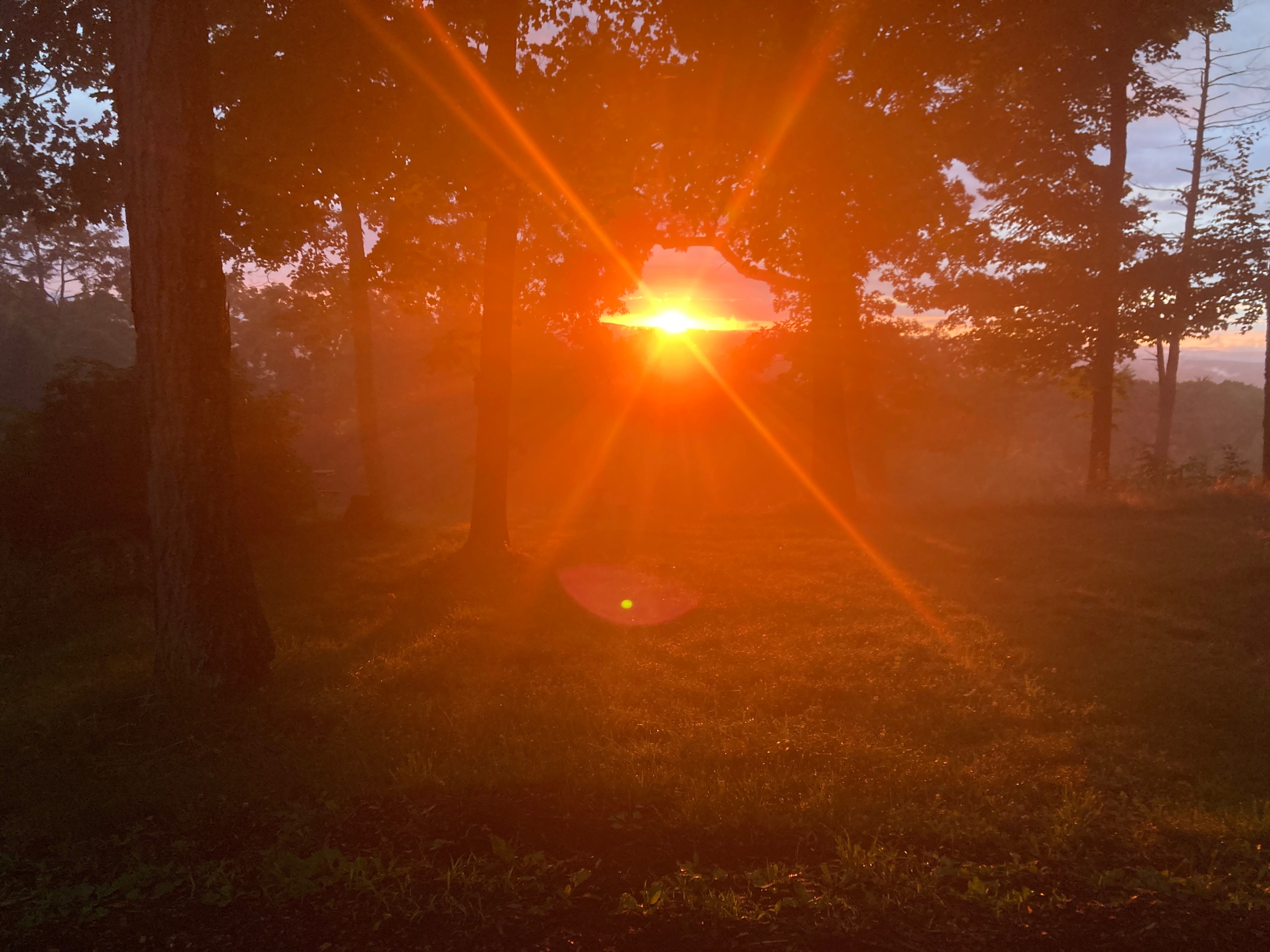
S2 Ep 12For The Love of Spring
The most wonderful sound in the whole wide world is, without a doubt, the evening song of the Wood Thrush. The mesmerizing flute-like notes carry and echo across the ridge and weave their way in and out of the forest’s edge. The sound is soulful, somewhat haunting and deeply magical. When I hear it, I know I’m home and that no matter what else is going on beyond my forested retreat- at this moment in time, everything is going to be okay.I love the little potbellied Wood Thrush deeply - but I have to admit that the sound that brings me the purest joy, bar none, is the chorus of the Spring Peeper. In early spring, the tiny frogs gather along the swampy edges of ponds and wetlands and compete for the love of their lives – or at least, for a chance to procreate. The louder and faster a male Spring Peeper chirps, the more likely it is that a female will choose him to be her mate. Though each frog is less than an inch in length, their springtime chorus can reach 90 decibels and be heard one to two miles away.I know the chorus they produce is just a heartfelt love song not intended for the likes of me, but in its melody, I can feel the certainty that spring has arrived and that winter has been left in its muddy wake. It is pure hope, belted out with amphibian acapella joy. This is a public episode. If you would like to discuss this with other subscribers or get access to bonus episodes, visit clatterridgefarm.substack.com
S2 Ep 11More Lambs - Fewer Kings
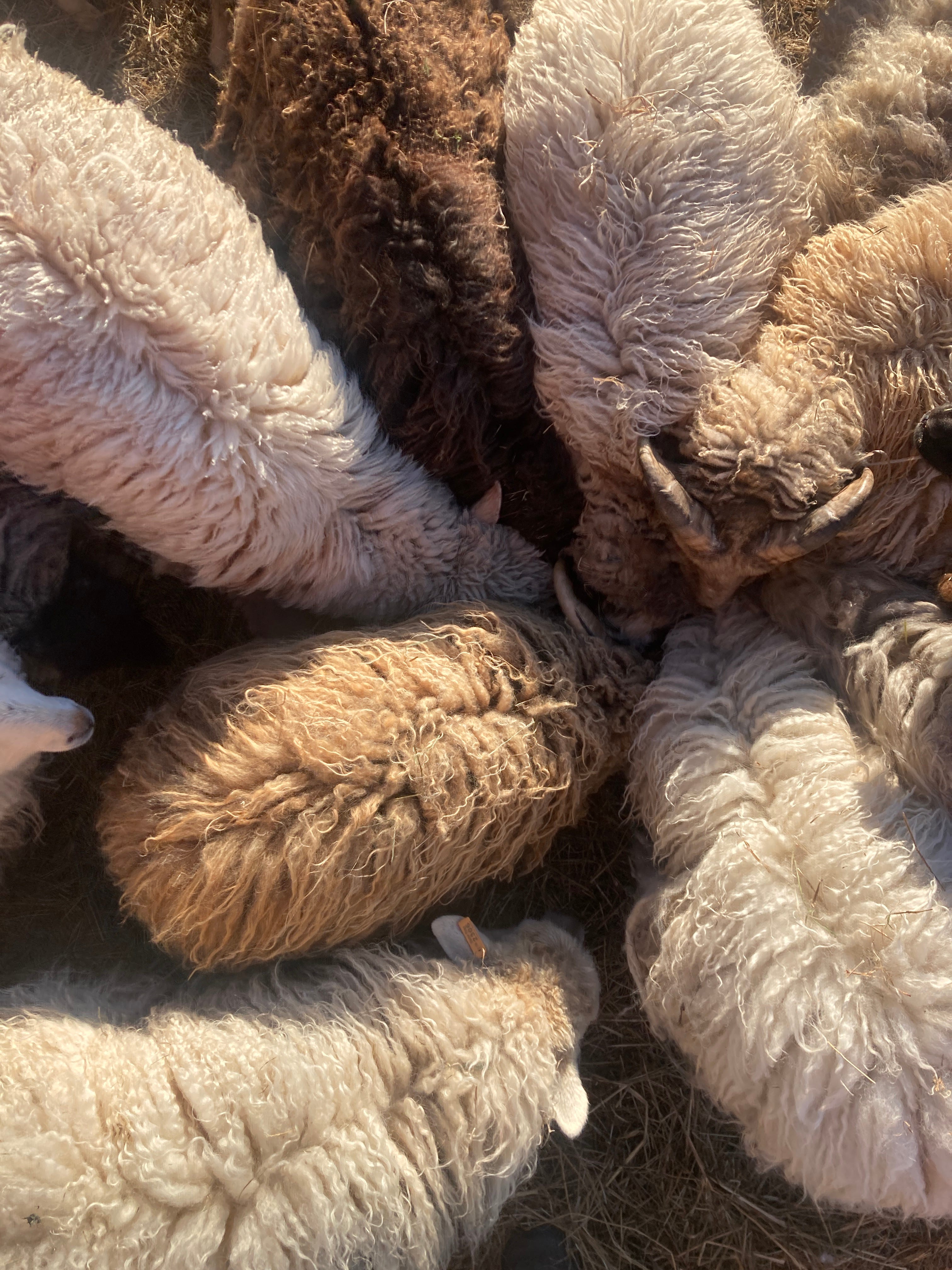
In an attempt to protect their monopoly on the wool industry, England tried hard to discourage one from ever taking hold in its American colonies. To that end, the exporting of sheep to America was expressly forbidden, but by 1655, a few smuggled sheep had multiplied to 10,000. Oops! I’m not sure what I find more amusing; that colonial sheep smuggling was actually a thing or that breeding sheep became such a subversive (and successful) act of independence.Clearly unable to completely stop America’s burgeoning sheep industry, British Parliament in 1699, attempted to at least contain it by enacting “The Woolens Act”. The law prohibited the export of any woolen items from the American colonies (and Ireland) and the import of textiles from any country other than Britain. Though the law had a devastating effect on Ireland and effectively crushed its economy - it was not well enforced in the American colonies.That benign neglect ended when King George III ascended the throne and made wool trading in the Colonies an offense punishable by cutting off the offender’s right hand. That renewed and elevated threat, along with various other taxes and tariffs, set the stage for the rebellion that soon led to the Revolutionary War.Many colonists boycotted British goods and proudly wore homespun clothes as a sign of their patriotism. And while their male counterparts formed the “Sons of Liberty” and rioted drunkenly in the streets, the women of colonial America held spinning bees. They came together peacefully not only to produce yarn and textiles but as a show of their own solidarity and patriotic fever.Join us Sunday, March 29th, 2026, from 10-4 at Hill Stead Museum as we shear our sheep and demonstrate how their wool can be turned “from sheep to shawl”There will be rebellious lambs, sheep shearing, lots of spinning, weaving and solidarity. Public displays of drunkenness, rioting and looting, however, will be strongly discouraged.See you there! This is a public episode. If you would like to discuss this with other subscribers or get access to bonus episodes, visit clatterridgefarm.substack.com
S2 Ep 10A Chance to Explain
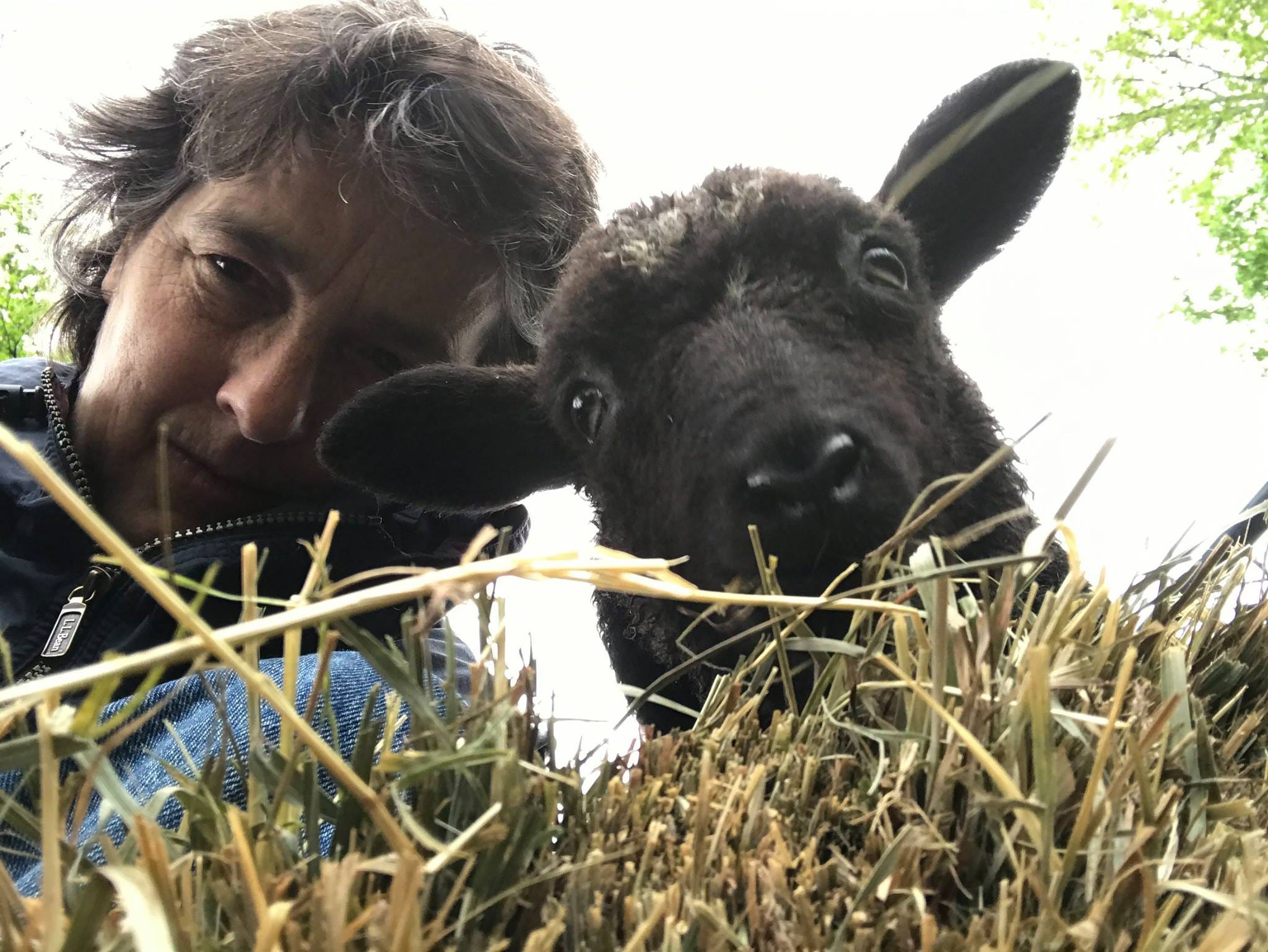
When I was in my twenties a scuba diving accident landed me in the hospital for ten days. I was living in California, and though I didn’t have any family nearby I had a lot of friends. They all rallied around and visited me often and while most of them made a concerted effort to cheer me up, what I remember best was my friend Jules. She was taking an art class at a local community college and would stop by in between work and school. I’d wake up and see her sitting in the chair sketching. I’d say “hey” and she’d look up and smile and say “hey” and then she’d go back to sketching and I’d go back to sleep. When I’d wake up again, there’d be a sketch of my feet, or of the view out the window, propped up for me on my nightstand. There was something extraordinarily comforting knowing that she was there, and that I didn’t have to do anything. She wasn’t trying to entertain or distract me. She was just quietly keeping me company on my journey.I like to think that’s what I have to offer with my writing and with the photos that I take. I can’t fix anything. I can’t change the trajectory of the planet’s health - or that of my friends, but I can quietly keep them company on their journey and perhaps leave them something I’ve written, or a photograph, on their nightstand. I write, in part to bear witness to a changing way of life- to a changing planet and ecosystem. To a way of living and being and also as a chance to explain myself.A couple of years ago I went to a memorial service for someone who I didn’t know very well but whom I appreciated for all the work she’d done in the community. I went to show my appreciation and pay my respects. At the service her husband was understandably inconsolable and unable to speak. The only other people who spoke were her boss and her hairdresser. Her boss shared with us that she was really good at filling out forms and her hairdresser talked about what a friendly client she was. I thought “God help me, this is going to be me.” I spend so much time alone and in my own head I’m afraid all anyone will be able to say about me is that I was pleasant and really good at filling out forms.And in fact, that would be a stretch. I’m not good at filling out forms at all. Most forms don’t leave enough space for the answers, so I often feel the need to write in the margins. And as far as being pleasant – it kind of depends on the day.Writing is the best way I have of expressing myself, so, after that memorial service I started writing and I haven’t stopped. I love Robin, the woman who cuts my hair, but if there is ever a service in my honor, please ask her to read something I’ve written.Humor has a curious way of making the darkness lighter. This is a collection of essays - sharing that humor, bearing witness to a changing climate and a changing way of life. It is a way of explaining myself so that at my memorial service no one else has to. I am a writer, a thinker and a farmer. It’s who I am, what I do and what I love. This is a public episode. If you would like to discuss this with other subscribers or get access to bonus episodes, visit clatterridgefarm.substack.com
S2 Ep 9A Symphony of Sap
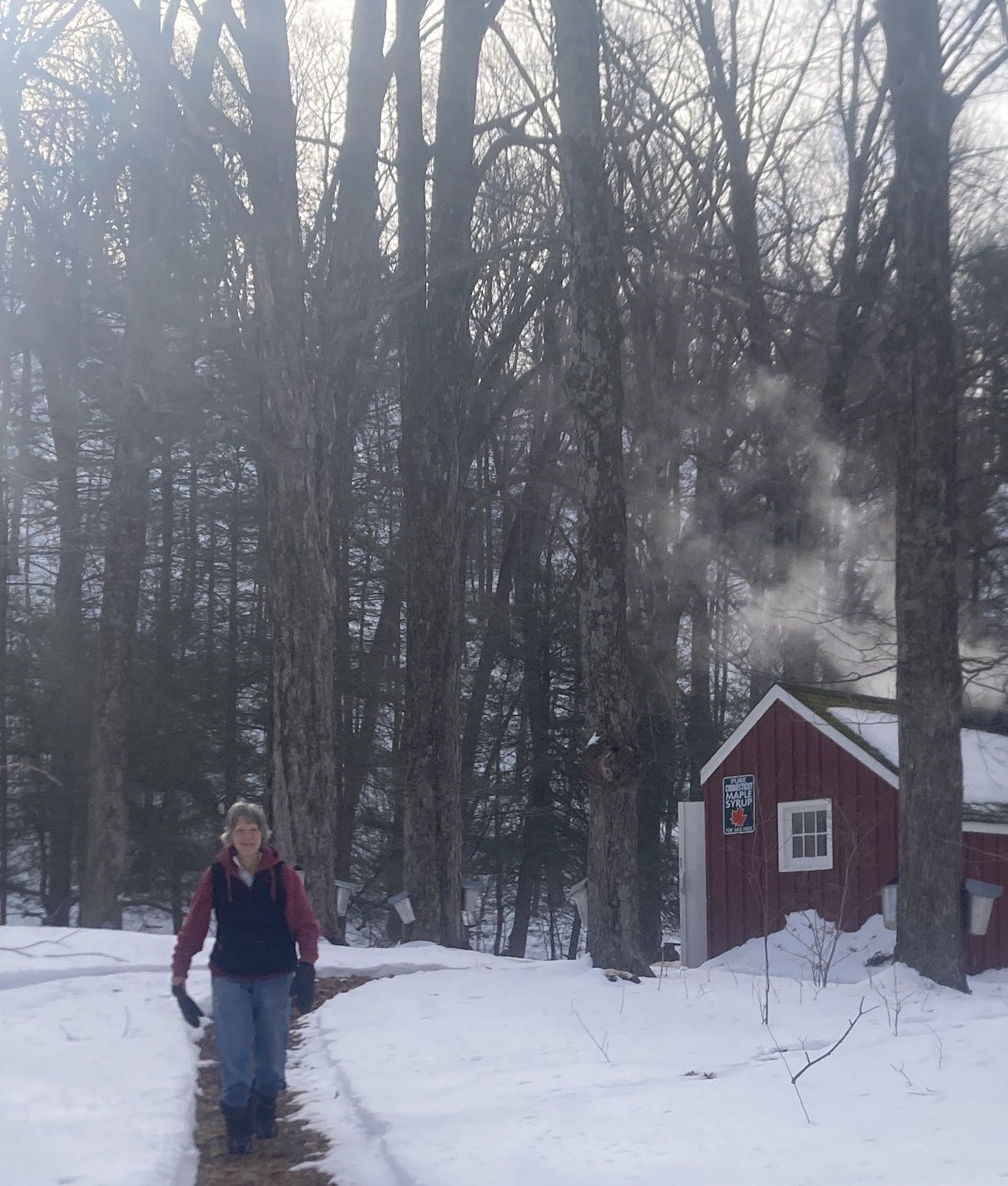
When we open up the sugar house in the morning, there’s often just the sound of the frozen ground crunching beneath our feet, the singing of a few early morning birds, and perhaps an intermittent drip of sap dropping into an empty sap bucket. As the day progresses, though, the trees warm up and the sap really begins to flow. The warmer it gets the faster it flows, and by mid-day the trees surrounding our sugar house are a symphony of drops dripping and splashing as the taps flow in earnest. This is a public episode. If you would like to discuss this with other subscribers or get access to bonus episodes, visit clatterridgefarm.substack.com
S2 Ep 8The Morally Superior Maple
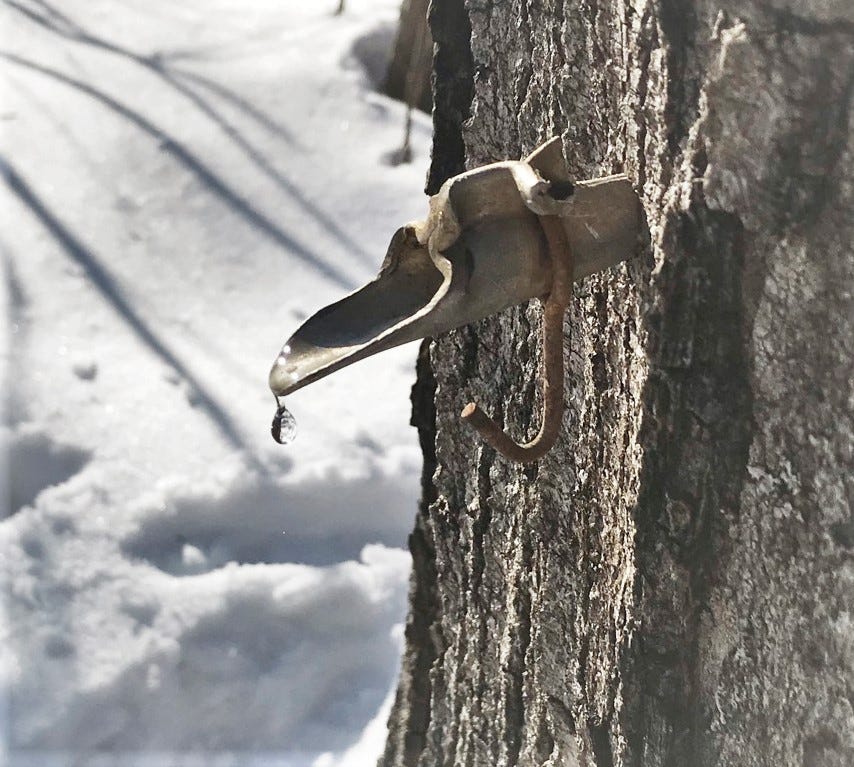
We tapped our sugar maples this week, and that to me is the beginning of spring. The sap will run as long as the temperatures are below freezing at night and well above freezing during the day. The “sugaring” season usually lasts about 6 weeks, or until the trees start to bud.Maple Syrup was a dietary staple for the Native Americans that lived in New England. When little else was available in early spring, they relied heavily on maple syrup for sustenance. It takes at least 40 gallons of sap boiled down to make 1 gallon of syrup, and without the use of kettles they collected the sap in hollowed out logs and boiled it down by dropping hot rocks into it. (Okay, I quit).Later, the colonists used copper kettles over an open flame which made the process infinitely easier. (It’s all relative right?) They boiled the sap beyond the syrup stage and turned it into sugar, which without refrigeration was much easier to preserve. An average family would make 200 pounds of maple sugar and an exceptionally industrious family could make 1,000 pounds. Any excess was an easy commodity to trade or sell. (For comparison’s sake, if Anne and I converted the syrup we make each year into sugar, it would probably be about 50 pounds, slackers that we are).In 1789 Benjamin Rush and a group of Philadelphia Quakers started a campaign to end slavery by convincing people to use maple sugar as a sweetener instead of cane sugar, which was grown in the West Indies with slave labor. Rush described maple sugar as the “morally superior” choice. His mission was to “lessen or destroy the consumption of West Indian Sugar, and thus indirectly destroy slavery.”Thomas Jefferson picked up the cause and attempted to start a “sugar orchard” at Monticello. Using the labor of enslaved people, he planted maple trees which he had purchased while touring New England. Jefferson’s interest in breaking the cane sugar trade was “to help relieve the misery of the West Indian slave trade” and to break Great Britain’s grip on the United States. Sugar was the number one import of that era, and it all came by way of England.After the civil war, beet sugar became popular, the price of cane sugar dropped, and the demand for maple sugar collapsed. Maple syrup, instead of maple sugar, soon became the maple product of choice.After multiple failed attempts, Jefferson was finally able to get some of his sugar maples to grow, but the trees never produced any “sweet water.” There is something about the freeze thaw cycle and temperature differential of our northern climate that creates the sugar, and the flow of sap. During the summer months the tree collects sunshine and turns it into a simple sugar which it stores over the winter as starch. In the spring the starch turns back into sugar. When the tree becomes pressurized, through a process which is not entirely understood, the sap begins to flow from high pressure to low, and the tap hole gives the sap an easy way out. Technically, it’s all a byproduct of photosynthesis, but really - that’s just a fancy name for something that is nothing short of pure magic. This is a public episode. If you would like to discuss this with other subscribers or get access to bonus episodes, visit clatterridgefarm.substack.com
S2 Ep 7Patience!
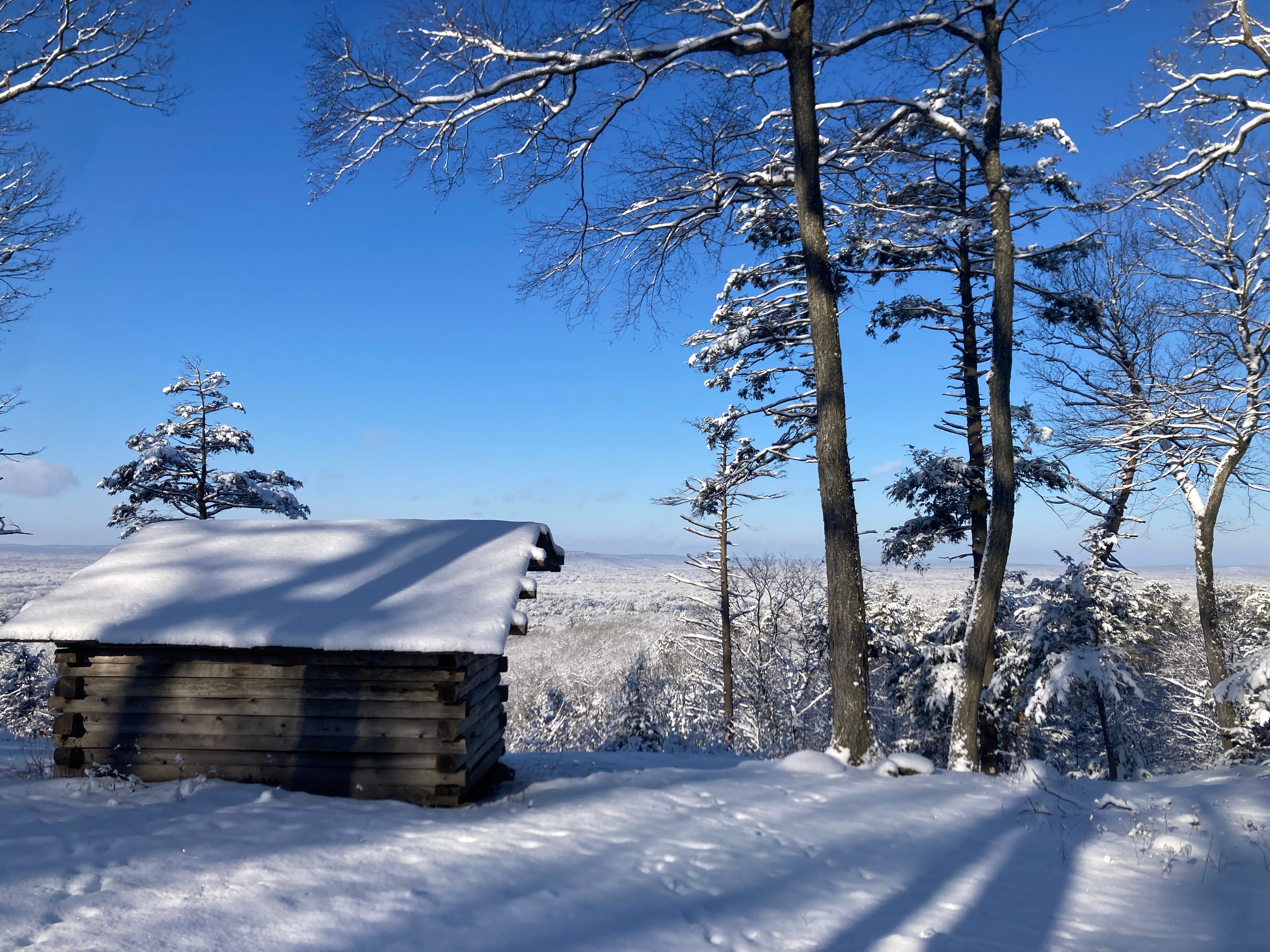
Luckily for me, the joy of spring is wrapped up in its anticipation. If I woke up one morning to a garden in full bloom, I’d be thrilled and in awe, but I’d acclimate, and the novelty would quickly fade.Spring for me is like a wonderfully drawn out, well-crafted love story. And like any great courtship, there is allure and longing - and impatience bordering on despair.The daytime temperatures this week were warm enough for collecting sap in short sleeved shirts. It felt so decadent and then came the demoralizing winds of a “bomb cyclone” to drive us all back inside.The sap flows and stops, a mirror of nighttime temperatures. True spring is never far off, and it will arrive eventually. The daffodils are pushing their way out of the barely thawed ground - only to be dumped on by a heavy blanket of wet snow. The daffs are still there under the snow waiting patiently - they know this drill all too well.Time is on our side. Like the leaves of the skunk cabbage emerging from still frosted streams, we just have to wait for the sun to do its magic. Patience, though, is perhaps a tonic best served warm. This is a public episode. If you would like to discuss this with other subscribers or get access to bonus episodes, visit clatterridgefarm.substack.com
S2 Ep 6Sowing Seeds
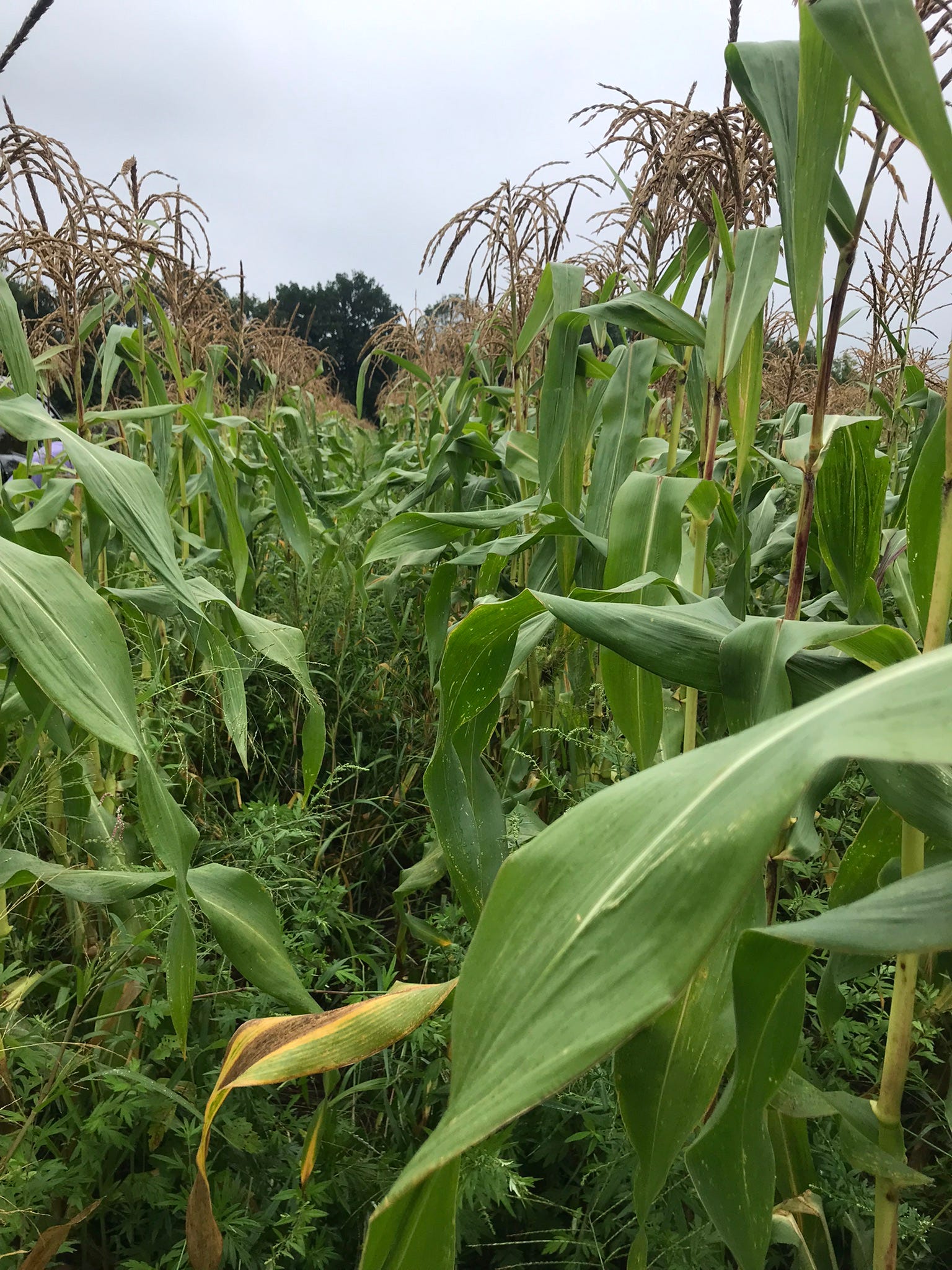
As Christianity spread half a world away, a new way of life was also taking hold here in New England. About two thousand years ago, the cultivation of corn – though curiously slow to catch on, was transforming how the woodland tribes lived and related to their environment – and to each other.For several thousand years, the tribes that called New England home had lived as hunter gatherers. Survival was challenging, but their world was relatively peaceful. Traveling in small bands of 5-30 members, they went where, and when, the food was most plentiful. I’m sure that all the things I have tried to learn, they would have known intuitively, as they passed through the woods and fields, I now call home.They’d have known at a glance where the deer and bear could be found, where the nuts and berries could be gathered, when the fish would be spawning and what birds would be migrating through and when. They followed the seasons and harvested what the landscape provided for them. They were friendly, family-centric and peaceful members of the Eastern Woodland Algonquian speaking tribes.Corn started its journey to New England, 9,000 years ago, as the exotic mutant grass known as maize. First encouraged, engineered and grown by the ancient Mayans in South America, it eventually made its way north via trade routes to the southern and midwestern tribes of North America. From there, it took several thousand years more to make its way east to New England.The native Hopewell traders of Ohio were frequent visitors to northern New England and had a well-established trade route with the Eastern Woodland tribes. Though the Algonquians were quick to adopt the ceramic pottery the Hopewell traders were known for, the concept of cultivating the soil and growing the small multicolored maize took several hundred years to really catch on. It pleases me to know that the original inhabitants of New England were as stubbornly set in their ways as some of us “Yankee” farmers are still accused of being today. Perhaps it was, and is, our unpredictable weather that makes us so resistant to change.When the growing and harvesting of corn finally did catch on, it became a staple food, and its cultivation completely changed how the hunter gatherers lived and related to their surroundings. They became more sedentary and their populations and encampments grew exponentially. They quite literally became rooted in place and quickly discovered the gifts and burdens of agriculture.Having cleared large swaths of woodland, planted the corn and diligently tended to it all summer, the tribes became territorial as they had now made a significant investment in their land. They learned the hard way that though corn was easy to grow and store, it was difficult to defend. There were jealousies, hostilities, and outright wars with formerly friendly neighbors. Villages became fortified and stockades were built for protection. Gone was the fluidity and cross pollination of culture, knowledge, and ideas.Just as the seeds of Christianity united and divided nations abroad, the seeds of agriculture united and divided the former friends living among the woodlands, and newly cleared fields of New England. This is a public episode. If you would like to discuss this with other subscribers or get access to bonus episodes, visit clatterridgefarm.substack.com
S2 Ep 5Keep On Keeping On
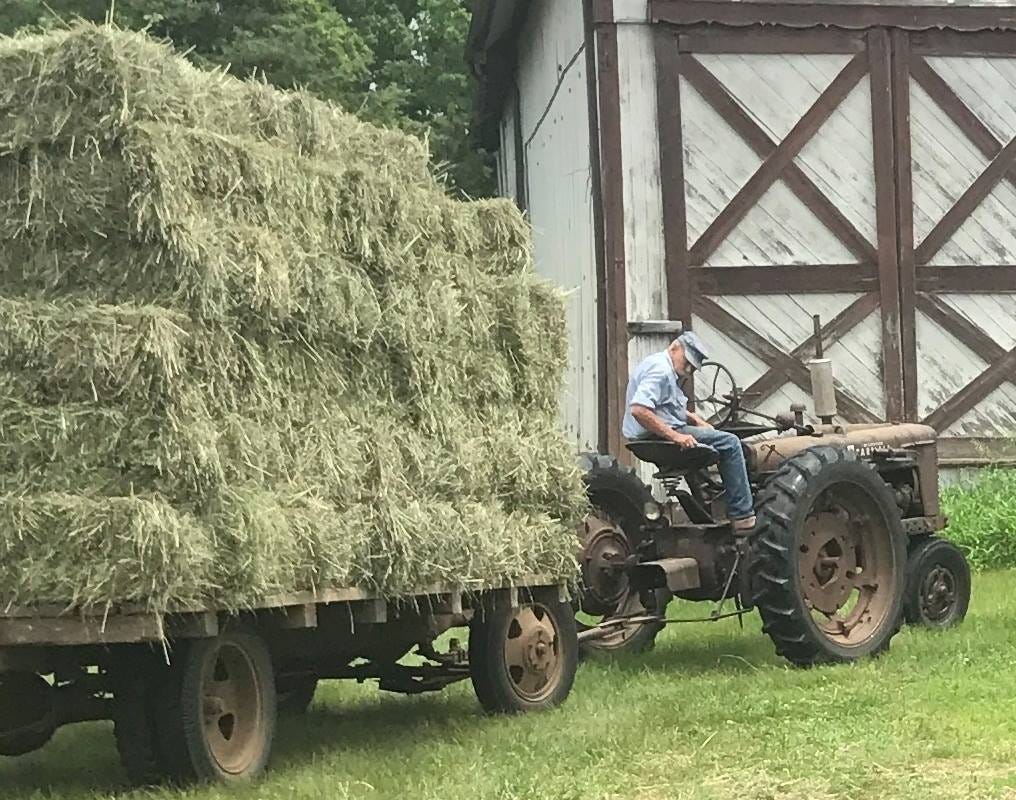
Not a day goes by that I don’t wonder why I keep farming.A couple years ago, we bought hay from a farmer whose family has been farming the same land for a hundred and fifty years or so. He said jokingly “I have come to the realization that I’m not a farmer anymore, technically, I’m now a pet food manufacturer. You are the only one buying my hay for livestock - everyone else is either feeding pet goats or rescue ponies.”I knew he was making light of it, and I laughed, but even so it tapped into a sadness that just won’t quit. I can’t quite shake the feeling that I am bearing witness to the end of small family farms in Connecticut. Real farms. I can’t imagine that he takes much pride anymore in being a fifth-generation pet food manufacturer. Since then, whenever Anne and I stop by, we bring him pork chops or some bacon – something to let him know that we, at least, are still producing food, so he’s still a farmer after all.Last year one of our sows had a piglet stuck while giving birth, which I tried in vain to get “unstuck”. When we called our farm vet for help, we discovered that not only do they no longer take care of pigs, there are, in fact, no longer any vets anywhere in Connecticut that will care for a pig. So, despite spending five hours with the sow, trying to help her - I lost them both.I was so despondent that night, that in my mind at least, I quit farming. By morning though I knew I couldn’t quit, and I know it’s all just a vicious cycle. If I quit there’s one less farm to support a farm vet, the hay farmer, our wonderful abattoir, the sheep shearer, the spinning mill, the weaver, and perhaps most importantly of all, it’s one less opportunity for kids to see animals raised outdoors, on pasture and not just in a petting zoo.When I was growing up in Farmington, there was a cow barn on Main Street. My mom used to bribe us that if we went to church (and behaved) she’d take us to see the cows afterwards. There’s an astroturf soccer field where the clover used to grow. I often wonder what the honeybees think of us humans when they fly over the acres of synthetic plastic grass and past all the overly manicured lawns in Farmington in search of clover – or anything that we haven’t sprayed or mowed.When we purchased our first pig 15 years ago, we decided on Tamworth pigs, a heritage breed that do well on pasture and are relatively easy on the land. At the time, we had a choice of three farms in Connecticut from which to purchase that particular breed, and there were a dozen other farms raising other breeds. When I went to buy a piglet to replace the sow we lost last year, I couldn’t find any farms selling any piglets of any breed except for one farm which had 150 sows all indoors confined to farrowing crates. It’s no wonder there are no pig vets here anymore – there are no pig farms to support them.So, for now we’ll just keep on keeping on, and doing the very best we can. We’ll keep on raising our animals outside on pasture and know that, if nothing else, because of that, there will be plenty of clover for the bees, bacon for the hay farmer, fiber for the spinnery, yarn for the weavers, and there will still be plenty of kids, in their Sunday best, walking down the farm road to visit our sheep after church. This is a public episode. If you would like to discuss this with other subscribers or get access to bonus episodes, visit clatterridgefarm.substack.com
S2 Ep 4Old Friends
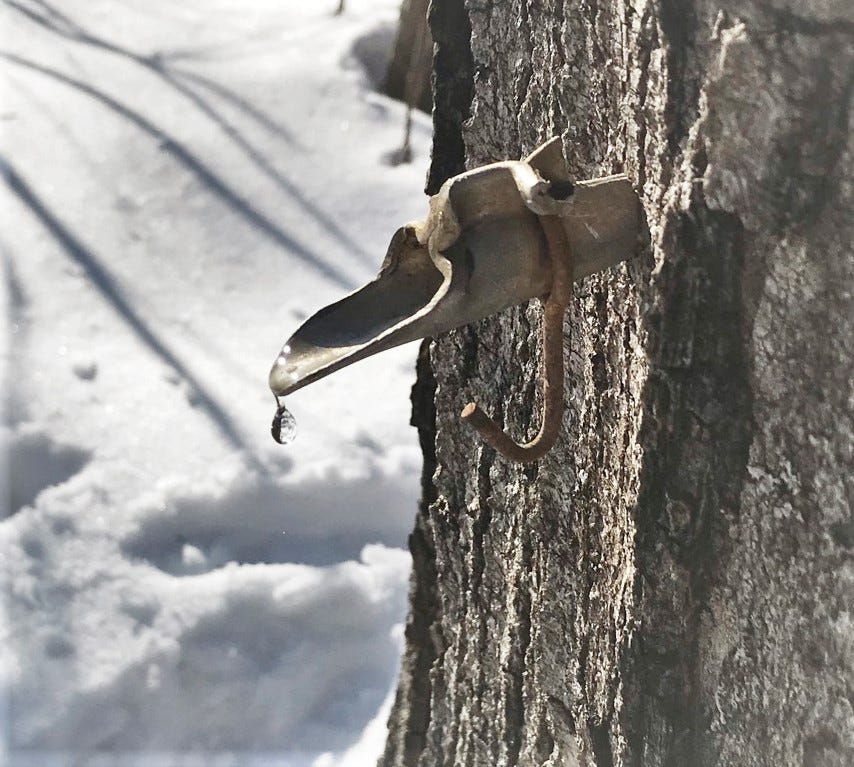
After my dad passed away, two of his friends clearly felt an obligation to keep an eye on me and my various endeavors.“Uncle” John had been an engineer with my father at Hamilton Standard, and a lifelong friend. He made a point of stopping by to monitor Anne’s and my home building progress - which admittedly took forever. We only worked on our house nights, weekends, and in between other building projects, so progress was indeed pretty slow. Not infrequently we’d find notes stuck to the front door – or where the front door would have been if we’d taken the time to install it. Notes with good natured observations like;“If you hadn’t put the hammock up first - your house would probably be done by now – love John.”Howard, who had worked as a forester and used to help my dad with various land trust projects, whole heartedly disagreed. He left us notes like;“Such a comfortable hammock, and it’s hung in just the right spot! Keep up the good work. HC”Howard went to Connecticut Agricultural School (now UConn) in the1920s and was not as interested in our building progress, or lack thereof, as he was with our farming. He took a vested interest in all our animals and fell hopelessly in love with our maple sugaring operation. Between lambing and sugaring, he pretty much moved in with us for two months every spring.He loved to help when we tapped our trees, even though we had different theories about the best placement of each tap on every tree. He preferred to place the taps over the biggest roots, assuming that the sap flowed from low to high. I liked to tap on the sunniest side of the tree figuring the sap flowed better where it was warmest. His theory was based on 1920’s Ag school science, and mine was based on anecdotal intuition. We were both partially right and partly wrong. The sap flows up and down throughout the tree, and what is warmest in the morning might be shaded by afternoon.I would use my cordless drill, which was exactly like the dozen other cordless drills I’d owned over the years. Suitably utilitarian, but in the end just as disposable as the 5-gallon plastic bucket I carried it around in. Howard used his “bit brace hand drill” which he stored in a cloth lined leather case. It was the same brace he’d owned for 70 years. It had clearly been put to good use, but it aged well and was still in perfect condition.He asked me once if he could try my drill, so we swapped tools for the afternoon. He liked the speed and ease of using the cordless drill but not nearly as much as I liked his brace. The bit was so sharp I could actually feel it as it grabbed and sliced into the wood. I could even feel the difference in the density of the wood as the bit noiselessly made its way through the punky bark, past the hard layer of cambium and into the sap wood.We’d boil all day and into the night until eventually I’d call it quits. Howard would insist on staying up all night to “keep the boil going”. I tried to convince him it wasn’t necessary, and privately I worried that keeping a 90-year-old working all night was surely some form of elder abuse. When I mentioned as much to his daughter, she said I’d probably need a restraining order to keep him away, and it would break his heart if I tried.So, I’d leave him there in charge of the fire but before going to bed I’d look out the window and I could see from the lack of smoke coming from the evaporator chimney, that he was already sound asleep. I’d go back down to the sugar house and try and get him to go home or at least come “take a nap” on our couch. He’d insist he had barely dozed off and was good for the night.If I’d known back then what I’ve come to appreciate now, I would have started each sugaring season by putting the hammock up just inside the sugar house door. This is a public episode. If you would like to discuss this with other subscribers or get access to bonus episodes, visit clatterridgefarm.substack.com
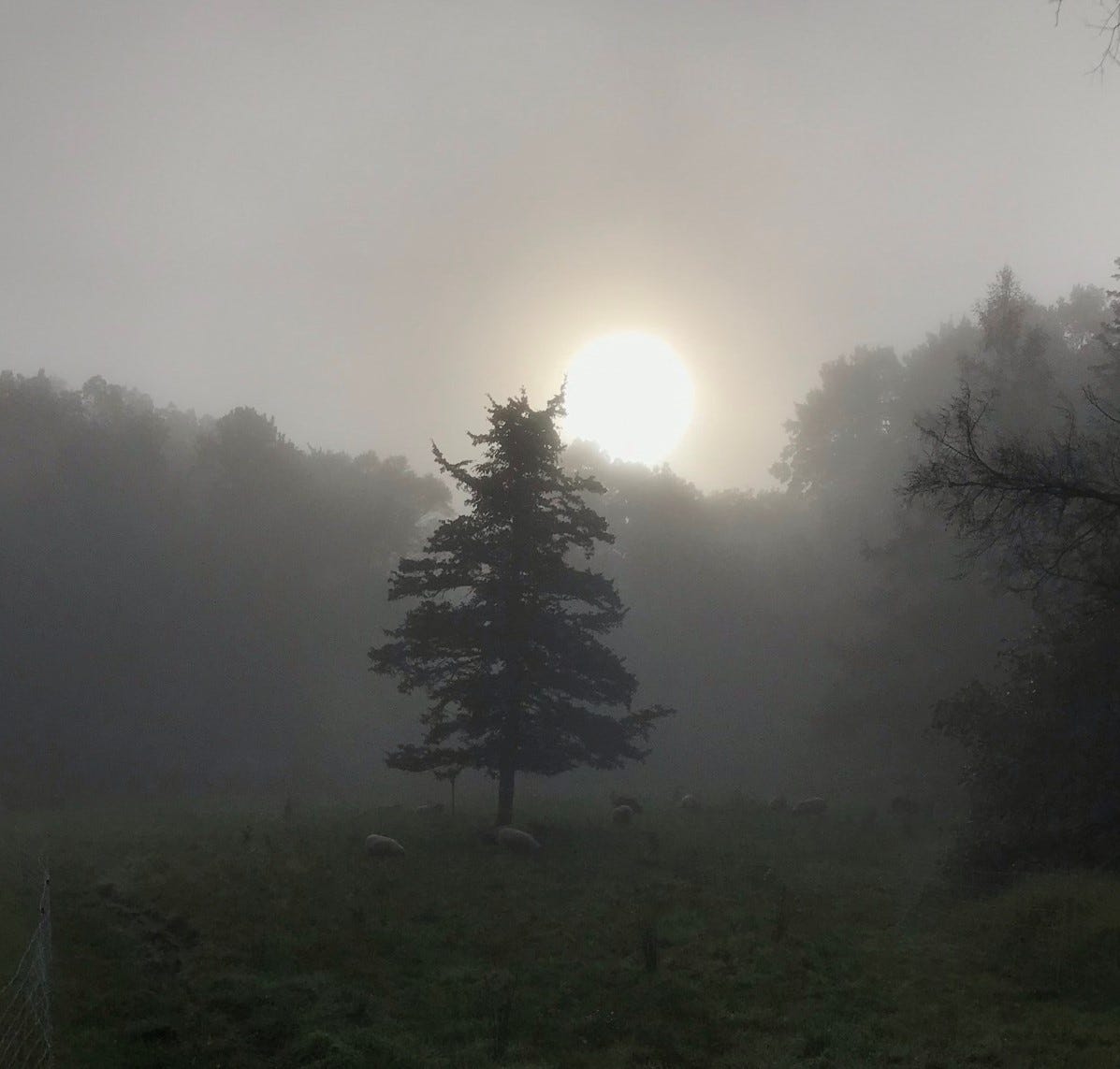
S2 Ep 3The Improbability of Kindness
The 6.1 magnitude earthquake that hit Los Angeles early one morning in October 1987 literally rocked my world and my whole sense of security within it. It was the first time I had experienced nature as something to be afraid of – before then it had always been a good friend. A friend I thought I knew.The noise of the earthquake was in itself terrifying, as it roared like a freight train passing underneath. Every fiber of my being wanted to run, but there was nowhere to go. Standing up was hard enough, running wasn’t an option. I watched the floors and ceilings of my apartment bulge and buckle and the walls twist and crack. The fish in my saltwater aquarium lay sideways as the vibrations flattened them and prevented them from swimming upright. I could see the streetlights outside my window thrusting up, and slamming back down, as the ground beneath them heaved like waves on an angry sea. Dogs were howling and every car alarm in the city was blaring. Time stood still for the 30 seconds that the earthquake lasted, and I was certain that I was doomed. As a carpenter, I knew there was no way the ceiling and walls could move like that without the entire building coming down. But it didn’t come down, the building was fine, and I was fine. As soon as the earthquake stopped, my fish snapped upright, and for them at least, life instantly went back to normal.At the time, I was in charge of building maintenance for a nonprofit housing project and even before the proverbial dust had settled, I started getting calls. Everyone was okay but people were trapped in their apartments because doors had shifted and wouldn’t open. I didn’t have time to relive the panic, or to worry about the future- I just started functioning. One foot in front of the other, I spent the day at work, rehanging doors and assessing the damage. When I left at the end of that excruciatingly long day, I drove past various clusters of people who were camping out on lawns, sidewalks and parking lots, sleeping on lawn chairs, too afraid to go back inside. It was a surreal dystopian scene - and it quickly got worse.On the way home, two cars and a motorcycle collided in a major intersection in front of me. It was a brutal crash, and it seemed unlikely that either the motorcyclist or the driver of one of the cars were going to survive, but there was another driver, who was still conscious. His legs were pinned, and he was struggling to get free. There was gasoline leaking everywhere and, in his panic, he tried to start his car. Afraid the spark would cause an explosion, I pried open his door and got him to stop. I tried to convince him that he was going to be okay, that he just needed to stay calm while we waited for help. He grabbed my hand and asked me not to leave him. I assured him I wasn’t going anywhere, and without thinking I said, “I love you, it’s going to be okay”. He started crying and for the second time that day - time stood still.I was acutely aware of everything and of nothing. I could hear people talking but I couldn’t understand what they were saying. I could hear the hiss of a radiator overheating. I could hear someone stepping on crushed glass nearby, and I could hear sirens in the distance. I could smell gasoline, radiator fluid, and my own sweat. I could feel the grip of his hand and how it shook as he sobbed. I could tell the sirens were getting closer only because they were getting louder, but it felt like an eternity for the paramedics to actually arrive. When they finally got there, I let go of the man’s hand and like the fish in my saltwater aquarium, I stood up and everything snapped back into focus.I often think of that day and remember the total improbability of it all. The shocking hostility of the earth. The resilience of the buildings all around me. The ability of fish to simply carry on. But truly the most improbable thing of that whole improbable day was me, holding the hand of a stranger and how in that moment, I truly loved him.There were a lot of lessons for me, and they’ve stuck with me over time. Since then, I have never questioned the importance of building codes, and I no longer take nature’s friendship for granted. I learned that I can function, and keep on functioning, even when I really, really, really don’t want to. And after that day, I’ve never questioned a fish’s ability to swim on its side (though admittedly this lesson has yet to come in very handy). Clearly though, the most important lesson I learned that day - and I’ve thought a lot about it this past year; I learned that sometimes the only thing we have to offer each other is kindness - and maybe that’s all that’s needed to keep someone alive until the paramedics arrive. Or, like now, until someone figures out how to shut off this spigot of nastiness.Thanks for reading Clatter Ridge Farm! Subscribe for free to receive new posts and support my work. This is a public episode. If you would like to discuss this with other subscribers or get access to bonus epi
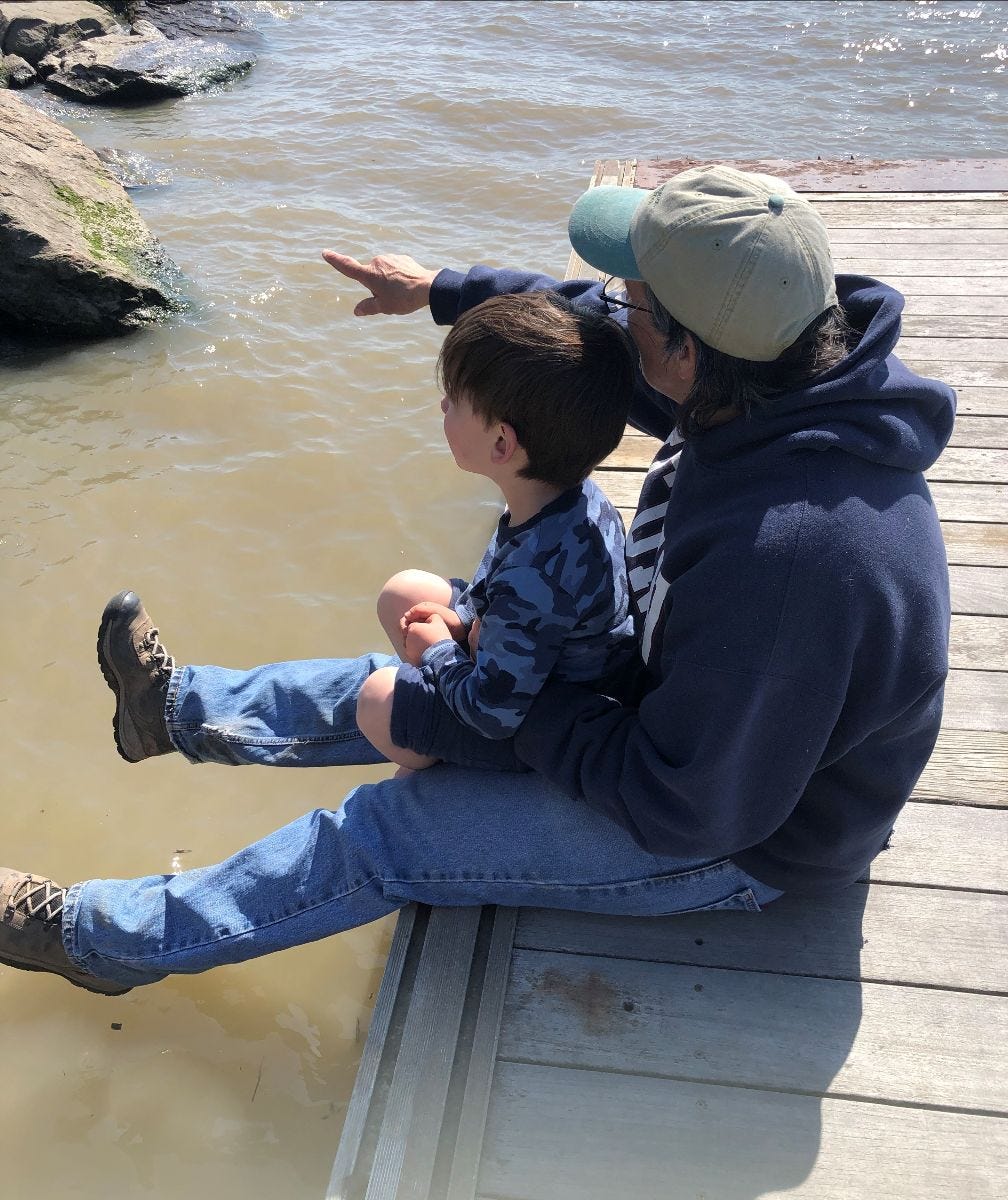
S2 Ep 2Getting Back to Normal
Seeing the holidays in the rear-view mirror is not unlike getting over a virulent stomach bug. The relief of simply getting back to normal is so satisfying as to be positively transformative in nature. The gratitude, the deep contentment, the blissful solitude – it’s possible that I have just gained a whole new lease on life.Our dogs have come out of hiding and are sound asleep - sprawled across the living room floor. Happiness for them is found in the simple things as well. Like being able to nap wherever they want, knowing their humans will step over them and not on them - like well-intended, but accident-prone children and house guests sometimes do.Our chickens who, as a matter of course, consider any sudden movement or unexplained noise an existential threat – did not, in fact, weep to see our beloved grandchildren leave. Perhaps as life returns to normal and the hens realize it was just the end of the year and not the end of the world, they’ll start laying again. Perhaps…Our sheep, who are not unlike the chickens - or me, find comfort and contentment in the quietly mundane. Life for them is good once again – simply because everything is as it should be. Everything is back to normal.Our pigs, who are accustomed to a daily cornucopia of hay, day old bagels, acorns, and a variety of fruits and vegetables - were fed nothing but dry pig food for the entire holiday week. They have been boisterously unhappy with the menu, and there is nothing quite as unfestive, or as threatening, as an unhappy pig. I brought them acorns and apples today, they’ll have squash and pears once again tomorrow and depending on what next week brings - I just might be forgiven by spring.For Anne and me, the departure of our house guests has been like opening presents all over again as we rediscover all the misplaced objects and the things we put away “somewhere” for safe keeping. Look! I found the bread knife and oh! There’s my favorite coffee mug!!Tranquility washes back over me today, as I bask in the silence and can write quietly, once again, in my favorite chair - my reading glasses, and cup of coffee right beside me-exactly where I left them…Heading out the door to do chores this morning though, my heart felt an awful tug. I sorely miss that little hand reaching up for mine. I miss his happy chatter and gentle laughter. I miss the chance to see the world again, vicariously through his eyes. To explore and discover all the wonder that there is to be found in all the things I now just take for granted. I miss him mightily - but for a few more days at least, I’ll still have the cold he gave me, and for now that’ll do. This is a public episode. If you would like to discuss this with other subscribers or get access to bonus episodes, visit clatterridgefarm.substack.com
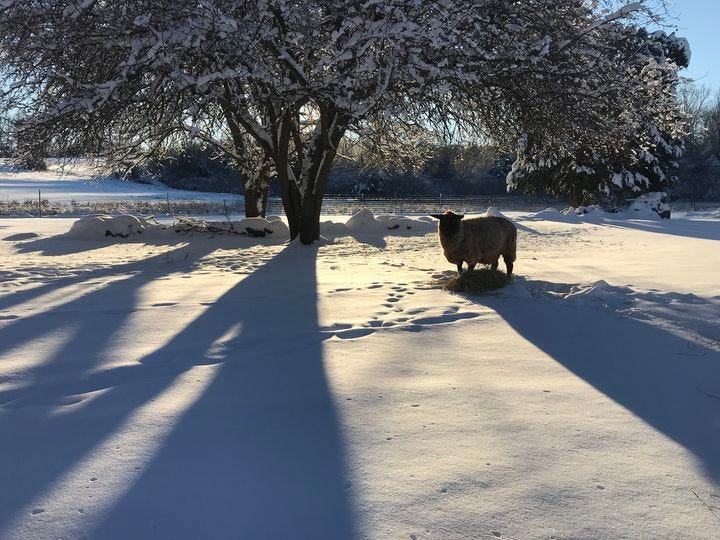
S2 Ep 1Marcescence (and a blanket of snow)
There are few things on this planet as peaceful as walking in a New England forest after a snowstorm. The sound deadening blanket covering the earth creates a blissful silence and is the perfect tonic for an overly noisy world. The welcomed hush is broken only by the gentle rustle of leaves stubbornly clinging to a few outlying trees.Most deciduous trees drop their leaves as soon as the color fades in Autumn. But a few, like white oak and beech trees, are “marcescent” and hold on to their dead leaves through the winter. Researchers have yet to agree on why these trees do this. Some theorize that marcescent leaves provide a fresh layer of mulch in the spring when the trees need it most. Some think the retained leaves offer shelter for birds, which in turn fertilize the ground below them. Some think the unappetizingly dead leaves help protect the tasty new buds from being eaten by browsing herbivores. I’ve often thought that the leaves were just left there for me to enjoy, like muted wind chimes on a wintry day.Curiously though, and perhaps revealingly so, is that the majority of marcescent leaves are within twenty feet of the ground. A white oak tree which might be eighty feet tall, will only retain the leaves on its lower branches. If the purpose of marcescence is to provide a layer of mulch, or shelter for the birds, surely retaining the upper leaves would be useful as well.The fact that the only leaves retained are ones within reach of passing herbivores lends credence to the theory that it’s a form of protection from grazing. To discourage our contemporary white-tailed deer, the twenty-foot cut off point is definitely overkill, but oak and beech trees evolved for millions of years in the company of giant sloths and mastodons. In fact, back when beavers were the size of bears (about 10,000 years ago), your average run of the mill herbivore could easily have grazed from the gutters of a two-story home.The only things that kept those super-sized grazers from consuming the entire planet were the equally impressive hypercarnivores that hunted them. Despite today’s allure, I seriously doubt I’d find my meandering wintertime stroll so relaxing if I had to share the forest with saber tooth tigers, American cheetahs, and dire wolves. Perhaps the true purpose of the marcescent leaves is to serve as a reminder that though the modern world might seem loud and at times stressful, at least I can aspire to be something more than just an appetizer in the food chain of life. This is a public episode. If you would like to discuss this with other subscribers or get access to bonus episodes, visit clatterridgefarm.substack.com
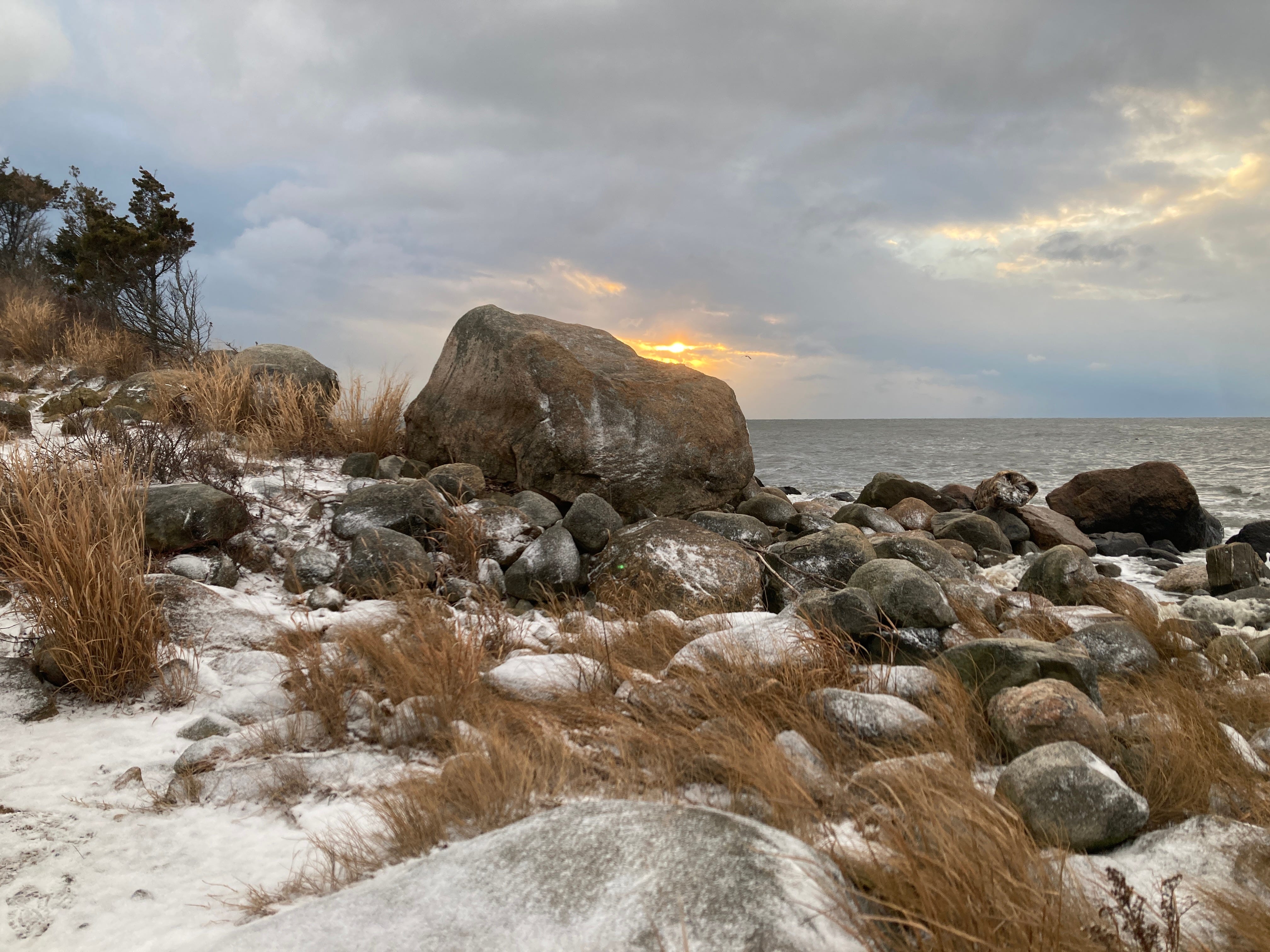
S1 Ep 30Counting Peas
Our friends with culinary ties to the South made their annual pilgrimage to buy smoked pork jowl from our farm last week. The jowl is traditionally cooked with collard greens, black-eyed-peas and served with cornbread. All of which are believed to bring good luck and prosperity in the New Year. The meal served either at midnight, or on New Year’s Day, has many iterations across the South and very specific ingredients and traditions surrounding each variation. I can’t keep track of them all but the gist of it is that the black-eyed-peas are considered a “lowly food” and eating them shows humility - which in turn will be recognized and rewarded by God.The color of the collard greens symbolizes money, and the color of the cornbread symbolizes gold.Hogs represent prosperity, because historically, if you owned a hog, your family would have plenty of food for the winter. Also, because pigs can’t turn their heads to look over their shoulder, they symbolize a “forward looking” nature which is perfect for the start of a new year, and of progress towards one’s goals.Out of curiosity I ask everyone who purchases our jowl how they cook it and how they celebrate the New Year. Everyone seems very happily committed and amused by their family’s interpretation of the tradition.Some make “Hoppin Johns” with black-eyed-peas, greens, rice, and pork.Some use kale, or cabbage instead of collard greens.Some use smoked ham hocks instead of jowl bacon.Some put pennies in the dish - some put a penny under the dish.Some swear the coin must be silver and placed inside the pot – or not.Most use black-eyed-peas, but some substitute red peas, lentils, or cow peas.Some are very committed to the exact number of peas that must be eaten. Too many or too few can bring bad luck – or good luck, depending on who you ask.Anne’s and my own New Year’s Day tradition is much less complicated. We drive to Hammonasset Beach and watch as the sun rises over the ocean. This year standing at the edge of our world, we watched the tide come in and the sun come up. Surrounded by magic, filled with awe, and overwhelmed with gratitude, I tried to count all my blessings. If happiness has a monetary value, I’m as prosperous as anyone I’ve ever known. In this coming year, there isn’t a lot more I would wish for myself but if I thought it would result in a kinder,saner planet, I’d happily eat my body weight in black-eyed-peas. This is a public episode. If you would like to discuss this with other subscribers or get access to bonus episodes, visit clatterridgefarm.substack.com
S1 Ep 29In Praise of the Christmas Orange
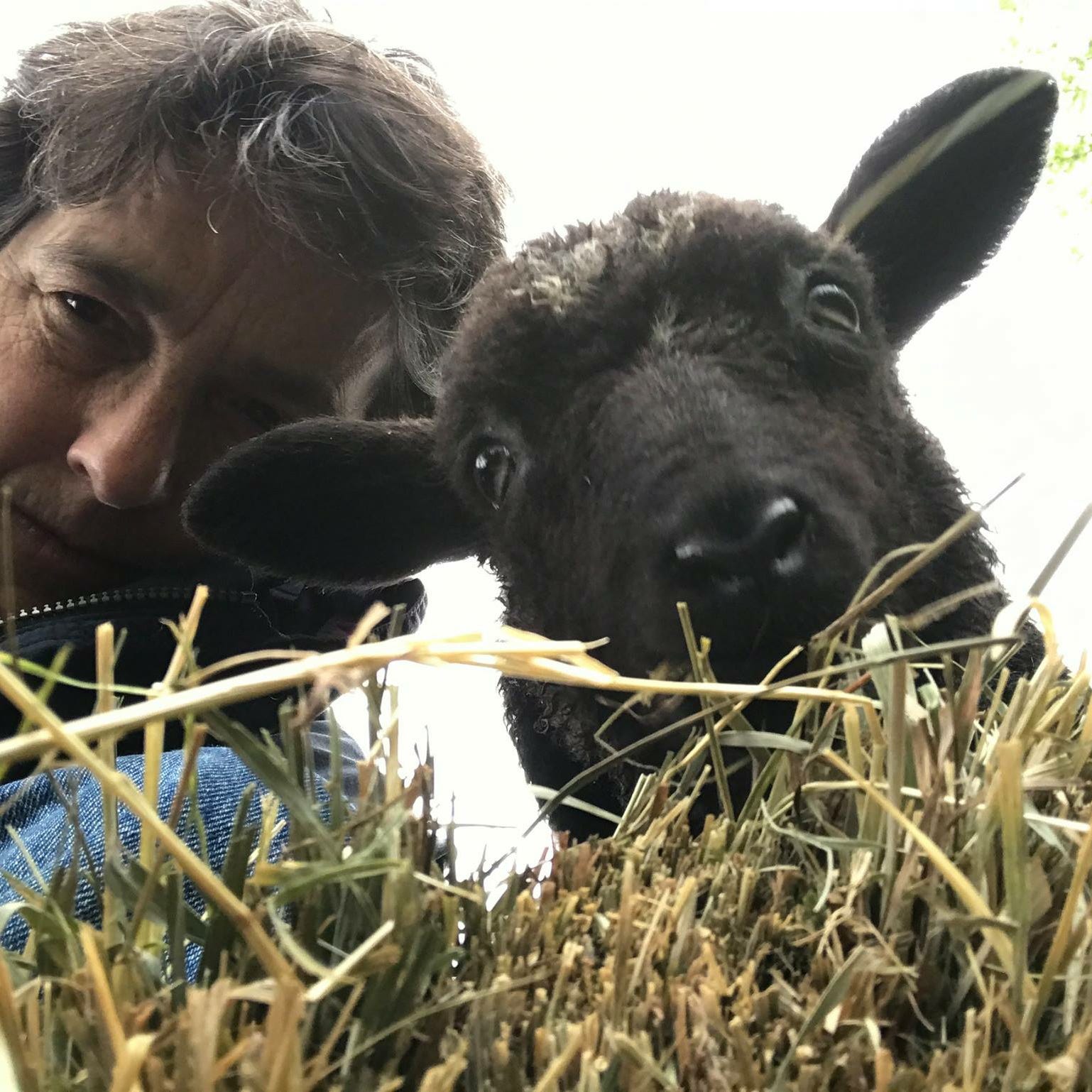
I always thought my mom’s tradition of putting an orange in the bottom of everyone’s stocking was a waste of perfectly usable stocking space, and I told her so every Christmas. She explained that growing up oranges were a special treat, and as a child, one of the magical joys of Christmas. As a kid I found that hard to believe, but it makes sense to me now. In an era before refrigeration and mass transportation, everyone ate locally. You knew your farmer, and you ate what was in season, and I can certainly imagine how exciting something as exotic as an orange, grown in a faraway place by total strangers would be to a small child. I’ll likely never know the thrill of such “exotic” food, as now everything is shipped everywhere and available any time of year. Probably the closest I could come to that kind of culinary thrill is tasting something that is just absurdly expensive.On one of the first Christmases that I spent away from home, my mom sent me a small package, labeled very clearly “not to be opened until Christmas morning”. I should have known what it was, but it was small enough, and light enough, that I didn’t think about it, I just stuck it in the bottom of my backpack as a friend and I headed out to hike the Kalalau Trail on the Na Pali coast of Kauai.The hike was strenuous but the views and the beach at the end of that hike were absolutely stunning. A mile of pristine sandy beach nestled between the ocean and the cliffs of the Kalalau Valley. The place was completely deserted except for a couple we could see setting up their tent at the far end of the beach.It was a surreal spot for a New Englander to spend Christmas eve. I fell asleep on the beach, under the stars, to the sound of a 300-foot waterfall thundering into the ocean below.I awoke, just before dawn on Christmas morning, when the unnerving sound of waves coming in way too close and way too fast, pierced my consciousness. We quickly moved to the elevated safety of the dunes and waited for sunrise.As the sun came up, we could see that the couple down the beach had not been so lucky. They lost everything to that rogue wave. It had swept them away while they were zipped up and sound asleep inside their tent. They managed to get out of their tent and swim to shore but lost everything they had brought with them. They were completely traumatized, but very happy to be alive.The four of us walked the beach trying to retrieve anything we could find in the roiling surf. We recovered a tent pole, a hiking boot, and a couple random things, but there was actually very little the ocean was willing to give up. At some point we stopped looking, sat down, and with a deep sense of gratitude for just being alive, we wished each other a Merry Christmas...We eventually left the couple there on the beach - shoe-less, and still wearing their wet pajamas- promising to contact the park ranger as soon as we got back to our car, so that a helicopter would be sent in to air lift them out. Before we left, though, I opened the package from my mom. My “Christmas Orange” looked pathetic, alone in that box, with no stocking, wrapping paper, or gifts to keep it company - but split four ways, that orange tasted every bit as exotic, as my mom had always claimed them to be. This is a public episode. If you would like to discuss this with other subscribers or get access to bonus episodes, visit clatterridgefarm.substack.com
S1 Ep 28The Scruffiest Tree
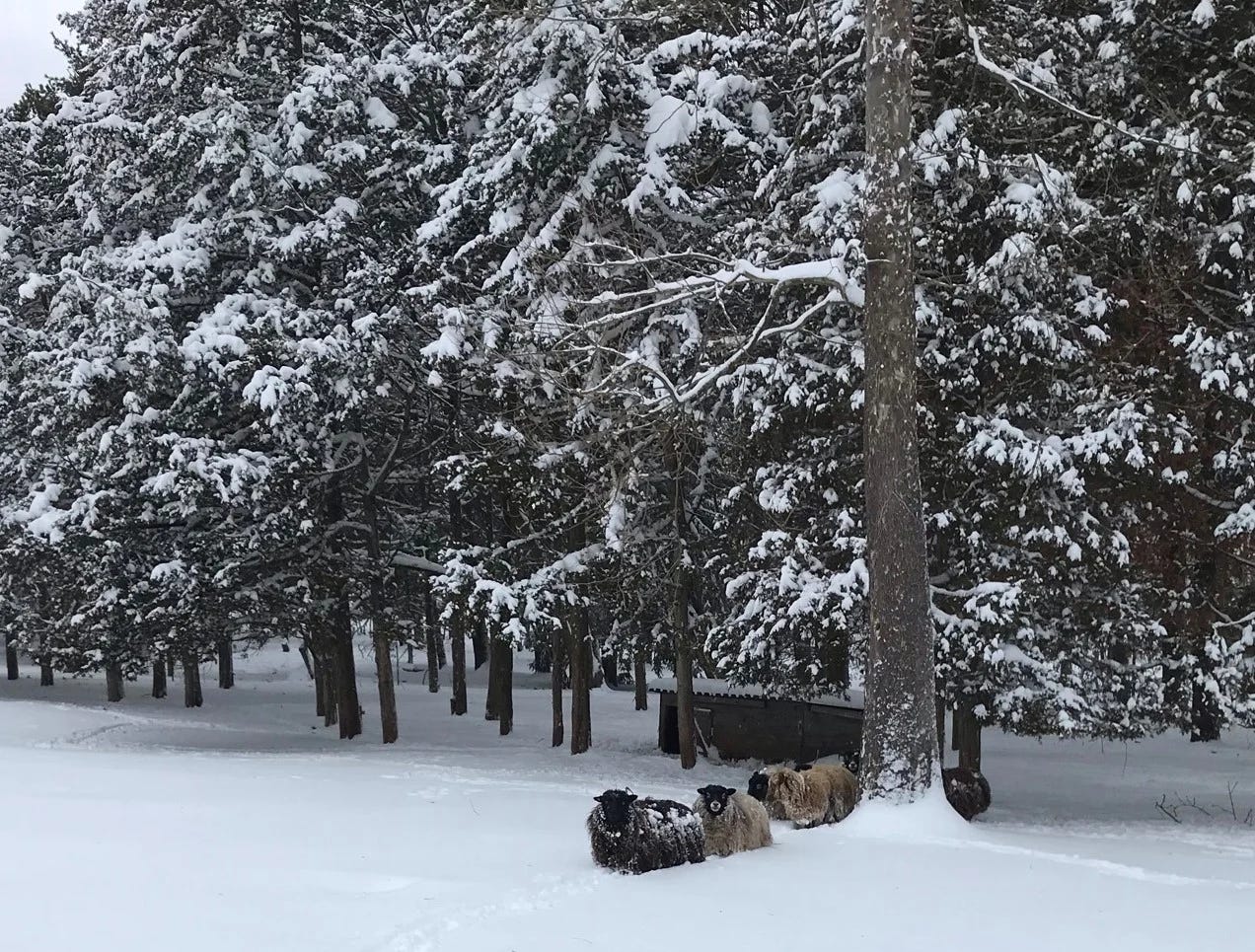
When we were kids, we were fortunate enough to be able to cut our own Christmas trees, and of all our holiday traditions, getting the tree was definitely my favorite.We’d head out the back door and climb up the quarter mile path through the ravine to a grove of spruce trees that my grandmother had tasked my uncles with planting years before.Our Christmas tree lot was deeply magical. The trees, by then, were magnificently tall, perfectly formed, and densely packed. We’d wander about and look at each one in search of the perfect tree. The snow laden branches would glisten in the sun, and every tree seemed prettier than the last.There was always much debate about which tree was the most perfect one of all, but in the end my dad would insist that whatever tree we cut, had to be a tree that by its removal, left the forest better off.That was my dad. To own land was a privilege and an honor - it was not a commodity to sell or harvest lightly. It was our responsibility to care for, and to protect our land. It was all about “stewardship” not just about getting the perfect tree.So, from this quintessential New England Christmas vision, we would haul home the scruffiest tree in the forest and lovingly give it the place of pride inside our home. This is a public episode. If you would like to discuss this with other subscribers or get access to bonus episodes, visit clatterridgefarm.substack.com

S1 Ep 27A Fox, a Crow, and Me
Just as the sun came up, the snow stopped, and the wind moved on. It was so bitterly cold, though, the only hope of staying warm was to just keep moving. I wanted to check the fence line for any trees that might have come down in the storm, and I was indeed making great time. When I crossed the stream, though, a series of tracks caught my eye. Pleased to see that I wasn’t the only one out doing chores in the freezing cold, I paused for a while to look at the storyboard recorded in the snow.A mouse, taking advantage of the lull in the storm, had emerged from its burrow under a fallen tree and traveled to the edge of the stream to get a drink.Soon afterwards, a crow landed, its wings leaving a distinctive impression in the snow, and brushing away some of the tracks the mouse had left behind.A fox, clearly on its way to somewhere important (or hoping, at least, to avoid running into me) also trotted purposefully through.My own journey left a trail as well. My footsteps could be tracked moving quickly along the fence line and crossing the stream, pausing just long enough to read the story in the snow.Soon enough, the winds picked up again and erased every trace of us all. A mouse, a fox, a crow – and me. This is a public episode. If you would like to discuss this with other subscribers or get access to bonus episodes, visit clatterridgefarm.substack.com
S1 Ep 26The Prettiest Pigs in Town
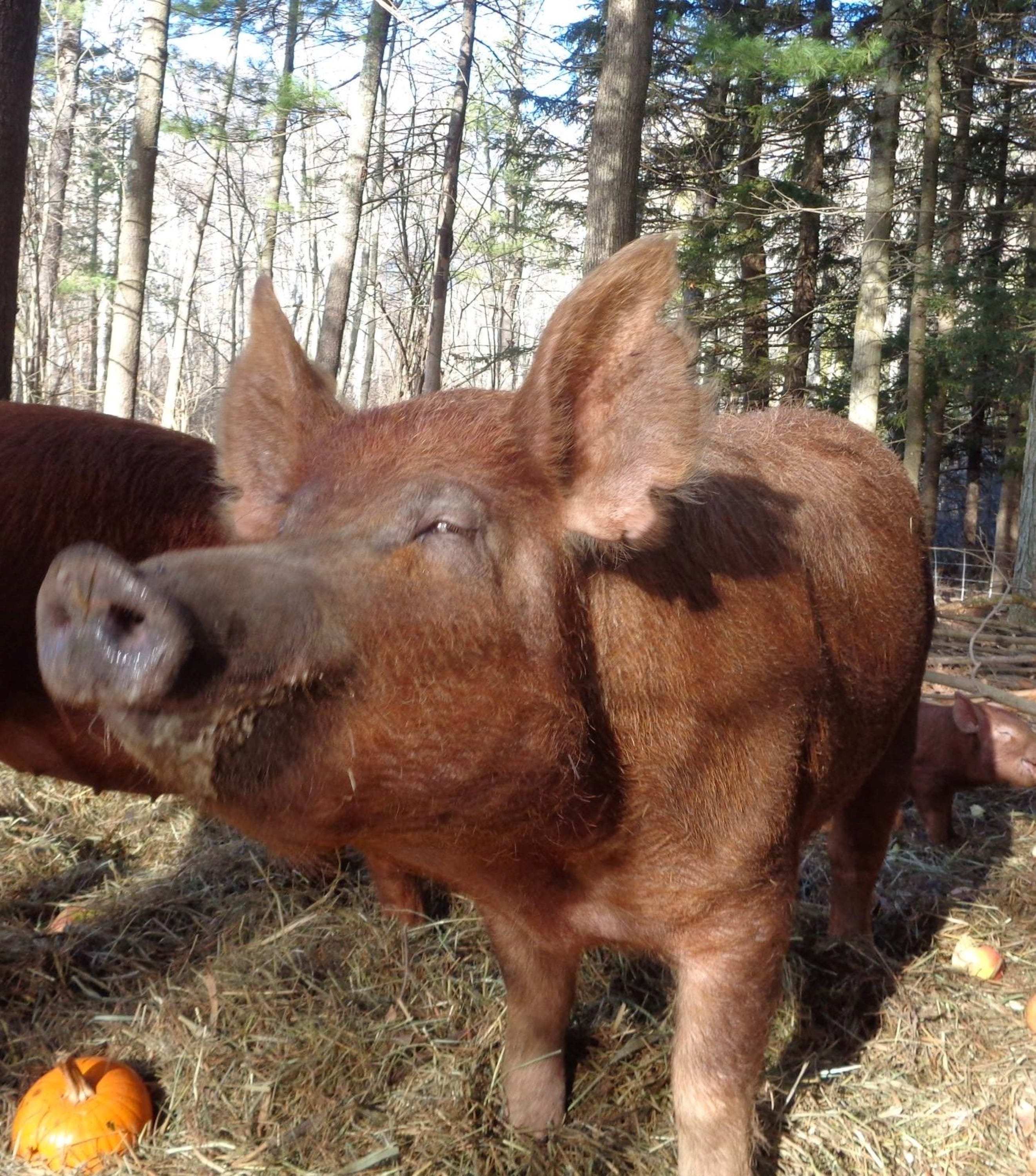
On this cold December morning, the witch hazel in our wooded pig pasture seems quite pleased with itself. Long after all our autumn leaves have fallen and every other plant has completely faded, Connecticut’s native witch hazel comes into bloom. The timing seems self-defeating as there are very few cold tolerant insects this time of year that are available to pollinate it. It is, however, the only blossoming game in town, so despite how few pollinators there are, there is no competition for their services. The thermoregulating moths are attracted to witch hazel’s showy yellow flowers and fragrance - and songbirds are attracted to the protein rich moths.Despite that lack of competition, witch hazel seeds have an abysmally low viability rate. Though pollinated in late fall, fertilization is delayed until spring when the seeds begin to form inside a pod. As summer progresses, the pods dry out and just about the time the new blossoms appear in November, the pod explodes and ejects the seeds 10-40 feet away. Once on the ground, it takes another year, or two, for the seeds to germinate – allowing an exceptionally long window of opportunity for hungry critters to discover them. The fact that the evolutionarily challenged shrub ever successfully reproduces at all is amazing.Witch hazel has been revered by humans (and moth eating songbirds) for centuries. Its branches were commonly used for dowsing as a means of locating underground water sources. The “y” shaped branches were known as “divining” or “witching” wands and that’s likely how the shrub got its name.Though dowsing for water has fallen out of favor by farmers and well drillers, distilled witch hazel is still a multi-million dollar industry. Connecticut is, in fact, the witch hazel capital of the world, as the majority of distilled witch hazel used worldwide is grown and produced here. Millions of gallons are distilled each year from CT grown witch hazel bark and twigs. Elizabeth Arden, Este Lauder, Avon and Revlon all use Connecticut witch hazel in their products.Watching our pigs bathe in the mud beneath this world-famous beauty product, I think to myself “is it any wonder our pigs are so darn pretty.” This is a public episode. If you would like to discuss this with other subscribers or get access to bonus episodes, visit clatterridgefarm.substack.com
S1 Ep 25And a Whole Lot of Time
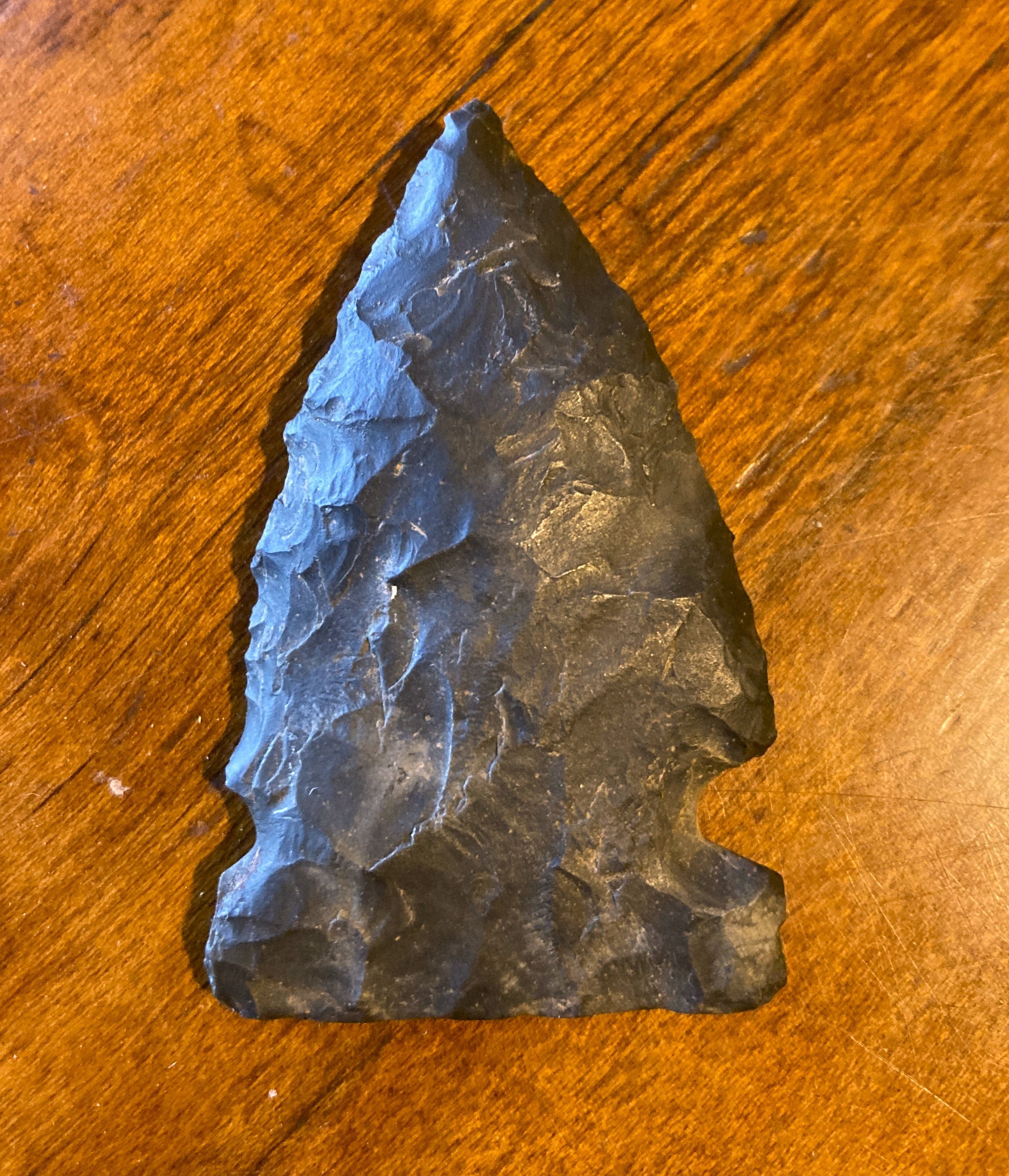
15,000 years ago, our farm (and the rest of New England) was covered with a sheet of ice a mile thick. As the glacier receded, it left behind barren rock, glacial till and valleys filled with lakes. The surface of New England had been scrubbed clean of whatever topsoil, earthworms, and megafauna that had lived here before. We had to completely start over from scratch.Lichen recolonized the rock – while shrubs and moss grew along the shores of the glacial lakes that were left behind. Grasses filled in quickly (glacially speaking) creating a treeless tundra populated by ancient horses, dire wolves, giant beaver, camels, and migrating herds of mastodons, and wooly mammoths. The grass followed the melting ice and rain, and the grazing animals followed the grass. Small bands of nomadic humans followed them both, across the Bering Strait and into the Americas.Within a few thousand years, Paleo-Americans were encamped on the Farmington River. The river provided an abundance of water and an assortment of fish, and the Metacomet Ridge (upon which Anne and I built our home) was the perfect elevated vantage point from which to spot the dust clouds that alerted hunters to the arrival of migrating herds. Around10,000 years ago, those ice age animals became extinct and were replaced by the more familiar caribou, white tailed deer, moose, bear and elk.While we were building our barn on the ridge, I found a spear point which the State Archaeologist said was 4,000-6,000 years old. It’s in perfect shape, and I often wonder how it came to be left behind. Unlike Anne’s spate of missing sunglasses, I doubt it was simply misplaced or left on the hood of a car. It was most likely lost during a hunt or buried, with ceremony, alongside its rightful owner.Heading out to feed the animals this morning, there was a dense fog blanketing the valley below. The fog followed the course and the bend of the Farmington River, from north to south and back up north again. As I watched from the ridge, the fog dissipated as the sun rose, and I was reminded of the glacier in retreat, and of how much has come and gone since then. From barren rock to fertile soils, from dire wolves to the paleo point I held in my hand. There’s an odd sense of serenity in knowing that we humans are but a tiny blip on this planet’s timeline, and that ultimately, she’ll be just fine without us. She has, in fact, moved on and started over, plenty of times before. All she needs is a little bit of lichen - and a whole lot of time. This is a public episode. If you would like to discuss this with other subscribers or get access to bonus episodes, visit clatterridgefarm.substack.com
S1 Ep 24The Luckiest Squirrel
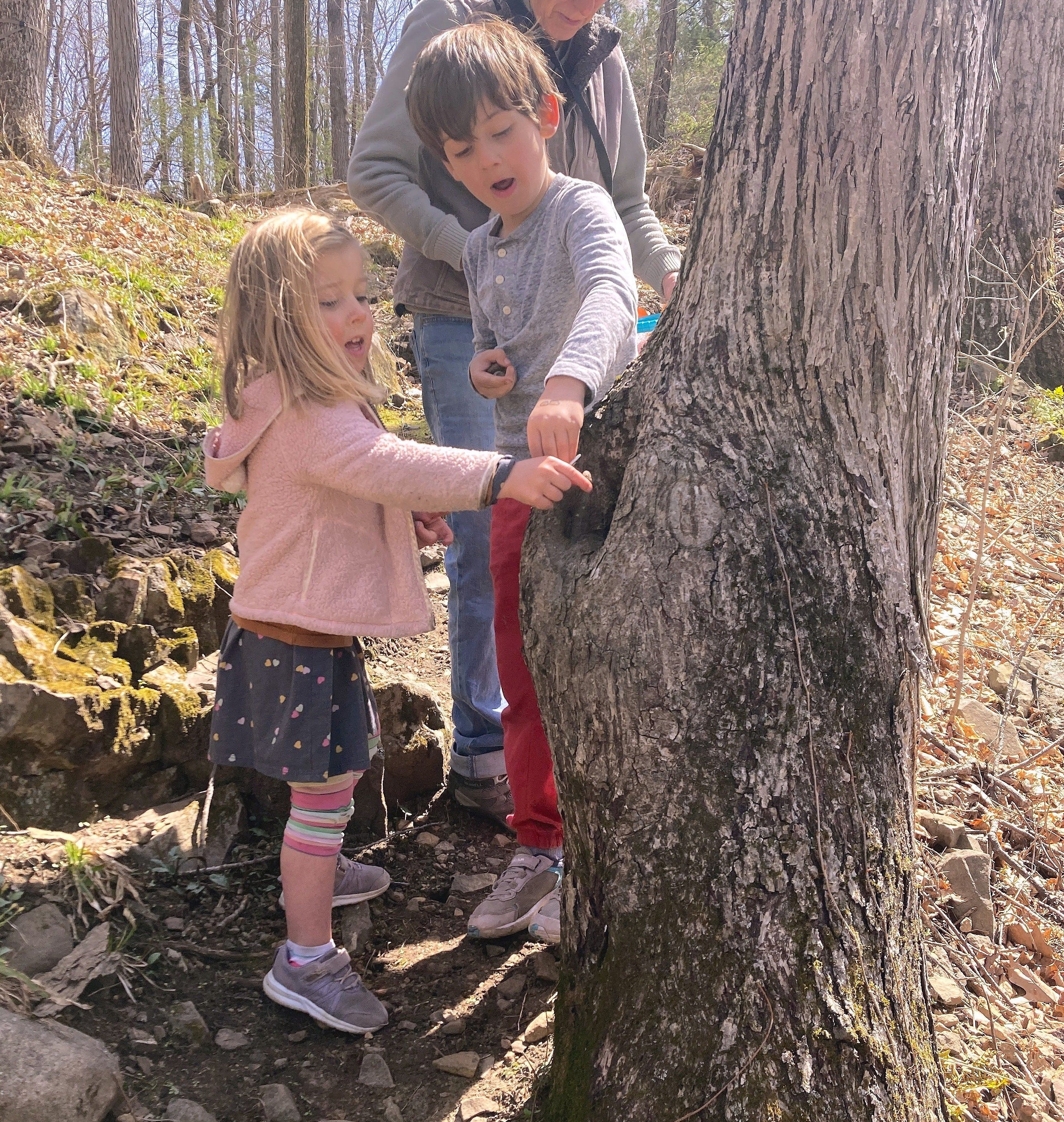
Halfway up the path through our ravine is a shagbark hickory tree that never seems to grow. It appears happy enough, but it’s been the same size since I was a kid. I’m sure that the limited nutrients from the rocky talus slope and the struggle of living in the shade of larger oaks has stunted its growth. But it’s not just the tree itself which never seems to age but the hole in its trunk never seems to change either. It’s neither healed, nor deteriorated, in all the years that I’ve known it. Waist high and facing the path, the hole isn’t very large – perhaps big enough for a child’s hand to fit inside, if ever there was a child brave enough to try.My mom always dropped a nut in the hole as she walked by. “One nut for each safe passage” she’d say. She was never very clear about what would happen if you didn’t pay – but I got the feeling it was a bit of a moral failing, something you tried to avoid as best you could. My older sister insists it’s way more consequential, with talk of vengeful trolls and such. I have doubts about this though, because for all the times I’ve been distracted and just hurried past, nothing bad ever happened to me, other than immediately hearing my mother’s voice once again, chiding me “where were you brought up child?”Being that the tree is hickory, finding nuts this time of year is easy, but by Spring finding any kind of nut can be a challenge. Sometimes the best that can be found is a leftover cap from an acorn, so I’ll drop that in and hurry along – hoping that the slight goes unnoticed. When nuts are abundant, though, I’ll deposit a handful and hope that it evens up the score.My sisters and I instilled this tree feeding ethic to our children, our grandchildren and to our friends as well. In fact, when friends from Manhattan were walking in Central Park, they reported that their 3-year-old insisted on feeding a tree with every nut he found. He wandered about, nut in hand looking for trees with a suitable hole.I said, “how absolutely wonderful!” I felt very proud to have had such an outsized influence on a child. His parents agreed that it was very sweet - but allowed as how it was also a terribly inefficient way to actually get anywhere.Even though the number of nut-bearing travelers has grown exponentially over the years, the hollowed-out trunk never gets full. It seems multiple generations of self-contented squirrels have been born to this tree, where all the children who pass by happily collect a winter’s supply of nuts for them. What an incredibly lucky family of squirrels! I’m certain, though, that the multiple generations of children who have also been born to this tree, have been even luckier still. This is a public episode. If you would like to discuss this with other subscribers or get access to bonus episodes, visit clatterridgefarm.substack.com

S1 Ep 23Even Further from the Sun
When planet Earth was young, it collided with something large enough to knock it off its polar axis. That collision, and the ensuing tilt, are why we have seasons. It’s also widely believed that the debris from that collision eventually became our moon.Earth spins on its axis, one revolution every 24 hours, and that gives us night and day. At the same time, it’s also orbiting the sun. And that yearlong, off kilter, rotation around the sun, changes the amount of daylight we get each day over the course of the year.If our planet hadn’t been knocked off balance, we wouldn’t have seasons here in New England. The amount of daylight we’d receive each day would be the same throughout the year, much like it is at the equator. As Earth rotates on its tilted axis, we in the northern hemisphere are now, once again, being tipped farther and farther away from the sun.I don’t know what life is like near the equator, but around here, the length of daylight triggers changes for lots of things that call New England home. Young male coyote pups are on the move, having been chased out of their parents’ territory. They’ll keep moving until they find a place, and a mate of their own. Our chickens are laying fewer eggs, as their bodies are clever enough to try to keep them from raising chicks in the middle of winter. Our trees have already dropped most of their leaves, having made the calculation that there isn’t enough sunshine to collect right now to risk being exposed to frostbite. Our sheep started breeding in October and will start having lambs as the grass starts to grow in March. The breeding season for white tailed deer has also started. Their season is known as “the rut” which comes from the Latin word “to roar”. The males are now experiencing peak testosterone – and stupidity. They are far more likely to step into traffic, or take down our electric fencing, as they clearly have more important things on their minds. Pigs, like humans (in more ways than one), have no breeding season. They can procreate regardless of the time of year, and presumably their testosterone and stupidity levels remain fairly consistent throughout as well. For our pigs, this change in season simply means an abundance of acorns, and pumpkins, and a whole lot more time for napping.It’s hard for me to wrap my head around the fact that this lopsided planet, which I truly adore, is spinning 67,100 MPH, and tilting, as I go about my daily chores. The seasons, however, are undeniably changing, and try as I might, I can’t really ignore it much longer. The shorter days mean that winter is surely on its way, and unfortunately it also means that Anne and I have even less daylight to get everything done, which needs to get done, before our orbit tilts us even further away from the sun. This is a public episode. If you would like to discuss this with other subscribers or get access to bonus episodes, visit clatterridgefarm.substack.com

S1 Ep 22For the Birds
Just before my dad passed away, I asked him what kind of tree he wanted his ashes scattered beneath. He didn’t hesitate – he wanted us to plant an oak tree. Specifically, he wanted a “northern red oak” planted in our ravine. It seemed an odd request - to plant an oak tree in a forest filled with oaks, but he was very definitive, so I was happy to oblige. Technically, I could have swiped an acorn from an unsuspecting squirrel, dug a hole in the ground and called it a day. But finding the perfect tree gave me a mission and I was grateful for the distraction.I searched all the local nurseries and only found one. Apparently, there isn’t a big demand for native trees, much less a northern red oak. The one I did find was absolutely beautiful - but it was huge. It was 12 feet tall and had a 200-pound root ball. The spot he chose for his tree was too steep for my tractor to access so we had to carry it, and dig the hole, by hand. My dad had 5 children, and it took us all, most of the day, to plant the tree where he wanted it.The minister stopped by at one point to check on my mom and asked us if we needed anything. I tried to convince him to help with the tree but apparently, he was thinking something along the lines of spiritual guidance. Undaunted, we managed to clear a spot, dig a hole, plant the tree, and then, carrying buckets of water, we watered it well.It’s been over 20 years and my dad’s tree is now more than 60 feet tall and still racing towards the canopy. It’ll probably be another 10 years before it really sees the full light of day. But even before it reaches its full-grown glory, an oak tree offers its support to more life forms than any other tree in North America. It is, in large part, due to its commonness that the oak is such a nurturer - the insects, birds and mammals that call oak trees home co-evolved over millions of years together.All the non-native plants and trees which I found in abundance that day, have leaves that carry chemical compounds which make them unpalatable to our local insect population, and without insects, they offer very little sustenance to our native and migratory bird populations.Even among other native trees, the red oak is the penultimate host. A maple tree might give shelter to 200 varieties of insects but the oak hosts 550 types of caterpillars alone. It’s no wonder more birds prefer to nest in an oak than in any other type of tree! On the ground, hundreds of species of mammals depend on the protein rich acorns to get them through the winter. No other tree in North America supports nature’s food web like the oak. It captures more carbon, holds more water, and produces more oxygen than any other tree.Considering all that an oak has to offer, and that my dad’s tree could very well live another 300 years, it just might be that his tree is the greatest legacy my father left behind. This is a public episode. If you would like to discuss this with other subscribers or get access to bonus episodes, visit clatterridgefarm.substack.com
S1 Ep 22Circadian Chickens
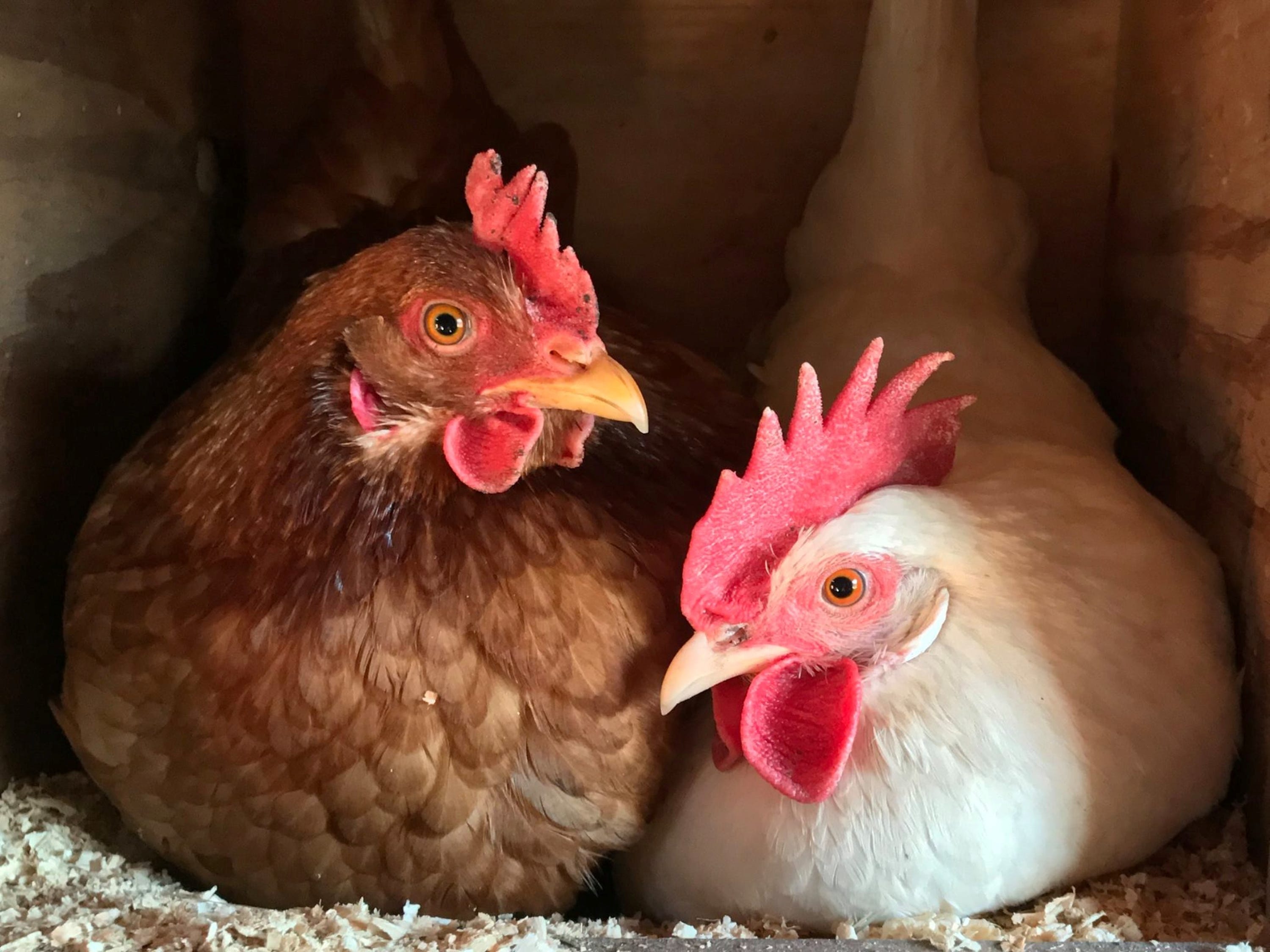
As autumn approaches, our chickens start slowing down for the winter. The pineal gland behind their eyes registers the change in daylight length, and they lay fewer and fewer eggs as their circadian rhythm tries to keep them from raising baby chicks in the winter. By March, when the hens’ glands register that there is enough daylight, they begin to lay again. Putting a light on in their coop which mimics 14-16 hours of daylight, helps fool their natural rhythm and encourages them to keep producing eggs. The artificial light definitely makes a difference in the number of eggs we get, but it’s no substitute for sunshine.In the past, I’ve set the timer for their light to come on from 4pm – 9pm. Having the light on in the coop that time of day has the added benefit of helping me see what it is I’m actually collecting, when I go into the coop to gather the eggs. I also like looking outside in the evening and seeing the hens happily hanging out as their 40-watt bulb sways gently in the breeze.But now I realize that there was a flaw with that schedule. Chickens, who are as bad at seeing in the dark as I am, rely on the gradual twilight of a natural sunset to encourage them to seek shelter for the night. I’m sure it was confusing to them when the light I installed shut off abruptly at 9pm and the coop was plunged into complete darkness. I’ve now changed the timer, so the light comes on at 2am and shuts off at 6am, at which point the sun has already risen. Apologies to all my hens of yesteryear.The term “circadian” comes from the Latin words “circa” which means “around” or “about” and “diem” which means “a day” – together they mean “about a day”. Circadian rhythms, be they human or chicken, help regulate a body’s functions to coincide with different parts of the day. Changes in daylight length, intensity, and color spectrum all play a part in telling the body what to do. When the day length shortens, our sheep go into heat, and our chickens stop laying. When the sun begins to set, our chickens -and our pigs, find shelter and settle in for the night.When choosing the best type of bulb to use for our coop, there is apparently no difference to the hen’s egg laying when using an incandescent bulb versus a fluorescent bulb, or an LED. Incandescent bulbs, though, use too much energy and are a potential fire hazard in a dusty coop. Fluorescent bulbs that flicker, can cause irritability in hens and they are more likely to start fighting with each other. (I wonder if anyone has ever studied its effect on humans – it could explain a lot.) LED bulbs are the safest and the most energy efficient for a coop. So, that’s what we are using.There have been studies that have shown intriguing changes to the size and shape of eggs when the hen house is lit with different colored bulbs.Chickens exposed to green LEDs laid eggs with stronger shells.Chickens exposed to blue LEDs laid rounder eggs.Chickens exposed to red LEDs laid smaller eggs but in greater quantity.Chickens exposed to white LEDs laid the largest eggs.White (which is all the colors on the spectrum combined) is what we put in our coop this year, because it is the most like natural sunshine - and when in doubt, I always go with whatever mimics nature best.If turning a light on in the chicken coop can convince my hens to keep laying eggs, and the color of that light can change the type of eggs they lay – I can only imagine what being constantly bombarded with various kinds of artificial lighting is doing to my own brain. And although I miss seeing the light on in their coop in the evenings, my own circadian rhythm is so far off that I often find myself awake at 2am anyway. So now when I wake up “to check on the plumbing and what not”, I can spend a few moments looking out the bedroom window, watching our girls living their life.It’s all about a day and filling that day with light. This is a public episode. If you would like to discuss this with other subscribers or get access to bonus episodes, visit clatterridgefarm.substack.com
S1 Ep 20Shepherd's Delight!
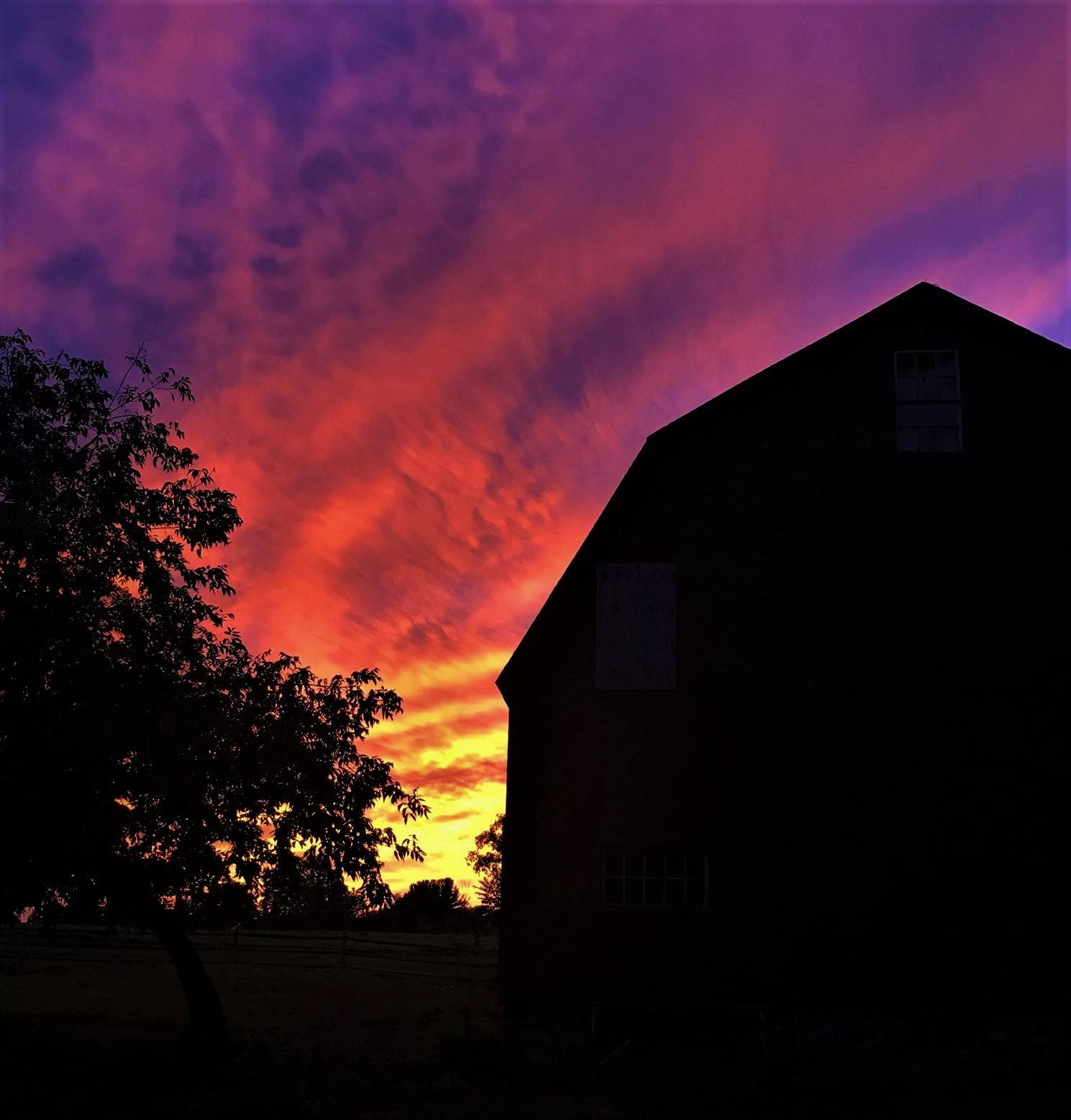
This time of year, we catch the sunrise while doing morning chores and the sunset during afternoon chores. It’s a bit like having a pair of bucolic bookends at either end of our day.The adage “red sky at night sailor’s delight, red sky in the morning sailors take warning,” often comes to mind. The original version of that saying refers to shepherds not sailors. “Red sky at night shepherd’s delight, red sky in the morning shepherds take warning”During the day, the sun’s rays, which include all the colors of the rainbow, make their best effort to penetrate the earth’s atmosphere. The blue colored rays have shorter wavelengths and are easily reflected and deflected. Like a distracted toddler, they spend the entire day bouncing off various particles in our atmosphere, and never seem to make it to the ground. That’s why, when we look up at the sky, we see mostly blue.But when the sun is on the horizon, its rays need to pass through even more of the earth’s atmosphere to get to us, and that extra distance reflects and deflects even more of the color spectrum. The reds, yellows and orange colors have the longest wavelengths and are ultimately better able to go the distance. That’s why those colors tend to be more pronounced when the sun is on either horizon.Depending on the pressure system on the horizon, and its density, additional colors get filtered out.Low pressure systems, even though they bring more wind and rain, have less dust and soot particles so they let more colors through. The combination of those colors leaves the sky a peaceful yellow color at either sunrise or sunset.Alternatively, a high-pressure system carries less moisture but more dust, soot and particulates which filter out everything except the red wavelengths and the horizon will indeed appear red.Since most of our weather comes from the west, if we see a red sky to the west (at night), it means a high-pressure system (bringing good weather) is about to arrive. Whereas a red sky to the east (in the morning) means the good weather has already passed and a rainy low-pressure system is sure to follow.I have a weather app on my phone, and I monitor it throughout the day. It helps us track storms and gives us plenty of time to plan. It allows us to move animals to shelter before the storm arrives – instead of trying to move them in the middle of a blizzard, or torrential rain. My smart phone is a wonderful tool, for which I will be forever grateful - but it has never inspired the kind of awe, or joy, I feel watching the sun go down. Quietly disappearing below a crimson horizon, it leaves me with the promise that “tomorrow, will be another fine day”. Shepherd’s delight, indeed. This is a public episode. If you would like to discuss this with other subscribers or get access to bonus episodes, visit clatterridgefarm.substack.com
S1 Ep 19A Flock of Rebels
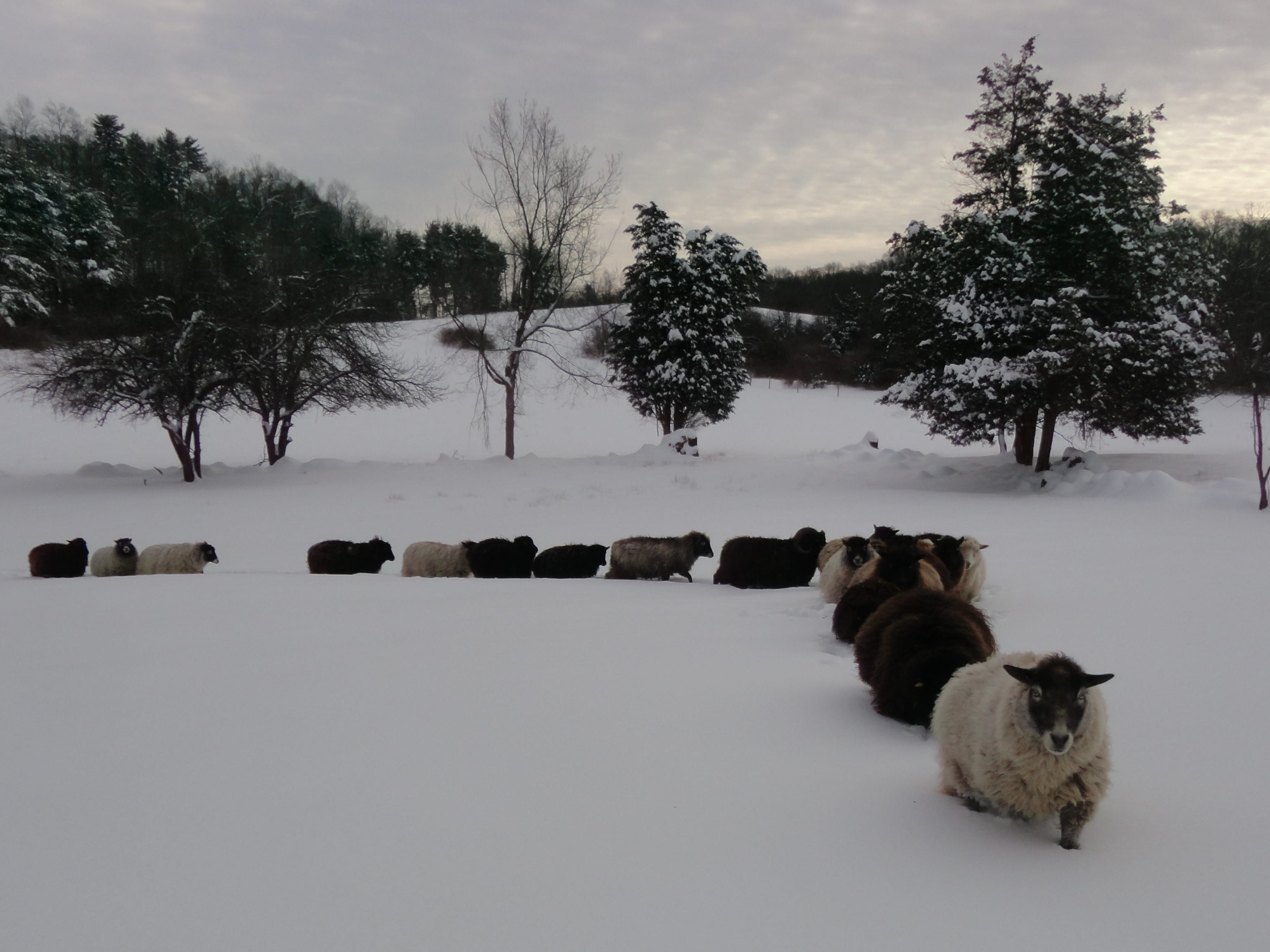
In an attempt to protect their monopoly on the wool industry, England tried hard to discourage one from ever taking hold in its American colonies. To that end, the exporting of sheep to America was expressly forbidden, but by 1655, a few smuggled sheep had multiplied to 10,000. Oops! I’m not sure what I find more amusing; that colonial sheep smuggling was actually a thing or that breeding sheep became such a subversive (and successful) act of independence.Clearly unable to completely stop America’s burgeoning sheep industry, British Parliament in 1699, attempted to at least contain it by enacting “The Woolens Act”. The law prohibited the export of any woolen items from the American colonies (and Ireland) and the import of textiles into the colonies from any country other than Britain. Though the law had a devastating effect on Ireland and effectively crushed its economy - it was not well enforced in America.That benign neglect ended in the 1760’s when King George III ascended the throne and made wool trading in the Colonies an offense punishable by cutting off the offender’s right hand. That renewed and elevated threat, along with various other taxes and tariffs, set the stage for the rebellion that soon led to America’s independence.Many colonists boycotted British goods and proudly wore homespun clothes as a sign of their patriotism. And while their male counterparts formed the “Sons of Liberty” and rioted drunkenly in the streets, the women of colonial America held spinning bees. They gathered together, not only to produce yarn and textiles but as a show of their own solidarity and patriotic fever. They came together peacefully and in doing so they announced to the world “We don’t want a king – not now and not ever again” This is a public episode. If you would like to discuss this with other subscribers or get access to bonus episodes, visit clatterridgefarm.substack.com
S1 Ep 18Signs of Life
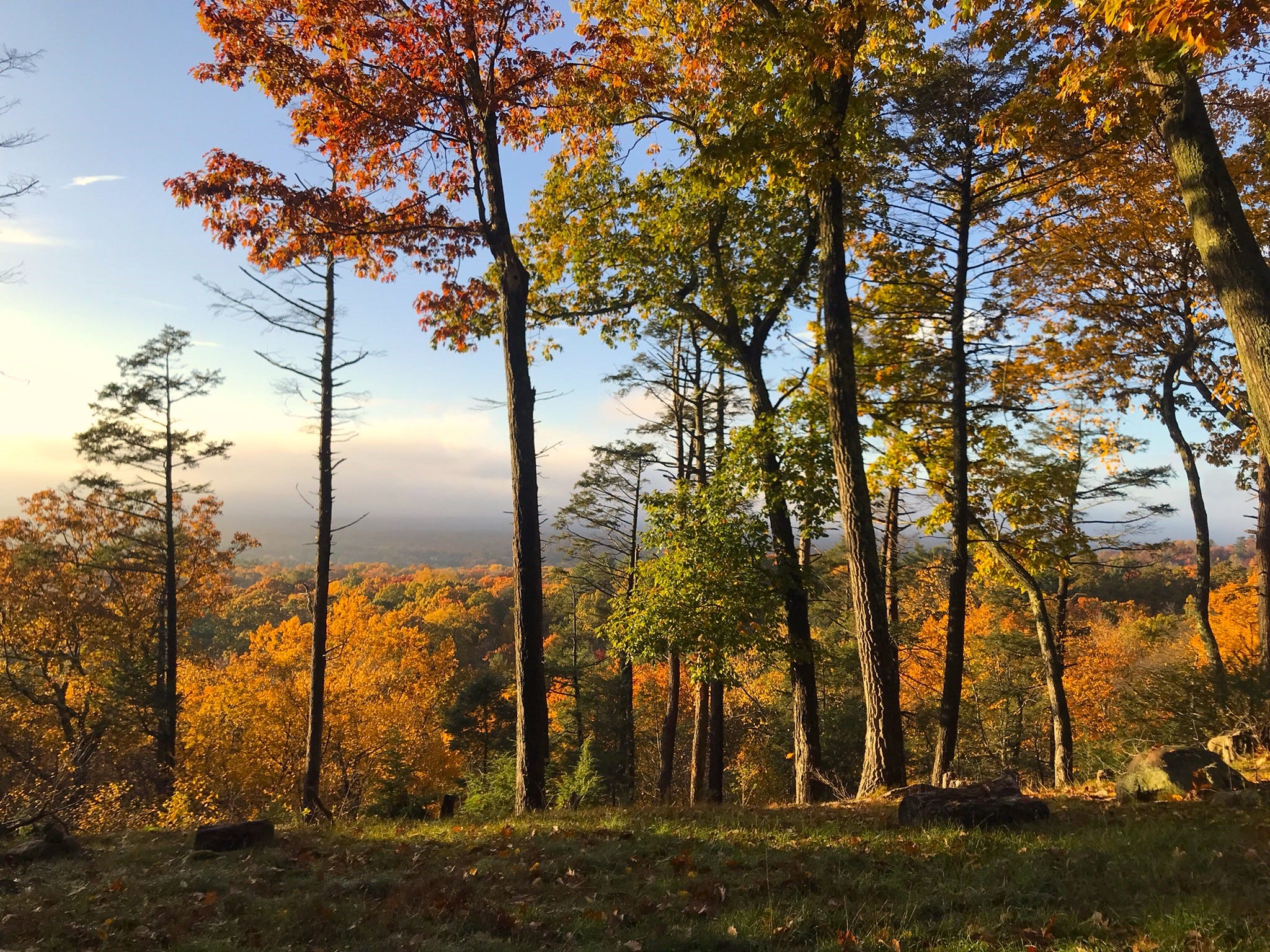
When I head out to the barn each morning, I always take in the view from our ridgetop home. Farmington is blessed with so many trees that most of its houses are hidden under a canopy of leaves, so when I scan the valley, there is very little evidence of human “civilization.” That suits me just fine! The view is timeless, the feeling is tranquil, and I cherish the early morning solitude.Once the weather turns cold though, there is always one sign of life that never fails to make me smile. As the sun starts to come up, a single wisp of smoke can be seen rising above the trees in the valley. It took us a while to figure out who else was up at that hour, and what inspired them to make a small fire which never lasted very long.Eventually we pinpointed the smoke to the farm in Avon where we buy hay. Every morning Douglas builds a fire in the wood-fired cook stove in his kitchen - as he says, “just enough to heat the coffee and take the chill out of the room, but not so much that you’d be tempted to linger.”Hidden beneath his formidable demeanor, he has a wonderful sense of humor, and was very amused when Anne called, one cold November morning. She told him that when we saw the smoke rising from his chimney, we figured that it meant he was still alive and knew he’d want to know.He thanked her and said that even though he checks the obituaries every morning to see if his name is listed, he knows it takes a few days for the paper to publish the names of the recently departed, so it would be great if we would indeed give him a heads up - just so as he’s “not caught off guard or anything.”It’s become a yearly ritual now. After the beauty of the foliage starts to fade and a hard frost settles in, we’ll see the smoke rising in the valley once again, and Anne will give Douglas a call just to let him know that he’s “still not dead.”As much as I love the seclusion of our ridgetop home and worship our tree covered and house-less view, there is something very reassuring about seeing smoke from Douglas’s chimney. His family has farmed that land for more than a century and even though the pigs and the cows are long gone, he’s still there, baling hay and warming his coffee on his mother’s cookstove. This is a public episode. If you would like to discuss this with other subscribers or get access to bonus episodes, visit clatterridgefarm.substack.com
S1 Ep 17From Pangea - With Love
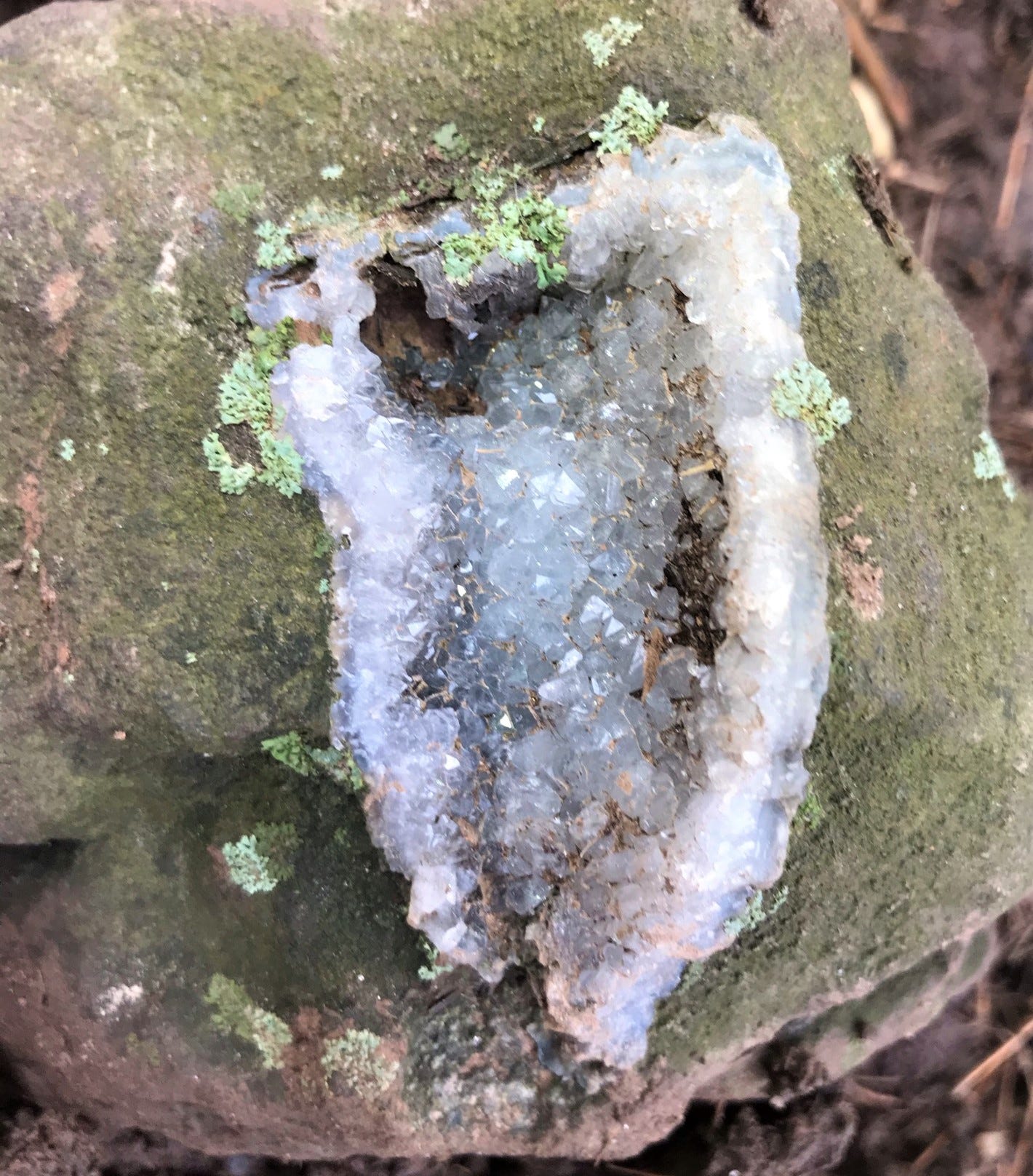
On the very last day of the year, I found a quartz geode laying on top of a stone wall in our pig pasture. It’s small – the exposed quartz is only about two square inches, but still, I’m not sure how I never noticed it before. I thought the pigs must have uncovered it, but there is lichen on it so it’s been exposed for a while.It was likely formed 200 million years ago, when our farm (along with the rest of North America) was connected to the northwest coast of Africa as part of the “supercontinent” of Pangaea. It was a time when T-rex ruled the earth and crocodiles were living, and leaving fossils for us to find, in Simsbury. It was also a time when the 30 foot long, fast moving dinosaur “Eubronte” was hunting in packs and leaving footprints in a muddy swamp in Rocky Hill. (Okay, maybe I should stop complaining about coyotes and bears...).As Pangaea broke apart, Africa and North America slowly drifted away from each other and fissures developed from which molten lava oozed. (Apparently continents, like humans, are sometimes just not right for each other...). When the lava cooled and turned to stone, it trapped a bit of mineral rich groundwater in a small pocket and voila! Our geode was born.As the fissures widened and the Atlantic Ocean was formed, the Metacomet Ridge (upon which Anne and I built our home) slipped down into a valley rift, tilting down its eastern edge, and tilting up and exposing the still visible traprock cliffs to the west. That might have been when our geode was dislodged from its birthplace, but it would have been subsequently buried again by the ensuing glaciers - which at one point covered our farm with a sheet of ice over a mile thick.Eighteen thousand years ago, when the ice finally melted and our farm became part of a vast tundra where Paleo-Americans, mastodons, and saber tooth tigers lived and hunted each other, the geode was likely buried in glacial till far below.Had the Europeans never settled in Farmington and our property never been farmed, the geode would have, probably, never come to the surface. It was the clear cutting of the old growth forest and the continuous plowing of the land that set in motion the frost heaving and erosion that brought the glacial till to the surface. Colonial New England farmland was relatively free of plow eating stones for several generations. It would have taken a hundred years or so of our farm being plowed for crops to bring our hero to the surface.I imagine, when it did surface, threatening to damage an ox drawn plow, it was caked in mud and just tossed unceremoniously onto the wall at the edge of the field, where the pigs and I first noticed it.I like to think of the geode as a parting gift from Africa, and I am extremely pleased to have found it, but somehow after 200 million years, it doesn’t really feel like mine to keep. I’ll leave it there on the wall and hope the pigs come to appreciate its historical provenance, and perhaps, at times, contemplate its inner beauty. This is a public episode. If you would like to discuss this with other subscribers or get access to bonus episodes, visit clatterridgefarm.substack.com
S1 Ep 16The Flavors of Autumn
As the days become shorter, trees (like the rest of us) prepare for winter. They begin to seal off the veins that transport nutrients to and from the leaves. Like battening down the hatch on a submarine, they cut the leaves off from the rest of the tree. If they didn’t, the moisture in the leaves would freeze and leave the tree vulnerable to injury.The leaves have pigmented enzymes which help the tree turn sunshine into sugar - a process known as photosynthesis. The green color of leaves comes from chlorophyl, which starts to break down as the veins begin to clog, causing the green pigment to fade away.Also in the leaves, but masked during the summer by the green, are carotenoids. These are the same enzymes that give corn its yellow coloring and make carrots orange. As the green chlorophyl breaks down in the dying leaf, the orange and gold of the carotenoids become visible.With the warm sunny days and cool nights of autumn, trees make an over abundant supply of sugar. Anthocyanin, a reddish water-soluble pigment, is found in the leaves in response to the excessive sugar. When the tree seals the leaves’ veins, some sugars and the red pigments are left behind, turning the leaves red.The oranges and the yellows in our fall foliage display remain fairly consistent from year to year. What changes most is the amount of red. Warm sunny days followed by cool crisp nights produce lots of sugar and creates the most vibrant colors of red. If the days were cooler or the nights warmer and more humid, the colors would be more muted.Once the veins become completely sealed, the leaves begin to drop. The falling leaves are a critical food source for all the microbes in the soil of the forest floor - just as they are for our lawns and gardens.Our sheep love to eat the leaves as they begin to drop, and they fight over the first few to hit the ground. They prefer the falling leaves to what’s left of their still green pasture. I wonder if they can taste the different colors. Do the gold leaves taste anything like corn? And the orange leaves, do they taste like carrots? Can they taste the sugary reds? Are some years sweeter than others? Do they compare notes with each other on the flavors of this autumn compared to last?This summer’s drought was so intense I worried about our trees. I thought that the leaves might all just turn brown and drop. But they didn’t. They’ll give us another tremendous show - and that technicolor sweetness just never gets old. This is a public episode. If you would like to discuss this with other subscribers or get access to bonus episodes, visit clatterridgefarm.substack.com
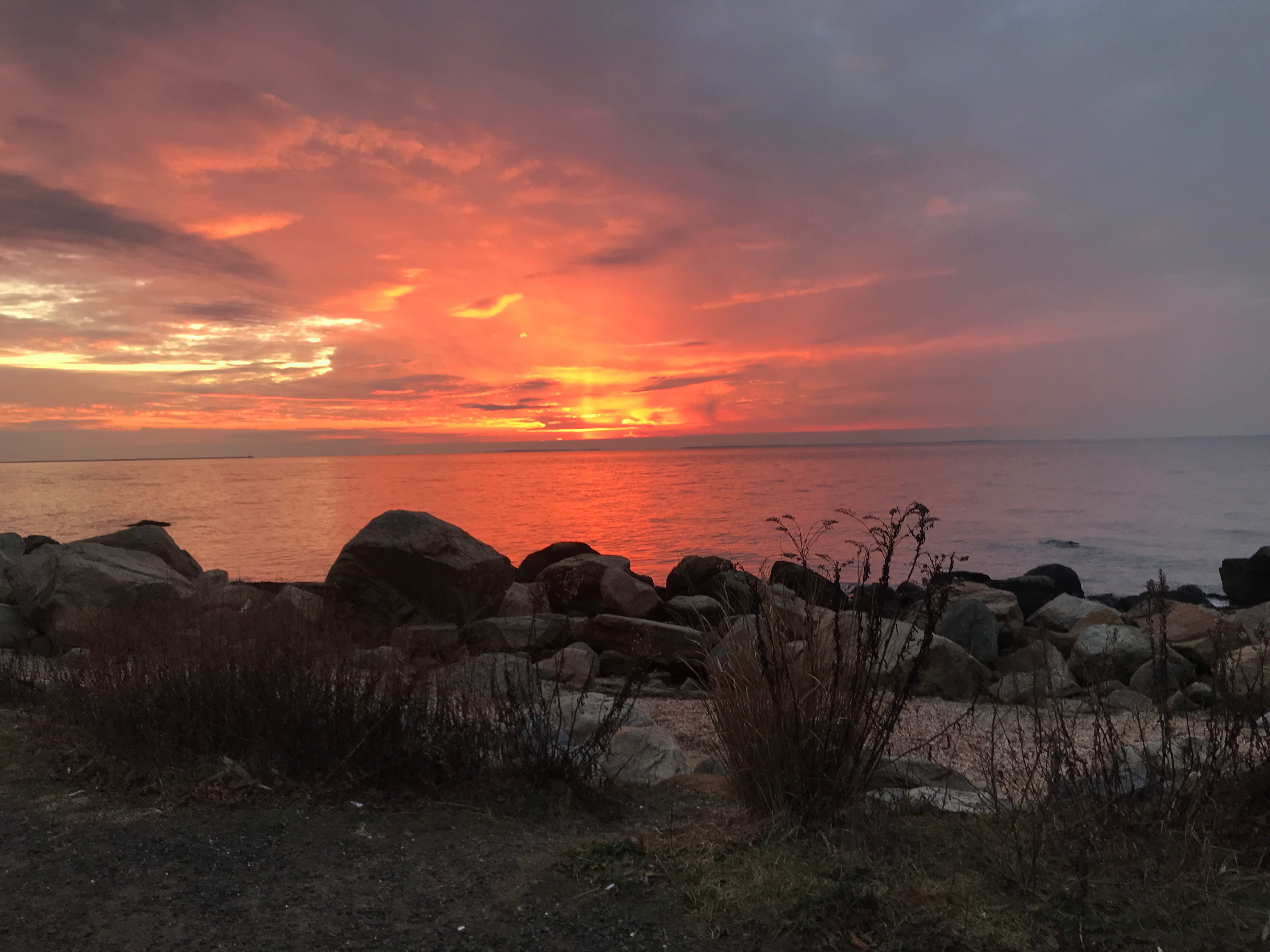
S1 Ep 15Through The Ravine Back in Time
15,000 years ago, our ridge top home would have been beach front property on the shores of the very picturesque “Ancient Lake Hitchcock”. The 150 foot deep lake, which spanned from Rocky Hill to Saint Johnsbury, Vermont, was, I am sure, breathtakingly gorgeous, with stark white icebergs serenely juxtaposed against the turquoise water.Whenever the receding glacier “calved,” giving birth to new icebergs, the water level in the lake would precipitously rise and overflow, and for several thousand years the ravine by our house helped drain the over flow.And just as the ravine once acted like a funnel for glacial flood waters, it now funnels people and wildlife in search of one of the few navigable pathways down through the traprock ridge.My grandmother referred to the steepest part of our ravine as “the goat path,” and yet, she walked it almost every day. The name stuck, and despite its steepness, the goat path is still the best way to get from the ridge to our pastures and woods below.Anne and I installed a cell-enabled trail camera in the ravine, which sends us pictures whenever something passes through. We get real time photos, day and night, of fox, bobcats, bears, coyotes, deer and one obnoxiously photogenic squirrel.As much as I love seeing all of these photos and keeping track of what's going on - what I wouldn't give to be able to see the ravine back in time! I can imagine the vast hoards – and herds – of animals skirting the edges of Lake Hitchcock and being funneled down through our ravine as they made their way down to what was back then wide-open tundra on the valley floor below.If someday we should find ourselves transported back in time, you'll know exactly where to find me. Come join me for a cup of tea, and from the relative safety of the ridge, we'll while away the afternoon watching all the animals passing through...It must have been a veritable freeway with herds of caribou being pursued by packs of wolves, with the slow-moving ground sloths lumbering along, and the giant beavers, doing whatever it is that giant beavers do. I can visualize, and practically hear, the elephant-like mastodons thundering past and the small band of paleo hunters in hot pursuit.I can see them all, going about their lives and finding their way down my grandmother's goat path through the ravine... This is a public episode. If you would like to discuss this with other subscribers or get access to bonus episodes, visit clatterridgefarm.substack.com
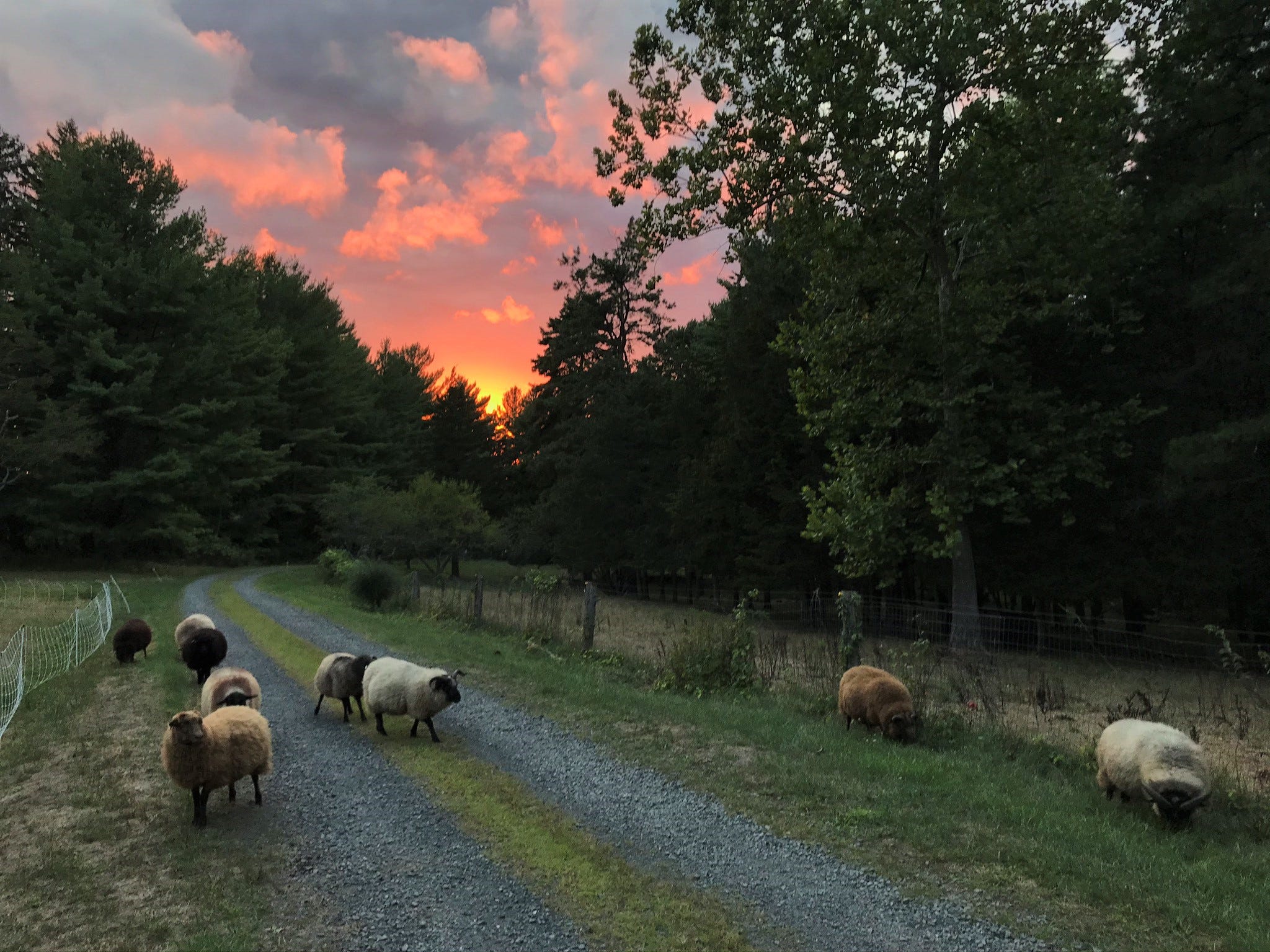
S1 Ep 14Housewarming Sheep
When my mom was growing up on Mountain Spring, it was a small dirt road named Cedar Street. At that time, there were only five families living on the road. She knew everyone that lived there, and nothing much ever changed. Over the years, younger generations built on their family’s land, but nobody “new” moved in.When I was growing up on the road, there were a whole lot more families, and a lot more houses but you still knew everyone. If someone moved out, it was news, and everyone waited to see who moved in. My mom always stopped by within the first few days of a new family arriving to welcome them to the neighborhood. She meant it too, sincerely. She genuinely cared about people and wanted them to feel welcomed.She wasn't the pie baking type, but she’d bring a bouquet of wildflowers, or something that she'd have found on her walk that morning. One neighbor was startled to receive a bouquet of skunk cabbage, but that auspicious start, none the less, cemented a 40-year steadfast and devoted friendship. My mom liked everyone - including “city folk” who didn’t know that skunk cabbage is the very first sign of Spring.Since my mom passed away, lots of people have moved in and out, and houses have been built in places she would not have even thought possible. Her outgoing personality, however, clearly skipped a generation, as I have studiously avoided all contact with any of my new neighbors and the best I can ever muster is to wave enthusiastically to them as I drive by.That is of course, until all of our sheep ended up next door and Anne and I had to go retrieve them. What incredibly nice neighbors we have! Who knew?!! And they were equally nice when, two weeks later, our gravel driveway washed out in a storm and (as if not to be outdone by the sheep) migrated down their driveway.My mother would have been absolutely horrified that it took me two years to introduce myself, but she would have totally approved of my choice of housewarming gifts. Because in the end, a fresh baked pie might be “good and proper”, but really, who can resist the utility of 30 cubic yards of gravel and a flock of very friendly sheep? This is a public episode. If you would like to discuss this with other subscribers or get access to bonus episodes, visit clatterridgefarm.substack.com
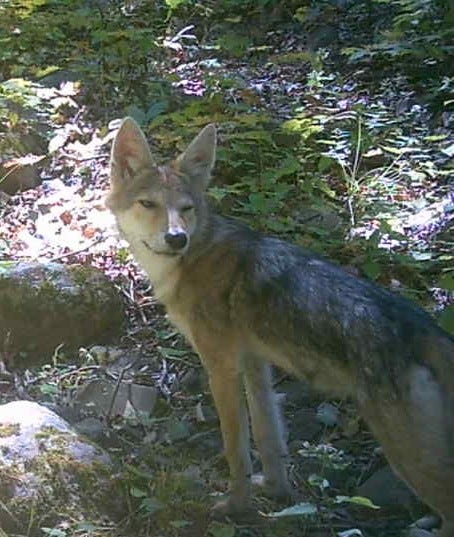
S1 Ep 13Making a Life
As the days get noticeably shorter, the world around us starts to change. Inevitably, our chickens begin to lay less. A lot less. Even with a light on in the coop, they instinctively know we are heading towards winter, and that winter is a bad time to start raising chicks. Raising chicks is, after all, why chickens lay eggs. For them it’s not about providing us with sustenance – it’s all about procreating.Our sheep, on the other hand, respond to the change in daylight by coming into heat. With a 5-month gestation, ewes that are bred in October will have their lambs just as grass begins to grow, and by the time the lambs are weaned, the grass will be long enough to support them all. Ha! Who said sheep were stupid?We have to move them soon to their respective breeding groups. We’ll remove the ram lambs from the rest of the flock, introduce the breeding ram, and relocate the ewes that we don’t want to breed.While we are getting ready to rearrange and relocate our flock, the coyotes and bears are starting to do the same. Young male coyotes are dispersing, leaving home and heading out on their own to find unclaimed territory. Breeding season for them won’t start for a couple months, but it might take them that long to find a home, and a mate.Fall is an especially dangerous time for coyote predation on our sheep. The young males are hungry and seem more willing to take a risk than a settled pair. We do our best to keep the fence fully charged and we’ll move the sheep from the more vulnerable pastures.Coyotes mate for life and after giving birth, the female is completely dependent on her mate to bring her food. Our domesticated dogs are close enough genetically to breed with coyotes, but since the male dogs don’t stick around like male coyotes do, the pups don’t survive. It’s kind of ironic that chivalry was bred out of dogs when they were domesticated.Male bears are even less chivalrous than our philandering dogs. They are not only not monogamous and don’t stick around to help, but they can kill and eat the young bear cubs - even their own offspring. Predation by adult males is one of the leading causes of death for bear cubs. No wonder mother bears are so protective of their young!Cubs that were born last January will stay with their mother for another winter, finally dispersing next spring. Unless they lose their cubs, females only breed every other year. Even so, Fall is always a busy time for bears. They need to find 20,000 calories a day to accumulate the extra fat they’ll need for their winter’s torpor, and that makes killing our sheep all the more attractive.I feel really lucky to live where we do, with such a vibrant ecosystem flourishing all around us. Like the momma bears, though, Anne and I will do whatever we need to, to keep our animals safe. I try hard not to take it personally or villainize the predators because I know in some ways, we really aren’t all that different. We are all just trying to create a life and make a living off this land.Thanks for reading Clatter Ridge Farm! Subscribe for free to receive new posts and support my work. This is a public episode. If you would like to discuss this with other subscribers or get access to bonus episodes, visit clatterridgefarm.substack.com
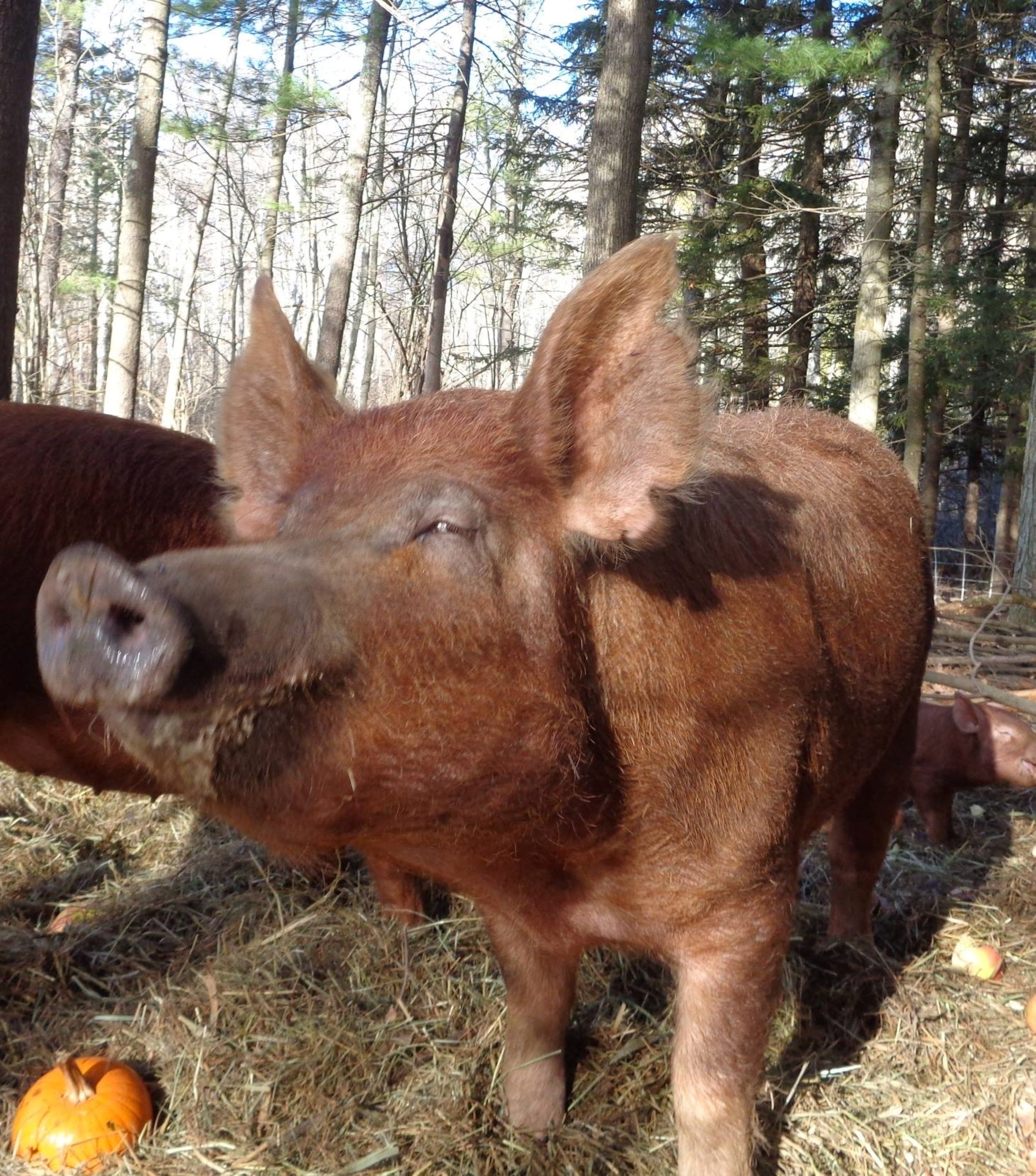
S1 Ep 11If I Were a Pig
I think if I were a pig, this just might be my favorite time of year.My biggest worry, come September, would be the tough decision of where best to take an afternoon nap.Would it be better to lay beneath the oak tree and wait for the sound of an acorn hitting the ground? Acorns are so delish!Or maybe, I’d be better off by the shagbark hickory on the other side of the pasture.No, the hickory tree doesn’t offer as much shade as the oak, and the nut is much harder to crack. I’d stick with the oak for sure.But then again, the worst of the summer’s heat is behind us, so I don’t really need the shade - and there is still plenty of mud to wallow in, just in case.Besides, there is a pile of fresh cut hay by the hickory, which makes a very fine bed to sleep in – and hay tastes particularly good this time of year. The hay would be very filling, of course, and napping is so much better when one is full.But maybe, it would be better to wait by the fence and hope this is one of the days my humans procure bags of left over corn from a local farmstand and chuck it all over the fence for me.Or perhaps a bushel of overly ripe tomatoes!The kind that when you take a bite, it squirts the juice all the way up to your forehead and then slowly drips down your chin. OMG! Simply heavenly.Oh! It could be a box of watermelon or a cantaloupe. So ripe they are slightly alcoholic- and then the dreams I will have! Dreams of October, maybe, with its boxes of apples and truck loads of pumpkins. Lots and lots of pumpkins. So, so many pumpkins. Oh my, it’s exhausting just to think about. It’s definitely naptime and life is good. This is a public episode. If you would like to discuss this with other subscribers or get access to bonus episodes, visit clatterridgefarm.substack.com
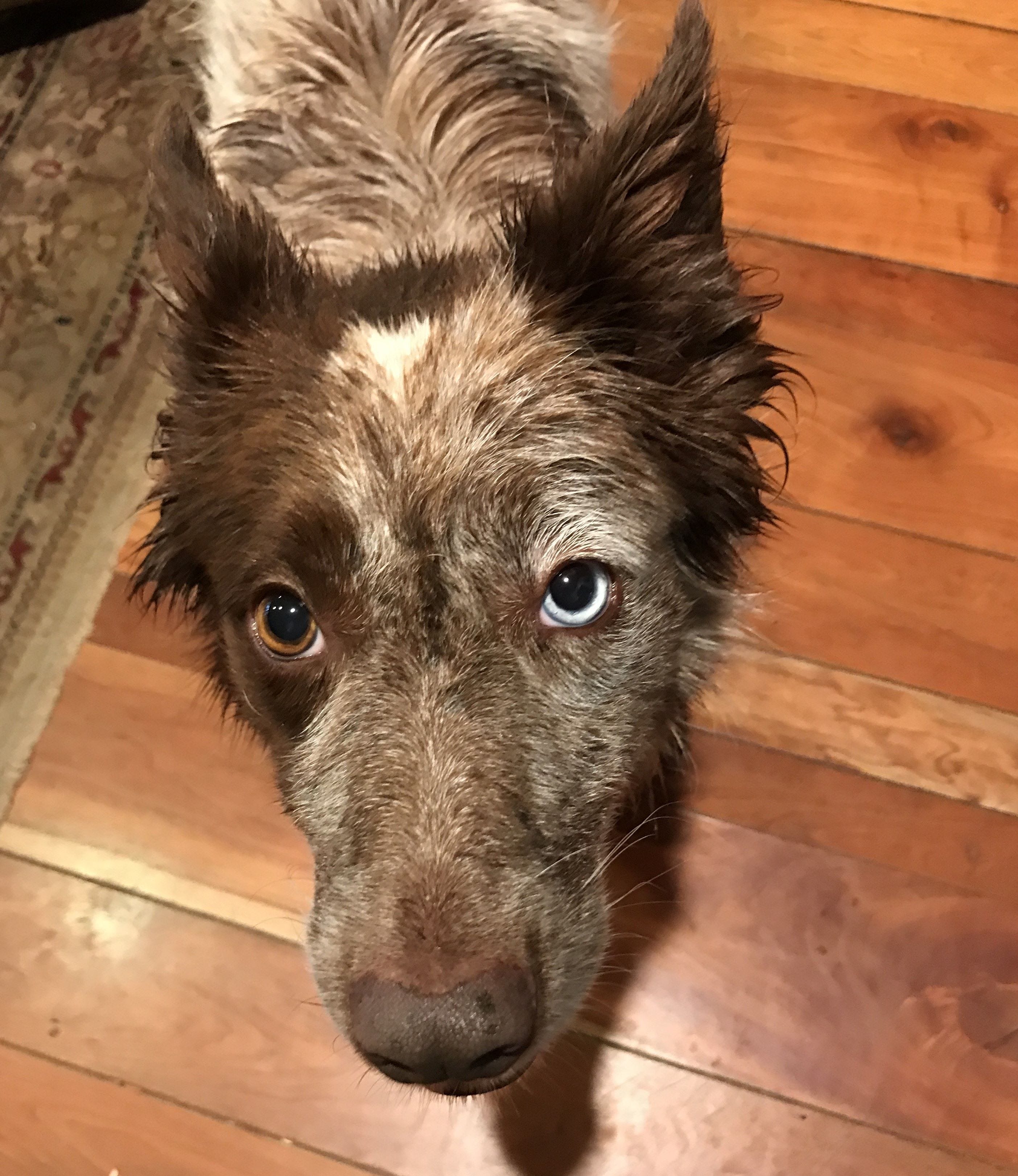
S1 Ep 11Out the Door
I put on warm socks and lace up a pair of work boots as she shifts her weight from one paw to another. I can feel her judging me as she watches me get dressed. The temperatures dropped this week, and it takes me that much longer to get out the door. I button up a long sleeve shirt and then pull on a sweatshirt - which of course needs zipping. Her ears go back as she shifts her weight again, her tail gently sweeping the floor. Her eyebrows rise when I reach for a jacket, and zip that up as well. She does her best to be patient but when I start to search through the wicker basket by the door for gloves and a hat it’s just about the last straw. She begins to emit a barely audible micro squeak; her impatience is clearly now bordering on pain. She’s been waiting for well over a minute for me to get ready - which to a Border Collie is forever and a half. The clock on the wall ticks gently, like a metronome at odds with her thunderous stare.Before last week it was hot, and I was much faster getting out the door. I was comfortable all day in shorts and a short-sleeved shirt, but even then, she still had to endure waiting for me to put on my shoes. (Oh, dear god, do you really need to lace them?!) At least there were no jackets, no sweatshirts, no gloves or hat. It was better then. I was faster.Farm dogs are born ready. She wears nothing, no matter the season or weather. No shoes or jacket, even during the coldest days of this past winter, the thick of this summer’s heat or today’s heavy rain. She is always ready, ready to go - and always waiting for me. She stands staring intently at the doorknob - because she knows that’s where I’ll soon place my hand to make the magic happen. This is a public episode. If you would like to discuss this with other subscribers or get access to bonus episodes, visit clatterridgefarm.substack.com
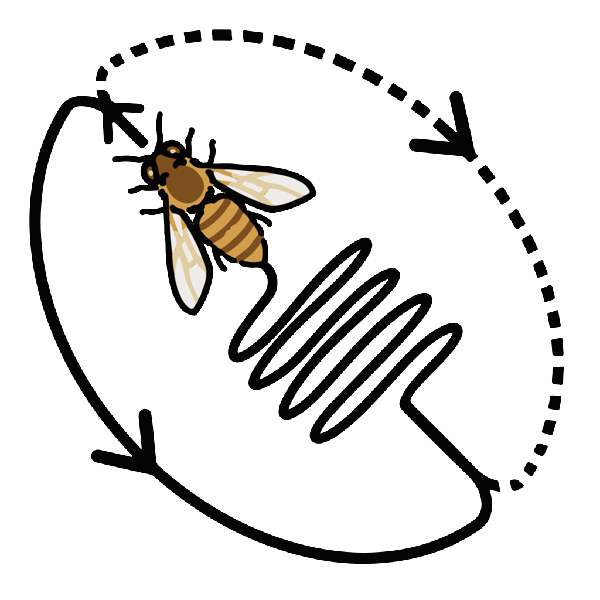
S1 Ep 10Dancing with Bees
When a forager honeybee returns to the hive, she is unpacked by worker bees. The enthusiasm displayed when she is greeted and the speed with which she is unpacked gives the forager feedback as to the desirability of whatever it is she found. If she is enthusiastically received, she will likely go back to the exact same spot and return with more. If the reception is lukewarm, she might look for something else.Once unpacked the forager will proceed to the “dance floor” to perform a dance that describes how far and in what direction whatever she found is located. (I swear I am not making this up.) If the flower is within 150 feet of the hive, the forager will dance in a circular pattern. Onlookers can smell the floral odor on her and will know to look for that type of flower within 150 feet of the hive. No distance or direction is given - just that it’s near the hive.The more excited the dancer is, the more likely she will get some followers to whatever plant she is describing. If the flower is more than 150 feet from the hive, the forager will dance in a figure 8 pattern known as the “waggle dance.” (Still not making this up). A waggle dance will describe how far the flower is, and in what direction it can be found. The figure 8 is created by completing two circles made by dancing in opposite directions. The first circle is completed and then the dancer “waggles” her torso and flaps her wings while moving in a straight-line - then reversing direction, she’ll complete another circle. The straight-line part of the waggle dance contains the information the onlookers are waiting for. It gives the distance of the flower as expressed by the duration of the straight-line part of the dance.For example, if the straight-line portion of the waggle dance lasts 1 second, it means the flower is 1kilometer away. If the dance lasts 2 seconds, the flower is 2 kilometers away. (Why am I not surprised that honeybees prefer the metric system?)Since the predesignated dance floor is just a section of the comb, and the comb hangs down from the top of the hive, the dance floor itself also hangs down vertically – so the direction of the flower is conveyed as the flower’s relationship to the sun. (Like I said, I couldn’t possibly make this up). If the flower is in the opposite direction of the sun, the straight portion of the waggle dance will be straight up the comb. If the flower is directly in line with the sun, the waggle dance will be straight down the comb. If the flower is 60 degrees to the left of the sun, the dance will be offset 60 degrees to the left of vertical.To complicate matters further, the interior of the hive is in relative darkness, so the onlookers can only feel the vibration of the dance through the comb and must interpret all the necessary data from that.I know bees have been doing this for millions of years so far be it from me to tell them how they might streamline this process but the builder in me would like to make a couple suggestions. First, they should build the dance floor just inside the hive opening where there would be enough daylight to see the dance. Secondly, and perhaps more importantly, they should build the dance floor on the horizontal plane so the bees could simply “waggle” in the general direction of the flower.No need for calculating the angle of the waggle dance in relationship to the bee’s gravitational angle and extrapolating from that the flower’s relationship to the azimuth of the sun.They could just point and indicate that the flower is 150 wing beats “that away.” (Okay, that part I did make up.)Thanks for reading Clatter Ridge Farm! Subscribe for free to receive new posts and support my work. This is a public episode. If you would like to discuss this with other subscribers or get access to bonus episodes, visit clatterridgefarm.substack.com