Stories of Scotland
119 episodes — Page 2 of 3
S9 Ep 7Granite Blessings of the Woman's Stone: Clach Bhan
Join Annie and Jenny deep in the Cairngorms, as they climb Ben Avon, but the summit isn’t the goal, instead, they take a detour to an astounding rock formation called Clach Bhan, or in English, the Women’s Stone. This rock formation overlooks the surrounding glens, and has been a place of pilgrimage for hundreds of years. Pregnant women from miles around would undertake an arduous trek to this point and ask the stone for a safe childbirth. But why this stone, three-quarters of the way up a mountain? What caused it to be here? Why are there numerous bowl-shaped holes, perfect for sitting? And most importantly, what drew women to this spot, in search of solace and safety? This episode is sponsored by WeeBox - go to www.weebox.co.uk and enter the code ‘Story10’ for an exclusive discount!You can support Stories of Scotland on patreon, visit www.patreon.com/storiesofscotland to join up!Some of the music you heard in this episode was beautifully played by Nicky Murray and Chloe Rodgers.References:Aberdeen Press and Journal. Old North Country Superstitions. 1877.Gordon J, Wignall R, Brazier N, Bruneau P, ‘Cairngorms, A landscape Fashioned by Geology’, Scottish National Heritage, 2006.Mason D. Transactions of the Gaelic Society of Inverness, volume xiv, 1887-1888. Inverness: Gaelic Society of Inverness; 1889.Northern Scot and Moray & Nairn Express. A Highland Village in the 18th Century. 1911.Sinclair J. Statistical Accounts of Scotland. Edinburgh: William Creech; 1794.Smith A. The history and antiquities of new and old Aberdeen. Aberdeen: A. Murray; 1882. Hosted on Acast. See acast.com/privacy for more information.
S9 Ep 6Myths of a Skye Mountain: Beinn na Caillich
Annie and Jenny discover how Skye’s greatest mountains are the remains of an ancient volcano. We unravel rich Scottish folklore about Beinn na Caillich: the Mountain of the Old Woman. We discuss the lore of giant women who battled across the sea with giant boulders. Learn about Saucy Mary, a lost Norwegian Princess and, a fake Norwegian Princess. If you love Skye, this episode is filled with magical mountain lore. You can support Stories of Scotland on Patreon! www.patreon.com/storiesofscotlandThis is part of the Radical Mountain Women, funded by the Royal Society of Literature.References:Anderson, J., 1873. Notes of some Entries in the Iceland Annals regarding the Death of the Princes Margaret. Proceedings of the Society of Antiquaries of Scotland, 10. Finlayson, J. (Contributor), Maclean C. I. (Fieldworker), 1955. Mar a fhuair Beinn Na Caillich aim, SA1955.169, The School of Scottish Studies Archives, University of Edinburgh. Gordon, S., 1927. A Peak in Skye: Beinn na Cailliche. The Scotsman. Hull, E., 1927. Legends and Traditions of the Cailleach Bheara or Old Woman (Hag) of Beare. Folklore, 38.Kallestrup, L. and Toivo, R., 2017. Contesting Orthodoxy in Medieval and Early Modern Europe. Cham: Springer International Publishing: Palgrave Macmillan.Macculloch, J. and Scott, W., 1824. The Highlands and western Isles of Scotland in letters to Sir Walter Scott. London.MacKay, J., 1905. How Beinn na Caillich got its name. Celtic Monthly, Glasgow, 13. Mackenzie, D. A., 1905. A Highland Goddess. The Celtic Review, 7, no. 28. Whyte, A., 2021. The Cailleach in Place-Names and Place-Lore. Journal of Scottish Name Studies, 14. Hosted on Acast. See acast.com/privacy for more information.
S9 Ep 5St Kilda: Life & Lore
Jenny and Annie explore the far edge of the Outer Hebrides, St Kilda. We look at the wonders of climbing the stacks of St Kilda, and the seabirds that create a symphony.We see through the eyes of Evelyn Heathcote, as she spends the night in a sea cave with a group of Gaelic psalm-singing St Kildans. We examine the folklore and landscape of this unique and special place. You can support Stories of Scotland on Patreon! www.patreon.com/storiesofscotlandThis is part of the Radical Mountain Women, funded by the Royal Society of Literature. Some of the music you heard in this episode was beautifully played by Nicky Murray and Chloe Rodgers.A special thanks to the School of Scottish Studies Archives for letting us use these Gaelic Psalm recordings:Salm 68, Contributor: John MacLeod, Fieldworker: Thorkild Knudsen, SA1963.44.A2, The School of Scottish Studies Archives, University of Edinburgh. [https://www.tobarandualchais.co.uk/track/74853]Salm 118, Contributor: James Smith, Fieldworker: Thorkild Knudsen, SA1964.103.B3, The School of Scottish Studies Archives, University of Edinburgh. [https://www.tobarandualchais.co.uk/track/75665]References:CANMORE, ‘St Kilda, Hirta, The Amazon’s House’, https://canmore.org.uk/site/3960/st-kilda-hirta-gleann-mor-the-amazons-houseC. Maclean, ‘Island on the Edge of the World - The Story of St Kilda’, Cannongate Publishing, 1977. E. J. Clegg & J. F. Cross, ‘Aspects of neonatal death in St Kilda, 1830-1930, Journal of Biosocial Science, 1994. G. F. Geddes, ‘The Amazon's House, Hirta, St Kilda – A Conservation Statement’, unpublished report for the National Trust for Scotland, RCAHMS Mss 6341, 2011.E. Heathcote, ‘A night in an Ocean cave’, World Wide Magazine, Vol 5, 1900. E. Heathcoat, ‘A summer Sojourn in St Kilda’,Good Words, Vol 42, 1901.N. Heathcote, ‘Climbing in St Kilda’, Scottish Mountaineering Club Journal, Vol 6, 1901.‘More About St Kilda Underground Houses,’ The Scotsman, 1928.National Trust for Scotland on St Kilda, a World Heritage Site: www.nts.org.uk/visit/places/st-kildaNational Records of Scotland, ‘Stories from St Kilda’ https://www.nrscotland.gov.uk/research/learning/features/stories-from-st-kildaP. Stride, ‘St Kilda, the neonatal tetanus tragedy of the nineteenth century and some twenty-first century answers’, Journal of the Royal College of Physicians of Edinburgh, 2008. Hosted on Acast. See acast.com/privacy for more information.
S9 Ep 4Battle of the Braes: A Fight For Crofters' Rights
With the 140th Anniversary of the Battle of the Braes, Jenny and Annie set out to try to understand this crucial fight for land reform in Scotland. We look back to March 1882, when crofters of the Braes area of Skye tried to petition Lord MacDonald to let them have common grazing on the hill of Ben Lee. Lord MacDonald refuses this request, condemning the future of this crofting community into further poverty. Standing up for their rights, the crofters protest through a rent strike. This leads to the Battle of the Braes on 19th April 1882, a violent moment in Scotland’s complicated history with land. We consider how land is at the heart of economic and cultural survival for the Highlands and Islands communities, and why we should never forget the Battle of the Braes. You can support Stories of Scotland on Patreon! www.patreon.com/storiesofscotland With thanks to Iona Fyfe for recording the song ‘Battle o the Braes.’Find Iona Fyfe at https://ionafyfe.com/ This is the second episode of our new series, Radical Mountain Women, funded by the Royal Society of Literature. Some of the music you heard in this episode was beautifully played by Nicky Murray and Chloe Rodgers.References:Andy Wightman, The Poor Had No Lawyers: Who Owns Scotland and How They Got It, Birlinn, Edinburgh, 2015‘Battle o the Braes,’ Brechin Advertiser, May 1882Crofting Commission: https://www.crofting.scotland.gov.uk/Ewen A. Cameron and Andrew Newby, ‘Alas, Skyemen are imitating the Irish’: A note on Alexander Nicolson's ‘Little Leaflet’ concerning the Crofters' Agitation.The Innes Review, 2004‘Furious Attack On and By the Police,’ Dundee Courier, April 1882James R Coul, Crofters’ Common Grazings in Scotland, The Agricultural History Review, British Agricultural History Society, 1968John MacGrath, The Cheviot, the Stag and the Black Black Oil, Bloomsbury, 2017Màiri Mhòr Nan Òran, Òran Beinn Lì, 1887‘The Land Agitation in Skye,’ Inverness Courier, April 1882‘The Revolt in Skye: Furious Fighting Between the Police and the People, Painful Scenes, Arrests of Crofters,’ Dundee Evening Telegraph, April 1882We used digital transcripts of the Napier Commission documents, available here: https://www.uhi.ac.uk/en/research-enterprise/cultural/centre-for-history/research/research-alliances/the-napier-commission/ Hosted on Acast. See acast.com/privacy for more information.
S9 Ep 3Salisbury Crags: Climbing in the Haar
In this episode, Annie and Jenny continue their exploration of the women found in the margins of the Scottish Mountaineering Club Journal. It’s Edinburgh in the early 1900s, and a climbing expedition up the Salisbury Crags is derailed when the public notice that there are women climbing alongside the men. Determined, the women keep climbing, but are forced to the edges of the day. This is the beginnings of The Scottish Ladies Climbing Club, founded by Jane Inglis Clark. Jane was the definition of trailblazing and believed that everyone, regardless of gender, deserved to explore the outdoors.The geologic significance of the Salisbury Crags as well as the ancient mythology swirling around Arthur’s seat are uncovered in this trip to Auld Reekie.This is the second episode of our new series, Radical Mountain Women, funded by the Royal Society of Literature, and is inspired by the writing of the Scottish Mountaineering Journal. Some of the music you heard in this episode was beautifully played by Nicky Murray and Chloe Rodgers.You can support Stories of Scotland on Patreon! www.patreon.com/storiesofscotland References:Karen Stockham, ‘It went down into the very form and fabric of myself: Women’s Mountaineering Life-Writing 1808-1960,’ PhD Thesis, University of Exeter, 2012National Library of Scotland, ‘Aiming High: About Jane Inglis Clark,’ https://reveal.nls.uk/aiming-high/about-jane-inglis-clark/ William Inglis Clark, ‘Some Climbs on the Salisbury Crags,’ Scottish Mountaineering Club Journal, Vol.6, Edinburgh, 1900 Hosted on Acast. See acast.com/privacy for more information.
S9 Ep 2Bonus: Interview with Jennifer Morag Henderson
Slightly frog-throated Annie and Jenny interview Highland author Jennifer Morag Henderson about her new book, Daughters of the North. Daughters of the North explores the life of Jean Gordon, from the Far North of Scotland who lived from 1546 to 1629. We learn of the Far North of Scotland during the reign of Mary Queen of Scots, the industries of Sutherland, and some intrigues of the Early Modern court. We share a love of archives, historical research, and the falconry display of Dunrobin Castle. Content warning: this episode contains some sensitive discussions of death and sexual violence, listener discretion is advised. You can support Stories of Scotland on Patreon! www.patreon.com/storiesofscotland Hosted on Acast. See acast.com/privacy for more information.
S9 Ep 1Beinn Sgritheall: Mountain of Scree
Join Jenny and Annie as they climb uphill on the West Coast of Scotland to explore the beautiful Beinn Sgritheall. We look at legends of the Glenelg brochs, Dun Telve and Dun Troddan, which reveal ancient folklore of giants, feasting women, revenge, and a very bad hair day. We adventure up the beautiful Scottish rural mountain of Beinn Sgritheall, and spend some time thinking about why hillwalking is so enthralling. This is the first episode of our new series, Radical Mountain Women, funded by the Royal Society of Literature, inspired by the writing of the Scottish Mountaineering Journal.You can support Stories of Scotland on Patreon! www.patreon.com/storiesofscotland References:Dun Telve, Dun Troddan and Dun Grugaigon Canmore, The National Record of the Historic Environment: https://canmore.org.uk/site/11798/dun-telve, https://canmore.org.uk/site/11797/dun-troddan, https://canmore.org.uk/site/11772/dun-grugaig-glenelgCaithness Broch Project: https://www.thebrochproject.co.uk/NatureScot: History of Scotland’s woodlands: https://www.nature.scot/professional-advice/land-and-sea-management/managing-land/forests-and-woodlands/history-scotlands-woodlands Ordnance Survey Maps at the National Library of Scotland: https://maps.nls.uk/os/Stuart Piggott, Scotland Before History, Thomas Nelson & Sons, 1958Thomas Murchison, ‘Glenelg, Inverness-Shire: Notes on a Parish History,’ Transactions of the Gaelic Society for Inverness, 1942-1950William Douglas, ‘Ben Screel,’ Scottish Mountaineering Club Journal, Vol. 1, Edinburgh, 1891 Hosted on Acast. See acast.com/privacy for more information.
S8 Ep 9Bonus: Interview with Sue Lawrence
Jenny interviews marvellous author Sue Lawrence and we learn about the women, castle and ghost that inspired her new book, The Green Lady. Jenny and Sue discuss Fyvie Castle in the 16th century and question how early modern women could try to gain control of their own lives. Sue, who has written multiple Scottish cookbooks gives us a cheeky variation of a Scottish classic recipe, Cullen skink at the end of this episode! Hosted on Acast. See acast.com/privacy for more information.

S8 Ep 8Border Reivers: Outlaws on the Edge
Are the Scottish Borders a rebel stronghold? Join Annie and Jenny as they examine the often-overlooked stories of the Border Reivers: the families of raiding, plundering, land-burning, outlaws. Jenny explores her ancestry roots in the Scottish Borders, to discover she comes from a family of bloodthirsty brigands. We look at Border clans, curses and, calamities as we unpick the ballad of Johnnie Armstrong. This episode is sponsored by Scotland Shop. If you are tempted to check out some of Scotland Shop’s beautiful tartan garments and fabrics, please follow this link to Scotland Shop. https://hubs.ly/H0-0fjl0You can support Stories of Scotland on Patreon! www.patreon.com/storiesofscotland References:Alistair Moffat, The Reivers, Birlinn, Edinburgh, 2008.‘Johnny Armstrong’ broadside ballad, National Library of Scotland Collections: digital.nls.uk/english-ballads/archive/74893315John Veitch, The Tweed, and Other Poems, James MacLehose, Glasgow, 1875.Katherine Anne Groundwater, The Middle March of the Scottish Borders, 1573 to 1625, University of Edinburgh: era.ed.ac.uk/handle/1842/24651 ‘The Ballad Poetry of Scotland,’ Alloa Advertiser, Feb 1879.Claire Etty, Tudor Revolution? Royal control of the Anglo-Scottish border, 1483-1530, Durham University: etheses.dur.ac.uk/1283/ Walter Scott, Minstrelsy of the Scottish Border, James Ballantyne, Kelso, 1802. Hosted on Acast. See acast.com/privacy for more information.
S8 Ep 7Merlin of the Tweed: Lowland Legends & Geologic Journeys
Jenny and Annie learn about the geology of the Scottish Lowlands, and travel as a wee grain of sand through half a billion years of geologic movement, ending up within the River Tweed. In more recent history, we unravel Arthurian legends to explore the story of Merlin, the wizard of the wilds. A real cornucopia of Celtic mythologies and folklore. This episode is sponsored by Scotland Shop. If you are tempted to check out some of Scotland Shop’s beautiful tartan garments and fabrics, please follow this link to Scotland Shop. https://hubs.ly/H0-0fjl0You can support Stories of Scotland on Patreon! www.patreon.com/storiesofscotlandReferences:Alexander Pennecuik, A Geographical, Historical Description of the Shire of Tweeddale, Edinburgh, 1715.Francis H. Groome (ed.), Ordnance Gazetteer of Scotland, Edinburgh, 1901.H. L. D. Ward, Lailoken (or Merlin Silvester), Romania, Vol. 22, No 88.‘How Tweed Got Its Name: Homespuns that have been famous for a thousand years,’ Dundee Evening Telegraph, August 1940. J. S. Blackie, Merlin and Kentigern, Blackwood’s Edinburgh Magazine, 1885. J. S. P. Tatlock, Geoffrey of Monmouth’s Vita Merlini, A Journal of Mediaeval Studies, Vol. XVIII, July 1943.Lauchlan MacLeanWatt, Scottish Life and Poetry, James Nisbet & Co., London, 1912. ‘Merlin’s Grave,’ Peeblesshire Advertiser and County Newspaper, January 1992.‘Merlin’s Mysterious Death: His Last Resting Place,’ Cambria Daily Leader, July 1890.‘Obituary: The Tramp Poet,’ Aberdeen Press and Journal, August 1925.Walter Scott, J. W. Lake, The Poetical Works of Sir Walter Scott, J. Crissy, Philadelphia, 1835. Hosted on Acast. See acast.com/privacy for more information.
S8 Ep 6Bonus: Christmas Crimes!
Join Annie and Jenny as they get in the festive mood and journey back to the Yuletide crimes of the sixteenth and seventeenth centuries. The reformation resulted in the banning of many celebrations, including yuletide festivities. Those caught celebrating were brought before the Kirk Sessions, and this resulted in strangely detailed records of the celebratory practices of the time. Guising and cross-dressing, dancing, eating goose, and baking bread were all punishable by law, listen in to find out more about each tradition.This episode is sponsored by Scotland Shop. If you are tempted to check out some of Scotland Shop’s beautiful tartan garments and fabrics, please follow this link to Scotland Shop. https://hubs.ly/H0-0fjl0You can support Stories of Scotland on Patreon! www.patreon.com/storiesofscotland References:Barbara Hector, Is Hogmanay Dying Out? Not in Rural Scotland, Aberdeen Press and Journal, December 1932.Dictionaries of the Scots Language: https://dsl.ac.uk/Digitised Kirk Session Minutes, National Records of Scotland: https://www.scotlandspeople.gov.uk Margo Todd, Profane Pastime and the Reformed Community: The Persistence of Popular Festivities in Early Modern Scotland, Journal of British Studies, 2000.Margo Todd, The Culture of Protestantism in Early Modern Scotland, 2002.Robert Crammond, The History of the Sufferings of the Church of Scotland from the Restoration to the Revolution, Vol 1, Blackie, Fullarton & Co., 1828.William Crammond, Steven Ree (ed), The records of Elgin, 1234-1800, The New Spalding Club, Aberdeen, 1903. Hosted on Acast. See acast.com/privacy for more information.
S8 Ep 5Tartan Folklore: Scottish Stories of Plaids & Patterns
Annie and Jenny share some lighthearted folklore on the theme of tartans and plaids! Tartan eels, ghosts and fairies: this is a jolly voyage into rich Scottish mythology. This episode is sponsored by Scotland Shop. If you are tempted to check out some of Scotland Shop’s beautiful tartan garments and fabrics, please follow this link to Scotland Shop. https://hubs.ly/H0-0fjl0You can support Stories of Scotland on Patreon! www.patreon.com/storiesofscotlandListen out for the Scots words 'burn' meaning stream and 'bairn' meaning child!References:Donald MacMartin (contributor), Hamish Henderson (Fieldworker), SA1965.159, The School of Scottish Studies Archives, University of Edinburgh, (https://www.tobarandualchais.co.uk/track/42141)‘Ghost Story of a Hooded Maiden in Argyllshire,’ Dundee Evening Telegraph, September 1910Mary Cirsty Fleming (contributor), Ian Paterson (Fieldworker), SA1973.122, The School of Scottish Studies Archives, University of Edinburgh, (https://www.tobarandualchais.co.uk/track/42141)Mary Cirsty Fleming (contributor), Ian Paterson (Fieldworker), SA1976.172, The School of Scottish Studies Archives, University of Edinburgh, (https://www.tobarandualchais.co.uk/track/66029)‘Treasure Trove at Falkirk, Burgh Man Unearths Vase of Roman Coins,’ Falkirk Herald, August 1933‘The Smugglers of the Border,’ Leith Burghs Pilot, August 1875William Scott, ‘Fairy Bells,’ Southern Reporter, March 1924W. W. Gibbons, ‘Folklore and Legends of Scotland,’ London, 1889 Hosted on Acast. See acast.com/privacy for more information.

S8 Ep 4Bonus: Interview with Diana Gabaldon
Do you want to know the secrets of the bees? So do we! In this bonus episode, Jenny and Annie speak to author Diana Gabaldon known for her bestselling Outlander series of novels. We are celebrating the highly-anticipated release of Go Tell the Bees That I am Gone on November 23rd 2021. Diana discusses her interest and research into Scottish heritage, culture, and folklore. This episode is sponsored by Scotland Shop. If you are tempted to check out some of Scotland Shop’s beautiful tartan garments and fabrics, please follow this link to Scotland Shop. https://hubs.ly/H0-0fjl0You can support Stories of Scotland on Patreon! www.patreon.com/storiesofscotlandReferences:Bygone Bee-Keeping, Alloa Advertiser - Saturday 05 December 1874.Edith Sellers, Superstition without rhyme or reason, The Queen (London Newspaper), September 1899.Old Bridal Customs, Dundee Courier, January 1950.Serving Bees at a Funeral, Drogheda Journal, or Meath & Louth Advertiser, September 1826.William Sharp, The winged destiny: studies in the spiritual history of the Gael, 1910. Hosted on Acast. See acast.com/privacy for more information.
S8 Ep 3Bonus: Interview with Graham McTavish
In this bonus episode, Jenny and Annie speak to Scottish actor Graham McTavish. Graham has had an incredibly successful acting career and is well-known for many of his roles including Outlander, the Hobbit films, Castlevania, and the forthcoming Game of Thrones prequel, House of the Dragon.While working on Outlander, Graham became good friends with Sam Heughan and together they have created the TV Series Men in Kilts and are soon to release a follow-up to their globally bestselling book Clanlands. On November 23rd 2021, the Clanlands Almanac will be released. The Clanlands Almanac is a celebration of the Scottish seasons, folklore, and heritage. Taking readers through a calendar year, the Clanlands Almanac inspires us to feel the seasons change again. Listen out for the marvelous Scots toast: “Here’s tae us. Wha’s like us? Gie few, and they’re a’ deid!“This episode is sponsored by Scotland Shop. If you are tempted to check out some of Scotland Shop’s beautiful tartan garments and fabrics, please follow this link to Scotland Shop. https://hubs.ly/H0-0fjl0You can support Stories of Scotland on Patreon! www.patreon.com/storiesofscotlandMany thanks to artist Kerry Douglas for designing our new cover art! Find Kerry at https://www.instagram.com/tufftay/ Hosted on Acast. See acast.com/privacy for more information.
S8 Ep 2Scary Ghost Stories of the Scottish Borders
In this episode, Annie and Jenny tell some truly terrifying tales from the Borders of Scotland. We’ve all heard something go bump in the night that’s made the hairs on our neck stand on end, and while sometimes it’s as innocent as an open window in the attic, other times it can be as dastardly as the devil. These spooky tales from the archives explore the rolling moors of the Borders, haunted towers, and decrepit mansions. So come and join us as we peek behind the veil, and then quickly run away, too scared to look back.This episode is sponsored by Scotland Shop. If you are tempted to check out some of Scotland Shop’s beautiful tartan garments and fabrics, please follow this link to Scotland Shop. https://hubs.ly/H0-0fjl0You can support Stories of Scotland on Patreon! www.patreon.com/storiesofscotlandReferences:‘A Ghost,’ ’Jedburgh Gazette, September 1873‘A Haunted Berwickshire Spot?,’ Berwickshire News and General Advertiser March 1924John W Cockburn (contributor), Alan Bruford (Fieldworker), SA1966.019, The School of Scottish Studies Archives, University of Edinburgh, (https://www.tobarandualchais.co.uk/track/25084?l=en )‘The Haunted House at Fairnilee,’ The Southern Reporter, August 1875‘Tit-Bits of Border History and Romance,’ Southern Reporter, August 1873 Hosted on Acast. See acast.com/privacy for more information.
S8 Ep 1Borders Witch Trial: Elizabeth Bathgate
Join Annie and Jenny as they go back to the witch panics of Early Modern Scotland. We examine the witch trial of Elizabeth Bathgate from Eyemouth, and look at what witchcraft trials reveal about superstitions and paranoia of times past. This episode is sponsored by Scotland Shop. If you are tempted to check out some of Scotland Shop’s beautiful tartan garments and fabrics, please follow this link to Scotland Shop. https://hubs.ly/H0-0fjl0References:James Maidment, The Spottiswoode Miscellany: A Collection of Original Papers and Tracts, Illustrative Chiefly of the Civil and Ecclesiastical History of Scotland, Vol. 2, 1845.John Graham Dalyell, The Darker Superstitions of Scotland illustrated from history and practice, 1834.Julian Goodare, Women and the witch-hunt in Scotland, Social History, Vol 23, 1998.Lauren Martin, Witchcraft and Family: What can Witchcraft Documents Tell us About Early Modern Scottish Family Life?, Scottish Tradition, Vol. 27, 2002. Lizanne Henderson, Witch Belief in Scottish Coastal Communities, Chapter in The New Coastal History, 2017.Survey of Scottish Witchcraft Database by Julian Goodare, Lauren Martin, Joyce Miller and Louise Yeoman, The University of Edinburgh, http://www.shca.ed.ac.uk/Zoey Lorne, The Construction and Regulation of Gendered Crime in Scottish Witchcraft Cases, 1560-1661, PhD Thesis from the University of Lethbridge, 2017. Hosted on Acast. See acast.com/privacy for more information.
S7 Ep 10The Cèilidh Hoose
Join Annie and Jenny on a trip to the Cèilidh house, as they discuss the magic of this old tradition. We blether about some old cèilidh lore, exploring how cèilidhs keep communities connected. We look at how the cèilidh house sometimes develops its own lore of ghosts, magic and wonder. Stories of Scotland is an award-winning Scottish history podcast, proudly recorded in the Highlands. We research our heritage and mythology podcast using archives, books, museum objects, and oral histories from across Scotland.References:Captain Dugald MacCormick (contributor), Calum Iain Maclean (Fieldworker), TAIBHSE A THÀINIG GU TAIGH ANNS AN ROBH CÈILIDH, SA1953.050, The School of Scottish Studies Archives, University of Edinburgh (https://www.tobarandualchais.co.uk/track/2981)Donald MacLean (contributor), Donald Archie MacDonald (Fieldworker), FEAR AIG NACH ROBH SGEULACHD AIG CÈILIDH, SA1975.31.A2, The School of Scottish Studies Archives, University of Edinburgh (https://www.tobarandualchais.co.uk/track/62058)Reisebilder, Marion; A Highland Cèilidh of 35 Years Ago, Northern Chronicle and General Advertiser for the North of Scotland, 02 Dec 1908. Scots Language Centre Website: www.scotslanguage.com/articles/view/id/5263Traditional Arts and Culture Scotland Website: https://tracscotland.org/ Hosted on Acast. See acast.com/privacy for more information.
S7 Ep 9Schiehallion: Highland Folklore and Second Sight
Content warning: Discussion of death and funerals. Join Annie and Jenny as they explore the curious Highland beliefs of the second sight. In this second part on the glorious mountain of Schiehallion, we learn about the time Robert the Bruce sought sanctuary at Schiehallion, a piper tempted by the fairy hill, and the superstitions of second sight in Rannoch. Be captured by the fairies in this enchanting episode!Stories of Scotland is an award-winning Scottish history podcast, proudly recorded in the Highlands. We research our heritage and mythology podcast using archives, books, museum objects, and oral histories from across Scotland.You can support Stories of Scotland on Patreon! www.patreon.com/storiesofscotlandTranscripts of oral histories:Transcript 1, Schiehallion, festival days and sheep sheering:Perthshire local: Well, the young people, so they tell me, and this is before my time, but the young people used to gather and they would set off up the hill to the back of Schiehallion. And there was a wishing well there and they used to put coins in there and wish for luck and that sort of thing. (Clang of grandfather clock from original recording.)Dr Betsy Ross: And they did this on May Day?Perthshire local: Yes, all on May Day, the first of May, aye. On Halloween Night and before that of course we had to gather all the sticks and old bracken and things and have something to make a blaze. And it was usually up on the hillside. And we all used to gather round and set fire to the thing and it was a giant spectacle and you saw it for miles around. And then we went home and would be dooking for apples and cracking hazelnuts and things like that. Well we just went to the different houses and never went too much, round all the different houses in the village. We had four people. They usually got danced the Highland Reel and I played the melodeon (a type of accordion) and of course we always got something. They gave us something. I heard that they used to do that, there were so many people, you see. Sheep-shearers are very scarce today but at that time there would be twenty maybe thirty, nearer thirty gathering at a shearing. And when the sheep had been shorn they would start competing amongst themselves and throwing the hammer and putting the stone, but that’s all a thing of the past. Goodness me, have you got it on? Dr Betsy Ross: Yes Transcript 2, Schiehallion Song:Sound me the name on the pipes wildly screaming,Splendour of tartan, and clashing of steal, Grey skies above and the pipes wildly screaming,Schiehallion forever to hearts that are leal.Raging from Rannoch, the blast fiercely stinging,I see the air from Glen Lyon in the snow,Yet in my ear old Schiehallion is singing,Songs of a summer I spent long ago. Oh how the name of Schiehallion can brighten,Longings and hopes that are dimmed with the years,Dark be the day but its burden will lighten,When that old hill comes again through my tears.Speak the dear name when my vision is dimming,For all life's turmoil dies down in my ears.When all my soul the dark waters are stealing,And heavens high hills to me shall appear.Then I remember Schiehallion in her glory,Purple and rosy a’ dying of the day,Write in a word and I still heart the story:Schiehallion, Schiehallion, Schiehallion always!References:Aaron Arrowsmith, Map of Scotland, London, 1807, https://maps.nls.uk/joins/747.html John Gregorson Campbell, Witchcraft & Second Sight in the Highlands & Islands of Scotland, Glasgow, 1902John Sinclair, Schiehallion: A Posy of Rannoch Poesy, Stirling, 1905.Mrs Helen Strathearn missing: Dundee Courier, 29 October 1902. Rev Dr. Marshall, Historic Scenes in Perthshire, Dundee Courier, 11 April 1879.Schiehallion, Dundee Courier, 22 December 1926.The Aberfeldy Mystery, Dundee Courier, 12 December 1902. Unknown person (contributor), Betsy Ross (Fieldworker), SA1978.153-154, The School of Scottish Studies Archives, University of Edinburgh (https://www.tobarandualchais.co.uk/track/88935 and https://www.tobarandualchais.co.uk/track/89039)WAF Browne, Second-Sight, or Deuteroscopia, Journal of psychological medicine and mental pathology, 1876. Hosted on Acast. See acast.com/privacy for more information.
S7 Ep 8Schiehallion: A Perthshire Mountain that Weighed the World
Annie and Jenny hike up Schiehallion, one of Scotland’s most famous peaks. This astounding mountain is home to world changing history. This episode includes an oral history with a squeaky rocking chair. Located in the heart of Scotland, Schiehallion was the site of an intricate experiment that weighed the world. It’s unique conical shape drew astronomers, physicists, mathematicians and geologists together in the 18th century to calculate the earth’s mass for the first time, causing an earthquake in the warring schools of geology. Mountaineering in the Scottish Highlands can be dangerous, especially in the winter, but an excerpt from the Scottish Mountaineering Journal opens up the Scottish Wilderness and all it’s beauty during this time. Stories of Scotland is an award-winning Scottish history podcast, proudly recorded in the Highlands. We research our heritage and mythology podcast using archives, books, museum objects, and oral histories from across Scotland.You can support Stories of Scotland on Patreon! www.patreon.com/storiesofscotlandReferences:CA Sage, Schiehallion Poem, Dundee Evening Telegraph, 1910.James G Scott (Contributor), Calum Iain Maclean (Fieldworker), SA1958.99, The School of Scottish Studies Archives, University of Edinburgh. (https://www.tobarandualchais.co.uk/track/37020)John Sinclair, Schiehallion: A Posy of Rannoch Poesy, Stirling, 1905.Joseph Gibson Scott, Schiehallion, Scottish Mountaineering Journal, the Scottish Mountaineering Club, Edinburgh, 1895.Herbert Trench (published by name FHT), Schiehallion poem, Westminster Gazette, 1897. Hosted on Acast. See acast.com/privacy for more information.
S7 Ep 7Clan MacMhuirich: A bardic family
Jenny and Annie learn about the MacMhuirich bardic family and the significance of bards in the Gaelic dominium. This tremendously fun episode takes us back to Medieval Ireland, to look at the time when the seeds of the MacMhuirich dynasty were sown in Scotland. We recite some English translates of MacMhuirich poetry and look at the stories behind their compositions. References: Robert Crawford, Clan Donald’s Call to Battle At Harlaw (2008), read the full version at: https://www.scottishpoetrylibrary.org.uk/poem/clan-donalds-call-battle-harlaw/Elanor Hull, A textbook of Irish Literature (1906).Martin Martin, A Description of the Western Islands of Scotland (1703).Derek Thompson, The MacMhuirich bardic family, The Poetry of Niall MacMhuirich, and Niall Mòr MacMhuirich all published in the Transactions of the Gaelic Society of Inverness (1960-1976). Hosted on Acast. See acast.com/privacy for more information.
S7 Ep 6Battle Cries of the Clan Lands: Sluagh-Ghairm
Jenny and Annie continue looking at Highland clan culture, exploring the sluagh-ghairm.Sluagh-ghairm is Gaelic and translates to ‘battle cry’ but it has multi-layered meanings. Sluagh-ghairm is also where we get the English word ‘slogan’ used in advertising. A Highland clan would choose a sluagh-ghairm to showcase their bravery, values, or very often as the gathering place for the fighting men. Join Jenny and Annie as they explore the battle cry of the Clan Macnaghten/MacNaughton and the legends of Fraoch Eilean, an island of Loch Awe. Listen to an authentic Gaelic ballad of Fraoch and the rowan berries here: https://www.tobarandualchais.co.uk/track/88050The Records of Argyll, Legends Traditions of Argyllshire Highlanders is available to read here: https://archive.org/stream/recordsofargylll00campuoftStories of Scotland is an award-winning Scottish history podcast, proudly recorded in the Highlands. We research our heritage and mythology podcast using archives, books, museum objects, and oral histories from across Scotland. We are forever grateful to our Patreon supporters who make this show possible: www.patreon.com/storiesofscotland Hosted on Acast. See acast.com/privacy for more information.
S7 Ep 5Clan Lands: Dùthchas & Diarmuid
Annie and Jenny start to explore the relationship between Highland clans and land. We begin by discussing the Gaelic concept of Dùthchas, learning more about how clans divided up their territories. We then move to the legend of Diarmuid Ua Duibhne and Gràinne. We look at the connection between Ireland and Scotland, and how legends shape our clan identities. Look out for these Gaelic phrases-Dualchas: heritage or tradition. Dùthchas: place of birth, hereditary rights to land, birth-tie.Fàilte is furan: a warm welcome!Geas: a curse, spell or enchantment. Slàinte mhath: good health, cheers! A toast to your health.Stories of Scotland is an award-winning Scottish history podcast, proudly recorded in the Highlands. We research our heritage and mythology podcast using archives, books, museum objects, and oral histories from across Scotland. Hosted on Acast. See acast.com/privacy for more information.
S7 Ep 4Will o' the Wisp: A Mischievous Fire
Annie and Jenny explore spunkie-haunted bogs, the natural phenomenon that has long been regarded in Scottish folklore as a forewarning symbol of danger. In the Highlands, we call them Spunkies, but you may know them as the Will o the Wisps!These are thought to be caused by the spontaneous ignition of gas that has been produced by rotting marsh vegetation however folklore associated will o the wisp connected them with the spirits of the dead and even imps or fairies. They are known to be deadly, luring travelers to their doom. We read from extracts in the Inverness Courier, Aberdeen Press & Journal, and Ada Goodrich Freer’s Folklore on the Hebrides. You can listen to oral histories on Spunkies here:www.tobarandualchais.co.uk/en/fullrecord/43382 and http://www.tobarandualchais.co.uk/en/fullrecord/75955You can read an original Victorian broadside ballad based on the Will o the Wisp here: https://digital.nls.uk/broadsides/view/?id=16041 Stories of Scotland is a multi-award-winning Scottish history podcast, proudly recorded in Inverness in the Highlands. We research our heritage and mythology podcast using archives, books, museum objects, and oral histories from across Scotland. Hosted on Acast. See acast.com/privacy for more information.
S7 Ep 3Over the Sea to Skye: Bonnie Prince Charlie's Escape
Join Annie and Jenny on a Wild Prince Chase as they follow the path of Bonnie Prince Charlie after the Battle of Culloden. We meet the wonderful and romanticised Flora MacDonald, the young islander at the heart of a scheme to support Bonnie Prince Charlie’s escape. We read from a letter from Charles Edward Stuart sent on 28th April 1646, and use accounts of his escape from The Lyon in Mourning by Bishop Forbes. Also, we quote from Flora MacDonald which was taken in Apple Cross Bay on July 12th 1746 on the UK National Archives website. Stories of Scotland is a multi-award-winning Scottish history podcast, proudly recorded in Inverness in the Highlands. We research our heritage and mythology podcast using archives, books, museum objects, and oral histories from across Scotland. Hosted on Acast. See acast.com/privacy for more information.
S7 Ep 2Culloden Aftermath: Slaughter in the Highlands
Jenny and Annie consider the aftermath of the Battle of Culloden and the brutalities committed by the Duke of Cumberland and the British Government forces on the people of the Highlands after 1746. We look into the events recorded in The Lyon in mourning; Jacobite Memoirs by Robert Forbes.Trigger Warning: this episode contains discussion of murder, violence, and rape. Stories of Scotland is a multi-award-winning Scottish history podcast, proudly recorded in Inverness in the Highlands. We research our heritage and mythology podcast using archives, books, museum objects, and oral histories from across Scotland. Hosted on Acast. See acast.com/privacy for more information.
S7 Ep 1Battle of Culloden
In the first episode of a new series, Jenny and Annie have a look at the Battle of Culloden, and the background politics that lead up to it. One of the most mythologised conflicts of all time, we try to piece together why so many raised their weapons to fight for Bonnie Prince Charlie. Now managed by the National Trust, Culloden Battlefield is of huge significance to Scottish history. Stories of Scotland is a multi-award winning Scottish history podcast, proudly recorded in Inverness in the Highlands. We research our heritage and mythology podcast using archives, books, museum objects, and oral histories from across Scotland. You can support Stories of Scotland on Patreon! www.patreon.com/storiesofscotland Hosted on Acast. See acast.com/privacy for more information.
S6 Ep 3Queer as Folktales Part 3: The Laird o the Loch
Young fisher Mairi will do anything to return the sealskin to her almost-beloved selkie. The only problem is a few terrifying monsters stand in the way. In this final episode of a three-part miniseries, Annie and Jenny of Stories of Scotland Podcast retell classic Scottish mythology with a queer twist. Join Mairi on her journey into love & lore.Funded by the Edwin Morgan Trust Second Life Award, Queer as Folktales is a lighthearted look at how traditional folklore can be reimagined to incorporate the LGBT+ community of the Scottish Highlands and Islands.Listen to episodes in order for the tale to make sense. Hosted on Acast. See acast.com/privacy for more information.
S6 Ep 2Queer as Folktales Part 2: Ceilidh in the Fae Broch
On the advice of an old fisher, young fisher Mairi and her old terrier make a journey across the Pentland Firth from Orkney to Caithness. Their destination is the land of the fairies, inside Bruan Broch. But how can they enter the supernatural underworld? And will they escape?In this second episode of a three-part miniseries, Annie and Jenny of Stories of Scotland Podcast retell classic Scottish mythology with a queer twist. Join Mairi on her journey into love & lore.Funded by the Edwin Morgan Trust Second Life Award, Queer as Folktales is a lighthearted look at how traditional folklore can be reimagined to incorporate the LGBT+ community of the Scottish Highlands and Islands.Listen to episodes in order for the tale to make sense. Hosted on Acast. See acast.com/privacy for more information.
S6 Ep 1Queer as Folktales Part 1: Sough o the Sea
An unnaturally strong storm rolls over Orkney on Spring Tide. In the morning a young fisher and her old terrier stumble across a washed-up seal, or is it a washed-up woman? Or could it be both?In this first episode of a three-part miniseries, Annie and Jenny of Stories of Scotland Podcast retell classic Scottish mythology with a queer twist. Join Mairi on her journey into love & lore. Funded by the Edwin Morgan Trust Second Life Award, Queer as Folktales is a lighthearted look at how traditional folklore can be reimagined to incorporate the diverse LGBT+ community of the Scottish Highlands and Islands.Listen to subsequent episodes in order for the tale to make sense. Hosted on Acast. See acast.com/privacy for more information.

S5 Ep 6A Hilarious History of the Haggis: Burns Night Special
In this episode, Jenny MacHaggis and Annie MacNeep explore the rich history of mythologies, legends and recipes of Scotland’s national dish: the haggis. We look at the ingredients in a Victorian haggis and blether about what folklore of the wild haggis tell us about Scottish identity. What is the old legend of how the haggis freed Scotland? Is that haggis related to the bagpipe?We’ve used the Scottish Poetry Library to find Address to a Haggis by Robert Burns. The Victorian Haggis Recipe came from the Dumfries Herald of 1864 and the haggis legends came from the Montrose Standard of 1925 and a selection of other Scottish local newspapers. You can listen to a haggis making oral history on Tobar an Dualchais here: www.tobarandualchais.co.uk/en/fullrecord/106790 or a haggisy song here: www.tobarandualchais.co.uk/en/fullrecord/48899 .Stories of Scotland is a multi-award winning Scottish history podcast, proudly recorded in Inverness in the Highlands. We research our heritage and mythology podcast using archives, books, museum objects, and oral histories from across Scotland. You can support Stories of Scotland on Patreon! www.patreon.com/storiesofscotland Hosted on Acast. See acast.com/privacy for more information.
S5 Ep 5Northern Lights & the Battle of Flodden
Jenny and Annie take a dance across the mythologies of the northern lights of Scotland. Upon finding their Scots legends of the aurora borealis, they end up rather unexpectedly in the Battle of Flodden: a battle said to have been written in the sky. For this episode, we used the books: Rock-bound: a Story of the Shetland Isles by Jessie Margaret Edmondston Saxby published in 1877 and Fatal Rivalry, Flodden 1513 by George Goodwin published in 2013. We read extracted from the Fife Herald published on 3rd May 1838, the poem of Flodden by W E Ayton from Harper's new monthly magazine volume 28, and the song Northern Lights of Old Aberdeen by Mary Webb. We also retold this oral history from George Peterson: www.tobarandualchais.co.uk/en/fullrecord/77252Stories of Scotland is a multi-award winning Scottish history podcast, proudly recorded in Inverness in the Highlands. We research our heritage and mythology podcast using archives, books, museum objects, and oral histories from across Scotland. You can support Stories of Scotland on Patreon! www.patreon.com/storiesofscotland Hosted on Acast. See acast.com/privacy for more information.
S5 Ep 4Christmas Special: Highland Yule Traditions
In this episode, Annie and Jenny take a festive Yuletide jaunt around Christmas time traditions in Scotland. We take a look at the almost completely lost highland tradition of the Clach an Groait stone, the world famous Orkney Ba tournament, and an old lady and her festive pig. This time of year is dark and cold, but these historic tales will warm your toes by the peat fire with kindness and generosity. For the wheelbarrow Christmas theiving and Clach an Groait lore, we read the Inverness Courier from 1843. For the Christmas pig oral history, listen here: www.tobarandualchais.co.uk/en/fullrecord/178Stories of Scotland is a multi-award winning Scottish history podcast, proudly recorded in Inverness in the Highlands. We research our heritage and mythology podcast using archives, books, museum objects, and oral histories from across Scotland. You can support Stories of Scotland on Patreon!www.patreon.com/storiesofscotland Hosted on Acast. See acast.com/privacy for more information.
S5 Ep 2Viking Scotland: Norse Mythology in the Highlands and Islands
References:We read an extract from the Shetland Times published on the 31st January 1903.For discussing the saga, we read Last of the Free by James Hunter and Caithness in Sagas by Edward J Cowan. These oral histories informed our stories of the Shetlandic trows:www.tobarandualchais.co.uk/en/fullrecord/68053www.tobarandualchais.co.uk/en/fullrecord/72787www.tobarandualchais.co.uk/en/fullrecord/50885 Hosted on Acast. See acast.com/privacy for more information.
S5 Ep 1Skara Brae: A Neolithic Village in Orkney
Jenny has just returned from a holiday to Orkney and shares her experiences of visiting Skara Brae, a beautifully preserved stone age village. Annie uncovers the early archaeology of the site, and Jenny imagines what the lives of people were like 5000 years ago. They find a light-hearted ghost neolithic ghost story and wonder about the beliefs and superstitions of our ancient ancestors. Jenny and Annie highlight the imminent risk to Skara Brae from the climate crisis, and the fears that this incredible stone age settlement could be lost to coastal erosion. We used the following articles for researching this episode: Notice of Ruins of Ancient Dwellings at Skara, Bay of Skaill, in the Parish of Sandwich, Orkney, recently excavated by George Petrie; Final Report on the Operations at Skara Brae with a Report on Selected Animal Bones and a Report on Human Remains by Vere Gordon Childe; Storm and Stone- Accidental Archaeology at Skara Brae in Orkney by Virginia Zimmerman. Information about the storms of 1850 came from the John O’ Groat Journal published in that year. For visiting Skara Brae please check details on the Historic Environment Scotland website. Hosted on Acast. See acast.com/privacy for more information.
S4 Ep 6Scottish Halloween & Vampire Fairy Witches
Read about the Baobhan Sith in The Gaelic Otherworld edited Ronald Black, which uses the text from Superstitions of the Highlands Islands by John Gregorson Campbell. Listen to more about MacPhee and his loyal black dog here:www.tobarandualchais.co.uk/en/fullrecord/5820www.tobarandualchais.co.uk/en/fullrecord/25460http://www.tobarandualchais.co.uk/en/fullrecord/40050Our quotes for this episode come from the Elgin Centenarian originate in the Elgin Courier from 9 November 1849 and the Halloween Fairies Poem is from Fife Herald 19 May 1870. Hosted on Acast. See acast.com/privacy for more information.
S4 Ep 5The Graveyard Next Door
Annie and Jenny take a gentle stroll through Chapel Yard Cemetery in Inverness and think about the stories that graveyards tell us. They encounter a succourer, a short snake, and a new perspective on the city they love. Have a look at Annie’s 1886 Visitors Guide to Inverness here: https://archive.org/details/visitorsguidetoi00unse/page/n1/mode/2upStories of Scotland is a multi-award winning Highland podcast, proudly recorded in Inverness in North of Scotland. We research our Scottish history, heritage, and mythology podcast using archives, books, museum objects, and oral histories from across Scotland. Hosted on Acast. See acast.com/privacy for more information.
S4 Ep 4Cabbage Patch Murder of Inverness
The majority of research for this episode came from original archival material.The front page of the newspaper discussing the missing livestock is the Inverness Courier from 28 November 1861.The court records of the assault and murder trial are held at the National Records of Scotland, under the references of AD14/62/144 or alternatively JC26/1862//120.Information about David Cumming and the Fergusson family was found in Scotland’s census records, birth, marriage and death papers.We read extracts about the death and murder trial from the Inverness Courier published on 05 December 1861, 24 April 1862,01 May 1862. We also used the Elgin Courier from 02 May 1862 and the Renfrewshire Independent from August 9, 1862. Hosted on Acast. See acast.com/privacy for more information.
S4 Ep 3Under the Light of the Harvest Moon
For the Lùnastal or Lammas Day traditions, we used ‘Old Scottish Customs: Local and General” by Ellen Emma Guthrie published in 1885.archive.org/details/oldscottishcusto00guthuoftListen to the oral histories which we retold from Donald Sinclair. They are available on Tobar an Dualchais/ Kist o Riches.www.tobarandualchais.co.uk/en/fullrecord/44301www.tobarandualchais.co.uk/en/fullrecord/49033 Hosted on Acast. See acast.com/privacy for more information.
S4 Ep 2Scottish Ghosts: Hauntings in the Press
Jenny and Annie investigate real Scottish ghost stories as found in local newspapers in this light-hearted spooky episode. They begin in the town of Port Glasgow, where a family is being tormented by noises, spectral animals and some nasty phantom vegetables. The trusty journalist however suspects a hoax instead of a ghost. Next, they visit one of Scotland’s most haunted buildings: Fyvie Castle. They look at how the discovery of bones hidden within a wall of Fyvie Castle inspired ghost stories of Grey and Green Ladies. The local press covered these mysterious bones with much enthusiasm, so we have the words of people who experienced the discovery of the skeleton in the wall as it happened, and have their own ideas about the Green Lady. Finally, they explore a wraith in the Gorbals of Glasgow. We consider the sensational press of ghost stories, and what they can tell us about everyday lives and ideas of afterlives. Stories of Scotland is a multi-award winning Highland podcast, proudly recorded in Inverness in North of Scotland. We research our Scottish history, heritage, and mythology podcast using archives, books, museum objects, and oral histories from across Scotland. Hosted on Acast. See acast.com/privacy for more information.
S4 Ep 1Elgin Cathedral & the Wolf of Badenoch
In the first episode of Season 4, Annie and Jenny take a wander around the magnificent ruins of Elgin Cathedral. Known as the Lantern of the North for, as you’ll discover, many reasons - the cathedral has a rich and dark history, and as much of it as possible is squeezed into this episode! From those dreadful fires that won’t stop being set to sinking ships and wolf attacks, the Cathedral is more than just a tourist site. Listen in to hear the many tales of Elgin Cathedral at the start of our extended run-up to Halloween!Stories of Scotland is a multi-award winning Highland podcast, proudly recorded in Inverness in North of Scotland. We research our Scottish history, heritage, and mythology podcast using archives, books, museum objects, and oral histories from across Scotland. Hosted on Acast. See acast.com/privacy for more information.
S3 Ep 13Gold Rush in the Far North Highlands
In this glittering episode, Jenny and Annie uncover the incredible 1869 gold rush in Kildonan, Sutherland in the Far North Highlands. Jenny explains the geology of how gold ended up deep in the Scottish Highlands. We have a look at the Victorian media hype that sent a lot of hopeful prospectors up to Helmsdale in search of treasure and find out about the fates of the folks panning for gold.We find a wonderful poem called the Highland Gold Diggers Song and finish on learning a surreal folktale on how the first bridge over Dornoch was a solid gold fairy bridge. Hosted on Acast. See acast.com/privacy for more information.
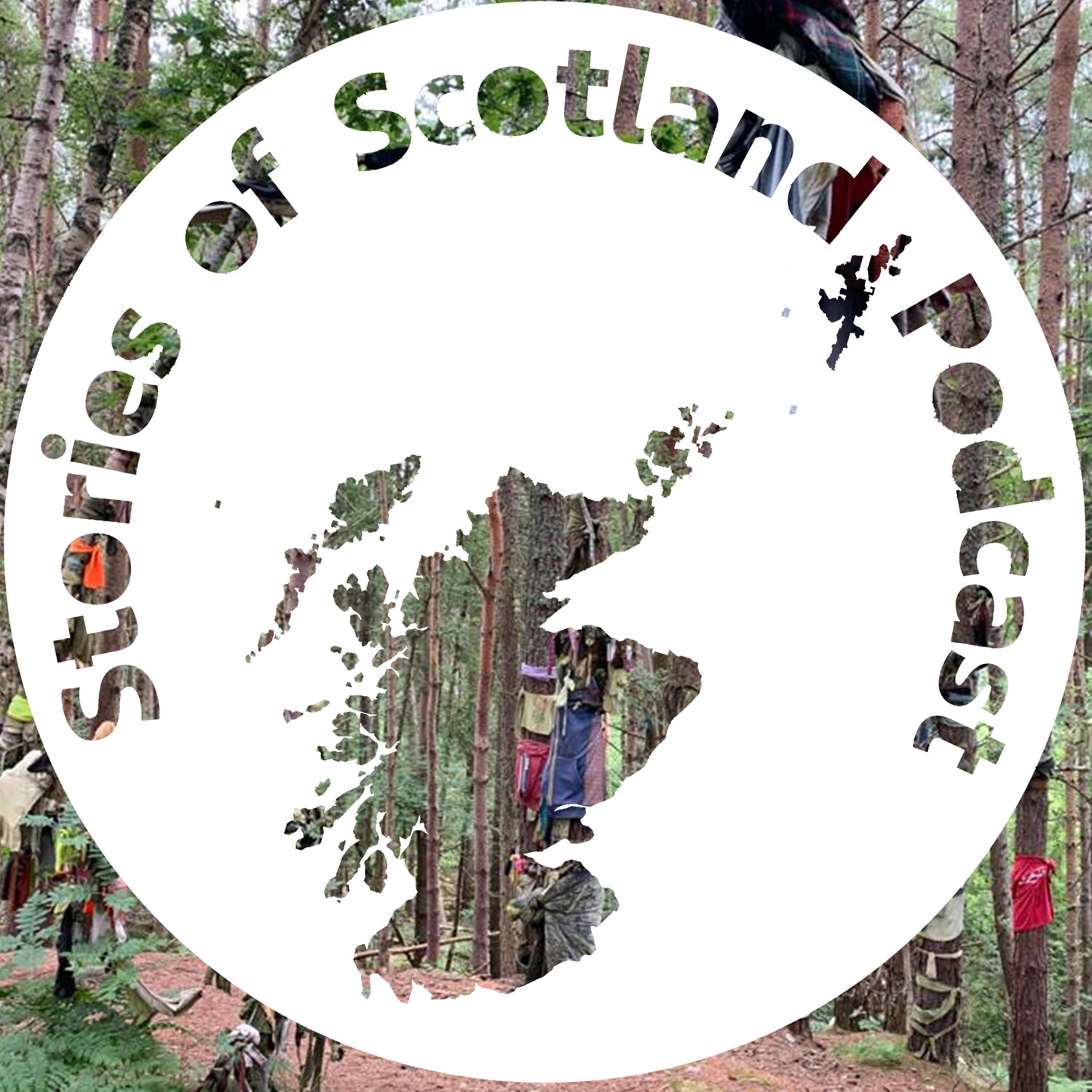
S3 Ep 12Clootie Well & the Well of Witchcraft
In this episode, Annie and Jenny take a deep dive into some of the many mystical wells dotted all over Scotland. They visit the Munlochy Clootie Well, one of the largest of its kind in Scotland and unpick it’s pagan and Christian past, while also looking at the continuation of age-old traditions in the modern-day. Many wells are believed to have magical properties and what better way to explore these than with a witch trial! A fairy well on Arthurs’s seat in Edinburgh healed many but ended in the death of one unfortunate woman accused of witchcraft. Annie and Jenny explore what wells can tell us about Scottish culture throughout time. Listen in to find out more about both these wells and as well as Annie’s favorite well, The Burghead Well, and Jenny’s favourite well, The Cheese Well. Hosted on Acast. See acast.com/privacy for more information.
S3 Ep 10Illicit Whisky & the Shebeen
In this episode, Annie and Jenny enter the dark and mysterious world of the shebeen - the illegal Scottish whisky house! The shebeen was at the heart of whisky smuggling and illegal distilling in rural Scotland. We discover this almost-lost shadow of the whisky industry. We hear the intriguing tale of Eppie “Lucky” Thane, the hundred-year-old woman who ran a successful shebeen in Glen Nochty. From illegal distilling of whisky in the glens while avoiding the taxman, to smuggling the water of life into towns around Scotland this episode explores all corners of the illegal whisky trade in Scotland. Hosted on Acast. See acast.com/privacy for more information.
S3 Ep 9Bonus: Miniature Sea & Loch Myths
Enjoy two of the misfit legends found by Jenny & Annie as they researched Scottish coasts and waters. Jenny recalls a story of a strange folktale of a ghost ship from the mysterious Blawhooly Bay in the Scottish borders. Ghosts, ghouls, fairies and sea-beasts anchor their ship one dark night in order to kidnap a midwife. Whereas Annie brings a story from oral history which tells of a mischievous kelpie who lived in Strathnairn, just south of Inverness.Consider supporting Stories of Scotland on Patreon! www.patreon.com/storiesofscotland Hosted on Acast. See acast.com/privacy for more information.
S3 Ep 8Smoo Cave: Unexpected Love & Sutherland Demons on the North Coast 500
In this episode, Annie and Jenny visit the magnificent Smoo Cave, a favourite on the North Coast 500 and a place that is dear to both. Join them in their expedition deep under the cliffs of the North West Coast to discover how love formed the caves, and evil has lived in them! From a dastardly murderer to a wee man in a box, Smoo Cave is packed with stories from the past, both real and mythological. Hosted on Acast. See acast.com/privacy for more information.
S3 Ep 7Witches of the Waves
This episode explores the relationship between witches and water in mythology, folklore and a historical witch trial. Annie and Jenny read the 1644 witch trial of Marion Peebles, a woman from Shetland accused of witchcraft. The trial of Marion Peebles gives a unique and intriguing insight into the superstitions of Shetland in the 17th Century. Next, Jenny retells the marvellous tale of the cannibalistic Cailleach of Arran, a sailor-eating giant who is foiled by a cunning French fisher. In the past, this story was considered vulgar and so was only told out on the open sea by sailors. Returning to Shetland, we look at the folklore of a witch of Yell, who had a vendetta against a sailor and used her sea-powers to punish him. Hosted on Acast. See acast.com/privacy for more information.
S3 Ep 6Blue Men of the Minch
Jenny and Annie head to sea to explore the legends of the Blue Men of the Minch: supernatural men who are said to inhabit the strip of sea from the Outer Hebrides to the west coast of mainland Scotland. Jenny and Annie look at different tales taken from oral tradition and think about what these strange wee creatures from folklore tell us about the nautical culture of the Hebrides. Celebrating Scotland’s coasts and waters in a lighthearted look at mythology. Hosted on Acast. See acast.com/privacy for more information.

S3 Ep 5Grey Mare’s Tail Waterfall: The Devil and the Rock
In this episode we explore deep time in an investigation into the geology and history of the Grey Mare’s Tail, a spectacular waterfall and nature reserve in Dumfries. Jenny looks into how creatures from 500 million years ago, found at the Grey Mare’s Tail, sent seismic waves through the geologic community. Annie uncovers a surreal tale of 17th century Covenanters seeking refuge and hiding at the Grey Mare’s Tail only to confront their worst nightmares. Also, a place of feral goats. Hosted on Acast. See acast.com/privacy for more information.

S3 Ep 4Anthrax Island: Gruinard Clearances & Deadly Experiments
Jenny and Annie find stories of Gruinard Island, a small island just off the West Coast of the Scottish. From this one little piece of land, they uncover harrowing and painful stories of the Highland Clearances. They discuss the kelp processing industry on the Western Isles and the impact it had on crofting communities. They learn about an unsympathetic landlord and the strife of tenants. Next, they go into the dark history of Second World War biological weapon testing on the island. They ask how could an island be left with deadly anthrax for decades in the midst of idyllic scenery. Jenny looks into Dark Harvest Commandos who fought for the British Government to decontaminate Gruinard. This episode ties together controversial land management decisions, past and present. Please be advised this episode discusses government testing of biological weapons on livestock. Hosted on Acast. See acast.com/privacy for more information.
S3 Ep 3Mermaids of Scotland: Dangers of the Deep Sea
Jenny and Annie explore the everlasting legend of mermaids to celebrate coastlines, seas and lochs. They share incredible mermaid folklore curated by a traditional storyteller from Caithness to learn about the significance of mermaids to Scotland’s culture. Jenny reads poetry inspired by the lands-under-the-sea written by a fisherman’s son from Shetland. Annie examines mermaid artefacts from the Scottish Fisheries Museum and National Museums Scotland.They also discuss selkies, the mythological half-seal half-human creatures. Kyle returns to sing a couple of verses from the traditional Scots ballad Lady Odivere. Hosted on Acast. See acast.com/privacy for more information.