Stoicism: Philosophy as a Way of Life Podcast
80 episodes — Page 2 of 2

Excerpt from "Marcus Aurelius: The Stoic Emperor"
In this episode, I read an exclusive excerpt from my latest book, Marcus Aurelius: The Stoic Emperor, published by Yale University Press, as part of the Ancient Lives Series. The book is a philosophical biography of the Roman emperor, which contains many references to the Meditations and how his philosophy shaped his life. You can help it reach a wider audience by pre-ordering now from Amazon, Barnes and Noble, or any other bookseller.Marcus Aurelius did not have a heart of stone. When the news was brought to him that one of his most beloved tutors had died, the young Caesar was distraught, and tears poured down his cheeks—he may perhaps have started to beat his chest and tear his clothes in grief. Palace servants, afraid his reputation would be harmed by such a public display of raw emotion, rushed to his side, trying to restrain him. His adoptive father, the emperor Antoninus Pius, a thoughtful and gentle man, gestured for them to step aside. He whispered, “Let him be only a man for once; for neither philosophy nor empire takes away natural feeling.” Praise from other Authors“Few historical figures are as fascinating as Marcus Aurelius, the emperor-philosopher. And few writers have been so effective at bringing his complex life and character to the attention of modern readers as Donald Robertson.”—Massimo Pigliucci, author of How to Be a Stoic: Using Ancient Philosophy to Live a Modern Life“Robertson has written a very thorough and very readable account of Marcus’s life and the events and people that shaped him. Anyone who wants to understand the author of Meditations should read this book.”—Robin Waterfield, author of Marcus Aurelius, Meditations: The Annotated Edition“Donald Robertson guides us into the world of a philosopher-emperor whose humility and Stoic teachings fill the pages. We are indebted to Robertson for this wonderful account of the emperor who penned notes to himself while in battle that would be later known as the Meditations and read by millions for philosophical inspiration. Simply spellbinding.”—Nancy Sherman, author of Stoic Wisdom: Ancient Lessons for Modern Resilience“This highly readable biography is the perfect place to begin for anyone who wants to learn more about the man behind the Meditations.”—John Sellars, author of The Pocket Stoic“Robertson’s biography provides a compelling narrative of Marcus’ life, carefully based on the primary sources. He brings out very clearly the life-long significance of Stoicism for Marcus and the interplay between philosophy, politics, and warfare.”—Christopher Gill, author of Learning to Live Naturally: Stoic Ethics and Its Modern SignificanceStoicism: Philosophy as a Way of Life is a reader-supported publication. To receive new posts and support my work, consider becoming a free or paid subscriber.Thank you for reading Stoicism: Philosophy as a Way of Life. This post is public so feel free to share it. Get full access to Stoicism: Philosophy as a Way of Life at donaldrobertson.substack.com/subscribe

Socrates and Love
In this episode, I speak about Socrates with Armand D'Angour, professor of classics at Oxford University. He is the translator of How to Innovate: An Ancient Guide to Creative Thinking (2021) and the author of Socrates in Love: The Making of a Philosopher (2020), among other works.Thank you for reading Stoicism: Philosophy as a Way of Life. This post is public so feel free to share it.Highlights* Why should we care about Socrates today?* How reliable are our sources regarding Socrates?* What was Socrates like as a young man?* How do you imagine his relationship with Pericles and Aspasia?* Why did Socrates love Alcibiades so much? * Did Socrates have a mental illness?* Why was Socrates executed?Links* Armand D’Angour’s website* Socrates in Love: The Making of a PhilosopherThank you for reading Stoicism: Philosophy as a Way of Life. This post is public so feel free to share it. Get full access to Stoicism: Philosophy as a Way of Life at donaldrobertson.substack.com/subscribe

Clarity and Wisdom
In this episode, I speak about Clarity and Wisdom with executive coach, Jim Vaselopulos. Jim is co-host of The Leadership Podcast. We discuss his new book, Clarity: Business Wisdom to Work Less and Achieve More.Stoicism: Philosophy as a Way of Life is a reader-supported publication. To receive new posts and support my work, consider becoming a free or paid subscriber.Highlights* What is clarity?* What's the relationship between wisdom and clarity?* What are the benefits of having more clarity?* What gets in the way of clarity?* How do we get clarity?* How do we help other people to get more clarity?Links* The Leadership Podcast website* The Leadership Podcast on Apple* Jim Vaselopulos on LinkedIn* Clarity: Business Wisdom to Work Less and Achieve MoreThank you for reading Stoicism: Philosophy as a Way of Life. This post is public so feel free to share it. Get full access to Stoicism: Philosophy as a Way of Life at donaldrobertson.substack.com/subscribe
Stoicism and Buddhism
In this episode, I speak about Stoicism and Buddhism with Matthew Gindin. Matthew is a former Forest Monk in the Thai Buddhist tradition. He taught meditation practices for 15 years, and has written extensively for Tricycle: The Buddhist Review. He is now the author of the Philosophy As Therapy newsletter on Substack.Stoicism: Philosophy as a Way of Life is a reader-supported publication. To receive new posts and support my work, consider becoming a free or paid subscriber.Highlights* How Matthew became interested in Stoicism and his other philosophical influences, such as Spinoza* The rise in popularity of Stoicism, e.g., how it appeals to people interested in Buddhism, etc.* What do you think Stoicism and Buddhism have in common?* The historical relationship between Stoicism and Buddhism, e.g., communication between ancient eastern and western philosophers* How Stoics could benefit from learning more about Buddhism Links* Philosophy As TherapySubstack NewsletterThank you for reading Stoicism: Philosophy as a Way of Life. This post is public so feel free to share it. Get full access to Stoicism: Philosophy as a Way of Life at donaldrobertson.substack.com/subscribe
Design your Mind with Stoicism
In this episode, I talk to Ryan A. Bush, author of Designing the Mind: The Principles of Psychitecture and the forthcoming Become Who You Are: A New Theory of Self-Esteem, Human Greatness, and the Opposite of Depression. Bonus: Ryan is generously offering listeners two free ebooks from his website, called the Psychitect’s Toolkit and The Book of Self Mastery. Stoicism: Philosophy as a Way of Life is a reader-supported publication. To receive new posts and support my work, consider becoming a free or paid subscriber.Highlights* What is Designing the Mind and Psychitecture?* How Ryan’s background in design influenced his approach to self-improvement* The main thing Ryan thinks people should learn to stop doing* The philosophical influences on Ryan’s work* How Ryan became interested in Stoicism* How Ryan’s work draws on cognitive-behavioural therapy (CBT)* The role of metacognition and meditation* Ryan’s views about anger* How his new book, Become Who You Are, differs from his previous bookLinks* Instagram * Facebook * Twitter* Website * Design the Mind: The Principles of PsychitectureThank you for reading Stoicism: Philosophy as a Way of Life. This post is public so feel free to share it. Get full access to Stoicism: Philosophy as a Way of Life at donaldrobertson.substack.com/subscribe

Tips for Practical Stoicism in Everyday Life
Elliot Chung, a student at Phillips Academy Andover, interviewed me recently for his new Philosophy for the Modern Mind podcast, and we decided to share our conversation on this podcast as well. We talk in particular about how Stoicism could be of practical benefit to young people, and the challenges they face today. Thank you for reading Stoicism: Philosophy as a Way of Life. This post is public so feel free to share it.Thank you for reading Stoicism: Philosophy as a Way of Life. This post is public so feel free to share it. Get full access to Stoicism: Philosophy as a Way of Life at donaldrobertson.substack.com/subscribe

Stoic Philosophy and Alcoholism
How to drink like a Roman emperor, if that emperor is Marcus Aurelius. In this episode I explore the relationship between Stoic philosophy and the Twelve Step Program of Alcoholics Anonymous, discussing how Stoicism can help those suffering from alcoholism, as well as their friends and families. I spot parallels between the Twelve Step advice and Stoic teachings, and give examples from the life of Marcus Aurelius. I talk about how his wayward brother, and co-emperor, Lucius Verus, was almost certainly an alcoholic. Also, Frank, retired NYPD police officer, shares his experience of combining Stoicism the Twelve Step Program.Stoicism: Philosophy as a Way of Life is a reader-supported publication. To receive new posts and support my work, consider becoming a free or paid subscriber.The original article is available on Substack, titled How to Drink Like a Roman Emperor.Thank you for reading Stoicism: Philosophy as a Way of Life. This post is public so feel free to share it. Get full access to Stoicism: Philosophy as a Way of Life at donaldrobertson.substack.com/subscribe

Stoicism and the Live and Let Live Movement
In this episode, I talk with Marc J. Victor, about Stoicism and politics. Marc is an attorney in the US, where he is a certified Criminal Law Specialist, and president of the Attorneys for Freedom law firm. He is also an activist and founder of the Live and Let Live global peace movement.Thank you for reading Stoicism: Philosophy as a Way of Life. This post is public so feel free to share it.Highlights* Why Stoicism is attracting more interest today* Misconceptions * What is the Live and Let Live Movement?* What does “live and let live” mean in terms of your philosophy?* The relationship between Stoicism and the Live and Let Live principle* How does the movement define aggression?* Our competence to avoid being victims of exploitation* Rhetoric, lawyers, and philosophy* Final question: “How could we better incorporate Stoicism into a political philosophy that could help us achieve global peace?”Links* Live and Let Live * Marc J. VictorThank you for reading Stoicism: Philosophy as a Way of Life. This post is public so feel free to share it. Get full access to Stoicism: Philosophy as a Way of Life at donaldrobertson.substack.com/subscribe

Plato of Athens, with Robin Waterfield
In this episode, I talk to Robin Waterfield about the life and philosophy of the Greek philosopher, Plato. Robin is a British classicist who has translated many works of Plato, Xenophon, and other Greek writers. He is also the author of several books, including the recently-published Plato of Athens: A Life in Philosophy, the first full-length modern biography of Plato in English. Robin is also a member of our board of advisors for the Plato’s Academy Centre.Highlights* Why is Plato “super-important” today?* The Socratic Problem — to what extent can we separate Socrates from Plato?* How eclectic was the early Academy?* How did Plato differ from the image of Socrates in his dialogues?* The relationship between Plato and Pythagoreanism* What advice would Plato give us about dealing with social media?* Final question: “Why are we born to suffer and die?”Stoicism: Philosophy as a Way of Life is a reader-supported publication. To receive new posts and support my work, consider becoming a free or paid subscriber.Links* Plato of Athens, Oxford University Press* Robin Waterfield’s website* Plato’s Academy Centre * Plato's Academy Centre Newsletter Thank you for reading Stoicism: Philosophy as a Way of Life. This post is public so feel free to share it. Get full access to Stoicism: Philosophy as a Way of Life at donaldrobertson.substack.com/subscribe

Stoicism and Martial Arts with Michael Tremblay
In this episode, Donald talks with Michael Tremblay. Michael is the co-founder of the Stoa Meditation app and co-host of the Stoa Conversations podcast. He has a doctorate in philosophy from Queens University in Ontario. His research has focused on moral education in the Stoics, and philosophy as a way of life. He’s also a wrestler and a black belt in Brazilian Jiu-jitsu.Stoicism: Philosophy as a Way of Life is a reader-supported publication. To receive new posts and support my work, consider becoming a free or paid subscriber.Highlights* How did you become interested in ancient philosophy and why Stoicism rather than Buddhism?* What is the main thing that we can learn from Epictetus about moral education* What we can learn from the use of athletic imagery as a metaphor for philosophy in Epictetus and other ancient sources* Marcus says the “art of living” is more like wrestling than dancing – do you agree?* The relationship between martial arts, like BJJ, and Stoic askesis* Could athletic or martial arts training ever conflict with the goals of Stoicism? Resources* Michael on Twitter* Stoa Meditation on Twitter* Michael’s Website Get full access to Stoicism: Philosophy as a Way of Life at donaldrobertson.substack.com/subscribe

Philosophy as a Way of Life with Matthew Sharpe
In this episode, Donald talks with Matthew Sharpe. Matt is Associate Professor of Philosophy at Deakin University in Australia. He’s spoken at Stoicon in Athens. He is the co-author of Philosophy as a Way of Life, and one of the translators of The Selected Writings of Pierre Hadot: Philosophy as Practice. His most recent book is titled Stoicism, Bullying, and Beyond: How to Keep Your Head When Others Around You Have Lost Theirs and Blame You.Stoicism: Philosophy as a Way of Life is a reader-supported publication. To receive new posts and support my work, consider becoming a free or paid subscriber.Highlights* Stoicism and Philosophy as a Way of Life* Why isn’t Stoicism more popular in academia?* Pierre Hadot and Stoicism* Philosophy and Spiritual Exercises* Philosophy and the History of Psychotherapy* Anger, Self-Estrangement, and Politics* The French Enlightenment and Philosophy as a Way of LifeLinks* Matthew Sharpe Profile at Deakin University* Stoicism, Bullying, and Beyond* The Other Enlightenment: Race, Sexuality and Self-Estrangement* The Selected Writings of Pierre Hadot* Philosophy as a Way of Life: History, Dimensions, DirectionsStoicism: Philosophy as a Way of Life is a reader-supported publication. To receive new posts and support my work, consider becoming a free or paid subscriber. Get full access to Stoicism: Philosophy as a Way of Life at donaldrobertson.substack.com/subscribe

What is Wisdom? with J.W. Bertolotti
In this episode, I chat with J.W. Bertolotti host of the In Search of Wisdom podcast, and founder of the Perennial Leader Project. Josh was one of the speakers at our Stoicon-x Military event a few years ago. We’re both very active on Substack now, Josh at Perennial Meditations so I thought it would be a great opportunity to reconnect and chat about philosophy as a guide to life.Highlights* How Joshua got into philosophy* His journey as a podcaster speaking to people about the nature of wisdom * Stoicism and other philosophies* Desire and attachment in philosophy* Conceit, and skepticism as a way of life* How the Delphic maxims can teach us about philosophyLinks* Perennial Meditations Newsletter on Substack* In Search of Wisdom Podcast @in sear on Substack and on Spotify* Perennial Meditations Podcast* @JWBertolotti on Twitter* Perennial Leader Project website Get full access to Stoicism: Philosophy as a Way of Life at donaldrobertson.substack.com/subscribe

The Choice of Hercules
This is the famous speech, which we’re told inspired Zeno, the founder of Stoicism, to embark on a life of philosophy. He came across it in Book Two of Xenophon’s Memorabilia Socratis, where Socrates is portrayed reciting a version of it, which he learned from the celebrated Sophist and orator, Prodicus. It’s an exhortation to philosophy, which uses the legend of Hercules as an allegory to illustrate the choice between a life of virtue and one of vice. This story was illustrated in our graphic novel, Verissimus: The Stoic Philosophy of Marcus Aurelius.Stoicism: Philosophy as a Way of Life is a reader-supported publication. To receive new posts and support my work, consider becoming a free or paid subscriber.Highlights* Introducing the speech* Hercules confronted by the choice between two paths in life* The temptations of Kakia or Vice, to a life of pleasure and idleness* The exhortation of Arete or Virtue, to temperance and endurance* The legacy of the speech and influence on Stoicism Get full access to Stoicism: Philosophy as a Way of Life at donaldrobertson.substack.com/subscribe

Stoicism, Cognitive Therapy, and Resilience
In this episode, I answer questions about Stoicism, cognitive-behavioural therapy (CBT), and emotional-resilience from Valentin Lehodey, a digital journalism student at the University of Strathclyde in Scotland. Stoicism: Philosophy as a Way of Life is a reader-supported publication. To receive new posts and support my work, consider becoming a free or paid subscriber.Highlights* What is Stoicism?* How Stoicism influenced cognitive therapy* Stoicism as a preventative resilience-building approach* How Stoicism goes beyond modern psychotherapyThank you for reading Stoicism: Philosophy as a Way of Life. This post is public so feel free to share it. Get full access to Stoicism: Philosophy as a Way of Life at donaldrobertson.substack.com/subscribe

Stoicism, Self-Help and Modern Psychology
This is the audio of an interview I gave recently for Book Club with Kaiden Kelly, talking about How to Think Like a Roman Emperor, Verissimus, and Stoicism, self-help and modern psychology.Stoicism: Philosophy as a Way of Life is a reader-supported publication. To receive new posts and support my work, consider becoming a free or paid subscriber.Thank you for reading Stoicism: Philosophy as a Way of Life. This post is public so feel free to share it. Get full access to Stoicism: Philosophy as a Way of Life at donaldrobertson.substack.com/subscribe

How Stoicism Cures Anger
Donald discusses what Stoicism teaches us about anger and how it can actually help us in practice today.Stoicism: Philosophy as a Way of Life is a reader-supported publication. To receive new posts and support my work, consider becoming a free or paid subscriber.Highlights* Why anger is a problem* What the Stoics say about anger* Ways in which Stoicism can help us manage anger* The benefits of learning to cope with angerThank you for reading Stoicism: Philosophy as a Way of Life. This post is public so feel free to share it.You can read the text of How Stoicism Cures anger on my Substack newsletter. Get full access to Stoicism: Philosophy as a Way of Life at donaldrobertson.substack.com/subscribe

The Great Discourse of Protagoras
In this episode, I discuss and recite one of the most important philosophical speeches in history — the Great Discourse or Great Speech of the Sophist Protagoras, from Plato’s dialogue Protagoras. This speech contains some remarkable imagery and ideas, which clearly foreshadow many later ideas about social virtue and politics in Greek and Roman philosophy, from Socrates to the Stoics, and beyond.Thank you for reading Stoicism: Philosophy as a Way of Life. This post is public so feel free to share it.Highlights* Introducing the Great Speech, and why it is so important* Reading an excerpt from Plato’s Protagoras, containing the speech* Summary of the key points, in plain English* The speech can be seen as containing a kind of proto-evolutionary theory of social virtue* Can the capacity for virtue be seen as universal?* Can virtue can be taught?Thank you for reading Stoicism: Philosophy as a Way of Life. This post is public so feel free to share it.My Synopsis of The Great DiscourseAt first there were gods but no mortal creatures. When the time came, the gods fashioned countless animals by mixing together the elements of fire and earth. Zeus then commanded Prometheus, the Titan, to assign different abilities to each living thing. Some creatures were naturally slow and so he gave them great strength. Others were weak and so to these Prometheus granted speed. Some he armed while others were given various forms of protection. Small creatures were granted the capability for winged flight or for concealing their dwellings underground. Large beasts had their size for protection. And he took care to grant all creatures some means for their own preservation so that no species should be in danger of elimination by others. Having equipped them to survive among each other in this way he proceeded to grant them protection against their environment and the harshness of the seasons. He clothed some creatures with dense hair or thick skin, sufficient to endure the heat of summer and ward off the cold through winter months. To some he gave strong hooves, to others claws and hides that did not shed much blood. And every creature was assigned its own source of food. Some pastured on the earth, others ate fruits hanging from trees or roots from beneath the ground. Yet others were predators who fed upon other animals for their meat. To these he assigned limited offspring whereas their prey were more abundant so that there would always be enough to serve as food. However, having assigned to each species its own special capabilities, Prometheus realized that he had nothing left to give the race of man. Humans are born naked, unshod, unarmed, and with no bed in which to lay their head and rest safely. Not knowing what else to do, Prometheus stole the technical wisdom of the gods Hephaestus and Athena and gave it to mankind, along with the gift of fire.Once men were granted these divine gifts, they sensed their kinship to the gods and began to pray and build altars to them. They invented clothing, bedding, dwellings, agriculture, and even the use of language to express their thoughts and acquire learning. Men lived apart at first but finding themselves beset continually and harassed by wild beasts they sought to build cities for their own mutual protection.However, the wisdom that concerns our relations with others belonged to Zeus alone, king of the gods and patron of friendship and families. No sooner than men gathered together trying to save themselves, being lawless, they began instead to wrong one another and fight among themselves. And so scattering once again from their failed cities, they continued to perish in the wild.Looking down upon this chaotic scene with dismay, Zeus feared for the destruction of the entire human race. He therefore sent Hermes, the messenger of the gods, to teach mortals about justice and to imbue them with a sense of shame concerning wrongdoing. By this means Zeus now granted mankind the capacity to unite themselves in cities, maintaining order through the bonds of friendship and a sense of community. Hermes asked Zeus whether he should distribute justice, and other social and political arts, among men in the same way as technical knowledge concerning other crafts. One man who possesses the knowledge of medicine, he said, was enough to benefit many men, and so on. However, Zeus decreed that every human being must be granted some knowledge of justice and the arts needed to unite society. He even laid down the law that anyone who was found unable to respect justice and the rule of law should be put to death, being a plague on the city. For this reason, said Protagoras, we seek the advice only of those few who are experts with regard to crafts such as medicine or carpentry but concerning justice we allow every citizen to have his say. Further, if someone boasts of being an expert in playing the flute or some such art but is nothing of the sort then he is ridiculed for his folly. However, anyone who claim

Anya Leonard on Why Classics Matter Today
In this episode, I chat with Anya Leonard. Anya is the founder and director of Classical Wisdom, a website and online community dedicated to bringing ancient wisdom to modern minds. She also recently published a children’s book about the ancient Greek poetess, called Sappho: The Lost Poetess.Stoicism: Philosophy as a Way of Life is a reader-supported publication. To receive new posts and support my work, consider becoming a free or paid subscriber.Highlights* How Anya got into the classics * Why she chose to write a children’s book about Sappho * Why are classics are important today * Should only boffins talk and write about classics* What obstacles do we face teaching people about classics? * What is Classical Wisdom Kids? Links* Check out Anya’s Substack newsletterClassical Wisdom* And her newClassical Wisdom Kidsnewsletter * Get her book Sappho: The Lost PoetessThank you for reading Stoicism: Philosophy as a Way of Life. This post is public so feel free to share it. Get full access to Stoicism: Philosophy as a Way of Life at donaldrobertson.substack.com/subscribe
Stoicism as a Philosophy of Life
This is my attempt to provide a short and simple introduction to Stoic practices, which anyone can begin using right away. It includes:* Brief introduction to Stoicism and dispelling the most common misconceptions* Two basic concepts:* The dichotomy of control* That it’s not things that upset us but rather our judgments about them* Three basic practices:* Objective description* Contemplating virtue and the double-standards strategy* The view from aboveStoicism: Philosophy as a Way of Life is a reader-supported publication. To receive new posts and support my work, consider becoming a free or paid subscriber.The original article on which this audio recording is based can be found on Substack, Stoicism as a Philosophy of Life. Check out my books Stoicism and the Art of Happiness and How to Think Like a Roman Emperor: The Stoic Philosophy of Marcus Aurelius, for more advice on applying Stoicism in daily life.Thank you for reading Stoicism: Philosophy as a Way of Life. This post is public so feel free to share it. Get full access to Stoicism: Philosophy as a Way of Life at donaldrobertson.substack.com/subscribe

Archeology: Marcus Aurelius and Carnuntum
This podcast episode contains the audio recording from a conversation about Marcus Aurelius, and the history of Roman Carnuntum. I spoke with Eduard Pollhammer, the scientific director of the Carnuntum Archeological Park, at the Museum Carnuntinum in Austria. Stoicism: Philosophy as a Way of Life is a reader-supported publication. To receive new posts and support my work, consider becoming a free or paid subscriber.Thanks to Landessammlungen Niederösterreich, Archäologischer Park Carnuntum for permission to film. Thank you for reading Stoicism: Philosophy as a Way of Life. This post is public so feel free to share it. Get full access to Stoicism: Philosophy as a Way of Life at donaldrobertson.substack.com/subscribe

Alexandra Hudson on Classics and Civility
In this episode, I chat with Alexandra Hudson, writer, popular speaker, founder of Civic Renaissance, a publication and intellectual community dedicated to beauty, goodness and truth, and author of The Soul of Civility: Timeless Principles to Heal Society and Ourselves, a forthcoming book from St. Martin’s Press.Stoicism: Philosophy as a Way of Life is a reader-supported publication. To receive new posts and support my work, consider becoming a free or paid subscriber.Highlights* What Lexi’s newsletter, Civic Renaissance, is about* The central message of her new book, The Soul of Civility: Timeless Principles to Heal Society and Ourselves* What is the difference between civility and politeness? * Why classics are still important today* Whether you need a philosophy or classics degree to benefit from classical wisdom* What's happened to civility today? How can we restore civil discourse?* About Lexi’s Storytelling and the Human Condition elearning course* What can great stories across different cultures tell us about our lives?Links* Civic Renaissance with Alexandra Hudson * Alexandra Hudson * The Soul of Civility on Macmillan’s websiteThank you for reading Stoicism: Philosophy as a Way of Life. This post is public so feel free to share it. Get full access to Stoicism: Philosophy as a Way of Life at donaldrobertson.substack.com/subscribe

Short Guided Relaxation Exercise
NB: This episode contains a recording of a guided relaxation technique, which you should not listen to while driving. I created this recording for my psychotherapy clients, many years ago, but wanted to make it more widely available. It’s a short and simple exercise, about thirteen minutes in duration. This is the approach that I found to work best for the majority of people. Stoicism: Philosophy as a Way of Life is a reader-supported publication. To receive new posts and support my work, consider becoming a free or paid subscriber.Instructions* Lie down or sit in a comfortable chair, where you are free from distractions* Close your eyes, while you listen to the recording* If you want to fall asleep, it’s okay to listen in bed at night* Try to use this recording at least once per day for at least two weeks* Relax your body and your mind togetherThrough regular use, you’ll develop an association between the recording and the feelings of relaxation, which will make it much easier to relax more quickly, and more deeply. Thank you for reading Stoicism: Philosophy as a Way of Life. This post is public so if you found it helpful, please feel free to share it. Get full access to Stoicism: Philosophy as a Way of Life at donaldrobertson.substack.com/subscribe
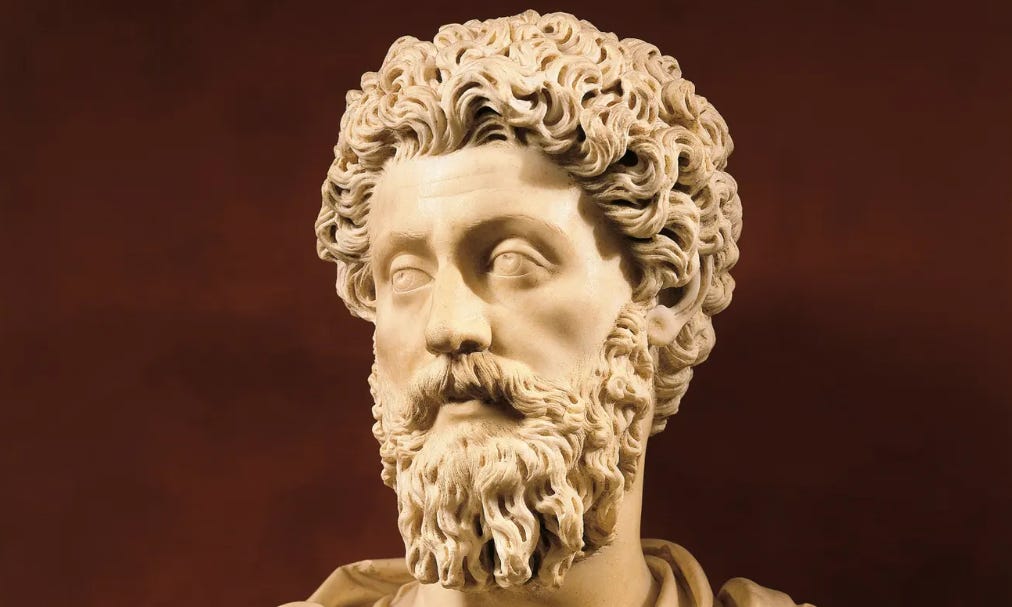
Stoicism in a Time of Pandemic
Re-reading a newspaper article that I wrote at the start of the pandemic about how Marcus Aurelius used Stoicism, in the Meditations, to cope with the Antonine Plague. It struck me that, in part at least, the Meditations can be seen as Marcus’ notes to himself on coping with the psychological and moral challenges of the plague — or, if you like, as a manual for coping Stoically during a pandemic.Stoicism: Philosophy as a Way of Life is a reader-supported publication. To receive new posts and support my work, consider becoming a free or paid subscriber.Highlights* How Marcus used Stoicism to cope with his own pandemic* The Dichotomy of Control* Modelling virtue* Contemplating our own mortalityOriginal article titled Stoicism in a Time of Pandemic, from The Guardian newspaper, April 2020.Thank you for reading Stoicism: Philosophy as a Way of Life. This post is public so feel free to share it. Get full access to Stoicism: Philosophy as a Way of Life at donaldrobertson.substack.com/subscribe

Marcus Aurelius and Carnuntum
This podcast episode contains the audio recording from a conversation about Marcus Aurelius, which I had with Markus Wachter, the CEO of the Carnuntum Archeological Park, at the Museum Carnuntinum, in 2019. I was visiting Austria for around a week, doing research for my books on Marcus Aurelius. The audio was recorded live in the main hall of the reconstructed Roman villa in the archeological park, hence the acoustics. Marcus stationed himself at the Roman legionary fortress of Carnuntum, for part of the Marcomannic Wars. He included the note “At Carnuntum” near the start of the Meditations, proving that he must have written at least part of the manuscript there.Stoicism: Philosophy as a Way of Life is a reader-supported publication. To receive new posts and support my work, consider becoming a free or paid subscriber.Thanks to Landessammlungen Niederösterreich, Archäologischer Park Carnuntum for permission to film, and to Adam Piercey for filming and editing. You can also watch the video hosted on Substack.Thank you for reading Stoicism: Philosophy as a Way of Life. This post is public so feel free to share it. Get full access to Stoicism: Philosophy as a Way of Life at donaldrobertson.substack.com/subscribe

Massimo Pigliucci on Socrates, Stoicism and Leadership
In this episode, I chat with Massimo Pigliucci, Professor of Philosophy at the City College of New York, part of the team responsible for the Modern Stoicism organization, and author of several books on philosophy, including How to be a Stoic and, more recently, The Quest for Character: What the Story of Socrates and Alcibiades Teaches us about Our Search for Good Leaders. Stoicism: Philosophy as a Way of Life is a reader-supported publication. To receive new posts and support my work, consider becoming a free or paid subscriber.Topics covered include…* How Massimo first got into philosophy, and into Stoicism * What he learned from writing How to be a Stoic* How he has changed his mind about aspects of Stoicism* The Modern Stoicism org and the modern resurgence of interest in Stoicism? * Why doesn’t there seem to be as much interest in Epicureanism or other ancient schools of philosophy among the general public? * What's The Quest for Character about? * Why write about Socrates and Alcibiades? * What potential do you think Socrates saw in Alcibiades? * What do you think Alcibiades’ biggest flaws were and what was his biggest mistake in life? * Would it have turned out differently if a Stoic like Epictetus had been Alcibiades’ tutor? * To what extent good character, or virtue, can be taught* How we could be doing a better job of teaching virtue today Thank you for reading Stoicism: Philosophy as a Way of Life. This post is public so feel free to share it. Get full access to Stoicism: Philosophy as a Way of Life at donaldrobertson.substack.com/subscribe

Tim LeBon on Stoicism and Psychology
In this episode, I chat with Tim LeBon, cognitive-behavioural psychotherapist, research director for the Modern Stoicism organization, and author of Wise Therapy: Philosophy for Counsellors, Teach Yourself Positive Psychology, and more recently, 365 Ways to be More Stoic, edited by my wife Kasey Pierce. Topics covered include…* How Tim first got into philosophical practice and Stoicism * The relationship between Stoicism and CBT in general * Stoicism and third-wave CBT — recent advances* What Tim has learned about Stoicism from his experience as research director with Modern Stoicism* What's 365 Ways like? How it differs from other Stoicism books Stoicism: Philosophy as a Way of Life is a reader-supported publication. To receive new posts and support my work, consider becoming a free or paid subscriber.Tim’s new book, edited by my wife, Kasey Pierce, is now available from all good bookstores.Thank you for reading Stoicism: Philosophy as a Way of Life. This post is public so feel free to share it. Get full access to Stoicism: Philosophy as a Way of Life at donaldrobertson.substack.com/subscribe

Podcast: Experimental Technique
This is an audio recording of me explaining, and demonstrating, how to use a very simple but powerful psychological technique, which I call imaginal aphasia. It derives from an old hypnotic technique called hypnotic aphasia, and involves speaking (e.g., counting) aloud while gradually fading your voice to silence, and imagining that it’s becoming more and more of an effort to pronounce the syllables. You’re doing this both externally and internally, i.e., in your outward behaviour but also in your imagination, in order to relax and silence your mind.This technique is pretty easy for most people to learn and because it’s a physical behaviour, it seems to exhibit a standard practice curve effect, i.e., it becomes quicker and easier to do with practice. However, I would advise against individuals with diagnosable psychiatric conditions using it, except perhaps under the supervision of a qualified mental health clinician. For ordinary (subclinical) anxiety and insomnia, though, I think this may be helpful as a coping strategy.Let me know your feedback in the comments, and if you think of any other ways in which it could be useful. Thank you for reading Stoicism: Philosophy as a Way of Life. This post is public so feel free to share it. Get full access to Stoicism: Philosophy as a Way of Life at donaldrobertson.substack.com/subscribe

Interview: Kasey Pierce and 365 Ways to be More Stoic
My wife, Kasey Robertson, writes under the pen name Kasey Pierce. I thought it would be pretty interesting to interview her about her writing. You can follow herKasey Piercenewsletter on Substack. Stoicism: Philosophy as a Way of Life is a reader-supported publication. To receive new posts and support my work, consider becoming a free or paid subscriber.Links mentioned* Kasey’s Amazon author page* 365 Ways to be More Stoic (Harbinger)* Kasey on Medium* Kasey’s Twitter and InstagramThank you for reading Stoicism: Philosophy as a Way of Life. This post is public so feel free to share it. Get full access to Stoicism: Philosophy as a Way of Life at donaldrobertson.substack.com/subscribe

Death, Love, Stoicism
This is a new audio recording of an article I published on Medium about the Stoic contemplation of death. The photo shows me outside the ruined Temple of Hades at the ancient site of Eleusis near Athens. Get full access to Stoicism: Philosophy as a Way of Life at donaldrobertson.substack.com/subscribe

How to Actually Practice Stoicism
People keep asking me for advice about simple ways they can begin practicing Stoicism in daily life. This audio recording is based on my recent Medium article of the same name. It contains three basic Stoic strategies, which provide a good foundation for following Stoic philosophy in the modern world. Get full access to Stoicism: Philosophy as a Way of Life at donaldrobertson.substack.com/subscribe