
Stoic Coffee Break
293 episodes — Page 2 of 6
S1 Ep 242242 - How to Become Another Person
<div>Growing up, many of us feel like we only have a few options in how to live our lives. Like, there is a list of things we need to check off to be happy. Certain&nbsp; careers that are acceptable. Certain kinds of people we should date and marry. Goals we are expected to obtain in order to live life correctly. Often we get stuck in thinking that we have a few choices in life, and we think that’s how it’s supposed to be.</div><div><br></div><div>How would your life be different if you viewed yourself as something you get to create and to become someone you admire? Are you living the life you want to? If you aren’t, how do you create big changes in your life? Today I want to talk about, rather than simply growing and getting better little by little, what if you transformed yourself into something completely different?</div><div><br></div><blockquote>We are not given a short life but we make it short, and we are not ill-supplied but wasteful of it.<br>— Seneca</blockquote><div><br></div><div>Why does it seem that changes we want to make take far longer than we think they should? Often, we get by just making small and minor adjustments in our lives. We have found a way of living that works for us, and we don’t want to upset things. We are “fat and happy” as they say, and don’t want to upset our comfortable lives. We are stuck playing it safe, rather than just transforming our lives.</div><div><br></div><div>But when we think about it, can we ever really consider this growth? To me, this sounds more like maintenance, like we’re keeping an old building running with minor tweaks. For me, this is coasting. This is playing it safe.I think for many of us, there are periods of our lives when we get complacent. We are comfortable, and for many of us, this fine… or is it? What if you get to the end of your life and you see the opportunities you could have taken which would have made a dramatic change in your life and in the lives of others, but because you sought comfort over change you let those opportunities go?&nbsp;</div><div><br></div><div>While incremental change is good and helpful, if we want to be greater than we are, we need to change who we are as a person. We have chances all throughout our lives to step up and to become someone far greater than what we are.&nbsp;</div><div><br></div><blockquote>I made a prosperous voyage when I was shipwrecked.<br>— Zeno</blockquote><div><br></div><div>Zeno of Citium, a wealthy merchant, was the founder of the Stoic school of philosophy. On a voyage, he survived a shipwreck where he lost a great fortune. He ended up in Athens, and while trying to figure out what to do next, he was introduced to philosophy at a local bookshop. Zeno, so taken with the description of Socrates in Xenophon’s Memorabilia, asked the bookseller where he might find a philosopher along the same lines as Socrates. Crates of Thebes, the most famous Cynic living at that time in Greece, happened to have been passing by the bookshop. The owner of the bookstore introduced the two and Zeno became a pupil.</div><div><br></div><div>While Zeno could have bemoaned his fate, he took the opportunity of a clean slate to make a radical change in his life and become a completely different person. His teachings have resonated throughout history and humanity benefited because of his willingness to turn adversity into a life-changing opportunity.</div><div><br></div><blockquote>The universe is change; our life is what our thoughts make it.<br>— Marcus Aurelius</blockquote><div><br></div><div>Now, the brain’s main job is to keep us safe. If something is not threatening us or dangerous, and we’re comfortable, then it makes it challenging to step up and change. Our ego will create all kinds of resistance, make all kinds of excuses, and even self-sabotage us, because it wants to keep us safe.</div><div><br></div><div>The kind of change I’m talking about is changing who you are at a core level, and your ego will certainly feel the fear that comes with this. This is changing your identity. It’s about letting go of who you think you are at this moment, so you can become who you want to be. The tighter you hold on to who you are, and defend who you think you are, the harder it is to become this better and more evolved person.</div><div><br></div><div>This type of change takes a willingness to be fearless and step into the challenges so you can learn, and see the obstacles not as things to be avoided, but the very things that strengthen you and make you even more resilient.</div><div><br></div><div>It’s a w
S1 Ep 241241 - Mind Over Mood: The Stoic Art of Reframing
<div><strong><br>Mind Over Mood: The Stoic Art of Reframing</strong></div><div>One of the things we talk about a lot in stoicism is that it’s our perspective on something that causes our distress. So how do we change our perspective on things? Are there tools that we can use to help us view things differently? Today I want to talk about some of the things that get in our way of broadening our perspective, and what tools we can use to help change our perspective.</div><div><br></div><blockquote>It is not the things themselves that disturb people, but their judgments about these things.<br><br><br>— Epictetus<br><br><br>Great minds do not always think alike.<br><br><br>— Anonymous.</blockquote><div><br></div><div>One of the most important ideas in stoicism is that our perspective is what informs and colors our opinion about things that happen in our lives. Being aware of our own perspective is very challenging because we really only interact with the world through our own point of view and filters.</div><div><br></div><div>We have attitudes and biases that we are often not aware of which affect how we interpret the world and how we decide to respond to events and other people. Basically, we act based on our judgments, and our judgments are formed by what we think about a situation.</div><div><br></div><div>For example, say that we have two people, Jane and Tony, and they are walking down the street to a coffee shop. They pass by a group of teenagers with skateboards hanging outside a convenience store. Now when Jane sees them, she smiles and remembers how she used to ride a skateboard at that age and how fun it was to hang out with her friends. When Tony sees the same group of kids, he becomes tense and anxious because he remembers some kids in his neighborhood where he grew up that rode skateboards and used to chase him and beat him up. Each of them are seeing the exact same situation, but having completely different emotions about it based on their experience and their thoughts about the group of teenagers.</div><div><br></div><div>Reframing is a when we actively work on changing our perspective on something. First, we become aware of our thinking. Second, we question our thinking by looking for evidence, and using logic to prove or disprove our thoughts. Third, we correct errors in our thinking which helps us change what we make something mean.</div><div><br></div><div>So why is it important for us to improve our ability to change our perspective of how we view the world? When we learn how shift our perspective on things, then we are better able to see things as they are, and not just act on our first impressions. We need a fuller picture and have a clearer understanding, which helps us make better choices. Sometimes, just getting slightly different perspective on something can completely change how we view something.</div><div><br></div><div>One of the clearest examples of how reframing can radically change how we understand something is from the movie, <em>The Sixth Sense</em>. If you haven’t seen <em>The Sixth Sense</em>, I’m warning you now that I’m going to reveal some big spoilers. If you haven’t seen it, I recommend you watch it then come back and finish this episode.</div><div><br></div><div><em>The Sixth Sense</em> opens with psychologist Malcolm Crowe, who is played by Bruce Willis, and his wife Anna, played by Olivia Williams, getting ready to go out to dinner. A patient of Malcolm’s break into their house and ends up shooting Malcolm and then killing himself. After this indecent, the movie introduces us to Cole, played by Haley Joel Osment, a frightened and withdrawn boy, who is now a patient of Malcom’s.</div><div><br></div><div>As the movie progresses we see that Malcom has been struggling to communicate with his wife and their relationship seems very strained. We also learn that Cole has the ability to see dead people, which is the cause of his fear. Malcolm helps Cole to try and understand how to deal with this ability, and the two begin to form a strong bond. Near the end of the movie, which up to this point has seemed like a relationship between a boy and his therapist, it is finally revealed that Malcolm is actually dead, but didn’t know that he was dead.</div><div><br></div><div>When it finally clicked for me that Malcom was dead, it shifted my whole perspective on what the movie was actually about. It was also fascinating how it changed Malcolm’s perspective on who he was, and what was really happening. When I went back and watched it again, it felt like I was watchin
S1 Ep 240240 - Interview with Trever Yarrish
<div>Trever Yarrish is the owner and founder of Zeal Software and The Hiive co-working space. He is also a good friend and one of my favorite people to chat with about stoicism. He's an avid student of stoicism and brings many of the stoic principles and ideas into his companies as well as his personal life. We sat down and had a chat about life, work, family, and the importance of having a process for managing your mind and emotions.<br><br>Books mentioned in the podcast:<br><a href="https://amzn.to/3Qpg656">The Power of Giving Away Power</a><br><a href="https://amzn.to/3XbLHtP">Existential Kink</a></div><div>---<br>Hello friends! Thanks for listening. <br>Want to take these principles to the next level?<a href="https://stoic.coffee/join"> Join the Stoic Coffee House Community</a>!&nbsp; <br><br>Stop by the website at <a href="http://www.stoic.coffee/">stoic.coffee</a> where you can sign up for our newsletter, and buy some great looking shirts and hoodies at the <a href="https://stoic.coffee/">Stoic Coffee Shop</a>. <br><br>Like the theme song? You can find it <a href="https://soundcloud.com/ericklind/journey-by-moonlight">here from my alter ego</a>. :)<br><br></div><div>Find me on <a href="https://instagram.co/stoic.coffee">instagram</a>, <a href="https://twitter.com/stoiccoffee">twitter</a>, or <a href="https://threads.net/stoic.coffee">threads</a><br><br></div><div>Lastly if you know of someone that would benefit from or appreciate this podcast, please share it. Word of mouth is the best way to help this podcast grow. <br><strong>Thanks again for listening.</strong></div><br /><hr><p style='color:grey; font-size:0.75em;'> Hosted on Acast. See <a style='color:grey;' target='_blank' rel='noopener noreferrer' href='https://acast.com/privacy'>acast.com/privacy</a> for more information.</p>
S1 Ep 239239 - Lessons Learned
<div>Hey everyone, this year has been an especially rough year for many of us. I can honestly say it has been for me. I had another episode mostly written but I decided that I wanted to change things up and talk about what I have learned over the past year, and ask you about the most important things you have learned.</div><div><br></div><div>The past few years have been quite a ride for the world. With Covid shutting down so many things and altering our way of life in so many ways, we have all been affected in big and small ways. For me, the company I work for shut down our offices and we now all work remote. Since the company I work for is very small, we all decided that it wasn’t worth the risk since if one of us got sick and came into the office, there was a high likelihood that everyone else would catch it as well.&nbsp;</div><div><br></div><div>This has been a mixed blessing. I enjoy working from home and having a lot a freedom and flexibility in my work. But, I’m also an extrovert and a very social person. I really enjoy spending time with others. Finding connection with other people is one of the things that feeds my soul, and Covid made that very challenging. Over time, I found myself retreating more and more and reached out less and less to friends. I think I also fell into a bit of depression because of my lack of time with others, as well as struggling with my own self esteem.</div><div><br></div><div>I had also stopped the podcast a while before the pandemic, but a year or so in, I decided for my own sanity to restart it so that I could spend some time each week tending to my mental health by working on the podcast. Each episode that I create is more than likely something I’m struggling with at the time I’m working on it. This helped me focus on the shit that I was dealing with, and try to find some ways to effectively deal with them. I call the podcast my public therapy.</div><div><br></div><div>But I think this last year has been one of the hardest but also one with some incredible growth. This year I’ve been working through the ending of my primary relationship with my partner of almost 9 years. In many ways I really put off dealing with it, which unfortunately made things much harder. It hasn’t been until the past few months that I felt like I had the strength and the skills to face it head on. It was why I took a break from the podcast at the beginning of last year, under the guise of spending more time working on learning Unreal Engine to change my career path. I felt a lot of shame over my failure to fix the issues in my relationship, and felt like a failure and a hypocrite if I continued the podcast. I mean how could I tell you, my audience, how to improve your lives when mine felt like a disaster?</div><div><br></div><div>But as I’ve worked through the ending of that relationship, I’ve learned some things about myself that helped me make some big strides, and I felt it was important to share them with you. I worked through some big blindspots and learned a lot about myself, and finally felt like I had a grasp on some concepts that could really move the needle for anyone who was trying to improve their lives. Many of those became episodes, and I feel like they’ve been some of my best. So now, I’d like to share some of the most important lessons I’ve learned this year.</div><div><br></div><div>Lesson One: Failure is just missed expectations.&nbsp;</div><div>&nbsp;I often talk a lot about learning from failure on this podcast, and it’s become very popular to talk about being okay with failure. But, to be honest, I think that even though we say it’s okay to fail there’s a part of us that still struggles to accept that. We don’t like failing at things, even if we say it’s okay to fail.&nbsp;</div><div><br></div><div>But over the last year, I finally started to make sense of a quote from Epictetus that took me many years to understand:</div><div><br></div><blockquote>An ignorant person is inclined to blame others for his own misfortune. To blame oneself is proof of progress. But the wise man never has to blame another or himself."&nbsp;<br><br>― Epictetus</blockquote><div><br></div><div>The reason why this was hard for me to understand is that when something goes wrong or there is some kind of failure, I used to think there was always someone to blame. But what I’ve come to realize is that we only consider something a failure because we have some expectations around it. When we just accept that something happened the way that it did because that’s how all the circumstances and variables lined up, then there is really no one to “blame”.&nbsp;</div><div><br>
S1 Ep 238238 - Show Up
<div>How do you show up in the world? Are you acting the way that you want to? Are you being the person that you want to? If not, why not? In todays episode, I want to talk about how to live with integrity and be the person you want to be.&nbsp;</div><div><br></div><blockquote>Be tolerant with others and strict with yourself.&nbsp;<br><br>—Marcus Aurelius</blockquote><div><br></div><div>One of the most important things that we can do in our lives is to live with integrity. Now what do I mean by integrity? The word integrity has several definitions but my favorite is “something that is sound or whole”. It also has the same root as integrated. For me integrity means that you as a person are integrated, that your words match your choices and actions.&nbsp;</div><div><br></div><div>How does this kind of integrity show up in our daily lives? When we live with integrity, we live our lives in such a way that we hold to our principles and values even when, or especially when, there is pressure on us to do otherwise. When others would have you bend to what they want, you hold true to the principles that are important for you. It means that you follow those principles when no one else is watching. It means that you are the person that you want to be regardless of what anyone else says or does.&nbsp;</div><div><br></div><div>So what are the things that get in our way when we try to live this kind of life?&nbsp;</div><div><br></div><div>There are plenty of things that happen our lives that can knock us off our path and make our life challenging. When we hit these circumstances, we often blame them for the problems in our lives. We may use them as excuses to give up. But I think when we do this we’re forgetting that these challenges ARE the thing we’re trying to overcome and work through. These are the things that make us stronger. Wishing these things away or placing blame on why those things outside of us cause us to not be the kind of person we want, is not stepping up and take responsibility for ourselves.&nbsp;</div><div><br></div><div>Another thing that can make it challenging for us to live with integrity is when we get caught up in worrying about the opinions of others. If we do things because we want others to like us or praise us, we can lose our sense of who we are. We may do things that we really don’t want to. &nbsp;</div><div><br></div><div>When I was in sixth grade, I really wanted to be liked by a bunch of older kids. We wanted to get into the school after hours so that we could get some soft drinks from the vending machines. We hatched a plan where I would climb on top of the school and drop myself into the atrium. The door to the atrium wasn’t closed all the way, so I would be open it and then let the other kids in. Unfortunately, things didn’t quite go to plan and I got caught by the janitor and got in trouble the next day with the princip , all because I wanted to be liked by these kids.&nbsp;</div><div><br></div><div>I think the last part to living with integrity, is that we often don’t know exactly who we are and what we want.&nbsp; The culture that we live in has a very large influence on what we hold as valuable. In some cultures, being strong and tough is something that is valued. In others it might be beauty or money, or intelligence and kindness. Through our families, schools, media, churches, and community, every one of us is exposed to explicit and subtle messages of what our culture thinks we should value, and what kind of person we should be. These external values and expectations that we are given that have a strong influence on us our whole lives.</div><div><br></div><div>So how to we decide how we want to show up in the world? How do we become a more integrated person, a person who lives with integrity?</div><div><br></div><blockquote>Know, first, who you are, and then adorn yourself accordingly.<br><br>— Epictetus</blockquote><div><br></div><div>First and foremost, we need to get to know ourselves and what we truly value. This is not an easy process, because we have to learn to be really honest with ourselves. We&nbsp; all have a set of beliefs that we hold on to to try and make sense of the world. When have to question the belief systems that we grew up with, it can be really uncomfortable, and downright unsettling. We may find that many of them aren’t helpful or stand up to scrutiny. It may mean that we have to make disruptive changes in our lives. It may mean cutting out people that are unwilling to support us in our growth.&nbsp;</div><div><br></div><div>W
S1 Ep 237237 - Self Confidence
<div>Are you confident person? Do you have faith in yourself as person? Are you comfortable with who you are? Today I want to talk about how we often will self sabotage ourselves not because we don’t have the skill or capacity to do something, but because we let self doubt creep in and stop us from sharing our gifts and talents.</div><div><br></div><blockquote>To have self-confidence is to trust in one's own abilities and judgement. It is the foundation of success and happiness.<br><br>- Seneca</blockquote><div><br></div><div>Self-confidence is an essential quality that helps us lead a successful and fulfilling life. It is the foundation of personal growth, and it enables us to face challenges and pursue our goals with determination and resilience. Unfortunately, many people struggle with low self-confidence and feel insecure about their abilities and worth. This can hold them back from reaching their potential and living a fulfilling life.</div><div><br></div><div>I think that many of us, and I include myself in this group, feel like we have a lot to give to this world, but we often are afraid to step up and share our gifts. And to be honest, I think the world can use a lot more of our talents and abilities. When we let fear get the better of us, we really miss out on contributing to the world in a positive way.&nbsp;</div><div><br></div><div>One of the example of where I really struggle with this is in creating this podcast. Each week I sit down and write and share my thoughts about stoicism and living a good life. The thing is, I really struggle with living these principles myself. There are times when I feel like such an imposter because I fail to live up to the standards I have set for myself. Most of the topics that I share on this podcast come directly from the things I’m struggling with in my own life. I keep doing it because it’s always a time for me to reflect on the things that I’m struggling with and hopefully help inspire others to keep pushing through.</div><div><br></div><div>There are several strategies and principles from Stoicism that can help us gain confidence in ourselves and overcome these insecurities. Here are a few key ideas to consider:</div><div><br></div><div>Focus on what you can control. One of the central tenets of Stoicism is the idea that we should only concern ourselves with things that are within our control, and let go of those that are outside our control. By focusing on what we can control – such as our own thoughts, attitudes, and actions – we can gain a sense of agency and empowerment that can boost our confidence. When we are able to let go of the things that we can’t control, we are able to use our energy towards things where we can an impact, and let go of the things where we have no impact.</div><div><br></div><div>Another key principle of Stoicism that goes hand in hand with control is that of acceptance, or the idea that we should embrace whatever comes our way, whether it is good or bad. This doesn't mean we should simply resign ourselves to our circumstances, but rather that we should learn to accept them and make the most of them. The act of acceptance is really just acknowledging and accepting reality. The more are able to just accept things as they are, and not wish they were something different, the better we can develop a sense of inner peace and resilience that can help us feel more confident and self-assured.</div><div><br></div><blockquote>The only thing we have control over is our own thoughts and actions. When we focus on improving ourselves and living according to our values, we gain confidence and inner peace.<br><br>- Zeno of Citium</blockquote><div><br></div><div>We can practice mindfulness. By focusing on the present moment and accepting things as they are, we can reduce anxiety and cultivate a sense of peace and inner strength. This can help us to approach challenges with a clear mind and the confidence that we can handle whatever comes our way.&nbsp;</div><div><br></div><div>When we practice mindfulness and being present, we are also not worrying about the future or ruminating on the past. Remember, mindfulness is not zoning out, but it is being as present in your body as you possibly can. It’s about noticing how your body feels and all the sensations of being alive in this moment.</div><div><br></div><blockquote>Don't let what you can't do stop you from doing what you can do.<br><br>- John Wooden</blockquote><div><br></div><div>I think the biggest killer of self confidence is its polar opposite, self doubt. Often times we fail simply becaus
S1 Ep 236236 - Nice vs. Kind
<div>Are you a nice person or are you a kind person? Do you know the difference? Today I want to talk about whether it’s better to be nice or kind.</div><div><br></div><blockquote>Wherever there is a human being, there is an opportunity for a kindness.&nbsp;<br><br>— Seneca</blockquote><div><br></div><div>I few weeks ago, I stumbled on a discussion on twitter of all place about the difference between being nice and being kind. It was an idea that I had never really thought about, so today I want to look at this idea from a stoic perspective.</div><div><br></div><div>I’m sure that most of us at some point when we were kids were told that we needed to be nice to everyone. We may have been scolded for not “being nice” when we said something that upset someone else, as if we had control over how that other person felt. This was often mixed in with being told that we’re being “unkind”, so I think the place to start is to define each of these terms.</div><div><br></div><div>The definition of being nice is, “Pleasing and agreeable in nature. Exhibiting courtesy and politeness”, whereas the definition of kind is, “Generous, helpful, and caring about other people”.</div><div><br></div><div>In Stoic philosophy, being kind and being nice are often seen as two distinct virtues. Being kind is generally considered to be an essential virtue, and as a fundamental aspect of being a good person. The Stoics believed that the key to living a virtuous life was to cultivate the four cardinal virtues: wisdom, courage, justice, and moderation. Being kind falls under the virtue of justice, since it involves treating others fairly and with empathy. On the other hand, being nice is typically seen as a less essential virtue, because it’s often more focused on pleasing others and avoiding conflict.&nbsp;</div><div><br></div><div>Since one of the most important things we learn is stoicism is that we cannot control what other people think or feel, we can see that sometimes people will be nice in an attempt to please or manipulate others.&nbsp; They are trying to control or influence how the other person thinks or feels about them.&nbsp;</div><div><br></div><div>On the other hand, being kind is very much within our control. Being kind is when we act in such a way that is helpful to others. We aren’t doing something just so that we look good or that others will like us. We are simply living our principles.&nbsp;</div><div><br></div><blockquote>Life is so hard, how can we be anything but kind?&nbsp;<br><br>— Jack Kornfield</blockquote><div><br></div><div>If we dig a little deeper in stoic philosophy, the difference between being nice and being kind can also be understood through the the concepts of moral goodness and moral worth. Moral goodness refers to actions that align with virtue whereas moral worth refers to the character of a person.</div><div><br></div><div>Being nice can include actions that could be considered virtuous, however, being nice does not necessarily require someone to have a virtuous character. For example, someone may give money to charity simply because it makes them look good, rather than because they genuinely care about the well-being of others. In this sense, being nice is a matter of moral goodness, but not necessarily moral worth.</div><div><br></div><div>On the other hand, being kind means having a virtuous character and doing actions that align with virtues. A kind person is someone who consistently demonstrates virtues such as compassion and generosity, not just in their actions, but in their overall disposition and character. Being kind involves both moral goodness and moral worth.</div><div><br></div><div>In his letter "On Tranquility of Mind," Seneca wrote, "The first step in a life of wisdom is to establish our moral worth, to make ourselves good men; the second is to become good at what we do." In other words, Seneca believed that in order to live a good life, we must first focus on developing our character and doing virtuous actions.</div><div><br></div><div>Similarly, Marcus Aurelius wrote in Meditations, "Waste no more time arguing about what a good man should be. Be one." This quote highlights the importance of not just talking about virtues, but actually practicing and embodying them in our lives.</div><div><br></div><div>I’ve noticed that some cultures are often kind, but not always nice. Others tend to be nice, but are not necessarily kind. When I lived in Austria, I found that the people were not always nice, and were often very bl
S1 Ep 235235 - interview with Tanner Campbell of Practical Stoicism
<div>A cross post of a chat with Tanner Campbell of the Practical Stoicism podcast. Tanner is warm, smart, and interesting, with a great podcast. If you enjoy my work then you'll probably enjoy his podcast as well.<br><br>You can find the Practical Stoicism podcast here: <a href="https://stoicismpod.com">https://stoicismpod.com</a><br><br>The three books I mentions can be found here:</div><div><a href="https://amzn.to/3gXYIXM">Existential Kink</a> by Carolyn Elliot<br><a href="https://amzn.to/3P1PsP5">Nonviolent Communication</a> by Marshall Rosenberg<br><a href="https://amzn.to/3OXubWM">15 Commitments of Conscious Leadership</a> by Jim Dethmer, Diana Chapman &amp; Kaley Klemp<br><br><br>---<br>Hello friends! Thank you for listening. Stop by the website at <a href="http://www.stoic.coffee/">stoic.coffee</a> where you can sign up for our newsletter, and buy some great looking shirts and hoodies at the <a href="https://stoic.coffee/">Stoic Coffee Shop</a>. <br><br>Want to help support this podcast? Become a <a href="https://patreon.com/stoiccoffee">patron on patreon</a>! <br><br>Like the theme song? You can find it <a href="https://soundcloud.com/ericklind/journey-by-moonlight">here from my alter ego</a>. :)<br><br>Lastly if you know of someone that would benefit from or appreciate this podcast, please share it. Word of mouth is the best way to help this podcast grow. <strong>Thanks again for listening.</strong></div><div>---<br>Hello friends! Thanks for listening. <br>Want to take these principles to the next level?<a href="https://stoic.coffee/join"> Join the Stoic Coffee House Community</a>!&nbsp; <br><br>Stop by the website at <a href="http://www.stoic.coffee/">stoic.coffee</a> where you can sign up for our newsletter, and buy some great looking shirts and hoodies at the <a href="https://stoic.coffee/">Stoic Coffee Shop</a>. <br><br>Like the theme song? You can find it <a href="https://soundcloud.com/ericklind/journey-by-moonlight">here from my alter ego</a>. :)<br><br></div><div>Find me on <a href="https://instagram.co/stoic.coffee">instagram</a>, <a href="https://twitter.com/stoiccoffee">twitter</a>, or <a href="https://threads.net/stoic.coffee">threads</a><br><br></div><div>Lastly if you know of someone that would benefit from or appreciate this podcast, please share it. Word of mouth is the best way to help this podcast grow. <br><strong>Thanks again for listening.</strong></div><br /><hr><p style='color:grey; font-size:0.75em;'> Hosted on Acast. See <a style='color:grey;' target='_blank' rel='noopener noreferrer' href='https://acast.com/privacy'>acast.com/privacy</a> for more information.</p>
S1 Ep 234234 - Easy Life
<div>Do you want your life to be easy? Do you complain, get stressed out, or upset when challenges come up in your life? Today I want to talk about why we should not only accept adversity in our lives, but learn to embrace it.</div><div><br></div><blockquote>The path of least resistance is a terrible teacher.&nbsp;<br><br>— Ryan Holiday</blockquote><div><br></div><div><br></div><div>One of the things that I notice all the time are ads on Facebook promising some easy hack to get more clients, make more sales, lose weight faster, etc. It seems as if everything can be reduced to some kind of easy hack to be successful. And I’ll admit that I have fallen for some these. I’ve purchased a program that is supposed to teach me the “easy way” to one thing or another, only to find that there usually is no easy being successful at something.&nbsp;</div><div><br></div><div>So why do we look for the easy way? Why are we often taken in by promises of easy success? I think it’s pretty obvious because working hard at something is, well, hard. But I want to posit a few ideas on this. While we think it would great to have easy success with something, do we lose something if we have easy success? I want you to consider the idea that if we have an easy success at something, we may be cheating ourselves of some of the most important skills we need.</div><div><br></div><div>Think of it this way: Who are we more impressed by? The person that was simply given everything in their life? The ones got their jobs or were admitted into schools, not because of their own merit, but because of their family connections or wealth? Or are we more impressed by those who came up against incredible obstacles and persevered? Which story is going to make a movie that we’d actually want to watch?&nbsp;</div><div><br></div><blockquote>One should never wish for life to be easy. It is through adversity that we strengthen our skills, test our mettle, and know what we are capable of.<br><br>— Erick Cloward</blockquote><div><br></div><div><br></div><div>I’ve often talked about how I love cycling, and for several years, I was obsessed with it. I would ride at least 3 times a week logging around 150-200 miles a week. I found pleasure in tackling the big hills around my home. It wasn’t just that I knew that I would be stronger because of the work I was putting in, it was because I really enjoyed climbing those hills, I loved the feeling of the burn in my legs and feeling my strength as I pushed myself to the summit.&nbsp;</div><div><br></div><div>Over the years I’ve come up with excuses as to why I don’t ride like that anymore, but I think it’s really that I convinced myself that it was just too hard do anymore. I’ve felt discouraged that I let myself go, and I know the amount of work it will take to get to that level again. But in doing all that, I forgot the simple idea that I don’t have to be that good again. I just have to remember to love the process, to enjoy the ride, and to savor the burn. If I put the miles in, while I may not ever reach that level again, I’ll certainly improve over where I am now, and certainly improve my health.</div><div><br></div><h1>The Spartans</h1><div>The Spartan story of Leonidas and the Battle of Thermopylae is considered one of the greatest military conflicts in history. Xerxes, the King of Persia and an estimated 180,000 soldiers were held at bay for several days by a significantly smaller Greek army led by Leonidas, one of the kings of Sparta. While they eventually lost due to betrayal from a Spartan traitor, the fighting force of 7000, lead by 300 of Sparta’s elite ranks, they managed to keep the Persians at bay until the rest of the Greek army could assemble, and eventually defeat the Persian forces. Over seven days of battle, the Spartans lost 4000 soldiers but inflicted a loss of 20,000 on the Persians.&nbsp;</div><div><br></div><div>There are many reason why this story resonates with us even today. First and foremost is that King Leonidas knew that he was most likely marching to his death. He also knew that in doing so, it was the best chance to buy time for the rest of Greece to mount a defense against the Persians. Second, is that these soldiers had trained long and hard for most of their lives so that when the time came, they would be ready to face their enemies and fight ferociously. They didn’t wish for their lives to be easy, but challenged themselves to become the best of the best. Training amongst the Spartans was considered to be some of the most difficult, which is why the Spartans where extremely successful in their military campaigns.&nbs
S1 Ep 233233 - Anxious Future
<div>Do you feel like the world is in chaos right now? I know that many of us feel like that. Spend a day on social media and easy to find all kinds of things wrong with the world. Is it that the world is truly more chaotic? Are things really falling apart more so than in the past? Today I want to talk about some of the reasons why some many of us feel like the world is in chaos.</div><div><br></div><blockquote>The mind that is anxious about future events is miserable.&nbsp;<br><br>—Seneca</blockquote><div><br></div><div>It's easy in this modern world to feel anxious. There is always something that we can worry about. But where does this anxiety come from? At a base level, much of our anxiety comes from worrying about the future. We worry about personal issues such as relationships, finances, and work. We worry about global issues such as the cost of food, the price of energy, climate change, political upheaval, and the list goes on. These are all things that can cause us stress and worry, mostly because there is very little, and in some cases, nothing that we can do about them. I think that that the world, the universe, is doing what it has always done and we have a hard time because we expect things to be otherwise.</div><div><br></div><blockquote>The news allows you to dedicate massive amounts of energy and attention to things you probably cannot impact while the things you can impact go unaddressed.<br><br>—@TheStoicEmperor</blockquote><div><br></div><div>Another reason why it feels like the world is more chaotic now than in the past is that we’re simply exposed to more of the world. Because of the giant increase in the amount of available news, we don’t just hear about bad news in our local area or even just our country, we find out about bad news all over the world in ways that were not even possible 25 years ago.&nbsp;</div><div><br></div><div>Now, this is not to say that we don’t have real problems happening in the world. While there has always been war, famine, natural disasters, now we face so many issues with climate change, and dwindling resources. It can feel hopeless because there is so little that we can impact. This is also not to say that we shouldn't look to and prepare for the future. To put our heads in the sand and ignore the perils of the world is not prudent or wise.&nbsp;</div><div><br></div><div>I think that this hopelessness that people feel makes it easy to fall into outrage and self-righteousness when we watch or listen to the news. There's so much wrong in the world the moral superiority we feel feels so good! But when we stop and think about it, what does our moral outrage do? Does is prompt to make any changes? Do we take up a cause and do something about it? In most cases, we don't. We feel good because we're on the "right side" of an issue and forget about it as we move onto the next outrage or distraction.</div><div><br></div><div>It is important we recognize that much of the news is simply there to manipulate our emotions and to be sensational, shocking, or salacious. And why is this? Why would people want this? Mostly it comes down to money and power. Anger and outrage are easy to sell. People who are angry are far easier to manipulate than people who are calm, thoughtful, and relaxed. When we understand this, we can be aware of our reactions and choose to spend our emotional energy effectively.</div><div><br></div><div><br></div><blockquote>What really frightens and dismays us is not external events themselves, but the way in which we think about them. It is not things that disturb us, but our interpretation of their significance.<br><br>— Epictetus</blockquote><div><br></div><div>What things have you anxious about the future? What can we do to lessen our distress and anxiety? How do we manage our minds so as not to get bogged down and feeling overwhelmed? I find that mostly ignoring the news is very helpful. And it’s not that I don’t want to be informed, it’s just that there is so much clammer &nbsp; and sensationalist garbage that has absolutely no impact on my life. I do my best to find news sources that work hard to bring factual reporting to the front, with open mindedness and supported the latest scientific developments. I try to find the signal of the truth amongst all the noise.&nbsp;</div><div><br></div><div>It's not to say that watching the news is bad per se, because it's good to know what is happening in the world. Keeping perspective on what is happening - that the world is always changing - and not fearing it, because much of it is out of our control, allows us to be more accepting of
S1 Ep 232232 - QTIP
<div><br></div><div>How often do you take what other people say and do personally? How often do you feel like you have to “fix” someone else’s mood? Today I want to talk about emotional responsibility, and how it can lead a stronger sense of self and keep you from getting pulled into other peoples emotional mayhem.</div><div><br></div><blockquote>Not to display anger or other emotions. To be free of passion and yet full of love.<br><br>—Marcus Aurelius</blockquote><div><br></div><div>The other day I was talking with my therapist about how I feel like I’m dealing with conflict a little better in my life. I was talking about how I was getting better about not trying to control or change other people’s emotions, and how that was very liberating. In doing so I’m able to just let them be annoyed or frustrated or upset with me without having to do anything about it. And she used a great turn of phrase, she said, “QTIP. You quit taking things personally.” I laughed because I’d never heard that before, but it was a great shortcut to keep that idea in mind.&nbsp;</div><div><br></div><blockquote>If we seek social status, we give other people power over us: we have to do things calculated to make them admire us, and we have to refrain from doing things that will trigger their disfavor.<br><br>—William B. Irvine</blockquote><div><br></div><div><br></div><div>Why do we find it so hard to just let other people be annoyed? Why do we so often feel like we have to fix how they feel?&nbsp;</div><div><br></div><div>For many of us, we confuse trying to fix other people emotions with being nice. We’re raised to find ways to keep the peace, and often that includes us finding ways of placating others or take on other peoples emotions. We may even take the blame for things that we had no control over just to try and keep others happy.&nbsp;</div><div><br></div><div>One of the hardest things that I’ve had to learn in my life was how not to taking things personally. If someone is upset with me, I find it very challenging to just let them be upset with me. I usually try to either fix whatever is upsetting them, or I try to change how they are feeling by arguing with them about why they are wrong to be upset with me. And you know, that never really works. When you try to change how someone feels about something, they often get even more upset or resentful because you are invalidating how they feel. You are letting them know that their emotions are not acceptable.&nbsp;</div><div><br></div><div>Think about how you feel when you tell someone about how something they did impacted you, and rather than listening and hearing what you have to say, they start trying to argue about why you shouldn’t feel the way you do. Talk about feeling dismissed and invalidated. When someone is upset with you, it is not your job to fix their emotions. You don’t need to change how other people feel. Let them be mad, frustrated, and upset with you. It’s their right to feel what they feel. It is not your place to try and change them. And the thing is, that’s not something you need to take on. It’s not your job to manage their emotions. It’s theirs.&nbsp;</div><div><br></div><div>Now many of us this can be challenging. When people are responding to you, often it really has nothing to do with you but more to do with their trauma and baggage. I know that when I’m upset about something, I’ve often reacted in way that later, upon reflection, wasn’t really even related to what the other person did. I reacted to what they said or did in a way that had more to do with my past than what happened in the present.</div><div><br></div><div>Our brains are constantly using past data to try and predict future outcomes. If you have lots of bad data from growing up in a dysfunctional family or suffered some kind of trauma or abuse, sometimes your responses aren’t going to be appropriate to the current situation.&nbsp;</div><div><br></div><div>For example, because my dad was so unpredictable, when he was annoyed about something it could quickly escalate into something very volatile. So when someone close to me is annoyed, my brain screams “danger!”, and will often overreact. It’s gotten much better, but it has taken tremendous effort to reprogram those responses.&nbsp;</div><div><br></div><div>As a recovering “people pleaser”, I often feel like it’s my job to try and fix other people’s moods. A big reason for this is because growing up, I had to be conscientious of my dad’s emotions because if I didn’t, I could end up being beaten. I had to be on guard all the ti
S1 Ep 231231 - A Model of Thinking
<div>The stoics teach us that we have control over a few things - our thoughts, our choices, and our actions. In short, our will. So is there a way that we can get better with our thinking, and improve our outcomes? Today I want to talk about a model that can help us be more aware of how our thinking impacts us, and with that awareness, improve our lives.</div><div><br></div><blockquote>You have power over your mind — not outside events. Realize this, and you will find strength.<br><br>—Marcus Aurelius</blockquote><div><br></div><blockquote>Everything we hear is an opinion, not a fact. Everything we see is a perspective, not the truth.&nbsp;<br><br>Marcus Aurelius</blockquote><div><br></div><div><br></div><div>One of the most important things that the stoics teach us is that our thinking, one of the only things that we have control over, is one of the most important things in determining whether we are successful in accomplishing the things we want to in life, and ultimately what determines our happiness. Because we can only experience life through our own subjective experience, we are the ones that ultimately determine how we judge what happens to us, and what meaning we give to those things.&nbsp;</div><div><br></div><div>A simple example of this is how the same thing can happen to different people, with wildly different outcomes simply because of the perspective a person has on something. For example, in study after study, people who suffered traumatic injuries such as losing limb or severe burns report that the initial impact of the injury can certainly cause depressions, anxiety, and other issues. But over time, most people end up reporting that their level of happiness returns to basically where it was before the accident. If they were happy before, they generally are happy afterwards. If they were depressed, they generally fall back into their same way of being.</div><div><br></div><div>There have also been studies on how people who have a sudden windfall of wealth through inheritance, the lottery, or some other channel, report that even with all this sudden good luck, after a few weeks or months the shine wears off and they are as happy or unhappy as they were before coming into wealth. Often when we get exactly what we want - a raise, a new car, or something else that we thought would bring us happiness, we find that it is only temporary.&nbsp;</div><div><br></div><div>So why is it that even when we change our circumstances to something that we are sure will make us happy, we often end up right back where we were? Because no matter what the circumstances are, we are still the same people. We still have the same way of thinking, and how we think, and the meaning that we give to things have a far greater impact on us than the circumstances themselves.&nbsp;</div><div><br></div><blockquote>It is not things that upset us, but our opinion of them.&nbsp;<br><br>— Epictetus</blockquote><div><br></div><div>So how do we get better at improving our thinking? As with most things, it comes down to awareness. If you want to know why you’re getting the results you’re getting, you need to know what you are thinking.&nbsp;</div><div><br></div><div>I’ve mentioned one of my favorite life coaches, Brooke Castillo several times on this podcast, and one of the best things that she teaches is what she calls “The Model”. The Model, is basically a simple yet powerful outline of how our minds work. It’s not anything new, and these ideas have been around for millennia, but it’s a nice encapsulation of what the stoics teach, so I’m going to share it with you here.&nbsp;</div><div><br></div><div>The first part of the Model are Circumstances. These are what the stoics would label as externals. This includes circumstances and events that happen. It’s simple what life brings your way. When you think of circumstances, they are things that are purely factual. They are things that you could prove in a court of law. Things like, “it is raining”, or “that car is red”, or “I am 50 years old”.&nbsp;</div><div><br></div><div>The next part are Thoughts. When you encounter circumstances and events, you have certain thoughts around them. This included both conscious and unconscious thoughts. This is the story that you are telling yourself about these events and circumstances, and what you think they mean. These are not facts, but rather your judgments, opinions, and impressions.</div><div><br></div><div>The next part is Emotions. Emotions are caused by your thinking. When you tell yourself a stor
S1 Ep 230230 - Our Human Contract
<div>Is it ever okay to hate someone as a stoic? Is there ever a time to have “righteous anger”? Today I want to talk about anger, hate and violence in our ever more divisive world.</div><div><br></div><blockquote>Ignorance leads to fear, fear leads to hate, and hate leads to violence. This is the equation.<br><br>— Ibn Rushd</blockquote><div><br></div><div>Today the world feels like it in chaos. Everything from political violence, war, and ethnic clashes to threats of violence and down right viciousness on social media. Alongside that, the sensationalist news media leading with crime and vilification of those with the “wrong” political opinions. We have politicians excusing and even encouraging violence against one group or another based on their race, ethnicity, sexual orientation, gender, or social status. &nbsp;</div><div><br></div><div>With all of this going on, it can at times feel like there is justification to be angry at some group or another. There is always someone else to blame as to why things aren’t going the way that you think they should. It’s easy to fall into this trap of declaring that if everyone else just thought and acted the way that you wanted, then everything in the world would be much better.&nbsp;</div><div><br></div><div>Anger is such an important topic in the stoic philosophy that it’s in the first sentence of Marcus Aurelius’ Mediations. He says, “Of my grandfather Versus I have learned to be gentle and meek, and to refrain from all anger and passion.”</div><div><br></div><div>So why do the stoics believe that anger and hatred are so paramount that they warn against them so strongly over and over? Because what they call the “temporary madness” of anger can cause us to do&nbsp; things that we would never do when we are calm and relaxed. We limit our capacity to make better decisions, we will underestimate risk, and at times even cause harm to ourselves just to cause injury to the target of our anger.&nbsp;</div><div><br></div><div>But most importantly, the stoics teach us that the harm that anger can cause doesn’t just cause damage to those on the receiving end, it also damages our character. It causes us to be ugly on the inside. We alienate those around us. We push people away from us, cause harm to others, and spend time in a dark and hateful place of our own creation. We make really bad decisions that have lasting consequences, often by split second decisions. As Donald Robertson puts it, “Anger allows us to do stupid things faster and with more energy.”</div><div><br></div><div>&nbsp;I have, at times when I’ve lost my temper, said some pretty mean and vicious things to people that I genuinely care about, only because I let that temporary madness take over. I felt hurt about something and want them to hurt as much or more than me. As soon as I calm down I truly regret those things that I said, but sadly, they’re out there and the damage has been done. Looking back on my marriage, I know that my anger was certainly a contributing factor to my ex wife asking for a divorce.&nbsp; &nbsp;</div><div><br></div><blockquote>The more unjust the hatred, the more stubborn it is.<br><br>— Seneca</blockquote><div><br></div><div>Have you ever met someone that is angry a lot? How pleasant are they to spend time around? Do you look forward to your time with them or do you make excuses to limit your time with them? I know that I do my best to limit my time around others like this. There were even times when I have been on dates that I fond very attractive, but because of bitterness or anger I was not interested in pursuing any thing further. I would even go so far as to say that hate and anger make a person very ugly inside and out.&nbsp;</div><div><br></div><div>One of the saddest things I can think of in my own life are the bittersweet memories of my father and his violent temper. It’s really sad because there were plenty of great things about him. He was funny, kind, smart, and generous, but so many of my memories of him are overshadowed by his anger and the mental toll that it took on me. I’ve spent the last few years working through the trauma caused by his anger, and stoicism has been a big help for me as I’ve worked through these issues.</div><div><br></div><blockquote>Whoever does wrong, wrongs himself; Whoever does injustice, does it to himself making himself evil.<br><br>— Marcus Aurelius</blockquote><div><br></div><div>A few years ago I was in a stoic group on Facebook and was very shocked to see a discussion going on where a few members of the group were
S1 Ep 229229 - Conscious Communication
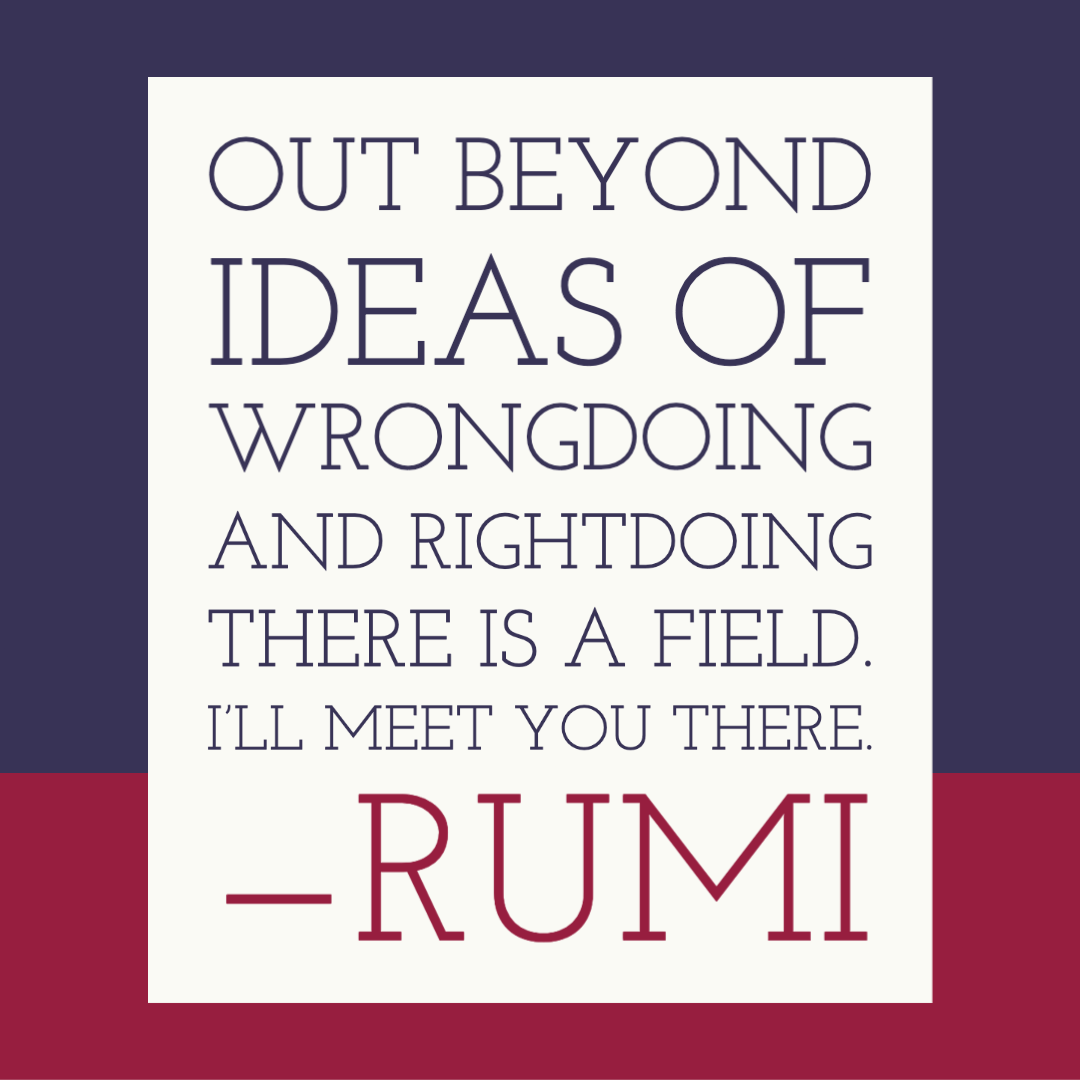
<blockquote>An ignorant person is inclined to blame others for his own misfortune. To blame oneself is proof of progress. But the wise man never has to blame another or himself.<br><br>— Epictetus</blockquote><div><br></div><div>How you ever thought about how often we have judgments in our language? Are you even aware of how often we communicate our our opinions and feelings about others? What if we could remove judgments from our language? Today I want to talk about ways that we can make our language more clear, and increase our ability to communicate non-judgmentally with others.</div><div><br></div><div>A few months ago I picked up a book called Nonviolent Communication by Marshall Rosenburg. The idea behind nonviolent communication or alternatively what the author calls conscious communication is that there are many aspects of the way that we speak, and the way that we hear things that cloud communication with others.&nbsp;</div><div><br></div><div>&nbsp;There are many aspects of nonviolent communication, but the part that I want to focus on in the podcast is one idea in particular. That idea is if we could strip out the judgments from our communication, then we could communicate more clearly with each other. Doing so would allow us to deal with issues for what they are rather than all the judgments about the issues, which often become a distraction or even a roadblock in communicating with others.&nbsp;</div><div><br></div><div>The process of communicating this way is not an easy thing because unconsciously we make all kinds of judgments in our language. Most of those judgments are what the author calls moralistic judgments, which are judgements about the rightness or wrongness of other according to our values. Each of us make value judgements about what principles we hold and how we think the world could best be served. When we make moralistic judgments we are comparing others to our ideal of what we think they should be or how they should act. &nbsp;</div><div><br></div><div>For example, if someone cuts us off in traffic they are an idiot. If we think someone isn’t working hard enough, they’re lazy. If we don’t like the way someone dresses, they’re dressed inappropriately. All day long we are passing judgments on others, and ourselves, and we’re usually not all that aware that we’re doing it, and if we’re honest with ourselves, the stronger we feel about something, the more intense our judgment is about the idea.</div><div><br></div><div><br></div><blockquote>Out beyond ideas of wrongdoing and rightdoing there is a field. I’ll meet you there.<br><br>—Rumi</blockquote><div><br></div><div>When we focus too much on classifying how good or bad or to what level others or ourselves are in relation to what we think they should be, we’re not paying attention to what other person, or ourselves might need. For example, if our significant other is wanting more affection from us than what we we’re giving, we might judge them as being too needy or clingy. We might argue with them to stop being so clingy or make it mean that we’re not good enough for them, rather than noticing they have some need that isn’t being fulfilled.&nbsp;</div><div><br></div><div><br></div><blockquote>Until you make the unconscious conscious, it will direct your life and you will call it fate.<br><br>—Carl Jung</blockquote><div><br></div><div>So how can we get better about communicating is ways that carry less judgment? As with most things, it takes awareness. Until we are aware that we’re doing this every day, it makes it challenging to change our behavior. The better we get at noticing when we’re passing judgement, the more progress we can make.&nbsp;</div><div><br></div><div>What it really comes down to is how well we can observe something or someone without evaluating.&nbsp; A way to practice this is to take whatever it is we’re saying and distill it to just the facts. If we only say the things in it that are verifiable or provable then we are already making a big step towards conscious communication.&nbsp;</div><div><br></div><div>In the book there is a great example where the author is working with a group of teachers who are frustrated with the principle because they feel he talks too much and overruns conversations. He asks the teachers what the issue is, and their answers include statements like, “He has a big mouth”, “He talks too much”,&nbsp; and “He thinks only he has anything worth saying”. All of these statements are judgements or inferences about the principle and not evaluations. It took
S1 Ep 228228 - Offended
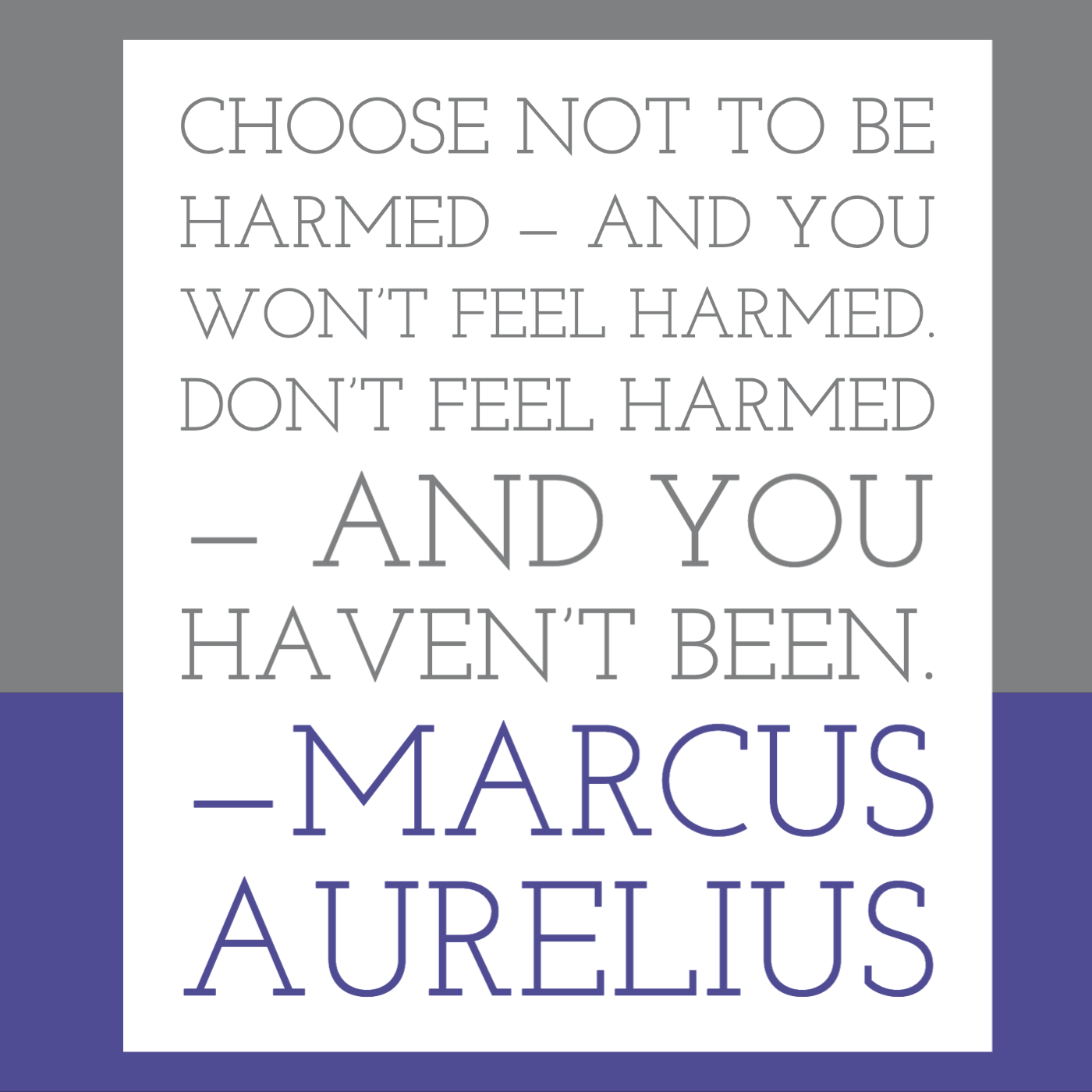
<blockquote>Choose not to be harmed — and you won’t feel harmed. Don’t feel harmed — and you haven’t been.”&nbsp;<br><br>—Marcus Aurelius</blockquote><div><br></div><div>How often have you been offended by someone? Maybe it was something someone said to you? Maybe they made a comment about your clothes or mocked something that you really liked such as your favorite football team or musician. Maybe it’s one of your siblings who always tries to put you down or get under your skin. Maybe someone on the internet posted a mean comment to a picture you put on social media.&nbsp;</div><div><br></div><div>As much as the internet has been one of the greatest tools for learning, commerce, connection, and so many innovations, it still amazes me how awful people can be to each other just because someone holds a different opinion. I have seen people treat others in some pretty horrendous ways just because they had a sign or a t-shirt that was from an opposing political party. It’s as if they forget that there is another human being on the other side of that comment.</div><div><br></div><div><br></div><blockquote>What really frightens and dismays us is not external events themselves, but the way in which we think about them. It is not things that disturb us, but our interpretation of their significance.<br><br>― Epictetus</blockquote><div><br></div><div>In all cases, when we are offended by something because of the thoughts we have about it and what we make it mean. When we really think about it, when someone says something, it is just them making sounds or writing down symbols on a page. If we didn’t speak the same language and had no idea what they said or wrote, would we still be offended? No, because it is not the words that are offensive, but our thoughts about what was said.</div><div><br></div><div>When we take offense at what someone else says, we are blaming them for how we feel, rather than owning the fact that it’s our own thoughts that are creating our emotions. We are letting them control us. The words that others say or write are not things that can physically harm you, but often we see people get so upset by what others say that they will resort to violence. The story that they have told themselves is such that they believe it is worth trying to harm someone else because of those words.</div><div><br></div><div>Sometimes people are rude because they are unhappy. They will try to put others down as a way to try and bring themselves up. Others might try to offend us because they are deliberately trying to upset us. It’s a way of trying to controlling other people. When we’re upset, we’re easier to manipulate. We make rash decisions, and become more reactive and less rational in our responses. The more we allow others to provoke us, the more they have control over us. If we can keep this in mind it makes is much easier for us to be less reactive. We know what others are trying to do and in a way can beat them at their own game.</div><div><br></div><div><br></div><blockquote>If evil be spoken of you and it be true, correct yourself, if it’s a lie, laugh at it.&nbsp;<br><br>—Epictetus</blockquote><div><br></div><div><br></div><div>Another thing that can help is to actually listen to what the other person said, and ask yourself, "Is it true?" If it is, why be offended by it if it's true? It simply shows you where you might need some work. If it is not true, then why be offended by it? It is simply someone else's opinion.</div><div><br></div><div>Often we get upset about what someone has said because they may hit on some insecurity.&nbsp; We think, "If they see this flaw in us, then maybe there is something to it." We may not want to face up to this part of us. Maybe we’re ashamed about that part of us. Whether deliberately or not, when we feel hurt by things that others say about us is usually because deep down we're afraid they might be right.</div><div><br></div><div>Another way to think of it is from one of my favorite scenes in Game of Thrones where Tyrion Lannister is talking to Jon Snow:</div><div><br></div><blockquote>Let me give you some advice bastard. Never forget what you are. The rest of the world will not. Wear it like armor, and it can never be used to hurt you.<br><br>— Tyrion Lannister</blockquote><div><br></div><div>Never be upset at the truth about yourself. You don't have to like it, but you can accept it. Once you have accepted it, then you have the opportunity to change it.</div><div><br></div>
S1 Ep 227227 - Self Commitment
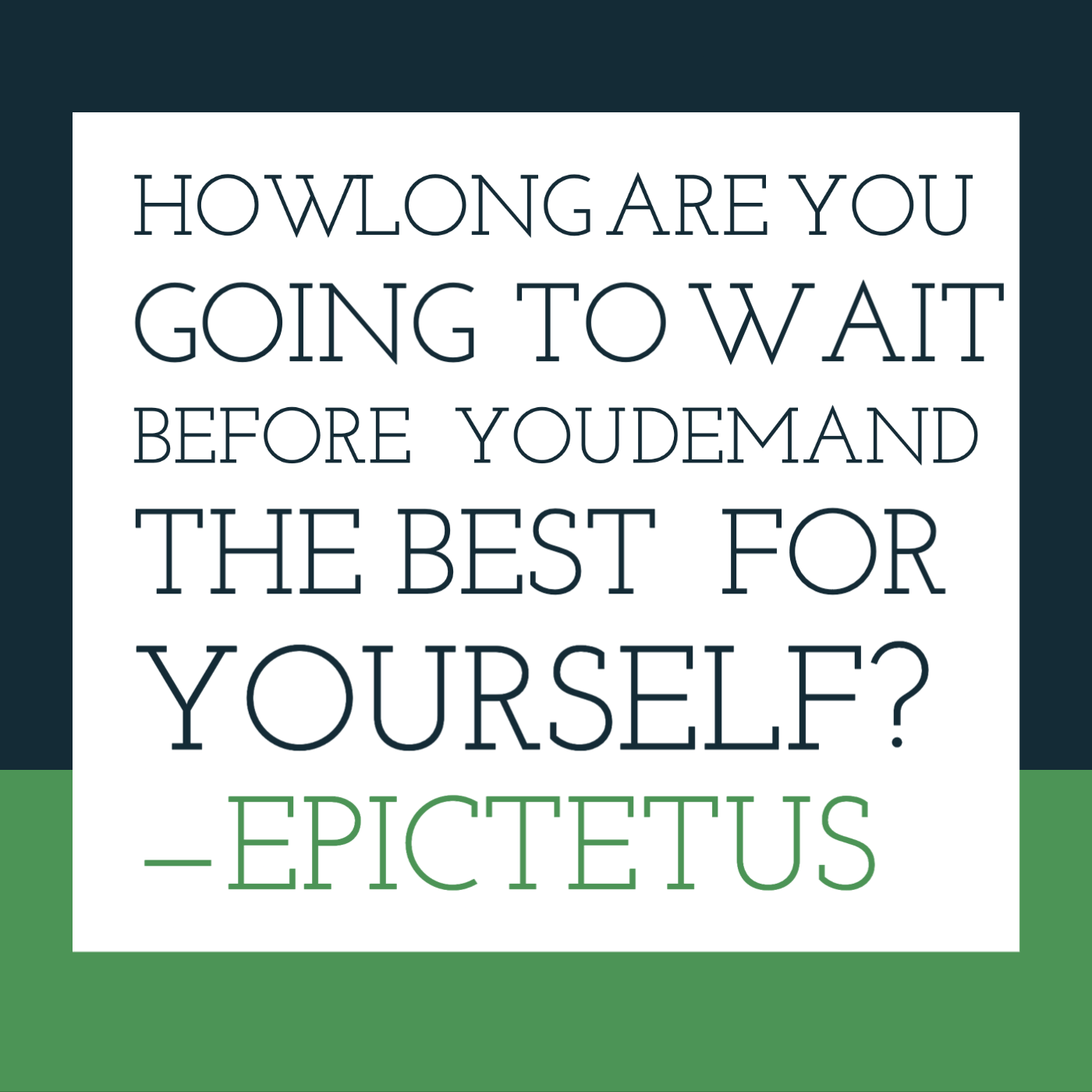
<div><br></div><blockquote>Not to assume it’s impossible because you find it hard. But to recognize that if it’s humanly possible, you can do it too.&nbsp;<br><br><br>— Marcus Aurelius</blockquote><div><br></div><div>How often do you find yourself starting something only to notice a few weeks or months later that you let it fall by the wayside? Today I want to talk about why we have trouble keeping commitments to ourselves, and some ideas about how we can get better about keeping those commitments.</div><div><br></div><div>If you’re like me, you are always interested in improving yourself. Maybe that’s cutting down on your drinking or losing weight. Maybe it learning a new skill or starting a new business. There are all kinds of goals and things you want to do to enrich your life. We approach these things with gusto and excitement as we look forward to how much better our lives will be as we implement these changes in our lives.</div><div><br></div><div>Fast forward a few weeks or months later and many if not all of those resolutions are just a distant memory. Our good intentions have given way to our default way of life, and we return to the way things were. We may not have even really noticed when it happened. We may have been on track for weeks, only to find a short time later we have dropped our plans as if our resolutions never even existed.</div><div><br></div><div>Part of the reason why I wanted to make this episode is because this happened to me recently, and I’m trying to get back on track. I was doing great with meditating every day for at least 30 minutes, but about a month ago I severely sprained my ankle and was in a lot of pain for a while. I was also having trouble sleeping, and found my motivation to keep up with things beyond the basics was pretty low. I subtly used my injury as an excuse to quit my daily practice.</div><div><br></div><div>So why does this happen? Why is does it seem so hard to follow through on these commitments we make to ourselves? What is it in our makeup as humans that we get pulled back to the status quo even though we really do want to make lasting changes in our lives?</div><div><br></div><div>For much of evolution, humans struggled to have enough to eat. Because food was often hard to come by, survival depended on smart management of energy. Expending energy when you didn’t have to could mean the difference between life and death. Luckily, for must of us, food insecurity is no longer an issue. While we may not be able to afford prime rib every night for dinner, most of us are able to buy healthy food to feed ourselves. But these habits that served humanity over thousands of years are still engrained into us. This is why for most of us our bodies are more interested in sitting down for a show on Netflix than going for a run.</div><div><br></div><div>When we try to change something about ourselves, our minds often struggle to adapt to the new changes that we are trying to make in our lives. Our brains work really hard to keep us safe. We’re still alive in our current situation, so our brain will naturally gravitate to what it knows. Losing weight, taking up a new workout, learning a new skill all require effort and work. We may also fail when we try to do these things, so we’ll stick with what we know because it’s safe.</div><div><br></div><div>Another challenging aspect in our quest for self improvement is our desire for instant gratification. We get a dopamine hit when we do something that is pleasurable now, and have a harder time imagining the payoff we’ll get in the future. Some examples of short term pleasures that hit that dopamine switch include alcohol, entertainment, drugs, social media, and plenty of foods that are tasty but are not good for us.&nbsp;</div><div><br></div><div>There is nothing wrong with some of these short term pleasures in moderation, though one problem with chasing these short term pleasures is that that the effect is also short term. If we constantly chase after these short term pleasures, we also find that each subsequent time usually is less pleasurable than the one preceding. I learned this as a young child when I had my very first piece of cheesecake. I loved it so much that I happily took a second one, only to find that rather than enjoying as much as the first, it had the opposite effect and I started to feel sick to my stomach.&nbsp;</div><div><br></div><div>These short term pleasures often have long term consequences. For example, if we eat too much unhealthy food, we put on extra weight. If we spend too much time playing video games we don’t spend time on relationships or hobbies
S1 Ep 226226 - Cognitive Dissonance
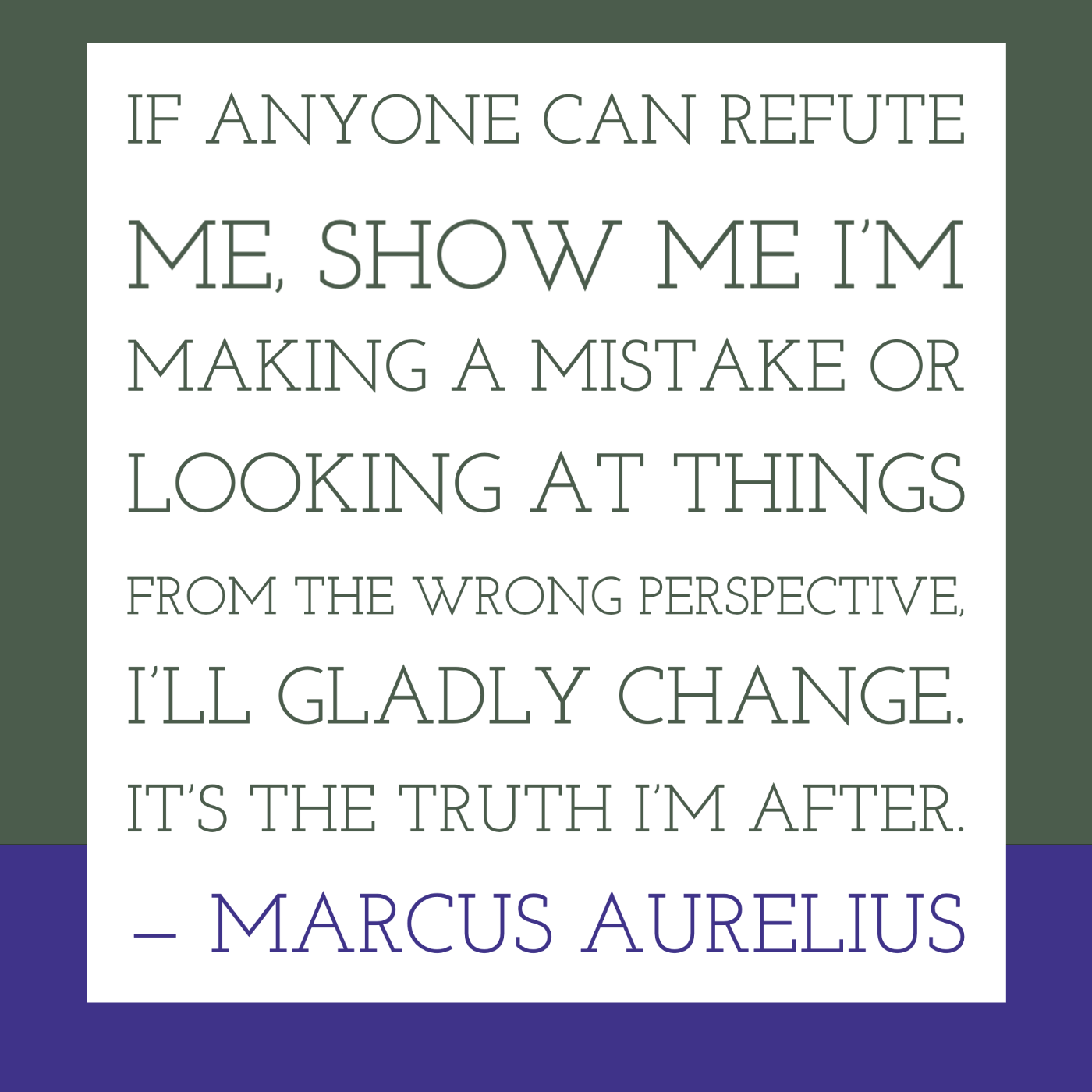
<blockquote>Everything we hear is an opinion, not a fact. Everything we see is a perspective, not the truth.&nbsp;<br>— Marcus Aurelius</blockquote><div><br></div><div>Today I want to talk about one of the most interesting things about humans, the fact that we cling so dearly to our belief systems in face of contradiction evidence, often to our own detriment.</div><div><br></div><div>Why do humans resist changing their minds, even in the face of overwhelming evidence? How often have you changed your opinions when presented with new facts? How often have you actually changed your behavior when you learned new information? How often to you rationalize your opinion or simply deny facts because they don’t fit your belief system?&nbsp;</div><div><br></div><div>The human mind is a very malleable and flexible thing. It is because of this flexibility that we are able to survive in all kinds of environments and circumstances. Over time and through experience, we develop a belief system of how the world works. Much of this comes from the circumstances we grow up in. The culture around us, the family we are born into, even the physical surroundings can inform and influence our belief system.</div><div><br></div><div>A big reason why we have this ability is that the brain is a pretty good prediction machine, but it needs to have principles and ideas to work from. It’s job is taking past experiences and merging it with current information to try and predict what will happen next. It is precisely this ability that helps us to survive.&nbsp;</div><div><br></div><div>As a child, it is easy to be more flexible with our thinking, simply because we are inexperienced and don’t have a lot of knowledge. Everything is new to us at some point, so we’re naturally curious because just don’t know. Our brains are looking for more information and experiences in order to make better predictions. We try things and see how they work or don’t work, and adjust our expectations accordingly. With each new bit of information we’re able to make better predictions to help us survive, and ultimately thrive.</div><div><br></div><div>But while the human mind is flexible and adaptable, as we age, it takes effort to keep this flexibility of thinking. As we gain more and more knowledge and experience we are usually able to make better predictions of how we think things work. These in turn inform our opinions and judgments and hopefully help us navigate the world in a safe way so that we might live long and prosper. Where we run into trouble is when we decide that we have enough knowledge and information and turn those opinions and judgements into beliefs.</div><div><br></div><div>Often though, we are simply given beliefs by those we trust. This includes family, friends, teachers, leaders - anyone that we consider an authority. Many beliefs we pick up are not well tested or thought out. They are just ideas that have been around for a while. Many ideas are tenacious not because they are right, but because they reach a critical mass within a culture or community. Superstitions, religious beliefs, conspiracy theories are prime examples. Pretty much anything that is taken as truth without little to no evidence, site dubious sources, or are not open to exploration with new information can be categorized as beliefs.</div><div><br></div><blockquote>“A mark of an open mind is being more committed to your curiosity that to your convictions. The goal of learning is not to shield old views against new facts. It’s to revise old views to incorporate new facts. Ideas are possibilities to explore, not certainties to defend.”<br><br>— Adam Grant</blockquote><div><br></div><div>When something becomes a belief, whether from external influences or ones that we have created ourselves from our own experience, it turns into something that we no longer question, but defend from anything that might threaten that belief.&nbsp;</div><div><br></div><div>So why do we find it so hard to change our beliefs? What’s in us that we will deny and fight for our belief, even in the face of overwhelming evidence that we are wrong? What is the benefit of acting this way?&nbsp;</div><div><br></div><div>When we have a deeply engrained belief, and we come upon new information that shows that we could be wrong, we start to feel cognitive dissonance. Basically, when the mind has two or more contradictory beliefs, we start to feel tension as we grapple with the fact that something we thought was true, might not be true.&nbsp;</div><div><br></div><div>When we feel this disharmony, we have a number
S1 Ep 225225 - Be Yourself
<div>How much of our lives do we spend living in way to please other people? How much unhappiness do we feel in our lives because we’re not being ourselves? Today I want to talk about why it can be really hard to live authentically.</div><div><br>“And this, too, affords no small occasion for anxieties - if you are bent on assuming a pose and never reveal yourself to anyone frankly, in the fashion of many who live a false life that is all made up for show; for it is torturous to be constantly watching oneself and be fearful of being caught out of our usual role. And we are never free from concern if we think that every time anyone looks at us he is always taking our measure; for many things happen that strip off our pretense against our will, and, though all this attention to self is successful, yet the life of those who live under a mask cannot be happy and without anxiety. But how much pleasure there is in simplicity that is pure, in itself unadorned, and veils no part of its character! Yet even such a life as this does run some risk of scorn, if everything lies open to everybody; for there are those who disdain whatever has become too familiar. But neither does virtue run any risk of being despised when she is brought close to the eyes, and it is better to be scorned by reason of simplicity than tortured by perpetual pretense.”<br><br></div><div><br>― <strong>Seneca<br></strong><br></div><div>Growing up, I was constantly adjusting and perfecting the persona that I showed to other people. Because I was expected to be a good little mormon boy - we used the term Peter Priesthood - I was constantly making sure that I never really revealed my true thoughts and feelings about a lot of things, depending on the company I was in. I learned how to espouse the “correct” views so that I was able to fit in to the culture I was in. It was only when I spent time with my theater friends outside of church or school that I felt like I was able to be more of my true self.&nbsp;</div><div><br></div><div>The biggest problem with this was that I always felt like a fraud. I disagreed with the church on a lot of issues, but because I had been raised to believe that church doctrine was the word of god and it’s leaders were infallible, I felt like there was something wrong with me rather than the teachings. The church’s views on topics ranging from sexuality to science to the treatment of women were thing that just never fit with my own opinions and ideas. Because I was so immersed in the culture, I got pretty good at saying all the right things at the right time.&nbsp;</div><div><br></div><div>This was also an issue at home where often I had to hide my true feelings and ideas in order to keep the peace with my father. Learning to navigate his explosive moods to stay safe from his wrath also felt like a tamping down of my own self. It’s taken many years, decades even, to learn how to stand up for my own opinions. Often times I wasn’t even sure what I felt or thought about things or what I really wanted as a person because I had spent so many decades hiding my wants and needs in order to fit in with others and remain a member of the church.</div><div><br></div><div>Over time, what this did to me, and what it does to others, is it gives you the message that who you are as a person is not acceptable. Because we all want to fit in, we bury that true self because that self is not okay. We end up miserable because deep down we know that we’re faking it to get along. We’re lying to ourselves and to everyone around us, and that takes a toll on our mental health. We often feel resentful of those around us because we feel like they are the reason that we can’t relax and just be ourselves, when in reality, it’s prison of our own making.&nbsp;</div><div><br></div><div>We spend much of&nbsp; our time doing things or acting in a way to fit in with those around you, and this feels disingenuous and fake and not who we really want to be. This is what happens when we are well socialized. We all are trained by our culture of how to fit in and what things are acceptable and what things gain you approval of others. Breaking this kind of thinking and behavior is really hard for most people because from birth we are trained to seek approval. And for most of us, this pretense we’re taught to keep up feels fake, but we’re not sure how to be otherwise.</div><div><br></div><div>Recognizing this feeling is where the work starts. Once you start to look around and see what is really going, you have choices. Do you just go with the flow or are you honest with yourself and others about who you really are and what you really want? Do you tell people no when you don’t want to do something? Do you go along with th
S1 Ep 224224 - To You or For You
<div>It does not matter what you bear, but how you bear it.&nbsp;</div><div><br></div><div>— Seneca</div><div><br></div><div>Do you think that life just happens to you? That you are simply a pawn in the game of life? Because there are so many things that we don’t have control over in our lives, it can be easy to fall into this kind of mental trap. The problem is that when adopt this kind of thinking, then we have placed an unhelpful filter through which we view everything that happens in our lives.&nbsp;</div><div><br></div><div>While there is plenty of debate within the stoic community as to whether or not stoics are fatalists, meaning they believe that life happens as fate determines, I honestly don’t worry too much about it. If we are simply following out the plan of life that is predetermined for us, then there is really nothing we can do about it. If we aren’t and we actually do have freewill, then we should keep doing our best to live the best life we can.&nbsp;</div><div><br></div><div>With that said, it can be easy to fall into the trap of feeling like life just happens to us, and that we have little to no control over anything. And if this is the case, and we have little to no control over out lives, then adjusting our outlook to be of the mind that everything that happens actually happens “for us” and not just “to us” can certainly make the trip much more enjoyable.</div><div><br></div><div>So let’s take a look at each of these perspectives.&nbsp;</div><div><br></div><div>When we believe that life happens “to us” then there is very little that we can do about it. Everything is just going to happen and we just have to endure it. We feel like victims because we have no control over all these things happening to us. We wish things would happen the way we want them to, and when things don’t go the way that we want we complain about it. We blame our failures on someone or something outside of ourselves. We are simply at the whim of all these external forces.</div><div><br></div><div>When we believe that life happens “for us”, the same things may happen, but how we respond to them and how we let them impact us is quite different. We are no longer a victim of circumstance. We look at everything with an eye as to what we can learn from this situation. We find ways to become stronger from what happens to us. We are curious about what is happening, and how we might even be able to enjoy things, even if they are challenging or uncomfortable. There is also no one to “blame” for anything because even if something sucks, if we approach it as something that life is supposed to bring our way, that it really is something for us to learn from.</div><div><br></div><div>“An ignorant person is inclined to blame others for his own misfortune. To blame oneself is proof of progress. But the wise man never has to blame another or himself.”</div><div><br></div><div>- Epictetus&nbsp;</div><div><br></div><div>When we hit setbacks, we don’t look around for someone to blame for it, we recognize that the setback is there for us to learn. Maybe it’s to teach us persistence. Maybe it’s a sign for us to change course. Maybe we missed something along the way and the setback is time for us to evaluate other opportunities.&nbsp;</div><div><br></div><div>Let’s take an example that can show the difference between these two perspectives. Let’s say that you had to have a difficult conversation with someone, and you knew that things could get heated. If you were to approach this with a “to me” attitude, you would be frustrated with this person that they are getting angry with you or not listening to your point of view. You might be defensive with them because of all the things they were doing to you. You might even avoid the conversation in the first place.</div><div><br></div><div>But if you were to approach them with an “for me” attitude, you would see it as an opportunity. You might see this as a chance for you to practice listening to this person and to hear their concerns. You would see it as an opportunity to craft a solution that suits both of you. You would be more likely to approach it with compassion rather than defensiveness. It would also make it less likely for you to avoid the situation in first place.</div><div><br></div><div>&nbsp;So why do we feel like most things happen to us rather than for us? It think there are a number of reasons. First is that quite naturally we don’t have much control over many of the things that life sends our way. I mean the fact that we don’t control where we were born, the color
S1 Ep 223223 - Controlling Others
<div>Living on this planet with other people can be very challenging at times. If you’re like me, sometimes you have a strong difference of opinion with someone, and you end up in an argument and spend a lot of time and energy trying to change the other persons mind. We see this play out on social media as well where people spend a lot of time and energy trying to debate other people to get them to change. Watching this behavior in myself and others, makes me ask the question:</div><div><br></div><div>Why do we spend so much time trying to change other people or expecting that other people will change for us?</div><div><br></div><div>We know that we cannot change others, but there’s a part of us that wants the world to change for us. Our brain looks for threats and danger outside of ourselves in order to keep us safe. When we’re uncomfortable, it’s challenging to just sit with those things that are uncomfortable so we look for a cause outside of ourselves. Maybe we don’t like what someone else said, or we disagree with their opinion. We think that if the other person would behave or think differently, then we would be happier. Rather than spending our time and energy looking inside and finding what we control in the situation, we try to change what we think is the cause.&nbsp;</div><div><br></div><div>The problem is that we misidentify the cause of our distress. We think the cause is someone or something else, but really it comes down to the story that we’re telling ourself. It’s the meaning that we give to what the other person said or did. We take their actions and words and interpret them to suit the narrative that going on in our minds. We spin what they other person says in a negative or positive light depending out our opinion of them.&nbsp;</div><div><br></div><div>One of the main reasons that we may try to change other people is that we want others to think like us. Human beings are very social animals and fitting in with others is very important. It’s part of what helps our survival. If there are more people who think like us, then we feel like our worldview is correct, and we feel safer. We feel like we’re part of how the world is supposed to be. When others disagree with us, we may feel like our worldview is under threat, which causes us to feel uncomfortable or even hostile. When it comes to an opinion that we hold very strongly, we may unconsciously feel fear when something comes along and challenges our beliefs. We don’t like the tension and so we try to change the other persons opinion.</div><div><br></div><div>I also think as humans we’re all a little lazy, or more to the point, our brains are lazy tries to be efficient. Taking time to figure out where we might be wrong or to figure out the the things we can control takes time and cognitive energy. It also takes energy to actually control the things we can. If we can get someone else to do the work, then we don’t have to. The problem with expecting others to do this kind of work, and to change for us, is that it makes others resentful, and the changes that we need to make don’t happen. Also, in the long run it means a lot more work for us if we expect others to change for us, we have to somehow convince all those other people to change to fit our worldview.&nbsp;</div><div><br></div><div>When someone is properly grounded in life, they shouldn’t have to look outside themselves for approval.&nbsp;</div><div>— Epictetus</div><div><br></div><div>So how do we work with this? How can we get better about recognizing and staying in a place where we don’t need to change other people in order for us to feel happy?&nbsp;</div><div><br></div><div>I think the first thing we need to do is ask ourselves why it is important that we change this other person? What do we get if they change their mind? What happens if they don’t? What are you making it mean if this person has a different opinion? What’s the story you’re telling yourself?</div><div><br></div><div>I think a lot of this behavior comes from insecurity. When we are insecure, we need others to agree with us in order for us to feel okay with ourselves. Our ego needs that validation in order for us to feel okay.&nbsp;</div><div><br></div><div>When we are comfortable with ourselves, we don’t need others to agree with us. Just as we wouldn’t argue with someone over whether 1 + 1 = 2, if we are really secure with ourselves, we would not feel threatened over someone disagreeing with us.&nbsp;</div><div><br></div><div>Don’t argue with people nor insist on showing them truth. Maybe it is you who needs to change your mind. Even if you are r
S1 Ep 222222 - Power Over Your Mind
<div>You have power over your mind — not outside events. Realize this, and you will find strength.<br>—Marcus Aurelius<br><br>Having a clear idea of what we can and can't control is the most fundamental principle of stoicism, and almost every other idea flows from there. This is also one of the easier concepts to understand, but so hard to actually implement.<br><br>How do you manage to clearly divide what you can and can't control?<br><br>---<br>Hello friends! Thank you for listening.<br>Stop by the website at <a href="http://www.stoic.coffee/">stoic.coffee</a> where you can sign up for our newsletter, and buy some great looking shirts and hoodies at the <a href="https://stoic.coffee/">Stoic Coffee Shop</a>. <br><br>You can help support the podcast on <a href="https://patreon.com/stoicoffee">Patreon</a>.<br><br>Lastly if you know of someone that would benefit from or appreciate this podcast, please share it. Word of mouth is the best way to help this podcast grow. <strong>Thanks again for listening.</strong></div><div>---<br>Hello friends! Thanks for listening. <br>Want to take these principles to the next level?<a href="https://stoic.coffee/join"> Join the Stoic Coffee House Community</a>!&nbsp; <br><br>Stop by the website at <a href="http://www.stoic.coffee/">stoic.coffee</a> where you can sign up for our newsletter, and buy some great looking shirts and hoodies at the <a href="https://stoic.coffee/">Stoic Coffee Shop</a>. <br><br>Like the theme song? You can find it <a href="https://soundcloud.com/ericklind/journey-by-moonlight">here from my alter ego</a>. :)<br><br></div><div>Find me on <a href="https://instagram.co/stoic.coffee">instagram</a>, <a href="https://twitter.com/stoiccoffee">twitter</a>, or <a href="https://threads.net/stoic.coffee">threads</a><br><br></div><div>Lastly if you know of someone that would benefit from or appreciate this podcast, please share it. Word of mouth is the best way to help this podcast grow. <br><strong>Thanks again for listening.</strong></div><br /><hr><p style='color:grey; font-size:0.75em;'> Hosted on Acast. See <a style='color:grey;' target='_blank' rel='noopener noreferrer' href='https://acast.com/privacy'>acast.com/privacy</a> for more information.</p>
S1 Ep 221221 - Accept Life
<blockquote>How ridiculous and how strange to be surprised at anything which happens in life.&nbsp;<br>— Marcus Aurelius</blockquote><div><br>How often do you complain about the hard things in your life? How often do you find yourself disappointed that things don't turn out the way you think they should? Learning to accept what life sends our way is probably one of the most challenging things to do. But to wish for life to be other than it is, is to deny reality and to miss out on learning what life can teach us. <br><br>---<br>Hello friends! Thank you for listening. If this podcast speaks to you, join us over in the <a href="https://stoic.coffee/join"><strong>Stoic Coffee House</strong></a>. The Stoic Coffee House is a community built around the ideas of stoicism and the <strong>Stoic Coffee Break </strong>&nbsp;podcast.<br>Also stop by the website at <a href="http://www.stoic.coffee/">stoic.coffee</a> where you can sign up for our newsletter, and buy some great looking shirts and hoodies at the <a href="https://stoic.coffee/">Stoic Coffee Shop</a>. <br><br>Want to hear the whole intro song? <a href="https://soundcloud.com/ericklind/journey-by-moonlight?si=22655c33b46949828844d5b029b435f6&amp;utm_source=clipboard&amp;utm_medium=text&amp;utm_campaign=social_sharing">Check out my alter ego on Soundcloud</a>.<br> <br>Lastly if you know of someone that would benefit from or appreciate this podcast, please share it. Word of mouth is the best way to help this podcast grow. <strong>Thanks again for listening.</strong></div><div>---<br>Hello friends! Thanks for listening. <br>Want to take these principles to the next level?<a href="https://stoic.coffee/join"> Join the Stoic Coffee House Community</a>!&nbsp; <br><br>Stop by the website at <a href="http://www.stoic.coffee/">stoic.coffee</a> where you can sign up for our newsletter, and buy some great looking shirts and hoodies at the <a href="https://stoic.coffee/">Stoic Coffee Shop</a>. <br><br>Like the theme song? You can find it <a href="https://soundcloud.com/ericklind/journey-by-moonlight">here from my alter ego</a>. :)<br><br></div><div>Find me on <a href="https://instagram.co/stoic.coffee">instagram</a>, <a href="https://twitter.com/stoiccoffee">twitter</a>, or <a href="https://threads.net/stoic.coffee">threads</a><br><br></div><div>Lastly if you know of someone that would benefit from or appreciate this podcast, please share it. Word of mouth is the best way to help this podcast grow. <br><strong>Thanks again for listening.</strong></div><br /><hr><p style='color:grey; font-size:0.75em;'> Hosted on Acast. See <a style='color:grey;' target='_blank' rel='noopener noreferrer' href='https://acast.com/privacy'>acast.com/privacy</a> for more information.</p>
S1 Ep 220220 - Stoics and Emotions
<blockquote>Everyone faces up more bravely to a thing for which he has long prepared himself, sufferings, even, being withstood if they have been trained for in advance. Those who are unprepared, on the other hand, are panic-stricken by the most insignificant happenings.&nbsp;<br><br>—Seneca</blockquote><div><br>Stoicism is often seen as a tool to avoid emotions, but is this a good idea? How should stoics handle their emotions? In this episode, I respond to criticism in Psychology today that Stoicism is a fad and that it is a dangerous tool that promotes the repression of a emotion.<br><br><br>Today's episode is about stoics and emotions.&nbsp;</div><div><br></div><div>So earlier this week on reddit, in the stoicism subreddit, somebody posted a link to an article in Psychology Today called stoicism as a fad of philosophy. I decided to take the time to read the article and surprisingly I found that my podcast was mentioned in the second paragraph and called my podcast noncommittal, which I take as not an insult, but as very true about what I try to do with this podcast. I do my best to take stoicism and give it to my listeners in such a way that they can apply it in their daily lives. I don't think that you need to commit yourself to being a hardcore stoic one way or the other, but that you can find things within this philosophy that help you to live a better life.&nbsp;</div><div><br></div><div>Now the article was okay. There are definitely some problems that I had with the article, although I did appreciate the shout out I guess. The first part she spends a lot of time, I'm sorry, she is Mariska Olivia, I'm sorry if I didn't pronounce that correctly doing the best I can. She is an associate professor of philosophy at the University of Colorado and Denver and the issues that I had with this article was simply that, you know, first off she talks about it as a fad and the reason why this has become so popular right now, is simply because Ryan Holiday is a great marketer and while yes, a lot of people have heard of stoicism because of Ryan Holiday, I think that she's missing a giant point there of why stoicism has really picked up.&nbsp;</div><div><br></div><div>For me, I look at stoicism as something that is really filling a number of things that a lot of people need. So for people like me,&nbsp; I just turned 50 this year, if you can believe that! I would be considered part of the Gen X generation. I grew up as you all know, I grew up mormon and found their religion was something that did not work for me. It was something that actually made my life much more miserable. But there were aspects of religion that were very helpful for me, but they really didn't unfortunately in my case outweigh the negatives of being in religion. &nbsp;</div><div><br></div><div>I can see that religion as a whole has been very detrimental to a lot of people and it's something that's been very abused and so I think right now there is a lot of need for people to have a kind of moral framework, if you will, to view life through, that doesn't have all of the abuses that go along with it, that we find in traditional religions today. And so for me, I look at stoicism is definitely fulfilling a lot of these needs. And part of the reason why is because it is something that it contains a lot of what I call universal principles, meaning there are things that seem to makes sense no matter where you are or who you are, and there are things that you can try and you know what they work, and that for me is what stoicism is all about.&nbsp;</div><div><br></div><div>It's a practical philosophy that actually is something that helps you in your life. It's not just some esoteric, you know, thought idea that people want to sit and argue about, but it's real practical principles about how to live a better life. It's not something that you have to take as dogma. You don't have to take the whole thing and say, I have to live exactly this way. There are just lots of principles that can help you in different aspects of your life, but it's put together in a decent framework, so you have a good foundation to kind of help guide your life when find yourself in challenging situations.&nbsp;</div><div><br></div><div>There was another part of her main points of the article that I definitely had a bone to pick, and I wanted to bring that up today. She talks about how stoicism is used to basically get rid of emotions, and she says if you refuse to make a deep emotional investment in anything, you will likely miss the joy that accompanies success, not simply avoiding the pain of failure. She also says that stoicism is thus a bit like those drugs for bipolar disorder that cause emotions to flatline and hel

S1 Ep 219219 - Acceptance of Others
<div><strong><br>Acceptance of Others</strong></div><div><br></div><blockquote>When you wake up in the morning, tell yourself: the people I deal with today will be meddling, ungrateful, arrogant, dishonest, jealous and surly. They are like this because they can't tell good from evil.<br><br><br>— Marcus Aurelius</blockquote><div><br><br></div><div>Last week I talked about accepting yourself for exactly who you are, including all the things you like and more importantly the things you don’t like about yourself. This week I want to talk about accepting others for exactly who they are.&nbsp;</div><div><br></div><div>Amor Fati is the acceptance and the embracing of your fate, or what life brings your way. We usually think of applying this to just the events and circumstances of life, but have you ever thought of applying this to other people? For me I think of Amor Fati as loving everything in your life, especially those things that you don’t have control over, and one thing we don’t have control of is other people.</div><div><br></div><div>I think we can see that most of the problems in our lives and throughout humanity have been one party tries to impose their will and ideas of how they think others should be. We see this in personal relationships and the world as a whole. This is really what the basis of all conflict is.</div><div><br></div><div>- Why is it that we think we have the right to determine what it best for other people? I think the biggest problem we have with getting along with other people is that we forget that they are not here to do what we want them to. They are not here to look out for our best interest. They are just like us - looking out for their best interest.</div><div><br></div><div>What if we just accepted that everyone is looking out for themselves, just like we are? What if we realized that they are just as selfish as we are, and could let go of the idea that other people should act in the way that we want them to? I mean if you did that you would not feel resentful of others. You would never be surprised at anything they did. You would just accept the fact that they are not going to behave how you think they should.</div><div><br></div><div>And since we’re working on accepting ourselves for exactly who we are, we have to be honest about the fact that we’re looking out for our own best interests as well. I mean we may say things in such a way that it makes us look better and that we’re not being selfish, but if we’re really honest with ourselves, we’re just looking out for what we want and that’s okay. It’s part of self preservation. It’s just we need to be cognizant when our needs step on the needs of others and work on communicating and negotiating those things. But that is really hard because it means that we have to own up to being exactly who we are and honest about what we really want.</div><div><br></div><div>- We want them to accept us for exactly who we are, so the better we can be at accepting them for who they are, then we both have the space and support to be ourselves.</div><div><br></div><div>- When we accept others for who they are, it does not mean that we have to approve of everything they do. We don’t have to like everything they do. We just have to recognize that they are what they are, and to be aware of how our expectations of how we think they should be color how we see them. We make all kinds of judgments base on our expectations, and unless they have explicitly agreed to them, we need to be aware of how we are judging them.</div><div><br></div><div>- It does not mean that they can ignore our boundaries and behave in ways that are not respectful. We need to clearly communicate with others when they do this, and let them know what is and is not acceptable. If they cross our boundaries that we have communicated then we need to be sure to respect ourselves, and let them know what our response will be.&nbsp;</div><div><br></div><div>- It does mean that we are gracious with others. When they make mistakes, we give them some space to apologize and make amends. We don’t stop loving them when they annoy us. It means that we can still love them even if they are not perfect.</div><div><br></div><div>- We also need to encourage others to respect their own boundaries. Often we have friends who don’t think they have the right to stand up for themselves, so being conscientious that we respect their boundaries is important. This helps them to feel like they deserve respect, and we have integrity for respecting their boundaries.</div><div><br></
S1 Ep 218218 - Accept Yourself
<div><br>One of the hardest things for us to do, though it is one of the most important things we will ever learn, is to accept ourselves for exactly who we are. But when you decide to take this on and make it a priority, it can be one of the most life changing thing you can do.</div><div><br></div><div><br></div><blockquote>"It never ceases to amaze me: we all love ourselves more than other people, but care more about their opinion than our own."&nbsp;<br><br><br>— Marcus Aurelius</blockquote><div><br>---<br>Hello friends! Thank you for listening. If this podcast speaks to you, please consider give a donation on Patreon at&nbsp; <a href="https://patreon.com/stoiccoffee">https://patreon.com/stoiccoffee</a><br>You can also find more episodes at <a href="https://stoic.coffee">https://stoic.coffee</a>, and pick up some great looking shirts and hoodies at the <a href="https://stoic.coffee/">Stoic Coffee Shop</a>.<br>Lastly if you know of someone that would benefit from or appreciate this podcast, please share it.<br><br><strong>Thanks again for listening.</strong></div><div>---<br>Hello friends! Thanks for listening. <br>Want to take these principles to the next level?<a href="https://stoic.coffee/join"> Join the Stoic Coffee House Community</a>!&nbsp; <br><br>Stop by the website at <a href="http://www.stoic.coffee/">stoic.coffee</a> where you can sign up for our newsletter, and buy some great looking shirts and hoodies at the <a href="https://stoic.coffee/">Stoic Coffee Shop</a>. <br><br>Like the theme song? You can find it <a href="https://soundcloud.com/ericklind/journey-by-moonlight">here from my alter ego</a>. :)<br><br></div><div>Find me on <a href="https://instagram.co/stoic.coffee">instagram</a>, <a href="https://twitter.com/stoiccoffee">twitter</a>, or <a href="https://threads.net/stoic.coffee">threads</a><br><br></div><div>Lastly if you know of someone that would benefit from or appreciate this podcast, please share it. Word of mouth is the best way to help this podcast grow. <br><strong>Thanks again for listening.</strong></div><br /><hr><p style='color:grey; font-size:0.75em;'> Hosted on Acast. See <a style='color:grey;' target='_blank' rel='noopener noreferrer' href='https://acast.com/privacy'>acast.com/privacy</a> for more information.</p>

S1 Ep 217217 - Interview With Donald J. Robertson
<div>An interview with Donald J. Robertson about his new graphic novel about Marcus Aurelius called Verissimus. We talk about all kinds of stoic history and the politics of his day.</div><div>---<br>Hello friends! Thanks for listening. <br>Want to take these principles to the next level?<a href="https://stoic.coffee/join"> Join the Stoic Coffee House Community</a>!&nbsp; <br><br>Stop by the website at <a href="http://www.stoic.coffee/">stoic.coffee</a> where you can sign up for our newsletter, and buy some great looking shirts and hoodies at the <a href="https://stoic.coffee/">Stoic Coffee Shop</a>. <br><br>Like the theme song? You can find it <a href="https://soundcloud.com/ericklind/journey-by-moonlight">here from my alter ego</a>. :)<br><br></div><div>Find me on <a href="https://instagram.co/stoic.coffee">instagram</a>, <a href="https://twitter.com/stoiccoffee">twitter</a>, or <a href="https://threads.net/stoic.coffee">threads</a><br><br></div><div>Lastly if you know of someone that would benefit from or appreciate this podcast, please share it. Word of mouth is the best way to help this podcast grow. <br><strong>Thanks again for listening.</strong></div><br /><hr><p style='color:grey; font-size:0.75em;'> Hosted on Acast. See <a style='color:grey;' target='_blank' rel='noopener noreferrer' href='https://acast.com/privacy'>acast.com/privacy</a> for more information.</p>
S1 Ep 216216 - Give Yourself Fully To Your Endeavors
<blockquote>Forget everything else. Keep hold of this alone and remember it: Each of us lives only now, this brief instant. &nbsp;<br>—Marcus Aurelius</blockquote><div><br></div><div><br></div><blockquote>Don’t let fear, low self-esteem and the negative voices hold you back from your true destiny.&nbsp;<br>—David Goggins</blockquote><div><br></div><div>One of the hardest things for me, and I’m sure that many of you fall into the same category, is to know what you want and have the courage to go after it. There are plenty of reason why this happens, and for the most part it comes down to fear, and the two biggest are fear of failure, and fear of disapproval of others. Today I want to talk about some changes I’m making in my life, and how I’m facing these fears.</div><div><br></div><div>First, I want to let you know that I’m putting the podcast on indefinite hiatus. While the podcast has been one of the greatest things I’ve created, it’s also helped me realize that I need to stop procrastinating on pursuing the things I really want to do. I need to face those fears, take those risks, and use my time in a way that will make me the happiest.</div><div><br></div><div>Sometimes the worst thing is to have something that is moderately successful, but ultimately doesn’t take you where you want to go. It becomes an excuse to hide behind. While the podcast has been successful with over 4 million downloads and 3 million of those downloads in just this year, it is also something that takes up a lot of time and focuses my energy away from the things that I really want to do. <strong>It has become an excuse to avoid going for what I really want and avoiding the possibility of failing.</strong>&nbsp;</div><div><br></div><div><br></div><h1><strong>How I Got Here</strong></h1><div><br></div><blockquote>The meaning of life is just to be alive. It is so plain and so obvious and so simple. And yet, everybody rushes around in a great panic as if it were necessary to achieve something beyond themselves.&nbsp;<br>—Alan Watts</blockquote><div><br></div><div><br></div><div>The careers I wanted to go into when I was younger were theater, film, TV, video games, and music. I loved acting and singing and thought that if I could make a living doing any of those, I would have my dream job.&nbsp;</div><div><br></div><div>So how did I end up as a software developer? Because I was afraid that wouldn’t be able to make it in the arts. I started out with good intentions and at one point did have what I see now was my favorite job. I had a part-time job at a financial firm making videos and graphics, recording audio, and even making music videos for a rap artist that the owner was supporting. I loved that job, but it was only part time and rather than figure out how to make it in that arena, I got a job in tech and learned how to program. I was afraid so I took the easier path.</div><div><br></div><div>Now don’t get me wrong, I’ve had a pretty good career as a software developer. It pays well and I’ve been able to support myself and my family. I’m not complaining by any means. But often when we are successful in something, we’re afraid to step onto a different path because we’re afraid of failure. We get so used to being successful, that failing at something, even though we expect it because we’re just starting out, is often too much to bear. This is what has kept me from stepping up and pursuing the things I want. bcause I won’t be nearly as good in other areas as I am in programming, at least not for quite some time.</div><div><br></div><div>This happened to me a few years ago when I decided to learn to play cello. I’m a pretty decent pianist and singer, and in my mind, I thought that I should be able to pick up cello pretty easily. When I found that it was far more challenging that I had thought and I was not making the progress I thought I should, I gave it up. That failing at the time was just too much for me. I had become so used to being good in other areas of music that when I failed to live up to my expectations, I couldn’t handle it, and because our minds don’t like failure, rather than changing my expectations and putting in the work to become good, I just decided it wasn’t for me.&nbsp;</div><div><br></div><h1><strong>Lessons Learned</strong></h1><div>With all of that said, I’ve learned a lot of lessons from working on this podcast. I’ve learned a lot about myself, and how to apply stoicism in my life. I’ve learned that consistency is the key to any success. That
S1 Ep 215215 - The Space Between
<blockquote><strong>"When force of circumstance upsets your equanimity, lose no time in recovering your self-control, and do not remain out of tune longer than you can help. Habitual recurrence to the harmony will increase your mastery of it.”<br>― Marcus Aurelius</strong></blockquote><div><br></div><div>Over the past few weeks, I've been thinking a lot about equanimity and how it may be the most important idea that the stoics came up with. And the more I look into it, the more I see that this is the one of the most important principles, and a foundation for being able to apply the other principles more effectively. We can also see how important this is in other traditions such as Buddhism, especially Zen Buddhism, also promotes the idea of calming the mind as one of the highest virtues.&nbsp;</div><div><br></div><div>So why would this be the case?&nbsp;</div><div><br></div><div>I used to think that equanimity was a byproduct of following stoic principles. That if you learned to control what you can, and let go of the rest, then you could find more peace of mind. But the more I dig into it, the more I find it is almost the opposite. The calmer your mind, the easier it is to see what is under your control and what is not. The more you can keep an even keel, the more you can make better decisions under pressure.</div><div><br></div><div>Now don't get me wrong, practicing stoic principles can certainly help you have a calmer mind. When you learn to identify what you can't control and let go of those things, it certainly can reduce stress in your life. But if you are constantly feeling stressed, this process is much harder because you're starting out at a disadvantage.&nbsp;</div><div><br></div><div>Taking the time to practice mindfulness puts you at an advantage because you're already in a state of mind that is helpful. It's like the difference between preparing for a fight versus just being tossed into the ring at a moment's notice. Equanimity, mindfulness, meditation... all of these should not just be an afterthought, or "nice to have", but should be considered essential tools to your stoic practice.</div><div><br></div><h1>Stimulus and Response</h1><div><br></div><blockquote><strong>&nbsp;Between stimulus and response, there is a space. In that space is our power to choose our response.&nbsp;<br>—Viktor Frankl</strong></blockquote><div><br></div><div><br></div><blockquote><strong>When you are upset, you are likely to sacrifice the wellbeing of tomorrow to appease the hurt feelings of today. Not a good trade. Subject your emotions to a cooling-off period before you allow them to guide major decisions.<br>—@TheStoicEmperor</strong></blockquote><div><br></div><h1><br></h1><div>One of the most important things that being mindful helps us do is think long term. If we are able to take that space between stimulus and response, and choose our response rather than just react, we are able to choose things that will benefit us better in the long run. If we are constantly in a space of reactivity, we let our emotions override our rationality and often do things that might feed whatever we need in the short term, but can have long term negative consequences. We are also less in command of ourselves and are much more easily controlled by others.&nbsp;</div><div><br></div><div>When can learn to take that moment to make a choice rather than react is one of the most powerful things that we can learn to do in our lives. Giving ourselves the power to choose how we respond in any situation is the ultimate expression of self control and power. The fact that we are always looking to make a choice, means that it's more likely we'll respond in a way we are proud of, and that ultimately leads to better outcomes for ourselves and those around us.</div><div><br></div><h1>Monkey Mind</h1><div><br></div><blockquote><strong>Peace. It does not mean to be in a place where there is no noise, trouble or hard work. It means to be in the midst of those things and still be calm in your heart.&nbsp;<br>— Anonymous</strong></blockquote><div><br></div><div>Meditation and mindfulness are not the easiest things to do. Our minds are always on the run. The Buddhist have a great term for this called the "monkey mind". For many of us, when things get quiet, we get anxious and it feels like our minds are spinning even faster. What's really going on is that when you are not focusing on something, you see how busy your mind actually
S1 Ep 214214 - Embody Your Philosophy
<blockquote>Don’t explain your philosophy. Embody it.&nbsp;<br>— Epictetus</blockquote><div><br></div><div><br></div><blockquote>Events in life mean nothing if you do not reflect on them in a deep way, and ideas from books are pointless if they have no application to life as you live it.&nbsp;<br>— Robert Greene</blockquote><div><br></div><div><br></div><div>The hardest thing about any philosophy is being able to apply what you learn in real life. We can read all the books, watch all the videos, follow all the gurus, but until we actually apply what we've learned, all of that learning is worthless.&nbsp;</div><div><br></div><div>Developing a practice of reflection and thinking deep about your life experiences and philosophy is a challenging endeavor, because it is often difficult to actually apply what we know. We know what we should and shouldn’t eat, but we struggle to eat a diet that is healthy for us. We know we should work out and keep ourselves in shape, but getting out of bed for the early morning run is not easy when you want that extra bit of of sleep.</div><div><br></div><div>So how do we live our philosophy? How do we move past just book learning, and into application of what we have learned? This is something that has been a real challenge for me, so I’m guessing that it’s a challenge for others.</div><div><br></div><div>Learning to reflect on what life brings our way, what we can learn from it, and how we can grow from it is something that take effort and thoughtfulness. Connecting what we learn to how we act is always an ongoing process, but unless we figure out how to do that, then our knowledge is wasted, and we continue on as before.</div><div><br></div><div>To be honest, I don’t have some perfect way to apply philosophy, but it’s something that I think about every day. Every time I fail to keep an even keel when things are challenging, it’s always a struggle to slow down, breathe, and let go of the feelings that were so strong and overwhelming just moments before. But lately, I’ve been practicing a few ideas to help keep me in a mindset that has been more helpful and more aware.</div><div><br></div><div><strong>Acceptance</strong></div><div><br></div><blockquote>Peace must be found in the imperfect present.<br>— The Stoic Emperor</blockquote><div><br></div><div><br></div><div>One of the most important things that I’ve been working on is acceptance. Life is never going to be exactly the way that we want. Ever. There will always be something to complain about. There will always be wars, natural disasters, turmoil and chaos somewhere in the world. There will always be something "wrong".&nbsp;</div><div><br></div><div>Often, I have found myself feeling irritated or annoyed because things aren't the way that I want them. When we spend time wishing for things to be otherwise, we are refusing to accept reality as it is. Getting into a mindset of accepting things are they are and not as I wish is always a challenge.&nbsp;</div><div><br></div><div>The more I practice acceptance of what is, the easier it is to work with what is. Acceptance is not the same as resignation. We don't despair, but we don't also don't see the world through Pollyanna eyes. It's not that we give up trying to find positive elements in our situation, but find peace in the imperfectness of life.</div><div><br></div><div><strong><br>Facing Challenges</strong></div><div><br></div><blockquote>Failure and deprivation are the best educators and purifiers.&nbsp;<br>—Albert Einstein</blockquote><div><br></div><div><br></div><div>If everything is life was easy, there would be little incentive to improve and grow. Facing up to, and overcoming challenges is what brings the greatest pleasure in life. When we are simply given something with no effort on our own, we are robbed of the chance to learn and grow. I know for me, the things that I earned through hard work and persistence always feel more rewarding than things that I was just given.&nbsp;</div><div><br></div><div>When we face a great challenge, we get the opportunity to bring all our skills, wits, and wisdom to bear, as well as acquire new strengths and skills. If we are never tested, never challenged, then we stagnate or even atrophy. Muscles and skills that go unused are pretty much worthless unless we actually use and develop them.</div><div><br></div><
S1 Ep 213213 - Think Long
<blockquote>Everyone faces up more bravely to a thing for which he has long prepared himself, sufferings, even, being withstood if they have been trained for in advance. Those who are unprepared, on the other hand, are panic-stricken by the most insignificant happenings.&nbsp;<br><br>— Seneca</blockquote><div><br></div><div>When you're in the midst of a challenge it's really hard to think clearly. It's hard sometimes to remember that this moment is just this moment and will not be forever. In this episode, I’m going to talk about how thinking longer term can help smooth out the day to day rough patches and help you stay more resilient.</div><div><br></div><blockquote>Short-term thinking makes people desperate, ungenerous, impulsive. Long-term thinking makes people calm, gracious, controlled.<br><br>— The Stoic Emperor</blockquote><div><br></div><div>Short-term thinking is reactive, take no work, and often makes things worse. Short-term thinking is only focused on what you want in the moment. This can lead to being impulsive, reactive, and less of an ability to appreciate the consequences of your actions. Thinking short term means that you don’t have the patience to work things through and stick things out for the long haul. You’ll take short term gains over long term prosperity. You’re likely to give up easily because things don’t progress as fast as you want.&nbsp;</div><div><br></div><div>Long-term thinking is responsive, thoughtful, and takes practice. It’s being able to appreciate the intensity of the moment and doing the best you can, while keeping the longer term goal in sight. It helps you think through the consequences for your actions, and allows you to act well in the short-term. Big picture thinking helps you make choices in short term that will have a better chance of serving your long term interests. It also helps you to more realistic on the progress you’re making.</div><div><br></div><div><strong>Why is long term thinking important?</strong></div><div><br></div><blockquote>Misfortune weights most heavily on those who expect nothing but good fortune<br><br>— Seneca</blockquote><div><br></div><div><br></div><div>When you think long term it gives you the opportunity to prepare for things that you otherwise not have anticipated. This is what the stoics call Premeditatio Malorum, or “to anticipate troubles”. When you assume that everything will just work out as you expect, you’re doing yourself a disservice and basically going in blind. When you prepare for things that could go wrong, then you are going in with eyes open and a willingness to work with what’s there, and not just fold because things aren’t as expected.</div><div><br></div><div>When we think long term it also helps us to get started. We recognize that our goals are going to take some time, and we can put our progress in perspective. We are willing to put in the work because we know that we’re not going to get this done quickly.</div><div><br></div><div><strong><br>Preparation</strong></div><div><br></div><blockquote>Luck is what happens when preparation meets opportunity.&nbsp;<br><br>— Seneca</blockquote><div><br></div><div>When we think long term, we can keep our eyes open to opportunities that present themselves. We can put the work in so that we are ready for those opportunities. We can put in the time to position ourselves so that we can be in the “right time” and “right place”. If we’re only thinking short term, then we’ll never build up the skills that we need to be ready. We’ll miss the importance of taking on tasks that we may not like, but will help bring opportunities our way.</div><div><br></div><div>When we think long term we can also put the time in to nurture the relationships that can help us along the way. We can find those that are willing to help us along the path and are willing to support us on our journey. If we only think short term, we only think about people in the regards to how useful they are to us now, and if they aren’t useful to us as the moment, they are discarded.&nbsp;</div><div><br></div><div><strong>Getting Started<br></strong><br></div><blockquote>Life is a storm that will test you unceasingly. Don’t wait for calm waters that may not arrive. Derive purpose from resilience. Learn to sail the raging sea.&nbsp;<br><br>— The Stoic Emperor</blockquote><div><br></div><div><br></div><div>How often do we wait
S1 Ep 212212 - Friction
<blockquote>Anxieties can only come from your internal judgement.<br><br>— Marcus Aurelius</blockquote><div><br></div><div>We all have things in our lives that seems to stop us from completing things that we really want to do. Often, these things aren’t even all that big but end up being show stoppers nonetheless. Today I want to talk about why it’s important to pay attention to the things that get in your way, and some possible ways to get around them.</div><div><br></div><div>The other day I was listening to the Hidden Brain podcast and they were talking about the idea that we get stopped from doing things by obstacles that we don’t even really notice. We spend a lot of time and energy on adding fuel to our efforts, such as improving our skills, or spending more time or money, but we miss the small and sometimes seemingly trivial things that are really hammering our progress.</div><div><br></div><div>So what do I mean by friction? Friction is anything that slows you down from completing your task. Friction is different than an obstacle in that an obstacle is something obvious and very evidently in the way of completing your task. Friction on the other hand is usually something smaller, subtle, and much harder to figure out.&nbsp;</div><div><br></div><div>As a simple example of friction, if you’ve ever been ice skating, a zamboni out on the ice is an obstacle. It is something clearly in your path and something that you’ll need to go around. A rough patch of ice is friction, and while it doesn’t stop you it can slow you down and make your time on the ice much slower.&nbsp;</div><div><br></div><div>Why is it easier to add fuel than it is to remove friction? Fuel is obvious. Fuel is resources. Whether that’s time, money, effort, it’s the necessary elements that make up whatever it is you’re working on. It’s things that can be added. If you’re trying to send a rocket into space, adding more fuel to lift you out of Earth’s orbit make sense.</div><div><br></div><div>Friction on the other hand is usually something small. They’re usually hard to detect, and may time a lot of time. Often we ignore it as well because each one in and of itself may not be a big deal, but cumulatively several small frictions can add up, and have just as much impact as an obstacle. Back on our rocket analogy, this would be like removing every possible bit of weight that you could from your rocket and payload.&nbsp;</div><div><br></div><div><strong>Adding More Fuel</strong></div><div>Often times when we’re trying to work on or improve something, we do so by adding fuel. This often is the easiest part because we know what we need to add to something. By this I mean we put more effort into it, push harder, or maybe add more resources. But often times, what is foiling our efforts is not that we aren’t putting enough time or energy or money into something, it’s that we aren’t examining the things that are in the way. It’s not that we need more fuel, it’s that we need to remove friction. &nbsp;</div><div><br></div><div>Understanding that sometimes adding more fuel sometimes can actually be detrimental was a lesson that I learned while I was training for short course triathlons. A triathlon for those that don’t know, consists of swimming, cycling, and running, and while I’m not a great runner, I found that swimming was probably the most challenging aspect. When I first started out I could do 500m in about 20 minutes. Just on my own I was about get that time down to about 16 minutes, but it didn’t seem to matter how hard I swam, I couldn’t cut any significant amount off that time.&nbsp;</div><div><br></div><div>Then I purchased a book on how to improve my swimming technique, and as I read through all the different pointers, there were two small changes that had a giant impact my time. The first one, was that I needed to reduce the amount of drag that I had in the water by changing my stroke just a little more to the center of my body. Basically, reaching right over the top of my head, rather than to the side. This small change help me be more aerodynamic, and flow through the water a little more smoothly.</div><div><br></div><div>The second change, which seemed most counter-intuitive, was that I needed to slow down and use less strokes for each lap. At first I thought, this was crazy, but I tried it and bam! I found that by trying to trying to slow down and use less strokes, my strokes became longer, which helped center my body, and more efficient because less movement also created more flow in the water. By shaving off 2-3 strokes per lap in the pool, I dropped my time closer to 10 minute
S1 Ep 211211 - Toxic Positivity
<blockquote>“To be always fortunate, and to pass through life with a soul that has never known sorrow, is to be ignorant of one half of nature.”<br><br>― Seneca</blockquote><div><br></div><div>Life is never meant to be kittens and rainbows. A good portion of our life is going to sadness, disappointment, and failure. In this episode, I want to talk about how being too positive can actually be bad for you.&nbsp;</div><div><br></div><div><strong>Toxic Positivity</strong></div><div>One of the interesting topics I’ve been hearing about over the past few months is the idea of toxic positivity and interestingly enough, I’ve heard stoicism mentioned in the same breath. This was a bit perplexing for me, because I don’t see stoicism as something that ignores the challenges in life and pretends they aren’t there. In fact, for me, stoicism is about trying to see and accept reality as it actually is, which makes it easier to manage life. But as I read a bit more on this, I can see why some stoic principles can be misrepresented in such a way that they encourage toxic positivity.</div><div><br></div><div><strong>What’s So Bad a Being Positive?</strong></div><div>First of all, what is toxic positivity? It’s the idea that you should only think positive thoughts and not let yourself think negative thoughts or emotions. Often we do this and project a positive image, even when we don’t feel positive. Basically, it’s emotional repression. It’s not allowing yourself to feel what you feel, and it discounts what other people are feeling as well. It comes across as inauthentic and fake. According to Tabitha Kirkland, a psychologist and Associate Teaching Professor at University of Washington, “Toxic positivity is a way of responding to your own or someone else’s suffering that comes across as a lack of empathy. It dismisses emotions instead of affirming them.”</div><div><br></div><div>While there is nothing wrong with trying to see the positive side of things, toxic positivity is about suppressing the darker side of life. It’s about ignoring reality, and pretending that everything is just fine. And the thing is, life is not always happy. There is going to be sadness, heartbreak, failure, and all kinds of uncomfortable emotions. In fact, in my experience, when I try to avoid negative feelings, my life is often harder and causes more issue than if I just learned how to deal with them.&nbsp;</div><div><br></div><div>So how does stoicism get warped to support this idea of toxic positivity?</div><div><strong><br>Being Stoic</strong></div><div>I think the biggest problem is that the term stoic has come to mean someone that doesn’t feel emotions, that they repress their emotions. I think this has done a great disservice to stoicism as a whole because it’s not about turning off your feelings. We all feel emotions, but a stoic works to acknowledge those emotions, and to take a moment in between what they feel, and decide how they want to respond, rather than just react. And because of that practice, the person managing their emotions doesn’t react in a way that most people would. They take their time to slow down, see how they feel, process those emotions, and decide how they want to respond in a situation. &nbsp;</div><div><br></div><div>Toxic positivity means that people will simply ignore how they feel in a situation for a number of reasons. Maybe they don’t want to upset others, or they find it challenging to sit with uncomfortable emotions. Maybe they grew up in a family where they were to repress darker emotions and to put on a happy face. Toxic positivity is just another way of pushing away uncomfortable emotions from ourselves or others with a fake smile.&nbsp;</div><div><br></div><div>I think that this is really the opposite of stoicism. For me, stoicism is about being in touch with how you feel about things. It’s being exceptionally aware of your emotions, how your body feels, your gut instinct. It’s not about ignoring these things, but being so aware of them, and so in touch with them, that you know how to handle them in any given situation. Being stoic is not about ignoring feelings, but being so in control of yourself that you can acknowledge and manage them in a healthy way.&nbsp;</div><div><br></div><div><strong><br>Perspective</strong></div><div>Another way that I think the toxic positivity gets mixed up with stoicism is that the stoics teach us that our perception is how we give meaning to the things around us, and this meaning influences how we feel about things. We should take time to be aware of our perceptions so that we are sur
S1 Ep 210210 - It will All Be Gone
<blockquote>Brief is man’s life and small the nook of the Earth where he lives; brief, too, is the longest posthumous fame, buoyed only by a succession of poor human beings who will very soon die and who know little of themselves, much less of someone who died long ago.<br><br>—Marcus Aurelius<br><br>We’re not really here that long, and we don’t really matter that much. Nothing that we do lasts. Eventually, you will fade. Your works will fade. Your children will fade. Your thoughts will fade. These planets will fade. This sun will fade. It will all be gone.<br><br>—Naval Ravikant</blockquote><div><br></div><div>Each of have our own struggles in life, and at the time they can be overwhelming and epic. But when we take a step back to look at the things that are troubling us through the macroscopic lens of eternity, then our troubles can seem to be rather small and fleeting.&nbsp;</div><div><br></div><div>Since most of us live in space where many of our physical comforts are taken care of, it leaves more space for mental challenges. We have more things to juggle in our daily lives than people did 100 years ago. More of our work is spent in our minds rather than in our bodies. We have more time to read, think, and ponder and to work on improving who we are, and cultivating the personal attributes we want in our lives. The challenges we face are often mental constructs that we create ourselves. Putting them in the long perspective of humankind helps us to have a more holistic view of our lives.</div><div><br></div><div>This is not to say that they aren’t important and challenging, but more to gain some perspective to help us see past this moment, this hour, this day. When we can see our problems on a longer timeline, we can recognize that one day none of it will matter. It can free us up to make a choice and move forward.</div><div><br></div><div><strong>What things are you struggling with that seem larger than life? How does looking at the longer timeline change how you feel about it and does it change your plan of action?<br><br>---</strong>---<br>Hello friends! Thank you for listening. If this podcast speaks to you, join us over in the <a href="https://stoic.coffee/join"><strong>Stoic Coffee House</strong></a>. The Stoic Coffee House is a community built around the ideas of stoicism and the <strong>Stoic Coffee Break </strong>&nbsp;podcast.<br>Also stop by the website at <a href="http://www.stoic.coffee/">stoic.coffee</a> where you can sign up for our newsletter, and buy some great looking shirts and hoodies at the <a href="https://stoic.coffee/">Stoic Coffee Shop</a>. <br>Lastly if you know of someone that would benefit from or appreciate this podcast, please share it. Word of mouth is the best way to help this podcast grow. <strong>Thanks again for listening.</strong></div><div>---<br>Hello friends! Thanks for listening. <br>Want to take these principles to the next level?<a href="https://stoic.coffee/join"> Join the Stoic Coffee House Community</a>!&nbsp; <br><br>Stop by the website at <a href="http://www.stoic.coffee/">stoic.coffee</a> where you can sign up for our newsletter, and buy some great looking shirts and hoodies at the <a href="https://stoic.coffee/">Stoic Coffee Shop</a>. <br><br>Like the theme song? You can find it <a href="https://soundcloud.com/ericklind/journey-by-moonlight">here from my alter ego</a>. :)<br><br></div><div>Find me on <a href="https://instagram.co/stoic.coffee">instagram</a>, <a href="https://twitter.com/stoiccoffee">twitter</a>, or <a href="https://threads.net/stoic.coffee">threads</a><br><br></div><div>Lastly if you know of someone that would benefit from or appreciate this podcast, please share it. Word of mouth is the best way to help this podcast grow. <br><strong>Thanks again for listening.</strong></div><br /><hr><p style='color:grey; font-size:0.75em;'> Hosted on Acast. See <a style='color:grey;' target='_blank' rel='noopener noreferrer' href='https://acast.com/privacy'>acast.com/privacy</a> for more information.</p>
S1 Ep 209209 - Privilege
<div>What kind of privileges have you had in your life? Do you recognize the advantages that you have enjoyed? In this episode I want to talk about privilege, and how the stoics encourage us to use the privliges we have&nbsp; to improve society.</div><div><br></div><div><br>One cannot pursue one’s own highest good without at the same time necessarily promoting the good of others. A life based on narrow self-interest cannot be esteemed by any honorable measurement.&nbsp; Seeking the very best in ourselves means actively caring for the welfare of other human beings. Our human contract is not with the few people with whom our affairs are most immediately intertwined, nor to the prominent, rich, or well educated,&nbsp; but to all our human brethren.<br><br></div><div><br>— Epictetus<br><br></div><div>What advantages have you benefited from in your life? Maybe you were born into a wealthy or middle class family. Maybe you are part of the majority race or ethnic group in your community. Maybe you were born with some talent or physical attribute that gave you advantages that others don’t have. We each have different privileges that have nothing to do with anything that we do or have done, or whether or not we deserve or don’t deserve them.&nbsp;</div><div><br></div><div>Before we dig into this any farther, I want to state that having privileges is not a bad thing. They are simply things that you got that you didn’t have to work for. For example, if you are white and male in America, you have certain privileges that you gain simply by the color of your skin and your sex that others don’t have.&nbsp;</div><div><br></div><div>There is nothing wrong with having privileges!&nbsp;</div><div><br></div><div>We all have things help us, that give us some kind of advantage. Whether that’s other people, circumstances, or talent, there is nothing wrong with admitting that we had help along the way. For example, would the fact that your parents could afford the best education for you diminish your accomplishments in your chosen field? Not at all. It just means that you had access to resources that plenty of others don’t.&nbsp;</div><div><br></div><div>What I take issue with is if you are unwilling to acknowledge them and recognize that others don’t have the same privileges as you. Some people act as though their privileges are something that they deserve or earned, or they don’t even notice that they have them to begin with. We need to acknowledge them and be willing to help those that do not have access to the same privileges that we have.</div><div><br></div><div><br>“The Stoics believed in social reform, but they also believed in personal transformation. More precisely, they thought the first step in transforming a society into one in which people live a good life is to teach people how to make their happiness depend as little as possible on their external circumstances. The Stoics would add that if we fail to transform ourselves, then no matter how much we transform the society in which we live, we are unlikely to have a good life”&nbsp;<br><br></div><div><br>— William B. Irvine<br><br></div><div><br></div><div>While many aspects of stoicism are about taking personal responsibility, we often forget to examine how we should use what we learn to improve the world, and to help those that may not have had the same advantages. In fact, one of the four highest virtues of stoicism is justice. Because the world is not naturally a fair and just place, it is up to us to help make the world more fair and just. That people aren’t denied opportunities simply based on external factors such as where they were born, or their skin color, or sex, which all things that we have no control over.&nbsp;</div><div><br></div><div>What good is working on yourself to be a better person and not using what you have to help society? We’re all in this life together and there is so much that we can do to make this place better for everyone. The stoics lay it out very clearly that humans are social animals, and part of our purpose in life is to help others and to use what skills and advantages we have to improve society as a whole.</div><div><br></div><div>So let’s use me as an example and talk about some privileges that I have enjoyed in my life. I’m white and male and was born into a middle class family. My parents both had college degrees, my mother was an English teacher and my father was a software engineer. My mother stayed home and took care of us until we were all in school. Because of my parents’ emphasis on learning and books, I was r
S1 Ep 208208 - Radical Candor
<blockquote>It never ceases to amaze me: we all love ourselves more than other people, but care more about their opinion than our own.<br><br>– Marcus Aurelius</blockquote><div><br></div><div>Are you afraid to tell others what you really think or how you really feel? In this episode I want to talk about the idea of radical candor, and how committing to being honest about what you think and feel is one of the most challenging but rewarding things you can do.&nbsp;</div><div><br></div><div><br></div><h1><strong>Radical Candor</strong></h1><div>Let year I watched the TV series Picard, and one of the more interesting things I like about it was that there was order among the Romulans who follow a code of absolute candor. I really liked this idea because they do their best to be as truthful as possible, and they hold themselves to a high standard of being responsible for everything they say.</div><div><br></div><div>But radical candor is more than just saying what you think. It’s about being honest about how you feel about things. You’re not only being honest with others, you’re also being honest with yourself. And if you’re being responsible for everything you put out into the world, it gives you the opportunity to examine what you really think and feel about a situation.</div><div><br></div><div><br></div><h1><strong>Say What You Mean</strong></h1><div>When you decide to adopt radical candor, you speak clearly and honestly. You say what you really mean, and you mean exactly what you say. You don’t obfuscate or toss out ambiguous statements. When you don’t know something, you simply say you know, and you don’t pretend like you have all the answers.&nbsp;</div><div><br></div><h1><strong>Fear</strong></h1><div>So why don’t we practice radical candor as a society? Because we’re afraid of what other people will think of us. We’re afraid they might get upset by what we have to say, or they may no longer love us or they’ll possibly disown us. I know that in the culture I grew up in, I was afraid to say what I really thought about a lot of things at church because I was afraid I’d get in trouble. Questioning church doctrine was something that was frowned upon in the mormon church. If something didn’t make sense or was contradicted by evidence, you were told that you just needed to have more faith and trust the leaders. Asking too many questions made people uncomfortable. It was more important to be loyal than to be honest.&nbsp; &nbsp;</div><div><br></div><h1><strong>Lying&nbsp;</strong></h1><div>Some might think that radical candor would not be a good way to live your life, because we all have to “lie” from time to time to smooth things over. That if we went around telling the truth, we would simply ruffle too many feathers. Let’s consider lying from a stoic perspective. Is it okay to lie? What is the purpose of lying to someone? The purpose of lying is to deceive someone. When you lie to others, you are trying to control them. You are trying to make them feel something, or spare them from feeling something. You are trying to control or influence their actions based upon getting them riled up or upset, or convince them that situation is something other than it is. I would say from a stoic perspective, we should not lie.</div><div><br></div><h1><strong>Helpful</strong></h1><div>Sometimes, one of the most heartbreaking things for me to watch was American Idol. With thousands of contestants wanting to give it a shot, there were often people that would get up in front of the judges who clearly could not sing. Often it was Simon that would be the bearer of bad news and let them know that they didn’t have what it takes to continue on. But what was more heartbreaking than watching Simon put the kibosh on their dreams was the fact that no one close to these people ever took the time to be honest with them. If someone had stepped in earlier and said, “Hey, do you really want to be a singer? Then I would recommend finding a good singing coach.” That would have given them time and opportunity to develop the skills needed to compete.</div><div><br></div><div><br>Self-control is the chief element in self-respect, and self-respect is the chief element in courage.&nbsp;<br><br></div><div><br>—Thucydides<br><br></div><div><br></div><h1><strong>In Practice</strong></h1><div>So what would radical candor look like in practice? Does this mean that you would just be sitting around singing Kumbaya and sharing
S1 Ep 207207 - Resistance
<blockquote>Don’t demand or expect that events happen as you would wish them to. Accept events as they actually happen. That way peace is possible.&nbsp;<br><br>— Epictetus</blockquote><div><br></div><div><br></div><div>What if you stopped resisting what life brought your way? What if you could cheerfully accept everything that came your way? How would that change the way you showed up in the world? This week I want to talk about the importance of dealing with what is, and not what we think it should be.</div><div><br></div><div>The stoic idea of Amor Fati, to “love your fate”, is often a confusing topic. Did the stoics mean we are victims of fate, and that we do not have freewill and we should just accept what happens to us? I mean doesn’t that just make us victims?&nbsp;</div><div><br></div><div>&nbsp;I don’t think so. I think what they meant was that life, fate, is going to happen to us no matter what. Unless you’re dead, there are things that are going to happen in your life, and you have no control over them. And because they are going to happen to us, whether we like it or not, we can either resist and complain, or we can accept that this is how life is happening to us, and flow with what happens.&nbsp;</div><div><br></div><blockquote>Wisdom lies in cheerful acceptance of whatever life throws at you.&nbsp;<br><br>—The Ancient Sage</blockquote><div><br></div><div><br></div><h1><strong>Should Be vs. Could Be</strong></h1><div>When you focus on what you think “should be”, you are wishing for the world to be something different than it is. You are projecting your expectations on the world. You are chronically unhappy because the world will never change to meet your expectations. You judge everything by what you think it should be, not what it is. People are not doing the things you think they should. Events aren’t happening like you think they should. When you think about how things should be, you are wishing.</div><div><br></div><div>When you focus on what “could be”, then you are recognizing the way things actually are, and seeing the potential. You mind can be creative because it sees the possibilities, based on what is there, and what things could become. It gives you a real chance to actually accomplish something because it starts from a basis in reality, rather than trying to bend things to fit our expectations. &nbsp;</div><div><br></div><div>Once you can accept everything for exactly as it really is, especially the things we don’t like, you can be okay with whatever life throws are you. It doesn’t mean that you have to like it. It just means that you acknowledge and accept it. You can see opportunities and potential. You are curious and accepting, and less judgmental.</div><div><br></div><div>This is not an easy mindset to adopt. We’re told that we should visualize how we want things to be, and just think positively and everything will work out. While I think imagining the future we want is important, we should be cautious of wishful thinking.&nbsp;</div><div><br></div><div>I think a good metaphor would be if you went river rafting and complained about the flow of the river, the curve in the shore, and the challenge of the rapids. If you constantly wanted the river to change so it was more to your liking, then you’re never going to enjoy the river for what it is. You’re going to be upset that it didn’t meet your expectations.</div><div><br></div><div>On the other hand, if you simply accept the river for what it is, and appreciate and explore the challenges of the river, you’re going to focus your energies on the best way to ride the rapids, enjoy the lulls of the more placid areas, and appreciate the scenery. You accept what is, and focus on making the best of the situation, rather than wishing for the river change for you.</div><div><br></div><blockquote>To complain is always nonacceptance of what is.&nbsp;<br><br>— Eckhart Tolle</blockquote><div><br></div><div><br></div><blockquote><strong>Resistance</strong></blockquote><div>I think that a lot of our stress comes from resistance. We don’t want to deal with what is, so we find ways to avoid dealing with what is. We may avoid having tough conversations. We avoid doing the hard things, hoping that if we just ignore it, it will resolve itself on its own. But this never works, and it usually makes things much worse. Even just half-assing it doesn’t work. Whatever the excuse is, it’s usually because we feel uncomfortable, an
S1 Ep 206206 - The Long Ride
<blockquote>The greater the difficulty, the more glory in surmounting it. Skillful pilots gain their reputation from storms and tempests.&nbsp;<br><br>— Epictetus</blockquote><div><br></div><div>Do you think that life is meant to be comfortable? Do you make choices in your life to take the easy path and avoid discomfort? If so, then you may not be living a life as full as you could.&nbsp;</div><div><br></div><div>So much of our lives are built around convenience. This extends to so many areas of our lives - the way we eat and shop, the way we find entertainment, even how we date. We want things to be easy. We complain when things are hard. We whine when things don’t go how we want. So much of the technology that is created and sold in our lives is all about convenience. But are were short changing ourselves by taking the easy path?</div><div><br></div><blockquote>Too many people believe that everything must be pleasurable in life.&nbsp;<br><br>— Robert Greene</blockquote><div><br></div><div><br></div><h1>The Long Ride</h1><div>When I was really into cycling, I would take off work every other Friday morning and head out on a solo 72 mile ride. I simply called it “<strong>The Long Ride</strong>”. I would ride out to one of my favorite coffee shops, have a ham, cheese, and egg bagel sandwich for lunch, then head out to finish the long loop all the way home. It would usually take me about 4 to 5 hours, and when I got home, I’d crash for a few hours, then go pick up my kids from school. Some people thought I was crazy, but I loved it. It was right after my divorce and I had little money to take a vacation anywhere, so it was what I used my vacation time for.&nbsp;</div><div><br></div><div>Riding like that did several things for me. It was a way for me to push myself to my edge. When you ride a distance like that, you have to know how to pace yourself so that you have enough energy reserved to make it home without calling a friend to come pick you up. You push yourself to your edge to see if you can climb those hills a little faster, or increase your pace across a flat stretch of road by 1 or 2 miles faster than last time. Testing yourself, increasing your strength, or on tough days, just making it back home always created such a feeling of accomplishment.</div><div><br></div><div>It was also my Zen time. It was my time for thinking and working through the challenges I was facing in my life. It was also a time when I could just focus on being in the moment. When you’re flying along a country road on a warm summer day with legs pumping, lungs breathing in the air scented with raspberries and clover, you hit this flow state where everything feels perfect. It’s one of the most energizing and amazing feelings in the world.&nbsp;</div><div><br></div><blockquote>Start living in discomfort. Gradually increase it little by little, and you will steadily grow. If you want sudden growth, deluge yourself in great discomfort and do not retreat from it. The more discomfort you are willing to bear, the more you can grow.&nbsp;<br><br>— The Ancient Sage (@TheAncientSage)</blockquote><div><br></div><h1>Discomfort</h1><div>To get to where you can do a <strong>long ride</strong> and just take off and ride 72 miles in a few hours, you have to put in the work. You have to build the muscle. You have to put in miles on your bike. You have to be able to climb, and you have to learn to pace yourself so that you can make it out AND back home. It’s not something that you can just pick up and do in a few days or weeks. It’s something that you have put in the miles week after week for a few years. Every time you go out, you have to push yourself a little more. You take those hills that you know will hurt. You drop into the lowest gear, and start pedaling, and when you can, you bump it up a gear. You gradually increase that discomfort by taking the hill a little faster than you did last time. You cut a few minutes off your overall time.</div><div>&nbsp;</div><blockquote>Discomfort is the currency of success.&nbsp;<br><br>— Brooke Castillo</blockquote><div><br></div><div>I think everyone needs something like a <strong>long ride</strong> that they're working towards in their lives. Why? Because when you practice learning how to face uncomfortable situations in one part of your life, it makes it easier to face uncomfortable things in another area. You learn how to find your edge, and how to push past it. If you have been practicing taking on that hill, one pedal push at a time, you will probably
S1 Ep 205205 - Two Sides of the Same Coin
<blockquote>Some things are within our power, while others are not. Within our power are opinion, motivation, desire, aversion, and, in a word, whatever is of our own doing; not within our power are our body, our property, reputation, office, and, in a word, whatever is not of our own doing.<br><br>— Epictetus</blockquote><div><br></div><div>One topic that I revisit on the podcast repeatedly is how important it is to control the things that we can’ and let go of the things that we can’t. For me, this is one of the most important lessons we can learn in our lives. In this episode, I want to talk about how we be more mindful of what we can, and what we cannot control.</div><div><br></div><div><strong>What Do You Control?</strong></div><div>According to the stoics, we control very little. Mostly, we can control our thoughts and perspective, our choices, and our actions. Everything else is outside of our control. For many people, the idea that we are so small, powerless, and insignificant is an unsettling thought.&nbsp;</div><div><br></div><div><strong>Two Sides</strong></div><div>I like to think of control as two sides of the same coin. If you are controlling the things that you can, and letting go of the things that you can’t, you are being effective and respecting yourself. You are the master of yourself. If you are trying to control the things that you can’t, like other people, or the circumstances that you are facing, then you are not controlling what you can, and you are wasting time and energy. You can’t control yourself and external things at the same time. You can do one or the other.</div><div><br></div><div><strong>Blame</strong></div><div>Many people are very unsettled because they have so little power in their lives and it makes them very anxious and angry. They want to feel like they have more control. They don’t like the fact that they have so little power in the world to influence things. They feel like their lives are not under their control. The most interesting thing is that most people I’ve met who feel this way ironically choose to blame other people for all the things they are unhappy about. They may blame their partner, their parents, immigrants, the government, the weather, bad luck, the devil,… and the list goes on. Rather than do the hard work of being responsible for themselves, their emotions, their choices, they blame other people.&nbsp;</div><div><br></div><div><strong>Victim</strong></div><div>When we choose not to control the things that we can, we are allowing ourselves to become a victim. When we have options in front of us we could take, but we don’t make a choice or take an action, then we are at least partially responsible for our situation. And I say partially, because we may be in a situation that we don’t like, but may have done nothing to get ourselves there. If we are in a car accident because of someone else’s recklessness, we may have an injury that we are not responsible for, but how we approach our recovery is up to us. We may not recover back to full health because there are things outside of our control, but how we see and act in our lives despite these challenges is always our choice.&nbsp;</div><div><br></div><div><strong>Fate</strong></div><div>So what about things that we don’t have control over? This is where the idea of control dovetails with Amor Fati, that we love our fate, meaning that fate, circumstance, life happens to all of us, whether we like it or not. We don’t have control over what life sends our way. We have control over how we respond. It may be true that you a victim of circumstance, and that you are suffering from something out of your control. Natural disasters, political upheavals, and wars, for example, are all things that have profound impacts on us we have no control over. These things also limit the choices and opportunities that someone may have. I consider myself lucky that I have never had to live through any of these kind of events, which makes me even more empathetic to those that have had to suffer through them. I hope that if I were ever tested with any of these, that I could put stoic teachings into practice.&nbsp;</div><div><br></div><div><strong>Other People</strong></div><div>One of the most frustrating things we struggle with in life is other people. If other people just acted in the way that we wanted, life would be so much easier! But that’s the thing, it never does, and people don’t always act the way want them to. When we learn to let go of trying to control other people and their thoughts and actions, and focus on showing up in the world ho
S1 Ep 204204 - Blame and Responsibility
<blockquote>If change is forced upon you, you must resist the temptation to overreact or feel sorry for yourself.&nbsp;<br><br>— Robert Greene</blockquote><div><br></div><div>How often do you feel that life is unfair? That something happened that you think should not have happened to you? Maybe someone hurt you and you want them to fix it? Today I want to talk about blame and responsibility.<br><br></div><div>One thing we learn in stoicism is that there are a lot of things outside of our control. In fact, most things are outside of our control, and we have a tough time with this idea. We want life to make sense, to be predictable, and usually, to work out in our favor.&nbsp;<br><br></div><div><strong>A Just World</strong></div><div>One problem this brings up is that we assume that the world is fair. There is actually a bias called the Just World Hypothesis. Basically, because we think the world should be just and fair, we act like it is. This causes issues because then we feel like the world should automatically fix things when they aren’t fair, that there is some magical universal power that will right all the wrongs. But the things is, the universe is not just or fair, at least what we might consider fair, and to pretend otherwise is to ignore reality.&nbsp;<br><br></div><div>The idea of a just world pops up in a lot of areas of our life. Some are pretty clear, where as others are more subtle. For example, when someone dies, we’ll often hear it said that they died too young, or that it wasn’t fair how they were taken. Why was it too young? Why wasn’t it fair? Is there some prescribed age or way that we are supposed to die? When we think something is unfair, we are really saying that we had some expectations and what actually happened was different that what was expected or wanted.<br><br></div><div><strong>Revenge</strong></div><div>I think our desire for a just world is part of why we enjoy revenge stories so much. So many of the stories and plays from as early as the Greeks and Romans are all about the villain getting their just desserts. How many Shakespearian tragedies revolve around the desire for revenge? I admit I love a good revenge fantasy movie like John Wick because it feels good to see the hero take out the bad guys who “deserve” it. These all satiate our desire to see those punished who we think deserve it.<br><br></div><blockquote>You can change it, you can accept it, or you can leave it. What is not a good option is to sit around wishing you would change it but not changing it, wishing you would leave it but not leaving it, and not accepting it.&nbsp;<br><br>— Naval Ravikant</blockquote><div><br></div><div><strong>Not Our Fault</strong></div><div>In our personal lives, there will be a lot of things that will happen to us that are not our fault. We may get sick. We may lose our job. Someone can break our heart when they end a relationship. Maybe we end up in an accident that leaves us crippled for the rest of our lives. These are all things that are not our fault. The blame for them may well lie outside of ourselves, because we did not have control of all the factors that led to any of these outcomes. We are not at fault or to blame, but it is our responsibility to do something about it.&nbsp; When we don’t step up take responsibility for the things that we control, then we are victims.&nbsp;<br><br></div><div><strong>Accountability</strong></div><div>Now when I talk about taking responsibility for things that happen to you, I don’t mean that others should not be held accountable for the things that they do. If someone is to blame, to your best to hold them accountable. We all need to do our best to hold each other accountable for our actions. If someone was driving while intoxicated and they crash into your car and injure you, we should hold them accountable for their actions. If your business partner embezzles funds from your company, we should prosecute them. If there are systemic issues such as racism or misogyny that keep you from advancing in your career, those issues need to be addressed. Taking responsibility for fixing what is wrong does not mean that those who are to blame should not be held accountable.&nbsp;<br><br></div><div>But with that said, you should not sit around wallowing in your misery, being angry or depressed and waiting for someone else to come and fix things. Don’t expect other people to make your life whole again. Don’t leave it on them to fix what is broken. When you do that, you are giving away your power and allowing yourself to become a victim. Do your best to hold them accountable whil
S1 Ep 203203 - Belief Without Evidence is Wrong
<blockquote>It is wrong always, everywhere, and for anyone, to believe anything upon insufficient evidence.<br><br>— William K. Clifford, Ethics of Belief</blockquote><div><br></div><div>We all like to think that we are wise, that our opinions are well thought out, and that we’re smart enough to spot when we have inconsistent beliefs. Today I want to talk about why believing something without sufficient evidence is wrong, and that idea that how we come to a belief or a conclusion is more important than whether the belief or conclusion is correct.&nbsp;</div><div><br></div><h1>Wisdom</h1><div>One of the four virtues of stoicism is Wisdom. Wisdom is not just the acquisition of information, but the skill of properly applying the knowledge that we gain to make better choices and actions. It is our job to learn, to see clearly, and act upon the truth, but even more important than reaching the correct outcome, is having a correct process of learning and discovering the truth.&nbsp;</div><div><br></div><div>William K. Clifford was an English mathematician and philosopher in the late 1800s. He wrote a well thought out essay called “<em>The Ethics of Belief</em>”, in which he discusses how it is immoral to believe something without evidence, even if you end up being correct in your belief. But why is it so important to make sure that the process we use to form beliefs is sound? Because if you come to a belief based upon faulty evidence, then you can’t be sure that next time you use the same thinking that you’ll get to the correct outcome. Basically, you may think that you are smart because you got it right, but you didn’t. If you use the same thinking process, you may not be as lucky. Having a correct process helps you to be more consistent and to reach correct or more correct conclusions, more often.</div><div><br></div><div>Say, for example, you have a friend who is in the same math class you’re in. Your friend is an average student, and on a big test, they get a perfect score. Shortly after, you hear a rumor that your friend cheated on the test. You have no proof of this, nor do any of the people you talk to have any tangible proof, beyond their own speculation that the only way your friend could have done so well on the test, was to cheat. You decide to accuse your friend of cheating, and report them to the teacher.&nbsp;</div><div><br></div><div>Let’s look at the possible outcomes. Let’s say that your friend did not cheat, and after they are cleared of any wrongdoing, you retract what you said and try to make amends. You may have spoiled the friendship because you accused your friend with no actual evidence, other than the rumors spread by others.&nbsp;</div><div><br></div><div>Let’s say your friend did cheat, and you feel vindicated because you were correct. But should you? No. You are just as wrong as the first case because you made an accusation with insufficient evidence. It was just by chance that you ended up on the right side. You had no evidence to reason through that your friend had actually cheated. Based on the evidence you had, you made an assumption; you guessed. You had no right to come to the conclusion that your friend had cheated on the test. This is dangerous because once you have been “correct”, you are less likely to question yourself the next time because you guessed correctly this time.</div><div><br></div><div><br></div><blockquote>Show me someone for whom success is less important than the manner in which it is achieved. Of concern for the means, rather than the ends, of their actions…I want to see him. This is the person I have looked for a long time, the true genius.&nbsp;<br><br>— Epictetus</blockquote><div><br></div><h1>Process Over Outcome</h1><div>When we reach the correct answer but have an invalid process, we have not learned how to make better decisions, so we actually do ourselves a disservice. If we don’t understand why we’re correct, or at the very least admit that we just got lucky and guessed correctly, then we will never create a framework that helps us to be successful consistently.&nbsp;</div><div><br></div><div>For example, often entrepreneurs will get lucky. They’ll have a lucky break that may not have anything to do with them. Perhaps the weather happens to ruin their chief competitor. They’ll attribute their success to something else, such as their own brilliance or the superiority of their product, and are unwilling to attribute it to the luck of circumstance that broke in their favor. They may not really understand the lucky break that helped lead to their success. They think because they were
S1 Ep 202202 - Life Is Long If You Know How To Use It
<blockquote>“While we wait for life, life passes.”<br><br>— Seneca</blockquote><div><br></div><div>Time is the most important, the most in demand resource that we have in life. Are you spending yours wisely or do you let it go to waste? Today I want to talk about time, and how we can take some steps to be mindful of how we spend it.<br><br></div><blockquote>“It is not that we have a short time to live, but that we waste a lot of it. Life is long enough, and a sufficiently generous amount has been given to us for the highest achievements if it were all well invested. But when it is wasted in heedless luxury and spent on no good activity, we are forced at last by death’s final constraint to realize that it has passed away before we knew it was passing. So it is: we are not given a short life but we make it short, and we are not ill-supplied but wasteful of it… Life is long if you know how to use it.”<br><br>— Seneca</blockquote><div><br></div><h1><strong>How Much Time?</strong></h1><div>The most finite resource that each of us has is our time. We can always make more money, but making more time is not something that any of us can do. We only have a finite number of hours in our life, and we don’t even know how many we truly have. Which is all the more reason we should work on spending our time more wisely.<br><br></div><blockquote>“Were all the geniuses of history to focus on this single theme, they could never fully express their bafflement at the darkness of the human mind. No person would give up even an inch of their estate, and the slightest dispute with a neighbor can mean hell to pay; yet we easily let others encroach on our lives — worse, we often pave the way for those who will take it over. No person hands out their money to passersby, but to how many do each of us hand out our lives! We’re tightfisted with property and money, yet think too little of wasting time, the one thing about which we should all be the toughest misers.”<br><br>— Seneca, “On the Shortness of Life,”&nbsp;</blockquote><div><br></div><h1><strong>Wasting Time</strong></h1><div>What are the time-suckers in your life? How much time do you spend on social media? How much time do you spend on watching Netflix on a given night? None of these things are bad in and of themselves. I enjoy good movies and art because those are things that I enjoy in this life. Life doesn’t need to be so serious and all about work, but we need to be thoughtful about how we spend our time, just as we should be thoughtful about how we spend our money. For example, I limit my time on Facebook since it such an easy rabbit hole to fall into. I can waste hours just scrolling and trying to stay up on everyone’s posts, soI limit myself to about 15-20 minutes a day to catch up with friends and see what’s happening in their lives.<br><br></div><div>When I was in college, I saw a talk given by movie critic Micheal Medvid. While I don’t see eye to eye with him on a lot of things, he said something that really stuck with me. He said talked about how at the time the average American watched an average of 28 hours of TV a week. And this was before we had Facebook or Netflix. He talked about the fact that it’s not that there isn’t enough quality media to watch. There’s plenty of good material. It’s that we lose a lot of our lives if we’re immersed in that much TV. We miss family connections. We miss out on living our own lives when we live by proxy of watching someone else’s life, real or fictional.<br><br></div><h1><strong>Intentionality&nbsp;</strong></h1><div>I want you to ask yourself, “what do I want to accomplish in my life?”. Do you know what that is? When you know that, every choice you make then becomes a simple question: “Does this get me closer to the vision of my life?” When you have a clear filter of what you want, it makes it easier to decide. Be aware though, once you know your purpose, there will be times when you have to pass opportunities that seemed more fun but do not help to fulfill the vision and purpose of your life.&nbsp;<br><br></div><div>But to be sure, it doesn’t need to be all about work and achieving your vision. I think part of having a good and happy life is to choose things from time to time that enhance your life that have nothing to do with your purpose of life. Watch films just for fun. Read books that are guilty pleasures. Have variety in your life and make sure that you enjoy the pleasures of being human! What it really comes down to is being clear and deliberate about the things that you choose to spend your time on. It comes to making sure that you really think about each “yes” and “no”.&nbsp;<br&
S1 Ep 201201 - You May Leave This Life at Any Moment
<blockquote>“You may leave this life at any moment: have this possibility in your mind in all that you do or say or think.”<br><br>— Marcus Aurelius</blockquote><div><br></div><div>Do you think about death? Are you afraid of death? Do you take the time to think about what the world will be like when you are no longer here? Today I want to talk about why death is so important, and how when we avoid thinking about death, we are missing out on one of the best tools to live a fulfilling life.</div><div><br></div><div><br></div><blockquote>“Death is not an evil. What is it then? The one law humankind has that is free of all discrimination.”&nbsp;<br><br>—Seneca</blockquote><div><br></div><div><br></div><h1><strong>Memento Mori</strong></h1><div>The concept of <em>Memento Mori</em>, to remember or think of death, is important in stoicism. Because stoicism is about facing the challenges of life head on, to ignore death is to ignore one of the most fundamental truths of life: that one day, each of us will die. In fact, one thing that every person in this world has in common is that they too will die.&nbsp;</div><div><br></div><div>Most of us have a fear of death. This is not a bad thing. If we are to survive in this world, then having a healthy fear of death is one thing that helps us avoid things that are hazardous to us. But at some point, each of us has to face up to our own mortality, and the sooner that we can do that, I think the more rich your life can be.&nbsp;</div><div><br></div><div><br></div><blockquote>“Stop whatever you’re doing for a moment and ask yourself: Am I afraid of death because I won’t be able to do this anymore?”&nbsp;<br><br>—Marcus Aurelius</blockquote><div><br></div><div><br></div><h1><strong>Why are we afraid to die?</strong></h1><div>There are many reasons to be afraid of death, but until you know what you fear, you’ll never be able to overcome that fear. Maybe you’re afraid of all the things you’ll miss in life when you die. If I were to die today, I’d miss the experience of my kids growing into adults. I’d miss watching them discover the world, and create the kind of lives that they want to live. I’d miss kitchen discussions about life and dad jokes and random TikTok videos.</div><div><br></div><div>Maybe you are afraid of the unknown, that you don’t know know what happens after we die. Maybe you are afraid that there is nothing after this life. I can understand fear, but if we consider things rationally, if there is nothing after this life, then you will not be aware of it. If there is something after we die, then that will be another adventure for us.</div><div><br></div><div>There are many more reasons why we fear death, but until we face those reasons, we will also be afraid of living.&nbsp;</div><div><br></div><div><br></div><blockquote>“Let each thing you would do, say, or intend, be like that of a dying person.”&nbsp;<br><br>—Marcus Aurelius</blockquote><div><br></div><div><br></div><h1><strong>What is Important?</strong></h1><div>The main reason that the stoics wanted to make sure that we remember death, is that it death is a great clarifier. It is a great filter for the things that are important and the things that aren’t. If we can pause from time to time and ask ourselves if we died right now, would this be something we’d be okay with doing with our last moments on earth? And I don’t mean that it has to be something crazy like skydiving, but it can help us change our perspective about what is important, and take action on what we have control over.&nbsp;</div><div><br></div><div>For example, say that you’re having a heated argument with someone you care about. If you died right then, would you want that to be the last thing that you do? Would you want them to have that as the last memory of you? Using the filter of <em>Memento Mori</em>, can help you make a different and more productive choices, and ones that you will be much happier with.</div><div><br></div><div><br></div><blockquote>“Choose to die well while you can; wait too long, and it might become impossible to do so. “<br><br>—Gaius Musonius Rufus</blockquote><div><br></div><div><br></div><h1><strong>Die Well</strong></h1><div>The first time I read that quote, I didn’t really under
S1 Ep 200200 - With Great Responsibility Comes Great Power
<blockquote>“The responsibility is all yours. No one can stop you from being honest or straightforward.”<br><br>— Marcus Aurelius</blockquote><div><br></div><div>Do you own your actions? Do you graciously accept the consequences of your choices? When you make a mistake do you try to cover it up? Today I want to talk about the idea that to have more control over your life, you need to accept responsibility for everything you do.</div><div><br></div><blockquote>“There is only one basic human right, the right to do as you damn well please. And with it comes the only basic human duty, the duty to take the consequences.”<br><br>— P. J. O’Rourke</blockquote><div><br></div><div><br></div><h1><strong>Blame</strong></h1><div>How often do we blame our behavior on something outside of ourselves? For example, maybe we tell a person we’re arguing with that if they had not done or said something then we would not have gotten angry? And the thing is, our language, at least English, is full of phrases that help reinforce this way of thinking. For example, how many times have you said that someone “made you angry” or “something upset you”? Do they really have the power to turn your emotions on or off?&nbsp;</div><div><br></div><div>We even see this in our leaders and public figures. I mean how many times have we seen a politician make up all kings of excuses or use phrases like “mistakes were made” as a way to distance themselves from a bad situation? Even worse is when they try to blame a whole group of people, such as immigrants, a racial group, or other political party for why things are wrong. Part of leadership is to step up and take responsibility.&nbsp;</div><div><br></div><div>Another way that we avoid responsibility is when we say we “had no choice” to do what we did. We always have a choice. We may not like the choices that we have before us, but we always have a choice. Every time we point to some reason outside ourselves of why we made a choice, we are reacting and not responding. Every time we blame something outside of ourselves, we give up control and lessen our power in our own lives. When we own up to every time we make a choice, and we accept the responsibility, we gain some power.</div><div><br></div><blockquote>“Most people do not really want freedom, because freedom involves responsibility, and most people are frightened of responsibility.”<br><br>— Sigmund&nbsp; Freud&nbsp;</blockquote><div><br></div><div><br></div><h1><strong>Why do we Shift Blame?</strong></h1><div>Why do we blame others for our mistakes? Why do we shift the blame for things outside of ourselves? One reason is we don’t like to look at our own shortcomings. Our ego doesn’t like the fact that we might not be as great as we think we are, and I’ll tell you something - you aren’t as perfect as you think you are. And that’s okay. You don’t need to be perfect.&nbsp;</div><div><br></div><div>Another reason is that it is just easier to blame someone else because you don’t have to repair things. You don’t have to fix what you messed up. You can just blame it on someone else, and by doing so, you don’t have to put in any work. You don’t have to make amends or change what you’re doing.&nbsp;</div><div><br></div><div>Shifting blame can also give you an excuse to continue with your unacceptable behavior. If the reason for your behavior is outside of yourself, then there is nothing you can do to fix it, so you can carry on with your shitty behavior.</div><div><br></div><div><br></div><h1><strong>What Happens When We Avoid Responsibility?</strong></h1><div>When we don’t take responsibility for the things that happen in our lives, then we don’t have control of our lives. We are always being acted upon, making ourselves helpless, and choosing to be victims. When we take responsibility for our lives, then we are in control of our lives. The more responsibility we take for ourselves, the more power we have. External things have much less control over us.&nbsp;</div><div><br></div><div>One of the worst side effects of avoiding responsibility is damage it causes to personal relationships. When people feel like you are not taking responsibility for your feelings and actions and that you blame them or always have excuses, it erodes trust. When we accept responsibility for ourselves, then others can rely on us to pull our weight, and they're usually more willing to step up and help when we can’t.&nbsp;</div><div><br><
S1 Ep 199199 - What are you Thinking?
<div>How aware are you of what you are thinking? What you are feeling? Most of us like to think that we are pretty aware of what’s going on in our minds or what emotion is currently driving us. I mean, we’re the one inside of our mind, so we should know what we’re thinking or feeling, right? Well, not always. Often, the thoughts and emotions inside my head are busy, confusing, conflicting, and overwhelming. So today we’re going to talk about the most important mental skill you can develop, <strong>awareness</strong>.</div><div><br></div><blockquote>“Objective judgment, at this very moment. Unselfish action, now at this very moment. Willing acceptance – now at this very moment – of all external events. That’s all you need.”&nbsp;<br><br>— Marcus Aurelius</blockquote><div><br></div><div>One of the most important principles of Stoicism is that we are in control of our thoughts, choices, and actions. But if we’re not even aware of the thoughts that are going on in our head, how are we in control of what we are thinking? I mean, how many times have you had a song stuck in your head that you tried to get rid of, only to find yourself absentmindedly humming it a few hours later?&nbsp;</div><div><strong><br>Thinking, and Thinking, and Thinking…</strong></div><div>It is estimated that we have around 65,000 thoughts a day. That’s a lot of noise going on in our minds, and most of those thought go barely or even completely unnoticed. It’s no wonder by the end of the day we’re tired and weary and ready to give our brains a rest, even if we have done nothing particularly physically or mentally demanding. Just the ongoing chatter in our minds can be exhausting.</div><div><br></div><div>Why is it so important to know what we are thinking? Because what we think creates the emotions that we have, and those emotions influence the choices we make and the actions that we take. If we are not focusing our awareness on the current moment, then our mind is somewhere or maybe some when else. We may be thinking about the past or anticipating what might happen in the future.&nbsp;</div><div><br></div><div>When we choose to be mindful and to be aware, we are also much more present in our lives. We are “here, now”, and not with our minds wandering through other times and spaces, unless we choose to let that happen. There is nothing wrong with letting your mind wander, to allow yourself to be bored, to use your imagination. But often, when the work in front of us is challenging, we allow ourselves to get distracted by other things because we don’t want to focus on the hard work. Our brains are lazy. And we can allow our brains to be lazy, but it should be a choice, and not a default way of acting because we are avoiding something.</div><div><br></div><div><br></div><blockquote>“Self-control is all about moment to moment self awareness. You catch yourself doing – or about to do – something undesirable, see that it isn’t good for you in the long term, and as a result of this awareness abstain from doing it.”<br><br>— The Ancient Sage</blockquote><div><br></div><div><strong><br>Why Would We Want to be Unaware?</strong></div><div>There are a lot of reasons that we may not want to be aware. For example, I like to think I’m a pretty good person, but there are parts of me I don’t like. Sometimes I behave in ways that I’m not proud of. I say things that are mean and hurtful. I don’t like these shadow parts all that much because they aren’t the person who I imagine myself to be, so being aware of and owning these shadow parts of me can be very uncomfortable.&nbsp;</div><div><br></div><div>Sometimes being aware of the world around us can be painful. I think a lot of people genuinely don’t like the lives they are living, but they feel like it’s just their lot in life. I know I felt that way growing up and that I had little choice but to follow what the church had laid out for me as the way to live my life. I think many people, they became more aware in their lives, and they knew that they can choose to do something about it, many people would shrink back in fear because change is hard. Change is scary. It is safer to remain in ignorance than to accept the challenge of improving their lives.</div><div><br></div><div>People will ignore what is going around them because the truth, because reality can be too painful. To be truly mindful and aware is to accept reality for what it is. <em>Amor Fati</em> is ultimately about awareness. It is about doing your best to be aware of what is really happening, to acknowledge it, and to accept it and not wish it to be oth
S1 Ep 198198 - The Fear of Knowing What You Want
<div>Do you really know what you want? When you think about what you want, does it excite you? Does it scare you? Are you pursuing what you want? In today’s episode, we’re going to talk about why it’s scary to know what you want, and why that’s a good thing.</div><div><br><br></div><blockquote>&nbsp;“Everything, a horse, a vine, is created for some duty. For what task, then, were you yourself created? A person’s true delight is to do the things they were made for.”<br><br>—Marcus Aurelius</blockquote><div><br></div><div>This week, I got an email from a listener who said she was struggling with being in a career that she felt no passion for but felt like she couldn’t leave for practical reasons, and asked if I could devote some time to this idea. I felt strongly about this because, as I’ve been working on putting things together for the Stoic Coffee community, I’m facing my own fears and doubts. I know it will take a lot of work. It will challenge me in ways that I can’t even imagine. It also creates excitement because of the opportunities that it can open up for me to connect with you, my listeners, and the ideas and things that we can work on together.</div><div><br></div><div><strong><br>The Challenge</strong></div><div>We all face the challenge of knowing what we want. There are so many reasons we struggle to know what we want. Why is this so challenging? Because we have been told our whole lives by our parents, siblings, friends, teachers, churches, and society what we’re supposed to want. Taking the time and the effort to know what we want is not something they teach us to do. We just assume that we’ll know what we want.<br><br></div><div>There are all kinds of forces that influence what we believe and what we feel is acceptable to want. Every culture has lots of biases about what is acceptable. Some cultures hold doctors in high esteem and look down on artists. Others may consider being a farmer is more important than being a banker. There are all kinds of explicit and implicit messages about what we should want and what is unacceptable. But these are things that should not matter. These are things outside of your control. If you are choosing what you want based upon what society or religion or family tell you, then you are choosing based upon the opinions of others.&nbsp;<br><br></div><div>Religious influences can also have a big impact on what is acceptable. In my case, there was such a big push to get married and have kids, that the thought of becoming a musician or actor was downright scary because I was afraid that I could not provide for a family while working in such unpredictable industries.&nbsp;</div><div><br></div><div>With those closest to us, there is a lot of pressure to conform to what they want for us. To go against what they expect is scary, and downright terrifying. Families have an outsized influence on the careers we choose, the people we marry, and the values we hold, which can make it challenging when we know they might disapprove of the things we want.</div><div><br></div><div>These are all powerful forces, and to seize the rudder of our ship and chart our own course can feel overwhelming. There are strong currents pulling us all different ways and if we don’t have a clear destination in mind, then we just go where these currents take us. But there is a way that we can figure out where we want to go amidst all the noise and chaos.</div><div><br></div><div>We slow down, tune out the noise, and listen.</div><div><br></div><div>Listen to what?</div><div><br></div><div>Listen to the sound of your breath and the rhythm of your heartbeat. You pay attention to the thoughts in your mind. When you do this, you hear what your mind and heart truly want. You become aware of your actions in everyday life. You notice the things that get you excited and the things that sap your energy.&nbsp;</div><div><br></div><div>The truth is most of us know what we want, but to say it out loud is scary... and exciting. Do you know why it is scary AND exciting? Because fear and excitement feel the same. If what you want scares you, that’s great because it means that it’s exciting! It’s thrilling! <strong>It means it’s something that you can’t imagine yourself doing, because to imagine yourself doing it feels like betraying everything you were told or believe about yourself.</strong></div><div><br></div><div>Will you succeed?</div><div><br></div><div>Will you be great?&nbsp;</div><div><br></div><div>Who knows?</div>&l
S1 Ep 197197 - What's Your Excuse?
<blockquote>“Now is the time to get serious about living your ideals. How long can you afford to put off who you really want to be? Your nobler self cannot wait any longer. Put your principles into practice–now. Stop the excuses and the procrastination. This is your life! […] Decide to be extraordinary and do what you need to do–now.”&nbsp;<br><br>— Epictetus</blockquote><div><br></div><div>We all have events and challenges that happen in our lives. That what life is all about. When the stoics use the term <em>Amor Fati</em>, what they mean is to love your fate, to love and accept what life sends your way. How you feel about the events that happen to you in your life will not change if they are going to happen or not. They will happen. What thoughts you have around these events, how you feel about them, and how you respond to them are the only things that you have control over.&nbsp;</div><div><br></div><div>If this is the case, why do we make excuses? Why do we come up with rationalizations about these how we do or don’t, especially when the rationalizations just make us feel worse about the actions we want to take anyway?</div><div><br></div><div>In the 1983 film <em>The Big Chill</em>, Jeff Goldblum and Tom Berenger have this great exchange:</div><div><br></div><div><br></div><blockquote>Michael : I don’t know anyone who could get through the day without two or three juicy rationalizations. They’re more important than sex.<br><br>Sam Weber : Ah, come on. Nothing’s more important than sex.<br><br>Michael : Oh yeah? Ever gone a week without a rationalization?<br><br>— Jeff Goldblum &amp; Tom Berenger, <em>The Big Chill</em></blockquote><div><br></div><h1><strong>Why We Make Excuses</strong></h1><div>Part of the reason why we rationalize is evolutionary. On its surface, when we make excuses, part of it is that our brain might honestly be trying to figure something out. It might be trying to find reasons to do or not do what we want. If it is after the fact, we might be trying to understand why we did what we did. So what is the difference between a cause and an excuse?&nbsp;<br><br></div><div><strong>A cause is a fact that can be proven.</strong>&nbsp;<br><br></div><div><strong>An excuse is an explanation designed to avoid or alleviate guilt or negative outcome, perception, or judgement.</strong></div><div><br></div><div>So what would be an example of a cause? The cause of why I cannot slam a basketball is because I cannot jump high enough to reach a basketball rim. My physique is such that I do not have the height or muscle to get even close to the rim. It has nothing to do with my desire to or how much I “want” it. It has to do with physics.&nbsp;</div><div><br></div><div>A rationalization on the other hand might be blaming a bad mood on getting bad sleep or that traffic was bad on the way to work. We use rationalizations to justify our own behavior and avoid taking full responsibility for our choices and actions.&nbsp;</div><div><br></div><div>The reason why this came up is because I mentioned to my partner about how I was feeling like I was not able to get myself organized because was in survival mode because of my incessant insomnia. I explained that I wanted to get more organized, but I was always so tired. I also talked about how working on mindfulness was too challenging because I was so tired all the time, and that I felt I needed to get my health back online so that I could focus on those things. She said those were just excuses, and that I was always going to be tired or have something that could be used to rationalize to myself or others why I did, or in this case did not, do something.&nbsp;</div><div><br></div><div><strong>She was right.</strong></div><div><br></div><div>This does not mean that I should forgo working on my health. Being healthy certainly helps with focus and the ability to think more clearly, but that I recognize I can find a way to get organized even when these things are happening. It might be more challenging, and I may not be able to do it how I want to, but that I can get it done. <strong>Simply put, you’re rarely going to have ideal conditions to accomplish your goals or develop your skill. Life happens, and if you wait around for things to be just perfect, you’ll never accomplish anything.</strong></div><div><br></div><div><br></div><h1><strong>Personal Rationalizatio
S1 Ep 196196 - How to Win an Argument
<div>How do you win an argument? All of us have to deal with conflict in our lives. To think otherwise is completely unrealistic. But when we have an argument, what is our goal? What do we hope to achieve? To change the other person’s mind? To prove that we are right?&nbsp;</div><div>Today I want to talk about why we argue, and the best way to win an argument.</div><div><br></div><blockquote>It is possible to curb your arrogance, to overcome pleasure and pain, to rise above your ambition, and to not be angry with stupid and ungrateful people — yes, even to care for them.&nbsp;<br><br>— Marcus Aurelius</blockquote><div><br></div><div>Why do people argue? If you asked most people, they would probably tell you that they don’t like to argue, that they don’t like conflict. But if this is the case, why do we have so many arguments as humans? But so much of what we read, see, and hear in our media is people arguing about what they see as the “right way” for things to be done or how someone else is wrong.&nbsp;</div><div><br></div><div><strong><br>The nature of conflict</strong></div><div>At its core, the main reason we have so much conflict is that we each experience a distinct reality. Every person in the world has a unique perspective on reality. This is a combination of so many factors including their past experiences, biological makeup, current state of mind, education, and general outlook on the world. External factors include the culture they live in, the culture they grew up in, the language they speak, the country they live in, and their physical environment, to name a few.</div><div><br></div><div>Because of the large number of variables to go to make up a persons perspective on reality, no two people are ever going to see the world in the same way, and there is bound to be conflict in any area of life as people interact with each other. The only way to completely avoid conflict with others is to completely avoid all contact with any other person.</div><div><br></div><div>In religion, people have settled on a set of beliefs that strongly influence what they believe about the world. Some believe that there is a grey-haired man in the sky who is watching every action you take and knows every thought you think and is judging you for every thought and action, and will punish you once you die. Some claim that because of thoughts and actions of others, bad things happen as a punishment from god. Hurricanes, tornadoes, and even earthquakes are a manifestation of this god’s wrath upon one part of humanity for the alleged sins of another part of humanity. This capricious nature of some higher power that would punish people for the sins of others is one thing that drove me from religion.&nbsp;</div><div><br></div><div>When it comes to politics, peoples political views are strong enough for them to take actions that can be highly detrimental to those less fortunate, have the wrong skin color, or speak a different language. We find people on opposite sides of the political spectrum holding wildly different ideas about how things should be run. Often we see how people will often oppose an idea, not on its merits but because the other side supports the idea. They may even believe the idea is good, but are completely unwilling to support it simply because their side did not propose it.</div><div><br></div><div>Some people believe that there is a certain hierarchy of humans based upon factors such as education, family, class, money. Some believe that there is a ruling class and that others are simply meant to be ruled. Some believe that others are born inferior, based upon their family, race, sex, or gender identity and therefore are lesser beings. This often leads them to act in ways where they feel they have privileges not afford to others. When someone fundamentally believes that they have the right to control another person without their consent, there’s bound to be conflict.</div><div><br></div><div>In our personal relationships we find that most of our conflicts arise from when we believe that the other person’s ideas or actions are incorrect and we try to change them. When we feel like we have the right to coerce others to change their opinion or change their actions, we’re going to have issues. We are trying to control something that we do not have control over. We might think that because of our relationship with this person we have that right. This happens frequently with romantic partners. We might find that we disagree with our partners on something that we find troubling. Maybe they have a point of view about something that we think is just plain illogical or frivolous. Even so, we do not have the
S1 Ep 195195 - Why You Should Care
<blockquote>“Humans exist for the sake of one another.”&nbsp;<br><br><br>— Marcus Aurelius</blockquote><div><br>A few weeks ago I talked about being self-sovereign, that you are in 100% responsible for your choices and actions, and that you may live exactly the want to, regardless of the opinions of others. I got to thinking about it, and I wanted to cover another aspect of what it means to be self-sovereign. When you choose to live by your rules and values, it means that you are only controlling the things that you can control, and not trying to control those you can’t. But does this mean that you can ignore everyone around you and live in ways that are only helpful to you?&nbsp;</div><div><br></div><div>Yes, you can. But does that mean that you should?</div><div><br></div><div>I talk a lot about how we are not responsible for the feelings of others, so why should we care about the feelings of others? Why shouldn’t you just be a selfish person and do whatever you want? I will not tell you shouldn’t. You have the right to be exactly the person who you want to be, and so does everyone else. They also have the right to be exactly who they want to be and choose the life that they want.</div><div><br></div><div><strong>So why should we care about other people?&nbsp;</strong></div><div><br></div><div>To quote one of my favorite films of all times:</div><div><br></div><blockquote>“The greatest thing you’ll ever learn is to love and be loved in return.”<br><br><br>— Moulin Rouge</blockquote><div><br></div><div><strong>Because caring for other people, connecting with people, loving others, and being loved is the only thing that matters in life.&nbsp;</strong></div><div><br></div><div>And why do I think this is the case? Because you can have all kinds of possessions but when you die, they are no longer yours. You can’t take them with you. All that is true left of you, and what has the most impact, is how you treated the people around you.</div><div><br></div><div>If we think about it from a purely evolutionary point of view, what is the purpose of life? To survive, and have offspring. That’s it. So basically, your life would like this: You’re born, you grow up, at some point have sex, do your best to see that your offspring survive as long as they can so that they can have offspring, then you die. Doesn’t sound all the great right?&nbsp;</div><div><br></div><div>But the thing is, other people make this life worth living. Having a loving and supportive community around you is where you find the most fulfillment in life. Not the amount of money you have or the amount of stuff you have, but impact you have on other people.&nbsp;</div><div><br></div><div>So why do I believe that caring about others is the purpose of life? My father died in when I was 24 years old. It was a hard time for me. We weren’t really talking to each other because I was still so angry about the abuse I suffered growing up. I didn’t know how to be around him. I wanted to forgive him, but I didn’t know how. He died rather suddenly so there was no time to address these things, and to be honest, I don’t know that he would have been open to talking about them anyway. I don’t have any possessions from my father and I’m fine with that. The things that I have are the lessons that I learned from him, both good and bad. Those are the things that lasted after his death. And what would I have liked most to have from him? More memories of love and compassion and connection. Those are the things that I still crave, even though he’s been gone for decades.&nbsp;</div><div><br></div><blockquote>“That before long you’ll be no one, and nowhere. Like all the things you see now. All the people now living. Everything’s destiny is to change, to be transformed, to perish. So that new things can be born.”<br><br><br>— Marcus Aurelius</blockquote><div><br></div><div>On a larger scale, when have empathy and compassion for others, we create a better society. We need cooperation and connection to create a society that benefits the most people, rather than just the wealthy or the privileged. More important than buildings or money or anything else, a culture should be judged by its values - by its willingness to help the poor, to protect the helpless, and ensure equal rights to all. The greatest thinkers, poets, and philosophers throughout time have made this abundantly clear. Buddha, Jesus, Ghandi, Martin Luther King, Jr., the Dalai Lama…I could on for days.&nbsp;</div><div><b
S1 Ep 194194 - Find Your Why
<div>&nbsp; “So you were born to feel ‘nice’? Instead of doing things and experiencing them? Don’t you see the plants, the birds, the ants and spiders and bees going about their individual tasks, putting the world in order, as best they can? And you’re not willing to do your job as a human being? Why aren’t you running to do what your nature demands?”<br><br></div><div><br>— Marcus Aurelius<br><br></div><div>Does your work suck? Is your boss a micromanager worthy of the office? Maybe your co-workers are shallow and spend their time working on the perfect selfie for Instagram? Maybe it’s boring or too challenging? Today we’re going to talk about something that takes up the bulk of our lives, and how we can make it better.</div><div><br></div><div>One of the toughest things in life is to work at a job we don’t like. There are plenty of factors that can lead to job satisfaction. Many of them are outside of our control, but there are some that aren’t, and those are the most important ones because they can lead to true job satisfaction, and maybe to finding your purpose in life.&nbsp;</div><div><br></div><div>The other day I was listening to an audiobook called <a href="https://amzn.to/3xA08uE"><em>Own Your Day</em>&nbsp;by Aubrey Marcus</a>. It’s all about getting yourself into shape both physically and mentally so that you can “own your day”. There was a chapter that was all about how to love the work that you do. He used a term which really resonated with me:</div><div><br></div><div><strong>Love the grind.</strong></div><div><br></div><div>When you love the grind, you find pleasure in every aspect of what you’re doing, even if it’s tedious, uncomfortable, or even painful. You understand that this is what you signed up for. You understand that it’s the process, it’s the doing that is the thing.&nbsp;</div><div><br></div><div>Learning to love the grind is all about appreciating every aspect of your job, even the parts that are not fun. This means that you can even figure out a way to enjoy the boring parts of your job. And I mean it just like that. Take it on as a challenge to make the boring parts not so boring.&nbsp;</div><div><br></div><div>Learning to love the grind is also about facing the challenging parts head on. It’s about not fearing the challenge, but thriving on it. People often complain about the hard parts of a job, but the challenging parts are the most interesting parts. That’s where you hone your skills, and where you learn learn to master your body and mind. Any job that does not challenge you is not worth doing. If you are not growing, you are wasting time. Now, that doesn’t mean that you have to be running at peak every second of the day. There are aspects to every job that are boring, and that’s expected. Nothing is going to be a thrill-a-minute, and if it were, you’d burn out way too fast.&nbsp;</div><div><br></div><div>It’s about learning to love the process, the doing of the work, and not being too focused on the outcome. Sure, you need to keep an eye on your goals and what your working towards so that you can make sure that you are taking the right steps to achieve your outcome. But don’t get too fixed on it, because life throws you curveballs and no outcome is ever guaranteed. You can control your part in the process, but you can’t control that it will end up the way you want. It will be what it will be.</div><div><br></div><div><br></div><h1><strong>Find Your Why</strong></h1><div><br></div><div>“Those who have a ‘why’ to live, can bear with almost any ‘how’.”</div><div><br></div><div>― Viktor E. Frankl</div><div><br></div><div>“Everything, a horse, a vine, is created for some duty. For what task, then, were you yourself created? A man’s true delight is to do the things he was made for.”</div><div><br></div><div>— Marcus Aurelius</div><div><br></div><div>When it comes to jobs, I think there are really two kinds. There are the ones that do because we believe in the mission, and it aligns with our purpose, and those that are a means to an end so that we can pursue our purpose outside of work.&nbsp;</div><div><br></div><div>Either way, to be successful and to enjoy your work, <strong>you must figure out your why</strong>.</div><div><br></div><div>When people say that you should follow your bliss and do what you love, they are not wrong. But like always, it’s never that simple. What
S1 Ep 193193 - 10,000 Kicks
<blockquote>“If something is difficult for you to accomplish, do not then think it impossible for any human being; rather, if it is humanly possible and corresponds to human nature, know that it is attainable by you as well.”&nbsp;<br><br>— Marcus Aurelius</blockquote><div><br></div><div>What is the key to success? Why are some people able to achieve what they want while others languish? Today we’re going to talk about how Stoicism can help you to develop the skills it takes to reach your goals, and live your best life.</div><div><br></div><div><strong><br>My Story</strong></div><div>When I first started this podcast, it was simply a way for me to record my thoughts about Stoicism and share what I learned with others. I had wanted to start a podcast and had tried a few ideas, but never felt like anything worked, or was up to the standard I felt it should be. So, I made a promise to myself that I would just put it out, even if it sucked. For 137 days, I did an episode every day. Sometimes I would write down my ideas, go drop my kids off at school, then record an episode in my car while waiting for traffic to clear up before heading into work. Some were good, some were not so good, but it didn’t matter. I put them out anyway, remembering my promise to myself that I would put it out even if it sucked. The key was to create something, and get a little better each time.</div><div><br></div><div>When I switched to doing it on a weekly basis, I still found it challenging. Sometimes I would stress out about whether or not it was good enough, but I still made myself put it out. I finally reached a point where I was stressing out over the quality. I was a bit burned out and still deeply insecure, and convinced myself that I really didn’t want to do it anymore. So I quit, using my desire to focus on music as an excuse.</div><div><br></div><div>Last summer, I was curious to see how many downloads my podcast had. I was shocked when I saw that even after a year of no new episodes, I had almost 250,000 downloads. I was dumbfounded. I had no idea what I had created had still been connecting with people in my absence. I thought about restarting the podcast, but found that nagging insecurity made it difficult to sit down and create episodes. Even with the numbers on my side, it still took several more months of grappling with the fear of not being good enough to actually sit down and record more episodes.</div><div><br></div><div>Since the beginning of this year, I have put out some of the best episodes I think I’ve ever created. I feel like my skills in writing, recording, and editing have improved substantially. I have seen the number of listener grow exponentially. Most importantly, I’ve had scores of people contact me to let me know how much the podcast has helped them deal with some challenging aspect of their lives, and in some cases helped them make life altering changes.&nbsp;</div><div><br></div><div>Through all of this, I’ve learned a few key secrets to how to be successful at anything, and I’d like to share those with you.</div><div><strong><br>Keys to Success</strong></div><div>Most of us want to be successful in life. We want to be masters at what we do. Being at the top of our game is something most of us strive for. But so much of what we find on the internet is about how to make whole bunch of money with very little work. We’re sold easy promises of how to get rich quick. I know that I’ve found them tempting, only feel like the promises and ideas that they were peddling just didn’t square with my ethics, or sounded too good to be true.</div><div><br></div><div>The secret to being successful is really kind of boring, but it is often elusive because we get caught up in trying to find the shortcut, the sexy tactic, or the secret no one else knows about. It can be summed up in single quote:</div><div><br></div><div><br></div><blockquote>“How do you move forward? One step at a time. How do you lose weight? One kilo at a time. How do you write a book? One page at a time. How do you build a relationship? One day at a time. In a world obsessed with speed, never forget things of real worth and value take time.”<br><br>— Thibaut</blockquote><div><br></div><div><br></div><div>You don’t have to be incredibly smart. You don’t have to be clever. You don’t even have to be naturally talented. What you do have to be is consistent. If you can make even just 1% progress every day, you will succeed at anything that you mind and energy towards.<strong> Consistency is key.</strong></div><div><br&