
Sticky Notes: The Classical Music Podcast
Joshua Weilerstein
Show overview
Sticky Notes: The Classical Music Podcast has been publishing since 2017, and across the 9 years since has built a catalogue of 287 episodes, alongside 1 trailer or bonus episode. That works out to roughly 250 hours of audio in total. Releases follow a fortnightly cadence, with the show now in its 11th season.
Episodes typically run thirty-five to sixty minutes — most land between 46 min and 59 min — and the run-time is fairly consistent across the catalogue. None of the episodes are flagged explicit by the publisher. It is catalogued as a EN-language Music show.
The show is actively publishing — the most recent episode landed earlier today, with 11 episodes already out so far this year. The busiest year was 2020, with 61 episodes published. Published by Joshua Weilerstein.
From the publisher
Sticky Notes is a classical music podcast for everyone, whether you are just getting interested in classical music for the first time, or if you've been listening to it and loving it all your life. Interviews with great artists, in depth looks at pieces in the repertoire, and both basic and deep dives into every era of music. Classical music is absolutely for everyone, so let's start listening! Note - Seasons 1-5 will be returning over the next year. They have been taken down in order to be re-recorded in improved sound quality!
Latest Episodes
View all 287 episodesLiszt Faust Symphony
Schubert: Die Schöne Mullerin Mini-Episode No. 1 (Free Preview)
Wagner: Prelude and Liebestod from Tristan and Isolde w/Case Scaglione
Lili Boulanger: Psalm 130

S11 Ep 280Tchaikovsky Symphony No. 6 (Part 2)
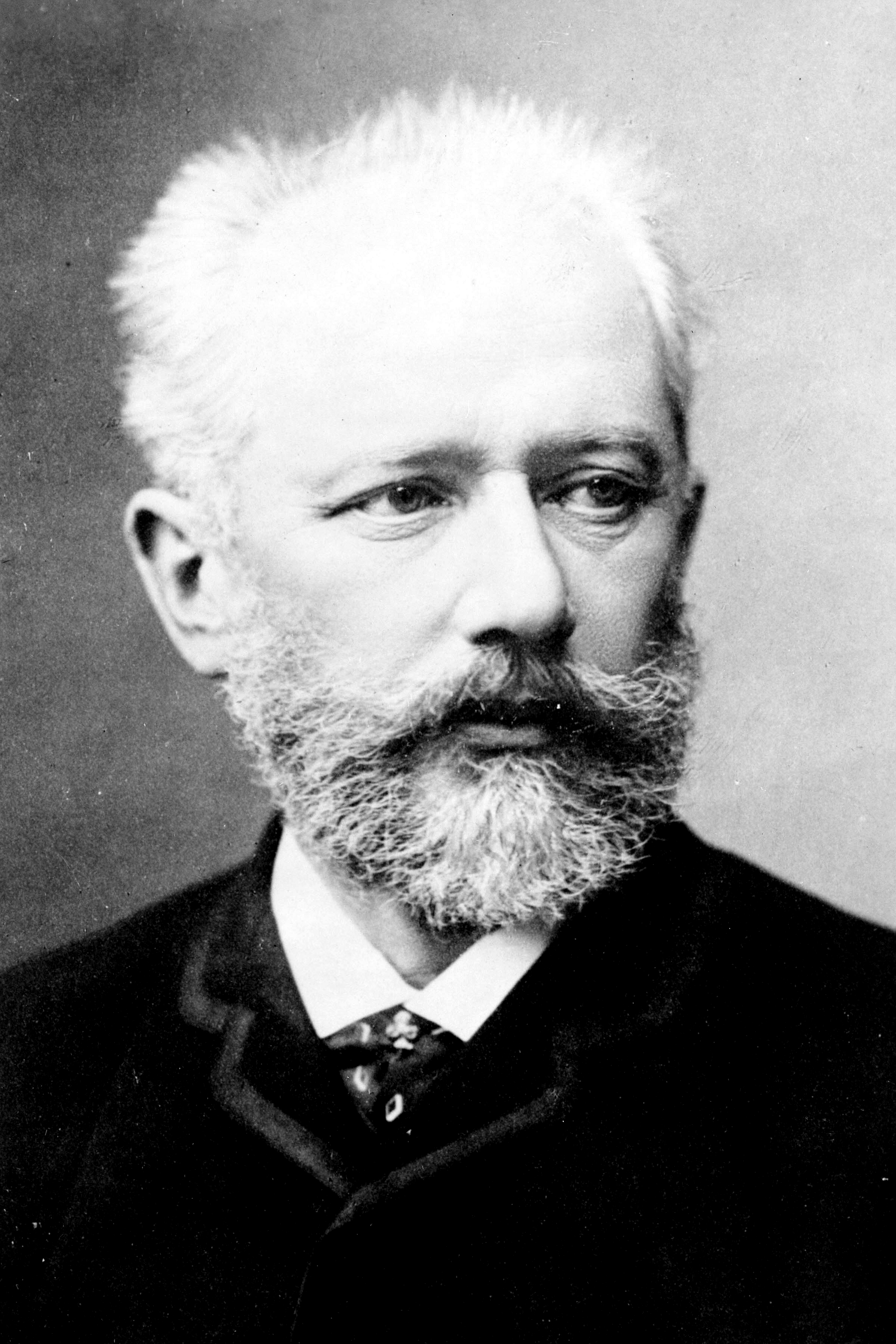
In a letter to Tchaikovsky's nephew Vladimir Davydov, Tchaikovsky wrote: "I'm very pleased with its content, but dissatisfied, or rather not completely satisfied, with the instrumentation. For some reason it's not coming out as I intended. It would be typical and unsurprising if this symphony were torn to pieces or little appreciated, as that wouldn't be the first time such a thing had happened. But I absolutely consider it to be the best, and in particular the most sincere, of all my creations. I love it as I have never loved any of my other musical offspring." I'm returning to that word sincere this week for Part 2, because it's the through line that makes Tchaikovsky's music so immediately arresting. You always know exactly where you stand with Tchaikovsky, since he always seems to be speaking so honestly in his music. Well, almost always. The last two movements of Tchaikovsky's 6th Symphony are among the most fascinating in the entire Western classical repertoire, and the reason for their fascination (beyond simply being wonderful movements) is the order in which Tchaikovsky places them. In a typical symphony, the third movement would be either a fast scherzo or a slow movement, depending on what the second movement had been. Since the second movement of this symphony was a waltz, audiences would have expected a slow third movement followed by a fast finale to send them home with some energy. But that is not what Tchaikovsky does. Instead, we hear a thrilling, exhilarating scherzo followed by a devastating slow movement, a choice that completely upended the form of the symphony as a genre, and was revolutionary for its time. Why did Tchaikovsky do this? And why did this decision, in part, fuel massive controversy surrounding his death, just nine days after the symphony's premiere? We're going to explore all of that today, including the many theories about Tchaikovsky's death, before examining the 3rd and especially the 4th movements of this masterpiece in detail, unpacking the nuances of these profoundly contrasting movements.
S11 Ep 279Tchaikovsky Symphony No. 6 (Part 1)
The great and somewhat controversial conductor Leopold Stokowski said this about Tchaikovsky: "His musical utterance comes directly from the heart and is a spontaneous expression of his innermost feeling. It is as sincere as if it were written with his blood." I couldn't agree more with Stokowski, because I think he hits on a word that has made Tchaikovsky's music so powerful to almost every audience that encounters it: sincere. Tchaikovsky's music is so profoundly moving because you feel as if there is no gap between the music and Tchaikovsky's emotions. It's as if he is earnestly speaking to you through his music. But paradoxically, this ability that Tchaikovsky had made him a punching bag of critics and cynics throughout his career and even into today. Even though Tchaikovsky remains one of the most popular composers in the Western Classical canon, his name is still not treated with the respect of a composer like Beethoven or Brahms or other luminaries. I understand that, but I also think Tchaikovsky's skills as a composer are extremely underrated, which brings me to Tchaikovsky's 6th and final symphony, nicknamed the "Pathetique." Tchaikovsky's 6th symphony essentially rewrites the traditional symphonic form. It is one of the few 19th century symphonies that end quietly, and that ending is one of the most extraordinary and daring in the entire repertoire. It is a piece of remarkable complexity and brilliant construction, and it packs an emotional wallop that leaves you walking out of the hall slightly changed from the way you walked in. In fact, this piece is so multi-layered that I wanted to devote some extra time to it, so I've decided to make this a two-part episode. This week, we're going to talk about the controversies over Tchaikovsky's emotional state as he composed this symphony, and the first two movements of the piece: a massive, 17-minute first movement that ingeniously melds multiple different symphonic forms into one long breath, and a waltz with a twist. We'll get into a lot more detail than we usually do, giving us a chance to really give Tchaikovsky the respect he deserves.

S11 Ep 278Beethoven String Quartet, Op. 59, No.2
I'm always tickled by composer trivia questions, like which standard canon works begin in a major key and end in a minor key? I'll give you one, but please comment others below: Mendelssohn's 4th Symphony. Well, how about this one: how many of Beethoven's 16 string quartets end in a minor key? The answer? Just one, Op. 59, No. 2, the subject of today's show. And that minor key is hugely important to this darkest of the three Op. 59 quartets, three towering achievements that changed the string quartet repertoire for good. Beethoven, as I've said many times on the show, was a revolutionary within limits, always expanding, rethinking, and reshaping what was possible without breaking anything beyond repair. But make no mistake: the Op. 59 quartets were revolutionary works. No one had written anything like them before in terms of scope, emotional intensity, difficulty, and complexity. In fact, like a few of Beethoven's greatest works, they were received with confusion and, in some cases, anger by musicians, audiences, and critics. Famously, the cellist of the first string quartet to receive the parts of Op. 59, No. 1 saw the Morse code-like, one-note theme of the second movement, threw the music aside, and stomped on it! These quartets were Beethoven going out on a limb, applying the intensity and drama of his Middle Heroic Period to a genre that had been at least partly the province of amateur musicians, but not anymore. Op. 59, No. 2, as I said, is the darkest of this group: four movements all centered around the key of E, and with the exception of the glorious second movement, all in minor, presenting a seriousness and directness of purpose that is powerfully compelling. This might be my favorite of the Op. 59 quartets, and so I'm very excited to dig into it with you today. We'll discuss the enigmatic and ecstatic aspects of this quartet, as well as Beethoven's own philosophical views on life, which come to light in the second movement, one of Beethoven's greatest creations. Recording: Cleveland Quartet

S10 Ep 277Brahms Symphony No. 2 LIVE w/ The Aalborg Symphony
Brahms spent much of his adult life battling with his ambition to write the next great symphony and his terror at the shadow of Beethoven standing behind him. Brahms tortured himself for 14 years with his first symphony, and only published it when he was 49 years old. But when that symphony finally came out, it was a relative success for a new work, and with immense relief, Brahms quickly turned out another symphony in just 4 months. Brahms' first symphony was quickly dubbed "Beethoven's 10th" something that annoyed Brahms to no end. When told that the main theme of the last movement resembled the Ode to Joy, he notoriously responded, "any ass can see that!" But all the same, Brahms had been re-anointed as Beethoven's successor with the symphony, and so therefore his second symphony would also be given a Beethovinian name, Pastoral. The question since the symphony has been written has been this: just how pastoral and idyllic is this symphony? Many commentators see an unadulterated joy and gentleness in the piece, with some melancholy moments to be sure. But overall, the piece is as sunny as it seems on its surface, with just the typical battles between happiness and sadness that mark every symphony. But there's another school fo thought with this symphony, and that is that it is marked by shadows and tremors that go way beyond simple sadness and happiness, and that these shadows and tremors leave a mark that can't be ignored. I tend to believe in the second theory, but we're going to discuss this symphony with this framework in mind; whether this piece is as sunny as some people would have you believe, or if the shadows are the lasting impression we get as we walk away from the concert hall. We'll also discuss Brahms' innovations with form, and his evergreen ability to write some of the most stunning melodies on the planet. Join us!
S11 Ep 276Zemlinsky: The Mermaid
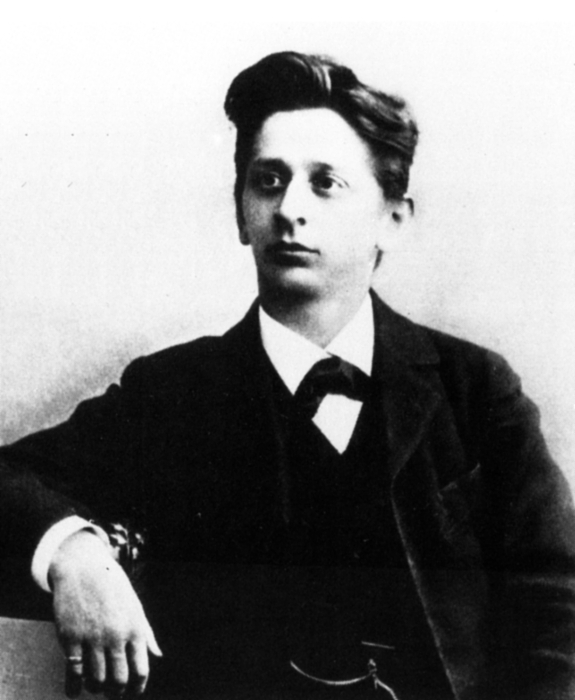
The story of Alexander von Zemlinsky's The Mermaid begins with a passionate love affair and ends in heartbreak of the most unabashedly big-R Romantic kind. In 1900, the young, fabulously talented, and famously beautiful Alma Schindler came to Zemlinsky's home to study composition. Wildly passionate feelings soon developed between them, and Alma wrote the following in her diary: "I would gladly be pregnant for him, gladly bear his children. His blood and mine, commingled: my beauty with his intellect. I would gladly serve him in his professional life, live for him and his kith and kin, breathe [for him], attend to his every happiness, serve him with a gentle hand. God give me the strength and the willpower to do so." The relationship lasted a little over a year, until one night when Schindler attended a party that happened to be frequented by a brilliant conductor and composer twenty years her senior: Gustav Mahler. The rest is history. Zemlinsky was devastated and poured his energies into a tone poem based on Hans Christian Andersen's The Little Mermaid. The source may seem surprising, but as we'll see later on, it proved to be the perfect vehicle for Zemlinsky to exorcise the tortured memories of this turbulent relationship. For a long time, however, the score was lost. It wasn't until the 1980s that the full work was reconstructed, and it has since become one of Zemlinsky's most frequently performed pieces. And it's not hard to see why. The Mermaid is a forty-minute tone poem that, from start to finish, overflows with fin-de-siècle romanticism, very much in the vein of Schoenberg's Verklärte Nacht (Transfigured Night). It is a work of irresistible beauty and passion, and it is being played more and more as Zemlinsky's name begins to take its rightful place in the standard canon of composers. Today on the show, I'll tell you a bit more about Zemlinsky in case you're not familiar with him, read more of the unbearably passionate letters and diary entries from both Zemlinsky and Alma Schindler, and, of course, walk you through the heartbreakingly beautiful music of The Mermaid, showing how Zemlinsky balances narrative and abstract form, and how he created this opulent, lush, and profoundly moving score. Join us!

S10 Ep 275Pergolesi Stabat Mater
Many aspects of Giovanni Battista Pergolesi's life seem relatively normal when it comes to composers of the Baroque era. He was prolific, died young, and his music became very famous only after his death. However, all three of these facts are complicated by the unique circumstances of Pergolesi's life. He was somewhat prolific, but dozens of pieces that were once attributed to him are no longer considered authentic, including much of the music that Igor Stravinsky made famous in his ballet Pulcinella. Pergolesi did not just die young; he died remarkably young, at the age of twenty-six, from tuberculosis. And the idea that he became famous only after his death actually made him unusual among composers of his time, when popularity during one's lifetime was the primary mark of success. Most composers quickly fell into obscurity after they died. In Pergolesi's case, the opposite occurred. There was a massive surge of interest in his music immediately after his death, which in some ways contributed to the museum-like atmosphere that classical music has today. Pergolesi was ahead of his time in many ways, and that brings us to the piece we are going to talk about today, his Stabat Mater. We will discuss what the Stabat Mater is in more detail later, but simply put, it is a musical setting of the poem Stabat Mater Dolorosa, which, in a rather clumsy translation, means "the sorrowful mother stood." This thirteenth-century Christian hymn and poem focuses on the Virgin Mary's suffering as she witnesses the crucifixion of Jesus. The text has been set to music by many composers, but Pergolesi's version, surprisingly given his relative obscurity today, has endured in a way that many settings by more famous composers have not. Today, on this Patreon-sponsored episode, we will learn a bit about Pergolesi's life, or at least what we know of it, and talk through this Baroque-era masterpiece. Join us!

S10 Ep 274Rachmaninoff Piano Concerto No. 2
We humans seem to love comeback stories, and there is no comeback quite as compelling in the classical music world as Rachmaninoff's Second Piano Concerto. It was written three years after the disastrous premiere of his First Symphony, a premiere so catastrophic that it lives on in the annals of musical history, and is the essential starting point for understanding the Second Piano Concerto and how it came to be. The concerto revived both Rachmaninoff's career and his spirits, and it remains his most famous orchestral work. It is a towering masterpiece of Romanticism, overflowing with glorious melody after glorious melody, supported by virtuosic and sumptuous writing for the solo piano, and a deeply satisfying orchestral part that continues to make audiences swoon around the world. Today on the show, we'll begin with the story of Rachmaninoff's First Symphony, and then walk through this extraordinary concerto, highlighting what truly makes Rachmaninoff's music so special. Hint: it's not just the pretty melodies. Recording: Vladimir Ashkenazy with the Moscow Philharmonic Orchestra, Kirill Kondrashin cond.
S10 Ep 273Handel Messiah w/ Aram Demirjian
A piece that I have been asked to cover probably a dozen times is Handel's Messiah. It's a piece I love, but a piece that I've never conducted or played, and so therefore I don't know it incredibly well. There are plenty of pieces like this in the repertoire, and so I've decided to start a new series on Sticky Notes, which will be to take pieces that I don't know very well and to bring on experts to help me learn about them. This series will be a bit sporadic, and won't disrupt the but I'm really excited to share the first episode in this series, all about the Handel Messiah, featuring my good friend and the wonderful conductor Aram Demirjian, the Music Director of the Knoxville Symphony! I really hope you enjoy this episode and that you have a Happy Holidays and New Year!

S10 Ep 272Gustav Holst: The Planets
Mr. Holst, wherever you are, I apologize in advance for what I'm about to say. From my research, I know you resented this fact, but unfortunately, I think it's true. Here it is: despite the large catalogue of music Gustav Holst composed, much of it wonderful, he is essentially a one-hit wonder in the classical music world, à la Pachelbel, Dukas, Mascagni, and others. His one hit is a big one, though: an epic, seven-movement suite entitled The Planets. As I said, Holst was not happy about this in the slightest. He was a prolific composer and someone who devoted himself fully to his subjects. He considered other works he wrote better than The Planets, and yet, in the end, we hear very little of his other music, though since the 1980s some of it has been performed more frequently, particularly in the UK. But The Planets is truly a hit: the reason we know Holst's name today, and one of the most frequently performed pieces in the entire Western classical canon. Holst took a novel approach to his depiction of the planets. They are not ordered by their astronomical distance, but by musical cohesiveness. Nor do they depict the planets in a scientific sense; instead, they present a deeply personal astrological interpretation, something we'll explore as we discuss the piece. The orchestration is massive yet subtle, with colors unique both to the work itself and to Holst's output more broadly. It is easy to listen to and straightforward, while also somehow intensely complex and varied. It is powerful, Romantic, thrilling, joyous, mysterious, terrifying, and ultimately cosmic in both conception and execution. This is one of those pieces that people love without necessarily giving it the full respect it deserves. So today on the show, we'll learn a little about Holst's life, what led him to write The Planets, and why this piece grabs hold of us and doesn't let go throughout our journey through the stars. Join us!

S10 Ep 271Franck Symphony in D Minor
In the 1960s, Leonard Bernstein famously helped to popularize the music of a then relatively obscure composer, Gustav Mahler. His work, as well as the work of other conductors, made Mahler into a classical-music household name. Mahler's symphonies are played every year all over the world, and he is firmly ensconced in the so-called canon of standard orchestral repertoire. Would it surprise you to know that Franck's D Minor Symphony once had the same reputation? It was played almost every year by most major orchestras, it was recorded by all the great conductors, and it was a fixture of the canon just like a Brahms symphony. Nowadays you would be lucky if, outside of France and Belgium, you hear Franck's Symphony once every five years, if that. The truth is that, other than a short golden period for this symphony, it has either been controversial (around the time it was premiered) or ignored (nowadays), which is a real shame, since it is a glorious piece that I would argue is drastically underrated in our modern world. The symphony was radically innovative for its time, which probably explains some of the more virulent criticism it received, but even though those innovations now sound completely normal to our ears, they are still at the heart of what makes this symphony so profoundly satisfying to listen to. Ahead of my performances of the symphony in Lille this December, I wanted to dive in and explore this unfairly ignored masterpiece. In about 40 minutes of music in three grand movements, Franck pours his soul into this work. That phrase sounds a bit cliché, I know, but I really mean it; there is an earnestness about this music that I find deeply moving, and it is something we will explore together today. We will talk about Franck's late entry into the world of composition, his reputation as an organist, and the challenges he faced in finding acceptance as a composer. Along the way, we will discuss this gorgeous piece in all of its passion and intensity. Join us!

S10 Ep 270Ravel and Falla: Echoes of Spain
Nowadays it's hard to imagine Maurice Ravel as a "bad-boy" revolutionary, a member of a group whose name can be loosely translated as The Hooligans. To most listeners today, Ravel's music is the very picture of sumptuous beauty. But the group he belonged to, Les Apaches ("The Hooligans"), earned its name because of its members' uncompromising attitudes about music; attitudes that clashed sharply with the conservative tastes of the establishment. Another composer who belonged to Les Apaches was the Spanish composer Manuel de Falla. Falla is certainly not as well known as Ravel, but the two became fast friends when he arrived in Paris in 1907. They formed a kind of mutual-admiration society that proved immensely fruitful for both of them. Falla was deeply impressed by Ravel's Spanish-inflected music, marveling at its authenticity given that Ravel was French. But Ravel, now a symbol of French music, was the son of a Swiss father and a Spanish-speaking mother, and he was born just eleven miles from the Spanish border in the Basque region. His Spanish voice was no affectation; it came from somewhere deep within, and Falla noticed this immediately, remarking that Ravel's Rapsodie espagnole was "a Spain ideally presented by his mother." Today on the show we'll explore the Spanish world of Falla and Ravel through two central works: Falla's Nights in the Gardens of Spain and Ravel's Rapsodie espagnole. These pieces, both astonishing in their creativity and craftsmanship, offer a wonderful opportunity to compare and contrast the music and approaches of these two close friends. We'll also talk about Les Apaches and their goals, legacy, and some of their legendary members. All this and more is coming up on this final collaboration on Ravel and Friends with G. Henle Publishers! Join us!

S10 Ep 269Shostakovich Symphony No. 10 LIVE w/ The Aalborg Symphony
Longtime listeners of Sticky Notes know that Shostakovich's 10 symphony was the inaugural piece covered on the show. It's been 8 years(!) since that show, so I've totally re-written the episode and had the privilege of presenting this new version live with the Aalborg Symphony Orchestra last week in Aalborg. Shostakovich, like so many composers before him, was obsessed with musical codes and messages, with songs that expressed two or more meanings, with ideas that were at once black and white and profoundly complex. This also describes Shostakovich himself, a man who was incredibly guarded with his public persona, and even his private persona as well. It is impossible to know anything for sure with Shostakovich, and to me therein lies the greatest strength of his music. The 10th symphony has been described as a portrayal of the Stalin years, as a portrayal of obsessive love, as a requiem, as sarcastic, as humorous, as agonizing, as triumphant, as, as, as….and the truth is that like all of the greatest works of Western Classical music, it is all of those things and so much more. It is a work of profound intensity, grabbing you from the start and not letting go for nearly 50 minutes, which makes sense considering that the piece was written in the shadow of another momentous event, the death of Joseph Stalin. There are very few experiences like hearing Shostakovich's 10th symphony live, and it is the kind of piece that, by the end of it, leaves you a slightly different person than you were when it started. Today on the show, we're going to be talking about a wide range of topics, from orchestral color to Joseph Stalin, from symphonic form to obsessive love, and much more. Join us!

S10 Ep 268Barber Violin Concerto
There are so many great apocryphal stories in the long history of classical music, from the reason Tchaikovsky wrote his Sixth Symphony to what famous composers supposedly said on their deathbeds, to my favorite story: how Joseph Haydn's Symphony No. 96, The Miracle, got its name. Apparently, during the premiere of the symphony, a chandelier fell, but miraculously didn't hit anyone. Hence, The Miracle Symphony. The chandelier did, in fact, fall, but we now know it happened during the premiere of Haydn's Symphony No. 102, which has no nickname. Coincidentally, or perhaps not so coincidentally, the 96th Symphony is performed far more often than the 102nd, likely because of its nickname, even though it's the nickname of the wrong symphony. The Barber Violin Concerto has a great and true story behind it. But before certain information was revealed in 2010, the story everyone knew was quite different. The original version goes like this: Barber had completed the first two movements of his Violin Concerto and sent them to the soloist scheduled to premiere the work, Iso Briselli. Briselli didn't like the concerto, claiming it wasn't virtuosic enough, and asked Barber to write something more difficult. Barber, perhaps with an evil laugh, obliged and returned with the third movement. When Briselli received it, he realized he couldn't play it because of its extreme difficulty and ultimately withdrew from the premiere, which instead went to violinist Albert Spalding. It's a perfect "Icarus flying too close to the sun" kind of classical music story, but as it turns out, it isn't the full story. In 2010, letters were released between Barber, Briselli, and the real instigator in this little operetta, Briselli's violin teacher, Albert Meiff. I'll get into the whole story later, but it's a good one, even if it's not quite as cinematic as the legend. More important than the dispute over its last movement is the remarkable beauty and creativity of this masterful 20th-century concerto. Barber's Violin Concerto is one of my favorite pieces to play and to conduct, and it has charmed audiences ever since its premiere. It features Americana music of a kind only Copland could equal, as well as a heartbreaking oboe solo that might be one of the greatest moments in the history of American classical music. And then there's that pesky third movement, a challenge to every violinist (and orchestra) and a movement that remains controversial for many reasons.

S10 Ep 267100 Years of Beethoven's Eroica (recordings)
One of my favorite things about having Patreon sponsors is that they often suggest the most fascinating pieces and topics for shows. Adrian, who sponsored a show last year, gave me one of my favorite prompts when he suggested looking at works based on literature. Now he's sponsored another episode, this time with an equally compelling idea that I was eager to explore right away. His prompt was: "The evolution of conducting techniques throughout recorded history. How have innovations from great conductors changed how music is performed and understood?" As a conductor, the thought of diving into different recordings of a single piece naturally whets my appetite. But the real reason I was so excited about this episode is that interpretation is, in my view, wildly misunderstood. I've tried to tackle this idea in many different ways, in my episode about the sound of the violin with Soovin Kim and my dad, Donald Weilerstein; in my "What Does Music Mean?" episode; and even in "What Does a Conductor Really Do?" But I've never taken a single piece and focused solely on its interpretation, and on how that interpretation has changed over time. This gives us the chance to dig deeply into what makes an interpretation. So today, I'm going to share a set of recordings of one piece (and don't worry, I'll reveal which one in a moment). I'll talk about what sets them apart, both the obvious differences, like pitch and extremes of tempo, and the more subtle ones, like vibrato, phrasing, and other elements of performance that most listeners aren't trained to notice. So, let's do some exploring together, coming right up, on Sticky Notes.

S10 Ep 266The Life and Music of Grazyna Bacewicz
The great Polish composer Witold Lutoslawski said this after the premature death of his contemporary Grazyna Bacewicz: "She was born with an incredible wealth of musical talent, which she succeeded to bring to full flourish through an almost fanatical zeal and unwavering faith in her mission. The intensity of her activities was so great that she managed, in a cruelly-shortened life, to give birth to such treasures that any composer of her stature with a considerably longer life span could only envy." Bacewicz is a name that is probably not that familiar to you, but during her lifetime she was an extremely popular composer in her native Poland and across Europe as well. In the United States, her music has been rarely performed, though this has started to shift thanks to a renewed interest in female composers of the past. This new look at Bacewicz has revealed an incredible wealth of music. Bacewicz was one of the most prolific composers of the 20th century, writing over 200 works during her short lifetime! Some call her style neo-classical, but the main thing that I hear in her music is a sharp originality that permeates her music and makes her compositions a thrill to listen to. The vitality, energy, and creativity that embodies Bacewicz's works will be the main part of the show today, as we'll go through a set of some of her most representative pieces, pieces that I hope will enter the standard repertoire of performers all over the world even more so than they already have. So join me today to explore the life and music of this unfamiliar but vital 20th century master!

S10 Ep 265Sticky Notes meets You'll Hear It
I had such a wonderful time joining the jazz podcast You'll Hear It! We talked about the meeting of jazz and classical music, a topic I've explored before, but never in this much depth and never with so much input from jazz musicians and experts like Peter Martin and Adam Maness. We talk about great jazz and classical composers, but we also talk about the strange divide between jazz musicians and classical musicians, trying to break down the barriers that exist between purveyors of these wonderful genres of music. I hope you enjoyed this one as much as I did!