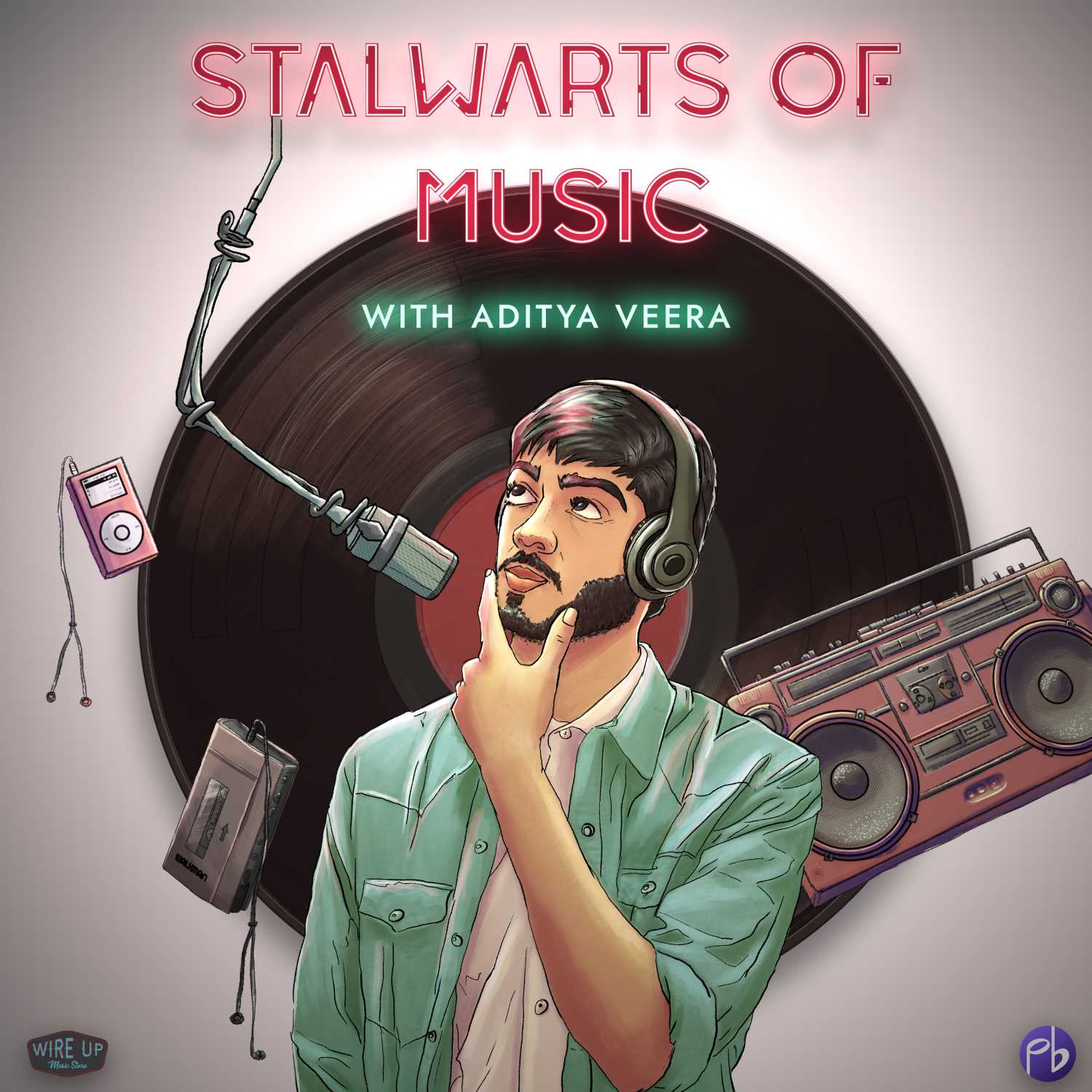
Stalwarts Of Music with Aditya Veera
49 episodes
Tony Grey’s Late Yet Great Arrival
Tom Morello’s Unapologetic Crusade for the Marginalized
Tracing Narada Michael Walden's Awakening
Steve Smith: Journey to the Centre of the Rhythmic Nerve
What if Mick Box is the Most Normal Guy in Rock and Roll?
Mechanics of Expression: Deconstructing the Thomas Lang Sound
Scoring Parasomnia: John Petrucci on Night Terrors and Its Dark Concepts
S5 Ep 4Escaping the Lab, Finding the Pocket: The Musical Epiphanies of Rob Araujo
Rob Araujo’s artistic journey from a pharmacology graduate student to a pioneering force in the modern Jazztronica movement underscores a profound philosophical evolution where the empirical rigors of science are traded for the visceral, communal joy of sonic experimentation. At the core of his ideology is the absolute equivalence of sound design and composition; he argues that because music is fundamentally just sound, the specific texture of an instrument dictates its structural and emotional impact, making it a mistake to separate the two disciplines. He beautifully demystifies the romanticized notion of spontaneous genius, instead framing creativity as a process of combinatorial reinterpretation where the mind restacks internalized auditory memories into novel configurations. His modern workflow often begins by discovering a specific, inspiring sonic colour such as the tones found in Keyscape or shearwater piano plugins and letting that texture dictate the creation of the track. This experimental process constantly navigates the tension between the raw, vulnerable intimacy of analog performance which he likens to a nuanced, face to face conversation and the meticulous, heavily curated environment of digital production. He embraces this, describing the intricate blending of acoustic and electronic elements as a highly satisfying form of gambling, an unpredictable wager where experimenting with different sonic combinations eventually pays off into something cohesive and beautiful.Crucially, he advocates for the urgent modernization of Jazz’s timbral palette, noting that the genre risks complete cultural stagnation if it continues to pair advanced 21st century harmonic theory with antiquated 1960’s sound design. A pivotal moment in his development was witnessing a Black Radio epiphany; after seeing his peers remain largely unengaged by traditional Acoustic Jazz, he observed their immediate, visceral connection to Robert Glasper's fusion of complex harmony with heavy, relatable hip-hop textures. This realization fundamentally shaped his approach to the structural architecture of a mix, shifting the rhythmic focus away from the traditional jazz timekeepers of the ride cymbal and upright bass, and instead aggressively prioritizing the kick and snare drum to create an undeniable, modern pocket.Ultimately, by explicitly rejecting the superficial Smoke and Mirrors of the traditional mainstream industry which he believes is functionally dead and highly decentralized Araujo champions an independent paradigm. In this modern era, he emphasizes that direct, unmediated listener resonance and genuine, unforced human connections remain the most potent catalysts for both artistic legacy and professional success. This deeply humanistic philosophy is perfectly exemplified by how he landed a major international tour to India with elite musicians like Jack Gardner and Henrik Linder: not through calculated corporate networking, but entirely organically during a casual dinner at an Indian restaurant with his friend Porter Bliquez.
S5 Ep 5The Yin, Yang, & the Avant-Garde: Deciphering Bickram Ghosh's Global Pulse
Legendary percussionist Bickram Ghosh outlines his multifaceted journey from rigorous classical roots to becoming a trailblazer of global fusion. Raised in a strict musical household by Patiala Gharana vocalist Sanjukta Ghosh and tabla maestro Pandit Shankar Ghosh who famously poured water on him to wake him for practice. He uniquely completed a Master's degree in English Literature before fully committing to his musical career. He explains his conscious rejection of the orthodox Pandit title, noting it contradicts his avant-garde fusion avatar, and instead cherishes the Prince of Tabla moniker affectionately bestowed upon him by George Harrison. Recounting the surreal experience of receiving a personal phone call to record on the album Brainwashed and being picked up in stretch limousines, he warmly highlights Harrison's profound humility in the studio. His core musical philosophy marries the strict, Staccato mathematics of his Carnatic training (which he began at age 13 under Vidwan S. Shekhar) with the poetic license and lyrical modulation of the North Indian Hindustani tradition. This transcultural fluency deeply informs his technical approach to acoustic engineering; he meticulously manages frequency margins by using separate microphones to isolate the high end transients of the tabla and the low end resonance of the Baya, capturing their distinct Yin and Yang sonic profiles without muddying the mix. Beyond his technical mastery, he acts as a passionate cultural custodian, elevating marginalized indigenous instruments like the Banglar Dhak and Shree Khol to mainstream stages in his Drums of the East project at the Mahindra Percussion Festival, while fiercely advocating for government financial support for the struggling artisan instrument makers who craft them. His compositional ambition is vast, demonstrated by his ability to seamlessly integrate complex mathematical rhythms like nine-beat cycles into mainstream pop collaborations with artists, alongside his historic endeavour to transmute Rabindranath Tagore's intimate poetry into a grand symphonic cycle for a 100 piece German orchestra. Ultimately, guided by his Guru Pandit Ravi Shankar’s advice that true global synthesis requires fully embracing foreign cultures without judgment (a lesson that turned Bickram Ghosh into a connoisseur of global cuisines), he views rhythm as a deeply spiritual, cosmic, and biological anchor. Through all of this, his defining desire is simply to be remembered as a fearless, relentlessly evolving artist who constantly pushed the boundaries of his craft.
S5 Ep 3Jack Gardiner: Surviving the Digital Simulacrum in the Guitar World
Jack Gardiner's foundational musical style is deeply rooted in R&B, Funk, Soul, and gospel music, which drives his staunch prioritisation of live, unquantized human grooves over the sterile, algorithm driven perfection that dominates modern digital production. This commitment to authenticity is a central theme in his latest album, Kintsugi, a deeply personal synthesis of 1980’s and 1990’s Funk, Japanese music, and vintage video game sound design. He noted that this was the first time he wrote an album ignoring what social media algorithms or the market might expect from him. To keep his complex instrumental music accessible to non-musicians, he employs what he calls the Baby Shark approach. By establishing a highly accessible, pop style melodic or rhythmic hook early in a track, he anchors the listener's ear, allowing him to seamlessly introduce dense, advanced Jazz Fusion harmony without alienating his audience. He has consistently spoken out against deceptive editing practices rampant on platforms like Instagram and TikTok, where performances are routinely faked using time stretching software and MIDI mapped audio. He shared his own frustrations with content theft, detailing an incident where another artist stole his 2013 Luther Vandross improvisation, as well as the broader controversy of influencers like Giacomo Turra stealing and monetizing other artists masterclasses without credit. Candidly, he revealed that his efforts to expose these industry secrets in 2019 led to him being temporarily blacklisted. As an educator, this focus on reality translates to his critiques of modern pedagogy; he notes that many modern guitarists excel at fast scalar runs but fail to lock into a basic groove with a live band. Furthermore, he argues for the absolute necessity of playing through real physical amplifiers, asserting that the acoustic feedback loop and sympathetic string resonance created by pushing real air cannot be replicated by modern digital modelers or in ear monitors. Looking forward, he is highly anticipating his 2026 India tour, expressing a profound admiration for Indian culture and classical music ahead of his scheduled performances at premier venues like the NMACC in Mumbai, The Piano Man in New Delhi, and The Humming Tree in Bengaluru. He has assembled a fusion supergroup for the tour, featuring Henrik Linder on Bass, Rob Araujo on Keys, and Porter Bliquez on Drums, to perform expansive 1 hour and 40 minute sets. Ultimately, he hopes his legacy will reflect these core values, desiring to be remembered as an educator who breaks down barriers by demystifying complex music, and as an artist who constantly encourages others to remain true to their authentic selves.
S5 Ep 2Nic Collins: Metamorphosis into the Instrumental Vanguard
Residing in the vibrant landscape of Miami while harbouring a steadfast devotion to Manchester United, Nic Collins has gracefully transcended the monumental, global legacy of his father, Phil Collins, to forge a fiercely independent and deeply profound musical identity. Navigating the delicate balance of growing up with a global icon who maintained a strict professional boundary while remaining deeply supportive at home, He embraced the immense pressure of his lineage, ultimately finding profound spiritual reward in earning genuine appreciation for his own artistry rather than his surname. His evolutionary journey is a testament to the belief that the drum kit is an expansive canvas for storytelling, functioning as a vibrant Garage Sale of collected inspirations from intimately mirroring his father's live touring setups and discovering the jazz-infused expressiveness beneath Phil's rock persona, to expanding his own toolkit by blending the foundational single pedal grooves of John Bonham with the complex, double-pedal mastery of progressive titans like Gavin Harrison and Danny Carey. His philosophy fundamentally champions raw, human emotion over sterile precision; whether he is honouring the improvisational, feel based legacy of Genesis by prioritising intuitive musical expression over rigid mathematical subdivision, or driving the untamed, collaborative spirit of his own band Better Strangers, he remains steadfastly committed to the song's organic pulse. This unwavering devotion required the immense courage to leave the commercially successful project, The Effect, allowing him to fully navigate the nuanced challenges of writing instrumental, narrative driven music and balancing technical prowess with musical storytelling alongside Better Strangers, where he channels the diverse influences of Jeff Porcaro, Larnell Lewis, and Mario Duplantier. He approaches every musical context with extraordinary reverence, preparation, and self critique, recognising that true mastery whether conquering his initial nervousness to adopt his father’s percussive piano style on the 'Not Dead Yet' tour, utilising electronic pads solely for specific textural enhancements on the Mike and the Mechanics tours rather than acoustic emulation, or seamlessly integrating linear and gospel drumming techniques into rock must always serve the band's comfort and the song's integrity above personal ego displays. He perceives music as a deeply spiritual, human dialogue where the flawless, mechanical execution dictated by a click-track often pales in comparison to the beautiful, connective vulnerability of a live, un-clicked performance; he notes that audiences often react most positively to spontaneous mistakes because they expose the artist's shared humanity. For Nic, learning labyrinthine pieces like Genesis’s "Robbery, Assault, and Battery" proved that while counting provides an initial structural map, true comfort and groove only arrive through immersive listening, just as navigating odd time signatures demands a natural, unforced physical response to the riff rather than feeling mathematically contrived or crossing the dangerous line into mechanical excess at extreme tempos. Finding deep emotional resonance in the sweeping arcs of Genesis’s Fading Lights and the melodic sincerity of Sara Bareilles's "Love Song," and fueled by the poignant, unforgettable memory of his final performance alongside his father, Nic’s ongoing mission alongside his dream of assembling an all-star prog rock lineup is a boundless endeavor to inspire the next generation of drummers to stay fiercely true to their personal musical intentions, allowing the spiritual, beating heart of the music to guide their every strike.
S4 Ep 3Brian Tichy's 'No Excuses' Blueprint for Authentic Rock
Brian Tichy stands as a towering rhythm architect in the modern rock landscape, seamlessly blending the raw, unquantized power of 1970s stadium rock with the rigorous technical precision of his Berklee training. As a premier drummer for legendary acts like Whitesnake, Billy Idol, and currently the Gene Simmons Band, Tichy fearlessly rejects the sterile, digitized crutches of modern music such as click tracks and in-ear monitors in favour of a visceral, highly reactive live acoustic experience. Beyond his thunderous, "no excuses" approach to the drum kit, which has seen him command massive tribute shows mere days after major collarbone surgery, he is a fiercely independent multi-instrumentalist. Whether he is laying down huge grooves for rock royalty, securing lucrative synch licenses, tracking guitars for his upcoming solo album, or driving the 2026 vinyl reissue campaign for his unfiltered original band S.U.N. (Something Unto Nothing), he remains an uncompromising guardian of authentic rock and roll.
S5 Ep 1Rakesh Chaurasia: Reinventing Bansuri Traditions
Rakesh Chaurasia distinguishes himself as a curator of intent, breaking his usual silence to engage in a rare dialogue aimed specifically at listeners who value substance over spectacle. His artistic timeline is a study in fearless evolution; traversing decades of discipline, he has successfully grafted Western orchestration and fusion experiments onto the delicate stem of the Bamboo flute. Whether navigating the complexities of a Symphony or the intimacy of albums like Silent Flute, he emphasises that expanding the instrument's limited range does not mean abandoning its soul. He champions a vocabulary that remains robust even without the crutch of pickup microphones devices he critiques for diluting the instrument's character preferring a natural acoustic presence that demands the audience's full, undivided attention. His dedication to purity is matched by a rigorous physical fitness regimen, a hidden necessity for sustaining the demands of his craft. As he prepares to bring this multifaceted identity to the NMACC Grand Theater weaving symphonic grandeur, classical rigour, and Bollywood nostalgia into a single tapestry, he remains grounded. Despite his soaring cross-genre conquests and technical innovations, he anchors his ultimate legacy in a simple, profound hope: to be remembered not merely for his virtuosity, but for the humility and genuine goodness of heart that defines the man behind the music.
S4 Ep 2More Than a Countdown: Ian Haugland’s Life in the Pocket
Ian Haugland defines his rhythm not by technical obsession, but by the feel, explicitly trusting producers with the mechanics while he focuses on serving the song with Bonham-esque grooves. His evolution saw him trade the complex precision of Neil Peart for a more melodic pocket, a style that ultimately fit him better than the ceremonial doom of his brief, slower-paced stint with Candlemass. The energy remains high as Europe prepares a new album to mark the 40th anniversary of The Final Countdown, a milestone celebrated amidst a busy festival schedule and fresh off a South American tour. He also recalled a striking experience performing in India, noting the surreal contrast between a rugged rural journey and the slick, modern festival stage at Meghalaya. Reflecting on the luminaries he has worked with, Ian contrasted the liberating leadership of Glenn Hughes, who offered creative freedom. Playing Deep Purple tracks with Hughes remains a career highlight, a dream realized for a lifelong fan. On the state of rock, Ian argues that authenticity is the only currency that matters, believing bands falter when they chase trends rather than artistic integrity. Off stage, his heart belongs to 70s prog rock specifically Yes and a sentimental connection to a wonderful track, the soundtrack to meeting his wife. His ultimate fantasy lineup remains a haven for legends, featuring icons like Bill Bruford, Phil Lesh, and David Gilmour.
S4 Ep 1Where Colour Meets Constellation: The Musical Language of Tony Ann
Tony Ann delves into his visionary approach to composing music, particularly through his ambitious 360-degree Zodiac project, where he aims to capture the unique personality traits of each star sign through sound. Drawing from his deep-rooted exposure to structured compositions, where he naturally weaves intricate structural elements into his work. He reflects on the rewarding challenge of translating the essence of water signs like Pisces into music through delicate arpeggios.He explores the profound relationship between colour, mood, and music, grouping his compositions by emotional tone: blue for somber emotions, orange for optimism, and red for intensity. He explains how conceptual frameworks like the zodiac project shape his compositional choices, requiring a seamless blend of structured improvisation and thematic alignment. Visual storytelling are at the heart of his performances.He throws light on how visuals become a central pillar of his live shows, amplifying the emotional impact of his music. He dives into the use of motif-driven forms to sustain engagement, masterfully shifting dynamics, register, and structure. His compositions stand out for their melodic strength and expressive range, offering an experience far more dynamic than static background music.He describes how his rigorous classical training forms the bedrock of his technique, while his passion for pop infuses his melodies with freshness and accessibility.
S3 Ep 21Poets of the Fall: Navigating Musical Dualities
Here's a very in-depth interview with Markus Kaarlonen and Tukiainen of Poets of the Fall.
S3 Ep 10In the Key of Struggle: Walter Trout's Blues Revival
In this enlightening episode, Aditya Veera engages with renowned musician Walter Trout, exploring his profound connection to music and its transformative power. From his early days with John Mayall to his battle with addiction and health challenges, Walter shares how music serves as his calling and catharsis. The conversation delves into the importance of personal interpretation in classic music, the energy exchange with audiences, and the healing nature of songwriting, illustrated by his album Battle Scars. As they discuss future plans, including Walter's new album Broken and potential collaborations, the episode highlights the evolving landscape of blues, the significance of community, and the shared human experience through music. Walter’s reflections on life, confidence, and destiny culminate in a heartfelt narrative of resilience and creativity that resonates deeply with listeners.
S3 Ep 11From Jamaica to the world: Shaggy talks Roots, Music Magic, & the real Carribean Sound
Here's an incredible interview ft. Mr. Boombastic a.k.a Shaggy.
S3 Ep 7Gloria Estefan: Regal Diva of Latin Pop
Here's a very special interview with the Queen of Latin Pop music.
S3 Ep 20Dhruv Ghanekar: On the road again
Dhruv Ghanekar's approach to creating Voyage 2 combines bursts of spontaneous inspiration with disciplined deadlines. Balancing his commercial media compositions with personal projects, he found setting deadlines crucial to completing the album. Despite the logistical hurdles of coordinating with multiple artists post-COVID, Ghanekar’s collaboration resulted in a vibrant project. Some tracks were omitted, not due to lack of quality, but because they did not align with the album’s intended celebratory and groove-centric theme.Ghanekar emphasizes the importance of momentum and sequencing in crafting an album, driven by both personal preference and broader appeal. He aimed for a fun, accessible sound suitable for festival audiences, prioritizing groove over complexity. An unexpected yet powerful outcome of the project was featuring only female vocalists—a decision influenced by his personal life, including the strong female figures around him. This unintentional celebration of women’s voices added a meaningful dimension to the album, blending Indian folk elements with a global collaborative flair, making the work both musically rich and socially relevant.Ghanekar reflects on his creative process, noting that music often evolves organically rather than through intentional decisions. The inclusion of prominent vocalists like Kalpana Patowary, Nandini, Srikar, and Ila Arun, each bringing unique voices, naturally shaped the album into a celebration of women and grooves. He blends Indian traditions with international influences, creating a dynamic global sound.His music’s complexity is driven by a desire to remain engaging for himself, influenced by a mix of jazz, fusion, and Indian classical music. His compositions serve as a counterbalance to his commercial projects, honoring musical heroes while exploring intricate ideas. Ghanekar often crafts multiple arrangements for each song, driven by intuition and validation from collaborators. An example is his reimagining of the traditional Suprabhatam with a drum-and-bass beat, seeking approval from percussionist Sivamani before finalizing it.Ghanekar stresses the importance of embracing new musical directions and trusting the process, emphasizing that if something doesn’t feel right early on, it’s worth reconsidering. While he values audience recognition, his primary focus is creating music that resonates with him. He describes his latest album as "global music," blending Indian and Western influences beyond conventional labels like fusion.The production of the album is more complex and adventurous than his previous works, incorporating textures and techniques with a subtle electronic edge. Influences from jazz, Cuban, and Balkan music are evident, with contributions from musicians like saxophonist Archer and a trumpet player from Boston. The album was designed as a groove-oriented experience for both musicians and audiences, enhanced by Dolby Atmos technology for an immersive listening experience.Ghanekar notes the importance of restraint with Dolby Atmos, recognizing that not all music benefits from such technology. His experience mixing in Atmos has been enlightening, with the album now vying for Grammy recognition in several categories, including Immersive Sound.Though some might view his work as non-mainstream, Ghanekar aims for it to resonate with a broad audience without elitism. His music, deeply rooted in Indian influences and global sounds, offers intricate details for listeners seeking depth. Ghanekar’s ongoing projects include a cinematic ambient collaboration with flautist Naveen and a singer-songwriter album, showcasing his diverse artistry.As for his legacy, Dhruv prefers not to take himself too seriously. He hopes that, in the distant future, people will listen to his music and think, Wow, this is intriguing and unique. For him, that kind of response is the ultimate reward.
S2 Ep 49Kavitha Jayaraman: The Art of Enduring Traditions in Carnatic Music
In this episode of Stalwarts Of Music with Aditya Veera, Kavitha Jayaraman, a renowned vocalist, and Vainika discusses her multifaceted life as an artist, educator, and philanthropist.The interview begins with an exploration of Kavitha's journey into social media. She discussed her initial reservations about self-promotion, rooted in the traditional training of Carnatic musicians to focus on the art itself rather than self-projection. She delved into the historical roots of Carnatic music, distinguishing it from Hindustani music and emphasising the unique characteristics that have been preserved over centuries. She attributed the limited reach of Carnatic music in the past to the absence of mediums like radio, which now allows artists to showcase their music to a broader audience. She also acknowledged the role of contemporary musicians in adapting to modern trends while preserving the core principles of Carnatic music.The interview shed light on Kavitha's efforts to promote inclusivity in Carnatic music. She shared her experiences of reintroducing the Veena to audiences in the U.S., where it was often confused with the sitar. Her initiatives included performing at unconventional venues and offering Veena lessons to enhance appreciation for this traditional instrument.Kavitha, despite identifying as an atheist, expressed her view of music as a medium to connect with a higher power. She described how singing Kritis makes her feel a profound connection, akin to meditation.Acknowledging the challenges in the Carnatic music industry, particularly for female Veena players, She shared her experiences. While she personally did not encounter discrimination, she acknowledged the need to address gender biases and ensure equal opportunities for all musicians.She provided insights into different types of Veena, such as the Saraswathi Veena and the Rudra Veena, highlighting their construction materials and tonal characteristics. She also discussed the challenges of maintaining the Veena in different climates and expressed concerns about the diminishing art of crafting these traditional instruments.Addressing the economic challenges faced by Carnatic musicians, Kavitha emphasised the importance of creating new opportunities and including Carnatic music in mainstream festivals. She advocated for supporting local artists and expressed concern about talented musicians turning to teaching due to a lack of recognition and opportunities.She shared insights into the role of music festival curators, emphasising the need for a balance between preserving traditions and introducing new talent. She highlighted the importance of career management alongside talent development, drawing from her experiences at Berklee College of Music.The interview touched upon Kavitha's foray into fusion music, where she explored genres like blues on the Veena. She explained how her classical training provided a solid foundation for experimenting with different genres. Additionally, her pursuit of a master's in music business at Berklee showcased her commitment to understanding industry trends and leveraging that knowledge for her career.Kavitha's philanthropic initiatives through Kaladanam, an institution she founded, were discussed in detail. Her approach of providing free classes and encouraging students to contribute to NGOs demonstrated her commitment to Seva through Vidhya (Teach to Reach). She highlighted her efforts in raising funds for various social agencies, impacting the lives of special kids.In the concluding segment, Kavitha shared her ambitions for the future. She expressed a desire to create a global platform for Carnatic musicians, ensuring the accessibility and appreciation of classical music in an era dominated by short-format content.
S2 Ep 5KOIAI + Li-sa-X: Exploring Vibrant Musical Palettes
KOIAI is a Japanese rock band, comprising Hazuki (NEMOPHILA-global), Kotono (ex-IRONBUNNY), and Li-sa-X. Formerly recognized as the Li-sa-X band, it emerged in 2022.Li-sa-X and Kotono were featured on Stalwarts Of Music with Aditya Veera ahead of their performance at the February 2023 Oddball Festival.Aditya opens the podcast warmly, discussing Lisa’s birthday celebration. This marks the band’s inaugural visit to India, sparking their enthusiasm for the upcoming Oddball Festival.Subsequently, the discussion plunges into KOIAI’s genesis, the band's musical endeavors, and the diverse talents and lives of its members.What's the significance of KOIAI?KOIAI blends the band members' names and signifies color or love in Japanese.How was the band received during its early musical journey?Kotono was thrilled to combine rock with dance, a passion stemming from her kindergarten days. With two guitarists and Kotono's dance prowess, the band delivered danceable, joyful rock, earning a warm reception.Li-sa-X collaborated with artists like Paul Gilbert and Polyphia. Does she feel pressure to meet others' expectations, and how much is her success attributed to personal maturity versus mentorship?Lisa follows her desires but admits that she receives substantial external support.KOIAI’s music fits into progressive pop, characterized by danceable rock. Any insights on the upcoming EP?Their EP, comprising five songs, mirrors tracks like "Take It or Leave It" on YouTube, representing their pop music style.Will the new EP be in Japanese, English, or a mix?It will be multilingual.Considering the diverse talents within KOIAI, how do you ensure each member shines artistically?Harmonizing the two guitarists ensures each gets their spotlight. Danceable music further highlights Kotono's performance.Lisa garners global acclaim from musicians like Paul Gilbert and Marty Friedman. What applause matters to her, and how would she rate her own success?She values precision and aims for accuracy. Embracing fusion and freestyle music is her current focus.Is Lisa striving for perfectionism?Initially inclined towards speed and emotion like a classical musician, she now seeks expressive freedom.Any plans for a family band, considering Lisa’s father and brother are musicians?There are no immediate plans.Lisa released the solo album WILL in 2018, but subsequent releases have been scarce. Any updates on her solo projects?Her attention has been on the band, but she's currently working on solo endeavors.How did Lisa develop her cross-guitar picking approach, a curiosity among Indian audiences?She learned the technique from Paul Gilbert, starting slow and gradually building speed.Lisa admires Mr. Big and has learned lessons from Paul Gilbert. How important is mentorship for young musicians?Lisa follows YouTube tutorials and values Gilbert’s teachings on expression and rhythm over shredding.Aditya acknowledges Lisa's emotional approach to music, praising Paul Gilbert's guidance.What is Kotono’s creative process as a singer?She practices to balance her voice with instrumentals.What is the band's performance ritual?While their India show was their debut, they ensured eye contact and harmony during practice sessions.Is KOIAI aiming for longevity as a band?Their singular goal is to win a Grammy.The conversation transitioned casually, discussing personal preferences, favorite songs, food choices, and musical influences.
S2 Ep 6Kraken: Conversational Brilliance with the Oddballers
In this edition of Stalwarts Of Music with Aditya Veera, in partnership with the Oddball Festival, the spotlight is on Moses Koul and Suyash Gabriel from Kraken. The band, featuring Vipul Verma (vocals), Moses Koul (guitar), Reuben Das (keys), Divij Kapoor (bass), and Suyash Gabriel (drums), is known for their diverse musical journey, from the EP Lush to the recent hit Club Namaste.Aditya delves into the heart of Kraken's essence, discussing their core ideas and passions. Suyash highlights their growth across various phases, focusing on originality, aesthetics, visuals, and stellar performances. Moses emphasizes the band's dedication to nurturing creativity, urging each member to infuse their distinct perspectives into their music, prioritizing the sheer joy of creation over following trends.Aditya praises Kraken's diverse album, Club Namaste, which seamlessly intertwines different genres—a rarity in India. He ponders the potential pitfall of fusion music becoming dated or driven by novelty. Moses steps in, emphasizing the importance of allowing ideas to organically evolve, stressing their commitment to authenticity and the natural progression of fusion concepts.Digging deeper, Aditya wonders if Kraken's main musical goal is to spread happiness. Moses clarifies their core mission—to make people groove and evoke emotions. Suyash underlines their readiness to embrace what feels right, even if it defies current trends.Switching gears, Aditya explores Kraken's musical gear preferences and their approach to live performances. Suyash stresses the significance of selecting the perfect drum soundscape, while Moses, the producer, highlights their adaptability, using a diverse range of equipment to match their music's unique demands.Aditya probes into the balance between spontaneity and structure in Kraken's live shows. Moses explains how their performances draw from their energy, audience vibes, and their pursuit of crafting unforgettable experiences.The conversation widens to independent music in India and the value of art within today's globalized, capitalist landscape. Suyash defines independent music, emphasizing its genuine roots and rich narrative. Moses advocates for artists to focus on creating music they genuinely believe in, acknowledging that there's no one-size-fits-all approach.Aditya expands on the discussion on the value of art, taking into account the surge in digital asset investments like NFTs. Moses champions art's intrinsic worth, its profound ability to forge connections, and its role as an expressive outlet.Expressing gratitude for connecting with audiences through their music, Moses and Suyash reflect on the artistic rejuvenation triggered by the pandemic. They celebrate the positives of working in independent music, particularly the diverse and open-minded audiences they've encountered.Aditya engages Moses and Suyash in a conversation about the value of art, especially music. Suyash navigates the intricate realm of pricing art, acknowledging the challenges in determining the worth of art forms like music, often influenced by marketing strategies and perceived uniqueness.Shifting focus, Aditya delves into Kraken's daily routines, exploring their band dynamics, shared objectives, and the delicate blend of professionalism and friendship in their creative process. Highlighting Suyash's impressive drumming career, involving diverse projects like Dualist Inquiry and Doppler Effect, Aditya prompts Suyash to compare these experiences with Kraken. Suyash reflects on collaborating with various artists and the challenge of prioritizing projects amidst multiple offers, emphasizing Kraken as their current focal point.
S2 Ep 21John Patitucci & Sheldon D'Silva: Bridging Realms & Navigating the Heart of Bass
This episode of Stalwarts Of Music with Aditya Veera, Season 2, features notable guests John Patitucci and Sheldon D'Silva. It begins with John discussing his recent projects, including performances at Birdland in NYC and scoring a film during the pandemic. The conversation explores John's multifaceted career in recording, composing, and teaching at Berklee College of Music.Aditya guides the discussion towards John's early influences, highlighting the pivotal role of his grandfather and his introduction to the bass guitar. John recalls the impact of artists like Stevie Wonder, The Beatles, and jazz legends Art Blakey and Wayne Shorter on his musical journey.They delve into Wayne Shorter's influence on improvisation and self-expression, shaping John's musical foundation. His approach to preserving tradition while adding his unique voice to music, rooted in classical bass studies, is central. John's spiritual journey in the Catholic Church and encounters with African-American cultural music are discussed, influencing his understanding of rhythm and expression.The interview touches on John's discipline, humility, and continuous learning as a musician, addressing imposter syndrome and his unwavering passion for music. Insights into the Chick Corea Elektric Band reveal the camaraderie that shaped John's trajectory, emphasizing the transformative impact of such experiences.John's views on rhythm, sound, and emotional expression through music add depth. His collaboration on the album Beams 2023 with Dan Costa is explored, highlighting his genuine connection to the music and the impact of collaborations.The conversation takes an unexpected turn as John expresses excitement about a visit to India and reminisces about the times he collaborated with Zakir Hussain. Sheldon D'Silva, deeply influenced by John's work, joins the conversation, sharing his gratitude and admiration. Sheldon's journey from discovering John's music to evolving as a musician is highlighted, emphasizing the universal language of music.Sheldon discusses maintaining proficiency in upright and electric bass, drawing on John's influence. They explore the challenges and necessity of mastering both instruments, acknowledging the distinct characteristics of each and the required skill sets.The interview reflects on influential figures in John's life, experiences in the LA studio scene, and diverse musical influences. The conversation seamlessly transitions between John and Sheldon's musical journeys, discussing education in India, Chick Corea's intricate music, and the need for a comprehensive music education system.They touch on contemporary bass playing trends, emphasizing the importance of unique sounds pioneered by bass legends compared to the current uniformity in sound. The discussion culminates in how life experiences shape musical expression, resonating with John's philosophy of embracing life's ups and downs to infuse depth into music.The interview concludes with a warm atmosphere, expressing hopes for future collaborations between the bassists and highlighting music's power to transcend cultural boundaries and forge profound connections between individuals.
S2 Ep 26Bruce Cockburn: Slice O' Life and Musical Pursuits
This episode of Stalwarts Of Music with Aditya Veera, Season 2, features the celebrated musician Bruce Cockburn as the guest. Bruce, a renowned Canadian singer-songwriter and guitarist, has earned global recognition throughout his extensive career, marked by numerous awards, including 13 Juno Awards. He holds a place in the Canadian Music Hall of Fame and the Canadian Songwriters Hall of Fame.Aditya delves into Bruce's background, starting with his earliest musical influences shaped by exposure to classical, Broadway tunes, and pop music. However, the emergence of rock and roll in the late 1950s significantly impacted his musical preferences. In his teenage years, he explored classical music and self-studied jazz composition and musical theory.The conversation navigates through various aspects of Bruce's life, including a remarkable encounter with Ali Farka Touré in Timbuktu, Mali, during a documentary shoot about desertification. Bruce vividly recalls a memorable, albeit linguistically limited, collaboration with Touré during a performance.Bruce’s environmental activism, reflected in his music, becomes the focal point. He discusses the intention behind songs like To Keep the World We Know, addressing climate change and wildfires. His insights emphasize the emotional core of his songwriting, aiming to raise awareness and possibly serve as rallying cries for environmental concerns.The interview progresses to discussions about global efforts to address environmental issues, emphasizing the complexity of balancing economic prosperity with sustainability. Bruce recognizes the reluctance of individuals to attribute human causes to climate change and underlines the importance of imagination and will in decision-making.They then delve into the symbolic and emotional resonances within Bruce's music, particularly the song Colin Went Down to the Water, inspired by a friend’s tragic drowning incident in Maui. Bruce's creative process involves channeling emotional experiences into relatable songs.The conversation then shifts to his song Pacing the Cage, rooted in mortality and aging, aiming to celebrate life despite the inevitability of mortality. They discuss his guitar style, influenced by blues musicians, and how arthritis is prompting him to reconsider the guitar parts in his songs.Spiritual and existential themes within Bruce's music and his beliefs become the focus. He discusses his explorations of different spiritual paths, emphasizing the importance of personal relationships with the divine and transcending cultural limitations in spiritual expressions.Aditya explores Bruce's hopes for his music's timeless quality and its potential to resonate with future generations, akin to the lasting impact of old blues musicians. Bruce addresses the sensitive political themes in his music and his belief in portraying his truths, even if they might be contentious.The interview encompasses Bruce's experiences in diverse cultural settings worldwide, touching briefly on his limited visits to India. He also reflects on overcoming physical challenges and the influence of his comfortable upbringing on his perspective.The final segment introduces a Rapid Fire round, providing insights into Bruce's preferences and thoughts, culminating with his essential qualities as a singer-songwriter and his humble wish to be remembered positively for his contributions to the art.In essence, the interview presents Bruce Cockburn's multifaceted journey, emphasizing his musical evolution, environmental activism, spiritual explorations, and his resilient, authentic approach to life and art. His desire to leave a positive impact through his music and contributions is central throughout the conversation.
S2 Ep 11Jordan Rudess and Yogi: Universal Mind
In this illuminating episode of Stalwarts Of Music with Aditya Veera, we delve into the remarkable journey of Jordan Rudess, the American keyboardist, composer, and a member of the super group Dream Theater. Joining him in this conversation is Yogeendra Hariprasad (Yogi), a founder, producer, and keyboardist.The interview begins with host Aditya Veera asking about Jordan's early years and his time at Juilliard School. Jordan talks about influential mentors like Adele Marcus and Katherine Parker. He also discusses how his dedication to music and curiosity kept him motivated.The conversation shifts to the crucial roles of mentors and parents in Jordan's musical journey. Jordan appreciates his mother's support but acknowledges that his parents lacked the expertise to guide his music career. Instead, it was his own passion and thirst for musical knowledge that drove him forward.A charming childhood anecdote emerges as Aditya brings up an eight-year-old Jordan, who boldly claimed he could play better than the legendary Leonard Bernstein. Jordan attributes this youthful audacity to his mother's introduction to Bernstein's music and admiration for his versatility across genres.Aditya delves into Jordan's contributions to music education. Jordan highlights his unique approach, emphasizing that his online conservatory defies conventional structures. It's a platform born from his deep desire to share knowledge, with collaborations that yield innovative educational materials. He proudly embraces the roles of both artist and educator.Aditya delves into Jordan's diverse career, from his leadership at CME Music to directing music technology at Roli Labs. They talk about his innovations in music technology through Wizdom Music and whether he wrestles with an identity crisis due to his varied roles. Jordan explains how these roles are interconnected, fueled by his passion for both music and technology.Congratulating Jordan on his Grammy Award win, Aditya prompts reflections on its significance. Jordan acknowledges the Grammy's role in opening doors to career opportunities and garnering respect from individuals outside the music industry. He values the acknowledgment and respect from fellow musicians within the industry, particularly in the metal category.Aditya further explores Jordan's creative process and the diverse influences that shape his music. Jordan characterizes himself as an improviser who revels in spontaneity, acknowledging the influence of artists like Gentle Giant and Rick Wakeman and his collaborations with bands like Dream Theater and Liquid Tension Experiment.The interview takes a philosophical turn as they discuss Jordan's beliefs in the cycles of life and rebirth, intertwined with his musical career. Jordan beautifully explains how his musical journey resembles a circular path, with past experiences and influences continuously shaping his present and future endeavors.The conversation delves into spirituality as Jordan describes his music as a form of spiritual expression, sharing how he uses it for meditation. His albums serve as milestones marking periods in his life and career, with a humorous anecdote involving an earthquake in Mexico City during a live performance.In a heartfelt transition, Yogi expresses his deep appreciation for Dream Theater's music and its transformative impact on his life as a keyboard player. Yogi questions Jordan if he has ever encountered a creative ceiling in exploring the capabilities of the keyboard. Jordan responds with enthusiasm, discussing innovations like GeoShred and the ground-breaking Osmose.The interview wraps up with Jordan's thoughts on the balance between technicality and emotion in music composition and performance. He emphasizes the importance of serving the song's emotional core and considering the context and audience expectations.
S2 Ep 3Richie Kotzen and Tony Das: Shredding the Norms
This episode of Stalwarts Of Music with Aditya Veera features distinguished guests Richie Kotzen and Tony Das. The episode marks the first ever Indian premiere of the brand new album Winery Dogs Album III, featuring Richie Kotzen.The interview begins with Richie’s initial foray into music, to which he fondly recollects how a poster of The Beatles sparked his desire to become a musician. Aditya shares his experience of listening to Richie's new album, mixed by Jay Ruston. On being asked what makes The Winery Dogs special, Richie acknowledges the unique chemistry and interplay among the members.Aditya queries why rock music holds importance for communities. Richie responds that people will naturally gravitate towards the music that appeals to them. Richie delves into the diverse spectrum of rock music, highlighting its range from heavy and aggressive to soft and melodic and even incorporating elements of funk, soul, and more. He also contrasts rock's broad appeal with genres like jazz.Aditya acknowledges Richie's impressive discography of about 22 solo studio albums. Richie recalls his early experiences with songwriting as a child and how his life experiences gradually provided him with the material to craft meaningful songs.Aditya inquires how spirituality informs Richie's work as a musician. Richie responds candidly, mentioning that he doesn't delve into the intricacies of spirituality in his creative process.When Aditya asks if Richie would describe himself as naturally gifted, Richie humbly rejects that label. He believes that every individual's personality shapes their path, and he sees his progression in the music industry as a result of his interests and consistent efforts. Aditya asks Richie about his artistic collaboration with his wife, Julia Lage. Richie praises Julia's talents, highlighting her skills as a singer, bass player, and songwriter. Richie mentions a recent album he worked on with Adrian Smith from Iron Maiden. For this project, they formed a live group and decided to include Julia on bass.Tony Das, guitar player for Thermal and a Quarter, Peepal Tree, and dedicated follower of Richie's work, joins the conversation to share his admiration for Richie and his musical journey.Tony shares a story about how he was drawn to Richie's signature guitar and his efforts to replicate its features on his own instrument. Richie shows interest in trying out the guitar when he visits India in the future.Tony recalls discovering Richie through a song called Chype Fluxx from the album Guitars That Rule the World. He asks Richie about the unconventional song title and how Richie achieved the complex sounds in the track. Richie explains that the title was an inside joke and that the song was meant to be deliberately indecipherable.Tony asks when and how Richie developed his singing skills. Richie explains that he used to sing in a band where everyone sang, and he took the opportunity to sing lead vocals occasionally. Tony asks Richie about his transition from using a pick to playing with his fingers. Richie explains that the transition happened during a show in South America, where his pick fell out and he continued playing without it, which led him to explore fingerstyle playing.Tony comments on the various tones Richie achieves on his recent track, Mad World. Richie explains that while some passages may involve fingerstyle playing, there's a certain muting technique he uses to achieve the illusion of using a pick.The conversation concludes with Tony mentioning Richie's gear and asking about using a Fender Twin amplifier. Richie explains that getting the desired sound from a Fender Twin involves using certain drive pedals and techniques to push the amp into the right tonal territory.
S2 Ep 12Ranjit Barot's Musings on Music and Identity: From Traditions to Triumphs
Ranjit Barot is a prominent figure in Indian commercial music and global jazz fusion, renowned as the musical director for A.R. Rahman's concerts and a respected drummer for Sir John McLaughlin’s Fourth Dimension. He recently performed at the Mahindra Percussion Festival, featuring esteemed artists like Arto Tunçboyaciyan.Aditya discusses the origins of creativity, where genetics, environment, and karma play roles. Ranjit relates his upbringing, highlighting the karmic aspect and divine talent manifestation. He stresses maintaining an unobstructed channel for creative energy. They delve into childhood experiences in India shaping identity. Ranjit emphasises strong familial bonds, cultural richness, and his mother's influence, fostering his perspective and self-assurance. Aditya explores life's impact despite a sheltered upbringing. Ranjit admits self-induced hardships channelled into music for growth. Teaching focuses on guiding students to uncover unique voices. Fostering originality is discussed. Ranjit believes time together infuses essence, preferring mental practice, meditation, music, and cooking. He expresses a love for composing, arranging, and staying connected to drums. Aditya questions if classical music's discipline hinders expression, but Ranjit disagrees, citing improvisation's essence and its liberating nature. Ranjit reflects on challenges amid the digital age's chatter and the impact of joining John McLaughlin's band. Mentoring by Zakir Hussain and John McLaughlin is valued for authenticity and support. Ranjit embraced online learning during the pandemic, enhancing compositional skills. He explains musician selection as A.R. Rahman's musical director, focusing on musicianship, reliability, and ensemble harmony. Konnakol’s importance in Ranjit's Indian classical music understanding is highlighted. It deconstructs arrangements and influences his drumming style. Spiritual and philosophical perspectives in compositions are discussed, citing drummers like Virgil Donati and Dennis Chambers. Ranjit’s future aspirations include a 2024 trio project with Gary Husband. Ranjit's adaptability is attributed to his bicultural upbringing. Aditya commends Ranjit's ease-infused work, rooted in his Indian upbringing. Parallels with like-minded artists Richard Bona and Gary Husband are drawn. Ranjit concludes by letting Aditya know that his experience being on Stalwarts Of Music was by far one of the most intelligent interviews he has done.
S2 Ep 8MaMoGi and Lydian Nadhaswaram: An Interplay of Virtuosity, Chemistry and Creative Caprice
In an intellectually stimulating conversation, Aditya Veera unravelled the captivating tale of MaMoGi and Lydian Nadhaswaram, a musical collective that merges East with West and explores the harmonious blend of diverse cultural backgrounds. Mark Hartsuch, the visionary composer, weaves intricate threads of Bebop, Jazz Fusion, and Progressive Rock into their musical fabric. He praises the brilliance of Mohini Dey and Gino Banks, whose exceptional talents elevate their compositions to new heights.The genesis of MaMoGi lies in their profound friendship, mutual admiration, and shared passion for exploration and creation. Each member brings their unique experiences and cultural heritage, creating a symphony of authenticity and innovation. They celebrate the organic and seamless collaboration that birthed the idea of creating an album together, a testament to their artistic kinship.Gino Banks, not just a masterful musician but also a dedicated educator, delves into the vision behind his music schools - Algorithm Drums and Nova School of Music. His hybrid curriculum, tailored to individual learning paces, sets his musical curriculum apart from conventional ones like the Berklee School of Music and Musicians Institute.Mohini Dey, with her illustrious collaborations across the globe, divulges her secret to persuading eminent artists to work with her - a focus on her music and a willingness to let opportunities come her way. Her authenticity shines through in a world where social media often distorts reality.The prodigious young musician, Lydian Nadhaswaram, whose mentorship by luminaries like A.R. Rahman and Illayaraja has propelled him to dazzling heights, humbly shares his journey of dedication to music. He reveals his love for Jazz, Hindustani, and Carnatic music, setting the stage for his innovative fusion project.Mark Hartsuch, Mohini Dey, and Gino Banks exemplify the perfect balance between structure and improvisation in their performances. They strive for perfection, delivering engaging, energetic shows that resonate deeply with their audience.As the interview unfolds, MaMoGi's intent as a collective becomes apparent - to inspire and enrich their audience's lives through a diverse musical experience. They aim to connect with their listeners on an emotional level, infusing joy and groove into every performance.The conversation delves into the personal and professional dynamics within the group, evoking a family-like atmosphere of mutual respect and encouragement. Effective communication and collaborative decision-making fuel their constant pursuit of musical excellence.Lydian's awe-inspiring talent, passion, and dedication shine through as he speaks about his musical journey, being mentored by A.R. Rahman and Illayaraja leaving a lasting impression on the interviewer and the readers alike.The interplay of spirituality and music surfaces as an underlying theme, as each musician expresses their unique connection to their art form, whether through faith, groundedness, or a genuine expression of their inner selves.In a crescendo of wisdom, the musicians envision a future where musical genres harmonize, transcending boundaries and forging a thriving, eclectic music industry. Their dreams of leaving behind a legacy of authentic, soul-stirring compositions reflect the depth of their artistic pursuits.As the interview concludes, the echoes of MaMoGi's harmonious melodies resonate through the minds of readers, leaving them enriched and inspired. Each member's distinctive insights and passion for their craft offer a timeless gift to the world of music, a symphony that will reverberate through generations to come.
S1 Ep 49Steps Of Stardust with Pete Bellotte: "Beyond the Mirrorball"
In Stalwarts of Music Season 1, yet another remarkable journey unfolds as Aditya Veera interviews the renowned record producer and songwriter, Pete Bellotte. From Pete's modest beginnings to his illustrious collaborations, the conversation takes us on a captivating ride through his life in the industry.Pete's musical talent was discovered at a young age, inspired by his mother's melodic voice and her innate ability to remember every song's lyrics. His fascination led him to teach himself guitar, facing the challenge of learning chords upside down as a left-handed player. Formal training was not on Pete's path; instead, he found himself absorbed in absorbing music by playing with a band and learning the latest hits. Elvis Presley and the rock and roll era were instrumental in shaping his early influences, sparking a revolutionary shift in music.Motivated by the sheer joy of creation, Pete delves into his creative process and the happiness musicians experience when they touch their instruments. He fondly reminisces about his collaboration with Donna Summer, especially the magic they created together in the iconic song "Hot Stuff," which featured a groundbreaking guitar solo by Jeff Baxter. Giorgio Moroder, a successful musician, became a significant figure in Pete's life. Their partnership began when Pete, struggling to find a job, became Giorgio's assistant. Together, they worked tirelessly in the studio, pouring their hearts and souls into their music. Disco became their domain, and they revelled in the joy it brought to people's lives. Their enduring collaboration led to unforgettable hits, such as "Son of My Father," which catapulted Pete's career to new heights. Their shared passion for music and unwavering dedication to quality over quantity created an environment where creativity thrived.Pete also reflects on Giorgio's driving skills, recounting their trips in the Ferrari Dino to Italy. Despite Giorgio's struggles with poor eyesight, they embarked on fast drives, blissfully unaware of the risks they were taking.Donna Summer, an incredible singer and dear friend of Pete, left an indelible mark on his career. Their collaboration on songs like "MacArthur Park" showcased Donna's unparalleled vocal talent. Pete vividly recalls recording the song with a massive orchestra at Universal Studios, which became their first number-one hit together. In the realm of music, their partnership stood strong, transcending boundaries and leaving an everlasting legacy in the annals of music history. Pete cherishes the enduring bond and camaraderie they shared, a connection that went beyond the studio walls.As the interview concludes, Aditya expresses his gratitude to Pete for sharing his wisdom and extends an invitation for him to visit India. Pete graciously bids farewell, leaving behind an enduring impression with his genuine passion and love for music, along with his remarkable collaborations with Giorgio Moroder, Donna Summer, and other memorable adventures.
S2 Ep 7Paul Gilbert & Mohini Dey: "Harmonious Tales: A Musical Odyssey Unveiled Through Laughter, Camaraderie, and Mishaps"
In a captivating conversation, Aditya Veera, Mohini Dey, and Paul Gilbert take us on a mesmerising journey through Paul's musical odyssey. Growing up in a household filled with diverse genres, Paul's musical palette was enriched by iconic bands and timeless compositions. His uncle played a pivotal role, embodying the authentic rock feel that inspired Paul's artistic journey.Paul dismisses the notion of having music in one's blood as a prerequisite for making or learning music, sharing the story of his friend who defied the odds and became a professional musician through passion and dedication. Reflecting on his creative process, Paul describes it as an internal calling—an innate need to express himself through music. Themes in his compositions emerge organically, inspired by personal experiences, emotions, or a desire to explore different styles.Joined by Mohini, the trio's synergy ignites a spark of creativity and curiosity. Paul humorously shares his unusual piece of gear—liquid tape, applied to guitar picks for better grip. He reveals the impact of the appearance of his picks but emphasises the enhanced performance. Music constantly permeates Paul's thoughts, and he shares the enriching experience of developing the ability to hear music internally, shaping his every moment. He also expresses the importance of physical proximity to the drummer during live performances to feel the rhythm and create harmonious magic on stage.Lighthearted moments arise as the trio shares their most embarrassing on-stage mishaps. Paul recounts an incident where a drill bit prop got entangled in his long hair during a guitar solo, turning an embarrassing mishap into a memorable experience. Mohini shares her own tales, including a wardrobe malfunction and a chewing gum mishap, showcasing her adaptability and ability to turn mishaps into impromptu performances.Laughter, anecdotes, and playful camaraderie fill the room, humanising the world of music and emphasising its universal language. As the conversation concludes, Aditya, Paul, and Mohini express their gratitude for the opportunity to connect and share their experiences. Their laughter and genuine connections remind us that music transcends boundaries, bringing people together from different walks of life.
S2 Ep 2Gary Husband & Amyt Datta: "Harmonising Personal Evolution and Musical Inspiration: An Ethos of Creativity and Dedication in Music"
Gary Husband, a legendary musician, believes that personal qualities and values play an essential role in creating great music. He emphasises spontaneity and flows over strict notation and transcription, drawing inspiration from his surroundings and experiences to create unique compositions.In a conversation with Aditya Veera, Gary stressed the importance of personal evolution and the ability to realise one's inspirations and imagination. He believes that music has the power to create subjective and blissful moments that transcend time and space, evoking a range of emotions in listeners.When asked about the difference between virtuosity and genius, Gary humbly considers himself an eternal student, constantly striving to improve and create. He draws inspiration from various musicians and genres, incorporating their influences into his playing while maintaining his unique voice and sound.Special guest Amyt Datta admired Gary's skills as a pianist and drummer and asked how he manages to excel at both. Gary explained that the two instruments are like two halves of one whole, and he has developed the physical ability to switch between them seamlessly. He internalises the rhythm until it becomes second nature, like muscle memory.Gary's teachings are more philosophical and motivational than technical. He encourages aspiring musicians to find their own voice and sound while still drawing inspiration from their masters. He suggests drum transcriptions as an excellent way to develop one's rhythm and recommends using two metronomes to develop a good feel with other musicians.In summary, Gary Husband's approach to music is one of constant evolution and inspiration, emphasising personal qualities and values as essential components of great music. His ability to switch between instruments and incorporate different influences into his playing is a testament to his dedication and hard work. His teachings are not only technical but also philosophical and motivational, inspiring musicians to find their own voice while drawing inspiration from others.
S1 Ep 42Mindi Abair: "A Great Mix of Integrity and Authenticity."
"Every day seems like a vacation when you follow your passion." Mindi Abair is probably the best example to support this quote. She is a songwriter, radio host, podcaster, session artist, recording artist, singer, and, most importantly, a saxophonist. Coming from a musical background, she has always been driven toward music. "I started playing the piano at the age of five," she reveals. Describing her journey as a saxophonist, she said that she was never used to playing the saxophone until college but loved watching her father perform. The turning point in her life was when she attended a concert by David Sanborn.Her passion and ambition for playing the saxophone could have been seen in her statements. "I feel that the saxophone is an extension of my voice; I can whisper and scream through this instrument," she stated with a spark in her eyes. When asked about her ability to manage so many fields and areas together, she gave special credit to the ANR person who motivated her to bring out a different personality within her. Mindi has been associated with Verve Records, a subsidiary of the Universal Music Group. She believes that it was quite fun working with them, but launching her album is something that she has always dreamt of. Her take on judging the music or a song to be good seemed unique and amazing. "It is the connection between the audience and the artist." "If the audience is connected and enjoys it, and a relationship has been formed, then the music is a success," she said. She looks up to Beth Hart and David Sanborn as her role models.The energy and the zeal they put into their work are commendable. Her take on discovering the best interests of a person is to trust the music which sets inspiration for you. Supporting this argument she shared an anecdote from her college days where the music teachers used to put more emphasis on contemporary jazz rather than traditional music. But she always trusted her interests and chased the things which inspired her the most.The conversation picked up the pace when asked about her album, "Forever." She dedicated the first track to her husband, who is a wine guy. She chuckled and said "starting track of wine and jazz as it seems to be quite relatable to our life" She seemed to be quite passionate about her newly launched album, "Forever." "I collaborated with my friends from college and some other people," she shared. Her taste in music seemed quite real and grounded when she mentioned that "I prefer writing songs related to life and beliefs."In this tech-driven society where digital marketing is ruling the internet, Mindi seemed to be less influenced by technology and marketing tactics. The audience carries the ultimate power. "As artists, the major focus should be to make the music more and more inspiring, as it plays a key role irrespective of just promoting" she stated. Mindi has also been a trustee for a decade at the Recording Academy. When asked about the purpose and cause she was associated with, She shared that she was a part of laying and leading a path for women to become a part of the music industry and supporting young talents to learn the art of music.She mentioned some anecdotes while touring as a session musician for Aerosmith. "It was just a once-in-a-lifetime experience; you want to be there and live it out." "It was so much fun and indeed an incredible experience." She shared. While mentioning her experiences with Steven Tyler, she said that he is a rock and roll star, so much fun, and filled with enthusiasm and energy. Steven pushes the artists to be an active part of the band, and she finds him to be quite an amazing human being.Mindi has also contributed her talent to some of the movies. Her experience in movies has been similar to that of the original albums, except for the fact that a vibe and a feel have to be created to synchronise with the movie.
S1 Ep 44Mutlu: "Music is the force that can break through the "us and them" mentality."
Every artist has their first introduction to their passion. When asked about his first encounter with music, Mutlu chose to travel back to his childhood and share how he used to listen to classical music and play the violin as a child. Moving forward, he shared that he had resisted playing the violin as a child because his parents wanted him to do that. Mutlu is a self-taught artist. He taught himself guitar by practising with records and notes taught to him by his friends in college.Mutlu also discussed criticism as an artist. He started by distinguishing between criticism and mean-spirited criticism. He also stated that artists look for validation. Mutlu says that he is fond of deep conversation about music, which he practises in his podcast and which opens him to new records, artists, and a feeling of being part of a community away from mean-spiritedness. He says that the best part of having guests on his podcast is getting to learn more about and relate to the other artists and their struggles.On being asked about how an idea becomes a song, the Philadelphia-based songwriter replied that there are a number of ways. Sometimes an existing idea takes a while to ripen into a song, whereas some songs can just be put together in 15–20 minutes. It is never a static or definite process. Regarding the presence of deadlines, the singer has a fair perspective. He says that sometimes deadlines help the writer frame his work better. It also depends on the situation and the environment one works in.Ever wonder what inspires a composer to write a song?Well, Mutlu voiced his opinion on this after being asked one such question, saying that first and foremost it's a personal thing. According to him, a composer first starts to write a song to express himself or herself, and then they look forward to making something that is relatable. The composer and singer also shared a preview of his upcoming album, which will be released next year. He also talked about losing himself in the song while performing. "The more I am thinking, the less the vibe is happening."And art connects and brings together not just the audience but also the artists. The songwriter talks about having a "musical brotherhood" with one of the most well-known names in music, Amos Lee. Mutlu expresses how the need to commercialise art takes a toll on the creative edge of an artist. He also calls art and commerce two different things that often clash, and an artist is needed to balance them. In the conversation with Aditya Veera, the remarkable artist shared how a lot of people discovered him as an artist after his collaboration with Daryl Hall on the Daryl's House Club Show."Creating a career out of an art form or commercialising it is a challenge for artists," says Mutlu as an artist. He talked about how the whole process of accessing a record has changed from buying it from a store to a click of a finger with the intervention of technology, whereas the hard work behind preparing it is almost the same as earlier. In this dynamic world of newly emerging forms of assets and art, Mutlu finds himself digitally unfamiliar when it comes to NFTs, but he believes that there is always room to learn. When asked what keeps him going, the vivacious artist says it is always the journey rather than the goal. He looks forward to building an audience. The thing that drives him is performing in front of a huge audience, creating connections, and adding value to their lives. Mutlu also looks forward to building a loyal community that has longevity as a future prospect in this world that is producing new art and artists every day. According to the artist, good and quality songs always find their way.The Philadelphia-based artist loves getting applauded by people whom he admires and who are already well-established names in the industry. He believes that music is the force that can break through the "us and them" mentality.
S1 Ep 43Eric Gales: “The beauty of being a musician is that the only musician you can be is you.”
The undisputed king of electric blues guitar breaks down the genres and sources of inspiration for his most recent album, a tour de force aptly titled Crown, which was produced by Joe Bonamassa. a blues firebrand, Eric Gales. Even as his own light dimmed as a result of his struggles with substance abuse over the course of 30 years and 18 albums, his passion for music and his unwavering determination to keep it alive never wavered. With personal revelations in his lyrics and daring stylistic turns in both his guitar playing and songwriting, he never stopped reviving the genre.Gales was hailed as a child prodigy and "the next Jimi Hendrix" because of his unique playing style and emotionally raw music and personality. Singers like Jimi Hendrix, Albert King, etc. have a very strong spell over him, and time stops when he listens to their songs. "I feel blessed to be a part of their legacy."Gales had his share of hardships in his career, and gratitude is the by-product. "From signing a record deal to flying to New York to sign another deal, everything was exciting, but going on tour for the first time was the aha moment of my life." At the beginning of his career, he only focused on playing, as he had the great support of his elder brother; eventually, he learned to step into responsibility and take charge. But he says "the presentation of himself on a stage is a form of discipline for me."This year, in January, Eric Gales' latest album, "Crown," was released in collaboration with Joe Bonamassa and Josh Smith, and it is by far his best new record. Contributions by Joe Bonamassa and Josh Smith were not small, as they brought their A-game to the whole album, according to Eric Gales. Gales feels he is free, and that is what his music signifies; he integrates his life and music, which his new album also represents. "I trust the process of what it is, then I tap into it and see what it allows me to do and the end results, who and how it goes to, and where it goes; it is sort of my responsibility but not my concern." Gales believes that music is just like a flow in his body, and he is not in control of how or where it comes from.His approach to music and life is emotionally raw and untouchable. Feeling connected to his maker and being grateful for the life and abilities he has been gifted are definitely the keys to Gales’ approach to life. "A black man who struggled but tried to live at peace with his days." He wants to be remembered. The future still seems bright as the sun for Gales. His plans extend beyond the Crown, as visits and preparations for next year are moving at a fast pace. "Getting the Eric Gales brand on and getting it moving," as he says.
S1 Ep 45Julian Lage - "Jules at 34."
Julian Lage opens up this conversation by speaking about being the primary subject of the 1996 documentary, "Jules at Eight." He describes the human tendency to lack perspective while being the centre of attention. He comes from an artistic household in an era where there was less pressure compared to the present times. Julian’s nurturing involved a lot of support from his parents and teachers, along with his own impulse to get better at his craft. He describes music as nurturing, healing, and a spiritual wonder of the world. His idea of aesthetics comes from tremendous curiosity. Julian’s curiosity has driven him to get a fair understanding of anatomy and techniques like the Alexander Technique and Feldenkrais. Julian signed with the prestigious Blue Note Records, led by Don Was. The Blue Note fraternity strongly believes in the sense of community and fraternity provided by other Cleveland leaders for several generations. Julian quotes: "There is a tremendous sense of intelligence that is passed on from human to human in music." He can be seen dancing with the instrument with a tremendous sense of movement. Having studied sitar and tabla at the Ali Akbar School of Music, Julian finally got a chance to channel all of his sensibilities in his collaboration with Ustad Zakir Hussain and Charles Lloyd. Julian concludes the interview by making the statement that this has by far been one of the best interviews he has been a part of. Be sure to check it out.
S1 Ep 47David Paich: “Enjoy the round-robin of different aspects of music.”
Catch David Paich, who is a multi-Grammy and Emmy Award-winning artist and is best known as a co-founder of the legendary band Toto, tuning in from Santa Barbara, California. He casts light on the things required for a potential singer-songwriter and emphasises the need for good melody at the top of his list. Further, he reveals that the key to success is constant practice and training.Talking about the creative impulse, song inspirations can be drawn from the shower, while driving a car, or even while walking down the street. From talking about the importance of science and technology ( Quincy’s ideology) in music to the importance of the theme of love in the music business, this conversation takes a serious note when David Paich talks about the hardships he faced. The icing on the cake is when David speaks about coining Toto's "Hydra" album based on Leonard Cohen's work. Other interesting anecdotes from his time with Michael Jackson and Sir Paul McCartney are major highlights of this interview. David also puts forward the amazing thought that real beautiful songs require a beautiful melody, to begin with.
S1 Ep 41Jojo Mayer: "Improvisation is empowering."
Do you ever wonder how important an artist is to this world? We cannot really define it in words, but Jojo Mayer is here to beautifully illustrate how artists open the door to a new understanding, pushing people towards a new future and facilitating discoveries. He broke out into the professional music space at the age of 18 by joining the Monty Alexander Group. He toured with several other groups that launched him onto the major jazz music scene. Jojo is also known to blend in so many different styles of music, ranging from jazz to drum and bass. His signature style is called "Jungle," which is a culmination of all of these influences. The inspiration and ideas behind Jojo Mayer's Nerve, the electronica trio, are brought to light in this podcast. It is about humans imitating the idiosyncrasies of machines.Furthermore, he continues to share some insights about his upcoming project, which will be launched in Paris. Jojo discusses the impact of major obstacles such as climate change, global warming, and others, for which society must find solutions and adjust in order to achieve certain goals. These obstacles have a profound effect on the future of the way we live and the way we perceive art, life, and music as well.Participate in this fascinating conversation in which Jojo Mayer advises musicians on how to bring out their individualities, his creative process, and his fascination with animals, particularly reptiles.
S1 Ep 40Victoria Canal on being A proud “third culture kid.”
Having released her all-new EP, Elegy, Victoria Canal speaks about her first ever release under a major label, which is completely self-produced by her. Interestingly, she squeezed in time for this interview in the middle of shopping for her international tour. She is all set to play a run of international tours in Dublin, Paris, New York, Los Angeles, and more. Victoria describes her earliest musical memory as learning piano from her grandma during her summer vacations. Some of the most gratifying moments of her life were when she surrounded herself with people who made her discover things about herself and about the world. She emphasises the fact that every human needs a place to put their suffering in different forms, either through work or their relationships. It could show up in any form, either in the form of paintings or songs that let us channel it. She stands by the concept of having artist communities wherein fellow musicians mutually support each other and believe in the act of Karma and harnessing good vibes. Victoria speaks about meeting Stevie Wonder and her "Red Carpet" moment. Last but not least, she wants to be remembered as someone who meant a lot to a few people.
S1 Ep 39Richard Bona on being a self-made realist
Richard Bona hails from the remotest part of Cameroon, from a village called Minta. His mother, grandfather, and great-uncles used to be musicians, keeping their African culture and traditions alive. At the age of 3, he discovered his love for music through the balaphone. His financial condition made him climb a tree and make his own instruments. He describes Minta’s environment, which made him do things as a sense of necessity that later developed into a long-lasting passion. During his teens, he left for Germany to study classical music and was in France for a bit of sessioning as a bassist. He didn’t find true purpose in being labelled as just a bassist, as he was an equally good singer and a better percussionist. His true homecoming occurred in New York, where he landed his first official job as musical director for the legendary Harry Belafonte. This particular association gave him great exposure to the music business, bagging his first record deal with Sony Music, and made him an organised musician by organising his messy guitar cables. Richard Bona was heavily influenced by the one and only Jaco Pastorius and is someone who prefers human emotion over technical virtuosity any day. He likes to add his own colour and originality to his artistic expression. He never wants to be number one for the simple reason that he hates going downhill and would like to remain a student of music. He also speaks about his entry into the Afro-Beat music space.
S1 Ep 38Tanya Callaghan on Being a Good Samaritan
Listen in as Tanya Callaghan breaks the ice about her debut Whitesnake tour in her motherland (Ireland). She had fit in just right, finding her place in the Whitesnake legacy as the first-ever female musician to play in the band. She speaks about her first big break in her career while at L.A., which was with Maynard Keenan of Tool. It wasn’t a smooth sail for her when she started out, especially since the music industry is one that involves a lot of networking and building relationships, and it took her nearly 3 years to settle in. Post, in which she played with Dee Snider of Twisted Sister, Stephen Adler of Guns and Roses, and many more. She is also an equally passionate wildlife activist and runs a show along with Derrick from Sepultura that focuses on a plethora of topics, with plant-based food being one of their major focus areas. Some of her spiritual techniques involve meditation and yoga. She likes to make a statement on stage and appears to be a flamboyant musician who stands out. Tanya would like to be remembered for at least trying to make the planet a better place and opening people’s minds and hearts a little more.
S1 Ep 35Malina Moye likes to lead by example.
Growing up in an environment where her mom and dad played music together prompted Malina to pick up her passion for the guitar. She took up an unorthodox style of playing the instrument, which worked wonders for her. She leads by example, inspiring people to lead better lives and connect more. Malina emphasises the authenticity of music that gets transcended over decades and platforms. Her firm drive and complacency strive to leave a lasting impact on people through her music.
S1 Ep 37Nathan East: "Music is a very mysterious art form where one cannot touch or put it inside a bottle; the beauty lies in how it touches the human soul."
UC San Diego is where it all started for Nathan East, under the mentorship of Bert Turetzky and Cecil Lytle. Nathan describes his mentors as not just musical colleagues; they were more like friends and family to him, helping nurture a very successful musical career. He also narrates the environment that he grew up in, which was essentially a huge family, where his brothers and sisters would get together and play music, and there was hardly a dull moment at home. Back in the day, there was a lot of Motown, Earth, Wind and Fire, and Beatles playing in the neighbourhood, and this is the spirit which he carries with him to this very day. His take on perfection is to let the heart sing and dictate over technical virtuosity, and it is quite blissful when the music can penetrate through one’s soul. He likes to believe that there is no prediction mechanism when it comes to reception by an audience. His musicality has evolved being associated with some of the industry greats for several decades now and Nathan puts in the same amount of energy into his musical process to this very day. Nathan has had quite a long association with “God Of Guitar” - Sir Eric Clapton, he speaks about meeting him on a couple of occasions before his debut collaboration with him on the album Behind the Sun. This particular brotherhood between Eric Clapton and Nathan East was written in the stars and is embarked in the history of Rock music.
S1 Ep 34Paul Carrack : “I have got a very simple mind but I innovate by expression.”
Paul Carrack hails from an industrial city (Sheffield United ). He grew up in a working-class family with a lot of ups and downs, twists and turns. His humble beginnings taught him qualities such as resilience, determination, and the need to work hard. He is someone who believes in the genetics of musical gifts being passed on by his parents and was quite determined to develop that. Paul describes how difficult it is to maintain one’s voice. He quotes, "It can be wonderfully satisfying when your voice is in good form." He also shares some fascinating anecdotes, such as his contribution to The Eagles, being recognised by The Buddy Holly Foundation. Above all, he wants to be remembered as a good father by his children.
S1 Ep 33Marco Minnemann: "What you leave behind in the universe, will get resurrected."
Marco’s reputation as an extraordinarily talented drummer and composer has led him to perform with legends like Paul Gilbert, Eddie Johnson, Steven Wilson, The Buddy Rich Big Band and many more. Listen in as he talks about his recently-formed duo McStine & Minnemann alongside collaborator Randy McStine, the highly-anticipated release of his solo album, as well as new music from supergroup The Aristocrats. He also shares his insights on the ‘shelf-life’ of good music, cross-cultural influences, his future in the industry and about making sure music remains ‘progressive’.
S1 Ep 31Oteil Burbridge: "Love is the most mystical thing of all."
One-time Grammy-winning bassist Oteil Burbridge lives up to the literal translation of his name—as a true ‘explorer’ of all things music. Aside from sharing the stage with blues, jazz and rock legends like Eric Clapton, Carlos Santana, Buddy Guy, and many more, he has also won the Grammy Lifetime Achievement Award as the longest-running bassist of the rock group The Allman Brothers Band. In this episode, he talks about his family, touring with the band, a special connection to India, and finding spirituality through the simplest practices—mentorship and love. He also gives a sneak peek into his musical ventures with Dead & Company while taking us through what it’s like teaching music with the Oteil Method and his music education app, the Ozone.
S1 Ep 30Guthrie Govan on Becoming a Musician in an Unusual Way.
Prolific jazz-fusion and rock guitarist Guthrie Govan - also known for his collaborations with the bands The Aristocrats, GPS, The Young Punx, and very recently, two-time Oscar-winner Hans Zimmer - never had a game plan for his musical career. As a self-taught guitarist with the ability to play any song by ear, he always felt that music came naturally to him — it was the language he was born to speak. He talks about his early experiences transcribing for guitar magazines and teaching music, then discovering Indian Classical Music through Pandit Debashish Bhattacharya, and how he turned his ‘inner voice’ from being a distraction to his trusted guide throughout his musical journey.
S1 Ep 29Bryan Beller: "The uniqueness of an individual translates in the way they play."
As a bassist and composer, Bryan Beller has had an illustrious musical career, not just for being part of rock/fusion super-trio The Aristocrats, but as a solo artist as well. Catch up with Bryan as he talks about working alongside fellow musicians and mentors like Joe Satriani, John Petrucci, Guthrie Govan, Mike Keneally, and many more—on featuring albums and world stages. He also shares touring anecdotes, stories from playing in India, insights on modern music, his journey mastering the bass, and the qualities he upholds as a musician, music educator and writer.
S1 Ep 28Eric Johnson: "Religions are beautiful things expounded upon by man."
Eric Johnson speaks about having an early sensibility toward music from the age of three. Even after accomplishing several milestones in his rather illustrious career, he still calls himself a student of music with an endless learning spree. He speaks about enjoying the simple pleasures of music, right from travelling in a truck-playing music to doing it at any given place. Eric happens to be a highly disciplined individual whose spiritual beliefs aim at connecting to something very sublime and feels connected to a higher frequency. He describes the concept of religion as ‘beautiful things’ expounded upon by man. His affinity towards Indian music can be seen in his groundbreaking collaboration with Amit Chatterjee on the album Venus of Isle. His message for the people listening to this interview would be, "You are not what you do, you are who you are, and you do what you do."