
speakenglishpodcast
403 episodes — Page 8 of 9
#033 - Business English Idioms Examples and Story - Part #1
>> Get my new course: The  Course 2024! Visit  and get the course! << I'll talk about the most common business expressions in English. Later, you'll practice grammar with a point of view story. Look up to someone When you look up to someone, you view them with respect and admiration. Example: "Tom truly looks up to his father, and he wants to become a policeman, just like his dad." For more episodes and the full text, visit     

#032: How to Say you're Sick in English
>> Get my new course: The  Course 2024! Visit  and get the course! << • I'll talk about the most common symptoms that we experience when we're sick or ill. • Later, you'll practice grammar with a point of view story. As you’ve probably noticed, I’ve been sick for the last two weeks. It started with a sore throat, fever, cough, feeling weak … it wasn’t the  but pharyngitis or bronchitis. I know what you’re thinking: it sounds even worse than it actually feels, right? For more episodes and the full text, visit 

#031 Have fun learning English with riddles
>> Get my new course: The  Course 2024! Visit  and get the course! << Today, you will learn new English vocabulary through fun riddles.  And with a mini-story, you will improve your fluency by answering lots of questions. One thing is clear. You want to become fluent in English. That's why it's a great idea to get to know the typical expressions and riddles. Riddles often make us laugh out loud. Everyone knows that laughter is healthy because it relaxes the brain and body, helps us release stress, and promotes positive mental health. This way you will learn English more easily. For more episodes and the full text, visit   
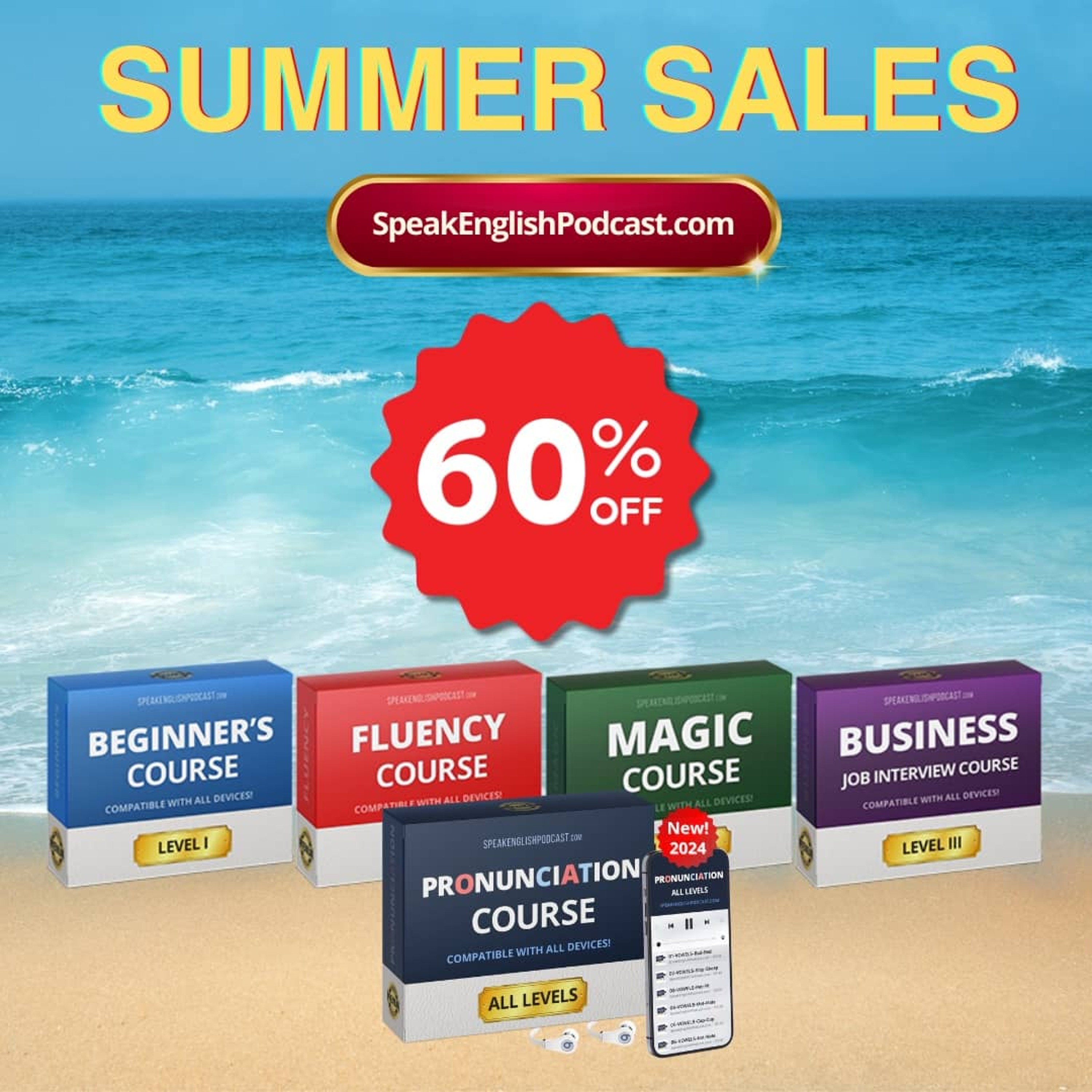
Special Episode - FAQ - Summer Offers 2024 - 60% Off
This week is a bit special. All my have a 60% discount. I’ve received several messages with questions about the courses. I will try to answer some frequently asked questions in this short episode. By the way, you can get the offer at: Hurry up because the offer is only available until this Sunday at midnight.   >> Get my  here: 

#304 Independence Day – July 4th
 >> Get my new course: The  2024! Visit:  and get the course! << The Fourth of July, or Independence Day, marks the U.S. independence from Great Britain on July 4, 1776, with the Declaration of Independence.  Celebrations: Parades: Marching bands, floats, and red, white, and blue attire. Barbecues: Traditional foods like hamburgers and hot dogs. Fireworks: Spectacular displays symbolizing historic battles. Flags: American flags and national colors. Concerts: Live music and family activities. For more episodes, and the full text, visit 

#303 Talking about Coffee in English - Starbucks
 >> Get my new course: The  2024! Visit:  and get the course! << Today, we will learn about a famous coffee company in the USA called Starbucks. Have you ever seen a Starbucks coffee shop? They are all over the world! Let’s discover how Starbucks started and grew to be so popular. What is Starbucks? Starbucks is a company that sells coffee and other drinks. It started in the USA, and now there are Starbucks coffee shops in many countries worldwide. For more episodes, and the full text, visit 

#035 Words in English you are mispronouncing
>> Get my new course: The  Course 2024! Visit  and get the course! << I'll focus on the pronunciation of some words which my students often mispronounce. Later, you'll practice these words with a questions and answers mini story. I'll start by telling you the correct pronunciation, and then I'll use this word in a sentence.   I don't know if you've ever noticed, but when you say a word individually, the pronunciation may sound a little different from when it's in a sentence. For more episodes and the full text, visit   
#163 Different Types of Doctors in English
>> Get my new course: The  Course 2024! Visit  and get the course! << This episode, is going to be interesting because we will talk about doctors in English. And I'll tell you about a surgery I had last week. You'll also improve your English grammar without memorizing any boring rules. Today, I would like to tell you a bit about my experience of having to undergo surgery for the first time.  Although you probably didn’t notice my absence last week, I was in the hospital for a few days after having gallbladder surgery. For more episodes and the full text, visit   

#168 Movie idioms and expressions in English
>> Get my new course: The  Course 2024! Visit  and get the course! << Today, we are going to talk about idioms and specific vocabulary related to movies in English. And with a mini-story, you are going to improve your fluency. I'll tell you a story while asking you many questions that you have to answer right away. It's like talking to another person in English. As I said today, we will look at some specific words and idioms related to movies in English. For more episodes and the full text, visit 

#197 Popular idioms in English
>> Get my new course: The  Course 2024! Visit  and get the course! << Today, let's learn some popular idioms in English. And with a point of view lesson, you will learn grammar in context without memorizing any boring rules. I'll tell you the same story from different grammar points. I can change the tense or the person. And like that, you will learn grammar in context. NO-BRAINER: this is basically an easy decision. It's something that requires little or no mental effort. For more episodes and the full text, visit 

300th Episode Celebration - Seven Years of Speak English Now Podcast
>> Get my new course: The  2024! Visit  and get the course! << Today is a special day because it's our seventh year together!!! This week, we have reached 300 episodes and more than 30 million downloads! Thanks to all of you, we've created a huge family of learners from all around the world. Let me recommend to you my most listened-to episodes:     For more episodes and the full text, visit 
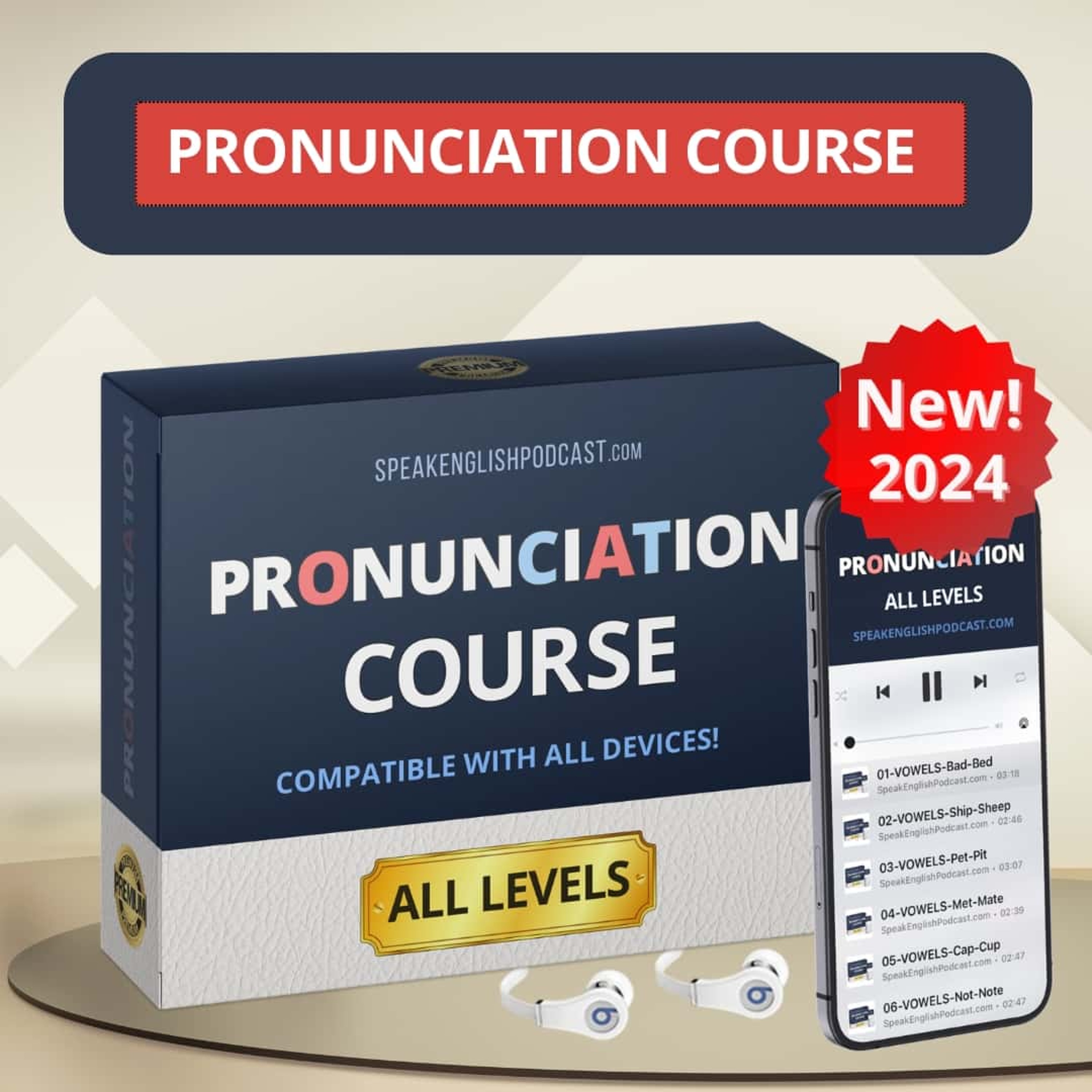
SPECIAL EPISODE: Pronunciation Course 2024
 >> Get my new course: The Course 2024! Visit:  and get the course! << Hi! I am very happy today because I have a huge announcement! A new course is now available to help you with your . And it's for all levels!  You need a proven system that works from day one and focuses on what will help you the most. As a teacher, I've identified the key aspects of pronunciation that students struggle with the most. My is designed to help you achieve quick results by targeting these crucial areas. Work smarter, not harder! Visit and get it now for a special price. 

Spring Offer 2024
Transcript: This week is a bit special because it is Spring Offer, and all my premium courses have a 60% discount. I've received several messages with questions about the courses. I will try to answer some frequently asked questions in this short episode. By the way, you can get the offer at: Hurry up because the offer is only available until this Sunday at midnight. Let's start with the most frequently asked question: 1) What is the difference between the podcast and the premium courses? That's a great question! In the podcast, I talk about very diverse topics to improve your vocabulary. It's a great listening practice.  I also give a small example of a lesson in each podcast episode. It can be a mini-story of questions and answers or a point of view. Because of time limitations, I can barely develop these lessons, yet they allow you to test the method that I use in my premium courses in an easy and fun way. Instead, the premium courses are complete programs designed to improve your spoken English dramatically. These are conversation courses. You start speaking from DAY ONE with the conversation simulator. They are audio lessons that "simulate" conversations. I call them Q&A mini-stories. Unlike the podcast, the premium courses contain hours and hours of questions and answers. Imagine for a moment a podcast episode multiplied by 100. Also, the courses allow you to work much better on grammar aspects such as the plural, singular, all kinds of verb tenses, and certain common expressions of English. All of this unfolds in an interactive way, following one or more stories that provide a rich and entertaining context. For example, the contains more than 8 hours of audio, thousands of questions and answers (mini-stories), and almost 200 pages of transcription text. Of course, there are also many point-of-view lessons that allow you to work very intensely on aspects of grammar. One rule I always follow is to create lessons with complex characters and funny stories with unexpected endings. That way, you'll never forget what you learn best and, of course, it's a lot more fun. Another question: 2) Can I use the premium courses on the iPhone, iPad, Android, and so on? Yes, of course. You can use them without problems. It is important to keep in mind that the courses are not apps. That is, you don't install them. It's much more flexible. The courses consist of mp3 audio and text (PDF). This is much simpler and prevents technical problems. Transferring the content to any device is quite easy. However, when you buy one of the courses, I send you detailed steps to know what to do. In any case, you can contact me by e-mail with any questions. 3) Is there a monthly payment for the premium courses? No, there is no such thing. They are yours for personal use and forever when you buy the courses. 4) How many premium are there, and what is the difference? There are currently four courses. I will describe them briefly: 1) (level 1): This course is for beginners with no knowledge of English. It is a course that works very well, and I am happy with the result because it helps a lot to start with English. In your case, I don't recommend it because if you are a follower of this podcast, you are no longer a beginner. 2) (level 2):  The level of this course is a bit easier than this podcast, but there is almost no difference. This program will help you automate the most common structures when speaking. It consists of 20 units with 20 unique and fun stories. I recommend this course if you're trying to stop mentally translating when you speak English, even with relatively easy expressions.   3) (level 3): This course is very ambitious because it goes one step beyond the Fluency Course. The aim is to practice all the verb tenses in the context of a long and well-developed...
BLACK FRIDAY SPECIAL — FAQ PREMIUM COURSES VS. PODCAST
Hello everyone! I am Georgiana, founder of . My mission is to help you speak English fluently. This week is a bit special because it is Black Friday and all my courses have a 60% discount. I've received several messages with questions about the courses. In this short episode I'm gonna try to answer some frequently asked questions. By the way, you can get the deal at: Hurry up because the offer is only available until this Sunday at 12p.m. Let’s start with the most frequently asked question: What is the difference between the podcast and the courses? That's a great question! In the podcast, I talk about very diverse topics that allow you to improve your vocabulary. This is great listening practice.  In each episode of the podcast, I also give a small example of a lesson. This can be a mini-story of questions and answers or a point of view. Because of time limitations, I can barely develop these lessons, yet they allow you to test the method in an easy and fun way. Besides, it is good practice. Instead, the courses are complete programs designed to improve your spoken English dramatically.  In fact, the courses contain hours and hours of questions and answers. Imagine for a moment a podcast episode but multiplied by 100. Also, the courses allow you to work much better on grammar aspects such as the plural, singular, all kinds of verb tenses, and certain common expressions of English. All this in an integrated way following one or several stories that offer a rich and entertaining context. For example, the contains more than 8 hours of audio with thousands of questions and answers (mini-stories) and almost 200 pages of transcription text. Of course, there are also many points of view lessons that allow you to work very deeply on aspects of grammar.One rule I always follow is to create lessons with complex characters and funny stories, with an unexpected ending. That way you'll never forget what you learn best and, of course, it's a lot more fun.   Another question: Can the courses be used on the iPhone, iPad, Android and so on? Yes, of course. You can use them without problems. An important thing to keep in mind is that the courses are not apps. That is, you don't install them. It's much more flexible. The courses consist of mp3 audio and text (PDF). This is much simpler and prevents technical problems. Transferring the content to any device is quite easy. However, when you buy one of the courses, I send you instructions with detailed steps to know what to do. In any case, you can contact me by e-mail for any questions. Is there a monthly payment for the courses? No, there is no such thing. When you buy the courses they are yours for personal use and forever. How many are there, and what is the difference? There are currently 4 courses. I will describe them briefly: 1) (level1): This course is for beginners with no knowledge of English. It is a course that works very well, and I am happy with the result because it helps a lot to start with English. In your case, I don't recommend it because if you are a follower of this podcast, you are no longer a beginner. 2) (level2):  The level of this course is a bit easier than this podcast, but there is almost no difference. This program will help you automate the most common structures when speaking. It consists of 20 units with 20 unique and fun stories. For example, two penguins who escape from the zoo to surf, a person who wants to learn to be a cook but is a disaster, someone who wants to quit smoking and visits a very strange guru, and so on. I recommend this course if you're trying to stop mentally translating when you speak English, even with relatively easy expressions.  3) (level3): This course is very ambitious because it goes one step beyond the Fluency Course. The aim is to practice all the verb tenses in the context of a long and well-developed story. There is a lot of vocabulary and grammar points are very useful. When you...

Spring Offer 2023
Listen to a new episode of Speak English Now Podcast, your favorite material for practicing your spoken and heard English. You will also learn about lifestyle and culture, language, vocabulary, and how to improve your English more effectively. Transcript: Hi, everyone! I am Georgiana, your English teacher and founder of . My mission is to help you speak English fluently. This week is a bit special because it is Spring Offer and all my premium courses have a 60% discount. I've received several messages with questions about the courses. I will try to answer some frequently asked questions in this short episode. By the way, you can get the offer at: Hurry up because the offer is only available until this Sunday at midnight. Let's start with the most frequently asked question: 1) What is the difference between the podcast and the premium courses? That's a great question! In the podcast, I talk about very diverse topics to improve your vocabulary. It's a great listening practice.  I also give a small example of a lesson in each podcast episode. It can be a mini-story of questions and answers or a point of view. Because of time limitations, I can barely develop these lessons, yet they allow you to test the method that I use in my premium courses in an easy and fun way. Instead, the premium courses are complete programs designed to improve your spoken English dramatically. These are conversation courses. You start speaking from DAY ONE with the conversation simulator. They are audio lessons that "simulate" conversations. I call them Q&A mini-stories. Unlike the podcast, the premium courses contain hours and hours of questions and answers. Imagine for a moment a podcast episode multiplied by 100. Also, the courses allow you to work much better on grammar aspects such as the plural, singular, all kinds of verb tenses, and certain common expressions of English. All of this unfolds in an interactive way, following one or more stories that provide a rich and entertaining context. For example, the contains more than 8 hours of audio, thousands of questions and answers (mini-stories), and almost 200 pages of transcription text. Of course, there are also many point-of-view lessons that allow you to work very intensely on aspects of grammar. One rule I always follow is to create lessons with complex characters and funny stories with unexpected endings. That way, you'll never forget what you learn best and, of course, it's a lot more fun. Another question: 2) Can I use the premium courses on the iPhone, iPad, Android, and so on? Yes, of course. You can use them without problems. It is important to keep in mind that the courses are not apps. That is, you don't install them. It's much more flexible. The courses consist of mp3 audio and text (PDF). This is much simpler and prevents technical problems. Transferring the content to any device is quite easy. However, when you buy one of the courses, I send you detailed steps to know what to do. In any case, you can contact me by e-mail with any questions. 3) Is there a monthly payment for the premium courses? No, there is no such thing. They are yours for personal use and forever when you buy the courses. 4) How many premium are there, and what is the difference?   There are currently four courses. I will describe them briefly: 1) (level 1): This course is for beginners with no knowledge of English. It is a course that works very well, and I am happy with the result because it helps a lot to start with English. In your case, I don't recommend it because if you are a follower of this podcast, you are no longer a beginner. 2) (level 2):  The level of this course is a bit easier than this podcast, but there is almost no difference. This program will help you automate the most common structures when speaking. It consists of...

#174 English Common Phrasal Verbs with TAKE
Listen to a new episode of Speak English Now Podcast, your favorite material for practicing your spoken and heard English. You will also learn about lifestyle and culture, language, vocabulary, and how to improve your English more effectively. Transcript: Hi, I am Georgiana, your English teacher and founder of . And I am here to help you speak English fluently with no grammar and no textbooks. Today we are going to continue learning new phrasal verbs. This time with the verb TAKE. And with a point of view lesson, you will learn grammar in context without memorizing any boring rules. I’ll tell you a story several times from different grammar points. I can change the tense or the person. And like that, you will learn grammar in context. Ok. Let’s start! Most English learners tend to become overly concerned with how to learn phrasal verbs. A phrasal verb is just a verb and a particle. For example, “take after.” There are thousands of phrasal verbs. Sometimes they may be confusing. Also, each phrasal verb can have multiple meanings. Ok, this scenario doesn’t seem very encouraging, and the million-dollar question is: How can you learn all those phrasal verbs? Here’s the good news: You need to learn the most common ones. In other words, what people use most of the time. So, let’s learn some common phrasal verbs with the verb TAKE: 1. Take After somebody To resemble a parent (looks or behavior) “I take after my mother so much that people think we are sisters.” 2. Take something Apart It means to disassemble or to separate the parts of something so that they are not together. “I’m going to have to take apart the remote control to clean it well.” 3. Take something Back This phrasal verb means to say that you don’t really mean what you’ve said or written. “I take it back. You’re not the worst person I’ve ever met. But you are the second-worst person I know.” 4. Take Down It means to separate the pieces of a structure or write something down. Examples: “We’ll have to take down the cupboard if we want to paint the walls.” “I’ve been trying to get back to you, but I took your number down incorrectly.” 5. Take On It means to accept a job, responsibility, or to hire somebody. Examples: “I can’t take on any more responsibilities; I’m too overstressed.” “By the end of the year, we plan to take on 100 more people in our company.” 6. Take over It means to gain control. Examples: “My boss told me to take over the project because my colleague was inefficient.” “When my father retired, my brother took over the business.” 7. Take somebody Up on something This phrasal verb means to accept an offer. Example: “-You’re always welcome to visit us.” “-Thank you, I’ll take you up on that the next time I come to Vienna.” Ok, so today, we have learned some phrasal verbs with the verb take. My advice is to learn phrasal verbs in context and never memorize them, especially because many of them have several meanings. [END OF THE EXTRACT] Get the FULL-TEXT in
#158 How to train your brain to listen more in English
#158 How to train your brain to listen more in English

#122 Global Pandemic What to do during the confinement
Hi everyone! I am Georgiana, founder of . My mission is to help you speak English fluently. Hi! How are you? Given the circumstances, I'm fine. I hope it's the same with you too. As you know, there is currently a pandemic affecting us globally. And in the previous episode, I talked about the recommendations of the authorities. Today I want to make some personal suggestions on how to spend time during confinement. And with a fun mini-story, you can practice your spoken English. You'll see. It's very effective. By answering many questions, you can practice and improve your speech, just like in a real conversation. If you haven't listened to the yet, visit my website speakenglishpodcast.com and search for  Let's start! How to cope with this situation? What to do during the confinement? While staying informed is very important, it is better to take a break from time to time. It's not a good idea to always be watching the news, and especially on social media. In any case, hearing about the pandemic repeatedly can be disturbing. Take care of your body. Although you can't go for a walk like you used to, I suggest you at least stretch a bit. If you're like me and you like pilates or yoga, this would be an excellent time to do some exercises. Also, if you have a stationary bike or a stepper, they will become your best friends. In general, make sure you take care of your body. Eating healthy and doing some exercise will help you think clearly and thus, cope much better with this situation. Communication is more important than ever Call your friends and family, and spend some time talking to them and not just about the pandemic. In the last few weeks, I'm spending more time than ever talking to my friends, even the ones I only talk to at Christmas.  Everybody feels like talking lately. Yesterday I went to take the dog for a short walk, and all my neighbors said hello, and I'm sure some of them weren't even my neighbors, which doesn't usually happen. I'm used to seeing people checking their cell phones, but lately, everyone wants to walk and talk.  Remain positive When faced with significant challenges, especially if they are unexpected, it's very easy to become discouraged.  But I don't recommend it because it will only make you feel overwhelmed.  Whenever there is an obstacle, try to see it as an opportunity to grow. It's a chance to become a stronger human being, to be resilient. Yes. Resilient. It's when you need to recover quickly from difficult conditions.  Avoid any stimulants. In these situations, avoid taking any stimulants. And coffee is one of them. You'll have to drink infusions or water for a while. Keeping yourself hydrated will always help you feel better.  Make jokes and laugh.  Something happens to me when I get nervous. I start giggling, but unintentionally. I know it seems weird, but it's not just because I have a great sense of humor. It turns out that laughter releases hormones that calm you down and allow you to be in control.   Get some rest Take all the time you need to relax and stop thinking about the problems.  I try to get some extra sleep in these circumstances. After I rest, I get my strength back, and I can see things from another perspective. I see things more clearly. Not getting enough sleep will not only damage your health, but you won't be able to think clearly. And it's tough to stay calm when you can't think clearly. If you can't sit still, you can stretch a bit, read a book or watch a movie. Whatever you choose. I hope this lesson will be useful for learning English, above all. I also wanted to help you get through the confinement. Read the transcript here:

#121 Global Pandemic - About the Recommendations
Listen to a new episode of Speak English Now Podcast, your favorite material for practicing your spoken and heard English. You will also learn about lifestyle and culture, language, vocabulary and how to improve your English more effectively. Transcript: Hi everyone! I am Georgiana, founder of . My mission is to help you speak English fluently. Hello, dear students, I hope you're well. I am alright, and I have prepared a special episode for you. - We will practice expressions and vocabulary related to the recommendations of health authorities on how to limit the spread of this global pandemic. We will also practice fluency with a new mini-story by using the term "should," among other structures. As I'm sure you know, a global pandemic is affecting the health of many people and also our daily lives. I had planned to do another topic this week, but I think it's worth talking about this instead so that we can learn and practice relevant vocabulary. I thought it would be a good idea to review the indications and recommendations that health authorities give us to prevent the spread of the virus. So in today's episode, we're going to learn some useful and relevant stuff. Before continuing, and as a disclaimer, the only purpose of the episode is to learn English, not give medical advice. Today's episode is not intended as medical instruction or guidance. For any questions or concerns, please contact a doctor or the health authorities in your country. Okay, now we continue :) Wash your hands I'm sure you've heard many times how important it is to wash your hands patiently. Apparently, you have to spend at least 20 seconds washing your hands. Yeah, I know 20 seconds seems like a lot, but you should do it just in case. We have to wash every single finger and not forget the fingertips. It is especially important to wash regularly and particularly after coughing and sneezing. Soap and water are the most effective. Alcohol-based disinfectant gels can also be used, but it is preferable to use soap instead. Avoid touching your face. I often touch my face without realizing it, and this is not good. We can become infected if we touch our face, especially when we have previously touched a contaminated surface. In particular, try not to touch your eyes, nose, or mouth. Some people have a habit of biting their nails. Please try not to do that. In any case, wash your hands. Cover your mouth. An important aspect when we sneeze or cough is to cover our mouth. A tissue is enough, but if we don't have one, we can cough or sneeze into our sleeve. If we do this in the air, we will be releasing the virus into the same space the others are breathing. Therefore, we have to be cautious. Keep your distance from other people. Maintain a distance of at least 3 feet (0.91 m) from other people. If you or someone else is sneezing or coughing, you should keep even more distance. As a matter of common sense, the less contact we have with other people, the better. Every country is taking similar measures, so we have to respect what the authorities say. Wearing a mask I think wearing a mask is important, but I've seen people walking down the street practically alone and wearing masks. You only need to wear a mask if you are caring for an infected person and if you have a cough or sneeze often. Remember that we have to combine this with the above measures. Ah! And remember to wash your hands before touching the mask. When traveling With everything that is happening, I recommend not to travel. Besides, there are so many controls, and some countries are even closing their borders. If you really need to travel, take some masks and gloves with you in case you need them. And try to cooperate with the police and all the airport staff. These people are probably more tired than you are, so it is best to try to help by following their instructions. When you cook When we handle food, for example, when we prepare it before cooking, it is important to disinfect the...
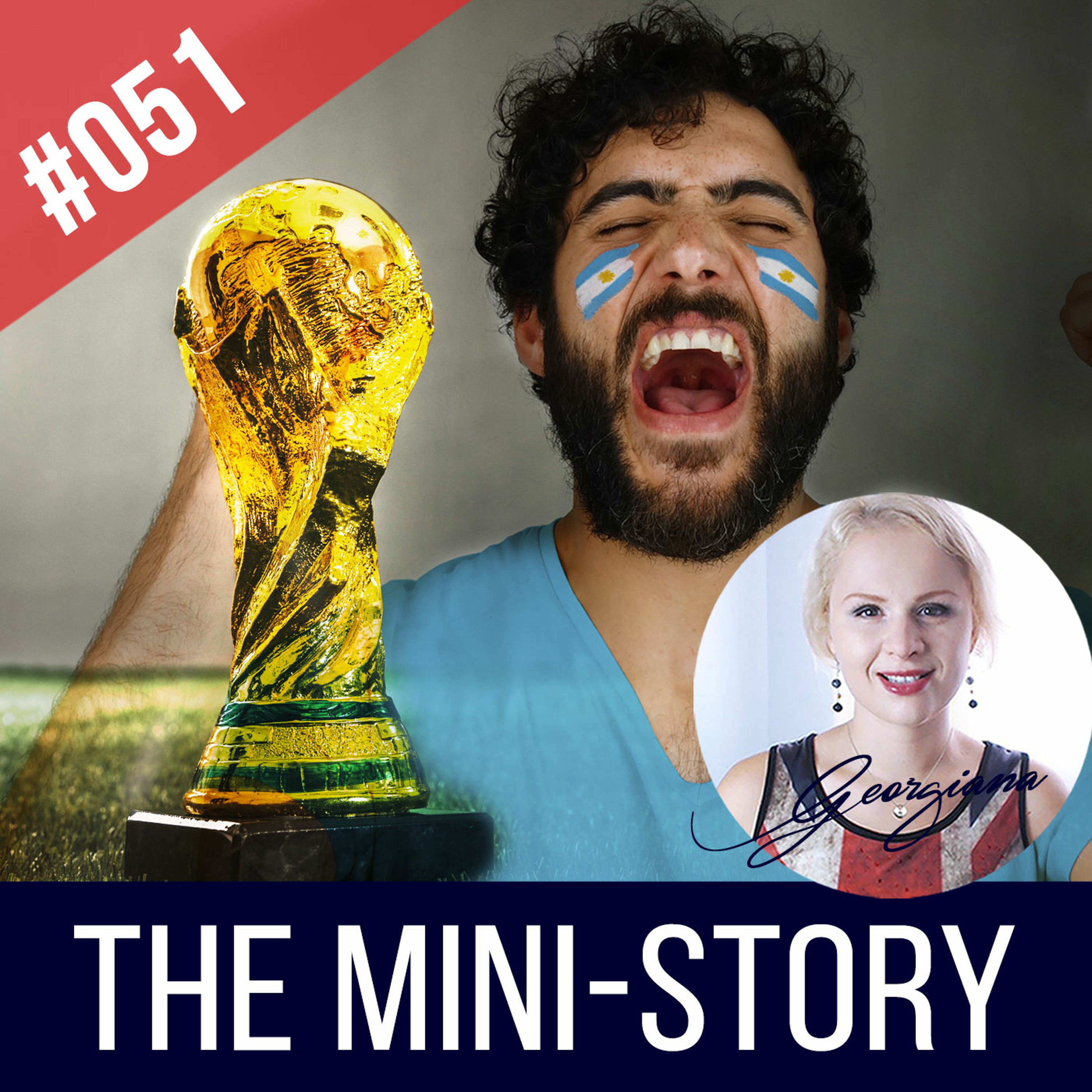
#051-Mini Story - World Cup 2018 English Soccer Lesson American Football
#051-Mini Story - World Cup 2018 English Soccer Lesson American Football

#049 - Ferraris - Mini - Story
#049 - Ferraris - Mini - Story episode 049 How to rent a car in English

Episode 048-Mini-Story-A1-Nona
Episode 048-Mini-Story-A1-Nona from the Speak English Now Podcast

#047 Mini Story English Airport Travel Speaking Practice
#047 Mini Story English Airport Travel Speaking Practice

#046 - Mini Story Captain! Captain!
#046 - Mini Story Captain! Captain!

#045 - English Business Phone Calls Story
#045 - English - Business - Phone Calls POV Listen to the lesson on my website: https://SpeakEnglishPod.com

POV Story - Pronounce Fashion Brands like an American (from episode #041)
POV Story - Pronounce Fashion Brands like an American (from episode #041)

Mr Pete - Speak English Now Podcast (episode 32 story)
Mr Pete - Speak English Now Podcast (episode 32 story) www.SpeakEnglishPod.com

#030 🎄Christmas In The Usa English Story – Speaking Practice
#030 🎄Christmas In The Usa English Story – Speaking Practice by Georgiana

#029 How to Understand People who Speak English with a Strong Accent
#029 How to Understand People who Speak English with a Strong Accent by Georgiana

#028 The Word Bear in English Idioms Phrasal Verbs Story
#028 The Word Bear in English Idioms Phrasal Verbs Story

#027 Why do they call it Black Friday | Black Friday Deals in Europe
#027 Why do they call it Black Friday | Black Friday Deals in Europe by Georgiana

#026 Start Running or Jogging in English Speaking Practice
#026 Start Running or Jogging in English Speaking Practice

#025 Stay Motivated when learning English - Maintain a Positive Attitude
#025 Stay Motivated when learning English - Maintain a Positive Attitude by Georgiana

#013 The English Conditionals with Examples and a Story included
#013 The English Conditionals with Examples and a Story included by Georgiana

#014 Passive Vocabulary - Why is speaking so difficult
#014 Passive Vocabulary - Why is speaking so difficult

#015 Common English Phrasal Verbs Examples Sentences and Story
#015 Common English Phrasal Verbs Examples Sentences and Story

#016 How to improve your English speaking during summer
#016 How to improve your English speaking during summer by Georgiana

#017 Have you Got the Blues The Post-Holiday Blues
#017 Have you Got the Blues The Post-Holiday Blues
#018 The benefits of listening to-English while exercising working out
#018 The benefits of listening to-English while exercising working out by Georgiana
#022 Job Interview in English ESL Get a job in the USA
#022 Job Interview in English ESL Get a job in the USA by Georgiana

#021: Learn English every day. No excuses! No procrastination! The Kaizen way
#021: Learn English every day. No excuses! No procrastination! The Kaizen way

#012 Learning English By Listening In The Background
Hi everyone! I’m Georgiana; founder of SpeakEnglishPodcast.com. My mission is to help YOU speak English fluently. In this episode: I’ll be talking about passive listening, or in other words, listening in the background. After that, we’ll practice conversation skills with the powerful Question & Answer technique. Ok, let’s get started! In the language industry, there’s an appealing approach called the passive listening. This means playing some English in the background while performing other tasks. In theory, you’re learning because the brain is always learning, no matter how. Interesting, huh? You just need to play some English while you’re cleaning, writing, surfing the Internet, etc. Well, although this approach may be appealing to many of you, here’s the bad news: It doesn’t work as a whole system for developing a complete fluency in English. The main drawback is that when we need to learn new content, our brain needs to pay attention, to be active. So, in an ideal world, we would be 100% focused all the time while listening: We’d pay attention to every tiny detail: vocabulary, pronunciation, intonation, etc. (END OF THE EXTRACT). Did you enjoy my podcast? Here’s Your NEXT STEP: Visit: SpeakEnglishPodcast.com/courses

#011 English Phrasal Verbs with the word LOOK
I’m Georgiana; founder of SpeakEnglishPodcast.com. My mission is to help YOU speak English fluently. In this episode: I’ll be discussing some more about the most common phrasal verbs. Today, we’ll take a look at the phrasal verbs created with the word “look.” After that, I will tell you a short story called the Point of View lesson, to help you with grammar and to review the vocabulary you will be learning. Remember, a phrasal verb is just a verb and a particle. For example, “get in.” By the way, I recommend you to check out the previous episodes about phrasal verbs. Remember, you just need to learn the most common phrasal verbs.. Also, instead of learning all the different meanings of each phrasal verb, you just need to learn one or two different meanings, preferably, the most common ones. Ok, let’s get started! We’ll see what we can do with the word “look.” Look after It basically means to take care of somebody. For example: I can’t come with you because I have to look after my brother. My boyfriend always looks after me. Who’s going to look after the children? Look down This one means to think less of someone. Consider someone inferior. In other words, when you think that you’re better than someone. (END OF THE EXTRACT). Did you enjoy my podcast? Here’s Your NEXT STEP: Visit: https://SpeakEnglishPodcast.com/courses

#010 Techniques that make English Listening Fun
Hi everyone! I’m Georgiana; founder of SpeakEnglishPodcast.com. My mission is to help YOU speak English fluently. In this episode: I’m going to give you seven ideas you can use when you perform repeated listening. After that, I’m going to read a Point Of View story. It’ an excellent technique for improving your grammar. Ok, let’s get started with this new episode! As you may know, I always encourage students to listen on a daily basis. Listening is the best way to deeply learn the different sounds, words, and expressions you find in English. It’s how we learn our mother tongue. Also, it’s vital to understand that listening to an audio several times helps you consolidate what you learn. However, many students complain that they get bored. It’s normal. Our brain likes new and fresh content. In other words, we like the novelty. Here are some tricks, which will help you to keep your interest while you repeat the same audio material. Try to guess what the speaker will say next: At first, it may seem difficult, but since you repeat the audio many times, it’s a stimulating game to play. Focus on the pronunciation of each word, especially the words you find more difficult to pronounce. Try to notice the subtleties of each sound. Concentrate on the intonation of each sentence. As opposed to the pronunciation of individual words, here you need to pay attention to the “musicality” of the sentence. The rhythm and the “music” of the phrase. If you are listening to a questions & answer lesson, a technique I use in my courses, try to answer faster. You can also try to give a longer answer. While you listen to the audio, imitate the narrator. Listen to the material and try your best to talk at the same time as the narrator. It may be hard, but it’s fun! This technique is called “shadowing” and requires a lot of concentration. It’s better if you pick an easy material. Try to move while listening. You can walk, run, wash the dishes, etc. Doing a different activity while listening to the same audio adds some variety. Listen with a friend. It’s always more entertaining to share a task and to discuss the main topic with a friend. You will definitely lose track of time. (END OF THE EXTRACT) Did you enjoy my podcast? Here’s Your NEXT STEP: Visit: https://SpeakEnglishPodcast.com/courses

#009 English Certificates
Hi everyone! I’m Georgiana; founder of SpeakEnglishPodcast.com. My mission is to help YOU speak English fluently. In this episode: I will discuss about certificates and real progress in learning English. After that, you can practice your speaking with a Question & Answer story. Ok, let’s get started! As you may know, certificates in English are something important. For example, everybody knows about the Cambridge University Certificates. The First Certificate is probably the most famous one. If you prefer American English, you have the TOFL certificate, which is also quite popular. You’d be amazed about how many students prepare themselves to get one of these certificates. The problem here is people tend to confuse having a certificate with the real level of English they actually have. For example, for someone who has gotten the First Certificate… Can you be totally sure that this person can speak fluently? According to the advertising…of course! That’s what you have paid for, and that’s why you have spent so many hours doing all kinds of boring exercises. (END OF THE EXTRACT). Did you enjoy my podcast? Here’s Your NEXT STEP: Visit: https://SpeakEnglishPodcast.com/courses

#008 English Phrasal Verbs GET
Hi everyone! I’m Georgiana; founder of SpeakEnglishPodcast.com. My mission is to help YOU speak English fluently. In this episode: I’ll be discussing some more about some of the most common phrasal verbs. After that, you’ll be able to practice your grammar skills with an interesting Point of View lesson. Ok, let’s continue with the phrasal verbs. A phrasal verb is just a verb and a particle. For example, “get in”. If you haven’t checked out the first episode about phrasal verbs, please do it. Remember you only need to learn the most frequently used phrasal verbs. Also, instead of learning all the different meanings of each phrasal verb, simply learn one or two common meanings. Ok, let’s get started! Today, we’ll play a bit with “get”. Get along / get on Do you have friends? Then, you’ll probably use this phrasal verb. It means to like each other. For example: I’m surprised how well I get along with my mother-in-law. The older and younger members get along well. I get along very well with foreign people. You can also use “get on” instead of “get along”. It’s exactly the same meaning. For example: I’m surprised how well I get on with my mother-in-law. The older and younger members get on well. I get on very well with foreign people. (END OF THE EXTRACT). Did you enjoy my podcast? Here’s Your NEXT STEP: Visit: www.Courses.SpeakEnglishPod.com

Plateaus As Part Of The Learning Process
I’m Georgiana; founder of SpeakEnglishPodcast.com. My mission is to help YOU speak English fluently. In this episode: I’ll talk about plateaus when learning English. After that, we learn grammar intuitively with a Point of View short lesson. Ok, let’s get started! Today, I am going to talk about a very interesting topic. Plateaus when learning English. Ok, so…what is a plateau? A plateau occurs when you stop your progress despite continuing to do “all the right things”. An interesting expression for this situation is: to hit a plateau. For example: It seems I hit a plateau, because I can’t see any progress with my English, and I’m still studying really hard! More literally, a plateau is a large flat area of land. This definition makes total sense, because if you are walking on a plateau, you are not going up or down. You stay at the same height. Plateaus are very common not only in learning a new language, but in other areas. For example, a very common one: losing weight. Imagine someone who has been following a diet and has lost some weight. But then, after two months, the lost weight stops, and it stops for a certain time. He or she keeps following the diet, but weight is the same. The main problem here is not the diet. It’s just that the body needs some time before starting losing weight again. It has to adapt to the new situation. (END OF THE EXTRACT). Did you enjoy my podcast? Here’s Your NEXT STEP: Visit: www.Courses.SpeakEnglishPod.com

Phrasal Verbs #1
Hi everyone! I’m Georgiana; founder of SpeakEnglishPodcast.com. My mission is to help YOU speak English fluently. In this episode: I’ll be discussing some of the most common phrasal verbs. After, I will tell you a mini-story, using the Question & Answer technique. This mini-story will help you develop your speaking skills. We’ll practice phrasal verbs here. Ok, let’s get started! Most English students tend to get overconcerned about how to learn the phrasal verbs. A phrasal verb is just a verb and a particle. For example, “get in.” There are thousands of phrasal verbs. Sometimes they may be confusing and counterintuitive. Also, each phrasal verb can have multiple meanings. Ok, this scenario doesn’t seem like very encouraging, and the million dollar question is: How can I learn all those phrasal verbs? Here’s the good news: You just need to learn the most common ones. In other words, what people use most of the time. (END OF THE EXTRACT). Did you enjoy my podcast? Here’s Your NEXT STEP: Visit: https://SpeakEnglishPodcast.com/courses

Reading Writing Speaking Listening
Hi everyone! I’m Georgiana; founder of SpeakEnglishPodcast.com. My mission is to help YOU speak English fluently. In this episode: I’m going to talk about the relationship among reading, writing, speaking and listening. After that, I’m going to tell you a Point of View Story. Let’s get started! As a language student, the main activities to learn a new language are: reading, writing, listening and speaking. This is what we naturally do in our mother tongue. One key aspect to keep in mind is that we can categorize these activities as input and output. As you may guess, listening and reading are input activities, and writing and speaking are output activities. In other words, when you’re listening or reading, you are being exposed to the language, and when you’re writing and speaking, you are “producing” the language. The traditional approach tells you that the more you write and speak, the better. That’s why language schools insist on writing a lot and “practicing” your speaking with other students, sometimes in groups. This seems reasonable, but it’s not effective. There’s a lot of research that points out the contrary: Basically, in order to develop your English, you need to do input activities most of the time. (END OF THE EXTRACT) Did you enjoy my podcast? Here’s Your NEXT STEP: Visit: www.Courses.SpeakEnglishPod.com

Toastmasters an excellent to practice your speaking
Hi everyone! I’m Georgiana; founder of SpeakEnglishPodcast.com. My mission is to help YOU speak English fluently. In this episode: I will show you one of the best ways to practice your English in your city. After that, I will read to you a short story to help you with your speaking skills. You’ll see how fun it is to practice with this audio. Ok, let’s get started. Imagine for a moment that I can show you the perfect activity for practicing your English by listening and speaking, meeting interesting people, learning interesting topics…and developing your public speaking skills . All of this in your own city. Sounds interesting huh? Well, if you live in a city, chances are that you can find the perfect place for that. It’s called Toastmasters. (END OF THE EXTRACT) Did you enjoy my podcast? Here’s Your NEXT STEP: Visit: www.Courses.SpeakEnglishPod.com