Sparking Everyday Discipleship
304 episodes — Page 6 of 7

S1 Ep 51Episode 51 - Celebrating Father's Day as a Family
In this episode we explore fun books about dads and Father's Day and some great books for Mom and Dad too. For links and the show transcript, go to https://terriehellardbrown.com/blog/
S1 Ep 50Episode 50-Enjoying Vacation with Our Kids
In this episode we discuss the joys of vacations and staycations and taking hold of those special teachable moments and defining moments that our times together can create. For links and the transcript to this episode, go to https://terriehellardbrown.com/blog/
S1 Ep 49Episode 49-Helping Our Kids Learn to Grow Gardens, Plant Seeds, and Make the World More Beautiful
In this episode we explore some great books about gardens, gardeners, and how to create gardens together with our kids. For a transcript of the show and links, go to https://terriehellardbrown.com/blog/
S1 Ep 48Episode 48-Helping Our Children Honor Our Fallen Soldiers
In this episode we share some great books for helping our kids honor our fallen soldiers, learn more about America, and prepare for Independence Day. For the script and links, please go to my blog at terriehellardbrown.com

S1 Ep 47Episode 47-Enjoying Margaret Wise Brown's Books Together
May 23 is Margaret Wise Brown's birthday. In this episode we look at some of the many great books she wrote that have entertained children for three generations. For the transcript and links go to https://terriehellardbrown.com/blog/

S1 Ep 46Episode 46-Celebrating Asian American Writers
In this episode we discuss several wonderful books for children and parents written by Asian Americans. For links and the show transcript, go to https://terriehellardbrown.com/blog/
S1 Ep 45Episode 45-Celebrating Teacher's Day and Mother's Day with Great Boooks
In this episode we look at some great books about awesome teachers and some fun Mother's Day books. For the transcript and links go to https://terriehellardbrown.com/blog/
S1 Ep 44Episode 44-Having Fun with Nursery Rhymes with Our Younger and Older Kids
In this episode we discuss nursery rhymes, satire, and silly stories. For links and the show transcript, go to https://terriehellardbrown.com/blog/
S1 Ep 43Episode 43-Teaching our Kids to Enjoy Reading and Writing Poetry
In this episode we look at great poetry books, anthologies, and poetry writing activities. For links and transcript, please go to https://terriehellardbrown.com/blog/

S1 Ep 42Episode 42-Building in Independent Learning for Busy Parents and Kids
In this episode we explore books and ideas to give busy parents a break, help our kids develop independent learning, and end the school year successfully. For the transcript and links go to https://terriehellardbrown.com/blog/

S1 Ep 41Episode 41-Fairy Tales and the True Happily Ever After
In this episode we celebrate Hans Christian Anderson's birthday and look at fairytales from around the world. Plus we discuss the true happily ever after we have in Christ. For the transcript and links, go to https://terriehellardbrown.com/blog/

S1 Ep 40Episode 40-Having Fun Celebrating National Crayon Day
In this episode I share some lesson plan ideas and some great books about crayons and colors. For the transcript, links, and files, go to https://terriehellardbrown.com/blog/

S1 Ep 39Episode 39-Helping Our Family Celebrate Easter
In this episode we look at books about Easter for our kids and a couple for parents that will help us celebrate the gift of salvation Jesus gave us through His death and resurrection. For a transcript and links for the episode, go to https://terriehellardbrown.com/blog/

S1 Ep 38Episode 38 - St. Patrick and What He Teaches Us All
In this episode we share books celebrating St. Patrick's Day and Irish Heritage and books that help us in the areas t. Patrick valued most: praying, sharing the Gospel, and Knowing God. For links and a transcript of the episode, go to https://terriehellardbrown.com/blog/

S1 Ep 37Episode 37-Interview with Xochitl Dixon
In this episode we interview author Xochitl Dixon who wrote Different Like Me. To see the transcript and handy links for books and website mentioned in the episode, go to https://terriehellardbrown.com/blog/

S1 Ep 37Episode 37-Interview with Xochitl Dixon
In this episode we interview author Xochitl Dixon who wrote Different Life Me. To see the transcript and handy links for books and website mentioned in the episode, go to https://terriehellardbrown.com/blog/

S1 Ep 36Episode 36: Celebrating Dr. Seuss's Birthday
In this episode we discuss several of Dr. Seuss's books and a few fun ways to use them. For the transcript and links, go to https://terriehellardbrown.com/blog/

S1 Ep 35Episode 35-Race, Relationships, and Reading
In this episode we discuss some great books for celebrating Black History Month, but we also discuss some important books for parents to read to equip themselves for having important conversations about race. On my website terriehellarbrown.com you'll find a transcript for the episode, links for the books discussed, and several links to resources you may want to check out.

S1 Ep 34Episode 34-Preparing for Lent and Easter
In this episode we discuss books to help us prepare for and celebrate Easter, understand Lent, and discuss tips for sharing the Gospel with young children. To access links and read the transcript, please go to my blog at terriehellardbrown.com

S1 Ep 34Episode 34-Preparing for Lent and Easter
In this episode we discuss books to help us prepare for and celebrate Easter, understand Lent, and discuss tips for sharing the Gospel with young children. To access links and read the transcript, please go to my blog at terriehellardbrown.com

S1 Ep 33Episode 33-Teaching Our Kids about Love and Celebrating Valentine's Day
In this episode we look at books about love and enjoy some fun books that celebrate Valentine's Day. We also look at some great books for both parents and children about God's love. To see the transcript and handy links to the books discussed, please go to terriehellardbrown.com

S1 Ep 32Episode 32-100th Day of School and Teaching our Kids the Joy of Words
In this episode we look at books for celebrating the 100th day of school and books that celebrate words. To see the transcript and handy links to the books discussed, please go to terriehellardbrown.com

S1 Ep 31Episode 31-Helping our Kids Develop Critical Thinking and Problem-Solving Skills
In this episode we look at books that help our children understand problem-solving and critical thinking as we celebrate Puzzle Day, Lego Day, and Lewis Carroll's birthday. To see the transcript and handy links to the books discussed, please go to terriehellardbrown.com

S1 Ep 30Episode 30-Becoming Encouraging Friends
In this episode we look at A. A. Milne's Winnie the Pooh books and other books about friendship and best friends. To see the transcript and links to the books discussed, go to https://terriehellardbrown.com/blog/

S1 Ep 29Episode 29-Helping Our Kids to Take a Stand
In this episode we discuss Martin Luther King Jr. and his legacy. We also look at books that help children learn to stand up for others in helpful and creative ways. To see the transcript and links to the books, go to https://terriehellardbrown.com/blog/

S1 Ep 28Episode 28-Using Teachable and Defining Moments
In this episode we look at books that help create conversations leading to defining moments when we can encourage our children to be who God created them to be. For the transcript and links to the books covered in this episode, please go to https://terriehellardbrown.com/blog/

S1 Ep 27Episode 27-Helping Our Kids Embrace our World Family and Missions
In this episode we look at stories about missionaries and other heroes of faith as we end 2020 with a challenge to pray for our brothers and sisters around the world working to carry the Gospel to those who do not yet know Christ. You can find the full manuscript, links to books discussed, and other links at https://terriehellardbrown.com/blog/

S1 Ep 26Episode 26-Helping Our Kids Cope with Grief
In this episode we look at books to help our children when they are grieving and are dealing with difficult emotions. You can find the full manuscript, links to books discussed, and other links at https://terriehellardbrown.com/blog/

S1 Ep 25Episode 25-Helping Our Kids and Ourselves to Find Sleeep and Rest
In this episode, we discuss great bedtime stories to help our kids go to sleep, some excellent resources for parents trying to help their kids sleep through the night, and other resources for parents to take time to rest in God's presence. For details of this episode--books recommended and transcript, go to https://terriehellardbrown.com/blog/

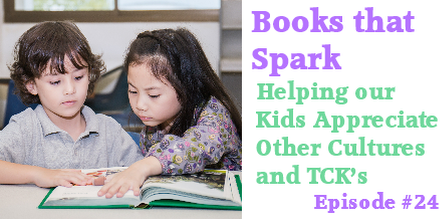
S1 Ep 24Episode 24 - Helping Our Kids Appreciate Other Cultures and TCK's
In this episode we look at several books about other cultures and books for and about TCK's (Third Culture Kids). Books Discussed in This Episode: Transcript: Welcome to "Books that Spark" a podcast for parents and caregivers, celebrating books, that spark imagination, emotion, questions, and discussion, leading to teachable moments with our kids. I have some great books to share with you today. They are so fun to read, and they're about multiculturalism, about traveling, these are good for third culture kids. I'm going to just go through these. These are some of my favorite picture books. One is called Rice and Rocks by Sandra L. Richards illustrated by Megan Kayleigh Sullivan. And this is about a little boy who eats rice and beans all the time. And he calls them rice and rocks. Jasper is his companion, and he is a Congo African gray parrot. It's told in the first person by this little boy, and his friends are coming over. They're serving rice and beans, and he's embarrassed even though that's his traditional Jamaican dish that they do on Sundays. His bird friend teaches him differently. His bird takes him on an adventure, and they go to different countries. And in each country you get introduced to a different bird and you get introduce to a different meal that the people of that country eat, that includes rice and beans or rice and rocks. And so that goes through the whole story and it teaches you all these different recipes, all these different dishes from different countries. And then at the end, his friends all talk about how much they love his rice and rocks because at their house, when they're having a celebration, they eat this kind of food too. And when they're, you know, it reminds them of this, and it reminds them of that. And it just is so much fun to help a child recognize that they can embrace their culture, not be embarrassed by it, and enjoy the foods that are native to their country and culture. And that we're also not that different around the world. We all kind of appreciate the same things, and we celebrate our meals together. Different meals have different meanings. And I mean, every culture is that way in one way or another. It's just a very cute book. Another one (I have several about food) is called How My Parents Learned to Eat by Ina R. Friedman and illustrated by Allen Say. This is about a mom who is Japanese and a dad who is American. Then when they start dating, they don't go to eat anywhere because he doesn't know how to use chopsticks, and she's afraid to try to use a fork and knife. Finally, they talk about it, and they wind up learning to eat each other's way. The man learns to use chopsticks and the girl learns to use a fork and knife, and they learn to appreciate each other's culture. And then of course, they get married and have a little girl named Ina. I love it because, of course, our family learned to use chopsticks. And I think they're way better to use than the forks and knives. But anyway— This other one is a beautiful book called My Breakfast with Jesus, written by Tina Cho, illustrated by Guy Wolek. It is worshiping God around the world. It quotes at the beginning, Deuteronomy 12 seven. There you shall eat before the Lord, your God, and you shall rejoice you and your households in all that you undertake in which the Lord your God has blessed you. And in the first part of the story, it talks about when Jesus met with the disciples at the seashore and he fixed breakfast for them after his crucifixion in John 21, it shows different places around the world and how they have breakfast and how in each situation they have what they eat. But the similarity in every situation is that they pray and thank God for their food. Then it talks about each of the meals that are presented. It doesn't give the actual recipe, but tells you about them and the name of the dish. So if someone wanted to look up how to make them, they could, I'm only sad that they don't have my favorite breakfast in here from Asia, but that's okay. Let me read you a short excerpt from one of the pages. It says, "Coffee diluted with milk warms Mariana's mug in Brazil. Her friends stop by so they can walk to school together. They gulp down ham and cheese with bread and pray together over school. A peppy way to start the day. A breakfast blessing." And then it has a side note. "Some Brazilian children drink coffee, which parents believe help them stay alert throughout the day. Brazil is the largest producer of coffee in the world." And on each page too, as they describe the different breakfasts, it has an adjective, "a peppy way to start the day," "a loving way to start the day," "a sweet way to start the day." And so, I liked that as well, because I love words and language. Another lovely book by Dorena Williamson illustrated by Cornelius Van Wright, and Ying Hwa-Hu is Colorfull (with two L's) Celebrating the Colors God Gave Us. And this one is more a multicultural book about the different colors around us,

S1 Ep 23Episode 23 - Making Meaningful Advent Memories
Keeping Christ at the center of our Christmas celebration can be challenging. Observing Advent can help keep our focus on Christ as well as build memories and family traditions that can make Christmas even more meaningful for our families. Books Discussed in This Episode: Transcript: Welcome to "Books that Spark," a podcast for parents and caregivers, celebrating books that spark imagination, emotion, questions, and discussion, leading to teachable moments with our kids. This has been one of my favorite weeks of the whole year on Thursday. We celebrated Thanksgiving and Sunday was the first day of advent. Today is the 1st of December, and in our house, we're already thinking of all things Christmas. Advent is not a traditional practice in my home church, but advent has always been important to me individually and especially as a mom. It has been important to me that we focus on Christ throughout the Christmas season. Traditions and making memories during this season are especially important to me. And I plan out the season each year, the best I can. When my kids were really little I'd plan when we'd bake cookies and watch movies and shop. And then a few years later, I became the choir director for our church, so the season was also filled with rehearsals and performances. And then I went back to teaching full time and the season got even crazier, especially because some of that time I was teaching in a country that doesn't have a Thanksgiving or Christmas holiday. So we worked all the way through the season and even on Christmas day. Making the holiday special for our family and focusing on worship took a lot of determination. To help our kids focus on others rather than only on what they wanted, we would take them to Toys-R-Us, to shop for their siblings. It was so much fun. My best friend would come with us, so we could divide the kids up more and shop in different parts of the store. It was a great object lesson as they saw all those toys that they wanted but were required to think of what a sibling would want instead. And because our funds were always greatly limited, we would just have each child draw a sibling's name, so they could focus on that one person and we would give them an amount they could spend. And then we would shop. Of course, we also heard about every toy that they wanted to, but it became a fun event we looked forward to each year. It was also fun because we were shopping in an American store. Taipei had two Toys-R-Us stores back then. And so that was always really a treat for us. And one of my kids' favorite parts of celebrating Christmas overseas was working with another ministry that would do a live nativity flash mob sort of thing in several places around Taipei, usually at a mall or other public area. And they would dress up like Roman soldiers, shepherds and wise men, and the group had live animals, and each participant would walk among the crowd of people. The wise man would come in trying to find the newborn King asking where he could be found, and they would speak their native languages, which were not Mandarin. So it added to that sense of mystery to the situation. And soon a crowd would gather to hear what was going on as the missionary playing one of the wise men would share the Christmas story and share the gospel in Mandarin. It was exhausting, but wonderful. And I think I'll share a few pictures in the show notes, just for fun, because it was such a neat memory and such a neat event for our family. We have the tradition in our family on Christmas morning where we have cinnamon rolls and hot chocolate, which is definitely not our normal breakfast at all. And then we read the Christmas story. And after that we open prisons, we watch each person open their gifts. We enjoy seeing their reactions. So we aren't one of those pandemonium-ensuing-at-present-time sort of families. It's a time of really cherishing each gift that is given and enjoying seeing each person enjoy what they receive. And then after we finish the presents, it's time to go to my aunt's house for a family lunch together. Now, when my mom was alive and we happened to be in the Midwest, Christmas was more complicated since my parents were divorced and we would have Christmas Eve breakfast with my mom and stepdad, and my sister's family would join in, and we would open gifts together at mom's house. Then we'd have Christmas Eve evening at my dad's with my sister and her family sharing gifts with Dad and his wife. And then Christmas morning was time for our immediate family. Then Christmas afternoon, we'd drive a couple hours away to my husband's family's Christmas. They always have Christmas lunch and open gifts in the late afternoon together. So that worked out very well. I'm sharing all these things to point out that each family has their rituals or traditions and ways of doing things. And these are the "right" way of doing Christmas in our kids' eyes. Whatever we develop as a tradition in our family becomes

S1 Ep 22Episode 22-Sharing the Legacy of Little House on the Prairie with Our Kids
In this episode we discuss the series of books Little House on the Prairie and several companion products to add to your experience with the series. Books Discussed in This Episode: Transcript: Welcome to "Books that Spark," a podcast for parents and caregivers, celebrating books that spark imagination, emotion, questions, and discussion, leading to teachable moments with our kids. Today. I wanted to talk about one of my favorite sets of books, Little House on the Prairie books. And I know they're very popular with many of you, and this time of year, for some reason, makes me feel like, you know, family gathering around. And it just reminds me of when we would read the Little House books and the family atmosphere throughout the books. And so I thought I would share some great resources that you can use to make this an even more meaningful time together as a family. If you're homeschooling, of course, these are like essential. If you're homeschooling in the United States, if you're homeschooling in Canada, I know most of my Canadian friends actually read Anne of Green Gables like we read Little House on the Prairie here, which I thought was really interesting. And that's another great series of books. In fact, I probably should do an episode on series of books that you can read with your children as a read aloud time as a family, that would probably include, Oh, it would definitely include Little House on the Prairie, Anne of Green Gables, The Boxcar Children, Chronicles of Narnia, and I like The Magic Treehouse. And I know some people don't want magic stuff when they're reading to their kids, but I love The Magic Treehouse series as well. We have it in both Chinese and English. So those are some good series of books for middle elementary through upper elementary even that you could read with your kids. And if you're reading to your children, I think even starting in first grade, most of these would be fascinating to them. First of all, of course, we have to have the series, the Little House on the Prairie series and they have a new set of books that you can get where it's just in two volumes. That would be really nice to have the most common set of Little House books that we would find today written by Laura Ingalls, Wilder and illustrated by Garth Williams. Those are the ones we've had for quite a few years. If your children are still picture book age, you're not quite ready to jump into chapter books together, then I would recommend A Little House Picture Book Treasury, which is Six Stories of Life on the Prairie adapted from Laura Ingles Wilder's books, rewritten by Renee Graef. These are available in one volume for the six stories, and it's a really pretty book. The pictures are inspired by Garth Williams. So they're very similar to the ones that are in the other books. For digging a little deeper into the Little House lifestyle--Annette Whipple, which is this wonderful writer. I was so blessed to get to talk with her at a recent conference. She's very knowledgeable, and she writes a lot of educational books. She has written The Laura Ingalls Wilder Companion: A Chapter-by-Chapter Guide. And it's by Annette Whipple. This is the first book I would recommend if you're going to be teaching the Little House books or you just want to embellish your time of reading together, to dig a little deeper into the culture, to talk with your kids about what it was like to live during that time, and to answer more questions or to try some recipes or crafts that they did. This book is what you need to get. It's got 75 activities in it. It goes chapter by chapter, through all of the Little House series books. It's a great companion to the series. Then there are several books that I recommend if you want to go even further, but if you're only getting one supplemental book, this is the one I would recommend. And that's The Laura Ingalls Wilder Companion: A Chapter-by-Chapter Guide by Annette Whipple. Let me give you an example of what she gives you within this great resource. In Chapter One in the "Dig Deeper" section, it says, "Little House in the Big Woods, which is the first volume in the series takes place in 1871 to 1870 so about 150 years ago. On the opening page Laura Ingalls Wilder wrote that there were no houses near the Ingles' family. Though they couldn't see any homes from their cabin. They did have neighbors. Relatives lived nearby. They could even walk to their houses." So these are bulleted points that just give you a little bit more information. And that goes chapter by chapter through all of the books. It says, "Salting meat preserved it by keeping germs from growing. It also gave the meat extra flavor." And then, "Laura Ingalls Wilder was born seven miles or 11 kilometers Northwest of Pepin, Wisconsin in 1867. Pepin is still a small village today." Then she has a paragraph on butchering time and explains that. And then it goes on to Chapter Two. So it just gives you these little snippets of information th

S1 Ep 21Episode 21-Inspiring Creativity in our Children
In this episode we look at books to inspire creativity, teach about the humanities, teach art skills, and a couple for parents to read to inspire themselves. Books Discussed in This Episode Books to Inspire Creativity in Children: Books with Examples of Great Artwork: Books for Working on Art Skills: Books to Encourage Mom and Dad in the Calling to Creativity: Transcript: Welcome to books that spark a podcast for parents and caregivers, celebrating books, that spark imagination, emotion, questions, and discussion, leading to teachable moments with our kids. Today. I have some great books to share with you. We're going to be talking about creativity. And first I'm going to talk about a few books that can spark the desire to be creative and the encouragement to help our children take that step. That is sometimes a scary step to show their creativity and to enjoy it and to celebrate it. One of my favorite books about this is called The Dot written by Peter H. Reynolds, and Reynolds has written several books about creativity that are really, really good, and also about being yourself and taking a chance and stepping out of your comfort zone to express yourself and to make a difference in the world through your own creativity and your own style of creativity. But this a very sweet book. It's about a little girl named Vashti who doesn't think she can draw. And so her teacher has her draw an orange dot on a piece of paper, and she said, "Sign your name to it." And then her teacher frames that picture and that encourages Vashti to try more and more and more. She winds up making a whole gallery of pictures. The book ends with another child coming up to her and saying, I love your artwork. I wish I could draw. And it says, "Vashti smiled. She handed the boy a blank sheet of paper, show me the boys. Pencil shook as he drew his line, Vashti stared at the boy's squiggle. And then she said, please sign it." We see her passing on the same thing to another child to encourage him to try to be creative. I just, I love the book because it celebrates, even if we think we don't have a whole lot of talent, what we can each do. He has two different three-book collections or boxed sets. One is called The Big Dreams Collection and it includes Happy Dreamer, The Word Collector and Say Something. There's the box set Creatrilogy by Peter Reynolds. That includes the book, The Dot that I just mentioned and a book called Ish, which I just love. And a book called Sky Color. In Ish, it's also about a little boy. Who's drawing pictures and his older brother makes fun of him. And so he stops drawing because he thinks he's draws terribly. He tries and tries and tries and he just keeps walking up the paper and throwing it down. And he notices his little sister comes along, takes his crumpled paper and disappears with it. And he's chasing her down like, "What are you doing? Give me back that picture. You know, it's, it's not good. It's trash." And he goes into her room and she has covered her walls with all of his pictures. And he says, why are you doing this? These aren't any good. He's she's like, that's supposed to be a vase with flowers in it, but it doesn't look like a vase with flowers. And she said, yes, it does. It looks vase-ish. Every picture is something-ish. And so it's like, even though he doesn't feel like it's a perfect drawing, it's elephant-ish. It's, you know, dog-ish. And so that's why the book is called Ish. And it's so cute. And, of course, the pictures are really cute that he's drawing, but it encourages him to keep trying and to keep having fun with his drawings, even if they aren't what he would call perfect. And even though his brother gave him a hard time. Sky Color says, "Marisol was an artist. She loved to draw and paint. And she even had her very own art gallery." And her art gallery is on the refrigerator. "Not all her art hung in a gallery. Much of it she shared with the world. She painted posters to share ideas she believed in." And it shows "save the ocean." "At school Marisol was famous for her creative clothes, her box of art supplies in her belief that everybody was an artist. Yes, Marisol was an artist through and through. So when her teacher told the class, they were going to paint a mural for the library. Marisol couldn't wait to begin the classroom buzzed with the sound of brainstorming. The students talked and sketched together. They made a great big drawing. Then they marched to the library. Marisol shouted, 'I'll paint the sky!' Marisol rummaged through the box of paint but could not find any blue. How am I going to make the sky without blue paint? The bell rang. It was time to put their brushes down for the day. As she climbed aboard the bus, Marisol kept wondering all the way home. She stared out the window. The sun lowered closer to the horizon later at home. Marisol watched the day, turned into night. That night, Marisol settled into a deep dream. She drifted through a sky swirling with colors, the

S1 Ep 20Episode 20 - What's in a Name?
In this episode we discuss helping children appreciate and enjoy their names, others' names, and the names of God. Books Discussed in This Episode: Transcript: Welcome to "Books that Spark" a podcast for parents and caregivers, celebrating books that spark imagination, emotion, questions, and discussion, leading to teachable moments with our kids. Today I'm so excited to share with you some really sweet books about names and how God knows our name and the meaning of names and the importance of our name. The first book is a fun book that I have loved for years. And it's called Mommy Doesn't Know My Name by Suzanne Williams illustrated by Andrew Shachat. So it's a cute book about how we use pet names with our kids. It starts out, "My mommy doesn't know my name. When I wake up in the morning, she comes in to get me. 'Is That my little chickadee?' She says. I'm not a chickadee. I'm Hannah. After I'm dressed, we have breakfast. My cup slips, and I spill orange juice. 'Oh No!' I cry. 'It's Okay, Pumpkin,' says Mommy. 'Accidents Happen to everyone.' Do accidents happen to pumpkins?" And she says, "I'm not a pumpkin. I'm Hannah." And so it goes through the whole book with all these different names that her mom calls her throughout the day. And as she's going to bed that night she has one more time that her mom calls her a little mouse and she says, "I'm not a mouse. I'm Hannah." And she says, "'Yes, I know,' says, mommy. She gives me a hug. 'Your Hannah, my very own happy little, funny little girl.'" And I just love this book. I think it is so cute and such a sweet book to share with our kids. And I think it would cause a lot of giggles and laughter as you share it together. Another very sweet book is called Your Name Is a Song by Jamilah Thompkins-Bigelow. This book deals with the different names that people have, especially from different ethnicities and how sometimes those are hard for us to say and encourages a positive outlook on it--that the name is a song. It's beautiful, and it has its own rhythm and its own meaning. So this little girl takes time to learn people's names. And her mom teaches her instead of being upset about her name and the teacher having trouble pronouncing it, to help the teacher pronounce it correctly. And then also to learn her friend's names and to kind of sing their names because the name is a song. And so it's just a really wonderful book. I really appreciate the message in it to be patient with each other. First of all, when we mispronounce names or don't know quite how to pronounce them and to also encourage children to not be embarrassed by their names if people mispronounce them or tease them about them, but to embrace our names that we've been given and to understand the importance of those names and that they are beautiful. My Chinese name, my mom has always said was it doesn't sound pretty in English, you know, to an English ear. But to any Chinese speaking person, they always say, "Oh, what a beautiful name?" I think that's so interesting because our ears are used to hearing names a certain way, sounds a certain way. And we have to learn to understand in other cultures and in other languages, the names are beautiful to the ears of the people, and we need to help each other learn that everyone's name is beautiful. And then Debbie Anderson has a very cute book: God Knows My Name. And this little book talks about how God knew us before we were born, that he created us and that he's the God of the universe. And yet he knows our name. The illustrations are colorful and cute. And it's just a lovely little book. And there's also a pamphlet that you can get--a pamphlet version of the book, which is nice because you could get a pack of 25, and it shares the gospel in this same way--God knows my name. So in this book it says, "God made everything and God knows everything. God knows me. He even knows my favorite color. What's your favorite color? Surprise. God already knew it. God knows my name. He even knows how many hairs are on my head. Can you count how many hairs are on your head? What is your name?" And it gives scripture to go with each one of these. "Before God made the world, he knew about me. Before I was born, God knew what would happen every day of my life." It's just a cute little book and shares the gospel and how God has known us before we were born. Another book that's really cute about names is Chrysanthemum by Kevin Henkes. And this is a cute story of a little girl who loves her name thinks that it's just perfect until she goes to school, and the children tease her about her name. She goes through a terrible time, and she doesn't think her name is perfect. She thinks it's dreadful. And then her parents talk to her when she gets home, and she likes her name again a little bit, and it goes back and forth. And then finally the music teacher helps the students to understand that her name is great, and all names are great. And the kids decide to take on flower names themsel

S1 Ep 19Episode 19 - Building an Attitude of Gratitude in Our Kids
In this episode we look at books about the history of Thanksgiving, the traditions of today's Thanksgiving, and building an attitude of gratitude in our families. Books Discussed in This Episode Transcript: Welcome to "Books that Spark," a podcast for parents and caregivers celebrating books that spark imagination, emotion, questions, and discussion, leading to teachable moments with our kids. Today, we're going to look at books that go with Thanksgiving. And since this is the beginning of November, I thought we could take time to talk about books of Thanksgiving, so you have time to get them if you want to read them for the Thanksgiving holiday. First, let's look at some great books--picture books and story books--about the history of the American Thanksgiving. I want to share some books with you that I just have loved over the years. I love Thanksgiving. It's my favorite holiday because of the family time we have together and the being thankful, helping our kids to understand the importance of Thanksgiving, of being thankful for what God has provided for us. I think teaching our children to be thankful is one of the most powerful things we can teach them. It helps them to be grateful for what they have and to look at the blessings in their lives, even when going through hard times. And so I think as parents, we really have the responsibility to help them understand the power and the importance of being grateful. And part of that with Thanksgiving is also the history. And I know that some today would rather us change the history or not talk about what happened back then, but history is history, and we learn from history when we teach what history really was all about. I think it's also important to help children see things from another person's perspective, and part of that is understanding that the mindset back then, right or wrong, was what it was. I think sometimes we vilify historical figures because we're judging them from a 21st century perspective. And we have to help our children understand that their attitudes were different. Their understanding was different. I mean, even Mark Twain--his family owned slaves, and it wasn't until he met his wife. From what I understand of the history, he met his wife and she was an abolitionist. She was from Connecticut. She did not agree that slavery was okay. Well, for Mark Twain, he had never even thought about it. It was just a way of life in his family at that time. And in his culture where he grew up and sad and as horrible and evil as it was, he had no other understanding. And so then when he was exposed to this other way of thinking, he started realizing this isn't right. And you see it in his writing of the Adventures of Huckleberry Finn. There's one line, my favorite line in the whole book--I feel like it is the climactic line, the turning point for Huck Finn's understanding--is when he realizes that Jim is a person; he realizes he has pain from missing his family and regrets for the way he treated his daughter. And he sees him for the first time as a human being. And to me, that is so powerful. And we know that Mark Twain changed his viewpoint. He changed his attitude about slavery once he was exposed to the other way of thinking. So what we need to do is when we study history and we see these attitudes that today we find appalling and of course would never want our children to think slavery was okay, or to think that it's okay to go and just take over someone else's land. So when we teach our children, we need to help them understand that we learn from history. We learn from the mistakes of the past; we help our kids to understand the thinking that was prevalent back then, why they did what they did, and then, was it right? Would it be right for us to do that today, and help them to think through these things. We want to raise thinkers. We want to raise people who can reason and debate and think through, and not just accept everything that they're fed at face value. We have a foundation of character traits and biblical teaching of the truth of what is right and wrong. What is good and bad. And we live our lives. According to that, we want to help our children to embrace those values as well. And to understand how to then look at whatever situation they face and understand how to navigate the complexity of life as they live it out. If we just jump on a bandwagon without really examining what the people are teaching and what their foundational ideas are, why they did what they did, the motivation behind what's going on, we wind up just being blind followers who buy into whatever sounds good at the moment. It's a recipe for disaster in many situations. So I think when we're talking about Thanksgiving, we need to help our children have a wider view and understand what was going on at the time and what the thinking was at the time. Okay. So I'll give you a really quick little history lesson. And if you remember your history, the Puritans were the Protestants

S1 Ep 18Episode 18 - Helping Our Children Embrace the Uniqueness of Others
Transcript: Welcome to "Books that Spark," a podcast for parents and caregivers, celebrating books that spark imagination, emotion, questions, and discussion, leading to teachable moments with our kids. Today, I'm going to be talking about sign language, being deaf, and some wonderful books that have to do with this subject. For some reason, this has just been on my heart to talk about. I think my heart and my mind have been thinking a lot about ministry and what we can do with our kids in ministry and how we can help them to have a heart for ministering to others. And I've always loved sign language. My great grandparents were deaf. I did not know them, but because of that, my family has always known a little bit of sign language. So, I've always wanted to learn more, and I've taken some sign language classes and have done a little bit of signing in ministry, but I have loved every minute of it. It has been such a blessing to try to communicate and to try to be a catalyst to help bridge the communication gap. Whether I'm dealing with second language learners or someone who is deaf, I like being that bridge to bridge the gap in communication and getting the word of God into the hands of whomever God brings into my life. This is something that I've just always loved. And I think the language is so beautiful and visual. I love learning that. And, of course, we have found with autism and even with very young children, teaching them sign enables them to communicate easier and earlier in life. So, let's talk a little bit about some really wonderful books. And one is an older book, but it's called I Have a Sister. My Sister Is Deaf, and it's by Jeanne Whitehouse Peterson illustrated by Deborah Kogan Ray. And it's this sister telling about her little sister who is deaf and what her daily experiences are like. But what I love about it is not only does it help a child to understand what it might be like to be deaf and then how to be able to respect and help someone or be sensitive to someone, but to understand what they're going through and what their experience is, which is always a good thing to help our children learn empathy. But it's so beautiful the way she discusses life with her sister. You can sense the love she has for her sister and the joy that she has and happiness that she has in living life with her little sister. For instance, on one of the pages they're sitting at the piano and she says, "My sister can play the piano. She likes to feel the deep rumbling chords, but she will never be able to sing. She cannot hear the tune." I think it just really opens our eyes to what it would be like to not be able to hear. In one picture on one page, she's talking about how she covers her ears and tries to experience what her sister might experience. And this page, I just love. She said, "I understand my sister. My sister understands what I say too. Especially if I speak slowly and move my hands a lot, but it is not only my lips and fingers that my sister watches. I wore my sunglasses yesterday. The frames are very large. The lenses are very black. My sister made me take them off when I spoke. What do my brown eyes say to her brown eyes? That I would really rather play ball than play house? That I just heard our mother call, but I do not want to go in yet?" And so it points out that not only does a deaf person look at our gestures and read our lips or sign language, they look at our expressions and our eyes and they take it all in to communicate. I used to have a deaf friend and if the phone rang, of course, she couldn't hear it. So it would ring. And, all of a sudden, we all just looked over at the phone, and she's like, "Whoa, what's going on." Instead of the conversation being centered around where we were talking with her, everybody naturally just looked toward the phone, and she figured out, "Oh, the phone must be ringing." It's kind of cool how this book breaks that down and clarifies that for a young reader. So that one is called. I Have a Sister. My Sister Is Deaf. Another book I really love is by Alan Say. It's called Silent Days, Silent Dreams, and it's the story about an artist named James Castle who was born deaf, nearly blind and also had autism and possibly dyslexia. His story is fascinating. Because he was born in 1899, he didn't have a lot of help, and he taught himself to draw. Most of his life, he was just ridiculed and abused by the children around him and even some of his family members. But eventually, his genius was understood. I love his story so much because it shows the determination of a person who has that gift of art. And they cannot walk away from it, no matter how many people try to keep them from doing it. It shows the determination of someone with disabilities who's trying to reach the outside world and to make his own world in his case, as kind of a reaction to the world around him. We'll never know exactly how he experienced what he went through because he could not speak, but the

S1 Ep 17Episode 17-Helping Our Kids Know and Share Joy
In this episode we explore the strength found in joy and empowering our kids to bless others by sharing joy and kindness. Remember, we have a drawing for a signed copy of Little Mole's Christmas Gift. To enter, comment on this blog post. Books Discussed in This Episode: Insanity of God Video Sheep Among Wolves IDOP (November 1, 2020) Transcript: Welcome to Books that Spark, a podcast for parents and caregivers, celebrating books that spark imagination, emotion, questions, and discussion, leading to teachable moments with our kids. I'm so glad you joined me today. I'm excited today to talk with you about kindness and joy. I had another episode actually planned for this week, but after interviewing Glenys, I am just overwhelmed by the joy and the kindness that comes through her books. And I feel like with our situation right now, that's something that our kids really need. Not only because it comforts us, but I think we forget that it strengthens us. When we're thinking of helping our children to find joy and to find peace and to be kind to others, we're equipping them to live their lives as a testimony for God in the strength of the Holy spirit, because the fruit of the spirit includes kindness and joy and peace and all of those wonderful attributes that we long for with the very innermost part of our being. And so, I found some really cute books to share with you today about joy and kindness. The first one is actually called Joy, and it's by Corrinne, Averiss and illustrated by Isabelle Follath. It's a very cute story about a little girl who adores her Nanna. Her name is Fern. Her Nanna has been sad and not full of joy. It's like she's lost her joy. So she wants to try to help her Nanna find joy again. And it really exemplifies encouraging one another. And it exemplifies the Philippians 4:8 verse where it says to think on these things. And it's just an adorable little storybook. And she tries to go out into the world and find joy for her grandma so she can share it with her. And she takes all these little things and it's a British written in British English. So we have mum and she takes a tin instead of a can. And so there's several words in there that are the British English, and it's very sweet and quaint, but anyway, she tries to catch joy. She goes to the park because people are always joyful at the park and she's trying to find joy and get it in her little tin. And, of course, it won't go in the tin. So, she's very disappointed and goes home to her Nanna and tells her, "I tried to find joy to give to you." And she tells her about all the incidents of joy that she saw. One is really cute. It's a dad tickling his little kid's feet on the swing and, you know, just adorable. Anyway, her sharing the experiences she had helps Nanna to smile and to be filled with joy. And so, Nanna gives her a big hug and tells her she's her cause for joy. She's the reason she's joyful again. But I love that it shows that a child can make such a difference just by their attitude and by what they share with others and what they say. And so this is a really cute book called Joy. And two adorable books that I just came across a few weeks ago, and they are so cute, is Ordinary Mary. There's two books in the series that I know of. Anyway, there may be more, but Ordinary Mary's Positively Extraordinary Day by Emily Pearson and Fumi Kosaka is the illustrator. She goes through her whole day, and it's just an ordinary day. And it shows how the little things we do, again, the little things we do can make a difference in someone's life and can make a difference in the outlook and of what's going on in the day and in the world. And so I love that. And just about, I think all the books I'm sharing with you today pretty much are books about this, where we can teach our children that what they do matters, even if it's just a small kindness or a small word of encouragement, it can make a difference. And then, not only does it help the other person find joy, it helps nourish our soul and help us find joy. And so, these books are really good for this: Ordinary Mary's Positively Extraordinary Day. And then her other one is Ordinary Mary's Extraordinary Deed. And both of these are beautiful books. And, and I, I just I've. I think both of them were worth getting both are by Emily Pearson and both are illustrated by Fumi Kosaka, but they're just very sweet books and show the power a child has to do and make a difference in the world. Another one is called, Be Kind by Pat Zietlow Miller and illustrated by Jen Hill. It's a very sweet picture book. And this little girl is trying to figure out how to make this other little girl feel better because she spills her grape juice on her dress, and it stains her dress. She's trying to say the right things and do the right things to encourage this little girl and to encourage others. And it's a very sweet little story, and it shows the frustration of sometimes you try to do the right thing and it doesn't come

S1 Ep 16Episode 16 - Single Parent Life with Cassie Rajewich
In today's episode we interview Cassie Rajewich and discuss resources for single parents and their children. Our Guest: Cassie Rajewich Cassie Rajewich is the creator of Unconventional Motherhood: Helping Single Moms Master Messy Places After ten years of mastering her own mess of single motherhood, she ditched the security and comfort of the life she had built, upped and left her residence of Las Vegas, and made the move to Southern California where she began a new adventure, blending a family. She now helps other women navigate the sometimes-difficult journey of single motherhood. You can visit her site at cassierajewich.com or check out her Facebook group The Savvy Christian Single Mom to learn about how she offers her heart and how-to tips to help other single moms master their mess and step into the life God has called them to. Books Recommended in This Episode: Transcript: Terrie: Welcome to "Books that Spark" a podcast for parents and caregivers, celebrating books that spark imagination, emotion, questions, and discussion, leading to teachable moments with our kids. Today, we have a very special guest Cassie Rajewich. Cassie is the creator of Unconventional Motherhood: Helping Single Moms Master Messy Places. After ten years of mastering her own mess of single motherhood, she ditched the security and comfort of the life she had built, upped and left her residence of Las Vegas, and made the move to Southern California where she began a new adventure, blending a family. She now helps other women navigate the sometimes-difficult journey of single motherhood. You can visit her site at cassierajewich.com or check out her Facebook group The Savvy Christian Single Mom to learn about how she offers her heart and how-to tips to help other single moms master their mess and step into the life God has called them to. Cassie. I'm so glad you joined us today. Cassie: Thank you so much, Terrie. Thank you for having me. It's an honor to be here with you. Terrie: Well, tell us first, a little bit about the ministry you have. Cassie: I am a, I serve single moms really is what I do. I serve them in messy places and messy places can look like a lot of things. But I serve them in two ways as a lifestyle strategic and as a certified financial coach, I meet them in those hard places, either transitioning out of divorce. But also just that messiness of single motherhood. So maybe there's a lot of mindset issues or mindset management. Finances definitely are big and boundaries. A lot of times just explaining what those things are and, but just really loving on them and the overwhelm of single motherhood is what I do. Terrie: That's awesome. How can a busy single mom find time to read to her kids? Cassie: Well, I was going to say busy, single moms could do Audible. That's not going to be reading to their children, but you're going to have to be intentional and carve it out. Many times I know a lot of times it's at the end of the day when everyone just wants to wind down, usually after bath, and just say, okay, we're going to take--even if it's setting a timer--we're going to take 20, 15, 30 minutes, pick one, two books, whatever you have capacity for in that moment would be how I did it and how many moms are doing it. Terrie: And how has reading with and to your children been important to you. Cassie: As a single mom for 10 years and with my journey and I had my little one, I would say was started our single mom, my single mom journey with her. She was 18 months. So, you know, really right off the get go and the father was hit and miss. And then we moved out of state. Gosh, we had a lot of topics to cover in that time. So for me it was, it had a lot of ways for me to connect one. It was, I was, I was busy, so for us to bond and just have that space where it's just her and I, because she, they really need that. She really needed that with me. Another way is to address conversations that have our children afraid or worried or overwhelmed, and it's bringing in scenarios that can comfort them. Terrie: Yeah. So what are some books you would recommend reading to children, especially, do you have some specifically for dealing with that transition during divorce or losing a parent? Cassie: I have one little book that is sweet. It's called Two Homes and it's a sweet story, really welcoming the conversation. It's actually called Two Homes. It's by Claire Maurel. And like I said, it's a sweet story, welcoming the conversation of divorce and living in two separate homes. It's really important to understand the dynamic and, and you would know the mother would know, or the father would know, you know, maybe there is not even another parent to, to have to go to. So there may not even be a co-parenting, but this is a sweet little story about a little one that goes back and forth and it just kind of unboxing that conversation of, of living in two homes. Terrie: That's great. What other books would you recommend? Cassie: Lysa TerKeurst has a r

S1 Ep 15Episode 15 - Interview with Author Glenys Nellist and Book Launch
In this episode I interview Glenys Nellist who has published more than 20 board books, picture books, and Bible story books. We celebrate her book launch today for Little Mole's Christmas Gift. Books Recommended in This Episode: Our Guest: Author Glenys Nellist Website: https://www.glenysnellist.com/ Transcript:Terrie: Welcome to "Books that Spark" a podcast for parents and caregivers, celebrating books, that spark imagination, emotion, questions, and discussion, leading to teachable moments with our kids. Today we're so excited to have a special guest Glenys Nellist, who is a writer. She was born and raised in a little village in Northern England. The author of multiple children's books, including the bestselling Twas the Evening of Christmas, The Wonder that Is You, and many popular series, including Love Letters from God, Snuggle Time, Good News, and The Little Mole. Her writing reflects a deep passion for helping children discover joy in the world. Glenys lives in Michigan with her husband David. Glenys, thank you for joining us today. I'm so excited. I've been looking forward to talking with you. Glenys: Terrie, I'm looking forward to our time together too well. Terrie: I'm so excited to share your beautiful books. You have such a heart for children in your writing, and it's like you see the child's heart, that it needs gentle, loving words to nurture and to guide the heart of a child. What inspires you as you write these wonderful books? Glenys: Thank you for those kind words. I've always had a heart for children. I was a teacher in my previous life. I'm from England, and I taught primary school children. And so I've just always had a love for children and a love for reading. But in terms of what inspired me, I don't know. It's kind of hard to say. I mean, in many ways, my work, when we came to the United States. I stepped out of teaching and began pastoring a church alongside my husband. He was the pastor, and I was the Christian education director. So, in many ways, what inspired me to begin was a love for the Bible stories. And I found writing, rewriting those stories for my teachers, I just fell in love with the way there's always a new way to tell the old, old story. That's really what inspired me to start writing my first book, which was a book of Bible stories. And it all kind of started from there. That first book, Love Letters from God, is 18 Bible stories. And each story has a lift the flap love letter from God that you can address personally to the child. It was important to me to include that personal interaction because I think that's what God wants from all of us when we read the Bible or when we sit to pray; God wants that personal connection with us and God as our creator who knows our names. And so the thought of being able to read a book with a child where a letter is personally addressed to them from God, and I know you can't see me, but I'm doing that little, you know, quotation marks--"from God," because obviously I wrote the letters, but a lot of prayer and thought went into those letters because that's not something you do lightly, you know, everything I wrote, I wanted to be sure that God, if God were here, that's what God would be saying to the child. And so, I based all those letters on Bible verses where God was speaking. So, it couldn't be a Bible verse that said, for example, "God will be with you." It has to be, "I will be with you" that way. I tried to just enter God's mind, if you like, and just pray for the Holy Spirit: "What do you want me to say in this letter?" So, yeah, that was my first book. Love Letters from God. And that was published in 2014 and turned into a picture book series. Terrie: And then they also have these in a Bible as well, right? Glenys: Oh yes. That was so exciting for me. After the first book was published, we then brought out these books are published by Zonderkidz. They were my first publisher love letters from God was followed by Christmas Love Letters from God. And then if you're going to do Christmas, you have to do Easter. So, there's an Easter Love Letters from God. There's also one for women and girls in the Bible, which is Love Letters from God Bible Stories for a Girl's Heart. I'm not an author that really thinks that boys and girls need different texts. But the Bible is so--well. It's written by men, and it's full of stories about men and boys, but there are wonderful stories of girls and women hiding sometimes. And so, I just wanted to tease those out. But anyway, the one I think you're referring to somewhere in that process, that publication of the series Zonderkidz came to me, which is always great, you know, when your publisher comes to you, and said, we would like to publish a full edition Bible, but we'd like you to write, I think it was about maybe 30, 40 love letters that we can place at strategic points within the biblical text. That was yeah. Love letters from God Holy Bible. And that was amazing for me. I'm not really the

S1 Ep 14Episode 14 - Helping Our Kids Forgive
In this episode we discuss forgiveness and some great books to help our children learn how to forgive and renew their friendships. Remember our giveaway! Ends September 30. Books Recommended in This Episode: Transcript:Welcome to Books that Spark, a podcast for parents and caregivers, celebrating books, that spark imagination, emotion, questions, and discussion, leading to teachable moments with our kids. We have so many values and lessons. We need to teach our children as they grow. And some important ones are forgiveness and reconciliation. Today. We're going to talk about what that means. And I think too many times in our society, we water down what we're really talking about when we're talking about forgiveness, because forgiveness, doesn't just stop at saying, "I'm sorry." --or especially if we have little children that cross their arms and roll their eyes and say, "I'm sorry," and don't really mean it, but that we're looking for a reconciled relationship where we're making it right, where we're healing, the relationship. And that's what forgiveness is all about. Granted, there are times when either a person does not want forgiveness and we choose to forgive for our own good. And for the good of the situation, there are also times of abuse where forgiveness means not reconciling, but keeping ourselves safe. And that's a whole different ball game. But on the day to day, every day lessons, we're teaching children, usually we're looking for forgivenness and reconciliation. And so I found some really great books that talk about forgiveness in a way that children can understand and grasp the whole concept in a really great way. And one book I really like is called: I Forgive You--Love We Can Hear, Ask For, and Give. I love the title and that's why I also love the book because it makes forgiveness very tangible. They give lots of examples in the book, and it's written by Nicole Lataif, illustrated by Katy. Betz. It's just very, very well written and describes forgiveness in such a way that children can really grasp it and hang onto it. They use a lot of metaphor and analogy in a way that is very clear and gives very clear descriptions of what might need to be forgiven and what forgiveness means. And I love that it acknowledges that forgiving is hard and that sometimes it doesn't come instantaneously. I love that. It's a very authentic well-written book. I recommend it highly. And at the very beginning of the book, it has a section for grownups where it talks about forgiveness. If we are truly forgiving people, it is one of the most difficult things we do as a Christian. It is not always easy. And sometimes we must forgive many, many times, not because the person has wronged us many, many times, hopefully, but because we keep bringing it back up in our own minds and replaying it over and over. We say forgive and forget, but we don't usually forget as much as we would like to. So, that's one of our failings as human beings. This book has very colorful illustrations and the pictures are kind of lifelike; they're cartoonish, but the children can definitely see what's going on in the relationship between two children in the pictures. When it's talking about needing to ask for forgiveness and the illustrations show exactly what they're talking about. For instance, "God forgives you every time. He forgives you if you don't share, if you pull hair, if you throw a fit, if you choose to quit." And so this little boy is pulling this girl's hair. And then on the page, it says, "Wherever you go, whatever you do, you can hear an 'I forgive you.'" And then later on in the book, it says, "You can ask for an 'I forgive you.'" And then it says, "Wherever you go, whatever you do, you can say, 'I forgive you.'" So I like that. It has this little rhyming and sing-song, lyrical quality to it; a lot of the book rhymes, but not all of it. It's memorable. Children can think about needing to say, "I forgive you," needing to ask for forgiveness, for an "I forgive you." And then you go a little bit further and it says, "Wherever you go, whatever you do, make forgiveness part of you." So I love that it's also teaching children that forgiveness is a part of life, that they need to make that a part of life. And then one of my favorite analogies or images that they use says, "Not forgiving is like having an elephant in your heart. He grows and grows. He gets heavier and heavier until, 'Crack!' he breaks your heart." I think that is the most beautiful, concrete description I've ever seen of unforgiveness. And so it really can make it real to a child where they can grasp that. And I think that's exactly how unforgiveness feels. It just grows and grows. And the Bible warns us not to let a root of bitterness grow up in our hearts. And that's what unforgiveness will do. And it becomes the elephant in the room that no one wants to talk about. But the elephant in your heart, that is weighing you down. It says, "When we feed anger, it's like havin

S1 Ep 13Episode 13-Phonics, Phonemes, and Friendship
In this episode we take a fun look at ABC books, phonemes, and discuss ministering through language exchange. We're also doing a giveaway! Three winners will receive my favorite ABC book! Comment on my blog to be entered to win. Each comment or question posted will give you another entry. Deadline for entries is September 30, 2020. Recommended in this episode: Lesson Plan Using Avaricious Aardvarks Transcript:Welcome to "Books that Spark" a podcast for parents and caregivers, celebrating books, that spark imagination, emotion, questions, and discussion leading to teachable moments with our kids. September is literacy month. And so I thought I would go over, especially with school starting, and talk about some of my favorite alphabet books. Now, some I've talked about in other episodes, such as the P Is for Pterodactyl book: The Worst Alphabet Book Ever written by Raj Halder and Chris Carpenter; illustrated by Maria Tina Beddia. And of course, in that we're talking about all the words that have silent letters in them. And so it's the letters that are at the beginning of words that do not make a sound. And I think it's a great book for your older students; for the younger students who are strong readers and who are interested in words, that one would be a good one. Another one I've mentioned before is A Is for Salad, which is written and illustrated by Mike Lester. And in this one, the picture shows something that relates to the letter shown, but the words don't match. A is for salad, shows an alligator eating a salad. So of course the A is actually for alligator. And so this one is good for the children who already know their alphabet and are wanting to have some fun with that. Another one is called Z Is for Moose. It's by Kelly Bingham and illustrated by Paul Zelinsky. And it is such a cute book and tells a story. This moose, he wants to be in the alphabet book too soon. He gets on the wrong page. And then when they finally get to M, they decide to go with mouse instead of moose. And so he's crying, and it's just, it's really cute. So, that's another fun one. And then one of my favorites--it's kind of an older book--is called Avaricious Aardvarks and Other Alphabet Tongue Twisters by Sandy Sheppard illustrated by Joel Bower. It's an A-to-Zany Look at God's Creatures. It's a really cute little book, and I love it for the alliteration. It's all about animals, and every page is a tongue twister to have fun with language and with the alphabet. For instance, it says, "Avaricious aardvarks antagonize anxious ants," "Big Brown baboons buy bananas by the bunch." So of course, this is not going to be your A is for Apple, B is for boy, C is for cat type of book. This is going to be for a little bit older child, and it's a lot of fun. And especially if you have them practice saying these tongue twisters and learn them as tongue twisters and see how fast they can say them or how fast they can read the page. Then it can be a lot of fun. If you're working with ESL students, then this is even more fun because tongue twisters are so hard when you're learning a language. I used to try to learn Chinese tongue twisters. Oh my goodness. Those are so hard because the tongue twisting is partially the tone. It may have the same word in the tongue twister over and over and over like ma ma ma ma ma, you know, and you're just changing the tones. There's one about teachers and lions, and it's crazy. But anyway, the C for this one is "Creeping, crawling crocodiles, constantly create concern" or "Dehydrated dromedaries don't drink daintily." And so these words are going to be a little more involved. If you were using this book to teach language, you could also use it because in each one you have adverbs adjectives, a noun, and a verb. So each one is a sentence, for instance, "Friendly frogs, frolic friskily for fun." So you have "friendly," which is your adjective; "frogs," which is your noun; "frolic" is your verb, "friskily" is your adverb; and "for fun" would be your prepositional phrase. In this one, you can teach alliteration, you can teach grammar for different words, what they are, the noun, verb, adjective adverb, plus you're teaching pronunciation and fun with language with your tongue twisters. And so in they're all animals in this book that they talk about. And it starts out with a little poem in the front. It says, "Curious beasts from a to Z, fill the earth, the sky, the sea, they jump and fly and swim and crawl. God our Father made them all." So I like that. This book is not overtly Christian in the sense that every page talks about God, but at least it starts that way. If you're not a believer and you don't want to talk about God, this is still a great book because of all the ways you can use it to teach grammar, to teach English pronunciation and to have fun with alliteration. Plus the words are big enough that you can also pull out a whole vocabulary list from this one book to teach your kids to expand their vocabulary

S1 Ep 12Episode 12-Jennifer Grant Interview and Book Launch
In this episode I interview author Jennifer Grant, and we talk about her three children's books and her five books for adults. We also talk about sparking spiritual curiosity through the books we read with our children. Thursday her newest book A Little Blue Bottle launches. Be sure to check it out! Books recommended in this episode: Our guest today: Jennifer Grant http://www.jennifergrant.com/ Transcript:Terrie: Welcome to Books that Spark, a podcast for parents and caregivers where we review books that spark imagination, emotion, questions, and conversations leading to teachable moments with our kids. Thank you for joining us today. I'm excited to welcome our guest, author Jennifer Grant. Jennifer is the author of books for adults and children's picture books. Her book Maybe God Is Like That Too won a gold medal from the Moonbeam Spirit Awards for excellence in children's literature and was named a book of the year finalist in the Forword Indies awards. Her second picture book, Maybe I Can Love My Neighbor Too, has been named a Junior Library Guild official gold standard selection. Her third book for children, A Little Blue Bottle, launches tomorrow and is now available for purchase from your favorite bookseller. Jennifer has also written for publications including Woman's Day, Chicago Parent, Patheos, and her.meneutics. For more than a decade, she wrote features, restaurant profiles, and general interest columns for Sun-Times Media newspapers. She also was a health and family columnist for the Chicago Tribune. Thank you so much for being here on the program today, Jennifer, and for letting us be a part of your book launch today. Jennifer: Well, you're welcome. I'm happy to talk with you today. Okay. Terrie: First of all, we have to talk about your slogan that you use on your flyers and has kind of been your vision for the ministry that God's given you. It says, "Picture books, that spark spiritual curiosity. And I love that. And especially because of the podcast that we do called Books that Spark; it's like we're on the same wavelength. Jennifer: Yeah. I'll tell you kind of how sort of how I came up with that little tagline. When I was raising my own kids who are now 18, 20, 22 and 24, I loved reading them books, and I read them books all the time. And I also though found that some of the books that were written from a Christian context were not their favorite books. And I really wanted them to have engaging and wonderful Christian books, but unfortunately some of them just felt really preachy. And of course, as we know, kids spend a lot of time being instructed not to do this and to do this. And they get a lot of schooling and all of that. And so, books that were presenting ideas of God, but also had this sort of, you know, slap you on the wrist sort of tone were not books that they really connected with. And so when I started a few years ago, turning my attention toward really developing my skills as a writer for children, I thought, "Oh, it would be such a privilege to write Christian books for kids that they actually were really engaged with and that they wanted to read it again and again, and that would invite them to pose their own questions about who God is or about how to be a person who's in tune with their spirit" and so on. And so that little tagline that I came up with was just the books that I write that have spiritual content, I hope will spark spiritual curiosity and get them in conversation with God and with themselves about God's creation or how they see God in the world and help them use their imaginations to kind of connect with God in that way. Terrie: That's wonderful. Sometimes when I'm writing a story, the first time I write it, I feel like, "Oh my goodness, this is coming across as so preachy." And I go back through and totally redo it. Because it's the same thing, I want our kids to delight in God and his word and how awesome he is. You have two picture books out already that I just love. Would you like to talk about those first? And then we'll move to the new one that's coming out tomorrow. Tell us about the Maybe God Is Like That Too. Jennifer: That was my first one for kids, Maybe God Is Like That Too. And basically, the way that came about was that I had been doing some kind of editing and writing work for a publisher already and had not published my own book with them. And apparently in a, probably an editorial meeting or one of their meetings, they decided that they thought it would be great to have a new children's book about the fruit of the spirit. And so, at that point, I'd already done a few projects and contributed to anthologies that they had. And they came to me and said, would you be willing to write anything you want, any kind of story, but that kind of delved into the fruit of the spirit and what those verses mean. And I was so excited. I felt really honored to have that opportunity. And so, I kind of started that process by looking at what other books about the

S1 Ep 11Episode 11: Grandparents
In this episode we look at books for Grandparents and picture books and board books about Grandparents. This Sunday is Grandparents Day, so we're celebrating! Books recommended in this episode: Some Other Books in the Grandparenting Matters Series: Christian Grandparenting Network Christian Grandparenting Network Facebook Page Transcript: Welcome to books that spark a podcast for parents and caregivers, celebrating books, that spark imagination, emotion, questions, and discussion, leading to teachable moments with our kids. And today I will add, and with our grandkids, this coming Sunday is Grandparents Day, and so today's episode is dedicated to grandparents and helping them to disciple their grandkids and to leave a legacy of faith for their grandkids. I have a bunch of books to cover today. I don't know if we're going to get through them all, but we will do our best. One of the first books, and it's actually, there's a set of books written by Josh Mulvihill, and they're all about grandparenting and how we can disciple the next generation and leave a legacy of faith. The first one I want to talk about is called Discipling Your Grandchildren from the Grandparenting Matters Series. And it's Great Ideas to Help Them Know, Love, and Serve God. They use the scripture Deuteronomy 6:1-9. It says, "The most common passage of scripture utilized for family discipleship is Deuteronomy 6:4-9. The Christian community often limits the application of Deuteronomy 6 to parents, but based on the context of Deuteronomy 6:1-2, it has a broader application that includes grandparents. "Moses Gave the community a charge to love the Lord and diligently teach young people. 'The Commands of God,' Moses States, 'the commands of God are for you and your son and your son's son.' Deuteronomy 6:1-2. The reference to son's son means that Deuteronomy 6:4-9 is not only for parents, but also for grandparents. So from a biblical perspective, grandparents have a critical role with the next generation that is centered around the transmission of faith." So, I love that because those are the key verses behind me starting this whole podcast. And even though I'm not yet a grandparent, I only have two grand dogs at the moment, I look forward to being a discipling grandparent someday. The other thing they say here is, and this is quoting, "Deuteronomy 6 helps us remember that discipleship is not one more thing to add to an already busy schedule. Discipleship is not a separate activity we do with a child. It is integrated into all of life. Discipleship can happen while playing catch, cooking dinner, watching a movie, driving in the car, reading the Bible, or working in the garden. According to Deuteronomy 6:7, the following portions of each day present great opportunities to disciple children: mealtime--when you sit in your house, travel time--when you walk by the way, bedtime--when you lie down, morning time--when you rise. Discipleship is what we do as we go through our day. The biblical pattern is for the truth of the Bible to be transferred through everyday activities. When we get ready for bed, eat a meal together, ride in the car, fold laundry together, engage in late night talks, or have fun together. Grandparents who think that they compartmentalize life by assigning a certain number of hours per week to spend on grandparenting have a philosophy that is contrary to the spirit of Deuteronomy 6. It is also a recipe to become a distant or disengaged grandparent. Most Christian grandparents I've met want to make any eternal difference in the lives of their children and grandchildren. The Bible tells us how to do that." And so that's the premise for all of these books that he's written and where we begin. He says, "The biblical method to disciple children--I explore eight biblical methods of discipleship for grandparents." And these work for parents and grandparents. But I thought this was very good. So the eight methods, biblical methods are "asking questions, blessing (a spoken blessing is an opportunity for a grandparent to share his or her deep affection and desired future for a grandchild. A blessing is valuable because it creates a time and way to communicate affection and affirmation scripturally. We see blessings modeled by God as a common practice in the old Testament and a repeated pattern of scripture), intentional meals, prayer, communicating wisdom, reading, and discussing the Bible, telling God's stories, and sharing the gospel." So these are biblical ways of naturally discipling and sharing our faith with our children and grandchildren. What I love about these books that he's written, the introduction is so full of information and everything he writes is in a very conversational style. It's very easy to understand, laid out very clearly and just makes it very doable. So I really love these books. I haven't read all of the books in the series, but I have looked at this one, Discipling Your Grandchildren. Another one I've looked at o

S1 Ep 10Bonus Episode 10 - Exploring Study Bibles for Your Older Kids
bonusIn this BONUS episode we explore study Bibles for older children and adults with Pastor Dave Brown. Books Discussed in This Episode: Transcript: Terrie: Welcome to Books to Spark, a podcast for parents and caregivers, celebrating books that spark imagination, emotion, questions, and discussion, leading to teachable moments with our kids. I'd like to introduce you to our guest today. His name is Pastor Dave Brown. He is my husband, and he has been a pastor in the ministry for over 35 years, 15 of those years, he was a missionary pastor in Taipei, Taiwan. He has a website called Finding God and speaks regularly about prayer, our search for God, and seeking after God's heart with all of our hearts. We're going to be talking about study Bibles today. As your children get older, you may want to get them a really good study Bible. We have several that we like, and we have four kids and got them all different study Bibles. And so, we have a lot to share with you today about Bible resources and study Bibles. Let's just dive right in. What is your favorite study Bible? Dave: Actually, my favorite study Bible is the Life Application Study Bible. And I like it because I can access it on my phone or my iPad through Tecarta Bible. I'm able to access that and I have access to just about everything they've got, which I love. And the reason I like it is because you have your scripture text in the translation. New Living Translation is what the standard Life Application comes in. And the other thing I like about it is the resources are always there right around the place that you're reading. So when you're reading about a particular place, you know, maybe the first missionary journey of Paul you'll have a map that actually shows that missionary journey right there, where you're reading, instead of having to dig to the back of the, of the book to find the map, you actually have it right where you need it. And so, I love that and they, they even have that same function in the online version or the cell phone version. Should you decide to go that route? So that's my favorite. Terrie: Yeah. I liked that one too, because they also have a timeline, and I'm always needing a timeline to keep track of the order of the history of things. And, you know, the Jewish Bible was not really linear. And so, it helps me to see a timeline and keep all the stories in the right chronological order in my mind. And then the other thing I like about the Life Application Study Bible is it has character studies of the different characters in the Bible and talks about their strong qualities and their weaknesses, and the synopsis of each book is also really good in the Life Application Bible. And, of course, the whole point of the Life Application Study Bible is life application, to challenge our kids and ourselves as we're being discipled and discipling to apply the word of God to our lives day by day. That's what we're after anyway. So, I think, practically speaking, the New Living Translation is easy to understand. It's easy to teach, it's easy to learn. And then you have the life application part of that, as well as a lot of background information, the maps, the timeline, the character studies, and also they often put in parallel scriptures and Old Testament compared to New Testament on the same subject and stuff like that. It's really a beneficial study Bible. I really like it too. My other favorite one is the Master Study Bible, and I have used it so much that mine has fallen apart. The cover is no longer with us, but the Master Study Bible is typically the New American Standard Bible. And so, I do like that. Like I said before, I like to do my word studies in the New American Standard, but it has a Bible Encyclopedia as part of the study Bible. And so that's really awesome when you first start studying the Bible to have a concordance and an encyclopedia right there with your Bible where you can go and look up words and try to understand what you're reading and what the story is all about is just excellent. And I first got this when I very first started discipling other people. My mom bought this for me, and I have just used it and worn it out like crazy, but it's an excellent one for your high school and older kids. I think the Master Study Bible is phenomenal. Dave: I'd like to also mention my other favorite, which, and Terrie mentioned the Master Study Bible. This is a pretty old study Bible. This is one of the study Bibles that was popular maybe in the 1970s and 1980s. And another one that was really popular back then was the Thompson Chain Reference Bible. And I had one of those. I still do have it. It's in my office. And I absolutely love it. What I loved about that is it, it has just umpteen number of resources. You know, some of its archaeological resources, they have character studies and word studies and all of these different things. When you pick up the Thompson Chain Reference Bible, half of the Bible is all these other resources, wh

S1 Ep 9Episode 9 - Finding the Best Bible for Your Kids
In this episode we explore different Bible translations and which ones are best for children at different ages. Pastor Dave Brown is our guest on this episode. Books discussed in this episode: Our favorite Bible for children over all is the ERV (Easy-to-Read Version) of the Bible. Second choice for children is NLT (New Living Translation) and, third is ICB (International Children's Version). Transcript: Terrie: Welcome to books, the spark, a podcast for parents and caregivers, celebrating books, that spark imagination, emotion, questions, and discussion, leading to teachable moments with our kids. I'd like to introduce you to our guest today. His name is pastor Dave Brown. He is my husband, and he has been a pastor in the ministry for over 35 years, 15 of those years, he was a missionary pastor in Taipei, Taiwan. He has a website called finding God and speaks regularly about prayer, our search for God and seeking after God's heart. With all of our hearts. I asked him to join me today because we're going to be talking about what is the best Bible to use with your kids. And we're going to be discussing the different types of Bibles and what's best for each age group. Welcome Dave. First. I have three points that I want to share personally. When choosing a Bible, when I became a Christian, I was seven years old and my mom's best friend gave me a Bible. Of course, it was King James version because that's really all we had back then. I would try to read it as I got a little older, I would try to read it, and I didn't understand any of it. And so, I prayed and asked God to help me understand what I was reading, and the very next day when I got up and read my Bible, all of the sudden I understood it. So the first thing I want to mention is we don't want to discount prayer when we're using the Bible with our kids, the Holy Spirit can help them understand what they're reading and can make the Bible come alive to them and open up God's word to them. So that part is, is imperative that we pray first and let the Holy Spirit work. But I think then we can choose wisely and make the best choices for our kids. The second point I want to make is the Bible definitely has some PG and even R-rated sections. How would you suggest handling that with your kids? Dave: Well, that's a good question. I keep thinking about how VeggieTales did it, if you notice they dealt with some of those subjects and they kind of told the story without necessarily sharing the PG or R-rated content while still managing to get the point across. And so, I thought that was very well done. And I think having the right translation can help there are children's translations that do that. Terrie: Yes, there are in some don't talk about, they just talk about how well, especially with Bible story books, Bible story books, sometimes talk about how Adam and Eve had a baby and they don't talk about how Adam and Eve got the baby. And then there's others that talk about them having relations or whatever. So, so you can pick and choose and choose wisely for the age of your child. The third thing is: Please get a translation and not a paraphrase. A paraphrase is almost like having a commentary or a storybook. It's not the real Bible. It's not the full translation and they're fun to read. Sometimes I enjoy reading the message sometimes, but I wouldn't use it as a gift for a child or an adult. And I wouldn't certainly use it for Bible study. When you have a paraphrase, it's limited in its scope. It's related to what the person interpreted it as. Do you have any comments on that? Dave: It is it is exactly that probably the most famous paraphrase would be the living Bible. And the living Bible was written by a man who wanted to give a Bible to his daughter that he thought she could understand. And so basically, he went verse by verse and then interpreted it. A paraphrase is good for reading, but it's not. If you're wanting to study the Bible, it's not the best way to go. Terrie: So, I want to go over some of the main and most respected translations that are available. And we're just dealing with the English Bible today. If you speak a different language and have questions about that, please post a comment and we'll be happy to try to answer that question for you. We know about Spanish and Chinese Bibles. We don't know about all the others, but we have experience with Spanish and Chinese, but we're just going to talk about the English translations today. And of course, the most famous English translation is probably the King James version. What do you think of the King James version? Dave: The King James version, two issues I have with the King James one is that it was written in English. That's 400 years old or older, and they spoke different back then. It was wonderful for that time. But it's not how we understand English today. And for the average person, especially a young child, who's trying to understand God's word. It's not the best choice because the language pos

S1 Ep 8Episode 8 - Bible Story Books for All Ages
In this episode my husband Pastor Dave Brown and I discuss choosing Bible Story Books. Books Recommended in This Episode: Transcript: Terrie: Welcome to Books that Spark a podcast for parents and caregivers, celebrating books, that spark imagination, emotion, questions, and discussion, leading to teachable moments with our kids. I'd like to introduce you to our guest today. His name is pastor Dave Brown. He is my husband, and he has been a pastor in the ministry for over 35 years, 15 of those years, he was a missionary pastor in Taipei, Taiwan. He has a website called Finding God and speaks regularly about prayer, our search for God, and seeking after God's heart with all of our hearts. And we're going to talk to you today about Bible story books for your kids. Dave, thank you for joining us today. Dave: Thank you. Terrie: When we're looking for Bible storybooks for our kids, there are about five things that I consider. We want to check the publisher or the source. Some of the publishers I highly recommend for Bible storybooks are B and H Kids, which is a part of Lifeway, David C. Cook, Zondervan or Zonderkidz, and Beaming Books. Those are four good resources. Check that the stories are true to the Bible that they stick with, what the Bible says, and don't take too many liberties or a poetic license, and you can do that by looking at the pictures as well. And that brings me to number three— Make sure the pictures are pretty and are interesting and are going to keep a child's attention because the little kids are going to look at that book over and over again because of the pictures. Think of the developmental age of your child. That's always the case with any book we buy, but we also need to consider that with our Bible storybooks. And you need to think about whether you want them to read it by themselves or with you. And so you think of those kinds of things. And that goes to number five— Consider the size and shape of the book. If you're going to be reading it together as a family or reading it before bedtime together, then you want possibly to have a bigger book that you can share. Some of the Bible books are bigger in size than others are like a paperback novel and are small. And so they're just for someone who's reading on their, then the last one is-- The educational element. Do you want one that has questions for discussion at the end of the story? Do you want extra facts added in sidebars or bubbles or whatever to make it more fun? Do you want it to be very straightforward? A very simple five minute devotional type of one to two pages, long story. So, look at the educational elements, look at the way it's formatted to see if it fits your needs exactly. First, I want to ask you why is it important for us to read Bible stories? Dave: Well, Bible story is, especially when you're really young help capture your imagination. And I remember as a child, you know, my grandmother used to read Bible stories to me and it stuck with me and my parents always had a Bible story book in my bookshelf. So on rainy days, that was a book that I commonly pulled out and led to read stories about David and Goliath and Daniel and the lion's den and many others that let, I just loved reading about and that spoke about God. So, they're really good for little kids who can't sit down and actually read through a Bible and get something every time. Definitely a good way to start. Terrie: I know you were not raised in technically a Christian home. So how did having that Bible story book affect your coming to Christ? Dave: Even though I grew up in a home where we didn't go to church and we weren't Christians, my parents would have told me that we were Christians and we went to church once a year. We were one of those kinds of people. So there was always this essence that we believed in God, but we didn't know anything about him. And you know, reading the Bible stories helped me to actually know something about the Bible in a way that I was able to sit down and actually have a motivation to read something. You know, we as kill it as kids, we love reading stories of heroes and people who defied the odds and different things like that. Like David and Daniel and others, Samson, and, you know, those kinds of stories captured my attention and I loved reading them. And they were written in such a way that, you know, that it was, it was in a story format. So I absolutely enjoyed that. And I spent most of my life reading those and I believe God used those moments for the time when I finally did come to Christ to kind of give a foundation and push me in the right direction, because I had that basis of knowing these stories and these you know, these events that actually happened in history. Terrie: Yeah, the same for me, my grandfather, well, I was raised in a Christian home. My dad was a deacon, and we went to church every Sunday from the time I was born. But my grandfather had a whole set of records that told Bible stories and it had sound

S1 Ep 7Episode #7 - Learning to Laugh and Play through Books
In this episode we take a break from the seriousness of life and laugh at some fun and humorous books. "A cheerful heart is good medicine, but a broken spirit saps a person's strength." (Proverbs 17:22, NLT) Books recommended in this episode: Transcript:Welcome to Books that Spark, a podcast for parents and caregivers where we review books that spark imagination, emotion, questions, and conversations leading to teachable moments with our kids. Today, with all the seriousness of our times and the stress people are under with school changes, illness, finances, and the whole political arena, I want to talk about the importance of laughter and play for our children. We are very blessed in the kid lit marketplace to have some great books that can make us laugh together. The Bible tells us in Proverbs 17:22, "A cheerful heart is good medicine, but a broken spirit saps a person's strength." (NLT) And we certainly can feel that sometimes, that we just don't have as much energy as we usually do because we are burdened by what's going on in our lives. Play is important work for a child. Laughing is excellent for a child's spiritual and emotional well-being, but it also stretches their lungs and helps them feel better physically as well. So, having fun together and laughing together is not only fun, it's excellent for your child's well-being. Learning humor helps a child understand culture. We lived overseas, and I always found it interesting what each culture finds humorous. I also found out how we can offend others with our humor cross-culturally…and that's a very important lesson to learn quickly when you go to another culture! Plus, it is very important for children to develop the ability to laugh at themselves. Once they cross that threshold, they will find it easier to have and keep friends and to be happier in social situations. Think back to your childhood, most likely some of your favorite memories were when you were laughing and having fun with your family. Sharing humorous books with your children can create some fun memories with the whole family. It's healthy and good for you and your kids to do this together besides making memories, and it helps your child to develop in his understanding of cultural and social interactions. So, there are a lot of benefits of reading funny stories together besides it just being fun and a nice break. I'm sharing with you some of my favorite silly books today, but there are so many available. The main warning that I will give you is to read a book before you share it. I found some books that say they are funny to either be empty, not really have a story to them, and not very funny at all, but more strange than funny. And I found some to have humor I found inappropriate, although I know some kids enjoy that more. In addition, be aware that very young children will have trouble understanding sarcasm. We have to with any books we're reading think about our child's developmental age and what they'll be able to process. So, we should always look at the book before we read them to our children. We all should know the story of The Three Little Pigs. But have you heard the story from the Wolf's perspective? It's an old book called The True Story of the Three Little Pigs by A. Wolf as told to John Scieszka and illustrated Lane Smith. "Everybody knows the story of the three little pigs, or at least they think they do. But I'll let you in on a little secret. Nobody knows the real story because nobody has ever heard my side of the story. I'm the wolf. Alexander T. Wolf, you can call me Al. I don't know how this whole 'big bad wolf' thing got started, but it's all wrong. Maybe it's because of our diet. Hey, it's not my fault wolves eat cute little animals like bunnies and sheep and pigs. That's just the way we are. If cheeseburgers were cute, folks would probably think you're big and bad too." Then he tells his side of the story. The pigs are very impolite throughout the story, and the wolf has a cold, so he sneezes, and the straw house fell down killing the first pig. He didn't want to waste food, so he ate him. He goes through the rest of the story, and at the end he says, "The news reporters found out about the two pigs I had for dinner. They figured a sick guy going to borrow a cup of sugar didn't sound very exciting, so they jazzed up the story with all of that huff and puff and blow your house down. And they made me the big bad wolf. That's it. The real story. I was framed. If you haven't read this one, you should. It's a fun one. And there are quite a few different fractured fairy tales and fairy tales where they fix the fairy tales and retellings of fairy tales with a twist, that are so much fun. And some are not appropriate for some children, so do vet them ahead of time, read them ahead of time and make sure they are appropriate for your child. Some of them are truly hysterical. One of my favorites is actually a version of Hansel and Gretel which is not appropriate for certain

S1 Ep 6Episode 6-Deb Gruelle Interview #2-Book Launch
In this episode we have the second part of my interview with best-selling author Deb Gruelle. We celebrate her book launch of Sleepy Time Colors, her second children's book, a companion to her best-selling book Ten Little Night Stars. We discuss the benefits of reading to our children. Books Suggested in the Episode: Transcript: Terrie: Welcome to Books that Spark a podcast for parents and caregivers, where we review books that spark imagination, emotion, questions, and conversations, leading to teachable moments with our kids. Today, we have the second part of my interview with author Deb Gruelle. Deb is a bestselling and award-winning author for children and adults. She writes for children to entertain and offer them a sense of security. Yes, she's related to Johnny Gruelle, the creator of Raggedy Ann and Andy, and she loves being a third-generation writer for children. She feels honored to share stories with children to enrich their childhood memories and writes for adults to offer them hope. A recovering technical writer, Gruelle's also authored a book on infertility for women, over 100 articles for national women's and parenting magazines, as well as storyboards for children's games. She also serves as chaplain for Inspire Christian Writers, teaches at writer's conferences, and has fun spreading her love for children's literacy at school author visits. Thank you for joining us again today, Deb, for another interview. I'm so glad you're here. Deb: It's my pleasure, Terrie. I'm so glad to be here with you today. Terrie: Well, today is an exciting day. Would you like to tell our listeners why this is such an exciting day? Deb: Today is the day my newest book comes out Sleepy Time Colors, and it's my second children's book, and it's a board book. And I am really thrilled that it is finally here. Yay! Terrie: And for anyone who goes to my website and comments on the blog, you will be entered in a drawing to possibly win a free copy of this new book, sleepy time colors. So please go by, we're having this contest open until the 15th. So, before time is up, go to my blog and just make any comment. Say, "Yay, Deb, for your new book!" or whatever, and you'll be entered in the drawing to possibly win a copy of her new book, Sleepy Time Colors. My website is terriehellardbrown.com. So, congratulations. I'm so excited for you. Deb: Thank you so much, Terrie. It's really fun. Terrie: Well, we wanted to take this time to go ahead and do a second interview and talk a little bit more about how books and reading with our children can help them with feelings of insecurity and uncertain times because we certainly are living in uncertain times right now with all that's going on in our culture. So how can reading with kids help during these times of uncertainty? Deb: I think that the first thing is that reading allows us to slow down because it's hard to read while you're walking or running or going places. And especially if parents and kids are reading together, it just allows that connection in this space of a slowdown that you can journey together into books. You can read books that are specifically for comfort, but also, you know, a book that will—I'm thinking of the little house series, those books, you get to travel in time. And, and those books are very comforting. They have problems that they encounter on the Prairie, but there's a resolution to them, a gentle resolution. And I think many of her books ended up at Christmas. So, it has this seasonal piece to it, which is also a great thing, just to be reminded what's happening to us right now is going to pass. It is not going to be here forever. And we can just spend time in books with our kids, that we can get a break from the reality that's going on and we can connect with each other. So, you know, there's picture books that you can do that with, especially if your child really enjoys the book, you're gonna help them enter into a peaceful, fun, or exciting journey together. Terrie: I've heard of some kids who grab their favorite stuffed animal and their favorite book when they need to be comforted. And that's their happy place. That book and stuffed animal, there's that comfort there? I love that. Deb: I remember just sitting and reading with my kids is very comforting to me as a, a mom too, when there are just so many things we can't control deaths in the family and, and financial worries and things like that. But you can just compartmentalize a little bit and just, that's not good to do that and not connect your life, but to not give a concern or anxiety reign over your whole life. I remember one time we were going through a period that just the anxiety was really high in our family. And we set aside a time and let's talk about that for 20 minutes a night. Anybody who wants to say anything about it can, and then we're going to focus on other things for the rest of the time so that that doesn't take over our whole life. We couldn't change the outcome that was goin

S1 Ep 5Interview with Writer Deb Gruelle, Part 1
In this episode, we get to talk with Deb Gruelle about what sparked the ideas for her two board books Ten Little Night Stars and Sleepy Time Colors. Join us as we talk about the importance of a bedtime routine and what it means in a child's life. Check out Deb's website: https://debgruelle.com/ Giveaway for August 1-15: You could win a copy of Deb's newest book: Sleepy Time Colors. Comment on my blog between August 1-15, 2020 to be entered into the drawing: https://terriehellardbrown.com/blog/ Transcript: Welcome to Books that Spark, a podcast for parents and caregivers where we review books that spark imagination, emotion, questions, and conversations leading to teachable moments with our kids. Today we have a special guest with us, Deb Gruelle. Deb is a bestselling and award-winning author for children and adults. She writes for children to entertain and offer them a sense of security. Yes, she's related to Johnny Gruelle, the creator of Raggedy Ann and Andy, and she loves being a third-generation writer for children in her family. She feels honored to share stories with children to enrich their childhood memories and writes for adults to offer them hope. On August 11, 2020 Gruelle's newest children's book Sleepy Time Colors releases. A companion book to her bestselling going-to-bed and counting picture book, Ten Little Night Stars, (with over 125,00 copies sold) Sleepy Time Colors helps children feel secure enough to fall asleep while teaching them colors. A recovering technical writer, Gruelle's also authored a book on infertility for women, over 100 articles for national women's and parenting magazines, as well as storyboards for children's games. The second edition of her nonfiction book, Aching for a Child, releases later this year. She serves as chaplain for Inspire Christian Writers (inspirewriters.com). Terrie: We're so glad you're here with us today, Deb. Thank you for joining us again today. Deb: Thanks, Terrie, I'm so glad to be here. Terrie: So, first of all, I love your book Ten Little Night Stars; I've given it as gifts to a few people already. Can you tell us a little bit about your two books Ten Little Night Stars and Sleepy Time Colors? Deb: Sure! I wrote Ten Little Night Stars when my youngest son was one year old. It took a long time to get it published though. I was back in California at the time, and my father had passed away. I stepped out of my mom's busy house with my one-year-old son on my hip. We were taking a breath of air from all the work that dealing with a death involves. You know, creating the memorial service and those things in the midst of grief. I just stood looking up at the sky, thinking about how far away my dad felt. He was such a rock. He gave us such a sense of security. He had such integrity and loved the Lord. And I wondered, how I would be able to pass that sense of security on to my children? Because he wouldn't be around to do it. And so, as I held my son, I thought about that huge hole in our lives that my dad's passing had left. I wondered if I could step into those shoes in any way. And as I was thinking about that, the first star appeared in the sky. I pointed to it and said to Matthew, "Look, one little night star." He copied me and pointed to the star too. That line just kept going through my head. So, that line along with the longing to pass on a sense of the security my dad had offered was what compelled me to start writing. I started writing Ten Little Night Stars that night. I tried to sell it to a couple of places; it didn't sell, so it went into a drawer for 16 years until I was going to a writer's conference. I thought, why don't I just take pull this one out of the drawer and take this little children's book along with me? There happened to be a children's editor there for Zonderkidz, and Jillian liked it. That's how it was sold. It was definitely God's timing. Terrie: It's been a couple years since it came out. And you having Sleepy Time Colors come out this August. How long has it been in between? Deb: The first book came out in 2018, so it's about two-and-a-half years between them. Terrie: And how did Sleepy Time Colors come about? Deb: Well, this one happens to be inspired by my mom. She's the artist in our family. So colors matter to her. She is an award-winning artist, known for her paintings of warm ocean water. The artistic gene skipped my generation completely, because you wouldn't even recognize my stick figures as stick figures. (But my kids have artistic talent!) But my mom saw nuances of color everywhere, and sometimes it was hard for her to live in a family who didn't see or care as much about those colors. So it mattered to her that the family room carpet matched the linoleum in the kitchen when it was time to buy new carpet. But my dad was really practical and cared mostly about the budge. And nobody else could really see that it didn't match, except for her. It probably felt to her that she lived with a family that was color-bli

S1 Ep 4Episode #4-The Importance of Listening, Hearing, and Being Heard
In this episode we look at the importance of helping our kids learn to listen and truly hear what people are saying. We also explore how to help them understand that we hear them and God hears them when they pray. July Giveaway: Enter the drawing by commenting below "Books that Spark," Episode 1 on my website: https://terriehellardbrown.com/books-that-spark-episode-1-expectations/ Two winners drawn on July 31, 2020: 1st prize - Praying the Scriptures for Your Children: Discover How to Pray God's Purpose for Their Lives by Jodie Berndt The Jesus Storybook Bible: Every Story Whispers His Name by Sally Lloyd-Jones The Jesus Storybook Bible Coloring Book for Kids: Every Story Whispers His Name by Sally Lloyd-Jones 2nd prize - ICB, Bedtime Devotions with Jesus Bible from Thomas Nelson Transcript:Welcome to Books that Spark, a podcast for parents and caregivers where we review books that spark imagination, emotion, questions, and conversations leading to teachable moments with our kids. Thank you for joining me today. I want to remind you that our giveaway is this Thursday, July 31st so, if you haven't already, please comment so I can enter you in the giveaway. You need to download the free course Parental Guidance Requested and comment. [Simply comment on my blog on my website for the first episode of Books that Spark to be entered into the drawing] That's it! Then, you'll be entered in the drawing. We'll have two winners. First prize includes Praying the Scriptures for Your Children, The Jesus Storybook Bible, and The Jesus Storybook Bible Coloring Book. Second prize is The Bedtime Devotions with Jesus Bible. You can find more information on my blog or in the show notes below. August on Books that Spark is going to be exciting! I have two interviews with two wonderful authors debuting new books. Deb Gruelle will be my guest on August 3rd and 10th. Jennifer Grant will be my guest on August 17th. You won't want to miss hearing about their new books and the stories behind them. The last two weeks of August, my husband and I will share with you about which Bible translations and Bible story books we recommend. Be sure to check out my website for freebies and items for purchase to bless your home and church. In addition, if you sign up for my mailing list, you'll get two freebies that are only available to those on the mailing list. First is a choice of three different phoneme books you can print, and the second is a list I compiled of over 100 picture book and board books that are written from a Christian worldview or don't contradict the Christian worldview. All are books that I've vetted. They are excellent in their story and illustrations. It's a great resource for building your child's library or for knowing great books for gifts. My goal is to help equip parents, teachers, and caregivers with the ability to have materials and have resources that will help us as we're discipling and teaching our children and as we're helping them to grow in their understanding of God and His purpose for their lives. And in addition to that, I also try to speak into your life as a parent, as a teacher, and as a caregiver. Because we need to be discipled too. So that is what I try to do with my website, my podcast, and my blog is to encourage you and help equip you so that you can help equip your children. Scripture says, "Understand this, my dear brothers and sisters: You must all be quick to listen, slow to speak, and slow to get angry" in James 1:19, NLT. Today I want to share some books about listening and being heard. Part of the reason I'm so passionate about reading books together that spark conversations and questions is because we need to be communicating and sharing together with our families. Our children need to know that we value our relationship with them and respect them as people. We want to hear what they have to say and what they are thinking. We want them to be heard, and we want to be heard. As a part of parenting, children need to understand the importance of hearing and of really listening to what we're teaching them. It is part of being teachable and part of becoming life-long learners. If they do not learn how to listen, they are handicapping themselves. Through hearing each other, we show respect, we learn other perspectives, we learn how to reason and use critical thinking, and we aren't puffed up by our own self-importance. Listening and truly hearing what someone is saying is a huge skill we need to help our children master. And they need to see us model it as well. The first book I want to share is a fun, very cute book called Lacey Walker, Non-Stop Talker by Christianne C. Jones and illustrated by Richard Watson. Lacey Walker is an owl who loves to talk. The book says, "Lacey Walker was quite the little talker. She liked to talk and talk and talk." Everyone throughout her day asks her to stop talking and do what she needs to do and to listen. But she just keeps talking. Then one day, horror of horror