Software Engineering Daily
2,221 episodes — Page 35 of 45

Ep 574Culture Fit with Ammon Bartram
“Culture fit” is a term that is used to describe engineers that have the right personality for a given company. In the hiring process, “lack of culture fit” is used to turn away engineers who are good enough at coding but just don’t seem right for the company. As today’s guest Ammon Bartram says, “lack of culture fit” usually means “lack of enthusiasm for what a company does.” Ammon is the co-founder of Triplebyte, a company that is debugging the interviewing process. Triplebyte has interviewed thousands of engineers, and is discovering which aspects of the current hiring process make sense and which are based on superstition, or tradition. We had a great conversation about what culture really means, and how to hire effectively. Check out our new topic feeds, in iTunes or wherever you find your podcasts. We’ve sorted all 500 of our old episodes into categories like business, blockchain, cloud engineering, JavaScript, machine learning, and greatest hits. Whatever specific area of software you are curious about, we have a feed for you. Check the show notes for more details. Transcript provided by We Edit Podcasts. Software Engineering Daily listeners can go to weeditpodcasts.com/sed to get 20% off the first two months of audio editing and transcription services. Thanks to We Edit Podcasts for partnering with SE Daily. Please click here to view this show’s transcript.

Ep 573Computer Logic with Chris Dixon
The history of computing can be thought of as a series of ideas rather than objects. From Aristotle’s formalization of the syllogism, to Alan Turing’s model for an all-purpose computing machine, to Satoshi Nakamoto’s distributed transaction ledger–these breakthroughs did not come in the form of polished, tangible objects. In fact, the objects which end up changing computing fundamentally are often built from ideas that seemed trivial at first glance. Chris Dixon is a general partner at venture capital firm Andreessen Horowitz and is the author of the article How Aristotle Created the Computer. One job of a venture capitalist is to be early in identifying the ideas that will evolve into influential, tangible objects. In this article, Chris examined several instances in the history of computing where ideas that looked weird and impractical at first glance ended up being world-changing. Recent examples we discussed are blockchains and neural networks. Chris recently wrote a great article about crypto tokens. Check out our new topic feeds, in iTunes or wherever you find your podcasts. We’ve sorted all 500 of our old episodes into categories like business, blockchain, cloud engineering, JavaScript, machine learning, and greatest hits. Whatever specific area of software you are curious about, we have a feed for you. Check the show notes for more details. Transcript provided by We Edit Podcasts. Software Engineering Daily listeners can go to weeditpodcasts.com/sed to get 20% off the first two months of audio editing and transcription services. Thanks to We Edit Podcasts for partnering with SE Daily. Please click here to view this show’s transcript.

Ep 572Instacart Data Science with Jeremy Stanley
Instacart is a grocery delivery service. Customers log onto the website or mobile app and pick their groceries. Shoppers at the store get those groceries off the shelves. Drivers pick up the groceries and drive them to the customer. This is an infinitely complex set of logistics problems, paired with a rich data set given by the popularity of Instacart. Jeremy Stanley is the VP of data science for Instacart. In this episode, he explains how Instacart’s 4-sided marketplace business is constructed, and how the different data science teams break down problems like finding the fastest route to groceries within a store, finding the best path to delivering groceries from a store to a user, and personalizing recommendations so people can find new items to try. Are you looking for old episodes of Software Engineering Daily, but don’t know how to find the ones that are interesting to you? Check out our new topic feeds, in iTunes or wherever you find your podcasts. We’ve sorted all 500 of our old episodes into categories like business, blockchain, cloud engineering, JavaScript, machine learning, and greatest hits. Whatever specific area of software you are curious about, we have a feed for you. Check the show notes for more details. Transcript provided by We Edit Podcasts. Software Engineering Daily listeners can go to weeditpodcasts.com/sed to get 20% off the first two months of audio editing and transcription services. Thanks to We Edit Podcasts for partnering with SE Daily. Please click here to view this show’s transcript.

Ep 571Linux Kernel Governance with Greg Kroah-Hartman
The code in the Linux kernel changes all the time–11k lines are added, 5.8k lines are removed, and 2k lines are modified DAILY. Linux is an open source operating system that has been worked on for 25 years, and one reason the project is able to move so fast is its governance and release structure. Greg Kroah-Hartman is a fellow at the Linux Foundation, where he takes part in many of the developments in the kernel. This episode was a dive into how open source software gets built at scale and what is in store for the future. The Kubernetes project has drawn comparable attention to the size of Linux, and the Kubernetes project is learning how to manage open source from the Linux community. Check out our new topic feeds, in iTunes or wherever you find your podcasts. We’ve sorted all 500 of our old episodes into categories like business, blockchain, cloud engineering, JavaScript, machine learning, and greatest hits. Whatever specific area of software you are curious about, we have a feed for you. Check the show notes for more details. Kernel Development Transcript provided by We Edit Podcasts. Software Engineering Daily listeners can go to weeditpodcasts.com/sed to get 20% off the first two months of audio editing and transcription services. Thanks to We Edit Podcasts for partnering with SE Daily. Please click here to view this show’s transcript.

Ep 570Istio Service Mesh with Varun Talwar and Louis Ryan
Modern software applications are often built out of loosely coupled microservices. These services can be written in different languages, by different people, but communication between services needs to be standardized. For this reason, a service proxy is useful. A service proxy is a sidecar container that sits next to a service and facilitates communications with other services. Once every service has a sidecar proxy, that sidecar can be used as a way to communicate with a centralized control plane. The sidecar can report telemetry data to the control plane, and the control plane can be used to set policies across services, such as rules for scaling and load balancing which might vary from service to service. Istio is an open platform to connect, manage, and secure microservices. Istio is a service mesh that uses Envoy service proxies. If all of this sounds confusing–don’t worry, we’ll explain it all in today’s interview with Varun Talwar and Louis Ryan, who work on Istio at Google. Check out our new topic feeds, in iTunes or wherever you find your podcasts. We’ve sorted all 500 of our old episodes into categories like business, blockchain, cloud engineering, JavaScript, machine learning, and greatest hits. Whatever specific area of software you are curious about, we have a feed for you. Check the show notes for more details. Transcript provided by We Edit Podcasts. Software Engineering Daily listeners can go to weeditpodcasts.com/sed to get 20% off the first two months of audio editing and transcription services. Thanks to We Edit Podcasts for partnering with SE Daily. Please click here to view this show’s transcript.

Ep 569Service Mesh with William Morgan
Containers make it easier for engineers to deploy software. Orchestration systems like Kubernetes make it easier to manage and scale the different containers that contain services. The popular container infrastructure powered by Kubernetes is often called “cloud native.” On Software Engineering Daily, we have been exploring cloud native software to get a complete picture of the problems in the space, and the projects that are being worked on as solutions. One area of interest: how should services communicate with each other? What should be standardized? How can you make it easy to identify problems and avoid cascading failures? One solution is the service mesh, a tool that allows services to communicate with each other more safely and effectively. William Morgan was an engineer who helped scale Twitter in the early days when the company was dealing with lots of outages. He was on the show previously to discuss scaling Twitter, and in today’s episode we go into the company that he is running, Buoyant, where he works on building a service mesh called Linkerd. Software Engineering Daily is looking for sponsors for Q3. If your company has a product or service, or if you are hiring, Software Engineering Daily reaches 23,000 developers listening daily. Send me an email: [email protected] Scaling Twitter What’s a Service Mesh and Why Do I Need One? Buoyant is hiring: email [email protected] Transcript provided by We Edit Podcasts. Software Engineering Daily listeners can go to weeditpodcasts.com/sed to get 20% off the first two months of audio editing and transcription services. Thanks to We Edit Podcasts for partnering with SE Daily. Please click here to view this show’s transcript.
Ep 568Search Engine Land with Danny Sullivan
Search engines run our lives. The path we take to information is dictated by Google, Facebook, Amazon, and other forms of search. Search engines feel objective and truthful, but are built through ongoing experimentation and subjective decision making. That’s what has kept Danny Sullivan writing about search engines for twenty years. The content Google prioritizes, the ads that we see, the way that a product review changes how highly a search result appears on a search; these are the topics that Danny studies. He is the founder of Search Engine Land, an invaluable resource for news and updates about search engines and marketing. I’ve been reading Search Engine Land since college, so it was a treat to sit down for a conversation with him. Software Engineering Daily is looking for sponsors for Q3. If your company has a product or service, or if you are hiring, Software Engineering Daily reaches 23,000 developers listening daily. Send me an email: [email protected] Transcript provided by We Edit Podcasts. Software Engineering Daily listeners can go to weeditpodcasts.com/sed to get 20% off the first two months of audio editing and transcription services. Thanks to We Edit Podcasts for partnering with SE Daily. Please click here to view this show’s transcript.

Ep 567Hackathons with Lizette Chapman
Professional hackathon programmers travel around the hackathon circuit, winning merchandise and small cash prizes. There are enough hackathons that some programmers actually do this as a full-time job. For example, Peter Ma, a programmer who describes himself as a “rapid prototype specialist.” Peter is a great programmer, and he has received lots of offers to work at big tech companies. What drives him to stay independent and work on hackathon projects? There are other types of corporate hackathons. Many of us are familiar with the hackathon where a manager orders pizza and suggests that everyone stays at the office late fixing bugs. Some hackathons are held for kids, to get them exposed to technologies early on. Lizette Chapman is a reporter at Bloomberg, where she writes about technology, business, and news. I was fascinated by her story about hackathons, and it was great to have her on the show to talk about the characters of the hackathon circuit, and why corporations sponsor hackathons. Lizette has co-hosted the Bloomberg Decrypted podcast in an episode about hackathons. Decrypted is one of my favorite podcasts and I recommend checking it out. These Hackathon Hustlers Make Their Living from Corporate Coding Contests Transcript provided by We Edit Podcasts. Software Engineering Daily listeners can go to weeditpodcasts.com/sed to get 20% off the first two months of audio editing and transcription services. Thanks to We Edit Podcasts for partnering with SE Daily. Please click here to view this show’s transcript.

Ep 566Episode 500 with Pranay Mohan and Erika Hokanson
Software Engineering Daily has been around for almost two years. In this episode Pranay Mohan and Erika Hokanson join me for a reflection on where we have been and where we are going. Pranay was the producer of Software Engineering Daily for the first year, after which he left and went to work at Snapchat. Erika joined the show 9 months ago to work on operations, ad sales, and expansion plans. The thesis of Software Engineering Daily has always been that serious, in-depth material about software provides value. Right now we are a podcast about software engineering. We are planning expansion into a larger media company with video, a mobile app, a desktop platform, more podcasts, and more journalism. Pranay, Erika, and I have crafted the vision for Software Engineering Daily. We want serious, inspiring, technical content to be more widespread. We know that you do too. If you have any suggestions you would like to see from us, you can always email me: [email protected]. It’s already been 500 episodes and I am even more excited about Software Engineering Daily than I was when I began–looking forward to episode 1000. Transcript provided by We Edit Podcasts. Software Engineering Daily listeners can go to weeditpodcasts.com/sed to get 20% off the first two months of audio editing and transcription services. Thanks to We Edit Podcasts for partnering with SE Daily. Please click here to view this show’s transcript.

Ep 565Software Architecture with Simon Brown
Software architecture address the challenge of communicating and navigating large, complex systems to stakeholders, both technical and non-technical. Over the years software architecture has gone in and out of fashion. Today we discuss why software architecture is important, what it means to have software architecture, and how to properly structure teams and incorporate architecture. Today’s show is guest hosted by David Curry. David sits down with Simon Brown to discuss the importance of having a common language for software systems. Simon is an independent consultant specializing in software architecture, he is the author of Software Architecture for Developers, and founder of Structurizr. If you are interested in hosting a show, check out softwareengineeringdaily.com/host Transcript provided by We Edit Podcasts. Software Engineering Daily listeners can go to weeditpodcasts.com/sed to get 20% off the first two months of audio editing and transcription services. Thanks to We Edit Podcasts for partnering with SE Daily. Please click here to view this show’s transcript.

Ep 564IoT Edge with Olivier Bloch
A self-driving car needs to be able to quickly respond to changes in driving conditions. A factory needs to be able to quickly respond to changes in workplace safety. For these kinds of applications, we need processing power closer to the user of the application. If we put all of our application logic in the cloud, we will have to make a network round trip for every request. Servers in the cloud are powerful, but so are the computers at the edge–smartphones, sensors, drones, cars, and on-prem servers. Edge computing is giving us more computation outside the data center. Olivier Bloch works on Microsoft Azure IoT Edge, a set of services for edge computing. Azure IoT Edge includes on-prem versions of Microsoft Azure technologies. Tools that were previously accessible only in the cloud can be deployed and hosted on premise. Software Engineering Daily is looking for sponsors for Q3. If your company has a product or service, or if you are hiring, Software Engineering Daily reaches 23,000 developers listening daily. Send me an email: [email protected] Transcript provided by We Edit Podcasts. Software Engineering Daily listeners can go to weeditpodcasts.com/sed to get 20% off the first two months of audio editing and transcription services. Thanks to We Edit Podcasts for partnering with SE Daily. Please click here to view this show’s transcript.

Ep 563Google Early Days with John Looney
John Looney spent more than 10 years at Google. He started with infrastructure, and was part of the team that migrated Google File System to Colossus, the successor to GFS. Imagine migrating every piece of data on Google from one distributed file system to another. In this episode, John sheds light on the engineering culture that has made Google so successful. He has very entertaining stories about clusterops and site-reliability engineering. Google’s success in engineering is due to extremely high standards, and a culture of intellectual honesty. With the volume of data and throughput that Google responds to, 1-in-a-million events are likely to occur. There isn’t room for sloppy practices. John now works at Intercom, where he is adjusting to the modern world of Google infrastructure for everyone. This conversation made me feel quite grateful to be an engineer in a time where everything is so much cheaper, so much easier, and so much more performant than it was in the days when Google first built everything from scratch. I had a great time talking to John, and hope he comes back on the show again in the future because it felt like we were just scratching the surface of his experience. Software Engineering Daily is looking for sponsors for Q3. If your company has a product or service, or if you are hiring, Software Engineering Daily reaches 23,000 developers listening daily. Send me an email: [email protected] Transcript provided by We Edit Podcasts. Software Engineering Daily listeners can go to weeditpodcasts.com/sed to get 20% off the first two months of audio editing and transcription services. Thanks to We Edit Podcasts for partnering with SE Daily. Please click here to view this show’s transcript.

Ep 562Data Teams with Rya Sciban
A data-driven organization is more efficient because the company can learn what to focus on. In this episode, Edaena Salinas from The Women in Tech Show interviews Rya Sciban, Product Manager at Periscope Data, who explains the needs of data teams in an organization. We talked about what data analysis is and how this changes as the amount of data grows. Rya explained what analytics clusters are and effective ways of sharing data between the organization. Periscope Data has been successful in retaining women in product and development teams. We talked about effective strategies for this and for having more women in leadership positions. Transcript provided by We Edit Podcasts. Software Engineering Daily listeners can go to weeditpodcasts.com/sed to get 20% off the first two months of audio editing and transcription services. Thanks to We Edit Podcasts for partnering with SE Daily. Please click here to view this show’s transcript.

Ep 561Distributed Deep Learning with Will Constable
Deep learning allows engineers to build models that can make decisions based on training data. These models improve over time using stochastic gradient descent. When a model gets big enough, the training must be broken up across multiple machines. Two strategies for doing this are “model parallelism” which divides the model across machines and “data parallelism” which divides the data across multiple copies of the model. Distributed deep learning brings together two advanced software engineering concepts: distributed systems and deep learning. In this episode, Will Constable, the head of distributed deep learning algorithms at Intel Nervana, joins the show to give us a refresher on deep learning and explain how to parallelize training a model. Full disclosure: Intel is a sponsor of Software Engineering Daily, and if you want to find out more about Intel Nervana including other interviews and job postings, go to softwareengineeringdaily.com/intel. Intel Nervana is looking for great engineers at all levels of the stack, and in this episode we’ll dive into some of the problems the Intel Nervana team is solving. Related episodes about machine learning can be found here. Transcript provided by We Edit Podcasts. Software Engineering Daily listeners can go to weeditpodcasts.com/sed to get 20% off the first two months of audio editing and transcription services. Thanks to We Edit Podcasts for partnering with SE Daily. Please click here to view this show’s transcript.

Ep 560Event Driven Serverless with Sebastian Goasgoen
Modern architectures often consist of containers that run services. Those containers scale up and down depending on the demand for the services. These large software systems often use a technique known as event sourcing, where every change to the system is kept in an event log. When an event on the log is processed, several different data stores might be updated in response. In these architectures, containers are interacting with each other. Multiple databases are responding to events in the event log. To connect these systems together, engineers can write small functions to pass data around–you might call these small connecting functions “glue.” Glue functions are a great use for a serverless tool such as AWS Lambda or Google Cloud Functions. As these glue functions grow in popularity, there is an increased need for an open source way to deploy serverless functions. Sebastian Goasgoen works on Kubeless, a serverless execution tool built on top of Kubernetes. In this episode, we explore his take on the “serverless on Kubernetes” problem. This is a great companion episode to yesterday’s interview with Soam Vasani. Software Engineering Daily is looking for sponsors for Q3. If your company has a product or service, or if you are hiring, Software Engineering Daily reaches 23,000 developers listening daily. Send me an email: [email protected]

Ep 559Serverless on Kubernetes with Soam Vasani
Kubernetes is an orchestration system for managing containers. Since it was open sourced by Google, Kubernetes has created a wave of innovation in the infrastructure technology space. Another recent innovation has been the “serverless” execution tools–such as AWS Lambda and Google Cloud Functions. Serverless execution, otherwise known as functions-as-a-service, allows a developer to execute code against cloud servers without specifying which cloud servers they are executing on. Serverless execution is a cheap, flexible resource that any large company wants to have access to. But AWS Lambda and the other popular serverless tools are closed source. This led Soam Vasani to work on Fission, a serverless executor that sits on top of Kubernetes. If you have not heard about either Kubernetes or Serverless, you can check out our previous episodes about either topic. If you are familiar with the two topics, I think you’ll enjoy this episode, in which Soam explains the motivation for serverless on Kubernetes, and the architecture of Fission. Software Engineering Daily is looking for sponsors for Q3. If your company has a product or service, or if you are hiring, Software Engineering Daily reaches 23,000 developers listening daily. Send me an email: [email protected] Transcript provided by We Edit Podcasts. Software Engineering Daily listeners can go to weeditpodcasts.com/sed to get 20% off the first two months of audio editing and transcription services. Thanks to We Edit Podcasts for partnering with SE Daily. Please click here to view this show’s transcript.

Ep 558Microsoft History with Richard Campbell
Microsoft’s past is full of stories. It’s early period of corporate domination in the 1990s was followed by a period of government antitrust scrutiny, and a period of unsure product direction. Today, Microsoft’s focus on cloud has allowed the company to regain its footing with a clear trajectory for growth. Since 2002, Richard Campbell has chronicled the Microsoft developer community as co-host of .NET Rocks!, a podcast that was originally about the C# .NET framework. Richard also founded Humanitarian Toolbox, an open source set of tools for assisting disaster relief organizations. Software Engineering Daily is looking for sponsors for Q3. If your company has a product or service, or if you are hiring, Software Engineering Daily reaches 23,000 developers listening daily. Send me an email: [email protected] Transcript provided by We Edit Podcasts. Software Engineering Daily listeners can go to weeditpodcasts.com/sed to get 20% off the first two months of audio editing and transcription services. Thanks to We Edit Podcasts for partnering with SE Daily. Please click here to view this show’s transcript.

Ep 557Container Engines with David Aronchick and Chen Goldberg
Kubernetes makes it easier for engineering teams to manage their distributed systems architecture. But it’s still not simple to deploy and operate a Kubernetes cluster. Google Container Engine (GKE) is a managed control plane for Kubernetes. Just as developers can use Google App Engine to easily deploy monolithic apps against a platform as a service, we can use Google Container Engine to deploy microservices against a platform as a service. David Aronchick and Chen Goldberg work on Google Container Engine, and they join the show to explain why platform as a service container engines are useful. Google is not the only cloud provider with a container engine–Amazon ECS and Azure Container Engine also allow you to run containers in a managed fashion. Software Engineering Daily is looking for sponsors for Q3. If your company has a product or service, or if you are hiring, Software Engineering Daily reaches 23,000 developers listening daily. Send me an email: [email protected] Transcript provided by We Edit Podcasts. Software Engineering Daily listeners can go to weeditpodcasts.com/sed to get 20% off the first two months of audio editing and transcription services. Thanks to We Edit Podcasts for partnering with SE Daily. Please click here to view this show’s transcript.

Ep 556Skepticism Roundtable with Ammon Bartram and Kyle Polich
Engineers have plenty to be skeptical about. We look to data sets to give us something resembling objective truth. Some areas of research have so many variables that it is hard to isolate facts. Kyle Polich hosts the popular data science show Data Skeptic, where he examines problems and solutions around data, and he is one of the guests today in our round table discussion. There are some big unanswered questions in our world that might eventually be solved with enough data and the right scientific approach: nutrition, or drug discovery, or image classification. The hiring process is like this. How can you predict whether an engineer will make for a good hire? Ammon Bartram of Triplebyte is working on solving the hiring process for engineering organizations and he is the other guest for this roundtable episode. Software Engineering Daily is looking for sponsors for Q3. If your company has a product or service, or if you are hiring, Software Engineering Daily reaches 23,000 developers listening daily. Send me an email: [email protected] Transcript provided by We Edit Podcasts. Software Engineering Daily listeners can go to weeditpodcasts.com/sed to get 20% off the first two months of audio editing and transcription services. Thanks to We Edit Podcasts for partnering with SE Daily. Please click here to view this show’s transcript.

Ep 555DNS with Phil Stanhope
DNS stands for domain name system. This is the naming system that maps the entire internet. It associates information with domain names. More specifically, DNS specifies mappings between numerical IP addresses and domain names. Most engineers know these basic facts about DNS, but they may not know how much engineering a complex company like Etsy or Zappos puts into their DNS configuration. Dynamic DNS allows for intelligent response, so that a resource is served from the most efficient place–even in the face of a DDoS attack, or just routine failure of cloud servers. Phil Stanhope is the VP of technology at Oracle Dyn and he joins the show to explain how modern DNS works and the role of a DNS provider. Full disclosure: Dyn is a sponsor of Software Engineering Daily. Transcript provided by We Edit Podcasts. Software Engineering Daily listeners can go to weeditpodcasts.com/sed to get 20% off the first two months of audio editing and transcription services. Thanks to We Edit Podcasts for partnering with SE Daily. Please click here to view this show’s transcript.

Ep 554Video Object Segmentation with the DAVIS Challenge Team
Video object segmentation allows computer vision to identify objects as they move through space in a video. The DAVIS challenge is a contest among machine learning researchers working off of a shared dataset of annotated videos. The organizers of the DAVIS challenge join the show today to explain how video object segmentation models are trained and how different competitors take part in the DAVIS challenge. A good companion to this episode is our discussion of Convolutional Neural Networks with Matt Zeiler. Software Engineering Daily is looking for sponsors for Q3. If your company has a product or service, or if you are hiring, Software Engineering Daily reaches 23,000 developers listening daily. Send me an email: [email protected] Transcript provided by We Edit Podcasts. Software Engineering Daily listeners can go to weeditpodcasts.com/sed to get 20% off the first two months of audio editing and transcription services. Thanks to We Edit Podcasts for partnering with SE Daily. Please click here to view this show’s transcript.
Ep 553GitLab with Pablo Carranza
On January 31st 2017, GitLab experienced a major outage of their online repository hosting service. The primary database server experienced data loss due to a combination of malicious spam attacks and engineering mistakes that occurred while trying to respond to those spam attacks. GitLab responded to the event transparently. The company put up a postmortem describing the event in detail. In subsequent posts, GitLab expressed sympathy for the employee who made engineering mistakes that led to the deletion of data. The employee was not judged or disciplined for an understandable error. The response from the developer community was very positive. Engineers know that building cloud services is hard. Engineering is as much about avoiding errors as it is about appropriately responding to the inevitable mistakes. GitLab is a developer platform that combines repository hosting with several other features–issue tracking, code review, and CD. Today’s guest is Pablo Carranza, who works on infrastructure at GitLab. In this episode, he walks us through GitLab’s product, the engineering stack, and a postmortem of the outage. We also discuss working at Amazon, and the importance of postmortems, which I first encountered at Amazon. Transcript provided by We Edit Podcasts. Software Engineering Daily listeners can go to weeditpodcasts.com/sed to get 20% off the first two months of audio editing and transcription services. Thanks to We Edit Podcasts for partnering with SE Daily. Please click here to view this show’s transcript.
Ep 552CosmosDB with Andrew Hoh
Different databases have different access patterns. Key-value, document, graph, and columnar databases are useful under different circumstances. For example, if you are a bank, and you have a database of customers and the transactions they have performed, the ideal access pattern for aggregating the total amount of all transactions might be a columnar store. If the transaction amounts are all in one column, it helps to have all of the columnar entries close together on disk. But if you want to look at your bank as a social network, and you want to be able to map how money flows between the different people who use your bank, you might want to map your data as a graph database. That would make it easier to query for the connections across the different users in the bank. CosmosDB is a database from Microsoft that allows for multiple data models and multiple well-defined consistency models. Today’s guest Andy Hoh is a product manager at Azure CosmosDB and he joins the show to describe the product. Microsoft unveiled CosmosDB at Build, their annual developer conference, which is where I performed this interview. It was a pleasure hanging out at Build in the podcast booths they set up, so thanks to Microsoft for inviting me.

Ep 551Data Skepticism with Kyle Polich
With a fast-growing field like data science, it is important to keep some amount of skepticism. Tools can be overhyped, buzzwords can be overemphasized, and people can forget the fundamentals. If you have bad data, you will get bad results in your experimentation. If you don’t know what statistical approach you want to take to your data, it doesn’t matter how well you know Spark or TensorFlow. And if you aren’t passionate about the work you are doing, you are unlikely to finish the projects you start (whether we are talking data science or otherwise). Kyle Polich hosts the Data Skeptic podcast, a show at the intersection of data science and skepticism. As a podcaster, Kyle takes himself seriously and is prepared for his shows–which I admire. Having met him recently at the Microsoft Build conference, he’s a great guy and I look forward to doing more podcasts with him in the future. In this episode, Kyle is interviewed by Sid Ramesh, a data engineering correspondent for Software Engineering Daily. https://dataskeptic.com http://openhouseproject.co

Ep 550iOS and Podcasts with Rob Walch
Apple controls the iOS ecosystem. As an accident of history, Apple also controls the podcasting ecosystem. Unlike most ecosystems within Apple’s dominion, podcasts remain open. A podcaster merely has to record an mp3, distribute it via RSS feed, and submit that RSS feed to the iTunes podcast portal. Podcasting has thrived in recent years, but very few technology companies have managed to take advantage of that growth. Libsyn is the most popular place to host a podcast. Libsyn is a combination of a CDN, a hosting service, analytics, and place to get an RSS feed for a podcaster. There have been many clones of Libsyn over the years, but the company remains the industry standard. For people who are confused–iTunes does not host any audio files. It is just an index of feeds. A podcaster needs to host audio files somewhere in order to give iTunes access. Today’s guest Rob Walch joins the show to talk about podcasts–including his podcast Today in iOS. I had a great time meeting Rob at the Microsoft Build conference. Special thanks to Bharat Bhat for organizing the podcast booths at Microsoft Build.

Ep 549Off-Grid Social Network with Andre Staltz
Social networks like Facebook and Twitter facilitate interactions between individuals. Every message I send to you on Facebook goes through Facebook’s servers before reaching you. This is known as the client-server model. Since the early days of the internet, engineers have always envisioned a peer-to-peer model, where I could communicate to you directly, without a company brokering that relationship. Andre Staltz works on Scuttlebutt, a peer-to-peer system for social graphs, identity, and messaging. Scuttlebutt is used by a group of open-source hackers, many of whom live off-grid and do not have constant access to the Internet. In this episode, we discuss why someone would want a peer-to-peer social network, how to build one, and the progress that has been made on Scuttlebutt by some of the most talented open-source engineers in the world. Transcript provided by We Edit Podcasts. Software Engineering Daily listeners can go to weeditpodcasts.com/sed to get 20% off the first two months of audio editing and transcription services. Thanks to We Edit Podcasts for partnering with SE Daily. Please click here to view this show’s transcript.

Ep 548Universal Healthcare with Thomas Bukowski
Everyone in the world should have some basic level of guaranteed healthcare. This is not controversial. But what should that basic level of healthcare be? Should it extend into the later years of your life, when the majority of your health costs are incurred? And how much has modern technology driven down the cost of what it should cost to treat a patient? Healthcare today has lots of problems with bureaucracy and poorly aligned incentives. But the potential of vastly better healthcare is clear to technologists, and advances in software in hardware that have benefited other enterprises will eventually make their way into healthcare–reducing cost, improving oversight, and leading to better health. Watsi is a non-profit with the goal of seeing a world with universal healthcare. Watsi facilitates crowdfunding of patients who need low-cost, high-impact treatment. Y-Combinator Research recently funded a study in collaboration with Watsi to study using technology to improve the quality and reduce the cost of healthcare. Thomas Bukowski is a software engineer with Watsi, and he joins me for an interview about what universal healthcare means and what the roadmap to getting there might look like. Transcript provided by We Edit Podcasts. Software Engineering Daily listeners can go to weeditpodcasts.com/sed to get 20% off the first two months of audio editing and transcription services. Thanks to We Edit Podcasts for partnering with SE Daily. Please click here to view this show’s transcript.

Ep 547Relay Modern with Lee Byron and Joe Savona
Relay is a JavaScript framework for building data-driven React applications. Facebook open sourced Relay around the same time they open sourced GraphQL, and Facebook expected Relay to be the more popular of the two projects. However, the reality was reversed. Open source companies like Meteor quickly began to build GraphQL tools and a few businesses were started around GraphQL. One year later, the excitement for GraphQL had completely surpassed the excitement for Relay which had aged poorly in a newborn ecosystem of GraphQL tooling. At the same time, Facebook was also starting to integrate Relay into their React Native apps. But Relay was performing poorly on low-end Android devices. This led the Relay team to the conclusion that they needed to rewrite Relay. Both to better fit into the growing GraphQL ecosystem, and to be built with performance in low-end React Native environments at the top of mind. Relay Modern is the new version of Relay. It was released to the open source community at this year’s F8. In this episode Caleb Meredith is joined by Lee Byron, the co-creator of GraphQL, and Joe Savona, a founding member of the Relay team, to discuss Relay Modern. The discussion includes a conversation about the commercial GraphQL ecosystem, the story of why Facebook decided Relay needed to be rewritten, and a look at the future of UI development from some trends seen in Relay Modern. Transcript provided by We Edit Podcasts. Software Engineering Daily listeners can go to weeditpodcasts.com/sed to get 20% off the first two months of audio editing and transcription services. Thanks to We Edit Podcasts for partnering with SE Daily. Please click here to view this show’s transcript. Sponsors

Ep 546Healthcare Engineering with Isaac Councill
Healthcare is a complex business. Oscar is a company that wanted to build a new insurance provider–but realized that healthcare is so interconnected that in order to build a new insurance provider, realized it actually needed to build an entire healthcare business too, complete with patient management and facilities. Since Oscar is a modern technology company, the focus on customer service, engineering, and data management offers an optimistic view into what healthcare might look like in the near future. Every time a patient interacts with the healthcare system, their insurance provider collects data on that interaction. Isaac Councill helped architect the infrastructure at Oscar that manages and analyzes the patient data. In this show, we talk about the healthcare system, data engineering, and Apache Mesos, which Oscar uses to manage its applications.

Ep 545Microservices Transition with Cassandra Shum
Many companies are transitioning from a monolith to microservices architecture. Tools for cloud computing, containerization, and continuous delivery are making this easier. But there are still technological and organizational challenges that a company will encounter while making this transition. Cassandra Shum is an engineer with ThoughtWorks. She has worked with major financial institutions and other large companies to architect their migrations from monolith to microservices. Also, she regularly puts on workshops to engineers who are seeking to make this migration at the company they work at. In this episode, she describes some of her experiences and recommendations around transitioning from a monolith to microservices. Transcript provided by We Edit Podcasts. Software Engineering Daily listeners can go to weeditpodcasts.com/sed to get 20% off the first two months of audio editing and transcription services. Thanks to We Edit Podcasts for partnering with SE Daily. Please click here to view this show’s transcript.
Ep 544Cloud Native Projects with Dan Kohn
Cloud computing changed how we develop applications for the web. Over the last decade, engineers have been learning how to build software in this new paradigm. The costs have gone down, but our nodes can fail at any time. We no longer have to manage individual servers, but the layers of virtualization and containerization require new strategies for communicating between services. As we have adjusted to this new way of building applications, the term “cloud-native” has become a useful descriptor. Cloud native applications are modern distributed systems capable of scaling to tens of thousands of self healing multi-tenant nodes. Open source projects such as Kubernetes, Prometheus, and Linkerd draw on the lessons of big technology companies like Google, Twitter, and SoundCloud. Engineers today don’t need to reinvent the key infrastructure of those companies. We can combine the open source cloud-native technologies and use them to build powerful systems. Dan Kohn is the executive director of the Cloud Native Computing Foundation, and he joins me for an interview about the projects within the CNCF, how they fit together, and the future of computing. Stay tuned at the end of the episode for Jeff Meyerson’s tip about job searching brought to you by Indeed Prime. Measuring the Popularity of Kubernetes Using BigQuery Transcript provided by We Edit Podcasts. Software Engineering Daily listeners can go to weeditpodcasts.com/sed to get 20% off the first two months of audio editing and transcription services. Thanks to We Edit Podcasts for partnering with SE Daily. Please click here to view this show’s transcript.
Ep 543Oil and Gas Data with Evan Anderson
Public data is not always so accessible. It is nice when you can request data simply by making an API call, but that is the exception rather than the rule–especially when we are talking about data managed by the government. Oil and gas drilling data falls into this category. Oseberg is a company that is building a tool for analyzing oil and gas data. Oseberg is a rich dashboard for knowledge workers to query and visualize the data. Evan Anderson is the CEO of Oseberg, and he joins me to discuss building a business where the data is hard to acquire. Transcript provided by We Edit Podcasts. Software Engineering Daily listeners can go to weeditpodcasts.com/sed to get 20% off the first two months of audio editing and transcription services. Thanks to We Edit Podcasts for partnering with SE Daily. Please click here to view this show’s transcript.
Ep 542Firebase with Doug Stevenson
Firebase is a backend-as-a-service. The key efficiency of a backend-as-a-service is that it enables developers to go from having a 3-tier architecture (client, server, database) to a 2-tier architecture (client, backend-as-a-service). The team who started Firebase built it as a pivot. They had started a social network, and then they realized there wasn’t a good backend for chat tools. And so they started a chat-as-a-service tool, for people who wanted to include chat in their applications. And that led them to the fundamental realization that chat is actually representative of a broader category of real-time synchronization problems. Firebase was eventually acquired by Google. Doug Stevenson is a senior developer advocate with Google and the host of Meet Firebase, a YouTube talk show about Firebase. It was a pleasure to sit down for a conversation with him, especially because I recently started using Firebase in my own application as a backend for real-time chat. Transcript provided by We Edit Podcasts. Software Engineering Daily listeners can go to weeditpodcasts.com/sed to get 20% off the first two months of audio editing and transcription services. Thanks to We Edit Podcasts for partnering with SE Daily. Please click here to view this show’s transcript.

Ep 541Digital Ownership with Chris Groskopf
When you purchase an ebook you must agree to the Terms of Service that tell you what you can do with it. What is actually in that terms of service? What are you agreeing to when you buy an ebook? The answers might surprise you. In this episode, Srini Kadamati interviews Chris Groskopf on how the rise of digital products has eroded the idea of traditional ownership. They discuss digital ownership from the point of view of the legal system, consumers, and the companies creating these products. Chris Groskopf is a data journalist who uses data, graphics, and storytelling to build compelling news experiences. He’s worked on multiple pioneering teams at organizations like the Chicago Tribune and NPR. He’s currently the first data editor at Quartz, a digital-first Atlantic publication, where he’s written about how complex systems like the stock market fail and how most of the world’s art is locked away in museums. Outside of journalism, he’s created multiple Python data libraries, like agate, proof, and csvkit. Transcript provided by We Edit Podcasts. Software Engineering Daily listeners can go to weeditpodcasts.com/sed to get 20% off the first two months of audio editing and transcription services. Thanks to We Edit Podcasts for partnering with SE Daily. Please click here to view this show’s transcript.

Ep 540Artsy with Daniel Doubrovkine
Artsy is an online art marketplace. This might sound like a simple engineering problem–you just set up a basic ecommerce site, list some pieces of art, and start making money, right? The art world is complicated. There are four major pillars: patrons, art fairs, galleries, and auctions. Bringing these different parts online is not trivial. And in order to do so, Artsy has to work with the existing ecosystem. It is not like the taxi industry, where you can aggressively compete against the pre-existing businesses. The art world is built around relationships and trust. The engineering is hard too. An art auction results in a transaction for millions of dollars. In this way, building an auction system is like building a trading system. Latency needs to be very low, and you can’t make any mistakes or else customers could suffer to the tune of millions of dollars. Daniel Doubrovkine is the CTO of Artsy, and he joins me to describe the complexities of the art market and the engineering challenges that come with building a software company around it. Transcript provided by We Edit Podcasts. Software Engineering Daily listeners can go to weeditpodcasts.com/sed to get 20% off the first two months of audio editing and transcription services. Thanks to We Edit Podcasts for partnering with SE Daily. Please click here to view this show’s transcript.

Ep 539Poker Artificial Intelligence with Noam Brown
Humans have now been defeated by computers at heads up no-limit holdem poker. Some people thought this wouldn’t be possible. Sure, we can teach a computer to beat a human at Go or Chess. Those games have a smaller decision space. There is no hidden information. There is no bluffing. Poker must be different! It is too human to be automated. The game space of poker is different than that of Go. It has 10^160 different situations–which is more than the number of atoms in the universe. And the game space keeps getting bigger as the stack sizes of the two competitors gets bigger. But it is still possible for a computer to beat a human at calculating game theory optimal decisions–if you approach the problem correctly. Libratus was developed by CMU professor Tuomas Sandholm, along with my guest today Noam Brown. The Libratus team taught their AI the rules of poker, they gave it a reward function (to win as much money as possible), and they told it to optimize that reward function. Then they had Libratus train itself with simulations. After enough training, Libratus was ready to crush human competitors, which it did in hilarious, entertaining fashion. There is a video from Engadget on YouTube about the AI competing against professional humans. In this episode, Noam Brown explains how they built Libratus, what it means for poker players, and what the implications are for humanity–if we can automate poker, what can’t we automate?

Ep 538Tech in the Middle East with Chris Shroeder
Many countries in the developing world are undergoing a technological revolution which is shaping how they tackle problems around infrastructure, health, education and finance. Young people are at the forefront of developing solutions to the problems in the developing world. These young people creating technology and businesses to foster innovation and growth. Countries in the Middle East are no exception to this. Despite the difficulties the region faces such as the wars in Syria and Yemen, its populations are well-informed, plugged in and are using technology to build the future of their societies. In the book Startup Rising published in 2013, Washington D.C.- and New York City-based entrepreneur and venture investor Chris Schroeder wrote about how the rest of the world, especially the West, needed to wake up to what was happening in the Middle East. In today’s episode, Chris talks to Carl Mungazi about what he has seen throughout his travels in the Middle East. He discusses the successes and challenges faced by the entrepreneurs who shared their stories with him and what this means for those watching in the West. Transcript provided by We Edit Podcasts. Software Engineering Daily listeners can go to weeditpodcasts.com/sed to get 20% off the first two months of audio editing and transcription services. Thanks to We Edit Podcasts for partnering with SE Daily. Please click here to view this show’s transcript.
Ep 537Convolutional Neural Networks with Matt Zeiler
Convolutional neural networks are a machine learning tool that uses layers of convolution and pooling to process and classify inputs. CNNs are useful for identifying objects in images and video. In this episode, we focus on the application of convolutional neural networks to image and video recognition and classification. Matt Zeiler is the CEO of Clarifai, an API for image and video recognition. Matt takes us through the basics of a convolutional neural network–you don’t need any background in machine learning to understand the content of the episode. He also discusses the subjective aspects of image and video recognition, and some of the tactics Clarifai has explored. This is far from a solved problem. Matt also discusses the infrastructure of Clarifai–how they use Kubernetes, how models are deployed, and how models are updated. Transcript provided by We Edit Podcasts. Software Engineering Daily listeners can go to weeditpodcasts.com/sed to get 20% off the first two months of audio editing and transcription services. Thanks to We Edit Podcasts for partnering with SE Daily. Please click here to view the transcript for this episode.

Ep 536Software Consulting with Rachel Laycock
Software consultancies solve problems involving management and software engineering. A large company might hire a software consulting company to give an external opinion on software architecture, or on an organizational structure. Sometimes a consultancy is brought in to help integrate a new technology, or do a major refactoring. Scaling a software consultancy to meet the varying demands of clients presents a unique challenge. Software companies that make money from media, or software-as-a-service, or advertising technology are primarily focused on scaling the technology. For a software consulting business, scaling and updating the team is arguably more important than any particular piece of software. Rachel Laycock is the head of technology for ThoughtWorks North America. She joins the show to discuss how to manage and grow a large software consulting organization. It’s a great discussion of culture, technology, and how the nature of work is changing. If you are interested in hosting a show for Software Engineering Daily, we are looking for engineers, journalists, and hackers who want to work with us on content. It is a paid opportunity. Go to softwareengineeringdaily.com/host to find out more. The Software Engineering Daily store is now open if you want to buy a Software Engineering Daily branded t-shirt, hoodie, or mug and support the show. Let’s get on with the show. Go to softwareengineeringdaily.com/store. Transcript provided by We Edit Podcasts. Software Engineering Daily listeners can go to weeditpodcasts.com/sed to get 20% off the first two months of audio editing and transcription services. Thanks to We Edit Podcasts for partnering with SE Daily. Please click here to view this show’s transcript.
Ep 535Automation with Haseeb Qureshi and Quincy Larson
Suddenly, automation is changing our world faster than anyone anticipated. For technologists, the world is becoming convenient and high-leverage. For non-technologists, the job market is evaporating. Haseeb Qureshi and Quincy Larson join me for a roundtable discussion on automation, jobs, and artificial intelligence. Haseeb and I have had numerous discussions about this topic before, and Quincy is the founder of Free Code Camp, which teaches people to learn programming for free. If there is one upside of all these jobs being automated away, its that it will lead to massive user growth for Free Code Camp. I enjoyed talking to Quincy and Haseeb as always. If you are interested in hosting a show for Software Engineering Daily, we are looking for engineers, journalists, and hackers who want to work with us on content. It is a paid opportunity. Go to softwareengineeringdaily.com/host to find out more. The Software Engineering Daily store is now open if you want to buy a Software Engineering Daily branded t-shirt, hoodie, or mug and support the show. Let’s get on with the show. Go to softwareengineeringdaily.com/store. Transcript provided by We Edit Podcasts. Software Engineering Daily listeners can go to weeditpodcasts.com/sed to get 20% off the first two months of audio editing and transcription services. Thanks to We Edit Podcasts for partnering with SE Daily. Please click here to view this show’s transcript.

Ep 534CRISPR with Geoff Ralston
CRISPR is a technique for altering the human genome. It might be the most powerful tool for biological modification that we have ever discovered. In this episode, we explore CRISPR: how it works, why it exists in the natural world, and the implications for being able to modify DNA so easily. Geoff Ralston is a partner at Y-Combinator. He wrote an article entitled Hacking DNA: The Story of CRISPR, Ken Thompson, and the Gene Drive. Since Geoff is not a biologist, he is the perfect person to explain CRISPR to an audience of non-biologists. Since he is an investor, he is also great at explaining the pace at which CRISPR might make it to market, and how it might converge with some of the other futuristic trends we are seeing so regularly today. If you are interested in hosting a show for Software Engineering Daily, we are looking for engineers, journalists, and hackers who want to work with us on content. It is a paid opportunity. Go to softwareengineeringdaily.com/host to find out more. The Software Engineering Daily store is now open if you want to buy a Software Engineering Daily branded t-shirt, hoodie, or mug and support the show. Go to softwareengineeringdaily.com/store. Transcript provided by We Edit Podcasts. Software Engineering Daily listeners can go to weeditpodcasts.com/sed to get 20% off the first two months of audio editing and transcription services. Thanks to We Edit Podcasts for partnering with SE Daily. Please click here to view this show’s transcript.

Ep 533Washington Post Engineering with Jarrod Dicker
The Washington Post was acquired by Amazon CEO Jeff Bezos in 2013. Since then, the newspaper has started thinking more like a software company, opting to build new software rather than buy off-the-shelf third party solutions. Arc Publishing is a CMS built by The Washington Post to produce and display content. When you visit washingtonpost.com, you are viewing a site built with Arc Publishing. The Washington Post has also brought its advertising technology in-house. Jarrod Dicker is the head of commercial product and technology at The Washington Post. He joins the show to discuss the transformation that has occurred since Bezos purchased the company. We also explore the problems in digital advertising that have been covered in recent episodes of Software Engineering Daily. Thanks to listener Mani Gandham for introducing me to Jarrod, and if you have a suggestion for a guest you want to hear, please send me an email. If you are interested in hosting a show for Software Engineering Daily, we are looking for engineers, journalists, and hackers who want to work with us on content. It is a paid opportunity. Go to softwareengineeringdaily.com/host to find out more. The Software Engineering Daily store is now open if you want to buy a Software Engineering Daily branded t-shirt, hoodie, or mug and support the show. Let’s get on with the show. Go to softwareengineeringdaily.com/store.
Ep 532Zencastr with Josh Nielsen
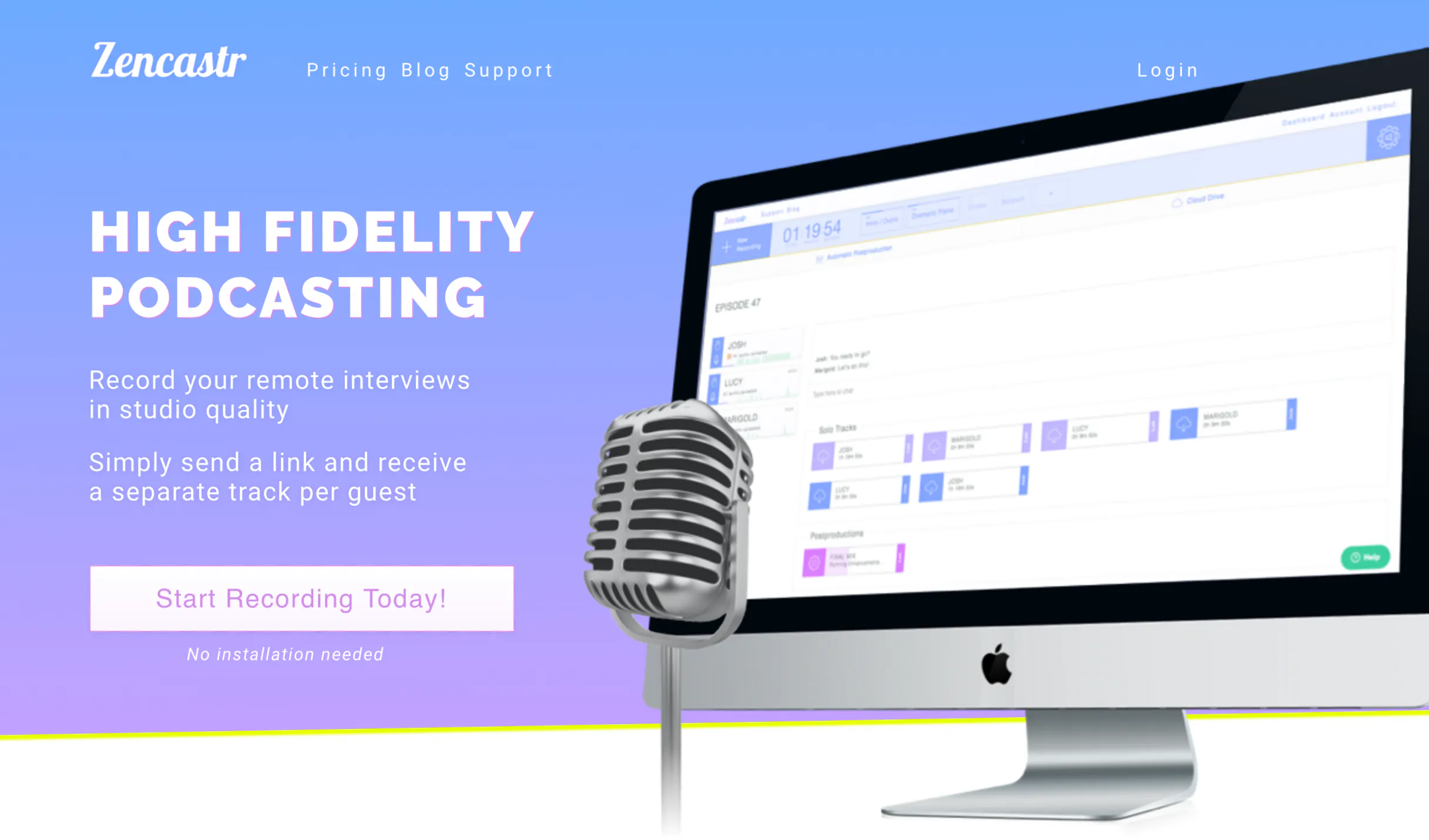
There are certain experiences when a product solves a problem so thoroughly and elegantly that it lifts a weight off of your shoulders that you didn’t even know was there. Dropbox did this with file storage. Slack did this with group collaboration. Zencastr does this for recording podcasts. Before I used Zencastr to record my podcasts, like most podcasters, I used a Skype plugin. There were a number of inconveniences in the podcaster workflow from Skype. Zencastr solved all of these by creating a podcast recording tool in the browser and presenting a simple user interface. Josh Nielsen joins the show to talk about the challenges of building a podcasting tool in the browser, and the new technologies that make it easier, such as WebRTC. We would love to get your feedback on Software Engineering Daily. Please fill out the listener survey, available on softwareengineeringdaily.com/survey. Also–Software Engineering Daily is having our third Meetup, Wednesday May 3rd at Galvanize in San Francisco. The theme of this Meetup is Fraud and Risk in Software. We will have great food, engaging speakers, and a friendly, intellectual atmosphere. To find out more, go to softwareengineeringdaily.com/meetup. Transcript provided by We Edit Podcasts. Software Engineering Daily listeners can go to weeditpodcasts.com/sed to get 20% off the first two months of audio editing and transcription services. Thanks to We Edit Podcasts for partnering with SE Daily. Please click here to download the transcript for this episode.
Ep 531New Topic Feeds
Listeners have had difficulty finding the Software Engineering Daily content they want to listen to. We are creating new podcast feeds to address this. The content on each podcast feed is mutually exclusive from the other feeds, except for the main feed and “Greatest Hits.” You can now find the following podcast feeds in iTunes and Google Play: Every new episode goes into 2 feeds: An episode can potentially be in 3 feeds if it is also in Greatest Hits. If you subscribe to all of the feeds including Software Engineering Daily (main feed), you will receive 2 notifications for every new episode. With the different feeds, we hope you can curate your own ideal SE Daily listening experience. Thanks for listening to Software Engineering Daily and please let us know what you think of the new feeds. A few recommendations: We hope the rollout of these new feeds goes smoothly. If you have issues, please email me, notify us in Slack, or tweet at us.

Ep 529Data Intensive Applications with Martin Kleppmann
A new programmer learns to build applications using data structures like a queue, a cache, or a database. Modern cloud applications are built using more sophisticated tools like Redis, Kafka, or Amazon S3. These tools do multiple things well, and often have overlapping functionality. Application architecture becomes less straightforward. The applications we are building today are data-intensive rather than compute-intensive. Netflix needs to know how to store and cache large video files, and stream them to users quickly. Twitter needs to update user news feeds with a fanout of the president’s latest tweet. These operations are simple with small amounts of data, but become complicated with a high volume of users. Martin Kleppmann is the author of Data Intensive Applications, an O’Reilly book about how to use modern data tools to solve modern data problems. His book includes high-level discussions about architectural strategy, and lower level discussions like how leader election algorithms can create problems for a data intensive application. If you are interested in hosting a show for Software Engineering Daily, we are looking for engineers, journalists, and hackers who want to work with us on content. It is a paid opportunity. Go to softwareengineeringdaily.com/host to find out more. The Software Engineering Daily store is now open if you want to buy a Software Engineering Daily branded t-shirt, hoodie, or mug and support the show. Transcript provided by We Edit Podcasts. Software Engineering Daily listeners can go to weeditpodcasts.com/sed to get 20% off the first two months of audio editing and transcription services. Thanks to We Edit Podcasts for partnering with SE Daily. Please click here to view this show’s transcript.
Ep 528Google Brain Music Generation with Doug Eck
Most popular music today uses a computer as the central instrument. A single musician is often selecting the instruments, programming the drum loops, composing the melodies, and mixing the track to get the right overall atmosphere. With so much work to do on each song, popular musicians need to simplify–the result is that pop music today consists of simple melodies without much chord progression. Magenta is a project out of Google Brain to design algorithms that learn how to generate art and music. One goal of Magenta is to advance the state of the art in machine intelligence for music and art generation. Another goal is to build a community of artists, coders, and machine learning researchers who can collaborate. Engineers today are happy to outsource server management to a cloud service provider. Similarly, a musician can use Magenta for creation of a melody, so she can focus on other aspects of a song, such as instrumentation. Doug Eck is a research scientist at Google. In today’s episode, we explore the Magenta project and the future of music. Software Engineering Daily is having our third Meetup, Wednesday May 3rd at Galvanize in San Francisco. The theme of this Meetup is Fraud and Risk in Software. We will have great food, engaging speakers, and a friendly, intellectual atmosphere. To find out more, go to softwareengineeringdaily.com/meetup. We would love to get your feedback on Software Engineering Daily. Please fill out the listener survey, available on softwareengineeringdaily.com/survey. Transcript provided by We Edit Podcasts. Software Engineering Daily listeners can go to weeditpodcasts.com/sed to get 20% off the first two months of audio editing and transcription services. Thanks to We Edit Podcasts for partnering with SE Daily. Please click here to download this show’s transcript.

Ep 527Robot Assistant with Abhishek Singh
We view our iPhones as inanimate objects. But when we see robots such as the Boston Dynamics machines that move with a motion that seems like an animal, the robot comes alive. We feel more sympathy and connection towards it. Today’s episode is about the distinction between inanimate machines and machines that seem alive. Peeqo is a robot assistant similar to Amazon Echo or Google Home. It was built by Abhishek Singh as part of his thesis. Abhishek wanted to explore the border between inanimate electronics and the electronics we personify. Peeqo is a cylindrical tube that bends slightly, like the human neck. At its head, it has a smartphone-sized screen that displays gifs to reflect its feedback visually. Abhishek also has a company called Svrround, which makes 360 degree video experiences. We explore the changes to engineering that allow someone to be involved in two cutting-edge projects at once despite having very few employees working with him. This was an energizing conversation, and I greatly enjoyed meeting Abhishek. I hope to have him on again in the future. We would love to get your feedback on Software Engineering Daily. Please fill out the listener survey, available on softwareengineeringdaily.com/survey. Also–Software Engineering Daily is having our third Meetup, Wednesday May 3rd at Galvanize in San Francisco. The theme of this Meetup is Fraud and Risk in Software. We will have great food, engaging speakers, and a friendly, intellectual atmosphere. To find out more, go to softwareengineeringdaily.com/meetup.
Ep 526Ransomware with Tim Gallo and Allan Liska
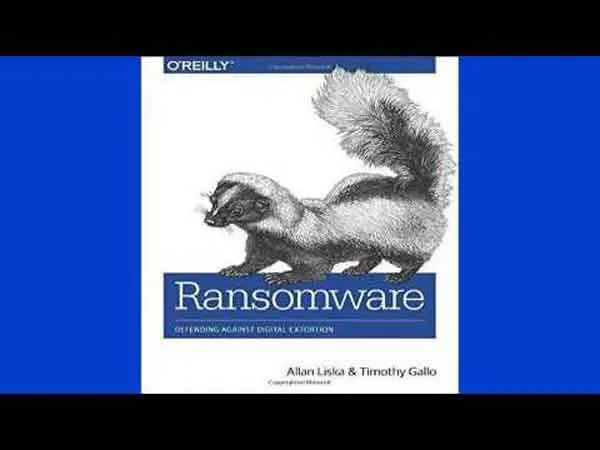
Ransomware uses software to extort people. A piece of ransomware might arrive in your inbox looking like a PDF, or a link to a website with a redirect. Ransomware is often distributed using social engineering. The email address might resemble someone you know, or a transactional email from a company like Uber or Amazon. Tim Gallo and Allan Liska are authors of the O’Reilly book Ransomware: Defending Against Digital Distortion. They join me to describe the 5 stages of ransomware: deployment, installation, command and control, destruction, and extortion. Tim and Allan describe conditions under which it might make sense to pay the extortion, and some frightening recent cases of ransomware impacting the real world. We would love to get your feedback on Software Engineering Daily. Please fill out the listener survey, available on softwareengineeringdaily.com/survey. Also–Software Engineering Daily is having our third Meetup, Wednesday May 3rd at Galvanize in San Francisco. The theme of this Meetup is Fraud and Risk in Software. We will have great food, engaging speakers, and a friendly, intellectual atmosphere. To find out more, go to softwareengineeringdaily.com/meetup. Transcript provided by We Edit Podcasts. Software Engineering Daily listeners can go to weeditpodcasts.com/sed to get 20% off the first two months of audio editing and transcription services. Thanks to We Edit Podcasts for partnering with SE Daily. Please click here to download the Ransomware transcript.
Ep 525Spring Boot with Josh Long
Spring Framework is an application framework for Java and JVM languages. Spring was originally built around dependency injection, but grew to become an entire ecosystem of tools and plugins for Java developers. Spring was originally released 15 years ago, and since then a lot has changed around application development. For example, many engineers deploy applications to the cloud in microservices architectures. The expectations around frameworks has also changed, with the rise of Django, Ruby on Rails, and NodeJS. Spring Boot takes an opinionated view of building production-ready Spring applications. By taking an opinionated view, Spring Boot gets engineers up and running faster than the traditional Spring framework. Josh Long is a Spring Developer Advocate at Pivotal and he joins the show to discuss Spring Boot and the history of the Spring Framework. Software Engineering Daily is having our third Meetup, Wednesday May 3rd at Galvanize in San Francisco. The theme of this Meetup is Fraud and Risk in Software. We will have great food, engaging speakers, and a friendly, intellectual atmosphere. To find out more, go to softwareengineeringdaily.com/meetup. We would love to get your feedback on Software Engineering Daily. Please fill out the listener survey, available on softwareengineeringdaily.com/survey. Transcript provided by We Edit Podcasts. Software Engineering Daily listeners can go to weeditpodcasts.com/sed to get 20% off the first two months of audio editing and transcription services. Thanks to We Edit Podcasts for partnering with SE Daily. Please click here to download the Spring Boot transcript.
Ep 524Ad Fraud In Our Own Backyard with Shailin Dhar
The online advertising industry is a giant casino. Giant technology companies are the casino owners, online publishers are the casino employees, the brand advertisers are the victims who keep returning to the casino to lose their money, and the small adtech companies are the sharks who make lots of money exploiting the inefficiencies of the system. One of these smaller adtech companies is called eZanga. eZanga sells “pre-filtered traffic.” Pre-filtered traffic means traffic that will pass through bot detection filters. A publisher can purchase traffic to their website so that the ads on that website get viewed. eZanga describes this technology as “marketing,” and has won a giant contract with United States government to handle advertising for the GSA. Advertising fraud does not just promote misinformation–it is now taking our tax dollars and spending it on paid traffic. If any of this is confusing to you, don’t worry. We explain it all in today’s episode with Shailin Dhar, the advertising fraud expert who wrote a detailed report about eZanga and its contract with the US Government. Shailin was previously on the show to give an overview of ad fraud, and what his work as an ad fraud investigator entails. Also, Shailin will be a speaker at our third Meetup, Wednesday May 3rd at Galvanize in San Francisco. The theme of this Meetup is Fraud and Risk in Software. We will have great food, engaging speakers, and a friendly, intellectual atmosphere. To find out more, go to softwareengineeringdaily.com/meetup. Ad Fraud in Our Own Backyard: The Dhar Method Transcript provided by We Edit Podcasts. Software Engineering Daily listeners can go to weeditpodcasts.com/sed to get 20% off the first two months of audio editing and transcription services. Thanks to We Edit Podcasts for partnering with SE Daily. Please click here to download the eZanga transcript.