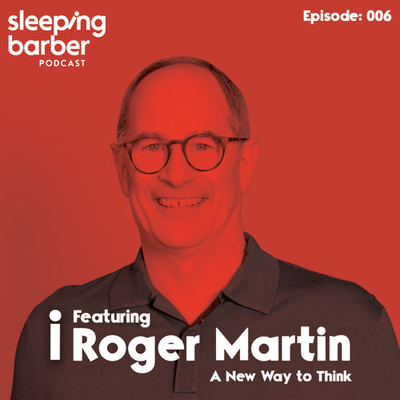
SBP 006: A New Way to Think, with Roger Martin
Sleeping Barber - A Marketing Podcast · Sleeping Barber
Audio is streamed directly from the publisher (episodes.captivate.fm) as published in their RSS feed. Play Podcasts does not host this file. Rights-holders can request removal through the copyright & takedown page.
Show Notes
Episode 6 is here and it's a special one for us. In this episode of the Sleeping Barber Podcast, we welcome back Roger Martin and discuss his latest book 'A New Way to Think.' We cover many topics like cumulative advantage, understanding human behavior, while discussing frameworks that can help build organizations that thrive. We are really excited about this episode, and we think you will really enjoy this one!
____________
Follow Roger Martin on LinkedIn:
https://www.linkedin.com/in/roger-martin-9916911a9/
Get your copy of A New Way to Think here:
https://www.amazon.ca/New-Way-Think-Management-Effectiveness/dp/164782351X/
Follow our updates here:
https://www.linkedin.com/company/sleeping-barber/
Get in touch with our hosts:
Marc Binkley: https://www.linkedin.com/in/marcbinkley/
Vassilis Douros: https://www.linkedin.com/in/vassilisdouros/
____________
Timestamps
- 0:42 - Quick Introduction to “A New Way to Think”
- 3:15 - Introduction to Roger
- 6:00 - Are we thinking about customers the right way?
- 10:02 - Learning to ask the right questions that inform strategy.
- 15:17 - Understanding Cumulative Advantage
- 22:00 - Making decisions based on loyalty vs. habit. The role of the subconscious.
- 28:37 - Understanding human behaviour in marketing
- 32:47 - Strategy - Planning - Execution vs. strategic planning.
- 38:47 - Strategic planning. How often?
- 41:05 - What counts isn't what's true. It’s what would have to be true.
- 46:00 - How to de-risk your campaigns
- 50:14 - Identifying problem statements vs. choice outcomes
- 54:58 - Creating discipline by identifying “what has to be true.”
- 59:35 - Knowledge work and decision factories
- 1:07 - Post-Pod discussion with V and Marc