
Short Wave
1,581 episodes — Page 6 of 32

Ep 1329The Yellowstone Wolf Controversy
Thirty years ago, park rangers reintroduced grey wolves into Yellowstone National Park. They wanted to restore the ecosystem and get the elk population, which had decimated the plant community, in check. And it worked – or so the popular narrative suggests. But is it really so simple? Today on the show, we explore how the Yellowstone ecosystem has changed since wolves returned and whether those changes can really be pinned solely on wolves. Plus, how the narrative of the Yellowstone wolf legacy could affect wolf reintroduction elsewhere.Curious about other science controversies? Email us at [email protected] to every episode of Short Wave sponsor-free and support our work at NPR by signing up for Short Wave+ at plus.npr.org/shortwave.To manage podcast ad preferences, review the links below:See pcm.adswizz.com for information about our collection and use of personal data for sponsorship and to manage your podcast sponsorship preferences.NPR Privacy Policy

Ep 1328Toxic? These Animals Don't Care
Imagine, you’re a toxic toad hanging around South America. No other animals are gonna mess with you, right? After all, you’re ~toxic~! So if anyone tries to eat you, they’ll be exposed to something called a cardiotonic steroid — and may die of a heart attack. Well, unfortunately, for you, some animals have developed adaptations to these toxic steroids. Evolutionary biologist Shabnam Mohammadi has spent her career studying how these adaptations work — and says even humans have used these toxins to their advantage since ancient Egypt. So today on Short Wave, we get a little… toxic (cue Brittney Spears). Host Regina G. Barber talks to Shabnam about how some predators can get away with eating toxic prey. Curious about biology? Email us at [email protected] to every episode of Short Wave sponsor-free and support our work at NPR by signing up for Short Wave+ at plus.npr.org/shortwave. To manage podcast ad preferences, review the links below:See pcm.adswizz.com for information about our collection and use of personal data for sponsorship and to manage your podcast sponsorship preferences.NPR Privacy Policy

Sea Camp: Why Scientists Want To Map The Entire Seafloor
Scientists have mapped less than 30% of the world's seafloor. Experts say that getting that number up to 100% would improve everything from tsunami warnings to the Internet and renewable energy. That's why there's currently a global effort to create a full, detailed map of the seabed by 2030. On today's Sea Camp episode, we talk to Dawn Wright, a marine geographer and chief scientist at the Environmental Systems Research Institute (Esri) about this effort. We have a newsletter that lets you go even deeper with the marine research each week of Sea Camp. You can sign up here!Curious about ocean science? Email us at [email protected]. Listen to every episode of Short Wave sponsor-free and support our work at NPR by signing up for Short Wave+ at plus.npr.org/shortwave.To manage podcast ad preferences, review the links below:See pcm.adswizz.com for information about our collection and use of personal data for sponsorship and to manage your podcast sponsorship preferences.NPR Privacy Policy

Ep 1326Alive Or Not Alive... Is A Tricky Question
In this Back To School episode we consider the "List of Life": the criteria that define what it is to be a living thing. Some are easy calls: A kitten is alive. A grain of salt is not.But what about the tricky cases, like a virus? Or, more importantly, what about futuristic android robots?As part of our Black History Month celebration, developmental biologist Crystal Rogers and Short Wave co-host Regina G. Barber dig into what makes something alive, and wade into a Star-Trek-themed debate.Listen to Short Wave on Spotify and Apple Podcasts.Is there something you'd like us to cover? Email us at [email protected] manage podcast ad preferences, review the links below:See pcm.adswizz.com for information about our collection and use of personal data for sponsorship and to manage your podcast sponsorship preferences.NPR Privacy Policy

Ep 1325The Trait That Makes Robots More 'Human'
Neurotic, anxious robots like C-3P0 from Star Wars' C-3P0 and Marvin from The Hitchhiker's Guide to the Galaxy are a staple of science fiction — but they're not as common in the real world. Most of the time, the chatbots and artificial intelligence "robots" we encounter are programmed to be extraverted, confident and cheerful. But what if that changed?NPR science correspondent Nell Greenfieldboyce dives into the world of robot personality research and talks to a team of researchers that are experimenting with a very different kind of robot temperament.Read more of Nell's reporting on the topic here.Interested in more science news? Let us know at [email protected]. Listen to every episode of Short Wave sponsor-free and support our work at NPR by signing up for Short Wave+ at plus.npr.org/shortwave.Love podcasts? For handpicked recommendations every Friday, subscribe to NPR's Pod Club.To manage podcast ad preferences, review the links below:See pcm.adswizz.com for information about our collection and use of personal data for sponsorship and to manage your podcast sponsorship preferences.NPR Privacy Policy

Ep 1324Why Gene-Edited Babies May Be Closer Than Ever
A Chinese scientist, He Jiankui, made a shocking announcement to the world in 2018: He had secretly engineered the birth of the first gene-edited babies. The birth of the twins was seen as reckless and unethical by the scientific community. That’s because, among other things, the CRISPR gene-editing technique Jiankui used was so new. NPR science correspondent Rob Stein has been following the controversial world of gene-editing and human reproduction, including some companies’ recent quests to push gene-editing technology forward.Read more of Rob Stein’s reporting on the topic here.Interested in more science news? Let us know at [email protected]. Listen to every episode of Short Wave sponsor-free and support our work at NPR by signing up for Short Wave+ at plus.npr.org/shortwave.To manage podcast ad preferences, review the links below:See pcm.adswizz.com for information about our collection and use of personal data for sponsorship and to manage your podcast sponsorship preferences.NPR Privacy Policy
Sea Camp: Did Life Start In Hydrothermal Vents?
How did life start on Earth? The answer is a big scientific mystery scientists are actively investigating. After talking with many scientists, host Regina G. Barber found that an abundance of water on Earth is most likely key, in some way, to the origin of life — specifically, in either deep sea hydrothermal vents or in tide pools. It's for this reason some scientists are also exploring the potential for life in so-called "water worlds" elsewhere in the solar system, like some of the moons of Jupiter and Saturn. This episode, Regina digs into two water-related hypotheses for the origin on life on Earth — and what that might mean for possible alien life.Have another scientific mystery you want us to cover on a future episode? Email us at [email protected] to every episode of Short Wave sponsor-free and support our work at NPR by signing up for Short Wave+ at plus.npr.org/shortwave.To manage podcast ad preferences, review the links below:See pcm.adswizz.com for information about our collection and use of personal data for sponsorship and to manage your podcast sponsorship preferences.NPR Privacy Policy

Why Do Some 80 Year-Olds Have Extraordinary Memories?
The human brain tends to slow down as we age — even healthy brains shrink. That can make learning and memory harder as people age. But some people’s brains shrink more slowly than their peers. This lucky group is called “SuperAgers.” They’re people aged 80 or older. But they have the memory abilities of someone 50-to-60 years old. This week in the journal Alzheimer's & Dementia, researchers from Northwestern University’s SuperAging Program summarized some of the secrets they’ve learned in the last 2.5 decades. Want to hear about more stories about human health and aging? Email us and let us know at [email protected] to every episode of Short Wave sponsor-free and support our work at NPR by signing up for Short Wave+ at plus.npr.org/shortwave.To manage podcast ad preferences, review the links below:See pcm.adswizz.com for information about our collection and use of personal data for sponsorship and to manage your podcast sponsorship preferences.NPR Privacy Policy
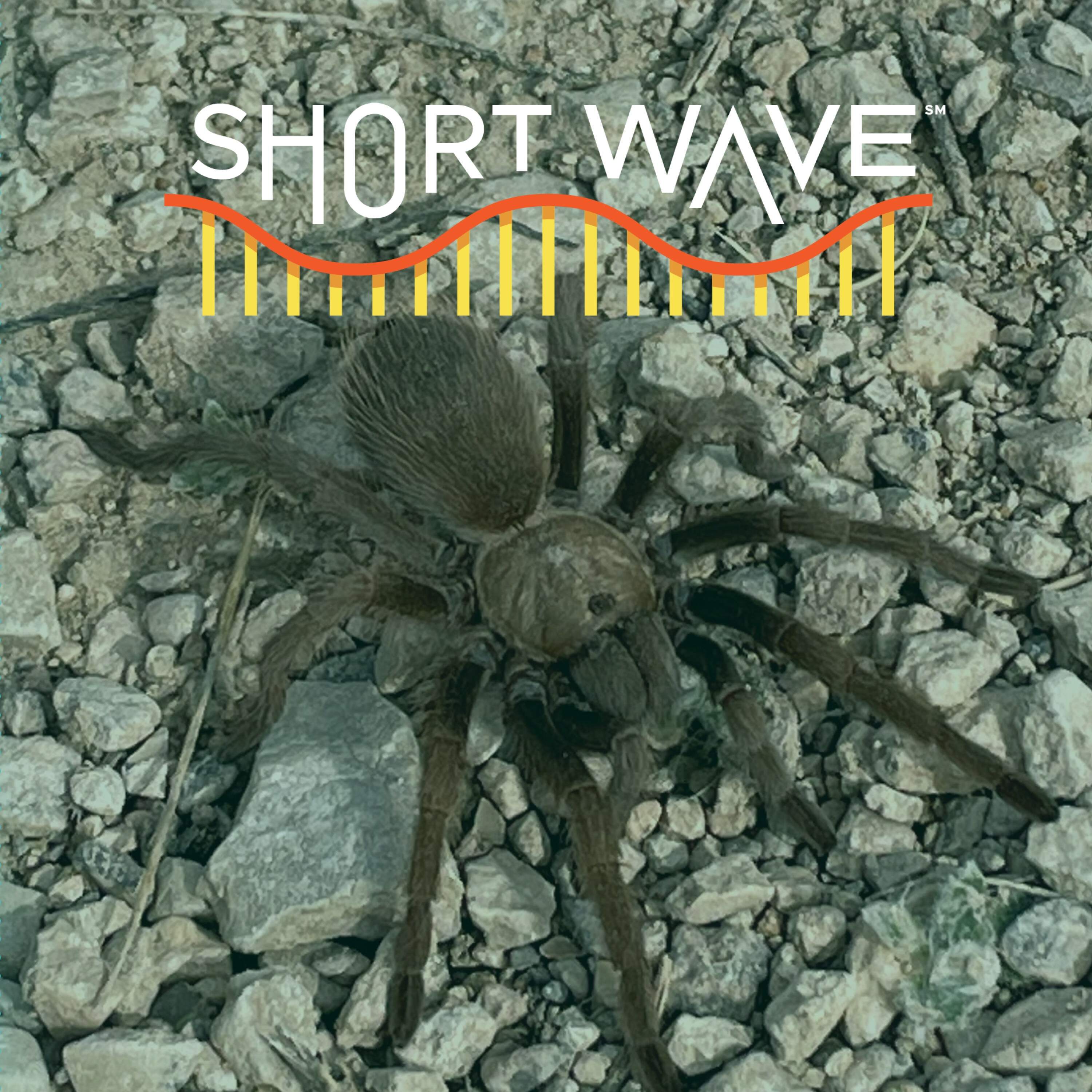
Climate Change Could Alter Spidey Love
Every September, the small town of La Junta, Colorado puts on a whole festival to celebrate a beloved local animal: the tarantula! Around this time of year, thousands of mature male tarantulas start to migrate en masse – but until recently, scientists didn’t know what triggered them to move out of their cozy burrows. On today’s show, biologist Dallas Haselhuhn explains how they solved the mystery, and how climate change could affect future treks.Want to hear about more critter mysteries? Email us and let us know at [email protected] to every episode of Short Wave sponsor-free and support our work at NPR by signing up for Short Wave+ at plus.npr.org/shortwave.Listen to Short Wave on Spotify and Apple Podcasts.This episode was produced by Berly McCoy and edited by Rebecca Ramirez. Tyler Jones checked the facts. Robert Rodriguez was the audio engineer.To manage podcast ad preferences, review the links below:See pcm.adswizz.com for information about our collection and use of personal data for sponsorship and to manage your podcast sponsorship preferences.NPR Privacy Policy

'Zombie' Cells Could Explain Aging — And Help Scientists Slow It
It’s no secret that stress isn’t good for you. But just how bad is it? Well, in the last few decades, scientists have linked psychological stress to changes in our DNA that look a lot like what happens on the molecular level as we age. Today on the show, host Regina G. Barber talks to freelance science journalist Diana Kwon about the latest research on stress and aging, including a new hypothesis for how your brain handles aging — and what science could do about all of it.Interested in more aging science? Let us know at [email protected] to every episode of Short Wave sponsor-free and support our work at NPR by signing up for Short Wave+ at plus.npr.org/shortwave.To manage podcast ad preferences, review the links below:See pcm.adswizz.com for information about our collection and use of personal data for sponsorship and to manage your podcast sponsorship preferences.NPR Privacy Policy
Ep 1319The Giants Lurking In The Deep Sea
The bathypelagic zone of the ocean is 1,000 to 4,000 meters below the surface. Sometimes it's called the midnight zone, because it's too deep for sunlight to reach. Most animals here are much smaller than their shallow-water counterparts. But occasionally, researchers find the rare deep sea giant: giant isopods, giant squids, colossal squids, sea spiders. While these giants sound like the subjects of some people's nightmares, deep sea biologist Craig McClain dreams about them. And today on the show, he helps unravel the mystery and research behind these creatures. SIGN UP FOR OUR SEA CAMP NEWSLETTER! WE WORKED SO HARD ON IT!Interested in more ocean mysteries? Let us know at [email protected] to every episode of Short Wave sponsor-free and support our work at NPR by signing up for Short Wave+ at plus.npr.org/shortwave.To manage podcast ad preferences, review the links below:See pcm.adswizz.com for information about our collection and use of personal data for sponsorship and to manage your podcast sponsorship preferences.NPR Privacy Policy

Climate Change Is Here For Your Chocolate
Last year, we reported how extreme weather events may be dwindling the future of chocolate. Just last week, we saw an inkling of that: The Hershey Company announced it would significantly raise the cost of its candy in the face of historically high cocoa prices. So, we're revisiting host Emily Kwong's conversation with Yasmin Tayag, a food, health and science writer at The Atlantic. They get into the cocoa shortage: What's causing it, how it's linked to weather and poor farming conditions and what potential solutions exist. Plus, they enjoy a chocolate alternative taste test.To manage podcast ad preferences, review the links below:See pcm.adswizz.com for information about our collection and use of personal data for sponsorship and to manage your podcast sponsorship preferences.NPR Privacy Policy

Ep 1317Why Illusions Are A Brain Feature, Not A Bug
A grayscale ballerina who appears to be moving. A human who can fit in a doll box. A black-and-white prism that appears to change shape when viewed from three different directions. Those are the top winners of the 2024 Best Illusion of the Year Contest, open to illusion makers around the world and co-created by neuroscientist Susana Martinez-Conde. Today on the show, we get lost in the magic and science of visual illusions. Have a neuroscience question? Email us at [email protected]. Listen to every episode of Short Wave sponsor-free and support our work at NPR by signing up for Short Wave+ at plus.npr.org/shortwave.To manage podcast ad preferences, review the links below:See pcm.adswizz.com for information about our collection and use of personal data for sponsorship and to manage your podcast sponsorship preferences.NPR Privacy Policy

Ep 1316Nature Quest: Are Summers Getting Hotter?
Much of the country is deep in the middle of a heat wave right now. And every summer, Duane Stilwell's town in Arizona seems to get hotter. It has him worried — and he's not the only one. Since 1980, the average number of heat waves in the U.S has doubled and the average length of a heat wave season has increased from 40 days to 70. Future summers, experts say, will be even hotter. But why exactly is that happening, and what can people do to protect themselves from the heat?This episode is part of Nature Quest, a monthly segment that answers listeners' questions about their local environment. If you have a question, send a voice memo to [email protected] that includes it, your name and where you live. We might make it into our next Nature Quest episode!Listen to every episode of Short Wave sponsor-free and support our work at NPR by signing up for Short Wave+ at plus.npr.org/shortwave.To manage podcast ad preferences, review the links below:See pcm.adswizz.com for information about our collection and use of personal data for sponsorship and to manage your podcast sponsorship preferences.NPR Privacy Policy

Ep 1315Sea Camp: The Largest Daily Migration On Earth
The twilight zone of the ocean is a mysterious place. At 200-1000 meters below the surface, it's a tough place to study. That's why, during World War II, people reading sonograms from this zone were perplexed when it looked as if the ocean floor was moving up. Every day. And then back down again before dawn. In this latest installment of Sea Camp, we explore what this historical mystery has to do with the Earth's ability to cycle and store carbon in the ocean's watery depths.SIGN UP FOR OUR SEA CAMP NEWSLETTER! WE WORKED SO HARD ON IT!Interested in more ocean mysteries? Let us know at [email protected] to every episode of Short Wave sponsor-free and support our work at NPR by signing up for Short Wave+ at plus.npr.org/shortwave.To manage podcast ad preferences, review the links below:See pcm.adswizz.com for information about our collection and use of personal data for sponsorship and to manage your podcast sponsorship preferences.NPR Privacy Policy

Ep 1314Did Spiders' Ancestors Come From The Ocean?
Whether you love spiders or can't be within 10 feet of them, you probably think of them crawling around on land. Historically, most researchers would probably say the same thing: Based on the fossil record, they've thought the earliest arachnid ancestors existed around 450 million years ago, living and diversifying exclusively on land. But a new study out this week in the journal Current Biology suggests arachnid brains may have originated much earlier in the ocean. Want to hear more stories about the history of animals on Earth? Email us and let us know at [email protected] to every episode of Short Wave sponsor-free and support our work at NPR by signing up for Short Wave+ at plus.npr.org/shortwave.To manage podcast ad preferences, review the links below:See pcm.adswizz.com for information about our collection and use of personal data for sponsorship and to manage your podcast sponsorship preferences.NPR Privacy Policy

Ep 1313Eating Disorder Recovery In A Diet Culture World
Eating disorders are complicated illnesses that skyrocketed among teenagers during the COVID-19 pandemic. Pediatrician Eva Trujillo says they "literally rewire the brain," decrease brain size, and make it harder to concentrate and to regulate emotions. Malnutrition can slow the metabolism, impact bone density and even lead to cardiac arrest. But Eva says, with the right treatment, people can also recover fully. She's the president of the International Association of Eating Disorder Professionals and co-founder of Comenzar de Nuevo, a leading treatment facility in Latin America. Today on the show, host Emily Kwong talks about the physical and mental impacts of eating disorders with Dr. Trujillo and Moorea Friedman, a teen mental health advocate and host of the podcast Balancing Act. Plus, how to recover in a world steeped in diet culture. Want us to cover more mental health topics? Tell us by emailing [email protected]! We'd love to know what you want to hear from us! Listen to every episode of Short Wave sponsor-free and support our work at NPR by signing up for Short Wave+ at plus.npr.org/shortwave. To manage podcast ad preferences, review the links below:See pcm.adswizz.com for information about our collection and use of personal data for sponsorship and to manage your podcast sponsorship preferences.NPR Privacy Policy

Ep 1312Will Federal Budget Cuts Affect Space Science?
Earlier this year, the White House proposed a nearly 24% cut to NASA's 2026 fiscal year budget — the largest in the agency's history. The trims are largely aimed at the NASA's fundamental science research and would halt science that has already been partially paid for, like the Mars sample return and the Nancy Grace Roman Space Telescope. Many scientists and policy experts are also worried that the reduced funding would cause a scientific brain drain. But within the last month, Congress has started to discuss appropriations packages that may not severely contract the budget after all. So, in this episode, Regina reports on the important hypotheticals: What programs might be affected? Are these cuts likely to happen? If so, when? Want to hear more stories about space and policy? Let us know at [email protected] to every episode of Short Wave sponsor-free and support our work at NPR by signing up for Short Wave+ at plus.npr.org/shortwave.To manage podcast ad preferences, review the links below:See pcm.adswizz.com for information about our collection and use of personal data for sponsorship and to manage your podcast sponsorship preferences.NPR Privacy Policy

Ep 1311Sea Camp: Is Better Human Health Hidden In The Sea?
For this week's Sea Camp, we're diving below the ocean's surface to explore the sunlight zone, the portion of ocean that's 0-200 meters deep. Here, we zoom in on some spineless inhabitants envied for their "superpowers." Marine biologist Drew Harvell tells us about stealthy sea slugs, sea stars with super strength and life-saving sponges. Also, exciting news!! WE HAVE A NEWSLETTER! It lets you go even deeper with the marine research each week of Sea Camp. Sign up here!Want to hear more stories about underwater marvels? Email us and let us know at [email protected] to every episode of Short Wave sponsor-free and support our work at NPR by signing up for Short Wave+ at plus.npr.org/shortwave.To manage podcast ad preferences, review the links below:See pcm.adswizz.com for information about our collection and use of personal data for sponsorship and to manage your podcast sponsorship preferences.NPR Privacy Policy
Congress has voted to eliminate government funding for public media
Act now to ensure public media remains free and accessible to all. Your donation will help this essential American service survive and thrive. Visit donate.npr.org now.To manage podcast ad preferences, review the links below:See pcm.adswizz.com for information about our collection and use of personal data for sponsorship and to manage your podcast sponsorship preferences.NPR Privacy Policy

Ep 1312These Scientists Are Using AI To Listen To Frogs
If you were a miner in California during the Gold Rush, you might have dined on a California red-legged frog. The largest native frog in the western United States, this Golden State denizen used to be found as far inland as the Sierra Nevada mountains and south, into Baja California. But today, they're listed as threatened under the Endangered Species Act. Conservationists have worked to translocate new populations of the red-legged frog back to California in hopes that their numbers can be restored. But how do they monitor those populations' growth? Enter AI.Want to hear more stories about critters or conservation? Let us know at [email protected] to every episode of Short Wave sponsor-free and support our work at NPR by signing up for Short Wave+ at plus.npr.org/shortwave.To manage podcast ad preferences, review the links below:See pcm.adswizz.com for information about our collection and use of personal data for sponsorship and to manage your podcast sponsorship preferences.NPR Privacy Policy

Ep 1309Who Is Using The 988 Crisis Line?
The National Suicide and Crisis Lifeline — 988 — launched on this day exactly three years ago. People who call the line seeking support are connected to a local network of crisis centers and a trained crisis counselor. And while millions of people have contacted the line since its launch, a new study shows portions of the country still don't know about it. Short Wave host Emily Kwong speaks to Jonathan Purtle, one of the lead researchers of on this study, about the findings, how the hotline differs from 911 and what its existence signals to Americans. Want us to cover more mental health news? Tell us by emailing [email protected]! We'd love to know what you want to hear from us!Listen to every episode of Short Wave sponsor-free and support our work at NPR by signing up for Short Wave+ at plus.npr.org/shortwave.To manage podcast ad preferences, review the links below:See pcm.adswizz.com for information about our collection and use of personal data for sponsorship and to manage your podcast sponsorship preferences.NPR Privacy Policy

Ep 1308How Realistic Are Movie Dinosaurs?
Jurassic Park: Rebirth is the latest installment in the Jurassic World series. And while dinosaur paleontologist Matt Lamanna has loved dinos — and the Jurassic Park franchise — his whole life, he says some of the films are more accurate than others. So how accurate are the ones unveiled in this latest movie? Matt gets into it with Short Wave host Regina G. Barber, who got a tour of the dinosaur exhibits where Matt works: the Carnegie Museum of Natural History in Pittsburgh. They also discuss the accuracy of the beloved giant creatures in the newest Jurassic World film, as well as some of the hits from the franchise's archive — like the dinosaur he was partially responsible for discovering. Want us to cover more natural history? Tell us by emailing [email protected]! We'd love to know what you want to hear from us.Listen to every episode of Short Wave sponsor-free and support our work at NPR by signing up for Short Wave+ at plus.npr.org/shortwave.To manage podcast ad preferences, review the links below:See pcm.adswizz.com for information about our collection and use of personal data for sponsorship and to manage your podcast sponsorship preferences.NPR Privacy Policy

Ep 1307These Critters Call The Great Pacific Garbage Patch Home
For this second installment of the Sea Camp series, we explore the Great Pacific Garbage Patch. It's the largest of five gigantic garbage patches in the sea. These patches hang out at the nexus of the world's ocean currents, changing shape with the waves. These areas were long thought to have been uninhabited, the plastics and fishing gear too harmful to marine life. But researchers have uncovered a whole ecosystem of life in this largest collection of trash. Today, with the help of marine biologist Fiona Chong, we meet the tiny marine life that calls this place home.Also, exciting news!! WE HAVE A NEWSLETTER! It lets you go even deeper with the marine research each week of Sea Camp. Sign up here!Interested in hearing more sea stories? Tell us by emailing [email protected]!Listen to every episode of Short Wave sponsor-free and support our work at NPR by signing up for Short Wave+ at plus.npr.org/shortwave.To manage podcast ad preferences, review the links below:See pcm.adswizz.com for information about our collection and use of personal data for sponsorship and to manage your podcast sponsorship preferences.NPR Privacy Policy

Ep 1306Meet the Third Ever (!!) Interstellar Comet
A rare visitor from another star system has been spotted: the interstellar comet 3I/ATLAS! It was detected July 1 by the NASA-funded Asteroid Terrestrial-impact Last Alert System, or ATLAS. Most known comets orbit the Sun and are bound by the gravity of the solar system ... but this object came from far beyond the pull of our Sun, traveling 137,000 miles per hour from another star. Now, scientists are racing to get a good image of it, in the hopes it can answer big questions like: What is the universe like where this comet is from? Is the solar system we live in unique? Want us to cover more space news? Tell us by emailing [email protected]! We'd love to know what you want to hear from us.Listen to every episode of Short Wave sponsor-free and support our work at NPR by signing up for Short Wave+ at plus.npr.org/shortwave.To manage podcast ad preferences, review the links below:See pcm.adswizz.com for information about our collection and use of personal data for sponsorship and to manage your podcast sponsorship preferences.NPR Privacy Policy

Ep 1305Evolution Went On Trial 100 Years Ago. Where Are We Now?
This week marks the 100th anniversary of the Scopes "Monkey Trial" — where a teacher was charged with the crime of teaching Darwin's theory of evolution by natural selection. At the time, it was illegal in Tennessee to "teach any theory that denies the story of the Divine Creation of man as taught in the Bible, and to teach instead that man has descended from a lower order of animals." The trial, which was orchestrated to be a media spectacle, foreshadowed the cultural divisions that continue today and led to a backlash against proponents of evolution.Read more of science correspondent Nell Greenfieldboyce's reporting on the story. Want us to cover more science history? Less? Either way, tell us by emailing [email protected]! We'd love to know what you're hearing — and want to hear from us!Listen to every episode of Short Wave sponsor-free and support our work at NPR by signing up for Short Wave+ at plus.npr.org/shortwave.To manage podcast ad preferences, review the links below:See pcm.adswizz.com for information about our collection and use of personal data for sponsorship and to manage your podcast sponsorship preferences.NPR Privacy Policy
Itchy? Air Pollution May Be Making It Worse

Ep 1303Sea Camp: Why Are Ocean Currents Shifting?
A warming climate doesn't just affect dry land — it affects the ocean, too. For years, Earth's ocean has acted as a heat sink for climate change: A large part of the heat generated by human use of fossil fuels is being absorbed by the ocean. And while the deep sea is largely unaffected by this heat absorption, oceanographers have discovered that the upper ocean currents are accelerating. That acceleration has the potential for huge knock-on effects, including sea level rise, changing fish migration cycles, shifting storm patterns, and more.This is the first episode of Sea Camp, Short Wave's summer series exploring the intriguing and otherworldly depths of the ocean. Follow us every Monday through August as we travel from the sunlit zone to the sea floor.Interested in more stories about the ocean? Email us your question at [email protected] to every episode of Short Wave sponsor-free and support our work at NPR by signing up for Short Wave+ at plus.npr.org/shortwave.To manage podcast ad preferences, review the links below:See pcm.adswizz.com for information about our collection and use of personal data for sponsorship and to manage your podcast sponsorship preferences.NPR Privacy Policy

Ep 1302Why Dew Point Is This Summer's 'It Girl'
Happy Independence Day, Short Wavers! Do you have plans outdoors this weekend and want to figure out just how swampy it's gonna feel? For that kind of mental preparation, we're revisiting an episode in which some meteorologists are telling us to pay more attention to dew point temperature, not relative humidity. Interested in more weather episodes? Email us your question at [email protected] to every episode of Short Wave sponsor-free and support our work at NPR by signing up for Short Wave+ at plus.npr.org/shortwave.To manage podcast ad preferences, review the links below:See pcm.adswizz.com for information about our collection and use of personal data for sponsorship and to manage your podcast sponsorship preferences.NPR Privacy Policy

Ep 1301Is The Milky Way On A Collision Course?
The Andromeda galaxy lies just beyond (...OK, about 2.5 million light-years beyond) our galaxy, the Milky Way. For the past hundred years or so, scientists thought these galaxies existed in a long-term dance of doom — destined to crash into one another and combine into one big galactic soup. But today on the show, Regina and computational astrophysicist Arpit Arora explain why a recent paper out in the journal Nature Astronomy suggests this cosmic game of bumper cars may never come to a head at all. Interested in more space episodes? Email us your question at [email protected] to every episode of Short Wave sponsor-free and support our work at NPR by signing up for Short Wave+ at plus.npr.org/shortwave.To manage podcast ad preferences, review the links below:See pcm.adswizz.com for information about our collection and use of personal data for sponsorship and to manage your podcast sponsorship preferences.NPR Privacy Policy
On July 4th, Are You A Thrill- Or Chill-Seeker?
RFK Jr.'s New Vaccine Advisors Signal Big Changes

Ep 1298Aha! The Power Of A Short Rest
Since 2004, scientific research has shown that a full night of sleep may lend itself to a burst of insight in the morning. But what about the earlier stages of sleep? And what about just a nap? A research team based in Germany found that even a 20-minute nap could deliver a "eureka" moment, and published their findings in the journal PLOS Biology this week. Have a question about sleep? Email us at [email protected] — we'd love to hear from you!Listen to every episode of Short Wave sponsor-free and support our work at NPR by signing up for Short Wave+ at plus.npr.org/shortwave.To manage podcast ad preferences, review the links below:See pcm.adswizz.com for information about our collection and use of personal data for sponsorship and to manage your podcast sponsorship preferences.NPR Privacy Policy

Ep 1297When Eavesdropping Pays Off
Why did the ornithologist strap a taxidermy badger to a remote controlled car and drive it around the prairie? To interrogate the secret world of animal eavesdropping in the grasslands, of course! Today on the show, we travel to the most imperiled ecosystem on the planet to unravel a prairie mystery and find out why prairie dogs are grassland engineers worth keeping tabs on.Got a question about other animal ecosystem engineers? Email us at [email protected]. Listen to every episode of Short Wave sponsor-free and support our work at NPR by signing up for Short Wave+ at plus.npr.org/shortwave.To manage podcast ad preferences, review the links below:See pcm.adswizz.com for information about our collection and use of personal data for sponsorship and to manage your podcast sponsorship preferences.NPR Privacy Policy

Ep 1296Does It Feel Like Mosquitoes Are Getting Worse?
Mosquitoes are the deadliest animal on the planet, and some of them may be on the rise. At least in listener Abigail Krich-Starr's area, that's due to warmer, wetter weather — which, yes, is linked to climate change. But it doesn't stop there: Ecologists and entomologists say increased heat could also alter mosquito behavior, shift their natural habitat, and even change how pathogens incubate and spread inside their bodies.So how do you protect yourself against the (mosquito) masses? Our experts suggested several things:- Assess your risk by checking local mosquito surveillance efforts, like this one for the state of Massachusetts- Consider rescheduling outdoor events happening between dusk and dawn, which is peak biting time for multiple mosquito species- Wear long-sleeved shirts and pants, weather-permitting, to limit exposed skin- Use an EPA-approved DEET repellent, and/or a permethrin spray for clothing and outdoor gearThis episode is part of Nature Quest, a monthly Short Wave segment that answers listener questions about the local environment.Got a question about changes in your local environment? Send a voice memo to [email protected] with your name, where you live and your question. We might make it into our next Nature Quest episode! Listen to every episode of Short Wave sponsor-free and support our work at NPR by signing up for Short Wave+ at plus.npr.org/shortwave.To manage podcast ad preferences, review the links below:See pcm.adswizz.com for information about our collection and use of personal data for sponsorship and to manage your podcast sponsorship preferences.NPR Privacy Policy

Ep 1295The Power Grid Problem
The U.S.'s power grid — a nearly 100-year-old network of electrical circuits — is facing increased demand and weather-related stress. What will it take to modernize? We interrogate that question today with the help of Anjan Bose, an electrical engineer at Washington State University. Interested in more stories about electricity? Email us at [email protected] to every episode of Short Wave sponsor-free and support our work at NPR by signing up for Short Wave+ at plus.npr.org/shortwave.To manage podcast ad preferences, review the links below:See pcm.adswizz.com for information about our collection and use of personal data for sponsorship and to manage your podcast sponsorship preferences.NPR Privacy Policy

Ep 1294What Makes South Korea's 'Super Divers' Special?
For generations, the all-female Haenyeo divers have routinely dove into frigid waters off the coast of South Korea, holding their breath for minutes at a time, as they collect seafood to eat and sell. These women start diving as girls and continue well into old age. And recent research suggests that it's not just years of training that makes this feat possible – it's also a set of special genetic adaptations. Science reporter Ari Daniel brings us the story.Read more of Ari's reporting here.Have another story about biology and genetics for us to consider? Email us at [email protected] to every episode of Short Wave sponsor-free and support our work at NPR by signing up for Short Wave+ at plus.npr.org/shortwave.To manage podcast ad preferences, review the links below:See pcm.adswizz.com for information about our collection and use of personal data for sponsorship and to manage your podcast sponsorship preferences.NPR Privacy Policy

Why Emotions Run High For Sports Fans
We are in the thick of multiple sports seasons: the NBA finals are happening, and baseball and soccer are in full swing. For devoted fans, emotions can run pretty high during a game. Cognitive anthropologist Dimitris Xygalatas has long been fascinated by that intensity — and how uniform it can be across fans. So, he and fellow researchers at the University of Connecticut decided to look into what exactly makes fans so deeply connected to their team and to fellow supporters. It turns out that connection may have less to do with actual gameplay and more to do with rituals. Their research was recently published in the journal Proceedings of the National Academy of Sciences.Questions about sports science? Email us at [email protected] to every episode of Short Wave sponsor-free and support our work at NPR by signing up for Short Wave+ at plus.npr.org/shortwave.To manage podcast ad preferences, review the links below:See pcm.adswizz.com for information about our collection and use of personal data for sponsorship and to manage your podcast sponsorship preferences.NPR Privacy Policy

Ep 1292Trump Wants A Missile Defense System Like Israel's
Since last week, Israel has been attacking Iran's nuclear facilities, along with many other targets around the country. Iran has fired hundreds of missiles in response. NPR correspondent Geoff Brumfiel has been watching all of this very closely because Israel's missile defenses have been a focus of the Trump White House. This year, President Trump requested funding from Congress for a "Golden Dome for America" — a missile defense system that would protect all of the United States. The idea comes from Israel's Iron Dome — a network of interceptor missiles stationed at points across the country. Iron Dome and related Israeli air defenses don't get every missile fired — including some launched in the past few days by Iran — but the Israeli military says it has intercepted thousands of rockets since it was built. Trying to get that kind of protection for America, though, might be a very different matter. Read more of science correspondent Geoff Brumfiel's reporting on this topic and find NPR's coverage of the Middle East here. Questions about nuclear science? Email us at [email protected] to every episode of Short Wave sponsor-free and support our work at NPR by signing up for Short Wave+ at plus.npr.org/shortwave.To manage podcast ad preferences, review the links below:See pcm.adswizz.com for information about our collection and use of personal data for sponsorship and to manage your podcast sponsorship preferences.NPR Privacy Policy

Ep 1291Why Weed's Signature Scent Has Changed Over Time
The skunky smell of cannabis may be going out of style. NPR's science correspondent Pien Huang visited the grow facility for District Cannabis, which sells weed in Washington D.C. and Maryland. On her tour, she learned why cannabis smells the way it does. Plus, how many strains have been bred — to smells like lavender, citrus and even cookies. Read more of science correspondent Pien Huang's reporting on this topic here, or check out the entire special series, "How safe is your weed?" Questions about the science behind the mysteries, events and... smells... all around us? Email us at [email protected] – we'd love to hear your ideas!Listen to Short Wave on Spotify and Apple Podcasts.To manage podcast ad preferences, review the links below:See pcm.adswizz.com for information about our collection and use of personal data for sponsorship and to manage your podcast sponsorship preferences.NPR Privacy Policy

Ep 1290Your Breathing Pattern Is Like A Fingerprint
Take a big inhale through your nose. Now, exhale. Breathing may seem simple, but it's controlled by a complex brain network. Each inhale gives the human brain information about the external world. And now, a new research paper in the journal Current Biology suggests that humans have unique breathing patterns, almost like nasal "fingerprints." Not only that: These unique breathing patterns seem to say a lot about people's physical and mental health.Questions about the science behind your brain and body? Email us at [email protected] – we'd love to hear your ideas!Listen to Short Wave on Spotify and Apple Podcasts.To manage podcast ad preferences, review the links below:See pcm.adswizz.com for information about our collection and use of personal data for sponsorship and to manage your podcast sponsorship preferences.NPR Privacy Policy

Ep 1289Wanna Save Money? Climate-Proof Your Home
Homeowners' insurance isn't just getting more expensive ... it's also getting harder to secure in the first place. Across the country, an increase in climate-related disasters like heat waves, wildfires and hurricanes is creating challenges for both insurers and their customers. One successful strategy taking hold in Alabama and other states: Climate-proofing houses — and incentivizing it with insurance discounts.Still, not all states or homeowners face similar risks. And insurers aren't legally required to take climate-proofing into account when assessing the insurability of a home. That's why states are experimenting with different programs — and insurance legislation — to find a solution.This episode is part of NPR's Climate Solutions Week: a series of stories covering real world solutions for building, and living, on a hotter planet. To manage podcast ad preferences, review the links below:See pcm.adswizz.com for information about our collection and use of personal data for sponsorship and to manage your podcast sponsorship preferences.NPR Privacy Policy

Ep 1288Living With OCD
Roughly 163 million people experience obsessive-compulsive disorder and its associated cycles of obsessions and compulsions. They have unwanted intrusive thoughts, images or urges; they also do certain behaviors to decrease the distress caused by these thoughts. In movies and TV, characters with OCD are often depicted washing their hands or obsessing about symmetry. Dr. Carolyn Rodriguez says these are often symptoms of OCD, but they're not the only ways it manifests – and there's still a lot of basics we have yet to understand. That's why, in this encore episode, Carolyn looks to include more populations in research and find new ways to treat OCD. If you're interested in potentially participating in Dr. Rodriguez's OCD studies, you can email [email protected] or call 650-723-4095._Questions about the brain? Email us at [email protected] – we'd love to hear your ideas for a future episode!Listen to every episode of Short Wave sponsor-free and support our work at NPR by signing up for Short Wave+ at plus.npr.org/shortwave.To manage podcast ad preferences, review the links below:See pcm.adswizz.com for information about our collection and use of personal data for sponsorship and to manage your podcast sponsorship preferences.NPR Privacy Policy

Ep 1287Helping Dogs and Their Pawrents Live Healthier, Longer
The Dog Aging Project is a long-term nationwide survey on the health and lifestyles of U.S. dogs that launched in 2019. Today, the project has more than 50,000 canines and counting. Today, hear what researchers have learned from one of the largest dog health data sets and what it could tell us both about increasing the lifespan of our furry friends and us.For more information about signing your pup up for the Dog Aging Project, visit their website.Have more questions about animals? Let us know at [email protected]. Listen to every episode of Short Wave sponsor-free and support our work at NPR by signing up for Short Wave+ at plus.npr.org/shortwave.To manage podcast ad preferences, review the links below:See pcm.adswizz.com for information about our collection and use of personal data for sponsorship and to manage your podcast sponsorship preferences.NPR Privacy Policy

Ep 1286Unveiling Olo — A Color Out of Oz!
"Olo" does not exist in nature, nor can it be found among paint cans. But for a very select few, olo can be seen — through the intervention of careful computing and lasers. A team led by vision scientist Austin Roorda and computer scientist Ren Ng at UC Berkeley figured out a method for stimulating only one specific subset of cones of the retina. It's the only way to view this spectacular teal. Creating the color is helping push the boundaries of vision science.Follow Short Wave on Spotify, and Apple Podcasts.More questions about the science behind our everyday lives? Email us at [email protected]. To manage podcast ad preferences, review the links below:See pcm.adswizz.com for information about our collection and use of personal data for sponsorship and to manage your podcast sponsorship preferences.NPR Privacy Policy

Ep 1285Anglerfish Ancestors Once Roamed The Seafloor
There are over 200 species of deep-sea anglerfish; some are long and thin, some are squat and round, some have fins that they use to "walk" along the sea floor, and others have huge eyes set far back into their heads. But how did all this morphological diversity first come to be? Thanks to a new anglerfish family tree, now we know. Scientists built this evolutionary tree using genetic information from hundreds of samples and anglerfish specimens across the globe. It indicates that anglerfish originated from an ancestor that crawled along the seafloor ... and sheds new light on how experts could think about biodiversity as a whole.To manage podcast ad preferences, review the links below:See pcm.adswizz.com for information about our collection and use of personal data for sponsorship and to manage your podcast sponsorship preferences.NPR Privacy Policy

Ep 1284Can AI Crack The Biology Code?
As artificial intelligence seeps into some realms of society, it rushes into others. One area it's making a big difference is protein science — as in the "building blocks of life," proteins! Producer Berly McCoy talks to host Emily Kwong about the newest advance in protein science: AlphaFold3, an AI program from Google DeepMind. Plus, they talk about the wider field of AI protein science and why researchers hope it will solve a range of problems, from disease to the climate.Have other aspects of AI you want us to cover? Email us at [email protected] manage podcast ad preferences, review the links below:See pcm.adswizz.com for information about our collection and use of personal data for sponsorship and to manage your podcast sponsorship preferences.NPR Privacy Policy

Ep 1283Solving A Centuries Old Maritime Mystery
For hundreds of years sailors have told stories about miles of glowing ocean during moonless nights. This phenomenon is known as "milky seas," but the only scientific sample was collected in 1985. So atmospheric scientist Justin Hudson, a PhD candidate at University of Colorado, used accounts spanning 400 years to create a database of milky seas. By also using satellite images to visually confirm the tales, Justin hopes his research brings us one step closer to unraveling this maritime mystery. Listen to every episode of Short Wave sponsor-free and support our work at NPR by signing up for Short Wave+ at plus.npr.org/shortwave.Got a question about a scientific mystery? Let us know at [email protected]. To manage podcast ad preferences, review the links below:See pcm.adswizz.com for information about our collection and use of personal data for sponsorship and to manage your podcast sponsorship preferences.NPR Privacy Policy

Ep 1282Why Daylight Boosts Immunity
Depending on what time it is, your body responds differently to an injury or infection. During the day, you're likely to heal faster and fight infection better than at night. And historically, scientists weren't entirely sure why. That picture is starting to clear up thanks to a new study published last week in the journal Science Immunology. The research finds a missing piece of the puzzle in neutrophils, powerful immune cells that — despite living less than 24 hours — know the difference between day and night.Got a question about how the body works? Let us know at [email protected]. Listen to every episode of Short Wave sponsor-free and support our work at NPR by signing up for Short Wave+ at plus.npr.org/shortwave.To manage podcast ad preferences, review the links below:See pcm.adswizz.com for information about our collection and use of personal data for sponsorship and to manage your podcast sponsorship preferences.NPR Privacy Policy

Ep 1281Unpacking Bipolar Disorder
Around 40 million people around the world have bipolar disorder, which involves cyclical swings between moods: from depression to mania. Kay Redfield Jamison is one of those people. She's also a professor of psychiatry at the Johns Hopkins School of Medicine and has written extensively about the topic, from medical textbooks to personal memoirs. Today on Short Wave, she joins us to talk about the diagnosis process, treating and managing bipolar disorder. Listen to every episode of Short Wave sponsor-free and support our work at NPR by signing up for Short Wave+ at plus.npr.org/shortwave.Got a question about mental health? Let us know at [email protected]. To manage podcast ad preferences, review the links below:See pcm.adswizz.com for information about our collection and use of personal data for sponsorship and to manage your podcast sponsorship preferences.NPR Privacy Policy