
Short Wave
1,581 episodes — Page 7 of 32

Ep 1280Nature Quest: The Climate-Kid Question
Gen Z and younger millennials are the most climate literate generations the world has ever seen. They learned about climate change in school; now, it's part of how they plan for the future, including for jobs, housing ... and kids.So, what do experts say about how to navigate the kid question? In this installment of Nature Quest, Short Wave speaks to climate journalist Alessandra Ram about the future she sees for her newborn daughter. Plus, how do we raise the next generation in a way that's good for the planet? Resources discussed in this episode include:Jade Sasser's book, Climate Anxiety and the Kid QuestionKimberly Nicholas's High Impact Climate Action GuideElizabeth Bechard's book, Parenting in a Changing ClimateThe Climate Mental Health Network's Climate Emotions WheelGot a question about changes in your local environment? Send a voice memo to [email protected] with your name, where you live and your question. You might make it into our next Nature Quest episode! To manage podcast ad preferences, review the links below:See pcm.adswizz.com for information about our collection and use of personal data for sponsorship and to manage your podcast sponsorship preferences.NPR Privacy Policy

Ep 1279The Great Space Race ... With Clocks
It's Memorial Day, Short Wavers. This holiday, we bring you a meditation on time ... and clocks. There are hundreds of atomic clocks in orbit right now, perched on satellites all over Earth. We depend on them for GPS location, Internet timing, stock trading and even space navigation. In today's encore episode, hosts Emily Kwong and Regina G. Barber learn how to build a better clock. In order to do that, they ask: How do atomic clocks really work, anyway? What makes a clock precise? And how could that process be improved for even greater accuracy?- For more about Holly's Optical Atomic Strontium Ion Clock, check out the OASIC project on NASA's website.- For more about the Longitude Problem, check out Dava Sobel's book, Longitude. Listen to every episode of Short Wave sponsor-free and support our work at NPR by signing up for Short Wave+ at plus.npr.org/shortwave.Have questions or story ideas? Let us know by emailing [email protected]!To manage podcast ad preferences, review the links below:See pcm.adswizz.com for information about our collection and use of personal data for sponsorship and to manage your podcast sponsorship preferences.NPR Privacy Policy

Ep 1278Flamingos: The Water-Bending Physics Masters
Riddle us this: Which animal is pink, curved beaked and a master of the physics required to create water tornadoes? If you guessed flamingos, you're right. New research out this month in the journal Proceedings of the National Academy of Sciences shows that across a range of harsh environments, flamingos have become masters — of physics, fluid dynamics and so much more — all in pursuit of their filter-fed prey. Short Wave host Regina G. Barber sits down with biomechanics researcher Victor Ortega Jiménez to hear all of the incredibly involved lengths these birds go through to get their prey. Want to hear about more physics or animal discoveries? Email us at [email protected] to tell us what areas of science you'd be interested in.Listen to every episode of Short Wave sponsor-free and support our work at NPR by signing up for Short Wave+ at plus.npr.org/shortwave.To manage podcast ad preferences, review the links below:See pcm.adswizz.com for information about our collection and use of personal data for sponsorship and to manage your podcast sponsorship preferences.NPR Privacy Policy

Ep 1277New Antivenom, Thanks To 200 Intentional Snake Bites
What's it like to get bit by a venomous snake? "It's like a bee sting times a thousand," Tim Friede says. Tim would know. Over the past few decades, he's let himself be bitten over 200 times by all kinds of venomous snakes — black mambas, taipans, cobras, kraits and more. With time, he's gradually built immunity to multiple types of venom. Could scientists help him share that immunity with others? Science reporter Ari Daniel joins Short Wave to explain how antivenom works, what scientists discovered and where the research may lead. Plus, what does Tim Friede have in common with Princess Bride?Want to hear about more medical discoveries? Email us at [email protected] to tell us what areas of science you'd be interested in.Listen to every episode of Short Wave sponsor-free and support our work at NPR by signing up for Short Wave+ at plus.npr.org/shortwave.To manage podcast ad preferences, review the links below:See pcm.adswizz.com for information about our collection and use of personal data for sponsorship and to manage your podcast sponsorship preferences.NPR Privacy Policy

Ep 1276Will Trump Unleash Energy Dominance Or Damage?
The Trump administration is rewriting policies and reducing funding for multiple agencies that handle climate change, including NOAA, EPA and FEMA. We asked NPR reporters Lauren Sommer and Alejandra Borunda what that the implications of that are — and who the changes will affect.Want to hear more ways research is being impacted by the new administration? Email us at [email protected] to let us know — and we may cover your idea in a future episode!Listen to every episode of Short Wave sponsor-free and support our work at NPR by signing up for Short Wave+ at plus.npr.org/shortwave.To manage podcast ad preferences, review the links below:See pcm.adswizz.com for information about our collection and use of personal data for sponsorship and to manage your podcast sponsorship preferences.NPR Privacy Policy

Ep 1275Could Wormholes Exist?
In science fiction, wormholes are hyperspace subway tubes linking one part of a galaxy directly to another, distant point. But could they actually exist? To find out, we talk to theoretical physicist Ron Gamble, who says wormholes aren't just a matter of science fiction — and they have big implications about the shape of space itself.Want to hear about more hypotheticals physicists have to confront in their work? Email us at [email protected] — we might turn your idea into a whole episode!Listen to every episode of Short Wave sponsor-free and support our work at NPR by signing up for Short Wave+ at plus.npr.org/shortwave.To manage podcast ad preferences, review the links below:See pcm.adswizz.com for information about our collection and use of personal data for sponsorship and to manage your podcast sponsorship preferences.NPR Privacy Policy

Ep 1274Orange Cat Lovers, Rise Up!
Approximately 80% of orange cats are males, including the four orange cats owned by the Short Wave team. Scientists have long suspected that orange color was a sex-linked trait — hiding somewhere on the X chromosome. Now, scientists at Stanford University and Kyushu University in Japan have characterized the mutation responsible for orange cat coloration. Both groups published their results in the journal Cell Biology this week. Have a question about the animals all around us? Email us at [email protected] — we'd love to hear from you!Listen to Short Wave on Spotify and Apple Podcasts.To manage podcast ad preferences, review the links below:See pcm.adswizz.com for information about our collection and use of personal data for sponsorship and to manage your podcast sponsorship preferences.NPR Privacy Policy

Ep 1273How Baby Bats Learn To Eavesdrop On Dinner
Most bats use echolocation to navigate and hunt, but some use their ears for another trick: eavesdropping. "And then these frog-eating bats, for example, they are actually listening in on the mating calls of frogs that are much, much lower in frequency," says behavioral ecologist Rachel Page. But how the bats knew this eavesdropping trick was a mystery. So she set up and experiment with baby bats and a speaker. Have a question about the animals all around us? Email us at [email protected] — we'd love to hear from you!Listen to every episode of Short Wave sponsor-free and support our work at NPR by signing up for Short Wave+ at plus.npr.org/shortwave.To manage podcast ad preferences, review the links below:See pcm.adswizz.com for information about our collection and use of personal data for sponsorship and to manage your podcast sponsorship preferences.NPR Privacy Policy

Ep 1272Learning A Second Language As An Adult
Becoming fluent in a second language is difficult. But for adults, is it impossible? Science says no. In this encore episode, Short Wave host Emily Kwong dissects the "critical period hypothesis," a theory which linguists have been debating for decades — with the help of Sarah Frances Phillips, a Ph.D. student in the linguistics department at New York University. Together, Emily and former Short Wave host Maddie Sofia explore where the theory comes from, how it applies to second-language acquisition and what it means for Emily's efforts to learn Mandarin Chinese as an adult.Have a linguistics or neuroscience question? Email us at [email protected] — we'd love to hear from you!Listen to every episode of Short Wave sponsor-free and support our work at NPR by signing up for Short Wave+ at plus.npr.org/shortwave.To manage podcast ad preferences, review the links below:See pcm.adswizz.com for information about our collection and use of personal data for sponsorship and to manage your podcast sponsorship preferences.NPR Privacy Policy

Ep 1271The Indicator: American Science Brain Drain
Today, we're airing an episode of NPR's daily economics podcast, The Indicator from Planet Money. It's about a group of people we know well: scientists. President Trump's federal cuts and scrutiny of academic institutions are forcing some U.S. scientists to head for the border. On today's show, an entomologist keeping America's farms safe from pests reconsiders America. And a CEO of a Canadian hospital explains how they are benefiting from the exodus. Want to learn more about the intersection of science and the economy? Email us at [email protected] to every episode of Short Wave sponsor-free and support our work at NPR by signing up for Short Wave+ at plus.npr.org/shortwave.To manage podcast ad preferences, review the links below:See pcm.adswizz.com for information about our collection and use of personal data for sponsorship and to manage your podcast sponsorship preferences.NPR Privacy Policy

Ep 1270Could AI Go Green?
Google, Microsoft and Meta have all pledged to reach at least net-zero carbon emissions by 2030. Amazon set their net-zero deadline for 2040. To understand how these four tech companies could possibly meet their climate goals amid an artificial intelligence renaissance, Short Wave co-host Emily Kwong discusses the green AI movement. Speaking with scientists, CEOs and tech insiders, she explores three possible pathways: nuclear energy, small language models (SLMs) and back-to-the-future ways of keeping data centers cool. Listen to Part 1 of Short Wave's reporting on the environmental cost of AI here. Have a question about AI and the environment? Email us at [email protected] — we'd love to hear from you!Listen to every episode of Short Wave sponsor-free and support our work at NPR by signing up for Short Wave+ at plus.npr.org/shortwave.To manage podcast ad preferences, review the links below:See pcm.adswizz.com for information about our collection and use of personal data for sponsorship and to manage your podcast sponsorship preferences.NPR Privacy Policy
What's The Environmental Cost Of AI?

Ep 1268Science Can Make You More Creative!
Do you consider yourself a creative person? If not, you may be holding yourself back. Psychologist Zorana Ivcevic Pringle says creativity isn't a trait. Creativity is a choice. After studying creativity for more than 20 years, she has some suggestions for how anyone can stick with their creative ideas. Guest host and producer Berly McCoy talks to her about her new book The Creativity Choice. Curious about more psychology research? Let us know by emailing [email protected] to every episode of Short Wave sponsor-free and support our work at NPR by signing up for Short Wave+ at plus.npr.org/shortwave.To manage podcast ad preferences, review the links below:See pcm.adswizz.com for information about our collection and use of personal data for sponsorship and to manage your podcast sponsorship preferences.NPR Privacy Policy

Ep 1267Did Scientists Find Alien Life Or Just Controversy?
Recently, a group of scientists claimed they found possible signs of life on a planet called K2-18b. The news made headlines. Researchers said they'd detected sulphur-based gases that, on Earth, are strongly associated with life. But the research caused an uproar in astronomy circles because other scientists don't think the data is strong enough to celebrate an alien find just yet. In fact, they have some real issues with how this whole thing went down, and a new analysis casts further doubt on the findings. NPR science correspondent Nell Greenfieldboyce is here to wade into the controversy — and tell us what all this means for the future of searching for life beyond our solar system. Want to hear more about new science research? Let us know by emailing [email protected] to every episode of Short Wave sponsor-free and support our work at NPR by signing up for Short Wave+ at plus.npr.org/shortwave.To manage podcast ad preferences, review the links below:See pcm.adswizz.com for information about our collection and use of personal data for sponsorship and to manage your podcast sponsorship preferences.NPR Privacy Policy

Ep 1266What Can Minecraft Teach Us About Learning?
Minecraft is a movie and a very popular video game with iconic block graphics that characters can "mine" for building material and gems. It's also what cognitive scientist Charley Wu and his team utilized to study how people learned as they played. Their unique study focused on both individual and social learning — and they found a clear answer to which players were most successful. (Hint: Get you a player who can do both.) Their results were published recently in the journal Nature Communications. Want to hear more about new science research? Let us know by emailing [email protected] to every episode of Short Wave sponsor-free and support our work at NPR by signing up for Short Wave+ at plus.npr.org/shortwave.To manage podcast ad preferences, review the links below:See pcm.adswizz.com for information about our collection and use of personal data for sponsorship and to manage your podcast sponsorship preferences.NPR Privacy Policy
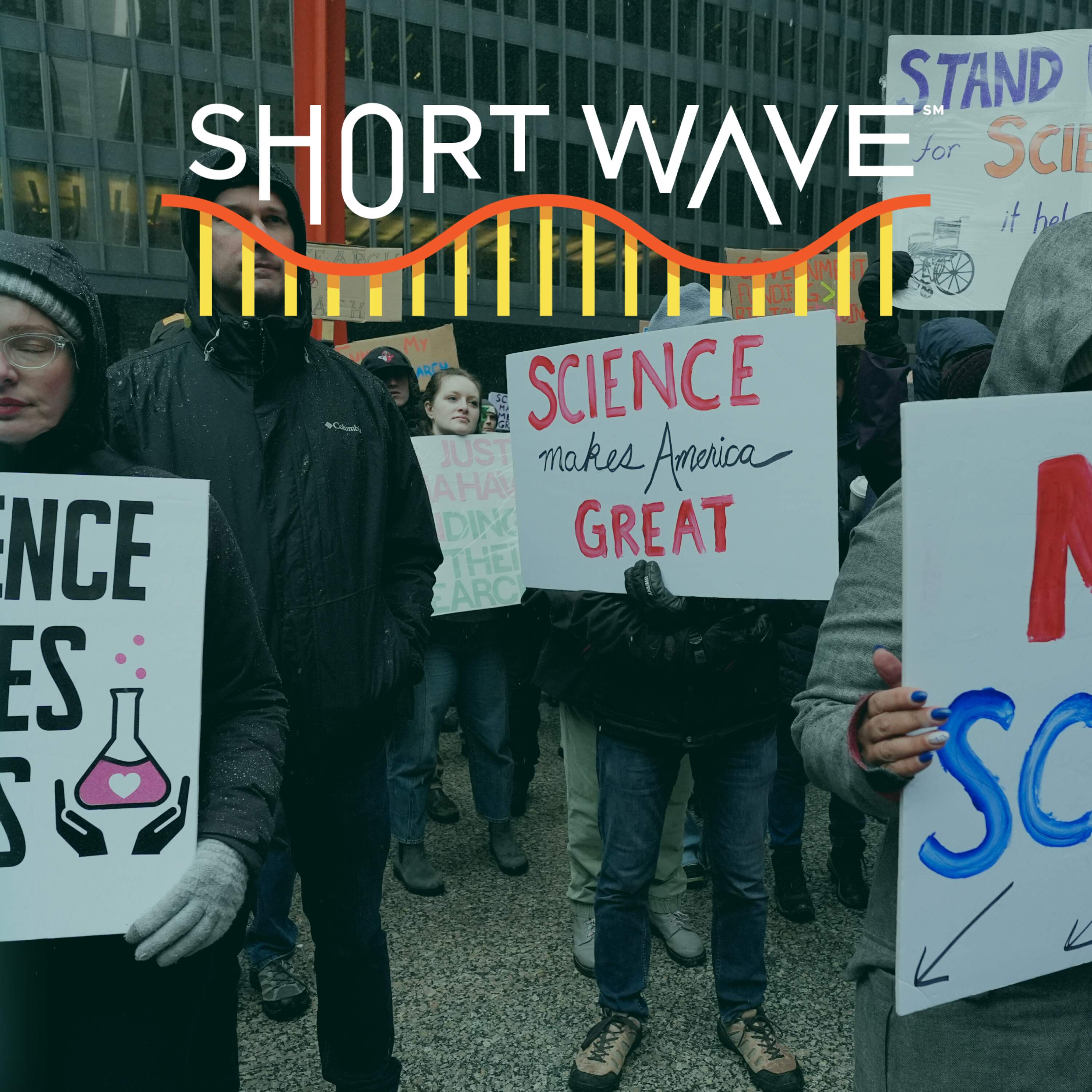
Ep 1265Are DOGE Cuts Making America Healthy?
In its first 100 days, the Trump administration — specifically, the Department of Government Efficiency — shuttered agencies and slashed budgets pertaining to foreign aid, scientific research, food safety and more. How will this impact people's health and well-being both in the U.S., and around the world? To answer that question, we're calling in our colleagues: global health correspondent Gabrielle Emmanuel and health policy reporter Selena Simmons-Duffin.(P.S. If you liked this episode, check out the breakdown of health and science policy changes we did after Trump's first 50 days — with different NPR reporters — here.)Want to hear more about how policy changes affect scientific research and discovery? Let us know by emailing [email protected] to every episode of Short Wave sponsor-free and support our work at NPR by signing up for Short Wave+ at plus.npr.org/shortwave.To manage podcast ad preferences, review the links below:See pcm.adswizz.com for information about our collection and use of personal data for sponsorship and to manage your podcast sponsorship preferences.NPR Privacy Policy

Ep 1264Should Kids Be Taking Melatonin?
A good night's sleep makes a big difference to our mental and physical health. Without quality sleep, we're less productive. Grumpy. It can even affect our hearts. Meanwhile, more and more people are having problems falling and staying asleep, including kids. So some parents are turning to a supplement called melatonin as a potential solution. But some experts worry that there isn't enough research about how regularly taking melatonin affects kids in the long term. Today on the show, we explore the research with Michael Schulson, who recently wrote about the topic for Undark. Want to hear more stories about human health? Email us and let us know at [email protected] to every episode of Short Wave sponsor-free and support our work at NPR by signing up for Short Wave+ at plus.npr.org/shortwave.To manage podcast ad preferences, review the links below:See pcm.adswizz.com for information about our collection and use of personal data for sponsorship and to manage your podcast sponsorship preferences.NPR Privacy Policy

Ep 1263Harnessing Spineless Sea Creatures' Superpowers
From starfish and sea slugs to jellyfish and sponges, the ocean's invertebrates are some of the most ancient and diverse critters on Earth. And so are their superpowers, as marine biologist Drew Harvell calls their unique abilities. In her new book, The Ocean's Menagerie, she chronicles the amazing abilities of some of these spineless creatures and showcases how they've inspired our science and medicine. Listen to our past episode on nudibranchs — the potent slugs of the sea — HERE.Want to hear more stories about underwater marvels? Email us and let us know at [email protected] to every episode of Short Wave sponsor-free and support our work at NPR by signing up for Short Wave+ at plus.npr.org/shortwave.To manage podcast ad preferences, review the links below:See pcm.adswizz.com for information about our collection and use of personal data for sponsorship and to manage your podcast sponsorship preferences.NPR Privacy Policy

Ep 1262This Telescope Could Find "Planet 9"
Some scientists are convinced that beyond Neptune, there's a planet they've yet to see. This so-called "Planet 9" is so far away, it would be a faint object. The stretch of sky researchers would have to search is huge. But a new astronomical facility on a mountaintop in Chile could help tackle the search. The NSF-DOE Vera C. Rubin Observatory has been under construction for years. Now, scientists are finetuning its instruments so the telescope can begin its 10-year mission of taking images of almost the entire southern sky. Read more of science correspondent Nell Greenfieldboyce's reporting here.Want to hear more stories about the mysteries of space? Email us and let us know at [email protected] to every episode of Short Wave sponsor-free and support our work at NPR by signing up for Short Wave+ at plus.npr.org/shortwave.To manage podcast ad preferences, review the links below:See pcm.adswizz.com for information about our collection and use of personal data for sponsorship and to manage your podcast sponsorship preferences.NPR Privacy Policy

Ep 1261Why These Salmon Are On Anxiety Meds
A fish walks into a pharmacy ... well, not exactly. Fish aren't being prescribed anti-anxiety drugs. But they are experiencing the effects. Researchers have found more than 900 different pharmaceutical ingredients in rivers and streams around the world, though they're not yet sure how this could change the behavior of fish and other aquatic animals in the wild."We can't, you know, dump a bunch of pharmaceuticals into the river," says Jack Brand, biologist at the Swedish University of Agricultural Sciences. Instead, Jack's team did the next best thing – with some surprising results.This episode was reported by NPR science correspondent Jon Lambert. Check out more of his reporting.Want to hear more stories about animal behavior? Email us and let us know at [email protected] to every episode of Short Wave sponsor-free and support our work at NPR by signing up for Short Wave+ at plus.npr.org/shortwave.To manage podcast ad preferences, review the links below:See pcm.adswizz.com for information about our collection and use of personal data for sponsorship and to manage your podcast sponsorship preferences.NPR Privacy Policy

Ep 1260Nature Quest: Are Flowers Blooming Early?
Welcome!! This is the first episode of Nature Quest, a monthly Short Wave segment that answers listener questions about your local environment. This month, we hear from a listener in California who's concerned that the flowers in his neighborhood are blooming way, way earlier. Is that normal? And is climate change the culprit? Short Wavers Emily Kwong and Hannah Chinn investigate.Got a question about changes in your local environment? Send a voice memo to [email protected] with your name, where you live and your question. We might make it into our next Nature Quest episode!Listen to every episode of Short Wave sponsor-free and support our work at NPR by signing up for Short Wave+ at plus.npr.org/shortwave.To manage podcast ad preferences, review the links below:See pcm.adswizz.com for information about our collection and use of personal data for sponsorship and to manage your podcast sponsorship preferences.NPR Privacy Policy

Ep 1259Should Humans Live On Mars?
As global warming continues and space technology improves, there is more and more talk about the growing possibility of a sci-fi future in which humans become a multiplanetary species. Specifically, that we could live on Mars. Biologist Kelly Weinersmith and cartoonist Zach Weinersmith have spent four years researching what life on Mars would look like if we did it anytime soon. In their book A City On Mars, they get into all sorts of questions: How would we have babies in space? How would we have enough food? They join host Regina G. Barber and explain why it might be best to stay on Earth. Check out Kelly and Zach Weinersmith's book A City On Mars.Have another space story you want us to cover on a future episode? Email us at [email protected] — we'd love to hear from you! To manage podcast ad preferences, review the links below:See pcm.adswizz.com for information about our collection and use of personal data for sponsorship and to manage your podcast sponsorship preferences.NPR Privacy Policy

Ep 1258Good Vibrations: How Fiddler Crabs Mate
The male European fiddler crab attracts his mate by performing a courtship dance. New research published in the Journal of Experimental Biology says that dance isn't just notable for its visuals — it's notable for its vibrations, too.Researchers observed four different stages of the crab's courtship dance, each stage escalating the amount of seismic vibrational output. "It's 'come and find me in my underground house, ladies,'" says Beth Mortimer, a study author and biologist at the University of Oxford. Interested in more seismic vibration communication? Send us an email at [email protected] to every episode of Short Wave sponsor-free and support our work at NPR by signing up for Short Wave+ at plus.npr.org/shortwave.To manage podcast ad preferences, review the links below:See pcm.adswizz.com for information about our collection and use of personal data for sponsorship and to manage your podcast sponsorship preferences.NPR Privacy Policy

Ep 1257How Nature Makes A Complex Brain
A recent series of studies suggests that the brains of birds, reptiles and mammals all evolved independently — even though they share a common ancestor. That means evolution has found more than one way to make a complex brain, and human brains may not be quite as special as we think. To learn more about this, we talk to Fernando García-Moreno about this series of studies he co-authored that came out in Science in February. Want to hear more about the complex road of evolution? Send us an email at [email protected]. Listen to every episode of Short Wave sponsor-free and support our work at NPR by signing up for Short Wave+ at plus.npr.org/shortwave.To manage podcast ad preferences, review the links below:See pcm.adswizz.com for information about our collection and use of personal data for sponsorship and to manage your podcast sponsorship preferences.NPR Privacy Policy

Ep 1256Your Allergies May Be Getting Worse
Plants are blooming right now – and so are people's allergies. And if it feels like those pesky symptoms are getting worse ... you're probably right. Wednesday, a review published in the journal The Laryngoscope looked at the link between climate change and increasing rates of allergic rhinitis, or hay fever. So today, we turn back to a classic Short Wave episode from Brit Hanson and Maddie Sofia, who spoke to allergy expert Dr. Juanita Mora about some quick tips for managing seasonal allergies.Want more of the science behind your health questions? Send us an email at [email protected]. Listen to every episode of Short Wave sponsor-free and support our work at NPR by signing up for Short Wave+ at plus.npr.org/shortwave.To manage podcast ad preferences, review the links below:See pcm.adswizz.com for information about our collection and use of personal data for sponsorship and to manage your podcast sponsorship preferences.NPR Privacy Policy

Ep 1255All Hail The Butt Flicker
Did you know there's an insect that can fling its pee 40 times faster than a cheetah accelerates? We did — thanks to a comic from the Bhamla Lab at the Georgia Institute of Technology. Since 2020, principal investigator Saad Bhamla has been leading the charge to make science more accessible by publishing comics alongside every paper his lab publishes. Today, he introduces Emily to two of the most popular characters — Sheriff Sharpshooter and Captain Cicada — and shares why a comic about butt-flicking insects is a valuable way to take science beyond the lab. Want to hear more about nature's superpowers? Send us an email at [email protected]. Listen to every episode of Short Wave sponsor-free and support our work at NPR by signing up for Short Wave+ at plus.npr.org/shortwave.To manage podcast ad preferences, review the links below:See pcm.adswizz.com for information about our collection and use of personal data for sponsorship and to manage your podcast sponsorship preferences.NPR Privacy Policy

Ep 1254How Do Astronomers Find Exoplanets? Wiggles!
Dune. Star Wars. Alien. Science fiction movies love alien worlds, and so do we. But how do scientists find planets outside our solar system in real life? One way is by looking for the stars that wiggle. Historically, astronomers have measured those wiggles via the Doppler method, carefully analyzing how the star's light shifts. Thanks to new data from the GAIA telescope, scientists have a much better picture of distant stars' wiggles — and the exoplanets that cause them.Want to hear more about exoplanet discoveries? Send us an email at [email protected]. Listen to every episode of Short Wave sponsor-free and support our work at NPR by signing up for Short Wave+ at plus.npr.org/shortwave.To manage podcast ad preferences, review the links below:See pcm.adswizz.com for information about our collection and use of personal data for sponsorship and to manage your podcast sponsorship preferences.NPR Privacy Policy

Ep 1253Could Psychedelics Become Tripless?
This week, we've heard from researchers trying to untangle the effects of the "trip" that often comes with psychedelics and ketamine from the ways these drugs might change the human brain. For part three of our series on psychedelic drug research, we get a glimpse into why some researchers are taking the "trip" out of these drugs altogether. You don't need to have heard the previous two episodes to understand this episode on what could be next for psychedelic medicine.Catch the rest of this series on psychedelics and related drugs this week by following us on Spotify and Apple Podcasts. They're the previous two episodes in our podcast feed.Have other questions about psychedelics and the brain? Let us know by emailing [email protected]! To manage podcast ad preferences, review the links below:See pcm.adswizz.com for information about our collection and use of personal data for sponsorship and to manage your podcast sponsorship preferences.NPR Privacy Policy

Ep 1252What If You Took The "Trip" Out Of Ketamine?
What if you could get all the potential benefits of ketamine without the "trip"? For part two of our series on psychedelics, we look at how some researchers are trying to disentangle the "trip" from the drugs' effects on the brain — and why the answer could help direct the future of psychedelic research. (Spoiler alert: People generally know if they're tripping or not.) This episode: a researcher navigating this challenge by putting his patients to sleep. Catch the rest of this series on psychedelics and related drugs this week by following us on Spotify and Apple Podcasts. Have other questions about psychedelics and the brain? Let us know by emailing [email protected]! To manage podcast ad preferences, review the links below:See pcm.adswizz.com for information about our collection and use of personal data for sponsorship and to manage your podcast sponsorship preferences.NPR Privacy Policy

Ep 1251Why The Trip Complicates Psychedelic Research
Researchers are studying psychedelics as a possible treatment for conditions like depression, PTSD and substance use disorders. But they don't know exactly how these drugs work. Getting the answer to this question is especially difficult when people often take psychedelics like LSD and psilocybin for the "trip." This week on Short Wave, we're talking to researchers about how they're trying to untangle the effects of this "trip" from the ways psychedelics might change the human brain ... and why the answer could help direct the future of psychedelic research. Catch the rest of this series on psychedelics and related drugs this week by following us on Spotify and Apple Podcasts. Have other questions about psychedelics and the brain? Let us know by emailing [email protected]! To manage podcast ad preferences, review the links below:See pcm.adswizz.com for information about our collection and use of personal data for sponsorship and to manage your podcast sponsorship preferences.NPR Privacy Policy

Ep 1250Could Running Change Your Brain?
Running an entire marathon takes a lot of energy. Neuroscientist Carlos Matute knows this: he's run 18 of them. He wondered how runners' bodies get the energy they need to make it to the finish line. His new research in the journal Nature Metabolism may be the first step in answering the question – and suggests their brains might be (temporarily) depleting a fatty substance that coats nerve cells called myelin. Have other questions about the brain? Let us know by emailing [email protected]! Listen to every episode of Short Wave sponsor-free and support our work at NPR by signing up for Short Wave+ at plus.npr.org/shortwave.To manage podcast ad preferences, review the links below:See pcm.adswizz.com for information about our collection and use of personal data for sponsorship and to manage your podcast sponsorship preferences.NPR Privacy Policy

Ep 1249Tornado Alley: Home Of Extreme Winds
Each year, the United States has about 1,200 tornadoes. Many of them happen in tornado alley, a very broad swath of the U.S. that shifts seasonally. This area gets at least ten times more tornadoes than the rest of the world. Science writer Sushmita Pathak says that huge difference can be chalked up to one word: geography. But there's a slice of South America with similar geographical features that gets comparatively fewer tornadoes, so what gives? Sushmita wades into the research weeds with guest host Berly McCoy, one of Short Wave's producers. Read Sushmita's full article on tornadoes that she wrote for the publication Eos.Have other science weather stories you think we should cover on the show? Let us know by emailing [email protected]! Listen to every episode of Short Wave sponsor-free and support our work at NPR by signing up for Short Wave+ at plus.npr.org/shortwave.To manage podcast ad preferences, review the links below:See pcm.adswizz.com for information about our collection and use of personal data for sponsorship and to manage your podcast sponsorship preferences.NPR Privacy Policy

Ep 1248The Iguanas That Rafted To Fiji
Most iguanas are indigenous to the Americas. So how did the Fijian species end up on the island, nearly 5000 miles away in the South Pacific? According to a new study in the journal PNAS, it was probably via raft ... that is, on clump of floating trees. And this rafting hypothesis isn't entirely unprecedented. After hurricanes Luis and Marilyn hit the Caribbean in the 1990s, researchers found that a group of iguanas had floated over 180 miles away from Guadeloupe to the territory of Anguilla. Want to hear more about iguanas? Or rafts? Or evolutionary biology? Email us at [email protected] to every episode of Short Wave sponsor-free and support our work at NPR by signing up for Short Wave+ at plus.npr.org/shortwave.To manage podcast ad preferences, review the links below:See pcm.adswizz.com for information about our collection and use of personal data for sponsorship and to manage your podcast sponsorship preferences.NPR Privacy Policy

Ep 1247Is AI Ready For Robots?
It seems like artificial intelligence is everywhere in our virtual lives. It's in our search results and our phones. But what happens when AI moves out of the chat and into the real world? NPR science editor and correspondent Geoff Brumfiel took a trip to the Intelligence through Robotic Interaction at Scale Lab at Stanford University to see how scientists are using AI to power robots and the large hurdles that exist for them to perform even simple tasks.Read Geoff's full story. Interested in more AI stories? Email us your ideas at [email protected] manage podcast ad preferences, review the links below:See pcm.adswizz.com for information about our collection and use of personal data for sponsorship and to manage your podcast sponsorship preferences.NPR Privacy Policy

Ep 1246Rare Narwhal Footage Shows New Tusk Activities
What are the narwhals up to? Generally, we don't really know! They are mysterious creatures. NPR science correspondent Nell Greenfieldboyce talks about new, rare drone footage scientists captured of arctic narwhals. The video sparked new ideas for how they use their tusks.Read Nell's full piece.Love mysterious critters and want to hear more? Email us at [email protected] manage podcast ad preferences, review the links below:See pcm.adswizz.com for information about our collection and use of personal data for sponsorship and to manage your podcast sponsorship preferences.NPR Privacy Policy

Ep 1245The Algae That Thrive in Arctic Darkness
Microalgae are tiny organisms that convert energy from sunlight into fuel. The arctic ecosystem depends on them. In springtime, the algae bloom brilliant shades of green and draw tiny crustaceans, fish, birds and more to arctic waters. But what happens in wintertime, when the sun goes down and darkness reins for months? In the depths of the polar night, biogeochemist Clara Hoppe has found evidence that some microalgae are still ready to photosynthesize. Today on the show: how tiny microalgae limbo for their lives and come out more powerful than scientists ever imagined. Want to hear more stories of nature pushing the boundaries of what scientists previously thought possible? Let us know by emailing [email protected]!Listen to every episode of Short Wave sponsor-free and support our work at NPR by signing up for Short Wave+ at plus.npr.org/shortwave.To manage podcast ad preferences, review the links below:See pcm.adswizz.com for information about our collection and use of personal data for sponsorship and to manage your podcast sponsorship preferences.NPR Privacy Policy

Ep 1244Climate Change + Baseball = More Home Runs
Baseball season is nigh! From Yankee stadium in New York to Dodger stadium in Los Angeles, teams around the country will face off Thursday to mark the start of the 2025 MLB season. And when we here at Short Wave think of baseball, we naturally think of physics. To get the inside scoop on the physics of baseball, like how to hit a home run, we talk to Frederic Bertley, CEO and President of the Center of Science and Industry, a science museum in Columbus, Ohio. In this encore episode, he also talks to host Regina G. Barber about how climate change is affecting the game.Interested in the science of other sports? Email us at [email protected] — we'd love to hear from you.To manage podcast ad preferences, review the links below:See pcm.adswizz.com for information about our collection and use of personal data for sponsorship and to manage your podcast sponsorship preferences.NPR Privacy Policy

Ep 1243What Scientists Got Wrong About COVID-19
Early in the beginning of the COVID-19 pandemic, scientists predicted the SARS-CoV-2 virus would mutate slowly. They were wrong. Hundreds of thousands of viral mutations and multiple seasonal waves later, we now know why. The answer changes researchers' understanding of viral evolution — and it could help predict the evolution of other viruses in the future. Emily talks about it all with Sarah Zhang, a health writer for The Atlantic. Want to hear more virology or human biology stories? Let us know by emailing [email protected] manage podcast ad preferences, review the links below:See pcm.adswizz.com for information about our collection and use of personal data for sponsorship and to manage your podcast sponsorship preferences.NPR Privacy Policy

Ep 1242What Experts Say About ADHD-Tok
Ever diagnosed yourself with a mental health disorder based on a TikTok video? If so, you're not alone. "I personally don't think that there's anything more human than wanting to understand yourself and wanting to understand your own experiences," says Vasileia Karasavva. Vasileia is the lead author of a paper published Wednesday in the journal PLOS One that gets into why this kind of self-diagnosis can be such a double-edged sword.Listen to every episode of Short Wave sponsor-free and support our work at NPR by signing up for Short Wave+ at plus.npr.org/shortwave.To manage podcast ad preferences, review the links below:See pcm.adswizz.com for information about our collection and use of personal data for sponsorship and to manage your podcast sponsorship preferences.NPR Privacy Policy

Ep 1241What's In Your Personal Care Products?
Ever scan the ingredient list of your favorite personal care products like shampoos or lotions and think, what are these complicated chemicals? And are any of them bad for me? We definitely have. And our colleagues at NPR's Life Kit did one step better: They parlayed their anxiety spiral into a helpful guide on the safety of personal care products. So today, Gina talks to Life Kit's Marielle Segarra about some of the top chemicals of concern, including parabens and phthalates.Click here to hear the full Life Kit guide — including how to audit your go-to products.Listen to every episode of Short Wave sponsor-free and support our work at NPR by signing up for Short Wave+ at plus.npr.org/shortwave.To manage podcast ad preferences, review the links below:See pcm.adswizz.com for information about our collection and use of personal data for sponsorship and to manage your podcast sponsorship preferences.NPR Privacy Policy

Ep 1240What to Know About The Measles Outbreak
Measles is one of the most contagious infectious diseases known to science – more contagious than Ebola, smallpox or COVID-19. Declining vaccination rates over the past few years, plus a recent outbreak in West Texas, have public health experts concerned. Here's what to know about the science of this virus — plus how to protect against it. For the latest, host Regina G. Barber talks to NPR health correspondent Maria Godoy.Interested in other stories about public health? Tell us what you want to hear about by emailing [email protected]!Listen to every episode of Short Wave sponsor-free and support our work at NPR by signing up for Short Wave+ at plus.npr.org/shortwave.To manage podcast ad preferences, review the links below:See pcm.adswizz.com for information about our collection and use of personal data for sponsorship and to manage your podcast sponsorship preferences.NPR Privacy Policy

Ep 1239Could 'Severance' Become Our Reality?
What if we had the ultimate work-life balance? This fundamental question underlies the hit Apple TV+ show Severance – now in its second season. Ahead of the season 2 finale this Friday, producer Rachel Carlson sat down with the science consultant for the series, Dr. Vijay Agarwal. Vijay says the concept is "resoundingly" possible – and that scientists are closer than we might think. More questions about the intersections of pop culture and science? Email us at [email protected]. Listen to every episode of Short Wave sponsor-free and support our work at NPR by signing up for Short Wave+ at plus.npr.org/shortwave. To manage podcast ad preferences, review the links below:See pcm.adswizz.com for information about our collection and use of personal data for sponsorship and to manage your podcast sponsorship preferences.NPR Privacy Policy

Ep 1238Love Fruit? Thank (Dinosaur) Mass Extinction
Move over, TikTokers. It's time to shine a spotlight on some of the earliest influencers around: dinosaurs. When these ecosystem engineers were in their heyday, forest canopies were open and seeds were small. But around the time most dinosaurs were wiped out, paleontologists noticed an interesting shift in the fossil record: Seeds got bigger — much bigger. There was a fruit boom. Did the death of these dinosaurs have something to do with it? And who are the modern day equivalent of dinosaur influencers? To find out, host Emily Kwong talks to Chris Doughty, an ecologist at Northern Arizona University.Tell us what other tales of dino past you want us to regale you with by emailing us at [email protected]! Listen to every episode of Short Wave sponsor-free and support our work at NPR by signing up for Short Wave+ at plus.npr.org/shortwave.To manage podcast ad preferences, review the links below:See pcm.adswizz.com for information about our collection and use of personal data for sponsorship and to manage your podcast sponsorship preferences.NPR Privacy Policy

Ep 1237Let's Talk About (Biological) Sex, Baby
Biological sex is all over the news lately. Whether it's via President Trump's executive order affecting passport policy, moving trans inmates between prisons or shifting the requirements for women in sports — appeals to "the biological reality of sex" are constant. In truth, biological sex, like a lot of scientific categories, is nuanced. It's defined by multiple criteria – including chromosomal, chemical and physical factors – that can, and do, change over a person's lifetime. And it's a reality that's definitely not limited to male and female.Want the episode to cover more nuances of human biology? Let us know by emailing [email protected]! We're also always open to other story ideas you have.Listen to every episode of Short Wave sponsor-free and support our work at NPR by signing up for Short Wave+ at plus.npr.org/shortwave.To manage podcast ad preferences, review the links below:See pcm.adswizz.com for information about our collection and use of personal data for sponsorship and to manage your podcast sponsorship preferences.NPR Privacy Policy

Ep 1236Is The Trump Administration Breaking Science?
In its first 50 days, the Trump administration made sweeping changes to scientific arms of the government like the Department of Health and Human Services, which oversees the National Institutes of Health, Centers for Disease Control and Prevention, and the Food and Drug Administration. The president issued executive orders to terminate all work that was related to DEI, environmental justice and gender inclusivity. In response, research was halted and thousands of people were fired — some of which was reversed. It's a lot to keep track of, so we called in reinforcements. Here to recount it all and analyze what these ongoing changes mean for the future of scientific research in the United States are NPR science correspondents Rob Stein, Pien Huang and Jonathan Lambert. Want to hear more about policy changes affecting science? Let us know by emailing [email protected]! We're also always open to other story ideas you have.Listen to every episode of Short Wave sponsor-free and support our work at NPR by signing up for Short Wave+ at plus.npr.org/shortwave.To manage podcast ad preferences, review the links below:See pcm.adswizz.com for information about our collection and use of personal data for sponsorship and to manage your podcast sponsorship preferences.NPR Privacy Policy

Ep 1235The Great Antarctic Food Web Puzzle
Tourists to Antarctica are fueling research on some of the tiniest, most influential organisms on Earth: phytoplankton. These itty bitty critters make their own food and are the base of the food web in most of the ocean, but tracking how well they're doing is historically tricky. So, researchers with the program FjordPhyto are using samples collected by these tourists to understand how the balance of power in the Antarctic food web could be shifting — could ripple across the food web of the entire ocean. Want to hear more community science at work or about polar ecosystems? Let us know by emailing [email protected]! We're also always open to other story ideas you have. Listen to every episode of Short Wave sponsor-free and support our work at NPR by signing up for Short Wave+ at plus.npr.org/shortwave.To manage podcast ad preferences, review the links below:See pcm.adswizz.com for information about our collection and use of personal data for sponsorship and to manage your podcast sponsorship preferences.NPR Privacy Policy

Ep 1234Stone Age To Bone Age?
Archeologists know early humans used stone to make tools long before the time of Homo sapiens. But a new discovery out this week in Nature suggests early humans in eastern Africa were also using animal bones – one million years earlier than researchers previously thought. The finding suggests that these early humans were intentionally shaping animal materials – like elephant and hippopotamus bones – to make tools and that it could indicate advancements in early human cognition. Want more on early human history? Email us at [email protected]. Listen to Short Wave on Spotify, Apple Podcasts and Google Podcasts.To manage podcast ad preferences, review the links below:See pcm.adswizz.com for information about our collection and use of personal data for sponsorship and to manage your podcast sponsorship preferences.NPR Privacy Policy

Ep 1233Will Bark For Science
On their second job ever, Collette Yee and her partner were assigned a difficult job: locate transient whale poop in the ocean before it sinks. Luckily, Collette was partnered with Jack, a blue heeler mix trained to sniff out cryptic odors from things that conservation biologists have trouble collecting on their own. Producer Berly McCoy reports on Jack and the growing field of dog detection conservation that helps science by sniffing out everything from invasive crabs to diseased plants to endangered species. Interested in more biotech stories? Let us know by dropping a line to [email protected] to every episode of Short Wave sponsor-free and support our work at NPR by signing up for Short Wave+ at plus.npr.org/shortwave.To manage podcast ad preferences, review the links below:See pcm.adswizz.com for information about our collection and use of personal data for sponsorship and to manage your podcast sponsorship preferences.NPR Privacy Policy

Ep 1232Reviving The Woolly Mammoth ... With Mice
You've heard of the woolly mammoth. But have you heard of woolly mice? These critters were genetically modified by the Dallas-based biotech company Colossal Biosciences to have the same "woolly" and fat appearance as the ancient mammoths. The mice are a key step in the longer journey to de-extinct the woolly mammoth. NPR's Rob Stein takes us to the lab where it all happened.Interested in more biotech stories? Let us know by dropping a line to [email protected] to every episode of Short Wave sponsor-free and support our work at NPR by signing up for Short Wave+ at plus.npr.org/shortwave. To manage podcast ad preferences, review the links below:See pcm.adswizz.com for information about our collection and use of personal data for sponsorship and to manage your podcast sponsorship preferences.NPR Privacy Policy

Ep 1231What It's Like Taking Alzheimer's Drugs
There are now two fully approved drugs on the market that can, sometimes, slow down the progression of Alzheimer's disease. Both have been shown to slow down the mental decline of Alzheimer's by more than 25%. But that's in a group of patients—an individual may do much better, or not be helped at all. NPR Science Correspondent Jon Hamilton has been talking to people who've taken these drugs. Today he has the story of two patients to receive them.Interested in more human health stories? Contact us at [email protected]. Listen to every episode of Short Wave sponsor-free and support our work at NPR by signing up for Short Wave+ at plus.npr.org/shortwave.To manage podcast ad preferences, review the links below:See pcm.adswizz.com for information about our collection and use of personal data for sponsorship and to manage your podcast sponsorship preferences.NPR Privacy Policy