
Short Wave
1,581 episodes — Page 22 of 32

Two Sides Of Guyana: A Green Champion And An Oil Producer
For Guyana the potential wealth from oil development was irresistible — even as the country faces rising seas. Today on the show, Emily Kwong talks to reporter Camila Domonoske about her trip to Guyana and how it's grappling with its role as a victim of climate change while it moves forward with drilling more oil. For more of Camila's reporting and pictures from her visit, check out "Guyana is a poor country that was a green champion. Then Exxon discovered oil." https://n.pr/3nBLMHT>>You can follow Emily on Twitter @EmilyKwong1234 and Camila @CamilaReads. Email Short Wave at [email protected]. To manage podcast ad preferences, review the links below:See pcm.adswizz.com for information about our collection and use of personal data for sponsorship and to manage your podcast sponsorship preferences.NPR Privacy Policy

Bee Superfood: Exploring Honey's Chemical Complexities
Honey bees know a lot about honey, and humans are starting to catch up. Scientists are now looking at how the chemicals in honey affect bee health. With the help of research scientist Bernarda Calla, Short Wave producer Berly McCoy explains the chemical complexities of honey, how it helps keep honey bees resilient, and what role it may play in saving the bees. Read Berly's full story on honey in Knowable Magazine: https://bit.ly/3qIXRN3To manage podcast ad preferences, review the links below:See pcm.adswizz.com for information about our collection and use of personal data for sponsorship and to manage your podcast sponsorship preferences.NPR Privacy Policy

One Woman's Quest For The (Scientifically) Best Turkey
Turkey is the usual centerpiece of the Thanksgiving dinner, but it's all too easy to end up with a dry, tough, flavorless bird. For NPR science correspondent Maria Godoy, it got so bad that several years ago, her family decided to abandon the turkey tradition altogether. Can science help her make a better bird this year? That's what she hopes as she seeks expert advice from food science writers and cookbook authors Nik Sharma and Kenji López-Alt. To manage podcast ad preferences, review the links below:See pcm.adswizz.com for information about our collection and use of personal data for sponsorship and to manage your podcast sponsorship preferences.NPR Privacy Policy

Parents, We're Here To Help! Answers To Your COVID Vaccine Questions
Now that the Pfizer COVID vaccine is authorized for children five to eleven years old, a lot of parents are deliberating about what to do next. NPR health policy correspondent Selena Simmons-Duffin answers your questions about vaccine safety for kids, shedding masks at school and how soon you can schedule that long awaited indoor playdate.Email the show at [email protected]. To manage podcast ad preferences, review the links below:See pcm.adswizz.com for information about our collection and use of personal data for sponsorship and to manage your podcast sponsorship preferences.NPR Privacy Policy

Experiencing The Emergence, Life And Death of A Neuron
A new exhibit in Washington, DC, mixes science and technology for an immersive art experience — taking visitors not to a distant land, but into their brains. This installation is a partnership between the Society for Neuroscience and technology-based art space, ARTECHOUSE. Producer Thomas Lu talks to neuroscientist John Morrison and chief creative officer Sandro Kereselidze about the "Life of a Neuron."You can follow Thomas on Twitter @ThomasUyLu. Email us at [email protected] manage podcast ad preferences, review the links below:See pcm.adswizz.com for information about our collection and use of personal data for sponsorship and to manage your podcast sponsorship preferences.NPR Privacy Policy

Camilla Pang On Turning Fear Into Light
Camilla Pang talks with Short Wave host Emily Kwong about her award-winning memoir, "An Outsider's Guide to Humans: What Science Taught Me About What We Do And Who We Are." Diagnosed with autism spectrum disorder at age 8, the scientist and writer pairs her favorite scientific principles with human behavior and navigating daily life. To manage podcast ad preferences, review the links below:See pcm.adswizz.com for information about our collection and use of personal data for sponsorship and to manage your podcast sponsorship preferences.NPR Privacy Policy

The secret history of DNA: Pus, fish sperm, life as we know it
It's been 150 years since the first article was published about the molecule key to life as we know it — DNA. With help from researcher Pravrutha Raman, Short Wave producer Berly McCoy explains how DNA is stored in our cells and why the iconic double helix shape isn't what you'd see if you peeked inside your cells right now. Read more about the discovery of DNA: https://bit.ly/3wNe7hnCurious about all the other biology that defines us? Email the show at [email protected] — we're all ears ... and eyes and toes and ... a lot of things. Thanks, DNA!To manage podcast ad preferences, review the links below:See pcm.adswizz.com for information about our collection and use of personal data for sponsorship and to manage your podcast sponsorship preferences.NPR Privacy Policy

Who pays for climate change?
A coalition of wealthier countries have promised that they'll provide $100 billion each year to help developing countries tackle climate change. So far, most haven't delivered on their promises, and it's a huge point of contention in the talks in Glasgow right now. Today on the show, NPR climate correspondent Lauren Sommer reports on how it looks when one country does get help, and how much more is needed for climate equity.Email the show at [email protected] manage podcast ad preferences, review the links below:See pcm.adswizz.com for information about our collection and use of personal data for sponsorship and to manage your podcast sponsorship preferences.NPR Privacy Policy

Can climate talk turn into climate action?
In the first week of COP26, the UN climate conference, world leaders took to the podium to talk about what their countries are going to do to fight climate change. They made big pledges, but protestors in the streets call their promises "greenwashing" and are calling for more action. Joining the show from Glasgow, Scotland, NPR science correspondent, Dan Charles, talks about how the conference is going. Will the diplomats follow the science on climate change? And will the nations of the world follow through on their pledges to cut greenhouse gas emissions? To manage podcast ad preferences, review the links below:See pcm.adswizz.com for information about our collection and use of personal data for sponsorship and to manage your podcast sponsorship preferences.NPR Privacy Policy

What happens in the brain when we grieve
When we lose someone or something we love, it can feel like we've lost a part of ourselves. And for good reason--our brains are learning how to live in the world without someone we care about in it. Host Emily Kwong talks with psychologist Mary-Frances O'Connor about the process our brains go through when we experience grief. Her book, The Grieving Brain: The Surprising Science of How We Learn from Love and Loss, publishes February 1, 2022. To manage podcast ad preferences, review the links below:See pcm.adswizz.com for information about our collection and use of personal data for sponsorship and to manage your podcast sponsorship preferences.NPR Privacy Policy

Why Aduhelm, a new Alzheimer's treatment, isn't reaching many patients
Aduhelm, known generically as aducanumab, is the first drug to actually affect the underlying disease process associated with Alzheimer's. Yet sales have been limited, and the drug is reaching very few patients — at least so far. It's expensive, risky and likely doing little to improve patients' lives. NPR science correspondent Jon Hamilton explains why doctors and patients aren't excited about the new drug and what it could mean for future Alzheimer's drugs.Additional links:- Jon's reporting on aducanumab: https://n.pr/3bDV0MY- Jon's reporting on future Alzheimer's treatments: https://n.pr/3bDUsqoYou can always reach the show by emailing [email protected] manage podcast ad preferences, review the links below:See pcm.adswizz.com for information about our collection and use of personal data for sponsorship and to manage your podcast sponsorship preferences.NPR Privacy Policy

Housing and COVID: Why helping people pay rent can help fight the pandemic
When people can't afford rent, they often end up in closer quarters. NPR health policy correspondent Selena Simmons-Duffin shares two stories from her reporting and the research being done on housing and eviction policies in the US. For more of Selena's reporting, check out "Why helping people pay rent can fight the pandemic" (https://n.pr/3BIluHt).Follow Selena on Twitter @SelenaSD. You can email Short Wave at [email protected] manage podcast ad preferences, review the links below:See pcm.adswizz.com for information about our collection and use of personal data for sponsorship and to manage your podcast sponsorship preferences.NPR Privacy Policy

Planning for a space mission to last more than 50 years
In 1977, NASA sent out two Voyager probes to study Jupiter and Saturn. The spacecrafts were designed to last about five years, but they are still, to this day, collecting and sending back data from beyond the solar system. But the Voyager mission is living on borrowed time. Today NPR science correspondent Nell Greenfieldboyce talks about a proposal for an intentionally long mission - what it would take for NASA to actually plan for an interstellar voyage that would pass research and responsibility down through generations.What would you put on a spacecraft bound for the stars? Email the show at [email protected]! To manage podcast ad preferences, review the links below:See pcm.adswizz.com for information about our collection and use of personal data for sponsorship and to manage your podcast sponsorship preferences.NPR Privacy Policy

A new step toward ending 'the wrath of malaria'
Scientists have been trying to figure out how to eradicate malaria for decades. Globally, a child under the age of five dies from the disease every two minutes, and even for kids who do survive there can be long term complications. A big breakthrough finally came in October when the World Health Organization endorsed MoSQUIRIX, the first malaria vaccine. It has relatively low efficacy, just about 30%, but malaria researcher Winter Okoth explains how the new vaccine could still make a big difference. To manage podcast ad preferences, review the links below:See pcm.adswizz.com for information about our collection and use of personal data for sponsorship and to manage your podcast sponsorship preferences.NPR Privacy Policy

The history and future of mRNA vaccine technology (encore)
(Encore) The Pfizer-BioNTech and Moderna COVID-19 vaccines are the first authorized vaccines in history to use mRNA technology. In light of the authorization for some children and teens now, we are encoring the episode in which Maddie Sofia chats with Dr. Margaret Liu, a physician and board chair of the International Society for Vaccines, about the history and science behind these groundbreaking vaccines. We'll also ask what we can expect from mRNA vaccines in the future. Have a question for us? Send a note to [email protected] — we'd love to hear it.To manage podcast ad preferences, review the links below:See pcm.adswizz.com for information about our collection and use of personal data for sponsorship and to manage your podcast sponsorship preferences.NPR Privacy Policy

The countries left behind in climate negotiations
NPR climate correspondents Lauren Sommer and Dan Charles join the show before the UN Climate Change Conference in Glasgow, Scotland (COP26) starts on Sunday. Diplomats, business executives, climate experts, and activists from all around the world will gather to discuss the question: Is the world on track to avoid the worst effects of climate change?Lauren and Dan introduce us to two climate activists from countries that will be heavily impacted by climate change. Hilda Flavia Nakabuye from Uganda and María Laura Rojas from Colombia. We learn what's at stake for them if powerful countries don't move faster to halt climate change. To manage podcast ad preferences, review the links below:See pcm.adswizz.com for information about our collection and use of personal data for sponsorship and to manage your podcast sponsorship preferences.NPR Privacy Policy

How metaphors and stories are integral to science and healing
New York's Bellevue Hospital is the oldest public hospital in the country, serving patients from all walks of life. It's also the home of a literary magazine, the Bellevue Literary Review, which turns 20 this year. Today on the show, NPR's arts reporter Neda Ulaby tells Emily how one doctor at Bellevue Hospital decided a literary magazine is essential to both science and healing. You can follow Emily on Twitter @EmilyKwong1234 and Neda @UlaBeast. As always, email Short Wave at [email protected]. To manage podcast ad preferences, review the links below:See pcm.adswizz.com for information about our collection and use of personal data for sponsorship and to manage your podcast sponsorship preferences.NPR Privacy Policy

Spiders can have arachnophobia!
If you're not so fond of spiders, you may find kindred spirits in other spiders! Researcher Daniela Roessler worked with jumping spiders and found that they know to get away from the presence of other possible predator spiders, even if they've never encountered them before. She talks with host Maria Godoy about her research and what Halloween decorations do to the poor spiders, if arachnids can have arachnophobia.Read Daniela's research and watch a video of the experiment: https://doi.org/10.1111/1365-2435.13953The video is also on her Twitter feed: https://twitter.com/RoesslerDaniela. To manage podcast ad preferences, review the links below:See pcm.adswizz.com for information about our collection and use of personal data for sponsorship and to manage your podcast sponsorship preferences.NPR Privacy Policy

The opioid epidemic
Over the last 25 years, the opioid epidemic has been devastating to families and communities all over the U.S., and has caused half a million deaths. But it started as a way to treat severe pain. Today, host Emily Kwong talks to Patrick Radden Keefe, author of the book Empire of Pain: The Secret History of the Sackler Dynasty, about what went wrong in science to make the opioid epidemic what it is today. To manage podcast ad preferences, review the links below:See pcm.adswizz.com for information about our collection and use of personal data for sponsorship and to manage your podcast sponsorship preferences.NPR Privacy Policy

The zombies living in our midst
The idea of human zombies probably seems pretty far-fetched. But there are real zombies out there in the animal kingdom. To kick off Halloween week, science writer Ed Yong of The Atlantic creeps us out with a couple of examples. Hint: they involve fungus. (Encore episode) Read more of Ed's reporting on:- The zombie fungus controlling ants' brains: https://bit.ly/2Zk79nA- How to Tame a Zombie Fungus: https://bit.ly/3E13QAcHaunted by other creepy crawlies in the animal kingdom you think we should know about? Please email the show at [email protected] — we'd love a little afternoon fright!To manage podcast ad preferences, review the links below:See pcm.adswizz.com for information about our collection and use of personal data for sponsorship and to manage your podcast sponsorship preferences.NPR Privacy Policy

Code Switch: Archaeological skeletons in the closet
Today, we present a special episode from our colleagues at Code Switch, NPR's podcast about race and identity. In a small suburb of Washington, D.C., a nondescript beige building houses thousands of Native human remains. The remains are currently in the possession of the Smithsonian Institution, but for the past decade, the Seminole Tribe of Florida has been fighting to get some of them back to Florida to be buried. The controversy over who should decide the fate of these remains has raised questions about identity, history, and the nature of archaeology. Email the show at [email protected] manage podcast ad preferences, review the links below:See pcm.adswizz.com for information about our collection and use of personal data for sponsorship and to manage your podcast sponsorship preferences.NPR Privacy Policy

An ode to the Pacific lamprey
Pacific lamprey may have lived on Earth for about 450 million years. When humans came along, a deep relationship formed between Pacific lamprey and Native American tribes across the western United States. But in the last few decades, tribal elders noticed that pacific lamprey populations have plummeted, due in part to habitat loss and dams built along the Columbia River. So today, an introduction to Pacific lamprey: its unique biology, cultural legacy in the Pacific Northwest and the people who are fighting to save it. To learn more about tribal-led efforts to restore the lamprey, read the Tribal Pacific Lamprey Restoration Plan and watch the documentary The Lost Fish. To manage podcast ad preferences, review the links below:See pcm.adswizz.com for information about our collection and use of personal data for sponsorship and to manage your podcast sponsorship preferences.NPR Privacy Policy

A biodiesel boom (and conundrum)
There's a biodiesel boom happening! It's fueled by incentives and policies intended to cut greenhouse emissions, and is motivating some oil companies like World Energy in Paramount, California to convert their refineries to process soybean oil instead of crude. NPR's food and agriculture correspondent Dan Charles explains why farmers are happy, bakers are frustrated and people who want to preserve the world's natural forests are worried. Email the show at [email protected]. To manage podcast ad preferences, review the links below:See pcm.adswizz.com for information about our collection and use of personal data for sponsorship and to manage your podcast sponsorship preferences.NPR Privacy Policy
COVID-19 boosters are here
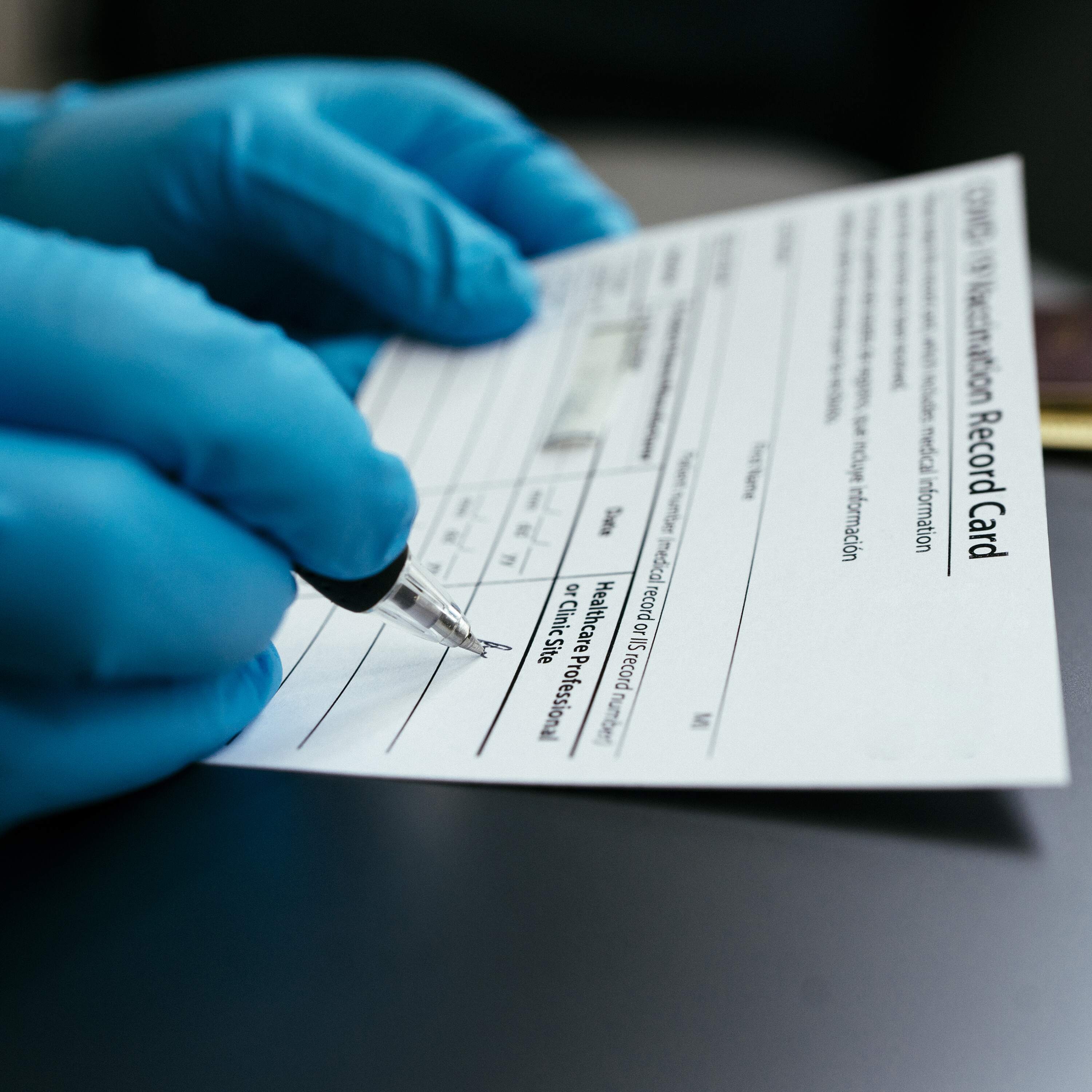
The United States is on the verge of dramatically expanding the availability of COVID-19 vaccine boosters to shore up people's immune systems. As NPR health correspondent Rob Stein reports, the Food and Drug Administration is poised to authorize the boosters of the Moderna and Johnson & Johnson vaccines. Still, many experts argue boosters aren't needed because the vaccines are working well and it would be unethical to give people in the U.S. extra shots when most of the world is still waiting for their first. To manage podcast ad preferences, review the links below:See pcm.adswizz.com for information about our collection and use of personal data for sponsorship and to manage your podcast sponsorship preferences.NPR Privacy Policy

How do we make sense of the sounds around us?
Our colleagues at All Things Considered chatted with neuroscientist Nina Kraus about her new book Of Sound Mind. She shares how our brains process and create meaning from the sounds around us. To manage podcast ad preferences, review the links below:See pcm.adswizz.com for information about our collection and use of personal data for sponsorship and to manage your podcast sponsorship preferences.NPR Privacy Policy

The Mighty Mangrove
Along certain coastlines near the equator, you can find a tree with superpowers. Mangroves provide a safe haven for a whole ecosystem of animals. They also fight climate change by storing tons of carbon, thanks to a spectacular above-ground network of tangled roots. Ecologist Alex Moore talks to guest host Maria Godoy about how mighty this tree is, and why it is under threat. To manage podcast ad preferences, review the links below:See pcm.adswizz.com for information about our collection and use of personal data for sponsorship and to manage your podcast sponsorship preferences.NPR Privacy Policy

The mystery of the mummified Twinkie
A box of Twinkies, left alone for eight years, held some surprises for Colin Purrington. Upon having a sugar craving, combined with being "just so bored, with the pandemic," Purrington opened the box a few weeks ago. Like many people, Purrington believed Twinkies are basically immortal, although the official shelf life is 45 days. NPR's Nell Greenfieldboyce talked to Purrington and explains how two scientists got involved and started unraveling the mystery of the mummified Twinkie. (Encore episode) To manage podcast ad preferences, review the links below:See pcm.adswizz.com for information about our collection and use of personal data for sponsorship and to manage your podcast sponsorship preferences.NPR Privacy Policy

White scholars can complicate research into health disparities
The COVID-19 has exposed longstanding and massive health disparities in the U.S., resulting in people of color dying at disproportionately higher rates than other races in this country. Today on the show, guest host Maria Godoy talks with Usha Lee McFarling about her reporting — how new funding and interest has led to increased attention to the topic of disparities in health care and health outcomes, but also left out or pushed aside some researchers in the field — many of them researchers of color. You can follow Maria on Twitter @MGodoyH. Email [email protected] manage podcast ad preferences, review the links below:See pcm.adswizz.com for information about our collection and use of personal data for sponsorship and to manage your podcast sponsorship preferences.NPR Privacy Policy

Cockroaches are cool!
Cockroaches - do they get a bad rap? Producer Thomas Lu teams up with self-proclaimed lesbian cockroach defender Perry Beasley-Hall to convince producer/guest host Rebecca Ramirez that indeed they are under-rated. These critters could number up to 10,000 species, but only about 30 are pesky to humans and some are beautiful! And complicated! And maybe even clean. What insect do you think gets a bad rap? Write us at [email protected]. You can follow Thomas on Twitter @ThomasUyLu and Rebecca @RebeccalRamirez.To manage podcast ad preferences, review the links below:See pcm.adswizz.com for information about our collection and use of personal data for sponsorship and to manage your podcast sponsorship preferences.NPR Privacy Policy

Bonobos and the Evolution of Nice
How did humans evolve some key cooperative behaviors like sharing? NPR Science Correspondent Jon Hamilton reports back from a bonobo sanctuary in the Democratic Republic of the Congo where scientists are trying to answer that very question. (Encore episode) If you have something nice to say - email the show at [email protected]!To manage podcast ad preferences, review the links below:See pcm.adswizz.com for information about our collection and use of personal data for sponsorship and to manage your podcast sponsorship preferences.NPR Privacy Policy

Why Music Sticks in Our Brains
Why do some songs can stick with us for a long time, even when other memories start to fade? Science reporter (and former Short Wave intern) Rasha Aridi explains the neuroscience behind that surprising moment of, "Wow, how do I still remember that song?!" Email the show at [email protected] manage podcast ad preferences, review the links below:See pcm.adswizz.com for information about our collection and use of personal data for sponsorship and to manage your podcast sponsorship preferences.NPR Privacy Policy

Here's a better way to talk about hair
Humans have scalp hair. But why is human scalp hair so varied? Biological anthropologist Tina Lasisi wanted to find out. And while completing her PhD at Penn State University, she developed a better system for describing hair — rooted in actual science. To hear more from Tina, check out these webinars: Why Care About Hair (https://bit.ly/3liJZ96) and How Hair Reveals the Futility of Race Categories (https://s.si.edu/3Dik6g8). And to dive deep into Tina's research, we recommend her paper, The constraints of racialization: How classification and valuation hinder scientific research on human variation (https://bit.ly/3DfDrOS)To manage podcast ad preferences, review the links below:See pcm.adswizz.com for information about our collection and use of personal data for sponsorship and to manage your podcast sponsorship preferences.NPR Privacy Policy

How foraging reconnected Alexis Nikole Nelson with food and her culture
Our colleagues at the TED Radio Hour introduce us to forager and TikTok influencer Alexis Nikole Nelson. She shares how the great outdoors has offered her both an endless array of food options and an outlet to reconnect with her food and her culture. Listen to the full TED Radio Hour episode, The Food Connection: https://n.pr/3DeRmEUFollow TED Radio Hour and host Manoush Zomorodi on Twitter:- TED Radio Hour: https://twitter.com/TEDRadioHour- Manoush Zamorodi: https://twitter.com/manoushzTo manage podcast ad preferences, review the links below:See pcm.adswizz.com for information about our collection and use of personal data for sponsorship and to manage your podcast sponsorship preferences.NPR Privacy Policy

The Toll Of Burnout On Medical Workers — And Their Patients
Burnout has long been a problem among health care workers. The pandemic has only made it worse. Some were hopeful COVID vaccines would provide some relief, but that hasn't been the case. Now, health care workers are leaving the industry — and they're taking their expertise with them. Plenty of surveys say that burnout hurts patient care. NPR correspondent Yuki Noguchi spoke to medical workers who agree, the burnout they see on the job means that sometimes patients are not getting what they need.Listen to our conversation with Dr. Arghavan Salles about burnout: https://n.pr/3CYimbqReach the show by emailing [email protected] manage podcast ad preferences, review the links below:See pcm.adswizz.com for information about our collection and use of personal data for sponsorship and to manage your podcast sponsorship preferences.NPR Privacy Policy

SURPRISE! It's A...Babbling Baby Bat?
A paper published recently in the journal Science finds similarities between the babbling of human infants and the babbling of the greater sac-winged bat (Saccopteryx bilineata) — a small species of bat that lives in Central and South America. As science correspondent Geoff Brumfiel reports, the researchers believe both bats and humans evolved babbling as a precursor to more complex vocal behavior like singing, or, in the case of people, talking.Wondering what similarities humans have to other animals? Email the human animals at [email protected]. We might dig up some answers.To manage podcast ad preferences, review the links below:See pcm.adswizz.com for information about our collection and use of personal data for sponsorship and to manage your podcast sponsorship preferences.NPR Privacy Policy

Goodbye, Climate Jargon. Hello, Simplicity!
People are likely to be confused by common climate change terms like "mitigation" and "carbon neutral," according to a recent study. So how can everyone do a better job talking about climate change so that no one's left confused? NPR climate correspondent Rebecca Hersher tells us the key turns out to be pretty simple.Read more of Rebecca's reporting on climate jargon: https://n.pr/2XdfYOCRead the study: https://bit.ly/3Adj8QTYou can always reach the show by emailing [email protected] — but please, hold the jargon.To manage podcast ad preferences, review the links below:See pcm.adswizz.com for information about our collection and use of personal data for sponsorship and to manage your podcast sponsorship preferences.NPR Privacy Policy

How To Help Someone At Risk Of Suicide
Suicide was the 11th leading cause of death in the U.S. in 2020, according to the most current data. But research shows that suicide is preventable. Host Emily Kwong talks with NPR health correspondent Rhitu Chatterjee about the signs that someone you know may be thinking about dying, the ways you can support them, and how to possibly prevent suicide. (Encore episode.)To manage podcast ad preferences, review the links below:See pcm.adswizz.com for information about our collection and use of personal data for sponsorship and to manage your podcast sponsorship preferences.NPR Privacy Policy

Scientists Are Racing To Save Sequoias
Based on early estimates, as many as 10,600 large sequoias were killed in last year's Castle Fire — up to 14% of the entire population. The world's largest trees are one of the most fire-adapted to wildfires on the planet. But climate change is making these fires more extreme than sequoias can handle. It's also worsening drought that is killing other conifer trees that then become a tinder box surrounding the sequoias, reports climate correspondent Lauren Sommer. Scientists warn that giant sequoias are running out of time and they're racing to save them. Read more of Lauren's reporting on sequoias: https://n.pr/39IX84MTo manage podcast ad preferences, review the links below:See pcm.adswizz.com for information about our collection and use of personal data for sponsorship and to manage your podcast sponsorship preferences.NPR Privacy Policy

A Science Reporter And A 'Mild' Case Of Breakthrough COVID
Will Stone is a science reporter for NPR. He's been reporting about the pandemic for a while now, so he knows the risks of a breakthrough infection, is vaccinated, and follows COVID guidelines as they change. Nonetheless, he got COVID - and today on the show, Will shares what he learned about his breakthrough infection, and what he wish he'd known before his "mild" case.For more of Will's reporting, check out "I Got A 'Mild' Breakthrough Case. Here's What I Wish I'd Known"(https://www.npr.org/sections/health-shots/2021/09/12/1036356773/i-got-a-mild-breakthrough-case-heres-what-i-wish-id-known)You can follow Will on Twitter @WStoneReports and Rhitu @RhituC. Email Short Wave at [email protected]. To manage podcast ad preferences, review the links below:See pcm.adswizz.com for information about our collection and use of personal data for sponsorship and to manage your podcast sponsorship preferences.NPR Privacy Policy

After Years Of Delays, NASA's James Webb Space Telescope To Launch In December
In December, NASA is scheduled to launch the huge $10 billion James Webb Space Telescope, which is sometimes billed as the successor to the aging Hubble Space Telescope. NPR correspondents Rhitu Chatterjee and Nell Greenfieldboyce talk about this powerful new instrument and why building it took two decades. For more of Nell's reporting on the telescope, check out "NASA Is Launching A New Telescope That Could Offer Some Cosmic Eye Candy." (https://www.npr.org/2021/09/16/1036600340/nasa-is-launching-a-new-telescope-that-could-offer-some-cosmic-eye-candy)You can follow Rhitu on Twitter @RhituC and Nell @Nell_Sci_NPR. Email Short Wave at [email protected] manage podcast ad preferences, review the links below:See pcm.adswizz.com for information about our collection and use of personal data for sponsorship and to manage your podcast sponsorship preferences.NPR Privacy Policy

The Surf's Always Up — In Waco, Texas
Some of the world's best artificial waves are happening hundreds of miles from the ocean—in Waco, Texas. They're so good, they're attracting top professionals, casual riders and a science correspondent named Jon Hamilton. Jon's been following the wave technology for years and says the progress is huge. These days, pro surfers are coming from all over to try out Waco's "Freak Peak."Read more of Jon's reporting on artificial waves: https://n.pr/3zAX95kWondering what insights science has to offer for other sports? Drop us a line at [email protected] manage podcast ad preferences, review the links below:See pcm.adswizz.com for information about our collection and use of personal data for sponsorship and to manage your podcast sponsorship preferences.NPR Privacy Policy

Mapping The Birds Of Bougainville Island
In the early 1900s, the Whitney South Sea expedition gathered 40,000 bird specimens for the American Museum of Natural History. The collection is an irreplaceable snapshot of avian diversity in the South Pacific, but is missing key geographic data. To solve this mystery, student researchers dug into field journals to determine where birds from one island came from.To manage podcast ad preferences, review the links below:See pcm.adswizz.com for information about our collection and use of personal data for sponsorship and to manage your podcast sponsorship preferences.NPR Privacy Policy

How Long Does COVID Immunity Last Anyway?
With booster shots on the horizon for some people, one of the biggest questions is: Am I still protected against COVID-19 if I've only had two doses of the vaccine? As science correspondent Michaeleen Doucleff reports, the answer is...complicated.Read more of Michaeleen's reporting on COVID immunity: https://n.pr/2XIQ6KXReach the show by emailing [email protected] manage podcast ad preferences, review the links below:See pcm.adswizz.com for information about our collection and use of personal data for sponsorship and to manage your podcast sponsorship preferences.NPR Privacy Policy

Afraid of Needles? You're Not Alone
Many people are afraid of needles in some capacity — about 1 in 10 experience a "high level" of needle fear, says clinical psychologist Meghan McMurtry. But that fear is often underrecognized or misunderstood. That's why today's show is all about needle fear: what it is, tools to cope, and why it's important to address beyond the pandemic.Some strategies Meghan suggests to help cope with the fear of needles:- the CARD System for adults: bit.ly/3nHIKlw - muscle tension technique: bit.ly/3CBki9ZListen to Tom's reporting on needle fear: https://truestoriesinsound.wordpress.com/2021/08/09/needle-phobia/Reach the show by emailing [email protected] manage podcast ad preferences, review the links below:See pcm.adswizz.com for information about our collection and use of personal data for sponsorship and to manage your podcast sponsorship preferences.NPR Privacy Policy

A Great Outdoors For Everyone
Fatima's Great Outdoors, a new children's book, centers on a girl named Fatima, who's struggling to adjust to her new life in the U.S. But on her very first camping trip with her family, Fatima unexpectedly discovers courage and joy in the outdoors. Today on the show, Emily talks to Ambreen Tariq about her new book and her social media initiative, BrownPeopleCamping. For Tariq, both efforts are a part of a common vision — to increase diversity in the outdoors and challenge definitions of what it means to belong in nature. This conversation is part of NPR's collaboration with the Library of Congress National Book Festival. You can email us at [email protected]. To manage podcast ad preferences, review the links below:See pcm.adswizz.com for information about our collection and use of personal data for sponsorship and to manage your podcast sponsorship preferences.NPR Privacy Policy

A Lotl Love For The Axolotl
It is found in only one lake in the world, never grows up, and occasionally takes bites of its friends: who could we be talking about? The axolotl of course! With some help from Dr. Luis Zambrano, producer Berly McCoy tells us all about this remarkable creature and the ongoing efforts to protect axolotls from extinction. To manage podcast ad preferences, review the links below:See pcm.adswizz.com for information about our collection and use of personal data for sponsorship and to manage your podcast sponsorship preferences.NPR Privacy Policy

Climate Change Means More Subway Floods; How Cities Are Adapting
Millions of people rely on subways for transportation. But as the world warms, climate-driven flooding in subways is becoming more and more common. NPR correspondents Lauren Sommer and Rebecca Hersher talk about how cities across the world are adapting. For more of Rebecca's reporting on climate-driven flooding, check out "NYC's Subway Flooding Isn't A Fluke. It's The Reality For Cities In A Warming World."(https://www.npr.org/2021/09/02/1021185475/climate-change-means-more-subway-flooding-worldwide-like-new-york-just-experienc)You can follow Lauren on Twitter @lesommer and Rebecca @rhersher. Email Short Wave at [email protected] manage podcast ad preferences, review the links below:See pcm.adswizz.com for information about our collection and use of personal data for sponsorship and to manage your podcast sponsorship preferences.NPR Privacy Policy

Breakthrough Infections, Long COVID And You
In rare cases, the delta variant of the coronavirus is causing vaccinated people to get sick — so-called "breakthrough infections." Now researchers are asking: Could these infections lead to long COVID, when symptoms last weeks and months? Today, science correspondent Rob Stein makes sense of the latest data, explaining what we know so far about long COVID in vaccinated people.Read more of Rob's reporting here: https://www.npr.org/sections/health-shots/2021/09/13/1032844687/what-we-know-about-breakthrough-infections-and-long-covidTo manage podcast ad preferences, review the links below:See pcm.adswizz.com for information about our collection and use of personal data for sponsorship and to manage your podcast sponsorship preferences.NPR Privacy Policy

The Pervasiveness Of Transgender Health Care Discrimination
A new report from the Center for American Progress finds that nearly half of transgender people have experienced mistreatment at the hands of a medical provider. NBC OUT reporter Jo Yurcaba explains the long-term impacts of this discrimination, plus a few potential solutions. • "Nearly half of trans people have been mistreated by medical providers, report finds," NBC OUT • "Protecting and Advancing Health Care for Transgender Adult Communities," Center for American Progress Follow Brit (@bnhanson) and Jo (@joyurcaba) on Twitter, and email the show at [email protected]. To manage podcast ad preferences, review the links below:See pcm.adswizz.com for information about our collection and use of personal data for sponsorship and to manage your podcast sponsorship preferences.NPR Privacy Policy

9/11 First Responders Have Higher Cancer Risks But Better Survival Rates
Twenty years later, first responders during the 9/11 attacks have an increased risk of getting some kinds of cancer. But, research shows that they're also more likely to survive. Host Emily Kwong talks to NPR correspondent Allison Aubrey about why. Read more about Allison's reporting here. You can follow Emily on Twitter @EmilyKwong1234 and Allison @AubreyNPR. Email Short Wave at [email protected]. To manage podcast ad preferences, review the links below:See pcm.adswizz.com for information about our collection and use of personal data for sponsorship and to manage your podcast sponsorship preferences.NPR Privacy Policy