
The SFFaudio Podcast #243 - READALONG: Herland by Charlotte Perkins Gilman
The future never sounded so good.
Audio is streamed directly from the publisher (sffaudio.com) as published in their RSS feed. Play Podcasts does not host this file. Rights-holders can request removal through the copyright & takedown page.
Show Notes

 The SFFaudio Podcast #243 – Jesse, Jenny, Bryan Alexander, Terpkristin, and Maissa Bessada discuss the 1915 novel Herland by Charlotte Perkins Gilman.
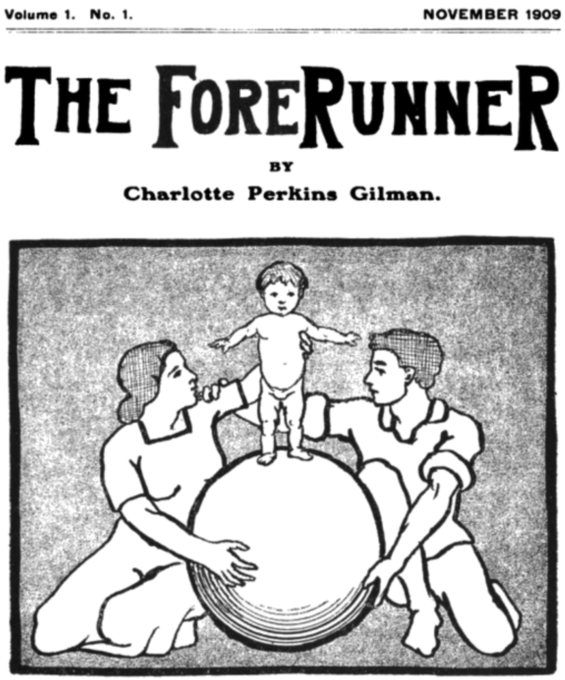
Talked about on today’s show: [Note: references to the novel are in bold, while references to the eponymous country are not.] “Lost utopian novel”; first appeared in book form in 1979 as part of an effort to rediscover works by female authors; was it suppressed by patriarchy?; the novel launches with action; features Heinlein-esque; the story feels very alien despite transpiring on Earth, takes place in an unnamed jungle region presumed to be either South America or Africa; Herland grouped as part of a trilogy along with an unrelated novel Moving the Mountain and the direct sequel With Her in Ourland; the book originally appeared in serialized form in Charlotte Perkins Gilman’s own magazine; grounded in “utopian” and “lost race” tradition of the period which pick apart aspects of society; Heinlein’s and Gilman’s sexism compared and contrasted; “virgin impregnation” compared with conception of Christ; foundation of Herland as a Roman-style slave revolt; “what a world of slaves it was” Goslings quote echoed in Herland; utopian ecology (plants, animals); Jesse calls it “Mother Knows Best totalitarianism”; “intentional Darwinism”; eugenics foreshadowing World War II; Bryan brings up The King in Yellow again; protagonists give threefold approach to women; punishment in Herland more akin to child-rearing foregoing execution; Leviticus does advocate execution; both the male protagonists and the Herland women are archetypical; The Yellow Wallpaper; utopia or dystopia; unreliable narrator and narrative; Jesse argues that there’s “no drama in a perfect society” and the book has a terrible plot; eighteenth-century feminist utopia Millennium Hall; Jenny says the sequel’s plot is even worse; immortality and living in Heaven; no dogs in Herland, only cats; subservience of aesthetics to productivity; “their country was as neat as a Dutch kitchen”; childhood Jesse conflated cats and dogs; cats and dogs emblematic of gender relations in Herland; Herland is a baby-proof world; more about narrator bias in the novel; Gilman projecting her own views on mental disorder into the book; 1984 parallels; The Mysterious Doctor Fu Manchu; comparison to Goslings; why does Herland want to integrate men?; sexual dynamics in marriage; Castle Waiting by Linda Medley, a medieval utopia about bearded women; Y: The Last Man series by Brian K. Vaughan; female politicians behaving like men e.g. Margaret Thatcher; Barbara W. Tuchman and the “fallen tower” of World War I era society; utopian societies lack practical advice for the here-and-now; Origin of Species debated as source of eugenics; education in Finland; education as driving force in Herland; “only our best become teachers”; Montesori; No Child Left Behind; the perils of individualism in a utopia; “fashion and women go together” says Jesse; Jenny shares insights on potential contributions from women in the sequel; a debate on why Herland never took off; patriotism and its linguistic roots; more on the novel’s World War I context; Willa Cather’s WWI novel One of Ours; “trilogy” of novels packaged as e-book.
Posted by Jesse Willis