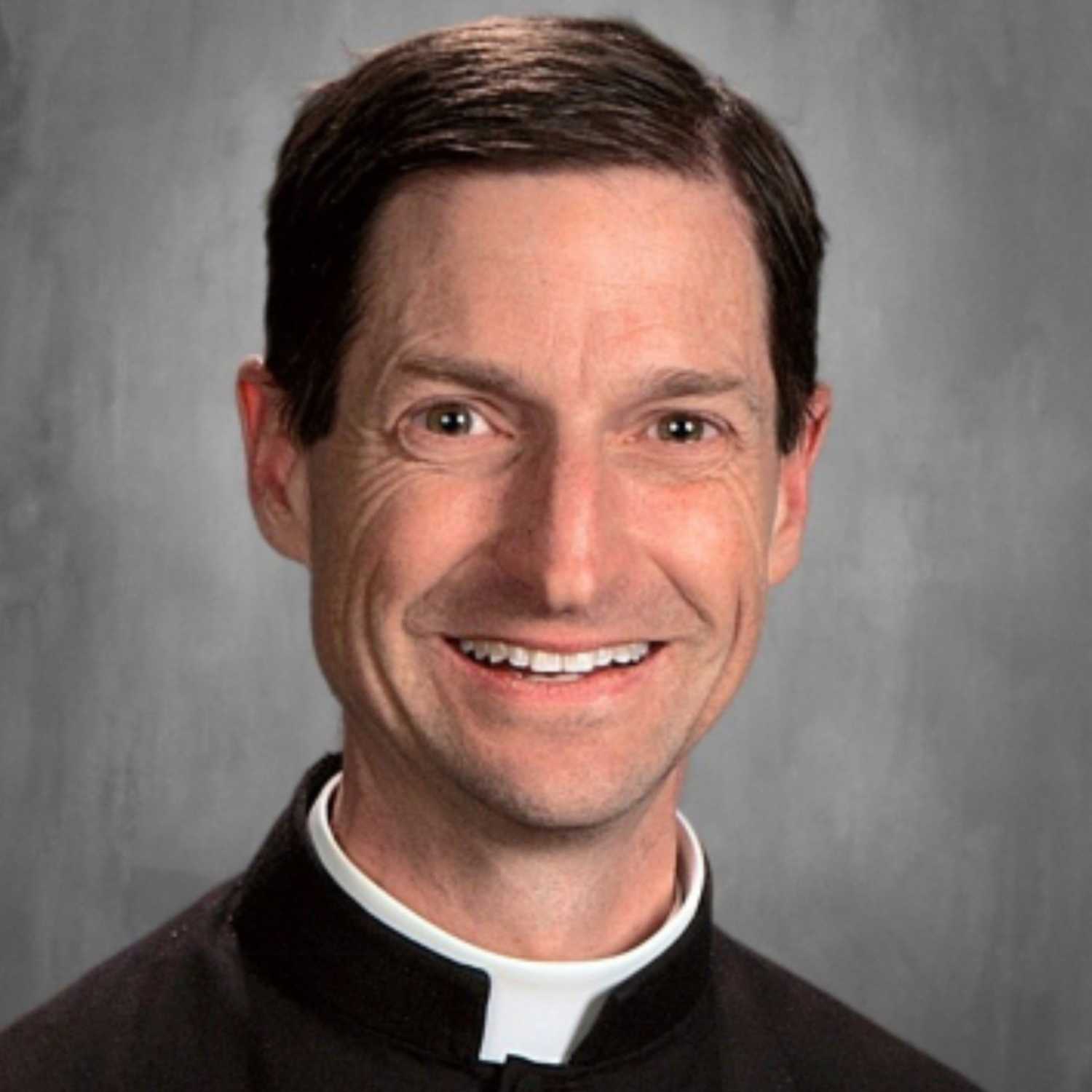
Sermons of Fr Paul Robinson SSPX
Fr Paul Robinson
Show overview
Sermons of Fr Paul Robinson SSPX has been publishing since 2021, and across the 5 years since has built a catalogue of 305 episodes. That works out to roughly 110 hours of audio in total. Releases follow a weekly cadence, with the show now in its 2026th season.
Episodes typically run twenty to thirty-five minutes — most land between 18 min and 23 min — and the run-time is fairly consistent across the catalogue. None of the episodes are flagged explicit by the publisher. It is catalogued as a EN-language Religion & Spirituality show.
The show is actively publishing — the most recent episode landed 1 weeks ago, with 27 episodes already out so far this year. The busiest year was 2021, with 140 episodes published. Published by Fr Paul Robinson.
From the publisher
Sermons of Fr Paul Robinson SSPX (Society of St Pius X)
Latest Episodes
View all 305 episodesInterview with Fr. Robinson about SSPX Excommunications on Protestant Radio Program Iron Sharpens Iron with Chris Arnzen
The Divine Meritocracy, Sermon by Fr. Paul Robinson, SSPX
Praying Like the Devout Publican, Sermon by Fr. Paul Robinson, SSPX
Desensitization to Sin, Sermon by Fr. Paul Robinson, SSPX
Supernatural Joy in a Time of Church Crisis, Sermon by Fr. Paul Robinson, SSPX
Unconditional Love in a Vocation, Sermon by Fr. Paul Robinson, SSPX
The Nuclear Excommunication of the SSPX, Sermon by Fr. Paul Robinson, SSPX
Good and Evil Are the Same For Everyone, Sermon by Fr. Paul Robinson, SSPX
Why We Struggle To Love God, Sermon by Fr. Paul Robinson, SSPX
We Must Love Our Mother the Church, Sermon by Fr. Paul Robinson, SSPX
Why Did Our Lord Ascend Into Heaven?, sermon by Fr. Paul Robinson, SSPX
We Are Begotten of God the Father, Sermon by Fr. Paul Robinson, SSPX
We Need To Sing At Mass, Sermon by Fr. Paul Robinson, SSPX
Should I Try A Vocation?, Sermon by Fr. Paul Robinson, SSPX
St. Joseph and the Patriarch Joseph, Sermon by Fr. Paul Robinson, SSPX
Resurrection is Real, Sermon by Fr. Paul Robinson, SSPX
S2026 Ep 11Persecution of Our Lord, Persecution of Tradition, Sermon by Fr. Paul Robinson, SSPX
During the second half of Lent, the Church does something remarkable in the traditional liturgy: she has us read almost exclusively from the Gospel of St. John. From day 21 until the last day of Lent, there are only two Gospels that are not from St. John, outside the readings of the Passion. During that time, we read about 43% of the Gospel of St. John.It is clear that the Church wants us to focus on this Gospel in order to learn about the Passion.We know that this Gospel is unique: it was written long after the other three Gospels; it contains more words of Our Lord than any of the other Gospels; it seeks to complete what is missing in the other Gospels; it focuses especially on Our Lord’s claim to be God and His conflicts with the leaders of the Jewish religion.I thought it might be helpful for us, on this Passion Sunday, to consider three things regarding all of these passages of St. John that the Church gives us in the second half of Lent:What is Our Lord doing and what are His claims about what He is doing?What is the reaction of those who witness His actions and hear His claims?What does this mean for us today?
S2026 Ep 10Pagan Impurity, Sermon by Fr. Paul Robinson, SSPX
When we read the epistles of St. Paul, we are mainly reading letters written by an Apostle to former pagans. These were people who had grown up in the world of the Roman Empire. It was a world of great military power and of amazing engineering feats, but also one of great decadence.These people were not just used to leading immoral lives; leading such lives was a way of life. In other words, it was considered normal behavior to be immoral. By this, I mean getting drunk, committing fornication, seeking after riches, and so on.Then, this Jewish man named Paul came into their lives, explaining to them that God Himself came down upon this earth and that He taught what we are made for, He redeemed us from our sins, and He showed us how we must live our lives in order to get to Heaven.Many of these pagans converted and, when they did, they completely changed their lives. They stopped living as pagans in the Roman Empire and started living as Catholics.At the same time, they still had to struggle greatly against their old habits, particularly the habit of impurity. It is striking that, in today’s epistle and in last Sunday’s epistle, the Church wants us to read St. Paul exhorting these former pagans to fight against impurity.We are Catholics living 2,000 years later, we are in the middle of the penitential season of Lent, and the Church wants us to hear these words of the Apostle Paul to help us make that same fight against sins of the flesh that the first Catholics were doing.Today, I would like us to hear some words of these two epistles about impurity, to understand what they mean, and also to understand why it is so important to fight impurity.
S2026 Ep 9A Boost in Lent, Sermon by Fr. Paul Robinson, SSPX
#sermon #catholicThere are two times during Lent when the Church tries to give us a boost and encourage us to persevere in our Lenten practices. One time, of course, is Laetare Sunday, which occurs just after the halfway point of Lent. The other time is today, when we are a quarter of the way through Lent.The fact that the Church tries to encourage us today indicates to us that we should already be feeling a bit worn out by our Lenten resolutions. We should be needing a second wind.If we have not yet made any resolutions for Lent, we must be sure to do so today. If we are finding our resolutions easy, perhaps we should add something to them that is more difficult.For those of us who are worn out, the Church gives us encouragement in the same way that Our Lord chose to encourage the Apostles right before His crucifixion. He did it by becoming transfigured before them.The Church shows us that she really wants to reflect carefully on this episode in Our Lord’s life by giving us the same Gospel two days in a row, for Ember Saturday and today. She only does this one other time, Ember Saturday in Advent and the Fourth Sunday of Advent.This transfiguration is encouraging for us because it shows the glory that will come at the end of our struggles. If we persevere in the Catholic life, if we continue carrying our Cross and being faithful, one day we will enter heavenly glory.Our garments will be as white as snow because of the radiance of our body. Our body will shine brighter than the sun.Just as when there is a contest, the contestants are shown the prize that will be awarded to the winner before they start the contest. Seeing the prize encourages those who are competing. When they are in the midst of the competition, they think about what they will earn if they win and they continue in their efforts.So, too, for us, a quarter of the way through Lent and a certain percentage of the way through our life. We might be weary of our duty of state and the daily grind. We might be weary fighting against the world, the flesh, and the devil. Then, we remind ourselves: if I persevere, I will win an eternal crown. I will be happy forever. I will receive a glorified body that will never suffer.This vision of Our Lord’s glory had a huge impact on St. Peter. He mentions it as definitive proof of Our Lord’s divinity in his second epistle, “We were not following fictitious tales when we made known to you the power and coming of Our Lord Jesus Christ, but we had been eyewitnesses of his grandeur. For he received from God the Father honor and glory, when from out the majestic glory a voice came down to him. And this voice we ourselves heard borne from heaven when we were with him on the holy mount” (2 Pet. 1:16-18)This vision of Our Lord’s glory really happened. And it is a real proof of the glory we will have.
S2026 Ep 8Near Occasions of Sin, Sermon by Fr. Paul Robinson, SSPX
#catholicIn today’s Gospel, we see that Our Lord allows Himself to be tempted. He does this for many reasons, but one of the reasons is this: to show us that everyone is tempted in this world, no matter how holy they are.This is comforting for us, because we all experience temptation and we are sometimes tempted to confuse temptation with sin. Our Lord is perfectly sinless and He was tempted. Thus, it is clear that the mere fact of being tempted is not a sin, and also that we are meant to have temptation in this life.There is another extreme, however, and this is the extreme of those who are complacent about temptation. They say, “I’m going to be tempted no matter what, so I don’t have to be too careful about temptation”.There are also those who have a habit of grave sin and yet are constantly putting themselves in situations where they will be tempted to repeat the sin. They say to themselves, “This time I will be stronger” or “The temptation is not really that hard to fight”, even though they usually fall into the sin, whenever they experience the temptation!The fact is that, while we are meant to experience temptation in this life, we are also meant to avoid bringing temptations upon ourselves. This is especially true when we have habits of mortal sin. If we have a habit of drinking, a habit of gambling, a habit of impurity, and so on, we have a strict duty to avoid situations that will tempt us to fall back into those sins.In the language of the Church, we have the strict duty to avoid the “near occasion of grave sin”.In today’s sermon, I want to speak about what we mean by an “occasion of sin” and what we have to do to avoid occasions of sin.