
Secrets of Data Analytics Leaders
261 episodes — Page 2 of 6
Interview with Tiffany Perkins-Munn
It's not easy being the head of data & analytics at a large organization. You must align a large team across multiple disciplines; you must deal with oodles of legacy systems and tools that hamper innovation; and you must deliver business value fast to keep executives at bay and your job intact. You also need to recruit dynamic managers who can push the envelope while meeting operational objectives. And when you falter--which you inevitably will-you have to rebound fast. No one knows these lessons better than Tiffany Perkins-Munn. She currently runs a 275-person data & analytics team at JP Morgan Chase that consists of data engineers, data scientists, behavioral economists, and business intelligence experts. She thrives on versatility, having earned a Ph.D. in Social-Personality Psychology with an interdisciplinary focus on Advanced Quantitative Methods. Building on this foundation, she has accumulated vast experience in the art of managing data & analytics teams during her 23 years in technical and managerial roles in the financial services industry. In this interview, you’ll learn: 1. Tiffany’s secret for aligning a large data & analytics team and keep them from splitting into silos of specialization 2. Her favorite techniques for recruiting the right people to her team. 3. How to wade through the thicket of legacy systems and deliver innovative solutions quickly. 4. The impact of GenAI on her operations and the financial services industry. 5. How to advance your careers in data & analytics.
A People-First Approach to Developing Data Literacy - Audio Blog
Adopting community of practice principles, along with coaching and mentoring, is a practical approach to fostering and cultivating data literacy. Published at: https://www.eckerson.com/articles/a-people-first-approach-to-developing-data-literacy
The Next Wave of Generative AI: Domain-Specific LLMs - Audio Blog
This blog examines the upcoming trend of domain-specific LLMs and evaluates three different methods of implementation. Published at: https://www.eckerson.com/articles/the-next-wave-of-generative-ai-domain-specific-llms
Machine Learning and Streaming Data Pipelines, Part I: Definitions and Architecture - Audio Blog
Many machine learning (ML) use cases center on real-time calculations. This article defines streaming ML and its architectural components. Published at: https://www.eckerson.com/articles/machine-learning-and-streaming-data-pipelines-part-i-definitions-and-architecture
Organizing for Success Part III: How to Organize and Staff Data Analytics Teams - Audio Blog
Companies need to invest heavily in teams and people, both at corporate and in the field, if they want to become a data-driven organization. Published at: https://www.eckerson.com/articles/organizing-for-success-part-iii-how-to-organize-and-staff-data-analytics-teams
The Continuing Evolution Of Data Management - Audio Blog
Data management practices have changed substantially since the early 1990s and the dawn of data warehousing. Published at: https://www.eckerson.com/articles/the-continuing-evolution-of-data-management
The Path To Modern Data Governance - Audio Blog
Conventional data governance conflicts with today’s world of self-service analytics and agile projects. Published at: https://www.eckerson.com/articles/modern-data-governance-problems

Trends for 2024: Our Team Gazes into the Crystal Ball - Audio Blog
Let's reflect on the events of the past year and prognosticate on what may transpire in the months ahead. Published at: https://www.eckerson.com/articles/trends-for-2024-our-team-gazes-into-the-crystal-ball
The Data Leader’s Guide to Generative AI, Part I: Models, Applications, and Pipelines - Audio Blog
Data leaders must prepare their teams to deliver the timely, accurate, and trustworthy data that GenAI initiatives need to ensure they deliver results. They can do so by modernizing their environments, extending data governance programs, and fostering collaboration with data science teams. Published at: https://www.eckerson.com/articles/the-data-leader-s-guide-to-generative-ai-part-i-models-applications-and-pipelines
A Fresh Look at Data Modeling Part 2: Rediscovering the Lost Art of Data Modeling - Audio Blog
Data modeling is a core skill of data engineering, but it is missing or inadequate in many data engineering teams. These teams focus on moving data with little attention to shaping the data. They engineer processes, not products. Full data engineering is both process and product engineering, and that calls for data modeling. Published at: https://www.eckerson.com/articles/a-fresh-look-at-data-modeling-part-2-rediscovering-the-lost-art-of-data-modeling
Data Products Part II: Data Products Require Product Thinking - Audio Blog
The hardest part about implementing data products is fostering a product mindset among the people responsible for defining, governing, building, and shipping data products. It’s also important that an organization establish processes to facilitate the work of the product team and review boards. Published at: https://www.eckerson.com/articles/data-products-part-ii-data-products-require-product-thinking
A Fresh Look at Data Modeling Part 1: The What and Why of Data Modeling - Audio Blog
Many organizations abandoned data modeling as they embraced big data and NoSQL. Now they find that data modeling continues to be important, perhaps more important today than ever before. With a fresh look you’ll see that today’s data modeling is different from past practices – much more than physical design for relational data. Published at: https://www.eckerson.com/articles/a-fresh-look-at-data-modeling-part-1-the-what-and-why-of-data-modeling
Data Democratization and the Duties of Data Citizenship - Audio Blog
Data democratization is the buzzword to describe empowering enterprise stakeholders with data. While there have been advances in data management, governance, and analytics, something keeps getting in the way of achieving data democratization. Published at: https://www.eckerson.com/articles/data-democratization-and-the-duties-of-data-citizenship
Generative AI Needs Vigilant Data Cataloging and Governance - Audio Blogs
Our industry’s breathless hype about generative AI tends to overlook the stubborn challenge of data governance. Data catalogs address this challenge by evaluating and controlling the accuracy, explainability, privacy, IP friendliness, and fairness of GenAI inputs. Published at: https://www.eckerson.com/articles/generative-ai-needs-vigilant-data-cataloging-and-governance
Why and How to Enable Data Science with an Independent Semantic Layer - Audio Blog
The need for an independent semantic layer continues to rise as data science gains traction in the enterprise. Its five primary elements—metrics, caching, metadata management, APIs, and access controls—support AI/ML use cases as part of data science projects. Published at: https://www.eckerson.com/articles/why-and-how-to-enable-data-science-with-an-independent-semantic-layer
Weighing the Risk and Reward of AI: A Non-Technical Guide for Business Leaders - Audio Blog
Business leaders can address AI bias and use it to have rational discussions about management and human bias. Published at: https://www.eckerson.com/articles/weighing-the-risk-and-reward-of-ai-a-non-technical-guide-for-business-leaders
An Architectural View Of Metadata Management - Audio Blog
Most organizations view data as an asset to be actively managed with standards, controls, and discipline. Yet, they are passive and casual about metadata. Data is managed. Metadata happens. As data management becomes more complex, metadata management is becoming an essential discipline. It is time to think about metadata management from an architectural perspective. Published at: https://www.eckerson.com/articles/an-architectural-view-of-metadata-management
Analyst Series: Should AI Bots Build Your Data Pipelines?
Kevin Petrie, the Vice President of Research at Eckerson Group, and Dan O’Brien, research analyst, discussed large language models (LLMs), which are neural networks that analyze text to predict the next word or phrase. These models use training data, often from the internet, to understand word relationships and provide accurate answers to natural language questions.
The New Data Pipeline For Generative AI: Where And How It Works - Audio Blog
Generative AI initiatives require new data pipelines that prepare text files for querying by language models. Data engineers, scientists, and other stakeholders collaborate to design and implement these pipelines, which span text sources, tokens, vectors, vector databases, and LMs. Published at: https://www.eckerson.com/articles/the-new-data-pipeline-for-generative-ai-where-and-how-it-works
Analyst Series - Operating Models for Data & Analytics: How to Align Resources Across the Enterprise
Dan and Wayne discussed the concept of data and analytics operating models, which refers to how organizations organize their data and analytics resources for alignment and efficiency.
Driving ROI With Master Data Management, Part III: Project Iteration - Audio Blog
This final blog in our series on the ROI of master data management recommends ways for data teams to iterate their MDM initiatives based on the successes and failures of their first project. Published: https://www.eckerson.com/articles/driving-roi-with-master-data-management-part-iii-project-iteration
AIThe Opportunity And Risk Of Generative AI, Part III: Responsible AI Ethics - Audio Blogs
Responsible AI ethical principles provide a clear, unifying purpose for the technological, business, and social goals of AI initiatives. Published at: https://www.eckerson.com/articles/the-opportunity-and-risk-of-generative-ai-part-iii-responsible-ai-ethics

Let’s Be Clear: A Data Asset Is Not A Data Product - Audio Blog
Most definitions of a data product conflate it with a data asset. The only way to turn a data asset into a data product is to publish it in a data store along with metadata about subscription and delivery options, and terms of service that specify a bidirectional contract between data consumer and producer. Published at: https://www.eckerson.com/articles/let-s-be-clear-a-data-asset-is-not-a-data-product
The Opportunity and Risk of Generative AI Part II - Audio Blogs
Responsible AI can help data leaders comply with the fast-evolving regulatory environment of data and artificial intelligence. Published at: https://www.eckerson.com/articles/the-opportunity-and-risk-of-generative-ai-part-ii-how-responsible-ai-assists-compliance
Enterprise Data And The Taming Of The Generative AI Frontier - Audio Blog
US frontier history had races, risks, and rewards. Generative AI's future will follow a similar path. Published at: https://www.eckerson.com/articles/enterprise-data-and-the-taming-of-the-generative-ai-frontier
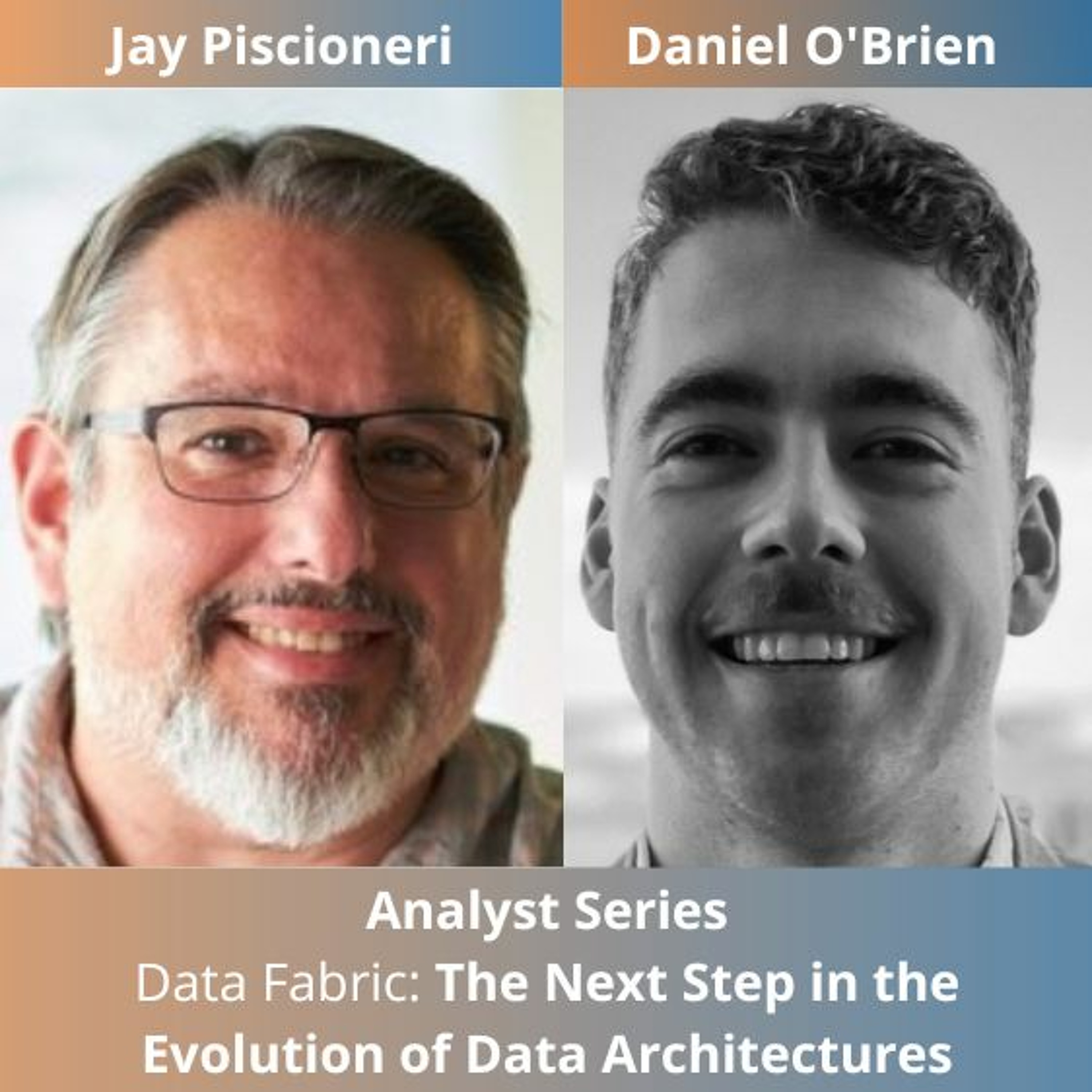
Analyst Series - Data Fabric: The Next Step in the Evolution of Data Architectures
Dan and Jay discussed the concept of Data Fabric, an automated and AI-driven approach to managing modern data environments.
Collaboration Podcast: The Future of ML Governance and Data Management with Kevin Petrie
Simba Khadder and Kevin Petrie discuss strategies to overcome technical debt in implementation, the pivotal role of data in the success of ML projects, navigating regulatory compliance in machine learning, and the future of AI governance.
Driving ROI with Master Data Management, Part II: Your First Project - Audio Blog
Learn how to attain an optimal return on investment (ROI) with MDM by choosing the appropriate architectural strategy and evaluating progress during the initial project implementation. Published at: https://www.eckerson.com/articles/driving-roi-with-master-data-management-part-ii-your-first-project
Four Traps to Avoid When Developing Data Products - Audio Blogs
As organizations strive to meet the ever-growing demand for data, they are adopting data products to streamline delivery and ensure solutions provide value to business stakeholders. Learn about four traps that can disrupt data product development and how to avoid falling into them. Published at: https://www.eckerson.com/articles/four-traps-to-avoid-when-developing-data-products
The Opportunity and Risk of Generative AI Part I: A Nuclear Explosion - Audio Blog
Generative AI brings a promise to improve lives in a blistering innovation race, but also a threat to people, corporations, and even nations. Data analytics leaders must understand the risks of generative AI, both societal and business-related, to use it positively and avoid the destructive consequences seen with nuclear energy development. Published at: https://www.eckerson.com/articles/the-opportunity-and-risk-of-generative-ai-part-i-a-nuclear-explosion
DataOps In Data Engineering - Audio Blog
The unbundling of the data ecosystem is causing organizations to “duct tape” products and frameworks together to build their solutions and data delivery processes. Organizations fail to build and deploy end-to-end, automated, repeatable data-driven systems, ignoring data engineering & dataops principles as well as best practices. Published at: https://www.eckerson.com/articles/dataops-in-data-engineering
Should AI Bots Build Your Data Pipelines? Part IV - Audio Blog
This blog recommends guiding principles for successful implementation of language models to assist data engineering. Published at: https://www.eckerson.com/articles/should-ai-bots-build-your-data-pipelines-part-iv-guiding-principles-for-success-with-language-models-and-data-engineering
Should AI Bots Build Your Data Pipelines Part III - Audio Blog
An emerging approach to generative AI will help data engineering teams achieve much-needed productivity gains while controlling risk. Published at: https://www.eckerson.com/articles/should-ai-bots-build-your-data-pipelines-part-iii-the-emergence-of-small-language-models-for-data-engineering
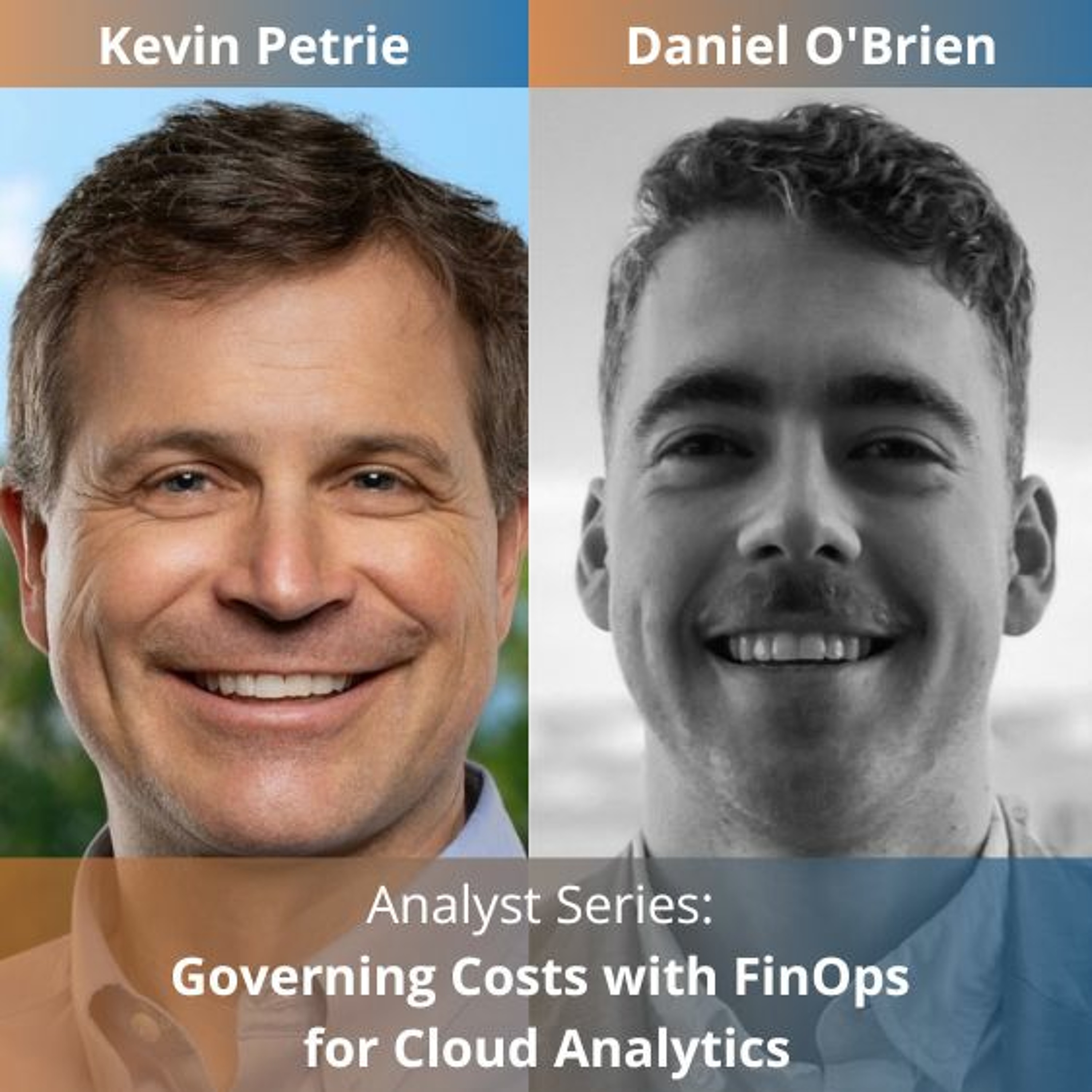
Analyst Series: Governing Costs with FinOps for Cloud Analytics
Dan O'Brien and Kevin Petrie discuss FinOps, which is a cost governance discipline for cloud-based analytics and operational projects.
Independent Study: BI Vendor Messaging Shows Lack of Differentiation - Audio Blog
An annual assessment of the positioning strategies of the leading 21 BI vendors finds a lack of differentiation that makes it difficult for buyers to compare products. In the BI market’s sea of sameness, Qlik is the only vendor that stands out with this clever, memorable position. Published at: https://www.eckerson.com/articles/independent-study-bi-vendor-messaging-shows-lack-of-differentiation
Driving ROI with Master Data Management, Part 1: Build Your Business Case - Audio Blog
MDM creates business value in three ways: it streamlines infrastructure, streamlines processes, and reduces risk. Published at: https://www.eckerson.com/articles/driving-roi-with-master-data-management-part-1-build-your-business-case

The Universal Semantic Layer: More Than Enough?
“Universal” semantic layer tools introduced in recent years promise to standardize business metrics across the data stack, and eliminate silos of metrics trapped in semantic layers that are limited to specific data sources or BI platforms. This post offers considerations for adopting a universal semantic layer. Published at: https://www.eckerson.com/articles/the-universal-semantic-layer-more-than-enough
Analytics Center of Excellence Part I: How to Shape the Organization - Audio Blog
An Analytics Center of Excellence empowers business teams to meet their own data needs by changing the role of IT from developer to facilitator. The reality, however, is that IT needs be both a facilitator and a developer. Published at: https://www.eckerson.com/articles/analytics-center-of-excellence-part-i-how-to-shape-the-organization
The Modernizing Data Stack: Three Ways to Balance New and Old - Audio Blog
Traditional companies must balance new and old technologies as part of an ever-modernizing data stack. This blog explores how companies strike the right balance to navigate economic uncertainty, AI disruption, and the need for tool consolidation. Published at: https://www.eckerson.com/articles/the-modernizing-data-stack-three-ways-to-balance-new-and-old
Should AI Bots Build Your Data Pipelines? Part II - Audio Blog
LLMs are hugely popular with data engineers because they boost productivity. But companies must adapt their data governance programs to control risks related to data quality, privacy, intellectual property, fai-Datarness, and explainability. Published at: https://www.eckerson.com/articles/should-ai-bots-build-your-data-pipelines-part-ii-risks-and-governance-approaches-for-data-engineers-to-use-large-language-models
Data Products: Part of a Data Mesh Initiative or a Stand-Alone Strategy - Audio Blog
Despite innovations in data architecture, infrastructure, and analytics, most organizations today still struggle to realize the promised value of data. Learn how the data mesh principle of data as a product can help, as part of a data mesh initiative or as a stand-alone strategy. Published at: https://www.eckerson.com/articles/data-products-part-of-a-data-mesh-initiative-or-a-stand-alone-strategy
Data Mesh: Evaluating Your Organization's Readiness for a Decentralized Data Future - Audio Blog
Data mesh is a new paradigm for fulfilling the promised value of data. It decentralizes both data ownership and the data itself, shifting them toward the functional domains that create and use data to operate. But data mesh is not for everyone. Learn how to assess if you’re ready for data mesh. Published at: https://www.eckerson.com/articles/data-mesh-evaluating-your-organization-s-readiness-for-a-decentralized-data-future
Best Practices For Developing And Scaling Data Products - Audio Blog
There’s so much hype surrounding data products that you have to wonder if it’s just another buzzword. But there’s more to data products than buzz. In this article, you’ll learn how the concept is a meaningful step forward in the art and science of data management. Published at: https://www.eckerson.com/articles/best-practices-for-developing-and-scaling-data-products
How Zone-based Data Processing Turns Your Monolithic DW into a Modern Data Architecture - Audio Blog
A zone-based data refinery creates an agile, adaptable data environment that supports new and unanticipated business requirements quickly. It turns a monolithic data warehouse into a flexible data environment that gracefully adapts to new and unanticipated business requirements while maximizing reuse and standards. Published at: https://www.eckerson.com/articles/how-zone-based-data-processing-turns-your-monolithic-data-warehouse-into-a-flexible-modern-data-architecture
Examining the Role of ChatGPT & Large Language Models in Data Engineering - Audio Blog
Many data engineers already use large language models to assist data ingestion, transformation, DataOps, and orchestration. This blog commences a series that explores the emergence of ChatGPT, Bard, and LLM tools from data pipeline vendors, and their implications for the discipline of data engineering. Published at: https://www.eckerson.com/articles/should-ai-bots-build-your-data-pipelines-examining-the-role-of-chatgpt-and-large-language-models-in-data-engineering
The Convergence of Data Governance and Privacy: Takeaways from the Global Privacy Summit -Audio Blog
At IAPP Summit, privacy and data governance leaders expressed the importance of a collaborative operating model. Published at: https://www.eckerson.com/articles/the-convergence-of-data-governance-and-privacy-takeaways-from-the-global-privacy-summit
The Why, What, Who and Where of Vector Databases - Audio Blog
Embeddings are a learned way of representing data in space. Vector databases make it easier to work with embeddings generated from deep learning models. They will become an essential tool in the AI stack because they reduce the time to structure data and train models. Published at: https://www.eckerson.com/articles/the-why-what-who-and-where-of-vector-databases
Developing a Robust Data Quality Strategy for Your Data Pipeline Workflows - Audio Blog
A robust data workflow testing strategy helps ensure the accuracy and reliability of data processed within a pipeline. Use this checklist to meet your organization’s data quality requirements according to the dimensions of accuracy, completeness, conformity, consistency, integrity, precision, timeliness, and uniqueness. Published at: https://www.eckerson.com/articles/developing-a-robust-data-quality-strategy-for-your-data-pipeline-workflows
Operational Data Hub – Responding to Data Friction and Technical Debt
An operational data hub (ODH) is a pattern in data architecture that provides a central location and a standard protocol for operational systems to communicate about and share data among themselves. Operational systems post messages about data events (add, change, delete) and subscribe to messages of interest posted by other applications. The hub works to share data among applications without the clutter and chaos of point-to-point data feeds. Published at: https://www.eckerson.com/articles/operational-data-hub-responding-to-data-friction-and-technical-debt
Data Mesh: The Sky Is Not Falling - Audio Blog
Data mesh is a hot topic in the data world, generating conversations about the benefits and drawbacks of its decentralized approach. Concerns about an explosion of data silos and inconsistent data quality are justified. But to those who feel a bit like Chicken Little, maybe the sky is not falling. Published at: https://www.eckerson.com/articles/data-mesh-the-sky-is-not-falling