Science Talk
553 episodes — Page 4 of 12
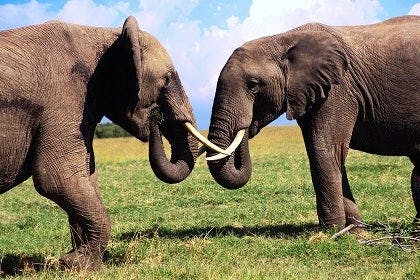
Different Minds: The Wide World of Animal Smarts
Primatologist Frans de Waal discusses his latest book, Are We Smart Enough to Know How Smart Animals Are? (Norton, 2016). Learn more about your ad choices. Visit megaphone.fm/adchoices

The Perfect Bet: Taking the Gambling out of Gambling
Mathematician and author Adam Kucharski talks about his new book The Perfect Bet: How Science and Math Are Taking the Luck Out of Gambling (Basic Books, 2016). Learn more about your ad choices. Visit megaphone.fm/adchoices
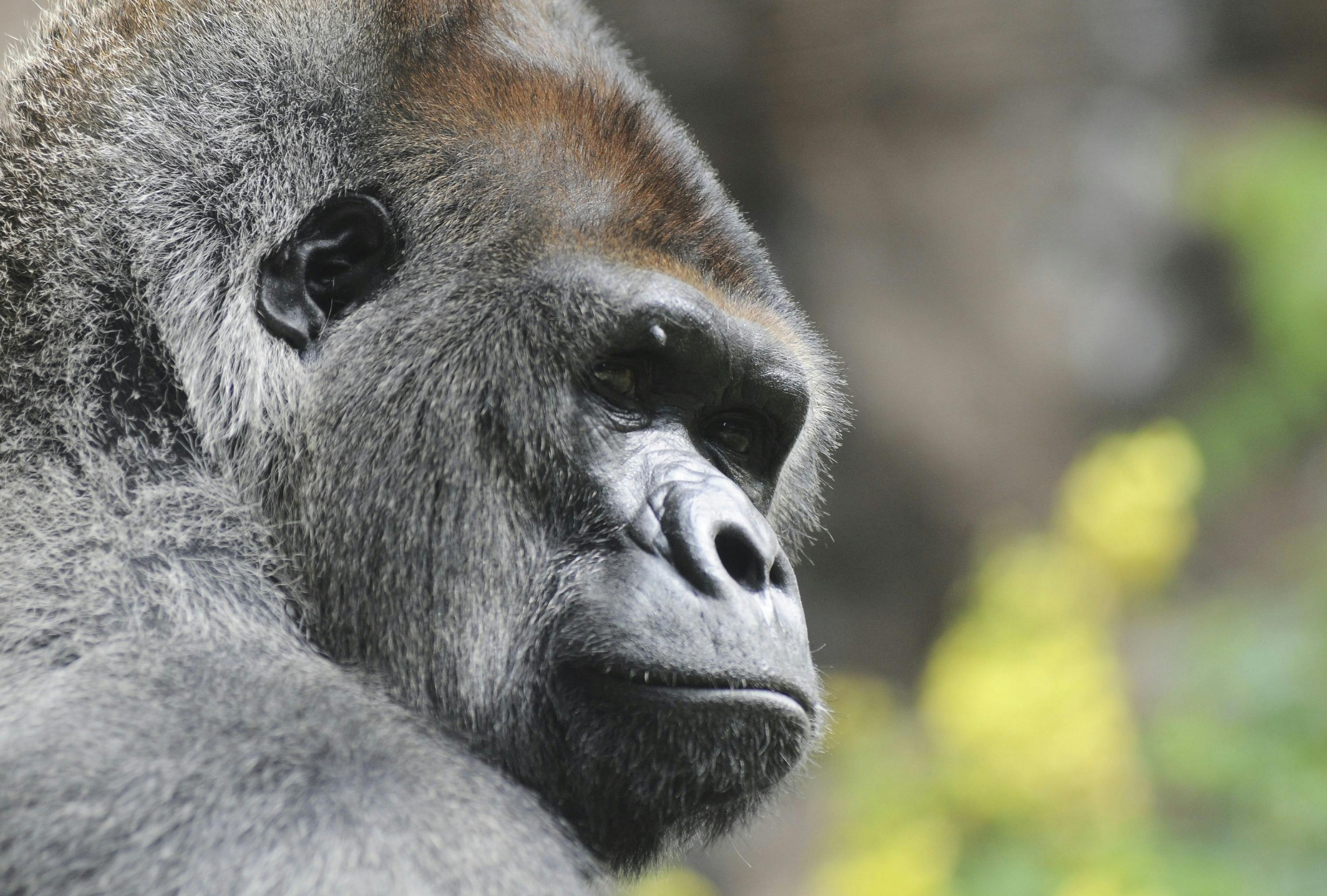
Gorilla's Hum Is a Do-Not-Disturb Sign
If a socially prominent gorilla is in the midst of a meal, it may hum or sing to tell others nearby that it's busy at the moment and will get back to you later. Learn more about your ad choices. Visit megaphone.fm/adchoices

Bill Gates Wants a Miracle
Scientific American's energy and environment editor, David Biello, met with Bill Gates on February 22 to discuss tackling carbon emissions while at the same time making necessary energy available to ever more of the globe’s growing population. Learn more about your ad choices. Visit megaphone.fm/adchoices

From AI to Zika: AAAS Conference Highlights
Scientific American editors Mark Fischetti, Dina Maron and Seth Fletcher talk about the info they picked up at the just-concluded annual meeting of the American Association for the Advancement of Science in Washington, D.C. Subjects covered include gravitational waves, whether there's really a war on science, the growing concern over Zika virus, sea level rise and advances in artificial intelligence. Learn more about your ad choices. Visit megaphone.fm/adchoices
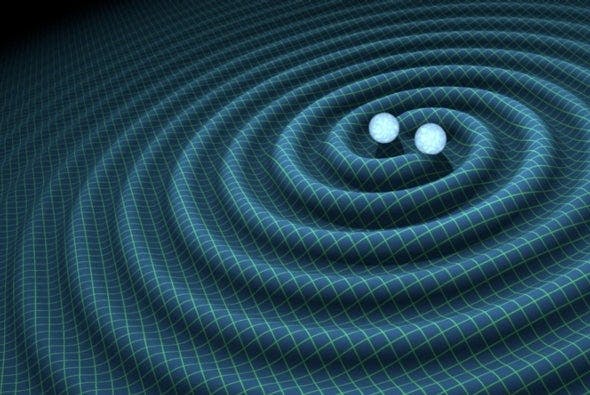
Gravitational Waves Found: Kip Thorne Explains
Scientific American's Josh Fischman talks with renowned astrophysicist and general relativity expert Kip Thorne about the discovery of gravitational waves by the LIGO Project, co-founded by Thorne. Learn more about your ad choices. Visit megaphone.fm/adchoices

The Big Gath Dig: Goliath's Hometown
Freelance journalist Kevin Begos talks with archaeologist Aren Maeir, from Bar Ilan University in Israel, at his dig site in Gath, thought to be Goliath's hometown and a major city of the Philistine civilization. Learn more about your ad choices. Visit megaphone.fm/adchoices

Roman Sanitation Didn't Stop Roaming Parasites
The University of Cambridge's Piers Mitchell, author of the 2015 book Sanitation, Latrines and Intestinal Parasites in Past Populations, talks about the counterintuitive findings in his recent paper in the journal Parasitology titled "Human parasites in the Roman World: health consequences of conquering an empire." Learn more about your ad choices. Visit megaphone.fm/adchoices

Evolution Still on Trial 10 Years after Dover
Evolutionary biologist Nicholas Matzke talks about the Kitzmiller v. Dover evolution trial on the 10th anniversary of the decision. He advised the plaintiffs while working for the National Center for Science Education. He also discusses the continuing post-Dover attempts to get creationist narratives taught in public school science classrooms. Learn more about your ad choices. Visit megaphone.fm/adchoices

Lifting the Visor on Virtual Reality
Ken Perlin, a New York University computer science professor and virtual reality pioneer, talks with Scientific American tech editor Larry Greenemeier about the state of virtual reality, its history and where it's heading Learn more about your ad choices. Visit megaphone.fm/adchoices

The Epic History of the Horse
Science journalist and equestrian Wendy Williams talks about her new book The Horse: The Epic History of Our Noble Companion Learn more about your ad choices. Visit megaphone.fm/adchoices

Math Can Equal Fun
Harvey Mudd College math professor Arthur Benjamin talks about his new book The Magic of Math: Solving for x and Figuring Out Why Learn more about your ad choices. Visit megaphone.fm/adchoices
Teaching Machines to Learn on Their Own
Stephen Hoover, CEO of Xerox’s Palo Alto Research Center, talks with Scientific American tech editor Larry Greenemeier about the revolution underway in machine learning, in which the machine eventually programs itself Learn more about your ad choices. Visit megaphone.fm/adchoices
Chemistry Nobel: Keeping DNA in Good Repair
The 2015 Nobel Prize in Chemistry goes to Tomas Lindahl, Paul Modrich and Aziz Sancar for discoveries of the mechanisms by which cells maintain the integrity of their DNA sequences Learn more about your ad choices. Visit megaphone.fm/adchoices
Physics Nobel: Neutrinos <i>Do</i> Have Mass
The 2015 Nobel Prize in Physics goes to Takaaki Kajita and Arthur B. McDonald for the discovery of neutrino oscillations, which shows that neutrinos have mass Learn more about your ad choices. Visit megaphone.fm/adchoices
Medicine Nobel: Sifting Nature for Antiparasite Drugs
The 2015 Nobel Prize in Physiology or Medicine goes to William C. Campbell and Satoshi Ōmura for their discoveries of a medication against roundworm parasites and to Youyou Tu for her discoveries concerning a novel therapy against malaria. Some 3.4 billion people are at risk for the diseases these drugs treat Learn more about your ad choices. Visit megaphone.fm/adchoices
The Hunt for the Fat Gene
Medical researcher Richard Johnson, of the University of Colorado Anschutz Medical Campus, talks about his October Scientific American article "The Fat Gene," co-authored by anthropologist Peter Andrews of University College London and the Natural History Museum in London. Their piece is about how a genetic mutation in prehistoric apes may underlie today’s pandemic of obesity and diabetes Learn more about your ad choices. Visit megaphone.fm/adchoices
The Errors of Albert
Physicist and cosmologist Lawrence Krauss, director of the Origins Project at Arizona State University, talks about his article "What Einstein Got Wrong," in Scientific American’s September issue, devoted to the 100th anniversary of Einstein’s publication of general relativity Learn more about your ad choices. Visit megaphone.fm/adchoices
Public Health Hero Jimmy Carter; <i>SA</i> Turns 170
Jimmy Carter talks about his public health efforts to eradicate guinea worm and improve global mental health and women's health. Plus, magazine collector Steven Lomazow brings part of his collection to the Scientific American 170th birthday party Learn more about your ad choices. Visit megaphone.fm/adchoices
Olympics Loser Boston Wins Big Economically
Smith College sports economist Andrew Zimbalist talks about why the Olympics is almost always a big financial hardship for the host city, a subject he treats at length in his book Circus Maximus: The Economic Gamble behind Hosting the Olympics and the World Cup. Recorded at the Bergino Baseball Clubhouse in New York City Learn more about your ad choices. Visit megaphone.fm/adchoices
Betting Lots of Quatloos on the Search for Alien Civilizations, Part 2
Stephen Hawking and entrepreneur and former physicist Yuri Milner announce a $100-million, 10-year initiative to look for signs of intelligent life in the cosmos Learn more about your ad choices. Visit megaphone.fm/adchoices
Betting Lots of Quatloos on the Search for Alien Civilizations, Part 1
Stephen Hawking and entrepreneur and former physicist Yuri Milner announce a $100-million, 10-year initiative to look for signs of intelligent life in the cosmos Learn more about your ad choices. Visit megaphone.fm/adchoices
Pluto Mission Finally Calls Home
At 8:52 P.M. Eastern time, July 14, 2015, an all's-well signal from the New Horizons spacecraft finished its 4.5-hour, three-billion-mile trip from near Pluto through the solar system to alert mission control on Earth that it was in working order and had succeeded in gathering data Learn more about your ad choices. Visit megaphone.fm/adchoices
Pluto, Ready for Your Close-Up!
At just before 7:50 A.M. today, July 14, 2015, the New Horizons spacecraft made its closest approach to Pluto. After a 9.5-year, three-billion-mile voyage, the ship got within about 7,750 miles from the surface Learn more about your ad choices. Visit megaphone.fm/adchoices
Restore Research to Preserve the American Dream
Norman Augustine, former CEO of Lockheed Martin and former undersecretary of the Army talks about the report he co-chaired for the American Academy of Arts & Sciences, "Restoring the Foundation: The Vital Role of Research in Preserving the American Dream" Learn more about your ad choices. Visit megaphone.fm/adchoices

Migratory Birds: What a Long-Range Trip It's Been
Ornithologist Eduardo Inigo-Elias, senior research associate with the conservation science program at the Cornell Laboratory of Ornithology, talks about the challenges of studying migratory birds and how improved relations between the U.S. and Cuba will help his field Learn more about your ad choices. Visit megaphone.fm/adchoices
Take a Bite out of the Math of Math
Mathematician Eugenia Cheng, tenured in the School of Mathematics and Statistics at the University of Sheffield in the U.K. and currently Scientist in Residence at the School of the Art Institute of Chicago talks about her new book How to Bake Pi: An Edible Exploration of the Mathematics of Mathematics Learn more about your ad choices. Visit megaphone.fm/adchoices
Animals Don't Use Facebook but They Have Social Networks, Too
Lee Dugatkin, evolutionary biologist and behavioral ecologist at the University of Louisville, talks about his article in the June Scientific American called "The Networked Animal," about how social networks in disparate animals species affect the lives of the entire group and its individual members. His co-author is Matthew Hasenjager, a doctoral candidate in his lab Learn more about your ad choices. Visit megaphone.fm/adchoices
Mississippi Mound Builders Meet the 33rd Legion
Astronomer Alan Smale spends his days at NASA Goddard Space Flight Center exploring celestial objects, but he's also the author of Clash of Eagles, an alternate-history novel in which a Roman Legion invades North America Learn more about your ad choices. Visit megaphone.fm/adchoices
The Ebola Outbreak: Past, Present and Future
Scientific American’s Dina Maron talks with Keiji Fukuda, assistant director general for health security at the World Health Organization, about the current Ebola outbreak, the threat of sexual transmission and the hope for a vaccine. They were both at an Institute of Medicine Forum on Microbial Threats held at the Pan American Health Organization in Washington, D.C., concentrating on Ebola in west Africa Learn more about your ad choices. Visit megaphone.fm/adchoices
Humans and the Amazon: A 13,000-Year Coexistence
University of Exeter archaeologist José Iriarte talks to freelance journalist Cynthia Graber about his efforts to understand human activity in and influence on the Amazon region for the last 13 millennia Learn more about your ad choices. Visit megaphone.fm/adchoices
The Placement Excitation: <i>Scientific American</i> on <i>The Big Bang Theory</i>
In conjunction with this magazine's inclusion on the March 12 episode of The Big Bang Theory, here's an edited version of a talk by the sitcom's science advisor, U.C.L.A. physicist David Saltzberg, about his role and the show's reach Learn more about your ad choices. Visit megaphone.fm/adchoices
<i>Science Goes to the Movies</i>: A New TV Program
Heather Berlin, assistant professor of psychiatry and of neuroscience at Mount Sinai School of Medicine in New York City, is the co-host of the new CUNY TV program Science Goes to the Movies Learn more about your ad choices. Visit megaphone.fm/adchoices
Every Life Has Equal Value, Part 2: Gates Foundation CEO Dr. Susan Desmond-Hellmann
Gates Foundation CEO Dr. Susan Desmond-Hellmann and Scientific American Editor in Chief Mariette DiChristina talk about the foundation set forth in its recently released annual letter. Part 2 of 2 Learn more about your ad choices. Visit megaphone.fm/adchoices
Every Life Has Equal Value, Part 1: Gates Foundation CEO Dr. Susan Desmond-Hellmann
Gates Foundation CEO Dr. Susan Desmond-Hellmann and Scientific American Editor in-Chief Mariette DiChristina talk about the foundation set forth in its recently released annual letter. Part 1 of 2 Learn more about your ad choices. Visit megaphone.fm/adchoices
Best of Thanksgiving, Part 2: Let's Talk Stuffing—Your Face!
Cornell University's Brian Wansink talks about eating behavior and how mindless eating has us consuming way more calories than we suspect Learn more about your ad choices. Visit megaphone.fm/adchoices
Best of Thanksgiving, Part 1: Let's Talk Turkey!
Turkey scientist Rich Buchholz of the University of Mississippi talks about the turkey on your plate and his own turkey research Learn more about your ad choices. Visit megaphone.fm/adchoices
Doctors Without Borders Fight on Ebola's Front Lines
Scientific American health and medicine correspondent Dina Fine Maron talks with Armand Sprecher of Doctors Without Borders, who has fought Ebola in Guinea and Liberia. And Steve talks Ebola with Stanford's David Relman, chair of the Forum on Microbial Threats of the Institute of Medicine Learn more about your ad choices. Visit megaphone.fm/adchoices
Ebola Expert Update
Scientific American health and medicine correspondent Dina Fine Maron talks about Ebola with tropical medicine and infectious disease expert Daniel Bausch of Tulane University at the annual meeting of the American Society of Tropical Medicine and Hygiene Learn more about your ad choices. Visit megaphone.fm/adchoices
Let's Get Small: A Panel on Nanoscience
Scientific American senior editor Josh Fischman joins nanoscience researchers Shana Kelly, Yamuna Krishnan, Benjamin Bratton, along with moderator Bridget Kendall from the BBC World Service program The Forum Learn more about your ad choices. Visit megaphone.fm/adchoices
Building a Better Microscope: 2014 Nobel Prize in Chemistry
The 2014 Nobel Prize in Chemistry is awarded to Eric Betzig, Stefan W. Hell and William E. Moerner for the development of super-resolved fluorescence microscopy. The winning work is explained by chemistry Nobel Committee members Sven Lidin and Måns Ehrenberg Learn more about your ad choices. Visit megaphone.fm/adchoices
Blue Light Special: 2014 Nobel Prize in Physics
The 2014 Nobel Prize in Physics goes to Isamu Akasaki, Hiroshi Amano and Shuji Nakamura for the invention of efficient blue light–emitting diodes, which has enabled bright and energy-saving white light sources. The winning work is explained by physics Nobel Committee members Per Delsing and Olle Inganäs Learn more about your ad choices. Visit megaphone.fm/adchoices
The Map in Your Mind: 2014 Nobel Prize in Physiology or Medicine
The 2014 Nobel Prize in Physiology or Medicine goes to John O'Keefe, May-Britt Moser and Edvard I. Moser for their discoveries of cells that constitute a positioning system in the brain—an inner GPS. The winning work is explained by Karolinska Institute faculty and Nobel Committee members Göran Hansson, Ole Kiehn, Hans Forssberg and Juleen Zierath Learn more about your ad choices. Visit megaphone.fm/adchoices
Kodiak Update: <i>Scientific American</i> Alaska Cruise, Part 4
Scientific American Bright Horizons Cruise 22 is in port in Kodiak, Alaska, on September 2nd. We talk about our last few stops and hear from passenger and Manhattan Project veteran Margaret Asprey Learn more about your ad choices. Visit megaphone.fm/adchoices
The Juneau Tour: <i>Scientific American</i> Alaska Cruise, Part 3
Scientific American Bright Horizons Cruise 22 arrives in Anchorage, Alaska, on August 31st, which allows us to post audio from a fascinating taxi trip through Juneau on August 28th. Learn more about your ad choices. Visit megaphone.fm/adchoices
Juneau Where I Am: <i>Scientific American</i> Alaska Cruise, Part 2
Scientific American Bright Horizons Cruise 22 arrives in Juneau, Alaska Learn more about your ad choices. Visit megaphone.fm/adchoices
Catch Me If You Ketchikan: <i>Scientific American</i> Alaska Cruise, Part 1
Scientific American Bright Horizons Cruise 22 arrives in Ketchikan, Alaska. Learn more about your ad choices. Visit megaphone.fm/adchoices
Shakespeare and Science, Part 2
Dan Falk discusses his latest book, The Science of Shakespeare: A New Look at the Playwright's Universe Learn more about your ad choices. Visit megaphone.fm/adchoices
Shakespeare and Science, Part 1
Dan Falk discusses his latest book, The Science of Shakespeare: A New Look at the Playwright's Universe Learn more about your ad choices. Visit megaphone.fm/adchoices
Furious New Science Fiction from Mark Alpert
Scientific American editor–turned-sci-fi-writer Mark Alpert, author of Final Theory and Extinction, talks about his latest book, The Furies Learn more about your ad choices. Visit megaphone.fm/adchoices