
Science Magazine Podcast
657 episodes — Page 10 of 14

Debunking yeti DNA, and the incredibly strong arms of prehistoric female farmers
The abominable snowman, the yeti, bigfoot, and sasquatch—these long-lived myths of giant, hairy hominids depend on dropping elusive clues to stay in the popular imagination—a blurry photo here, a big footprint there—but what happens when scientists try to pin that evidence down? Online News Editor David Grimm talks with Sarah Crespi about the latest attempts to verify the yeti’s existence using DNA analysis of bones and hair and how this research has led to more than the debunking of a mythic creature. Sarah also interviews Alison Macintosh of the University of Cambridge in the United Kingdom about her investigation of bone, muscle, and behavior in prehistory female farmers—what can a new database of modern women’s bones—athletes and regular folks—tell us about the labor of women as humans took up farming? Listen to previous podcasts. [Image: Didier Descouens/CC BY SA 3.0; Music: Jeffrey Cook] Learn more about your ad choices. Visit megaphone.fm/adchoices

The world’s first dog pictures, and looking at the planet from a quantum perspective
About 8000 years ago, people were drawing dogs with leashes, according to a series of newly described stone carvings from Saudi Arabia. Online News Editor David Grimm talks with Sarah Crespi about reporting on this story and what it says about the history of dog domestication. Sarah also interviews physicist Brad Marston of Brown University on surprising findings that bring together planetary science and quantum physics. It turns out that Earth’s rotation and the presence of oceans and atmosphere on its surface mean it can be described as a “topological insulator”—a term usually reserved for quantum phenomena. Insights from the study of these effects at the quantum level may help us understand weather and currents at the planetary level—including insights into climate change and exoplanets. Listen to previous podcasts. Learn more about your ad choices. Visit megaphone.fm/adchoices

Preventing psychosis and the evolution—or not—of written language
How has written language changed over time? Do the way we read and the way our eyes work influence how scripts look? This week we hear a story on changes in legibility in written texts with Online News Editor Catherine Matacic. Sarah Crespi also interviews Staff Writer Jennifer Couzin-Frankel on her story about detecting signs of psychosis in kids and teens, recruiting at-risk individuals for trials, and searching for anything that can stop the progression. Listen to previous podcasts. [Image: Procsilas Moscas/Flickr; Music: Jeffrey Cook] Learn more about your ad choices. Visit megaphone.fm/adchoices
Randomizing the news for science, transplanting genetically engineered skin, and the ethics of experimental brain implants
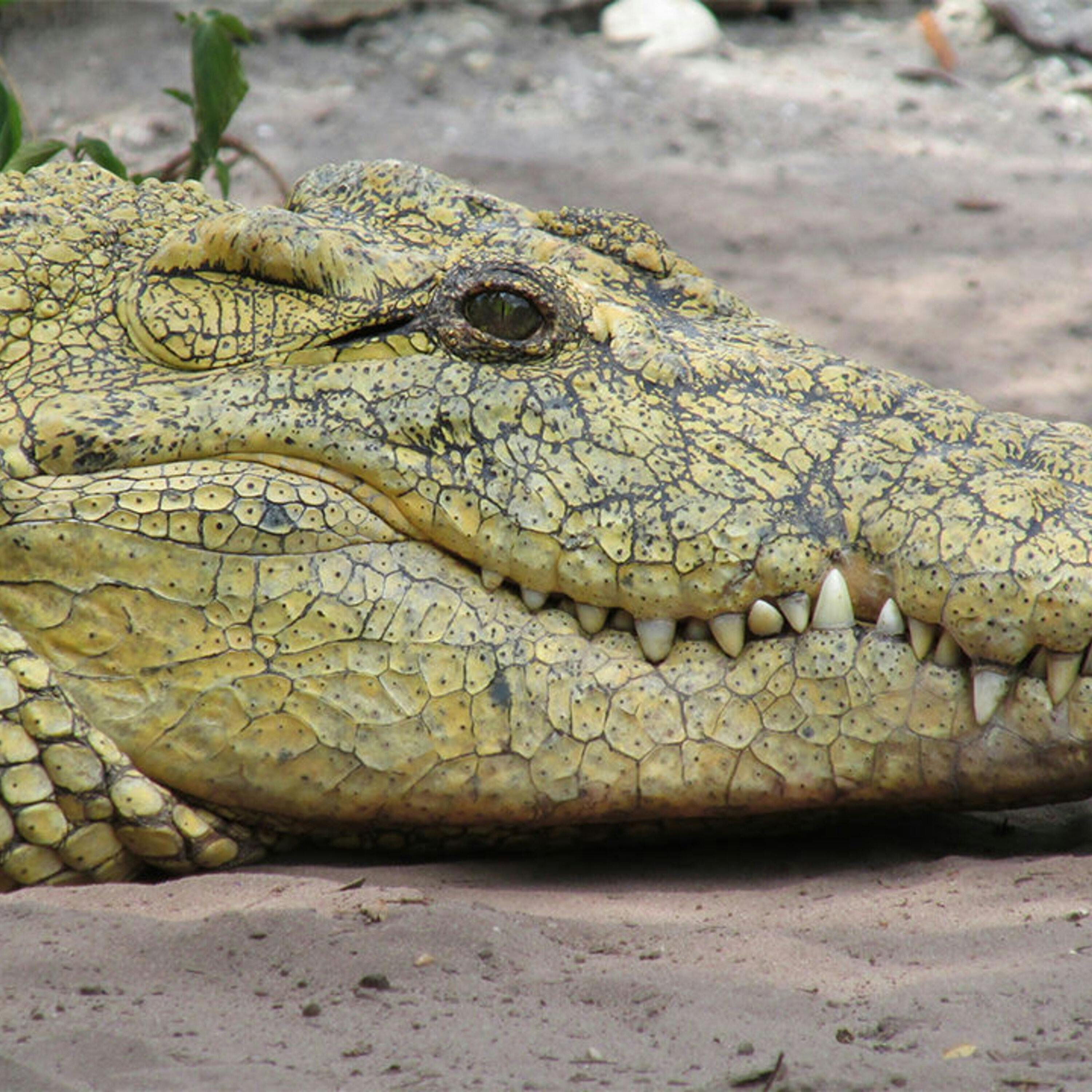
This week we hear stories on what to do with experimental brain implants after a study is over, how gene therapy gave a second skin to a boy with a rare epidermal disease, and how bone markings thought to be evidence for early hominid tool use may have been crocodile bites instead, with Online News Editor Catherine Matacic. Sarah Crespi interviews Gary King about his new experiment to bring fresh data to the age-old question of how the news media influences the public. Are journalists setting the agenda or following the crowd? How can you know if a news story makes a ripple in a sea of online information? In a powerful study, King’s group was able to publish randomized stories on 48 small and medium sized news sites in the United States and then track the results. Listen to previous podcasts. [Image: Chad Sparkes/Flickr; Music: Jeffrey Cook] Learn more about your ad choices. Visit megaphone.fm/adchoices

How Earth’s rotation could predict giant quakes, gene therapy’s new hope, and how carbon monoxide helps deep-diving seals
This week we hear stories on how the sloshing of Earth’s core may spike major earthquakes, carbon monoxide’s role in keeping deep diving elephant seals oxygenated, and a festival celebrating heavily researched yet completely nonsensical theories with Online News Editor David Grimm. Sarah Crespi interviews staff writer Jocelyn Kaiser about the status of gene therapy, including a newly tested gene-delivering virus that may give scientists a new way to treat devastating spinal and brain diseases. Listen to previous podcasts. [Image: Robert Schwemmer, CINMS, NOAA; Music: Jeffrey Cook] Learn more about your ad choices. Visit megaphone.fm/adchoices

Building conscious machines, tracing asteroid origins, and how the world’s oldest forests grew
This week we hear stories on sunlight pushing Mars’s flock of asteroids around, approximately 400-million-year-old trees that grew by splitting their guts, and why fighting poverty might also mean worsening climate change with Online News Editor David Grimm. Sarah Crespi talks with cognitive neuroscientist Stanislas Dehaene of the Collège de France in Paris about consciousness—what is it and can machines have it? For our monthly books segment, Jen Golbeck reviews astronaut Scott Kelly’s book Endurance: A Year in Space, A Lifetime of Discovery. Listen to previous podcasts. [Image: NASA/Goddard; Music: Jeffrey Cook] Learn more about your ad choices. Visit megaphone.fm/adchoices

LIGO spots merging neutron stars, scholarly questions about a new Bible museum, and why wolves are better team players than dogs
This week we hear stories about the Laser Interferometer Gravitational-Wave Observatory’s latest hit, why wolves are better team players than dogs, and volcanic eruptions that may have triggered riots in ancient Egypt with Online News Editor Catherine Matacic. Sarah Crespi interviews contributing correspondent Lizzie Wade about the soon-to-open Museum of the Bible in Washington D.C. Can it recover from early accusations of forgeries and illicitly obtained artifacts? Listen to previous podcasts. [Image: Public Domain; Music: Jeffrey Cook] Learn more about your ad choices. Visit megaphone.fm/adchoices

Evolution of skin color, taming rice thrice, and peering into baby brains
This week we hear stories about a new brain imaging technique for newborns, recently uncovered evidence on rice domestication on three continents, and why Canada geese might be migrating into cities, with Online News Editor David Grimm. Sarah Crespi interviews Sarah Tishkoff of the University of Pennsylvania about the age and diversity of genes related to skin pigment in African genomes. Listen to previous podcasts. [Image: Danny Chapman/Flickr; Music: Jeffrey Cook] Learn more about your ad choices. Visit megaphone.fm/adchoices

Putting rescue robots to the test, an ancient Scottish village buried in sand, and why costly drugs may have more side effects
This week we hear stories about putting rescue bots to the test after the Mexico earthquake, why a Scottish village was buried in sand during the Little Ice Age, and efforts by the U.S. military to predict posttraumatic stress disorder with Online News Editor David Grimm. Andrew Wagner interviews Alexandra Tinnermann of the University Medical Center of Hamburg, Germany, about the nocebo effect. Unlike the placebo effect, in which you get positive side effects with no treatment, in the nocebo effect you get negative side effects with no treatment. It turns out both nocebo and placebo effects get stronger with a drug perceived as more expensive. Read the research. Listen to previous podcasts. [Image: Chris Burns/Science; Music: Jeffrey Cook] Learn more about your ad choices. Visit megaphone.fm/adchoices

Furiously beating bat hearts, giant migrating wombats, and puzzling out preprint publishing
This week we hear stories on how a bat varies its heart rate to avoid starving, giant wombatlike creatures that once migrated across Australia, and the downsides of bedbugs’ preference for dirty laundry with Online News Editor David Grimm. Sarah Crespi talks Jocelyn Kaiser about her guide to preprint servers for biologists—what they are, how they are used, and why some people are worried about preprint publishing’s rising popularity. For our monthly book segment, Jen Golbeck talks to author Sandra Postel about her book, Replenish: The Virtuous Cycle of Water and Prosperity. Listen to previous podcasts. [Image: tap10/iStockphoto; Music: Jeffrey Cook] Learn more about your ad choices. Visit megaphone.fm/adchoices

Cosmic rays from beyond our galaxy, sleeping jellyfish, and counting a language’s words for colors
This week we hear stories on animal hoarding, how different languages have different numbers of colors, and how to tell a wakeful jellyfish from a sleeping one with Online News Editor Catherine Matacic, Brice Russ, and Sarah Crespi. Andrew Wagner talks to Karl-Heinz Kampert about a long-term study of the cosmic rays blasting our planet. After analyzing 30,000 high-energy rays, it turns out some are coming from outside the Milky Way. Listen to previous podcasts. [Image: Doug Letterman/Flickr; Music: Jeffrey Cook] Learn more about your ad choices. Visit megaphone.fm/adchoices

Cargo-sorting molecular robots, humans as the ultimate fire starters, and molecular modeling with quantum computers
This week we hear stories on the gut microbiome’s involvement in multiple sclerosis, how wildfires start—hint: It’s almost always people—and a new record in quantum computing with Online News Editor David Grimm. Andrew Wagner talks to Lulu Qian about DNA-based robots that can carry and sort cargo. Sarah Crespi goes behind the scenes with Science’s Photography Managing Editor Bill Douthitt to learn about snapping this week’s cover photo of the world’s smallest neutrino detector. Listen to previous podcasts. [Image: Curtis Perry/Flickr; Music: Jeffrey Cook] Learn more about your ad choices. Visit megaphone.fm/adchoices

Taking climate science to court, sailing with cylinders, and solar cooling
This week we hear stories on smooth sailing with giant, silolike sails, a midsized black hole that may be hiding out in the Milky Way, and new water-cooling solar panels that could cut air conditioning costs with Online News Editor David Grimm. Sarah Crespi talks to Sabrina McCormick about climate science in the U.S. courts and the growing role of the judiciary in climate science policy. Listen to previous podcasts. [Image: NASA Goddard Space Flight Center; Music: Jeffrey Cook] Learn more about your ad choices. Visit megaphone.fm/adchoices

Mysteriously male crocodiles, the future of negotiating AIs, and atomic bonding between the United States and China
This week we hear stories on involving more AIs in negotiations, tiny algae that might be responsible for killing some (not all) dinosaurs, and a chemical intended to make farm fish grow faster that may be also be causing one area’s crocodile population to skew male—with Online News Editor David Grimm. Sarah Crespi talks to Rich Stone about being on the scene for a joint U.S.-China mission to remove bomb-grade fuel from a nuclear reactor in Ghana. Listen to previous podcasts. [Image:Chad Sparkes; Music: Jeffrey Cook] Learn more about your ad choices. Visit megaphone.fm/adchoices

What hunter-gatherer gut microbiomes have that we don’t, and breaking the emoji code
Sarah Crespi talks to Sam Smits about how our microbial passengers differ from one culture to the next—are we losing diversity and the ability to fight chronic disease? For our books segment, Jen Golbeck talks with Vyvyan Evans about his book The Emoji Code: The Linguistics Behind Smiley Faces and Scaredy Cats. Listen to previous podcasts. [Image: Woodlouse/Flickr; Music: Jeffrey Cook] Learn more about your ad choices. Visit megaphone.fm/adchoices

A jump in rates of knee arthritis, a brief history of eclipse science, and bands and beats in the atmosphere of brown dwarfs
This week we hear stories on a big jump in U.S. rates of knee arthritis, some science hits and misses from past eclipses, and the link between a recently discovered thousand-year-old Viking fortress and your Bluetooth earbuds with Online News Editor David Grimm. Sarah Crespi talks to Daniel Apai about a long-term study of brown dwarfs and what patterns in the atmospheres of these not-quite-stars, not-quite-planets can tell us. Listen to previous podcasts. [Image: NASA/JPL-Caltech; Music: Jeffrey Cook] Learn more about your ad choices. Visit megaphone.fm/adchoices

Coddled puppies don’t do as well in school, some trees make their own rain, and the Americas were probably first populated by ancient mariners
This week we hear stories on new satellite measurements that suggest the Amazon makes its own rain for part of the year, puppies raised with less smothering moms do better in guide dog school, and what DNA can tell us about ancient Greeks’ near mythical origins with Online News Editor David Grimm. Sarah Crespi talks to Lizzie Wade about coastal and underwater evidence of a watery route for the Americas’ first people. Listen to previous podcasts. [Image: Lizzie Wade; Music: Jeffrey Cook] Learn more about your ad choices. Visit megaphone.fm/adchoices

The biology of color, a database of industrial espionage, and a link between prions and diabetes
This week we hear stories on diagnosing Alzheimer’s disease in chimps, a potential new pathway to diabetes—through prions—and what a database of industrial espionage says about the economics of spying with Online News Editors David Grimm and Catherine Matacic. Sarah Crespi talks to Innes Cuthill about how the biology of color intersects with behavior, development, and vision. And Mary Soon Lee joins to share some of her chemistry haiku—one poem for each element in the periodic table. Listen to previous podcasts. [Image: Zoltan Tasi/Unsplash; Music: Jeffrey Cook] Learn more about your ad choices. Visit megaphone.fm/adchoices

DNA and proteins from ancient books, music made from data, and the keys to poverty traps
This week we hear stories on turning data sets into symphonies for business and pleasure, why so much of the world is stuck in the poverty trap, and calls for stiffening statistical significance with Online News Editor David Grimm. Sarah Crespi talks to news writer Ann Gibbons about the biology of ancient books—what can we learn from DNA, proteins, and book worm trails about a book, its scribes, and its readers? Listen to previous podcasts. [Music: Jeffrey Cook] Learn more about your ad choices. Visit megaphone.fm/adchoices

Paying cash for carbon, making dogs friendly, and destroying all life on Earth
This week we have stories on the genes that may make dogs friendly, why midsized animals are the fastest, and what it would take to destroy all the life on our planet with Online News Editor David Grimm. Sarah Crespi talks to Seema Jayachandran about paying cash to Ugandan farmers to not cut down trees—does it reduce deforestation in the long term? Listen to previous podcasts. [Image: Kerrick/iStockphoto; Music: Jeffrey Cook] Learn more about your ad choices. Visit megaphone.fm/adchoices

Still-living dinosaurs, the world’s first enzymes, and thwarting early adopters in tech
This week, we have stories on how ultraviolet rays may have jump-started the first enzymes on Earth, a new fossil find that helps date how quickly birds diversified after the extinction of all the other dinosaurs, and a drug that may help reverse the effects of traumatic brain injury on memory with Online News Editor Catherine Matacic and special guest Carolyn Gramling. Sarah Crespi talks to Christian Catalini about an experiment in which some early adopters were denied access to new technology and what it means for the dissemination of that tech. Listen to previous podcasts. [Image: Michael Wuensch/Creative Commons Music: Jeffrey Cook] Learn more about your ad choices. Visit megaphone.fm/adchoices

Odorless calories for weight loss, building artificial intelligence researchers can trust, and can oily birds fly?
This week we have stories on the twisty tree of human ancestry, why mice shed weight when they can’t smell, and the damaging effects of even a small amount of oil on a bird’s feathers—with Online News Editor David Grimm. Sarah Crespi talks to News Editor Tim Appenzeller about a special section on how artificial intelligence is changing the way we do science. Listen to previous podcasts. [Image: © 2012 CERN, FOR THE BENEFIT OF THE ALICE COLLABORATION; Music: Jeffrey Cook] Learn more about your ad choices. Visit megaphone.fm/adchoices

A Stone Age skull cult, rogue Parkinson’s proteins in the gut, and controversial pesticides linked to bee deaths
This week we have stories on what the rogue Parkinson’s protein is doing in the gut, how chimps outmuscle humans, and evidence for an ancient skull cult with Online News Editor David Grimm. Jen Golbeck is back with this month’s book segment. She interviews Alan Alda about his new book on science communication: If I Understood You, Would I Have This Look on My Face? Sarah Crespi talks to Jeremy Kerr about two huge studies that take a nuanced looked at the relationship between pesticides and bees. Read the research in Science: Country-specific effects of neonicotinoid pesticides on honey bees and wild bees, B.A. Woodcock et al. Chronic exposure to neonicotinoids reduces honey bee health near corn crops, Tsvetkov et al. Listen to previous podcasts. [Image: webted/Flickr; Music: Jeffrey Cook] Learn more about your ad choices. Visit megaphone.fm/adchoices

Why eggs have such weird shapes, doubly domesticated cats, and science balloons on the rise
This week we have stories on the new capabilities of science balloons, connections between deforestation and drug trafficking in Central America, and new insights into the role ancient Egypt had in taming cats with Online News Editor David Grimm. Sarah Crespi talks to Mary Caswell Stoddard about why bird eggs come in so many shapes and sizes. Listen to previous podcasts. [Image:; Music: Jeffrey Cook] Learn more about your ad choices. Visit megaphone.fm/adchoices

Slowly retiring chimps, tanning at the cellular level, and plumbing magma’s secrets
This week we have stories on why it’s taking so long for research chimps to retire, boosting melanin for a sun-free tan, and tracking a mouse trail to find liars online with Online News Editor David Grimm. Sarah Crespi talks to Allison Rubin about what we can learn from zircon crystals outside of a volcano about how long hot magma hangs out under a volcano. Listen to previous podcasts. [Image: Project Chimps; Music: Jeffrey Cook] Learn more about your ad choices. Visit megaphone.fm/adchoices

How to weigh a star—with a little help from Einstein, toxic ‘selfish genes,’ and the world’s oldest Homo sapiens fossils
This week we have stories on what body cams reveal about interactions between black drivers and U.S. police officers, the world’s oldest Homo sapiens fossils, and how modern astronomers measured the mass of a star—thanks to an old tip from Einstein—with Online News Intern Ryan Cross. Sarah Crespi talks to Eyal Ben-David about a pair of selfish genes—one toxin and one antidote—that have been masquerading as essential developmental genes in a nematode worm. She asks how many more so-called “essential genes” are really just self-perpetuating freeloaders? Science Careers Editor Rachel Bernstein is also here to talk about stress and work-life balance for researchers and science students. Listen to previous podcasts. [Image: Chris Burns/Science; Music: Jeffrey Cook] Learn more about your ad choices. Visit megaphone.fm/adchoices

A new taste for the tongue, ancient DNA from Egyptian mummies, and early evidence for dog breeding
This week we have stories on how we taste water, extracting ancient DNA from mummy heads, and the earliest evidence for dog breeding with Online News Editor David Grimm. Sarah Crespi talks to John Travis about postsurgical cognitive dysfunction—does surgery sap your brain power? Listen to previous podcasts. [Music: Jeffrey Cook] Learn more about your ad choices. Visit megaphone.fm/adchoices

How whales got so big, sperm in space, and a first look at Jupiter’s poles
This week we have stories on strange dimming at a not-so-distant star, sending sperm to the International Space Station, and what the fossil record tells us about how baleen whales got so ginormous with Online News Editor David Grimm. Julia Rosen talks to Scott Bolton about surprises in the first data from the Juno mission, including what Jupiter’s poles look like and a peak under its outer cloud layers. Listen to previous podcasts. [Music: Jeffrey Cook] Learn more about your ad choices. Visit megaphone.fm/adchoices

Preventing augmented-reality overload, fixing bone with tiny bubbles, and studying human migrations
This week we have stories on blocking dangerous or annoying distractions in augmented reality, gene therapy applied with ultrasound to heal bone breaks, and giving robots geckolike gripping power with Online News Editor David Grimm. Deputy News Editor Elizabeth Culotta joins Sarah Crespi to discuss a special package on human migrations—from the ancient origins of Europeans to the restless and wandering scientists of today. Listen to previous podcasts. Download the show transcript. Transcripts courtesy of Scribie.com. [Image: Public domain; Music: Jeffrey Cook] Learn more about your ad choices. Visit megaphone.fm/adchoices

Our newest human relative, busting human sniff myths, and the greenhouse gas that could slow global warming
This week we have stories on ancient hominids that may have coexisted with early modern humans, methane seeps in the Arctic that could slow global warming, and understanding color without words with Online News Intern Lindzi Wessel. John McGann joins Sarah Crespi to discuss long-standing myths about our ability to smell. It turns out people are probably a lot better at detecting odors than scientists thought! Listen to previous podcasts. [Image: Streluk/iStockphoto; Music: Jeffrey Cook] Learn more about your ad choices. Visit megaphone.fm/adchoices

Podcast: Reading pain from the brains of infants, modeling digital faces, and wifi holograms
This week, we discuss the most accurate digital model of a human face to date, stray Wi-Fi signals that can be used to spy on a closed room, and artificial intelligence that can predict Supreme Court decisions with Online News Editor Catherine Matacic. Caroline Hartley joins Sarah Crespi to discuss a scan that can detect pain in babies—a useful tool when they can’t tell you whether something really hurts. Listen to previous podcasts. See more book segments. Learn more about your ad choices. Visit megaphone.fm/adchoices

Podcast: Where dog breeds come from, bots that build buildings, and gathering ancient human DNA from cave sediments
This week, a new family tree of dog breeds, advances in artificial wombs, and an autonomous robot that can print a building with Online News Editor David Grimm. Viviane Slon joins Sarah Crespi to discuss a new way to seek out ancient humans—without finding fossils or bones—by screening sediments for ancient DNA. Jen Golbeck interviews Andrew Shtulman, author of Scienceblind: Why Our Intuitive Theories About the World Are So Often Wrong for this month’s book segment. Listen to previous podcasts. See more book segments. Download the show transcript. Transcripts courtesy of Scribie.com. [Image: nimis69/iStockphoto; Music: Jeffrey Cook] Learn more about your ad choices. Visit megaphone.fm/adchoices

Podcast: When good lions go bad, listening to meteor crashes, and how humans learn to change the world
This week, meteors’ hiss may come from radio waves, pigeons that build on the wings of those that came before, and a potential answer to the century-old mystery of what turned two lions into people eaters with Online News Editor David Grimm. Elise Amel joins Julia Rosen to discuss the role of evolution and psychology in humans’ ability to overcome norms and change the world, as part of a special issue on conservation this week in Science. Listen to previous podcasts. Download the show transcript Transcripts courtesy Scribie.com [Image: bjdlzx/iStockphoto; Music: Jeffrey Cook] Learn more about your ad choices. Visit megaphone.fm/adchoices

Podcast: Watching shoes untie, Cassini’s last dive through the breath of a cryovolcano, and how human bias influences machine learning
This week, walk like an elephant—very far, with seeds in your guts, Cassini’s mission to Saturn wraps up with news on the habitability of its icy moon Enceladus, and how our shoes manage to untie themselves with Online News Editor David Grimm. Aylin Caliskan joins Sarah Crespi to discuss how biases in our writing may be perpetuated by the machines that learn from them. Listen to previous podcasts. Download the show transcript. Transcripts courtesy of Scribie.com. [Image: NASA/JPL-Caltech; Music: Jeffrey Cook] Learn more about your ad choices. Visit megaphone.fm/adchoices

Podcast: Giant virus genetics, human high-altitude adaptations, and quantifying the impact of government-funded science
This week, viruses as remnants of a fourth domain of life, a scan of many Tibetan genomes reveals seven new genes potentially related to high-altitude life, and doubts about dark energy with Online News Editor David Grimm. Danielle Li joins Sarah Crespi to discuss her study quantifying the impact of government funding on innovation by linking patents to U.S. National Institutes of Health grants. Listen to previous podcasts. Download the show transcript. Transcripts courtesy of Scribie.com. [Image: artubo/iStockphoto; Music: Jeffrey Cook] Learn more about your ad choices. Visit megaphone.fm/adchoices

Podcast: Killing off stowaways to Mars, chasing synthetic opiates, and how soil contributes to global carbon calculations
This week, how to avoid contaminating Mars with microbial hitchhikers, turning mammalian cells into biocomputers, and a look at how underground labs in China are creating synthetic opioids for street sales in the United States with Online News Editor Catherine Matacic. Caitlin Hicks Pries joins Julia Rosen to discuss her study of the response of soil carbon to a warming world. And for this month’s book segment, Jen Golbeck talks to Rob Dunn about his book Never Out of Season: How Having the Food We Want When We Want It Threatens Our Food Supply and Our Future. Listen to previous podcasts. Download the show transcript. Transcripts courtesy of Scribie.com. [Image: NASA/JPL-Caltech; Music: Jeffrey Cook] Learn more about your ad choices. Visit megaphone.fm/adchoices

Podcast: Teaching self-driving cars to read, improving bike safety with a video game, and when ‘you’ isn’t about ‘you’
This week, new estimates for the depths of the world’s lakes, a video game that could help kids be safer bike riders, and teaching autonomous cars to read road signs with Online News Editor David Grimm. And Ariana Orvell joins Sarah Crespi to discuss her study of how the word “you” is used when people recount meaningful experiences. Listen to previous podcasts. Download the show transcript. Transcripts courtesy of Scribie.com. [Image: VisualCommunications/iStockphoto; Music: Jeffrey Cook] Learn more about your ad choices. Visit megaphone.fm/adchoices

Podcast: The archaeology of democracy, new additions to the uncanny valley, and the discovery of ant-ibiotics
This week, what bear-mounted cameras can tell us about their caribou-hunting habits, ants that mix up their own medicine, and feeling alienated by emotional robots with Online News Editor David Grimm. And Lizzie Wade joins Sarah Crespi to discuss new thinking on the origins of democracy outside of Europe, based on archeological sites in Mexico. Listen to previous podcasts. Download the show transcript. Transcripts courtesy of Scribie.com. [Image: rpbirdman/iStockphoto; Music: Jeffrey Cook] Learn more about your ad choices. Visit megaphone.fm/adchoices

Podcast: Human pheromones lightly debunked, ignoring cyberattacks, and designer chromosomes
This week, how Flickr photos could help predict floods, why it might be a good idea to ignore some cyberattacks, and new questions about the existence of human pheromones with Online News Editor David Grimm. And Sarah Richardson joins Alexa Billow to discuss a global project to build a set of working yeast chromosomes from the ground up. Read Sarah Richardson’s research in Science. Listen to previous podcasts. Download the show transcript. Transcripts courtesy of Scribie.com. [Image: Drew Gurian; Music: Jeffrey Cook] Learn more about your ad choices. Visit megaphone.fm/adchoices

Podcast: Breaking the 2-hour marathon barrier, storing data in DNA, and how past civilizations shaped the Amazon
This week, we chat about the science behind breaking the 2-hour marathon barrier, storing data in DNA strands, and a dinosaur’s zigzagging backbones with Online News Editor Catherine Matacic. And Carolina Levis joins Alexa Billow to discuss evidence that humans have been domesticating the Amazon’s plants a lot longer than previously thought. Read Carolina Levis’s research in Science. Listen to previous podcasts. [Image: Carolina Levis; Music: Jeffrey Cook] Learn more about your ad choices. Visit megaphone.fm/adchoices

Podcast: Cracking the smell code, why dinosaurs had wings before they could fly, and detecting guilty feelings in altruistic gestures
This week, we chat about why people are nice to each other—does it feel good or are we just avoiding feeling bad—approaches to keeping arsenic out of the food supply, and using artificial intelligence to figure out what a chemical smells like to a human nose with Online News Editor David Grimm. And Stephen Brusatte joins Alexa Billow to discuss why dinosaurs evolved wings and feathers before they ever flew. And in the latest installment of our monthly books segment, Jen Golbeck talks with Bill Schutt, author of Cannibalism: A Perfectly Natural History. Listen to previous podcasts. [Image: Todd Marshall; Music: Jeffrey Cook] Learn more about your ad choices. Visit megaphone.fm/adchoices

Podcast: Recognizing the monkey in the mirror, giving people malaria parasites as a vaccine strategy, and keeping coastal waters clean with seagrass
This week, we chat about what it means if a monkey can learn to recognize itself in a mirror, injecting people with live malaria parasites as a vaccine strategy, and insect-inspired wind turbines with Online News Editor David Grimm. And Joleah Lamb joins Alexa Billow to discuss how seagrass can greatly reduce harmful microbes in the ocean—protecting people and corals from disease. Read the research. Listen to previous podcasts. [Image: peters99/iStock; Music: Jeffrey Cook] Learn more about your ad choices. Visit megaphone.fm/adchoices

Podcast: Saving grizzlies from trains, cheap sun-powered water purification, and a deep look at science-based policymaking
This week, we chat about why grizzly bears seem to be dying on Canadian railway tracks, slow-release fertilizers that reduce environmental damage, and cleaning water with the power of the sun on the cheap, with Online News Editor David Grimm. And David Malakoff joins Alexa Billow to discuss a package of stories on the role of science and evidence in policymaking[link TK]. Listen to previous podcasts. [Image: tacky_ch/iStockphoto; Music: Jeffrey Cook] Learn more about your ad choices. Visit megaphone.fm/adchoices

Podcast: An 80-million-year-old dinosaur protein, sending oxygen to the moon, and competitive forecasting
This week, we chat about how the Earth is sending oxygen to the moon, using a GPS data set to hunt for dark matter, and retrieving 80-million year old proteins from dinosaur bones, with Online News Editor David Grimm. And Philip Tetlock joins Alexa Billow to discuss improving our ability to make judgments about the future through forecasting competitions as part of a special section on prediction in this week’s issue of Science. Listen to previous podcasts. [Image: NASA; Music: Jeffrey Cook] Learn more about your ad choices. Visit megaphone.fm/adchoices
Podcast: Bringing back tomato flavor genes, linking pollution and dementia, and when giant otters roamed Earth
This week, we chat about 50-kilogram otters that once stalked southern China, using baseball stats to show how jet lag puts players off their game, and a growing link between pollution and dementia, with Online News Editor David Grimm. Also in this week’s show: our very first monthly book segment. In the inaugural segment, Jen Golbeck interviews Helen Pilcher about her new book Bring Back the King: The New Science of De-extinction. Plus Denise Tieman joins Alexa Billow to discuss the genes behind tomato flavor, or lack thereof. Listen to previous podcasts. [Image: Dutodom; Music: Jeffrey Cook] Learn more about your ad choices. Visit megaphone.fm/adchoices

Podcast: Explaining menopause in killer whales, triggering killer mice, and the role of chromosome number in cancer immunotherapy
This week, we chat about a surprising reason why killer whales undergo menopause, flipping a kill switch in mice with lasers, and Fukushima residents who measured their own radiation exposure[link tk], with Online News Editor Catherine Matacic. Plus, Science’s Alexa Billow talks to Stephen Elledge about the relationship between chromosomal abnormalities in tumors and immunotherapy for cancer. Listen to previous podcasts. [Image: Copyright Kenneth Balcomb Center for Whale Research; Music: Jeffrey Cook] Learn more about your ad choices. Visit megaphone.fm/adchoices

Podcast: A blood test for concussions, how the hagfish escapes from sharks, and optimizing carbon storage in trees
This week, we chat about a blood test that could predict recovery time after a concussion, new insights into the bizarre hagfish’s anatomy, and a cheap paper centrifuge based on a toy, with Online News Editor David Grimm. Plus, Science’s Alexa Billow talks to Christian Koerner about why just planting any old tree isn’t the answer to our carbon problem. Listen to previous podcasts. [Image: Bureau of Land Management Oregon and Washington; Music: Jeffrey Cook] Learn more about your ad choices. Visit megaphone.fm/adchoices

Podcast: An ethics conundrum from the Nazi era, baby dinosaur development, and a new test for mad cow disease
This week, we chat about how long dinosaur eggs take—or took—to hatch, a new survey that confirms the world’s hot spots for lightning, and replenishing endangered species with feral pets with Online News Editor Catherine Matacic. Plus, Science’s Alexa Billow talks to Megan Gannon about the dilemma presented by tissue samples collected during the Nazi era. And Sarah Crespi discusses a new test for mad cow disease with Kelly Servick. Listen to previous podcasts. [Image: NASA/flickr; Music: Jeffrey Cook] Learn more about your ad choices. Visit megaphone.fm/adchoices

Podcast: Our Breakthrough of the Year, top online stories, and the year in science books
This week, we chat about human evolution in action, 6000-year-old fairy tales, and other top news stories from 2016 with Online News Editor David Grimm. Plus, Science’s Alexa Billow talks to News Editor Tim Appenzeller about this year’s breakthrough, runners-up, breakdowns, and how Science’s predictions from last year help us. In a bonus segment, Science book review editor Valerie Thompson talks about the big science books of 2016 and science books for kids. Listen to previous podcasts. [Image: Warwick Goble; Music: Jeffrey Cook] Learn more about your ad choices. Visit megaphone.fm/adchoices

The sound of a monkey talking, cloning horses for sport, and forensic anthropologists help the search for Mexico’s disappeared
This week, we chat about what talking monkeys would sound like, a surprising virus detected in ancient pottery, and six cloned horses that helped win a big polo match with Online News Editor David Grimm. Plus, Science’s Alexa Billow talks to news writer Lizzie Wade about what forensic anthropologists can do to help parent groups find missing family members in Mexico. Listen to previous podcasts. [Image: (c) Félix Márquez; Music: Jeffrey Cook] Learn more about your ad choices. Visit megaphone.fm/adchoices